Biden’s Grand Alliance against Russia in Ukraine beginning to recognize the N word…Negotiations

Walt Zlotow, West Suburban Peace Coalition, Glen Ellyn IL, 20 Sept 24
The US 32 month long proxy war against Russia is not quite over. But everyone in America’s important NATO allies knows America’s Ukraine proxy is losing badly with its military near collapse. The two hundred billions the US and NATO have poured into Ukraine have made not a dent in achieving the ‘good guys’ war aims of taking back the Donbas and Crimea, receiving reparations from Russia, and gaining NATO membership.
While President Biden betrays nary a hint of that stark reality, his European NATO allies, greatly more affected by the economic consequences of this than America, certainly are.
German Chancellor Olaf Scholz recently said, “I believe that now is the time to discuss how to arrive at peace from this state of war, indeed at a faster pace.” Scholz further stated that he will impose a limit on open ended aid to Ukraine and is working on a diplomatic settlement that will include Ukraine ceding territory to Russia.
A senior French diplomat recently told Le Figaro the same thing, citing that the Donbas and Crimea are beyond Ukraine’s military capability and that France lines up with Germany that only a negotiated settlement will end the war.
Insulated from the economic angst of its Western European allies, the US sees no need to deal with reality. For President Biden and his war cabinet including VP Harris, the words ‘negotiated settlement’ and ‘ceding territory’ dare not pass the lips of US diplomats acting more like war generals than statespersons.
Biden and company are still running around like Chicken Little, chirping ‘The Russians are coming, the Russians are coming, to take over Poland on their march to the English Channel.’
That includes presidential candidate Kamala Harris who repeated that delusional meme in her presidential debate.
The US proxy war against Russia, with Ukrainians doing all the dying and the country in ruins, is headed to a negotiated settlement in spite of President Biden’s intransigence.
World demands end to Israel’s illegal occupation of Palestine, in landslide UN vote
The vast majority of the world voted at the UN General Assembly to demand an end to Israel’s unlawful occupation of Palestinian territory within 12 months, with 124 countries (64%) in favor, 14 (7%) against, and 43 (22%) abstentions.
GeoPOliticalEconomy, By Ben Norton, 19 Sept 24
The countries that voted against the resolution, in effect supporting Israel’s illegal occupation, were the United States, Israel, Argentina, Czechia, Hungary, Malawi, Papa New Guinea, and Paraguay, plus the tiny Pacific island nations of Fiji, Micronesia, Nauru, Palau, Tonga, and Tuvalu.
These small island countries that consistently echo Washington’s unpopular votes in the UN are essentially unofficial US colonies, and mostly use the US dollar or Australian dollar as their currencies. Together, the six have a combined population of just over 1 million people, making them some of the smallest nations on Earth.
Among the large countries that abstained were India, Australia, Canada, the Democratic Republic of the Congo, and Ethiopia.
However, in a break with Washington, a few longtime US allies voted in support of the resolution, most notably Japan, as well as France, Ireland, Portugal, and Spain…………………………….
The resolution was not controversial; it simply called for the implementation of a decision by the International Court of Justice (ICJ), the UN’s top legal body.
On July 19, the ICJ issued a historic ruling stating:
– the State of Israel’s continued presence in the Occupied Palestinian Territory is unlawful;
– the State of Israel is under an obligation to bring to an end its unlawful presence in the Occupied Palestinian Territory as rapidly as possible;
– the State of Israel is under an obligation to cease immediately all new settlement activities, and to evacuate all settlers from the Occupied Palestinian Territory;
– the State of Israel has the obligation to make reparation for the damage caused to all the natural or legal persons concerned in the Occupied Palestinian Territory;
– all States are under an obligation not to recognize as legal the situation arising from the unlawful presence of the State of Israel in the Occupied Palestinian Territory and not to render aid or assistance in maintaining the situation created by the continued presence of the State of Israel in the Occupied Palestinian Territory.
The US government is essentially the only obstacle standing in the way of the implementation of international law, and the recognition of Palestine as a full UN member state.
In May, 143 countries voted in the General Assembly to admit Palestine as a full UN member. At present, it is only an observer state.
This May General Assembly vote came after an April session of the Security Council, in which the US used its veto power to kill a resolution that requested full membership for Palestine.
Since war broke out in Gaza in October 2023, Washington has repeatedly vetoed Security Council resolutions that call for peace and a ceasefire.
US President Joe Biden has strongly supported Israel as it has brutally bombed civilians in Gaza, in what UN experts say is a campaign of genocide.
In a press conference in Tel Aviv in October, Biden asserted that “if Israel didn’t exist, we’d have to invent it”, given how strategic the colonial state is for US imperial interests. https://geopoliticaleconomy.com/2024/09/19/end-israel-occupation-palestine-un-vote/
Patrick Lawrence: The ‘War Party’ Makes Its Plans
The stipulation Biden and Blinken now purport to insist upon is that they will not assent to letting Kiev use weapons provided by the U.S. — which seems to be different from weapons made by the U.S.—against targets in the Russian interior.
These proposals, if confirmed as Zelensky makes his next trip to Washington, all align in one direction: The Kiev regime’s running theme remains dragging the West further into the war rather as the Netanyahu regime in Israel is forever trying to do the same in West Asia. Zelensky, the Israeli prime minister, Biden: The world’s problem right now, or one of them, is that none of these people can afford to lose the wars their hubris led them to start.
SCHEERPOST, September 18, 2024 , By Patrick Lawrence
The Biden White House and the Democratic Party machine trying to advance Kamala Harris from No. 2 in the regime to No. 1 gets more interesting by the week, I have to say. The Harris campaign has at last, two months after the party’s elites and financiers railroaded her candidacy past any semblance of a democratic process, published a platform it calls A New Way Forward, and I will get to this in due course. I am less interested now in words posted on a website than in two recent developments we ought to consider together even if no one has yet thought to do so.
Slowly and very surely, it becomes clear by way of these weekly turns how a new Democratic regime, should Harris win on Nov. 5, proposes to manage the imperium’s business. And however many foolish voters may be illusioned otherwise, if Harris takes the White House her business will be neither more nor less than managing the imperium—the wars, the provocations, the illegal sanctions and other collective punishments, the terrorist clients in Israel, the neo–Nazis in Kiev.
Last Wednesday, Sept. 4, Liz Cheney surprised Washington and, I suppose, most of the rest of us when she announced she would support Harris’s run for the presidency. The onetime Wyoming congresswoman, a coup-cultivating warmonger who remains among the hawkiest of right-wing foreign-policy hawks, was not the first Republican to jump across the aisle this political season, and she was also not the last: Two days later, Liz’s pop did the same. Dick Cheney, of course, needs no introduction.
Instantly, the Harris campaign declared its delight in having the support of these courageous patriots, as the organization called them in its official statements.
A week after all this high-caliber politicking, President Biden convened in the Oval Office with Keir Starmer, the new British prime minister, to consider Ukraine’s proposal to fire Western-supplied missiles at targets well inside Russian territory. The Brits are ready to oblige the Kiev regime, as are the French, but everyone—London, Paris, Kiev—needs Biden’s permission to widen the war in this fashion.
At the moment, Biden and Secretary of State Blinken are in their “Well, maybe” phase, and we are meant to be on the edges of our seats wondering whether they will assent to these plans. But haven’t we seen this movie before and don’t we know how it ends? Wasn’t it, “Maybe we will send HIMARS rocket systems,” “Maybe M–1 tanks,” “Maybe Patriot missiles,” “Maybe F–16s”? Even before the Biden–Starmer encounter last week, Blinken and David Lammy, the British foreign secretary, during a visit to Kiev for talks with Volodymyr Zelensky, were already dropping heavy hints that Biden will once again acquiesce to the plans the Ukrainian president and the British PM were choreographed to present to him.
The stipulation Biden and Blinken now purport to insist upon is that they will not assent to letting Kiev use weapons provided by the U.S. — which seems to be different from weapons made by the U.S.—against targets in the Russian interior. This is no more than one of those hair-splits in which the Biden White House trades when it wants to look thoughtful and cautious but is neither. Will someone tell me what damn difference it will make to Russia if Moscow takes a hit from a missile sent from Britain, France or the United States?
These people are convening to plan the Western powers’ reckless escalation of a proxy war they have no way of winning and know they have no way of winning. Desperation is as desperation does: This is my simple read of these deliberations.
Between the war-planning and the shifting political loyalties, what have we witnessed over these past couple of weeks? This is our question. …………………………………………………………………
There is a lot of politics in the Democrats’ exuberant greeting of the Cheneys, of course. Harris’s people want to make the most of divisions among Republicans, and, in the case of Liz Cheney, to exploit the animus that has arisen between her and Donald Trump. But we must look more closely than this fully to understand this political ballet. Liz Cheney once had a public spat with Rand Paul over who was “Trumpier.” Dick Cheney is guilty of more war crimes, crimes against humanity and war-profiteering than Donald Trump could dream of in his sweetest dreams.
No mention of this as we think about these two political defections? I have read or heard of none from within the Harris hive.
Stephen Cohen used to joke, except that he wasn’t joking, that there is one party in Washington and it is rightly called the War Party. ……………………..
Read A New Way Forward, a 13–page document. The one and a half pages given to national security and foreign affairs amount to a screed dedicated to Russophobia, Sinophobia, NATOphilia and “the most lethal fighting force in the world,” which seems to be Harris’s idea of a diplomatic corps. This is how Steve Cohen’s War Party thinks and what it sounds like. As a statement of intent, the Harris–Walz platform is entirely accommodating of the Biden White House’s very likely decision to escalate the Ukraine conflict to the point of risking the World War III Biden pretends not to want. …………………………………………………………..
Among the Biden regime’s purported concerns as it considers authorizing Ukraine to widen the war is what difference attacks on the Russian interior would make. The White House and the Pentagon want to see a plan, it has been reported. It is a good question, asking about the point of this kind of escalation, but I am not sure an answer matters much to those who sit at the table in the White House cabinet room. As I have argued severally in this space, the Biden regime has foolishly cast this war as one between democracy and autocracy. Accordingly, it can afford to risk all manner of precipitous escalations, but it cannot afford to lose.
Entering stage right, possibly on cue, Volodymyr Zelensky now says he wants to show Biden, and subsequently Harris and Trump, his “plan for victory over Russia.” The Washington Post reported last Friday this will consist of very few parts. “All the points depend on the decision of Biden,” the Ukrainian president said at a recent forum in Kiev.
As The Post noted, Zelensky is to date shy of revealing these points, but there are reports, well short of confirmed, that there are three of them. The first is the missile authorization, the second is an assurance that NATO will deploy air-defense systems to protect western Ukraine, and the third—get a load of this—is a guarantee that NATO will dispatch ground troops to rear areas of the conflict so that the Armed Forces of Ukraine can deploy more of its own troops to the front.
These proposals, if confirmed as Zelensky makes his next trip to Washington, all align in one direction: The Kiev regime’s running theme remains dragging the West further into the war rather as the Netanyahu regime in Israel is forever trying to do the same in West Asia. Zelensky, the Israeli prime minister, Biden: The world’s problem right now, or one of them, is that none of these people can afford to lose the wars their hubris led them to start.
The Anglos and the Americans are likely to make an official announcement about the use of long-range missiles against Russia after the U.N. General Assembly concludes its business on Sept. 28. Starmer has recently indicated as much. In the best outcome we will find that Putin has rattled Washington and London such that they will step back from this latest plan to escalate. It is possible. But the U.S. and the other NATO powers have not done much stepping back to date, we are well to remind ourselves. …………………………………………………….
The Americans and the Brits can be said to be playing, unserious as they are, but the Russians are not. https://scheerpost.com/2024/09/18/patrick-lawrence-the-war-party-makes-its-plans/
Biden, Harris sacrificing endless thousands of Ukrainians to retain presidency November 5.

Walt Zlotow, West Suburban Peace Coaliton, Glen Ellyn IL, 16 Sept 24

President Biden sent Secretary of State Antony Blinken to Kyiv last week to reassure Ukrainian President Zelensky that Ukraine can prevail against Russia with endless US billions in weapons. He also stated that Ukraine will eventually achieve NATO membership.
Blinken was lying to Zelensky. He, along with President Biden and Democratic nominee Kamala Harris, know full well the US proxy war against Russia in Ukraine is lost. Indeed, it was certain to be lost the day it started over two and a half years ago. It could not be won without direct US/NATO involvement, regardless of how many hundreds of billions we squander supplying Ukraine with weapons. Direct involvement was ruled out because it likely means WWIII. US weapons are worthless because Ukraine is running out of soldiers to use them.
The US essentially green-lighted the invasion believing US weaponry would allow Ukraine to weaken, even defeat Russia, a long sought US foreign policy goal to keep them out of the European political economy.
The result has been a catastrophe for Ukraine, now a shattered country. It spells the end of continued US domination of Europe that offered no seat at the table for Russia.
The Biden/Harris administration must now take the sensible, moral action of forcing Ukraine to sue for peace. Allowing Ukraine to bleed out with further destruction to its economy, infrastructure, demographics and hundreds thousands more casualties is a grotesque policy to pursue.
But Biden and Harris are committed to their declaration this is a holy way of autocracy v. freedom. They are loathe to allow any settlement which allows Russia to achieve their war aims of no NATO membership for Ukraine and independence for Donbas, with security for Ukraine going forward.
It’s even more improbable for them to do that with the election just 7 weeks away. Admitting defeat after squandering over $150 billion simply destroying Ukraine to allow a Russian victory will bring an avalanche of criticism from national security state warhawks. It would rip away the false notion that this was a just war to protect US national security interests. It could cost Harris the election.
So Biden and Harris continue to prevent and cover up Ukraine’s impending collapse till after Election Day. They continue to fling tens of billions in weaponry into Ukraine which will either be destroyed by overwhelming Russian firepower or sit idle unused.
Biden and Harris have made a pact with the Devil over Ukraine. Tens of thousands of Ukrainians must die to keep the Democrats from losing a war shortly before an election. A war that never should have been fought and that signals the impending demise of US unilateral control of the world.
During his first year, President Biden lost the 20 year long Afghan war. Losing 2 senseless wars in one term is a lost war too far to remain in power. Biden and Harris’ message to Ukraine? ‘Keep dying Ukrainians. We’ll figure something out after November 5’.
‘Obvious Conflict of Interest’: Report Reveals 50+ US Lawmakers Hold Military Stocks


“It’s abjectly terrifying that the personal benefit of any member of Congress is factored into decisions about how to wield and fund the largest military in the world,” said one critic.
Brett Wilkins 12 Sept 24, https://www.commondreams.org/news/members-of-congress-who-own-defense-stock
At least 50 U.S. lawmakers or members of their households are financially invested in companies that make military weapons and equipment—even as these firms “receive hundreds of billions of dollars annually from congressionally-crafted Pentagon appropriations legislation,” a report published Thursday revealed.
Sludge‘s David Moore analyzed 2023 financial disclosures and stock trades disclosed in other reports and found that “the total value of the federal lawmakers’ defense contractors stock holdings could be as much as $10.9 million.”
Melanie D’Arrigo, @DarrigoMelanie
Over 50 members of Congress, who vote to approve the military budget and approve the sale of weapons, own up to $10.9M in military contractor stocks. Military contractors have also donated $29M this year to election campaigns. That isn’t national defense. That’s corruption.
According to the report:
The spouse of Sen. Susan Collins (R-Maine), the ranking member of the Defense Appropriations subcommittee, holds between $15,000 and $50,000 worth of shares in each of Boeing and RTX, as well as holdings in two other defense manufacturers. Sen. Jerry Moran (R-Kansas), another Defense Appropriations subcommittee member, holds up to $50,000 in the stock of Boeing, which received nearly $33 billion in defense contracts last year. On the Democratic side of the aisle, Sen. John Hickenlooper (Colo.) holds up to a quarter of a million dollars’ worth of stock in RTX…
The most widely held defense contractor stock among senators and representatives is Honeywell, an American company that makes sensors and guiding devices that are being used by the Israeli military in its airstrikes in Gaza. The second most commonly held defense stock by Congress is RTX, formerly known as Raytheon, the company that makes missiles for Israel’s Iron Dome, among other weapons systems.
All 13 senators whose households disclosed military stock holdings voted for the most recent National Defense Authorization Act, which, as Common Dreams reported, allocated a record $886.3 billion for the U.S. military while many lawmakers’ constituents struggled to meet their basic needs.
“It is an obvious conflict of interest when a member of Congress owns significant stock investments in a company and then votes to award the same company lucrative federal contracts,” Craig Holman, government affairs lobbyist at the consumer advocacy group Public Citizen, told Sludge.
“Whether or not the official action is taken for actual self-enrichment purposes is beside the point. There is at least an appearance of self-enrichment and that appearance is just as damaging to the integrity of Congress,” Holman added. “This type of conflict of interest is already banned for executive branch officials and so should be for Congress as well. The ETHICS Act would justly avoid that conflict of interest by prohibiting members of Congress and their spouses from owning stock investments altogether.”Holman was referring to the Ending Trading and Holdings In Congressional Stocks (ETHICS) Act, introduced earlier this year by Sens. Jeff Merkley (D-Ore.), Jon Ossoff (D-Ga.), Gary Peters (D-Mich.), and Josh Hawley (R-Mo.).
In the House of Representatives—where the 2024 NDAA passed 310-118, with the approval of over two dozen members who own shares in military companies—House Foreign Affairs Committee Chair Michael McCaul’s (R-Texas) household owns up to $2.6 million in General Electric, Oshkosh Corporation, and Woodward shares. Rep. Dave Joyce (R-Ohio), who sits on the Defense Appropriations subcommittee, owns as much as $100,000 worth of Boeing and General Electric stock.
Other House lawmakers with potential conflicts of interest include Rep. Gerry Connolly (D-Va.), a member of the Foreign Affairs Committee, who owns Leidos shares worth as much as $248,000; Rep. Debbie Dingell (D-Mich.), who owns up to $100,000 worth of RTX stock; and Rep. Patrick Fallon (R-Texas), a member of the Armed Services Committee who holds Boeing stock worth between $100,000 and $250,000.
“Every American should take a long, hard look at these holdings to conceptualize the scope of Congress’ entanglement with defense contractors,” Public Citizen People Over Pentagon advocate Savannah Wooten told Sludge. “It’s abjectly terrifying that the personal benefit of any member of Congress is factored into decisions about how to wield and fund the largest military in the world.”
“Requiring elected officials to divest from the military-industrial complex before stepping into public service would create a safer and more secure world from the outset,” she added.
One big factor could decide if one of Wales’ biggest (nuclear) projects can happen
Ken Skates says he is determined to deliver on ‘big road projects’
Wales Online, By Owen Hughes, Daily Post Business Editor, Ben Summer, Senior reporter, 14 Sept 24
Welsh Government Transport Secretary Ken Skates says he wants to deliver on “big road projects”, while discussing a key factor that might resurrect a major transport scheme. The Welsh Government’s roads review, which delivered its conclusion in 2023, shelved several prominent Welsh transport initiatives – especially in north Wales where the Menai crossing, Llanbedr bypass and Flintshire ‘Red Route’ were all cancelled.
These choices were made by then-transport minister Lee Waters, guided by a panel of transportation and environmental specialists appointed by the Welsh Government. This was criticised last year by Ken Skates when he was a backbencher; he later took on the transport minister position under Vaughan Gething and has maintained it with First Minister Eluned Morgan’s new leadership.
Mr Skates hasn’t announced an outright reversal of previous decisions, but he’s hinted at potential modifications to the projects to improve their environmental impact as well as underline the economic benefits of the projects, reports North Wales Live. This week, he spoke about progress made and specifically pointed out that the future of a third Menai crossing might hinge on one pivotal element.
This relates to the dormant Wylfa B project near Cemaes; should it advance, it would necessitate better road network capacity to support the construction of the multi-billion-pound nuclear facility. Wylfa was identified by the preceding UK Government as the optimal site for the nation’s next significant nuclear station.
This week it has been reported that the new UK Government is reviewing the potential of the Wylfa Newydd site, with one option being to repurpose it for a number of small modular reactors (SMRs). Whichever path is taken, be it SMRs or another venture, will require billions in investment and significant road improvements………………………………………
https://www.walesonline.co.uk/news/politics/one-big-factor-decide-one-29935573
Opposed to Netanyahu, two-thirds of Israelis want to negotiate with Hamas
Voltairenet.org, by Thierry Meyssan 13 Sept 24
The recent general strike in Israel is not just a demonstration against the rhetoric that we shouldn’t negotiate with terrorists and that the IDF will release the hostages held in Gaza. It marks the beginning of a realization that Prime Minister Benyamin Netanyahu is not defending Jews. While Jewish Israelis are not yet aware of the ethnic cleansing in Gaza, they are becoming aware of the anti-Arab pogroms in the West Bank. Gradually, they are beginning to admit that their enemies are not their neighbours, but are among them. These are the revisionist Zionists.
Voltaire Network | Paris (France) | 12 September 2024
Israeli public opinion is changing. After having turned away from Prime Minister Benyamin Netanyahu, ineffective during the October 7 attack, some Israelis rallied behind him again after the Iranian retaliation on April 11. About a third of them now support him. They are both settlers, illegally implanted in the West Bank, and citizens who perceive Arabs, Turks and Persians as enemies.
The remaining two-thirds are slowly opening their eyes. The execution of six hostages by Hamas on August 31, just as the “Defense Forces” (IDF) were about to free them, showed them that, far from allowing their release, the presence of soldiers in Gaza condemns them to death. They now see the Prime Minister’s obstinacy in invading not only Gaza, but also the West Bank, to the detriment of the hostages’ lives, as proof that he serves the interests of the settlers alone, and not those of all Israeli Jews. Yet they fail to see the suffering of Israeli Arabs, the pogroms in the West Bank and the ethnic cleansing in Gaza.
It was against this backdrop that Israel’s historic trade union, the Histadrut, which was the main Yichuv organization between the wars, called a general strike. ……………………………………………………the strike was well attended. It inscribed in the minds of Israelis that Benyamin Netanyahu did not defend Jews, that he had never defended them.
At the same time, one of the government’s 32 members, Defense Minister General Yoav Gallant, declared in cabinet that the Prime Minister’s new objective of occupying the Philadelphia Corridor (i.e., the small Egyptian-Gazawi border strip) violates the Camp David Accords without bringing the slightest strategic advantage. When the cabinet discussion turned to invective, General Gallant took the matter public……………………………………………………………………………..
At the time, no one understood the connection between the unionists and the general. However, we later learned that he had been dismissed for having exploded in the Council of Ministers and demanded an explanation for the Prime Minister’s lack of reaction to reports from the Shin Bet (counter-intelligence) and the IDF. Four months before the October 7 attack, all Israeli intelligence services were drafting report after report announcing the “Perfect Storm” (code name for the October 7 “Al-Aqsa Flood” operation) that the Palestinian Resistance was preparing. The Prime Minister refused to listen. He remained deaf to General Gallant’s outburst. He did not defend his country during the October 7 attack, but used it to ethnically cleanse Gaza and allowed anti-Arab pogroms to multiply in the West Bank.
As a result, the question we’ve been asking since mid-November [1] is also starting to resonate with Israelis: what if Benyamin Netanyahu wasn’t incompetent, but an accomplice in the attack?
This question is on the minds of many Israelis, who have called for a state commission of inquiry into all aspects of the October 7 attack, its preparation and response. Israel’s Attorney General, Gali Baharav Miara, who considers the issue relevant, has also called for this. However, Benjamin Netanyahu and his accomplices opposed it.
This question has been on everyone’s lips ever since the Israeli press revealed that the counter-espionage Shin Bet/Shabak had warned the Prime Minister of the imminent attack 10 weeks earlier [2]. This time, we’re no longer talking about foreign sources, but about one of Israel’s security agencies.
Gradually, the story of the current coalition government resurfaces. Jewish supremacists (the Kahanists) are not just another Jewish sect. Certainly, they militate for the destruction of the Al-Aqsa mosque and the rebuilding in its place of Solomon’s temple, whereas the Haredi rabbis, both Ashkenazi and Sephardic, in addition to the leading Israeli rabbis, consider such acts impure and forbid all Jews to enter the courtyards of the Al-Aqsa mosque. They thus seem to distinguish themselves from the revisionist Zionists of Volodymyr Jabotinski and Benzion Netanhayou, who campaigned for a Jewish state from the Nile to the Euphrates. In reality, Rabbi Meïr Kahane was an agent of Yitzhak Shamir (Jabotinky’s successor) in the United States, who financed him through Mossad, of which he was then one of the leaders. In fact, during his first term as Prime Minister, in 1996, Benjamin Netanyahu had a tunnel dug under the Al-Aqsa mosque.
No one in Israel would fail to recall that Volodymyr Jabotinsky and Benzion Netanhayou (the Prime Minister’s father) were allies of Benito Mussolini, who hosted their militia, the Betar, in Rome [3]. A fortiori, no Israeli dares question the links between these historic fascists and Nazism. It’s true that Jabotinsky died at the start of the war, on August 4, 1940, in New York, without having to comment on the latter’s racial ideology. But during the inter-war period, as a director of the (World) Zionist Organization, he had allied himself with the Ukrainian integral nationalists of Symon Petlioura and Dmytro Dontsov against the Soviets. Their men massacred Jews without eliciting the slightest reaction from him. When the Zionist Organization demanded an explanation, he resigned without reply.
David Ben Gurion, Israel’s first Allied Prime Minister, said that Jabotinsky was surely a fascist and possibly a Nazi, which is why he opposed the transfer of his ashes to Jerusalem.
The question arises for two reasons: firstly, revisionist Zionists conducted negotiations with the Nazis throughout the Second World War against the Allies. It was the Germans who refused to go any further in their collaboration, whereas the Jewish followers of Jabotinsky were for continuing……………………. more https://www.voltairenet.org/article221242.html
Biden still slouching toward war, possibly nuclear, with Russia over Ukraine.

Walt Zlotow, West Suburban Peace Coalition, Glen Ellyn IL, 14 Sept 24
Kamala Harris has a lot more to be concerned about than possibly losing to Donald Trump November 5…her boss President Biden escalating the Ukraine war beyond control.
As early as this weekend President Biden may approve Ukrainian long range missile strikes into Russia, even reaching Moscow, using US and UK missiles. That would represent a huge US escalation that further overturns Biden’s initial comments on the Russian invasion that he would not foolishly escalate US involvement, least it provoke nuclear war.
But during the 31 months of war largely destroying Ukraine as a functioning nation, Biden has taken increasingly provocative actions risking wider war. Blowing up a Ukraine Russia peace agreement early on to win a zero sum game, check. F-16’s, check. Abrams tanks, Check. Providing long range missiles with strings attached, check.
But removing those strings may be a missile to far for Russian President Putin. He shot back at Biden’s deranged likely escalation charging “This would in a significant way, change the very nature of the conflict. It would mean that NATO countries, the US, European countries, are at war with Russia. If that’s the case, then taking into account the change of nature of the conflict, we will take the appropriate decisions based on the threats that we will face. Supporting long-range Ukrainian strikes inside Russian territory is a decision on whether NATO countries are directly involved in the military conflict or not.”
President Biden keeps double and tripling down on his refusal to concede it has turned Ukraine into the Humpty Dumpty of Europe. But unlike the poor soul of the nursery rhyme, Ukraine didn’t fall of the wall of functioning nations. President Biden pushed it with his lust to bring Ukraine into NATO and weaponize Ukraine’s civil war against Russian leaning Ukrainians in Donbas Ukraine.
It’s possible Harris understands Biden’s reckless folly and will pivot from bombs and missiles to diplomacy to end it should she become president.
But don’t count on it. Harris has been an unbridled proponent of US exceptionalism and world dominance her entire political career. She is unlikely to buck the US security establishment which has and will exert virtually total control over her if elected.
Let’s all push a President Harris to pivot to peace to prevent her blowing up the world. We don’t want her to be America’s last president….that is unless Joe Biden, with his reckless war escalations in Ukraine, beats her to it.
Sane foreign policy biggest loser in Harris/Trump debate.
Walt Zlotow, West Suburban Peace Coalition, Glen Ellyn IL, 11 Sept 24
You know that foreign policy gets short shrift in US elections when it isn’t even broached till over half way thru the lone presidential debate.
As bad as that was, it pales in comparison to the dreadful discussion of the No. 1 issue affecting all 8 billion of us: achieving peace while preventing nuclear war.
When asked how she would end Israel’s genocidal ethnic cleansing of 2,300,000 Palestinians in Gaza, Harris could have stated she’d cut off all US weapons to Israel, over 50,000 tons of which have killed tens of thousands of Palestinian moms and kids. Without them the Israeli genocide there would collapse within 3 months. Instead of an action plan she merely restated her now tired wish of achieving a ceasefire that is impossible till she pivots to ending all weapons deliveries.
At least we know where she stands…the weapons will continue flowing into Israel till all the Palestinians flow out of Gaza and the West Bank. This is Israel’s stated goal and Kamala’s support of it is “ironclad.” Trump, could have exploited Harris’ ghoulish support of genocide by calling for an immediate weapons embargo on Israel. Instead he offered the unhinged charge that Harris hates Israel and if elected, she’ll be responsible for Israel being destroyed “within 2 years.” What he didn’t reiterate is that he’s even more enamored of Israeli genocidal ethnic cleansing in Gaza than Harris. He’s never supported a ceasefire of any kind, instead trumpeting that Israel must “finish the job.”
Sane views on the US proxy war against Russia fared no better. Harris reiterated the delusional Biden position that Ukraine is the first step in Russia’s plan to go after Poland and other European countries. With Ukraine near defeat with no chance of prevailing, Harris appears ready to commit another $150 billion on a lost war of America’s making till the last Ukrainian solder is dead. But the greatest threat to peoplekind that Harris refuses to acknowledge, is that current US policy with Russia in Ukraine presents the biggest threat of nuclear war since the Cuban Missile Crisis 62 years ago. That is unconscionable.
Trump response was to boast Russia would never have invaded Ukraine under his presidency and that he could end it while still President Elect with his superior negotiating skills. But it was Trump who reinstituted the flow of weapons to Ukraine during his term that fueled the civil war in Donbas. Along with endless NATO membership overtures to Ukraine by both Trump and Biden, the Russian invasion of Ukraine became virtually inevitable.
To his credit Trump did not view the war in Ukraine as a zero sum game that America must totally win; Russia totally lose. He simply said it must end period, reflecting disdain for the US national security establishment by refusing to parrot their assertion Russia is recreating the Soviet Union starting with Ukraine. While commendable, Trump never acted on any initiative to further peace during his term by reigning in our trillion dollar national security budget. Indeed, he expanded provocative bombings such as his assassination fo Iranian general Qasem Soleimani in Baghdad that nearly triggered war with Iran in 2020.
Trump did inadvertently offer one truth that got no reaction. He said the Biden/Harris policies could provoke WWIII. While he likely only offered that to further his ‘demonize Harris’ agenda, every person in the peace community knows that is precisely the ominous path Biden/Harris policy in Ukraine have set the world on.
The Harris Trump debate did educate those of us in the peace community that peace will not be priority in either a Harris or Trump administration. Neither offered a plan to end the genocidal ethnic cleansing in Gaza nor the possibility of nuclear war with Russia over Ukraine.
But simply on Trump’s refusal to join the crowd viewing Russia as an existential threat to America or any other country including Ukraine once they renounce NATO membership and designs on Donbas, Trump is less a threat to our survival than Kamala Harris. She once again bragged the US must remain the “most lethal” country of the world’s 193. That should dishearten every person of peace to their core.
UK Government considering scrapping Wylfa plans and 24GW nuclear capacity target
2 Government considering scrapping Wylfa plans and 24GW nuclear capacity
target. Energy secretary Ed Miliband is considering scrapping plans to use
the Wylfa site in North Wales for a new large-scale nuclear power plant as
well as the UK’s target of developing 24GW of nuclear capacity by 2050.
New Civil Engineer 9th Sept 2024
Will new UK nuclear power station plan be scrapped?
The Energy Secretary has reportedly directed officials to review the nation’s nuclear plans, including the proposed plant at Wylfa in Anglesey
Dimitris Mavrokefalidis, 09/08/2024, https://www.energylivenews.com/2024/09/08/will-new-uk-nuclear-power-station-plans-be-scrapped/
The government’s plan to build a new nuclear power station in Wales is reportedly under review.
According to The Telegraph, the Energy Secretary has asked officials to reassess future nuclear projects, which puts the planned plant at Wylfa, Anglesey, in question.
The review will also examine the previous target to reach 24 gigawatts of nuclear capacity by 2050, set under Boris Johnson.
There are concerns that these plans were rushed before the last general election.
Minister for Nuclear Lord Hunt wrote on X (formerly known as Twitter): “Great British Nuclear has recently acquired the Wylfa site in Anglesey along with the Oldbury site in Gloucestershire.
“No decisions have yet been taken on the projects and technologies to be deployed at sites and any decision will be made in due course.”
Energy Live News has contacted the Department for Energy Security and Net Zero for comment.
Earlier this week, Ynys Môn MP Llinos Medi urged the UK Government to give definitive commitments and timelines for the Wylfa site and Wales’ overall energy strategy.
During a debate on the Great British Energy Bill on 5th September, Ms Medi emphasised the region’s significant natural energy resources and expressed frustration with the continued political uncertainty around the Wylfa nuclear project.
Ed Miliband considers scrapping planned nuclear plant

Move will fuel concerns that Britain’s ambitions for industry are being scaled back
Telegraph UK, Matt Oliver, Industry Editor7 September 2024
Plans to build a large nuclear power station in Wales are at risk of being scrapped as Ed Miliband seeks to accelerate Britain’s switch to a net zero electricity grid.
The Energy Secretary has told officials to review future nuclear plans in a move that has thrown into doubt plans for a third new gigawatt-scale plant to be built at Wylfa, in Anglesey.
The review will also reconsider the official target, announced under Boris Johnson, to deploy at least 24 gigawatts of nuclear capacity by 2050, The Telegraph understands.
It comes amid concerns that the plans set out under the Conservatives were rushed out ahead of the general election and not properly thought through.
On Friday, Whitehall sources stressed no final decisions had been made and that Mr Miliband remained strongly supportive of expanding British nuclear capacity.
However, the move will fuel concerns that Britain’s ambitions are being scaled back, with the Conservatives accusing him of turning his back on the industry.
Wylfa was only confirmed in May by the previous Conservative government to follow similar projects at Hinkley Point, in Somerset, and Sizewell, in Suffolk.
The Welsh site is capable of hosting up to four large reactors and has attracted keen interest from major international firms including US-based Westinghouse and South Korea’s Kepco.
It is understood that ministers remain committed to making a final investment decision on the £20bn Sizewell C power plant before the end of this year, as well as to the programme to develop the first mini nuclear power stations known as small modular reactors (SMRs).
But sources said that the Government’s future commitments were being reviewed in the round as part of wider plans to transition to a net zero energy system.
Possible revisions could still include building multiple SMRs at Wylfa instead of a large power station. Another large plant could still also be built elsewhere.
Great British Nuclear (GBN), the government agency tasked with preparing nuclear sites, is carrying out the review for Mr Miliband and is said to favour building SMRs at Wylfa because officials believe they could be built and switched on more quickly, by the mid-2030s. They are also considering which option provides the best value for money.
Because preparatory work on any large plant would need to begin soon, Whitehall sources said the question of what to do at Wylfa must be resolved as part of the upcoming Easter spending review, which will see departments agree multi-year settlements with the Treasury.
GBN acquired both the Wylfa site and another in Oldbury-on-Severn, Gloucestershire, in a £160m deal in March. Both sites are seen as good options for the first generation of SMRs.
A government spokesman said: “No decisions have yet been taken on the projects and technologies to be deployed at sites and any decision will be made in due course.”
However, the revelation that ministers may scrap plans for a large plant at Wylfa – seen as one of the most promising undeveloped nuclear sites in Europe – will raise fresh concerns that Britain’s promised “nuclear renaissance” is being scaled back.
Claire Coutinho, the shadow energy secretary, said: “Ed Miliband is shutting down the North Sea and now it seems he’s turning his back on nuclear. …………………..
Industry insiders also warned that basing plans for future expansion after Sizewell on SMRs alone could be risky, with the technology still unproven commercially. This contrasts with existing, proven large reactor technologies.
Talks about the future of Wylfa come as GBN prepares for the final stages of the UK’s SMR design competition. The current shortlist of five companies – Rolls-Royce, GE-Hitachi, Westinghouse, Holtec and NuScale – is expected to be reduced to four later this month. …………………………………………………………………. https://www.telegraph.co.uk/business/2024/09/07/ed-miliband-considers-scrapping-planned-nuclear-plant/
Ynys Môn MP calls for UK Government clarity on Wylfa site
Ynys Môn MP Llinos Medi has called on the UK Government to provide clear
commitments and timelines regarding the future of the Wylfa site and the
broader energy strategy for Wales.
Speaking during a debate on the Great
British Energy (GBE) Bill on Thursday (5 September), Ms Medi highlighted
the island’s rich natural energy potential and criticised the ongoing
political uncertainty surrounding the future of the Wylfa nuclear site.
She also accused the previous Conservative government of playing a “political
game” and offering local communities a “false dawn” regarding the
future of the site. In May, the Conservative Government had confirmed Wylfa
as the preferred site for a major new nuclear power development.
Nation Cymru 6th Sept 2024,
https://nation.cymru/news/ynys-mon-mp-calls-for-uk-government-clarity-on-wylfa-site/
Israel’s Plan for Gaza Comes Into View
The Unz Review Mike Whitney • August 28, 2024
Unit 601 of the IDF’s Combat Engineering Corps is clearing a vast swath of land across central Gaza splitting the 25-mile-long territory into two parts. The so-called Netzarim corridor (Highway 749)—which crosses Gaza from east to west—will provide faster transport for IDF troops operating in the area and will also function as vital part of Israel’s security cordon separating the north from the south. There is no doubt that military outposts will be established along the corridor as well as in locations along the western coast. The aim of these actions is to protect the development of new settlements that will be built north of the corridor. In short, the Israeli government is using its war on Hamas to divert attention from its real objective which is the expansion of the Jewish state on Palestinian land.
Not surprisingly, Israel’s activities in the north have resulted in mass evacuations that have intensified the suffering of the traumatized population. According to the Palestinian Chronicle:
The United Nations announced on Tuesday that Israel issued three fresh evacuation orders for over 19 neighborhoods in the north of Gaza and Deir Al-Balah, bringing the number of massive evacuation orders to 16 in August alone, which leaves only 11 percent of the Gaza Strip untouched by the evacuation orders.
Only 11% of Gaza Spared – 16 Israeli Evacuation Orders in August Alone, Palestinian Chronicle
As we noted earlier, the Palestinians are being driven from the north to make room for new settlements that will be built sometime in the near future. The Netzarim corridor serves as a critical buffer zone separating these new colonies from potential attack by Palestinian militants. Israel intends to maintain control over Gaza by putting restrictions on movement and by designating areas where Palestinians can gather. In other words, Palestinians will be refugees in their own country. This is an excerpt from an article at the World Socialist Web Site:
Gaza’s population, which stood at over 2 million before the start of the genocide, is now crammed into an area that is just 41 square kilometers, or 11 percent of Gaza’s total area, with the remaining 89 percent being placed on evacuation orders by the Israeli Defense Forces.
The United Nations warned, “The area is lacking critical infrastructure and basic services, while aid provision is limited due to access and security issues. The severe overcrowding, with a density of 30,000 to 34,000 individuals per square kilometer has exacerbated the dire shortage of essential resources such as water, sanitation and hygiene supplies, health services, protection and shelter.” UN forced to suspend food distribution as Israel places 89 percent of Gaza under evacuation orders, World Socialist Web Site
This is Netanyahu’s plan in a nutshell:
- Shrink the Gaza concentration camp to a mere 11 percent of its original size.
- Transfer the population to the designated location.
- Partition the territory to allow for settlement activity and the expropriation of gas reserves off the coast.
- Neutralize any opposition to Israeli expansion
Surprisingly, an article posted Wednesday at CNN confirms our analysis and admits that Israel’s postwar plans involve “cutting the strip in two” and maintaining a permanent “operational foothold in the area”. And while the author does not verify our theory on settlement development, readers can draw their own conclusions. Israel would never put so much money and effort into an operation that didn’t extend the borders of the Israeli state. Here’s CNN:…………………………………………………………………
Keep in mind, that these developments are taking place while Israeli diplomats are currently conducting ceasefire negotiations in Cairo. Why would Hamas agree to a deal with Israel when Israel is in the process of seizing more Palestinian land and tightening the occupation?
They won’t, which means the bloodbath will continue for the foreseeable future. Hamas has no other choice. Here’s an excerpt from a post by author Anthony Lowenstein:
…. Israel’s goal in Gaza is long-term occupation and the building of small settlements, slowly building into something far more substantial. The editor of @haaretzcom outlines the grim state of play:
“The public discourse in Israel is focused on the hostages and their fate, but Netanyahu considers them to be a media nuisance, a battering ram by his political opponents, and a distraction from the goal: A prolonged occupation of the Gaza Strip, or – as he has repeatedly declared since the outbreak of the war – “Israeli security control. “Control of the Philadephi route and the “security corridor” along the border allows Israel to surround Gaza’s land borders and isolate it from Egypt. Control of the Netzarim road route in practice divides northern Gaza, where few Palestinian remain with destroyed homes and infrastructures, from the southern part of the coastal enclave, overflowing with refugees from the entire Strip.
“In practice, a long-term arrangement for “the day after” is being drawn up. Israel will control the northern Gaza Strip and drive out the 300,000 Palestinian still there. Maj.-Gen. (res.) Giora Eiland, the war’s ideologue, proposes starving them to death, or exiling them, as a lever with which to defeat Hamas. The Israeli right envisions a Jewish settlement of the area, with vast real estate potential of convenient topography, a sea view, and proximity to central Israel.
“The 57-year experience of the occupation of the West Bank and East Jerusalem indicates that this is a long process that requires a lot of patience and diplomatic maneuvering capability. No large Jewish city will be built in Gaza tomorrow, but progress will be made acre by acre, mobile home by mobile home, outpost by outpost – just like in Hebron, Elon Moreh, and Gilad Farm. “The southern Gaza Strip will be left for Hamas, which will have to care for the destitute residents under Israeli siege, even after the international community loses interest in the story and moves on to other crises. Netanyahu believes with certainty that, after the U.S. elections, the influence of pro-Palestinian demonstrators on American politics will wane, even if Vice President Kamala Harris wins.” Haaretz
………………………………….. So, maybe, Netanyahu scrapped his original ethnic cleansing plan in order to avoid a full-blown conflagration with Egypt? We don’t know for sure. But what we do know is that Israel’s endgame for Gaza is now in full view. The area north of the corridor will be occupied by Israeli settlers committed to the Zionist ideal while the native population will be left to languish in grinding poverty in makeshift tent cities cut off from the outside world. https://www.unz.com/mwhitney/israels-plan-for-gaza-comes-into-view/
The billions for Sizewell C show Labour’s shameful nuclear hypocrisy
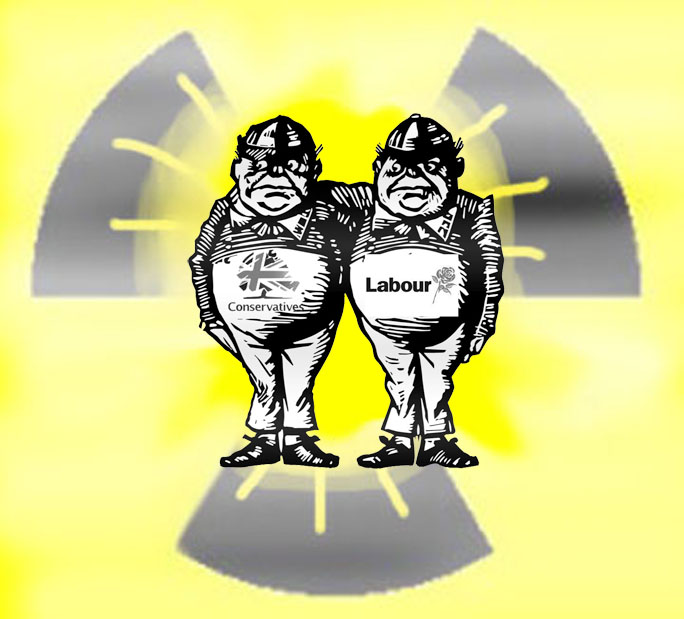
LINDA PENTZ GUNTER condemns Starmer’s willingness to let children go hungry and the elderly shiver while pouring billions into doomed nuclear projects that won’t address the climate crisis
https://morningstaronline.co.uk/article/billions-sizewell-c-show-labours-shameful-nuclear-hypocrisy Linda Penz Gunter6 Sept 24
THE Keir Starmer Labour government won’t scrap the two-child benefit cap because, it claims, the country can’t afford it. Doing away with this punitive measure would lift close to half a million children out of poverty at an estimated cost of £3.6 billion a year.
On the other hand, the Starmer government is perfectly happy to scrap the winter fuel allowance for pensioners, because doing so saves money — an estimated £1.4bn this financial year. That potentially life-saving support will now be stripped from as many as 10 million eligible pensioners.
That’s £5bn saved, on the backs of children and the elderly, two of the most vulnerable segments of our society.
Instead, the Labour government has now announced it will assign almost this identical sum — as much as £5.5bn in life support — to the planned 3,200 megawatt (MW) two-reactor Sizewell C nuclear power plant project on the Suffolk coast.
pensioners shiver in the dark in exchange for an entirely futile energy project that will keep no-one warm anytime soon, if at all.
Reacting to the announcement, Pete Wilkinson, spokesperson for Together Against Sizewell C, a local opposition group, observed: “It’s staggering that Labour has increased the potential outlay on this white elephant project to £8bn just days after Labour claimed the country couldn’t afford winter fuel payments for millions of pensioners.”
This would be the second government subsidy the scheme has received on top of an earlier £2.5bn handed out by the previous Tory government.
The announcement was made on August 30 by the Department for Energy Security and Net Zero, which described it as “a new subsidy scheme — the Sizewell C Devex Scheme — to enable continued support to the development of the proposed new nuclear power plant Sizewell C (SZC) to the point of a Final Investment Decision (FID) and thereby ultimately reach operation.”
The word “ultimately” is key here, since that operational date is very uncertain. Realistically, Sizewell C will never be completed in time to address the climate crisis. The project was initiated in 2010 with the contract awarded to French government corporation, EDF, in 2012.
Fourteen years later, the estimated cost at completion is £20bn, although these calculations are typically unpredictable and underestimated and could soar as high as £30-£40bn. Meanwhile, there are no reactors under construction.
Shovels are in the ground, but only to raze forests and fragile habitats adjacent to the precious Minsmere Nature Reserve. This is being done to make way for non-nuclear construction projects including “new offices, and training facilities,” according to Sizewell C’s joint managing directors Julia Pyke and Nigel Cann.
Further compounding the risks at Sizewell — in addition to the unsolved dangers of radioactive waste storage and meltdowns — the site sits on the shores of the North Sea where erosion has already taken its toll. With climate change precipitating sea-level rise, the plant will become ever more vulnerable to severe flooding and violent storms by the time it becomes operational.
All of this ignores the warnings of climate experts that we now have a window of five years or less in which to take urgent action to reduce carbon emissions to net zero.
Despite this, the Labour government continues to support another nuclear debacle, EDF’s first two-reactor project, the 3,200 MW Hinkley Point C nuclear power plant in Somerset.
Conceived in 2010 in the waning days of the Tony Blair Labour government, it was then ardently embraced by Conservative prime minister, David Cameron, and his Tory successors. Six years into actual construction, Hinkley Point C remains unfinished while its costs have ballooned to at least £34 billion. EDF’s vague completion date is now “after 2029.”
Claims that small modular reactors (SMR) are a promising alternative and can be rolled off assembly lines to answer energy needs are just more pie in the sky. That’s because the hundreds if not thousands of SMRs needed would result in such poor economies of scale it will send electricity prices even higher to compensate for the up-front costs.
SMR designs remain on paper, there is scant interest from buyers, and the flagship SMR project in the US, NuScale, has already collapsed under the weight of its exorbitant finances, which proved unacceptable to investors, many of whom dropped out.
Furthermore, squandering money on new nuclear power plants that are unlikely to materialise on time if ever, diverts much-needed resources away from the technologies that could be deployed quickly and on a significant scale, such as solar and wind power. For every pound squandered on nuclear power, more carbon reductions could be achieved faster by spending it on renewable energy instead.
All of this, however, falls on deaf ears in Westminster. “Labour complained about a black hole in the country’s finances yet now they are proposing to dig still further,” observed Alison Downes of Stop Sizewell C. “Where would this cash come from?”
Certainly not from the military, another nuclear hog at the subsidy trough that Labour is more than happy to overfeed. As Jeremy Corbyn, the former Labour leader and independent MP for Islington North remarked: “If the country’s finances are so bad, then why are we still spending £50bn a year on the military? If there’s no money left, why are we spending £12,000 a minute on nuclear weapons?”
Linda Pentz Gunter is a writer based in Takoma Park, Maryland. She is the independent specialist at Beyond Nuclear (www.beyondnuclear.org).
1 This Month

of the week – Shut Down Drone Warfare!


Tell the Ukrainian Government to Drop Prosecution of Peace Activist Yurii Sheliazhenko

Petition to revoke the licensing of the Near Surface Nuclear Disposal Facility (NSDF) at Chalk River. https://www.ourcommons.ca/petitions/en/Petition/Details?Petition=e-7247
To see nuclear-related stories in greater depth and intensity – go to https://nuclearinformation.wordpress.com
-
Archives
- April 2026 (103)
- March 2026 (251)
- February 2026 (268)
- January 2026 (308)
- December 2025 (358)
- November 2025 (359)
- October 2025 (376)
- September 2025 (257)
- August 2025 (319)
- July 2025 (230)
- June 2025 (348)
- May 2025 (261)
-
Categories
- 1
- 1 NUCLEAR ISSUES
- business and costs
- climate change
- culture and arts
- ENERGY
- environment
- health
- history
- indigenous issues
- Legal
- marketing of nuclear
- media
- opposition to nuclear
- PERSONAL STORIES
- politics
- politics international
- Religion and ethics
- safety
- secrets,lies and civil liberties
- spinbuster
- technology
- Uranium
- wastes
- weapons and war
- Women
- 2 WORLD
- ACTION
- AFRICA
- Atrocities
- AUSTRALIA
- Christina's notes
- Christina's themes
- culture and arts
- Events
- Fuk 2022
- Fuk 2023
- Fukushima 2017
- Fukushima 2018
- fukushima 2019
- Fukushima 2020
- Fukushima 2021
- general
- global warming
- Humour (God we need it)
- Nuclear
- RARE EARTHS
- Reference
- resources – print
- Resources -audiovicual
- Weekly Newsletter
- World
- World Nuclear
- YouTube
-
RSS
Entries RSS
Comments RSS
 nuclear-news