Donald Trump says Japan and South Korea could have their own nuclear weapons.
 Donald Trump says Japan and South Korea could have their own nuclear weapons The revelation came in perhaps his most extensive interview yet about his foreign policy plans, Independent Andrew Buncombe New York @AndrewBuncomb 27 Mar 16 Donald Trump has said he is open to the idea of both Japan and South Korea developing their own nuclear deterrents and would like to withdraw US troops from their soil.
In perhaps his most detailed explanation yet about his foreign policy plans if he were to be elected president, Mr Trump told a US newspaper that allowing the two countries to do this would reduce pressure on the US to come to their defence every time North Korea acted aggressively. He also said he would consider stopping oil purchases from Saudi Arabia unless the Saudi government provided troops to fight Isis.
“There’ll be a point at which we’re just not going to be able to do it any more. Now, does that mean nuclear? It could mean nuclear,” Mr Trump, the frontrunner for the Republican presidential nomination, told the New York Times.
Mr Trump said the US “cannot be the policeman of the world” and suggested that Tokyo and Seoul would move to develop their own weapons regardless, if the US continued along what he described as a path of “weakness”. “Would I rather have North Korea have [nuclear weapons] with Japan sitting there having them also? You may very well be better off if that’s the case,” Mr Trump said. “If Japan had that nuclear threat, I’m not sure that would be a bad thing for us.”…….http://www.independent.co.uk/news/world/americas/us-elections/donald-trump-says-japan-and-south-korea-could-have-their-own-nuclear-weapons-a695466
China wants big involvement in construction of Hinkley Point C nuclear station
 China wants hands-on role in UK nuclear, Building.co UK 24 March 2016 | By Yoosof Farah China General Nuclear says it wants to bring “expertise and experience” to UK
The Chinese nuclear developer part-funding Hinkley Point C has said it wants to be heavily involved in the construction of new nuclear plants in the UK.
Speaking to MPs on the Energy Select Committee, Zhu Minhong, general director of UK nuclear projects at China General Nuclear (CGN), said that in addition to its investment in EDF’s Somerset plant, his firm wants to bring its “expertise and experience” to Hinkley and further nuclear schemes in the UK.
At the same committee session EDF’s UK chief executive Vince de Rivaz was girlled by MPs over when the French client will make a final investment decision on Hinkley.
De Rivaz began his appearance by saying “clearly and categorically” that Hinkley Point C will go ahead, but he refused to commit to a date for when a decision will be made.
Under CGN’s funding deal with EDF, the Chinese nuclear giant has already agreed to help fund Hinkley and to partner on construction of further plants at Sizewell in Suffolk and Bradwell in Essex. At Bradwell CGN is expected to lead on development and construction itself.
Minhong told MPs the final terms of CGN’s funding deal with EDF for Hinkley is “practically completed” and the firm is “confident” it will go ahead. CGN has a 33% stake in the £18bn project. In China……..http://www.building.co.uk/news/china-wants-hands-on-role-in-uk-nuclear/5080898.article
Nuclear safety too costly for Japan- scraps 6th nuclear reactor
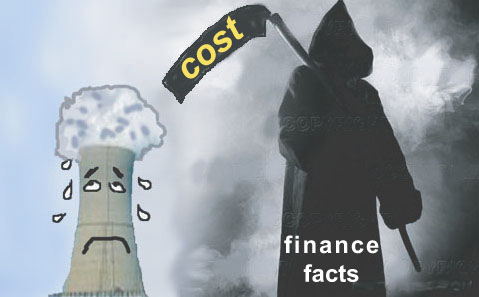
 Japan scraps 6th nuclear reactor since tsunami disaster over heavy safety costs http://www.straitstimes.com/asia/east-asia/japan-scraps-6th-nuclear-reactor-since-tsunami-disaster-over-heavy-safety-costsTOKYO (AFP) – Japanese nuclear power operator said on Friday (March 25) it would decommission an ageing reactor because of the cost of upgrading, the sixth to be scrapped due to tougher rules brought in after the Fukushima disaster.
Japan is pushing to restart its nuclear reactors, which were shuttered after a huge earthquake-triggered tsunami sent the Fukushima Daiichi nuclear plant into meltdown in 2011.
But safety regulations brought in after the disaster, which require companies to build structures to guard against huge waves and earthquakes, means it could cost billions to overhaul old reactors. Only two are on line after passing the tests, while power companies have already announced plans to scrap at least five other old reactors.
Shikoku Electric Power had planned to restart the No. 1 reactor at Ikata nuclear complex in Ehime, western Japan, but said Friday it would decommission the 39-year-old technology instead.
The Nikkei business daily estimated safety upgrades needed to meet the new safety standards could cost 200 billion yen (S$2.43 billion).
Japan set up an independent watchdog, the Nuclear Regulation Authority, after the Fukushima disaster, replacing the previous arrangement where the industry ministry both oversaw the regulator and promoted nuclear power.
Prime Minister Shinzo Abe and utility companies have been pushing for a return to nuclear power as the disaster forced Japan to turn to pricey fossil fuels to plug the energy gap left by the shutdowns.
According to Donald Trump – OK to nuclear bomb Syria?
Donald Trump open to nuclear retaliation after Brussels attack By REENA FLORES CBS NEWS March 24, 2016, Donald Trump is not ruling out the use of nuclear weapons in the U.S. fight against the Islamic State of Iraq and Syria (ISIS), according to an interview with the GOP front-runner that aired on Bloomberg TV Wednesday.
Asked if he would consider nuclear retaliation after this week’s terror attacks in Brussels, Trump responded: “Well, I’m never gonna rule anything out. And I wouldn’t wanna say. Even if I felt — it wasn’t going — I wouldn’t wanna tell you that because, at a minimum, I want them to think maybe that we would use it.”
“The fact is that we need unpredictability,” Trump said of his openness to using nuclear weapons. “When you ask a question like that, it’s a very – it is a very sad thing to have to answer it because the enemy is watching and I have a very good chance of winning. I frankly don’t want the enemy to know how I’m thinking. But with that being said, I don’t rule out anything.”
When pressed on whether he would have utilized America’s nuclear capabilities after September 11, Trump said that he would only have used it as a “last resort.”
During his interview, Trump emphasized that terrorists “are winning” and “we don’t do anything about it.”……http://www.cbsnews.com/news/donald-trump-open-to-nuclear-retaliation-after-brussels-attack/
Why are US media Presidential candidates ignoring $trillion nuclear weapons spending?
Only Bernie Sanders has adopted a position of outright rejection. In May 2015, shortly after declaring his candidacy, Sanders was asked at a public meeting about the trillion dollar nuclear weapons program. He replied: “What all of this is about is our national priorities. Who are we as a people? Does Congress listen to the military-industrial complex” that “has never seen a war that they didn’t like? Or do we listen to the people of this country who are hurting?” In fact, Sanders is one of only three US Senators who support the SANE Act, legislation that would significantly reduce US government spending on nuclear weapons. In addition, on the campaign trail, Sanders has not only called for cuts in spending on nuclear weapons, but has affirmed his support for their total abolition.
 The Trillion Dollar Question the Media Have Neglected to Ask Presidential Candidates, Moyers and company The American people will be footing the bill — but, by and large, they haven’t heard much about our country’s planned trillion-dollar nuclear weapons upgrade.BY LAWRENCE WITTNER | MARCH 21, 2016 ISN’T IT RATHER ODD THAT AMERICA’S LARGEST SINGLE PUBLIC EXPENDITURE SCHEDULED FOR THE COMING DECADES HAS RECEIVED NO ATTENTION IN THE 2015-2016 PRESIDENTIAL DEBATES?
The expenditure is for a 30-year program to “modernize” the US nuclear arsenal and production facilities. Although President Obama began his administration with a dramatic public commitment to build a nuclear weapons-free world, that commitment has long ago dwindled and died. It has been replaced by an administration plan to build a new generation of US nuclear weapons and nuclear production facilities to last the nation well into the second half of the 21st century. This plan, which has received almost no attention by the mass media, includes redesigned nuclear warheads, as well as new nuclear bombers, submarines, land-based missiles, weapons labs and production plants. The estimated cost? $1,000,000,000,000.00 — or, for those readers unfamiliar with such lofty figures, $1 trillion.
Critics charge that the expenditure of this staggering sum will either bankrupt the country or, at the least, require massive cutbacks in funding for other federal government programs. “We’re… wondering how the heck we’re going to pay for it,” admitted Brian McKeon, an undersecretary of defense. And we’re “probably thanking our stars we won’t be here to have to have to answer the question,” he added with a chuckle.
This nuclear “modernization” plan violates the terms of the 1968 nuclear Non-Proliferation Treaty, which requires the nuclear powers to engage in nuclear disarmament.
The plan is also moving forward despite the fact that the US government already possesses roughly7,000 nuclear weapons that can easily destroy the world. Although climate change might end up accomplishing much the same thing, a nuclear war does have the advantage of terminating life on earth more rapidly.
This trillion-dollar nuclear weapons buildup has yet to inspire any questions about it by the moderators during the numerous presidential debates. Even so, in the course of the campaign, the presidential candidates have begun to reveal their attitudes toward it.
On the Republican side, the candidates — despite their professed distaste for federal expenditures and “big government” — have been enthusiastic supporters of this great leap forward in the nuclear arms race. Donald Trump, the frontrunner, contended in his presidential announcement speech that “our nuclear arsenal doesn’t work,” insisting that it is out of date. Although he didn’t mention the $1 trillion price tag for “modernization,” the program is clearly something he favors, especially given his campaign’s focus on building a US military machine “so big, powerful and strong that no one will mess with us.”
His Republican rivals have adopted a similar approach. ………
On the Democratic side, Hillary Clinton has been more ambiguous about her stance toward a dramatic expansion of the US nuclear arsenal. Asked by a peace activist about the trillion dollar nuclear plan, she replied that she would “look into that,” adding: “It doesn’t make sense to me.” Even so, like other issues that the former secretary of state has promised to “look into,” this one remains unresolved. Moreover, the “National Security” section of her campaign website promises that she will maintain the “strongest military the world has ever known” — not a propitious sign for critics of nuclear weapons.
Only Bernie Sanders has adopted a position of outright rejection. In May 2015, shortly after declaring his candidacy, Sanders was asked at a public meeting about the trillion dollar nuclear weapons program. He replied: “What all of this is about is our national priorities. Who are we as a people? Does Congress listen to the military-industrial complex” that “has never seen a war that they didn’t like? Or do we listen to the people of this country who are hurting?” In fact, Sanders is one of only three US Senators who support the SANE Act, legislation that would significantly reduce US government spending on nuclear weapons. In addition, on the campaign trail, Sanders has not only called for cuts in spending on nuclear weapons, but has affirmed his support for their total abolition…….http://billmoyers.com/story/the-trillion-dollar-question-the-media-have-neglected-to-ask-presidential-candidates/#.VvGf-fJH-yw.twitter
UK govt getting resigned to the likely scrapping of Hinkley Point C nuclear project
 U.K. Sees No Power `Black Hole’ If EDF Scraps Nuclear Plan,Bloomberg, Alex Morales AlexJFMorales 24 Mar 16 The U.K. won’t struggle to keep the lights on if Electricite de France SA decides not to proceed with its 18 billion-pound ($25 billion) plan to build a new nuclear-power plant at Hinkley Point in southwest England, Energy Secretary Amber Rudd said.
Britain has nine years to fill any gap in generation created by the loss of a 3.2-gigawatt project that could produce 7 percent of the country’s electricity supply, Rudd said in an interview Thursday.
“If there were any delay, we would have plenty of time to arrange replacements,” Rudd said after giving a speech near Rochester in southeast England. “It’s absolutely not right to think that there will be some sort of black hole in 2025.”………
EDF executives and French Economy Minister Emmanuel Macron have reiterated this month that the company will take a final decision soon to go ahead with the project. Still, the company originally said that new nuclear power would be generated by Christmas 2017, a deadline that has since slipped to 2025…….
The U.K. network operator has signed contracts for 3.6 gigawatts of reserve power that it can use to meet shortfalls. National Grid can also ask shops and factories to reduce demand during peak times to help ease pressure on the system……..
Rudd spoke after giving a speech at the U.K. end of the new 1-gigawatt BritNed interconnector, which allows electricity to flow between the Netherlands and Britain. She made the case for Britain’s continued membership of the European Union, saying that a departure would risk inflating customer energy bills by 500 million pounds a year. http://www.bloomberg.com/news/articles/2016-03-24/u-k-sees-no-power-black-hole-if-edf-scraps-nuclear-plan
Bernie Sanders, Hillary Clinton agree on climate change, disagree on nuclear energy
Clinton, Sanders united on global warming, divided on nuclear energy, Idaho Statesman. BY ROCKY BARKER rbarker@idahostatesman.com 20 Mar 16
Both Bernie Sanders and Hillary Clinton have ambitious plans to shift the nation’s economy away from fossil fuels to clean energy to combat the global warming caused by their burning.
But as the two Democratic presidential candidates campaign and compete in Idaho in the days before the Tuesday caucus, the largest contrast is their views of the role nuclear power will play in the clean-energy future.
Little polling has been done in the state, but the last poll in February by Dan Jones and Associates for Idaho Politics Weekly showed Sanders with a tiny 47-45 percent lead, within the margin of error. That was a rise of 12 points for the Vermont senator from a poll earlier this year.
“It was very close,” said Dan Jones, the Salt Lake City pollster. “My guess is it is still close.”……….
CLIMATE CHANGE, INL AND CLEAN ENERGY
Sanders has made climate change action one of the central platforms of his campaign, helping to energize many of his youthful supporters. He has called for ending leases for coal, oil and gas on public lands and in the Arctic, which could affect leasing for gas drilling in Southwest Idaho.
Sanders also has called for a tax on carbon and an end to subsidies for the oil and gas industry. But his biggest contrast with Clinton is on nuclear energy, the central mission at the Idaho National Laboratory headquartered in Idaho Falls, which employs thousands of Idahoans.
“Transitioning toward a completely nuclear-free clean-energy system for electricity, heating and transportation is not only possible and affordable, it will create millions of good jobs, clean up our air and water, and decrease our dependence on foreign oil,” Sanders said on his website.
Clinton Policy Director Jake Sullivan said the former secretary of state sees it differently.
She believes nuclear energy has an important role to play in our clean-energy future,” Sullivan said. “With that in mind, the Idaho National Laboratory would be an important institution to promote our clean-energy policy.”
Sanders introduced a bill to spend $41 million on clean energy and transition workers out of the fossil fuel and nuclear industries, said spokesman Karthik Ganapathy.
“He believes we can run an economy entirely on clean, safe energy,” Ganapathy said. “He’s aware of the risks of nuclear energy.”
Clinton shifted early in the campaign to agree with Sanders on an eventual ban on oil, gas and coal leasing on public lands, an issue important in many western states, although less so here………http://www.idahostatesman.com/news/local/news-columns-blogs/letters-from-the-west/article67181847.html
New York looks to fees to save uneconomic nuclear power stations
NY eyes fee to save some nuclear plants Democrat and Chronicle March 20, 2016 ALBANY – New York’s energy regulators have a problem. ……… two of the state’s three upstate nuclear plants — the R.E. Ginna Nuclear Power Plant in Wayne County and the James A. FitzPatrick Nuclear Power Plant in Oswego County — are facing financial trouble and could close as soon as mid-2017. The third, Nine Mile Point, is also in Oswego County.
A fourth plant — the Indian Point Energy Center in Buchanan, Westchester County —is facing opposition from Gov. Andrew Cuomo as owner Entergy Corp. seeks new federal licenses.
The solution? Money……..

“Nuclear is one thing. Nuclear a stone’s throw from 20 million people when you have no evacuation plan is problematic,” Cuomo told reporters Wednesday in Rochester.
In December, Cuomo directed the Public Service Commission to install the state’s carbon-cutting goals into state regulations. As part of that, Cuomo — who appoints the commission’s members — directed the board to come up with a plan to help save the “upstate nuclear facilities,” but not Indian Point.
The commission outlined its plan in late January. And, as expected, the proposal excluded Indian Point: Only plants with valid federal licenses through 2029 would be eligible. And Indian Point’s licenses are technically expired, though it is awaiting federal approval.
The remaining three nuclear plants — Ginna, FitzPatrick and Nine Mile Point — would be eligible……
For the first time, most Americans now against nuclear power
Most Americans now oppose nuclear energy, poll finds http://thehill.com/blogs/blog-briefing-room/news/273558-poll-majority-of-americans-oppose-nuclear-energy-for-first-time By Mark Hensch, 18 Mar 16 A majority of Americans oppose using nuclear energy for the first time, according to a new poll.
Fifty-four percent dislike nuclear energy in the Gallup survey released Friday, with 44 percent who support using it.Pollsters found that opposition toward nuclear energy is up 11 points since last year, when 43 percent rejected using it as an energy source.
Support for nuclear power is down 7 points during the same period, with 51 percent backing the resource in 2015.
The poll has tracked public opinion on nuclear power since 1994. The high point in support for nuclear energy was in 2010 at 62 percent.
In 2011, support was at 57 percent just before the disaster at Japan’s Fukushima nuclear plant. Support for nuclear energy in the U.S. remained relatively unchanged the following year, but has slipped since.
The Fukushima plant suffered nuclear meltdowns after it was damaged in an earthquake and tsunami. It’s considered the largest nuclear disaster since Chernobyl in 1986.
Gallup polled 1,019 Americans via cell and landline telephones from March 2-6. The poll has a 4 percent margin of error.
Nuclear risks don’t go away: future for UK nuclear is bleak
Pro-nuclear governments try to shield the nuclear operator from these risks, if possible. They protect the nuclear operator from lawsuits (reducing insurance costs). They guarantee debt (reducing interest
 costs). In the U.S. they tend to pass on unexpected (but prudently incurred) costs to the consumer.
That leads to our second point: these measures do not reduce risk, they just shift it. The risk never goes away. The government and consumer now bear part of it. But consumers do not take out nuclear risk policies with semi-annual payments. They do not see the cost so it doesn’t exist for them until the electricity bill goes up. In the same way, government can deny the costs of acting as an insurer of last resort because no line item appears in the budget to cover the costs until an accident happens (that’s the way a Congressional staffer explained it once at a meeting on the future of nuclear power).
 5 years after Fukushima: Nuclear power prospects dim http://www.usatoday.com/story/money/markets/2016/03/15/5-years-after-fukushima-nuclear-power-prospects-dim/81553524/ Leonard Hyman and William Tilles, Oilprice.com March 15, 2016 Five years after a devastating earthquake, tsunami and nuclear accident at Fukushima that killed thousands and displaced many more, the Japanese are still cleaning up, people still cannot return to their homes and, possibly the least important statistic, Tokyo Electric Power’s shares sell at one quarter of the pre-accident price.
Roughly five years ago, the British government and French utility EDF began a process to build another nuclear power plant at Hinkley Point, an investment still awaiting the approval of EDF’s board. As odd as it seems, the tragic disaster and botched business deal have a common thread (other than the fact that EDF shares sell at one-third of their 2011 price): the role of government in nuclear power. Continue reading
Call for India to stop building nuclear plants
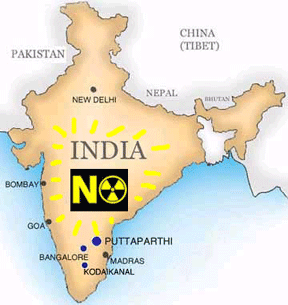 Stop building nuclear plants: CPI-M http://www.oneindia.com/india/stop-building-nuclear-plants-cpi-m-2044121.html, March 17, 2016 New Delhi, : The leakage of heavy water in the Kakrapar Atomic Power Station (KAPS) in Gujarat must impel the government to stop building new nuclear projects in the country, the CPI-M has said. “The harmful policy of importing nuclear reactors and diluting the liability law to facilitate the foreign nuclear companies must (also) be reversed,” CPI-M journal People’s Democracy said in an editorial.
Political importance to world’s nuclear powers, of getting Hinkley project happening
“The governments of the UK, France, and China have invested huge amounts of political capital in seeing Hinkley Point C come to the point of construction,” he said.
“This political capital lies with the public, convincing them that nuclear is part of a low-carbon future; [with the] the financial institutions, convincing them that when the UK makes a decision it sticks to it and hence the UK is an investable proposition; and with international governments—when the UK makes an international agreement it is binding.”
The UK’s Next Nuclear Power Plant Could Collapse Before It’s Built Motherboard, BY NICOLE KOBIE 15 March 2016 The UK could face power outages and missing emissions targets if the nuclear plant isn’t built – but that doesn’t mean it should be
Nuclear power stations are always controversial, but the UK’s proposed Hinkley Point C is particularly so. It may well be the most expensive object ever built; it guarantees higher power bills; and it’s already taken down executives, despite construction yet to start.
Hinkley Point C is set to be the first new nuclear power station built in the UK since 1995, poised to hit the grid as older nuclear sites and coal are ditched. However, its high costs are now leaving the project—and the future of the UK’s power supply—in danger.
Set to be built in Somerset by energy company EDF, which is majority-owned by the French government, there’s a chance Hinkley Point C may collapse before it’s built, and it’s nothing to do with protesters or environmental complaints. The problem with Hinkley is money: its costs risen to £18 billion ($25 billion)—with some projecting the final cost to be £24 billion ($34 billion)—and EDF has yet to finalise funding. Though it is expected to sign off on the project soon, financial analysts stressed last week that EDF can’t afford to build it.
The delays may already cause shortages in the UK’s electricity supply as it’s currently planned, which would naturally worsen if the project fails to get off the ground. The plant is supposed to start operations in 2025, when several older nuclear sites are decommissioned and the deadline hits for shutting down coal plants. Tony Roulstone, a professor setting up the University of Cambridge’s new MPhil in nuclear energy, believes the project will take ten years to construct, and given work isn’t expected to start until 2018 or 2019, will miss its deadline. “This will put the UK in a difficult position because they were counting on electricity from Hinkley by 2025,” Roulstone said.
“As some have said, the UK does not have a plan B,” he added. “The AGRs [advanced gas-cooled reactors, which make up most of the UK power stations] will close down by 2030 and at that stage we would have just one nuclear power station, Sizewell B.”
Hinkley Point C is expected to provide 7 percent of the UK’s energy. At the moment, about a fifth of the UK’s power comes from the eight currently-operating nuclear plants, but seven of those are due to be decommissioned. That, alongside theplanned closure of coal plants, which make up 22 percent of our power today, led the Institution of Mechanical Engineers to claim in a report we could see a potential supply gap of 40 to 55 percent by 2025…………..
EDF is set to make a final decision on funding the project soon, ahead of a board meeting in April, after multiple delays. However, back in February the project’s director, Chris Bakken, stepped down to “pursue new professional opportunities,” and more recently the company’s finance director, Thomas Piquemal, departed, with rumours suggesting he believed the project would damage EDF’s finances too much.
The board-level turmoil might actually be a sign that EDF’s remaining executives plan to approve the project, according to Martin Freer, director of the Birmingham Centre of Nuclear Education and Research and a professor of physics at the University of Birmingham. “My take on the resignation of the chief of finance signals that the HPC [Hinkley Point C] decision is being pushed through against the judgement of financial caution,” Freer told me. “EDF are at a point in their history where they roll the dice and hope to be lucky.”
Roulstone noted that the new plant’s construction cost is the same as EDF’s capitalisation. “Only major sales of assets and/or funding by the French government can rescue EDF and hence Hinkley,” he said………
Freer suggested that there’s more than power supply and emissions targets at risk. “The governments of the UK, France, and China have invested huge amounts of political capital in seeing Hinkley Point C come to the point of construction,” he said. “This political capital lies with the public, convincing them that nuclear is part of a low-carbon future; [with the] the financial institutions, convincing them that when the UK makes a decision it sticks to it and hence the UK is an investable proposition; and with international governments—when the UK makes an international agreement it is binding.” http://motherboard.vice.com/en_uk/read/the-uks-next-nuclear-power-plant-could-collapse-before-its-built
India may have to shut down two uneconomic reactors at Tarapur
 Oldest Indian Nuclear Reactors Near Mumbai May Be Shut Down, Bloomberg, Rajesh Kumar Singh, 14 Mar 16
-
Tarapur 1 & 2 unprofitable, undergoing frequent maintenance
-
Nuclear Power Corp. may seek higher tariff from regulator
-
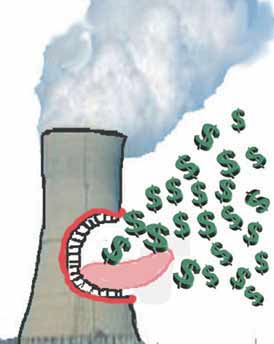
India may shut two of its oldest reactors almost five decades after they went into operation as power tariffs aren’t keeping pace with maintenance costs, according to Sekhar Basu, secretary at the Department of Atomic Energy.
The first two reactors at Tarapur, about 100 kilometers (62 miles) from Mumbai at India’s western coast, suffer frequent maintenance shutdowns that make them unprofitable, Basu said in a phone interview. They earn about 0.89 rupees (1 cent) for every kilowatt hour of electricity produced, which isn’t enough to sustain operations. Nuclear plants in India received an average tariff of 2.78 rupees per kilowatt hour in the year ended March 2015, according to the Department of Atomic Energy.
“We are pouring in money into the reactors rather than making income from them,” Basu said. “At the current tariff, it’s become unviable to run the two reactors and we may be forced to shut them down if the tariff is not increased.”
Basu didn’t provide details on the timing of a possible decommissioning, a process that can take decades and generate thousands of tons of radioactive waste. Nuclear Power Corp., the nation’s sole operator of nuclear power plants, may approach the electricity regulator for a tariff increase when operations become unsustainable, Basu said. -
Liability Law
Nuclear Power spokesman N. Nagaich couldn’t be reached on his office phone for a comment. Sanjeev Kumar, chairman at Maharashtra State Electricity Distribution Co., which buys power from the reactors, didn’t respond to phone calls and a text message sent on his mobile phone.
The boiling water reactors, which can produce 160 megawatts each, were supplied by General Electric Co. and started operating in 1969, marking India’s foray into nuclear energy. India plans to raise atomic power capacity more than ten-fold by 2032 as part of its clean-energy drive. The expansion plans have been complicated by the nation’s liability law. The statute, which exposes plant equipment suppliers to accident claims, is borne out of concerns over nuclear safety……..http://www.bloomberg.com/news/articles/2016-03-15/india-mulls-shutting-oldest-nuclear-plants-amid-mounting-costs
$Billions for US nuclear submarines
‘Top priority’: Next-generation US nuclear submarines head Navy’s budget Rt.com 15 Mar, 2016 The US Navy is requesting over $1.8 billion from Congress for the upcoming fiscal year to begin developing and building new nuclear ballistic missile submarines, a top priority for the military branch, according to a Congressional Research Service report.
Should the request for $773.1 million in advance procurement funding and $1.0911 billion for research and development be met, the Navy would be ready begin work on replacing 14 Ohio-class SSBNs, or nuclear ballistic missile submarines, with 12 new subs of a whole new class.
The total cost of the program, known as SSBN(X) or the Ohio Replacement Program, is currently estimated to be $95.8 billion. The small fraction of $1.8 billion would be spent from the Navy’s fiscal year 2017 budget, which runs October 1, 2016 to September 30, 2017. The first new-generation submarine would be acquired in 2021, according to the Congressional Research Service report.
Known as the nuclear triad, land, air and sea nuclear capabilities are reemerging as areas of priority for rearmament and modernization. Submarines, which can remain underwater for months on end, are more likely to survive nuclear attacks than their land and air nuclear counterparts, although they may not be as accurate when it comes to attacks.
According to Popular Mechanics, the nuclear-armed subs “tend to be assigned retaliatory missions against ‘countervalue’ targets – civilian targets such as cities, factories, oil refineries, and transportation infrastructure.”………https://www.rt.com/usa/335612-new-navy-nuclear-submarines/
Tax-payer money proposed in Senate, to keep uneconomic Fitzpatrick nuclear plant going
 Senate proposal includes $100M to keep Fitzpatrick nuclear plant online, North Country Public Radio, by Payne Horning (WRVO) , in Oswego, NY Mar 15, 2016 — The New York Senate Republican budget proposal includes money for Oswego County’s Fitzpatrick nuclear power plant. It would give $100 million to try to extend the life of the financially struggling plant.
The money would provide the immediate support Fitzpatrick needs to pay for the costs of refueling the plant, a lengthy and expensive process that has to take place this year. The ultimate goal is to keep Fitzpatrick open until 2017 when lucrative tax credits from the state could become available……..
Entergy is planning to close the facility next January because they said Fitzpatrick is losing $60 million annually. Since the decision to close the plant was announced last fall, lawmakers have been working to find a quick financial fix. If approved, the $100 million could be available as soon as April, but lawmakers in Albany are just starting the budget process and the proposal could be removed or changed. http://www.northcountrypublicradio.org/news/story/31295/20160315/senate-proposal-includes-100m-to-keep-fitzpatrick-nuclear-plant-online
1 This Month
23-25 October – on Zoom – World BEYOND War’s annual global conferenc

To see nuclear-related stories in greater depth and intensity – go to https://nuclearinformation.wordpress.com

Say No to NASA’s Reckless Nuclear Reactor on the Moon
Say No to NASA’s Reckless Nuclear Reactor on the Moon
-
Archives
- October 2026 (160)
- September 2026 (339)
- August 2026 (330)
- July 2026 (355)
- June 2026 (287)
- May 2026 (306)
- April 2026 (356)
- March 2026 (251)
- February 2026 (267)
- January 2026 (308)
- December 2025 (358)
- November 2025 (359)
-
Categories
- 1
- 1 NUCLEAR ISSUES
- business and costs
- climate change
- culture and arts
- ENERGY
- environment
- health
- history
- indigenous issues
- Legal
- marketing of nuclear
- media
- opposition to nuclear
- PERSONAL STORIES
- politics
- politics international
- Religion and ethics
- safety
- secrets,lies and civil liberties
- spinbuster
- technology
- Uranium
- wastes
- weapons and war
- Women
- 2 WORLD
- ACTION
- AFRICA
- Atrocities
- AUSTRALIA
- Christina's notes
- Christina's themes
- culture and arts
- Events
- Fuk 2022
- Fuk 2023
- Fukushima 2017
- Fukushima 2018
- fukushima 2019
- Fukushima 2020
- Fukushima 2021
- general
- global warming
- Humour (God we need it)
- Nuclear
- RARE EARTHS
- Reference
- resources – print
- Resources -audiovicual
- Weekly Newsletter
- World
- World Nuclear
- YouTube
-
RSS
Entries RSS
Comments RSS

