How France’s nuclear dream became a financial nightmare
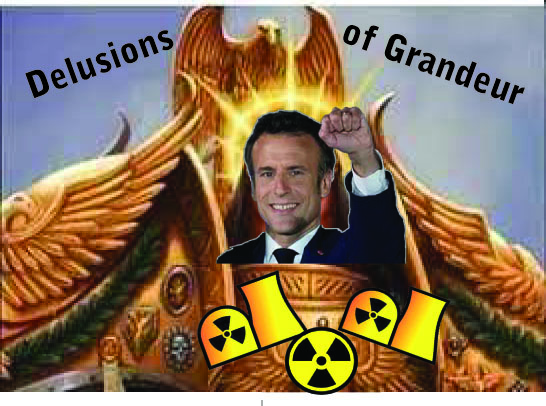
Decades of neglect, spiralling costs and political denial have turned France’s once-vaunted nuclear program into a cautionary tale, writes Jean-Luc Porquet (translated by Dr Evan Jones).
By Jean-Luc Porquet | 22 August 2025, https://independentaustralia.net/politics/politics-display/how-frances-nuclear-dream-became-a-financial-nightmare,20076
Translator’s note: The French nuclear power sector is in deep trouble technically and financially. Formally a cheap source of power, embedded costs have not been counted. There has been a dramatic loss of skills over the decades, inhibiting effective maintenance of existing plants and turning the construction of France’s then most powerful reactor at Flamanville on the Normandy coast into a nightmare.
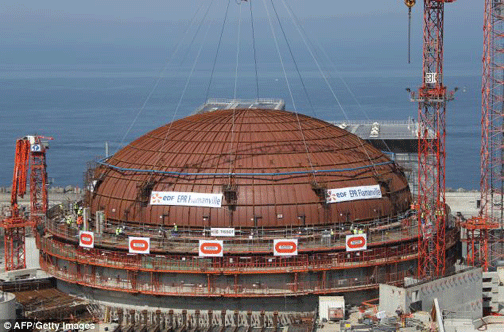
Technological and resource challenges have escalated, including water availability in the face of climate change. The plan to bury accumulated highly radioactive waste at Bure, 250 kilometres east of Paris, remains at an impasse. And the political class lives in denial.
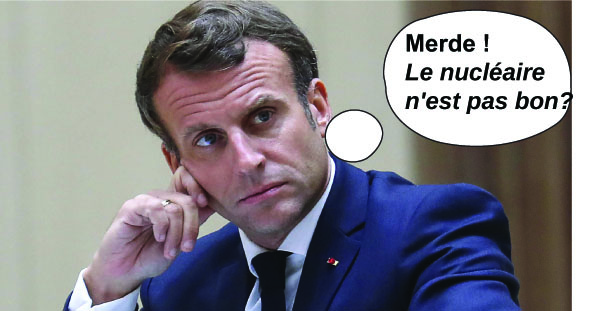
Meanwhile, sections of the Coalition parties cling to nuclear power as Australia’s post-coal salvation. Australia has uranium. However, regarding nuclear power prospects, there is no history, no capacities, no acceptable locations, no acceptable burial sites and no water. In short, local nuclear power adherents have no brains.
EVERYTHING WAS SUPPOSED to work to plan.
The 58 French nuclear reactors built at an accelerated pace between 1977 and 1996 were due to tranquilly finish their life after 30 years of good and faithful service. And the new super-powerful EPRs [European Pressurised Reactors], designed and built by Éléctricité de France, were to effect a seamless transition.
It was estimated that, by 2012, the first French EPR would be put into operation at Flamanville.
Kapow! Not only has its cost, initially fixed at €3.3 billion [AU$5.9 billion], multiplied by six (!), but its construction site has proved a nightmare. The EPR was connected to the grid only in 2024. And it has hardly run since (it is currently in shutdown).
An emergency patch-up job has been necessary on the aged French nuclear park so that its tired reactors can hang on for another 20 years. Total cost of this major overhaul now in progress: €100 billion [AU$180 billion].
At the moment when the urgent necessity to find €40 billion [AU$72 billion] in economies for the 2026 budget obsesses the Bayrou Government [under pressure from Brussels], Reporterre publishes on YouTube a remarkable documentary by journalist Laure Noualhat, titled Nucléaire – Comment il va ruiner la France. (See also Noulhat’s book, Le nucléaire va ruiner la France, Seuil-Reporterre, 224p.) It is noted there that, in the fairytale world that is nuclear energy, billions waltz out by the dozens. The golden rule is: “Whatever it costs!”
Other inescapable costs to come? To prolong the life of the plant at The Hague, where nuclear fuel is processed and which is at the end of its life — rough estimate: €34 billion [AU$61 billion]. To continue to dig deep at Bure, where the most dangerous nuclear waste will be buried 500 metres below ground — estimated cost: €35 billion [AU$63 billion]. To dismantle the 58 reactors, which, even patched up, will finish by being at the end of their life in ten or 20 years — cost: €50 billion. Total: €219 billion [AU$395.8 billion] to find. This is not all.
The EDF has sold an EPR to Finland for €3 billion [AU$5.4 billion] and two others to the United Kingdom for €22 billion [AU$39.7 billion]. And has promised to take care of any additional costs. Such comes in at €12 billion [AU$21.6 billion] for the former, €56 billion [AU$101 billion] for the latter. Do the maths.
Thomas Piquemal, the EDF’s chief financial officer at the time, went into meltdown. And resigned [in March 2016]. And this is not all.
In 2022, President Macron announced that, at his demand, the EDF will launch six “new generation” EPRs [initially, then eight more to 2050]. Hand on heart, it will happen (in fact, one knows nothing about them). Estimated total price: €100 billion [AU$180.7 billion] (more or less). A former EDF Director, Philippe Huet, interviewed by Laure Noualhat, called this a “crazy gamble”.
If ever this delusional program (transparently dismissed by the Cour des comptes [equivalent to the National Audit Office] as inadvisable) sees the day, who will pay for it? Not the EDF, already indebted to the tune of €55 billion [AU$99 billion]. Nor any private investor (not mad!). Guess… https://www.youtube.com/watch?v=rjfHyhkpef8
Jean-Luc Porquet has been a journalist at Le Canard enchaîné since 1994, where this article appeared on 9 July. He writes a column on ecology and technocratic society, as well as theatre reviews. He has written a dozen books, the latest of which, Le grand procès des animaux, is a satirical fictional account of the sixth extinction in progress.
Iran willing to reduce uranium enrichment to avoid British sanctions.

Reformist government is pushing hardline security figures to curtail nuclear programme.
Telegraph 24th Aug 2025
Iran is prepared to significantly reduce its uranium enrichment to prevent Britain reimposing United Nations sanctions, The Telegraph has been told.
Iranian officials said Tehran was willing to soften its hardline stance to avoid further military strikes from Israel and the United States.
Ali Larijani, the newly appointed secretary of Iran’s supreme national security council, is leading efforts to convince the clerical regime to lower uranium enrichment to 20 per cent purity, down from 60 per cent.
The current enrichment level is approaching the roughly 90 per cent purity required for nuclear weapons development, raising international concerns about Iran’s nuclear ambitions…………………………………………………………………………………………https://www.telegraph.co.uk/world-news/2025/08/24/iran-willing-reduce-uranium-enrichment-uk-sanctions/
Taiwan nuclear plant re-opening vote fails as approval threshold missed

By Ben Blanchard, August 23, 2025
TAIPEI, Aug 23 (Reuters) – A referendum to push for the re-opening of Taiwan’s last nuclear plant failed on Saturday to reach the legal threshold to be valid, though the president said the island could return to the technology in the future if safety standards improve.
The plebiscite, backed by the opposition, asked whether the Maanshan power plant should be re-opened if it was “confirmed” there were no safety issues. The plant was closed in May as the government shifts to renewables and liquefied natural gas.
The small Taiwan People’s Party (TPP) proposed the referendum earlier this year, and with the backing of the much larger Kuomintang (KMT) passed the legislation for the vote, saying Taiwan needs reliable power supplies and not to be so reliant on imports.
Around 4.3 million people voted in favour of the plant’s re-opening in the referendum, a clear majority over the 1.5 million who voted against, figures from the Central Election Commission showed.
But the motion needed the backing of one quarter of all registered electors – around 5 million people – to get through under electoral law, meaning the plant on Taiwan’s southern tip will not re-open.
Taiwan’s government says there are major safety concerns around generating nuclear power in earthquake-prone Taiwan and handling nuclear waste………………………..https://www.reuters.com/business/energy/taiwan-nuclear-plant-re-opening-vote-fails-approval-threshold-missed-2025-08-23/
Jeffrey Sachs: The US Can End the Gaza Genocide Now
August 21, 2025, By Jeffrey D. Sachs and Sybil Fares / Common Dreams, https://www.commondreams.org/opinion/how-to-end-gaza-genocide
President Donald Trump wants a Nobel Peace Prize, and his efforts toward peace in Ukraine, if successful, could possibly help him earn one—but only if he also ends US complicity in the ongoing genocide in Gaza. Under Trump, as under former President Joe Biden, the US has served as Israel’s partner in mass murder, annexation, starvation, and the escalating torment of millions of Palestinians. The genocide can, and will, stop if Trump wills it. So far he has not.
Israel is committing genocide—everyone knows it, even its staunchest defenders. The Israeli human rights organization B’Tselem has recently made a poignant acknowledgment of “Our Genocide.” In Foreign Affairs, former U.S. Ambassador to Israel Jack Lew recently admitted that extremist parties in Netanyahu’s government openly aim to starve Palestinians in Gaza. Lew frames his piece as praise for the former Biden administration (and for himself) for their supposedly valiant efforts to prevent mass starvation by pressuring Israel to allow minimal food entry, while blaming Trump for easing that pressure.
Yet the actual importance of the piece is that an ardent Zionist insider certifies the genocidal agenda sustaining Netanyahu’s rule. Lew recounts that in the aftermath of October 7, Israelis frequently pledged that “not a drop of water, not a drop of milk, and not a drop of fuel will go from Israel to Gaza,” a stance that still shapes Israel’s cabinet policy. The International Court of Justice (ICJ) can use Lew’s article as confirmation of Israel’s genocidal intent.
The genocide in Gaza, coupled with the annexation in the West Bank, aims to fulfill the Likud vision of a Greater Israel that exercises territorial control between the Sea and Jordan. This will destroy any possibility of a Palestinian state, and any possibility of peace. Indeed, Bezalel Smotrich, the extremist minister of finance and minister in the ministry of defense, recently vowed to “permanently bury the idea of a Palestinian state” while the Knesset has recently called for annexation of the occupied West Bank.
The US aids and protects Israel every day in these horrific crimes against the Palestinian people. The US provides billions of dollars in military support, goes to war alongside Israel, and offers diplomatic cover for Israel’s crimes against humanity. The vacuous mantra that “Israel has the right to defend itself” is the US pat excuse for Israel’s mass murder and starvation of innocent civilians.
Generations of historians, psychologists, sociologists, philosophers, and inquiring minds will ask how the descendants and co‑religionists of the Jews murdered by Hitler’s genocidal regime came to become genocidaires. Two factors, deeply intertwined, come to the fore.
First, the Nazi Holocaust lent credence among Jews to the Zionist claim that only a state with overwhelming military power and ready to use it can protect the Jewish people. For these militarists, every Arab country opposed to Israel’s ongoing occupation of Palestine became a dire foe to be crushed by war. This is Netanyahu’s doctrine of violence, which was first unveiled in the Clean Break strategy, and which has produced nonstop Israeli mobilization and war, and a society now gripped by implacable hatred even of innocent women and children in Palestine, Lebanon, and Syria. Netanyahu has dragged the US into countless devastating and futile wars out of Netanyahu’s blindness to the reality that only diplomacy, not war, can achieve Israel’s security.
Second, this non-stop resort to violence reignited a dormant strain of Biblical Judaism, notably based on the Book of Joshua, which presents God’s covenant with Abraham as justification for genocides committed in conquering the Promised Land. Ancient zealotry of this kind, and the belief that God would redeem his chosen people through violence, fueled suicidal revolts against the Roman Empire between 66 and 135 AD. Whether the genocides in the Book of Joshua ever occurred (probably not ) is beside the point. For today’s zealots, the license to commit genocide is vivid, immediate, and biblically ordained.
Aware of the danger of self-destructive zealotry, the rabbis who shaped the Babylonian Talmud proscribed Jews from attempting to return en masse to the promised land (Ketubot 111a). They taught that Jews should live in their own communities and fulfill God’s commandments where they are, rather than seeking to recapture a land from which they had been exiled following decades of suicidal revolt.
Whatever the fundamental reasons for Israel’s murderous turn, Israel’s survival among nations is at risk today as it has become a pariah state. For the first time in history, Israel’s Western allies have repudiated Israel’s violent ways. France, the United Kingdom, Australia, and Canada have each pledged to formally recognize the State of Palestine at the upcoming UN General Assembly in September. These countries will finally join the will of the overwhelming global majority in recognizing that the two-state solution, enshrined in international law, is the true guarantor of peace.
The majority of the American people, are rightly revulsed by Israel’s brutality and are also turning their support massively to the Palestinian cause. In a new Reuters poll released today, 58% of Americans now believe that the UN should recognize the State of Palestine, against just 32% who oppose that. American politicians will surely note the change, at Israel’s peril, unless the two-state solution is rapidly implemented. (Logical arguments can also be given for a peaceful one-state, bi-national solution, but this alternative has essentially no backing among UN member states and no basis in the international law regarding the Israel-Palestine conflict that has developed over more than seven decades.)
This Israeli government will not change course on its own. Only the Trump administration can end the genocide through a comprehensive settlement agreed by the world’s nations at the UN Security Council and UN General Assembly. The solution is to stop the genocide, make peace, and salvage Israel’s standing in the world by creating a Palestinian state alongside Israel on the June 4, 1967 borders.
Trump must force Israel to see reality: that Israel cannot continue to rule over the Palestinian people, murder them, starve them, and ethnically cleanse them. For decades, the entire Arab and Islamic world has supported the two-state solution, and advocated to normalize relations with Israel and guarantee security for the entire region. This solution is in full accordance with international law, and was again espoused clearly by the UN General Assembly in the NY Declaration last month at the conclusion of the United Nations High-Level International Conference on the Peaceful Settlement of the Question of Palestine and the Implementation of the Two-State Solution (July 29, 2025).
Trump has come to understand that to save Ukraine, he must force it to see reality: that NATO cannot expand to Ukraine as that would directly threaten Russia’s own security. In the same way, Trump must force Israel to see reality: that Israel cannot continue to rule over the Palestinian people, murder them, starve them, and ethnically cleanse them. The two-state solution thereby saves both Palestine and Israel.
An immediate UN Security Council vote to grant Palestine permanent membership in the UN next month would put an end to Israel’s zealous delusions of permanent control over Palestine, as well as its reckless territorial ambitions in Lebanon and Syria. The focus of the crisis would then shift to immediate and practical issues: how to disarm non-state actors within the framework of the new state and regional peace, how to enable mutual security for Israel and Palestine, how to empower the Palestinians to govern effectively, how to finance the reconstruction, and how to provide urgent humanitarian assistance to a starving population.
Trump can make this happen at the UN in September. The US, and only the US, has vetoed the permanent membership of Palestine in the UN. The other members of the UN Security Council have already signalled their support.
Peace in the Middle East is possible now—and there is no time to lose.
Israel approves controversial West Bank settlement plan
Wesley Rahn with AP, dpa, August 20, 2025, https://www.dw.com/en/israel-approves-controversial-west-bank-settlement-plan/a-73703203
The plan aims to enlarge an Israeli settlement by building thousands of new apartments in the West Bank. Critics say this would essentially split the Palestinian territory and make any two-state solution untenable.
An Israeli planning committee on Wednesday gave final approval to a controversial plan allowing new settlements in the occupied West Bank.
The plan calls for development in an open tract of land east of Jerusalem, known as E1. Israel’s government would build nearly 3,500 new apartments to enlarge the Israeli settlement of Maale Adumim, which lies next to E1.
“I am pleased to announce that just a short while ago, the civil administration approved the planning for the construction of the E1 neighborhood,” the mayor of Maale Adumim, Guy Yifrach, said in a statement.
West Bank settlements complicate peace process
Plans for new Israeli settlements in the West Bank have been widely condemned and are considered illegal under international law. The UN and Palestinian rights groups have warned that the plan would essentially divide the Palestinian territory and make any two-state solution untenable.
The plans apply to an area of only 12 square kilometers (4.6 square miles). Due to its location, however, the expansion would make it impossible to ever create a contiguous Palestinian state with east Jerusalem as its capital.
Aviv Tatarsky, a researcher at the Ir Amim organization, which opposes Israel’s expansion of West Bank settlements, told DW last week that the plan would make a Palestinian state “not possible.”
“It breaks up the West Bank into a northern part and the southern part,” he said.
Speaking during a visit to Indonesia, German Foreign Minister Johann Wadephul said Wednesday that “such plans, if implemented, would be contrary to international law and would make a two-state solution impossible.”
Last week, the German Foreign Ministry called on the Israeli government to “stop settlement construction,” adding that Germany would “only recognize changes to the borders of June 4, 1967, that have been agreed upon by the parties to the conflict.”
“The settlement construction violates international law and relevant UN Security Council resolutions,” the spokesperson added. “It complicates a negotiated two-state solution and an end to the Israeli occupation of the West Bank, as demanded by the International Court of Justice.”
Israel far-right backs settlement plan
Israeli far-right Finance Minister Bezalel Smotrich, who announced the plan last week, said Wednesday the approval was “historic,” and framed it as a rebuke of Western countries like France and the UK, who recently announced plans to recognize a Palestinian state in September.
“The Palestinian state is being erased from the table not with slogans but with actions,” Smotrich said on Wednesday.
Smotrich’s office had previously said in a statement that the settlements were “burying the idea of a Palestinian state.”
Israel has criticized countries pledging to recognize a Palestinian state, calling such recognition a “reward for Hamas” following the October 7, 2023, terror attacks.
Wesley Rahn Editor and reporter focusing on geopolitics
Patrick Lawrence: That Big, Beautiful Summit in Alaska

it is something Trump understands but Ukraine, the Europeans and the hawks in Washington simply refuse to accept: However long the fighting may drag pointlessly on, Ukraine is the vanquished in this war; Russia the victor.
No Western leader, if you have not noticed, has ever called for an end to the war. None among them has ever mentioned a peace accord for the simple reason the Western powers do not want peace with Russia.
Zelensky’s intent as he made plans to see Trump Monday was to persuade him to pull him back from the frightening idea of a peace agreement
SCHEERPOST, Patrick Lawrence: August 19, 2025,
No, the Trump–Putin summit at a joint-forces military base in Anchorage last Friday did not produce an agreement on a ceasefire in Ukraine. President Trump made no reference to “severe consequences” if Vladimir Putin did not consent to such an accord. Nothing was said about new sanctions against Russia and nothing about sanctions against nations that trade with Russia. Trump appears not to have mentioned those nuclear-armed submarines he ordered to “appropriate regions” a couple of weeks ago, and Putin seems not to have asked about them.
No, there was no such talk at Joint Base Elmendorf–Richardson. After not quite three hours behind closed doors with the Russian president, Trump departed Anchorage ahead of schedule, dropping the thought that he and Putin might linger so that Volodymyr Zelensky, president of the autocratic Ukrainian regime, could join them for further talks.
And so the story got written after the summit concluded. “No ceasefire, no deal,” the BBC concluded curtly. “Trump and Putin Put on a Show of Friendship but Come Away Without a Deal,” The New York Times reported late Friday. And from CNN, which had a dozen reporters on the story beneath this headline: “Trump–Putin summit ends without concrete deal.”
How yesterday, how swiftly passé all that early coverage proves but three days after Trump returned to Washington and Putin to Moscow. As of follow-on talks at the White House Monday with Zelensky and a swarm of European leaders, Trump seems to have rendered a ceasefire utterly beside the point in favor of an agreement he is fashioning with Putin that, if it comes to be — and we must stay with “if” for now — will prove stunningly concrete. Trump is after an enduring peace now — this as a subset of a new era in U.S.–Russian relations. Pull this off and he will improve his place in the history texts by magnitudes.
We do not know, and may never know, precisely what the two leaders said to one another behind closed doors as their interpreters and their foreign ministers, Sergei Lavrov and Marco Rubio, sat beside them. But it did not take long for Trump to start unpacking the plan he and Putin began to fashion during their talks. In post-summit interviews and social media posts, and in his encounters with Zelensky and his European sponsors at the White House Monday, Trump has made it plain as rain that an awful lot of something was discussed at a summit where nothing was reported to get done.
Within hours of the summit, Trump said in an interview with Fox News that he and Putin were near an agreement on an exchange of territories between Russia and Ukraine and that there would be security guarantees for the latter after the cessation of hostilities. “There are points that we negotiated and those points that we largely have agreed on,” Trump told Sean Hannity.
There is no telling how close or far Washington, Moscow, Kiev and (to the extent they matter) the Europeans may be from a comprehensive settlement. “Largely” covers an infinitude of near misses and failures, and Donald Trump is, after all, Donald Trump. But I read in this quick pencil-sketch a suggestion of the give-and-take dynamic between Trump and Putin: Russia will get some of the land it has fought for these past three years, which, if you look at a map, amounts to a security guarantee against the aggressions of viscerally Russophobic Ukrainians; the United States and the Western powers will cease arming the Kiev regime — another kind of guarantee. The Ukrainians will give up land but get security guarantees of their own.
Does this strike you as an unbalanced proposition? It should. Implicit in it is something Trump understands but Ukraine, the Europeans and the hawks in Washington simply refuse to accept: However long the fighting may drag pointlessly on, Ukraine is the vanquished in this war; Russia the victor.
We have had a slow roll of revelations since the Fox News interview. Reuters reported a day after the summit that Trump told Zelensky during a post-summit telephone call that it was time to “make a deal” with Moscow, which must include ceding some land to Russian sovereignty. “Russia is a very big power, and you’re not,” Trump reportedly told the Ukrainian president. Reuters said it reflected Putin’s demand in Anchorage that the Kiev regime recognize Russian sovereignty over all of the Donbas, the eastern regions of Ukraine that Russia formally annexed in September 2022 and parts of which, but not all, are under Russian military control.
Later Saturday came the big one, or a big one, as the post-summit situation is nothing if not kinetic. “It was determined by all,” Trump declared on his Truth Social platform, “that the best way to end the horrific war between Russia and Ukraine is to go directly to a Peace Agreement, which would end the war, and not a mere Ceasefire Agreement, which oftentimes do not hold up.”
“A mere ceasefire.” Wow. So much for that. A peace agreement instead of a ceasefire, cap “P” and cap “A,” if you please. Wow times 10. This is a major, major departure from the demands long advanced by all of the Western powers and Ukraine — an implicit rejection, this is to say, of the prevalent anti–Russian orthodoxy. No Western leader, if you have not noticed, has ever called for an end to the war. None among them has ever mentioned a peace accord for the simple reason the Western powers do not want peace with Russia. It is with this statement, then, that Trump signaled his determination to chart new territory.
Zelensky’s intent as he made plans to see Trump Monday was to persuade him to pull him back from the frightening idea of a peace agreement and reinvest in the demand for a ceasefire. This was also what the crew from across the Atlantic had in mind. Kier Starmer, Emmanuel Macron, Friedrich Merz: The British, French and German leaders were there. So were Mark Rutte, the NATO sec-gen, and Ursula von der Leyen, the president of the European Commission. Hawks all, this crowd. They arrived, as news reports indicated, in a state somewhere between alarm and panic.
Trump appears to have heard these people out on the ceasefire question, as was to be expected. But there is no indication that the thought went much beyond hypothetical notions of what might be discussed in an also hypothetical summit between Zelensky and Putin. And there is every indication Trump holds to his early post-summit disclosures, of which there is now more yet-to-be-confirmed detail, notably in the land-for-guarantees line and what Trump has meant in his mentions of “land swaps.”………………………………………………………………
…………………………………………………….. The “centrist” leadership in Washington and the European capitals has refused to listen to Moscow for many years now; the media that publish the bulletins of these trans–Atlantic elites routinely make the case that anything Putin says is by definition the opposite of true and that listening to the Russians on any topic is beyond all the fence posts, irretrievably out-of-bounds. It is hard to overstate the magnitude of Trump’s transgression against this background.
Trump’s second sin is his evident embrace of reality. And reality, like listening, has also been off-limits for the centrist elites and those clerking for them in media on both sides of the Atlantic. This has been so at last since the U.S.–cultivated coup that brought the current regime of crooks and neo–Nazis to power 11 years ago. Those dwelling in the Kingdom of Pretend have carried on for months as if the Kiev regime can set the terms for any kind of settlement and Moscow will have no choice but to accept them. “Ukraine is also determined not to let Russia set the terms and structure of future peace talks,” The Times reported from Kiev in a pre-summit curtain raiser.
Not to let Russia…?
……………………………………………….. To say Trump aligned with Putin, or got played or otherwise capitulated, is another way, a simpleton’s or cynic’s way, of denying or veiling reality. In my read, Trump listened to Putin’s case and has concluded, Yes, he is right. This is the ultimate reality long at issue and long unsayable. Trump has done no less and no more than speak this truth at last. The rest is rubbish.
Let us sin along with Trump, then, if we haven’t already. Let us all look past the mountain ranges of propaganda, cognitive warfare, perception management and what have you and say what Trump is now saying: It is time to acknowledge forthrightly that Putin is right about the war and its causes, about the Biden regime’s purposeful provocations, about the larger questions of which it is merely a subset and about how most sensibly to negotiate a lasting settlement in the borderlands between Europe and Russia and altogether between West and East. https://scheerpost.com/2025/08/19/patrick-lawrence-that-big-beautiful-summit-in-alaska/
Democrats bashing Trump, Putin summit ensuring continued destruction of Ukraine.
Walt Zlotow, West Suburban Peace Coalition, Glen Ellyn IL, 18 Aug 25
Democrats are horrified that Trump and Putin are actively seeking an end to the 3 year, 6 month US proxy war against Russia in Ukraine. They avoid entirely the imminent collapse of Ukraine’s military in Ukraine’s lost cause to enter NATO and conquer the Donbas Ukrainian separatists. Neither will ever happen as the war is lost with 4 eastern Ukrainian oblasts gone forever. NATO will never include the rump state that is left of Ukraine once they capitulate.
While Democrats have good reason to lambast Trump’s deranged domestic policies, they should be wishing him success, indeed cheering him on as he tries to extricate America for possibly the worst foreign policy blunder in its 250 years.
All 6 US administrations preceding Trump 2.0, including 3 Republicans (H.W. Bush, W. Bush and Trump 1.0), and 3 Democrats (Clinton, Obama, Biden) endlessly provoked the Russian invasion of February 22, 2022. But it was the third Democrat, virulent Russophobe Joe Biden, who made that invasion inevitable. He greenlighted Ukraine’s massing troops on the Donbas border to finish off the Ukrainian separatists in late 2021. Then he dismissed Russia’s entreaties in December to grant the separatists independence and rule out Ukraine NATO membership.
But the August 15 summit has changed the US, Russia trajectory from endless war to seeking an off ramp to peace. Alas, Democratic congresspersons and their sycophant Democratic media had their hair on fire over the summit. ‘Trump was cozying up to a war criminal dictator.’ Trump got rolled.’ ‘Trump betrayed the brave Ukrainian people.’ ‘Trump disgraced America and himself by not including Ukraine President Zelensky ‘
Democrats adhere to the party platform that forbids any support of Trump even it could alleviate Ukrainian suffering and lead to peace. Their endless rant against the Trump summit avoided any mention Ukraine is on US/NATO life support and will likely be finished on the battlefield by summer’s end.
Democrats offer nary an idea to reverse Ukraine’s imminent defeat. Nuke Russia? Nope. Offer up American cannon fodder? Nope. All they offer is ‘Tell Putin to get the hell out of Ukraine.’
Democratic leadership remains oblivious several million of the 6 million 2020 Biden voters who abandoned Harris in 2024 did so over their failed proxy war against Russia and support of Israel’s genocide in Gaza, both getting hundreds of thousands killed for nothing.
Democrats checked all the boxes demonizing Trump for attempting to end the lost US proxy war against Russia in Ukraine. They left unchecked all the boxes that offer any hope for the 70% of Ukrainians who look to America to end forthwith this nightmare war America provoked.
Whether in the White House or out, Democrats’ support of endless war is destroying their party along with the millions in Ukraine and Gaza. Their reaction to the Trump, Putin summit is Exhibit A.
Taiwan set to hold referendum on restarting last nuclear reactor.

Aug. 23 vote could reverse island’s nuclear phase-out amid fierce debate over energy security, safety, and politics
Girard Lopez |17.08.2025, https://www.aa.com.tr/en/asia-pacific/taiwan-set-to-hold-referendum-on-restarting-last-nuclear-reactor/3661615
TAIPEI, Taiwan
Taiwan will vote next week on whether to restart its last nuclear reactor, a move that could reverse the island’s “nuclear-free homeland” policy adopted in 2016.
The Aug. 23 referendum will ask voters if they agree to restart the Maanshan nuclear power plant’s second reactor in southern Taiwan if authorities find no safety concerns.
The unit was shut down in May under Taiwan’s nuclear phase-out plan.
The Taiwan People’s Party (TPP) proposed the measure on April 18 with support from the main opposition Kuomintang (KMT).
Opposition-dominated local legislature approved it on May 20, and the Central Election Commission scheduled the vote for Aug. 23.
Both pro- and anti-nuclear energy advocates have held rallies and campaigns ahead of the vote.
To pass, the referendum needs support from over 25% of Taiwan’s 5 million eligible voters and more “yes” than “no” ballots.
Nuclear power supplied over half of Taiwan’s electricity in the 1980s but fell to about 6% in 2023 as reactors were decommissioned.
Taiwan had three nuclear reactor plants, all of which have been decommissioned gradually since 2018. The island’s fourth plant was never completed, and a 2021 referendum rejected restarting construction.
Supporters say nuclear energy is crucial for an island reliant on imported fossil fuels, especially amid geopolitical risks.
They cite its low carbon footprint and note that countries like Japan and some EU members have extended reactor lifespans.
TPP chairperson Huang Kuo-Chang criticized the ruling Democratic Progressive Party (DPP) for missing its renewable energy target in a televised debate, saying: “Instead, coal plants are running at full capacity, worsening southern Taiwan’s air quality and harming public health, causing allergies from birth for many children as well as rising cardiovascular disease cases.”
Opponents warn of seismic risks, unresolved nuclear waste issues, and delays to renewable energy adoption.
They also contend that shifting to renewables should be gradual, much like phasing out coal, and argue the TPP and KMT’s preference for nuclear power is politically driven.
“Energy transition doesn’t mean shutting something down overnight. For example, if we shut all coal plants today, we’d instantly lose 40% of our power—unrealistic. Instead, we gradually reduce reliance on polluting or risky sources while scaling up cleaner ones,” said Lin Zheng Yuan of the Green Citizens Action Alliance.
Switzerland moves to lift ban on new nuclear power plants
Critics counter that new reactors carry high costs, waste disposal challenges and potential public pushback.
The Swiss government has presented draft legislation to end its ban on
building new nuclear power plants, reversing a policy adopted in 2018 to
phase out the technology. The plan, a counterproposal to the popular
initiative “Stop the Blackout,” would allow companies to apply for
licenses to construct reactors — if approved by Parliament and upheld in
a potential referendum.
The popular initiative, meanwhile, wants the shift
to be constitutionally enshrined, which would be more difficult to achieve
than a legislative change. Lifting the ban would mark a major shift in
Switzerland’s energy policy. Proponents argue nuclear will be needed
alongside renewables to meet rising electricity demand, cut emissions and
stabilize the grid. Critics counter that new reactors carry high costs,
waste disposal challenges and potential public pushback. Neighboring
Germany exited nuclear power completely in 2023.
Politico 15th Aug 2025, https://subscriber.politicopro.com/article/eenews/2025/08/15/switzerland-moves-to-lift-ban-on-new-nuclear-power-plants-00509734
Smotrich Announces Major West Bank Settlement Expansion To ‘Bury the Idea of a Palestinian State’.
The planned construction appears to be a response to Western countries saying they will recognize a Palestinian state
by Dave DeCamp | August 14, 2025, https://news.antiwar.com/2025/08/14/smotrich-announces-major-west-bank-settlement-expansion-to-bury-the-idea-of-a-palestinian-state/
The Israeli government is moving forward with a plan for the massive expansion of illegal Jewish settlements in the Israeli-occupied West Bank that would cut off the northern part of the Palestinian territory from its southern regions, a plan Israeli Finance Minister Bezalel Smotrich said will “bury the idea of a Palestinian state.”
Smotrich, who also holds a position in the Defense Ministry that allows him to expand settlements, announced that he plans to approve the construction of 3,401 housing units for the controversial E1 settlement project, which has been frozen for decades due to international opposition.
“They will talk about a Palestinian dream, and we will continue to build a Jewish reality,” Smotrich said at a press conference at the site of the planned construction. “This reality is what will permanently bury the idea of a Palestinian state, because there is nothing to recognize and no one to recognize.”
In an earlier statement, Smotrich said, “After decades of international pressure and freezes, we are breaking conventions and connecting Ma’ale Adumim to Jerusalem. This is Zionism at its best – building, settling, and strengthening our sovereignty in the Land of Israel.”
The announcement appears to be Smotrich’s response to several Western countries, including the UK, France, Canada, and Australia, announcing plans to recognize a Palestinian state by September if certain conditions are met.
The Israeli settlement watchdog Peace Now said the Israeli government’s Higher Planning Council is set to hold a hearing next Wednesday, August 20, for the final approval of the settlement construction. The group said the hearing was scheduled at “record speed.”
“The E1 plan is deadly for the future of Israel and for any chance of achieving a peaceful two-state solution. We are standing at the edge of an abyss, and the government is driving us forward at full speed,” Peace Now said in a statement.
“There is a solution to the Israeli-Palestinian conflict and to the terrible war in Gaza — the establishment of a Palestinian state alongside Israel — and it will ultimately come. The government’s annexation moves are taking us further away from this solution and guaranteeing many more years of bloodshed,” the group added.
The news was also strongly condemned by Palestinian officials. The presidency of the Palestinian National Council said the settlement expansion was a “systemic plan to steal land, Judaize it, and impose biblical and Talmudic facts on the conflict.”
Coulport nuclear leaks spark alarm among local nuclear campaigners
CAMPAIGNERS have dismissed reassurances from military chiefs about
radioactive waste leaking into the Clyde. Pipes which the Ministry of
Defence (MoD) had allowed to fall into disrepair leaked nuclear waste into
Loch Long from the Trident base at Coulport.
The revelations came after an
investigation by The Ferret, which forced the release of information on the
leaks the Government had tried to keep hushed up. Marian Pallister, chair
of Pax Christi Scotland, said the revelations were unsurprising but
concerning for people living in the area. Pallister, a writer and
journalist who lives near Lochgilphead, told The National: “I’m afraid
that it wasn’t a surprise, we have known about this for a long time.”
She dismissed the MoD’s claims that there had been “no unsafe releases
of radioactive material into the environment”, adding: “They would say
that, wouldn’t they? “They are obviously going to lessen their
involvement but however big or small the leaks might be, they are leaks
into waters that are a part of our lives, part of our heritage.
The National 12th Aug 2025, https://www.thenational.scot/news/25384467.coulport-nuclear-leaks-spark-alarm-among-local-nuclear-campaigners/
Scottish independence can rid us of nuclear abomination.
Ross Greer: NUCLEAR weapons aren’t just a deadly money pit, they also
make for extremely unsafe neighbours. This was proven once again last
weekend with the Ferret, The National and others exposing the scale of the
threat posed to those of my constituents who have the bases at Faslane and
Coulport on their doorsteps.
The news radioactive water leaked into
beautiful Loch Long should concern everyone, though for those of us
familiar with the safety record at Coulport, it was no surprise. Far from
an isolated event, we now know that Faslane also saw over 100 reported
safety incidents over the last 12 months, including a Category A event
earlier this year, the most serious category and one that the Royal Navy
says carries an “actual or high potential for radioactive release to the
environment”.
The National 15th Aug 2025, https://www.thenational.scot/politics/25391552.ross-greer-scottish-independence-can-rid-us-nuclear-abomination/
The Alaskan Summit: Possible Agenda and Outcomes
by Gordonhahn, August 11, 2025
As US President Donald Trump and Russian President Vladimir Putin and their respective teams prepare for their summit meeting in Alaska, numerous media reports are appearing in the media purporting to record the basics of a territorial agreement on Ukraine agreed upon by both sides.
Based on unidentified US officials, the two sides have supposedly agreed that a ceasefire will commence when Ukraine withdraws its forces from Russian claimed and largely taken Donetsk and Luhansk (Lugansk) Regions and that Russia will then forego its claims on Zaporoshe and Kherson Oblasts, while keeping Crimea.
No American or Russian official has confirmed (or denied) this as the basics of an agreement on a ceasefire, which Russia has repeatedly refused. Thus, commentators are claiming that Mr Putin has made a compromise, abandoning some of his other previously stated objectives of the ‘special military operation’ (SMO), which consistently have included the following: a concrete commitment by Ukraine and NATO that Ukraine will not become a NATO member or receive NATO military assistance, i.e., Ukrainian neutrality (the main Russian demand and reason for the SMO); Ukraine’s de-Nazification (removal of neofascism from Ukrainian politics); and de-militarization (unspecified limits on Ukraine’s military power and/or force deployment).
This is all wrong…………………………………………………………………… To read further, please subscribe to my Substack: https://open.substack.com/pub/gordonhahn/p/the-alaskan-summit-likely-agenda?r=1qt5jg&utm_campaign=post&utm_medium=web&showWelcomeOnShare=true
Weekly Briefing: A tipping point for Israel’s legitimacy

Global pressure mounts as Israel chooses famine over peace
By Dave Reed August 9, 2025, https://mondoweiss.net/2025/08/weekly-briefing-a-tipping-point-for-israels-legitimacy/
Israel’s war on Gaza has never been solely about “defeating” Hamas. This week’s reporting makes that clearer than ever. If you read just one article this week, Tareq Hajjaj documents how Israel is engineering chaos in Gaza’s aid system, shooting at desperate civilians, and allowing looters to operate freely so that food does not reach starving people. Qassam Muaddi reports on leaked Israeli cabinet minutes that confirm they deliberately chose starvation as a weapon of war, rejecting a ceasefire in favor of forcing Gaza’s surrender through hunger.
This policy is not hidden. It was discussed from the very beginning, nearly two years ago, and is still openly embraced by senior Israeli figures and the majority of the Israeli population. That brazenness is finally eroding Israel’s legitimacy around the world. The International Sociological Association’s suspension of the Israeli Sociological Society is the latest sign of an expanding academic boycott. In United States politics, Bernie Sanders’s recent resolutions to block weapons sales did not pass, but they showed something important: Palestine is becoming a litmus test inside the Democratic Party, and electeds are starting to respond to the shift in the party’s base on these issues.
At the same time, the rot inside Israel’s political culture is on full display. A new poll shows that seventy-nine percent of Jewish Israelis are not troubled by the famine in Gaza. This normalization of atrocity makes it easier for Israeli leaders to escalate the suffering of the Palestinians there. Netanyahu is now ordering the army to expand the war and reoccupy the entire Strip. There are few defences of this genocidal behavior available to the pro-Israel, anti-Palestinian crowd.
Governments and institutions desperate to protect Israel’s impunity are cracking down even harder on dissent. In the United States, Columbia University’s mass suspensions of Palestine activists and PEN America’s firing of Kori Davis show how institutions are bending to political pressure. Trump’s looming overhaul of the federal workforce threatens to hardwire this repression into the government itself. These are not separate battles. They are part of the same effort to shield Israel and complicit institutions from accountability.
We are witnessing the tipping point that the movement for Palestinian liberation has labored on for decades. Israel’s legitimacy is being contested in more places and by more voices than ever. But breaking its genocide, apartheid, and occupation will depend on escalating the movement across civil society around the world.
Julian Assange Joins Historic Anti-Genocide March Across Sydney’s Harbour Bridge
By Joe Lauria, Consortium News, 3 August 25, https://consortiumnews.com/2025/08/03/assange-joins-historic-anti-genocide-march-across-sydneys-harbour-bridge/
Julian Assange joined at least 90,000 and as many as 300,000 people who marched across Australia’s most famous bridge on Sunday to protest Israel’s genocide in Gaza.
Wikileaks founder Julian Assange, his wife Stella and brother Gabriel Shipton joined Australian journalist Mary Kostakidis and, according to police estimates, 90,000 other people, but according to organizers as many as 300,000, to march across Sydney’s Harbour Bridge on Sunday to demand an end to Israel’s genocide in Gaza.
The Sydney Morning Herald reported:
“At least 90,000 pro-Palestine protesters walked across Sydney Harbour Bridge and into history through the pelting rain, as a larger crowd than expected used the landmark as a symbol, bringing the city to a standstill and leading police to sound the alarm of a potential crowd crush.
In the face of the sheer size of the protest against the Israeli government’s actions in Gaza, which organisers say drew between 200,000 and 300,000 people, police were forced to ditch plans for the march to end at North Sydney and redirected the crowd. … The last major march across the bridge was 25 years ago, when 250,000 people marched in support of reconciliation [with Indigenous Australians.]”
Kostakidis is in court accused of racial hatred by the Zionist Federation of Australia for her social media reporting and commentary critical of the Israeli government’s genocide in Gaza.
[Consortium News was on the bridge and will be providing a full video report.].
The New South Wales premiere and police both tried to stop the march from happening by making protestors liable to arrest for blocking traffic. It took a Supreme Court ruling on Saturday to let it go ahead. About four times as many people turned up than organizers had expected — even in a driving winter rain — because of the concerted effort to stop it, an organizer told The Sydney Morning Herald.
The paper quoted Palestine Action Group organiser Josh Lees as saying said the march was “’even bigger than we dreamt of’ after people travelled from across the country to attend. He called the event a ‘monumental and historic’ success. ‘Today was just a huge display of democracy,’ he said.”
The massive turnout shows the revulsion a good number of Australians feel for Israel’s ongoing slaughter and for their government’s complicity. “Netanyahu/Albanese you can’t hide. Stop supporting genocide,” the protestors chanted.
Police were not prepared for the outpouring of outrage. The Herald said:
“NSW Police acting deputy commissioner Peter McKenna said the march came ‘very close’ to a ‘catastrophic situation’ and that officers had been forced to make a snap decision to turn tens of thousands around to avoid a crowd crush as people exited for North Sydney. McKenna said part of the problem was the organisers’ application to march stated that 10,000 people were likely to attend, not the 90,000 people the police estimated turned up.”
1 This Month
23-25 October – on Zoom – World BEYOND War’s annual global conferenc

To see nuclear-related stories in greater depth and intensity – go to https://nuclearinformation.wordpress.com

Say No to NASA’s Reckless Nuclear Reactor on the Moon
Say No to NASA’s Reckless Nuclear Reactor on the Moon
-
Archives
- October 2026 (149)
- September 2026 (339)
- August 2026 (330)
- July 2026 (355)
- June 2026 (287)
- May 2026 (306)
- April 2026 (356)
- March 2026 (251)
- February 2026 (267)
- January 2026 (308)
- December 2025 (358)
- November 2025 (359)
-
Categories
- 1
- 1 NUCLEAR ISSUES
- business and costs
- climate change
- culture and arts
- ENERGY
- environment
- health
- history
- indigenous issues
- Legal
- marketing of nuclear
- media
- opposition to nuclear
- PERSONAL STORIES
- politics
- politics international
- Religion and ethics
- safety
- secrets,lies and civil liberties
- spinbuster
- technology
- Uranium
- wastes
- weapons and war
- Women
- 2 WORLD
- ACTION
- AFRICA
- Atrocities
- AUSTRALIA
- Christina's notes
- Christina's themes
- culture and arts
- Events
- Fuk 2022
- Fuk 2023
- Fukushima 2017
- Fukushima 2018
- fukushima 2019
- Fukushima 2020
- Fukushima 2021
- general
- global warming
- Humour (God we need it)
- Nuclear
- RARE EARTHS
- Reference
- resources – print
- Resources -audiovicual
- Weekly Newsletter
- World
- World Nuclear
- YouTube
-
RSS
Entries RSS
Comments RSS

