
 Bannon Is Given Security Role Usually Held for Generals By GLENN THRUSH and MAGGIE HABERMANNYT, JAN. 29, 2017 WASHINGTON
 — The whirlwind first week of
Donald J. Trump’s presidency had all the bravura hallmarks of a Stephen K. Bannon production.
February 1, 2017
Posted by Christina Macpherson |
politics, safety, USA |
Leave a comment
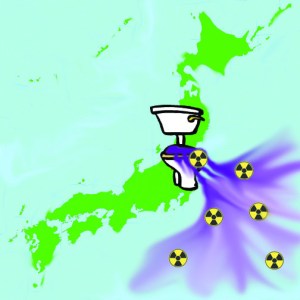 Japan’s ‘Unresolved’ Disaster Sways Former Advocate of Nuclear Power, Bloomberg by Stephen Stapczynski and Emi Urabe, January 30, 2017,
The man blocking the world’s largest nuclear plant says he grew opposed to atomic energy the same way some people fall in love.
Previously an advocate for nuclear power in Japan, Ryuichi Yoneyama campaigned against the restart of the facility as part of his successful gubernatorial race last year in Niigata. He attributes his political U-turn to the “unresolved” 2011 Fukushima Dai-Ichi disaster and the lack of preparedness at the larger facility in his own prefecture, both owned by Tokyo Electric Power Co. Holdings Inc.
“Changing my opinion wasn’t an instant realization,” Yoneyama said in an interview. “It was gradual. As people say, you don’t know the exact moment you’ve fallen in love.”
Yoneyama won’t support the restart of the Kashiwazaki-Kariwa plant in Niigata until an investigation is complete into the chain of events that resulted in the triple meltdown at Fukushima, which he plans to visit Wednesday. While utilities don’t need approval of local authorities to restart plants, Japanese power companies are tradition-bound not to move ahead until they get their consent……
In last year’s gubernatorial race for the southern prefecture of Kagoshima, where Kyushu Electric Power Co. operates the Sendai nuclear plant, a three-term incumbent was defeated by an opponent campaigning to temporarily close the reactors. A district court last year barred Kansai Electric Power Co. from running two reactors at its Takahama station in western Japan only weeks after they’d been turned back on……….
Tokyo Electric and Abe’s government see restarting KK as one way for Japan’s biggest utility to boost profits and help manage its nearly 16 trillion yen ($139 billion) share of the Fukushima cleanup. Resuming reactors No. 6 and No. 7 will boost annual profits by as much as 240 billion, the utility has said.
The economic argument, however, is beginning to hold less sway, with Yoneyama saying the benefits to the local economy are ‘overstated.’ While the prefecture risks missing out on 1.1 billion yen a year in government support without the restart, that represents a small slice of the prefecture’s budget, which tops 1 trillion yen, according to Yoneyama……..
“Once I realized that the Fukushima disaster couldn’t be easily resolved, of course my opinion changed,” Yoneyama said. “If another accident occurs, overseas tourism will become a distant dream. Even Japanese may flee the country.” https://www.bloomberg.com/news/articles/2017-01-29/japan-s-unresolved-disaster-sways-symbol-of-nuclear-opposition
February 1, 2017
Posted by Christina Macpherson |
Japan, politics |
1 Comment
 New York readies for nuclear energy from aging power plants, Herald Net, Jan 29th, 2017 By David Klepper Associated Press OSWEGO, N.Y. — When the Nine Mile Point reactor first went online, Richard Nixon was president, the Beatles were still a band and Three Mile Island, Chernobyl and Fukushima weren’t yet bywords for the hazards of nuclear power.
Almost 50 years later, New York state is betting big on the future of Nine Mile Point, one of the nation’s two oldest nuclear plants.
The state is putting up $7.6 billion in subsidies to ensure that the plant and two other upstate nuclear plants stay open, part of New York’s strategy to lean on nuclear energy as it ramps up renewable sources such as wind, solar and hydroelectric.
But even as Democratic Gov. Andrew Cuomo’s administration embraces nuclear power upstate, it’s moving to shutter the Indian Point nuclear plant some 30 miles north of New York City.
To critics, Cuomo is making a political calculation that favors jobs and energy upstate, and safety and the environment downstate.
“These things have an expiration date, and they’re really pushing it,” said Sue Matthews, who worked for contractors building Nine Mile Point’s second reactor in the 1980s. She said her opposition to the plant makes her the “most hated” woman in town. “Everyone here depends on that place — the jobs, the property taxes. They can’t afford to close it.”
Nuclear plants around the nation are at a similar crossroads, with more closures likely as owners become reluctant to spend increasingly large sums operating aging plants.
Located on the shores of Lake Ontario, Nile Mile Point is a wonder of Cold War-era engineering, with miles of colored pipes and wires snaking through long corridors to a cathedral-sized turbine room. Anyone getting close to the reactor is fitted with a small dosimeter to monitor exposure, and must step inside a phone-booth sized radiation scanner before and after.
The plant’s first reactor went online in 1969, sharing the nation’s-oldest honor with the Oyster Creek plant in New Jersey.
Immediately adjacent to Nine Mile Point is a second, 42-year-old nuclear plant, FitzPatrick, which was slated to close before Cuomo’s nuclear bailout package was approved. A third, the 47-year-old Ginna nuclear power plant, is located just east of Rochester……….
Environmental groups critical of nuclear power don’t like Cuomo’s approach.
“The governor should take his own advice,” said Alex Beauchamp, of the group Food & Water Watch. “And close the other nuclear plants upstate instead of propping up a costly and unsafe industry with $7.6 billion in New Yorkers’ money.” http://www.heraldnet.com/news/new-york-readies-for-nuclear-energy-from-aging-power-plants/
January 30, 2017
Posted by Christina Macpherson |
politics, USA |
Leave a comment
 Leaving Euratom: the government should reconsider, Weinberg Next Nuclear 27 Jan 17 “…….A complex set of negotiations will now have to take place as most nuclear co-operation with the UK relies on safeguards provided through Euratom. It may not be possible to agree and ratify new agreements before Britain leaves the EU in 2019. According to Vince Zabielski, a senior lawyer at law firm Pillsbury Winthrop Shaw Pittman, “current new build projects will be placed on hold while those standalone treaties are negotiated” meaning possible delays at Hinkley as well as Bradwell, Moorside and Wylfa.
The decision however is not just bad for the UK, but for nuclear as a whole. With the UK one of the last big supporters of the technology, weakening its strength in the field will give power to anti-nuclear camps across the continent.
Weinberg Next Nuclear is very concerned that the departure from Euratom could severely damage the UK’s nuclear industry, with impacts on energy security, industrial competitiveness and decarbonisation objectives. We find no reason why such drastic action needs to be taken. Article 50 deals with the two Treaties of Lisbon: the Treaty on the European Union and the Treaty on the Functioning of the European Union. However the Euratom treaty is separate, not mentioned in either of the above treaties thus there is no reason for including Euratom in any part of Article 50 debate. As Jonathan Leech, a senior lawyer and nuclear expert at Prospect Law said, “there doesn’t seem to have been any real explanation as to why, because we are going towards the unknown at great speed. Legally we don’t have to [leave Euratom because the UK is leaving the EU],”.
Weinberg Next Nuclear thus urges the government to reconsider and avoid the highly damaging consequences this unnecessary withdrawal could have on the UK’s nuclear future. http://www.the-weinberg-foundation.org/2017/01/27/leaving-euratom-the-government-should-reconsider/
January 28, 2017
Posted by Christina Macpherson |
politics, secrets,lies and civil liberties, UK |
Leave a comment
 Decision to leave Euratom ‘bonkers’, say experts Future of UK nuclear research ‘uncertain’ after Brexit bill revelation https://www.timeshighereducation.com/news/decision-leave-euratom-bonkers-say-experts January 27, 2017 By Holly Else The UK is to leave the European Atomic Energy Community as part of Brexit in a move that has been condemned by energy researchers.
The decision to leave the organisation, which funds and coordinates nuclear research, was outlined as part of the government’s Brexit bill published on 26 January.
One nuclear energy researcher called the decision “bonkers”, while another added that it had created a huge amount of “uncertainty” for the field.
The decision has also raised questions about whether the country’s memberships of other European research organisations are at risk.
The community, known as Euratom, is an organisation that provides the basis for research and trade in nuclear power. The government’s desire to leave the organisation is outlined in the explanatory notes published alongside the bill giving it the authority to trigger Article 50 and leave the European Union.
It is not yet clear whether it would seek to rejoin the organisation after Brexit.
Euratom, in conjunction with the Engineering and Physical Sciences Research Council, funds the Culham Centre for Fusion Energy in Oxfordshire, which is the UK’s national laboratory for fusion research. Culham also hosts JET, Europe’s largest nuclear fusion device.
According to its website, the centre collaborates with more than 20 UK universities, and it specifically mentions links with groups at the universities of Warwick and Oxford as well as the Doctoral Training Network in fusion.
Steven Cowley, previously director of the Culham centre and now president of Corpus Christi College, Oxford, said: “It would be bonkers to leave Euratom both for research and for nuclear safeguards.”
James Marrow, professor of energy materials at the University of Oxford, said that the funding available from Euratom was the “glue” that holds together the UK’s national nuclear research.
Euratom is the way that we interacted with the European [nuclear research] programmes. [This move] creates huge uncertainty,” he said.
“Nuclear [research] is a bit different from many other areas in that it only makes progress through big projects, so for a single nation it is extremely difficult for them to develop anything new…[Projects] are very much collaborative, so we would be left out,” he added.
Meanwhile Juan Matthews, visiting professor at the Dalton Nuclear Institute at the University of Manchester, said that he hoped that the inclusion of Euratom in the Brexit bill was a mistake as it “just didn’t make sense”.
“Euratom also controls the nuclear research and development aspects of the [EU’s] Horizon 2020 programme…UK research benefits more than our national contributions to Horizon 2020. A significant part of this is the work at the Culham Centre for Fusion Energy on JET and our contribution to the ITER project,” he said.
ITER is another experimental nuclear fusion project in France. Professor Matthews added that “sorting all this out will produce delays and will hit hard both our economy and our science”.
Reacting to the news, Mark McCaughrean, a senior adviser at the European Space Agency, tweeted: “While #Euratom is specifically linked to EU, how long before the ‘principle’ is extended to other European research organisations?”
A spokeswoman for the UK government said: “Leaving Euratom is a result of the decision to leave the EU as they are uniquely legally joined. The UK supports Euratom and will want to see continuity of cooperation and standards.” holly.else@tesglobal.com
January 28, 2017
Posted by Christina Macpherson |
politics, politics international, UK |
Leave a comment
 Brexit Could Also Hurt Britain’s Nuclear Research and Safety Inspections http://www.gizmodo.co.uk/2017/01/brexit-could-also-hurt-britains-nuclear-research-and-safety-inspections/ By James O Malley on 28 Jan 2017
Another wrinkle has been added to an already complex Brexit process. Just a small one… Umm.. Nuclear safety.
Politico reports that when we trigger Article 50, not only will we be withdrawing from the European Union, but we’ll also be pulling out of Euratom, the EU agency which oversees nuclear safety and security across the continent.
That’s right. Somehow Europe has configured itself so that Brexit won’t affect our Eurovision membership, but will affect nuclear safety.
The inclusion of Euratom in our middle finger to our continental colleagues was
revealed in a note on the Article 50 bill that has just been put before Parliament.
The upshot of this is that it means Britain will have to hire tonnes of new people itself to help do stuff like carry out nuclear non-proliferation inspections in countries like Iran, authorise the sale of nuclear material, and inspect our own nuclear power plants to make sure that everything is fine. As Politico notes, what makes this particularly complicated is that at the moment Euroatom is the legal owner of all of the actual nuclear materials – and this will have to be transferred to Britain… but then Britain also does a lot of the work reprocessing materials on behalf other members. Basically, it’ll be a bit of a nightmare.
The other really disappointing outcome from Brexit could also be Britain pulling out of Euratom’s Research & Development wing, which is currently working on making fusion power a reality. At the moment, we’re helping construct a brand new massive fusion reactor in France, but Brexit could put that in jeopardy. [Politico]
January 28, 2017
Posted by Christina Macpherson |
politics, safety, UK |
Leave a comment
 US report sets out policy options for nuclear preservation, World Nuclear News, 27 January 2017
A bipartisan organization supporting US state legislatures has published a new report providing an overview of state action and policy options for legislators who are interested in preserving nuclear assets in their state.
The National Conference of State Legislatures (NCSL) report, State options to keep nuclear in the mix, provides background on the current situation of US nuclear power plants and discusses the policies, trends and market conditions that have led to the current environment……..
The report suggests a number of policy options that states who set themselves the goal of retaining the current nuclear fleet could consider to relieve some of the pressures placed on operating nuclear facilities. It aims to provide legislators with a suite of possible options such as zero-emissions credits, tax incentives, the creation of state-wide nuclear mandates, and clean energy subsidy payments.
While making case studies of recent legislation enacted to preserve nuclear capacity in Illinois and New York, the authors note that individual state needs may differ. Legislatures may therefore want to consider a variety of policies to retain their most at-risk nuclear plants.
Report authors Daniel Shea and Kristy Hartman said the report aims to raise awareness and foster dialogue. “The nation’s nuclear facilities are facing an unprecedented array of challenges as nuclear power looks to compete in a rapidly changing energy market,” they said. “State legislatures play a critical role in determining the future of US nuclear power. At least 21 states are considering measures to support the continued use of nuclear generation in recent legislative sessions. In the final months of 2016, Illinois and New York took action to prevent the premature closure of several nuclear plants, but across the country, challenges remain.”
Christine Csizmadia, director of state governmental affairs and advocacy at the US Nuclear Energy Institute, said state legislatures played a vital role in developing policies affecting the viability of existing nuclear power plants. She said the report presented state policymakers with “an array of solutions” to choose from. “Every state is unique and so will be their approach to energy planning. That is why NCSL’s report is such a comprehensive tool for state legislators”, Csizmadia said. http://www.world-nuclear-news.org/NP-US-report-sets-out-policy-options-for-nuclear-preservation-2701177.html
January 28, 2017
Posted by Christina Macpherson |
politics, USA |
Leave a comment
Trump’s appointees don’t seem to be signing required ethics pledges and don’t plan
 to http://www.dailykos.com/story/2017/1/26/1625454/-Trump-s-appointees-don-t-seem-to-be-signing-required-ethics-pledges-and-don-t-plan-to By Walter Einenkel
A review of agreements between Trump’s top appointees and federal ethics regulators shows that none of the compacts mentions the 2009 executive order that requires incoming officials to sign a pledge to avoid participating in policies that “directly and substantially relate to [their] former employer or former clients” for the first two years of government service. Obama-era ethics agreements included standard language obligating political appointees to follow the rule.
If the ethics pledge rule is not enforced, watchdog groups say, Trump officials entering the administration from the private sector could quickly be in a position to use their government positions to enrich their former paymasters. Rather than facing a full two-year restriction as required by the Obama-era executive order, they would encounter only the one-year restriction previously enshrined in federal law.
Don’t you fear, we still may have one year before the most obvious conflict of interest gets a press op.
During their first year in government, presidential appointees face a federal law mandating a “cooling off” period that prohibits them from overseeing policy that affects their former employers. Another federal law creates a special two-year cooling off period if those former employers gave them an “extraordinary payment” upon their acceptance of a government job. While Energy Secretary designate Rick Perry and Commerce Secretary designate Wilbur Ross appear to be following that two-year restriction, Tillerson in his ethics agreement said he would avoid Exxon-related government business for only single year, despite his $180 million payout.
By this standard, Donald Trump himself may just spend the first year of his presidency, unpresidentedly creating a framework from which to insulate himself from the onslaught of transparent conflicts of interest he will embark upon in 2018. The good news is that he may have the new iPhone to tweet about it then!
January 28, 2017
Posted by Christina Macpherson |
politics, Religion and ethics, USA |
Leave a comment
 Daily KosBy Paul Bland for Public Justice Thursday Jan 26, 2017 ·”……Today, the new White House team is taking a deeply troubling step to hide the truth by shuttering the EPA’s climate change website and, by extension, deleting volumes of important scientific information. And it is part of a very troubling pattern: President Trump once famously proclaimed that climate change was an idea “created by and for the Chinese.” And, in an all-out assault on science and reality, he has nominated Scott Pruitt – a man so extreme that we broke 35 years of silence on cabinet nominees to oppose his nomination – to head the Environmental Protection Agency.
As a public interest law firm that brings a variety of cutting edge lawsuits that help fight the pollution that contributes to climate change, these issues are central to our mission.
The old saw that “the truth hurts sometimes” will prove especially true if we ignore the truth about the science on this issue. As gigantic chunks of ice larger than several states are headed towards “calving” (i.e., breaking away) from Antarctica, as temperatures at the North Pole are frequently 30 and 40 degrees above normal, the actual world is changing, and pretending it isn’t happening is a recipe for disaster.
So until today, the EPA site has been filled with useful and important information on climate change. But today, the new Administration is suppressing the truth and trying to erase three recent, and important, publications that the oil industry and polluters definitely don’t want the public to see.
The Administration can change the EPA’s website, but it can’t un-write the truth that was up there as of this morning. And we think responsible Americans who care about science and our planet can handle the truth. So here are the 3 recent, comprehensive EPA reports on climate change that the new Administration is trying to make go away:
EPA Climate Change FAQs
The Impacts of Climate Change on Human Health in the United States: A Scientific Assessment
Climate Change Indicators in the United States: 2016, Fourth Edition
These reports contain important information on the causes and effects of climate change, along with the scientific data to back them up. We think they’re too valuable to go missing, so we’ve given them a permanent home on the Public Justice website.
Because now is the time – when some insist that big is small, cloudy is sunny and fiction is reality – to step up, speak out and RESIST.
Update: We’ve also archived a series of climate change fact sheets that are no longer on the EPA website: How Will Climate Change Affect My Health?, Climate Change and the Health of Children, Climate Change, Health and Environmental Justice, Climate Change and The Health of Indigenous Populations, Climate Change and the Health of Occupational Groups, Climate Change and the Health of Older Adults, Climate Change and the Health of People with Disabilities, Climate Change and the Health of People with Existing Medical Conditions, and Climate Change and the Health of Pregnant Women. http://www.dailykos.com/story/2017/1/25/1625065/-Trump-Wants-Alternative-Facts-on-Climate-Change-We-Saved-the-Real-Ones
January 28, 2017
Posted by Christina Macpherson |
climate change, politics, secrets,lies and civil liberties, USA |
Leave a comment
 Brexit will delay new British nuclear power stations, warn experts
Analysts say exit from EU atomic treaty is ‘lose-lose’ that will raise costs and safety questions at plants such as Hinkley Point C, Guardian, Adam Vaughan, 27 Jan 17, Britain’s first nuclear power station in two decades will be delayed by a government decision to quit Europe’s atomic power treaty, experts have warned.
Ministers revealed on Thursday that Brexit would involve the UK leaving Euratom, which promotes research into nuclear power and uniform safety standards.
The news poses problems for the Hinkley Point C station in Somerset, while raising questions over safety inspection regimes and the UK’s future participation in nuclear fusion research.
Referring to Hinkley and other nuclear projects in the pipeline, he said: “The UK nuclear industry is critically dependent on European goods and services in the nuclear supply chain and their specialist nuclear skills. Leaving Euratom will inevitably increase nuclear costs and will mean further delays.”
EDF, which is building the Hinkley project and hopes to construct other plants, has told MPs that “ideally” the UK would stay in the treaty, as it provided a framework for complying with international standards for handling nuclear material.
Without mentioning Hinkley, the French state-owned company also warned that restrictions on the movement of people because of Brexit could delay delivery of new energy infrastructure.
Antony Froggatt, a research fellow at the Chatham House thinktank, said: “Outside of Euratom and the single market, the movement of nuclear fuel, equipment and trained staff will be more complicated.”
He noted that because the UK was a supporter of nuclear power, Brexit would affect the balance of nuclear policies in the EU, where Germany, Italy and even strongly pro-nuclear France had taken steps in recent years to reduce their reliance on atomic power.
Vince Zabielski, a nuclear energy specialist at the law firm Pillsbury Winthrop Shaw Pittman, said: “If the UK leaves Euratom before new standalone nuclear cooperation treaties are negotiated with France and the US, current new build projects will be placed on hold while those standalone treaties are negotiated.”
Other lawyers questioned why the government had decided to quit Euratom and in the manner it had done so, in the explanatory notes accompany the article 50 bill.
“There doesn’t seem to have been any real explanation as to why, because we are going towards the unknown at great speed. Legally we don’t have to [leave Euratom because the UK is leaving the EU],” said Jonathan Leech, a senior lawyer and nuclear expert at Prospect Law.
“At the moment, the UK standing on the world nuclear stage is predicated on a series of cooperation agreements, and those we have the benefit of from being a member of Euratom, and the few bilateral agreements are based on Euratom, too. Take that away and you have no basis for international nuclear cooperation.”
He said quitting Euratom would create unnecessary uncertainty for new nuclear power and research into fusion power, a cleaner alternative to nuclear fission in which the UK has been a world leader for decades……. https://www.theguardian.com/business/2017/jan/27/uk-exit-eu-atomic-treaty-brexit-euratom-hinkley-point-c
January 28, 2017
Posted by Christina Macpherson |
politics, politics international, UK |
Leave a comment
New power stations in doubt after Brexit change, THE TIMES, Sam Coates, Emily Gosden, 27 Jan 17, The new wave of British nuclear power stations was in jeopardy after the government announced it would pull out of a Europe-wide nuclear co-operation organisation.
Ministers sneaked out the news that the UK would leave the European Atomic Energy Community, known as Euratom, within the notes accompanying the bill published yesterday to trigger Article 50, the process for leaving the European Union.
Euratom was established through a 1957 treaty and plays a crucial role in ensuring compliance with international nuclear safeguards as well as establishing a European market for nuclear goods and services.
The decision to announce Britain’s planned exit from Euratom yesterday caught the nuclear industry by surprise and caused concern in parts of government. Some ministers wanted to delay the announcement because of…http://www.thetimes.co.uk/article/britain-quits-european-nuclear-body-pgmq9m9fc
January 28, 2017
Posted by Christina Macpherson |
politics, politics international, UK |
Leave a comment
 Nuclear Fiddling While the Planet Burns http://www.counterpunch.org/2017/01/20/nuclear-fiddling-while-the-planet-burns/ by LINDA PENTZ GUNTER There is a climate crisis upon us. Polar ice is melting. Sea level rise is happening. Time is running out. Emergency solutions are the only option — energy supplies that can come on fast and sustainably.
Sadly, some in the U.S. Congress would rather bury their heads in radioactive quicksand, sinking our money into nuclear energy research at national laboratories that have sought but failed to find illusory atomic answers for decades.
The House and Senate are re-introducing near identical versions of the “Nuclear Energy Innovation Capabilities Act of 2017,” which promises to throw our money down the nuclear rabbit hole rather than direct major funding to renewable energy solutions that are already addressing climate change quickly and effectively but should be supported and accelerated before it’s too late.
The Act states as its purpose “To enable civilian research and development of advanced nuclear energy technologies by private and public institutions, to expand theoretical and practical knowledge of nuclear physics, chemistry, and materials science, and for other purposes.” It passed the House last year but stalled in the Senate.
In reality, it is another futile tilt at the so-called “advanced reactor” windmill, when real windmills would actually do the job far faster, more safely and cheaply and without all the attendant risks of tinkering with radioactive materials and perpetuating a deadly waste problem into eternity.
The bill states it would authorize research, modeling and simulation of “advanced nuclear reactor concepts” that are “inherently safe.” This chimera has been chased for decades and inherent safety won’t be found in the designs the national laboratories are pushing, such as the sodium-cooled reactor, proven to be literally explosive.
So-called new generation “fast reactors” are another old idea from an old research establishment, the Argonne National Laboratory, which would be delighted to be on the receiving end of this latest transfusion. Argonne’s first attempt at a fast neutron reactor was canceled by the U.S. Congress in 1994.
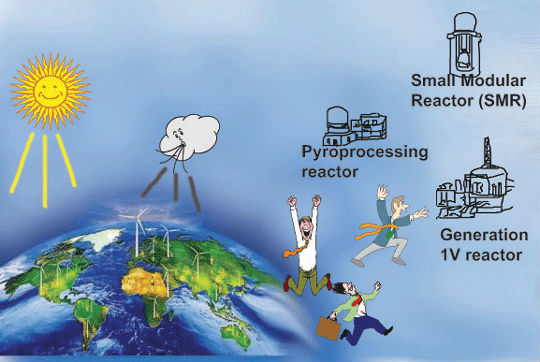
A new documentary, The New Fire, (a singularly odd choice of title given the subject), celebrates the excitement of eager young scientists determined to invent the better nuclear mousetrap. But back in 1996 the National Academy of Sciencesalready acknowledged that the development of a reactor that could recycle its own waste would have very high costs and marginal benefits and would take hundreds of years — time we definitely do not have.
The thrill of theoretical experimentation in the laboratory may be exciting for young engineers. But they shouldn’t get our money. Nor should we hand these aspiring atomic alchemists the mandate to cure climate change. That race is already being won by renewable energy research and implementation. It is in this field where the real “innovation” lies and where Congress should be directing their mandate and funding dollars.
January 27, 2017
Posted by Christina Macpherson |
politics, spinbuster, USA |
Leave a comment
 Scientists are planning their own march on Washington http://usuncut.com/resistance/scientists-plan-march-washington/ Zach Cartwright | January 25, 2017 Scientists are now organizing their own mass march, demanding the new administration respect science and heed their warnings about climate change.
The idea of a scientists’ march on Washington began in earnest on Reddit, with scientific professionals discussing how to best make their voices heard with respect to getting President Trump to heed their warnings on climate change. Scientific redditors then decided to put out a call to action for all scientists and anyone who supports empirical science to come together in Washington, DC after seeing the resounding success of the historic Women’s March on Washington and around the country.
“This isn’t just about jobs to us, if we cared about money we wouldn’t be in this field in the first place. This is about the future of every organism on earth, many that haven’t even been born yet,” wrote Reddit user RetardCharizard. “We have to fight.”
Caroline Weinberg, a public health researcher, told the Washington Post that the Trump administration’s gag orders on government agencies that study climate change and how it affects the U.S. was the last straw.
“We were inspired (well, infuriated) by the current attacks on science from the new administration,” Weinberg wrote in an email to the Post. “Slashing funding and restricting scientists from communicating their findings (from tax-funded research!) with the public is absurd and cannot be allowed to stand as policy.”
A Twitter account for the march has already been launched, and says a date announcement is forthcoming.
January 27, 2017
Posted by Christina Macpherson |
politics, USA |
Leave a comment
 Gag Order Or Not, Here’s Why Trump Cracking Down On Government Science is So Scary, Modern Farmer By Dan Nosowitz on January 25, 2017 You may have seen news about a crackdown on communications between USDA (and the EPA, HHS, and Department of the Interior) and the public. In this latest affront, the administration on Monday directed the USDA to stop all “outward-facing” communications. But by Tuesday night, the gag-order had been “rescinded.” So what’s going on? And what could happen if scientists can’t speak to the public?
It all started yesterday, when BuzzFeed obtained a memo distributed on Monday within the USDA’s Agricultural Research Service (ARS). The memo was written by Sharon Drumm, chief of staff for ARS, and it informed the more than 2,000 ARS scientists—who study everything from methane emissions to the economy of rural America and have a major focus on climate change—to, essentially, keep quiet. Here’s the text, provided to Modern Farmer by the Christopher Bentley, director of the office of communications at ARS:
“Starting immediately and until further notice, ARS will not release any public-facing documents. This includes, but is not limited to, news releases, photos, fact sheets, news feeds, and social media content.”
According to reports today, however, a second email went out to ARS late Tuesday evening stating that Drumm’s note should have never been issued and has been “hereby rescinded.”
Wait, what?
The Play-By-Play
Once BuzzFeed published the memo yesterday, people got loud. News of a gag-order on the USDA was the latest of several similar edicts:
- The Department of the Interior, after tweeting images Friday comparing President Trump’s meager inauguration crowds to the throngs at President Obama’s 2009 inauguration, found its Twitter account shut down, only to reappear the next day with an apology.
- Tuesday, Badlands National Park’s account tweeted a few facts about climate change—a subject President Trump has repeatedly and falsely claimed to be “controversial”—that were soon deleted.
- The Department of Health and Human Services (HHS) was told not to respond to any public questions, but to wait for the new leadership to arrive.
- And the Environmental Protection Agency—which Trump pledged to “abolish” during his campaign and whose nominee to head the department, Scott Pruitt, is an avowed enemy who’s currently suing the agency—has issued a complete freeze on all communications (including social media, email, press releases and website updates), as well as a funding freeze on its grants and contracts.
Trump ordering USDA scientists—who conduct a great deal of research on climate change given agriculture is a notable contributor—to cease communicating with the public seemed to follow a pattern……..
Even if the Drumm memo has truly been rescinded, similar policies have been enacted at other governmental organizations. This isn’t a weird aberration; it’s part of a systematic clampdown on the parts of the government that the Trump administration finds problematic. So let’s take a look at how a crackdown on government science could affect the nation……….
This isn’t just a matter of keeping reporters from doing their jobs,” says Humiston. “There are real safety issues at stake here.” http://modernfarmer.com/2017/01/gag-order-not-heres-trump-cracking-government-science-scary/
January 27, 2017
Posted by Christina Macpherson |
civil liberties, politics, USA |
Leave a comment
 Czech government presses ahead with nuclear plans as Poland suspends programme, Radio Prague 26-01-2017 Chris Johnstone Same day, two different stories about nuclear power in the Czech Republic and neighbouring Poland.
On Wednesday, the Czech government announced the creation of three working groups to push ahead with plans to build nuclear reactors in the country to replace aged capacity and boost nuclear power production to around half of the country’s electricity needs.
In Warsaw, the Polish finance ministry announced it was suspending its very ambitious nuclear programme aimed at securing future power supplies and curbing the use of coal-fired power plants. The ministry said that previous financing proposals burdening the state budget were simply not acceptable. The nuclear plans could still be revived but other options, such as modern coal plants would also be looked at, the ministry added.
In Prague, the statement from the Ministry of Industry and Trade said that the creation of the new working groups gave new impetus to the government strategy to boost nuclear power. That was agreed mid-way through 2015 by the current government………..
Czech nuclear plans are currently a mixture of the fairly clear, fairly fuzzy, and extremely unclear. It’s clear that a decision will be needed by around 2025 if a new reactor or reactors are to be built at Dukovany to replace the four units there which will be phased out from 2035 onwards. That’s the overwhelming priority. State controlled ČEZ is currently piloting the nuclear preparations, but it could eventually give way to a specially created state company or some joint venture with the international nuclear constructer eventually selected. And the overall power outlook, not just electricity prices but future demand as well given the continued roll-out of renewables and EU moves to curb demand are all also major intangibles.
Some of the targets for the working groups to report back are as early as May and June but other stretch out for the years to come. In theory though the Czech government should be making a decision about whether it will be willing to finance new nuclear capacity by the middle of the year. But whether any decision will be binding on a new government so close to elections is another question.
So, while Wednesday’s news looked so different on the surface, the doubts and uncertainties about new nuclear are widely shared. http://www.radio.cz/en/section/business/czech-government-presses-ahead-with-nuclear-plans-as-poland-suspends-programme
January 27, 2017
Posted by Christina Macpherson |
EUROPE, politics |
1 Comment

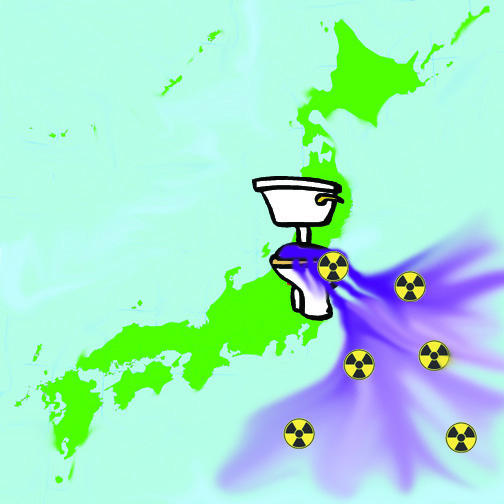








 nuclear-news