Trump and the Shadow of Fascism
22 September 2025 Michael Taylor, https://theaimn.net/trump-and-the-shadow-of-fascism/
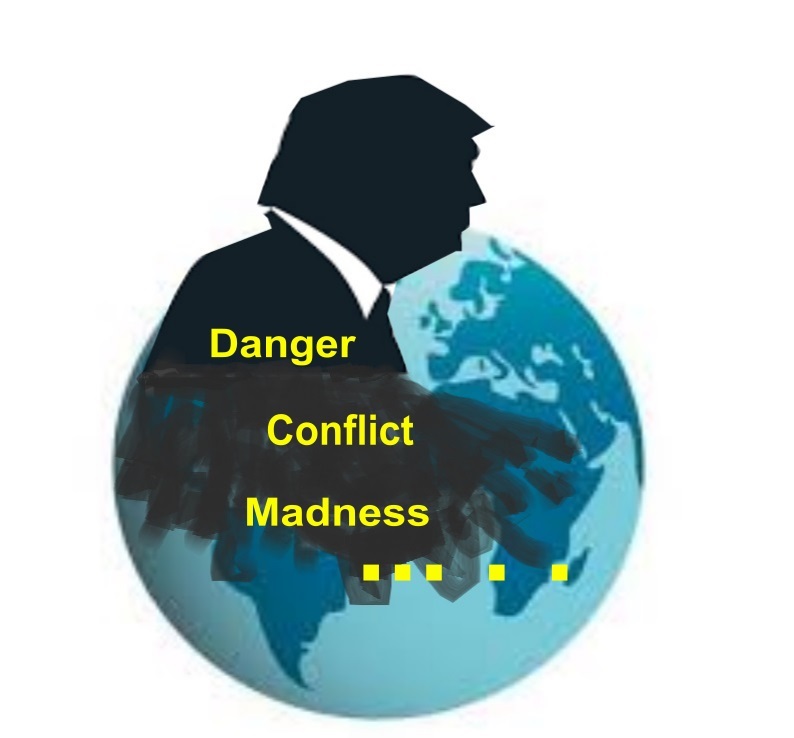
In recent months, accusations that Donald Trump and his administration embody fascism have become more frequent. The word carries historical weight, and using it carelessly risks turning it into a mere insult. But the question is worth asking seriously: how many characteristics of fascism can be seen in Trump’s presidency – and his ongoing movement?
Political theorists have identified common traits of fascist regimes: cult of personality, scapegoating of minorities, attacks on the press, obsession with law and order, disinformation, and disdain for democratic norms. Viewed through this lens, Trump and his administration tick many of the boxes.
Trump has built a cult of personality unlike any modern U.S. president, insisting that loyalty to him is more important than loyalty to law or country. He scapegoats immigrants, Muslims, and political opponents, framing them as existential threats to “real Americans.” He repeatedly called the media “the enemy of the people,” sought to revoke press credentials, and encouraged investigations into his critics.
Perhaps most concerning was his open disdain for democratic norms. From loyalty tests for judges and civil servants to his attempt to overturn the 2020 election, Trump treats democracy as conditional – acceptable only if it delivered the outcome he wanted.
Where the comparison to fascism is less exact is in the total control of society and the economy. Trump has not dissolved Congress, suspended elections (yet), or nationalised industry. The courts, press, and opposition party remain functional, though under immense and constant pressure. This distinction is crucial, but it may also reveal fascism’s modern adaptation rather than its absence. Historical fascism seized power through overt revolution; the Trumpist method appears to be the exploitation of democratic institutions from within, using their inherent weaknesses and freedoms – such as free speech and political polarisation – to consolidate power. The goal seems not to be to abolish the system outright, but to render it so subservient to a single leader that its formal structures become a façade.
What we are left with is not a carbon copy of 1930s Europe but something closer to what scholars call “authoritarian populism” or “illiberal democracy.” Still, the overlap is close enough to warrant alarm. The cult of personality, the scapegoating, the attacks on democratic institutions – these are not harmless quirks of an unconventional politician. They are warning signs.
These signs are amplified by a key tactic of modern authoritarianism: the creation of a parallel information ecosystem. Through relentless propaganda, the delegitimisation of factual reporting, the embrace of conspiracy theories, and the promotion of outlets that serve as state-media proxies, a significant portion of the population is persuaded to live in a reality defined not by shared facts, but by the leader’s will. This breaks the common ground necessary for democratic debate and makes accountability impossible.
If anything, Trump’s movement shows how easily a democracy can slide toward authoritarianism without formally abolishing elections or rewriting constitutions. The question now is not whether Trumpism matches fascism perfectly, but whether we are willing to ignore the unmistakable echoes. The history of the 20th century teaches us that fascism does not arrive in a day; it arrives in degrees, often masked by populist appeal and enabled by those who believe the institutions are too strong to fail. The warning is not that America has become a fascist state, but that it has proven vulnerable to the very playbook that leads there.
Who are Britain Remade?

By Mike Small, https://bellacaledonia.org.uk/2025/05/01/who-are-britain-remade/
There’s a concerted attempt to attack Scotland’s long-standing commitment to no new nuclear power, alongside a full-scale assault on the idea of Net Zero, and the very basics of climate policy (however inadequate mainstream policy is).
This is being led by Nigel Farage who has called Net Zero ‘the New Brexit’, whatever that means. All this has been echoed by Tony Blair’s intervention this week where he argued that any attempt to limit fossil fuels in the short term or encourages people to limit consumption is “doomed to fail”. Alongside this we can see Scottish Labour’s recent commitment to the cause of new nuclear power in Scotland.
Today The Scotsman ran with a front-page splash all about how ‘SNP voters back nuclear power’ by Deputy Political Editor David Bol and Alexander Brown.
The article was replete with quotes from Labour MSP for East Lothian, Martin Whitfield, Scottish Conservative MP, John Lamont, who said the Scottish Government embracing nuclear power would be “basic common sense”. Then there’s a quote from Sam Richards, founder and campaign director for Britain Remade, who, it turns out commissioned the poll and was also enthusiastically pro-nuclear.
What The Scotsman didn’t explain though, was who ‘Britain Remade’ are? They’re presented as if they’re maybe pollsters or some independent think-tank.
But Britain Remade is a Tory think-tank and lobby group campaigning on behalf of nuclear power. Jason Brown is Head of Communications for Britain Remade, a former No. 10 media Special Adviser and Ben Houchen’s comms Adviser.
Jeremy Driver is the Head of Campaigns at Britain Remade, a former Lloyds Banker and Parliamentary Assistant to Ann Soubry. Sam Dumitriu is Head of Policy at Britain Remade who formerly worked at the Adam Smith Institute. These are Tory SPADS working on their own campaign to support new nuclear in Scotland: Lift The Ban On New Scottish Nuclear Power.
Britain Remade claimed they are not affiliated: “We’re an independent grassroots organisation. We are not affiliated with, or part of, any political party” their website says. They may not be officially affiliated to any party, but it’s very clear where their politics (and their staff) come from.
So here we have the Scotsman giving over its front-page to a Tory lobby group to promote their campaign. On the same day they published a similar piece in the Telegraph “SNP’s ‘senseless’ nuclear ban ‘damaging Scotland’” so it’s really working for them.
This is not just a question of client journalism, it’s a question of how far right-wing forces, often working with dark money, will attempt to derail even the most modest (and completely inadequate) environmental policies. Quite why Saudi-funded Tony Blair should jump on the anti Net Zero bandwagon is anybody’s guess, but it’s quite clear there is a coordinated pro-nuclear lobbying group in action in Scotland that pans across the Conservatives and Labour parties, and is supported by astroturf groups and pliant media friends. Watch this space for more on the new nuclear lobby.
Political witch hunts and blacklists: Donald Trump and the new era of McCarthyism
September 19, 2025 , Shannon Brincat, Senior Lecturer in Politics and International Relations, University of the Sunshine Coast, Frank Mols, Senior Lecturer in Political Science, The University of Queensland, Gail Crimmins, Associate professor, University of the Sunshine Coast, https://theconversation.com/political-witch-hunts-and-blacklists-donald-trump-and-the-new-era-of-mccarthyism-265389?utm_medium=email&utm_campaign=The%20Weekender%20-%2019th%20September%202025&utm_content=The%20Weekender%20-%2019th%20September%202025+CID_d7a6e5ec27e543170fba8540bf95d6ea&utm_source=campaign_monitor&utm_term=Political%20witch%20hunts%20and%20blacklists%20Donald%20Trump%20and%20the%20new%20era%20of%20McCarthyism
A modern-day political inquisition is unfolding in “digital town squares” across the United States. The slain far-right activist Charlie Kirk has become a focal point for a coordinated campaign of silencing critics that chillingly echoes one of the darkest chapters in American history.
Individuals who have publicly criticised Kirk or made perceived insensitive comments regarding his death are being threatened, fired or doxed.
Teachers and professors have been fired or disciplined, one for posting that Kirk was racist, misogynistic and a neo-Nazi, another for calling Kirk a “hate-spreading Nazi”.
Journalists have also lost their jobs after making comments about Kirk’s assassination, as has the late-night television host Jimmy Kimmel.
A website called “Expose Charlie’s Murderers” had been posting the names, locations and employers of people saying critical things about Kirk before it was reportedly taken down. Vice President JD Vance has pushed for this public response, urging supporters to “call them out … hell, call their employer”.
This is far-right “cancel culture”, the likes of which the US hasn’t seen since the McCarthy era in the 1950s.
The birth of McCarthyism
The McCarthy era may well have faded in our collective memory, but it’s important to understand how it unfolded and the impact it had on America. As the philosopher George Santayana once said, “Those who cannot remember the past are condemned to repeat it.”
Since the 1950s, “McCarthyism” has become shorthand for the practice of making unsubstantiated accusations of disloyalty against political opponents, often through fear-mongering and public humiliation.
The term gets its name from Senator Joseph McCarthy, a Republican who was the leading architect of a ruthless witch hunt in the US to root out alleged Communists and subversives across American institutions.
The campaign included both public and private persecutions from the late 1940s to early 1950s, involving hearings before the House Un-American Activities Committee and the Senate’s Permanent Subcommittee on Investigations.
Millions of federal employees had to fill out loyalty investigation forms during this time, while hundreds of employees were either fired or not hired. Hundreds of Hollywood figures were also blacklisted.
The campaign also involved the parallel targeting of the LGBTQI+ community working in government – known as the Lavender Scare.
And similar to doxing today, witnesses in government hearings were asked to provide the names of communist sympathisers, and investigators gave lists of prospective witnesses to the media. Major corporations told employees who invoked the Fifth Amendment and refused to testify they would be fired.
The greatest toll of McCarthyism was perhaps on public discourse. A deep chill settled over US politics, with people afraid to voice any opinion that could be construed as dissenting.
When the congressional records were finally unsealed in the early 2000s, the Permanent Subcommittee on Investigations said the hearings “are a part of our national past that we can neither afford to forget nor permit to reoccur”.
Another witch hunt under Trump
Today, however, a similar campaign is being waged by the Trump administration and others on the right, who are stoking fears of the “the enemy within”.
This new campaign to blacklist government critics is following a similar pattern to the McCarthy era, but is spreading much more quickly, thanks to social media, and is arguably targeting far more regular Americans.
Even before Kirk’s killing, there were worrying signs of a McCarthyist revival in the early days of the second Trump administration.
After Trump ordered the dismantling of public Diversity, Equity and Inclusion (DEI) programs, civil institutions, universities, corporations and law firms were pressured to do the same. Some were threatened with investigation or freezing of federal funds.
In Texas, a teacher was accused of guiding Immigration and Customs Enforcement (ICE) squads to suspected non-citizens at a high school. A group called the Canary Mission identified pro-Palestinian green-card holders for deportation. And just this week, the University of California at Berkeley admitted to handing over the names of staff accused of antisemitism.
Supporters of the push to expose those criticising Kirk have framed their actions as protecting the country from “un-American”, woke ideologies. This narrative only deepens polarisation by simplifying everything into a Manichean world view: the “good people” versus the corrupt “leftist elite”.
The fact the political assassination of Democratic lawmaker Melissa Hortman did not garner the same reaction from the right reveals a gross double standard at play.
Another double standard: attempts to silence anyone criticising Kirk’s divisive ideology, while being permissive of his more odious claims. For example, he once called George Floyd, a Black man killed by police, a “scumbag”.
In the current climate, empathy is not a “made-up, new age term”, as Kirk once said, but appears to be highly selective.
This brings an increased danger, too. When neighbours become enemies and dialogue is shut down, the possibilities for conflict and violence are exacerbated.
Many are openly discussing the parallels with the rise of fascism in Germany, and even the possibility of another civil war.
A sense of decency?
The parallels between McCarthyism and Trumpism are stark and unsettling. In both eras, dissent has been conflated with disloyalty.
How far could this go? Like the McCarthy era, it partly depends on the public reaction to Trump’s tactics.
McCarthy’s influence began to wane when he charged the army with being soft on communism in 1954. The hearings, broadcast to the nation, did not go well. At one point, the army’s lawyer delivered a line that would become infamous:
Until this moment, Senator, I think I never really gauged your cruelty or your recklessness […] Have you no sense of decency?
Without concerted, collective societal pushback against this new McCarthyism and a return to democratic norms, we risk a further coarsening of public life.
The lifeblood of democracy is dialogue; its safeguard is dissent. To abandon these tenets is to pave the road towards authoritarianism.
Will the US Continue to Aid, Abet, and Arm Genocide in Gaza?
Every leader should move now to end our complicity.
Katrina vanden Heuvel, 16 Sept 25, https://www.thenation.com/article/world/israel-genocide-complicity-gaza-palestine/
he United States is aiding and abetting genocide in Gaza. This horror has the support —like so many of our most disastrous foreign debacles from Vietnam to Iraq—of both political parties.
As more and more children die of starvation and the famine deepens, as the Netanyahu government begins its attack on Gaza City, moving to occupy all of Gaza, as Israeli soldiers and bulldozers systematically level city after city in Gaza, the criminal horror is reaching its obscene goal: the ethnic cleansing of Palestinians from Gaza (and, if Netanyahu’s ministers have their way, all of the occupied West Bank).
While all signatories to the Genocide Convention have the right—and indeed the duty—to intervene to halt this slaughter, only two countries have the power to actually stop the genocide: the Israeli government that is committing it and the US government that is aiding, abetting, and arming it. The US could stop this criminal assault by ending its support for Israel, cutting off the flow of arms, ammunition, bombs, and military coordination and demanding and helping to organize immediate, emergency humanitarian relief. To do any less makes us complicit in the ongoing crime.
Across the world—and within Israel itself—some brave leaders have demanded an end to the horror.
David Grossman, Israel’s leading literary and moral voice, says that for many years he has refused to use the word genocide, but now he must—“with immense pain and with a broken heart.”
Two leading Israeli human rights groups—B’Tselem and Physicians for Human Rights Israel—released a report on “Our Genocide,” detailing the unfathomable violence and concluding that there is “no doubt” that since October 2023, the Israeli regime has been responsible for carrying out genocide against the Palestinians in the Gaza strip.” Physicians for Human Rights Israel provided a medical-legal analysis documenting Israel’s deliberate destruction of the healthcare system in Gaza, as well as other systems critical for the survival of the Palestinian civilian population.
The special rapporteur of the United Nations has reported on the companies and countries profiting from the “economy of genocide.”
Back In January 2024, the International Court of Justice ruled that there was a plausible risk that Israel’s actions amounted to genocidal acts—long before the systematic starvation became apparent. The International Criminal Court has issued arrest warrants for Israeli Prime Minister Benjamin Netanyahu, then–Defense Minister Yoav Gallant, and a former Hamas commander on the suspicion of war crimes and crimes against humanity.
A growing number of countries have suspended all or part of their arms shipments to Israel, including Germany, Italy, Spain, the Netherlands, Belgium, and Canada. Last month, in a resolution passed by 86 percent of its members, the oldest and largest association of genocide scholars concluded that Israel’s nearly two-year military campaign in Gaza meets “the legal definition of genocide,” The resolution, by the International Association of Genocide Scholars, added to a growing chorus from human rights organizations and academics concluding that Israel is committing genocide by “killing members of the group” and “deliberately inflicting on the group conditions of life calculated to bring about its physical destruction in whole or in part,” according to Emily Sample, a member of the association’s executive board.
Across the world, citizens of conscience demonstrate in greater and greater numbers, demanding an end to the horror.
And in the United States where the responsibility and the complicity are the greatest?
Courageous Jewish scholars like Omer Bartov and writers like Peter Beinart have spoken out early against the calamity.
More than 1,000 rabbis have called for Israel to allow humanitarian aid, stating “we cannot condone the mass killings of civilians…or the use of starvation as a weapon of war
After months of looking the other way, more and more of the mainstream US media are beginning to awake to the humanitarian catastrophe that is being inflicted on the Palestinians.
But among those who could actually bring the horror to an end, courage is in short supply.
Only 13 members of Congress have been willing to state the obvious: that Israel is committing genocide. House minority whip Katherine Clark declared that the “genocide and destruction” in Gaza needs to end—only to walk back her comments a few days later.
The Senate Resolution submitted by Senator Bernie Sanders to block some weapons sales to Israel received not one Republican vote. Instead, Republicans line up behind Donald Trump, who muses about beachfront properties in Gaza and tells Israel to hurry up and finish the job.
A Gallup poll showed only 8 percent of Democrats support Israel’s military action in Gaza. The Sanders Resolutions received support from a majority of the Senate Democratic caucus, yet those still refusing to stand up include Senator Charles Schumer, the Democratic leader in the Senate, as well as Senator Corey Booker, who styles himself as a voice for human rights.
This is no longer a policy debate. This is now an urgent question of basic humanity. Will the United States continue to arm genocide in Gaza? Will legislators continue to support an unconscionable crime against humanity—or act to end it? As more Palestinians starve to death, as more doctors and aid workers and journalists are murdered, as needed food and water continues to be withheld, as families are huddled into smaller and smaller open-air camps, no amount of censorship, doubletalk, lies, or excuses can hide the true horror.
There is no excuse for inaction. There is no escape from responsibility. Each legislator, official, and officer will have to look in the mirror. Complicity in this crime will destroy their reputations. Growing numbers of their constituents, their neighbors, even their own children will demand to know why they chose complicity rather than courage.
Popular
- Charlie Kirk’s Legacy Deserves No MourningCharlie Kirk’s Legacy Deserves No MourningElizabeth Spiers
- Kafka-land at UC BerkeleyKafka-land at UC BerkeleyJudith Butler
- Jimmy Kimmel’s Bosses Sold Us All OutJimmy Kimmel’s Bosses Sold Us All OutJeet Heer
- The Call Is Out for Mass, Simultaneous Strikes in 4 YearsThe Call Is Out for Mass, Simultaneous Strikes in 4 YearsSarah Lazare
Israel is committing genocide in Gaza.
America is aiding, abetting, and arming that genocide.
Every American should stand up to protest the horror being committed in our names.
Every leader should move now to end our complicity.
Every American should stand up to protest the horror being committed in our names.
Every leader should move now to end our complicity.
U.S. Nuclear Reactors will NOT Build a Strong Canada
Ontario Clean Air Alliance -Angela Bischoff, Director, Sept 17, 2025
Prime Minister Carney’s directive to the Major Projects Office to fast-track Doug Ford’s plan to build U.S. nuclear reactors in Ontario will: raise electricity rates, jeopardize national security and delay action on climate change.
New U.S. GE-Hitachi nuclear reactors are the highest-cost option to meet Ontario’s electricity needs – costing 2 to 8 times more than new solar and wind power. As a result, these U.S. reactors will make life less affordable for Ontario’s hard-working families; and they will make Ontario’s industries less competitive.
Building GE-Hitachi reactors will also jeopardize our national security by making Ontario dependent on enriched uranium imports from the U.S. – imports which President Trump could cut off at a moment’s notice.
Finally, building new nuclear reactors is the slowest option to phase-out gas power and protect our climate. Under Doug Ford’s nuclear & gas plan, 25% of our electricity will be produced by burning gas in 2030 – up from only 4% in 2017. To add insult to injury, more than 70% of Ontario’s gas supply is imported from the U.S.
With wildfires burning around the world, we need to invest in the options that can reduce our climate-damaging emissions ASAP, not decades from now. We simply can’t afford to wait 10 to 20 years for new reactors to be built, when solar and wind can be built within months to three years. Combined with batteries, wind and solar can keep our lights on at a fraction of the cost of new nuclear reactors.
Instead of subsidizing the research and development costs for a U.S. multinational’s first-of-their-kind, experimental new nuclear reactors, we should be investing in options that will build a stronger, more prosperous and more secure Canada.
Here is what Prime Minister Carney should do.
1. Rescind his request for the Major Project Office (MPO) to fast-track the building of U.S. nuclear reactors in Ontario.
2. Rescind the Canada Infrastructure Bank’s $970 million loan for the building of GE-Hitachi’s first new nuclear reactor.
3. Direct the MPO to fast-track roof top and parking lot solar in Ontario.
4. Direct the MPO to fast-track cutting the red tape that is blocking the development of Great Lakes offshore wind power.
5. Direct the MPO to fast-track the expansion of the inter-provincial electricity transmission links between Manitoba and Ontario and Ontario and Quebec to increase our ability to import low-cost water, wind and solar power from Manitoba, Quebec and the Maritimes.
What You Need to Know About the £38 Billion Sizewell C Nuclear Project inthe UK.
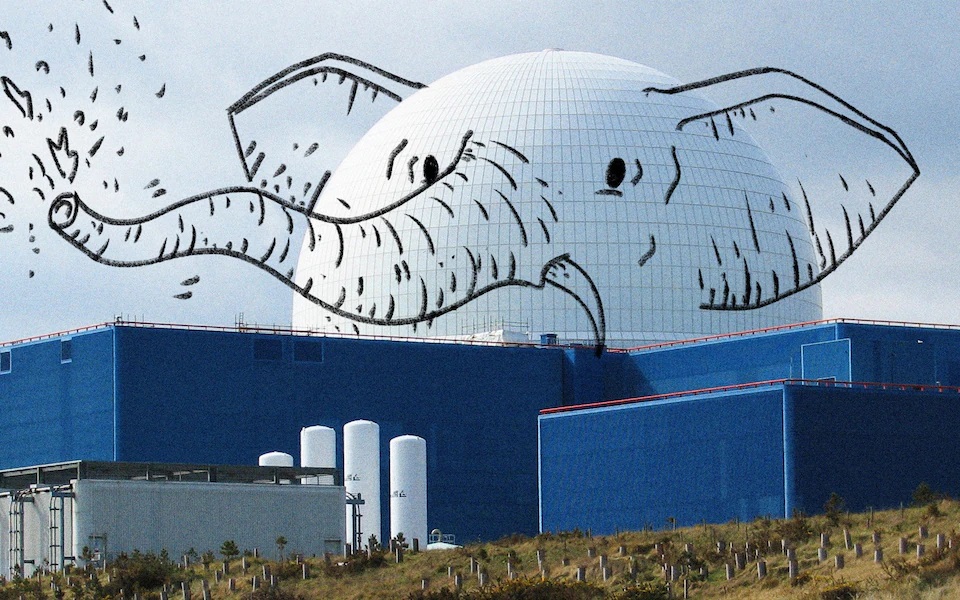
Project Timeline: Development Consent Order (DCO) approved: July
20, 2022; Groundworks commenced: January 15, 2024; Final Investment
Decision (FID) reached: July 22, 2025; Construction duration: Expected to
take between nine and twelve years; Operational date: Expected in the
2030s.
Construction Review 15th Sept 2025, https://constructionreviewonline.com/construction-projects/uk-government-approves-38-billion-sizewell-c-nuclear-project/
Iran hardliners reject IAEA deal, but IRGC outlet voices support
Iranian ultra-hardliners are criticizing Tehran’s recent agreement with
the IAEA in Cairo, despite its blessing by a top decision-making body
linked to the Supreme Leader, but an outlet linked to the Revolutionary
Guards offered support. The scrambled messaging suggests deep disagreement on Iran’s diplomatic path forward as renewed UN sanctions loom by months-end and arch-foe Israel continues to moot military attacks to
chasten Tehran.
Iran International 16th Sept 2025, https://www.iranintl.com/en/202509158464
South Carolina’s dormant nuclear volcanoes

by beyondnuclearinternational, https://beyondnuclearinternational.org/2025/09/07/south-carolinas-dormant-nuclear-volcanos/
Resuming construction of the abandoned V.C. Summer reactors is rife with challenges, says a new report from Savannah River Site Watch
The proposal to restart the failed nuclear reactor construction project in South Carolina faces a host of unexamined challenges, according to a just-released report. The report, prepared by the nuclear policy expert who led the intervention against the project since its inception in 2008 through its collapse and termination in the face of ratepayer outrage 2017, outlines major stumbling blocks to the revival of the nation’s most shocking failure of a nuclear reactor construction project in the United States in the 21stcentury.
The V.C. Summer project involved the botched attempt by now-defunct South Carolina Electric & Gas (SCE&G) to construct two large Westinghouse AP1000 nuclear reactors 2 – units 2 & 3 – 25 miles north of Columbia, South Carolina. Over $10 billion was wasted on the construction of project.
Its abrupt termination was one of the most impactful and costly nuclear construction-project collapses in U.S. history, which was the death knell for the so-called “nuclear renaissance” in the U.S. Customers were hit hard and are still left holding the bag with nothing in return for a reported $2 billion payment so far, for financing costs, an amount that grows daily. Though far-fetched, project restart is now being discussed.
The report – presenting 14 unanalyzed challenges to the restart idea and prepared by the Columbia-based public-interest, non-profit group Savannah River Site Watch – is titled Economic, Technical and Regulatory Challenges Confound Restart of the Terminated V.C. Summer Nuclear Reactor Construction Project in South Carolina.
The 24-page report was written by Tom Clements, director of SRS Watch, who led interventions before the PSC by the environmental group Friends of The Earth beginning in 2008 and running through the bankruptcy of SCE&G and its takeover by Dominion Energy South Carolina in January 2019.
“As the public was so abused during the V.C Summer construction project, they now deserve a voice in raising concerns about proposals concerning rebirth of the project in which they still have financial ownership and that’s for whom this report speaks” said Clements. “We reveal in the report that Dominion ratepayers are right now paying 5.22% of the bill for the terminated project and are paying, since 2019, an additional $2.8 billion over 20 years. The restart effort could once again saddle customers with additional massive costs if VCSummer 2.0 proceeds.”
The 5.22% monthly rate hidden in the Dominion monthly bill was revealed in a Freedom of Information Act document provided by the S.C. Office of Regulatory Staff to SRS Watch on August 7, 2025. In January 2019, the S.C. Public Service Commission ordered Dominion customers to pay an additional $2.8 billion over the next 20 years for the cost of the bungled project. That monthly fee should be eliminated and consumer investment rebated, especially if restart is pursued, according to SRS Watch.
Themes covered in the “restart challenges” report include:
Nuclear Advisory Council restart report not a reliable guidepost;- Nuclear Regulatory Commission license terminated in 2019, hard to regain a new license;
- Reestablishing NRC certification for equipment will be difficult;
- Environmental permits must be secured anew or renewed;
- Unclear how much equipment remains and if it’s to be resold for reuse or just scrap;
- Dominion and Santee Cooper not interested in involvement in restart;
- Westinghouse plans for new AP1000s unclear, rhetoric might not be accurate;
- Cost and schedule of new Westinghouse AP1000s unclear; Last-of-a-Kind (LOAK) reactor?
- Ratepayers in South Carolina could be put on the hook again;
- S.C. Public Service Commission and Dominion ratepayers will be involved, can’t be sidelined;
- Federal rhetoric supporting nuclear power won’t carry the day or overcome big obstacles;
- Reactor restart fails to secure funds or protection from South Carolina legislature;
- Highly radioactive spent fuel at new units a challenge;
- When will the community near V.C. Summer be consulted?
Donald Trump orders ‘take down’ of 44-year-old peace vigil opposite White House.
The White House Peace Vigil has stood near the White House since 1981, calling for global disarmament. After a reporter asked about the “eyesore” tent, Donald Trump said he will look into taking it down.
One of the world’s longest-running peace vigils could be under threat after Donald Trump ordered to “take it down”.
The White House Peace Vigil, which has stood near the president’s residence since 1981, is a tent manned around the clock in a call for peace and global disarmament.
Flanked by various anti-war placards, the small blue tent was described as an “eyesore” by a reporter from conservative outlet Real America’s Voice, who asked Mr Trump about it.
“Take it down, today, right now,” he said, after asking where the tent is and claiming he hadn’t heard of it.
“We’re going to look into it right now.”
On Friday night, police were seen talking to what appeared to be demonstrators near the vigil, in Lafayette Park, across the street from the White House.
The vigil-keeper Philipos Melaku-Bello was seen hugging another protester, who feared the 44-year-old site could be torn down.
It follows another threat against the vigil earlier this year, when Representative Jeff Van Drew wrote a letter to the Interior Department describing the site as a “24-7 eyesore”.
In the letter, shared by the Washington Post, he said people have “every right to protest their government”, but not to “hijack a national park and turn it into a 24/7 eyesore”.
The site of the vigil is in a park run by the National Park Service (NPS), which stipulates this tent must be manned at all times to remain standing.
In 2013, the vigil was briefly taken down by park police when it was found abandoned.
Organisers said the man responsible for staying at the tent overnight that day was a veteran who had an episode of post-traumatic stress disorder.
Nuclear outpaced fourteen to one by wind and solar in Europe
- Joe Bernardi, Vanessa Levy, Ye Huang, and Jessie Cato
- Global Energy Monitor (accessed) 4th Sept 2025
Key points
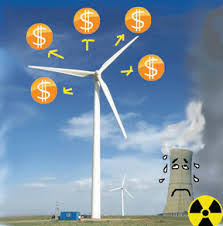
- Aging infrastructure, unrealized plans, and high costs continue to limit nuclear’s role in swift decarbonization, while solar and wind power are expanding rapidly and outpacing nuclear in new capacity and generation.
- Nearly 40% of all nuclear power ever proposed has been cancelled: 566 gigawatts (GW) of nuclear capacity has been cancelled worldwide, more than what is currently operational (401 GW) or retired (116 GW) combined.
- Europe’s nuclear sector has lost 122 GW of planned capacity to cancellations, more than the operating nuclear fleet of any single country worldwide. An additional 68 GW has been retired, and 90% of the remaining reactors are more than 35 years old. In contrast, European wind and utility-scale solar capacity under construction or in pre-construction outweighs nuclear by a factor of more than 13 to 1.
- Australia’s moratorium on nuclear, lengthy projected development timelines, high costs, lack of expertise, and strong public and policy preference for renewables mean nuclear is unlikely to play a significant role in filling the gap left by the country’s planned coal phaseout by 2038…………………………………………………………………………………………… https://globalenergymonitor.org/report/nuclear-outpaced-fourteen-to-one-by-wind-and-solar-in-europe/
Trump supports nuclear power as it is ‘more American’ than wind, solar, US official says

By Reuters, September 6, 2025
WASHINGTON, Sept 4 (Reuters) – The Trump administration is more willing to support loan guarantees and tax breaks for nuclear power than for wind and solar because it is “more American” than those forms of energy, the director of the U.S. Energy Dominance Council said on Thursday.
Jarrod Agen said nuclear power is more likely to be made from U.S.-made parts than wind and solar farms, so the administration is more willing to give it financial aid from the U.S. Loan Programs Office and support tax incentives. https://www.reuters.com/business/energy/trump-supports-nuclear-power-it-is-more-american-than-wind-solar-us-official-2025-09-04/
UKRAINIAN NEOFASCISM – War Time Developments: Part 1 ‘Azov’ and Part 2 ‘Right Sector’
by Gordonhahn, September 5, 2025
Neo-fascism and ultranationalism may not have been the most powerful element in Ukraine or even among Ukrainian nationalists before the NATO-Russia Ukrainian War, but they are almost certainly so now, and they are becoming increasingly powerful military-politically, culturally, and ideologically.
Ukraine’s neofascists have never been satisfied with the Maidan revolt, despite their pivotal role in overthrowing the previous oligarch-dominated order, which the Maidan revolt only replaced in part. They have always looked tot he future and completion of the ‚nationalist revolution‘, as they call it. A few years ago, Dmitro Yarosh, founder and then leader or “coordinator’ of Ukraine’s neofascist Right Sector (RS) and later advisor to now fired Ukrainian Armed Forces Commander, Gen. Valerii Zaluzhnyi, who is now Kiev’s ambassador to the UK, promised there would be a ‘second phase of the nationalist revolution’ of which the February 2014 Maidan revolt was supposedly but the first.
The second phase is to sweep away the liberal and oligarchic remnants of the pre-Maidan democratic order brought into the Maidan regime, in Yarosh’s view. Yarosh recently repeated his call for the completion of the neofascist revolution on his Facebook page: “As it turned out, during the Dignity Revolution and the Russian-Ukrainian War, Ukrainian nationalists became the main factor in the Ukrainian national-liberation struggle in the 21st century… I am a Ukrainian Nationalist – sounds proud both in Ukraine and across the world. The next power after the War for Independence should be nationalist. Otherwise, we will once again be led down an unbreakable cycle of national humiliation, corruption, degeneracy, moral degradation, economic decline, inferiority and defeat… Therefore, after the War for Independence, the wise, courageous and noble should rule in Ukraine. Glory to the Nation!”
Similar views are held by Ukraine’s many other ultra-nationalist and neo-fascist groups and their leaders, and they have been waiting for the moment to complete their revolution. The catastrophe of the war, its outcome, and consequences are bringing their dream ever closer to reality. These factors alone could assist the neo-fascist’s rise to power, even if only temporarily.
There once was a time when the West acknowledged Ukraine’s neofascist threat to republican rule, even as it helped armed, trained, and equipeed the neofascists‘ cocoons, the siloviki –, i.e. the Ukrainian military, SBU, and HRU. The de facto NATO think tank, the Atlantic Council, at the time noted:
Since the beginning of 2018, C14 and other far-right groups such as the Azov-affiliated National Militia, Right Sector, Karpatska Sich, and others have attacked Roma groups several times, as well as anti-fascist demonstrations, city councilmeetings, an event hosted by Amnesty International, art exhibitions, LGBT events, and environmental activists. On March 8, violent groups launched attacks against International Women’s Day marchers in cities across Ukraine. In only a few of these cases did police do anything to prevent the attacks, and in some they even arrested peaceful demonstrators rather than the actual perpetrators.
“International human rights groups have sounded the alarm. After the March 8 attacks, Amnesty International warned that “Ukraine is sinking into a chaos of uncontrolled violence posed by radical groups and their total impunity. Practically no one in the country can feel safe under these conditions.”[1]
Below I look at the political and cultural role neofascist groups have been playing in Ukraine, particularly since the beginning of the NATO-Russia Ukrainian War. In this Part 1, I begin with the most powerful and influential neofascist structure, Azov. No other neofascist or other fporm of Ukrainian group has seen its power and influence in the state and society be so enhanced over the last decade and certainly since the beginning of the beginning oft he NATO-Russia Ukrsainian War. Indeed, Azov’s leader, Andriy Biletskiy could very well be Ukraine’s next president and become so in the not too distant future.
Part 1: Azov
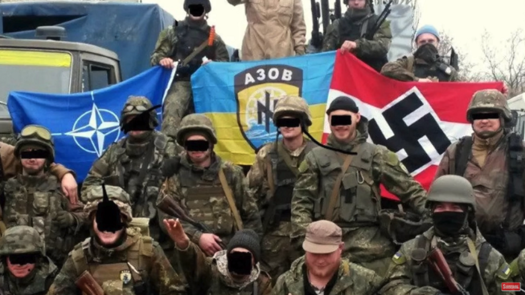
The Azov Battalion emerged from the Nazi-inspired Social-National Assembly (SNA) founded by Andriy Biletskiy, now commander of the Ukrainian army’s 3rd Separate Assault Battalion ‘Azov’. Azov’s rise along with its politics and ideology have much in common with Adolph Hitler’s Waffen SS.[2] Prior to running the SNA, Biletskiy led the equally ultra-nationalist ‘Patriots of Ukraine,’ the military wing of the Ukrainian National Army, self-procliamed successor to the Nazi-allied outfir of the same name during World War II. The ‘Patriots were infamous their beatings of immigrants. In a 2010 interview Biletskiy described his organization as nationalist “storm troopers.[3][4] A year later Biletskiy was in prison, after his organization—already renamed the SNA—had been involved in a series of shootouts and mass brawls.
The SNA’s, Azov’s, and Biletskiy’s ideology is an extremist brand of Ukrainian neofascism melded with international white supremacism. The SNA program emphasizes the concept of “nationocracy,” which was later incorporated into the RS program and propaganda courses. The SNA in power would ban all political parties, organizations, associations and ideological groups, so the ethnic Ukrainian elite holds full power: “Political power is wholly owned by the Ukrainian nation through its most talented, idealistic and altruistic national representatives who are able to ensure proper development of the nation and its competitiveness.” “Supreme power (executive, legislative and judicial) of the Ukrainian state will be in the hands of the head of state, who is personally responsible to the nation’s own blood and property.” Capitalism is to be “dismantled” and democracy is to be “eliminated.” All actions that fail “to comply with obligations to the nation and the state will entail the restriction of civil rights or deprivation of citizenship … The ultimate goal of Ukrainian foreign policy is world domination.”[5]
In 2007, Azov’s ideology is reflected in its leaders statements. Top leader, commander Biletskiy, castigated a government decision to introduce fines for racist remarks, noting: “So why the ‘Negro-love’ on a legislative level? They want to break everyone who has risen to defend themselves, their family, their right to be masters of their own land! They want to destroy the Nation’s biological resistance to everything alien and do to us what happened to Old Europe, where the immigrant hordes are a nightmare for the French, Germans and Belgians, where cities are ‘blackening’ fast and crime and the drug trade are invading even the remotest corners.”[6] Biletskiy has also said: “The historic mission of our nation in this critical moment is to lead the White Races of the world in a final crusade for their survival. A crusade against the Semite-led Untermenschen.”[7] In 2017, Biletskiy gathered his men in order to express Azov’s support for former Bosnian Serb military officer and convicted war criminal, Ratko Mladić, running directly counter to Western policy. Mladic was held responsible by a Western-sponsored war tribunal at the Hague for war crimes during the Yugoslav civil wars in the 1990s, including the Srebrenica massacre. Biletsky declared Mladić a “patriot of Serbia” and refers to the Iinternational Criminal Tribunal for Yugoslavia in the Hague as a “Zionist tribunal.”[8] More recently, in May 2025 Biletskiy claimed that Hungary, Poland, and Romania are waiting for Ukraine’s collapse so they can annex their former territories that became part of Ukraine under Sdtalin in the wake of the USSR’s victory over fascism: “They are not preparing for war. They are preparing to take their own scraps in the event of a global defeat of Ukraine,” he asserted.[9]`
On the basis of Azov, Biletskiy founded the National Corps with an affiliated paramilitary organization ‘National Teams.’ One of the points of Biletskiy’s foreign policy vision and of National Corps’ program is the creation of a union of countries called the ‘Intermarium’, which would include, among others, Ukraine and Poland – an idea also propagated by many Western apologists and supporters of Ukrainian neofascism. However, Poles, as victims of the OUN’s and UPA’s massacres 80 years ago in Volyn and elsewhere, do not shy away from noting Azov’s neofascism. They point out that Azov members eagerly use Nazi symbols, including the „Dirlewanger“ of the 36th SS Grenadier Division, which massacred Poles in Warsaw’s Wola during the Warsaw Uprising.[10] And, as noted above, Biletskiy recently accused Poland, along with Hungary and Rumania, with having designs on Ukrainian territory……………………………………………………………………………………….
The NATO-Russia Ukrainian War is strengthening Azov’s hand in Ukraine’s army, politics, and culture. In the course of the war, the Azov Battalion was incoroprated into the army, becoming the Ukrainian army’s 3rd Separate Assault Brigade, while retaining a brigade in the National Guard (the 12th National Guard Brigade), into which it was originally incorporated. Azov also has another military unit, known as ‚Kraken‘, under the control of Ukrainian Military Intelligence (GRU) and its director, the CIA-trained Kyrylo Budanov. Kraken has been involved in a series of war crimes, including the execution of captured Russian soldiers. This year,the 3rd Assault Brigade ‚Azov‘ was upgraded further to become the Third Army Corps ‚Azov‘.[18]Thousands of new soldiers will be integrated into Azov, and a special training school for sergeants established for it will inevitably indoctrinate recruits with ultra-nationalist ideology. Azov 3rd Assaualt Corps‘ founding ceremony, replete neo-Nazi pagan-like symbolism, was held near Kyiv and attended by Biletskiy and his fellow commanders. Participants offered “The Prayer for Ukraine,” a hymn borrowed from the neofascist, antisemitic OUN, whiuch enthusiastically collaborated with the Hitler’s Nazis in the Holocaust and ethnic cleansing of Poles during World War II.[19] The new commander of Azov’s 3rd Assault Brigade, Yaroslav Levenets, appointed in April-May, recently met Zelensky in an awards ceremony. He allegedly helped to organize the 2017 killing of Denis Voronenkov, a former member of the Russian parliament. As of December 2021, Levenets was still wanted in Ukraine.[20] Aside from the army’s and therefore Azov’s growing role in Ukrainian society as a result of the war, Azov maintains a youth organization called ‘Centuriya’, which networks Azov across Ukrainian society in schools, children’s camps, and sports clubs.
According to Havryshko, Azov benefits from „enormous media presence“ and university support in Ukraine and uses „celebrity journalists and media experts to create a glamorous image of their units.“[21] Indeed, Biletskiy, other leaders and members appear frequently on mainstream television and other media. Ukrainian and foreign media propagate Azov’s units as „true patriots“ and “elite brigades,” respectively, whereas in the West before the war there was significant reporting on Azov‘s and other Ukrainian groups‘ neofascist political orientation and ideology. …………………
With this media and academic network, Azov is able to insinuate neofascism into every knook and cranny of Ukrainian society. For example, it has been at the forefront of a campaign to slander and threaten the life of a leading scholar of historical and contemporary Ukrainian neofascism, Professor Marta Havryshko of Clark University in Massachusetts, running her out oft he country. As a result of the campaign Havryshko was fired from her position in the Kripyakevich Institute for Ukrainian Studies for her research on various aspects of this subject inculding the violence committed by the WW II-era Ukrainian fascist organizations OUN and UPA allied with Nazi Germany, contemporary Ukrainian glorification of Ukraine‘s Waffen-SS division “Galicia”, and her rejection of ultra-nationalist driven history policies. ………………………………………………………………………………………………………………………………………………………….. https://gordonhahn.com/2025/09/05/ukrainian-neofascism-war-time-developments-part-1-azov-and-part-2-right-sector/
Trump Is Renaming the Defense Department the Department of War

President Trump will sign an executive order on Friday renaming the Department of Defense the Department of War, the White House said, fulfilling his pledge to realign the military’s mission by restoring the name the agency held until shortly after World War II……………… (Subscribers only) https://www.nytimes.com/2025/09/04/us/politics/trump-department-of-war-defense.html?campaign_id=190&emc=edit_ufn_20250904&instance_id=161936&nl=from-the-times®i_id=60047519&segment_id=205306&user_id=432fc0d0ad6543e820e2dfcd39f76c35
Golden Dome is already a turning point for American space policy.
As the space community awaits the upcoming deadline for a Golden Dome architecture, perhaps the biggest story on Golden Dome is how the program is resonating through the industry.
Last month, a new report by the Aerospace Corporation’s Center for Space Policy and Strategy identified Golden Dome (and its prominence within the Trump administration’s fiscal year 2026 defense budget request) as a significant turning point for American space policy, Pentagon spending priorities and the role of the Space Force.
The report said that “the introduction of Golden Dome is arguably the most important development affecting the defense space budget since the inception of the Space Force.”
As SpaceNews’ Sandra Erwin wrote:
For the relatively young Space Force, established in 2019, Golden Dome represents a significant expansion of resources and responsibilities. Sam Wilson, budget analyst at the Center for Space Policy & Strategy and author of the report, views the initiative as creating “a major opportunity for the Space Force as it brings extra resources for some of Space Force’s priorities such as missile warning satellites that the service already was planning to develop.”
“This is an opportunity to get those funded at higher levels,” Wilson told SpaceNews.
The article describes how Golden Dome’s prominence – and the level of attention paid to it – is elevating space issues within broader defense planning. It’s also a program that could benefit new and old space firms alike while calling broader public attention to the military’s role in and influence over space.
Investors feel the same. A note from Capital Alpha Partners this week highlighted that “Golden Dome gave something new for U.S. contractors to talk about and position for,” but so far details are scarce. At last month’s industry summit in Huntsville, Alabama, defense firms got little more than high-level overviews.
“Even if it’s classified, clarity on the architecture may provide something more meaningful for companies to discuss in the October-November earnings season,” the Capital Alpha note read….(Read more at link –
https://spacenews.bluelena.io/index.php?action=social&chash=980ecd059122ce2e50136bda65c25e07.830&s=d7cea81a8b3dc478fa14dbee41fab337)
Secret antisemitism research. Australia’s Envoy Jillian Segal hides evidence?
by Emma Thomas | Aug 31, 2025 https://michaelwest.com.au/secret-antisemitism-research-envoy-jillian-segal-hides-evidence/
Jillian Segal, the government-appointed Special Envoy for Antisemitism, has refused to answer questions from the NSW parliament about her plan. Emma Thomas reports.
The Special Envoy’s Plan to Combat Antisemitism has been heavily critiqued since it was released last month. The plan proposes a suite of interventions across government and civil society, including allowing the Special Envoy to weigh in on immigration issues and to ‘monitor’ public media.
Among the plan’s more controversial (and impractical) recommendations is a proposal to withhold government funding from universities and arts bodies that fail to meet the Special Envoy’s criteria.
Since the plan’s release on 10 July, critics have denounced it as “authoritarian”, “insulting”, designed to “enforce ideological conformity” while risking “deepening community divisions.” The plan is marred by a “biased argument”, “weak evidence”, and silence on Gaza and is “simultaneously too thin [on facts…] and overblown in its recommendations”, commentators say. It has been labelled “one of the worst public policy documents produced in recent years”.by Emma Thomas | Aug 31, 2025 |
The plan’s architect, Jillian Segal, has meanwhile retreated from public view. This follows her seemingly ill-prepared appearance on ABC on 10 July (coinciding with the release of the plan) and a 12 July report detailing her family trust’s $50,000 donation to the right-wing lobby group Advance, which is known for promoting racism and campaigning against an Indigenous Voice to Parliament.
Last week, however, the Special Envoy responded to a series of questions about her plan posed by the parliamentary committee inquiring into antisemitism in NSW.
Evidence-free policy proposals
The plan’s lack of sources, statistics or citations – that is, any evidence that might support its claims and underpin its proposed policies – has been widely noted and critiqued.
Yet, in her response to the NSW parliamentary inquiry, Segal claimed that there is a “wide base of research” behind her plan, which includes “commissioned surveys, consultations with community organisations, and international comparisons.” The plan, she insists, “is a policy framework grounded in both evidence and expert practice.”
She has, however, refused to provide evidence or publicly release any research supposedly conducted by her taxpayer-funded office, citing “security and privacy reasons.”
When asked specifically about what data or evidence supports her claim of systemic antisemitism in Australia’s public sector, Segal simply reasserted the claim that “There is clear evidence of antisemitic discrimination in parts of the public sector.” Although she provides none, she suggests the committee “review publicly available data.” Again, no such data was provided.
When asked for evidence of “foreign funding” supporting “clusters of antisemitism” in Australian universities, Segal pointed only to “credible concerns” that this “could” be happening. Pressed for specific examples of universities failing to act against antisemitism or of media outlets presenting “false or distorted narratives”, she again provided none. Instead, she described that plan as “proactive” and “precautionary”.
Neither in her plan nor in her responses to the NSW inquiry does Segal cite a single study, piece of evidence or expert assessment, from either the national or international context, that might support the efficacy of her plan to combat antisemitism. It’s possible that there are none.
No evidence for IHRA’s effectiveness
Segal’s plan hinges on Australia’s widespread adoption and application of the International Holocaust Remembrance Alliance (IHRA) working definition of antisemitism – “including its illustrative examples”.
The 11 illustrative examples are highly contested because seven of them relate to criticism of the State of Israel, whose prime minister is currently wanted by the International Criminal Court for war crimes and crimes against humanity.
The examples are so contentious that IHRA’s decision-making body, the Plenary, itself has not endorsed them as part of the definition. IHRA itself describes the examples only as “illustrations” that may guide the organisation’s own work. Segal’s suggestion that the definition, along with the examples, be “required” across all levels of government, public institutions and regulatory bodies
“goes well beyond IHRA’s own framework”.
First published in 2005 by the European Union agency, the European Monitoring Centre on Racism and Xenophobia, the definition was intended for use in data collection, not policymaking. In 2013, the definition was abandoned. It was repackaged as the “IHRA’s non-legally binding working definition of antisemitism” in 2016.
In the nine years since the definition’s adoption by IHRA, no evidence has been provided that it is effective in combating antisemitism – not in Segal’s plan, nor in external studies,
There is, however, a wealth of academic and legal critique showing that the definition fosters self-censorship and penalises speech on Israel’s violations of international law and advocacy for Palestinian rights. The definition’s efficacy – like that of Segal’s proposed plan – lies in the “proactive” and “precautionary” implementation. And as historian Avi Shlaim states, it
“has little to do with antisemitism.”
Emma ThomasDr Emma Thomas is a researcher and writer based in the Greater Sydney area. As a historian, she has spent the last fifteen years studying and teaching at universities in Australia and the United States. One of the first things she teaches all her students is that opinions and evidence-based arguments are not the same thing.
1 This Month
26 September – International Day for the Total Elimination of Nuclear Weapons





PLEASE OPPOSE HR 8255 AND S.3639 – bills would accelerate satellite deployment, with no environmental review or safeguards – https://ncstd5li.quorum.us/campaign/169331/
To see nuclear-related stories in greater depth and intensity – go to https://nuclearinformation.wordpress.com
-
Archives
- September 2026 (305)
- August 2026 (330)
- July 2026 (355)
- June 2026 (287)
- May 2026 (306)
- April 2026 (356)
- March 2026 (251)
- February 2026 (267)
- January 2026 (308)
- December 2025 (358)
- November 2025 (359)
- October 2025 (375)
-
Categories
- 1
- 1 NUCLEAR ISSUES
- business and costs
- climate change
- culture and arts
- ENERGY
- environment
- health
- history
- indigenous issues
- Legal
- marketing of nuclear
- media
- opposition to nuclear
- PERSONAL STORIES
- politics
- politics international
- Religion and ethics
- safety
- secrets,lies and civil liberties
- spinbuster
- technology
- Uranium
- wastes
- weapons and war
- Women
- 2 WORLD
- ACTION
- AFRICA
- Atrocities
- AUSTRALIA
- Christina's notes
- Christina's themes
- culture and arts
- Events
- Fuk 2022
- Fuk 2023
- Fukushima 2017
- Fukushima 2018
- fukushima 2019
- Fukushima 2020
- Fukushima 2021
- general
- global warming
- Humour (God we need it)
- Nuclear
- RARE EARTHS
- Reference
- resources – print
- Resources -audiovicual
- Weekly Newsletter
- World
- World Nuclear
- YouTube
-
RSS
Entries RSS
Comments RSS

