Trump administration formally withdraws from climate agreement, aims to expand fossil fuel industries
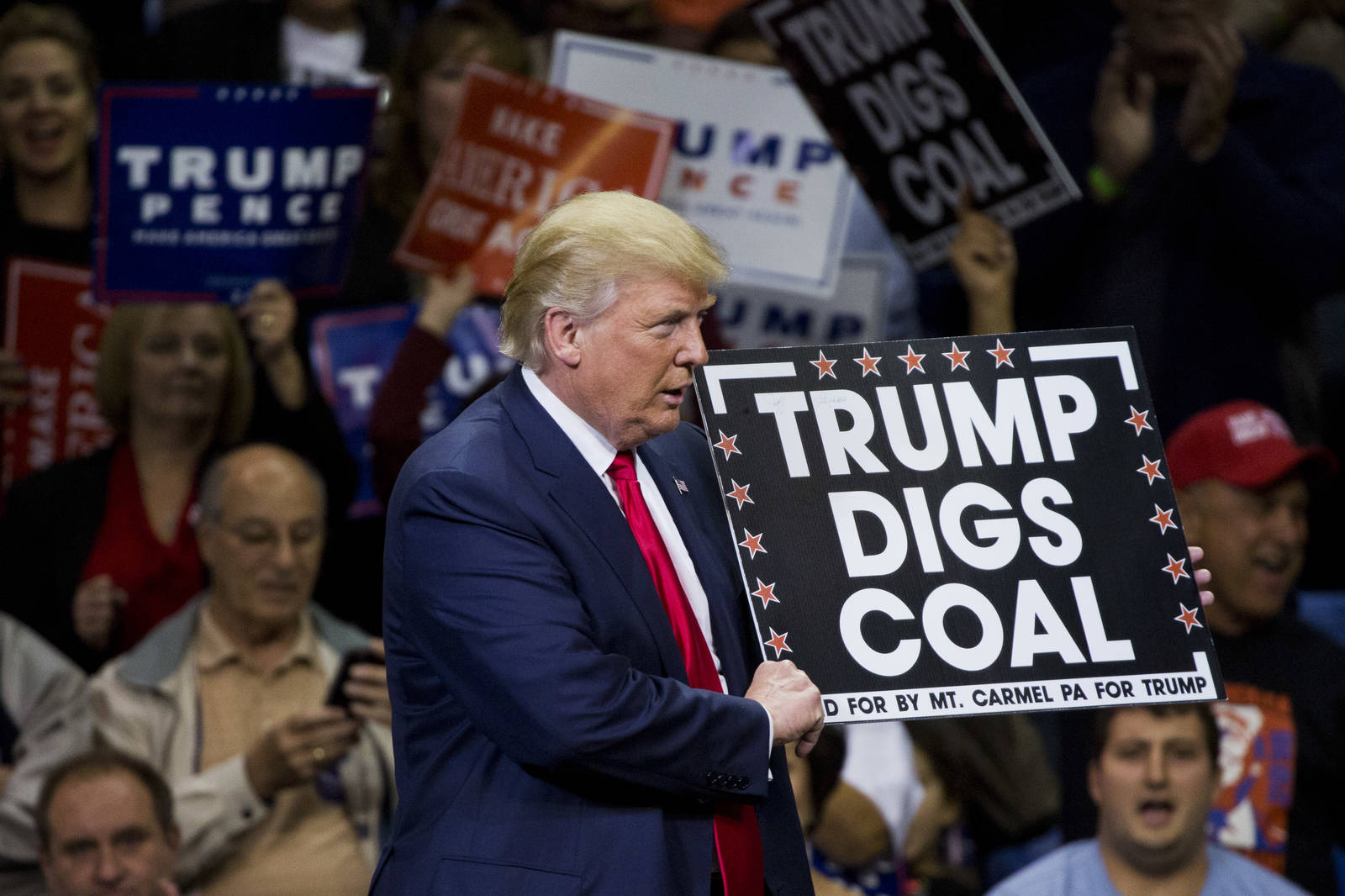 Trump files notice to withdraw from Paris deal, plans instead to promote fossil fuels, REneweconomy, By Mark Hand on 7 August 2017 ThinkProgress The Trump administration formally notified the United Nations of its plans to withdraw from the Paris climate agreement on Friday, explaining that the United States instead plans to work with countries to help them gain access to fossil fuels……..
The goal of expanding access to fossil fuels is part of Trump’s new “energy dominance” agenda where his administration will work with fossil fuel companies to turn the United States into an oil, natural gas, and coal exporting powerhouse.
The administration also wants to continue to export fracking technology developed in the United States to other countries.
The letter sent to the United Nations has no legal weight nor does it begin the process of withdrawing the United States from the pact of nearly 200 nations to reduce greenhouse gas emissions.
Rather, it is a political document that affirms Trump’s proclamation in June that the Paris agreement is a bad deal for the nation, the New York Times reported Friday.
According to the terms of the Paris agreement, no country can begin the withdrawal process until three years after the agreement enters into force and the withdrawal would not take effect for one year after that date.
The Paris agreement entered into force on November 4, 2016. Therefore, the United States cannot fully withdraw until November 4, 2020, one day after the next presidential election.
The next president could decide to rejoin the agreement if Trump does not win a second term………
Since June, the California legislature voted to extend the state’s cap-and-trade program until 2030. The U.S. Conference of Mayors adopted several climate and energy resolutions advancing renewable energy, committing to sustainable infrastructure development, and standing by the Paris agreement.
A network of cities, states, businesses, and colleges have united to declare “We Are Still In,” and provide a platform for local leaders to support the commitments of the Paris agreement.
The movement’s 2,275 signatories represent $6.2 trillion of the U.S. economy, covering nine states, 242 cities, 1,700 businesses and investors, and 315 colleges and universities…….Thousands of American CEOs, university presidents, governors, and mayors have decided to fill the gap left by the federal government..http://reneweconomy.com.au/trump-files-notice-withdraw-paris-deal-plans-instead-promote-fossil-fuels-90173/
Abandonment of America’s last nuclear project in South Carolina – what happens next?

This is what has to change after the SC nuclear meltdown http://www.thestate.com/opinion/opn-columns-blogs/cindi-ross-scoppe/article165217562.html CINDI ROSS SCOPPE, Associate Editor, AUGUST 03, 2017 COLUMBIA, SC
IF SCE&G AND Santee Cooper were free-market businesses, they’d probably be out of business in the wake of South Carolina’s nuclear meltdown. Or they’d have new management. Or they would have abandoned their nuclear reactors years ago — if they had ever started building them.
If SCE&G were even just a regular regulated monopoly — one that didn’t have the Legislature’s blessing to charge ratepayers $1.4 billion, and keep charging us even more, for electricity we will never receive — it probably would have walked away from the project much sooner. Or, like every other regulated monopoly in the nation without such legislative protection, never started it.
But state law reduced SCE&G’s risk and made it financially and psychologically easier for the company to pursue a high-risk plan to build the nation’s first new nuclear reactors in decades. And state law allowed Santee Cooper to join the venture without even the modicum of oversight that SCE&G had.
Santee Cooper is not regulated by the Public Service Commission, and its management answers to a politically appointed board whose members cannot be removed unless they break the law. Both conditions need to change. The governor should be able to remove his appointees for any or no reason, and the utility should be subject to the same regulation as privately owned utilities. And serious questions need to be asked about whether President Lonnie Carter deserves to be the highest-paid person in state government — or even remain employed.
What to do about the laws that govern SCE&G is less clear — and figuring that out needs to be the focus of legislators when they begin hearings later this month on how a $14 billion nuclear-construction project fell apart after both companies’ ratepayers sank more than $2 billion into it.
Was the whole concept of that law flawed? Are we guaranteeing irresponsible decision-making when we allow a regulated monopoly to charge customers up front for nuclear and coal-fired production facilities, and keep charging them even after the project is abandoned? Or would that mechanism, which is intended to reduce interest costs, make sense if the utility had to put more of its investors’ money at risk?
What about the Public Service Commission? Did commissioners have enough room to turn down any of the nine rate increases they approved for SCE&G? The law allows them to reject increases if there has been “a material and adverse deviation from the approved schedules, estimates, and projections” — which certainly happened here — but only if the utility was “imprudent” in failing to anticipate or avoid the changes.
If the commission didn’t have enough authority to reject rate increases, that needs changing. If there was enough authority but commissioners failed to use it, then perhaps it’s the commissioners who need changing.
Or did legislators — who elect commissioners to the well-paid political posts — make it too clear that they were not to reject rate increases? If so, we need to change how commissioners are selected. (Yes, legislators would need to change as well, but that’s up to voters.)
The Office of Regulatory Staff is supposed to conduct “on-going monitoring” of nuclear construction projects and “review and audit” rate requests, hiring outside experts as needed. Did it have the authority it needed to protect the public? If not, that needs changing. (The law that created that office, by the way, requires it to protect the “public interest,” which includes “preservation of the financial integrity of the state’s public utilities and continued investment in and maintenance of utility facilities.”)
If the office has sufficient authority, did it do its job but get overruled by the PSC? If not, then perhaps that staff needs changing, and perhaps the way it’s selected. The executive director is nominated by a legislative committee and technically appointed by the governor, sort of like magistrates.
What happens when SCE&G builds the new capacity that nuclear reactors will not provide? If it builds a natural gas plant, it won’t be allowed to charge ratepayers for construction unless or until the plant produces electricity. But should SCE&G ever be allowed to charge us for a facility that replaces an abandoned facility we’ve already paid $1.4 billion toward?
And what about the whole idea of monopolies? I doubt we’ve reached the point where small carbon-based or alternative-energy plants can provide everyone in the state access to electricity, which we’d need before we could switch to a free-market system. But a lot of people believe that time is coming. If lawmakers are going to spend a lot of mental energy on our state’s energy future, they ought to start thinking about how we get to that place, and what we do once we’re there.
Finally, a question legislators will avoid if we let them: Should a monopoly be allowed to make campaign donations to the legislators who have the power not only to revoke its monopoly status but also to shield it even more from the consequences of its decisions? And if so, how on earth do you justify that?
Ms. Scoppe writes editorials and columns for The State. Reach her at cscoppe@thestate.com or (803) 771-8571 or follow her on Twitter or like her on Facebook @CindiScoppe.
South Carolina legislators want refunds from scrapped nuclear power project
Legislators call for refunds from nuke project http://counton2.com/2017/08/03/legislators-call-for-refunds-from-nuke-project/ By Associated Press, August 3, 2017, COLUMBIA, S.C. — South Carolina legislators want to bar SCE&G from continuing to collect money for a now-scuttled multibillion-dollar nuclear power project customers have been paying for since 2009.
A bipartisan group of legislators announced Wednesday the creation of an Energy Caucus that will work to overhaul how utility requests are reviewed.
South Carolina Electric & Gas and state-owned Santee Cooper decided Monday to abandon construction of two nuclear reactors. A project accounts for 18 percent of SCE&G’s residential electric bills. Utility executives said Tuesday none will get refunded. They are seeking permission from state regulators to recoup an additional $5 billion over 60 years.
Legislators created the system allowing that to happen in 2007.
But Energy Caucus members say the utility’s request should be rejected, and customers should be refunded.
Serious consequences for Britain, especially its nuclear industry, if Britain leaves Euratom

 Guardian 2nd Aug 2017, Until recently, few of us were familiar with the European Atomic Energy Community (Euratom), the international organisation that governs many aspects of nuclear energy activity in member states. Brexit, and the rapidly retracted “leak” that Britain may seek “associate membership” of Euratomhas suddenly brought Euratom to the fore.
The precise legal situation regarding the UK’s continued membership of Euratom is contested, but there is much to learn from the history of this relationship: over the past six decades the UK has attempted to become an associate member or full member of Euratom five times.
Since joining in 1973, any nuclear treaties with other nations (including any signed before that date) were placed under the aegis of Euratom. This means that if Britain leaves Euratom, all its complex nuclear treaties with the United
States, the rest of Europe and many other nations across the world will need to be re-ratified in national legislatures before Britain is no longer a member.
This is a large international legislative task, and requires quick action before the Article 50 process ends in just over a year. If the treaties are not re-ratified by national parliaments, then, depending on the treaty, the UK could be in breach of the Non-Proliferation Treaty, and a worst-case scenario could have a variety of very serious consequences
including: stopping work on Hinkley C, halting the movement of nuclear fuel, and even ending the import of medical isotopes for cancer treatments. https://www.theguardian.com/science/political-science/2017/aug/02/our-60-year-relationship-with-euratom-offers-hard-lessons-for-brexit-negotiators
Congressman Mark Sanford effectively gave go-ahead to South Carolina nuclear boondoggle project
According to state law, governors have five business days upon receiving a ratified bill from the S.C. General Assembly to either sign or veto the measure in question. If they do nothing, the bill becomes law at the end of the fifth business day.
when a governor chooses this option, they are effectively signing the bill. Which is exactly what Sanford did back in 2007.
SC #NukeGate: Mark Sanford Has A Problem https://www.fitsnews.com/2017/08/02/sc-nukegate-mark-sanford-has-a-problem/ By FITS , 3 Aug 17, You would think the failure of a multi-billion nuclear power project in the Midlands region of South Carolina (a.k.a. #NukeGate) wouldn’t be a problem for a politician hailing from the Palmetto State’s coastal regions.
But in this case you’d be wrong …
For those of you just waking up from a 72-hour nap, South Carolina was rocked by the news that a proposed nuclear power facility in Jenkinsville, S.C. would no longer be built. The decision to kill the V.C. Summer nuclear project – which wiped out 5,000 jobs and threw the state’s energy future into turmoil – was made by the Palmetto State’s government-run utility, Santee Cooper.
That decision has created a nightmare for SCANA – a private sector utility that was partnering with Santee Cooper on the project.
SCANA had raised rates on consumers to help subsidize the construction of these reactors – while Santee Cooper was in the process of raising rates to support its obligations related to the project. Just a week before deciding to walk away from the V.C. Summer project, in fact, Santee Cooper specifically cited “costs associated with nuclear construction and other system improvements” as one of the stated rationales for its proposed rate increases.
Talk about sandbagging …
Anyway, as we’ve noted previously people are pissed. They want answers. They want to see their bills lowered. And they want their money back.
They also want to know how on earth their government allowed this to happen …
All of which brings us to congressman Mark Sanford and a little piece of state law known as Act 16 of 2007, a.k.a. the so-called “Base Load Review Act.”
Passed during Sanford’s second term as governor of South Carolina, this legislation permitted utilities in the Palmetto State to raise rates on consumers for the purpose of financing the construction of – among other things – nuclear facilities.
Basically, this law was the gateway through which hundreds of millions of dollars of ratepayer money flowed toward the V.C. Summer project.
So did Sanford sign this law? No, he did not. Did he veto it? No, he did not.
Hold up … are we messing around with our readers here?
Because this hardly seems the time for that …
What’s the joke? Where’s the punch line?
There is no joke – nor is there a punch line. In the Palmetto State, there is a third option. According to state law, governors have five business days upon receiving a ratified bill from the S.C. General Assembly to either sign or veto the measure in question. If they do nothing, the bill becomes law at the end of the fifth business day.
For those of you who’ve forgotten, this was the “out” taken by former S.C. governor Nikki Haley back in 2011 when she got crossed up on an “economic development” deal involving online distributor Amazon.
As we noted then – and will remind our readers now – when a governor chooses this option, they are effectively signing the bill. Which is exactly what Sanford did back in 2007. This particular piece of legislation hit his desk in the S.C. State House on April 26 of that year – a Thursday. Sanford did nothing with the bill, and so on the following Thursday – May 3, 2007 – it became law without his signature.
Could a decision made a decade ago cost him his congressional seat?
State representative Katie Arrington – who is considering running against Sanford for South Carolina’s first congressional district (map) next spring – took note of the former governor’s decision on her Twitter page.
In responding to the outrage against Santee Cooper and SCANA, Arrington tweeted “you should also be just as upset with Mark Sanford for allowing a law that put ratepayers on the hook.”
Is she correct? Yes …
As the fallout from this failed nuclear project continues cascading across the Palmetto political landscape, expect to see Sanford face his fair share of criticism related to this deal (and justifiably so).
Disagreement on Iran nuclear policy between Trump and his Secretary of State Rex Tillerson

 Tillerson says he and Trump disagree over Iran nuclear deal, https://www.reuters.com/article/us-usa-trump-russia-retaliation-economy-idUSKBN1AH4S1 Yeganeh Torbati, 2 Aug 17, WASHINGTON (Reuters) – U.S. Secretary of State Rex Tillerson acknowledged on Tuesday that he and President Donald Trump disagree over the 2015 Iran nuclear deal, and said the two men discuss how to use the international agreement to advance administration policies.
Trump at times vowed during the 2016 presidential election campaign to withdraw from the agreement, which was signed by the United States, Russia, China and three European powers to curb Iran’s nuclear program in return for lifting most Western sanctions.
Trump has preserved the deal for now, although he has made clear he did so reluctantly after being advised to do so by Tillerson.
“He and I have differences of views on things like JCPOA, and how we should use it,” Tillerson said at a State Department briefing, using the acronym for the deal, formally called the Joint Comprehensive Plan of Action (JCPOA).
Tillerson said that Washington could “tear it up and walk away” or stay in the deal and hold Iran accountable to its terms, which he said would require Iran to act as a “good neighbor.”
Critics say the deal falls short in addressing Iran’s support for foreign fighters in Iraq and Syria, arms shipments around the Middle East and ballistic missile tests.
The White House did not immediately respond to a request for comment on Tillerson’s remarks.
Trump said in an interview with the Wall Street Journal last month that he predicts Iran will be judged “noncompliant” with the Iran deal at the next deadline in October, and that he would have preferred to do so months ago.
Tillerson expressed a more nuanced view of the deal’s potential benefits on Tuesday.
“There are a lot of alternative means with which we use the agreement to advance our policies and the relationship with Iran, and that’s what the conversation generally is around with the president as well,” Tillerson said.
European officials would likely be reluctant to re-impose sanctions, especially the broader measures that helped drive Iran to negotiate over its nuclear program in the first place, he said.
New U.S. sanctions on Iran in July were a breach of the nuclear deal and Tehran had lodged a complaint with the body that oversees the pact’s implementation, a senior Iranian politician said.
Tillerson acknowledged that the United States is limited in how much it can pressure Iran on its own and said it was important to coordinate with the other parties to the agreement.
“The greatest pressure we can put to bear on Iran to change the behavior is a collective pressure,” he said. Reporting by Yeganeh Torbati; editing by Grant McCool
Climate denial in charge in USA government
 Dahr Jamail | Scientists Warn of “Biological Annihilation” as Warming Reaches Levels Unseen for 115,000 Years, July 31, 2017 By Dahr Jamail, Truthout | Report“…..Denial and Reality
There’s never a dull moment in the denial world these days.
In Florida, that state’s extremist ACD-denying Gov. Rick Scott signed legislation making it easier for Florida residents to challenge science that is taught in public schools, so if an ACD-denying parent doesn’t like a science textbook that teaches the basic physics of how greenhouse gases work, the book could end up being banned.
Trump-appointed EPA Administrator Scott Pruitt, an ACD denier and pink slipped 38 members of the EPA’s Board of Scientific advisors, which is merely a drop in the bucket compared to dozens of other major environmental roll-backs the Trump administration has pulled off thus far, including forcing NOAA [National Oceanic and Atmospheric Administration] to erase human activity references to greenhouse gases in its Annual Greenhouse Gas Index.
Thankfully, reality continues to thrive in other parts of the world: …..http://www.truth-out.org/news/item/41425-biological-annihilation-trillion-ton-icebergs-warming-levels-unseen-for-115-000-years
Santa Maria de Garona plant in northern Spain to shut down
Spain will shut down country’s oldest nuclear plant http://abcnews.go.com/Technology/wireStory/spain-shut-countrys-oldest-nuclear-plant-48966632 1 Aug 17The Spanish government says it’s closing the country’s oldest nuclear power station because of lack of support among political parties and companies involved to keep it open.
Energy Minister Alvaro Nadal said Tuesday the license for the Santa Maria de Garona plant in northern Spain would not be renewed as there was too much uncertainty surrounding the plant’s viability.
Production at the 46-year-old Garona was halted in 2012 when its operator, Nuclenor, objected to a new tax. Its board recently failed to reach agreement on keeping the plant open.
Environmentalists have long claimed that the plant is outdated, although Spain’s Nuclear Security Council this year said it could continue operating.
Spain has seven other nuclear reactors that produce some 20 percent of the country’s electricity.
South Korean President Details Phase-out of Coal, Nuclear Power
http://www.powermag.com/south-korean-president-details-phase-out-of-coal-nuclear-power/08/01/2017 | Darrell Proctor, During his electoral campaign, South Korean President Moon Jae-in vowed to end the country’s reliance on coal and also said the nation would move away from nuclear energy. He took a major step in that direction in June, saying his country would not try to extend the life of its nuclear plants, would close 10 existing coal-fired plants, and would not build any new coal plants.
The president, who took office in May 2017, has made energy policy a cornerstone of his administration and has moved quickly to implement his policies (see “A Mixed Bag of Nuclear Developments in UAE, S. Korea, Switzerland and S. Africa” in the July 2017 issue). South Korea has been among the world’s largest producers of nuclear energy and one of the few nations to export its nuclear technology. Former President Lee Myung-bak, who served from 2008 to 2013, supported nuclear energy as part of his clean energy policy that called for reductions in greenhouse gas emissions. In 2016, a third of the country’s electricity came from nuclear plants, and the World Nuclear Association said South Korea’s nuclear production from its 25 operating plants ranked No. 5 in the world.
Moon announced his initiatives at a June 19 ceremony in Busan to mark the closure of the Kori 1 reactor (Figure 1), the country’s oldest power plant. Kori came online in 1978. Busan, at the southeastern tip of South Korea, is home to many of the country’s nuclear facilities, in part due to its distance from North Korea.
“So far South Korea’s energy policy pursued cheap prices and efficiency. Cheap production [costs] were considered the priority while the public’s life and safety took a back seat. But it’s time for a change,” Moon said. “We will abolish our nuclear-centered energy policy and move toward a nuclear-free era.”
The country’s energy ministry said it will take 15 years or more to decommission the Kori 1 reactor, at a cost of 643.7 billion won ($569 million). South Korea took a hard look at nuclear power after the 2011 Fukushima disaster in neighboring Japan. A 2012 scandal in which plants were shut down after it was discovered parts were being supplied with fake certificates (see “Documentation Scandal Strains South Korea’s Power Supplies” in the August 2013 issue), along with a recent spate of earthquakes in southeastern South Korea, also have brought concern. Seismologists said four of the nine most-powerful quakes in the country’s history have occurred in the past three years, including a 5.8-magnitude quake—the largest since seismic activity began being recorded in 1978—in September 2016.
PIRA Energy Group, part of S&P Global Platts, earlier this year said South Korea had planned to add 20.17 GW of new coal-fired electricity generation from 2017 to 2022, including 5 GW this year. The group reported that private-sector companies already had invested $1 billion toward construction of new coal plants. South Korea at present has 59 operating coal-fired power plants, supplying about 40% of the country’s electricity. The 10 plants that would be closed under Moon’s plan represent about 3.3 GW of the country’s generation, or about 10.6% of the nation’s total coal-fired capacity, according to the energy ministry.
The 10 plants cited for permanent closure all were temporarily closed in June 2017, and will be closed again from March to June next year to limit emissions. Moon has pledged to permanently close all coal plants aged 30 years or more during his presidential term (2017–2022). He has said the country would spend $12.2 billion this year to develop alternative energy sources, and pursue a goal of cutting greenhouse gas emissions by 37% by 2030.
Hiroshima, Nagasaki mayors to urge government to act on nuke ban treaty
,Japan Times, 1 Aug 17 KYODO KYODO AUG 1, 2017 HIROSHIMA/NAGASAKI – The mayors of Hiroshima and Nagasaki will call on the government to help realize a treaty banning nuclear weapons at upcoming anniversaries marking the 1945 U.S. atomic bombings in their cities.
This year’s declarations follow the adoption in New York last month by 122 U.N. members of the Treaty on the Prohibition of Nuclear Weapons. As a country under the U.S. nuclear umbrella, Japan did not participate, nor did any of the nuclear weapon states.
According to the outline, he will stress that the “hell” Hiroshima saw 72 years ago is not a thing of the past, saying, “As long as nuclear weapons exist and policymakers threaten their use, their horror could leap into our present at any moment.”…..
Nagasaki Mayor Tomihisa Taue is to read his declaration at the city’s ceremony three days later on Aug. 9. In Nagasaki, an estimated 74,000 people died from the bombing by the end of 1945.
“Action by civil society will be crucial in making the nuclear prohibition treaty an international norm,” Taue said at a news conference on Monday announcing the outline of his declaration. “I would like to call for coordination.”
Taue said he will call on the government to change its mind and join the treaty, while Matsui will urge the government to “manifest the pacifism in our Constitution” by “doing everything in its power to bridge the gap between the nuclear weapon and non-nuclear weapon states.”…..
Both the Hiroshima and Nagasaki declarations were drafted after meetings in recent months with hibakusha and experts. http://www.japantimes.co.jp/news/2017/08/01/national/hiroshima-nagasaki-mayors-urge-government-act-nuke-ban-treaty/#.WYD_7xWGPGg
Astonishingly secretive process – New York’s very costly nuclear bailout
 Public deserves truth about nuclear bailout http://www.timesunion.com/opinion/article/
 Commentary-Public-deserves-truth-about-nuclear-11717763.php, By Blair Horner, July 29, 2017
It’s been one year since Gov. Andrew Cuomo quietly foisted an estimated $7.6 billion electric utility rate hike on the people of New York to bail out three aging, upstate nuclear power plants. Since then, we’ve learned a lot about how bad that deal was, but we still don’t know much about how the administration cooked it up.
Here’s what we know: The deal is the result of an astonishingly secretive process. True, some hearings were held, but on a proposed bailout ranging from $59 million to $660 million. After the process wrapped up, the administration jacked up the price into the billions, without any meaningful public process to debate its merits.
The Cuomo administration didn’t release an estimate for the entire cost of the 12-year plan, so the independent Public Utility Law Project crunched the numbers and found it could be as much as $7.6 billion. That stunning transfer of wealth to the single corporation owning the plants may well be the largest in New York’s history.
The first two years of the bailout are estimated to cost ratepayers $964,900,000, an average of more than $1.3 million per day.
Since the bailout hit utility bills on April 1, New Yorkers have paid nearly $163 million extra to prop up these plants. That’s a huge amount of money in a state like New York, already burdened with some of the highest utility rates in the country, and where 800,000 ratepayers are behind on their utility bills.
Included in that $163 million is close to $10 million in extra charges being footed by Niagara Mohawk residential ratepayers, based on the PULP analysis.
Albany County, for example, is slated to pay up to $225,543 more per year for the bailout. Albany’s school district may pay up to $87,552 more per year and Albany Medical Center up to $537,843 per year.
Despite the massive scale of the bailout, New Yorkers still don’t know what alternatives the Cuomo administration considered to meet our energy needs. But there are clearly other paths to study. For example, the analysis released this month by energy expert Amory Lovins, which criticizes the growing trend toward subsidizing costly, uneconomical nuclear power plants.
Lovins, once named one of Time Magazine’s 100 Most Influential People, found that bailouts like the kind New York just implemented could be avoided by closing unprofitable nuclear plants and reinvesting their operating costs into energy efficiency, such as better insulation, windows, and appliances.
Because energy efficiency reduces demand and is so much cheaper per kWh than the energy produced by a nuclear plant, it could replace the power generated by the nuclear plant and replace some of the power generated by coal or gas, all for the same price as one kWh of nuclear energy.
Lovins’ independent analysis contradicts the Cuomo administration’s assertions that the bailout is the only way New York can reduce carbon emissions and meet its energy needs.
To “celebrate” the one-year anniversary of the bailout, let’s hope the administration finally conducts a comprehensive public review of all the alternatives to spending billions to keep old, unprofitable nuclear power plants running.
It’s not too late to reverse course and invest in 21st-century, clean, efficient power sources. New York ratepayers deserve to have their money bankroll job-creating technologies that help attack the problem of energy pollution, not kick the can 12 years down the road.
Blair Horner is executive director the New York Public Interest Research Group.
UK govt’s dubious plan for funding Amec Foster Wheeler’s research on Small Modular Nuclear Reactors (SMRs)
Amec Foster Wheeler To Lead UK Government’s Nuclear Reactor Research, Alliance News , By Joshua Warner; joshuawarner@alliancenews.com; @JoshAlliance, 28th Jul 2017 LONDON – Amec Foster Wheeler PLC on Friday said it has handed a GBP2.9 million contract from the UK government to lead a “key” research programme that aims to use developments in digital technology to optimise the next generation of nuclear reactors……
 The project is part of a broader effort to put UK industry at the forefront of developing Generation IV and small modular reactors…….
Amec Foster Wheeler is being supported by partners and sub-contractors from industry, academia and science, including the University of Liverpool’s 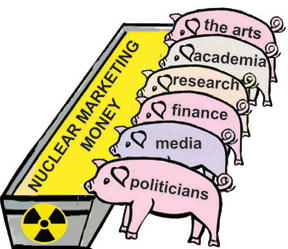 Virtual Engineering Centre, the Hartree Centre, National Nuclear Laboratory, Rolls-Royce Holdings PLC, EDF Energy, the University of Cambridge and Imperial College London.
Professor Eann Patterson from the University of Liverpool, also partnering on the project, will be the lead academic of the research programme……..
The contract award comes as Amec Foster Wheeler is in the midst of merging with peer John Wood in a GBP2.20 billion deal that is expected to take place in the fourth quarter. Amec Foster Wheeler only last month made a decision to retain its European nuclear business after consulting John Wood, but is still pushing to offload its North American nuclear unit.
The North American nuclear operations are nominal within the wider company, adding a trading profit of just GBP1.0 million and revenue of GBP83.0 million to Amec Foster Wheeler’s 2016 results.
What’s more, Amec Foster Wheeler is being investigated by the UK Serious Fraud Office about possible offences related to corruption and bribery related to its past relationship with Monaco-based Unaoil SAM, which has been being probed by the SFO for suspected fraud, bribery and money laundering since July 2016.
That probe into Unaoil also hit oil services provider Petrofac Ltd, forcing the resignation of its chief operating officer. http://www.lse.co.uk/AllNews.asp?code=w955wuya&headline=Amec_Foster_Wheeler_To_Lead_UK_Governments_Nuclear_Reactor_Research
First Energy presses lawmakers for new customer-paid subsidies for nuclear reactors
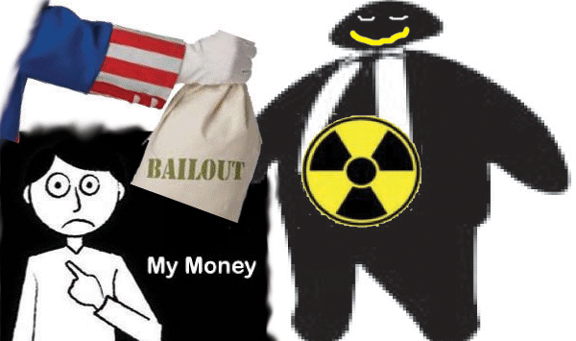 FirstEnergy nuclear charges crucial to operating or selling Davis-Besse, Perry, says CEO, Cleveland.com 28 July 17 , By John Funk, The Plain Dealer, AKRON — FirstEnergy’s top executive says the company will continue to press Ohio lawmakers for new customer-paid subsidies for its nuclear power plants even though it may not own them in the future……
Nuclear danger as Trump government guts science, removes Department of Energy’s skilled personnel
The department trains every international atomic-energy inspector; if nuclear power plants around the world are not producing weapons-grade material on the sly by reprocessing spent fuel rods and recovering plutonium, it’s because of these people
Since Perry was confirmed, his role has been ceremonial and bizarre. He pops up in distant lands and tweets in praise of this or that D.O.E. program while his masters inside the White House create budgets to eliminate those very programs.
Trump’s budget … cuts funding to the national labs in a way that implies the laying off of 6,000 of their people. It eliminates all research on climate change. It halves the funding for work to secure the electrical grid from attack or natural disaster
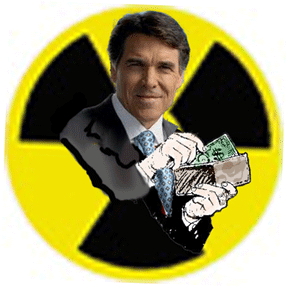 WHY THE SCARIEST NUCLEAR THREAT MAY BE COMING FROM INSIDE THE WHITE HOUSE Donald Trump’s secretary of energy, Rick Perry, once campaigned to abolish the $30 billion agency that he now runs, which oversees everything from our nuclear arsenal to the electrical grid. The department’s budget is now on the chopping block. But does anyone in the White House really understand what the Department of Energy actually does? And what a horrible risk it would be to ignore its extraordinary, life-or-death responsibilities? BY MICHAEL LEWIS SEPTEMBER 2017 “………..Two weeks after the election the Obama people inside the D.O.E. read in the newspapers that Trump had created a small “Landing Team.” According to several D.O.E. employees, this was led by, and mostly consisted of, a man named Thomas Pyle, president of the American Energy Alliance, which, upon inspection, proved to be a Washington, D.C., propaganda machine funded with millions of dollars from ExxonMobil and Koch Industries. Pyle himself had served as a Koch Industries lobbyist and ran a side business writing editorials attacking the D.O.E.’s attempts to reduce the dependence of the American economy on carbon……….
…..There was a reason Obama had appointed nuclear physicists to run the place: it, like the problems it grappled with, was technical and complicated……..
Pyle, according to D.O.E. officials, eventually sent over a list of 74 questions he wanted answers to. His list addressed some of the subjects covered in the briefing materials, but also a few not:
Can you provide a list of Department employees or contractors who attended any of the Conference of the Parties (under the United Nations Framework Convention on Climate Change) in the last five years?”
That, in a nutshell, was the spirit of the Trump enterprise. “It reminded me of McCarthyism,” says Sherwood-Randall……..
The one concrete action the Trump administration took before Inauguration Day was to clear the D.O.E. building of anyone appointed by Obama…….
Since Perry was confirmed, his role has been ceremonial and bizarre. He pops up in distant lands and tweets in praise of this or that D.O.E. program while his masters inside the White House create budgets to eliminate those very programs. His sporadic public communications have had in them something of the shell-shocked grandmother trying to preside over a pleasant family Thanksgiving dinner while pretending that her blind-drunk husband isn’t standing naked on the dining-room table waving the carving knife over his head.
Meanwhile, inside the D.O.E. building, people claiming to be from the Trump administration appear willy-nilly, unannounced, and unintroduced to the career people. “There’s a mysterious kind of chain from the Trump loyalists who have shown up inside D.O.E. to the White House,” says a career civil servant. “That’s how decisions, like the budget, seem to get made. Not by Perry.”…….
Because of that lack of communication, nothing is being done. All policy questions remain unanswered.”……..
Another permanent employee, in another wing of the D.O.E., says, “The biggest change is the grinding to a halt of any proactive work. There’s very little work happening. There’s a lot of confusion about what our mission was going to be. For a majority of the workforce it’s been demoralizing.”
Over and over again, I was asked by people who worked inside the D.O.E. not to use their names, or identify them in any way, for fear of reprisal…..
…….The D.O.E. ran the 17 national labs—Brookhaven, the Fermi National Accelerator Lab, Oak Ridge, the Princeton Plasma Physics Lab, and so on. “The office of science in D.O.E. is not the office of science for D.O.E.,” said MacWilliams. “It’s the office of science for all science in America. I realized pretty quickly that it was the place where you could work on the two biggest risks to human existence, nuclear weapons and climate change.”…….
Indeed, if you are seeking to preserve a certain worldview, it actually helps to gut science. Trump’s budget, like the social forces behind it, is powered by a perverse desire—to remain ignorant. Trump didn’t invent this desire. He is just its ultimate expression. http://www.vanityfair.com/news/2017/07/department-of-energy-risks-michael-lewis
USA government in confusion over funding of MOX nuclear facility
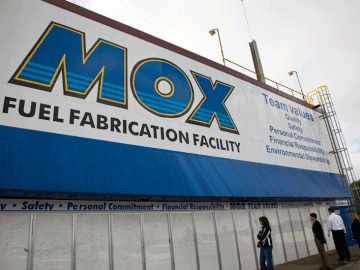 Trump administration opposes House measure funding MOX nuclear facility http://www.janes.com/article/72606/trump-administration-opposes-house-measure-funding-mox-nuclear-facility,Daniel Wasserbly – IHS Jane’s Defence Weekly, 26 July 2017
Key Points
- The White House ‘strongly opposes’ a House effort to continue funding the MOX plutonium disposition programme
- House and Senate appropriators are at odds over funding the controversial facility
The White House is backing a US Department of Energy (DoE) request, once again, for Congress to terminate a multi-billion-dollar project aimed at disposing weapon-grade plutonium, the Mixed Oxide Fuel Fabrication Facility (MFFF).
MFFF has suffered significant cost and schedule issues but is strongly supported by South Carolina’s congressional delegation and there are few easy options to replace the facility. It has survived repeated White House and DoE efforts during the Obama administration to curtail or terminate the programme, and last year even survived Russia’s suspension of the arms control agreement that underpins the project.
The Trump administration, in its fiscal year 2018 (FY 2018) budget request for the DoE, asked for USD270 million “to terminate the Mixed Oxide [MOX] Fuel Fabrication Facility with an orderly and safe closure of the facility”. It also asked for USD9 million in FY 2018 to pursue a ‘dilute and dispose’ method as an alternative for plutonium disposition. The Obama administration asked for, but did not receive, the same thing last year.
So far, during a tumultuous FY 2018 budget process, Senate appropriators appear to back the White House’s request to end MOX but House appropriators want the programme to continue.
In a 24 July ‘statement of administration policy’, the White House said it “strongly objects to continued construction of the Mixed Oxide [MOX] Fuel Fabrication Facility” as directed in the House appropriations bill. That legislation is still being finalised and must be reconciled with the Senate version before being enacted by the president. The White House did not indicate that it would consider a veto.
-
Archives
- October 2026 (120)
- September 2026 (339)
- August 2026 (330)
- July 2026 (355)
- June 2026 (287)
- May 2026 (306)
- April 2026 (356)
- March 2026 (251)
- February 2026 (267)
- January 2026 (308)
- December 2025 (358)
- November 2025 (359)
-
Categories
- 1
- 1 NUCLEAR ISSUES
- business and costs
- climate change
- culture and arts
- ENERGY
- environment
- health
- history
- indigenous issues
- Legal
- marketing of nuclear
- media
- opposition to nuclear
- PERSONAL STORIES
- politics
- politics international
- Religion and ethics
- safety
- secrets,lies and civil liberties
- spinbuster
- technology
- Uranium
- wastes
- weapons and war
- Women
- 2 WORLD
- ACTION
- AFRICA
- Atrocities
- AUSTRALIA
- Christina's notes
- Christina's themes
- culture and arts
- Events
- Fuk 2022
- Fuk 2023
- Fukushima 2017
- Fukushima 2018
- fukushima 2019
- Fukushima 2020
- Fukushima 2021
- general
- global warming
- Humour (God we need it)
- Nuclear
- RARE EARTHS
- Reference
- resources – print
- Resources -audiovicual
- Weekly Newsletter
- World
- World Nuclear
- YouTube
-
RSS
Entries RSS
Comments RSS


Chuck Jones, president and CEO, also revealed that FirstEnergy is preparing to talk to creditors of its subsidiary, FirstEnergy Solutions, the company that owns the corporation’s old, uncompetitive power plants, which have been losing money.
FirstEnergy Solutions’ debt and the declining value of its power plants has made it a potential liability as it negotiates with its creditors amidst rumors of an eventual bankruptcy, and FirstEnergy has tried to distance itself from the subsidiary……
As for the special, customer-paid charges to help Davis-Besse, Perry and Beaver Valley, Pa., nuclear power plants, Jones said he doubted anybody could operate them without special subsidies. The problem is that they cannot compete with gas turbine plants and, at times, with wind power.
“I’m not sure [they] will run unless there is something done either federally or by the state of Ohio to ensure they get a different financial return model,” Jones said.
The company previously said the nuclear charges would increase customer bills by about 5 percent. Subject to periodic review by state regulators, the charges would run for 17 years.
Selling the nuclear plants is part of the company’s overall plan “to exit the commodity-exposed generation business,” Jones said. In other words, if the company cannot have its power prices set by a state utility commission, it does not want to be in the generating business. ……
Jones also made it clear during the conference that FirstEnergy’s campaign to persuade Ohio lawmakers to approve a nuclear plant subsidy would continue no matter what the U.S. Department of Energy recommends.
The Trump administration in April asked the DOE to figure out whether wind, solar and natural gas power plants are forcing the premature retirement of very large old coal and nuclear power plants, and whether those closings might de-stabilize the nation’s high-voltage power grid……. http://www.cleveland.com/business/index.ssf/2017/07/firstenergy_nuclear_charges_cr.html