Bulgaria is set to restart construction of a Russian designed nuclear power plant first proposed at the end of the Cold War. The move, supporters say, could reduce the country’s energy dependence on Russia.
Japan’s Citizens’ Nuclear Information Center calls for TEPCO to be liquidated
it is impermissible for the government, which is spending such an enormous amount of taxpayers’ money on TEPCO, to allow the utility to give financial support to another collapsed company
There is no need for TEPCO to survive any longer, because it has abdicated its responsibility for the nuclear accident and continues to support a virtually failed company.
Citizens’ Nuclear Information Center Create No Nukes World With Us CNIC Statement, April 11, 2018 : Liquidate TEPCO! http://www.cnic.jp/english/?p=4130, BY CNIC_ENGLISH · JUNE 4, 2018 On April 5, 2018, the government’s Nuclear Damage Compensation Dispute Resolution Center notified residents of Namie Town, Fukushima Prefecture, and TEPCO of its decision to discontinue its efforts to achieve an Alternate Dispute Resolution (ADR) on the residents’ demand for additional compensation for mental anguish caused by the 2011 Fukushima nuclear accident. Continue reading
Consumers will pay up to $17 billion each year for Trump’s nuclear bailout
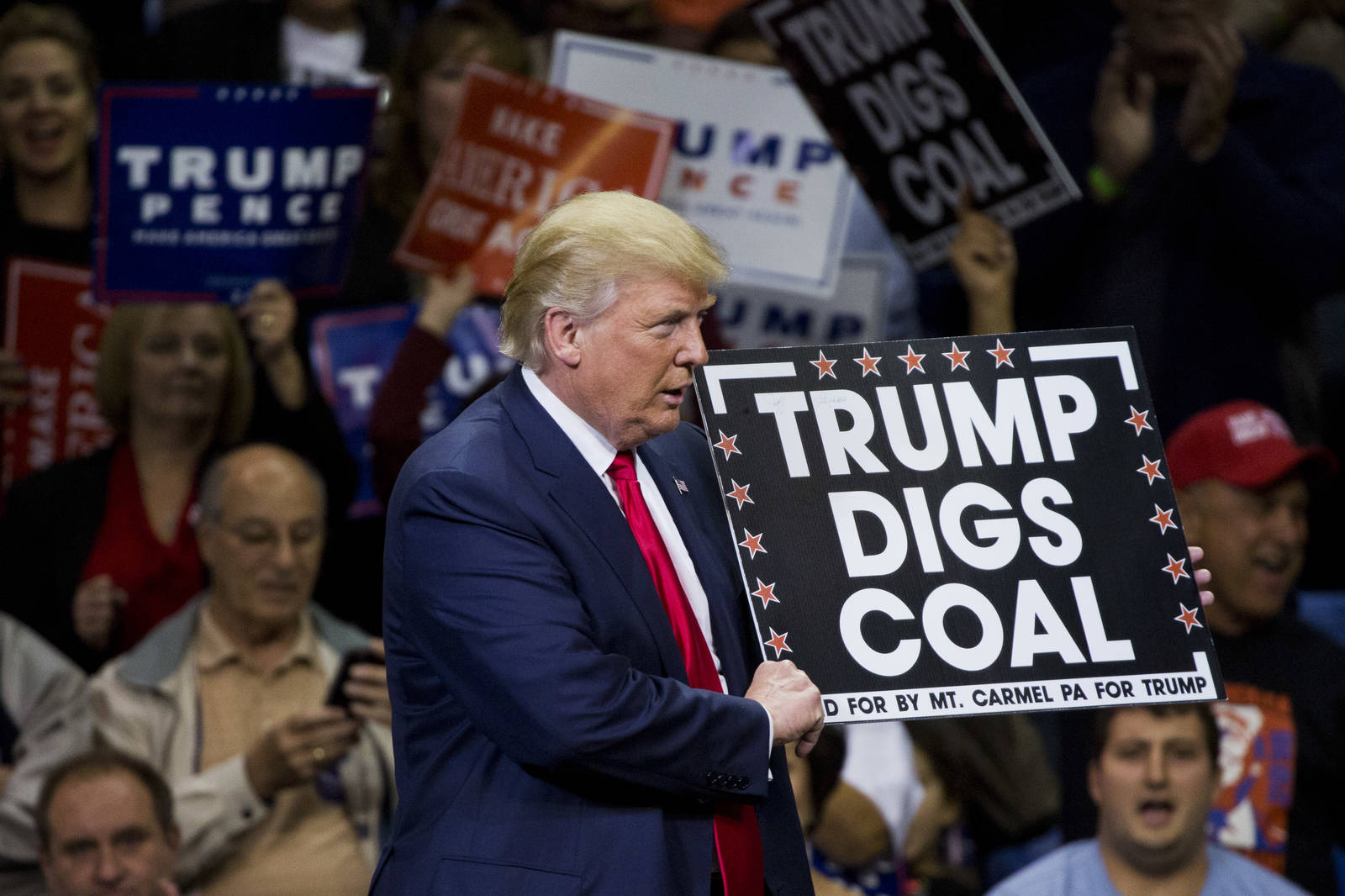
Trump’s nuclear bailout could cost consumers up to $17 billion each year https://inhabitat.com/trumps-nuclear-bailout-could-cost-consumers-up-to-17-billion-each-year/ The Trump Administration is taking unprecedented steps to bail out failing nuclear and coal power plants, effectively nationalizing the American energy market with potentially drastic consequences for the renewable energy industry and the American consumer. According to an updated report from the Nuclear Information and Resource Service (NIRS), the Trump Administration’s plan could result in artificially high electricity prices. The planned subsidies for nuclear power plants alone could increase the overall cost of electricity in the U.S. by up to $17 billion each year; the subsidies for coal plants would add even more. This skewing of the American energy market, which has recently seen significant progress made by wind and solar energy, could also result in the decline of renewable energy in the U.S.
The administration claims that it must act to save failing coal and nuclear plants in the interest of national security. Not everyone is buying that excuse. “The Administration’s warnings of dire effects from power shortages caused by shortages of reliable and resilient generation are contradicted by all of the bodies with actual responsibility for assuring adequate supplies,” said former member of the U.S. Nuclear Regulatory Commission Peter A. Bradford. “There are no state or federal energy regulators petitioning DOE for these measures. Indeed, those who have spoken clearly have said that such steps are unnecessary. … As was said in the run-up to the 2003 invasion of Iraq, the facts are being fixed around the desired end result.”
In order to enact its bailout policies, the Trump Administration has three options: Congressional action, review and approval by the Federal Energy Regulatory Commission or a formal National Security Council assessment. While the bailouts are likely to be delayed for the foreseeable future, if they even occur, the Trump Administration’s decision to subsidize failing power plants at the expense of American industry and consumer well-being makes its priorities quite cle
Conservative Iranian lawmakers opposes Iran joining Financial Action Task Force (FATF)
Parliamentary group opposes Iran joining FATF as fate of nuclear deal is in disarray http://www.tehrantimes.com/news/424284/Parliamentary-group-opposes-Iran-joining-FATF-as-fate-of-nuclear, June 9, 2018 TEHRAN – A number of conservative Iranian lawmakers, who are members of the Velayat (Jurisprudence) faction, issued a statement on Saturday calling on other fellow parliamentarians not to approve the legislation on joining the Financial Action Task Force (FATF) as the U.S. pullout from the nuclear agreement has put the fate of the accord in disarray.
The statement said since the U.S. intends to impose “crippling” sanctions on Iran an approval of the FATF will pave the way for the U.S. to get access to all the economic and banking transactions by Iran.
“Now that the future of the JCPOA [the 2015 nuclear deal] has become vague after the withdrawal of the U.S. and the order to return the sanctions, it is illogical to join the FATF,” the statement said.
On May 8, U.S. President Donald Trump withdrew from the UN-endorsed nuclear agreement and ordered a return of sanctions on Iran.
U.S. Secretary of State Mike Pompeo announced on May 21 that the U.S. will apply economic and military pressure against Iran and will impose “the strongest sanctions in history” on the Islamic Republic.
The FATF is a set of measures designed to make financial affairs transparent and verifiable.
NA/PA
Trump’s bailout of coal and nulc ear industries – a breathtaking abuse of authority
Breathtaking Power Grab: Trump Orders Uneconomical Coal and Nuclear Plants Not to Close, Lays Plans for Taxpayers to Bail Out Coal and Nuclear Industry https://www.citizen.org/media/press-releases/breathtaking-power-grab-trump-orders-uneconomical-coal-and-nuclear-plants-not
Statement of Tyson Slocum, Director, Public Citizen’s Energy Program
Note: President Donald Trump today directed U.S. Secretary of Energy Rick Perry to stop the closure of coal and nuclear plants, which are closing because renewable energy has become cheaper. In addition, a draft White House memo outlines a plan to bail out coal and nuclear plants using the U.S. Department of Energy’s emergency powers and a Cold War-era law that permits it to nationalize parts of the power sector.
President Donald Trump’s actions are a breathtaking abuse of authority and another indication that the president – whose daily knee-jerk actions show neither thought nor policy knowledge – is heavily influenced by extremist corporations and industries. Trump is imagining a crisis that doesn’t exist. This is a power grab, literally.
Ordering the National Security Council to “prepare immediate steps” to assist Energy Secretary Rick Perry in crafting a bailout for uneconomic coal and nuclear power plants is an outrageous attack on hardworking Americans, the environment and the climate.
The 41-page White House memo outlines a strategy to force consumers and taxpayers to pay for direct purchases of electric power from failing coal and nuclear power plants through the establishment of a “Strategic Electric Generation Reserve.”
Last month, Public Citizen submitted a letter [PDF] to Perry opposing any effort to bail out these power plants and demanding transparency in the federal government’s consideration of such a bailout.
America’s coal and nuclear power plants have been rendered uneconomic because of the combination of cheaper renewables and gas, and flat power demand. There is no national security or reliability crisis stemming from the retirement of such facilities. Public Citizen will fight this outrageous bailout through all legal, legislative and regulatory means available.
As nations pull out of nuclear power, Britain is isolated in putting tax-payer funds into new nuclear construction

Britain’s nuclear U-turn puts us in a very lonely club, https://www.theguardian.com/commentisfree/2018/jun/08/government-nuclear-dream-north-wales-climate-change Fred Pearce Pumping £5bn into a new plant in north Wales as a way to fight climate change is a solution at odds with the rest of the world
For once, ministers have put their money where their mouth is – into taking another stab at nuclear power. This week the business secretary, Greg Clark, announced plans to pump £5bn into a new nuclear power station at Wylfa in north Wales. It was a reversal of a longstanding Conservative policy not to underwrite nuclear construction. So why the sudden enthusiasm? And what does Clark know that the rest of the world does not?
For almost everywhere else, governments and corporations are pulling the plug on nuclear. Even in a world fearful of climate change, in which nations have promised to wean themselves off fossil fuels by the mid-century, almost no one wants to touch nuclear.
Germany will be nuclear-free by 2022. France – once Europe’s great nuclear advocates – is backtracking. President Macron is committed to cutting nuclear’s contribution to grid power from the 75% to 50%. Seven years after the Fukushima accident, all but a handful of Japan’s 54 nuclear power plants remain closed.
US utilities are shutting reactors fast too, even those with years of their operating licences yet to run. In America’s deregulated energy markets, nuclear cannot compete. Last week President Trump called for the utilities to suspend closures, citing national energy security. He may resort to the law to get his way, but even Trump is not demanding new reactors.
Meanwhile, the state-sponsored nuclear enthusiasm of China, recently the world’s premier builder, has dimmed. Beijing has issued no new construction approvals for over two years. Only Russia keeps up the momentum – which puts Britain in an embarrassing club.
Britain hasn’t completed a new nuclear power station for 23 years. …… renewable sources like solar and wind are both now cheaper, and are becoming cheaper still, while nuclear costs only rise.
Some who call themselves “eco-modernists” argue that nuclear and renewables would make a great mix: nuclear could fill in when the sun goes down and the winds drop. But there is a problem. Any effective stand-in for fickle renewables needs to be available at the flick of a switch. Hydropower or natural gas can do the job, but not nuclear. Its forte is to deliver constant baseload power
If nuclear ticked enough other boxes, it might still have a role to play in keeping the lights on. But it has always been a bad neighbour and troublesome citizen. Some of our fears about radiation may be exaggerated, but they are real fears nonetheless. And nuclear power’s links to nuclear weapons are not just about shared technology – at least not while Britain remains home to the world’s largest stockpile of plutonium.
We are sitting on 130 tonnes of a human-made element that lies at the heart of most nuclear weapons. The stockpile is at a warehouse at Sellafield in Cumbria, in defiance of warnings from scientists at the Royal Society a decade ago that in its present form it poses a major security risk, whether diverted for weapons or breached by terrorists.
The plutonium was manufactured over decades from used power-station reactor fuel. Britain wanted to be at the forefront of a new global industry using plutonium to fuel new designs of reactors. But production continues even though there is no sign of a world market for plutonium. And neither the new Hinkley Point reactor under construction in Somerset, nor the proposed plant at Wylfa, will burn the stuff.
The government seems determined to pursue a nuclear dream, even though it has palpably failed to come to terms with the toxic legacy of the country’s nuclear past.
Next to the site of the planned Wylfa plant sits the shell of an old nuclear power station. It was shut in 2015, but is not scheduled for demolition for almost another century, in 2105. It is one of 11 former plants that sit abandoned around our coastlines, from Dungeness in Kent to Trawsfynydd in Snowdonia, and Sizewell in Suffolk to Hunterston in south-west Scotland.
They are currently being put into what the industry terms “care and maintenance” – mothballed while their radioactivity decays, and until the government’s Nuclear Decommissioning Authority can find somewhere to put their remains.
On present form, that day may never come. Britain is today no nearer agreeing a final resting place for its most dangerous and long-lasting radioactive wastes than it was back in 1976, when the royal commission on environmental pollution said we should build no more nuclear power plants until that problem was resolved. Absurdly, the most recent plan has been to bury the waste in tunnels to be dug beneath the Lake District national park.
Nuclear power today is a largely friendless industry: uneconomic without heavy government support, uninsurable, stuck with a military heritage from hell, overtaken by cleaner competitors, beset by waste problems that no one has resolved, and always vulnerable to public panic after the Chernobyl or Fukushima accidents.
Some believe it may have a future when the waste problems are resolved and if radical new reactor designs emerge. That may be so. But the truth is that in the 60 years since the bomb-makers first promised us “atoms for peace”, nuclear power has gone from a sunrise to a sunset industry. Only the British government seems not to realise it.
Fred Pearce is the author of Fallout: A Journey Through the Nuclear Age, From the Atom Bomb to Radioactive Waste
Barbara Lee Condemns GOP for Embracing Mini Nuclear Weapons
‘No Such Thing as a Small Nuclear Weapon’: Barbara Lee Condemns GOP for Embracing Mini-Nukes https://www.commondreams.org/news/2018/06/08/no-such-thing-small-nuclear-weapon-barbara-lee-condemns-gop-embracing-mini-nukes“Given the instability in the world and in this White House, provoking nuclear brinksmanship is beyond reckless.”Jon Queally, staff writer
USA Congress should decide on controversial nuclear weapons – not let that be decided by Rick Perry all on his own
If the change is made, members of Congress will unburden themselves of a controversial vote and escape accountability for the potentially grave consequences. Instead, the matter will be unilaterally decided by Secretary of Energy Rick Perry, who can draw on whatever expertise he gained as … governor of Texas.
We also fundamentally disagree with the Board’s belief in the utility of limited nuclear use. There is no such thing as a limited nuclear war, and the United States should be seeking to raise the threshold for nuclear use, not blur that threshold by building additional so-called low-yield weapons.
Now the Senate is all that stands in the way of letting Rick Perry decide whether or not to fundamentally change the geopolitical balance of nuclear weapons.
A Decision Too Important for Rick Perry https://www.theatlantic.com/politics/archive/2018/06/a-decision-too-important-for-rick-perry/562280/ The Trump administration and its allies in Congress want the secretary of energy to determine whether to develop a new class of low-yield nuclear weapons. CONOR FRIEDERSDORF
Old, unproven, unreliable nuclear technology planned for Britain’s Wylfa nuclear power station
Unearthed 5th June 2018 Hitachi is seeking billions of pounds from the British government to help build a new nuclear power plant at Anglesey in Wales – but experts say the technology being used is far from proven.
Last week Hitachi-rival Toshiba confirmed that they are pulling out of a major nuclear power project in the USA which planned to use a similar reactor type to the one planned for Wylfa. Toshiba said in a press release that the South Texas
Project had “ceased to be financially viable” due to prevailing economic conditions.
The announcement leaves the UK as one of the last countries looking to build this technology, called the Advanced Boiling
Water Reactor (ABWR). Steve Thomas, Professor of Energy Policy at the University of Greenwich, said that while there are some small differences between the European reactor led by Hitachi and the abandoned US reactor
from Toshiba, the “perception that this is proven technology is not supported by the facts”.
Although there are four similar reactors that have been built in Japan, plans for construction elsewhere have seen a
series of failures. And because of the long lead-in times for developing and building nuclear reactors, power plants built today may have been designed decades ago, Thomas said
“The technology that has been built already is actually 30 year old technology, which has been updated twice
over. So the plants that are operating do not really represent what we would build, and also the performance of the plants in terms of their reliability has actually been very poor.”
https://unearthed.greenpeace.org/2018/06/05/wylfa-hitachi-nuclear-reactor-type-awbr/
It makes no economic sense – Trump’s new strategy to promote coal and nuclear
Here’s why Trump’s new strategy to keep ailing coal and nuclear plants open makes no sense The Conversation. Director, Center for Energy and Sustainable Development; Professor of Law, West Virginia University,
President Donald Trump recently ordered Energy Secretary Rick Perry to take “immediate steps” to stop the closure of coal and nuclear power plants.
And according to a draft memo that surfaced the same day, the federal government may establish a “Strategic Electric Generation Reserve” to purchase electricity from coal and nuclear plants for two years.
Both proposals, which have garnered little support, are premised on these power plants being essential to national security. If implemented, the government would be activating emergency powers rarely tapped before for any purpose.
Based on my four decades of experience as a utility regulatory attorney and law professor, I can see why this proposal has caused much controversy, partly because of how energy markets work.
No credible evidence
To be sure, these industries are in trouble.
The share of U.S. power derived from coal has fallen from about one-half in 2000 to less than one-third in 2017. ……
The share of power generated by nuclear reactors, despite holding steady at about one-fifth of the national grid since 2000, is about to slide. More than 1 in 10 of the nation’s nuclear reactors are likely to be decommissioned by 2025. If completed, the only two large-scale ones under construction will cost far more than originally planned.
But are experts worried about any electricity shortages or outages between now and 2025? Well, no. Other alternatives, mainly natural gas, wind and solar energy are poised to keep filling the gaps created in recent years by other coal plant closures.
When the Energy Department assessed whether the ongoing wave of coal and nuclear plant retirements are threatening grid reliability, it found no cause for alarm.
Disregarding the findings of its own study, the agency proceeded to ask the Federal Energy Regulatory Commission, an independent federal agency known as FERC that regulates energy rates and policies, for permission to subsidize coal and nuclear plants. The agency unanimously rejected that proposal.
More recently, PJM Interconnection – the nation’s biggest grid operator – declared that its power supply is not in jeopardy and that there is no reason to take this anticipated policy move.
The North American Reliability Corporation, the federal entity responsible for power reliability, has reached similar conclusions.
Unprecedented intrusion
In short, there is no emergency that justifies this unprecedented intrusion into the electricity markets that would warrant forcing taxpayers and utilities to pay a premium to keep coal and nuclear plants online.
The only “emergencies” are the financial woes of the plant owners caused by the rapid decline coal consumption and the nuclear industry’s weak outlook.
But the Trump administration appears to be arguing that a provision known as Section 202(c) of the Federal Power Act and the Defense Production Act grant the secretary of energy the power to nationalize parts of the power sector during wartime or amid other emergencies.
I believe that the sole rationale for this new policy is as a way for Trump to keep his campaign promise to revive the ailing coal industry.
Most likely, nuclear reactors are included in the proposal because that industry is increasingly unable to compete. Also, some companies, on the brink of bankruptcy, have stepped up their lobbying.
In many cases, the power generated by coal and nuclear power plantssells at prices that are too low to cover operating costs. The federal government does not typically intervene in wholesale electricity markets, other than to enforce rules intended to ensure that the competition is fair.
Because it would override the results of competition, I have no doubt that the Trump administration’s proposals would mark a radical intervention by the government into the electricity markets.
Winners and losers
Shareholders of the energy companies that own money-losing coal and nuclear plants stand to gain if this policy gets implemented because they are unable to compete in the wholesale power markets without this kind of assist.
Other power companies, utilities, taxpayers and electric ratepayers – meaning homeowners, businesses and anyone else who pays to keep the lights on – would lose out. We’d all have to pay a premium to pay for this unprecedented form of government intervention…….https://theconversation.com/heres-why-trumps-new-strategy-to-keep-ailing-coal-and-nuclear-plants-open-makes-no-sense-97816
FirstEnergy bankrupt, but still spent hundreds of $thousands on lobbying for nuclear power
The Lobbying Bills Attached to FirstEnergy’s Coal and Nuclear Emergency Action
The bankrupt business has spent hundreds of thousands of dollars on lobbying so far this year. GTM, JUNE 05, 2018
Niigata governor election centres on the issue of the world’s largest nuclear power plant
World’s Biggest Nuclear Plant Is Center Stage in Rural Election, Stephen Stapczynski– 8 June 2018 (Bloomberg) — The fate of the world’s largest atomic plant may be decided by a local election this weekend in a rural Japanese prefecture better known for its skiing and sake.
The top two candidates running in the June 10 Niigata gubernatorial race are opposed to the speedy restart of Tokyo Electric Power Co. Holding Inc.’s
nuclear reactors — which the utility, known as Tepco, aims to fire-up as soon as 2019. But the degree to which the candidates oppose atomic power is being watched closely by investors, voters and local media.
……..While candidates backed by Prime Minister Shinzo Abe’s Liberal Democratic Party and the opposition both want to finish investigations into atomic safety before the Kashiwazaki-Kariwa reactors restart, their views diverge after that.
Chikako Ikeda, a member of the prefecture’s assembly and backed by a coalition of opposition parties, has said she doesn’t support Tepco restarting the facility. She is also calling for a local referendum to decide the fate of the units after the prefecture finishes its investigations, which could take another three years.
Hideyo Hanazumi, a former vice-governor of Niigata backed by Abe’s LDP party, has refused to say whether he supports the restart but has insisted that the prefecture’s investigations be completed before a decision is made. Tepco shares have lost almost 14 percent since the day before May 9 when he said the nation should rid itself of nuclear power in the long-term and continue the prefecture’s investigation.
Hanazumi has a slight lead over Ikeda, according to the Asahi poll, which didn’t disclose exact percentages……..https://www.bloombergquint.com/business/2018/06/07/world-s-biggest-nuclear-plant-is-center-stage-in-rural-election
Ever multiplying financial costs for building new nuclear reactors are hitting UK, and other countries, too
Nikkei Asian Review 6th June 2018 Britain’s move to finance much of a Hitachi nuclear power plant underscores
how such projects have grown too costly for the private sector to bear
alone, raising further questions about a key component of Japan’s ambitious
plans to export infrastructure worldwide.
The threat of electricity shortages spurred by factors including aging power plants drove London’s
pledge to loan a full 2 trillion yen ($18.2 billion) for the Japanese
industrial group’s plan to build two nuclear reactors in Wales, a project
slated to cost over 3 trillion yen.
The Wylfa saga illustrates how the expense of building nuclear power plants has become a deterrent to their
construction. Estimates for the Wales reactors have roughly doubled from
the initial outlook, owing to snowballing costs for safety and other
provisions. apart from Hitachi’s U.K. project, most of Japan’s overseas
nuclear efforts face an uncertain future at best.
Plans for new reactors are stalling around the world as countries get caught between the need for
energy security and the risks associated with nuclear energy. A Mitsubishi
Heavy Industries plan to build four reactors in Turkey’s Black Sea coastal
city of Sinop has doubled in cost to around 5 trillion yen, owing mainly to
additional precautions against earthquakes. Now the project “will not turn
a profit unless the Turkish government more than doubles the price at which
it buys electricity,” said a source affiliated with Mitsubishi Heavy.
Trading house Itochu has pulled out of the business alliance behind the
project. Toshiba’s former nuclear unit Westinghouse Electric, which was
building four reactors in the U.S., filed for bankruptcHitachi still faces
other hurdles on the Wylfa project. Lining up investors is proving
difficult on the Japanese side.
The U.K. government likely will drive a
hard bargain on power purchase prices, having drawn criticism for agreeing
to pay far above market rates for electricity from Hinkley Point C, a
nuclear power plant being built by France’s EDF and state-owned China
General Nuclear Power Group. Clarifying liability for accidents will be
another issue.
https://asia.nikkei.com/Business/Business-Trends/Hitachi-s-UK-nuclear-project-shows-heavy-risks-for-private-sector
Trump’s nationalisation of the nuclear energy marketplace could cost U.S. consumers up to $17 billion a year
NIRS 6th June 2018 The controversial Trump Administration plan to nationalize the nuclear
energy marketplace could cost U.S. consumers up to $17 billion a year in
artificially high electricity bills, with the prospect of extensive
coal-fired power plant subsidies potentially doubling that figure.
Further, the bailouts of nuclear and coal could trip up America‘s renewables
industry, leaving the U.S. even further behind in the global race for clean
energy technology development and deployment, according to three experts
participating in a news conference today.
Today, the Nuclear Information & Resource Service (NIRS) updated and expanded the nuclear bailout costs
estimated in its November 2016 report that concluded that federal handouts
for nuclear alone could add up to $280 billion to electricity bills by
2030. A bailout of coal-fired power plants would leave ratepayers and
taxpayers holding the bag for even more. NIRS estimates that the current
Trump bailout scheme could cost consumers $8-$17 billion for just the
nuclear element and as much again for coal subsidies.
https://www.nirs.org/press/experts-nuclear-bailout-could-cost-up-to-17-billion-a-year-and-destroy-renewables-industry-in-u-s/
UK government has not revealed the terms of its nuclear deal with Hitachi
Stake in nuclear plant would be dramatic change of policy for UK, Government has not revealed terms of sensitive deal with Hitachi over Wylfa, Ft.com, 5 June 18, NICK BUTLER
Last Monday, the board of Hitachi met in Tokyo to consider the future of their proposed new nuclear power plant at Wylfa in north Wales. The Japanese company decided neither to approve nor to drop the plan but to continue the negotiations with the UK government.
As Toshiaki Higashihara, Hitachi’s chief executive, said after the meeting: “No decision has been taken.”
They were right to pause because the deal on the table was weak and inadequate as protection against the risks involved in a project of such scale. Wylfa is set to cost at least £20bn — and, given the record of new nuclear construction, that figure can only rise.
As reported by the Japanese press, at that stage the deal appeared to involve simply a UK government “guarantee” to cover the construction phase of the project, which is when the risks are highest.
But, within days, authoritative reports in the FT and elsewhere indicated that Britain had gone further and decided to make a direct investment of public money into the project.
This would be a dramatic change of policy with many implications.
First, it would mark the reversal of 40 years of a privatisation of the energy sector begun by Margaret Thatcher and Nigel Lawson. Suddenly, the state is back in business and the arguments against other proposed nationalisations, for instance of the railways or energy retailers, are undermined.
Second, taking a direct stake in one energy supplier opens up issues of competition policy. Will the government take shareholdings in other new nuclear projects including Hinkley Point C ? If nuclear, why not offshore wind or gas-fired power stations?
Then there is the question of the use of resources. There appears to be almost no extra money for anything from the National Health Service to defence and security. But suddenly several billion pounds have been found for a single nuclear power station……..
A direct shareholding will almost certainly be challenged in the courts on the grounds of competition policy and European state-aid rules. Britain is likely to be subject to EU rules at least until the end of the Brexit transition period.
And it must face scrutiny in parliament, where it will be weighed against other potential uses of the money.
Examination of this deal is likely to force a strategic review of energy policy, which would include just how much nuclear power is really needed — a question that has not been answered since 2013. In those five years, much has changed and there is a good case for a fundamental and open reappraisal.
As the Japanese will have discovered, the UK government is weak and nothing in British politics is certain. The deal is not yet done. https://www.ft.com/content/7ba55ce6-63f3-11e8-90c2-9563a0613e56
-
Archives
- May 2026 (92)
- April 2026 (356)
- March 2026 (251)
- February 2026 (268)
- January 2026 (308)
- December 2025 (358)
- November 2025 (359)
- October 2025 (376)
- September 2025 (257)
- August 2025 (319)
- July 2025 (230)
- June 2025 (348)
-
Categories
- 1
- 1 NUCLEAR ISSUES
- business and costs
- climate change
- culture and arts
- ENERGY
- environment
- health
- history
- indigenous issues
- Legal
- marketing of nuclear
- media
- opposition to nuclear
- PERSONAL STORIES
- politics
- politics international
- Religion and ethics
- safety
- secrets,lies and civil liberties
- spinbuster
- technology
- Uranium
- wastes
- weapons and war
- Women
- 2 WORLD
- ACTION
- AFRICA
- Atrocities
- AUSTRALIA
- Christina's notes
- Christina's themes
- culture and arts
- Events
- Fuk 2022
- Fuk 2023
- Fukushima 2017
- Fukushima 2018
- fukushima 2019
- Fukushima 2020
- Fukushima 2021
- general
- global warming
- Humour (God we need it)
- Nuclear
- RARE EARTHS
- Reference
- resources – print
- Resources -audiovicual
- Weekly Newsletter
- World
- World Nuclear
- YouTube
-
RSS
Entries RSS
Comments RSS