Revulsion for Israel surges worldwide, new survey finds
Ali Abunimah Rights and Accountability 4 June 2025, https://electronicintifada.net/blogs/ali-abunimah/revulsion-israel-surges-worldwide-new-survey-finds
Twenty months into its livestreamed and accelerating genocide in Gaza, it would hardly be controversial to conclude that Israel is one of the world’s most hated countries.
But a new global survey from the US-based Pew Research Center indicates just how unpopular it has become, especially in the North American and European states where Tel Aviv has always drawn its main sources of financial, military and political support.
“In 20 of the 24 countries surveyed, around half of adults or more have an unfavorable view of Israel,” Pew reported on 3 June. “Around three-quarters or more hold this view in Australia, Greece, Indonesia, Japan, the Netherlands, Spain, Sweden and Turkey.”
Pew says it last asked the question in 10 of the countries included in its new survey in 2013. “In seven of these countries, the share of adults with a negative view of Israel has increased significantly.”
Israel was most unpopular in Turkey, with 93 percent of respondents viewing it unfavorably. Turkey was the only country in the immediate region of Palestine to be surveyed by Pew.
Among European publics surveyed, Israel was viewed most negatively in the Netherlands (78 percent), a remarkable fact in a country whose governments have traditionally been staunchly pro-Israel.
Even in Hungary – whose leader Viktor Orban welcomed Benjamin Netanyahu to Budapest earlier this year in spite of the international arrest warrant for the Israeli prime minister – 53 percent of the public views Israel negatively.
Historic shift in US
In the United States – Israel’s biggest financier and arms supplier – 53 percent of those surveyed now have a negative view of Israel – an 11-point surge since 2022, according to Pew.
In recent years, surveys have consistently found that Israel is overwhelmingly unpopular with majorities of Democrats, younger Americans and people of color.
But it is an entirely new phenomenon for a majority of the US population overall to view Israel negatively.
The erosion of support for Israel in the United States – particularly among younger people – has long worried Israel and its lobby groups as a potential threat to long-term US support for Israel.
That likely explains why the Trump administration has focused its unconstitutional crackdown on free speech critical of Israel on college campuses, in an effort to scare the younger generation into line.
The turn to heavy-handed censorship, not just in the US but across Europe, is also an admission that efforts to equate disapproval of Israel’s crimes with anti-Semitism, or to burnish its brand with expensive PR campaigns, can do nothing against the horrific reality streamed daily from Gaza to peoples phones.
Break on the American right?
In many of the countries where it conducted surveys, Pew observes that “people who place themselves on the left have a more negative view of Israel than those on the right.”
But that ideological gap is most pronounced in the US, according to Pew, where “74 percent of liberals have a negative view of Israel, compared with 30 percent of conservatives.”
Still, in an April survey of Americans, Pew found a sharp rise in the number of Republican voters who view Israel unfavorably – from 27 percent to 37 percent – indicating that Israel is losing support across the political spectrum.
In recent years, there has been a notable new phenomenon of prominent right-wing commentators, like Tucker Carlson, Candace Owens and Judge Andrew Napolitano, voicing skepticism and sometimes harsh criticism of Israel and US support for it that once seemed unthinkable.
The rise of Israel skeptics within the Trump administration and the US right more generally has reportedly led Netanyahu to confide in close aides that “that he misjudged the direction the US was taking on Israel and the broader Middle East,” Israel’s Ynet reported.
With notable standouts like Napolitano, a vocal supporter of Palestinian rights on moral grounds, the break in the pro-Israel consensus on the American right is driven more by disagreements about where Israel fits into an “America First” vision and a perception that Israel pushes for the US to engage in disastrous wars on its behalf.
To be sure, whatever ill feeling there may be in the White House toward Israel and its leader has not resulted in any US pressure on Israel to halt the genocide.
Israel’s reputation tanks in Europe
Public pressure does nevertheless seem to be having an effect in other Western countries, where staunchly pro-Israel governments are stepping up their criticism of Israel.
In May, France, the United Kingdom and Canada threatened Israel with unspecified “concrete actions” if it does not end its starvation siege of Gaza.
And just last week, Ireland became the first Western country and member of the EU to declare at the highest level that Israel is perpetrating genocide in Gaza.
The European Union is also “reviewing” its Association Agreement with Israel, amid growing calls to suspend the lucrative trade deal.
Given that the EU recently bragged about adopting its 17th sanctions “package” against Russia since 2022, these declarations about Israel appear woefully late and inadequate.
With Israel openly exterminating Palestinians, through relentless bombing and starvation, Brussels has yet to impose anything other than token sanctions on Tel Aviv.
And yet, there are signs of movement. Spain this week canceled a $310 million arms purchase from Israeli weapons company Rafael amid reported moves by Madrid “to reduce Spain’s reliance on Israeli defense technology in light of Israel’s ongoing military operations in Gaza.”
In Spain, according to Pew, 75 percent of the public holds a negative view of Israel.
These moves may be little and late, but they would likely not have happened at all without constant, vocal public outrage at Israel’s crimes and the complicity of European and other governments.
They are signs that public pressure and protest matter and are more important than ever to bring a halt to this genocide.
Nuclear Power will ruin France

Nuclear power will ruin France , by Laure Nouahlat, published by Seuil , May 16, 2025, 224 p., 13.50 euros.
Neither the French population, nor any parliamentarian or senator had their say, as if nuclear power were democratically held above ground.
Reporterre 16th May 2025,
https://reporterre.net/Le-nucleaire-va-ruiner-la-France
Despite the staggering cost of all-nuclear power, France is stuck in this impasse. Here are the excerpts from the investigative book ”
Nuclear Power Will Ruin France
.” Laure Noualhat dissects the mechanisms of this waste.
Is nuclear revival reasonable ? According to Emmanuel Macron and many others, the nuclear ” holy grail “ would be the only solution to slow climate change and preserve our comfort. While the government is making savings at every turn, the sector seems to benefit from an unlimited budget.
It was announced Monday that the Cigéo nuclear waste disposal facility in Bure will cost up to €37.5 billion. To revive the industry, the bill will climb to at least €80 billion. As delays mount, these amounts are continually revised upwards. All this while EDF is already heavily in debt.
Where will the tens of billions of euros for these new EPRs be found ? And the necessary investments in the existing fleet ? It will be the State, that is, the taxpayer, who will pay.

This is what journalist Laure Noualhat demonstrates in her relentless investigative book, Nuclear Power Will Ruin France . The result of six months of investigation, it is published today in the Seuil- Reporterre collection and will be accompanied by a documentary broadcast on YouTube in early June. Through this extensive work, Reporterre is tackling a crucial issue for the future of the country, largely absent from public debate. Because these choices are made in total secrecy, Reporterre is shedding light on a subject that concerns us all.
Here are the previews of “ Nuclear Power Will Ruin France ”:
What were you doing on February 10, 2022 ? For the small world of energy, it was a memorable day. On that day, presidential candidate Emmanuel Macron stood behind a lectern under the immense tin roof of the General Electric plant in Belfort. His voice echoed like a cathedral. Behind him, GE teams had positioned a gigantic Arabelle turbine, 300 tons of gleaming steel lit as if it were an industrial museum piece.
A group of masked employees, all wearing the same electric blue construction jackets, listens learnedly to the president. Four years earlier, these women and men were part of Alstom’s energy division, the industrial flagship that former Economy Minister Emmanuel Macron had conscientiously dismantled during his time at the Ministry of Finance.
No matter, on this Thursday, February 10, the now President has just announced the ” rebirth “ of French nuclear power, boasted of national ” sovereignty “ and praised the merits of ” planning “ to address the challenges of the moment: reducing our CO2 emissions by 55 % by 2050, ensuring France’s industrial development, and controlling the French people’s energy bill.
No law regulates presidential will
Regardless of the background—environmental, energy, nuclear, activist, industrial, or political—this speech hit the mark and is historic. With its delivery, President-candidate Macron has just rescued France from decades of uncertainty by relaunching the mass construction of nuclear reactors. Since its approval in 2003 by the National Assembly, the Flamanville EPR project has been mired in endless setbacks. In 2012, President Hollande chose a contrary path by enshrining in law the reduction of nuclear power’s share to 50 % of the electricity mix by 2025 (compared to 65-70 %) and to 30 % by 2030. In short, the socialist planned a slow phase-out of nuclear power, allowing for the preparation of the decommissioning of the oldest reactors, the ramp-up of renewables, and an unprecedented effort toward energy efficiency.
In February 2017, candidate Macron – a former minister under Hollande – took up this promise.
”
I will maintain the framework of the energy transition law. I am therefore maintaining the 50
% target,
“ he confided to the
WWF during a Facebook Live broadcast watched by 170,000 people and interviewed by… Pascal Canfin, who will join the President’s list for the 2019 European elections.
Five years later, facing General Electric employees, the Jupiterian president performed an about-face. Six
EPR2s will emerge, he promises, built in pairs on three sites: in Penly in Normandy, in Gravelines in the North, and in Bugey in the Ain. And eight more will be under consideration. Neither the French population, nor any parliamentarian or senator had their say, as if nuclear power were democratically held above ground. Since this announcement, the program of the six EPR2s
has still not been validated by any legal decision, much less by an ”
energy and climate programming law
” (
PPE ), which should have been revised for the occasion.
To date, in 2025, no law governs the presidential will shaped by long years of lobbying (by associations such as Xavier Moreno’s Cérémé or Bernard Accoyer’s Nuclear Heritage & Climate, but also Voies du nucléaire or the French Nuclear Energy Society) since his arrival in power.
A colossal cost
Knocking down walls or hiding the misery, insulating here or repainting there, moving the pipes, changing the door… it’s difficult to ask a tradesman for a quote for work if you don’t know what you’re going to do. It’s the same with nuclear reactors.
As these lines are being written, in March 2025, three years after the Belfort speech, no one knows how much the EPR2 will cost . This is normal: their detailed design has not been completed despite the 10.5 million hours of engineering already devoted to the project.
In February 2022, the government had put forward a construction cost of 51.7 billion (2020 euros). In 2023,
EDF made two updates to the costing, noted by the Court of Auditors in its report on the
EPR sector in January 2025:
”
The overnight construction cost [as if the reactor were completed in a single night] of three pairs of
EPR2s rose from 51.7 to 67.4 billion euros [2020 euros], an increase of 30
% under unchanged economic conditions and excluding the effect of inflation.
“ In 2023 euros, the bill reaches 80 billion. For comparison, this figure of 80 billion already represents four times the annual deficit of the Social Security…
Ukraine “Stinks Of Authoritarianism” – Kiev Mayor Klitschko Hits Out At Zelensky

Meanwhile, after earlier in the week calling for three way meetings between himself, President Trump and Putin, Zelensky has now declared that it would be “meaningless” and instead wants more military aid.
by Tyler Durden, Tuesday, Jun 03, 2025
Authored by Steve Watson via Modernity.news,
The former mayor of Kiev, Vitali Klitschko has blasted Ukrainian President Volodymyr Zelensky, and bluntly stated that the country is plagued by authoritarianism.
The former world heavyweight champion boxer told the Times of London that Kiev City Council essentially cannot operate because of “raids, interrogations and threats of fabricated criminal proceedings.”
“This is a purge of democratic principles and institutions under the guise of war,” Klitschko declared, adding “I once said that it smells of authoritarianism in our country. Now it stinks of it.”
The Times describes Zelensky and Klitschko as being in a “de facto state of war.”
The report notes that the Ukrainian government has arrested seven Kiev city officials as part of ongoing investigations targeting an alleged criminal network involved in corruption cases related to urban development.
“Many mayors are intimidated, but my celebrity status is a protection,” Klitschko stated, adding “You can dismiss the mayor of Chernihiv, but it is very difficult to dismiss the mayor of the capital, whom the whole world knows.”
“That is why everything is being done to discredit and destroy my reputation,” he further urged.
Zelensky has reportedly been considering arresting Klitscho after he called for the President to consider ceeding Crimea to Russia as part of a peace deal.
This fued has been ongoing for sometime. A year and a half ago, Klitschko urged that Zelensky failed to prepare Ukraine properly for the war with Russia and will “pay for his mistakes.”
Meanwhile, after earlier in the week calling for three way meetings between himself, President Trump and Putin, Zelensky has now declared that it would be “meaningless” and instead wants more military aid.
A major escalation is expected after Ukraine launched a massive drone attack on Russian airbases Sunday, which many are equating with the Japanese attack on Pearl Harbor.
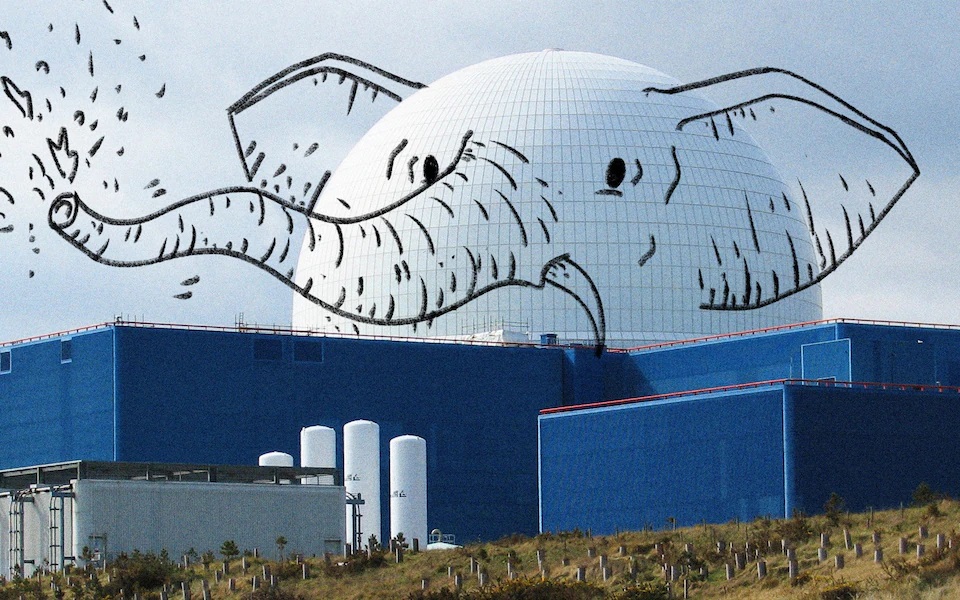
Sizewell C nuclear power plant ‘could get go-ahead within weeks’

Keir Starmer expected to confirm result of 15-year search for investment at UK-France summit next month
Jillian Ambrose, 3 June 25, https://www.theguardian.com/business/2025/jun/03/sizewell-c-nuclear-power-plant-keir-starmer-uk-france-edf
UK ministers could give the go-ahead to the new Sizewell C nuclear power plant in Suffolk within weeks, according to reports.
Keir Starmer is expected to give the final nod to begin construction of Britain’s second new nuclear power project in a generation, alongside the French nuclear developer EDF, at a Franco-British summit next month.
The final approval for Sizewell C, first reported by the Financial Times, would mark the end of a 15-year journey to secure investment for the plant since the site was first earmarked for new nuclear development in 2010.
The government is understood to be in the final stages of securing billions of pounds of investment from the private sector to back the project, which follows the Hinkley Point C nuclear plant, which is under construction in Somerset.
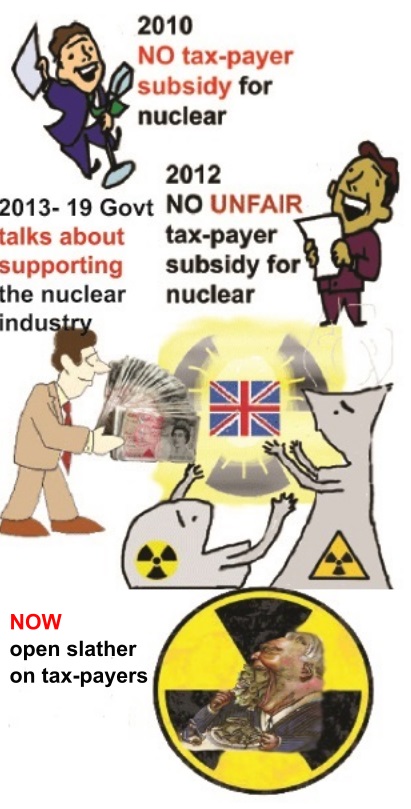
Ministers are expected to use the government’s spending review, scheduled for 11 June, to set out the UK’s investment in the project, which will ultimately rely on a mix of funding from taxpayers and via energy bills.
The final go-ahead from Starmer and the French president, Emmanuel Macron, will then follow during the Anglo-French summit due to take place in London on 8-10 July, according to the Financial Times.
The UK government’s stake in the project stood at 84% at the end of last year compared with EDF’s 16% share of the project. The French state’s cash-strapped utilities company is understood to be eager to reduce its stake in the project even further.
Potential investors in the project according to the report include Schroders Greencoat, Equitix, the Canadian pension fund CDPQ, Amber Infrastructure Partners, Brookfield Asset Management, the UK pension fund USS and the insurer Rothesay, backed by the Singaporean infrastructure fund GIC.
EDF had originally planned to build the nuclear plant alongside China’s state nuclear developer China General Nuclear Power Corp, which also holds a stake in the Hinkley Point C project, but its partner was forced to step back from the project by the UK government on security grounds.
The project has secured £6.4bn of government funding to support its development to date, of which £2.5bn was granted by the Conservative government under Rishi Sunak and a further £3.9bn has come from the current Labour administration.
UK government has already allocated £6.4bn to the Sizewell C nuclear project!
The Sizewell C Development Expenditure Subsidy Scheme (DEVEX Scheme) has
been made for £5.5bn for the Sizewell C company. Under this scheme to
date, £3.9bn has been awarded to the company, in two tranches, one of
£1.2bn and one of £2.7bn. Prior to these awards, the Department had
awarded £2.5bn to the project since the Government Investment Decision in
November 2022 under the SZC Investment Funding Scheme. Hence, in total, the
Department has to date allocated £6.4bn to the project under both subsidy
scheme.
Hansard 2nd June 2025
UIN 54121, tabled on 21 May 2025
https://questions-statements.parliament.uk/written-questions/detail/2025-05-21/54121
Sizewell C nuclear project to get go-ahead during Anglo-French summit
UK ministers hope to sign up private sector investors for new Suffolk power
plant later this month. The new Sizewell C nuclear power station is
expected to get the final go-ahead during an Anglo-French summit in London
next month, as UK ministers edge towards securing billions of investment
from the private sector.
Darren Jones, a Treasury minister, told the
Financial Times earlier this year that the final investment decision for
Sizewell C, where shareholders formally commit to the investment, would be
“at the spending review” on June 11. Ministers are expected to reaffirm
the government’s intention to invest in Sizewell in or around the
spending review, according to people close to the situation, with details
expected on how much they could allocate in taxpayer support for the
project.
However, the final go-ahead is not expected until an announcement
by Prime Minister Sir Keir Starmer and French President Emmanuel Macron
during the Franco-British summit in London between July 8 and July 10,
according to people close to the talks in Britain and France. By then the
government and EDF will have received final bids from several private
investors who have been given a deadline of late June, allowing the formal
final investment decision to proceed.
Groups expected to bid for a stake in
Sizewell include insurer Rothesay, backed by the Singaporean infrastructure
fund GIC, the Canadian pension fund CDPQ, Amber Infrastructure Partners,
Brookfield Asset Management, pension fund USS, Schroders Greencoat and
Equitix, people close to the talks have said. Centrica, the owner of
British Gas, has also confirmed that it is in talks to invest in the
project.
FT 3rd June 2025,
https://www.ft.com/content/25927b63-6ce5-4964-b8df-086c010148f8
Trump Says New Iran Deal Must Allow US To ‘Blow Up Whatever We Want’

A senior Iranian adviser said the proposal would amount to “submission and surrender”
by Will Porter May 30, 2025, https://news.antiwar.com/2025/05/30/trump-says-new-iran-deal-must-allow-us-to-blow-up-whatever-we-want/
President Donald Trump argued that any revived nuclear accord with Iran should permit the United States to destroy the country’s nuclear infrastructure and send inspectors to Iranian facilities at any time.
The president outlined his vision for a new agreement during a White House presser on Wednesday, calling for a “very strong document” that would effectively give Washington carte blanche over Tehran’s nuclear energy program.
“I want it very strong – where we can go in with inspectors, we can take whatever we want, we can blow up whatever we want, but [with] nobody getting killed,” he told reporters. “We can blow up a lab, but nobody is gonna be in the lab, as opposed to everybody being in the lab and blowing it up.”
He did not elaborate on those remarks, however, leaving it unclear whether Washington had actually pushed for such major concessions at the negotiating table. The Islamic Republic would be unlikely to accept a deal under those terms.
Ali Shamkhani, a senior adviser to Iran’s supreme leader Ayatollah Ali Khamenei, later denounced Trump’s comments in a social media post, suggesting his proposal would cross Tehran’s “red lines.”
“Efforts to reach Iran’s nuclear plants and ‘blow up their facilities’ have been a dream of previous US presidents,” he wrote. “Iran is an independent state with a strong defense structure, a resilient people, and clear red lines. Negotiations are a means to progress and preserve national interests and honor, not submission and surrender.”
During the same news conference on Wednesday, Trump said he had urged Israeli Prime Minister Benjamin Netanyahu to refrain from military action against Iran amid the ongoing nuclear talks, arguing the move would be “inappropriate” as the two sides were “very close to a solution.” He went on to claim that a new agreement could be reached with Tehran in “a couple weeks,” though his previous assessments have proven overly optimistic.
The threat of an Israeli attack has loomed large over the US-Iran negotiations, as Tel Aviv continues to accuse Tehran of pursuing nuclear weapons despite repeated American intelligence assessments to the contrary.
During a visit to Iran last month, Saudi Arabia’s defense chief reportedly warned top Iranian officials that failure to “quickly” reach a deal with the US could prompt airstrikes by Israel. The Saudi minister added that Trump had “little patience for drawn-out negotiations,” and suggested that a new conflict with Tel Aviv would destabilize the region, according to sources cited by Reuters.
Will Porter is assistant news editor and book editor at the Libertarian Institute, and a regular contributor at Antiwar.com. Find more of his work at Consortium News and ZeroHedge.
Donald Trump’s Fool’s Gold

“Golden Dome for America is a revolutionary concept to further the goals of peace through strength,” asserts its manufacturer, Lockheed Martin, our first clue that the Golden Dome has nothing whatever to do with peace.
there’s not much use in a Golden Dome unless it’s one hundred percent effective, which it has a one hundred percent probability of not being………….. If just one missile gets through, the level of destruction would be devastating, and the US would then likely retaliate after which all bets are off.
the Golden Dome is merely a deterrent meant to frighten off aggressors. That means we are about to spend $175 billion on something the US would never actually use.
Linda Pentz Gunter, May 30, 2025, https://www.counterpunch.org/2025/05/30/donald-trumps-fools-gold/
Alright, as it turns out, the golden toilet was just a myth. Donald Trump doesn’t have one. But not to fret. President Trump’s private Boeing 757 jet (not the even more lavish one he may shortly be gifted by Qatar) reportedly has gold-plated seat belts. His Trump Tower apartment features a 24-carat gold front door. Inside, there are gold ceilings, golden plant pots and even a gold elevator!
Fancy a visit to Mar-a-Lago? Its imitation Versailles aesthetic has been described as that of an upscale bordello.
Trump’s favorite restaurant is, of course, the Golden Arches, (also known as McDonald’s). And then there’s his lustrous golden tan with the reverse raccoon eyes. We could suggest that Trump’s three trophy wives were all gold diggers, but that wouldn’t be very golden hearted. Remember the golden showers kompromat rumor? Ick, let’s not go there, either.
The wannabe king boasted during his January 20 inaugural address that “The Golden Age of America begins right now.” Six weeks later, during his March 4 Joint Address to Congress, Trump reassured the audience that his Golden Age truly was coming. “Get ready for an incredible future,” he said. “The Golden Age of America has only just begun. It will be like nothing that has ever been seen before.”
That last part was certainly true.Next came Trump’s embarrassingly titled One Big Beautiful Bill Act that would cause almost 14 million Americans to lose health care, 11 million to be deprived of food stamps, and slashes $700 billion from Medicaid and $500 billion from Medicare. This was necessary, insists the Trump junta, because there’s just so much wasteful spending in Washington — except of course the $45 million US taxpayers will spend on Trump’s June 14 he-man vanity project, that will parade tanks on the streets of the capital and fighter jets overhead.
The Big Beautiful Bill was followed a day later with much fanfare — but surprisingly without any actual golden trumpeters — by the signing of Trump’s five executive orders on nuclear power. “President Trump Signs Executive Orders to Usher in a Nuclear Renaissance, Restore Gold Standard Science,” announced the press release that presaged these disastrous directives.
The orders dramatically weaken nuclear regulatory and safety oversight, put new reactor development on an entirely unrealistic timetable, knit the civil and military nuclear sectors firmly back together again and make a major nuclear accident more likely.
They also endeavor to drastically weaken existing and inadequate radiation protection standards that already don’t account for the heightened vulnerability to harm of pregnant women, infants and children.
However, since we are now entering the age of enlightenment, the press release went on to explain: “Gold Standard Science is just that—science that meets the Gold Standard.” Thank you for clearing that up.
All of these dangerous developments have arrived wrapped — or should I say gilded — in a nausea-inducing level of overblown rhetoric that showcases Trump’s obsession with all things gold, both literal and metaphorical.
And now, as if all this golden fleecing of American taxpayers wasn’t enough, we have the Golden Dome for America!
“Golden Dome for America is a revolutionary concept to further the goals of peace through strength,” asserts its manufacturer, Lockheed Martin, our first clue that the Golden Dome has nothing whatever to do with peace. Lockheed Martin is integrally involved in the US nuclear weapons complex, and is a key partner in the development and production of US submarine-launched nuclear ballistic missiles, specifically the Trident II D5, the most lethal destructive force on earth.
The idea of having an invincible missile defense system that could intercept and destroy all missiles targeting the United States, has been around since the 1950s and was developed in various iterations, garnering headlines under the Ronald Reagan administration with the announcement of his Strategic Defense Initiative (SDI), quickly nicknamed “Star Wars” by its detractors.
SDI was highly ambitious, complex, expensive and controversial, and arguably led to the failure of what promised to be a bilateral elimination of nuclear weapons agreed by Reagan and then Russian premier, Mikhail Gorbachev in 1986 when Reagan refused to place limitations on SDI.
“Unexpectedly, the two leaders agreed that they could eliminate ‘all [U.S. and Soviet] nuclear weapons,’ but Gorbachev added the contingency that SDI be confined to the laboratory,” wrote Aaron Bateman for the Arms Control Association in a 2023 article on SDI. “After Reagan refused to accept any limits on SDI, the two leaders departed Reykjavik without a deal in hand.”
By the end of the 20th century, the SDI program had been renamed National Missile Defense (NMD), eventually shifting to a focus on a Ground-Based Midcourse Defense (GMD) system, whose primary task is to defend against incoming long-range ballistic missiles aimed at the US.
As the Union of Concerned Scientists states in the headline to its history of US missile defense, “Since the system’s deployment in 2002, six out of ten test intercepts have failed.”
The Golden Dome is fundamentally another ambitious reboot of SDI. Trump claims he has already settled on what he calls the “architecture”, which makes you wonder if he sees this as some sort of floating palace, a Mar-a-Lago in the sky? When the plan was unveiled in the White House, Defense Secretary, Pete Hegseth, stood by the glittery poster looking for all the world like some sort of game show host.
The Golden Dome price tag is a whopping $175 billion (there’s austerity for you!) and apparently it will all be up and running before Trump’s term is out in January 2029, (assuming Trump willingly leaves office and we still have a democratic election process by then.)
It’s a goal longtime national security and nuclear policy expert, Joe Cirincione, called “insane” in an interview with The Bulletin of the Atomic Scientists, “You probably won’t even get the architecture of the system settled by the end of his administration,” Cirincione said.
Even more insane is that, far from enhancing the safety of the US, the Golden Dome is entirely provocative and, as a nervous China has already warned, will only increase the risks of militarizing space and could even relaunch a global arms race (arguably something that is already underway).
In any case, there’s not much use in a Golden Dome unless it’s one hundred percent effective, which it has a one hundred percent probability of not being. Its predecessor certainly didn’t achieve that and was what Cirincione described as “the longest-running scam in the history of the Department of Defense.”
If just one missile gets through, the level of destruction would be devastating, and the US would then likely retaliate after which all bets are off.
Our current missile defense system, whose earliest iteration was deployed in 1962, has cost at least $531 billion so far according to Stephen Schwartz, a longtime analyst on nuclear weapons costs.
On BlueSky, Schwartz called the Golden Dome project “delusional and reckless. There’s no way to design, test, construct, and deploy a comprehensive system to reliably stop any missiles launched from land, sea, or space, and do it in ‘two-and-a-half to three years’ for $175 billion.”
So far, US missile defense interception attempts (fortunately all tests), have had a success rate that spans a range of 41% to 88% depending on whether you accept an independent analysis, which generates the lower number, or “official” tallies, which produce the higher one. Either way, it’s not 100%.
The Golden Dome, it turns out, is no golden ticket to survival.
But no matter, since, its proponents argue, the Golden Dome is merely a deterrent meant to frighten off aggressors. That means we are about to spend $175 billion on something the US would never actually use.
Trump would do well to take a lesson from Shakespeare’s Prince of Morocco who, in The Merchant of Venice, discovers that “All that glisters is not gold.” Indeed, when he chooses the golden box (of course) over the other less sparkly ones, he learns that what tends to lurk inside such “gilded tombs” are merely “worms.”
Or maybe Trump should just stop talking and heed the most important lesson of all? Silence is golden.
Linda Pentz Gunter is a writer based in Takoma Park, Maryland. She is the international specialist at Beyond Nuclear.
Nuclear power is back. Will it work out this time?

Britain used to lead the world but lost its way over decades of false starts. The planet’s
first small reactors could win us energy independence — at a price. The
energy secretary was very clear about the urgency of the problem. “The
British nuclear power programme has been in decline over the last
decade,” he told the House of Commons. “If we are to reverse this trend
and ensure that the industry is on a sound footing we must act now.”
This would be a very fair summary of Britain’s nuclear industry today. But
these comments were made nearly half a century ago, by David Howell in
December 1979. Fortunately, Howell, a key member of Margaret Thatcher’s
cabinet (and future father-in-law to one George Osborne), had a plan to put
things right. Construction would begin on ten new nuclear power stations in
the decade from 1982 — one a year. “We consider this a reasonable
prospect,” he assured the Commons.
Yet only one of those stations was
ever built: Sizewell B on the Suffolk coast. It was switched on in 1995.
Britain hasn’t completed a station since. This failure is not down to a
lack of ambition. Thirty years after the hubris of Howell, Ed Miliband,
during his first stint as energy secretary, again announced ten new power
stations. When he re-entered the energy department last summer, another 15
years later, construction had started on only one: Hinkley Point C.
On June 11, Milliband will confirm £2.7 billion of funding for Sizewell C, in
Suffolk, where ground preparation has begun. He will also announce a new
generation of small modular reactors (SMRs) — factory-built miniature
nuclear power generators that are seen by many as the future of the sector.
SMRs will cost a fraction of the price and take a fraction of the time to
build, and by the early 2030s will be sending vital power into our homes
… in theory.
Nobody in Britain, or indeed anywhere else, has even built a
prototype SMR. Why, one wonders, is it so fiendishly difficult to build
nuclear power stations in this country? With the sector’s questionable
safety record and such eye-watering costs, to be met through our energy
bills, do we even need new nuclear power? Next week Great British Nuclear
will announce the winner of a competition to build the UK’s first SMRs,
which will also be the world’s first if they get a move on. Four
companies are in the running: GE Hitachi, Rolls-Royce, Holtec and a
restructured Westinghouse.
Times 1st June 2025, https://www.thetimes.com/business-money/energy/article/british-nuclear-energy-what-went-wrong-future-wx2qtxqnd
Trump’s nuclear vision collides with Trump’s actual policies

Some nuclear-watchers are more explicitly worried that the EOs could backfire — specifically, that the Trump administration’s anti-bureaucratic mission of overhauling the Nuclear Regulatory Commission could lead to the kind of disaster that would threaten the fragile new bipartisan consensus around nuclear power.
By DEREK ROBERTSON , 05/28/2025 With help from Gabby Mille, https://www.politico.com/newsletters/digital-future-daily/2025/05/28/trumps-nuclear-vision-collides-with-trumps-actual-policies-00373330
Many of these nuclear boosters have noted — echoing the Secretary of Energy himself, in a hearing last week — that continued nuclear innovation could hinge on Congress continuing to fund the Loan Programs Office, an increasingly high-profile sub-office of the DOE responsible for funding experimental nuclear projects. Thomas Hochman, infrastructure director at the Foundation for American Innovation, in a conversation with POLITICO claimed some momentum for the pro-nuclear cadre’s cause of the moment, saying, “if things go the right way in Congress [the LPO] will continue to have authority.”
With a slate of splashy executive orders Friday, president Donald Trump promised to “usher in a nuclear energy renaissance …providing a path forward for nuclear innovation.”
By streamlining the Nuclear Regulatory Commission, exploring building reactors on federal land and ordering the quadrupling of the U.S.’ nuclear energy capacity, the administration moved to, as Secretary of Energy Chris Wright said in a statement, “unshackle our civil nuclear energy industry and ensure it can meet this critical moment.”
That all should be music to the ears of the burgeoning pro-nuclear revival, which has seen energy and infrastructure wonks across the political spectrum advocate for nuclear energy as a cleaner, scalable alternative to fossil fuels.
But it also raises a question that is becoming familiar in the second Trump administration: How is this all supposed to happen amid Trump’s radical cutbacks to research — to say nothing of government oversight or safety rules?
As with similar administration goals on supercomputing, or innovation, or artificial intelligence, these big promises aren’t happening in a policy vacuum. They’re happening amid an all-fronts rollback of America’s massive research and regulation infrastructure. Even some of those cheering the nuclear EOs are worried that Trump’s bone-deep cuts to the federal government could doom the nuclear revival before it kicks off.
The Nuclear Innovation Alliance, a nonprofit cheerleader for advanced nuclear reactor development, took the moment to urge GOP-controlled Washington to “adequately resource and staff DOE to meet this moment.” President and CEO Judi Greenwald wrote in a statement that Trump’s cuts — actual and proposed — at the Department of Energy “undermine the Department’s efforts and make it harder to implement these executive orders.”
The progressive pro-nuclear Breakthrough Institute, in its own response to the EOs, enumerated the new staffing levels it would require just to license new plants, and worried that the EOs focused on regulatory overhaul “threaten to reduce the NRC’s workforce, independence, and resources.”
Many of these nuclear boosters have noted — echoing the Secretary of Energy himself, in a hearing last week — that continued nuclear innovation could hinge on Congress continuing to fund the Loan Programs Office, an increasingly high-profile sub-office of the DOE responsible for funding experimental nuclear projects. Thomas Hochman, infrastructure director at the Foundation for American Innovation, in a conversation with POLITICO claimed some momentum for the pro-nuclear cadre’s cause of the moment, saying, “if things go the right way in Congress [the LPO] will continue to have authority.”
Some nuclear-watchers are more explicitly worried that the EOs could backfire — specifically, that the Trump administration’s anti-bureaucratic mission of overhauling the Nuclear Regulatory Commission could lead to the kind of disaster that would threaten the fragile new bipartisan consensus around nuclear power.
In an op-ed for The Hill published this morning, the Carnegie Endowment for International Peace’s Toby Dalton and Ariel Levite argued that the ADVANCE Act, passed in 2024, has already gone a long way toward overhauling licensing processes for new reactors and that the Trump administration risks gilding the lily.
“What Americans need is confidence that any nuclear power plant built and operated in the U.S. is safe, secure and ultimately beneficial to American and host community prosperity,” Dalton and Levite wrote, while concluding “the net result of these executive orders, coupled with the additional impact of other administration actions to reform governmental regulatory processes to align with White House policies, is to risk public trust in nuclear energy.”
The nuclear revival has largely been inspired by the massive thirst for energy that cutting-edge technologies carry with them, from enormous AI data centers to semiconductor manufacturing to even cryptocurrency mining. Nuclear is an attractive, relatively clean option for solving these problems, with an attractive retrofuturist sheen to boot.
It’s always been a risky bet, though, given its unique safety concerns and steep costs — and that was in the pre-Trump days of relative policy stability. As even its allies have pointed out, the Trump administration’s lurching, unpredictable approach — taking big, sometimes contradictory swings at issues of “American greatness” — could backfire in a major way, especially when public safety is a factor.
But with so much wind at their sails, and relatively few bipartisan, technocratic wins to be had in the early Trump era, nuclear supporters are still willing to be cautiously optimistic.
“I don’t think any of that stuff is sort of like, you know, so complex as to be unachievable,” Hochman said. “The worst possible outcome is just that nothing really gets done.”
Labour ministers under pressure as viral video shows broken promises to nuclear veterans.
A video showing Labour ministers promising compensation to nuclear veterans has gone viral, putting the government under pressure to keep its word.
Susie Boniface Reporter, Mirror UK, 30 May 2025
Pressure is growing on the Labour government to keep its years of promises to nuclear veterans, after a social media video went viral.
It includes clips of Deputy Prime Minister Angela Rayner, Defence Secretary John Healey and Armed Forces Minister Luke Pollard all insisting that when in power they would offer full recognition to Britain’s most mistreated heroes.
More than a million people have now seen the video, compiled by social justice campaigner Peter Stefanovic. He is calling on Prime Minister Keir Starmer to sit down with the families affected by involvement with Cold War nuclear weapons tests.
In Opposition and the shadow cabinet, the three gave unscripted and unasked-for offers of compensation, saying “there was no good reason” not to and it was “really dumb” of the Tories not to have done it already. Mr Starmer himself told them: “The country owes you a huge debt of honour. Your campaign is our campaign.” Yet after almost a year in power, nothing has changed.
Mr Stefanovic said: “Despite expressing his “gratitude” to the veterans in opposition, after becoming PM, Keir Starmer has made no public comment on the nuclear blood test programme, and 10 months since Labour came to power, there is no compensation scheme, no recognition, beyond a commemorative medal which was authorised by the Tories.
“A ‘thorough’ review of the archives promised to Parliament by Mr Healey has been given no budget with which to find answers. Our nuclear test veterans – national heroes to whom this country owes a huge debt of honour and gratitude, most of whom are now in their eighties and with chronic ill health – are calling on the PM to meet with them and honour the commitment which his party to them in opposition… it’s the very least the veterans deserve.”
The pledges were all made before evidence emerged in November 2022 of the Nuked Blood Scandal, a secret biological monitoring programme on troops involving blood tests, urinalysis and chest x-rays to determine whether radiation had entered their bodies. The MoD had long denied such a programme existed, but a three-year investigation by the Mirror has uncovered thousands of pages of evidence hidden on a secret database at the Atomic Weapons Establishment.
Discovery of the cover-up has led to a civil lawsuit, a police complaint, and a decision to declassify the entire historic archive. After it featured in a BBC documentary, a review was launched but six months on ministers have refused to reveal any findings, and admitted it has no deadline.
The video shows Ms Rayner addressing a conference of the forgotten Cold War heroes in 2022, telling them: “Myself and my Labour colleagues are calling on the Secretary of State for Defence to…. liaise with the Treasury to set up an appropriate financial compensation programme for veterans and their descendants, as America, France, China, Russia, Fiji and the Isle of Man have done.”………………………………………………. https://www.mirror.co.uk/news/politics/labour-ministers-under-pressure-viral-35314341
Lincolnshire County Councillors move to pull the plug on nuclear waste site talks
Councillors have moved to pull the plug on talks to bury nuclear waste in
open countryside near the coast. Members of Lincolnshire County Council’s
Overview and Scrutiny Management Board have recommended the council’s
Executive withdraw from a community partnership it joined with Nuclear
Waste Services (NWS) in 2021, ending Lincolnshire’s involvement in the
Geological Disposal Facility (GDF) siting process.
Lincolnshire Live 30th May 2025, https://www.lincolnshirelive.co.uk/news/lincoln-news/lincolnshire-county-councillors-move-pull-10225069
Councillors move to end nuclear waste talks
James Turner, Local Democracy Reporting Service, BBC 29th May 2025
Councillors have moved to end talks to bury nuclear waste close to the Lincolnshire coast.
Nuclear Waste Services (NWS), a government body, had earmarked an area near Louth, in East Lindsey, as a possible site for a Geological Disposal Facility (GDF).
At a meeting earlier, members of Lincolnshire County Council’s overview and scrutiny management board recommended the authority’s executive withdraws its involvement in the process.
A final decision is due to be made at the next executive meeting on 3 June……………………………………………………………………….. https://www.bbc.co.uk/news/articles/czdyg8365llo
Reform leader hits back after Tories saying he’s gone back on nuclear waste site promise.
By James Turner, Lincolnshire World, 28th May 2025, https://www.lincolnshireworld.com/news/environment/reform-leader-hits-back-after-tories-saying-hes-gone-back-on-nuclear-waste-site-promise-5149751
The new Reform UK leader of Lincolnshire County Council has hit back at accusations of failing to deliver on his election promises regarding a nuclear waste site.
The Lincolnshire Conservative group has highlighted that Coun Sean Matthews, recently elected as council leader, has yet to pull out of talks with government agency Nuclear Waste Services (NWS) about a Geological Disposal Facility (GDF) — despite saying he would cancel Lincolnshire’s involvement in the project on day one if elected.
NWS, formerly known as Radioactive Waste Management Limited, outlined three potential sites for its Geological Disposal Facility in January, including East Lindsey, and communities in Mid Copeland and South Copeland in Cumbria.
East Lindsey District Council withdrew from talks with NWS after the proposed location changed from the former gas terminal in Theddlethorpe to open countryside on land between the villages of Gayton le Marsh and Great Carlton.
The former Conservative administration of Lincolnshire County Council announced its intention to withdraw from talks in March, effectively cancelling the company’s consideration of the Lincolnshire coast for the facility. However, this had yet to be formalised before the local elections in May, when the administration switched to Reform UK.
During a demonstration outside East Lindsey District Council offices in early March, dozens of protesters called on Lincolnshire County Council to withdraw from the talks. Councillor Matthews attended with four of his Reform UK colleagues.
He told the Local Democracy Reporting Service: “On day one if elected as the leader of the Reform council, we will withdraw from the agreement.”
Coun Richard Davies, leader of the Conservative opposition group on the county council, said: “This is a clear U-turn from Sean Matthews and Reform UK.
“Local people were told the project would be scrapped on day one. Instead, the new Reform administration is delaying, consulting, and refusing to give communities the certainty they deserve.”
He added: “We call on Sean Matthews to explain why he has not kept his word to Lincolnshire residents. Reform UK cannot have it both ways — either they stand by their promises or admit they misled the public to win votes.”
Responding to the comments from his Tory counterpart, Coun Matthews said: “As Richard is well aware, there is a democratic process that needs to be followed to officially review the council’s membership of the Community Partnership. And he knows that if we don’t follow that process, we could open ourselves up to challenge, causing further uncertainty for local residents.
“We were clear in the campaign about our intentions, and on my first day as leader of the Reform group, I started that process — even enacting the council’s urgency protocol to allow us to have these important discussions as quickly as possible.
“It took me less than a day to start a process that the previous Conservative administration couldn’t complete in the several years they were in power. In fact, the mere fact they entertained the plans to bury nuclear waste under Lincolnshire in the first place is why this community has had to live with uncertainty for so many years.
“As far as I am concerned, in just one week a decision will have been made and then residents can judge for themselves whether their Reform councillors stick to their word.”
Councillors on Lincolnshire County Council’s Overview & Scrutiny Management Board were to review the council’s participation in the Community Partnership at a meeting on Thursday, May 29. A final decision on the council’s future involvement is expected to be taken by the Executive on Tuesday, June 3.
Dysfunctional: review reveals South Copeland GDF partnership at war
It reads like the potential plot for a sequel novel to J K Rowling’s
‘A Casual Vacancy’. For the report of the review of the South Copeland
GDF Community Partnership highlights internal disarray, with members in
conflict with an overbearing Nuclear Waste Services, whilst experiencing
increasing opposition within the local community.
The catalyst for the
review was the letter of withdrawal of Millom Town Council dated 28
November 2024, detailing numerous criticisms of its composition and
function. No consideration appears to have been given by NWS to have
convened a Task and Finish Group with Community Partnership members.
Such a group could have been charged with discretely, though earnestly,
considering the criticisms raised in the Millom Town Council letter, and
then to bring back its own report to the Partnership with its own
recommendations.
Instead, NWS commissioned an ‘external review of the
South Copeland GDF Community to ensure that is effectively fulfilling its
purpose and meeting the needs of the local community’; which for the
NFLAs begs two key questions, who determines its purpose and how are local
needs defined? For the review, Mary Bradley, the former Chair of the
Allerdale GDF Community Partnership, was commissioned by NWS to conduct
interviews with Partnership members and the NWS team and write a report
with her recommendations………………..
NFLA 29th May 2025, https://www.nuclearpolicy.info/news/dysfunctional-review-reveals-south-copeland-gdf-partnership-at-war/
1 This Month

of the week – Shut Down Drone Warfare!


Tell the Ukrainian Government to Drop Prosecution of Peace Activist Yurii Sheliazhenko

Petition to revoke the licensing of the Near Surface Nuclear Disposal Facility (NSDF) at Chalk River. https://www.ourcommons.ca/petitions/en/Petition/Details?Petition=e-7247
To see nuclear-related stories in greater depth and intensity – go to https://nuclearinformation.wordpress.com
-
Archives
- April 2026 (34)
- March 2026 (251)
- February 2026 (268)
- January 2026 (308)
- December 2025 (358)
- November 2025 (359)
- October 2025 (376)
- September 2025 (257)
- August 2025 (319)
- July 2025 (230)
- June 2025 (348)
- May 2025 (261)
-
Categories
- 1
- 1 NUCLEAR ISSUES
- business and costs
- climate change
- culture and arts
- ENERGY
- environment
- health
- history
- indigenous issues
- Legal
- marketing of nuclear
- media
- opposition to nuclear
- PERSONAL STORIES
- politics
- politics international
- Religion and ethics
- safety
- secrets,lies and civil liberties
- spinbuster
- technology
- Uranium
- wastes
- weapons and war
- Women
- 2 WORLD
- ACTION
- AFRICA
- Atrocities
- AUSTRALIA
- Christina's notes
- Christina's themes
- culture and arts
- Events
- Fuk 2022
- Fuk 2023
- Fukushima 2017
- Fukushima 2018
- fukushima 2019
- Fukushima 2020
- Fukushima 2021
- general
- global warming
- Humour (God we need it)
- Nuclear
- RARE EARTHS
- Reference
- resources – print
- Resources -audiovicual
- Weekly Newsletter
- World
- World Nuclear
- YouTube
-
RSS
Entries RSS
Comments RSS
 nuclear-news