As Trump Bombs Iran, We Need to Reckon With the American War Machine

We cannot afford to slip into despair. We must push back against militarism everywhere, at every turn. By Negin Owliaei , Truthout, February 28, 2026, https://truthout.org/articles/as-trump-bombs-iran-we-need-to-reckon-with-the-american-war-machine/?utm_source=Truthout&utm_campaign=4670da1a6d-EMAIL_CAMPAIGN_2026_03_01_07_35&utm_medium=email&utm_term=0_bbb541a1db-4670da1a6d-650192793
As news broke that the United States and Israel had launched war on Iran, two posts kept showing up over and over on my social media feeds. One was from the Israeli military’s official account, which stated an oft-repeated phrase: “Israel has the right to defend itself.”
The other was a video from the Iranian city of Minab, where the first reports of casualties were emerging. The joint U.S.-Israeli attack had hit a girls’ elementary school; the death toll kept ticking higher and higher. At the time of publication, Iranian authorities said 108 people, mostly schoolchildren, had been killed in the strike, with many more injured.
Plenty has been written, in Truthout and elsewhere, about the totally incoherent justifications for this war, the illegality of it, the potential for regional disaster, the joke it has made of the very idea of diplomacy. All of this was and continues to be true, and all of it is important to raise. But more than anything, we in the U.S. need to reckon with the fact that so much of our state wealth, capacity, and technology goes toward burying children in rubble.
Last year, when Israel and the U.S. launched the strikes that would be prelude to this attack, I wrote that the two countries were “shedding even the pretense and facade of the principles of a rules-based international order that has already worked in their favor.” In the wake of those strikes, once the immediate violence ceased, we largely heard crickets from U.S. lawmakers. This, despite the fact that those strikes, like these, were illegal under U.S. and international law. We cannot let this continued lack of accountability stand. If we do, what will happen next?
Over the years, U.S. and Israeli leaders have become increasingly vocal about their hopes for “greater Israel” — the boundless expansion of an apartheid state. Before the start of the current assault on Iran, former Israeli Prime Minister Naftali Bennett, a favorite in the country’s upcoming elections, accused Turkey of being the hub of a threatening axis “similar to the Iranian one.” This war is not about Iran’s nuclear program. It is not a war to free Iranians from a repressive regime. This is a war to preserve U.S. power and hegemony across the entire region.
It is also not accurate to say that Israel is dragging the U.S. into a war against its choosing. Reporting has shown that these two nuclear powers were in lockstep in their planning of this attack. In order to stop this violence, we need to really contend with how it started. The U.S. is hardly a victim here.
This state of affairs is intolerable. I am disgusted to know that my tax dollars are being spent to bomb my ancestral homeland. I was sickened to wake up to messages from family members telling me that the city where they live was under attack from the country where I live. I’m terrified now that Iran’s government has cut internet access yet again, leaving us disconnected from our loved ones. No fear, of course, can compare to the terror of being on the receiving end of missiles or guns, whether they are wielded by a foreign power or your own government; Iranians have been killed by both in horrifying numbers over the last year. But for those of us in the diaspora, the fact that it has now become routine to check in on family and friends living through untold violence does not make it any less traumatic.
Despite the abject horror of this moment, we cannot afford to slip into despair. There is still space for things to get much worse, but, more importantly, there is still so much left that we must protect. No one can predict what will happen over the coming days and weeks, but we know they are likely to be filled with more violence and uncertainty. We need to use every single tool at our disposal to chip away at the war-making systems inflicting this horror, which are so thoroughly embedded in the heart of the United States.
We can start, of course, by demanding that Congress immediately pass a war powers resolution to put an end to this destructive assault. Beyond that we can lift up the call being made by groups like Defending Rights & Dissent for Congress to impeach not only Donald Trump but every single member of his cabinet who had a hand in making this unjust and illegal war possible.
But we shouldn’t stop there. Our elected officials need to publicly explain why they hemmed and hawed over a war powers resolution before these attacks occurred, despite an obvious military buildup.
We must demand that every member of Congress who has voted to increase our military budget to nearly a trillion dollars account for their choices. We must push those members who have personal investments in the military machine — to the tune of tens of millions of dollars — even further. They need to explain their conflicts of interest, and why they continue to profit off this death and destruction. Lawmakers who take money from groups like AIPAC that are relishing in this war especially need to answer for their votes.
It’s also imperative to not view this war in a silo, but instead see it as part of the same violent, hegemonic project that has been conducting genocide and spreading violence across Palestine, Lebanon, Yemen, Syria, and beyond. We must hold elected officials accountable for failing to uphold U.S. and international law by continuing to support the transfer of weapons to Israel as it commits genocide against Palestinians. We must make it politically toxic for those lawmakers not to support legislation like the Block the Bombs Act, which aims to stop such transfers.
We also can’t expect elected officials to do more just because we ask them to. We need to build power. We must support grassroots movements like the Boycott, Divestment, and Sanctions movement that seek to make war, apartheid, and genocide too costly to wage. We must back campaigns like Taxpayers Against Genocide that are searching for legal avenues to keep federal funds from being used to violate human rights.
We can wage campaigns against death-dealing corporations and make sure that war-profiteering is exposed and subjected to public outrage. The No Tech for Apartheid movement has long been organizing to push Silicon Valley to stop supplying the Israeli military with computing power, and has already found some success. The Israeli military’s use of artificial intelligence (AI) in Gaza has received a great deal of reporting; now that OpenAI has announced a deal to allow the Pentagon to use its models in their classified networks, the fight against AI has taken on renewed urgency. Campaigns across the country against data centers are now also a crucial nexus of resistance against militarism.
So too are campaigns for immigrant rights and against deportations. In the wake of the U.S. strikes against Iran last June, the Trump administration rounded up Iranian immigrants for deportation. Those deportations continued into this year, even as the Iranian government staged a brutal crackdown on protesters. As we prepare for war to rage across the region, we can demand the U.S. and Europe open their borders to people fleeing violence and despair. We can continue to show the links between the occupation of cities by federal immigration agents here at home and imperial wars waged abroad. The enemies of democracy here are also the enemies of democracy abroad.
Some of these demands may seem futile under this murderous president, backed by an obedient Congress, and with a Supreme Court that has offered comparatively little restraint. But this unaccountable bureaucracy makes it all the more essential that we build grassroots power to issue these demands and force those in power to heed them.
Polling shows that this war is unpopular. Trump may be an authoritarian, but he is not entirely invulnerable, nor are the elected officials who have given him pass after pass. We cannot let him believe for a second longer that he can get away with something this wildly illegal or recklessly dangerous without accountability. And we cannot let the leaders who follow him believe that they, too, can unleash such violence without consequences. After all, would we be here if there were any real repercussions for the 2003 invasion of Iraq, or the continuing genocide in Palestine? We need true accountability for these crimes. And the only way to get it is to wage a struggle against militarism every day — not only in moments of crisis, but whenever and wherever it rears its ugly head.
Stop Trump’s New Mass-Murder Spree

By David Swanson, World BEYOND War, February 28, 2026, https://worldbeyondwar.org/stop-trumps-new-mass-murder-spree/
The latest location where Trump has given the orders to murder people is Iran.
Remember a couple of months back when establishment U.S. lawyers and human rights groups were admitting that Trump’s attacks on boats in the Caribbean and Pacific were nothing other than murder?
Murder doesn’t cease being murder because it’s further away or grander or provokes a more dramatic response or targets victims who speak a different language.
By all means hunt in the Epstein files for evidence of Trump raping or murdering, but don’t pretend we don’t already know.
Did Trump have no choice but to start slaughtering people? The mediator said a deal was within reach.
The deal was a solution in search of a problem to begin with, given the absolute lack of evidence of the existence of an Iranian nuclear weapons program and the openly admitted possession of nuclear weapons by numerous other nations not being bombed, including the one currently sending missiles into schools in Iran.
Didn’t Trump need to murder people to prevent the Iranian government from murdering them? Hmm. Is more murder or more high-tech murder or more distant murder better? Should we pretend the people have not been protesting economic hardship largely created by illegal and murderous U.S. sanctions? Must we all conspire to act as if nonviolent activism does not exist? Are we really going to pretend Israel hasn’t demanded this crime — and provided a rotating selection of ludicrous excuses and frauds to justify it — for decades?
Public pressure helped prevent a U.S. war on Iran several times in recent decades, and helped create public opinion in the U.S. that as of the start of this war was more against such a war than ever, and more against such a war than against almost any other evil thing ever asked about in opinion polls.
So why did a war happen now?
One reason is of course that Trump is a psychopath with no qualms about acting on the most horrific advice given to him most recently.
A second reason is that there is no opposition party in Washington. Schumer and Jeffries, the “leaders” of the Democrats, actually prevented votes prior to the start of this crime on the War Powers Resolution ritual of redundantly declaring that this crime would be a crime.
A third reason is that there is almost no opposition among the governments of wealthy nations or in the United Nations.
A fourth reason is — depending on how you want to look at it — either the onslaught of numerous threats and crises from the Trumpoctopus wrecking ball targeting of Venezuela, Mexico, Minneapolis, Greenland, Canada, Russia, the natural environment, healthcare, etc., etc., or the established pattern of the people of the United States, their local governments, their state governments, the Congress, the media, and the two corporate political parties in the U.S. Congress failing to effectively stand up to any of these things with votes, impeachments, prosecutions, sit-ins, boycotts, or truth commissions.
A fifth reason is that you get what you pay for, and the institutions and television viewers of much of the world have collectively hallucinated military spending as a public good to be maximized at the expense of all that is useful or decent in the world.
Is all hopeless? Of course not.
What’s needed is obvious. But we have to be willing to do it. We have to stop picking which type of people to care about. We have to stop worrying about the risks. We have to all stand up together, no matter whom we’ve voted for or against, no matter what myths we’ve believed in the past, no matter what corner of the planet we live in, and work every nonviolent educational and media and activist angle to effectively demand NO MORE.
Australian Greens say no war with Iran as Albanese’s Labor issues support of Trump and Netanyahu’s illegal attacks.

Last night, US President Trump launched a new illegal bombing campaign against Iran. The Australian Government’s support for Trump’s latest illegal war is a clear breach of international law and the prohibition on wars of aggression.
The Iranian people deserve to be free from persecution and domination, both from the current regime and from foreign powers. History shows, and the world knows, that US military attacks and Donald Trump’s kidnappings and assassinations do not produce peace and do not produce justice.
While US bombs and missiles rain down on Iran, there is every likelihood that they are being targeted with the direct or indirect assistance of “joint” US-Australian military facilities at Pine Gap and North West Cape.
The Greens have consistently and clearly condemned the Iranian Regime’s violent response to recent protests and long history of oppression, and we have backed the Woman Life Freedom movement. We know that the people of Iran who have been the victims of the regime will be the same people who are right now being killed, injured and driven into further poverty and fear by US bombing.
Senator Waters, Leader of the Australian Greens, said:
Trump and Netanyahu’s illegal attacks last night have unleashed chaos across the Middle East.
“This war will not bring safety to the brave Iranian people who are fighting for liberation from the brutal regime. Innocent people have already been massacred, including at least 60 children in Southern Iran killed by US and Israeli strikes on an elementary school last night. Our hearts ache for their families. This war will see homes and cities razed to the ground and countless innocent lives lost.
“The Greens condemn these illegal, abhorrent and unilateral attacks. Australians do not want to be dragged into another US-Israeli war.
“Australia’s support of Trump and Netanyahu’s illegal attack last night was disgraceful.
“We cannot bomb our way to peace.
“The Labor government must immediately rule out Australian support for Trump and Netanyahu’s illegal war. No resources. No intelligence. No more cover.
“The Labor government must also confirm to the Australian people that no intelligence from Pine Gap or other US bases in Australia was used last night, and rule out allowing these bases to be used in this illegal war going forward.
“End AUKUS. Australia must be a force for peace and diplomacy across the world.”
Senator Shoebridge, Greens spokesperson on Foreign Affairs, said:
“No one seriously believes that Donald Trump cares about the rights or lives of people in Iran. Just like other US wars that Australia has supported in Vietnam, Iraq and Afghanistan, the talk is about freedom and democracy but the reality is killing and destruction. Already, we are seeing reports of schools being destroyed and children killed in airstrikes.
“With barely a moment’s pause the Albanese Government has backed Trump and another US-led war in the Middle East. This proves without a shadow of a doubt that Labor has outsourced Australian foreign policy to Washington.
“Labor has made Australia a part of this war by allowing Pine Gap and other US military bases here to be used to gather intelligence and target US bombs and missiles. People see through Labor when it says it believes in international law and then repeatedly backs the US and its illegal wars.
“Time and time again the US has betrayed the people it was claiming to protect, leaving bloodshed in its wake while serving its own corporate and military interests. Trump is no different, even if he is more blatant.
“The Greens are the only anti-war party in the Federal Parliament and we will not shift from that stance, having seen the horrifying scale of killing and displacement that war has visited on the world.
“The world has been watching the bravery of the Iranian people pushing back against a brutal regime and calling for liberation and freedom. The Greens know that a Trump-led military assault on Iran is not a pathway to freedom or a pathway to a democratic regime that is supported by the Iranian people. This attack, like the last, is a pathway to chaos and more killing in Iran.
“There is more Australia can do for the people of Iran, starting with offering safety to those who have fled the regime, especially those already in Australia who are trapped in an unfair refugee process.”
Labour panned as nuclear project ‘to cost more than Scotland’s block grant’
THE SNP have hit out at the projected costs for the Labour Government’s
flagship nuclear project. It comes after EDF pushed back the start-up of
the Hinkley Point C nuclear plant again, pushing up the final bill.
The French state energy company said the plant was now expected to cost £35bn
in 2015 prices — or almost £49bn at today’s prices. The project was
costed in 2016 at £18bn at the then-current prices. The SNP have now hit
out at Labour and the party’s push for more nuclear, highlighting that
the Scottish Government’s block grant from Westminster was £47.6 billion
in 2025/2026 – less than the new projected cost.
The SNP have opposed the
creation of new nuclear plants and are able to use planning policy to block
developments, despite energy policy being largely reserved to Westminster.
The Scottish Government instead wishes to focus on renewable developments,
with Scotland’s last nuclear plant, Torness, set to be decommissioned in
2030.
The National 2nd March 2026, https://www.thenational.scot/news/25900166.labour-nuclear-project-to-cost-scotlands-block-grant/
Tulsi Gabbard’s Own Testimony Resurfaces as Iran War Narrative Escalates
the public record now contains two different emphases from the same official — one under oath, the other amid mounting calls for confrontation.
February 28, 2026 by Joshua Scheer, https://scheerpost.com/2026/02/28/tulsi-gabbards-own-testimony-resurfaces-as-iran-war-narrative-escalates/
As Washington intensifies rhetoric around Iran’s alleged nuclear ambitions, past sworn testimony from Tulsi Gabbard is resurfacing — and raising uncomfortable questions.
According to a recent Newsweek report, Gabbard testified under oath before Congress in March 2025:
“Iran is not building a nuclear weapon and has not reauthorized the nuclear weapons program Khamenei suspended in 2003.”
That statement directly contradicts the renewed claims now circulating in Washington and Tel Aviv suggesting Tehran is on the verge of weaponization.
Former CIA analyst Ray McGovern amplified the contradiction in a pointed public message addressed to Gabbard:
“Dear Tulsi Gabbard: You testified under oath in March 2025: ‘Iran is not building a nuclear weapon and has not reauthorized the nuclear weapons program Khamenei suspended in 2003.’ By your silence now you let yourself become just another female being used.”
The comment underscores growing frustration among critics who argue that intelligence assessments are being selectively interpreted — or politically repurposed — amid escalating U.S.–Israel military action against Iran.
Gabbard later claimed her March testimony was “taken out of context” — though how a direct, sworn statement before Congress could be misinterpreted remains unclear. The words were unambiguous: Iran was not building a nuclear weapon and had not reauthorized the program suspended in 2003.
Yet by June, her tone had shifted.
In subsequent remarks, Gabbard suggested Iran’s nuclear advances posed a growing threat and emphasized enrichment levels and regional escalation rather than the absence of an active weapons program. The pivot — subtle but significant — mirrored the broader shift in Washington’s messaging as tensions intensified.
Whether this reflects new intelligence, political pressure, or strategic recalibration is anyone’s guess. What is clear is that the public record now contains two different emphases from the same official — one under oath, the other amid mounting calls for confrontation.
The 2003 Suspension
The reference in Gabbard’s testimony points to Iran’s halt of its structured nuclear weapons program in 2003, a conclusion long reflected in U.S. intelligence assessments. Even at the height of tensions during prior administrations, intelligence agencies maintained that while Iran expanded uranium enrichment, there was no conclusive evidence of an active weapons program.
That distinction — between enrichment capacity and weaponization intent — has historically marked the dividing line between diplomatic engagement and military confrontation.
Silence Amid Escalation
Gabbard’s earlier statement now stands in tension with the current political climate. Critics argue that if intelligence conclusions have not fundamentally changed, then public silence from officials who previously acknowledged those assessments contributes to a dangerous narrative drift toward war.
Supporters of a harder line against Tehran counter that Iran’s enrichment levels and regional posture justify aggressive containment regardless of formal weaponization status.
But the broader question remains: if sworn testimony established that Iran was not actively building a bomb, what has changed?
As bombs fall and rhetoric sharpens, that question may prove more consequential than any single tweet.
Democratic congressional leaders are working to stop War Powers Resolution opposing Trump’s criminal Iran war.

Walt Zlotow, West Suburban Peace Coalition Glen Ellyn IL , 26 Feb 26
Senate Minority leader Chuck Schumer and House Minority Leader Hakeem Jeffries are horrified that a bipartisan War Powers Resolution to stop Trump’s planned criminal war on Iran might actually come to a vote this week.
The last thing they want is for Democrats, including themselves, to go on record to stop Trump from his dastardly planned attack. Why? Both leaders, like many fellow Democrats, support the likely upcoming Trump attack but are loathe to admit such. They either truly believe the nonsense Iran is seeking nuclear weapons and represents a threat to the homeland…or they are simply aligning themselves with Israel’s interests, not America’s, due to the millions pumped into Democratic campaign coffers by the Israel lobby.
Neither Schumer nor Jeffries utter a word about their pro Israel, pro Iran war beliefs. They know a large majority of voters reject Trump’s rush to war to cater to Israel’s military interests over America’s national security interests. Schumer and Jeffries stay silent so Trump can self-destruct when US body bags arrive home from Iran’s missile killing fields.
Unlike pro Israel Republican lawmakers who brag about their fealty to Israel and the need to topple Iran into failed state status, Democratic lawmakers want it both ways. Destroy Iran while laying the blame for all the lethal blowback killing Americans on Trump’s doorstep.
Schumer and Jeffries had no issue supporting the War Powers Resolution to stop Trump from invading Venezuela to kidnap its president. That resolution neither affected Israel nor was likely to incur massive US casualties. Voting for the resolution, bound to fail due to solid Republican support, brought no political fallout.
Schumer and Jeffries will not publically oppose bringing the Iran War Powers Resolution to a vote. They can’t leave any fingerprints on their opposition to it. Behind the scenes they offer process concerns, objections and caucus unity arguments to slow down the march to a vote; indeed possibly prevent it before Trump launches possible the most catastrophic war this century.
Chuck Schumer and Hakeem Jeffries want their cake and eat it too. Destroy Iran and the Trump presidency by remaining AWOL from the most critical issue they have ever faced. You cannot get more cynical than the Schumer, Jeffries tag team allowing Trump to blunder into catastrophic war to serve a foreign government.
Schumer, Jeffries blink…Senate, House to vote on War Powers Resolution next week to stop Trump’s criminal war on Iran
Walt Zlotow West Suburban Peace Coalition, 27 Feb 26
The two Democratic leaders in Congress failed in their attempt to quash a bi partisan War Powers Resolution demanding Trump hold off any war on Iran till he makes the case before Congress. That’s not just morally required, it’s constitutionally required.
Senate Minority Leader Chuck Schumer and House Minority Leader Hakeem Jeffries would much prefer Congress to remain constitutionally silent. They both would like to see Trump demolish Iran on behalf of Israel, while self-destructing his presidency when the toll of senseless war visits the homeland. But they’re now on board, bowing to pressure from congressional Democratic peace advocates and the majority of Americans who loathe the rush to war to serve Israel’s regional hegemonic interests, not America’s national security interests.
Alas, the vote next week could be seven long days from now, plenty of time for Trump to act unilaterally, the Congress, the Constitution, the American people be damned.
Democrats Aren’t Resisting Trump’s Iran War Because They Secretly Support It.
Caitlin Johnston, Feb 20, 2026, https://www.caitlinjohnst.one/p/democrats-arent-resisting-trumps?utm_source=post-email-title&publication_id=82124&post_id=188566363&utm_campaign=email-post-title&isFreemail=true&r=1ise1&triedRedirect=true&utm_medium=email
The Wall Street Journal reports that the US has been gathering the most air power seen in the middle east since the Iraq invasion in 2003.
CNN says the US military is prepared to strike Iran as early as this weekend.
A Trump advisor has reportedly told Axios that “The boss is getting fed up. Some people around him warn him against going to war with Iran, but I think there is 90% chance we see kinetic action in the next few weeks.”
The US is by every indication headed straight toward war with Iran, and Trump’s ostensible opposition has conspicuously little to say about it. We’re seeing some pushback from House Democrats like Ro Khanna, but party leaders like Hakeem Jeffries and Chuck Schumer are completely missing from the scene on this issue of unparalleled urgency.
Democratic Party leaders are doing nothing to oppose Trump’s war plans for Iran because they support those plans. They just don’t want to be the ones pulling the trigger.
When the attack begins they’ll do the same thing they did with Venezuela: publicly finger-wag about rules and protocol while providing no meaningful resistance and privately being glad the empire took out another unauthorized leader.
Democratic Party empire managers love Trump. They love having a bad cop who’s willing to get his hands dirty and slit the throats that need slitting while they sit back looking pretty and fundraise off his depravity.
Democrats hate having to be the bad guy. They hated trying to come up with excuses for why it was fine for Biden to aggressively back a live-streamed genocide in Gaza, and they were relieved to finally hand off that PR nightmare to Trump. They wanted to lose in 2024, and they were glad when they did.
Now they get to just coast along and let Trump take the blame for all the imperial depravity.
On Wednesday, Democratic Senator Mark Warner told MS NOW’s Katy Tur that “I think it’s appropriate that the president has all the options on the table” with regard to war with Iran, complaining only that Trump was too incompetent to strike last month when Iranian domestic turmoil was at its peak.
Warner said that “seeing regime change in Iran would make sense” and made it clear that he would like to see the Iranian government removed, with his only criticism being that Trump was going about obtaining it in a clumsy and impolite way.
“First of all, remember the president said in our previous bombing that we had obliterated Iran’s nuclear program,” Warner said. “While clearly our military did an exquisite job, we did not obliterate Iran’s nuclear program, number one. Number two, if the president is calling for regime change in Iran — and Iran is an awful regime — but he should make the case to the American public and to the world of how we’re going to go about doing that.”
This is such a perfect example of the Democratic Party’s relationship with all of Trump’s most depraved agendas. Here’s this monstrous warmonger, poised to unleash violence in the middle east of potentially devastating consequence, and all Warner can do is hem and haw about proper war etiquette and criticize the president for failing to drop enough bombs on Iran’s nuclear energy infrastructure.
The United States has two right wing war parties: the polite one and the rude one. No party or faction which advances peace and human interests is allowed to flourish at the heart of the empire.
Trump is responsible for the war crimes of his administration, and he belongs in a cell in The Hague. But these Republican swamp monsters wouldn’t be able to do the damage they do without the assistance of the Democratic Party.
A Dangerous Equation: Trump’s Iran Plans and the Democrats Who Expect to Benefit
SCHEERPOST, February 22, 2026 , by Joshua Scheer
Recent reporting suggests that President Donald Trump privately envisions a bold “regime change” in Iran, seeing it as a historical legacy project. Sources indicate he has pressed military planners for contingency strategies that could allow major attacks while keeping potential chaos politically manageable for the midterms.
At the same time, some Democratic leaders appear less focused on preventing war than on the political calculus of who would bear the consequences. Internal discussions reveal a tension: a portion of the party sees a potential conflict as both strategically and politically advantageous if Trump ends up owning the fallout. Meanwhile, a few members of Congress, including Reps. Ro Khanna and Thomas Massie, have pushed for a War Powers resolution to require public accountability.
This coverage raises pressing questions about political expediency versus ethical responsibility in decisions that could imperil thousands of lives abroad and American service members. The stakes are high, and the calculation of winners and losers in Washington may come at a catastrophic human cost………………………………………………………… https://scheerpost.com/2026/02/22/a-dangerous-equation-trumps-iran-plans-and-the-democrats-who-expect-to-benefit/
The Unelected Overlord: How Kushner Turned the White House into Israel’s Backroom Deal Den

Viewed closely, a pattern emerges, pointing to a presidency where private capital, foreign networks, and personal access converge to shape outcomes that consistently serve Israeli interests, and not Americans
Freddie Ponton, 21st Century Wire, February 2, 2026 , https://21stcenturywire.com/2026/02/02/the-unelected-overlord-how-kushner-turned-the-white-house-into-israels-backroom-deal-den/
”Trump did not walk into the White House alone. He stormed in with a promise to “drain the swamp,” but trailing in his shadow was Jared Kushner, carrying a tangled web of private financial networks, offshore holdings, and foreign capital so deeply embedded it functioned like a quiet engine at the heart of the presidency. Years later, FBI documents released alongside the Epstein files crystallised the danger, with a Confidential Human Source (CHS) alleging that Trump had been compromised by Israel, and that Kushner was the true centre of gravity, orchestrating both the Trump Organisation and the White House from within.
Here -documents: [on original]
DOCUMENT: Federal Bureau Of Investigation (FBI) – CHS Reporting Document, 10/19/2020 (Source: US DOJ)
This is not theatre. Intelligence reporting rarely accuses outright; it maps vulnerability, flags leverage, and exposes the invisible pathways through which foreign influence can seep into the corridors of American power, remaining unnoticed, unchallenged, and structurally unstoppable
The question is not whether the allegation would hold up in court. The question is whether the record itself, including Trump’s 2025 mandate, his cascade of executive orders, and his most consequential foreign policy moves in the Middle East, confirms the risk it described. Viewed closely, a pattern emerges, pointing to a presidency where private capital, foreign networks, and personal access converge to shape outcomes that consistently serve Israeli interests, and not Americans’. The decisions emanating from the Trump 2:0 administration appear to be dictated from within rather than guided by democratic oversight. As this story unfolds, it becomes clear that these are not isolated incidents or accidental alignment—they are structural, enduring, and deeply consequential.
READ MORE: Trump Team Didn’t Just Collude with Israel, Kushner was Acting as Foreign Agent for Tel Aviv
A Presidency Rewired from the Inside
Continue readingTrump Team Didn’t Just Collude with Israel, Kushner was Acting as Foreign Agent for Tel Aviv.
So Trump’s éminence grise, the wunderkind, who some people have called the President In-Law, is really Israel’s man inside the White House
Granted, this is a very serious charge – which comes with some serious consequences if Kushner would ever be indicted, but the facts clearly demonstrate beyond any reasonable doubt, that then President-elect’s son-in-law was using his proximity to the incoming Commander and Chief to execute a series of highly sensitive foreign policy maneuvers at the request of a foreign country.
So what exactly are Jared Kushner’s credentials in international relations and diplomacy that he has been charged with negotiating Middle East affairs for the United States of America? Without sounding too cruel here, it’s difficult to find anything to say in his defense. In the end, his only visible qualification is that he’s married to the President’s daughter, and that’s he’s “a good friend” of Netanyahu. That’s really it
December 7, 2017 By NEWS WIRE Patrick Henningsen, 21st Century Wire
Much was made this week in the US media about Michael Flynn’s recent guilty plea to making false statements to the FBI, as part of Special Counsel Robert Mueller’s never-ending “Russia probe.” Beyond the political window dressing however, there’s a much bigger and more profound story lingering in the background.
Continue readingThe West Bank. Israel’s atrocities in clear sight, but out of mind
by Ben Bohane | Feb 7, 2026 , https://michaelwest.com.au/the-west-bank-israels-atrocities-in-clear-sight-but-out-of-mind/
While the world has focussed on the atrocities in Gaza, Israel continues its support of illegal settlements, hostility and apartheid in the West Bank. Ben Bohane reports from Bethlehem.
We are no more than 5 minutes out of Bethlehem on a crisp December morning when my Palestinian driver – let’s call him Ahmed – stops and points to a curl of smoke rising in the valley below, near Beit Jala.
“That’s a local restaurant the Israeli’s are burning since last night. They demand permits even when it is on family land. Israel then gives demolition orders, and no one can stop them.”
It’s the day before Christmas. I’m in the West Bank and Israel for a month to see the situation for myself, to try and understand how this comparatively small area continues to hijack history and our news agenda. Gaza remains off-limits to all foreign media attempting to report on Israel’s genocide there, so I can’t go.
The international Committee to Protect Journalists (CPJ) states 249 media personnel have been killed so far by Israel in Gaza, Yemen, Lebanon, Israel and Iran since the Gaza war began.
“Israel has killed more journalists in the past three years than any other government in history,“
assassinating more than all media personnel killed in all the wars of the 20th century combined.
Israel has also now banned many reputable international NGOs from operating there. In late January, the IDF finally acknowledged the death toll tally compiled by Palestinian health authorities as accurate, saying it believed 71,000 people had been killed so far.
I’ve come to the other front, the West Bank, as Israeli settlers and the IDF establish new illegal settlements and make life difficult for Palestinians just trying to eke out a living.
While I’m there, Israel announces 19 new settlements, bringing to 69 the number of new settlements approved in the past few years.
They are slowly circling and strangling Palestinian towns by taking the high ground on hilltops, establishing their own roads to link up with other settlements, and destroying ancient olive groves which locals have long relied on for a meagre income. Some of these trees are many hundreds of years old, and their desecration seems somehow symbolic of Israel’s attempts to change history and geography.
“We are trapped here”, says Ahmed. “Ever since October 7, Israel has closed off our access to Jerusalem and the rest of Israel. A lot of businesses are struggling to survive after 5 years of shutdowns – first it was Covid, and then the Gaza war. No tourists for years.”
Unless they are employed in one of a handful of jobs, such as in hospitals or working for a Christian organisation, Palestinians in the West Bank can’t leave. Denied both Palestinian statehood and Israeli citizenship,
“West Bank Palestinians are caught in a limbo where they can’t travel into wider Israel or beyond.“
“Israel controls all our movements, all our water, and controls our petrol supply”, says Ahmed. “The only thing they don’t control is the air we breathe, and if they could control that, they would.”
Bulldozer warfare
We visit a home recently bulldozed by settlers and fields uprooted because they were considered too close to the expanding nearby Israeli settlement of Beitar Illit. As locals lose access to their olive orchards, the only trees safe are those within towns or around their homes. I see a young boy with a wheelbarrow full of seedlings and uprooted olive saplings moving towards a nearby field. Ahmed translates:
“The boy says that part of their resistance is to immediately replant the olive trees when settlers chop them down. The olives aren’t just an income for us, they are part of our identity on this land.”
We have to be quick when visiting the contested edges of these towns and fields, as settlers are always watching from nearby hilltops and the IDF can be on scene in less than 5 minutes. On two occasions, my driver yells to get us back in the car for a hurried exit when he spots settlers driving down to intercept us.
Returning to Bethlehem, the annual Christmas parade is underway. Hundreds of Palestinian, Arab and Armenian Christians in uniforms march along roads leading to Manger Square in the heart of Bethlehem. Palestinian Authority police guard the route and Churches, including the Orthodox Basilica of the Nativity, first begun by Emperor Constantine’s Christian mother, Saint Helena, in the 4th century. Under this Byzantine church is a grotto where Jesus was supposedly born.
This is the first time in two years that Christmas celebrations, including a huge Christmas tree, have taken place. With few foreign tourists, shops in Bethlehem are happy to see many Muslim families from across the West Bank visiting with children to see Santa and the holy sites. It’s a peaceful time with Christian and Muslim families celebrating together.
I met Father Issa Thaljieh, a Palestinian (Greek Orthodox) priest overseeing the Basilica. ‘Issa’ is the Muslim name for Jesus. He says the number of Christians continues to dwindle, from 10% of the Palestinian population during the British mandate period 100 years ago, to around 1% today. Most live overseas now, with Israel incentivising their departure.
Apartheid
One thing I hadn’t known until I came here is that Israelis are forbidden from entering any West Bank towns. At the entrance to many towns I visited, including Jericho and Bethlehem, are large road signs in red warning Israeli citizens not to enter.
Although usually framed as a security measure to prevent kidnapping, it has the additional impact of preventing ordinary Israelis and Palestinians from mixing together and stops Israelis from really understanding what is going on across the West Bank. It underlined the sense of apartheid, along with the long winding separation wall that snakes between Jerusalem, Bethlehem and the rest of the West Bank.
Always interested in art and graffiti as forms of resistance, I cruise a length of the wall, near two refugee camps inside Bethlehem and come across artist Banksy’s ‘Walled Off’ hotel, which had only reopened the week before after 5 years of closure. Upstairs is a gallery supporting local artists, downstairs a museum about the wall and ‘occupation’, along with a chintzy piano bar styled like a frontier saloon.
The hotel faces a section of the wall emblazoned with graffiti and promises ‘the worst views in the world’. The wall began construction substantially in 2002, runs for 810kms and is Israel’s biggest infrastructure project. Banksy’s museum quotes the man put in charge of the build, Danny Tirza:
“The main thing the government told me in giving me the job was,
“to include as many Israelis inside the fence and leave as many Palestinians outside as possible.“
Down the road, a number of local stores have popped up selling cheap Banksy merch, and apparently, Banksy is fine with all the rip-offs.
Other days are spent visiting Jericho and Hebron with its shrine containing the tomb of Abraham, patriarch of all the monotheistic faiths.
It is a town often at flashpoint between Palestinians and hardcore Israeli settlers who have moved right into pockets of the town, protected by IDF soldiers. A day trip to Ramallah is aborted when my driver says that Israeli forces had entered that morning to destroy dozens of shops and shot two people.
“It’s too dangerous today to visit, and besides, it would take us 5 hours to get through the checkpoints instead of one hour as normal”, he says.
Every day across the West Bank, Palestinians must navigate security challenges, declining business and hungry families. Given the impunity with which Israel operates in Gaza, Palestinians across the West Bank are still standing their ground, but without much hope that the international community will stop Israel’s encroachment.
Netanyahu’s government wants to extinguish any hope of a two-state solution, but Palestinians will not cede their homes – or their olive trees – easily.
Japan Restarts Nuclear Power at Kashiwazaki Kariwa After 14 Years
By Alex Kimani – Feb 11, 2026,
https://oilprice.com/Latest-Energy-News/World-News/Japan-Restarts-Nuclear-Power-at-Kashiwazaki-Kariwa-After-14-Years-in-the-Dark.html
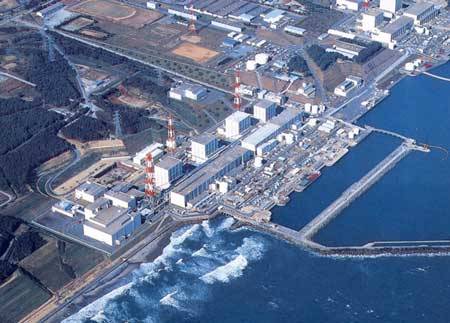
Japan’s Tokyo Electric Power Company (TEPCO) has restarted Unit 6 of the Kashiwazaki-Kariwa nuclear power plant, following a 14-year shutdown following the 2011 Fukushima disaster. The 1,360 MW reactor is the first unit to come online since the nuclear accident that saw Japan halt operations at all its nuclear plants pending regulatory changes.
The accident was caused by the 9.1-magnitude T?hoku earthquake – the third-largest in the world since 1900 – that triggered a tsunami, resulting in electrical grid failure and damage to nearly all of the power plant’s backup energy sources. With a total capacity of roughly 7,965 MW, the Kashiwazaki-Kariwa Nuclear Power Plant is the largest in the world.
TEPCO has implemented extensive, multi-layered safety enhancements at the Kashiwazaki-Kariwa Nuclear Power Plant to prevent accidents, particularly focusing on tsunami, earthquake, and terrorism risks. The company has constructed a 15-meter-high reinforced concrete seawall (extending 1,000 meters) to protect against tsunamis far exceeding the predicted maximum of 7-8 meters; critical buildings, including reactor and turbine buildings, have been fitted with heavy, watertight doors and barriers to prevent water from entering during a flood while essential equipment and emergency diesel generators have been moved to higher ground (up to 35 meters) to remain operational if the site floods.
Similar to many Western nations, Japan is doing a 180 on nuclear power after virtually ditching the power source as it looks to enhance energy security, reduce heavy reliance on expensive imported fossil fuels, meet rising electricity demand (including for AI data centers), and achieve 2050 carbon neutrality goals. Japan imports 60-70% of its electricity resources. In 2024, the country spent nearly $70 billion on liquefied natural gas (LNG) and coal imports, with nuclear power offering a [?] cheaper, [?] home-grown alternative.
REVEALED: Labour said Scottish nuclear study could be seen as ‘waste of money’
by Tom Pashby, The Canary 11th Feb 2026
The UK government has admitted that a study into the suitability of Scottish sites for new nuclear power projects could have been “a waste” of money. The government commissioned Great British Energy-Nuclear (GBE-N), a public body, to carry out the study.
The revelation came after Department for Energy Security and Net Zero (DESNZ) secretary of state Ed Miliband told Scottish journalists in October 2025 that:
given the growing interest in nuclear in Scotland, I’m asking GBE-N to assess Scotland’s capability for new nuclear power stations, including at Torness and Hunterston.
This is going to be a very, very big issue in the Scottish election campaign. We are saying yes to new nuclear in Scotland.
Labour hoping to end SNP ban on new nuclear in Scotland
Scotland is due to go to the polls to elect a new Scottish parliament and Scottish government in May 2026. Labour is hoping to wrest back control from the Scottish National Party (SNP).
In an article about the same interview published in October 2025, the Scotsman newspaper reported that a “senior UK government source” had said they were considering submitting planning applications for new nuclear developments at Torness and Hunterston because they expected a Scottish Labour victory at the Holyrood election.
The UK Labour Party and Scottish Labour support nuclear power and nuclear weapons. This position is coming under pressure as the Green Party of England and Wales, which vehemently opposes all nuclear, increasingly challenges Labour in public opinion polls.
Under the Freedom of Information (FOI) Act, the government released documents to the Canary about Miliband’s request to GBE-N. These included a Q&A document prepared by DESNZ officials. It revealed that officials knew there would be concerns about new nuclear proposals in Scotland.
No new nuclear can be built in Scotland because planning policy is a devolved matter, and the ruling SNP opposes nuclear power. The rebuttal in the DESNZ Q&A was that there is “cross-party interest in new nuclear” in Scotland.
Energy department officials contradict each other on responsibility for study
The documents released under FOI also revealed that a DESNZ official, whose name was redacted, had sought to reassure GBE-N colleagues that DESNZ was not “behind the briefing” in an email sent on 22 October 2025 at 4:02pm.
That position was contradicted by an email in a separate earlier conversation where, on 21 October 2025 at 6:46pm, John Staples, DESNZ director for new nuclear strategy and fusion energy, said:
our SpAds [special advisors] want SoS [secretary of state] to be able to say the below to Scottish journalists.
‘Below’ in the email were lines drafted for Miliband which included:
I will ask Great British Energy – Nuclear to begin assessing Scotland’s capability for new nuclear power stations.
The internally prepared Q&A included a question which asked:
Isn’t this study a waste of money?
The DESNZ answer said:
New nuclear projects can deliver millions of pounds of investment and thousands of high-quality jobs to a region – UK ministers want to understand the potential for new projects right across Great Britain.
The Canary approached the Labour Party for comment, which deferred to DESNZ. DESNZ did not respond to a request for comment.
‘Obvious’ that study would be ‘waste of money’ – Scottish CND
A Scottish Campaign for Nuclear Disarmament (CND) spokesperson told the Canary:
It is obvious that an assessment of the viability of new nuclear sites in Scotland would be a waste of money, since the foremost issue is not the viability of sites but Scottish government policy.
Energy policy is devolved to Holyrood and the Scottish government very sensibly opposes new nuclear plants in Scotland.
There are a whole host of reasons why new nuclear plants in Scotland would be a terrible idea, including the absolutely exorbitant cost of nuclear plant construction, the reliance on destructive and unjust international uranium supply chains, and the enormous and cross-generational burden of decommissioning nuclear plants, which in the case of Dounreay is expected to take hundreds of years.
In particular, the notion that Scotland, which is a net energy exporter and has the potential to become an international renewables powerhouse, should pivot to costly nuclear projects at this stage is somewhat absurd.
Investing the same sums invested in nuclear power plants – scores of billions and climbing for Hinkley Point C and Sizewell C – into the grid, home insulation and the renewables sector across Scotland would be an immeasurably better investment.
For Scottish CND, another concerning element of the renewed push for nuclear power is the deep imbrication [overlapping] of the ‘civil’ and military nuclear industries, as openly promoted in the 2025 Industrial Strategy.
From this perspective, investment in new nuclear power plants can be seen as defence spending by stealth and a means of shoring up the UK nuclear weapons industry – something which is of no benefit to Scotland and indeed causes major risks and harms in Scottish communities.
New nuclear would be incredibly expensive – Scottish government minister………………………………………………….
SNP criticises ‘Westminster obsession with nuclear’………………………………………………
‘New nuclear would waste time, money and political attention’ – Scottish Greens……………………………………… https://www.thecanary.co/uk/news/2026/02/11/scottish-nuclear-study/
1 This Month

of the week – Shut Down Drone Warfare!


Tell the Ukrainian Government to Drop Prosecution of Peace Activist Yurii Sheliazhenko

Petition to revoke the licensing of the Near Surface Nuclear Disposal Facility (NSDF) at Chalk River. https://www.ourcommons.ca/petitions/en/Petition/Details?Petition=e-7247
To see nuclear-related stories in greater depth and intensity – go to https://nuclearinformation.wordpress.com
-
Archives
- March 2026 (251)
- February 2026 (268)
- January 2026 (308)
- December 2025 (358)
- November 2025 (359)
- October 2025 (376)
- September 2025 (257)
- August 2025 (319)
- July 2025 (230)
- June 2025 (348)
- May 2025 (261)
- April 2025 (305)
-
Categories
- 1
- 1 NUCLEAR ISSUES
- business and costs
- climate change
- culture and arts
- ENERGY
- environment
- health
- history
- indigenous issues
- Legal
- marketing of nuclear
- media
- opposition to nuclear
- PERSONAL STORIES
- politics
- politics international
- Religion and ethics
- safety
- secrets,lies and civil liberties
- spinbuster
- technology
- Uranium
- wastes
- weapons and war
- Women
- 2 WORLD
- ACTION
- AFRICA
- Atrocities
- AUSTRALIA
- Christina's notes
- Christina's themes
- culture and arts
- Events
- Fuk 2022
- Fuk 2023
- Fukushima 2017
- Fukushima 2018
- fukushima 2019
- Fukushima 2020
- Fukushima 2021
- general
- global warming
- Humour (God we need it)
- Nuclear
- RARE EARTHS
- Reference
- resources – print
- Resources -audiovicual
- Weekly Newsletter
- World
- World Nuclear
- YouTube
-
RSS
Entries RSS
Comments RSS
 nuclear-news