We’ll stop Nimbys from blocking nuclear power stations, say Tories.
The rule changes would see planning officers ignore all environmental
considerations when building a new nuclear site,
Party wants to make it impossible to challenge plans using environmental impact assessments or habitat regulations
Nimbys will be stopped from blocking nuclear power stations in their area
under Tory plans. The party wants to end the “absurd” blocking of new
nuclear sites through environmental impact assessments or regulations on
habitats, and would make it impossible to challenge a new power station in
court.
The Tories have submitted amendments to the Government’s Planning
and Infrastructure Bill that would exempt nuclear power stations from being
blocked or delayed on environmental grounds, to speed up energy production
in the UK. They accused Ed Miliband, the Energy Secretary, of presiding
over “the highest prices for offshore wind in a decade” and called for
more nuclear power to meet the UK’s growing demand for electricity.
The rule changes would see planning officers ignore all environmental
considerations when building a new nuclear site, which is likely to anger
locals and lead to public opposition. Writing for The Telegraph, Claire
Coutinho, the shadow energy secretary, said the new Hinkley Point C power
station in Somerset is set to be the most expensive in history because of
“bureaucracy and rampant lawfarism”. “[There is] Endless lawfare,
environmental paperwork, and legal challenges that do little to protect
nature but create plenty of expensive work for planning consultants and
pencil-pushing bureaucrats,” she said. “Every single delay and absurd
mitigation measure adds more cost.”
The amendments would only become law
with the support of Labour MPs, which is not expected to happen. Labour has
previously said it will reform the same rules raised by the Conservatives,
but will not exempt them from judicial review or all environmental
assessments.

Responding to the Conservative proposal, Sam Richards, chief
executive of pro-growth campaign group Britain Remade, said the UK had the
“worst of both worlds” with a planning system that does not protect
nature and slows down infrastructure projects. “These amendments are
radical, but the status quo where safe, clean nuclear power projects are
delayed and made more expensive due to repeated legal challenges and poorly
drafted environmental legislation is intolerable,” he said.
Telegraph 18th July 2025, https://www.telegraph.co.uk/news/2025/07/18/tories-stop-nimbys-block-nuclear-power-hinkley-fish-disco/
THE END FOR ZELENSKY?
Washington wants the Ukrainian president to leave office—will it happen?

Seymour Hersh, Jul 19, 2025
In fall of 2023, Ukrainian General Valerii Zaluzhnyi, the commander in chief of the country’s armed forces, gave an interview to the Economist and declared the war with Russia had become a “stalemate.” It took three months for President Volodymyr Zelensky to fire him. The general, who is the most popular public figure in Ukraine, was named ambassador to London a month later and has served there with distinction, if quietly.
Zaluzhnyi is now seen as the most credible successor to Zelensky. I have been told by knowledgeable officials in Washington that that job could be his within a few months. Zelensky is on a short list for exile, if President Donald Trump decides to make the call. If Zelensky refuses to leave his office, as is most likely, an involved US official told me: “He’s going to go by force. The ball is in his court.” There are many in Washington and in Ukraine who believe that the escalating air war with Russia must end soon, while there’s still a chance to make a settlement with its president, Vladimir Putin………………………………………………………… (Subscribers only) https://seymourhersh.substack.com/p/the-end-for-zelensky?utm_source=post-email-title&publication_id=1377040&post_id=168643905&utm_campaign=email-post-title&isFreemail=true&r=ln98x&triedRedirect=true&utm_medium=email
∙
Tehran stands by Leader’s fatwa banning nuclear weapons: Parliament

July 13, 2025. https://www.tehrantimes.com/news/515569/Tehran-stands-by-Leader-s-fatwa-banning-nuclear-weapons-Parliament
TEHRAN — The Iranian Parliament has once again underlined the country’s unwavering commitment to the peaceful use of nuclear energy, with top lawmakers emphasizing that Iran’s nuclear doctrine remains fully aligned with the Leader’s religious decree prohibiting nuclear weapons.
Speaking on Sunday, Ebrahim Rezaei, spokesperson for the Parliament’s National Security and Foreign Policy Committee, stated that both the Islamic Republic and the Parliament—as a central institution in national decision-making—remain firmly opposed to the development or use of nuclear arms.
“The position of the Islamic Republic of Iran and the Parliament, including the Speaker, is clear: we categorically reject the use of nuclear weapons,” Rezaei said.
He added that even during the recent 12-day conflict, while the committee adopted motions such as suspending cooperation with the International Atomic Energy Agency (IAEA), it never endorsed the idea of pursuing nuclear weapons. On the contrary, he said, the committee has consistently reaffirmed the Leader’s binding fatwa against such weapons.
In a recent televised interview, Parliament Speaker Mohammad Baqer Qalibaf also reiterated Iran’s official position: “We have consistently told the international community and international organizations that we have never sought nuclear weapons. But uranium enrichment is our right.”
Qalibaf added that Iran’s nuclear policy is grounded in international law: “Our stance is clear. Nuclear technology is our legitimate right, not just a red line but beyond it. This right is guaranteed under the Non-Proliferation Treaty (NPT), which allows all signatories to enrich uranium for peaceful purposes.”
Rezaei emphasized that Iran remains committed to the NPT, and that the temporary suspension of cooperation with the IAEA should not be interpreted as a step toward abandoning the treaty or seeking nuclear arms.
He concluded by reaffirming Ayatollah Khamenei’s well-established position: “The Leader of the Islamic Revolution has clearly and repeatedly declared that the use of nuclear, chemical, and biological weapons is religiously forbidden. That fatwa stands. There has been no shift in Iran’s nuclear doctrine.”
Atomic bomb survivors in Japan fear nuclear weapons could be used again: poll
Newly released survey shows close to 70 percent of survivors fear a resurgence in nuclear risks as Japan readies for the 80th anniversary of Hiroshima and Nagasaki.
14 July 25 https://trt.global/world/article/0c8b4e3aec45
Nearly 70 percent of atomic bomb survivors in Japan believe nuclear weapons could be used again, citing growing global tensions, including Russia’s war in Ukraine and North Korea’s weapons development, a survey by Kyodo News Agency revealed on Sunday, ahead of the 80th anniversary of the US atomic bombings.
Around 1,500 survivors took part in the survey, with 68.6 percent saying the risk of nuclear weapons being used again is increasing.
Some 45.7 percent of respondents said they “cannot forgive” the US for the bombings, while 24.3 percent said they have “no special feelings” and 16.9 percent said they “did not know.”
This year marks 80 years since the US dropped atomic bombs on Hiroshima and Nagasaki in western Japan near the end of World War II.
On August 6, 1945, the US dropped an atomic bomb on Hiroshima, killing an estimated 140,000 people.
A second bomb was dropped on Nagasaki three days later, resulting in about 70,000 additional deaths.
Japan surrendered on August 15, 1945, officially marking the end of World War II.
Iran says cooperation with UN nuclear watchdog will take ‘new form’
Iran said Saturday its cooperation with the International Atomic Energy
Agency “will take on a new form”, expressing a desire for a diplomatic
solution to resolve concerns over its nuclear programme.
Iran’s 12-day war
with Israel last month, sparked by an Israeli bombing campaign that hit
military and nuclear sites as well as residential areas, rattled its
already shaky relationship with the UN nuclear watchdog.
The attacks began
days before a planned meeting between Tehran and Washington aimed at
reviving nuclear negotiations, which have since stalled. Iran has blamed
the IAEA in part for the June attacks on its nuclear facilities, which
Israel says it launched to prevent Iran from developing a nuclear weapon —
an ambition Tehran has repeatedly denied. Araghchi said requests to monitor
nuclear sites “will be reviewed on a case-by-case basis… taking into
account safety and security issues”, and be managed by Iran’s Supreme
National Security Council.
Daily Mail 12th July 2025,
https://www.iranintl.com/en/202507120964
UK Moves Closer to Approving Sizewell C Nuclear Plant Project
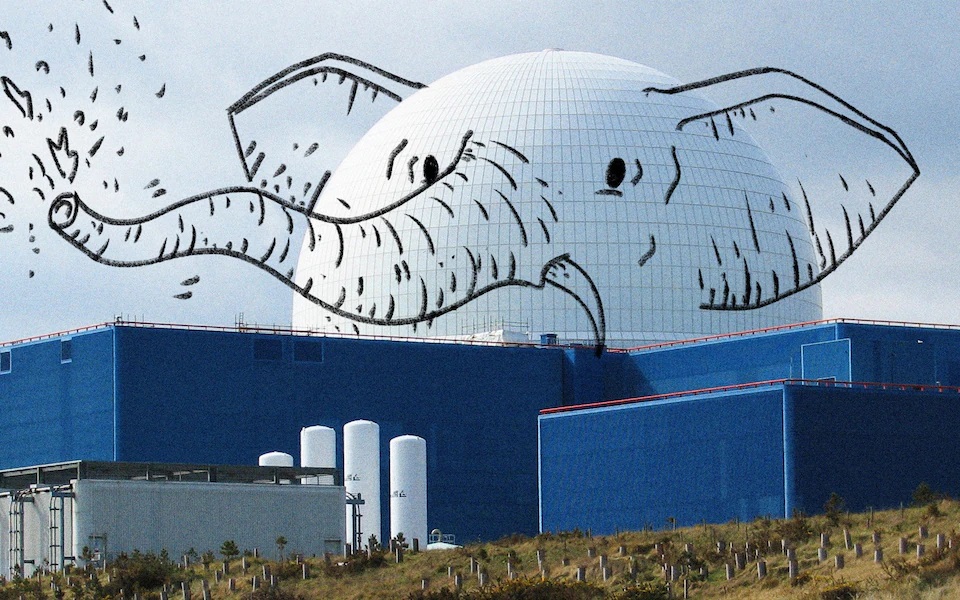
The UK government has reached a deal with French authorities, allowing
Electricite de France SA (EDF) to retain a 12.5% stake in the Sizewell C
nuclear reactor project. The UK government and other investors will hold
the remaining stake, with the UK investing £14.2 billion in the project to
replace aging atomic plants and provide low-carbon electricity. EDF is set
to hold a board meeting to greenlight its participation in Sizewell C,
which will help the UK government make a final investment decision on the
project soon after.
Bloomberg 7th July 2025, https://www.bloomberg.com/news/articles/2025-07-07/uk-moves-closer-to-approving-sizewell-c-nuclear-plant-project
Trawsfynydd unlikely for new nuclear development, council hears.
Gwynedd Council indicates it’s highly unlikely Trawsfynydd will see new nuclear
projects soon, focusing instead on a science park. It is “highly
unlikely” that Trawsfynydd will be considered for new nuclear development
in the near future. Gwynedd Council’s full meeting on 3 July heard that
despite “uncertainty” over the site, work was underway with partners to
establish a science park and future jobs. Decommissioning work was
programmed until 2060, according to Nuclear Restoration Services plans.
“There is considerable uncertainty about the direction of government’s
policy, funding and priorities, which means that it is highly unlikely that
the Trawsfynydd site will be considered by government and the private
sector for new nuclear development in the near future”.
Cambrian News 8th July 2025, https://www.cambrian-news.co.uk/news/trawsfynydd-unlikely-for-new-nuclear-development-council-hears-810243
Rep. Green cracks open America’s decades long denial of Israel’s illegal nuclear arsenal
Walt Zlotow, West Suburban Peace Coalition, Glen Ellyn IL, 12 July 25
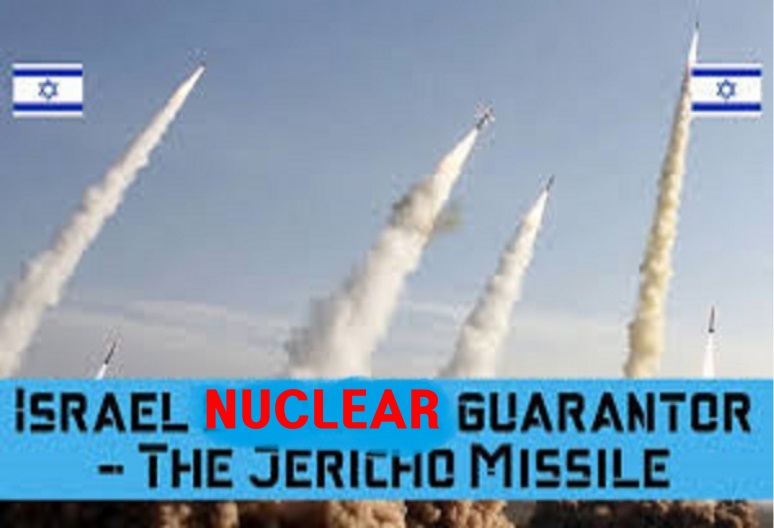
Marjorie Taylor Green (R-GA) became 1 in 535 congresspersons with the guts to call out Israel’s lawless nuclear weapons arsenal containing between 100 and 300 nukes.
She plans to introduce an amendment to strip $500 million from the 2026 NDAA (defense budget) for Israel. “I’m entering amendments to strike $500 million more for nuclear-armed Israel. And it’s important to say nuclear-armed Israel, because they do have nuclear weapons. And we already give them $3.4 billion every single year from the State Department. They don’t need another $500 million in our defense budget. That’s for the American people’s defense.”
Green represents the first serious crack in US administration, Congress and mainstream media’s lockstep denial of Israel’s nukes to avoid complying with US law. The Symington Amendment, a foreign assistance law, forbids military aid to countries trafficking in nuclear enrichment or technology outside of International Atomic Energy Administration (IAEA) safeguards
If the US admitted to Israel’s illegal nukes, it couldn’t give penny in military aid, much less the $3.4 billion Congress gifts to Israel every year on top of the roughly $20 billion we’ve given them to conduct their genocidal ethnic cleansing of Palestinians in Gaza. US aid represents nearly three quarters of Israel’s military spending since their genocide began in October, 2023.
Green, long a critic of the Israel Lobby, is likely to continue receiving her yearly bribe from the Lobby to support their genocidal ethnic cleansing of Gaza and the West Bank….$0.
When the Lobby comes calling to the other 534 congresspersons, nearly all sputter ‘Step right up.’ None dare not utter one word against Israel’s illegal, destabilizing, dangerous nuclear arsenal.
Back in February 2009 at his first presidential press conference, Obama said this when Helen Thomas asked him if any Middle East countries possess nuclear weapons. “When it comes to nuclear weapons….I do not wish to speculate.” What Obama really said was ‘When it come to nuclear weapons, I do not wish to tell the truth.’ A big reason was Obama’ senseless plan to guarantee Israel $3.4 billion annually for 10 years, something he could not do if he did tell the truth.
It’s been 16 years, but we finally heard a governmental leader, albeit just a relatively powerless congressperson, answer that question truthfully.
Let’s hope the crack Green opened up on Israel’s nukes will expand into a Grand Canyon of nuclear sanity.
Republicans and Democrats Finally Agree on Nuclear. It’s the Industry That’s the Problem.
The atomic age is perpetually on the verge of dawning.
Nuclear power is a political winner — but not a money saver. Just ask
Tim Echols. Echols’ term on the Georgia Public Service Commission is up
this year, and unlike most states, his position is an elected one.
He says the Vogtle nuclear plant has been a campaign issue — it’s hiked
customers’ bills by about 12 percent since coming fully online last year,
$21 billion over budget and seven years behind schedule — but that his
opponents haven’t been able to weaponize it. He won his Republican
primary resoundingly last month.
“All the Democratic opponents are saying
that they would build Vogtle,” he said. “They’re just not saying how
they would pay for it. Or they’re saying they’re going to lower bills,
but they’re going to build nuclear, and those two things don’t go
together.”
The hippies are dying out, and with them the memories of
Shoreham, San Onofre, V.C. Summer, Three Mile Island and other nuclear
plants that didn’t pan out, suffered radiation leaks or otherwise closed
before their time. It’s not the policy that’s holding nuclear back:
It’s the industry.
All the incentives and permitting reforms the
government can muster won’t change the basic economics that have led to
just three new nuclear plants getting built in the U.S. this century: It
takes too long, is too expensive and is only getting pricier. “In terms
of new nuclear, it’s a nonstarter,” said Stanford engineering professor
Mark Z. Jacobson, a longtime skeptic of nuclear power. “They can spend as
much money as they want, it’s never going to happen.”
Politico 9th July 2025, https://www.politico.com/news/magazine/2025/07/09/gop-dems-nuclear-energy-industry-problems-debra-kahn-column-00344370
New nuclear power plant in Switzerland not before 2050
The possible construction of new nuclear power plants in Switzerland, as currently
discussed, depends on many factors. Even if the ban on new construction
were lifted, there would still be numerous other political, technological,
economic, and social uncertainties, as the Energy Commission of the Swiss
Academies of Arts and Sciences outlines in a new report.
Even if the ban on
new construction is lifted, commissioning a new nuclear power plant is
unlikely before approximately 2050. Before connecting to the power grid,
various political, administrative, and economic decisions must be made.
Several referendums and even appeals are expected. The majorities are
uncertain from today’s perspective and could change due to individual
events such as Fukushima.
Swiss Academies of Arts and Sciences 1st July 2025, https://akademien-schweiz.ch/news/neues-kernkraftwerk-in-der-schweiz-fruehestens-2050
Nuclear comeback? Japan’s plans to restart reactors hit resistance over radioactive waste
The Japanese government wants to turn its nuclear power
stations back on – but some local residents and Indigenous Ainu people
don’t want nuclear waste stored near them. Fourteen years after the
Fukushima disaster, Japan is restarting its nuclear reactors – and two
wind-blown near-deserted fishing villages on the northern island of
Hokkaido could be the destination for all their radioactive waste. But,
while some residents of Suttsu and Kamoenai welcome the government money
that volunteering to store the waste will bring, others are fiercely
opposed due to fears that the nuclear waste will contaminate their land and
water. The controversy could delay Japan’s goals to use carbon-free
nuclear energy to replace electricity generation from expensive imported
fossil fuels and cut greenhouse gas emissions on the way to net zero by
2050.
Climate Home News 6th July 2025, https://www.climatechangenews.com/2025/07/06/nuclear-comeback-japans-plans-to-restart-reactors-hit-resistance-over-radioactive-waste/
Three Blows Against Zionism in a Single Day

A court ruling in Australia, an election result in New York and a military setback for Israel, all coming on Tuesday this week, signaled a serious turn of events for Zionism and its supporters, writes Joe Lauria.
By Joe Lauria, Consortium News, https://consortiumnews.com/2025/06/26/three-blows-against-zionism-in-a-single-day/
The impunity with which Zionism invades and bombs its neighbors and shuts up its critics in Western nations was thrown into question perhaps as never before on Tuesday as Zionism suffered a legal, a political and a military defeat all in one day.
A Military Defeat in the Morning
On Tuesday morning Washington time, President Donald Trump announced that Israel and Iran had agreed to a cessation of hostilities after an 11-day war that saw Israel seriously deplete its air defenses, undermine its economy and suffer the worst damage from enemy fire in memory.
A war that Israel — and especially its prime minister Benjamin Netanyahu — had lusted after for three decades had finally been launched. Netanyahu at last found an American president willing to join him in unprovoked aggression against Iran to extend Israel’s regional dominance well beyond the Jordan River.
That would require the destruction of Iran’s nuclear enrichment program and the overthrow of the Iranian government to be replaced by a puppet regime led by Israel and the United States.
Instead, Israel had to cut short the operation despite U.S. involvement because it was not going to plan. U.S. intelligence says the so-far merely civilian nuclear program was only set back a few months and the Iranian government has never been made more secure.
As it touts itself as the most invincible (and “moral”) army, the failure to achieve its goals in Iran and the physical damage it took from Iranian missile and drone attacks makes what just transpired a humiliating military defeat for Zionism.
And though U.S. presidents have privately groused about Israeli leaders before, never has Israel been cursed out before in public by a president, as Trump did on Tuesday morning.
A Legal Defeat in the Evening
Then at 8:15 pm Tuesday, U.S. East Coast time (10:15 am Wednesday in Australia), a federal judge in Sydney found the courage to stand up to the organized thuggery of Zionist lobbies by ruling that the Australian Broadcasting Corporation (ABC) had succumbed to intense pressure from Israel lobbyists to sack a radio presenter because she shared an instagram post from Human Rights Watch which accurately reported that Israel was using starvation as a weapon of war.
That is the exact charge formally leveled in Netanyahu’s arrest warrant issued by the International Criminal Court (ICC). The Australian judge ruled that the presenter, Antoinette Lattouf, was wrongly dismissed and that the ABC must pay her restitution.
Judge Daryl Rangiah said the ABC had “appease[d] … pro-Israel lobbyists” because Lattouf “held political opinions opposing the Israeli military campaign in Gaza.” Rangiah said that “the complaints [to the ABC] were an orchestrated campaign by pro-Israel lobbyists to have Ms Lattouf taken off air.”
ABC managing director Hugh Marks apologized to the public on air, saying, “Any undue influence or pressure on ABC management or any of its employees must always be guarded against.”
It was a major setback for a powerful Israel Lobby in a Western nation. These lobbies have been untouchable until now no matter what underhanded tactics they employ to create cover for genocide and wars of aggression by smearing and silencing legitimate critics of Israel.
A Political Defeat in the Night
Still on Tuesday, at around 11 pm in New York City, a Muslim politician who has vowed to arrest Netanyahu based on the ICC warrant if he steps foot in the city while he is mayor, defeated a Democratic Party machine politician in the party’s primary election for mayor.
Despite being repeatedly smeared as an anti-semite, Zohran Mamdani has refused to renounce his strong support for Palestinians, including refusing to retract his labelling of Israel’s war on Gaza “genocide.”
Mamdani’s electoral victory has incensed Zionists everywhere, setting off gnashing of teeth. “NY Democrats have fully embraced Marxism, antisemitism, anti-capitalism, and sheer insanity,” said fanatical Zionist Congresswoman Elise Stefanik. U.S. Rep. Mike Lawler called Mamdani “a radical, antisemitic socialist.”
The election result shows that a sizeable number of voters in the city with the largest population of Jews after Tel Aviv don’t care anymore about the taboos constructed and enforced against criticizing Israel. Israel has their live-streamed genocide to thank for that.
A Beginning, Not an End
Anyone of these events alone would signify a momentous turning of the tide against decades of built-up injustice committed by Israel and its lobby. The baseless smears of anti-semitism are losing their effect. The image of an all-powerful Israeli military is tarnished.
June 24, 2025 may be seen as the day in which fear of Israel was overcome on a scale not seen before. There is a long road ahead filled with enormous obstacles, but this day could usher in an era in which Israel and its enablers are at last held accountable for their many crimes.
Joe Lauria is editor-in-chief of Consortium News and a former U.N. correspondent for The Wall Street Journal, Boston Globe, and other newspapers, including The Montreal Gazette, the London Daily Mail and The Star of Johannesburg. He was an investigative reporter for the Sunday Times of London, a financial reporter for Bloomberg News and began his professional work as a 19-year old stringer for The New York Times. He is the author of two books, A Political Odyssey, with Sen. Mike Gravel, foreword by Daniel Ellsberg; and How I Lost By Hillary Clinton, foreword by Julian Assange.
Chris Hedges: War With Iran

By Chris Hedges / Original to ScheerPost, https://scheerpost.com/2025/06/22/chris-hedges-war-with-iran/
War opens a Pandora’s box of evils that once unleashed are beyond anyone’s control. The warmongers who ordered the strikes by U.S. bombers on Iranian nuclear sites have no more of a plan for what comes next in Iran than they had in Afghanistan, Iraq, Libya or Syria.
European allies, whom Israel and Trump have alienated with these air assaults, are in no mood to cooperate with Washington. The Pentagon, even if it wanted to, does not have the hundreds of thousands of troops it would need to attack and occupy Iran — the only way Iran might be subdued.
And the idea that the marginal and discredited Iranian resistance group Mujahedeen-e-Khalq (MEK), which fought alongside Saddam Hussein in the war against Iran and is viewed by most Iranians as composed of traitors, is a viable counter force to the Iranian government is ludicrous.
In all these equations the 90 million people in Iran are ignored just as the people of Afghanistan, Iraq, Libya and Syria were ignored. They will not welcome the United States and certainly not Israel as liberators. They may hate the regime, but they will resist. They don’t want to be dominated by foreign powers.
A war with Iran will be interpreted throughout the region as a war against Shiism. Soon there will be retaliation. Lots of it. It will come at first with desultory missile strikes and then attacks carried out by elusive enemies on ships, military bases and installations. Steadily it will grow in volume and lethality.
The death toll, including among the some 40,000 soldiers and Marines stationed in the Middle East, will mount. Ships, including aircraft carriers, will be targeted. We will, as we did in Iraq and Afghanistan, begin to lash out with a blind fury, fueling the conflagration we began.
Those who lured us into this war know little about the instrument of war and even less about the cultures or peoples they seek to dominate. Blinded by hubris, believing their own hallucinations, they have learned none of the lessons of the last two decades of warfare in the Middle East. A war with Iran will be a self-defeating and costly quagmire, one more nail in the rotting edifice of the empire.
US State Department Spokeswoman Says Israel Is Greater Than America.
Caitlin Johnstone, Jun 23, 2025, https://www.caitlinjohnst.one/p/us-state-department-spokeswoman-says?utm_source=post-email-title&publication_id=82124&post_id=166596495&utm_campaign=email-post-title&isFreemail=true&r=1ise1&triedRedirect=true&utm_medium=email
Journalist Ken Klippenstein has drawn attention to an overlooked remark made by State Department spokeswoman Tammy Bruce last month saying that the United States is “the greatest country on earth, next to Israel.”
“The pride of being able to be here and do work that facilitates making things better for people and in the greatest country on Earth, next to Israel,” Bruce told Jewish News Syndicate. “It’s an honor to be able to make a difference and to be able to speak in this regard with an administration that I love so much and that I feel genuinely represented by.”
It’s like this administration is doing everything it can to vindicate those who accuse it of being Israel First instead of America First.
I feel like we don’t talk enough about the fact that Donald Trump publicly admitted to being bought and owned by the richest Israeli on earth, Republican megadonor Miriam Adelson.
On the campaign trail last year Trump told the Israeli American Council Summit that the first time he was president, Miriam and her late husband Sheldon “would come into the White House probably almost more than anybody, outside of people that work there.” He said they were always after something, “always for Israel,” and “as soon as I’d give them something, they’d want something else.” He named the US recognition of the occupied Golan Heights as part of Israel as one of the gifts he showered the Zionist state with to please the Adelsons, who pumped hundreds of millions of dollars into his presidential campaigns.
It’s hard to focus on Israel’s airstrikes in Lebanon due to Israel’s invasion of Syria, which is hard to focus on due to Israel’s atrocities in the West Bank, which are hard to focus on due to Israel’s genocide in Gaza, which is hard to focus on due to Israel’s war on Iran, which is hard to focus on because of America’s war on Iran.
❖
Top Ten dumbest things we’re being asked to believe about Iran:
1. That the Iranians want to be bombed.
2. That the guy bombing Iran wants peace.
3. That regime change interventionism is a swell idea this time.
4. That anyone who doesn’t want war with Iran hates Jews.
5. That this time the government and the media are telling us the truth about an American war.
6. That this time the neocons are smart and correct.
7. That bombing Iran makes it LESS likely to try to obtain nukes.
8. That Iran is trying to assassinate the US president when all US presidents have the same foreign policy.
9. That Iran (a country that never starts wars) cannot be trusted with nuclear weapons, but Israel (a country that starts wars constantly) can.
10. That attacking Iran benefits Americans.
❖
It blows my mind that there are people trying to argue that Trump does not seek war. What do these idiots think the United States would do if another country started bombing American energy infrastructure?
I’m trying to get an important business deal done, so I firebombed the guy’s house to make him more likely to negotiate with me. I just want peace.
The following things are antisemitic:
– opposing war with Iran
– viewing Palestinians as human
– opposing genocide
– Greta Thunberg
– peace
– journalism
– Ms Rachel
– truth
– critical thinking
– the UN
– Tucker Carlson
– Amnesty International
– Human Rights Watch
– equal rights
It’s hilarious that anyone still takes this “antisemitism” schtick seriously. Oh no there’s a special group of white people who might get hurt feelings if I don’t want to send my kids to invade Iran.
The western world has been on a two-year crash course learning all the reasons why the Muslim world has been correct about Israel this entire time.
It’s kind of nice to be arguing with George W Bush conservatives about US foreign policy again. For the last few years I’ve been getting called a Nazi by western Zionists and a Putin-loving fascist by NATO simps; it’s refreshing to be hated for the hippie moonbat I actually am for once.
Ford’s nuclear obsession is robbing Ontario of its true clean energy future
Canada’s National Observer Adrienne Tanner, June 19th 2025
Ontario’s Premier Doug Ford just can’t seem to shake his aversion to renewables.
Ford’s new Energy for Generations plan, mapping out energy generation from now to 2050, is laudable for its end goal: to all but end Ontario’s reliance on gas for electricity generation. But its single-minded pursuit of new nuclear power projects is myopic when it comes to solar and wind, the gold standard sources of clean energy.
Ontario is seriously eyeing sites for three even bigger nuclear plants than it already has — “the equivalent of adding about five Darlington Nuclear Generating Stations to the grid,” the report states — with the possibility of even more of them down the road.
As for solar and wind, the plan calls for a modest increase of slightly more than double the small amounts produced now which comprise 11 per cent of Ontario’s power supply. And the clincher: solar and wind will get a boost while nuclear plants are being scaled up, but only for a short while.
Once new nuclear plants are up and running, Ontario actually plans to dial back progress on renewables. It sounds like the province plans to tear down solar installations and wind farms and haul the pieces off to metal recyclers and landfills. And why? On those questions, the plan is silent.
The only hint is a bullseye graphic comparing the amount of land needed for a new nuclear plant compared to the much greater amounts needed to generate the same amount of power from solar or wind. As might be expected from a plan that reads like a pro-nuclear manifesto, there isn’t a single mention of the radioactive waste generated from nuclear power plants and the still-unsolved challenges associated with its disposal.
Like his Alberta counterpart, Premier Danielle Smith, Ford seems almost pathologically opposed to solar and wind energy. From the moment he was elected, Ford made it clear he was not interested in clean technology of any description; he cancelled 750 renewable energy projects, slowed the buildout of electric vehicle charging stations, ended the provincial EV rebate, repeatedly lowered gas taxes and has sided with Enbridge, Ontario’s natural gas provider, at every turn.
He’s budged on EV charging stations recently, probably because failing to build at least some would be a bad look for a province trying to capture EV and battery manufacturing industries. And last year, when it became clear Ontario needed more energy to meet skyrocketing demand, the Ontario government finally opened the door to more solar and wind. Judging by his past record, I would bet that wasn’t Ford’s idea.
…………………………………………. There might be other forces at play causing Ford to favour Big Nuclear over solar and wind. Ford’s government has always been open-minded, shall we say, to the siren songs of business lobbyists, and the nuclear industry is currently in high gear. It could be Ford can only get excited about energy megaprojects with their jobs and potential for federal backing, regardless of the risk and cost. https://www.nationalobserver.com/2025/06/19/opinion/ford-ontario-energy-nuclear-solar-wind?nih=Vf0DQztC-W6YOqBGCjgdMvyuSr-jgXEgtm__lNRKxi0&utm_source=National+Observer&utm_campaign=d7478891e6-EMAIL_CAMPAIGN_2025_06_19_01_16&utm_medium=email&utm_term=0_cacd0f141f-d7478891e6-277039322
1 This Month

of the week – Shut Down Drone Warfare!


Tell the Ukrainian Government to Drop Prosecution of Peace Activist Yurii Sheliazhenko

Petition to revoke the licensing of the Near Surface Nuclear Disposal Facility (NSDF) at Chalk River. https://www.ourcommons.ca/petitions/en/Petition/Details?Petition=e-7247
To see nuclear-related stories in greater depth and intensity – go to https://nuclearinformation.wordpress.com
-
Archives
- April 2026 (7)
- March 2026 (251)
- February 2026 (268)
- January 2026 (308)
- December 2025 (358)
- November 2025 (359)
- October 2025 (376)
- September 2025 (257)
- August 2025 (319)
- July 2025 (230)
- June 2025 (348)
- May 2025 (261)
-
Categories
- 1
- 1 NUCLEAR ISSUES
- business and costs
- climate change
- culture and arts
- ENERGY
- environment
- health
- history
- indigenous issues
- Legal
- marketing of nuclear
- media
- opposition to nuclear
- PERSONAL STORIES
- politics
- politics international
- Religion and ethics
- safety
- secrets,lies and civil liberties
- spinbuster
- technology
- Uranium
- wastes
- weapons and war
- Women
- 2 WORLD
- ACTION
- AFRICA
- Atrocities
- AUSTRALIA
- Christina's notes
- Christina's themes
- culture and arts
- Events
- Fuk 2022
- Fuk 2023
- Fukushima 2017
- Fukushima 2018
- fukushima 2019
- Fukushima 2020
- Fukushima 2021
- general
- global warming
- Humour (God we need it)
- Nuclear
- RARE EARTHS
- Reference
- resources – print
- Resources -audiovicual
- Weekly Newsletter
- World
- World Nuclear
- YouTube
-
RSS
Entries RSS
Comments RSS
 nuclear-news