David Suzuki on nuclear power as a climate change solution ”I want to puke.”
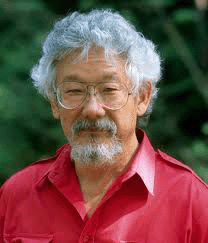 I want to puke. Because politicians love to say, “Oh, yeah, we care about this and boy, there’s [nuclear] technology just around the corner.”
Yeah, it’s taken a child [environmental activist Greta Thunberg] to finally have an impact that is more than all of us environmentalists put together over the past years.
The power of that child is that she’s got no vested interest in anything. She’s just saying: “Listen to the science because the scientists are telling us I have no future if we don’t take some drastic action.”
I want to puke’: David Suzuki reacts to O’Regan’s nuclear power endorsement
The Nature of Things host also addressed the climate crisis and youth’s role in climate change https://www.cbc.ca/radio/checkup/is-it-time-to-call-an-election-1.5728483/i-want-to-puke-david-suzuki-reacts-to-o-regan-s-nuclear-power-endorsement-1.5731819
CBC Radio Sep 21, 2020 David Suzuki spoke to Checkup host Ian Hanomansing about how to tackle climate change while in the midst of the COVID-19 pandemic, and took questions from callers, in Sunday’s Ask Me Anything segment.
With the COVID-19 pandemic at the forefront of the news cycle, it might be easy to forget about the ongoing climate change crisis.
While managing the pandemic has become the first priority of the Canadian government and other governments around the world, climate change was a major talking point in the 2019 federal election campaign.
This summer, the last intact ice shelf in the Canadian Arctic collapsed. South of the border, dry, hot weather conditions in states such as Oregon and Washington have led to historic wildfires.
David Suzuki is a scientist and environmental activist. He’s also the host of The Nature of Things on CBC television. Continue reading
USA.Federal Bill to promote nuclear waste borehole system, and the dubious plan for reprocessing
|
Bill would create new federal research program for nuclear waste disposal
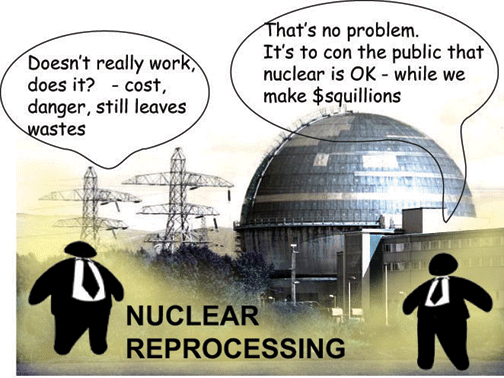
Deep boreholes, fuel reprocessing are on the to-do list of things to investigate, By TERI SFORZA | tsforza@scng.com | Orange County Register September 21, 2020 ”………… A federal bill that would pump a half-billion dollars into America’s long-stalled effort to find a permanent home for nuclear waste, would nudge reprocessing of spent fuel back on the table and prod officials toward big-picture solutions. The Spent Nuclear Fuel Solutions Research and Development Act, by Rep. Mike Levin, D-San Juan Capistrano, would create, among many other things, “an advanced fuel cycle research, development, demonstration, and commercial application program” at the U.S. Department of Energy. The program would be charged with investigating improvements to the fuel cycle, advanced reactor concepts “while minimizing environmental and public health and safety impacts,” and much-needed storage options, from dry casks to deep geological boreholes. Boreholes have long been considered the single best method to isolate nuclear waste for the long haul, but efforts have been plagued by opposition from communities unwilling to be home to the nation’s nuclear waste. ……..
Recycling wasteReprocessing, however, has had a fraught history in the United States. The technology to chemically separate and recover fissionable plutonium from used nuclear fuel was developed after World War II and was an integral part of the nuclear plan in America, according to a Congressional Research Service report. But reprocessing fuel produces material that can easily be used in nuclear bombs, while regular spent fuel does not. After India started showing off its nuclear muscle in the 1970s, America got spooked. President Gerald Ford suspended commercial reprocessing and recycling of plutonium in 1976, concerned that it could fall into the wrong hands. A year later, President Jimmy Carter issued an executive order that etched the policy into stone.
President Ronald Reagan reversed Carter’s order, but the work never really ramped back up. Congress soon passed the Nuclear Waste Policy Act — committing the federal government to accept and store spent commercial nuclear fuel in exchange for payments from the nuclear plant operators — so there wasn’t much more impetus for reprocessing. …….
reprocessing has strong critics. The Union of Concerned Scientists calls it dangerous, dirty, and expensive.
“While some supporters of a U.S. reprocessing program believe it would help solve the nuclear waste problem, reprocessing would not reduce the need for storage and disposal of radioactive waste. Worse, reprocessing would make it easier for terrorists to acquire nuclear weapons materials, and for nations to develop nuclear weapons programs,” the watchdog group says in its primer on the topic. The Blue Ribbon Commission on America’s Nuclear Future rejected calls for reprocessing in 2012, saying “all spent fuel reprocessing or recycle options generate waste streams that require a permanent disposal solution.” “Nuclear waste reprocessing does not benefit the environment — it only benefits the nuclear industry, and then not by much,” said Bart Ziegler, president of the Samuel Lawrence Foundation. “It’s a very financially costly process and lends to more waste effluent.”
David Victor, a UC San Diego professor and chair of a volunteer committee advising on San Onofre’s tear-down, said he sees the bill trying to create a big tent of supporters. Reprocessing wouldn’t make much sense in the U.S. unless there was a huge new demand for nuclear fuel, he said by email…… https://www.ocregister.com/2020/09/21/bill-would-create-new-federal-research-program-for-nuclear-waste-disposal/
|
|
Utah lawmakers seek details on planned nuclear plant in Idaho
Cities and districts invested in the plant have until Oct. 31 — one of several so-called off-ramps — to bow out of the project.
During the committee hearing, Sen. Ron Winterton, R-Roosevelt, shared his concerns over the cities’ financial commitments.
“I want to feel warm and fuzzy” he said, but questioned the technology and potential risks…….
Under both the Obama and the Trump administrations, the NuScale project has received strong financial support, Squires said. The federal energy agency gave NuScale a competitive award of $226 million in 2013 to develop the technology. Two years later, the federal agency gave NuScale $16.7 million for licensing preparation. …….
Critics like the Utah Taxpayers Association, however, say the investment by Utah cities is too risky and they should not be acting as seed investors.
“We are not opposed to nuclear power, we are opposed to the financial risk,” said the association’s vice president, Rusty Cannon. ……….. https://www.deseret.com/utah/2020/9/19/21438026/news-nuclear-plant-in-idaho-lawmakers-seek-details-on-planned-nuscale-uamps
UK government to subsidise Sizewell nuclear power station?
 UK government could take stake in Sizewell nuclear power station, BBC, Simon Jack, Business editor@BBCSimonJackon16 September 2020
The collapse of a project to build a new nuclear power station at Wylfa, Wales may accelerate government approval of a new station at Sizewell, government and industry sources say.
The government is disappointed after Japan’s Hitachi pulled out but insists it is committed to new nuclear as way to decarbonise the UK power supply.
It is looking at options to replace China’s CGN as an investor in Sizewell.
That could include the government taking a stake in the plant.
Of six sites originally identified over a decade ago for replacements for the UK’s ageing nuclear fleet, only one is under construction, three have been abandoned and two are waiting approval.
One major sticking point over Sizewell has been the involvement of Chinese state-owned company China General Nuclear Power Group (CGN) in the UK’s new nuclear plans.
CGN already owns a 33% stake in Hinkley Point C in Somerset, currently under construction by French firm EDF, which owns the other two thirds.
The Chinese firm also took a 20% stake in the development phase of Sizewell on the understanding it would participate in the construction phase and then land the ultimate prize of building a reactor of its own design at Bradwell in Essex.
State aid rules
If CGN are excluded the government may choose to take a direct stake in Sizewell, according to people familiar with the matter.
There was a time when a Conservative government would have been very reluctant to take a direct stake in a commercial development. That time has passed.
Industry sources and within the government say Chinese involvement in designing and running its own design nuclear reactor on UK soil “looks dead”, given revived security concerns and deteriorating diplomatic relations after the government’s decision to phase out Chinese firm Huawei’s equipment from a new generation of telecommunication networks.
It’s no secret that Boris Johnson’s powerful adviser Dominic Cummings is a big fan of the idea of small nuclear reactors and EDF are telling him that big nuclear is an important stepping stone to small.
EDF has also been very vocal about the advantages of reproducing the design of Hinkley at Sizewell. Although a similar design of reactor ran into major cost and time overruns in France and Finland, EDF says they UK is poised to benefit from the lessons learned from those mistakes. It also points out that the UK will benefit from transferring high skilled jobs from one site to another.
There was a time, not so long ago, that government ministers talked enthusiastically about “a new nuclear age”. A fleet of brand new reactors producing reliable, low carbon (but expensive) electricity for decades to come.
Hinkley, Moorside, Wylfa, Oldbury, Bradwell and Sizewell were identified as the sites for the most significant national wave of new nuclear power construction anywhere in the world.
Of those six, only one is under construction, three have been abandoned, and two are still waiting for the green light.
The next couple of weeks could tell us which way the wind is really blowing on the government’s appetite for both nuclear energy and new levels of direct state investment.
If a mobile network is considered too sensitive, it’s hard to argue that a nuclear power station is not.
The next couple of weeks could tell us which way the wind is really blowing on the government’s appetite for both nuclear energy and new levels of direct state investment. https://www.bbc.com/news/business-54181748
Nuclear energy CHEAP? Nuclear has drained Germany of more than €1trn to date

|
‘No higher cost energy’: nuclear has drained Germany of more than €1trn to date Subsidies tot up to €287bn since 1955, refuting atomic energy’s cheap power myth, says Forum for Ecological-Social Market Economy study https://www.rechargenews.com/transition/no-higher-cost-energy-nuclear-has-drained-germany-of-more-than-1trn-to-date/2-1-877313 17 September 2020 ,By Bernd Radowitz Development of the nuclear energy industry since the mid-1950s has led to more than €1trn ($1.18trn) in costs to the German society, and is wrongly portrayed as an inexpensive power source, according to a study by the Forum for an Ecological-Social Market Economy (FÖS) estimated.
FÖS calculated the support, which includes both state support, power prices and external costs, had been the most draining of all energy sources on the finances of the country, which is Europe’s largest economy. “No other energy source has caused costs as high as those of risky atomic power, which even after 65 years continues highly uneconomical,” said Sönke Tangermann, chairman of independent power provider Greenpeace Energy, which had commissioned the study. Germany by the end of 2022 is phasing out nuclear power. Since a first reactor started operations in 1955, the country had built more than 100 nuclear facilities, including power and research stations, and waste deposits. Other countries, such as Switzerland, have followed Germany’s lead and will also phase out nuclear power, while France at least wants to diminish the share of atomic power in its energy mix. But at the same time a new debate has started to build supposedly cheap mini nuclear reactors for power or hydrogen production. While none of these have been built yet, prices for the construction of conventional new nuclear plants in countries like France or Finland have ballooned into amounts several times the original cost estimate. Direct and indirect German government subsidies alone, including research grants and tax credits, since the mid-1950s have added up to €287bn, FÖS has calculated. Another €9bn were spent on other costs for the state, such as police operations during anti-nuclear protests, or follow-up costs from nuclear operations in former Eastern Germany. “Great part of these costs never had been included in the electricity price, which is why atomic energy wrongly was considered as a cheap power source,” Tangermann said, adding that the study for the overall costs of nuclear energy has included external costs that had been passed on to society for decades, such as the risk of accidents. Even after Germany’s nuclear exit, the country will face high costs, such as at least €7bn for the rehabilitation of the Morsleben nuclear storage facility and the Asse research storage facility as well as the Wismut uranium ore mine, or for the closure of former nuclear power plant sites. Tangermann said he hopes Berlin will resist current demands for an extension of Germany’s nuclear power plants, or investments into new ones, also as those would serve to discredit the expansion of renewables. “Given the enormous costs and aging infrastructure with ever greater risks, nuclear power cannot be a serious alternative to effectively tackling the climate crisis,” he said. |
|
|
Hitachi pulls out – halting two big UK nuclear projects. Renewables would be a fraction of their costs
With the Japanese conglomerate this week walking away from two new nuclear plants in the United Kingdom, project  developer Horizon Nuclear Power has confirmed all activities at both sites will cease. The facilities had struggled to secure funding despite offers from government. Horizon said it will ‘keep lines of communication open’ regarding the future of the sites. PV Magazine, SEPTEMBER 18, 2020 MARK HUTCHINS The former Wylfa nuclear power station was decommissioned in 2015. Plans for a new reactor on an adjacent site have been abandoned with the withdrawal of Hitachi from the project.
Japanese conglomerate Hitachi has pulled out of the construction of two U.K. nuclear projects with a total 5.8 GW of generation capacity, citing ongoing delays and an increasingly tough investment environment due to the Covid-19 pandemic.
The projects, on the Welsh Isle of Anglesey and at Oldbury on Severn, near the English city of Bristol, were taken on by Hitachi in 2012. Construction was suspended in January last year as funding could not be secured for the reactor at Wylfa Newydd, on Anglesey, and Hitachi’s U.K. subsidiary Horizon Nuclear Power has confirmed it will cease development at both sites, though it still hopes to revive the projects.
Hitachi said it would coordinate with government and other stakeholders as holder of the license to build nuclear reactors at the sites. The company posted losses last year from the suspended projects and said it does not expect the decision to further affect its finances……….
Renewables
Critics of nuclear power are likely to view the Hitachi decision as further evidence of the inherent cost and complexity problems associated with the technology, and will repeat arguments the U.K. and other regions would be better served by an energy transition focusing on renewables.
Mycle Schneider, lead author of the World Nuclear Industry Status Report told pv magazine: “Nuclear power plant projects frequently get abandoned even after construction has started. One in eight construction sites have been abandoned at various stages of advancement of construction. Some have been completed and never switched on, and there is absolutely no guarantee that Hinkley Point C will ever generate power,” said Schneider, in reference to a third planned nuclear plant in the southwest of England.
“It has become obvious that renewables, even unsubsidized, come in at a fraction of the cost of new nuclear power. In the U.K., onshore and offshore wind are less than half the cost of nuclear. If the U.K. government keeps planning for nuclear power plants, it’s not because there was no choice, and it has nothing to do with market-economy driven energy policy.”
Solar industry representatives also called on the government to recognize renewables’ potential to fill in gaps left by abandoned and delayed nuclear projects and to implement supportive policies, as well as an auctioning system to boost large-scale projects. “The UK is facing a significant low-carbon energy gap in the 2030s, resulting from the abandonment of new nuclear projects,” said Chris Hewett, Chief Executive of the Solar Trade Association. “Solar PV is well-positioned to help plug a significant portion of this, but the Government must step in to bring down the numerous barriers that are holding growth back, such as punitive business rates and a lack of prioritization of grid capacity for the technology.” https://www.pv-magazine.com/2020/09/18/hitachi-halts-5-8-gw-of-uk-nuclear-plans/
The revolving door between government members and the nuclear industry
New nuclear role for former Cabinet minister, News and Star , By Federica BedendoReporter A former Cabinet minister has been appointed as the Nuclear Decommissioning Authority’s social value specialist.18th September
Hazel Blears will provide advice to the whole of the NDA group on how to increase the social, economic and environmental impact of its work to decommission and clean up the UK’s oldest nuclear sites.
She is a nationally recognised expert in this field and is chairman of the Social Investment Business and a trustee of the Social Mobility Foundation. Ms Blears is also a former cabinet minister and, during her time as an MP, was one of the authors of the Social Value Act……. https://www.newsandstar.co.uk/news/18725570.new-nuclear-role-former-cabinet-minister/
As Hitachi exits the project, UK government to announce funding for Wylfa nuclear project next month
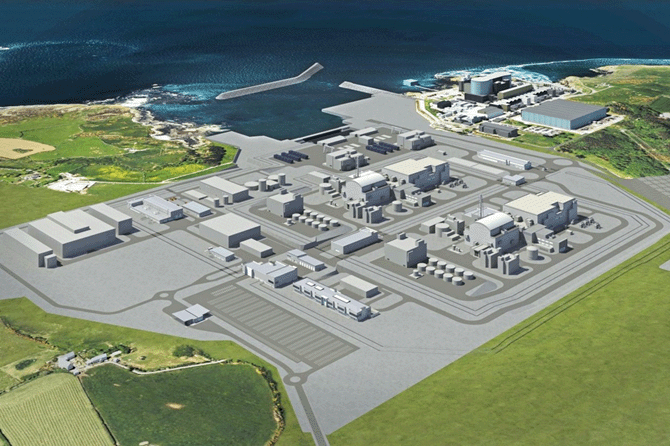 Hitachi Abandons $26 Billion Nuclear Power Project in U.K. Bloomberg Green, By Stephen Stapczynski and Rachel Morison16 September 2020,
-
U.K. due to make statement on financing model next month
- U.K. government says still committed to building new nuclear
Hitachi Ltd. exited a long-planned U.K. nuclear power project despite the most generous support package for an atomic station in Britain, a bad omen for future projects.
The Japanese company announced Wednesday that it decided to withdraw from the Wylfa power project in Wales, citing a worsening investment environment due to the Covid-19 pandemic. Work has been suspended on the 20 billion-pound ($26 billion) venture since January 2019 after the company failed to reach a financing agreement with the U.K. government.
The decision is the latest setback for nuclear’s revival, which supporters promote as the carbon-free solution for reliable power at a time of growing climate change concerns. Cost overruns and cheaper competition is stifling projects and developers in Japan, the U.S. and the U.K.
Britain is one of a handful of developed countries still building nuclear reactors, with the government putting them at the middle of an effort to attract billions of pounds of investment in new low-carbon power plants and create thousands of jobs. However, financing these prohibitively expensive infrastructure projects has become a hurdle, especially in the face of cheaper natural gas and renewables.
A financing package offered to Hitachi in 2019 wasn’t enough to attract additional private investor interest. The U.K. has been considering a funding model that would have seen the state shouldering more of the construction risk. The outcome of that consultation has been delayed.
The U.K. said it had offered a package that “went well beyond what any government has been willing to consider in the past.” Atomic energy still forms a key plank of energy policy including in small and advanced modular reactors.
Prospects for the Wylfa plant looked more optimistic last month when Horizon Nuclear Power Ltd., Hitachi’s subsidiary developing the project, said it was engaged with the U.K. government on reviving the project.
The future of how the U.K. finances new nuclear is expected to be announced in the government’s long anticipated energy white paper next month……… https://www.bloomberg.com/news/articles/2020-09-16/hitachi-abandons-u-k-nuclear-power-project-in-blow-to-industry
Opinion poll shows unpopularity of nuclear power in the USA.
 Nuclear Energy Among the Least Popular Sources of Power in the U.S., Polling Shows
Nearly half of U.S. adults oppose increasing the country’s number of nuclear energy facilities, Morning Consult, BY LISA MARTINE JENKINS, September 9, 2020
- 1 in 3 adults think the U.S. should keep current nuclear plants online but not build any new facilities.
- 16% believe the U.S. should keep existing nuclear plants operational and build new reactors.
- 29% view nuclear energy favorably and 49% view it unfavorably, making it the most unpopular energy source other than coal.
But new Morning Consult data shows that 21 percent of U.S. adults believe that the country should both stop constructing new nuclear energy facilities and halt current production, while 33 percent agree that new construction should be stopped but think that existing sites should continue producing energy.
Sixteen percent believes that the country should build more reactors, and just 6 percent says that the country should keep current plants running, build more reactors and promote civil nuclear programs abroad (as the United States has done most recently with Poland).
The Aug. 24-27 survey polled 2,200 U.S. adults and has a margin of error of 2 percentage points.
The survey results come as the Trump administration pushes the development of nuclear energy both domestically and internationally, investing especially in the development of advanced technology in order to speed nuclear’s adoption amid carbon emission reduction goals coming due.
And Democratic presidential nominee Joe Biden has also expressed interest in developing advanced technology and leveraging existing nuclear capabilities as part of his wider energy plan released in June. (When contacted by Morning Consult, the Biden campaign did not provide information on the former vice president’s views on nuclear beyond what is included in the publicly available plan.)
And while the popular progressive platform the Green New Deal makes no specific mention of nuclear energy, one of its sponsors, Rep. Alexandria Ocasio-Cortez (D-N.Y.), said last year that it “leaves the door open on nuclear.”
But even with its political support, when compared with other energy sources nuclear seems to have a bad rap among the general public. As compared with a number of energy sources, coal was the only option respondents regarded less favorably than nuclear, with 24 percent viewing coal favorably and 58 percent unfavorably.
Nuclear energy’s net favorability — the favorable share minus the unfavorable share — is similarly underwater, at minus 20 points; this is nearly 70 points below that of natural gas, a fossil fuel whose emissions contribute to climate change. Zero-emission sources such as solar and wind topped the list, with net favorabilities of 76 and 65 points, respectively. ………
Overall, the survey found that more U.S. adults oppose increasing the number of nuclear facilities in the United States than support doing so, ………..
Overall, the survey found that more U.S. adults oppose increasing the number of nuclear facilities in the United States than support doing so… https://morningconsult.com/2020/09/09/nuclear-energy-polling/
China ditches US nuclear technology in favour of home-grown alternative
China ditches US nuclear technology in favour of home-grown alternative. The US-developed AP1000 technology was once the basis of China’s third-generation nuclear power, SCMP, Echo Xie, 14 Sep, 2020
But China’s Hualong One is now the preferred option
China has switched from American nuclear power technology to a domestically developed alternative as worries over energy security and geopolitical uncertainties increase.
The AP1000 technology, designed by America’s Westinghouse Electric Company, was once the basis of China’s third-generation nuclear power, but now the country has more third-generation reactors based on its own Hualong One technology under construction or approved, than it does AP1000 reactors.
A total of 12 nuclear reactors in China – either under construction or going through the approval process – use Hualong One technology. In contrast, no new AP1000 reactors have been approved for more than a decade. The last US reactors – in Zhejiang and Shandong provinces – went into commercial operation in 2018………
However, China’s bet on nuclear power comes at a time when some European countries are phasing out its use and development in the US has stagnated. …….. https://www.scmp.com/news/china/society/article/3101304/china-ditches-us-nuclear-technology-favour-home-grown
Suffolk County Council unable to back £20billion Sizewell new nuclear power station as the present plan stands
regarding many of these issues is “very disappointing” considering how early in the development process the council raised its concerns. The draft Relevant Representation lists the areas where it believes EDF Energy needs to undertake further work. Council leader Matthew Hicks added: “Suffolk County Council has always supported the principle of a new nuclear power station at Sizewell, recognising the important contribution to the national energy strategy and the large economic boost such a development could bring
to our county.
https://www.eadt.co.uk/news/sizewell-c-not-supported-by-suffolk-county-council-1-6833606
Suttsu, Hokkaido, residents oppose radioactive waste dump plan
Residents Oppose Hokkaido Town’s Radioactive Waste Site Plan https://www.nippon.com/en/news/yjj2020091000878/residents-oppose-hokkaido-town%27s-radioactive-waste-site-plan.html Suttsu, Hokkaido, Sept. 11 (Jiji Press)–Many residents of a Japanese town considering hosting a final disposal facility for high-level radioactive waste have voiced opposition to the plan at a briefing session organized by the municipal government.The meeting was the fourth of its kind for residents of the town of Suttsu in the northernmost Japan prefecture of Hokkaido. The first such session was held on Monday.
At Thursday’s meeting, which was opened to the press, Suttsu Mayor Haruo Kataoka explained the reasons for considering applying for a literature survey, the first stage of a three-stage research process to select the location of the final disposal site for high-level radioactive waste from nuclear power plants.
Some 260 residents attended the session, which lasted for over three hours from 6:30 p.m. (9:30 a.m. GMT).
Participating residents voiced concerns that the move will lead to harmful rumors about the town, and that if the town receives subsidies from the Japanese government as a result of applying for the literature survey, it will have no choice but to become a final disposal site. Some said that detailed discussions should be held after the mayoral election in the town next year.
Magnox nuclear clear-up cost soars to £9bn
|
Magnox nuclear clear-up cost soars to £9bn https://www.constructionenquirer.com/2020/09/11/magnox-nuclear-clear-up-cost-soars-to-9bn/ Aaron Morby, 13 Sept 20, The cost of decommissioning the Magnox nuclear reactor estate has continued to soar despite efforts to control the budget. Fresh estimates of the cost of getting all Magnox sites cleared and safely enclosed has increased by £2.7bn to £8.7bn since 2017. An investigation by the National Audit Office warns that while the Nuclear Decommissioning Authority has made major progress sorting out its delivery procedures, costs are likely to continue to rise as it gets to grips with the scope of work. The expected cost is now double the original contract price when the initial clean-up deal was signed in 2014 with Cavendish Fluor Partnership to decommission two nuclear research sites and 10 Magnox sites. Since then the Nuclear Decommissioning Authority terminated the contract more than nine years early following a high court challenge to both the procurement by losing bidder Bechtel and changes in scope of work. The NAO this morning warned that costs are likely to be subject to further change, largely because of the inherent uncertainties involved in cleaning up the UK’s nuclear sites. It recommended that the NDA needs to increase its understanding of the condition of sites and the volume and complexity of remaining decommissioning work. It also said the NDA needed to explore with its subsidiaries how future contracts can better support the timely and effective management of underperformance. Gareth Davies, the head of the NAO, said: “Since the failure of the original Magnox contract in 2017, the NDA has made progress in a number of areas. “It renegotiated the contract, avoided further legal disputes and got on with decommissioning the power plants. “However, the NDA now knows that it will cost significantly more to take the sites to the care and maintenance stage of the decommissioning process, though there remains inherent uncertainty about the final cost. “It still needs to ensure it has a solid understanding of the condition of each Magnox site and the costs of cleaning them up.” |
|
|
A powerful message on the seismic dangers in Hinkley Point C nuclear construction. It would be cheaper to pull out now.
Radiation Free Lakeland 12th Sept 2020, Seismic Warnings – if not now when will the Government Scrap Hinkley C? This week there was yet another earthquake recorded in the Bristol area. It was small but significant, contributing to the well documented seismic activity of the area. If eyewatering costs, long delays, a mental and physical health crisis among the employees building Hinkley Point C are not enough to scrap this hubristic nuclear new build plan then the seismic warnings should be.
This insane project next to operational reactors has seen the geological stresses of the biggest pours of concrete in the UK
alongside three huge tunnels being bored below the seabed. German based multi-national company Herrenknecht built the hugely expensive tunnel boring machines which will be dumped under the Bristol Channel once done.
A total of 38,000 concrete segments are needed to support the tunnels, which would transfer 120,000 litres of water per second for the new nuclear plant when finished. The Bristol area is seismically active so to put increased geological stress deliberately in the vicinity of existing nuclear reactors is the kind of hubris that disaster movies are made of.
Scrapping Hinkley C now and paying off the developers would be far cheaper and far safer than continuing down this route to nuclear disaster.
Donald Trump confuses the experts with his claims about secret new nuclear weapon
 Trump remark about secret new nuclear weapon leaves experts scratching heads, Market Watch Sept. 13, 2020 By Associated Press, Comment by President Trump recorded by legendary political reporter Bob Woodward fits a pattern for a president who has spoken of literally invisible fighter jets and a ‘super duper’ missile. WASHINGTON (AP) — President Donald Trump is expanding his arsenal of spectacular, but hard to explain, claims about U.S. military might.First, there were invisible airplanes. Then, a “super duper” missile. And now, a secret nuclear weapon. “I have built a nuclear, a weapon, I have built a weapon system that nobody’s ever had in this country before,” Trump said in an interview with journalist Bob Woodward for his book published this week. Some think Trump may have been talking about a nuclear warhead that was modified to reduce its explosive power. Weapons experts are puzzling over Trump’s words. Some think he may have been talking about a nuclear warhead that was modified to reduce its explosive power. Known as the W76-2, this weapon certainly is unknown to the general public — not because of secrecy or mystery but because of its obscurity. Asked by a reporter to clarify his comment, Trump on Thursday said he’d rather not. “There are systems that nobody knows about, including you, and we have some systems that nobody knows about. And, frankly, I think I’m better off keeping it that way,” he said. James Acton, a nuclear expert at the Carnegie Endowment for International Peace, said in an interview Friday that Trump may have been referring to the W76-2 warhead. Although its existence was not a secret, the timing of its first deployment was. The warhead is on the business end of a Trident II D-5 missile carried aboard Navy ballistic missile submarines. “The timing matches up,” Acton said. The Woodward interview was Dec. 5, around the time of the first W76-2 deployment, which was not announced publicly until Feb. 4. The weapon itself is not revolutionary. It’s not even the only low-yield warhead in the U.S. arsenal. It is, however, the first major addition to the strategic nuclear force in recent decades and is a departure from the Obama administration’s policy of lessening dependence on nuclear weapons in pursuit of a nuclear-free world. Joe Biden, Trump’s rival for the White House, has said the new weapon is overkill, suggesting he might shelve it if he wins in November. Acton says Trump may well have been making a garbled reference to some other weapon. “It’s clear that the president likes boasting about military capabilities and doesn’t always have the tightest grasp on the details,” he said………… https://www.marketwatch.com/story/trump-remark-about-secret-new-nuclear-weapon-leaves-experts-scratching-heads-2020-09-13 |
1 This Month



Shut down the radiation-damaged Heysham nuclear reactors now
To see nuclear-related stories in greater depth and intensity – go to https://nuclearinformation.wordpress.com

Say No to NASA’s Reckless Nuclear Reactor on the Moon
Say No to NASA’s Reckless Nuclear Reactor on the Moon
-
Archives
- October 2026 (256)
- September 2026 (339)
- August 2026 (330)
- July 2026 (355)
- June 2026 (287)
- May 2026 (306)
- April 2026 (356)
- March 2026 (251)
- February 2026 (267)
- January 2026 (308)
- December 2025 (358)
- November 2025 (359)
-
Categories
- 1
- 1 NUCLEAR ISSUES
- business and costs
- climate change
- culture and arts
- ENERGY
- environment
- health
- history
- indigenous issues
- Legal
- marketing of nuclear
- media
- opposition to nuclear
- PERSONAL STORIES
- politics
- politics international
- Religion and ethics
- safety
- secrets,lies and civil liberties
- spinbuster
- technology
- Uranium
- wastes
- weapons and war
- Women
- 2 WORLD
- ACTION
- AFRICA
- Atrocities
- AUSTRALIA
- Christina's notes
- Christina's themes
- culture and arts
- Events
- Fuk 2022
- Fuk 2023
- Fukushima 2017
- Fukushima 2018
- fukushima 2019
- Fukushima 2020
- Fukushima 2021
- general
- global warming
- Humour (God we need it)
- Nuclear
- RARE EARTHS
- Reference
- resources – print
- Resources -audiovicual
- Weekly Newsletter
- World
- World Nuclear
- YouTube
-
RSS
Entries RSS
Comments RSS

