UK nuclear weapons making to be run by the Ministry of Defence
Public Technology 3rd Nov 2020, The government has claimed that bringing the manufacturing of nuclear
warheads back in house will enable it to better “invest in technology”.
Since 1993, the Atomic Weapons Establishment – which is responsible for
developing, manufacturing, and managing the UK’s arsenal of nuclear
weapons – has operated as a private company, under contract from the
government.
Hunting-BRAE held the contract until 1999, at which point a
25-year deal was awarded to AWE Management Ltd, a joint venture led by 51%
shareholder Lockheed Martin, supported by Serco and Jacobs Engineering.
Defence secretary Ben Wallace announced in parliament this week that,
following a review, the “Ministry of Defence has concluded that AWE will
revert to a direct government ownership model”. From as early as next
summer, the nuclear agency will become an arm’s-length government body,
wholly owned by the ministry.
Basingstoke Gazette 3rd Nov 2020, THE government will take control of a nuclear weapons manufacturer in
Aldermaston. AWE, which also has a site in Burghfield, is to be taken over
by ministers to “simplify and further strengthen” the relationship between
the operator and the Ministry of Defence. It means that Lockheed Martin,
which owns 51 per cent of AWE Management Ltd, and Serco, which owns 24.5
per cent, will be stripped of their control of the base when the lucrative
25-year contract comes to an end, with Sky News reporting that it could be
as soon as next year.
https://www.basingstokegazette.co.uk/news/18842320.awe-aldermaston-taken-government/
Warning to UK government on Sizewell nuclear power project – is it value for money?
|
New Civil Engineer 4th Nov 2020 Energy and Climate Intelligence Unit head of analysis Jonathan Marshall has urged caution as the government looks increasingly likely to approve plans for the Sizewell C nuclear power station.
According to the BBC, talks between the government and Sizewell contractor EDF have “intensified in recent weeks”. However, Marshall emphasised that renewable energy solutions offer more flexibility than nuclear. “If you look at the amount of money involved in building nuclear power stations, it’s pretty easy to come up with something renewables-based that’s as firm and moreflexible,” he said. “There are not many people saying we should have loads of nuclear apart from the nuclear industry. There’s also the risk that by the time power stations are built the grid is running in a different way because they take so long to build.”
|
The world needs, and awaits, a reasonable and decent American Presidency, under Joe Biden

I am hopeful that Joe Biden and the Democratic Party will win this American election.

Christina Macpherson’s websites & blogs
What has this got to do with this website, which is dedicated to issues of nuclear and cimate?
Everything!
That is because the human race has got to solve these global horrors – with reasonableness, decency and fairness. That demands thoughfulness, considerateness of others, co-operation, and global effort.
The United States of America used to be a global leader – up until recently, when it has been cursed with the presidency of a narcicisstic bully, Donald Trump. Four years of a government run by this sociopath have impeded the world’s effort to slow, preferably to stop, global heating. Trump has been a willing servant of the nuclear weapons industry , indeed an investor, profiting from it. He contines to foster distrust, hatred, and division among people.
I have not been a great fan of Joe Biden. But he does bring a decency and reasonableness to politics – qualities that are essential for America and the world to face the big problems. The Democratic Party does bring a mode of co-operation, and an intelligent respect for fair and legal processes.
A historic moment of threat to American democracy
Don’t underestimate the threat to American democracy at this moment Corey Brettschneider https://www.theguardian.com/commentisfree/2020/nov/04/american-democracy-election-threat-trump–5 Nov 20
|
Even if Biden does win and the results are accepted, we will have lived through a moment that showed our democracy is less stable than we assumed. n the early morning hours after election day, the president of the United States showed his authoritarian ambitions. He launched an attack on our democratic system at a moment when it is at its most fragile in recent memory. His lies about the results of the election erode trust in the fairness of the democratic process and risk provoking violence. Now we are dependent on media, especially the outlets most popular with Donald Trump’s base, to rein in the chaos he is encouraging. This grave threat comes from the president’s false declaration of victory, despite no evidence that he had won the election, and with millions of valid votes yet to be counted. He referred to any suggestion that he had lost as “a fraud on the American public”. In one breath, he declared that “we want all voting to stop” and that “we don’t want any ballots to be found at four in the morning.” This conflation of voting after election day and counting votes after election day – a standard practice in every election – is deeply misleading and deeply dangerous. In this respect, its damage is far worse than many of the many fibs Trump has made while in office. His suggestion is a direct lie, one that comes while millions of voters look to him to understand who our legitimate president will be. In past elections, the media – specifically TV networks – served as the main gatekeepers of results, but this president communicates directly to his base through social media, avoiding the reputable news organizations that could factcheck him in real time. This means that his unsubstantiated claims of victory – and of electoral fraud perpetrated by Democrats – are being fed directly to his base. Many will believe him, undermining confidence in the ultimate legitimate results and sowing discord and potentially violence. The problem of Trump’s unfiltered reach coupled with his blatant lying is compounded by social media executives’ inadequate handling of the situation. Facebook and its irresponsible CEO, Mark Zuckerberg, refused to directly challenge the president, even while receiving credit from some observers for reminding voters that “final results” may take days. They did not call Trump’s statement a lie or take strong steps to counter it. Twitter went far enough to say that the president’s message might be “misleading”, but it too failed to take a strong and definitive stand on a statement that is not just possibly, but indisputably, incorrect. Surprisingly, Fox News might be the media outlet that holds the country together. The network called Arizona for Joe Biden around the same time as the Associated Press and has insisted on reporting real numbers, with its reputable non-partisan news anchors leading the coverage. Ultimately, a large number of Trump voters might turn to Fox to decide whether to trust official results or their president, who has told them that those disputing his victory are committing fraud. If Fox continues to say that any early declaration of victory is incorrect, viewers might be more likely to have the patience required to wait for what might be days, with twists and turns as more ballots are reported, until a winner is declared. Still, it is not only the media outlet that should be tasked with maintaining the public’s confidence in our electoral machinery. Part of Trump’s pattern of deception to his base involves invoking bizarre and completely erroneous legal claims. On Tuesday night, Trump promised to take up his concerns about ongoing ballot counting to the US supreme court. However, if ballots are received on or before election day, there is no serious legal claim to support Trump’s seeming contention that any ongoing ballot counting after the election is fraudulent. Indeed, in a decision the president disparaged on Twitter, the US supreme court refused to undo the Pennsylvania supreme court’s decision that even ballots that arrived three days after election day would count as long as they were postmarked by election day. I cannot overstate the danger of this moment. Right now, it is essential that Republican members of Congress and the vice-president make it clear that the ballots need to be counted. Both candidates and parties should be modeling respect for our democratic process, patiently waiting for the legitimate results, and encouraging all Americans to do the same. Instead, Trump’s claims risk sowing violence, confusion and an erosion of faith in the bedrock principles of American democracy. Amid this chaos, what is left for us to do? Americans who believe that every person’s ballot should count in an election must insist on truth and spread this message as widely as possible on social media, at our dinner tables and, if need be, through peaceful demonstrations. That is the only way to counteract Trump’s lies and his threat of upending our democracy. Even if Biden does win and the results are accepted, we will have lived through a moment that showed our democracy is less stable than we assumed. Strengthening it and reinforcing its protections must be a priority of a Biden presidency.
|
|
No guarantee that Britain’s £20 billion Sizewell nuclear project will actually go ahead
 Planet Radio 1st Nov 2020, No one should assume Sizewell C is now a foregone conclusion’. Campaign group Stop Sizewell C say there are still many obstacles to overcome, following reports that the Government is ‘close’ to giving the project the green light. The group say they’ve written to the Business, Energy and Industrial Strategy Secretary of State, Alok Sharma, to seek assurances about the due process behind the Sizewell C project.
https://planetradio.co.uk/greatest-hits/norfolk/news/sizewell-not-a-forgone-conclusion/
Before the UK’s govt White Paper, approval to be given for Sizewell nuclear development
 UK to approve new nuclear plant at Sizewell C ahead of White Paper: report, S and P Global Author, Henry Edwardes-Evans Editor, Norazlina Jumaat 3 Nov 20, UK to approve new nuclear plant at Sizewell C ahead of White Paper: report, S and P Global Author, Henry Edwardes-Evans Editor, Norazlina Jumaat 3 Nov 20,
HIGHLIGHTS EDF’s second UK twin reactor EPR plant Details of new funding model awaited 10-point plan and White Paper imminent London — The UK government is close to approving Sizewell C, the 3.2 GW EPR nuclear power station project proposed by EDF Energy in Suffolk, England, the BBC reported late Oct. 30…… Key to the new project would be the funding model, RBC said. “It may be that the government takes a direct stake in the project, and that the construction will be remunerated under some form of RAB [regulated asset base] model with a “regulated” return,” the bank said. RAB modelThe government has been working on a RAB-based funding model for new nuclear plants, but a proposal due last summer has yet to materialize. Under a RAB model, energy regulator Ofgem would establish an estimated allowable cost for the project and set a fixed rate of return for investors. Payments from UK retail power consumers would be made during construction and operation to a project company, with payments increasing over the construction period in line with cumulative spending.Sizewell C could generate power at a cost of GBP40-GBP60/MWh if construction was funded via a RAB model, Sizewell C’s finance director Julia Pyke said on Oct. 21. The final cost of power within the estimated range would be “determined by how government allocates risk in terms of the cost of money,” she said.
Further details on a funding model for Sizewell C were likely to be included in the government’s Energy White Paper, Pyke said.In October, 2015, EDF and China’s CGN signed a heads of terms agreement to develop two 1.65 GW EPR reactors at Sizewell C — EDF taking 80% and CGN 20% during the development phase.
Europe’s first EPRs, being built in Finland and France, are many years behind schedule and billions of euros over budget.,…… https://www.spglobal.com/platts/en/market-insights/latest-news/electric-power/110220-uk-to-approve-new-nuclear-plant-at-sizewell-c-ahead-of-white-paper-report |
|
Britain to nationalize its nuclear weapons industry
Britain to nationalize its nuclear weapons industry. https://www.upi.com/Defense-News/2020/11/02/Britain-to-nationalize-its-nuclear-weapons-industry/5981604341239/ By Ed Adamczyk Nov. 2 (UPI) — Britain announced on Monday that management of its nuclear weapons facilities will return to government control instead of leadership by an industry consortium.
Atomic Weapons Establishment PLC builds nuclear weapons inBritain and has been operated since 2000 by a groupof manufacturers led by Lockheed Martin.
The contract was expected to be completed in 2025 but British Defense Secretary Ben Wallace told Parliament this week that the AWE will be wholly owned by the Ministry of Defense, beginning in June 2021.
“Following an in-depth review, the MOD concluded that AWE plc will become an arms-length Body, wholly owned by the MOD,” Wallace wrote in a Ministry of Defense statement.
“The change in model will remove the current commercial arrangements, enhancing the MOD’s agility in the future management of the U.K.’s nuclear deterrent, whilst also delivering on core MOD objectives and value for money to the taxpayer,” Wallace wrote.
AWE is based at Aldermaston, England, and develops nuclear warheads for the Royal Navy’s submarines.
In February, the ministry announced plans to develop new nuclear warheads, and nationalizing the British nuclear weapons industry reflects the government’s interest in creating a better alignment between AWE and the ministry’s priorities.
The end of the lucrative 25-year contract can be seen as a blow to Lockheed Martin, Serco Group and Jacobs Engineering, all AWE owners. In 2019, AWE paid $105 million to shareholders, despite controversial cost overruns and worker safety violations, and has been the subject of criticism from Britain’s National Audit Office.
The Ministry of Defense has also been a target of demands by the government, under Prime Minister Boris Johnson‘s leadership, to control wasteful spending.
Climate Policy – Scotland
The National 2 Nov 2020 , EXTINCTION Rebellion have walked away from the Scottish Government’s
Climate Assembly, accusing ministers of allowing “vested interests” to
take over. They claim the civil service has tried to water down the urgency
of the summit due to start this weekend.
https://www.thenational.scot/news/18838753.extinction-rebellion-quit-scottish-governments-citizens-assembly-climate/
Bill Gates has another go at getting taxpayer funding, for another nuclear venture (ships this time)
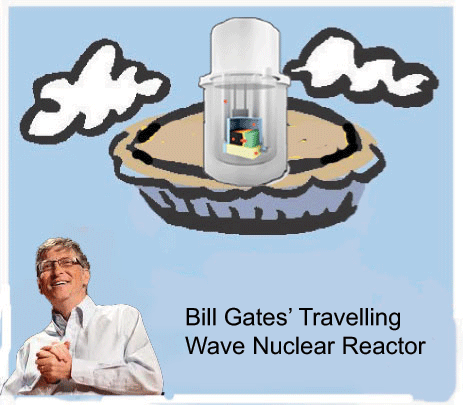 Bill Gates joins nuclear-powered shipping push, Splash Sam ChambersNovember 2, 2020 Bill Gates, one of the richest men in the world, has turned his attention to getting ships powered by nuclear energy.
The Microsoft co-founder, who turned 65 last week, is also chairman of TerraPower, a nuclear tech company that today announced a new venture with Mikal Bøe’s CORE POWER, French nuclear materials handling specialist Orano and American utilities firm Southern Company. The four companies plan to develop molten salt reactor (MSR) atomic technology in the United States………
The four companies have submitted an application to the US Department of Energy to take part in cost-share risk reduction awards under the Advanced Reactor Demonstration Programme to build a prototype MSR, as a proof-of-concept for a medium-scale commercial-grade reactor.
……. we seek to build scale-appropriate technology and broad acceptance of modern and durable liquid-fuelled atomic power to shape the future of how we deal with climate change,” Bøe commented today…….
Thorium is a weakly radioactive metallic chemical element found most commonly in India and is a substance that Gates’ TerraPower has been studying closely of late.
Admitting the technology would not be cheap to install on ships, Bøe has proposed a leasing model for his batteries, similar to those deployed for aircraft engines………. https://splash247.com/bill-gates-joins-nuclear-powered-shipping-push/
Expert guidance for the next President to head off a nuclear catastrophe
 5 Steps for the Next President to Head Off a Nuclear Catastrophe
To the horror of experts, 30 years after the Cold War, the global risk from nuclear weapons is actually getting worse. Here’s how a new administration can turn that around. Politico, By EDMUND G. BROWN JR. , REP. RO KHANNA and WILLIAM J. PERRY, 10/30/2020
Edmund G. Brown Jr. is the former governor of California and executive chair of the Bulletin of the Atomic Scientists.
Rep. Ro Khanna (D-Calif.) represents Silicon Valley in the House of Representatives.
William J. Perry was the 19th United States Secretary of Defense.
As fires rage across the West and the coronavirus continues its deadly march, President Donald Trump tweets and fulminates but refuses to take charge. He denies climate change; on the pandemic, he leaves to the states his clear responsibility to protect the people of America.
Tragically, his incompetence extends beyond Covid-19 and climate change to another existential danger, rarely debated in Washington or covered by the media: the chance of a nuclear blunder.
The Cold War may have ended in 1989, but the United States and Russia together still possess more than 12,000 nuclear weapons, 90 percent of the world’s arsenal, nearly 2,000 of which are programmed to launch in minutes at the command of either countries’ president. The risk of a real nuclear catastrophe is not a bugbear from a past decade. It is a current threat, and becoming more serious because of Trump’s policies—and because the public has largely stopped paying attention.
How can we change course? That starts with the election of a new president, one who will have the courage to restore nuclear sanity. This is precisely what President Ronald Reagan did when he joined Mikhail Gorbachev in 1985, declaring that “a nuclear war can never be won and must never be fought.”
Third, the next president should immediately extend the New START Treaty with Russia and begin follow-on negotiations to reduce deployed strategic nuclear forces by one-third, something Obama himself had planned to do.
The next president should reflect deeply on our existential predicament and chart a new and wiser path for America. https://www.politico.com/news/magazine/2020/10/30/5-steps-for-the-next-president-to-head-off-a-nuclear-catastrophe-433695
Another city bites the dust in regard to Utah’s NuScam small nuclear reactors plan

Seven Utah cities have now bailed out of an Idaho nuclear power project, Salt Lake Tribune, By Taylor Stevens-30 Oct 20,
Three more Utah cities voted this week not to move forward with a first-of-its kind nuclear power project that proponents have pitched as the future of clean energy but that opponents have lined up against over concerns about financial risk.
Beaver, Bountiful and Heber are the latest municipalities to exit the small modular nuclear reactor pursuit, following in the footsteps of Murray, Kaysville, Lehi and Logan, which also backed out in recent weeks. ………
The Heber Light and Power Board, which voted 5-1 to get out of the project, and the Bountiful City Council, which unanimously made the decision to back out, both did so this week largely over concerns about the subscription rate of the nuclear energy pursuit.
“There’s enough things wrong with this project that it made it really scary,” said Bart Miller, Heber Light and Power’s chief financial officer. “We’re just a bunch of little utilities in the state of Utah trying to do a $6 billion nuclear power plant.”………
Bountiful City Councilman Richard Higginson said the leaders there had similar concerns, and felt too many of the development and construction costs were falling to a small number of municipalities…….
Costs have been one of the main concerns for several of the cities that have backed out over the last few weeks, as the project’s projected price tag has ballooned significantly, from $4.5 billion a few years ago to around $6 billion now. Opponents have also raised concerns about time and cost overruns, safety considerations and an uncertain regulatory environment.
The Utah Taxpayers Association has been among the critics of the project, arguing that municipal power companies should not act as a “seed investor” for the new technology, a responsibility it’s argued should lie with the private sector.
Environmental groups, such as the Healthy Environment Alliance of Utah, have also raised concerns about the radioactive waste that would be generated by the project.
Cities participating in the Carbon Free Power Project through the Utah Associated Municipal Power Systems — a consortium of municipally owned power systems in Utah and several other Western states that has partnered with NuScale Power to study and create the nuclear technology — have until Saturday to decide whether to stay in the project or back out. https://www.sltrib.com/news/politics/2020/10/29/seven-utah-cities-have/
A Joe Biden administration would re-examine the U.S. nuclear strategy and arsenal.
 Biden White House Seen Revamping Strategy for Nuclear Weapons Biden White House Seen Revamping Strategy for Nuclear Weapons
Rep. Adam Smith (D-Wash.), who’s questioned and criticized the need to boost the nuclear arsenal, said Thursday he’s “quite confident,” a new administration would reassess plans. Boosting and overhauling nuclear weapons has been an issue that has split—sometimes acrimoniously—Democrats and Republicans on the Armed Services panel. Current plans call for modernizing the capacity to deliver nuclear weapons via land-based missile systems, nuclear submarines, and strategic bombers—the “nuclear triad.” The Congressional Budget Office estimates such an effort could cost as much as $1.2 trillion through 2046 for development, purchasing and long-term support. If a triad is necessary for that deterrence, I can see that argument; I am skeptical about it,” Smith said at an event hosted by the Center for a New American Security. The intercontinental ballistic missile (ICBM) fleet “right now, is driven as much about politics as it is by policy and necessity,” Smith added. Few DetailsWhile not offering details, Democratic presidential nominee Biden has indicated that he would place smaller emphasis on the role that nuclear weapons would play in a defense strategy. Biden’s campaign website says he believes the “sole purpose” of the U.S. nuclear arsenal is for deterrence or, if necessary, for retaliation against an atomic attack…….. https://about.bgov.com/news/biden-white-house-seen-revamping-strategy-for-nuclear-weapons/ |
|
UK government’s economic recovery plan funds fossil fuels £3.8bn, but renewables only £121m
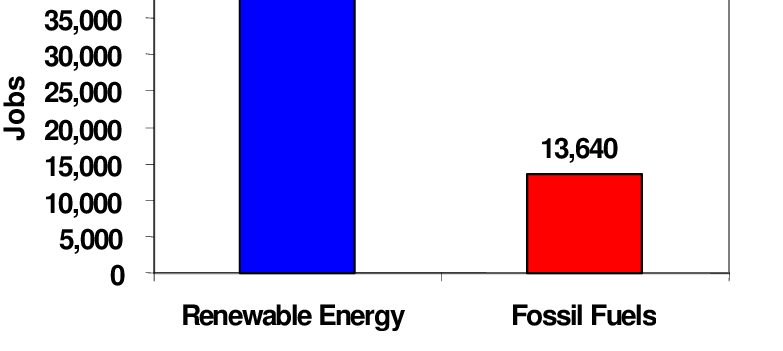
Edie 29th Oct 2020, The UK Government has earmarked £3.8bn of stimulus funding for legacy fossil fuel and nuclear generation, compared to just £121m for renewables, a damning new report has claimed. Published by global technology company Wärtsilä’s energy arm, the analysis concludes that the UK Government’s short-term plans for helping the energy sector recover from the financial impacts of Covid-19 are not aligned with the 2050 net-zero target or the interim carbon budgets.
storage capacity would be scaled up dramatically.
Putin’s Russia keen to exploit the Arctic for fossil fuels: more nuclear-powered icebreakers on the way
|
Putin decrees development of Arctic with more nuclear icebreakers – This will help Russia cash flow from fossil fuels. Russian President Vladimir Putin has signed an executive order, On the Strategy for Developing the Russian Arctic Zone and Ensuring National Security until 2035, which foresees the construction of at least five new nuclear-powered icebreakers of the Project 22220 series, and three of the Project 10510 series. The vessels are needed to ensure year-round navigation along the Northern Sea Route. Project 10510, also known through the Russian type size series designations LK-110Ya and LK-120Ya or the project name Leader, will supersede Project 22220 icebreakers as the largest and most powerful in the world…….. https://www.oilandgas360.com/putin-decrees-development-of-arctic-with-more-nuclear-icebreakers-this-will-help-russia-cash-flow-from-fossil-fuels/ |
|
|
EDF trucks enriched uranium to the unfinished Flamanville nuclear reactor. Why so much in advance of the need for it?
 Reuters 26th Oct 2020, A first truck responsible for transporting enriched uranium to the EPR
reactor in Flamanville (Manche) left Monday morning from the Framatome
plant in Romans-sur-Isère (Drôme), according to anti-nuclear associations
who denounce an EDF “maneuver” to “make it impossible to question”
the project.
Associations, including Greenpeace, France Nature
Environnement and several anti-nuclear collectives, believe in a press
release that “nothing guarantees” that the EPR “can work one day”
and therefore consider that the fact of storing fuel there now is “an
aberration”. They also consider that “the arrival of fuel in Flamanville
also questions the security of the site” and stress that this first
delivery opens “a ballet of trucks which will last several months”.
https://fr.reuters.com/article/idFRL8N2HH2HL
Greenpeace 26th Oct 2020, EDF has just obtained the authorization to transport new fuel to the
Flamanville EPR nuclear reactor site. A first truck left at 8 am Monday,
October 26 from Romans-sur-Isère, in Drôme, and arrived in the evening at
Flamanville, in Manche. In the coming weeks, these nuclear road convoys
will therefore multiply… As if the EPR were ready to start. Yet this is
far, very far from being the case. Why such a rush, when the EPR is
accumulating delays? EDF once again adopts the strategy of a fait accompli,
despite common sense.
https://www.greenpeace.fr/epr-de-flamanville-du-combustible-pour-un-projet-obsolete/
1 This Month



Shut down the radiation-damaged Heysham nuclear reactors now
To see nuclear-related stories in greater depth and intensity – go to https://nuclearinformation.wordpress.com

Say No to NASA’s Reckless Nuclear Reactor on the Moon
Say No to NASA’s Reckless Nuclear Reactor on the Moon
-
Archives
- October 2026 (256)
- September 2026 (339)
- August 2026 (330)
- July 2026 (355)
- June 2026 (287)
- May 2026 (306)
- April 2026 (356)
- March 2026 (251)
- February 2026 (267)
- January 2026 (308)
- December 2025 (358)
- November 2025 (359)
-
Categories
- 1
- 1 NUCLEAR ISSUES
- business and costs
- climate change
- culture and arts
- ENERGY
- environment
- health
- history
- indigenous issues
- Legal
- marketing of nuclear
- media
- opposition to nuclear
- PERSONAL STORIES
- politics
- politics international
- Religion and ethics
- safety
- secrets,lies and civil liberties
- spinbuster
- technology
- Uranium
- wastes
- weapons and war
- Women
- 2 WORLD
- ACTION
- AFRICA
- Atrocities
- AUSTRALIA
- Christina's notes
- Christina's themes
- culture and arts
- Events
- Fuk 2022
- Fuk 2023
- Fukushima 2017
- Fukushima 2018
- fukushima 2019
- Fukushima 2020
- Fukushima 2021
- general
- global warming
- Humour (God we need it)
- Nuclear
- RARE EARTHS
- Reference
- resources – print
- Resources -audiovicual
- Weekly Newsletter
- World
- World Nuclear
- YouTube
-
RSS
Entries RSS
Comments RSS

