The Biden- Harris administration can change nuclear weapons policy, make it safer, and much cheaper
 Whatever you think ails this nation, a new generation of ICBMs is not the answer, WP, by Tom Collina and William Perry, November 18, 2020 Tom Z. Collina is director of policy at Ploughshares Fund. William J. Perry was secretary of defense from 1994 to 1997. They are co-authors of the book “The Button: The New Nuclear Arms Race and Presidential Power from Truman to Trump.”
Are any of these challenges addressed by nuclear weapons? Clearly not. Yet the United States is planning to spend well over $1 trillion to rebuild its nuclear arsenal, complete with a new generation of intercontinental ballistic missiles.
The United States can move to a smaller but more secure second-strike nuclear force whose sole purpose is to deter nuclear attack. We do not need to spend hundreds of billions more in a dangerous and futile attempt to “prevail” in a nuclear conflict.
The Biden-Harris campaign has rightly stated that “the sole purpose of the U.S. nuclear arsenal should be deterring — and if necessary, retaliating against — a nuclear attack. As president, [Biden] will work to put that belief into practice, in consultation with our allies and military.”
The best policy would specifically rule out preemptive nuclear attacks, as such attacks have a high risk of starting nuclear war by mistake, and should not be considered under any circumstances. Similarly, a sole-purpose policy should prohibit launching nuclear weapons on warning of attack, as such launches increase the risk of starting nuclear war in response to a false alarm.
The Biden-Harris administration can make a sole-purpose policy more credible and further reduce the risk of accidental launch by retiring the ICBMs. ICBMs are most likely to be used first in response to a false alarm. They are highly unlikely to ever be used in retaliation, as most would be destroyed in any (highly unlikely) Russian nuclear attack against the United States. Thus, ICBMs have no logical role in a U.S. sole-purpose, deterrence-only policy.
This transformational nuclear policy would be win-win: It would free up federal resources to address more urgent needs and, at the same time, reduce nuclear dangers to the nation. In this time of crisis, change and opportunity, our government must have the courage to spend our federal dollars where they are needed most. https://www.washingtonpost.com/opinions/2020/11/17/how-biden-administration-could-create-win-win-situation-nuclear-policy/
European security officials fear that Trump may trigger a war against Iran
 Security officials worry Israel and Saudi Arabia may see the end of Trump as their last chance to go to war with Iran, MSN insider@insider.com (Mitch Prothero) 18 Nov 20,
-
- European security officials are worried that outgoing president Donald Trump will trigger a military conflict with Iran in order to tie President-Elect Joe Biden’s hands, sources tell Insider.
- They also fear that Israel and Saudi Arabia may see the departure of Trump as a ticking clock they need to beat.
-
- “Both countries are run by immature leaders who have been screaming about the need for war with Iran for so long it’s possible they really believe that a Biden administration will be followed by an Iranian nuclear attack,” one source told Insider.
- Trump has elevated hardliners on Iran inside the Pentagon.
-
-
- European intelligence officials are alarmed about the possibility of military action towards Iran in the waning days of the Trump administration.
Concern that Trump — who has pushed for
-
- — or a combination of Israel or Saudi Arabia creating a military confrontation in the waning days of the administration has been a concern for over a week, according to three European intelligence officials who spoke with Insider.
The news that last week the president requested a list of military options from his military and diplomatic advisors has
sent these concerns into overdrive.
One fear is of unilateral action by the US to force a military clash that might make it impossible for the incoming Biden
Israel conducted a series of attacks in Iran over the summer, in the knowledge that Trump was sympathetic to a
“maximum pressure” strategy.
The fears were underlined last week, in the wake of Trump’s election defeat, when the president replaced much of
hardliners on Iran. That inflamed worries among both Democrats and European allies, said all three sources.
Biden — who enters office on Jan 21, 2021 — has not expressed any solid policy positions on Iran except to
Security officials say the US will be a ‘crippled world power’ until Biden takes over and fear Trump will declassify intelligence that will help Putin
Israel keeps blowing up military targets in Iran, hoping to force a confrontation before Trump can be voted out in November.
Trump still has the awesome power to launch America’s nuclear arsenal
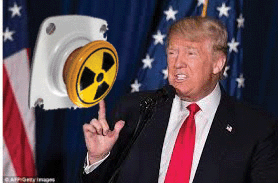 By the Way, Donald Trump Could Still Launch Nuclear Weapons at Any Time The president’s responsibility for the US nuclear arsenal is a Cold War anachronism. The Trump era shows why it needs reform, Wired, .GARRETT M. GRAFF, SECURITY, 11.17.2020
 THE NATION IS entering a particularly dangerous period of Donald Trump’s presidency. Still refusing to concede his election loss and angrily tweeting at all hours of the night, Trump faces the dwindling days of his administration, with all the authorities of the office intact and nothing left to lose. Among the authorities he’ll retain until his final minutes in office? The awesome and awful power to launch the United States’ nuclear arsenal on command.
Donald Trump’s “fire and fury” presidency has exposed all too clearly the intellectual fallacy at the heart of the nation’s nuclear plans: that the commander-in-chief will always be the most sober, rational, and conservative person in the room.
Many people assume, wrongly, that some other official has to agree with a presidential order to launch nuclear weapons; surely the White House chief of staff, the secretary of defense, the vice president, or maybe the general in charge of the nation’s nuclear forces has to concur with a presidential launch order, right? Nope. The president can choose to consult with those officials, or whoever else he may like, but from the dawn of the atomic age in the 1940s and 1950s, there has been no procedure to require any such second, concurring opinion in order to authorize a nuclear strike.
Advancing technologies and expanding arsenals have negated that fear; today’s nuclear submarines ensure a so-called “survivable deterrent” such that even under the most extreme surprise attack scenarios, the US could still destroy dozens of foreign targets and kill tens of millions of people.
Even as the underlying technology and need changed, the US has never revisited its launch strategy. It doesn’t have to be this way, though. There’s simply no need for the nation’s weapons to be placed on routine high-alert and left in the hands of a single individual. We shouldn’t have to worry whether presidential whims endanger our world and human civilization.
This isn’t the first wake-up call for the US. In the final days of Richard Nixon’s presidency, as Watergate consumed his administration from within, his top aides worried what he might do. Nixon was despondent and drinking heavily. Those around him raised fears about his mental state; during one meeting with members of Congress he’d reportedly emphasized the world-ending powers at his fingertips …………
The impending end of Donald Trump’s presidency and a new Biden administration provides an important opportunity to reform the nation’s launch authorities. The country should insist upon a new command-and-control system that ensures the same checks and balances that we insist upon elsewhere in the nuclear system, as well as the same checks and balances we insist on other aspects of government power. Such a move would dramatically improve the safety of the world.
Policymakers have sketched out some ideas for what a new system might look like in recent years………..https://www.wired.com/story/donald-trump-nuclear-weapons-system-reform/
British govt produced no evidence that nuclear plants are essential, in secret deals for the convenience of the nuclear industry
Greenpeace 17th Nov 2020, Greenpeace briefing on SMRs and Sizewell. The government has produced no analysis to show that nuclear reactors are essential, despite being asked by select committees to do so. It is making the same strategic mistakes in decision making as the Cameron and May governments did with Hinkley. Being drawn in to commitments they can’t pull out from, by conducting secretive deals behind closed doors with no scrutiny or competition, for the convenience of the nuclear industry.
What energy policies is Greenpeace calling for instead of nuclear?
A commitment to ensuring at least 80% of the UK’s power is generated from renewables by 2030; In addition to a commitment to delivering at least 40GW of total offshore wind generation by 2030, publicly commit to targets for total generation of 45GW of solar and 35GW of onshore wind by 2030.
£525 million pledged to build UK small nuclear reactors, no funding package yet revealed for £20 billion Sizewell plant
Times 18th Nov 2020. A total of £525 million has been pledged “to help develop large and
smaller-scale nuclear plants, and research and develop new advanced modular
reactors”. However, there is no word as yet on a funding package to
support the proposed £20 billion new nuclear plant at Sizewell in Suffolk.
British govt’s foolhardy plan to pay up for non existent Rolls Royce small nuclear reactors
 Guardian 17th Nov 2020, Boris Johnson’s £12bn plan for a “green industrial revolution” spans renewable energy, nuclear power and countryside restoration. However, some of the objectives are likely to be difficult to reach, and the plan has been criticised for a lack of ambition in key areas.
UK government wastes tax-payer money on small and large nuclear reactors that will never be cheap or safe
 FoE Scotland 17th Nov 2020, Friends of the Earth Scotland gave a scathing reaction to
  the UK Government’s announcement of a 10-point plan on climate and energy, calling for much more priority on solutions which can reduce emissions and create jobs today.
crisis like carbon capture and storage, hydrogen and nuclear. “While there are some crumbs from the table in terms of the welcome new target of 2030 to phase out fossil-fuelled cars, overall there is too little new money and too much funding committed to long-term, dangerous distractions.
https://foe.scot/press-release/response-to-the-uk-10-point-climate-plan-for-net-zero/
No. 2 reactor at Tohoku Electric Power Co’s Onagawa nuclear power plant for restart, despite problems
 As nuclear worries linger, Tohoku plant heads for landmark restart, BY ERIC JOHN, 18, Nov, 20 OSAKA – On Nov. 11, Miyagi Gov. Yoshihiro Murai gave the green light to restarting the No. 2 reactor at Tohoku Electric Power Co’s Onagawa nuclear power plant. While the reactor is not expected to begin generating power until construction to improve the plant’s safety is completed, the governor’s approval paves the way for the first reactor damaged by the Great East Japan Earthquake to resume operation.
The restart, the first in northeastern Japan, comes amidst controversial restarts in the country’s west following the quake and at a time when the energy source’s future economic and political feasibility is being debated after the government announced a target of Japan being carbon neutral by 2050.
What is the Onagawa nuclear plant and what happened to it after the earthquake and tsunami?
The Onagawa nuclear power plant sits on a peninsula in Miyagi Prefecture about 130 kilometers from the epicenter of the March 11, 2011 quake and tsunami. It has three reactors, one of which is being decommissioned.
………..The government’s current long-term energy strategy calls for nuclear power to provide between 20% and 22% of the nation’s electric power supply by fiscal 2030. The Agency for Natural Resources has said to meet that goal, the restart of 30 reactors is necessary.
There are a number of issues that could make that goal difficult. These include the cost of meeting the new NRA safety standards that went into place after 3/11 and the time needed to upgrade facilities. For the operator, those costs raise questions of whether it is worth investing and whether nuclear power-generated electricity will remain competitive with renewable energy in the coming years.
Other issues could also drive up the costs of restarting more reactors, beginning with subsidies to local governments. With no financial incentive, village heads, city mayors and prefectural governors could delay or refuse permission to restart. Even if permission is granted, operators may face lawsuits from residents opposed to restarts, a process that could delay or even halt the process if a judge rules in their favor, which would mean further costs for the operator.
The government’s current long-term energy strategy calls for nuclear power to provide between 20% and 22% of the nation’s electric power supply by fiscal 2030. The Agency for Natural Resources has said to meet that goal, the restart of 30 reactors is necessary.
There are a number of issues that could make that goal difficult. These include the cost of meeting the new NRA safety standards that went into place after 3/11 and the time needed to upgrade facilities. For the operator, those costs raise questions of whether it is worth investing and whether nuclear power-generated electricity will remain competitive with renewable energy in the coming years.
Other issues could also drive up the costs of restarting more reactors, beginning with subsidies to local governments. With no financial incentive, village heads, city mayors and prefectural governors could delay or refuse permission to restart. Even if permission is granted, operators may face lawsuits from residents opposed to restarts, a process that could delay or even halt the process if a judge rules in their favor, which would mean further costs for the operator.
The nuclear perils of Trump’s last days
“The air tonight is as heavy as the sum of human sorrows.”-Albert Camus, Caligula
It is no longer just hyperbole. Still armed with nuclear weapons, a conspicuously deranged American president may be willing to do anything to cling to power. And if that willingness should appear futile, Donald J. Trump could conceivably prefer apocalypse to “surrender.”[1]
Credo quia absurdum, said the ancient philosophers. “I believe because it is absurd.” In these presumptively final days of the Trump presidency, an impaired or irrational nuclear command decision remains possible. Though nothing can be determined about the true mathematical probability of any such once unimaginable scenario,[2] there are increasingly compelling reasons for concern. One of these reasons is Mr. Trump’s bizarre eleventh-hour shakeup at the Department of Defense.
Americans have let these urgent matters drift too long. Nonetheless, despite evident lateness of the hour, a summarizing query must finally be raised: Should this visibly impaired president still be allowed to decide when and where to launch American nuclear weapons? This is not a silly or trivial question.
In the early days of the Nuclear Age, when strategic weapon-survivability was still uncertain, granting presidential authority for immediate firing command was necessary to ensure credible nuclear deterrence. Today, however, when there no longer exists any reasonable basis to doubt America’s durable second-strike nuclear capability (sometimes also called an “assured destruction” or undiminished retaliatory capability), there remains no good argument for continuing to grant the president (any president) such potentially problematic decisional authority.
More general questions should now also be raised.
In our expansively imperiled democracy, ought any American president be permitted to hold such precarious life or death power over the entire country?
Inter alia, could such an allowance still be consistent with a Constitutional “separation of powers?”
Can anyone reasonably believe that such existential power could ever have been favored by America’s Founding Fathers?
The correct answers are apparent, obvious and starkly uncomplicated.
We can readily extrapolate from Articles I and II of the Constitution that the Founders had profound concern about Presidential power long before the advent of nuclear weapons. This concern predates even any imagination of apocalyptic warfare possibilities.[3] So what next?…………………..
At this grievous point in America’s Trump-created declension, anything seems possible.
History deserves pride of place. Soon, any such disregard for plausible national harms could prove unconscionable. In the chaotic 1st century CE, long before political democracy could ever seem sustainable[12] and long before nuclear weapons, Roman Emperor Caligula revealed the overwhelmingly lethal costs of barbarous governance.
Today, a democratically defeated American president, clinging wrongfully to political power and expressing this egregious dereliction during a period of “plague,” could produce even less bearable costs. At that nation-destroying point, the “air would be as heavy as the sum of human sorrows.”
History may not repeat itself, observed Mark Twain, “but it often rhymes.” Donald J. Trump may not be quite as decadent or depraved as Caligula, but he may not be that far removed either. Credo quia absurdum, warned the ancient Romans. “I believe because it is absurd.”
Donald J. Trump is not Caligula, but he is a sinister stain upon the integrity and survival of the United States. https://moderndiplomacy.eu/2020/11/15/caligula-goes-covid-nuclear-perils-of-trumps-last-days/
We should require a second voice when it comes to ordering first use of nuclear arms
A Nuclear Strike Should Require More than One Person’s Order. We should require a second voice when it comes to ordering  first use of nuclear arms. Defense One, BY STEVEN PIFER FELLOW, STANFORD UNIVERSITY, NOVEMBER 12, 2020. Donald Trump has proven to be volatile, erratic, vengeful and prone to angry outbursts. Last week, as the vote count pushed his reelection bid out of sight, he reportedly fell into a dark mood. At the time, Mr. Trump had—and now has—sole authority to order the launch of U.S. nuclear weapons, just as he had in October, when his medications for COVID had side effects including mania, euphoria and a sense of invulnerability.
Do we want Mr. Trump, or any president, alone making the most consequential decision that an American president likely would ever make?
As a Foreign Service officer working on arms control, I had the opportunity to get close to nuclear weapons on three occasions. One involved viewing, through a thick, shatter-proof window, two technicians working on a warhead for a Trident ballistic missile. Our escort noted that, should one leave the room, the other would also have to leave. A “two-man” rule applied around nuclear weapons.
Another time, on a Los Angeles-class attack submarine, our group saw a nuclear-armed cruise missile in its canister with an attached cable. Ship’s officers explained that, if the canister moved slightly, alarms would sound and other sailors would quickly arrive, some with weapons. A “two- (or more) man” rule applied.
The third time, on board an Ohio-class ballistic missile submarine at sea, I was offered the chance to climb into a Trident missile (yes, that is possible, and yes, I did). When the hatch to the missile was open, standard protocol provided for the presence of two armed sailors. Again, the “two-man” rule.
As a Foreign Service officer working on arms control, I had the opportunity to get close to nuclear weapons on three occasions. One involved viewing, through a thick, shatter-proof window, two technicians working on a warhead for a Trident ballistic missile. Our escort noted that, should one leave the room, the other would also have to leave. A “two-man” rule applied around nuclear weapons.
Another time, on a Los Angeles-class attack submarine, our group saw a nuclear-armed cruise missile in its canister with an attached cable. Ship’s officers explained that, if the canister moved slightly, alarms would sound and other sailors would quickly arrive, some with weapons. A “two- (or more) man” rule applied.
The third time, on board an Ohio-class ballistic missile submarine at sea, I was offered the chance to climb into a Trident missile (yes, that is possible, and yes, I did). When the hatch to the missile was open, standard protocol provided for the presence of two armed sailors. Again, the “two-man” rule.
At only one level does the “two-man” rule not apply: the president, as commander-in-chief, has sole authority to order the use of U.S. nuclear arms. There is not even a requirement that the president consult someone. The always nearby “football” carries the briefing materials, codes and communications allowing the president to launch nuclear weapons. Were the president give the order, the system would rapidly transmit it. Intercontinental ballistic missiles could blast out of their silos within minutes.
If nuclear weapons are used first against America or its allies, it makes sense to allow the president sole authority to order a nuclear response. However, current U.S. policy envisages the possibility that the United States would use nuclear weapons first, perhaps in a conventional conflict that goes badly or in response to a non-nuclear strategic attack. (Whether U.S. first use makes sense is a separate question.)
When President-elect Biden takes office, we can breathe easier. Nothing guarantees, however, that a future president might not have something more like Mr. Trump’s temperament—and he reportedly is mulling a 2024 run.
We should require a second voice when it comes to ordering first use of nuclear arms……….. https://www.defenseone.com/ideas/2020/11/nuclear-strike-should-require-more-one-persons-orders/170004/
Julian Assange ‘targeted as a political opponent of Trump administration and threatened with the death penalty’
Julian Assange ‘targeted as a political opponent of Trump administration and threatened with the death penalty’ Evening Standard. By Tristan Kirk. @kirkkorner
Professor Paul Rogers, a lecturer in peace studies at Bradford University and specialist on the ‘War on Terror’, said Assange’s opinions put him “in the crosshairs” of Trump’s top team.
Giving evidence to Assange’s extradition hearing this morning, he said he believes the prosecution case is part of a drive in the United States to target “dissenters”.
“In my opinion Mr Assange’s expressed views, opinions and activities demonstrate very clearly ‘political opinions’”, he told the court.
Professor Rogers, in his witness statement, said Assange’s work involved exposing secrets that the US government wanted to keep hidden, he had been in conflict with the Obama administration, but there was “no question” that Assange had been targeted as a political opponent by Trump’s officials.
“The opinions and views of Mr Assange, demonstrated in his words and actions with the organisation WikiLeaks over many years, can be seen as very clearly placing him in the crosshairs of dispute with the philosophy of the Trump administration”, he said.
Assange’s legal team argue that a decision was taken under President Obama not to prosecute the Wikileaks activist, but that move was overturned under Trump. https://www.standard.co.uk/news/uk/julian-assange-donald-trump-administration-old-bailey-hearing-a4543656.html?fbclid=IwAR3Rj4n0Lzlt5GmE1lXZXoMVDsOS5BdT9sEKgj82SCmMnpNLFQ6ZfEzVUOI
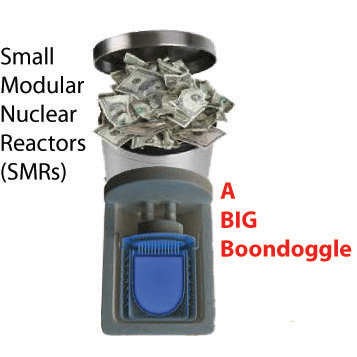
Biden and Harris include fantasy of ”small nuclear reactors” in an otherwise progressive climate policy
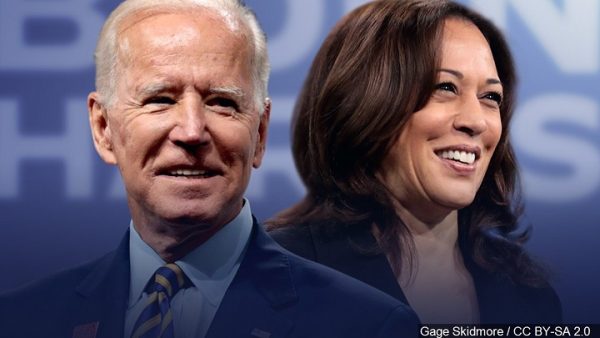 the Biden-Harris agenda lists small modular reactors under its “game-changing technologies.” In a way, that’s correct. Diverting money into small modular reactors will be game-changing. It will put us firmly on the road to climate failure.
The good news is that nuclear power does not play much of a role in the Biden-Harris plan. But the bad news is that, when it comes to nuclear power, the Biden camp has indeed chosen fiction over science.
In Promoting New Nuclear Power, Biden-Harris Back Fiction Over Science, https://www.counterpunch.org/2020/11/13/in-promoting-new-nuclear-power-biden-harris-back-fiction-over-science/ BY LINDA PENTZ GUNTER 13 Nov 20, Although possibly a sad comment on his predecessors, incoming U.S. president, Joe Biden, is offering the most progressive climate policy so far of any who have previously held his position.
As Paul Gipe points out in his recent blog, the Biden-Harris climate plan uses the word “revolution” right in the headline — a bit of a departure from the usual cautious rhetoric of the centrist-controlled Democratic Party.
But ‘revolution’ is proceeded by two words which let us know we are still lingering in conservative ‘safe’ territory. They call it a “clean energy revolution”, which Gipe rightly refers to as “focus-group shopped terminology.” He goes on:
”Clean energy is a term forged by Madison Avenue advertising mavens in the crucible of focus groups. It ‘polls well,’ as they say. It means one thing to one interest group, something else to another. So it’s perfect for politics in America.
“To environmentalists, it means wind and solar energy, often only those two forms of renewable energy, and sometimes only solar. It also means good times to the coal and nuclear industry. (Ever hear of ‘clean coal’?)
“So clean energy is one of those misleading words that party leaders and, importantly, fundraisers can use to elicit money from donors of all stripes. Why say renewable energy, when you want to raise money from the coal and nuclear industries?”
The Biden-Harris energy plan hits all the right notes in its opening paragraphs, focusing on a goal of net-zero emissions by 2050 and emphasizing infrastructure, international collaboration and the protection of poor communities of color, who suffer the most harm from unfettered polluters.
As we know from his public statements, Biden will bring the US straight back into the Paris Agreement on climate and sees the climate crisis as the “number one issue facing humanity”. The Paris Agreement isn’t enough, but the US absence weakens it further.
Still on the right track, the Biden-Harris climate plan looks to the rights and wellbeing of workers and jobs creation. It will adhere to “science, not fiction” and recognizes that energy efficiency has an essential role to play.
And then it goes very badly — if predictably — wrong.
In the section entitled “Biden’s Year One Legislative Agenda on Climate Change,” the document proclaims “We have to get rid of the old way of thinking,” then reverts precisely to that, clinging on to nuclear power as a necessary component of its plan.
So the Biden-Harris agenda lists small modular reactors under its “game-changing technologies.” In a way, that’s correct. Diverting money into small modular reactors will be game-changing. It will put us firmly on the road to climate failure.
The good news is that nuclear power does not play much of a role in the Biden-Harris plan. But the bad news is that, when it comes to nuclear power, the Biden camp has indeed chosen fiction over science.
A bullet point called “Identify the future of nuclear energy” reverts right back to the failed Obama “all of the above” approach to “look at all low- and zero-carbon technologies”, instead of recognizing that nuclear power, a failed 20th century technology, does not have a future.
As Amory Lovins points out, this “low-carbon” approach is a perpetual mistake made by politicians and seized on and influenced by the nuclear industry — to look only at carbon savings, and not at cost and time as well.
“Costly options save less carbon per dollar than cheaper options,” Lovins writes. “Slow options save less carbon per year than faster options. Thus even a low- or no-carbon option that is too costly or too slow will reduce and retard achievable climate protection. Being carbon-free does not establish climate-effectiveness.”
When you look at the precipitating drop in renewable energy costs versus the ever soaring nuclear ones; when you examine how you can reduce more carbon emissions faster and more cheaply with renewables than nuclear; and when you observe the real life examples of countries whose carbon reductions are greater after investing in renewables rather than clinging onto nuclear; then the only reason to include nuclear power in a climate plan is political.
The Biden-Harris platform will likely continue to listen to the old school. After all, it’s who they know. But if they really want that revolution, they should open their eyes to the reality on the ground.
A recent article in the Socialist magazine, Jacobin, pointed to an example in the Netherlands where a decision was made not to expand an existing nuclear power plant and instead build two offshore wind farms. Although the Fukushima disaster slightly influenced the decision, at the end of the day, as the article pointed out, it was all about “the law of value”, in other words, money. “With the declining cost of renewable energy, nuclear power simply does not make economic sense,” it said.
In an important new study out of Sussex University in the UK — Differences in carbon emissions reduction between countries pursuing renewables versus nuclear power — the researchers concluded that choosing nuclear crowds out renewables and vice versa. This means that continuing to use old uneconomical nuclear plants — or investing in new ones — actually hampers renewable energy development, and thereby progress on climate change, and results in smaller carbon reductions and at a much higher cost.
The study notes that, “per dollar invested, the modularity of renewables projects offers quicker emissions reductions than do large-scale, delay-prone nuclear projects,” the same point made by Lovins. And, as the study also says, the more we use renewables, the more improved their performance, exactly the opposite of nuclear which sees “rising costs or reduced performance with the next generation of technology.”
This last is an important point for the Biden-Harris energy team to note. By including so-called new nuclear, they are dooming themselves to wasting both time and money better spent focused on renewables. Small modular reactors will not, as their plan asserts, come in at “half the construction cost of today’s reactors.” They will be far more expensive in relation to the electricity they would eventually produce. And of course they would arrive too late, and in too small a quantity and generate too little — and very expensive — electricity to make any difference to climate change at all.
Biden-Harris must look at empirical data, not listen to spin doctors and establishment cronies who will keep them anchored to the status quo, thus deferring the very energy revolution they claim they will lead. If Biden-Harris remain in favor of action on climate AND for nuclear power, then they are part of the problem, not the solution.
Linda Pentz Gunter is the editor and curator of BeyondNuclearInternational.org and the international specialist at Beyond Nuclear. She can be contacted at linda@beyondnuclear.org.
Predicting Biden’s attitude and actions on the big nuclear weapons issues
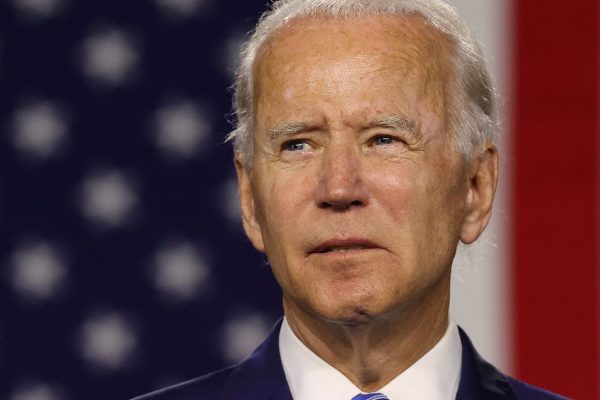 Here’s what to expect from Biden on top nuclear weapons issues, https://thebulletin.org/2020/11/heres-what-to-expect-from-biden-on-top-nuclear-weapons-issues/?utm_source=Newsletter&utm_medium=Email&utm_campaign=ThursdayNewsletter11122020&utm_content=NuclearRisk_BidenNuclear_11092020 Here’s what to expect from Biden on top nuclear weapons issues, https://thebulletin.org/2020/11/heres-what-to-expect-from-biden-on-top-nuclear-weapons-issues/?utm_source=Newsletter&utm_medium=Email&utm_campaign=ThursdayNewsletter11122020&utm_content=NuclearRisk_BidenNuclear_11092020
By Sara Z. Kutchesfahani | November 9, 2020, In a statement released over the weekend shortly after news organizations declared he had won, President-elect Joe Biden said, “It’s time for America to unite.” Unite it must, and not just domestically, but also in the realm of global nuclear policy. Because, to put it mildly, Biden will have a lot to do to fix the nuclear mess left by his predecessor. During his one term as president, Donald Trump singlehandedly destroyed decades worth of hard work done by previous US administrations in establishing trust, confidence, and diplomacy—on nuclear and non-nuclear issues—among both friends and foes. In four years, he made the prospect of nuclear proliferation, a new nuclear arms race, and even the use of nuclear weapons more likely. His nuclear legacy will be tainted by a series of failures including, but not limited to: eviscerating decades of trust-building between the United States and Russia, withdrawing from the landmark multilateral deal to stop Iran from obtaining nuclear weapons, engaging in a series of handshakes and photo ops with dictators that resulted in naught, and a sheer disregard and contempt for diplomacy, science, expertise, and professionalism. As President-elect Biden wrote in the March/April 2020 edition of Foreign Affairs: “Diplomacy is not just a series of handshakes and photo ops. It is building and tending relationships and working to identify areas of common interest while managing points of conflict. It requires discipline, a coherent policymaking process, and a team of experienced and empowered professionals.” A Biden administration is well equipped to repair the global nuclear damage bestowed upon the world by the inexperienced Trump administration. Moreover, if the United States is to reclaim its credibility and global reputation on nonproliferation and nuclear security, a President Biden and Vice President Kamala Harris will have to return to the deals Biden and his former Obama administration colleagues negotiated. And this will mean a revival of negotiations and diplomacy with a team of politically- and technically-savvy experienced professionals. At the top of the list will be the extension of the 2010 New Strategic Arms Reduction Treaty (New START). New START is the last remaining bilateral arms control agreement between the United States and Russia, providing an anchor of strategic stability between the world’s two largest nuclear powers. In short, it limits the number of US and Russian deployed strategic nuclear warheads to 1,550 each. This will be a priority because the treaty is set to expire in February 2021, but it can easily be extended for up to five years. Biden has made his intention to pursue an extension clear, and has stated that he will use it as a foundation for new arms control agreements. Russian President Vladimir Putin has already stated that he, too, is ready to extend, and has yet to rescind the offer, given the news of Biden’s election win. Next should be a revival of the 2015 Iran nuclear deal that the Obama-Biden administration negotiated, which blocked Iran from getting a nuclear weapon. Trump’s withdrawal from the historic multilateral agreement prompted Iran to abandon the nuclear limits established under the agreement, restart its nuclear program, and engage in even more destabilizing behavior across the Middle East. Biden has said that if Tehran returns to strict compliance with the deal, he would “rejoin the agreement and use our renewed commitment to diplomacy to work with our allies to strengthen and extend it, while more effectively pushing back against Iran’s other destabilizing activities.” However, reentry might be a complicated affair, given the Trump administration’s plans to continue increasing sanctions on Iran. And, what about North Korea? Trump was the first sitting US president to meet with a North Korean leader, and in his “love letters” to Supreme Leader Kim Jong Un he claimed, “I have no doubt that a great result will be accomplished between our two countries, and that the only two leaders who can do it are you and me.” But the sheer reality is that the Trump administration accomplished nothing of substance. Biden has stated that he will empower US negotiators and jump-start a “sustained, coordinated campaign with our allies and others, including China, to advance our shared objective of a denuclearized North Korea.” Finally, as far as US nuclear weapons are concerned, the Biden administration will likely rekindle the Obama administration’s commitment to reducing the role of nuclear weapons in the US national defense strategy. In 2017, Biden stated that the sole purpose of the US nuclear arsenal should be deterring—and, if necessary, retaliating against—a nuclear attack. As president, he will put that belief into practice, in consultation with the US military and its allies. In practice, that could mean adopting a no-first-use policy on nuclear weapons, something Obama considered but never enacted. These are ambitious goals, and they would require considerable work to accomplish even in the best of times. But with other weighty concerns like the COVID-19 pandemic, economic stagnation, and climate change looming, tackling these issues will be even more difficult. But through openness, trust, science, dialogue, diplomacy, and cooperation, a Biden-Harris administration can succeed. And if anyone from the future Biden administration may be reading this, I would like to offer one simple recommendation: Read John Hersey’s Hiroshima—a timeless, powerful, and compassionate compendium of the memories of Hiroshima survivors. If everyone able to read did read this book, I am quite confident we would be living in a world without nuclear weapons, which would mean many fewer issues for the new administration to resolve. |
|
Japanese govt rules out new nuclear reactors for 10 years
Here the Asahi Shimbun, generally a neutral and independent news source, appears to buy the myth of nuclear as a climate change cure, and of small nuclear reactors
|
Cabinet minister rules out new nuclear reactors for 10 years, THE ASAHI SHIMBUN, November 12, 2020 Industry minister Hiroshi Kajiyama is signaling that the government will not allow for the construction of new nuclear reactors to replace aging ones or to be installed additionally at nuclear plants for the next decade.His position suggests the Ministry of Economy, Trade and Industry, which oversees the nuclear industry, is unlikely to discuss the option of building new reactors in the new Basic Energy Plan it has been developing.
The plan has been revised twice since the 2011 Fukushima nuclear disaster. Heeding a national sentiment exceedingly anxious of nuclear energy, the government has passed up discussing building new reactors in past revisions of the plan. In an interview with The Asahi Shimbun on Nov. 10, Kajiyama acknowledged it is still premature to discuss the issue now. “Public faith has yet to be restored,” he said of public sentiment toward nuclear energy after the triple meltdown at the Fukushima plant. “How can we proceed (without it) in constructing new reactors to replace aging ones or to make additions? We are simply not at the stage where we can talk about the next move.” Kajiyama said the government’s priority over the next 10 years will be regaining public faith in the nuclear industry, rather than pushing for the construction of new reactors…….. The minister said the number of nuclear reactors that will be reactivated over the coming decade will be a point that the government will take into account as an indication of the public’s acceptance of nuclear energy when it comes to mulling over constructing new reactors. “It is also related to the government’s goal of achieving carbon neutrality in 2050,” he said. His comments suggest the government may begin considering constructing new reactors if more local governments approve restarting nuclear plants that were idled after the Fukushima accident. Currently, only one reactor at the Genkai nuclear plant in Saga Prefecture is operating in Japan after a reactor at the Oi nuclear plant in Fukui Prefecture was shut down for maintenance earlier this month. Kajiyama underlined the need to develop small modular reactors, which are smaller than conventional reactors. He said engaging in a modular reactor project would be meaningful when it comes to maintaining the nation’s technology for safeguarding nuclear power and nurturing scientists in the field–not to mention the potential for spinoffs. “It could lead to the development of new materials and other technologies,” he said. Last month, Prime Minster Yoshihide Suga laid out Japan’s plan to achieve net zero greenhouse gas emissions by 2050.,,,,,,, http://www.asahi.com/ajw/articles/13924315 |
|
Governor of Miyagi Prefecture approves plan to restart Onagawa nuclear reactor.
Here’s another article that quietly accepts the myth that nuclear power combats climate change.
Japan Could Restart Nuclear Reactor Damaged In 2011 Disaster, Oil Price By Tsvetana Paraskova – Nov 12, 2020, A local governor in Japan has approved plans from utility Tohoku Electric Power to restart one of its nuclear reactors that was damaged in the 2011 earthquake and the following tsunami, the same that caused the reactor meltdown at Fukushima.
Tohoku Electric Power received approval from the governor of Miyagi Prefecture, Yoshihiro Murai, to restart unit 2 at the Onagawa nuclear power plant, a spokesman for the company told Reuters.
In its strategy for the medium and long term, the company said in February this year that “On the premise of secured safety, we will aim for the prompt restart of Onagawa Nuclear Power Unit 2 with the local community’s understanding.”
Last month, Japan pledged to become a net-zero emissions economy by 2050, joining the UK and the European Union (EU) in those commitments. Due to the closure of nuclear reactors after Fukushima, Japan relies on coal for around a third of its electricity generation.
1 This Month



Shut down the radiation-damaged Heysham nuclear reactors now
To see nuclear-related stories in greater depth and intensity – go to https://nuclearinformation.wordpress.com

Say No to NASA’s Reckless Nuclear Reactor on the Moon
Say No to NASA’s Reckless Nuclear Reactor on the Moon
-
Archives
- October 2026 (256)
- September 2026 (339)
- August 2026 (330)
- July 2026 (355)
- June 2026 (287)
- May 2026 (306)
- April 2026 (356)
- March 2026 (251)
- February 2026 (267)
- January 2026 (308)
- December 2025 (358)
- November 2025 (359)
-
Categories
- 1
- 1 NUCLEAR ISSUES
- business and costs
- climate change
- culture and arts
- ENERGY
- environment
- health
- history
- indigenous issues
- Legal
- marketing of nuclear
- media
- opposition to nuclear
- PERSONAL STORIES
- politics
- politics international
- Religion and ethics
- safety
- secrets,lies and civil liberties
- spinbuster
- technology
- Uranium
- wastes
- weapons and war
- Women
- 2 WORLD
- ACTION
- AFRICA
- Atrocities
- AUSTRALIA
- Christina's notes
- Christina's themes
- culture and arts
- Events
- Fuk 2022
- Fuk 2023
- Fukushima 2017
- Fukushima 2018
- fukushima 2019
- Fukushima 2020
- Fukushima 2021
- general
- global warming
- Humour (God we need it)
- Nuclear
- RARE EARTHS
- Reference
- resources – print
- Resources -audiovicual
- Weekly Newsletter
- World
- World Nuclear
- YouTube
-
RSS
Entries RSS
Comments RSS

