Kenya cannot afford the costs of nuclear electricity, and the attendant human cost
The building of the nuclear electric power plant appears to be driven by factors other than the national interest. A cursory examination of economic, environmental and safety issues militates against the nuclear electricity option.
Kenya plans to build a 1,000 MWe nuclear power plant at a cost of US$5 billion. The National Environment Management Authority has requested for comments on a Strategic Environmental and Social Assessment Report for the Nuclear Power Programme for Kenya.
Operational costs for solar plants will be cheaper in terms of fuel, personnel and plant maintenance costs.
The amount of money spent so far in budgetary allocations to the Kenya Nuclear Electricity Board, and its successor, the Nuclear Power Energy Agency for salaries, training, and operations, is money that could have been used to build solar or wind energy plants in Kenya, or to further develop the abundant geothermal resources in the country.
Aside from economic arguments, there are numerous environmental and safety concerns. Radioactive waste that is generated at a nuclear power plant will be around for more than 300,000 years, and some of the radionuclides will be around for millions of years. The problem of radioactive waste disposal has not been conclusively resolved anywhere in the world. …….
Many countries around the world are shutting down their nuclear power plants. It is not inconceivable that Kenya will be sold second hand components of the power plants being dismantled around the world.
Ohio’s Republican Ohio Attorney General David Yost Considers Blocking Nuclear Power Plant Bailout
 Ohio AG Considers Blocking Nuclear Power Plant Bailout, https://www.wcbe.org/post/ohio-ag-considers-blocking-nuclear-power-plant-bailout, By OHIO PUBLIC RADIO 28 Aug 20, Republican Ohio Attorney General David Yost says he’s considering taking legal action to stall the billion dollar nuclear power plant bailout law.The subsidies are at the center of one of the largest alleged bribery scandals in Ohio history. Ohio Public Radio’s Andy Chow reports.
An injunction could halt increased charges on nearly every Ohioan’s electric bills if the legislature fails to repeal House Bill 6.
The announcement from Yost is the latest action from leaders, advocates, and interest groups fighting to repeal HB6, which is said to be the catalyst for a 60 million dollar racketeering scheme.
Michael Hartley with the Coalition to Restore Public Trust says legislators must toss out the law.
“Every single word of it is corrupt, and every single word of it is tainted.”
Federal investigators say a utility believed to be FirstEnergy and its subsidiaries funneled millions of dollars to Republican former House Speaker Larry Householder in exchange for the bailout.
Exelon demanding Illinois state subsidies for 2 nuclear power stations
 Exelon Threatens to Close 2 Nuclear Plants as Battle Over State Subsidies Looms
Illinois governor nixes the utility’s preferred legislative fix, leaving the future of its ZECs in doubt. Greentech Media JEFF ST. JOHN AUGUST 28, 2020 Exelon is following through with a threat to close two of its Illinois nuclear power plants by next year unless it receives state support to boost their financial viability……..
Exelon subsidiary Exelon Generation’s announcement that it plans to close its Byron and Dresden power plants in 2021, decades ahead of schedule, cited long-standing economic pressures on a fleet that supplies the vast majority of the state’s carbon-free generation.
Hurdles for Exelon at the state and federal levels
Exelon worked with legislators and environmental groups to include a version of the Fixed Resource Requirement in the Clean Energy Jobs Act legislation introduced last year. However, the bill stalled in 2019 after the federal bribery investigation involving ComEd was announced. CEJA and a rival clean energy bill, dubbed Path to 100, were also unable to advance during this year’s legislative session, which was constrained by the COVID-19 pandemic.
Ohio’s laws hamper renewable energy, even if the pro nuclear HB6 law is repealed
 HB 6 Repeal Would Address Only Part Of Lawmakers’ Actions To Slow Renewables, Cincinnati Public Radio, By KATHIANN M. KOWALSKI & EYE ON OHIO • JUL 24, 2020 Both Republican and Democratic Ohio lawmakers are pushing to repeal the state’s nuclear bailout bill after this week’s release of a federal criminal complaint against House Speaker Larry Householder and others. Clean energy advocates say that would be a start, but more is needed to address eight years of lawmakers’ actions to slow the growth of renewables in the state.
The complaint alleges a $60 million bribery and conspiracy scheme that led to the passage of House Bill 6 last summer, followed by the defeat of a referendum effort to give voters a say on the bill. Amounts involved are about 20 times more than amounts that could be tracked through public documents.
HB 6 is primarily known as a “nuclear bailout” for providing six years of subsidies for the FirstEnergy Solutions/Energy Harbor nuclear power plants in Ohio totaling roughly a billion dollars, but it also gutted the state’s renewable energy and energy efficiency standards, and provided bailouts for two 1950s-era coal plants in Ohio and Indiana.
And while Gov. Mike DeWine has recently shifted his position from defending HB 6 to saying he wants to “repeal and replace” it, legislators from both parties say the whole thing should be thrown out. DeWine has said his office had no involvement in the alleged scheme. Yet he signed the law within hours after Householder secured its passage last summer.
Whether due to actual or perceived corruption, HB 6 “is a corrupt piece of legislation. All of it — not just part of it,” said Rep. Mike Skindell, D-Lakewood. “Therefore, the entire thing needs to be repealed. … That is one step in restoring the confidence of the citizens which was broken because of this corrupt process.”
“Those of us who are free-market conservatives are against the bill. Those of us who care about consumers and predatory pricing are against the bill. And it’s why those of us who want more renewable energy, not less, are against the bill,” said Rep. Laura Lanese, R-Grove City.
“Ohioans deserve an immediate and full
repeal of House Bill 6 in order to restore the public’s trust in the legislative process, and also to get Ohio’s clean energy future restarted,” said Miranda Leppla, vice president of energy policy for the Ohio Environmental Council Action Fund. “There is simply no room to consider anything less than a full repeal of this bill, as it is corrupt to the very core. Ohio lawmakers should consider what policies are best for Ohioans, without the corrupt influence of pay-to-play politicians and lobbyists working to influence their decisions.”
“I think this fiasco of HB 6 is just symbolic of the pay-to-play culture that has been in operation for a decade or more,” said Steve Melink, founder and CEO of Melink Corporation in Cincinnati. An analysis of lawful, reported campaign contributions from the utility, nuclear and coal industries in Ohio shows substantial increases in election years after a competitive generation market finally began developing in the state.
Efforts to give preferences to FirstEnergy and utility and fossil fuel interests didn’t start with HB 6. Bailout proposals have been on the table since at least 2014. And efforts to limit or repeal Ohio’s clean energy standards have been underway since at least 2012. A 2014 law imposed a two-year “freeze,” and then former Gov. John Kasich vetoed another bill to erode the standards. Other bills for nuclear and fossil subsidies and for weakening the standards were proposed in 2017 and 2018. And then Householder was elected.
HB 6 “was much more than a bailout for uneconomic nuclear and coal plants. It was an attack on renewable energy and energy efficiency that FirstEnergy, and its allies in the legislature, had been pushing for years,” said J.R. Tolbert, managing director for Advanced Energy Economy’s national business group.
What More Is Needed?
“Ohio has some fundamental changes that need to be made to get back on track in our fight against climate change,” Leppla said. “These include fixing our wind setbacks, prioritizing efficiency as a money- and energy-saving resource, and fixing our power siting board process to ensure renewables have an even playing field.”
Removing a 2014 provision that tripled property line setbacks for wind turbines “is the very first change that has to happen” after a full repeal of HB 6, said Sandy Buchanan, executive director of the Institute for Energy Economics and Financial Analysis.
“When the rules changed, it essentially froze the number of wind projects,” said IEEFA data analyst Seth Feaster. That caused communities to miss out on revenues, more financial stability, better credit ratings and indirect job benefits, he and Buchanan noted. Meanwhile, a lot of wind projects moved to other states that were more welcoming.
The constant push to limit or repeal the state’s renewable energy and energy efficiency portfolio standards has also hurt, Melink noted. The portfolio standards act as incentives to attract and develop clean energy and other businesses that want renewable energy by setting enforceable targets, which the market then moves to meet, he said………. https://www.wvxu.org/post/hb-6-repeal-would-address-only-part-lawmakers-actions-slow-renewables
Illinois governor’s energy plan shakes up debate over nuclear and renewables
Illinois governor’s energy plan shakes up debate over nuclear and renewables, Energy News, Kari Lydersen, August 27, 2020 ” ………..Illinois Gov. J.B. Pritzker ‘s Aug. 20 announcement came in the wake of revelations about alleged widespread bribery and corruption by utility ComEd, and the first point of Pritzker’s eight-point plan demands ethics reform and strengthening utility company transparency. The governor’s plan would likely take a proposal for a state-run capacity market off the table. That concept, part of the Clean Energy Jobs Act and backed by both the Clean Jobs Coalition and ComEd’s parent company Exelon, would prioritize zero emissions sources in capacity, essentially creating new subsidies for nuclear plants while limiting payments to fossil fuel plants. Theoretically renewables could also benefit from capacity payments, but renewable company leaders said the proposal as drafted would not help them.
The coalition says that a fixed resource requirement, or FRR, that changes how capacity is procured in northern Illinois is key to funding increased residential and community solar and clean energy equity programs, since — they say — it would mean savings on unnecessary capacity payments that could be funneled into the state’s incentive program for solar. …….
Critics say the fixed resource requirement as drafted would not really save money, and that Exelon’s nuclear plants don’t really need more support in order to keep operating. And solar and wind companies say the proposed requirement would not help them, in part because it would only apply to PJM territory in northern Illinois, not the MISO market downstate. While renewables could technically participate in a state-run capacity market, just as they can in PJM’s capacity market, they say the proposed terms are unworkable. …..…
Freedom from influence?
While the corruption scandal seemingly chills the political power that ComEd and Exelon might have had to help pass clean energy legislation, some clean energy advocates described it as a refreshing chance to push legislation without major corporate backing. ………
“It’s always been a reluctant partnership to get this work done. … We’ve been told whenever we need to pass an energy bill that the only route to passage was working with utilities and certain energy companies,” said Jen Walling, executive director of the Illinois Environmental Council, a Clean Jobs Coalition member. “That was the reality we had to work under, but there was never any group that relished or wanted to do so. [Now] we are excited about getting the chance to pass a bill that’s not written by utilities, that has the best policy for consumers and equity.”
Walling added that “political corruption has plagued the energy sector for decades in Illinois.”……… https://energynews.us/2020/08/27/midwest/illinois-governors-energy-plan-shakes-up-debate-over-nuclear-and-renewables/
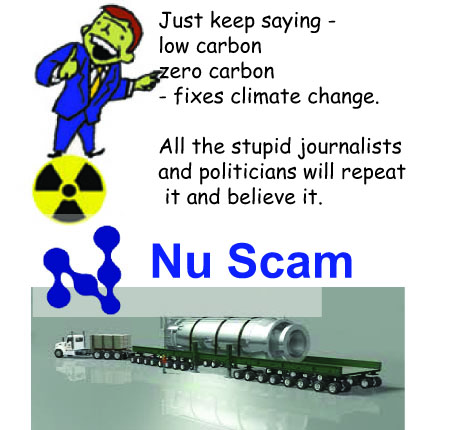
Lehi City Council backs out of NuScam ‘small’ nuclear reactor project
 Daily Herald 26 Aug 20,
The Lehi City Council voted unanimously Tuesday to withdraw the city from a multiagency nuclear power project that would provide nuclear power to cities across Utah, citing concerns over increasing costs.
The Carbon Free Power Project is an initiative by Oregon-based NuScale Power, the Utah Associated Municipal Power Systems and the United States Department of Energy to build a small modular reactor power plant at the Idaho National Laboratory………
Earlier this month, the Utah Taxpayer Association called on cities to withdraw from the project ahead of the Sept. 14 deadline after a closed-door virtual town hall meeting on July 21 where officials warned of project delays, increased costs to cities and towns involved, and “dependence on unpredictable federal subsidies.”
“The UAMPS project will lock in 27 municipalities in Utah and several in surrounding states for a share of billions of dollars in costs and unclear risk in the pursuit of a cluster of small modular reactors (SMRs) touted by Oregon-based NuScale Power, which repeatedly has delayed timelines and increased costs associated with its SMRs,” Utah Taxpayer Association Vice President Rusty Cannon said in an Aug. 4 news release. “The risky project with massive cost escalations is being conducted largely out of the public eye.”
Earlier this month, the Utah Taxpayer Association called on cities to withdraw from the project ahead of the Sept. 14 deadline after a closed-door virtual town hall meeting on July 21 where officials warned of project delays, increased costs to cities and towns involved, and “dependence on unpredictable federal subsidies.”
“The UAMPS project will lock in 27 municipalities in Utah and several in surrounding states for a share of billions of dollars in costs and unclear risk in the pursuit of a cluster of small modular reactors (SMRs) touted by Oregon-based NuScale Power, which repeatedly has delayed timelines and increased costs associated with its SMRs,” Utah Taxpayer Association Vice President Rusty Cannon said in an Aug. 4 news release. “The risky project with massive cost escalations is being conducted largely out of the public eye.”
In November 2017, the total cost of the project was estimated at $3.6 billion. By November 2019, that number had increased to $4.2 billion. By July, the estimated cost had gone up to $6.1 billion.
That would cost Lehi $466 million at the city’s current subscription levels, Eves said. UAMPS would be responsible for paying $4.8 billion, while the DOE would pay $1.3 billion and NuScale Power would pay $5 million. ………… https://www.heraldextra.com/news/local/govt-and-politics/lehi-city-council-votes-to-back-out-of-nuclear-power-project-contract/article_0af6e67c-24e5-5427-9029-e52b9f9d63ae.html
Nuclear and gas industries desperate to win EU endorsement AND FUNDING, as clean and green

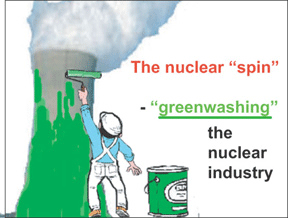
 Gas and nuclear industries fight to the end for ‘green’ EU investment label, Kate Abnett, Simon Jessop, BRUSSELS/LONDON (Reuters) 26 Aug 20 – The gas and nuclear industries have ramped up lobbying to secure last-ditch changes to European rules defining which investments are sustainable, fearing that exclusion from a new “green” list could deprive them of billions of dollars of funding. Gas and nuclear industries fight to the end for ‘green’ EU investment label, Kate Abnett, Simon Jessop, BRUSSELS/LONDON (Reuters) 26 Aug 20 – The gas and nuclear industries have ramped up lobbying to secure last-ditch changes to European rules defining which investments are sustainable, fearing that exclusion from a new “green” list could deprive them of billions of dollars of funding. The climate section of the EU’s Sustainable Finance Taxonomy is due to be finalised this year and it could prove crucial as nuclear power and most natural gas plants and pipelines were excluded from a provisional list published in March. By forcing providers of financial products to disclose which investments meet climate criteria from the end of 2021, the new EU green finance rules are designed to channel cash towards projects that support the bloc’s climate goals. In the four months since the rules were published, gas and nuclear industry representatives held 52 meetings – in person or virtually – with EU officials, according to EU logs analysed by non-profit Reclaim Finance and shared exclusively with Reuters.
Overall, industry representatives have held a total of 310 meetings with EU policymakers since the start of 2018, according to the data based on transparency filings published by July 8. Nuclear groups in particular have stepped up their lobbying, Of the 36 meetings they’ve held over the past two-and-a-half years, 10 have taken place since March. Brussels is facing calls to use the rules to guarantee spending from its 750 billion euro ($888 billion) COVID-19 recovery fund goes to green projects. The money starts flowing in 2021, meaning any delay to the rules could thwart this plan.
NEED TO BREAK FREE’Climate campaigners urged the EU not to bow to pressure from the oil and gas industry as the stakes were too high. “If EU institutions and member states are serious about building a sustainable Europe that confronts the climate emergency, they need to break free from fossil-fuel lobbyists,” said Paul Schreiber, a campaigner at Reclaim Finance. One of the main gripes of both energy industries is that they were locked out of the group of finance experts that came up with the proposals released in March. A new EU sustainable finance platform will take over as the European Commission’s advisor on taxonomy next month – and both industries are jostling to be included on the panel. ……
Nuclear industry groups say the energy deserves a sustainable label, based on its low carbon emissions and existing secure waste disposal sites. They fear that if nuclear isn’t deemed sustainable, the cost of capital for power plants will rise – a concern for an industry where flagship projects, such as Britain’s Hinkley Point C reactor, are struggling with spiralling costs. To help get the message across, several nuclear lobby groups enlisted the help of the public, tweeting to encourage responses to an EU consultation in April on the proposed rules – and suggesting what to write. That helped generate 126 responses to the EU consultation from concerned citizens asking for nuclear power to be termed sustainable – nearly a third of all the responses received, according to InfluenceMap analysis. The expert finance group was split on how to brand nuclear power and the Commission has now asked its scientific arm to report on the issue next year. Lobby groups told Reuters they were confident nuclear power would ultimately be considered sustainable, but they want the energy section of the taxonomy delayed until the report is done…….. Reporting by Simon Jessop in London and Kate Abnett in Brussels; Editing by David Clarke https://www.reuters.com/article/us-europe-finance-lobbying-analysis/gas-and-nuclear-industries-fight-to-the-end-for-green-eu-investment-label-idUSKBN25L0GA |
|
Ohio Attorney General could seek injunction to stop nuclear plant surcharge
Ohio AG Yost considering lawsuit to halt nuclear plant surcharge, LIZ SKALKA. The Blade. lskalka@theblade.com–26 Aug 20, COLUMBUS — Ohio Attorney General Dave Yost on Wednesday said he’s prepared to seek an injunction that would stop the imposition of a ratepayer surcharge flowing to two northern Ohio nuclear power plants at the center of the $61-million statehouse corruption scandal.Mr. Yost, a Republican, indicated he’s considering moving ahead with a lawsuit as the Ohio Senate prepares to return to Columbus next week to discuss repealing or replacing the energy law, House Bill 6, at the heart of the scandal.
Pressuring lawmakers to act quickly on what will be a complex process, Mr. Yost said he could file a lawsuit as soon as September if the legislature doesn’t move swiftly to repeal the law. He declined to set a deadline or elaborate on what might trigger him to file, except to say he supports a repeal……..
 Lawmakers have debated how to handle the controversial law since former House Speaker Larry Householder (R., Glenford) and four others were charged in July with conspiring to funnel $61 million from FirstEnergy and related interests to help elect Mr. Householder’s allies who would then elevate him to speaker. The political power he gained was used to pass the energy law.
Its key feature is a new surcharge to FirstEnergy Solutions’ customers monthly bills beginning in 2021 to generate $150 million a year to support the struggling nuclear plants and $20 million a year for solar projects.
House Republicans and Democrats have introduced separate repeal bills that would block the new subsidies while restoring mandates that utilities obtain more of their power from renewable sources.
A bipartisan measure doing the same thing has been introduced in the Senate.
Mr. Yost said a lawsuit would stop a billion-dollar revenue stream from flowing to the nuclear plants while lawmakers deal with the fallout from the corruption scandal. ……
The Coalition to Restore Public Trust, a pro-repeal group, applauded Mr. Yost.
“The potential injunction sought by AG Yost should serve as further notice to Ohio’s legislature that they must move expeditiously to remove this tainted legislation from Ohio law,” executive director Michael Hartley said in a statement. https://www.toledoblade.com/business/energy/2020/08/26/ohio-ag-yost-considering-lawsuit-to-halt-nuclear-plant-charge/stories/20200826129
East Suffolk Council dithers over Sizewell C nuclear project, many questions unanswered
Concern over unanswered questions as Sizewell C plans progress East Anglian Daily Times, 24 August 2020 , Richard Cornwell
Community leaders say there are still “many unknowns” over the proposals for a new £20billion nuclear power plant on the Suffolk coast – and work is taking place on mitigation and funding packages should it receive the go-ahead.
East Suffolk Council is preparing to submit its views on EDF Energy’s Sizewell C project, currently being considered by the Planning Inspectorate.
On September 3 councillors will discuss a draft report and then on September 21 the final version.
Council leader Steve Gallant says it is essential east Suffolk remains “open for business” during the twin reactor’s decade-long construction, and the council is working with stakeholders, government and EDF to “to get the best possible outcome for East Suffolk”.
He said: “I am clear that if the potential concerns cannot be fully mitigated, we will require fully funded programmes to further compensate any adverse impacts.
“Furthermore, I entirely acknowledge there is a difficult balance to be struck between supporting the national and local economy and the environmental impacts this proposal will have in such a sensitive location and I want to hear from all our councillors about local concerns so that this information can be fed in to the final submission. ……..
Craig Rivett, deputy council leader and lead member for the Sizewell C project, said: “The report contains a detailed early assessment of all the submission material and it is clear that whilst many aspects of the proposal are now clear there are still many unknowns that we want to understand further before finalising our position on all aspects………
As part of the Development Consent Order process, all interested parties must submit their views on the project (Relevant Representations) to the Planning Inspectorate by September 30 so that the Examiners can consider all issues and prepare an Examination of the proposal.
Receipt of Relevant Representations from all parties to the Planning Inspectorate is the start of the process that will continue through a formal Examination period which East Suffolk Council will take part in, before the Planning Inspectorate’s Examining Authority submit a report to the Secretary of State for Business, Energy and Industrial Strategy who will make the final decision. https://www.eadt.co.uk/news/east-suffolk-council-draft-sizewell-c-dco-report-1-6806704
Nuclear power is not compatible with the fundamental tenets of a Green New Deal.


Nuclear power in the Green New Deal? https://beyondnuclearinternational.org/2020/08/23/nuclear-in-the-green-new-deal/ August 23, 2020 by beyondnuclearinternational By M.V. Ramana and Schyler Edmunston
Over the last few years, there has been a growing interest in a Green New Deal and there are many versions proposed in different countries. At the same time, there has also been criticism of these proposals on many counts, including the fact that they typically don’t include nuclear energy.
This criticism misses a basic point: a Green New Deal is, by its very definition, much more than an emissions reduction plan. As we argue below, the other attributes that characterize Green New Deals, rule out nuclear energy as an option.
Like the original New Deal of U.S. president Franklin D. Roosevelt in the 1930s, all Green New Deal proposals emphasize the creation of new jobs. Canada’s New Democratic Party version, for example, calls for “a New Deal for Climate Action and Good Jobs.”
Nuclear power is not a good job creator. One widely cited study found that for each gigawatt-hour of electricity generated, solar energy leads to six times as many jobs as nuclear power. This is compounded by the fact that solar power plants are far cheaper to build and maintain than nuclear reactors.
Green New Deal proposals also demand rapid emissions reduction; one spokesperson for the Pact for a Green New Deal talked of “a 50 per cent reduction in greenhouse gas emissions by 2030.” It takes, on average, a decade to build a nuclear plant and another 10 years before that to do the necessary planning, license procurement, and, most importantly, obtain the billions of dollars needed to finance construction. Therefore, it is impossible to scale up nuclear power fast enough to reduce emissions at the rate required to meet tight climate targets.
Last but not least, Green New Deal proposals emphasize ethics and equity. The Pact for a Green New Deal, for example, wants to ensure that the necessary energy transition “is socially just and doesn’t hurt those at the bottom of the economic ladder; and that it respects Indigenous rights.” It is precisely those groups that have been hurt most by the nuclear fuel chain.
Around the world, the uranium that fuels nuclear plants has predominantly been mined from traditional lands of Indigenous peoples, whether we are talking about Canada, India, the United States, or Australia. There is ample evidence of devastating health consequences from the production of uranium, for example, on the Navajo and the Lakota nations.
The nuclear industry’s plans for the disposal of radioactive waste streams produced by nuclear reactors also disproportionately target areas with high proportions of Indigenous populations, and has rightly been termed nuclear colonialism.
Nuclear waste, by its nature, raises difficult challenges for any effort to base energy policy on justice. The hazardous components of these wastes stay radioactive for hundreds of thousands of years, and no method can ensure safety for that long a period of time. There is inherent injustice in forcing future generations to deal with these radioactive products spreading into underground sources of water, when they do not benefit from nuclear electricity in any way.
One set of technologies that is widely seen as being necessary to confront climate change are renewables, especially solar and wind power. Because they are dependent on the sun shining and the wind blowing, some suggest that nuclear energy has to be part of the mix in order to ensure that electricity is available when needed.
This is not true and research has shown that it is possible for even Ontario, the Canadian province most dependent on nuclear energy, to phase out nuclear power and reduce emissions, while meeting electricity needs reliably.
Further, existing nuclear facilities, do not have the necessary flexibility to integrate well with the rapidly variable outputs from wind and solar power. Therefore, they inhibit ambitious climate agendas — a realization that informed the decision in California to close the Diablo Canyon nuclear plant.
In short, nuclear power is not compatible with the fundamental tenets of a Green New Deal.
M.V. Ramana is professor, Simons Chair in Disarmament, Global and Human Security, and director of the Liu Institute for Global Issues at the School of Public Policy and Global Affairs, the University of British Columbia.
Schyler Edmundson is a recent graduate from the Master of Public Policy and Global Affairs program at the University of British Columbia.
This article first appeared in The Star (Toronto) as part of a pro-con debate on nuclear power’s inclusion in a Green New Deal. The “against” argument here is republished with kind permission of The Star op-ed page editor.
Nuclear lobby rejoices as U.S. Democratic Party caves in to its pressure

|
After 48 Years, Democrats Endorse Nuclear Energy In Platform, Forbes, Robert Bryce, 23 Aug 20,
 Energy ” ………. In its recently released party platform, the Democrats say they favor a “technology-neutral” approach that includes “all zero-carbon technologies, including hydroelectric power, geothermal, existing and advanced nuclear, and carbon capture and storage.”That statement marks the first time since 1972 that the Democratic Party has said anything positive in its platform about nuclear energy. ….. The Democrats’ new position means that for the first time since Richard Nixon was in the White House, both the Republican and Democratic parties are officially on record in support of nuclear energy…… Energy ” ………. In its recently released party platform, the Democrats say they favor a “technology-neutral” approach that includes “all zero-carbon technologies, including hydroelectric power, geothermal, existing and advanced nuclear, and carbon capture and storage.”That statement marks the first time since 1972 that the Democratic Party has said anything positive in its platform about nuclear energy. ….. The Democrats’ new position means that for the first time since Richard Nixon was in the White House, both the Republican and Democratic parties are officially on record in support of nuclear energy……
partisan divide is apparent in the polling data. A 2019 Gallup poll found that 65 percent of Republicans strongly favored nuclear energy but only 42 percent of Democrats did so. ……….
in 2005, about 300 environmental groups – including Greenpeace, Sierra Club, and Public Citizen – signed a manifesto which said “we flatly reject the argument that increased investment in nuclear capacity is an acceptable or necessary solution….[N]uclear power should not be a part of any solution to address global warming.” (The Sierra Club, the biggest environmental group in America, says it remains “unequivocally opposed to nuclear energy.”)……….
While vying for their party’s nomination, two prominent Democratic presidential hopefuls — Cory Booker and Andrew Yang – both endorsed nuclear energy. In addition, Joe Biden’s energy plan included a shout-out to nuclear. ……… https://www.forbes.com/sites/robertbryce/2020/08/23/after-48-years-democrats-endorse-nuclear-energy-in-platform/#1856a2e35829
|
|
|
Small Modular Nuclear Reactors costs jump by $billions. Logan city abandons NuScam project

|
Logan withdraws from nuclear power project seen as cutting-edge but risky, KSL.com
By Graham Dudley, KSL.com – Aug. 20, 2020 LOGAN — A hesitant Logan City Council agreed to follow staff recommendations Tuesday and voted to leave a nuclear power project that has been characterized by ballooning costs and funding uncertainties.The Carbon Free Power Project aims to begin producing nuclear power from state-of-the-art small modular reactors But the projected cost of the power plant jumped from about $3.6 billion in 2017 to more than $6.1 billion in 2020. Logan has already committed more than $400,000 to the project and would have paid over $650,000 more in the next three years to see it through its next phase, at which point the city would again have had the option to modify or withdraw from the agreement. The project involves the Utah Associated Municipal Power Systems, or UAMPS, a political subdivision of the state of Utah which supplies energy to communities in six Western states and of which Logan is a member. The reactors are being built by Oregon-based NuScale, and the Texas-based Fluor Corporation is involved in project construction Logan council members reviewed the city’s involvement in the Carbon Free Power Project during their Aug. 4 and Aug. 18 meetings, ultimately voting 4-1 to leave the agreement…….. https://www.ksl.com/article/50008552/logan-withdraws-from-nuclear-power-project-seen-as-cutting-edge-but-risky |
|
Resistance to nuclear waste survey in Hokkaido
SAPPORO – The mayor of Suttsu in Hokkaido, which is considering applying for a survey to host a final disposal site for high-level radioactive waste, said Friday that it might be difficult to make the decision by September as planned.
“It is difficult to make the decision after listening to many voices,” Suttsu Mayor Haruo Kataoka told reporters after meeting with the nine members of the town’s assembly. “It would not be appropriate to rush the decision by our own judgment. Our plan to decide in September might be postponed.”
Kataoka’s remarks came a day after the mayors of three municipalities neighboring Suttsu said Thursday they will urge the town to make a careful decision.
The mayors of the three municipalities unveiled the plan at a meeting with Hokkaido Gov. Naomichi Suzuki.
Of the three, Rankoshi Mayor Hideyuki Kon and Kuromatsunai Mayor Mitsuru Kamada expressed opposition to Suttsu’s move, which involves applying for a literary survey, the first stage of the process for choosing a disposal site.
Kon, Kamada and Shimamaki Mayor Masaru Fujisawa told Suzuki that they will ask Suttsu as early as this month to make a careful decision on the application. ……..
Seven other municipalities, including the town of Niseko, an internationally known ski resort, are planning to oppose the plan, sources said Friday.
Also on Friday, members of the association of fisheries cooperatives made up of nine co-ops around Suttsu, submitted to Kataoka a protest letter expressing strong opposition to the town’s plan.
Referring to the fact that the fisheries industry suffered harmful rumors following the 2011 triple core meltdown at the Fukushima No. 1 power plant, the letter said: “It is utterly unacceptable for those in the fisheries industry. It will have an immeasurable adverse impact not only on the region but also on the fisheries industry as a whole.”
Katsuo Hamano, head of the association, criticized the mayor for making an announcement on the plan even before obtaining the municipal assembly’s approval.
“It goes against the rules of parliamentary democracy,” Hamano told reporters…….
The central government offers up to ¥2 billion in subsidies to any municipality that undergoes the literary survey https://www.japantimes.co.jp/news/2020/08/21/national/hokkaido-suttsu-nuclear-waste-survey-delay/
Debate rages on for nuclear waste facility proposed near Carlsbad, more hearings scheduled
|
Debate rages on for nuclear waste facility proposed near Carlsbad, more hearings scheduled
Adrian Hedden, Carlsbad Current-Argus, 20 Aug 20, A project to build a temporary storage facility for high-level nuclear waste in southeast New Mexico will continue to be debated as the federal Nuclear Regulatory Commission scheduled four more public hearings to solicit public feedback on the proposal.Holtec International’s proposed consolidated interim storage facility (CISF) would temporarily hold spent nuclear fuel rods at the surface in an area near the Eddy-Lea county line…….. opponents continued to question the safety of the project and its plan to transport spent nuclear fuel from generators across the county and the legality of opening a temporary storage facility when the U.S. lacks a permanent repository for high-level nuclear waste…… The hearings were planned to be held online on Aug. 20 from 4 to 7 p.m., Aug. 25 from noon to 3 p.m., Aug. 26 from 4 to 7 p.m. and Sept. 2 from 9 a.m. to noon. Previously, the NRC held public meetings on the EIS on June 23 and July 9. Written comments were to be accepted until Sept. 22 via email to Holtec-CISFEIS@nrc.gov, via mail to the Office of Administration, Mail Stop: TWFN-7-A60M, ATTN: Program Management, Announcements and Editing Staff, U.S. Nuclear Regulatory Commission, Washington, DC or online to the federal government’s rulemaking page at regulations.gov using docket ID NRC-2018-0052………… Project debated by New Mexico officials, nuclear industry leadersNew Mexico Gov. Michelle Lujan Grisham and state officials voiced continued disapproval of the project, with Lujan Grisham writing a letter to President Donald Trump to voice her opposition last month. Lujan Grisham cited concerns the project could imperil the environment in New Mexico and threaten to disrupt local agriculture and extraction industries in the southeast region of the state…….. https://www.currentargus.com/story/news/local/2020/08/20/debate-rages-nuclear-waste-facility-proposed-near-carlsbad/5604978002/ |
|
Biggest bribery and money-laundering bust in Ohio history, but the crooked pro nuclear law still stands!
 Opinion: How bad nuclear plant bailout legislation got passed
Now the law is forcing Ohio taxpayers to cough up $1.3 billion in subsidies to prop up two aging nuclear plants – quashing cheaper natural gas and zero-emissions renewables like wind and solar. It also memorialized taxpayer subsidies for ailing coal plants – including, because Householder and his alleged co-conspirators were apparently feeling neighborly, for a coal plant across the border in Indiana.
But let’s not lose sight of FirstEnergy. The opaque electric utility had already long shirked accountability for its actions, cloaking itself in expendable subsidiaries and opposing virtually any measure to improve Ohio’s air and water, which the utility has long been responsible for befouling. This time, to protect its toxic nuclear and coal assets, the company apparently happily engaged in what even the scheme’s conspirators allegedly openly referred to as “pay to play,” buying Ohio lawmakers for a song compared to the $1.3 billion the utility now stands to skim from Ohioans’ pockets.
We have yet to see how many more dominoes fall. There’s Sam “The Randazzler” Randazzo, the supposed ex-lobbyist and current public utilities commission chair, who seems to have much to answer for in the scheme. And FirstEnergy, it appears, didn’t stop at allegedly buying Ohio politicians. Even after the law passed, it spent another $38 million in an apparent dark-money campaign to make sure it’d stopped Ohio’s vital transition to a clean energy economy – the prospect of thousands of new clean jobs, not to mention saving the Earth, apparently not enough when compared to FirstEnergy profit margins and executives’ Christmas bonuses
Even as the feds continue following the money, we know what must happen: Gov. DeWine, who unenthusiastically signed the bill, is now calling for its repeal – a crucial first step toward righting this eye-popping wrong. As we now know, courtesy of the FBI and Justice Department, supporting these ailing power plants was nothing more than a successful bid to line executives’ pockets – and, it seems, buy the house speaker a vacation home in Florida. As we continue to learn who knew what when, erasing this law will clear the way for cleaner, far cheaper, truly market-competitive resources like natural gas and renewables to power our homes and businesses.
Ohioans deserve better – more honest politicians, truly transparent electricity providers, cleaner air and water. Repealing this law, and holding our officials to account, is the way to get there.
Jigar Shah is president of Generate Capital, a San Francisco-based finance company that builds, owns and operates renewable energy infrastructure.
1 This Month
26 April – Chernobyl: Inside the Meltdown airs on National Geographic on Sunday 26th April from 4pm

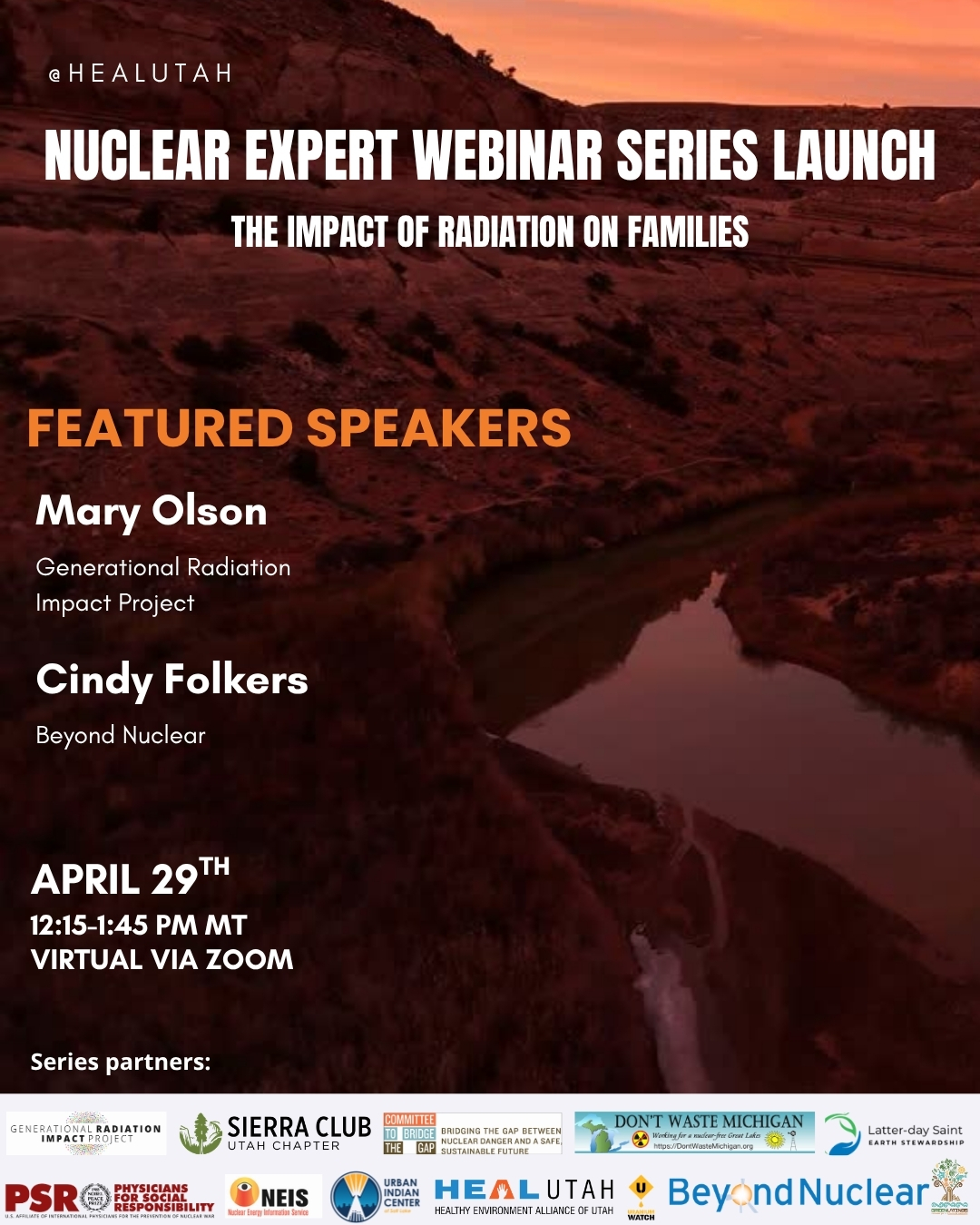
29 April – Nuclear Expert Webinar #1 – Radiation Impacts on Families with Mary Olson and Cindy Folkers
- 12:15 PM MT – 1:45 PM MT
- Location: Virtual – REGISTER TODAY

4 May -West Suburban Peace Coalition to discuss Iran war at May Educational Forum
Monday, May 4, 7:00 – 8:00 PM Central Standard Time
Title: : How Trump’s Narrative Tries to Shape the Reality of the War on Iran.
Contact Walt Zlotow, zlotow@hotmail.com 630 442 3045 for further information
14 May – online event From Bombs to Data Centres: the Face of Nuclear Colonialism

Pine Ridge Uranium is the real threat, not Tehran- Tell Burgum: Stop the Extraction.
Chernobyl: The Lost Tapes – A good documentary on Chernobyl on SBS available On Demand for the next 3 weeks– https://www.sbs.com.au/ondemand/tv-program/chernobyl-the-lost-tapes/2352741955560
To see nuclear-related stories in greater depth and intensity – go to https://nuclearinformation.wordpress.com
-
Archives
- May 2026 (12)
- April 2026 (356)
- March 2026 (251)
- February 2026 (268)
- January 2026 (308)
- December 2025 (358)
- November 2025 (359)
- October 2025 (376)
- September 2025 (257)
- August 2025 (319)
- July 2025 (230)
- June 2025 (348)
-
Categories
- 1
- 1 NUCLEAR ISSUES
- business and costs
- climate change
- culture and arts
- ENERGY
- environment
- health
- history
- indigenous issues
- Legal
- marketing of nuclear
- media
- opposition to nuclear
- PERSONAL STORIES
- politics
- politics international
- Religion and ethics
- safety
- secrets,lies and civil liberties
- spinbuster
- technology
- Uranium
- wastes
- weapons and war
- Women
- 2 WORLD
- ACTION
- AFRICA
- Atrocities
- AUSTRALIA
- Christina's notes
- Christina's themes
- culture and arts
- Events
- Fuk 2022
- Fuk 2023
- Fukushima 2017
- Fukushima 2018
- fukushima 2019
- Fukushima 2020
- Fukushima 2021
- general
- global warming
- Humour (God we need it)
- Nuclear
- RARE EARTHS
- Reference
- resources – print
- Resources -audiovicual
- Weekly Newsletter
- World
- World Nuclear
- YouTube
-
RSS
Entries RSS
Comments RSS
 nuclear-news