‘Inevitable’ that nuclear waste facility will go ahead without local consent says former minister.
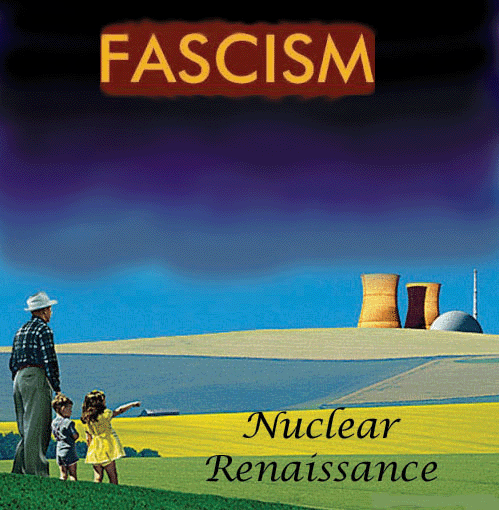
Now we see it- the nuclear industry, adopted by government, will lead to fascism.
Added to the madness, governments are hell-bent on making more nuclear radioactive trash that they don’t know how to get rid of.
“However, in the case of the UK, the DESNZ’s review raises the possibility that overriding public approval could be a matter of policy.
“These developments point to a growing sense of futility and desperation, to secure both a suitable site for nuclear waste disposal and public support for it.”
23 Sep, 2025 By Tom Pashby https://www.newcivilengineer.com/latest/inevitable-that-nuclear-waste-facility-will-go-ahead-without-local-consent-says-former-minister-23-09-2025/
It is “inevitable” that the government moves away from the consent-based approach for deciding where to site the planned geological disposal facility (GDF) for nuclear waste, a former Department for Energy Security and Net Zero (DESNZ) minister has told NCE.
The comments come as reports suggest the government is considering scrapping the “consent-based” approach for siting the GDF. However, DESNZ has asserted that the reports are “wrong” and “no changes are planned to this process currently”.
The GDF is currently the only solution proposed by the government for disposing of high level nuclear waste (HLW). HLW is generated by both the civil and defence nuclear sectors
It would involve disposing of HLW in an engineered vault placed between 200m and 1km underground, covering an area of approximately 1km2 on the surface.
Work to select a GDF site should take 20 years, according to the government body responsible for the project – Nuclear Waste Services (NWS) – and a further 150 years to build, fill and close the facility.
The HLW then needs to sit and remain undisturbed for 100,000 years before its radioactivity has reduced sufficiently for people to be able to be near it. Due to the hazards associated with radioactive waste, the government has always maintained that a GDF will only be sited in a location where the local community has agreed to host it. This is known as the “consent-based” approach and it has been in discussion with a few communities for a number of years.
Consent-based approach seeing little progress over years
The “voluntary” or “consent-based” approach to deciding where to site a GDF was first proposed by the government in a White Paper published in 2008 titled Managing radioactive waste safely: a framework for implementing geological disposal.
“For the purposes of this White Paper ‘an approach based on voluntarism’ means one in which communities voluntarily express an interest in taking part in the process that will ultimately provide a site for a geological disposal facility,” the paper said.
“Initially communities will be invited to express an interest in finding out more about what hosting a geological disposal facility would mean for the community in the long term.
“Participation up until late in the process, when underground operations and construction are due to begin, will be without commitment to further stages, whether on the part of the community or government. If at any stage a community or Government wished to withdraw then its involvement in the process would stop.
“In practice, development could also be halted by the independent regulators at any point in the process through a refusal to grant authorisations for the next stage of work.”
The government further committed to the approach in 2014, when the then secretary of state for energy and climate change Ed Davey said: “The UK Government also continues to favour an approach to identifying potential sites for a GDF that involves working with communities who are willing to participate in the siting process.”
Despite having been committed to the approach for more than 10 years, NWS only has two communities it is making gradual progress with via community partnerships – Mid Copeland and South Copeland. Lincolnshire withdrew from the process in June after a change in governance.
With the government pushing for the deployment of dozens more nuclear reactors in the coming decades, the need to confirm a long-term solution for the waste is pressing – something that has been stressed to NCE by both the Nuclear Industry Association (NIA) and anti-nuclear campaigners.
Reports say Government reviewing consent-based approach
The Telegraph published a story on 22 September that claimed, based on a government source, that DESNZ had decided to review the consent-based approach to siting the GDF.
The source told the newspaper that conversations were taking place within government to consider prioritising areas with the best geology rather than areas with the most welcoming communities.
Ending the consent-based process could result in ministers effectively imposing a GDF on a community, although they would still face the standard planning and consenting obstacles, including judicial reviews from campaigners.
A DESNZ spokesperson denied the reports, saying: “Our position continues to be that any potential geological disposal facility site will be subject to agreement with the community and won’t be imposed on an area without local consent.
“Progress continues to be made, with two areas in Cumberland taking part in the siting process for this multi-billion-pound facility, which would bring thousands of skilled jobs and economic growth.”
Former minister tells NCE ‘we must get on with GDF’
Lord Hunt of Kings Heath is now a backbench Labour peer but was a DESNZ minister of state from July 2024 to May 2025. He was also an energy minister at the end of the previous Labour government from 2008 to 2010 and served in shadow front bench roles from 2010 to 2018.
“This is an inevitable approach. We must get on with GDF,” Hunt told NCE.
“It’s vital to the nuclear programme. It’s a matter of national strategic importance and should proceed on that basis.”
Reported policy change points to ‘growing sense of desperation’
Nuclear Information Service research manager Okopi Ajonye told NCE: “The prospect of the DESNZ reforming policy to override local consent for hosting a geological disposal facility is very concerning.”
“Furthermore, it mirrors developments in Australia, where efforts to secure sites for nuclear waste disposal have, just like the UK, been repeatedly stalled by local opposition.
“But critics are now concerned that recent legislation grants broad powers to the Australian government to designate any site as a nuclear waste dump, even without local or indigenous approval.”
“However, in the case of the UK, the DESNZ’s review raises the possibility that overriding public approval could be a matter of policy.
“These developments point to a growing sense of futility and desperation, to secure both a suitable site for nuclear waste disposal and public support for it.”
End to consent-based approach would ‘lead to more vociferous public resistance’
Nuclear Free Local Authorities secretary Richard Outram told NCE: “Any decision to abandon the established consent-based approach to siting a nuclear waste dump will be an admission by ministers that no community actually wants to host it.
“Proposals to site a GDF at South Holderness and Theddlethorpe were roundly defeated by massive and persistent public protests, backed by responsive local councillors.
“Opposition is also growing in South Copeland with residents impacted by the declared area of focus up in arms.”
Outram added that two local councils in the South Copeland area – Millom Town Council and Whicham Parish Council – have withdrawn their support for the process, and a third – Millom Without Parish Council – is “about to confer with parishioners about continued engagement”, he said.
He also said that the NWS community partnership was “described in a recent external review as ‘dysfunctional’ and seemingly at war with itself”.
“Replacing voluntarism with a plan to railroad such a controversial project onto an unwilling community will be a retrograde step and simply lead to more vociferous public resistance,” he added.
Government reveals to NCE it is ‘replanning’ GDF project
These latest developments add to the uncertainty that has bubbled around the GDF project in recent months.
In August, the Treasury’s National Infrastructure and Service Transformation Authority (Nista) assessed the delivery confidence of the GDF as “appears unachievable” and said the cost could be as much as £53.3bn.
Following the rating, NCE asked DESNZ via the Freedom of Information Act whether the government was responding by changing its approach to the GDF project. It said that it is “undertaking some replanning to mitigate risks and support ongoing progress” on its major projects, including the GDF.
DESNZ added: “However, a GDF will always remain necessary as there are currently no credible alternatives that would accommodate all categories of waste in the inventory for disposal.”
Nuclear industry says credible GDF plan needed for investor confidence
The Nuclear Industry Association, which represents more than 300 companies across the civil and defence nuclear supply chain, was perturbed by this uncertainty around the GDF and told NCE: “A credible, long-term policy on HLW disposal is very important. Developers need confidence that the back end of the fuel cycle is being responsibly and sustainably managed, not just for regulatory compliance but also to secure investor confidence and public trust.
“Clarity and credibility in government policy reduces uncertainty, helps de-risk new nuclear projects and ensures that developers can focus on safe, efficient generation”
Israel’s takeover of Gaza City to add $7.5BN to Israel’s and US’s taxpayer burden.
Tyler Durden, ZeroHedge,Tue, 23 Sep 2025, https://www.sott.net/article/501968-Israels-takeover-of-Gaza-City-to-add-7-5BN-to-US-taxpayer-burden
In the past Israel relied on its weapons superiority to dissuade potential attacks from neighbors, but that gap is obviously narrowing, as the massive Iranian retaliatory missile strikes on Tel Aviv and other cities demonstrated last June. Lessons from Ukraine should also be taken into account, as Israeli armor might not have the same battlefield presence it once did if cheap drones are so effective in destroying vastly more expensive tanks.
While the superior-armedIDF military has clearly been pushing forward in Gaza, as the war is soon to reach the two-year mark, Hamas has all the while released a steady stream of battlefield videos showing its militants engaged in successful ambushes. Large IDF tanks have been blown up often by militants sneaking up and placing IEDs directly on them.
The fact that Israel has since Oct.7 been engaging hostile groups from the Houthis of Yemen, to the Iranians, to Hezbollah in Lebanon – has meant a severe strain on public and government coffers. Israel has also frequently bombed Syria, as it did back in the days of Assad, and is now occupying parts of the country’s south, well beyond the Golan Heights. All of this also requires more manpower, and steady updates regarding weapons tech, parts, and mechanical upkeep.
Now there are new risks and mounting costs involved, as reservists continued to be called up in the thousands, connected to the effort to fully take over Gaza City – the Strip’s most populous location.
New Monday reporting in Bloomberg says that “Israel’s push to take over Gaza City is expected to add 25 billion shekels ($7.5 billion) to the war bill through the end of the year, according to an Israeli government official.”
“The added costs — equivalent to more than 1% of Israel’s gross domestic product — will pile onto the 204-billion-shekel military tally for the almost two-year war in Gaza, which spread to Lebanon, Iran, Syria and Yemen,” the report continues. That’s over $60 billion total.
Additionally the report notes that “Reservists’ salaries, ammunition and missile interceptors make up the bulk of spending, the official said on condition of anonymity to discuss sensitive matters that haven’t been made public.”
There are other indirect factors putting an immense strain on funding the war effort, amid Israel’s increased global isolation, as CNN writes:
Netanyahu, meanwhile, is calling on Israel’s arms makers to step up their readiness. “We will need to strengthen our independent weapons industries so that we have munitions independence, a defense industrial economy, and the industrial capability to produce them,” he said last Monday, speaking at a finance ministry conference.
Israel and its arms makers have long been viewed as producing cutting-edge weapons technology, and those weapons have been sold to countries around the world. But as international criticism of the war in Gaza grows, Israel risks losing its position in some of those markets.
But the ‘special relationship’ with Washington will once again form the basis of bailing Israel out, and the Trump White House is already pushing for Congress to approve a nearly $6 billion arms deal with Israel.
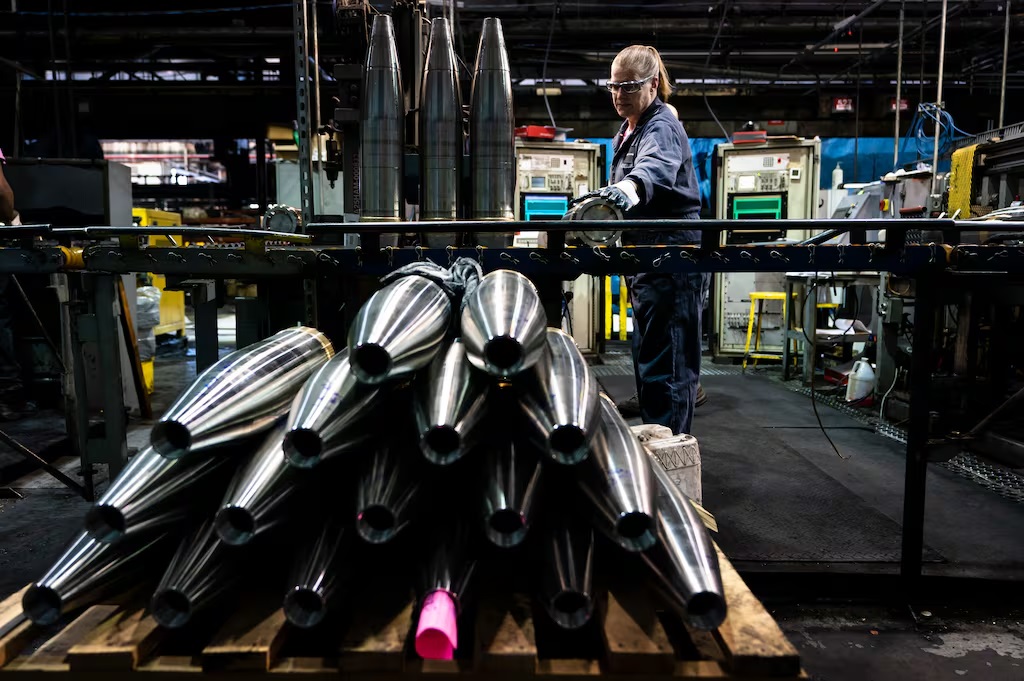
The proposed package includes 30 AH-64 Apache attack helicopters valued at $3.8 billion, which would nearly double Israel’s current fleet, as well as 3,250 infantry fighting vehicles – at $1.9 billion.
Trump is said to be deeply frustrated with Prime Minister Netanyahu over the risky Doha operation targeting Hamas leaders earlier this month, but certainly this public stance doesn’t square with promise of $6 billion more in weapons. It’s yet another example of watch what Trump does and not what he says.
Miliband poised to overrule local opposition to build nuclear waste dumps.
Review considers scrapping public votes on sites for radioactive storage facilities
Matt Oliver Industry Editor. Dan Martin
Opposition to nuclear waste dumps in the English countryside could
be bypassed as Ed Miliband considers scrapping the need for local consent.
A review has been launched by the Department for Energy Security and Net
Zero (DESNZ), which could scrap the need for public votes when building
storage facilities for radioactive material.
A search is under way to find
a coastal location to host the UK’s first geological disposal facility
(GDF), a vast network of tunnels and vaults that would extend under the sea
and be used to store spent fuel from nuclear power plants. Opposition from
residents and councils is a particularly significant roadblock because the
Government’s policy is to only proceed with a scheme that has secured
local consent.
However, officials in the DESNZ have now begun a review of
that policy, The Telegraph understands. A Whitehall source stressed that no
decisions had been made but acknowledged that one potential outcome was
that other factors could be prioritised over local support, such as the
favourableness of local geology or the cost to the national purse.
They said the review was prompted by recent decisions of councils in
Lincolnshire and East Yorkshire to pull out of talks with Nuclear Waste
Services, the quango tasked with delivering the GDF. Talks are still
ongoing with local authorities in Cumbria, where there is greater local
support.
In its annual report last month, Nista downgraded the GDF
scheme’s rating from “amber” to “red” and said the change
reflected the “unaffordability” of the proposals. Nuclear Waste
Services has forecast that the facility could cost between £20bn and
£53bn to build, in a sign of the huge uncertainty surrounding the
project’s costs. Wherever it is eventually built, the Government has
argued that the GDF will bring billions of pounds of investment and more
than 4,000 local jobs. But Reform-run Lincolnshire county council and
Conservative-run East Lindsey council both voted to pull out of talks with
Nuclear Waste Services this year, with Lincolnshire councillors celebrating
with members of the public by popping bottles of champagne.
Sean Matthews, the county council’s leader, said locals had been subjected to years of
“distress and uncertainty”, adding: “I would like to apologise to the
communities who have been treated appallingly.” Guardians of the East
Coast, a pressure group set up to oppose the plans, said the looming
proposals had left people “unable to go on with their lives” or sell
their homes.
Telegraph 22nd Sept 2025, https://www.telegraph.co.uk/business/2025/09/22/miliband-poised-to-overrule-nimbys-to-build-nuclear-waste/
Nuke Power is Trump/Fascist Power…and an Epic Global Failure.

Karl Grossman – Harvey Wasserman, 15 Sept 25, https://www.counterpunch.org/2025/09/15/nuke-power-is-trump-fascist-powerand-an-epic-global-failure/
Donald Trump has torched atomic power’s last illusion of credible regulation. He’s destroyed the last shreds of the U.S. Nuclear Regulatory Commission, exponentially raising the likelihood of an apocalyptic radioactive disaster while escalating America’s transition to energy fascism. His nuclear boosterism has been joined by the core of the Democratic Party, including California’s Governor Gavin Newsom among many others.
But the low-cost zero-carbon tsunami of green Solartopian technology may yet prove unstoppable in the marketplace.
For the first time in US history, a president has fired a sitting NRC commissioner. Another has resigned. A DOGE flunky with zero nuclear expertise has decimated the NRC’s technical support staff.
The NRC has always acted, as the Boston Globe has put it, “more like an industry booster than a watchdog.” But a recent Washington Examiner headline may comprise the Commission’s ultimate epitaph: “Regulators fear dismissal if they slow Trump nuclear power plans.”
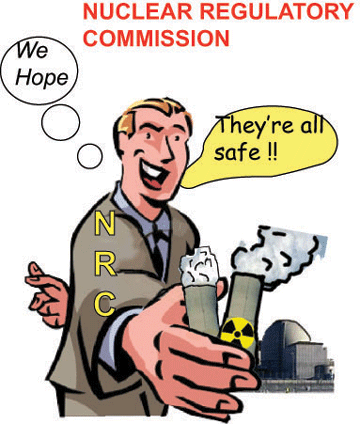
The commissioners themselves have nearly all been absurdly industry-friendly. But the rank-and-file NRC staff offered significant expertise. Now even that is gone.
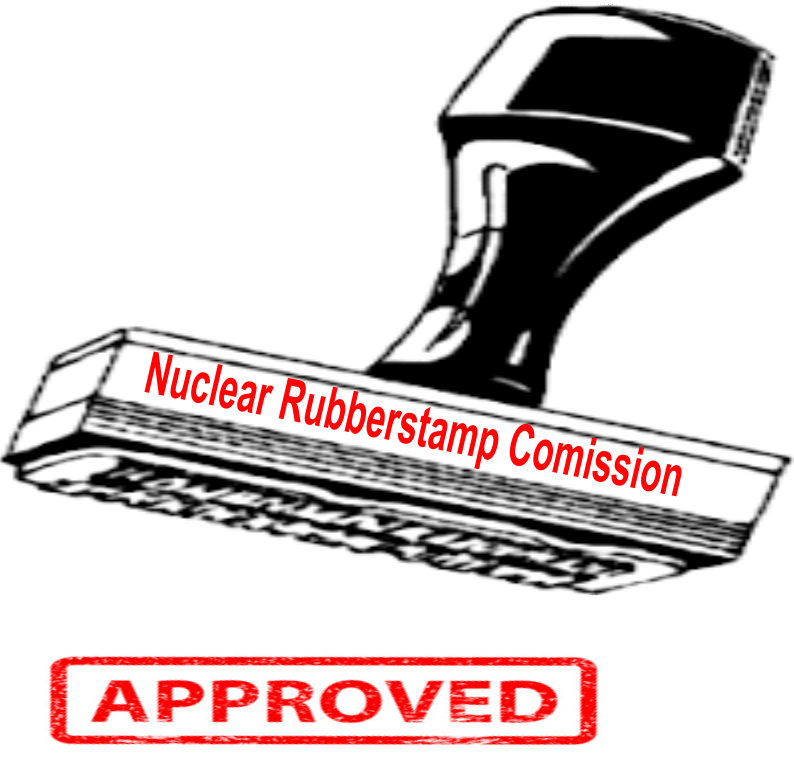
Trump now loudly demands the commissioners “rubber stamp” Small Modular Reactors that are untested, unproven, uninsured and hyper-expensive. Industry supporters worry that soaring delays and prices followed by underperformance, accidents and radiation releases due to unreliable, unregulated construction could doom the technology.
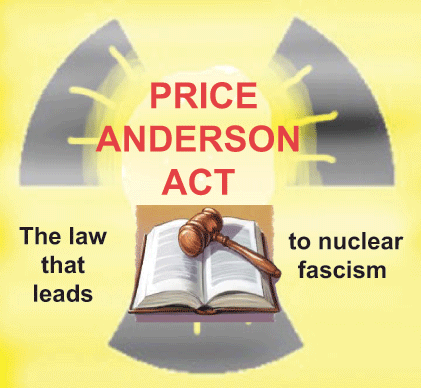
Safety concerns have been confirmed by the refusal of the insurance industry to cover damages from an accident. The refusal stretches back to 1957, when Congress approved the Price-Anderson Act, shielding the industry from a requirement to get private insurance. Thus the “nuclear clause” in every U.S. homeowners policy says: “This policy does not cover loss or damage caused by nuclear reaction or nuclear radiation or radioactive contamination.”
“The NRC has always been a nuclear lapdog, not a watchdog. But under the Trump Administration’s new executive orders” expediting a drive for nuclear power in the U.S. “the lapdog has had its teeth removed. Its vocal cords cut. It can’t bite. It can’t bark, even if it wanted to!” said Arnie Gundersen, a form top executive in the nuclear power industry and now as chief engineer of Fairewinds Associates a leading challenger nuclear power.
As the orders, notes the U.S. Department of Energy, state: “The executive orders instruct the U.S. Nuclear Regulatory Commission to create an expedited pathway to approve reactors” and “expand American nuclear energy capacity from around 100 GW [gigawatts] today to 400 GW by 2050.”
Under Trump, “Nuclear safety is in complete free fall at NRC, and there is no parachute,” said Kevin Kamps, radioactive waste specialist at the organization Beyond Nuclear. “For example, the agency’s staff and licensing board have already shockingly approved an unprecedented, extremely risky restart of the closed Palisades nuclear power plant in Michigan. To restore the operating license, the NRC cobbled together an ad hoc and convoluted regulatory pathway in close collusion with Palisades’ owner, reckless Holtec International. Holtec has zero experience or competence with operating a reactor, repairing one, building or restarting one, let alone at a problem-plagued nuclear lemon like Palisades.”

Palisades is “a badly designed, poorly built, and now dangerously age-degraded 60-year-old reactor that cannot begin to meet modern-day safety standards, which are themselves under serious attack by Trump, DOGE, and the industry,” said Kamps. “If the NRC commissioners reject our appeals and rubberstamp Palisades’ unneeded restart, it will risk a Chornobyl- or Fukushima-scale radioactive catastrophe, an existential threat to 21 percent of the entire planet’s surface freshwater supply, the Great Lakes.”
Further, by approving the Palisades restart, the NRC appears to be getting ready to approve “copycat closed reactor restarts at Three Mile Island-1 nuclear power plant in Pennsylvania, and the Duane Arnold nuclear power plant in Iowa,” he said.
Said Tim Judson, executive director of the Nuclear Information and Resource Service: “The atmosphere in the agency is clearly one where people who speak out will likely be first on the DOGE reduction-in-force list and everyone left is on notice that they could be next. As much as the chilling effect, my concern is also that inspections and enforcement could well be ending. Even if they keep resident inspectors at reactors to comply with the Atomic Energy Act, they may be taken off inspection duty and told to work on license applications and rewriting the regulations.”
Said Michel Lee, chairman of the Council on Intelligent Energy & Conservation Policy:
“To truly understand the developing safety and security threat, you have to connect the dots.”
“First you have the series of Trump executive orders demanding a rushed buildout of the nuclear-military-industrial complex. These orders and other actions being undertaken by administration, especially DOGE, are effectively dismantling the nation’s long-established nuclear regulatory scheme,” said Lee, an attorney.
“Cost-benefit analysis is being directed to focus on the ‘benefits’ of nuclear,” she continued. “Transparency is being drastically reduced. The Nuclear Regulatory Commission is being ‘reformed,’ and its mission now explicitly includes ‘facilitating nuclear power.’ The Department of Energy and the Department of Defense—apparently now the “Department of War”—are now designated as facilitators in the processing of nuclear reactor license applications. This whole enterprise is stated as needed for national security and to promote energy intensive industries, namely AI.”

“So, all that is worrisome enough. Now connect the dots with the demolition derby going on across the broader federal regulatory landscape, with other independent agencies and boards deemed no longer independent and the vast numbers of federal employees—the ones not laid off—losing labor union rights and protections,” said Lee. “Connect the dots and draw your own picture.”
Among the complex of 94 licensed nuclear power plants in the United States, the myriad owners display wildly varying levels of competence, corruption and criminal behavior.
In the 1979 Three Mile Island disaster, the NRC and plant owners lied about radiation releases, their health impacts, and the reactor’s melted core. They produced no credible epidemiological studies of radiation impacts on nearby downwinders but still claim without basis that “no one was harmed.”
In California, NRC resident site inspector Dr. Michael Peck was purged by the NRC for warning that Diablo Canyon’s reactors cannot withstand a credible earthquake. His warning was trashed. Had any of the many large earthquakes that have recently shaken our planet hit in central California in the fault-studded area where Diablo Canyon is located, downwind Los Angeles could now be a radioactive wasteland.
Diablo’s owner, Pacific Gas & Electric, has pleaded guilty to 92 federal manslaughter felonies for incinerating eight San Bruno, California residents in an avoidable 2010 gas pipeline fire, and more than 80 people who perished after PG&E ignited the Northern California infernos that destroyed the California town of Paradise.
The owners of the decrepit Davis-Besse and Perry nuclear power plants bribed Ohio’sHouse Speaker, now in federal prison, with $61 million.
Despite the vulnerability of all nuclear power plants in the U.S. and the criminal incompetence of so many atomic owner/operators, there are no realistic plans to evacuate any major American city facing radioactive clouds like those that spewed from Chernobyl and Fukushima. And with Trump destroying FEMA and the NRC, the public can expect no workable warning. Without insurance, a public health safety net, or a feasible emergency response apparatus, countless residents of Los Angeles, Chicago, Philadelphia, et. al, will lose their lives, health, homes and property. Martial law will become inevitable.
As renewables advance, the economics of atomic power make ever less sense. Zero new large reactors are under construction in the U.S. The two at the V.C. Summer site in South Carolina have been abandoned, wasting $9 billion. Two at the Vogtle, Georgia nuclear plant site took 15 years to build and cost $40 billon, double their original time frame and price tag.
The 94 operating US plants can’t compete with renewables.

Nor can much-hyped Small Modular Reactors, already plagued with massive overruns, delays, cancellations, and no promise of significant power generation for at least a decade. Unproven plans to reopen dead reactors like Palisades and TMI-1 involve cost projections very far beyond already proven, readily available renewables.
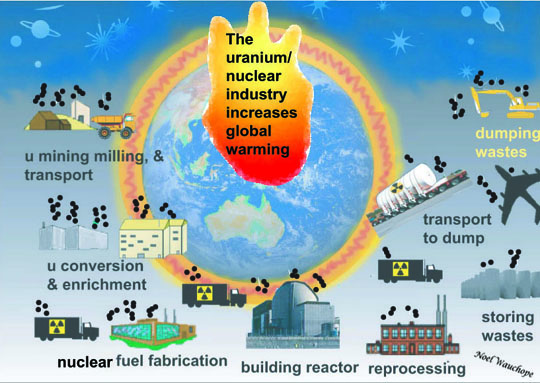
All commercial reactors emit radioactive Carbon14. Additional greenhouse gases come with both reactor operations and the mining, milling, and enrichment of radioactive fuel, along with the as-yet unsolved demands of storing spent stuff.
All nuclear power plants scorch the planet at 300 degrees Centigrade, killing billions of fish with hot water outtakes that have repeatedly forced much of the French fleet—among others—to shut. Immensely expensive fusion reactors would burn at 100 million degrees Centigrade, far hotter than the sun.
Major breakthroughs in renewables have made wind, solar, geothermal, wave energy, batteries, and efficiency far cheaper, safer, cleaner, faster-to-build, and more job-producing than nukes or fossil fuels.
Renewables are now capable of producing all the planet’s energy needs at far less cost than any fossil/nuclear generators while operationally creating virtually zero greenhouse gases. Recent advances in wave energy, solar panels installed over aqueducts and canals, “balcony solar” in Germany and elsewhere keep the technology ever on the rise.
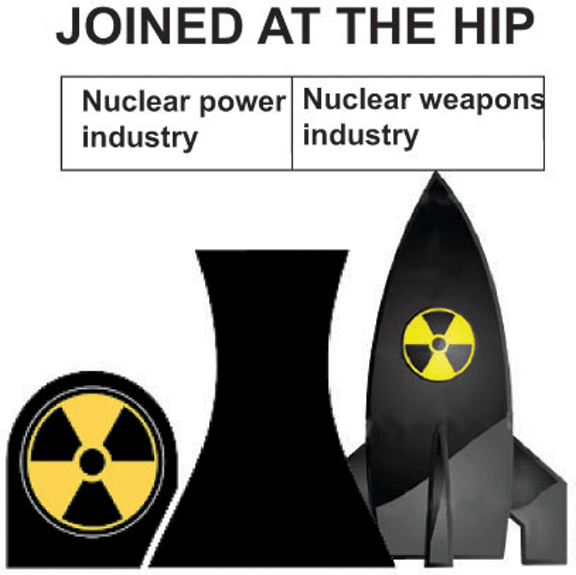
But there are powerful forces still pushing nukes, all of them bound up with fascism. Atomic reactors were first meant to produce fissionable material for atomic weapons. The nuclear power/nuclear war connection has always been intimate.
Trump’s fierce attacks on wind and solar aim primarily to preserve market share for the fossil/nuke billionaires who buy his elections. That income is at the core of American fascism.
Nuke apologists who claim to simultaneously support both atomic power and renewables suffer a deadly delusion. Every dollar wasted on the “Peaceful Atom” delays the vital transition to the green-powered Earth that the human species must have to survive.
Renewable technologies offer the public the power to own and control the
decentralized nature-based power supply essential to any future democracy on this planet—which is precisely what the fossil/nuke industry most hates about them.
Atomic power is a corporate/military-based technology designed to keep all electric and political power under the firm fascist grip of the likes of Donald Trump and his billionaire beneficiaries. Its mission in their eyes is to obliterate all renewables, not to co-exist in some “all the above” delusion.
Nuke reactors burn the planet at 300 degrees Centigrade while spewing radioactive carbon 14, and even more carbon in the mining, milling, enriching, transporting and then burying nuclear fuel. Should any reactor explode it would turn much of the US into a radioactive wasteland while opening the door to martial law and a Trumpian dictatorship.
The astonishing success of new green supply, storage and efficiency has completely dwarfed nukes and fossil fuels in terms of cash, climate and competitive economics.
It’s a revolution that’s been seized by China, handing it near-total control of the export market in wind turbines, solar panels, batteries, electric cars—and thus the global economic future. Worldwide roughly 90% of new energy installations involve wind, solar or batteries, with the vast majority being controlled by the Chinese. The New York Times has recently reported on how China is spectacularly advancing, “pulling away” in “selling clean energy to the world.”
Thus Trump and California Governor Newsom have teamed up with an insane death squad of “liberal” pro-nuke Democrats to decimate the America’s once-vanguard green industries and their long-lost lead in the global economy.
They’re at the same time dooming our democracy to permanent nuclear dictatorship and our economy to the dead-end radioactive dump of a profoundly failed technology—all at once dooming our democracy, our prosperity and our planet. Thankfully, Solartopian green technologies can reverse the death spiral—if we make it happen.
As physicist Amory Lovins, professor of Energy and Environment at Stanford University, has just written: “An intensive influence campaign seeks to resurrect a ‘nuclear renaissance’ from the industry’s slow-motion collapse documented in the independent annual World Nuclear Industry Status Report. Claims that past failures won’t recur have convinced many politicians that socializing nuclear investments rejected by private capital markets, weakening or bypassing rigorous safety regulation, suppressing market competition, and commanding military reactor and data-center projects as a national-security imperative will restore nuclear expansion and transform the economy. This illusion neatly fits the industry’s business-model shift from selling products to harvesting subsidies.”
“A few awkward facts intrude,” Lovins continues. “Even the most skilled firms and nations keep delivering big reactors with several times the promised cost and construction time. A swarm of startup firms that have never built a reactor are dubiously rebranding their inexperience as a winning advantage. New designs are said to be so safe they don’t need normal precautions (though not safe enough to waive nuclear energy’s unique exemption from accident liability). Political interference in nuclear licensing is eroding public confidence. Proposed smaller reactors cost more per kWh, produce more nuclear waste per kWh, and often need more concentrated fuel directly usable for nuclear weapons.”
“And nuclear power faces the same fundamental challenges as fossil fuels: uncompetitive costs, runaway competitors, dwindling profits, and uncertain demand. Few, if any, vendors have made profits selling reactors—only fueling and fixing them. Nuclear electricity loses in open auctions, so only Congressional bailouts–$27 billion ($15 billion paid out) in 2005, $133 billion in 2021-22, tens of billions more in 2025 — saved most existing U.S. reactors from closure.”
“Now comes another vision: powering the glorious new world of artificial intelligence,” Lovins went on. “This may be a trillion-dollar bubble, but it’s sellable until market realities intervene. The International Energy Agency expects data centers, mostly non-AI, to cause only a tenth of global electricity demand growth to 2030, doubling their share of usage—to just 3%. So AI won’t eat the grid. But IEA forecasts renewables will power data-center growth 10-20 times over, while Bloomberg NEF predicts over 100. Nuclear lost the race to power the grid, so new reactors have no business case or operational need.”
Harvey Wasserman wrote the books Solartopia! Our Green-Powered Earth and The Peoples Spiral of US History. He helped coin the phrase “No Nukes.” He co-convenes the Grassroots Emergency Election Protection Coalition at www.electionprotection2024.org Karl Grossman is the author of Cover Up: What You Are Not Supposed to Know About Nuclear Power and Power Crazy. He the host of the nationally-aired TV program Enviro Close-Up with Karl Grossman (www.envirovideo.com)
Trump and the Shadow of Fascism
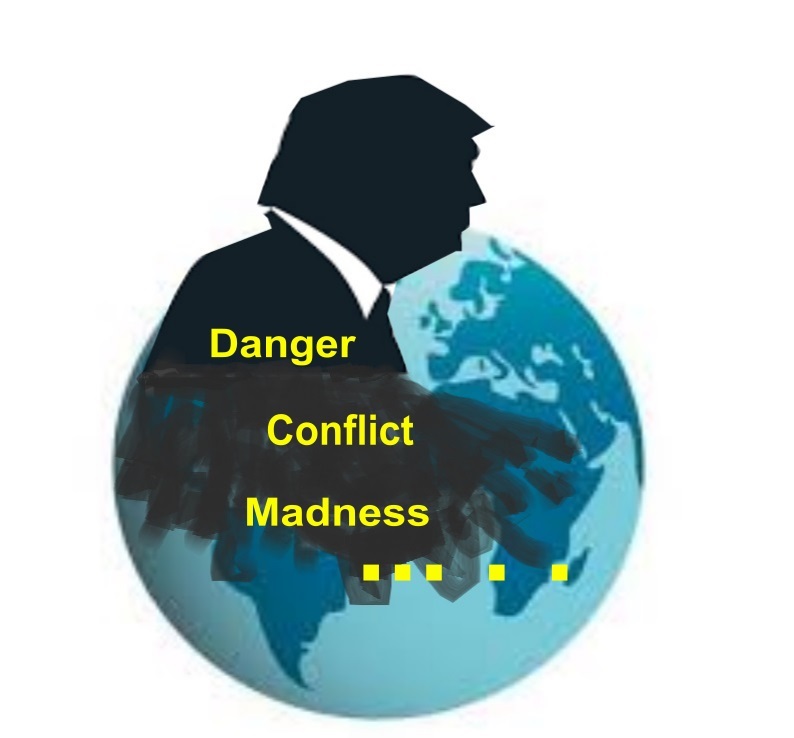
22 September 2025 Michael Taylor, https://theaimn.net/trump-and-the-shadow-of-fascism/
In recent months, accusations that Donald Trump and his administration embody fascism have become more frequent. The word carries historical weight, and using it carelessly risks turning it into a mere insult. But the question is worth asking seriously: how many characteristics of fascism can be seen in Trump’s presidency – and his ongoing movement?
Political theorists have identified common traits of fascist regimes: cult of personality, scapegoating of minorities, attacks on the press, obsession with law and order, disinformation, and disdain for democratic norms. Viewed through this lens, Trump and his administration tick many of the boxes.
Trump has built a cult of personality unlike any modern U.S. president, insisting that loyalty to him is more important than loyalty to law or country. He scapegoats immigrants, Muslims, and political opponents, framing them as existential threats to “real Americans.” He repeatedly called the media “the enemy of the people,” sought to revoke press credentials, and encouraged investigations into his critics.
Perhaps most concerning was his open disdain for democratic norms. From loyalty tests for judges and civil servants to his attempt to overturn the 2020 election, Trump treats democracy as conditional – acceptable only if it delivered the outcome he wanted.
Where the comparison to fascism is less exact is in the total control of society and the economy. Trump has not dissolved Congress, suspended elections (yet), or nationalised industry. The courts, press, and opposition party remain functional, though under immense and constant pressure. This distinction is crucial, but it may also reveal fascism’s modern adaptation rather than its absence. Historical fascism seized power through overt revolution; the Trumpist method appears to be the exploitation of democratic institutions from within, using their inherent weaknesses and freedoms – such as free speech and political polarisation – to consolidate power. The goal seems not to be to abolish the system outright, but to render it so subservient to a single leader that its formal structures become a façade.
What we are left with is not a carbon copy of 1930s Europe but something closer to what scholars call “authoritarian populism” or “illiberal democracy.” Still, the overlap is close enough to warrant alarm. The cult of personality, the scapegoating, the attacks on democratic institutions – these are not harmless quirks of an unconventional politician. They are warning signs.
These signs are amplified by a key tactic of modern authoritarianism: the creation of a parallel information ecosystem. Through relentless propaganda, the delegitimisation of factual reporting, the embrace of conspiracy theories, and the promotion of outlets that serve as state-media proxies, a significant portion of the population is persuaded to live in a reality defined not by shared facts, but by the leader’s will. This breaks the common ground necessary for democratic debate and makes accountability impossible.
If anything, Trump’s movement shows how easily a democracy can slide toward authoritarianism without formally abolishing elections or rewriting constitutions. The question now is not whether Trumpism matches fascism perfectly, but whether we are willing to ignore the unmistakable echoes. The history of the 20th century teaches us that fascism does not arrive in a day; it arrives in degrees, often masked by populist appeal and enabled by those who believe the institutions are too strong to fail. The warning is not that America has become a fascist state, but that it has proven vulnerable to the very playbook that leads there.
Who are Britain Remade?

By Mike Small, https://bellacaledonia.org.uk/2025/05/01/who-are-britain-remade/
There’s a concerted attempt to attack Scotland’s long-standing commitment to no new nuclear power, alongside a full-scale assault on the idea of Net Zero, and the very basics of climate policy (however inadequate mainstream policy is).
This is being led by Nigel Farage who has called Net Zero ‘the New Brexit’, whatever that means. All this has been echoed by Tony Blair’s intervention this week where he argued that any attempt to limit fossil fuels in the short term or encourages people to limit consumption is “doomed to fail”. Alongside this we can see Scottish Labour’s recent commitment to the cause of new nuclear power in Scotland.
Today The Scotsman ran with a front-page splash all about how ‘SNP voters back nuclear power’ by Deputy Political Editor David Bol and Alexander Brown.
The article was replete with quotes from Labour MSP for East Lothian, Martin Whitfield, Scottish Conservative MP, John Lamont, who said the Scottish Government embracing nuclear power would be “basic common sense”. Then there’s a quote from Sam Richards, founder and campaign director for Britain Remade, who, it turns out commissioned the poll and was also enthusiastically pro-nuclear.
What The Scotsman didn’t explain though, was who ‘Britain Remade’ are? They’re presented as if they’re maybe pollsters or some independent think-tank.
But Britain Remade is a Tory think-tank and lobby group campaigning on behalf of nuclear power. Jason Brown is Head of Communications for Britain Remade, a former No. 10 media Special Adviser and Ben Houchen’s comms Adviser.
Jeremy Driver is the Head of Campaigns at Britain Remade, a former Lloyds Banker and Parliamentary Assistant to Ann Soubry. Sam Dumitriu is Head of Policy at Britain Remade who formerly worked at the Adam Smith Institute. These are Tory SPADS working on their own campaign to support new nuclear in Scotland: Lift The Ban On New Scottish Nuclear Power.
Britain Remade claimed they are not affiliated: “We’re an independent grassroots organisation. We are not affiliated with, or part of, any political party” their website says. They may not be officially affiliated to any party, but it’s very clear where their politics (and their staff) come from.
So here we have the Scotsman giving over its front-page to a Tory lobby group to promote their campaign. On the same day they published a similar piece in the Telegraph “SNP’s ‘senseless’ nuclear ban ‘damaging Scotland’” so it’s really working for them.
This is not just a question of client journalism, it’s a question of how far right-wing forces, often working with dark money, will attempt to derail even the most modest (and completely inadequate) environmental policies. Quite why Saudi-funded Tony Blair should jump on the anti Net Zero bandwagon is anybody’s guess, but it’s quite clear there is a coordinated pro-nuclear lobbying group in action in Scotland that pans across the Conservatives and Labour parties, and is supported by astroturf groups and pliant media friends. Watch this space for more on the new nuclear lobby.
Political witch hunts and blacklists: Donald Trump and the new era of McCarthyism
September 19, 2025 , Shannon Brincat, Senior Lecturer in Politics and International Relations, University of the Sunshine Coast, Frank Mols, Senior Lecturer in Political Science, The University of Queensland, Gail Crimmins, Associate professor, University of the Sunshine Coast, https://theconversation.com/political-witch-hunts-and-blacklists-donald-trump-and-the-new-era-of-mccarthyism-265389?utm_medium=email&utm_campaign=The%20Weekender%20-%2019th%20September%202025&utm_content=The%20Weekender%20-%2019th%20September%202025+CID_d7a6e5ec27e543170fba8540bf95d6ea&utm_source=campaign_monitor&utm_term=Political%20witch%20hunts%20and%20blacklists%20Donald%20Trump%20and%20the%20new%20era%20of%20McCarthyism
A modern-day political inquisition is unfolding in “digital town squares” across the United States. The slain far-right activist Charlie Kirk has become a focal point for a coordinated campaign of silencing critics that chillingly echoes one of the darkest chapters in American history.
Individuals who have publicly criticised Kirk or made perceived insensitive comments regarding his death are being threatened, fired or doxed.
Teachers and professors have been fired or disciplined, one for posting that Kirk was racist, misogynistic and a neo-Nazi, another for calling Kirk a “hate-spreading Nazi”.
Journalists have also lost their jobs after making comments about Kirk’s assassination, as has the late-night television host Jimmy Kimmel.
A website called “Expose Charlie’s Murderers” had been posting the names, locations and employers of people saying critical things about Kirk before it was reportedly taken down. Vice President JD Vance has pushed for this public response, urging supporters to “call them out … hell, call their employer”.
This is far-right “cancel culture”, the likes of which the US hasn’t seen since the McCarthy era in the 1950s.
The birth of McCarthyism
The McCarthy era may well have faded in our collective memory, but it’s important to understand how it unfolded and the impact it had on America. As the philosopher George Santayana once said, “Those who cannot remember the past are condemned to repeat it.”
Since the 1950s, “McCarthyism” has become shorthand for the practice of making unsubstantiated accusations of disloyalty against political opponents, often through fear-mongering and public humiliation.
The term gets its name from Senator Joseph McCarthy, a Republican who was the leading architect of a ruthless witch hunt in the US to root out alleged Communists and subversives across American institutions.
The campaign included both public and private persecutions from the late 1940s to early 1950s, involving hearings before the House Un-American Activities Committee and the Senate’s Permanent Subcommittee on Investigations.
Millions of federal employees had to fill out loyalty investigation forms during this time, while hundreds of employees were either fired or not hired. Hundreds of Hollywood figures were also blacklisted.
The campaign also involved the parallel targeting of the LGBTQI+ community working in government – known as the Lavender Scare.
And similar to doxing today, witnesses in government hearings were asked to provide the names of communist sympathisers, and investigators gave lists of prospective witnesses to the media. Major corporations told employees who invoked the Fifth Amendment and refused to testify they would be fired.
The greatest toll of McCarthyism was perhaps on public discourse. A deep chill settled over US politics, with people afraid to voice any opinion that could be construed as dissenting.
When the congressional records were finally unsealed in the early 2000s, the Permanent Subcommittee on Investigations said the hearings “are a part of our national past that we can neither afford to forget nor permit to reoccur”.
Another witch hunt under Trump
Today, however, a similar campaign is being waged by the Trump administration and others on the right, who are stoking fears of the “the enemy within”.
This new campaign to blacklist government critics is following a similar pattern to the McCarthy era, but is spreading much more quickly, thanks to social media, and is arguably targeting far more regular Americans.
Even before Kirk’s killing, there were worrying signs of a McCarthyist revival in the early days of the second Trump administration.
After Trump ordered the dismantling of public Diversity, Equity and Inclusion (DEI) programs, civil institutions, universities, corporations and law firms were pressured to do the same. Some were threatened with investigation or freezing of federal funds.
In Texas, a teacher was accused of guiding Immigration and Customs Enforcement (ICE) squads to suspected non-citizens at a high school. A group called the Canary Mission identified pro-Palestinian green-card holders for deportation. And just this week, the University of California at Berkeley admitted to handing over the names of staff accused of antisemitism.
Supporters of the push to expose those criticising Kirk have framed their actions as protecting the country from “un-American”, woke ideologies. This narrative only deepens polarisation by simplifying everything into a Manichean world view: the “good people” versus the corrupt “leftist elite”.
The fact the political assassination of Democratic lawmaker Melissa Hortman did not garner the same reaction from the right reveals a gross double standard at play.
Another double standard: attempts to silence anyone criticising Kirk’s divisive ideology, while being permissive of his more odious claims. For example, he once called George Floyd, a Black man killed by police, a “scumbag”.
In the current climate, empathy is not a “made-up, new age term”, as Kirk once said, but appears to be highly selective.
This brings an increased danger, too. When neighbours become enemies and dialogue is shut down, the possibilities for conflict and violence are exacerbated.
Many are openly discussing the parallels with the rise of fascism in Germany, and even the possibility of another civil war.
A sense of decency?
The parallels between McCarthyism and Trumpism are stark and unsettling. In both eras, dissent has been conflated with disloyalty.
How far could this go? Like the McCarthy era, it partly depends on the public reaction to Trump’s tactics.
McCarthy’s influence began to wane when he charged the army with being soft on communism in 1954. The hearings, broadcast to the nation, did not go well. At one point, the army’s lawyer delivered a line that would become infamous:
Until this moment, Senator, I think I never really gauged your cruelty or your recklessness […] Have you no sense of decency?
Without concerted, collective societal pushback against this new McCarthyism and a return to democratic norms, we risk a further coarsening of public life.
The lifeblood of democracy is dialogue; its safeguard is dissent. To abandon these tenets is to pave the road towards authoritarianism.
Will the US Continue to Aid, Abet, and Arm Genocide in Gaza?
Every leader should move now to end our complicity.
Katrina vanden Heuvel, 16 Sept 25, https://www.thenation.com/article/world/israel-genocide-complicity-gaza-palestine/
he United States is aiding and abetting genocide in Gaza. This horror has the support —like so many of our most disastrous foreign debacles from Vietnam to Iraq—of both political parties.
As more and more children die of starvation and the famine deepens, as the Netanyahu government begins its attack on Gaza City, moving to occupy all of Gaza, as Israeli soldiers and bulldozers systematically level city after city in Gaza, the criminal horror is reaching its obscene goal: the ethnic cleansing of Palestinians from Gaza (and, if Netanyahu’s ministers have their way, all of the occupied West Bank).
While all signatories to the Genocide Convention have the right—and indeed the duty—to intervene to halt this slaughter, only two countries have the power to actually stop the genocide: the Israeli government that is committing it and the US government that is aiding, abetting, and arming it. The US could stop this criminal assault by ending its support for Israel, cutting off the flow of arms, ammunition, bombs, and military coordination and demanding and helping to organize immediate, emergency humanitarian relief. To do any less makes us complicit in the ongoing crime.
Across the world—and within Israel itself—some brave leaders have demanded an end to the horror.
David Grossman, Israel’s leading literary and moral voice, says that for many years he has refused to use the word genocide, but now he must—“with immense pain and with a broken heart.”
Two leading Israeli human rights groups—B’Tselem and Physicians for Human Rights Israel—released a report on “Our Genocide,” detailing the unfathomable violence and concluding that there is “no doubt” that since October 2023, the Israeli regime has been responsible for carrying out genocide against the Palestinians in the Gaza strip.” Physicians for Human Rights Israel provided a medical-legal analysis documenting Israel’s deliberate destruction of the healthcare system in Gaza, as well as other systems critical for the survival of the Palestinian civilian population.
The special rapporteur of the United Nations has reported on the companies and countries profiting from the “economy of genocide.”
Back In January 2024, the International Court of Justice ruled that there was a plausible risk that Israel’s actions amounted to genocidal acts—long before the systematic starvation became apparent. The International Criminal Court has issued arrest warrants for Israeli Prime Minister Benjamin Netanyahu, then–Defense Minister Yoav Gallant, and a former Hamas commander on the suspicion of war crimes and crimes against humanity.
A growing number of countries have suspended all or part of their arms shipments to Israel, including Germany, Italy, Spain, the Netherlands, Belgium, and Canada. Last month, in a resolution passed by 86 percent of its members, the oldest and largest association of genocide scholars concluded that Israel’s nearly two-year military campaign in Gaza meets “the legal definition of genocide,” The resolution, by the International Association of Genocide Scholars, added to a growing chorus from human rights organizations and academics concluding that Israel is committing genocide by “killing members of the group” and “deliberately inflicting on the group conditions of life calculated to bring about its physical destruction in whole or in part,” according to Emily Sample, a member of the association’s executive board.
Across the world, citizens of conscience demonstrate in greater and greater numbers, demanding an end to the horror.
And in the United States where the responsibility and the complicity are the greatest?
Courageous Jewish scholars like Omer Bartov and writers like Peter Beinart have spoken out early against the calamity.
More than 1,000 rabbis have called for Israel to allow humanitarian aid, stating “we cannot condone the mass killings of civilians…or the use of starvation as a weapon of war
After months of looking the other way, more and more of the mainstream US media are beginning to awake to the humanitarian catastrophe that is being inflicted on the Palestinians.
But among those who could actually bring the horror to an end, courage is in short supply.
Only 13 members of Congress have been willing to state the obvious: that Israel is committing genocide. House minority whip Katherine Clark declared that the “genocide and destruction” in Gaza needs to end—only to walk back her comments a few days later.
The Senate Resolution submitted by Senator Bernie Sanders to block some weapons sales to Israel received not one Republican vote. Instead, Republicans line up behind Donald Trump, who muses about beachfront properties in Gaza and tells Israel to hurry up and finish the job.
A Gallup poll showed only 8 percent of Democrats support Israel’s military action in Gaza. The Sanders Resolutions received support from a majority of the Senate Democratic caucus, yet those still refusing to stand up include Senator Charles Schumer, the Democratic leader in the Senate, as well as Senator Corey Booker, who styles himself as a voice for human rights.
This is no longer a policy debate. This is now an urgent question of basic humanity. Will the United States continue to arm genocide in Gaza? Will legislators continue to support an unconscionable crime against humanity—or act to end it? As more Palestinians starve to death, as more doctors and aid workers and journalists are murdered, as needed food and water continues to be withheld, as families are huddled into smaller and smaller open-air camps, no amount of censorship, doubletalk, lies, or excuses can hide the true horror.
There is no excuse for inaction. There is no escape from responsibility. Each legislator, official, and officer will have to look in the mirror. Complicity in this crime will destroy their reputations. Growing numbers of their constituents, their neighbors, even their own children will demand to know why they chose complicity rather than courage.
Popular
- Charlie Kirk’s Legacy Deserves No MourningCharlie Kirk’s Legacy Deserves No MourningElizabeth Spiers
- Kafka-land at UC BerkeleyKafka-land at UC BerkeleyJudith Butler
- Jimmy Kimmel’s Bosses Sold Us All OutJimmy Kimmel’s Bosses Sold Us All OutJeet Heer
- The Call Is Out for Mass, Simultaneous Strikes in 4 YearsThe Call Is Out for Mass, Simultaneous Strikes in 4 YearsSarah Lazare
Israel is committing genocide in Gaza.
America is aiding, abetting, and arming that genocide.
Every American should stand up to protest the horror being committed in our names.
Every leader should move now to end our complicity.
Every American should stand up to protest the horror being committed in our names.
Every leader should move now to end our complicity.
U.S. Nuclear Reactors will NOT Build a Strong Canada
Ontario Clean Air Alliance -Angela Bischoff, Director, Sept 17, 2025
Prime Minister Carney’s directive to the Major Projects Office to fast-track Doug Ford’s plan to build U.S. nuclear reactors in Ontario will: raise electricity rates, jeopardize national security and delay action on climate change.
New U.S. GE-Hitachi nuclear reactors are the highest-cost option to meet Ontario’s electricity needs – costing 2 to 8 times more than new solar and wind power. As a result, these U.S. reactors will make life less affordable for Ontario’s hard-working families; and they will make Ontario’s industries less competitive.
Building GE-Hitachi reactors will also jeopardize our national security by making Ontario dependent on enriched uranium imports from the U.S. – imports which President Trump could cut off at a moment’s notice.
Finally, building new nuclear reactors is the slowest option to phase-out gas power and protect our climate. Under Doug Ford’s nuclear & gas plan, 25% of our electricity will be produced by burning gas in 2030 – up from only 4% in 2017. To add insult to injury, more than 70% of Ontario’s gas supply is imported from the U.S.
With wildfires burning around the world, we need to invest in the options that can reduce our climate-damaging emissions ASAP, not decades from now. We simply can’t afford to wait 10 to 20 years for new reactors to be built, when solar and wind can be built within months to three years. Combined with batteries, wind and solar can keep our lights on at a fraction of the cost of new nuclear reactors.
Instead of subsidizing the research and development costs for a U.S. multinational’s first-of-their-kind, experimental new nuclear reactors, we should be investing in options that will build a stronger, more prosperous and more secure Canada.
Here is what Prime Minister Carney should do.
1. Rescind his request for the Major Project Office (MPO) to fast-track the building of U.S. nuclear reactors in Ontario.
2. Rescind the Canada Infrastructure Bank’s $970 million loan for the building of GE-Hitachi’s first new nuclear reactor.
3. Direct the MPO to fast-track roof top and parking lot solar in Ontario.
4. Direct the MPO to fast-track cutting the red tape that is blocking the development of Great Lakes offshore wind power.
5. Direct the MPO to fast-track the expansion of the inter-provincial electricity transmission links between Manitoba and Ontario and Ontario and Quebec to increase our ability to import low-cost water, wind and solar power from Manitoba, Quebec and the Maritimes.
What You Need to Know About the £38 Billion Sizewell C Nuclear Project inthe UK.
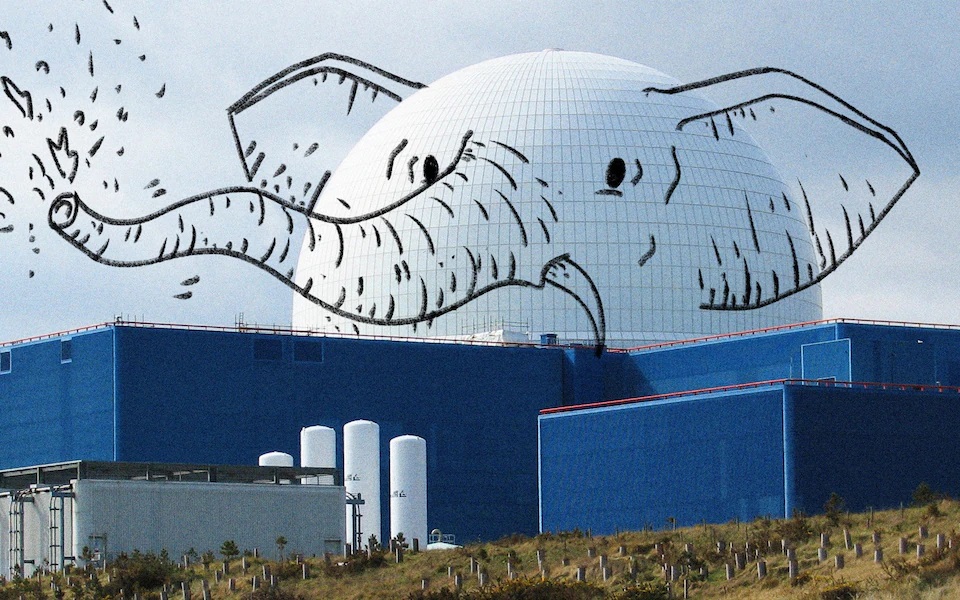
Project Timeline: Development Consent Order (DCO) approved: July
20, 2022; Groundworks commenced: January 15, 2024; Final Investment
Decision (FID) reached: July 22, 2025; Construction duration: Expected to
take between nine and twelve years; Operational date: Expected in the
2030s.
Construction Review 15th Sept 2025, https://constructionreviewonline.com/construction-projects/uk-government-approves-38-billion-sizewell-c-nuclear-project/
Iran hardliners reject IAEA deal, but IRGC outlet voices support
Iranian ultra-hardliners are criticizing Tehran’s recent agreement with
the IAEA in Cairo, despite its blessing by a top decision-making body
linked to the Supreme Leader, but an outlet linked to the Revolutionary
Guards offered support. The scrambled messaging suggests deep disagreement on Iran’s diplomatic path forward as renewed UN sanctions loom by months-end and arch-foe Israel continues to moot military attacks to
chasten Tehran.
Iran International 16th Sept 2025, https://www.iranintl.com/en/202509158464
South Carolina’s dormant nuclear volcanoes

by beyondnuclearinternational, https://beyondnuclearinternational.org/2025/09/07/south-carolinas-dormant-nuclear-volcanos/
Resuming construction of the abandoned V.C. Summer reactors is rife with challenges, says a new report from Savannah River Site Watch
The proposal to restart the failed nuclear reactor construction project in South Carolina faces a host of unexamined challenges, according to a just-released report. The report, prepared by the nuclear policy expert who led the intervention against the project since its inception in 2008 through its collapse and termination in the face of ratepayer outrage 2017, outlines major stumbling blocks to the revival of the nation’s most shocking failure of a nuclear reactor construction project in the United States in the 21stcentury.
The V.C. Summer project involved the botched attempt by now-defunct South Carolina Electric & Gas (SCE&G) to construct two large Westinghouse AP1000 nuclear reactors 2 – units 2 & 3 – 25 miles north of Columbia, South Carolina. Over $10 billion was wasted on the construction of project.
Its abrupt termination was one of the most impactful and costly nuclear construction-project collapses in U.S. history, which was the death knell for the so-called “nuclear renaissance” in the U.S. Customers were hit hard and are still left holding the bag with nothing in return for a reported $2 billion payment so far, for financing costs, an amount that grows daily. Though far-fetched, project restart is now being discussed.
The report – presenting 14 unanalyzed challenges to the restart idea and prepared by the Columbia-based public-interest, non-profit group Savannah River Site Watch – is titled Economic, Technical and Regulatory Challenges Confound Restart of the Terminated V.C. Summer Nuclear Reactor Construction Project in South Carolina.
The 24-page report was written by Tom Clements, director of SRS Watch, who led interventions before the PSC by the environmental group Friends of The Earth beginning in 2008 and running through the bankruptcy of SCE&G and its takeover by Dominion Energy South Carolina in January 2019.
“As the public was so abused during the V.C Summer construction project, they now deserve a voice in raising concerns about proposals concerning rebirth of the project in which they still have financial ownership and that’s for whom this report speaks” said Clements. “We reveal in the report that Dominion ratepayers are right now paying 5.22% of the bill for the terminated project and are paying, since 2019, an additional $2.8 billion over 20 years. The restart effort could once again saddle customers with additional massive costs if VCSummer 2.0 proceeds.”
The 5.22% monthly rate hidden in the Dominion monthly bill was revealed in a Freedom of Information Act document provided by the S.C. Office of Regulatory Staff to SRS Watch on August 7, 2025. In January 2019, the S.C. Public Service Commission ordered Dominion customers to pay an additional $2.8 billion over the next 20 years for the cost of the bungled project. That monthly fee should be eliminated and consumer investment rebated, especially if restart is pursued, according to SRS Watch.
Themes covered in the “restart challenges” report include:
Nuclear Advisory Council restart report not a reliable guidepost;- Nuclear Regulatory Commission license terminated in 2019, hard to regain a new license;
- Reestablishing NRC certification for equipment will be difficult;
- Environmental permits must be secured anew or renewed;
- Unclear how much equipment remains and if it’s to be resold for reuse or just scrap;
- Dominion and Santee Cooper not interested in involvement in restart;
- Westinghouse plans for new AP1000s unclear, rhetoric might not be accurate;
- Cost and schedule of new Westinghouse AP1000s unclear; Last-of-a-Kind (LOAK) reactor?
- Ratepayers in South Carolina could be put on the hook again;
- S.C. Public Service Commission and Dominion ratepayers will be involved, can’t be sidelined;
- Federal rhetoric supporting nuclear power won’t carry the day or overcome big obstacles;
- Reactor restart fails to secure funds or protection from South Carolina legislature;
- Highly radioactive spent fuel at new units a challenge;
- When will the community near V.C. Summer be consulted?
Donald Trump orders ‘take down’ of 44-year-old peace vigil opposite White House.
The White House Peace Vigil has stood near the White House since 1981, calling for global disarmament. After a reporter asked about the “eyesore” tent, Donald Trump said he will look into taking it down.
One of the world’s longest-running peace vigils could be under threat after Donald Trump ordered to “take it down”.
The White House Peace Vigil, which has stood near the president’s residence since 1981, is a tent manned around the clock in a call for peace and global disarmament.
Flanked by various anti-war placards, the small blue tent was described as an “eyesore” by a reporter from conservative outlet Real America’s Voice, who asked Mr Trump about it.
“Take it down, today, right now,” he said, after asking where the tent is and claiming he hadn’t heard of it.
“We’re going to look into it right now.”
On Friday night, police were seen talking to what appeared to be demonstrators near the vigil, in Lafayette Park, across the street from the White House.
The vigil-keeper Philipos Melaku-Bello was seen hugging another protester, who feared the 44-year-old site could be torn down.
It follows another threat against the vigil earlier this year, when Representative Jeff Van Drew wrote a letter to the Interior Department describing the site as a “24-7 eyesore”.
In the letter, shared by the Washington Post, he said people have “every right to protest their government”, but not to “hijack a national park and turn it into a 24/7 eyesore”.
The site of the vigil is in a park run by the National Park Service (NPS), which stipulates this tent must be manned at all times to remain standing.
In 2013, the vigil was briefly taken down by park police when it was found abandoned.
Organisers said the man responsible for staying at the tent overnight that day was a veteran who had an episode of post-traumatic stress disorder.
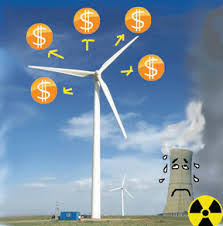
Nuclear outpaced fourteen to one by wind and solar in Europe
- Joe Bernardi, Vanessa Levy, Ye Huang, and Jessie Cato
- Global Energy Monitor (accessed) 4th Sept 2025
Key points
- Aging infrastructure, unrealized plans, and high costs continue to limit nuclear’s role in swift decarbonization, while solar and wind power are expanding rapidly and outpacing nuclear in new capacity and generation.
- Nearly 40% of all nuclear power ever proposed has been cancelled: 566 gigawatts (GW) of nuclear capacity has been cancelled worldwide, more than what is currently operational (401 GW) or retired (116 GW) combined.
- Europe’s nuclear sector has lost 122 GW of planned capacity to cancellations, more than the operating nuclear fleet of any single country worldwide. An additional 68 GW has been retired, and 90% of the remaining reactors are more than 35 years old. In contrast, European wind and utility-scale solar capacity under construction or in pre-construction outweighs nuclear by a factor of more than 13 to 1.
- Australia’s moratorium on nuclear, lengthy projected development timelines, high costs, lack of expertise, and strong public and policy preference for renewables mean nuclear is unlikely to play a significant role in filling the gap left by the country’s planned coal phaseout by 2038…………………………………………………………………………………………… https://globalenergymonitor.org/report/nuclear-outpaced-fourteen-to-one-by-wind-and-solar-in-europe/
Trump supports nuclear power as it is ‘more American’ than wind, solar, US official says
By Reuters, September 6, 2025
WASHINGTON, Sept 4 (Reuters) – The Trump administration is more willing to support loan guarantees and tax breaks for nuclear power than for wind and solar because it is “more American” than those forms of energy, the director of the U.S. Energy Dominance Council said on Thursday.
Jarrod Agen said nuclear power is more likely to be made from U.S.-made parts than wind and solar farms, so the administration is more willing to give it financial aid from the U.S. Loan Programs Office and support tax incentives. https://www.reuters.com/business/energy/trump-supports-nuclear-power-it-is-more-american-than-wind-solar-us-official-2025-09-04/
1 This Month

of the week – Shut Down Drone Warfare!


Tell the Ukrainian Government to Drop Prosecution of Peace Activist Yurii Sheliazhenko

Petition to revoke the licensing of the Near Surface Nuclear Disposal Facility (NSDF) at Chalk River. https://www.ourcommons.ca/petitions/en/Petition/Details?Petition=e-7247
To see nuclear-related stories in greater depth and intensity – go to https://nuclearinformation.wordpress.com
-
Archives
- April 2026 (7)
- March 2026 (251)
- February 2026 (268)
- January 2026 (308)
- December 2025 (358)
- November 2025 (359)
- October 2025 (376)
- September 2025 (257)
- August 2025 (319)
- July 2025 (230)
- June 2025 (348)
- May 2025 (261)
-
Categories
- 1
- 1 NUCLEAR ISSUES
- business and costs
- climate change
- culture and arts
- ENERGY
- environment
- health
- history
- indigenous issues
- Legal
- marketing of nuclear
- media
- opposition to nuclear
- PERSONAL STORIES
- politics
- politics international
- Religion and ethics
- safety
- secrets,lies and civil liberties
- spinbuster
- technology
- Uranium
- wastes
- weapons and war
- Women
- 2 WORLD
- ACTION
- AFRICA
- Atrocities
- AUSTRALIA
- Christina's notes
- Christina's themes
- culture and arts
- Events
- Fuk 2022
- Fuk 2023
- Fukushima 2017
- Fukushima 2018
- fukushima 2019
- Fukushima 2020
- Fukushima 2021
- general
- global warming
- Humour (God we need it)
- Nuclear
- RARE EARTHS
- Reference
- resources – print
- Resources -audiovicual
- Weekly Newsletter
- World
- World Nuclear
- YouTube
-
RSS
Entries RSS
Comments RSS
 nuclear-news