Government Wants YOU to Pay for New Nuclear

Thanks to CND for this information: The government is trying to force through controversial new legislation which will make consumers bankroll the nuclear power industry, whilst giving them no protection from spiralling costs. This will force thousands more families into fuel poverty. The electricity generated from nuclear power is double the costs of renewables. Nuclear […]
Government Want YOU to Pay for New Nuclear — RADIATION FREE LAKELAND (UK) ON BY MARIANNEWILDART
The government is trying to force through controversial new legislation which will make consumers bankroll the nuclear power industry, whilst giving them no protection from spiralling costs. This will force thousands more families into fuel poverty. The electricity generated from nuclear power is double the costs of renewables. Nuclear is hampered by generic design flaws, long delays and safety risks. It’s dangerous to people and planet. To meet Britain’s 2050 net zero goals, instead of forcing consumers to bankroll a failed industry, the government should be investing more in renewables.
Contact your MP, urging them to vote against the Bill on Monday 10th January. See briefing CND is sending to MPs.
We are writing now to urge you to vote against the Nuclear Energy (Finance) Bill which has its final reading in the House of Commons on Monday 10 January.
This controversial new legislation will force consumers to bankroll the nuclear power industry, whilst giving them no protection from spiralling costs. This will force thousands more families into fuel poverty.
The Bill will enable energy companies to charge consumers to construct and operate new nuclear power plants under a regulated asset base (RAB) funding model. Evidence shows that under such models, costs for nuclear power stations abandoned during construction as well as cost over-runs of $2.1 billion are all being passed on to consumers. Richard Hall, Chief Energy Economist at Citizens Advice, who gave evidence to the parliamentary Committee examining the Bill, argues ‘…consumers do not have any control over the risk. Essentially, they are the passive recipient of the risks.’
The electricity generated from nuclear power is twice the price of renewables. Nuclear is hampered by generic design flaws, long delays and safety risks. It’s dangerous to people and planet. To meet Britain’s 2050 net zero goals, instead of forcing consumers to bankroll this costly, inefficient and dangerous form of power generation, the government should be investing in renewables and making homes energy-efficient to reduce carbon emissions as well as energy bills.
As you know there is no “away” for nuclear wastes and the government are presently spending eyewatering amounts of money on public relations largely in Cumbria to try and persuade the County to bury heat generating nuclear wastes under our precious and irreplacable land and sea. The reason? Not for safety’s sake but in order to clear the decks for more nuclear crapola for which we all must pay time and time again in every way possible?
We urge you to vote against this Bill.
with many thanks
Marianne Birkby on behalf of
Radiation Free Lakeland
UK Parliament to debate Nuclear Energy (Financing) Bill on 10 January – may transfer billions of new nuclear costs to consumers
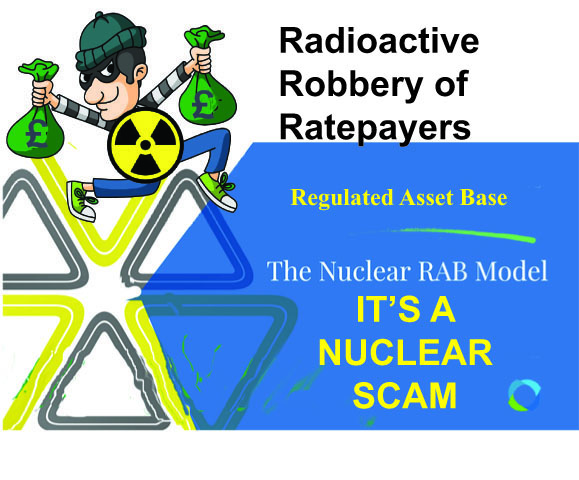
The Nuclear Energy (Financing) Bill has its final reading in Parliament on Monday 10 January. If passed, it will change the way the nuclear power industry is financed, transferring billions of pounds onto individual
consumers, whilst affording them no protection from spiralling costs. This will force thousands more families into fuel poverty. CND is urging all Members of Parliament to vote against this legislation.
CND Briefing 6th Jan 2022
European Commission’s divisive plan to label nuclear power ”green”, revealed on the sly?
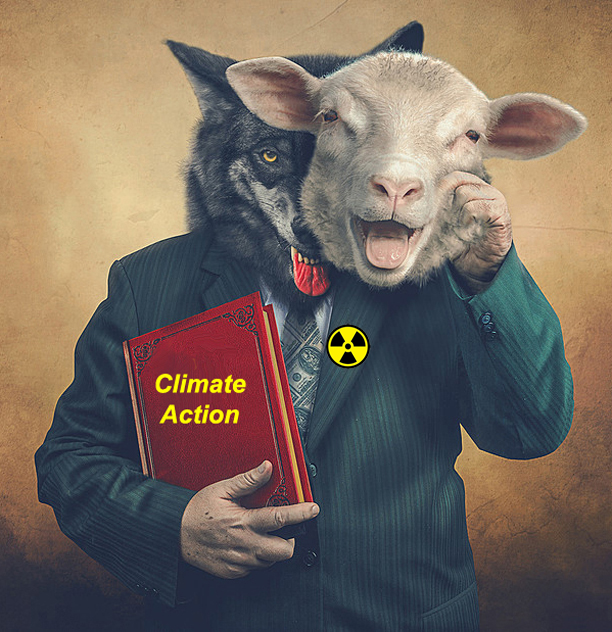
“Short of digging an actual hole, the European Commission couldn’t have tried harder to bury this proposal”
” we get a document written behind closed doors and published on New Year’s Eve,”
EU labels nuclear power ‘green’, Germany calls it dangerous, Sydney Morning Herald, By John Chalmers, January 4, 2022 Brussels: The German government has condemned nuclear energy as dangerous, slamming European Union proposals that would let the technology remain part of the bloc’s plans for a climate-friendly future.
Germany is on course to switch off its remaining three nuclear power plants at the end of this year and phase out coal by 2030, whereas its neighbour France aims to modernise existing nuclear reactors and build new ones to meet its future energy needs. Berlin plans to rely heavily on natural gas until it can be replaced by non-polluting sources for energy.
The opposing paths taken by two of the EU’s biggest economies have resulted in an awkward situation for the bloc’s Executive Commission.
“We consider nuclear technology to be dangerous,” German government spokesman Steffen Hebestreit told reporters in Berlin, noting that the question of what to do with radioactive waste that will last for thousands of generations remains unresolved.
Hebestreit added that Germany “expressly rejects” the EU’s assessment of atomic energy, has repeatedly stated this position towards the commission and is now considering next steps.
The European Union has rejected accusations that it waited until New Year’s Eve to publish the divisive proposals to allow some natural gas and nuclear energy projects to be labelled as sustainable, saying “we weren’t trying to do it on the sly”.
The commission’s decision to include gas and nuclear investments in the European Union’s “sustainable finance taxonomy” rules was circulated in a draft proposal late on December 31 and leaked to some media organisations.
“Short of digging an actual hole, the European Commission couldn’t have tried harder to bury this proposal,” said Henry Eviston, spokesman on sustainable finance at the European Policy Office of the environmental group WWF.
“When the question was whether renewables are green, the commission gave citizens three chances to provide their opinion. For fossil gas and nuclear, we get a document written behind closed doors and published on New Year’s Eve,” he said in an online posting………………………………….
The European Commission will now collect comments to its draft until January 12 and hopes to adopt a final text by the end of the month. After that, the text can be discussed with EU governments and Parliament for up to six months. But it is unlikely to be rejected because that would require 20 of the 27 EU countries, representing 65 per cent of EU citizens, to say “no”.
The aim of the agreement is to send a signal to private investors as to what the EU considers acceptably “green” and stop greenwashing, whereby companies or investors overstate their eco-friendly credentials. The deal will also set limits on what governments can use EU recovery funds to invest in.
https://www.smh.com.au/world/europe/eu-labels-nuclear-power-green-germany-calls-it-dangerous-20220104-p59lmt.html
Pro nuclear shills use UK’s energy crisis to promote nuclear, but with government action, renewable energy would solve the problem
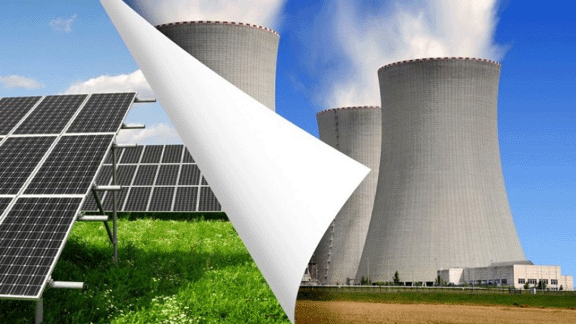
Government failure behind energy crisis, Chartist, By Dave Toke -31/12/2021 The only thing wrong with renewables is that we’ve not built nearly enough of them, says Dave Toke. Amidst a global shortfall of gas supplies in relation to demand (and a global increase in gas prices), the anti-renewables lobbies are busy blaming a lack of wind and solar (wot, solar too?) for the soaring energy prices. It’s nonsense of course to pin the blame on renewables for a combination of a global oil and gas crisis and the UK’s unique market vulnerability to natural gas supply squeezes, but that’s precisely what is happening. The truth is we’d be much more secure and greener with a much higher proportion of energy coming from renewables backed up with a revived storage network that successive UK governments have allowed to run down.
Of course we’ve had fossil fuel energy price surges and crises for decades, but now, suddenly, to read some papers and a lot of tweets, I’m told mainly from fossil fuel lobbyists, it’s the fault of renewables! Remarkable!
Some are even using the crisis to boost the case for nuclear power. Now that’s ironic, given that five out of 14 of EDF’s nuclear units are offline as I write! With nuclear, of course, it’s always going to be better in the future (and never is). Certainly, the idea that the UK relying on 3.2GW units (like Hinkley C and the planned Sizewell C) for its security at times of pressure is a guarantee of system security needs rather clearer analysis than is being done at the moment. (By the way, did you know that the first Hinkley C – like EPR in China – got shut down this summer because of radioactive leaks? Somebody please tell me when it gets back online.)………………..
We need much, much more renewables. Currently, the UK generates about 100TWh a year of wind and solar, compared to around 900TWh of natural gas consumption. How on earth can you blame wind and solar for a failure to meet gas demand when the Government has so far incentivised only a small fraction of the renewable energy generation required to phase out reliance on natural gas? It’s gaslighting on a grand scale (pun intended).
And, yes, there’s easily enough renewables to do the job. All of UK energy could be supplied from offshore wind occupying less than less than 8 per cent of the UK’s offshore waters, not counting all the solar and other renewable energy resources in the UK. https://www.chartist.org.uk/government-failure-behind-energy-crisis/
German government struggles to unite on EU energy proposal
German government struggles to unite on EU energy proposal, DW, 4 Jan 22,
The EU Commission’s proposal to classify nuclear power and natural gas plants as “green” investments has sparked debate in Germany’s new coalition government. Conflict is also brewing between EU states.
Less than a month after Germany’s new coalition government was sworn in, it is facing a major test: To find a united stance in response to a controversial proposal by the EU Commission, published on New Year’s Eve.
The EU Commission wants to label natural gas and nuclear power as climate-friendly, and include investments in both energies on its long-awaited taxonomy list — a green labeling system for investments in the energy sector.
The list is part of the bloc’s plans to decarbonize the European economy and build clean power plants, which will require the investment of billions of euros.
Under the draft proposal, the gas and nuclear plants must meet certain criteria: Investment in new nuclear plants as they are planned in France, the Netherlands, and Poland, can be considered “sustainable” only if respective states ensure they meet the latest technology standards, and provide a concrete plan for the disposal for high-level radioactive waste.
Natural gas plants could also be granted a green label for a limited period of time, provided certain criteria are met. These could involve limits on the amount of greenhouse gas emitted or proving that the plants can also be operated with green hydrogen or low-carbon gas.
The classification of economic activities by the EU Commission under the so-called taxonomy is intended to enable investors to switch their investments to more sustainable technologies and companies.
Divided coalition………………
Climate and Economy Minister and Vice-Chancellor Robert Habeck, told German press agency dpa that he felt the EU proposal “waters down the good label for sustainability.”
“It’s questionable whether this greenwashing will be accepted by the financial markets anyway,” the Green politician said.
Environment Minister Steffi Lemke (Greens) also rated the EU proposal as “questionable.”………….
Klaus Jacob of the Research Center for Environment Policy at Berlin’s Freie Universität says the debate within the government was completely foreseeable.
“This isn’t a predetermined breaking point in the coalition,” Jacob told DW…………………….
Nuclear phaseout nearing completion
The three governing coalition parties are, however, in agreement when it comes to the phaseout of nuclear energy. Germany’s last nuclear power plants are due to be decommissioned just a year from now.
The decision to phase out nuclear power was made during the 1998-2003 coalition between the SPD and Greens under Chancellor Gerhard Schröder, in response to the realization that there was no way to store nuclear waste safely. Almost two decades earlier, Germany’s anti-nuclear protests gave birth to the Green Party and the phaseout has long been one of its core policies.
Angela Merkel’s coalition government of center-right Christian Democrats and FDP then rolled back the phaseout. But in 2011, after the accident at the Fukushima atomic power plant in Japan, Merkel made an about-turn and decided to push through with the phaseout after all.
Referring to the EU’s plans to green label nuclear energy, Environment Minister Lemke said the Commission “creates the great danger of blocking and damaging really viable, sustainable investments in favor of dangerous nuclear power.”……………
EU fissure
The 27 EU member states now have until January 12 to comment on the Commission’s draft. But it’s unlikely that the proposal can be blocked. Besides Germany, only Austria, Luxembourg, Denmark, and Portugal have voiced criticism.
Implementation can only be prevented if at least 20 EU countries (representing at least 65% of the total EU population) or at least 353 members of parliament vote against it.
Other EU countries are continuing to push nuclear energy and campaign for it to be included on the EU’s list of sustainable energy sources eligible for investment — prominently France which holds the rotating EU presidency and is heading for presidential elections in April.
Austria, meanwhile, is threatening to go to the European Court of Justice to stop the draft from being passed.
Edited by Rina Goldenberg https://www.dw.com/en/german-government-struggles-to-unite-on-eu-energy-proposal/a-60319292
Will Biden stay the course toward nuclear disarmament?

When President Joe Biden took office last year, a historic shift in U.S. nuclear policy seemed likely. Now, with ongoing threats from Russia and China, experts say moving away from nuclear weapons may be more difficult. CS Monitor, By Robert Burns Associated Press, 4 Jan 22,
Joe Biden’s arrival in the White House nearly a year ago seemed to herald a historic shift toward less U.S. reliance on nuclear weapons and possibly a shrinking of their numbers. Even an American “no first use” pledge – a promise to never again be the first to use a nuclear weapon – seemed possible.
The outlook will be clearer when the Biden administration completes its so-called nuclear posture review – an internal relook at the numbers, kinds, and purposes of weapons in the nuclear arsenal, as well as the policies that govern their potential use. The results could be made public as early as January.
The biggest unknown is how forcefully Mr. Biden will weigh in on these questions, based on White House calculations of the political risk. During his years as vice president, Mr. Biden talked of new directions in nuclear policy. But heightened concerns about China and Russia would seem to improve the political leverage of Republicans seeking to portray such change as a gift to nuclear adversaries.
Tom Z. Collina, policy director at Ploughshares Fund, an advocate for nuclear disarmament, says the China and Russia problems complicate the politics of Mr. Biden’s nuclear review but should not stop him from acting to reduce nuclear dangers.
“We do not want a new nuclear arms race with either nation and the only way to prevent that is with diplomacy,” Mr. Collina said. “We must remember the main lesson we learned in the Cold War with Russia – the only way to win an arms race is not to run.”………………………
The Pentagon has not publicly discussed details of the nuclear review, but the administration seems likely to keep the existing contours of the nuclear force – the traditional “triad” of sea-, air-, and land-based weapons, which critics call overkill. It also may embrace a $1 trillion-plus modernization of that force, which was launched by the Obama administration and continued by Mr. Trump.
It’s unclear whether Mr. Biden will approve any significant change in what is called “declaratory policy,” which states the purpose of nuclear weapons and the circumstances under which they might be used.
The Obama administration, with Mr. Biden as vice president, stated in 2010 that it would “only consider the use of nuclear weapons in extreme circumstances to defend the vital interests of the United States or its allies and partners.” It did not define “extreme circumstances.”
Eight years later, the Trump administration restated the Obama policy but got more specific. “Extreme circumstances could include significant non-nuclear strategic attacks. Significant non-nuclear strategic attacks include, but are not limited to, attacks on the U.S., allied, or partner civilian population or infrastructure, and attacks on U.S. or allied nuclear forces, their command and control, or warning and attack assessment capabilities.”…………… https://www.csmonitor.com/USA/Foreign-Policy/2022/0103/Will-Biden-stay-the-course-toward-nuclear-disarmament
Climate Noise Has Obscured Nuclear Dump Cronyism and Nuclear Impacts of Coal Mine – Why Bother With Traffic Light System for Induced Earthquakes? — RADIATION FREE LAKELAND
Originally posted on Keep Cumbrian Coal in the Hole: The following letter has just been sent to the Coal Mine Planning Inspector Mr Stephen Normington following a letter from the Rt Hon Greg Hands, Minister of State for Energy, Clean Growth and Climate Change (this Govnt department appointed the coal mine boss as “invaluable” nuclear…
Climate Noise Has Obscured Nuclear Dump Cronyism and Nuclear Impacts of Coal Mine – Why Bother With Traffic Light System for Induced Earthquakes? — RADIATION FREE LAKELAND
Excerpts – ”……………………..should the coal mine be approved by government, then a seismic Traffic Light System at least as stringent as that for the oil and gas industry should be part of the conditions imposed. The empirical evidence (presented by Radiation Free Lakeland at the Planning Inquiry) is unequivocal in its findings that coal mining produces earthquakes of far greater magnitude and frequency than that of fracking. Despite this Greg Hands MP states that there will be no Traffic Light System for the coal mine.
In tandem with the absence of a seismic Traffic Light System is the outrageous allowance of 6mm/s Peak Particle Velocity as agreed by the Inquiry’s Rule 6 Parties and Developer for ground movements as a result of the deep mining proposed. As you will be aware the PPV at which “receptors” will make complaints is 1mm/s.
An observer of the bulk of the Planning Inquiry would have had no idea of the uniquely dangerous sense of place regarding the planned coal mine. If this same coal mine was anywhere in the world the climate impacts would be the same.
………. But this coal mine is not anywhere in the world. It is five miles from Sellafield, the worlds riskiest nuclear waste site, under the arguably most radioactively contaminated sea in the world and directly beneath the radioactively contaminated Cumbrian Mud Patch………
our concerns lay with the undeniable connections/cronyism between the coal mine and the proposed Geological Disposal Facility.
The Government’s refusal to consider a seismic Traffic Light System for the earthquake inducing coal mine is a case in point.
Mark Kirkbride the CEO of West Cumbria Mining was appointed in 2019 as an “invaluable” adviser to the Government (Committee on Radioactive Waste Management) on the digging of big holes for a Geological Disposal Facility for Heat Generating Nuclear Wastes and for shallower Near Surface Disposal of Low and Intermediate Level Nuclear Wastes.
We are painfully aware, as no doubt is government nuclear dump advisor Mark Kirkbride, that a seismic Traffic Light System for an earthquake inducing deep undersea coal mine would also impact negatively on the facilitation of an even deeper hole for a GDF. The Irish Sea area adjacent to the coal mine is in the frame for a GDF.
…….. which is far more than the sum of its (more widely reported) climate/jobs parts. Should this coal mine go ahead the people and environment of Cumbria and the planet WILL be exposed to deep radiological, immediate and irreversible impacts that will make the more widely reported and not to be sneezed at climate impacts pale into insignificance.
The whole thing feels like a massive stitch up in which the climate issues have been used as a smoke screen to hide the nuclear impacts of this coal mine. If Leonardo DiCaprio (of “Don’t Look Up” fame) thinks climate campaigners have it bad he should walk a mile in the shoes of nuclear safety campaigners! https://keepcumbriancoalinthehole.wordpress.com/2022/01/03/climate-noise-has-obscured-nuclear-dump-cronyism-and-nuclear-impacts-of-coal-mine-why-bother-with-traffic-light-system-for-induced-earthquakes/
Britain’s National Infrastructure Commission (NIC) advises government against new nuclear power projects.
UK NIC backs alternatives to nuclear, Renew Extra Weekly, 2 Jan 21, The UK Government asked the National Infrastructure Commission (NIC) for its advice on whether an additional new nuclear plant, beyond the proposed Sizewell C project, was needed to deliver the UK’s sixth Carbon (reduction) Budget, due in 2035. In response, the NIC said no, it was not needed or viable for 2035, since new nuclear was slow to deploy. It asserted that ‘it is highly unlikely that a new large scale nuclear plant is deliverable in the next 15 years; trying and failing would jeopardise delivery of the sixth Carbon Budget’. Instead it backed renewables, hydrogen and low/negative carbon technology- which is said could be deployed faster.
It noted that ‘since 1990, nuclear projects have faced significant delays all around the world. Even just in Europe around half of all plants have faced at least a 50% delay in construction, and 1 in 4 plants have faced at least a 90% delay in construction’. So it said that ‘any nuclear project schedule estimate should be expected to take at least 50% longer than planned. If a new project began development next year and took the same amount of time as the Hinkley Point C project is expected to take to complete, it would not come online until at least the mid 2040s’. So that put it well outside the 2035 timeframe.

Small Modular/advanced reactors might be a faster option, but the NIC said ‘relying on significant capacity being deployed before 2035 would be risky’. It pointed out that ‘no SMR has gone through the Generic Design Assessment process and some developer proposals are conditional on government support to progress project development. There are no SMRs in operation in countries similar to the UK.
To fill the same capacity gap illustrated in the BEIS modelling, at least six SMRs would be needed by 2035, if not more. This would require compressing the normal delivery timeline and doing things in parallel rather than in sequence, significantly increasing the risk of delays. Delivery success will also be dependent on the capability of the developer.’
Alternatives likely to be faster
Instead of these nuclear options, for delivery within the timeframe to 2035, it backed ‘renewables with a combination of gas power plants with carbon capture and storage, hydrogen fired gas plants and bioenergy with carbon capture & storage’. It said ‘these alternatives are more likely to be deliverable at scale in the next 15 years’. …………………..
even without costing analysis, it said its analysis clearly demonstrated ‘that a third new nuclear plant is not necessary to reach the 2035 emissions target and that more gas CCS, hydrogen powered gas plants, and BECCS could be deployed instead. Whilst these technologies are yet to be deployed at scale, the Commission considers them to be a lower delivery risk than nuclear.’ And it claimed that its proposed alternative technology mix was supported by analysis previously conducted for the Commission and by other bodies such as National Grid ESO & the Climate Change Committee. …………………
It’s odd that the NIC plunge into CCS and Hydrogen, rather than talking about renewables more. Maybe they are taken for granted. But if, led by wind and solar, they could be expanded much faster than BEIS and NIC envisage, then maybe we could forget about fossil CCS, BECCS and also Sizewell C. That might be helped if tidal stream technology could also get going- with CfD help, it ought to be able to by 2030. Geothermal too, for heat and power. All NIC says is that, from the BEIS analysis, it’s clear that ‘significant volumes of renewables are needed to deliver a low carbon power system by 2035. This is supported by previous analysis for the Commission and others. Rapid cost reductions and short and reliable build profiles mean that renewables will be the backbone of any future GB power system’. OK, fine, but we need details & plans now for faster expansion, along with a much improved commitment to energy saving! https://renewextraweekly.blogspot.com/2022/01/uk-nic-backs-alternatives-to-nuclear.html
Bitcoin miners in Kazakhstan will rely on government building new nuclear power plant
Kazakhstan bitcoin miners could use nuclear energy as gov’t might build power plant, Kazakhstan’s government is discussing a plan to build a nuclear power plant, which might boost the country’s Bitcoin (BTC) and crypto mining industries in the long run. Micky.com By Jet Encila -January 2, 2022…….. construction might take up to 10 years……..
Since September’s crackdown, an estimated 88,000 mining rigs have been smuggled across the border from China, increasing electricity demand in many places, based on multiple sources.
Not only in Central Asia, but also in the United States and Europe, the cooperation between mining and nuclear energy providers is deepening.
In the United States, a handful of miners have already begun getting power from nuclear reactors, while in Ukraine, the national nuclear energy supplier has been collaborating with miners at Europe’s largest nuclear plants in an attempt to mitigate financial losses.
—https://micky.com.au/kazakhstan-bitcoin-miners-could-use-nuclear-energy-as-govt-might-build-power-plant/
France’s electricity consumers face curbs as EDF struggles with problems and shutdowns
French electricity consumers face curbs on their electricity supplies following shutdowns at four of EDF’s nuclear power plant. France is highly reliant on its nuclear power plants, obtaining around 70 per cent of its electricity from nuclear on an annual basis. This, along with other various examples of nuclear unreliability, must seriously question the British Government’s determination to plough on with its programme of new nuclear power plant. The four nuclear plants have been shut down ‘after the detection of anomalies in the emergency injection circuits‘. France’s Grid Operator, RTE, has warned consumers that limitations on supplies may be necessary soon. France has been struggling with its nuclear sector and EDF’s efforts to build another nuclear plant at Flamanville have been hobbled by very long construction delays and massive cost overruns. 100% Renewables 31st Dec 2021 https://100percentrenewableuk.org/french-electricity-consumers-face-brownouts-and-even-power-cuts-after-nuclear-power-plant-shutdowns |
Risky for UK to plan for small and advanced nuclear reactors
New nuclear technologies, such as small and advanced nuclear reactors, may
have a role to play in the long term. But relying on significant capacity
being deployed before 2035 would be risky. They will face both the
challenges of being first of a kind plants and being a nuclear technology.
National Infrastructure Commission (Accessed) 1st Jan 2022
Hard to swallow the manipulations going on in nuclear waste decisions on UK’s Geological Disposal Facility
‘GDF flies in face of past decisions on storing nuclear waste’ https://www.newsandstar.co.uk/news/19816090.gdf-flies-face-past-decisions-storing-nuclear-waste/ David Kirkwood, 2 Jan 22,
Penrith ON December 20, I received an email informing me that Allerdale Borough Council leadership had held a meeting on November 24 and voted in favour of progressing the nuclear Geological Disposal Facility in Allerdale.
This statement was released amid the Omicron virus and Christmas festivities simply to bury the controversial news. It flies in the face of the two previous decisions rejecting the burying of nuclear waste material anywhere in Cumbria.
One of the main reasons was that the geology in Cumbria was unsuitable for a repository. Secondly, the most important reason was the population did not want it.
It is obvious why this decision has been reached, quite simply the local government reorganisation was engineered to try and invalidate the previous decisions taken by the soon-to-be-dismantled County Council.
Perhaps, someone from the Radioactive Waste Management can explain why a company called Genr8 North Ltd can be involved with both Allerdale Borough Council and Copeland Borough Council, if as they say they have no commercial interest in a nuclear geological disposal facility being built?
I find this very hard to believe.
This is just an attempt by a few individuals to brainwash the majority into acceptance. I’m certain in years to come the radioactive nuclear waste will be buried in Cumbria irrespective of the wishes of the resident population.
Will the European Commission buy into the lie that nuclear power is clean and green?
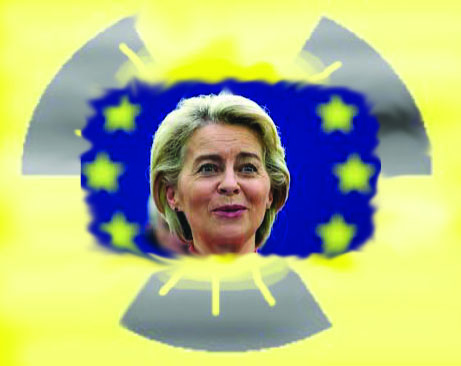
Just who will be making this decision? The global nuclear lobby is desperate to get tax-payer funding , to keep its expensive, dirty, dangerous product going.
Pro nuclear stooges, like Ursula von der Leyen (at left) are keen to get Europe to decide that nuclear power is necessary for climate change.
They keep calling nuclear “zero’ or ”low carbon” – ignoring the full chain of carbon-emiitting processes involved in nuclear structures and in fuelling rectors.
Also ignored , the delays in gettting the industry going – too late to be of any use.
nuclear: Fate of EU green taxonomy ‘now in the hands of von der Leyen’.
The taxonomy text will need approval from a majority of EU member states and members of the European Parliament.
Brussels proposes green label for nuclear and natural gas
European Commission paves way for investments despite concerns over waste and CO2 emissions , Ft.com, Mehreen Khan in Brussels, 1 January 2022.
Brussels wants to recognise nuclear power and forms of natural gas as “green” activity as part of a landmark EU classification scheme to help financial markets decide what counts as sustainable investment. In long-awaited plans, the European Commission has paved the way for investment in new nuclear power plants for at least the next two decades and natural gas for at least a decade, under a green labelling system known as the “taxonomy for sustainable finance”. The labelling system, which will cover industries that generate about 80 per cent of all greenhouse gas emissions in the EU, is the first attempt by a major global regulator to decide what counts as truly sustainable economic activity and help stamp out so-called greenwashing in the financial sector.
A draft legal text, seen by the Financial Times, says the EU’s green label should be awarded to controversial energy sources including nuclear power and natural gas under certain circumstances. The decision was taken after a vocal group of pro-nuclear countries, led by France, and pro-gas governments in southern and eastern Europe, demanded the taxonomy should not punish energy sources that provide a bulk of their power generation….
The draft taxonomy text says nuclear power should be considered a sustainable economic activity as long as EU countries that host power stations can safely dispose of toxic waste and meet a criteria to cause “no significant harm” to the environment. The construction of new nuclear plants will be recognised as green for permits granted until 2045, says the text. ……….
https://www.ft.com/content/7872a05f-9e38-4740-9b1b-4efc69ca316c
State of New Mexico demands federal investigation into Waste Isolation Pilot Plant (WIPP) and federal nuclear programs.
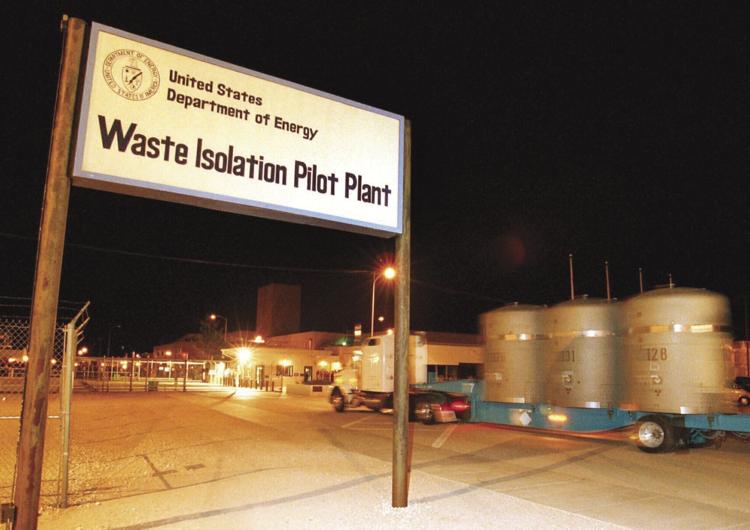
State of New Mexico demands feds investigate WIPP, federal nuclear programs
New Mexico Environment Department joins call from Congress for oversight, Adrian Hedden, Carlsbad Current-Argus , 31 Dec 21,
State concerned out-of-state waste prioritized over New Mexico’s
WIPP officials says waste shipments prioritized by availability
Congressional committee worried for ongoing “challenges” at DOE
Stronger oversight of the Waste Isolation Pilot Plant could be coming as the federal government was called on by New Mexico officials and members of Congress to address alleged problems with the U.S. Department of Energy’s environmental cleanup operations.
New Mexico Secretary of the Environment James Kenney expressed concerns for operations at WIPP in a letter to the federal Government Accountability Office (GAO), calling for the federal office to increase its oversight of the nuclear waste repository near Carlsbad.
Low-level transuranic (TRU) waste from around the country is disposed of at WIPP via burial in an underground salt deposit about 2,000 feet underground. It is owned and operated by the DOE and its Office of Environmental Management (EM) but is permitted and regulated by the New Mexico Environment Department (NMED) headed by Kenney.
In his Dec. 22 letter to the GAO, Kenney said the Office should review nuclear programs in New Mexico, including the prioritization of nuclear waste shipments to WIPP from facilities outside New Mexico.
He said first priority should be given to waste from Los Alamos National Laboratory (LANL) in northern New Mexico as the DOE intends to increase the production of plutonium pits.
“The WIPP is subject to an NMED operating permit and must adhere to the requirements of the permit in order to remain operable in New Mexico and in service to the nation,” Kenney wrote. “Yet, the DOE EM has entered into legally binding settlement agreements with states to prioritize waste shipments to WIPP at the expense of shipments from other states, including New Mexico.
“This is problematic for both the clean-up of legacy waste at LANL and new waste from pit production at LANL.”
Before the DOE entered into such agreements, as it had with the State of Idaho for cleanup at Idaho National Laboratory (INL) in 1995, Kenney said the agency should have first engaged with New Mexico stakeholders he said would bear the impacts of moving out-of-state nuclear waste into their state……………
“The practice of DOE EM solely managing waste shipments to WIPP from around the U.S. without first discussing with New Mexico stakeholders – including NMED as its regulator – now merits immediate congressional oversight,” Kenney wrote…………..
Kenney also voiced reservations about DOE officials allegedly seeking to “expand” the kinds of waste accepted at WIPP.
A recent DOE proposal sought to redefine high-level waste to consider the radiation level as opposed to the current method that considers where the waste was generated, potentially leading to more waste coming to WIPP, Kenney said.
Another concern, Kenney wrote, was a DOE-proposed “dilute and dispose” program that would see high-level plutonium processed to lower its radioactivity so it could meet WIPP requirements for TRU waste. https://www.currentargus.com/story/news/local/2021/12/30/state-new-mexico-demands-feds-investigate-wipp-doe-nuclear-programs/9034953002/
South Korea presidential contender vows to seek nuclear-powered submarines, months after Australia’s Aukus deal.

South Korea presidential contender vows to seek nuclear-powered submarines, months after Australia’s Aukus deal, Guardian, 31 Dec 21,
Lee Jae-myung aims to counter North Korea threats and pledges to restart stalled talks between Pyongyang and Washington
South Korea’s ruling party presidential candidate said he will seek US support to build nuclear-powered submarines to better counter threats from North Korea and proactively seek to reopen stalled denuclearisation talks between Pyongyang and Washington.
In an interview with Reuters and two other media outlets, Lee Jae-myung also pledged to put aside “strategic ambiguity” in the face of intensifying Sino-US rivalry, vowing pragmatic diplomacy would avoid South Korea being forced to choose between the two countries………………
Lee said he will persuade the US to win diplomatic and technology aid to launch nuclear-powered submarines, which can operate more quietly for longer periods, amid renewed calls for building one in the military and parliament after North Korea test-fired a new missile from a submarine in October.
Lee cited the deal Australia struck under a trilateral security partnership with the US and Britain in September to build its own nuclear-powered submarines…………………………… https://www.theguardian.com/world/2021/dec/30/south-korea-presidential-contender-vows-to-seek-nuclear-powered-submarines-months-after-australias-aukus-deal
1 This Month
23-25 October – on Zoom – World BEYOND War’s annual global conferenc


Shut down the radiation-damaged Heysham nuclear reactors now
To see nuclear-related stories in greater depth and intensity – go to https://nuclearinformation.wordpress.com

Say No to NASA’s Reckless Nuclear Reactor on the Moon
Say No to NASA’s Reckless Nuclear Reactor on the Moon

-
Archives
- October 2026 (209)
- September 2026 (339)
- August 2026 (330)
- July 2026 (355)
- June 2026 (287)
- May 2026 (306)
- April 2026 (356)
- March 2026 (251)
- February 2026 (267)
- January 2026 (308)
- December 2025 (358)
- November 2025 (359)
-
Categories
- 1
- 1 NUCLEAR ISSUES
- business and costs
- climate change
- culture and arts
- ENERGY
- environment
- health
- history
- indigenous issues
- Legal
- marketing of nuclear
- media
- opposition to nuclear
- PERSONAL STORIES
- politics
- politics international
- Religion and ethics
- safety
- secrets,lies and civil liberties
- spinbuster
- technology
- Uranium
- wastes
- weapons and war
- Women
- 2 WORLD
- ACTION
- AFRICA
- Atrocities
- AUSTRALIA
- Christina's notes
- Christina's themes
- culture and arts
- Events
- Fuk 2022
- Fuk 2023
- Fukushima 2017
- Fukushima 2018
- fukushima 2019
- Fukushima 2020
- Fukushima 2021
- general
- global warming
- Humour (God we need it)
- Nuclear
- RARE EARTHS
- Reference
- resources – print
- Resources -audiovicual
- Weekly Newsletter
- World
- World Nuclear
- YouTube
-
RSS
Entries RSS
Comments RSS

