President Macron asssures France’s EDF of tens of billions of euros in public financing for new nuclear reactors
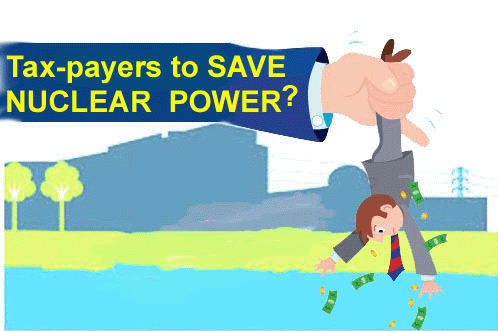
French Finance Minister Bruno Le Maire told C News TV on Friday that he was sure that EDF’s (EDF.PA) difficulties would “disappear” after France announced plans to build at least six new nuclear reactors in the decades to come.
President Emmanuel Macron said on Thursday that the new plants would be built and operated by state-controlled energy provider EDF and that tens of billions of euros in public financing would be mobilized tofinance the projects and safeguard EDF’s finances.
Reuters 11th Feb 2022
Environmental Working Group (EWG) urges Biden to reject ‘outrageous’ call for more nuclear power subsidies in clean energy agenda

“Nuclear power is truly an example of privatizing profits and socializing risks.”
EWG urges Biden to reject electric utility executives’ call for more nuclear power subsidies in clean energy agenda. https://www.ewg.org/news-insights/news-release/2022/02/ewg-urges-biden-reject-electric-utility-executives-call-more WASHINGTON – President Joe Biden is meeting today with top executives from several investor-owned electric utilities who want Congress to approve vital clean energy tax credits as part of Biden’s Build Back Better agenda. But they are also seeking new federal subsidies for existing nuclear power plants that the Environmental Working Group is urging the president to oppose.“Nuclear power is truly an example of privatizing profits and socializing risks.”
The Build Back Better plan is a broad infrastructure proposal and includes some important tax credits that the utilities support. They would help expand utility-scale solar projects and boost sales of electric vehicles, crucial steps in fighting the climate emergency.
But the call for wasting more federal tax dollars propping up uneconomic and dangerous nuclear power plants too is an outrageous request, noted EWG.
“Nuclear power is a relic of the electricity sector, and a dangerous and extremely expensive one that has cost taxpayers billions of dollars,” said EWG President Ken Cook. “The federal government must stop throwing away money propping up the nuclear industry and instead make critical investments to expand safe, clean renewable energy.”
“President Biden and congressional leaders can and should unravel the federal government’s long history of pouring scarce resources into this failed industry and its legacy of radioactive waste and the enormous threat it poses to the public,” said Cook.
Nuclear power has never been financially viable and never will be, so new subsidies make no sense. It has the distinction of a permanent negative learning curve – costs always rise and never decline – despite 60 years of taxpayer-funded research and development, construction risks dumped onto ratepayers to lure private financing, a series of bailouts worth tens of billions to the industry, and billions wasted on upgrades to keep aging power plants running that could have been much more wisely spent replacing them.
“It is time to systematically replace nuclear power with modern clean energy technology and to stop burdening ratepayers and taxpayers with this financial albatross,” said Cook. “Nuclear power is truly an example of privatizing profits and socializing risks.”
In its 2021“None of the Above” series calling out dirty and dangerous power sources that should quickly be replaced by clean, safe and renewable energy, such as solar and wind, EWG likened nuclear power to “nothing more than a public works project with no prospects for the future that has failed financially while generating huge amounts of radioactive waste, with no viable method of disposal, that will linger for thousands of years.”
The Environmental Working Group is a nonprofit, non-partisan organization that empowers people to live healthier lives in a healthier environment. Through research, advocacy and unique education tools, EWG drives consumer choice and civic action. Visit www.ewg.org for more information.
Ahead of regulatory approval the US Dept of Energy wants Govt to grant $4 billion for Small Nuclear Reactors development

Bloomberg Business Week, 7 Feb 22, –………………………… Congress has ordered the Nuclear Regulatory Commission to replace a rules framework that dates to the 1950s. The new guidelines aren’t expected until at least 2025……… To prove the safety of designs, for instance, the commission demands data from similar plants, but none of the smaller installations have been built in the U.S., so there’s no performance history.
……….. the U.S. Department of Energy has gotten ahead of the NRC. The department is asking Congress for as much as $4 billion over seven years for advanced reactor development.
Beneficiaries include TerraPower, a startup founded by Bill Gates that’s working on a project in Wyoming; X-energy, which is planning a high-temperature, gas-cooled reactor in Washington state; and Kairos Power, which aims to build a 35-megawatt salt-cooled test reactor in Tennessee and applied for a construction license last September.
…………… these plants face staunch opposition. Environmental groups say that small reactors—some have a capacity of only 1.5MW, about 0.1% the size of a traditional plant—still produce enough radioactive material to present a contamination risk. And building more plants, even small ones, will add to the pile of toxic waste that no one can figure out what do with. “To the extent that there will be efforts to weaken the regulatory envelope, we will aggressively push back,” says Geoff Fettus, an attorney with the Natural Resources Defense Council.
Globally, more than 70 small modular reactors, with a total capacity of about 12 gigawatts, have been proposed or are under development in at least five countries, according to the International Atomic Energy Agency. The only one that’s been built is a floating reactor in the Russian town of Pevek, on the Arctic Sea, where it’s used to power mining operations. Gregory Jaczko, who served as NRC chair from 2009 to 2012, says the lack of movement on such plants around the world suggests we would be wrong to count on them as a way out of the climate crisis. “They’re just not ready,” he says. “And by the time they could be ready, they’re not going to be useful.”
European dispute over the Taxonomy plan to class nuclear power as ”green”, qualifying it for billions of euros in subsidies.

EU Observer, 7. FEB, 07:22, Barely a month since France took over the rotating presidency of the Council of the European Union, and France and Germany are already in dispute over the highly-controversial EU proposal to grant nuclear energy and natural gas a green investment label under the EU taxonomy on sustainable finance rules.
The EU proposal was published on Wednesday (2 February) with only minor edits – despite the internal row it had sparked amongst several member states.
The initial proposal itself had been quietly distributed to EU members on New Year’s Eve – the day Germany closed half of its six nuclear power plants.
If the proposal now passes the EU’s legislative procedures without getting blocked by the commission or the parliament (both unlikely scenarios), it will likely channel billions of euros into the construction of new nuclear power plants across the bloc…………………….
During the past weeks France has taken a strong stance in support of nuclear energy with president Emmanuel Macron labelling it as the “sovereign solution”, while Germany has expressly rejected the integration of nuclear power into the green taxonomy…………….
After their success in September’s federal elections, German Greens secured their position as the second-largest party in the current coalition government – making them crucial for the future of the German coalition.
No compromise
And nuclear energy is one of the topics the Greens are not willing to compromise on.
The Greens, born out of the 1980s anti-nuclear protests, were quick to call out the EU over the new energy proposal with the German vice-chancellor and climate minister, Robert Habeck, accusing the EU of “greenwashing”.
In New Mexico, two Bills to block the storage of high level nuclear waste

Efforts by New Mexico lawmakers to block the storage of high-level nuclear
waste in the state built momentum this week as two bills in the House and
Senate advanced in legislative committees.
Senate Bill 54 and House Bill
127 contain identical language that would prohibit State agencies from
issuing permits for high-level nuclear waste storage facilities, introduced
in direct opposition to the project proposed by Holtec International in
southeast New Mexico near Carlsbad and Hobbs. The Holtec project would see
about 100,000 metric tons of spent nuclear fuel rods from generator sites
across the U.S. shipped via rail to the location on about 1,000 acres in a
remote area by the Eddy-Lea county line.
Carlsbad Current-Argus 5th Feb 2022
Bill To Ban Spent Nuclear Fuel Storage In New Mexico Passes House Committee

“It’s inconceivable why New Mexico has to be the dumping ground for the nation’s ill-advised investment in nuclear energy and nuclear weapons,” said Paul Gibson, co-founder of Retake Our Democracy. “The risk to our community is far greater than the benefit.”
Although the site is termed temporary, Holtec is seeking a 40-year license to operate there, which opponents say would make it permanent.
By SCOTT WYLAND, The Santa Fe New Mexican, 4 Feb 22, A bill clearly aimed at blocking Holtec International from building an underground storage site for spent nuclear fuel in southeastern New Mexico is moving forward.
The House Energy, Environment and Natural Resources Committee voted 5-4 to advance a bill that would ban the storage or disposal of spent nuclear fuel in the state — and would essentially kill Holtec’s plans to build a repository for this high-level radioactive waste in the Carlsbad area.
It now will go to the House Judiciary Committee.
A key point in the debate was whether the state has the authority to stop the federal government from approving what’s described as an interim storage site to keep the material until a permanent place is created.
Some lawmakers and regulators who back House Bill 127 say although the state can’t interfere with how the commission regulates the waste, it can block storage sites that could cause adverse environmental impacts.
The bill’s opponents argue the state still would be preempting the Nuclear Regulatory Commission’s authority in managing commercial nuclear waste. That simply is not allowed, no matter what criteria the state uses, they said.
But Sen. Jeff Steinborn, D-Las Cruces, who strongly supports the bill, said the state is well within its rights to say no to nuclear disposal sites that could contaminate vital resources, such as groundwater, and pose risks to communities when the waste is transported by rail across the country.
“Does New Mexico have the authority to do this? Yes, we do,” Steinborn said. “The Nuclear Regulatory Commission absolutely has primacy over regulating spent fuel. But what we’re talking here is the siting of this material, and our concerns on multiple grounds.”
Still, Rep. Larry Scott, R-Hobbs, contends the federal government’s power to regulate radioactive material overrides any state authority, including on environmental matters.
“I’m looking at your legislation, which seems to completely contradict that,” Scott said.
Last year, the state sued the federal government, contending the commission hadn’t done enough to ensure Holtec’s proposed site wouldn’t harm the environment, communities or the oil and gas industry in one of the nation’s richest fossil fuel regions.
Although the site is termed temporary, Holtec is seeking a 40-year license to operate there, which opponents say would make it permanent.
State Deputy Environment Secretary Rebecca Roose said no permanent disposal site has been established, so the waste has nowhere else to go.
“It’s more likely to stay there — the inertia will be to keep it there as opposed to move it someplace else permanent,” Roose said, “if and when a permanent facility is identified.”…………………
The bill’s proponents say it’s necessary to prevent a massive amount of high-level radioactive waste from coming to New Mexico and disproportionately affecting poor and minority communities.
“It’s inconceivable why New Mexico has to be the dumping ground for the nation’s ill-advised investment in nuclear energy and nuclear weapons,” said Paul Gibson, co-founder of Retake Our Democracy. “The risk to our community is far greater than the benefit.” https://ladailypost.com/bill-to-ban-spent-nuclear-fuel-storage-in-new-mexico-passes-house-committee/
No excuse. Australia’s nuclear regulator must not approve the government’s planned nuclear waste dump in a FLOOD-PRONE FARM.

Kimba flooding https://www.onlineopinion.com.au/view.asp?article=21824, By Peter Remta – 3 February 2022 The years of touting by the federal government and the responsible ministers of Kimba in South Australia as the perfect and inarguably superior location for the proposed national radioactive waste management facility have dramatically and quite suddenly disappeared. There is no doubt that the severe flooding caused by the recent heavy rains in South Australia which included the Kimba district is a serious and essential reason for immediately aborting the proposed management facility at Napandee farm near Kimba as the selected facility location |
From expert advice it is quite clear that Kimba as a whole – and not just Napandee – is far too dangerous to become the location for the holding of nuclear waste particularly as the results of the present flooding may take up to ten years to overcome without any further flooding
This is especially the case as nuclear isotopes are dispersed and travel freely in water which can affect and contaminate all the surrounding land for many centuries making it completely unusable
There cannot be any excuse by claiming that this flooding may be a once in a lifetime unexpected event as there had been extensive previous floods in the Eyre Peninsula over sixty years ago
More importantly the nature of the proposed facility is that it must be a completely safe and competent environment to hold nuclear waste for several centuries which the federal government claims to be the case as part of its planning
The government as the proponent of the Kimba nuclear waste facility cannot deny knowledge of floods – and also fires – as risks for the purposes of the safety requirements for management of nuclear waste in Australia
The advice by overseas experts is that these two major risks are far more pertinent to Australia than other countries with nuclear waste and consequently the regulatory bodies should or must include these risks within the Australian waste management framework and other applicable prescriptions and standards for the long-term management of Australia’s radioactive waste.
This must obviously include the storage or disposal of nuclear waste at suitably located and established facilities
l informed ARPANSA some eighteen months ago about the formal inclusion of these risks in its safety codes and the requirement for the long overdue start of the safety case for Kimba but the response was that it was not necessary at that stage
The prescriptive requirement is for a safety case for any nuclear installation be started at the very beginning as to why a specific site is considered worthy of investigation
The safety case is then updated as the site characterisation proceeds and if the site fails to live up to initial expectations then it should be abandoned.
This process is an important part of public engagement and if one waits until the end of the process then the argument for safety is less credible and the chance to generate public support has been lost (1)
It seems to be a case of falling asleep at the wheel as mentioned previously by the Hon. George Gear with regard to the regulatory role of ARPANSA (2)
Irrespective of the colourful presentations and nicely sounding spin by the Australian Nuclear Science and Technology Organisation (ANSTO) and even to some extent by ARPANSA there is no doubt that this is a serious breach of the safety requirements that should have been applied to Kimba at the outset
I think that ARPANSA will shortly hear from the UN Special Rapporteurs involved with this situation so that they can properly protect the human rights of the Kimba community.
It will be interesting to see how specifically ARPANSA and ANSTO will deal with the lack of a safety case from the beginning of the government’s proposals as this seems a major failing in proper and necessary safety regulation
As also previously pointed out the federal government should have given the Kimba community the opportunity and with the necessary funding for getting an independent assessment and review of the government’s proposals particularly as there had been so much vehement opposition to the proposed facility
I am not in any way suggesting that this would have stopped the flooding but there should have been proper and early regulation and oversight of the risks of floods and other calamities whether natural or man-made in a much stronger manner
It is now quite obvious that the Kimba region is completely unsuitable and inappropriate for the establishment of the national waste facility and ARPANSA as the regulator should immediately stop anything further being by or on behalf of the government to pursue the establishment of the facility
This should include the withdrawal and cancellation of ministerial declaration to select Napandee as the site for the proposed facility even if the necessary legislative changes may need to await the next parliament
At least this may give the community of Kimba and in fact the whole Eyre Peninsula some comfort and respite from their long-standing concerns.
New Mexico’s Bill to stop the State becoming a ‘sacrifice zone’ for nuclear wastes

“New Mexico, with less than one half of 1% of the nation’s population, should not continue to be the sacrifice zone because we can be exploited,”
New Mexico Debates Bill to Block Spent Nuclear Fuel Storage, Feb. 1, 2022, By SUSAN MONTOYA BRYAN, Associated PressALBUQUERQUE, N.M. (AP) — Gov. Michelle Lujan Grisham and members of New Mexico’s congressional delegation already have voiced strong opposition to building a multibillion-dollar facility along the state’s border with Texas that would store tons of spent nuclear fuel from commercial power plants around the U.S.
Top New Mexico officials contend the Nuclear Regulatory Commission hasn’t done enough to vet plans by Holtec International to build a facility to store thousands of tons of spent uranium in the state. They argue that without a plan by the federal government to deal with spent fuel, the material would remain in New Mexico indefinitely.
Texas Gov. Greg Abbott has also expressed his opposition to a similar storage facility in his state. Both states have sued the federal government over the issue.
Democratic Sen. Jeff Steinborn of Las Cruces, who is sponsoring the New Mexico legislation, said the federal government needs to address the problem and establish a policy for dealing with the spent fuel piling up at the nation’s nuclear power plants.
“New Mexico, with less than one half of 1% of the nation’s population, should not continue to be the sacrifice zone because we can be exploited,” he told fellow lawmakers, noting that many communities have passed resolutions opposed to bringing high-level nuclear waste to the state.
………………… The federal government is paying to house the fuel, and the cost is expected to stretch into the tens of billions over the next decade, according to a review by independent government auditors.
The fuel is sitting at temporary storage sites in nearly three dozen states, either enclosed in steel-lined concrete pools of water or in steel and concrete containers known as casks.
U.S. Energy Secretary Jennifer Granholm has talked about revisiting recommendations made a decade ago by a blue ribbon commission on America’s nuclear future. In November, her agency issued a request seeking input on a consent-based siting process to identify locations to store commercial spent nuclear
Japan to renew subsidies for plutonium nuclear recycling
Ministry to resume subsidies for stalled pluthermal plan https://www.asahi.com/ajw/articles/14526390
By JUNICHIRO NAGASAKI/ Staff Writer February 2, 2022 The economy ministry plans to bring back its subsidy program for areas that host pluthermal generation facilities in an attempt to break the logjam in the nuclear fuel recycling program.
The funds will be offered by the end of fiscal 2022.
The pluthermal program is part of the government’s nuclear fuel cycle policy, in which plutonium extracted from spent nuclear fuel produced at power plants in Japan is processed into plutonium-uranium mixed oxide (MOX) fuel and reused at reactors.
The Federation of Electric Power Companies of Japan plans to start pluthermal power production at 12 or more reactors by fiscal 2030.
But the technology has been in service at only four reactors: the No. 3 and No. 4 reactors in Kansai Electric Power Co.’s Takahama plant in Fukui Prefecture; the No. 3 reactor of Shikoku Electric Power Co.’s Ikata plant in Ehime Prefecture; and the No. 3 reactor of Kyushu Electric Power Co.’s Genkai plant in Saga Prefecture.
By distributing the local-revitalization subsidies, the ministry hopes to accelerate the formation of regional agreements on the fuel cycle project.
A reprocessing facility operated by Japan Nuclear Fuel Ltd. in Aomori Prefecture to recover plutonium is scheduled for completion in the first half of fiscal 2022, but the treatment plant cannot be put in full operation unless pluthermal generation spreads.
Unable to expand the use of MOX fuel, Japan now has 46 tons of plutonium stuck in storage, which has raised international concerns over its potential use in nuclear weapons.
Previously, prefectural governments that had agreed by fiscal 2008 to join the pluthermal circle could receive up to 6 billion yen ($52.4 million) in subsidies. Those that agreed by fiscal 2014 were eligible for a maximum of 3 billion yen in subsidies.
Eight prefectures, including Fukui, Ehime and Saga, have been receiving the subsidies. But currently there are no similar funding mechanisms for local governments under the pluthermal plan.
The economy ministry plans to incorporate a new system to finance prefectures with reactors that have not benefited from past subsidy programs.
Reactors at Japan Atomic Power Co.’s Tokai No. 2 nuclear power plant in Ibaraki Prefecture and elsewhere are expected to be eligible.
Although Chubu Electric Power Co.’s Hamaoka power plant in Shizuoka Prefecture and Chugoku Electric Power Co.’s Shimane plant in Shimane Prefecture are included on the list for past subsidies, it is unclear when they can restart operations because of difficulties in passing the Nuclear Regulation Authority’s screening and gaining consent from residents near the plants.
Bill to help build small nuclear reactors in Indiana passes Senate,
Bill to help build small nuclear reactors in Indiana passes Senate, WFYI Indianapolis,
REBECCA THIELE 2 Feb 22,
A bill that would make it easier for smaller, more advanced nuclear power plants to be built in Indiana passed in the state Senate on Tuesday…….
But opponents of SB 271 said small modular nuclear reactors are a risky investment for the state. None of the planned modular nuclear reactors have been built yet and many have gone over their proposed budgets — some by billions of dollars.
Sen. Shelli Yoder (D-Bloomington) said the fact that ratepayers would have to foot the bill for these projects is concerning.
“This is a question of who is going to pay and for quite some time and before any project has ever come to fruition,” she said.
The Union of Concerned Scientists has also questioned the safety of the plants. It said the nuclear industry has sometimes used the plant’s smaller size to justify cutting back on safety equipment and staff as well as shrink the area that would be told to evacuate in a disaster.
The bill now moves on to the House for consideration. https://www.wfyi.org/news/articles/bill-to-help-build-small-nuclear-reactors-in-indiana-passes-senate
Sizewell C nuclear project issues have been glossed over
Sizewell C nuclear project issues have been glossed over https://www.theguardian.com/environment/2022/feb/01/sizewell-c-nuclear-project-issues-have-been-glossed-over
Former Labour MP Derek Wyatt points out three critical issues surrounding the government’s £100m investment in EDF’s nuclear power plant
Three critical issues surrounding the future of the Sizewell C project were missing from the recent announcement (Ministers invest £100m in EDF’s £20bn Sizewell C nuclear power station, 27 January). The first is the appalling state of EDF’s finances. This is coupled with shutdowns at its French power stations, using similar technology to Sizewell C. Newer nuclear power stations are not working.
Terra Power chose Wyoming because it is an oligarch and dictator’s paradise.
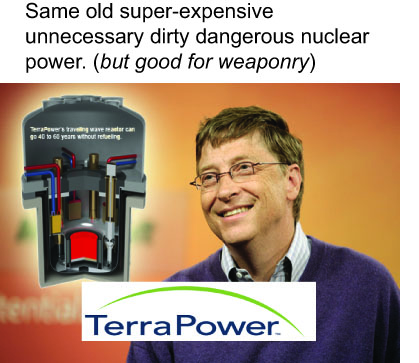
Paul Richards, Nuclear Fuel Cycle Watch Australia, https://www.facebook.com/groups/102118604791305231 Jan , TerraPower – nuclear reactor design and research firm, chose, Wyoming, as it’s an oligarch and dictator’s Paradise.
Wyoming’s trust, as well as asset protection laws, combined with its property tax, sales tax, and excise tax. Give the uber-wealthy 1% a free ride, as one of only seven states that have no personal income tax.Therefore, even more, difficult for top tier energy auditors, to test and measure, proof of concept in engineering terms, by default that includes economic and environmental viability.Wyoming is the best on-shore tax haven state in the  USA, arguably the best in the world outside
  China.
“Wyoming trust and layers of private companies with concealed ownership allow the world’s wealthy to move and spend money in extraordinary secrecy, protected by some of the strongest privacy laws in the country and, in some cases, without even the cursory oversight performed by regulators in other states.” The Washington PostAll in a state, that has a deplorable record of ecological disasters, created by the other fuel-burning; Linear Business Model,damaging earth systems, accelerating the Anthropocene.• burning – fuel
• churning – production• consuming – excess energy• consuming – products• dumping – waste in earth systems• ad Infinitum – Latin, literally ‘to infinity’19C flawed business model, that birthed corporatism, which created an acceleration in the climate crisis in the first place.Democracy without transparency is not democracy._____________source: The Washington Post.https://www.washingtonpost.com/…/wyoming-trusts…/BANKING FRAUD PANDORA PAPERShttps://en.wikipedia.org/wiki/Pandora_PapersPANAMA PAPERShttps://en.wikipedia.org/wiki/Panama_PapersPARADISE PAPERShttps://en.wikipedia.org/wiki/Paradise_PapersMAURITIUS PAPERShttps://en.wikipedia.org/wiki/Mauritius_Leaks
The Nuclear Free Local Authorities (NFLA) of the UK and Ireland call for truly green energy on old nuclear sites
NFLA endorses call for real green energy on former nuclear sites
The Nuclear Free Local Authorities (NFLA) of the UK and Ireland has called for renewable technologies to be used to produce ‘real green energy’ on land formerly occupied by now decommissioned nuclear power plants.
The NFLA was pleased to see the Nuclear Decommissioning Authority (NDA), the agency charged with making safe and clearing closed civil nuclear plants, committing itself in its latest draft Business Plan to being a ‘net (carbon) zero’ business, but disheartened by the lack of detail.
In its response to the consultation on the plan concluded today by the NDA, the NFLA hopes that ‘active consideration can be given to generating onsite power and heat to support decommissioning operations using renewable technologies.
Councillor David Blackburn, Chair of the NFLA Steering Committee, said:
“We are surprised that the NDA has not picked up on the obvious. The land formerly occupied by nuclear power plants, whilst not being so attractive for residential, leisure or office developments, has great potential to be the location for solar farms, wind turbines and ‘green’ hydrogen. Or, where these plants are located by the sea, even to support offshore generation through being a support base for wind farms and tidal schemes. By their nature, nuclear plants are also linked to the electricity grid. Why not use their geographical situation and infrastructure for ‘real green’ energy generation?”
In its draft Business Plan, the NDA has indicated that the following land on each of these redundant power plant sites has now been ‘de-designated’ from nuclear use: Berkeley – 11 hectares; Harwell – 23 hectares; Oldbury – 32 hectares; Winfrith – 10 hectares; and Capenhurst – 17 hectares, but over the next decade all of the UK’s remaining outdated Advanced Gas Cooled reactors will be closed and decommissioning will begin, a process that will take over 100 years.
Councillor Blackburn added: “Clearly NDA operatives will be on-site for a long-time so an investment in micro-generation schemes, such as roof-mounted solar, a solar farm or wind turbines, would pay for itself many fold. Not only would the NDA reap the dividend of generating renewable power to support decommissioning operations, but it would also reduce the agency’s carbon footprint. And as 1,043 hectares is expected to be eventually freed up, there is no reason that the agency could not become a net exporter of renewable energy to the National Grid.”
In its response, the NFLA references a community-owned renewable energy provider which has a 915 KW solar farm on a 1.6 hectare site, and points out that the Oldbury ‘de-designated land’ is 32 hectares, enough to theoretically host twenty such schemes. For more information please contact: Richard Outram, Secretary, NFLA email Richard.outram@manchester.gov.uk / mobile 07583 097793
Nuclear power – a burden that will only slow the energy transition – UK Greens

‘Nuclear power is a burden’ – Green Party slams Government’s £100 million Sizewell C cash injection. The Green Party’s comments come after the Government pledged £100 million of taxpayer cash towards the Sizewell C project.
The Green Party has slammed the Government’s decision to commit £100 million of public money towards Sizewell C. Ministers hope that the £100 million pledge will attract further private investment in the Sizewell C project. But Adrian Ramsay, the Green party’s co-leader and Suffolk MP candidate, said: “Nuclear power is a burden and a risk, not a solution”.
Mr Ramsay added: “The next decade is crucial for cutting carbon emissions but nuclear will only slow the energy transition, not speed it up. “Even with constant injections of yet more taxpayers’ cash, the
energy from Sizewell C won’t come onstream for years, whereas more cost-effective solar and wind can be deployed right now.
“At a time when people are already struggling with energy prices, it is absurd to throw yet more millions of pounds into a nuclear plant that could just drive energy prices up further when we could be expanding cheaper, cleaner alternatives like solar or wind.”
Suffolk Live 28th Jan 2022
https://www.suffolklive.com/news/nuclear-power-burden-green-party-6565875
What’s plan B if the government can’t attract investors willing to fund Sizewell C?
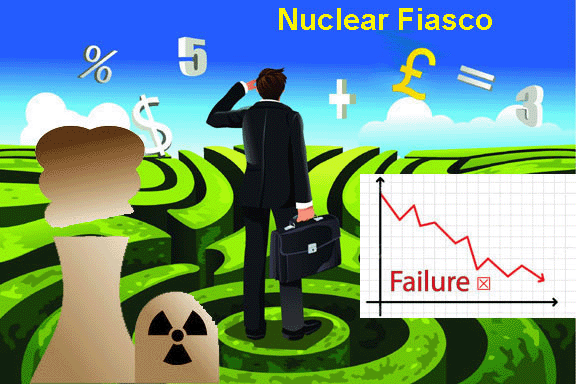
What’s plan B if the government can’t attract investors willing to fund Sizewell C? Guardian Nils Pratley 27 Jan 22. Development money for nuclear power station is an attempt to draw in investors that could replace China’s CGN sum of £100m is peanuts in the expensive world of nuclear power stations, so regard the business secretary Kwasi Kwarteng’s funding for a round of development work on Sizewell C as a form of advertising. The cash is intended to send a message that the government is serious about getting the plant built in Suffolk. And it is an appeal for outside investors to volunteer to sit alongside developer EDF, the French state-backed group.
There was also a definition of a desirable investor: “British pension funds, insurers and other institutional investors from like-minded countries”. Note the nationality test. It is the closest we have come to official confirmation that China General Nuclear (CGN), originally slated for a 20% stake in Sizewell, will be kicked off the project. It remains to be seen how, legally, the government will rip up the 2015 deal with CGN signed by David Cameron’s government, but the intention is clear.
So, too, is the intended funding mechanism. It will be a regulated asset base (RAB) model, a version of the formula used at Heathrow Terminal 5 and the Thames Tideway giant sewer. The key point for investors is that they will see some income before Sizewell is built, unlike at Hinkley Point C where EDF and CGN earn their princely cashflows only when the electricity starts to flow.
What, though, if those British and like-minded institutions still refuse to play? Nuclear represents unknown territory for most of them. What if competition to invest, which is meant to be the other way in which RAB lowers financing costs, doesn’t materialise? What’s the government’s plan B?
The only possible solution is for the state to invest directly. If that is so, wouldn’t it be better to run an upfront benchmarking exercise at the outset to compare the numbers? Sizewell, unfortunately, is probably inevitable given the current panic over high gas prices and long-term energy security. But taxpayers, on the hook anyway via household bills, deserve to know that the odd billion or three isn’t being diverted unnecessarily to intermediaries.
By the time Sizewell’s sums become enormous, transparency will be essential…….https://www.theguardian.com/business/nils-pratley-on-finance/2022/jan/27/whats-plan-b-if-the-government-cant-attract-investors-willing-to-fund-sizewell-c
1 This Month
23-25 October – on Zoom – World BEYOND War’s annual global conferenc


Shut down the radiation-damaged Heysham nuclear reactors now
To see nuclear-related stories in greater depth and intensity – go to https://nuclearinformation.wordpress.com

Say No to NASA’s Reckless Nuclear Reactor on the Moon
Say No to NASA’s Reckless Nuclear Reactor on the Moon

-
Archives
- October 2026 (199)
- September 2026 (339)
- August 2026 (330)
- July 2026 (355)
- June 2026 (287)
- May 2026 (306)
- April 2026 (356)
- March 2026 (251)
- February 2026 (267)
- January 2026 (308)
- December 2025 (358)
- November 2025 (359)
-
Categories
- 1
- 1 NUCLEAR ISSUES
- business and costs
- climate change
- culture and arts
- ENERGY
- environment
- health
- history
- indigenous issues
- Legal
- marketing of nuclear
- media
- opposition to nuclear
- PERSONAL STORIES
- politics
- politics international
- Religion and ethics
- safety
- secrets,lies and civil liberties
- spinbuster
- technology
- Uranium
- wastes
- weapons and war
- Women
- 2 WORLD
- ACTION
- AFRICA
- Atrocities
- AUSTRALIA
- Christina's notes
- Christina's themes
- culture and arts
- Events
- Fuk 2022
- Fuk 2023
- Fukushima 2017
- Fukushima 2018
- fukushima 2019
- Fukushima 2020
- Fukushima 2021
- general
- global warming
- Humour (God we need it)
- Nuclear
- RARE EARTHS
- Reference
- resources – print
- Resources -audiovicual
- Weekly Newsletter
- World
- World Nuclear
- YouTube
-
RSS
Entries RSS
Comments RSS

