French nuclear corporation EDF – facing huge debts, but cosily enmeshed with UK government

But what about the future? EDF is predicted to stack up 100 billion Euros (£87.8 billion) in debt this year and the French government already pumped €3 billion (£2.6 billion) into the company in Spring.
But as you’ll see below, no matter how bad things are there’s always room to give the CEO a pay rise.
In 2020, CEO Lévy was listed as the 9th highest-paid CEO in the utility sector worldwide taking home a salary of €450,000 (£389,500) and €3,660 (£3,150) in benefits.
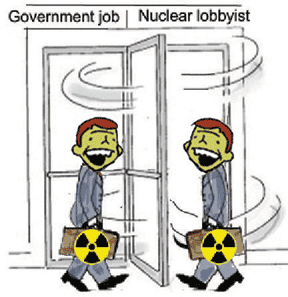
EDF has been getting cosier and cosier with the government.
And the cosiness isn’t set to end anytime soon, EDF stands in good stead under Liz Truss. The new PM nominated former EDF lobbyist Michael Stott as Downing Street’s new business liaison. Stott, who is also an ex-Tory press officer, is expected to lead the government’s new-build nuclear programme.
EDF: WHEN THE STATE GOES FULL CAPITALIST. https://newint.org/features/2022/10/31/edf-when-state-goes-full-capitalist 31 October 2022
What happens when a state energy company goes multinational? In the second installment of its Heat the Rich series on Britain’s big six energy giants, Corporate Watch puts the spotlight on EDF Energy.
EDF is the fifth biggest energy supplier in the UK currently controlling over 10% of the market. The French multinational is best known for “leading the UK’s nuclear renaissance” operating all eight of the UK’s nuclear power stations.
It’s owned by Electricity of France S.A. (Électricité de France, EDF). A multinational energy producer and supplier primarily (and soon to be solely) owned by the French government. It is one of the world’s top five utility companies.
Created in 1946 by the French government, EDF was set up with the intention of rebuilding France’s power grid following World War Two. Now, 70 years on, EDF has branched out a lot further than France, cashing in on energy users from the USA to India. The group is now made up of 144 subsidiaries.
Despite its name, EDF isn’t just in the energy business. EDF is also involved in the data software, vehicle traceability, investment, and real estate sectors, to name just a few.
EDF uses strategic partnership deals to build its brand, for example, the company is a ‘premium partner’ (and official energy supplier) for the Olympic and Paralympic Games in Paris in 2024.
HOW MANY UK ENERGY CUSTOMERS DOES EDF HAVE?
Electricity (excluding pre-payment): 3 million
Gas (excluding pre-payment): 2.1 million
WHO OWNS IT?
EDF Energy (UK) Ltd is ultimately owned by EDF SA, a French company which is majority owned (84%) by the French government and listed on Euronext, the French stock exchange.
In July 2022, the French government announced it would buy out the outstanding 16% of EDF’s shares, reversing the partial privatization of the company in 2005. But it hit a brick wall when investors threatened to sue the government for losses. The French state started finalising their buyout of 100% shares in EDF in September. But at what price? The other shareholders are demanding a fortune, with the government set to pay a total of 9.7 billion euros (£8.7 billion) of French taxpayers’ money. It’s worth noting that the shareholders set to cash in from this nationalization are investment giants Blackrock and Vanguard Group.
IS EDF SUFFERING AS A RESULT OF THE COST OF LIVING CRISIS?
On the face of it, it does seem like EDF profits have nose-dived in recent years. According to EDF Energy (UK) Ltd’s 2021 accounts, EDF operated a €4.8 billion (£4.2 billion) loss compared to €268 million (£239 million) in 2020. No dividends were paid by EDF Energy (UK) Ltd. in 2021 nor in 2020. However, another UK subsidiary, EDF Energy Holdings Ltd did pay dividends of £1 million in 2021, and £60 million in 2020.
Despite these losses, at the end of 2021 EDF Energy (UK) Ltd still had net assets of €17.9 billion (£16 billion).
Regardless of the UK subsidiary’s accounts, the EDF Group achieved all its financial targets in 2021. Group sales for the year amounted to £8,720m, an increase of 8%. The Group reaped profits of €360 million (£324 million) in 2021, a total reverse in performance from 2020 when the Group made a loss of €2.6 billion (£2.3 billion).
But what about the future? EDF is predicted to stack up 100 billion Euros (£87.8 billion) in debt this year and the French government already pumped €3 billion (£2.6 billion) into the company in Spring. But as you’ll see below, no matter how bad things are there’s always room to give the CEO a pay rise.
WHO RUNS EDF?
Jean-Bernard Lévy, the current CEO of the Group, is due to leave six months early after a fallout at the top between Lévy and French president, Emmanuel Macron, over nuclear energy. Lévy is – however – unlikely to be out of a job after EDF. He was formerly CEO of weapons company Thales, and media company Vivendi, and even did a stint as a technical adviser to a government ministry. In 2020, Lévy was listed as the 9th highest-paid CEO in the utility sector worldwide taking home a salary of €450,000 (£389,500) and €3,660 (£3,150) in benefits.
Moreover, Lévy’s probable successor, Luc Remont, cherrypicked by Macron (whose appointment is just waiting for parliamentary approval), will start on on a lucrative footing after the French Government announced that it would like to increase the new EDF CEO’s salary to attract more candidates. The company CEO’s salary is currently capped at €450,000 (£389,500). Whilst no figure has been publicly stated, the EDF Group is known to pay high salaries. In 2013 it was revealed that former UK CEO, Vincent de Rivaz, received a pay package of £1 million annually in remuneration.
Simone Rossi has been at EDF since 2004, Rossi switched roles from Head of the International Division to UK CEO in 2017. But Rossi’s influence goes far beyond the British Isles. As a member of the Executive Committee, Rossi is at the very top of the EDF Group. At first it appears Rossi accepted a big pay cut, with a 2017 payment package capped at just over £100,000. A modest salary in comparison to his predecessor, de Rivaz, who was on £1 million a year. But it is highly probable that Rossi’s remuneration is now identical to de Rivaz at £1 million, as the highest-paid director in EDF Energy Holdings Ltd.
EDF
It’s not just customers at the receiving end of EDF’s profit-led strategy. Kashmir Singh, a Prospect trade union organizer, has been fighting against workplace racism and discrimination for half a century. Singh was presented with a 50-year long-service award in 2021 by Simone Rossi. But Singh’s union released a statement explaining how, during his career, he had been subject to two grievance and disciplinary proceedings for daring to raise EDF’s failure to hire and promote staff from Asian or Black Ethnic (ABLE) backgrounds.
SUBSIDIARIES IN TAX HAVENS
EDF Energy (UK) Ltd owns EDF Energy Holdings Ltd, the top holding company for EDF’s UK subsidiaries. Whilst EDF Energy (UK)’s accounts from 2021 detail tax payments of €905m (£780m) of corporation tax in 2021, some of its subsidiaries are registered in notorious tax havens including a holdings company registered in Hong Kong and an insurance company in Guernsey.
Over the last two decades, EDF has funded the Conservative party to the tune of £38,499.
Most recently, last October EDF Energy Renewables Ltd donated £4,999 to the Conservative Tees Valley Mayor, Ben Houchen. And like clockwork, by March 2022, EDF announced its plan to construct a new hydrogen production centre near the former Redcar steelworks in Teeside. The centre is called Tees Green Hydrogen.
EDF also made two £6,000 in donations to the Labour Party in October 2003 and September 2005. The timing of these donations coincided with Labour PM Tony Blair’s announcement in November 2005 that the government was looking into new nuclear for the UK’s future energy supplies. This set the ball rolling for EDF’s £18 billion government contract for the construction of Hinkley Point C power station.
Over the last decade, EDF has been getting cosier and cosier with the government. The company has had at least five independent opportunities to promote its agenda in meetings with UK prime ministers, once with David Cameron and four times with Boris Johnson. Company representatives even had an intimate one-to-one with Johnson in January 2022 to chat about the UK’s nuclear energy supply, which EDF holds the monopoly over.
Since 2012, company representatives have also attended at least 151 meetings with government ministers, including 24 solo meetings with the former Secretary of State for Business, Energy and Industrial Strategy, Kwasi Kwarteng, who is now the Chancellor of the Exchequer, the person in charge of UK economic policy.
And the cosiness isn’t set to end anytime soon, EDF stands in good stead under Liz Truss. The new PM nominated former EDF lobbyist Michael Stott as Downing Street’s new business liaison. Stott, who is also an ex-Tory press officer, is expected to lead the government’s new-build nuclear programme.
Failure of the “nuclear renaissance” leaves Britain with super-costly closures of reactors, and electricity shortage
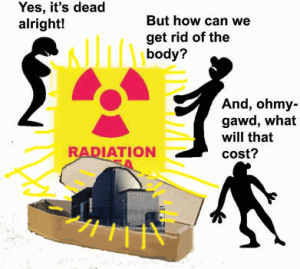
UK facing electricity supply woes after nuclear power stations shut, MPs told
Larger and smaller reactors carry risks, island nation failed to keep pace with nuclear fleet closure
Lindsay Clark, 1 Nov 2022 , Electricity shortages appear inevitable for the UK due to the decommissioning of the nation’s aging estate of nuclear power stations, according to evidence submitted by industry to politicians.
…….. Writing to the Commons Science and Technology Committee, Manchester University’s Dalton Nuclear Policy Group said: “Sadly, it is now much too late to avoid a negative impact on the UK’s electricity supply due to the closure of our nuclear fleet. All eleven of Britain’s Magnox plants have been shut down for many years – the last being the Wylfa plant on Anglesey which ceased operation on New Year’s Eve 2015.
It added: “The fleet of Advanced Gas-cooled Reactors (AGRs) operated by [French energy firm] EDF is also now seeing closures.”
In February, the UK government was warned taxpayers would have to make up a multibillion-pound shortfall to decommission nuclear power stations unless a history of overspending is reversed. EDF Energy runs seven AGR stations in the UK, part of eight second-generation reactors set to be decommissioned which provide 16 percent of the nation’s electricity. The AGR stations are scheduled to stop producing electricity by 2028.
Last year the government injected £5.1 billion ($5.8 billion) into the Nuclear Liabilities Fund – now valued at £14.8 billion ($17 billion) – which it set up in 1996 to meet the costs of decommissioning AGR and Pressurized Water Reactor stations. But EDF’s latest cost estimate to decommission the stations in March last year was £23.5bn ($27 billion). Public spending watchdog the National Audit Office has warned more money will be needed unless the government and EDF avoid overspending.
But as well as overspending, decommissioning also presents a problem for electricity supply.
“It is unlikely that there will be any significant extension to these projected dates, although there may be scope for some slight delays in closure. Once the AGRs are all closed, the UK will only have one reactor from the current nuclear fleet still operational – the pressurised water reactor at Sizewell B,” Dalton Nuclear Policy Group said.
……. “it is due to the failure since 2008 – with the exception of the long-delayed Hinkley Point C – of all proposals for a nuclear renaissance in the UK to move from plans to reality,” the group said.
In May, EDF admitted to another year’s delay and £3 billion ($3.5 billion) extra cost in Hinkely Point C – the UK’s first nuclear power station to be built in 20 years. The revised operating date for the site in Somerset is now June 2027 and total costs are estimated to be in the range of £25 billion to £26 billion ($29 billion).
EDF said it would have no cost impact on British consumers or taxpayers. The power station had been due online by 2017 at a cost of around £20 billion ($22 billion)………………….. The Science and Technology Committee is set to hear oral evidence for its inquiry on Delivering Nuclear Power during hearings this week.
The Register 1st Nov 2022
https://www.theregister.com/2022/11/01/electricity_shortages_uk/
A failure to review America’s nuclear posture
By Joe Cirincione | October 28, 2022
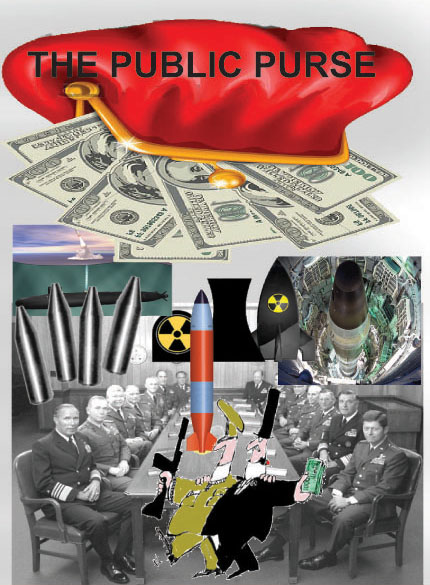
The question is complicated by a process that gives those most interested in continuing nuclear programs the authority to write the policy governing these weapons.
The Pentagon controls the pen
https://thebulletin.org/2022/10/a-failure-to-review-americas-nuclear-posture/?utm_source=Newsletter&utm_medium=Email&utm_campaign=MondayNewsletter10312022&utm_content=NuclearRisk_FailureToReview_10282022#post-heading—By Joe Cirincione | October 28, 2022,
President Joe Biden has passed on his best chance to operationalize his stated goal of reducing the role in US security policy of America’s more than 5,400 nuclear weapons with the public release on October 27 of the Nuclear Posture Review (NPR).
Biden is now the 14th president over eight decades to attempt to reconcile the risks that derive from nuclear deployments with the demands of deterrence. He has discovered how difficult this can be.
Biden’s NPR adjusts nuclear policy and programs at the margins while making no significant changes to the Pentagon’s budgets and deployments. It endorsed dozens of nuclear-weapons programs that will cost an estimated $634 billion over this decade, according to a May 2021 assessment from the Congressional Budget Office. Including in that estimate missile defense programs, weapons programs added after the Congress report and expected inflation could bring the cost to almost $1 trillion per decade for several decades to come.
This includes proceeding with a new land-based, long-range missile rushed toward production in the last months of the Trump administration without examining less expensive and less dangerous alternatives to its production. That project alone could cost $264 billion overall.
This failure is not unique to Biden. Every president in the nuclear age has struggled to control the weapons supposedly under his sole authority. Primarily this is because US nuclear posture is not a rational response to an external threat environment. It is driven by those who see nuclear superiority as a tool of global power, those who use nuclear security as a wedge issue in partisan politics, and by those powerful arms corporations that realize vast profits from manufacturing, marketing, and maintaining these deadly arsenals
The question is complicated by a process that gives those most interested in continuing nuclear programs the authority to write the policy governing these weapons. The Pentagon controls the pen. Biden appears to have concluded that it is too costly in political terms to fight for his views, which included repeated statements that the United States has no need to ever use a nuclear weapon first. He has let the Pentagon dictate his strategy rather than challenge a bureaucracy resisting any alteration of current programs and doctrine.
Elsewhere, I have detailed how a safer, more rational nuclear policy could have included, among other steps, reducing the number of deployed strategic warheads by one-third, to about 1,000, taking nuclear-armed missiles off hair-trigger alert, embracing no first use or sole purpose doctrines, and requiring an additional senior official to authorize launch. Pacts such as AUKUS that encourage the spread of nuclear weapons technology must also be rethought.
But consideration of these and other steps were effective excluded early in the process when the Defense Department fired then-Deputy Assistant Secretary of Defense Leanor Tomero, whom Biden had placed in charge of nuclear and missile defense policy and who had been pressing, following Biden’s presidential guidance, for consideration of some of the alternatives. According to knowledgeable sources, Pentagon staff complained to Republican staff on the Senate Armed Services Committee that Tomero wasn’t sufficiently supportive of “nuclear modernization” – the euphemism for the mountain of contracts that drive the nuclear posture.
Tomero was an early casualty of an entrenched nuclear bureaucracy fiercely protective of its contracts, secrecy, and privilege . As American University Professor Sharon Weiner wrote: “The nuclear weapons establishment will limit choice by presenting everything as an interlocking set of military requirements instead of multiple options for meeting deterrence goals.” She was right.
As Weiner predicted and the NPR reflects, “These options will likely allow, at best, only narrow deviations from the status quo.”
President Bill Clinton was the first to issue an NPR in 1994; Biden should be the last. Policy should flow from the White House to executing departments, not the reverse. Let this be the end of a flawed, inadequate, and dangerous nuclear posture review process.
Crushing blow to French President Macron as EDF braces for £28billion hit over nuclear shortfall
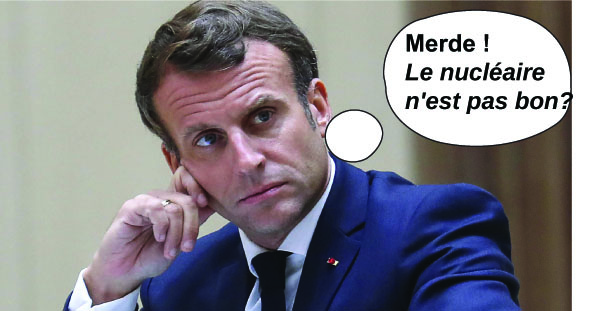
Macron dealt crushing blow as EDF braces for £28billion hit over nuclear
shortfall. Boris Johnson last month announced plans to invest £700million
into EDF’s Sizewell C project, in one of his final acts as Prime Minister.
Express 27th Oct 2022
https://www.express.co.uk/news/world/1688454/emmanuel-macron-news-edf-nuclear-power-fr
Dennis Kucinich: Where Are the Pro-Peace Democrats?
https://www.antiwar.com/blog/2022/10/30/dennis-kucinich-where-are-the-pro-peace-demby Aaron Maté Posted on From The Grayzone: Pushback with Aaron Maté
Dennis Kucinich on the Congressional Progressive Caucus’ Ukraine letter debacle and how to revive the US peace movement at a time when elected progressives are afraid to take a stand against war.
Dennis Kucinich, who led Congressional opposition to the Iraq war, reacts to the Congressional Progressive Caucus retracting a letter calling for diplomacy with Russia. “If we don’t believe in diplomacy,” Kucinich asks, “then where do we go as a country?”.
Dennis Kucinich is a former Congressmember (D-Ohio) and former Mayor of Cleveland.
Sizewell C nuclear station to be funded 20% by French taxpayers, and 20% by British taxpayers.

French government officials have officially approved the involvement of
state-owned company EDF in the development of Britain’s Sizewell C nuclear
power plant, Boris Johnson’s last flagship program as Prime Minister. I can
reveal. In his last keynote address as Prime Minister, Mr Johnson had urged
his successors to “go nuclear and go big and go with Sizewell C”.
While questions remain about how the project will be funded, with I After
previously revealing how it has approached investors in the UAE, Australia
and Saudi Arabia for financial backing, the UK has now secured the full
backing of French officials – a big step forward for the plant. The UK is
expected to plan a 20 per cent stake in Sizewell C, with EDF taking a
further 20 per cent – leaving 60 per cent of the project dependent on
investors.
UK Daily News 28th Oct 2022
Government Confirms No Nuclear for Australia, At Least Any Time Soon

https://www.gizmodo.com.au/2022/10/australia-nuclear-energy/ Asha Barbaschow, October 31, 2022 “……………………………… Addressing Senate Estimates on Friday, representatives from the Department of Prime Minister and Cabinet put this to bed.
Summarising the government’s position, the department’s acting deputy secretary for the economy, industry and G20, James Chisholm, said the cheapest form of new energy for investment is renewable energy. We’ve got too much sun and wind to not make the most of it.
That is because it has zero marginal cost,” he said.
“By that I mean there’s a cost associated with building it, seeking approval for it and its initial construction, but once that happens it doesn’t have the same costs associated with it that traditional base-load generation, whether it’s coal-fired or nuclear, has.”
There are a lot of costs associated with those forms of energy, with the CSIRO forecasting that small nuclear modular reactors would have a levelized cost of energy of between $136 and $326 per megawatt hour in 2030. Whereas the levelized cost of energy such as renewable energy is a lot lower.
“It would be estimated to cost between something like $53 to $82 per megawatt hour,” Chisolm explained.
“Really importantly, that includes firming costs.
“Often what happens is people look at these figures and say, ‘Yes, but with renewables you’re not factoring in firming and integration costs.’ But the CSIRO work does factor that in. According to CSIRO, and this is consistent with other analyses, it comes in way cheaper. And that flows through to bills.”
Although this report was published a few months ago, Chisholm said as time goes on, that cost comparison becomes more stark.
“We’re seeing it play out in other markets. If you look at those markets where nuclear power is a significant proportion of the generation mix, nuclear is experiencing the same challenges that coal-fired generation has experienced, simply because of how high the cost is. When it comes to competitive markets for energy, it is difficult for those forms of energy to compete with renewables, particularly for firmed renewables,” he said.
Well, there you have it.
Minister Vows Response to Fukushima Reputational Damage
https://www.nippon.com/en/news/yjj2022103000407/ Soma, Fukushima Pref., Oct. 30 (Jiji Press)–Japanese industry minister Yasutoshi Nishimura said Sunday the government will face and surely respond to local people’s concerns about reputational damage related to the planned release of treated radioactive water into the ocean from the disaster-crippled Fukushima No. 1 nuclear power plant.
The minister made the remark when he visited a fishing port in Soma, Fukushima Prefecture, northeastern Japan, and exchanged opinions with local fishery workers, who voiced such concerns.
Aiming to start the release of the treated water containing radioactive tritium around spring next year, the Japanese government and Tokyo Electric Power Company Holdings Inc. <9501>, the operator of the Fukushima No. 1 plant, have been giving explanations about the move to local people and proceeding with the construction of related facilities.
At the day’s meeting with Nishimura, the fishery workers called for measures that would allow Fukushima fishery products to be sold at fair prices. They also asked the central and Fukushima governments to work in closer cooperation so that local opinions can be taken in swiftly.
After the meeting, Nishimura told reporters, “We’ll launch the work to establish a new framework for communicating the attractiveness of Fukushima’s fishery products and boosting their consumption through cooperation with businesses and local governments across Japan.” He added that the government will give details of the plan possibly by the end of the year.
Academics and industry questioned on UK nuclear power supply.

The Science and Technology Committee begin its Delivering Nuclear Power evidence
sessions on National Engineering Day in the UK. This session examines how
UK nuclear energy production will be maintained and increased. The
Government has said nuclear power will play a key part in the UK’s energy
security and goal of reaching Net Zero emissions by 2050, setting the
intention to triple the current electricity output by 2050.
However, all but one civil nuclear reactor in the UK will be decommissioned by 2028
under current plans. And only one new reactor, Hinkley point C in Somerset,
is currently expected to be operational before 2030. In the final panel,
the Committee will question EDF executives on the four-year delay in the
construction of Hinkley Point C, completion of which is expected in 2027.
The progress in plans for a new reactor in Sizewell C in Suffolk will also
be discussed.
UK Parliament 28th Oct 2022
Sizewell C nuclear could become low on the priority list of UK government projects
Therese Coffey’s appointment as the new Environment Secretary came as a
surprise to those who expected her to return to the backbenches after the
departure of her close friend Liz Truss from Downing Street.
But actually it looks like quite an astute move by new Prime Minister Rishi Sunak if he
wants to keep all wings of his party onside.
What it also does is throw up
a very real challenge for her – the Environment Secretary has one of the
most controversial green issues in the country sitting in the middle of her
constituency and an electorate divided about what the government could do.
Dr Coffey is now in charge of the Department for the Environment, Food and
Rural Affairs – it’s effectively the old Min of Ag with environmental
issues tagged on.
What happens at Sizewell is not up to the Environment
Secretary, but the department has a very big input into the decision. It
would probably have to be one of her more junior ministers who actually
makes its case in the Sizewell debate – but as Secretary of State she will
always be closely identified with that by the public.
Of course, it remains
to be seen how much of an issue Sizewell C is likely to be for the Sunak
government. It is a very expensive project and would require a great deal
of government capital expenditure to get it under way. Given that we’re
facing a second era of austerity in 15 years and that any investment now
will not pay off for a decade, I can’t help feeling that any moves towards
progressing Sizewell C are likely to proceed in first gear (or even be left
in neutral) for the next two or three years.
East Anglian Daily Times 27th Oct 2022
https://www.eadt.co.uk/news/23080960.will-coffeys-new-job-mean-sizewell-suffolk-coast/
Reporters Without Borders leads 16 organisations urging UK Home Secretary to intervene in extradition of Julian Assange.

UK: RSF leads a coalition of 16 organisations in urging Home Secretary Suella Braverman to urgently intervene in Assange extradition
Reporters Without Borders (RSF) has led a coalition of 16 organisations in urging the new UK Home Secretary, Suella Braverman, to intervene in the US government’s request to extradite Wikileaks publisher Julian Assange. These groups, representing press freedom, free expression, and journalists’ organisations, have also requested a meeting with Braverman to discuss concerns in the case, after a request for a meeting with former Home Secretary, Priti Patel, went unanswered. The full text of the letter is below.
The Rt. Hon Suella Braverman
Secretary of State for the Home Department
2 Marsham Street
London
SW1P 4DF
7 October 2022
Dear Home Secretary,
We, the undersigned press freedom, free expression and journalists’ organisations, are writing to raise the case of WikiLeaks publisher Julian Assange and request you to urgently intervene to ensure he is not extradited to the United States.
In June your predecessor, Priti Patel, signed the order to extradite Mr Assange, despite widespread international concern that his extradition would have alarming implications for journalism and press freedom. In fact, many of the signatories in this letter wrote to Ms Patel warning that Assange’s prosecution “would set a dangerous precedent that could be applied to any media outlet that published stories based on leaked information, or indeed any journalist, publisher or source anywhere in the world.”
Our request for a meeting was unfortunately left unanswered. We are therefore now asking you, Home Secretary, to meet with the signatories of this letter to discuss the case in detail.
We urge you, Home Secretary, to intervene in this extradition request as a matter of priority. In the US, Mr Assange would face trial on 17 counts under the Espionage Act and one count under the Computer Fraud and Abuse Act, which combined could see him imprisoned for up to 175 years. He is highly likely to be detained there in conditions of isolation or solitary confinement despite the US government’s assurances, which would severely exacerbate his risk of suicide.
Further, Mr Assange would be unable to adequately defend himself in the US courts, as the Espionage Act lacks a public interest defence. This would not align with the values of fairness, justice and a public commitment to media freedom that the UK continues to promote.
You now have an opportunity to ensure that this extradition does not proceed. An opportunity to demonstrate through action that the UK means what it says in its commitment to media freedom. And most importantly, the opportunity to reunite Mr Assange with his young family after many years of separation – an act that may ultimately save his life. We ask you to seize this opportunity as a matter of urgency and ensure that the UK government acts in the interest of journalism and press freedom and does not enable the US government to continue to pursue this more than decade-old, politically motivated case.
We look forward to hearing from you and discussing the case further. We would be grateful for a prompt response. Please reply via Azzurra Moores at Reporters Without Borders (RSF) at amoores@rsf.org.
Sincerely,
Rebecca Vincent, Director of Operations and Campaigns, Reporters Without Borders (RSF)
Laurens Hueting, Senior Advocacy Officer, European Centre for Press and Media Freedom (ECPMF)
Séamus Dooley, Assistant General Secretary, National Union of Journalists
Ricardo Gutiérrez, General Secretary, European Federation of Journalists (EFJ)
Ruth Smeeth, Chief Executive, Index on Censorship
Mark Johnson, Legal & Policy Officer, Big Brother Watch
Peter Tatchell, Director, Peter Tatchell Foundation
Dr Suelette Dreyfus, Executive Director, Blueprint for Free Speech
Romana Cacchioli, Executive Director, PEN International
Daniel Gorman, Director, English PEN
Ricky Monahan Brown, President, Scottish PEN
Alix Parodi, President, PEN Suisse Romand
Tanja Tuma, President, Slovene PEN
Alix Parodi, President, PEN Suisse Romand
Zoë Rodriguez, joint President, PEN Sydney, and Chair of the PEN International Women Writers
Jesper Bengtsson, President, Swedish PEN


Talk World Radio: Dennis Kucinich: Democrats Should Not Make Support for War a Test of Party Loyalty
Progressives retract Ukraine letter to Biden after uproar
By FARNOUSH AMIRI and SEUNG MIN KIM, 26 Oct 22
WASHINGTON (AP) — A group of progressive Democrats in Congress said Tuesday it had retracted a letter to the White House urging President Joe Biden to engage in direct diplomatic talks with Russia after it triggered an uproar among Democrats and raised questions about the strength of the party’s support for Ukraine.
In a statement, Rep. Pramila Jayapal, the chair of the Progressive Caucus, said the caucus was withdrawing the letter it sent less than 24 hours prior. It was signed by 30 members of the party’s liberal flank.
“The letter was drafted several months ago, but unfortunately was released by staff without vetting,” the Washington Democrat wrote in a statement. As chair of the caucus, Jayapal said she took responsibility for this.
The unusual retraction capped a tense 24-hour period for Democrats. Many reacted angrily to the appearance of flagging support for the president’s Ukraine strategy, coming just weeks before a midterm election where their majorities in Congress are at risk.
The back-and-forth spotlighted the fragile nature of Biden’s relationship with the progressive wing of his party, raising stark questions about their ability to work together not only on Ukraine funding — which seems secure, for now — but on more pressing issues that are top priorities for liberals.
The letter had called for Biden to pair the unprecedented economic and military support for Ukraine with a “proactive diplomatic push, redoubling efforts to seek a realistic framework for a cease fire.”
“The alternative to diplomacy is protracted war, with both its attendant certainties and catastrophic and unknowable risks,” the letter read.
Jayapal said the letter was unfairly conflated with recent comments from Minority Leader Kevin McCarthy, R-Calif., who warned that Republicans will not write a “blank check” for Ukraine if they win back the House majority in November.
Progressives retract Ukraine letter to Biden after uproar
By FARNOUSH AMIRI and SEUNG MIN KIMyesterday
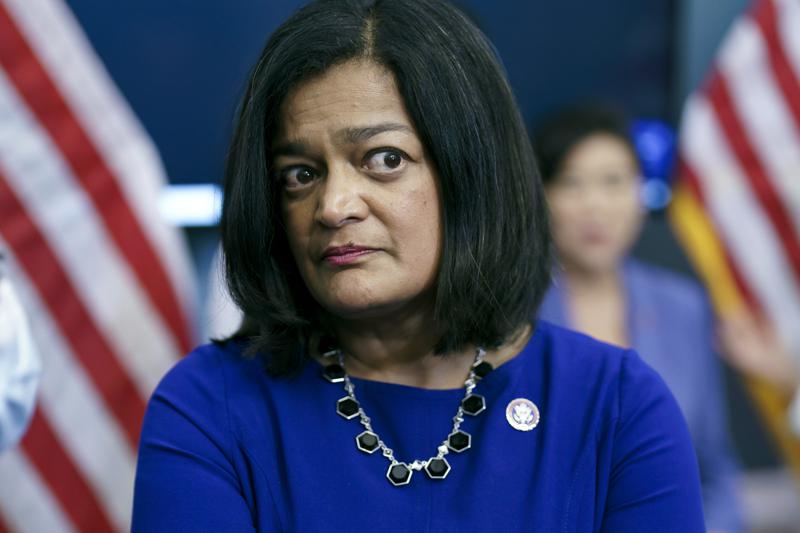
FILE – Rep. Pramila Jayapal, D-Wash., chair of the House Progressive Caucus, attends an event at the Capitol in Washington, July 28, 2022. A group of progressive Democrats in Congress said Tuesday it had retracted a letter to the White House urging President Joe Biden to engage in direct diplomatic talks with Russia after it triggered an uproar among Democrats and raised questions about the strength of the party’s support for Ukraine. (AP Photo/J. Scott Applewhite, File)
WASHINGTON (AP) — A group of progressive Democrats in Congress said Tuesday it had retracted a letter to the White House urging President Joe Biden to engage in direct diplomatic talks with Russia after it triggered an uproar among Democrats and raised questions about the strength of the party’s support for Ukraine.
In a statement, Rep. Pramila Jayapal, the chair of the Progressive Caucus, said the caucus was withdrawing the letter it sent less than 24 hours prior. It was signed by 30 members of the party’s liberal flank.
“The letter was drafted several months ago, but unfortunately was released by staff without vetting,” the Washington Democrat wrote in a statement. As chair of the caucus, Jayapal said she took responsibility for this.
The unusual retraction capped a tense 24-hour period for Democrats. Many reacted angrily to the appearance of flagging support for the president’s Ukraine strategy, coming just weeks before a midterm election where their majorities in Congress are at risk.
ADVERTISEMENT
The back-and-forth spotlighted the fragile nature of Biden’s relationship with the progressive wing of his party, raising stark questions about their ability to work together not only on Ukraine funding — which seems secure, for now — but on more pressing issues that are top priorities for liberals.
RUSSIA-UKRAINE WAR
UN steps up satellite tracking of damage to Ukraine cultureRussia, NATO hold nuclear drills as Ukraine villages poundedLive Updates | Russia-Ukraine-WarPutin monitors practice launches by Russia’s nuclear forces
The letter had called for Biden to pair the unprecedented economic and military support for Ukraine with a “proactive diplomatic push, redoubling efforts to seek a realistic framework for a cease fire.”
“The alternative to diplomacy is protracted war, with both its attendant certainties and catastrophic and unknowable risks,” the letter read.
Jayapal said the letter was unfairly conflated with recent comments from Minority Leader Kevin McCarthy, R-Calif., who warned that Republicans will not write a “blank check” for Ukraine if they win back the House majority in November.
“The proximity of these statements created the unfortunate appearance that Democrats, who have strongly and unanimously supported and voted for every package of military, strategic, and economic assistance to the Ukrainian people, are somehow aligned with Republicans who seek to pull the plug on American support” for Ukraine, Jayapal said.
Yet Jayapal did not disavow the substance of the letter or the push for Biden to engage in diplomacy. Members of the caucus have been calling for a diplomatic solution since Russian President Vladimir Putin’s forces invaded Ukraine on Feb. 24.
The text of the letter had been circulating since at least June, but only a handful of lawmakers signed on at the time, according to two Democrats familiar with the matter who were granted anonymity to discuss internal party deliberations.
Some Democrats who signed the letter months ago said they no longer support it………………………
Despite the retraction and messy behind-the-scenes process, some Democratic lawmakers said they still backed the sentiments behind the letter, arguing that it is the prerogative of Congress to debate the issue as it continues to approve billions of dollars in aid to Ukraine…………………….
Since the war began, Congress has approved tens of billions in emergency security and humanitarian assistance for Ukraine, while the Biden administration has shipped billions worth of weapons and equipment from military inventories.
Last month, lawmakers approved about $12.3 billion in Ukraine-related aid as part of a bill that finances the federal government through Dec. 16. The money included aid for the Ukrainian military as well as money to help the country’s government provide basic services to its citizens.
That comes on top of more than $50 billion provided in two previous bills………………………………….. more https://apnews.com/article/russia-ukraine-biden-europe-congress-government-and-politics-e474bfd7439a57e7923aa1d1b43c8682—
Worthless House Progressives Retract Mild Peace Advocacy Under Pressure From Warmongers
https://caitlinjohnstone.substack.com/p/worthless-house-progressives-retract 26 Oct 22, The Congressional Progressive Caucus has retracted an extremely mild, toothless letter its members had written to President Biden politely asking him to consider adding a little diplomacy into the mix to help end the conflict in Ukraine. The retraction followed a deluge of public outrage against their slight deviation from the official imperial narrative.
If you actually read the original letter signed by House progressives including Alexandria Ocasio-Cortez, Ilhan Omar, Ayanna Pressley, Rashida Tlaib, Jamaal Bowman and Ro Khanna, you will quickly see that it’s as innocuous and anodyne as any statement could possibly be while still containing words. It opens with effusive praise for Biden’s interventionism in Ukraine and condemns the Russian government unequivocally throughout, offering only the humble suggestion that he “pair the military and economic support the United States has provided to Ukraine with a proactive diplomatic push, redoubling efforts to seek a realistic framework for a ceasefire.” Its authors make it abundantly clear that they support making sure such diplomacy is agreeable to Ukraine at every step of the way.
This impotent nothing salad was bizarrely spun by The Washington Post as a call on Biden to “dramatically shift his strategy on the Ukraine war,” despite nothing that could be remotely construed as “dramatic” existing anywhere in the body of the text. The letter received backlash from warmongers in both parties, including from House Speaker Nancy Pelosi. It was personally slammed by Bernie Sanders, the pope of American progressivism. Trolls and warmongers swarmed the social media notifications of every account which posted the letter in an official capacity, mindlessly bleating the words “appeasement” and “Chamberlain” in unison.
In a statement on the retraction of the letter, CPC chair Pramila Jayapal says she accepts responsibility for the publication of the offending act of peacemongering while in the same breath blaming its publication on her staff.
“The letter was drafted several months ago, but unfortunately was released by staff without vetting. As Chair of the Caucus, I accept responsibility for this,” Jayapal said.
“Every war ends with diplomacy, and this one will too after Ukrainian victory,” the statement reads, ignoring mainstream reports that US officials quietly believe Ukraine stands no chance at outright victory in this war. “The letter sent yesterday, although restating that basic principle, has been conflated with GOP opposition to support for the Ukrainians’ just defense of their national sovereignty. As such, it is a distraction at this time and we withdraw the letter.”
Empire critics were quick to highlight the obsequious nature of this retraction.
“For progressives, I didn’t think it could get more pathetic than voting for a disastrous proxy war that the US provoked and prolonged, handing billions to arms makers in the process. In retracting their tepid call for diplomacy and blaming staffers for it, they somehow surpassed it,” tweeted Aaron Maté.
“Certainly speaks to the insanely hawkish atmosphere in Washington that pressured the progressive caucus to withdrawal a totally reasonable, responsible and necessary call for diplomacy in a conflict that risks escalating to nuclear armageddon,” tweeted Rania Khalek.
“Imagine being elected to Congress based on promises of challenging ‘the establishment’ or whatever, then being so petrified of anger from bipartisan DC establishment mavens that you can’t even wait 24 hours before meekly retracting the only mild dissent you’ve expressed,” tweeted Glenn Greenwald.
I don’t know what pressures were the ultimate deciding factor in the CPC’s decision to retract its feeble advocacy for a bit more diplomacy, or how much of that pressure was brought to bear behind the scenes by bigger political monsters in the Beltway swamp, but ultimately it doesn’t matter. The important take-home from this lesson, once again, is that progressive Democrats are worse than worthless at opposing the mechanisms of oligarchy and empire.
In fact if you look at their actions it’s not even really accurate to describe them as “progressive Democrats” as though they are a faction that has meaningful differences with the rest of that party. Aside from the occasional empty soundbyte about healthcare or debt forgiveness, they’re not doing anything to advance progressive agendas which make American lives better, and they’re certainly doing nothing to impede the expansion of the US war machine.
The progressive Democrat is a myth, like the good billionaire or the righteous American war. “The Squad” is nothing more than the social media-savvy branch of the Democratic establishment. The United States has two warmongering oligarchic parties, and a tremendous amount of narrative management goes into manipulating, cajoling and coercing Americans into staying psychologically plugged in to that fraudulent political paradigm.
This comes at the same time the defense minister of Romania was forced to resign for saying peace talks were necessary to achieve peace in Ukraine. It just reveals so much about where we’re at and where we’re headed that the most incendiary and outrageous thing you can say in our society is that we should probably attempt to diplomatically de-escalate hostilities between nuclear superpowers. The fact that the Overton window of acceptable political discourse has already been dragged that far in the direction of warmongering insanity prevents peace from ever having any space to get a word in edgewise.
Kucinich Says Call for Diplomacy to end Ukraine-Russia War Must be Heard; Silencing of Congressional Progressive Caucus Casts Democrats as the “War Party”
https://worldbeyondwar.org/kucinich-says-call-for-diplomacy-to-end-ukraine-russia-war-must-be-heard-silencing-of-congressional-progressive-caucus-casts-dems-as-the-war-party/By Dennis Kucinich, World BEYOND War, October 26, 2022
CLEVELAND (Oct. 26) Weds – – Dennis J. Kucinich, former Congressman and former Democratic Presidential candidate today called upon Congressional Democrats to “rethink their opposition to diplomacy” as a means to end the war between Russia and Ukraine.
During his eight terms in congress, Kucinich led Democratic members’ efforts against the US-sponsored wars in Afghanistan, Iraq, Libya, Syria and worked to end the war in the Balkans and to divert war against Iran.
“War is ultimately a failure of political leadership. Diplomacy is difficult. It requires intelligence, skill and patience. The only way wars end is at the negotiating table,” Kucinich said.
Kucinich spoke in response to the recent retraction by the Congressional Progressive Caucus of the letter, signed by 30 Members of Congress, which called upon the Administration to aggressively seek diplomacy to end the most recent conflict which began with Russia’s invasion on February 24 of this year and which has resulted in over 15,000 deaths of Ukrainian civilians, and the deaths of tens of thousands of soldiers from both Ukraine and Russia.
“The Caucus’ letter, far from being sympathetic to Russia, sought to end the suffering of the Ukrainian people, while preserving their independence. The letter revealed an understanding of the risks of wider war, even a nuclear war, unless diplomacy is pursued,” Kucinich said.
Kucinich reminded Members of Congress that President Jimmy Carter used US diplomacy to achieve the Camp David Accords on September 17, 1978, with Israeli Prime Minister Menachem Begin and Egyptian President Anwar Sadat. US diplomacy brought about the Dayton Accords of November 21, 1995, which ended war in the Balkans. US Senator George Mitchell of Maine negotiated with multiple parties to bring about the Good Friday Agreement on April 10, 1998, which ended 30 years of deadly conflict in Northern Ireland, known as “The Troubles.”
“Remember the words from John F. Kennedy’s January 20, 1961, Inaugural Address: ‘Let us never negotiate out of fear. Let us never fear to negotiate.’ It was that type of thinking which produced negotiations between the US and the Soviet Union which averted a nuclear war during the Cuban Missile Crisis, October 16, 1962 – October 29, 1962.
Kucinich said that the obvious strong-arming and silencing of Caucus members who want a negotiated settlement in Ukraine casts the Democratic Party as a “Party of War,” he said. “It’s time for the Party to rethink Democratic opposition to diplomacy.”
“Democrats must not make support for the war, and its expansion, a test of party loyalty. We owe it to the people of Ukraine, Russia, the United States and the world to help negotiate a settlement to end this war which has already had severe global consequences, created energy and food scarcity and propelled sharp price increases,” he said.
US aid to Ukraine in 2022 currently stands in excess of $60 billion.
1 This Month
23-25 October – on Zoom – World BEYOND War’s annual global conferenc


Shut down the radiation-damaged Heysham nuclear reactors now
To see nuclear-related stories in greater depth and intensity – go to https://nuclearinformation.wordpress.com

Say No to NASA’s Reckless Nuclear Reactor on the Moon
Say No to NASA’s Reckless Nuclear Reactor on the Moon

Please sign the petition here: https://www.change.org/p/stop-japan-s…
-
Archives
- October 2026 (190)
- September 2026 (339)
- August 2026 (330)
- July 2026 (355)
- June 2026 (287)
- May 2026 (306)
- April 2026 (356)
- March 2026 (251)
- February 2026 (267)
- January 2026 (308)
- December 2025 (358)
- November 2025 (359)
-
Categories
- 1
- 1 NUCLEAR ISSUES
- business and costs
- climate change
- culture and arts
- ENERGY
- environment
- health
- history
- indigenous issues
- Legal
- marketing of nuclear
- media
- opposition to nuclear
- PERSONAL STORIES
- politics
- politics international
- Religion and ethics
- safety
- secrets,lies and civil liberties
- spinbuster
- technology
- Uranium
- wastes
- weapons and war
- Women
- 2 WORLD
- ACTION
- AFRICA
- Atrocities
- AUSTRALIA
- Christina's notes
- Christina's themes
- culture and arts
- Events
- Fuk 2022
- Fuk 2023
- Fukushima 2017
- Fukushima 2018
- fukushima 2019
- Fukushima 2020
- Fukushima 2021
- general
- global warming
- Humour (God we need it)
- Nuclear
- RARE EARTHS
- Reference
- resources – print
- Resources -audiovicual
- Weekly Newsletter
- World
- World Nuclear
- YouTube
-
RSS
Entries RSS
Comments RSS

