Respect for hibakusha, and hope in younger generations
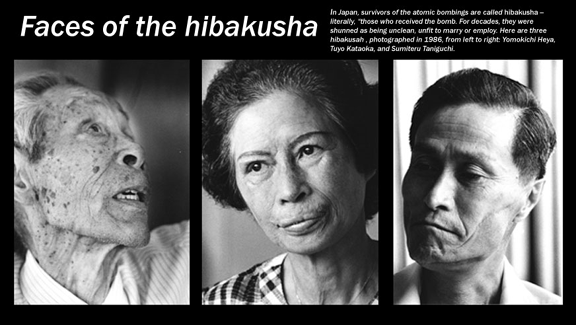
Hibakusha, atomic bombing survivors, have been tirelessly exerting themselves toward a world free of nuclear weapons, with their only wish that no one else should go through the sufferings they have experienced
The Bulletin, By Masako Toki | August 22, 2023
For too long, nuclear weapons narratives have been dominated by those who saw the mushroom cloud from afar or above. Or maybe just in photos, TV, or videos. Most absurdly, the voices of people who suffered the most under the mushroom cloud have often been marginalized.
There have been numerous efforts to raise awareness of the inhumane nature of nuclear weapons among hibakusha (atomic bomb survivors), people in Hiroshima and Nagasaki, and more broadly, in the international community. One of the most important milestones came when the 2010 Nuclear Nonproliferation Treaty (NPT) Review Conference adopted a final document that included, for the first time “the catastrophic humanitarian consequences of any use of nuclear weapons.” Since then, the humanitarian initiative for nuclear disarmament has been gaining momentum.
Three conferences on the humanitarian impact of nuclear weapons contributed to the start of the negotiation of the Treaty on the Prohibition of Nuclear Weapons (TPNW) and to adoption of the treaty. Through this process, a wide range of civil society members, along with like-minded governments, energized the humanitarian initiatives and tenaciously supported bringing humanitarian dimensions to nuclear weapons policy discussion.
The adoption of the TPNW has brought a glimmer of hope to nuclear disarmament advocates, although they are fully aware that this is a first step of the long process. Still, this is considered to be one of very few positive developments in recent nuclear disarmament efforts. The world is currently moving backward on nuclear disarmament. The Russian invasion of Ukraine has caused unspeakable human suffering and raised the risk of nuclear war. Today, nuclear threats are at the highest level since the end of the Cold War,
Hibakusha, atomic bombing survivors, have been tirelessly exerting themselves toward a world free of nuclear weapons, with their only wish that no one else should go through the sufferings they have experienced.
As the memories of Hiroshima and Nagasaki are further fading away every year given the advanced age of hibakusha, it is urgent for younger generations to learn more. Time is of the essence. Earlier this year, the average age of hibakusha reached 85.01 years, according to Japan’s Ministry of Health, Labor and Welfare. In addition, the number of hibakusha decreased by 5,286 to 113,649 this year. As the A-bomb survivors continue to age, the issue of how to pass on the message of the catastrophic impact of nuclear weapons to the next generation becomes increasingly pressing. Informing and educating the next generation is how we can ensure that nuclear weapons will never be used again, and eventually, achieve a world free of nuclear weapons.
The time to learn from hibakusha directly is limited and is getting shorter and shorter. The peace declaration this year read by Nagasaki Mayor Shiro Suzuki quoted Sumiteru Taniguchi, one of the late hibakushas who dedicated his life to nuclear disarmament. Taniguchi admonished that “[p]eople appear to be gradually forgetting the suffering of the past. This forgetfulness terrifies me. I fear that forgetfulness will lead to the acceptance of further atomic bombings.”
Keiko Ogura, a Hiroshima hibakusha and an English-Japanese interpreter for peace activities, shared her testimonials with world leaders in May this year at the G7 Hiroshima Summit. She asked the leaders to “relive the struggles in the hearts of hibakusha” that have been felt for so long, and to imagine the invisible wounds, traumas, sorrows, and unspeakable secrets through her eyes and heart. One of the most important abilities you need when you work for nuclear disarmament is to be able to empathize with other’s suffering. Ogura asked the G7 leaders to do precisely this. She also sent a message to Russian President Vladimir Putin through a reporter for one of her numerous interviews, saying, “You don’t know what a nuclear weapon is, the reality of a nuclear weapon. So come here and see.”
Earlier this summer, at a civil society event, Ogura calmly started her atomic bombing testimonial by encouraging the audience to imagine how it feels like to be under the mushroom cloud at the time of the bomb’s detonation. “I was at that time under the mushroom cloud you can see there,” while showing the picture of the mushroom cloud after the bomb was dropped.
Nothing is more powerful and effective than hibakusha testimonials in helping others to understand the horrific reality of the use of nuclear weapons. It is very important to imagine what really happened under the mushroom cloud. When you hear about the Hiroshima bombing or the Nagasaki bombing, the first image that comes to your mind may be the mushroom cloud. But we need to understand that people were under the mushroom cloud. Most of the victims were civilians, including small children.
Every year, the Hiroshima and Nagasaki remembrance days come. These are the days that we have to make efforts to remember and renew our resolve to work for nuclear disarmament. Soon, we will not be able to listen to hibakusha directly. As the hibakusha are aging in the middle of increasing nuclear risks, we cannot do business as usual every year, or think about nuclear disarmament only on these remembrance days……………………………………………………………….more https://thebulletin.org/2023/08/respect-for-hibakusha-and-hope-in-younger-generations/?utm_source=Facebook&utm_medium=SocialMedia&utm_campaign=FacebookPost082023&utm_content=NuclearRisk_HibakushaAndHope_08222023&fbclid=IwAR0hzzEqc_dLq2NN_fF9F4OQl0uI31cz7QW9BA5nL5TPKrLpASBAUt9dRDg
The blockbuster movie ‘Oppenheimer’ leaves out the real story’s main characters: New Mexicans

The terrible emptiness of “Oppenheimer” Searchlight New Mexico, by Alicia Inez Guzmán, August 8, 2023
Bernice Gutierrez was eight days old when a light 10,000 times hotter than the surface of the sun cracked open the predawn sky. No one in south-central New Mexico knew where it came from, or that the tiniest units of matter could be split to unleash such energy. Nor could they know that when the cloud that followed bloomed some 50,000 feet into the sky, it was surrounded for the briefest of seconds by a blue halo, the “glow of ionized air,” as the Manhattan Project physicist Otto Frisch described it.
The impacts of that unholy halo were all too apparent in the years after, when her great-grandfather died of stomach cancer. One person after another would receive their own wrenching cancer diagnoses — 41 people in her immediate family, spanning five generations. Every one of them had lived in the Tularosa Basin and within 50 miles of the Trinity Site, where the first atomic bomb, nicknamed “Gadget,” was detonated on the northern edge of the Chihuahuan Desert.
Gutierrez was one of a group of downwinders, including Mary Martinez White and Tina Cordova, cofounder of the Tularosa Basin Downwinders Consortium, who watched the movie “Oppenheimer” together when it opened. In one scene after another, New Mexico’s landscapes unfurled — all painfully beautiful and all, it appeared, empty and unpeopled.
In New Mexico, we have lived in the blind spot of a national narrative for eight decades, repeated once again in this box office hit. Over its exhaustive three-hour run-time, it managed to avoid mentioning what we here have been sharing with loved ones at kitchen tables for decades: the violent evictions that took place on the Pajarito Plateau to build Los Alamos, the Pueblo and Hispanic men and women who did essential work for the Manhattan Project, or the thousands of New Mexicans affected to this day by the Trinity test.
To watch J. Robert Oppenheimer’s character instead create and destroy in the state’s big, beautiful and ostensibly barren lands is to deny the presence of so many people whose lives were indelibly transformed by the dawn of the atomic era and continue to be shaped by the juggernaut that is today’s nuclear industrial complex.
Oppenheimer, the son of a wealthy businessman, had come here as part of a cultural moment. He hiked, rode horses and camped. He stayed at a dude ranch in Pecos. He fell in love with and then changed New Mexico forever.
“I am responsible for ruining a beautiful place,” he would later confess.
The film, Gutierrez said, skipped blithely over the ruin. “They leave out the fact that in those isolated areas lived ranchers whose lands they took away and who were never compensated for it.”
The blast was so hot it liquified sand and pieces of the bomb into hunks of green glass. Lead-lined tanks were dispatched to take soil samples at ground zero as fallout cascaded across 46 states. Ash fell from the sky like snow for days afterward, contaminating cisterns, acequias, crops, livestock, clothing and people. At the time of the detonation, 13,000 people lived within a 50-mile radius.
‘Love-struck’ with the beauty
Oppenheimer initially arrived in New Mexico among a wave of smitten travelers. Artists, writers, dancers, anthropologists, museum boosters, health seekers and at least one psychoanalyst (Carl Jung), all had come as well-to-do tourists in search of the ineffable — landscapes, light, exotic cultures, “a patch of America that didn’t feel American,” in the words of writer Rachel Syme.
Long before he became the father of the atomic bomb, Oppenheimer was “love-struck” with the stark beauty of New Mexico, as Kai Bird and Martin J. Sherwin wrote in “American Prometheus,” the biography upon which the movie is based. He would later lease and then buy a home in the Sangre de Cristo Mountains with his brother, Frank. Like so many others, he’d been mesmerized by the West.
New Mexico and the Southwest had long been lodged in America’s psyche. Landscape painting and photography pictured this new and alien frontier to incoming settlers and tourists as early as 1848, the year the United States annexed the region from Mexico. The art forms ended up serving the nation’s gospel, Manifest Destiny, by portraying “uninhabited” landscapes open to settlement. At the same time, U.S. forces brutally removed Indigenous peoples and others of mixed descent from their ancestral lands.
That aesthetic was at work in “Oppenheimer,” a movie that not only played up the romance of the landscape but also made it appear that the atomic bomb test only affected an elite group of scientists watching raptly in cars and bunkers.
“That’s the thing about the white supremacist imagination, right? They create alternate realities for our lives and communities and we have to live with the consequences,” said Mia Montoya Hammersley, an environmental attorney and member of the Piro-Manso-Tiwa tribe whose ancestry includes the earliest stewards of the Tularosa Basin, where the first bomb was detonated.
“This narrative that New Mexico is this empty barren place, people still really buy into that and believe it.”………………………………………………………………………………………………
There is nothing to suggest during any of that storytelling that New Mexico was essentially poisoned, its residents never warned, evacuated or educated about the health hazards of the July 16, 1945 Trinity test.
“It was,” as artist Medina put it, “a great act of desecration.”
Some geologists propose that this moment marks the start of a new epoch of geologic time, the Anthropocene. In New Mexico, it marks a new epoch of our own — when we became a nuclear colony. We are the only “cradle-to-grave” state in the nation, home to uranium mining, nuclear weapon manufacturing and waste storage. Two of the nation’s three weapons labs — Los Alamos and Sandia — are located here, and some 2,500 warheads are buried in an underground munitions complex spitting distance from the Albuquerque Sunport.
Los Alamos National Laboratory is currently undergoing a multi-billion-dollar expansion to create plutonium pits on an industrial scale — the “new Manhattan Project,” as Ted Wyka, the National Nuclear Security Administration’s field office manager, recently said in an aside before a media tour. Wyka told me he imagined himself in the role of Lt. Gen. Leslie Groves, the director of the Manhattan Project; LANL’s current director Thomas Mason was his Oppenheimer, he said.
The film gestures obliquely toward a future world irrevocably changed by the spectacle of nuclear military might. That future — our present — is now a global arms race. ………………………………………………………………………………………………………………………………………………………………………………
in the film, there are only two references to Indigenous peoples. In the first, Oppenheimer is selecting the Pajarito Plateau for the Manhattan Project. The second arrives after the U.S. decimates Hiroshima and Nagasaki. A scene in the oval office shows a crass Harry Truman asking Oppenheimer what to do with the site now that the bombs have been dropped.
Oppenheimer’s response? “Give it back to the Indians.”
Instead, the nuclear arms race was born……………………………………………………………………………………………………………
What remains is a persistent belief that the creation of atomic weapons ended World War II and made for “one of the greatest scientific achievements of all time,” as a plaque near the Santa Fe Plaza reads…………………………………………………………………………………………………………………………..
Gutierrez, White and Cordova, all three on the Tularosa Basin Downwinders Consortium’s steering committee, left the film no less resolved. Days after seeing the movie, Gutierrez was back at work, researching all the infants that died the summer of the Trinity test. Cordova was busy writing about the movie and pushing for compensation for New Mexico’s downwinders, her mission for the past 18 years. And White had helped organize a photography exhibition in Las Cruces on the legacy of Trinity from a local perspective.
The movie’s over, but the battle goes on.
Like ‘the tolling of a distant temple bell’, Ibuse Masuji’s Black Rain remembers the horrors of Hiroshima and warns of the inhumanity of war
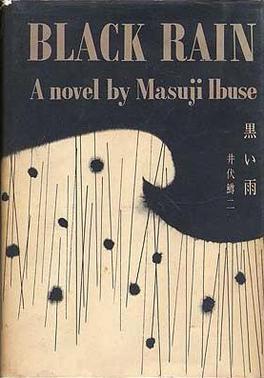
Jindan Ni, August 4, 2023 https://theconversation.com/like-the-tolling-of-a-distant-temple-bell-ibuse-masujis-black-rain-remembers-the-horrors-of-hiroshima-and-warns-of-the-inhumanity-of-war-205837?utm_medium=email&utm_campaign=The%20Weekend%20Conversation%20-%202700227280&utm_content=The%20Weekend%20Conversation%20-%202700227280+CID_e1af8a5e068132789cd3bffaecf54867&utm_source=campaign_monitor&utm_term=Like%20the%20tolling%20of%20a%20distant%20temple%20bell%20Ibuse%20Masujis%20Black%20Rain%20remembers%20the%20horrors%20of%20Hiroshima%20and%20warns%20of%20the%20inhumanity%20of%20war
In May 2023, almost 80 years after its devastation by an atomic bomb, Hiroshima again became the focus of world attention as the host city for the 49th G7 Summit.
On the summit’s official website, Hiroshima is presented as the exemplar of Japan’s postwar success. It is described as an “international city of peace and culture” and “resolute postwar advancement”. There are photos of its serene landscapes, its local delicacies and sake, and its modern sports and street culture.
The bombing of Hiroshima at the conclusion of World War II is mentioned just once. The Hiroshima Peace Memorial, according to the site, “speaks to the horrors of nuclear weapons”.
Hiroshima has more than this to tell us. But its stories, its “several pasts”, have been constantly abridged – or “refashioned”, as Michel Foucault would say. They have been adapted to serve political agendas.
On August 6, 1945, after the atomic bomb was dropped on Hiroshima, President Harry Truman released a statement that praised the scientific achievement:
“Sixteen hours ago an American airplane dropped one bomb on Hiroshima, an important Japanese Army base […]
It is an atomic bomb. It is a harnessing of the basic power of the universe. The force from which the sun draws its power has been loosed against those who brought war to the Far East […]
What has been done is the greatest achievement of organized science in history. It was done under high pressure and without failure”.
The atomic bomb was something altogether different for Japan. After the bombs fell on Hiroshima and Nagasaki, the Japanese emperor Hirohito broadcast his “jewel voice” to make the announcement of Japan’s surrender to his subjects. He spoke in an opaque, classical language almost incomprehensible to ordinary Japanese:
“The enemy has for the first time used cruel bombs to kill and maim extremely large numbers of the innocent and the heavy casualties are beyond measure; if the war were continued, it would lead not only to the downfall of our nation but also to the destruction of all human civilization.“
In these statements, we can see Truman and Hirohito attempting to justify their actions. We can see interpretations of the attacks on Hiroshima and Nagasaki taking different tracks. Such modified national memories install a kind of forgetting. They are ways of marginalising or erasing individual experiences of the war.In these statements, we can see Truman and Hirohito attempting to justify their actions. We can see interpretations of the attacks on Hiroshima and Nagasaki taking different tracks. Such modified national memories install a kind of forgetting. They are ways of marginalising or erasing individual experiences of the war.
During the postwar occupation of Japan, from 1945-1952, the Allied occupiers sought to remould the Japanese minds. The “horrors of nuclear weapons” could not be mentioned. Pictures and narratives about the atomic bombs were subject to strict censorship.
Only after the easing of censorship could Japanese writers begin to reveal the details of the horrendous suffering that occurred in Hiroshima and Nagasaki. These works became collectively known as genbaku bungaku, or “atomic bomb literature”. The explorations of the destructive power of war and institutionalised violence have left their mark on contemporary Japanese literature.
Ibuse Masuji’s Black Rain, which won the prestigious Noma Literary Prize after its publication in 1965, epitomises atomic bomb literature. It is now considered a classic of modern Japanese literature.
Black Rain records the scorching memories of the hibakusha – atomic bomb survivors – of the bombing and its aftermath. More significantly, it critiques the brutality of war, the militarised state, and the purposeful forgetting of history. Ibuse based his novel on journals and interviews with the bomb survivors, writing against amnesia using what he called the “crudest kind of realism”.
Forgetting and stigmatisation
Black Rain begins four years and nine months after the war. Shizuma Shigematsu and his family live a seemingly quiet and normal life in the village of Kobatake, about 100 kilometres from Hiroshima city. But the fact that they once lived and worked close to Hiroshima is still a weight upon their lives.
Shigematsu is vexed about his niece Yasuko’s poor marriage prospects. There are rumours circulating in the village that Yasuko was near the epicentre of the explosion and now has radiation sickness. As her guardian, Shigematsu is agonised with guilt, as it was at his instigation that Yasuko came to Hiroshima city, so as to avoid the army’s conscription of young women to work in the factories that produced military supplies.
During the war, “irresponsible talk” was strictly forbidden by the army. But after the war, Shigematsu laments, rumours stigmatising people like Yasuko are by no means under control. To prove that Yasuko was not exposed to radiation, Shigematsu decides to copy Yasuko’s wartime diary entries and show them to the village matchmaker.
For the survivors of Hiroshima, memories of the bombing return unbidden. The misery of past has to be revisited to ease their present predicament.
Initially, no one knew what happened when the bomb fell. It was beyond everyone’s comprehension. And it is this horror of not knowing that Black Rain agonisingly depicts. Because of this, people who were not at the epicentre went towards it. They went in search of their families and were thus unnecessarily exposed to radiation.
Yasuko was one of these victims. She was 10 kilometres from the epicentre, but became caught in the radioactive “black rain” on the way to find her uncle and aunt. The rain leaves ominous strange black stains on Yasuko. Her dread is heartwrenching:
I felt horrified, and then awfully sad. However many times I went to the ornamental spring to wash myself, the stains from the black rain wouldn’t come off.
Despite Shigematsu’s efforts to prove that Yasuko is free from radiation sickness, she develops symptoms eventually, almost five years after the bomb. There is no cure for this condition and the doctor asks Shigematsu to report Yasuko’s case to the Atomic Bomb Casualty Commission (ABCC), which was established by the Allied occupation in 1947 with “the highest ideals” in order to collect data of the victims.
The commission only documented cases like Yasuko’s; it provided no treatment for the victims.
Tradition versus modernity
In Black Rain, Ibuse boldly challenges the modernisation which Japan has been determined to achieve since the Meiji Restoration, which began in 1868.
His critique of modernity is highly nuanced, with a tinge of humour. For example, when Shigematsu decides to copy Yasuko’s diaries, his wife Shigeko asks him to use Chinese brush ink instead of ordinary pen ink which does not last. To convince him, she shows him a letter which was sent to his great-grandfather from Tokyo in 1870.
The letter sender proudly concludes his letter by emphasising “this letter, in accordance with my promise to you at the time, is written in the ‘ink’ commonly in use in the West.” But the ink has “faded to a pathetic light brown colour”.
Shigematsu agrees to his wife that they should use the traditional brush ink so that their diaries and memories can be well preserved.
In the introduction to his English translation of Black Rain, John Bester writes that Ibuse shows “infinite nostalgia” towards “the beauty of the Japanese countryside and the ancient customs of its people”. For Ibuse, it is only through traditional food and medicine that the damages brought by science and modernity, exemplified by the atomic bomb, can be eased and soothed.
Appeal to nature, humanity and peace
Black Rain dwells on the atrocity of war as it affects people, but it also documents damage that war inflicts on nature. Shigematsu recalls the massive gingko tree he liked to play under, which stood outside his friend Kōtarō’s place. It was cut down for the “national interest” during the war.
Similarly, the novel records that villagers were ordered to dig pine-tree roots to extract oil for “the engines of the planes whose job it was to shoot down B-29s”.
Animals also suffered as a result of the atomic bomb, just as people did. The fish in the lake died. Like the bomb survivors who lost teeth and hair, they lost their scales and could not swim normally.
In Black Rain, the collective forgetting of the direct experiences of the victims leads to systematic stigmatisation and bias against them, which exacerbates their struggle. Shōkichi – Shigematsu’s friend who also survived the bomb – stridently announces:
Everybody’s forgotten! Forgotten the hellfires we went through that day – forgotten them and everything else, with their damned anti-bomb rallies. It makes me sick, all the prancing and shouting they do about it.
Shōkichi’s visceral repulsion to the anti-bomb rallies speaks of a collective forgetting, in which the enduring sufferings of the “precious victims” have been deployed as convenient narratives to serve the “national interest”. As the historian John Dower succinctly puts it, the rallies and memorial activities conformed to the state’s need of “nuclear victimization”, which aimed to shape “new forms of nationalism in postwar Japan”.
One of the maimed survivors in Black Rain writes in his journal that he now has permanent ringing in his ears: “it persists in my ear day and night, like the tolling of a distant temple bell, warning man of the folly of the bomb”.
Black Rain calls for a proper remembering of the war. In Ibuse’s documentary novel, Hiroshima is allowed to speak more and remember more. Through Shigematsu’s voice, Ibuse expresses the anger and despair of the people forced to endure the war:
I hated war. Who cared, after all, which side won? The only important thing was to end it all soon as possible: rather an unjust peace, than a “just” war!
TODAY. Forget Oppenheimer. The real nuclear hero is Joseph Rotblat

If only other scientists had followed his example.
If only scientists could learn from Joseph Rotblat, and abandon their dogmatic belief that science is “neutral”
To the end of his life, he believed scientists have personal responsibility for their inventions.
Yeah – you’ve never heard of him, have you? That’s because we have all been brainwashed, in the patriarchy, into believing that heroes are brave tough guys. Joseph Rotblat was brave, but, alas, not a tough guy. So – he don’t qualify.
Robert Oppenheimer might have regretted it later, but he was in favor of using the atomic bomb, seeing it as a terror weapon, that would need to be used only once
Leo Szilard was a “wimp” who did not want the atomic bomb to be dropped on Hiroshima.
But Joseph Rotblat went further than Slizard. In 1943, when it was clear that Germany was not developing atomic weapons, Rotblat saw the danger of atomic warfare, and risk of a nuclear clash with Russia. Rotblat abandoned his role in the Manhattan Project, and left America. USA army intelligence tried hard to depict Rotblat as a Russian agent
After the atomic bombings of Hiroshima and Nagasaki, Rotblat was determined to prevent the development of future nuclear weapons. He devoted the rest of his life to protesting nuclear testing and weapons production.
During the post-war period, Joseph Rotblat did an enormous amount of work in the cause of peace, dialogue and disarmament through the Pugwash movement, with which he shared the Nobel Peace Prize in 1995.
Joseph Rotblat passed away on August 31, 2005. To the end of his life, he believed scientists have personal responsibility for their inventions. Rotblat implored: “Above all, remember your humanity.”
What We Can Still Learn From J. Robert Oppenheimer
“We believe,” he wrote in 1945, “that the safety of this nation—as opposed to its ability to inflict damage on an enemy power—cannot lie wholly or even primarily in its scientific or technical prowess.”
By Robert C. Koehler / Common Dreams, July 21, 2023
Amere 55 years after his death, the U.S. government has restored J. Robert Oppenheimer’s security clearance, which the Atomic Energy Commission had taken away from him in 1954, declaring him to be not simply a communist but, in all likelihood, a Soviet spy.
Oppenheimer, of course, is the father of the atomic bomb. He led the Manhattan Project during World War II, which birthed Little Boy and Fat Man, the bombs we dropped on Hiroshima and Nagasaki in August 1945, killing several hundred thousand people and ending the war. What happened next, however, was the Cold War, and suddenly commies—our former allies—were the personification of evil, and they were everywhere. The American government, in its infinite wisdom, knew it had no choice but to continue its nuclear weapons program and, for the sake of peace, put the world on the brink of Armageddon.
Hello, H-bomb!
War, the building block of the world’s governmental entities for uncounted millennia, had evolved to the brink of human extinction. Official government policy amounted to this: So what?
Oppenheimer challenged this official policy and shattered his career. Indeed, he saw immediately, as the newly developed bomb was tested at Alamogordo, New Mexico, on July 16, 1945, that Planet Earth was in danger. A team of physicists had just exposed its ultimate vulnerability and he famously noted, as he witnessed the mushroom cloud, that words of Hindu scripture from the Bhagavad-Gita entered his mind: “Now I am become Death, the destroyer of worlds.”
He had not opposed dropping the bombs on Hiroshima and Nagasaki, as some of the Manhattan Project scientists, such as Leo Szilard, did, but when the war ended he became deeply committed to eliminating all possibility of future wars. One of the first actions he took, a week after the bombings, was to write a letter to Secretary of War Henry Stimson, urging him to embrace common sense regarding further development of nuclear weapons.
“We believe,” he wrote, “that the safety of this nation—as opposed to its ability to inflict damage on an enemy power—cannot lie wholly or even primarily in its scientific or technical prowess. It can be based only on making future wars impossible. It is our unanimous and urgent recommendation to you that, despite the present incomplete exploitation of technical possibilities in this field, all steps be taken, all necessary international arrangements be made, to this one end.”
Making future wars impossible! What if American political forces had sufficient sanity to listen to Oppenheimer? Several months after writing this letter, he paid a visit to President Harry Truman, attempting to discuss the placement of international control over further nuclear development. The president would have none of that. He kicked Oppenheimer out of the Oval Office.
Oppenheimer maintained his commitment to the transcendence of war, working with the Atomic Energy Commission to control the use of nuclear weapons—and standing firm in his opposition to the creation of the hydrogen bomb. He continued his opposition even as the bomb’s development progressed and nuclear tests began spreading fallout over “expendable” parts of the world. But, uh oh. Along came the McCarthy era and the accompanying Red Scare.
…………………………………………………………………. It took them about 16 years. They finally succeeded in clearing his name.
And while I applaud their enormous effort and its result, I also note it isn’t finished yet. This is more than simply a personal matter: the righting of a bureaucratic wrong done to one man. The future of humanity remains at stake. The U.S. government has spent multi-trillions of dollars on nuclear weapons development over the years, conducted a thousand-plus nuclear tests, and is currently in possession of 5,244 nuclear warheads, out of an insane global total of some 12,500. Perhaps it’s time to start listening to—and hearing—Oppenheimer’s words. https://scheerpost.com/2023/07/21/what-we-can-still-learn-from-j-robert-oppenheimer/
 | |||
| |||
Karina’s father went blind at Emu Field. Now, she’s fighting for a treaty on nuclear weapons.

The Yankunytjatjara Anangu woman talked about the devastating effect the testing had on her family, including the loss of her father.
Karina Lester knows the fallout nuclear weapons can cause.
Her father, the late Yami Lester, went blind as a young man after the British tested atomic weapons in Emu Field.
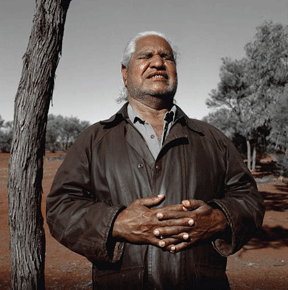
“The scars are still felt on our Country,” said Ms Lester, a Yankunytjatjara Anangu woman from north-west South Australia.
“And the scars are still evident on our people.”
A group of Australian atomic survivors and relatives visited Canberra on Wednesday to speak with government decision-makers about their experiences of the British nuclear testing program in WA and SA.
They are calling on Prime Minister Anthony Albanese to sign the Treaty on the Prohibition of Nuclear Weapons.
In 1953 the British initiated a program of nuclear testing in Australia at the Montebello Islands, off the coast of WA and in Emu Field in South Australia.
Two years later, the British government announced a larger site for the tests at Maralinga.
Ms Lester carries her family’s stories about the impacts of the tests on her people.
“I had a grandmother of mine needing to dig a grave to bury her parents because soon after the radiation fallout, the elderly people started to suffer and die,” she said.
“My father never saw me or my children.
“It’s all because of a decision by governments of the day to say ‘That is no man’s country, go and test your bombs’.
“It’s been a huge, painful journey for us but it’s such an important story that needs to be told.”
Maxine Goodwin is the daughter of an Australian nuclear veteran who became ill as a result of his involvement in the first atomic test in WA.
“Signing the Treaty on the Prohibition of Nuclear Weapons is a significant step towards addressing the harm experienced by individuals and communities,” she said.
In October 1953 when the British detonated the Totem I and II nuclear bombs at Emu Field, Yankunytjatjara, Antikarinya and Pitjantjatjara woman June Lennon was only a few months old.
Her family witnessed the tests and have suffered from ill-health since.
“The government didn’t tell the truth about the nuclear testing program,” she said.
“There were so many lies. They didn’t tell people what they were doing.”
International Campaign to Abolish Nuclear Weapons Australia director Gem Romuld said it was important for policy makers to hear stories firsthand.
“Nuclear survivors are experts on the devastating humanitarian impacts of nuclear weapons,” she said.
“Australia’s experience with nuclear weapons testing is a powerful motivation to join the nuclear weapon ban treaty.”
The delegation will be in Canberra on Wednesday and Thursday to meet parliamentarians, including Foreign Minister Penny Wong and speak at an event hosted by the Parliamentary Friends of the Treaty on the Prohibition of Nuclear Weapons.
Julian Assange Is “Dangerously Close” to Extradition for Revealing US War Crimes

This is the first time a publisher has been charged under the Espionage Act for disclosing government secrets.
By Marjorie Cohn , TRUTHOUT, July 15, 2023 https://truthout.org/articles/julian-assange-is-dangerously-close-to-extradition-for-revealing-us-war-crimes/?utm_source=Truthout&utm_campaign=75553d1810-EMAIL_CAMPAIGN_3_20_2023_13_41_COPY_01&utm_medium=email&utm_term=0_bbb541a1db-75553d1810-650192793&mc_cid=75553d1810&mc_eid=73e1cd43d0
or nearly five years, publisher and journalist Julian Assange has fought extradition to the United States where he faces 175 years in prison for revealing evidence of U.S. war crimes.
Instead of protecting freedom of the press, to which he pledged allegiance at the White House Correspondents’ Dinner in April, Joe Biden is continuing Donald Trump’s prosecution of Assange under the infamous Espionage Act. Journalist James Ball is one of at least four journalists that the Department of Justice (DOJ) and FBI are pressuring to cooperate with the prosecution of Assange, Ball wrote in Rolling Stone.
Biden’s DOJ is apparently attempting to bolster its prosecution of Assange in the event he is extradited to the United States. Ball said that all three of the other journalists being pressured to provide a statement told him they have no intention of helping the prosecution.
Assange, who is in frail physical and mental health after years of confinement, is contesting the U.K. High Court’s rejection of his appeal. If he loses in the U.K., Assange’s last resort is to the European Court of Human Rights to litigate several violations of the European Convention on Human Rights (ECHR).
But even if the European court issues an injunction against extradition, the U.K. courts may not honor that ruling. Assange is “dangerously close” to extradition, according to his family and observers.
“Julian Assange and Wikileaks were responsible for the exposure of criminality on the part of the U.S. Government on a massive and unprecedented scale,” including “torture, war crimes and atrocities on civilians,” Assange’s Perfected Grounds of Appeal states.
“Assange’s work, dedicated to ensuring public accountability by exposing global human rights abuses, and facilitating the investigation of and prosecution for state criminality, has contributed to the saving of countless lives, stopped human rights abuses in their tracks, and brought down despotic and autocratic regimes,” his appeal papers say. Human rights defenders who expose state crimes suffer “political retaliation and persecution from the regimes whose criminality they expose. Julian Assange is no exception.”
The War Crimes That Assange and WikiLeaks Exposed
In 2010, U.S. Army intelligence analyst Chelsea Manning provided WikiLeaks with documents containing evidence of U.S. war crimes. They included the “Iraq War Logs,” which were 400,000 field reports describing 15,000 unreported deaths of Iraqi civilians, as well as systematic rape, torture and murder after U.S. forces “handed over detainees to a notorious Iraqi torture squad.” They contained the “Afghan War Diary,” 90,000 reports of more civilian casualties by coalition forces than the U.S. military had reported. And they also included the “Guantánamo Files” — 779 secret reports with evidence that 150 innocent people had been held at Guantánamo Bay for years, and 800 men and boys had been tortured and abused, which violated the Geneva Conventions and the Convention Against Torture and Other Cruel, Inhuman or Degrading Treatment or Punishment.
Manning also furnished WikiLeaks with the notorious 2007 “Collateral Murder Video,” which shows a U.S. Army Apache attack helicopter targeting and killing 11 unarmed civilians, including two Reuters journalists, as well as a man who came to rescue the wounded. Two children were injured. The video reveals evidence of three violations of the Geneva Conventions and the U.S. Army Field Manual.
This is the first time a publisher has been prosecuted under the Espionage Act for disclosing government secrets. In December 2022, The New York Times, The Guardian, Le Monde, El País and Der Spiegel signed a joint open letter calling on the U.S. government to dismiss the Espionage Act charges against Assange for publishing classified military and diplomatic secrets. “Publishing is not a crime,” the letter says. “This indictment sets a dangerous precedent, and threatens to undermine America’s First Amendment and the freedom of the press.”
Extradition Initially Denied on Mental Health Grounds
On January 4, 2021, U.K. District Judge Vanessa Baraitser ruled that Assange could not be extradited to the United States because of the repressive prison conditions in the U.S. and the threat that imprisonment would pose to his mental health, including the likely risk of suicide. The Biden administration’s DOJ appealed.
The U.K. High Court reversed Baraitser’s ruling after the DOJ presented questionable “assurances ” that Assange would be held in humane conditions if extradited.
Assange asked the High Court to consider his other grounds of appeal which Baraitser had rejected when she denied extradition for mental health reasons.
On June 8, 2023, British Judge Sir Jonathan Swift rejected Assange’s appeal in a cursory three-page denial with almost no analysis of the issues raised in Assange’s 150-page submission.
Assange appealed Swift’s ruling to the U.K. High Court and his appeal is pending.
The U.K.-U.S. Extradition Treaty Prohibits Extradition for Political Offences
The Espionage Act charges in the indictment include the following:
- Conspiracy to obtain, receive and disclose national defense information (Count 1);
- Unauthorized obtaining and receiving of national defense information (Counts 3 to 9); and
- Unauthorized disclosure of national defense information (Counts 10 to 18).
In addition, Assange is charged with “conspiracy to commit computer intrusion” with intent to “facilitate Manning’s acquisition and transmission of classified information related to the national defence of the United States.”
Article 4(1) of the U.K.-U.S. Extradition Treaty provides that “extradition shall not be granted if the offence for which extradition is requested is a political offence.” In their appeal, Assange’s lawyers note that espionage is a “pure political offence” as it is an offence against the state.
As Assange’s legal team wrote, “The gravamen (and defining legal characteristic) of each of the charges is thus an alleged intention to obtain or disclose US state secrets in a manner that was damaging to the security of the US state,” which makes them political offences.
In his denial, Swift wrote that the 2003 Extradition Act trumps the binding treaty between the U.S. and the U.K. The act doesn’t include the “political offences” bar to extradition.
The Extradition Request Was Made for Ulterior Political Motives and Not in Good Faith
Article 4(3) of the Extradition Treaty forbids extradition if the request was “politically motivated.”
The legally unprecedented and selective nature of the prosecution in focusing on leaked national security information speaks to the political character of the prosecution and request for extradition, the appeal says.
Assange’s lawyers wrote that “this prosecution is motivated by matters other than the proper and usual pursuit of criminal justice. It is motivated instead by a concerted intent to destroy or inhibit the publishers of evidence of state criminal ability, and thereby put a stop to the process of investigating, prosecuting and preventing such international crimes in the future.”
The appeal papers point out that Assange is being prosecuted for exposing “wholescale abuse and war crimes” committed by the United States. If instead he had “exposed war crimes or crimes against humanity committed by a state such as the Russian Federation,” the defense lawyers write, “there can be no doubt that his prosecution for such revelations would be regarded as both a political offence (within the Treaty) and an impermissible prosecution motivated by a desire to punish him for his political opinions/acts.”
“While the leakers of such materials have been prosecuted albeit selectively, no prosecution for the act of obtaining or publishing state secrets has ever occurred,” the appeal says.
That is “[b]ecause the First Amendment protects the free press and it is vital that the press expose rather than ignore … not because journalists are somehow privileged but because the citizenry has a right to know what is going on,” Mark Feldstein, journalism professor at University of Maryland, testified at Assange’s extradition hearing.
Extradition Would Violate Freedom of Expression Guaranteed by the ECHR
Article 10 of the ECHR protects freedom of expression.
Columbia Law Professor Jameel Jaffer testified that the indictment is focused “almost entirely” on things that national security journalists do “routinely and as a necessary part of their work,” including “cultivating sources, communicating with them confidentially, soliciting information from them, protecting their identities from disclosure, and publishing classified information.”
The conviction of Assange would chill journalists from fulfilling their function as watchdog for the public. The appeal quotes the 1996 case of Goodwin v. the United Kingdom:
Press freedom assumes even greater importance in circumstances in which State activities and decisions escape democratic or judicial scrutiny on account of their confidential or secret nature. The conviction of a journalist for disclosing information considered to be confidential or secret may discourage those working in the media from informing the public on matters of public interest. As a result, the press may no longer be able to play its vital role as “public watchdog” and the ability of the press to provide accurate and reliable information may be adversely affected.
There Is New Evidence Not Considered by the District Judge
The ECHR protects the right to life (Article 2) and forbids torture and cruel, inhuman or degrading treatment (Article 3). The appeal argues that there is a real risk of violation of Article 2 and/or Article 3 if Assange is extradited.
In September 2021, a Yahoo! News report revealed that while Assange was living in the Ecuadorian embassy in London under a grant of asylum, senior CIA and Trump administration officials asked for “sketches” and “options” for assassinating him. Trump himself “asked whether the CIA could assassinate Assange and provide him ‘options’ for how to do so.”
“If these state agencies were prepared to go to these lengths whilst he was under the protection of an embassy and located in the UK, there must be a real risk of similar extra-judicial measures or reprisals if he is extradited to the US,” the appeal says.
The High Court’s ruling on Assange’s appeal could be issued any day.
1 This Month
Chernobyl: The Lost Tapes – A good documentary on Chernobyl on SBS available On Demand for the next 3 weeks– https://www.sbs.com.au/ondemand/tv-program/chernobyl-the-lost-tapes/2352741955560

of the week–London Campaign for Nuclear Disarmament

Tell the Ukrainian Government to Drop Prosecution of Peace Activist Yurii Sheliazhenko
To see nuclear-related stories in greater depth and intensity – go to https://nuclearinformation.wordpress.com
-
Archives
- April 2026 (139)
- March 2026 (251)
- February 2026 (268)
- January 2026 (308)
- December 2025 (358)
- November 2025 (359)
- October 2025 (376)
- September 2025 (257)
- August 2025 (319)
- July 2025 (230)
- June 2025 (348)
- May 2025 (261)
-
Categories
- 1
- 1 NUCLEAR ISSUES
- business and costs
- climate change
- culture and arts
- ENERGY
- environment
- health
- history
- indigenous issues
- Legal
- marketing of nuclear
- media
- opposition to nuclear
- PERSONAL STORIES
- politics
- politics international
- Religion and ethics
- safety
- secrets,lies and civil liberties
- spinbuster
- technology
- Uranium
- wastes
- weapons and war
- Women
- 2 WORLD
- ACTION
- AFRICA
- Atrocities
- AUSTRALIA
- Christina's notes
- Christina's themes
- culture and arts
- Events
- Fuk 2022
- Fuk 2023
- Fukushima 2017
- Fukushima 2018
- fukushima 2019
- Fukushima 2020
- Fukushima 2021
- general
- global warming
- Humour (God we need it)
- Nuclear
- RARE EARTHS
- Reference
- resources – print
- Resources -audiovicual
- Weekly Newsletter
- World
- World Nuclear
- YouTube
-
RSS
Entries RSS
Comments RSS
 nuclear-news
