Rocket Lab: Helping the US wage endless wars from space

https://thedailyblog.co.nz/2022/10/25/rocket-lab-helping-the-us-wage-endless-wars-from-space/By John Minto, October 25, 2022
It’s clear local mana whenua were misled by Rocket Lab founder Peter Beck when iwi land at Mahia Peninsula was leased to launch satellites into space.
At the time Peter Beck was clear Rocket Lab would be used for civilian purposes only and would not take up military contracts, despite this being a particularly lucrative path to take.
Fast forward a few years and we find Beck has abandoned any principles he may have had and his company is now majority owned by the US military and is launching satellites for US military purposes.
The government has to sign off on each launch to make sure it is in line with what’s acceptable to this country but it’s clearly a rubber stamp process conducted by Stuart Nash.
Any assurances from Peter Beck or Economic and Regional Development Minister Stuart Nash, who signs off on the launches for the government, that Rocket Lab’s work is for the betterment of mankind are not credible.
Peter Beck sets up straw man arguments saying claims of Rocket Lab weaponizing space are “misinformation” and the company would “not deal in weapons”. “We’re certainly not going to launch weapons or anything that damages the environment or goes and hurts people,” he told Newshub last year.
What nonsense. These are “straw-man” arguments. No-one has claimed the rockets contain weapons but what is absolutely clear is that the US military launches rockets for military purposes and this is what is happening at Mahia.
The NZ Herald reported last year on the capabilities of “Gunsmoke-J satellites”, which have been launched from Mahia for the US military, saying:
The other is the “Gunsmoke-J” satellite being launched for the US Army’s Space and Missile Defence Command (SMDC).
Gunsmoke-J is a prototype for a possible series of nano-satellites that will collect targeting data “in direct support of Army combat operations” according to a US Army fact sheet and a US Department of Defence budget document.
Green MP and party spokesperson for security and intelligence, Teanau Tuiono, is right to speak out:
“Weaponising space is not in our national interest and goes against our international commitments to ensuring peace in space,”
“The government should put in place clear rules that stop our whenua being used to launch rockets on behalf of foreign militaries”
“We should not be a launching pad for satellites for America’s military and intelligence agencies,” Green Party security and intelligence spokesman Teanau Tuiono said.
Rocket Lab is donkey deep with US strategies for “full spectrum dominance of the planet – including space. In doing so Beck and the government have made Mahia a target for conventional or even tactical nuclear weapons if hostilities break out between the US and another world power.
It’s ironic that the government provided start-up funds for Beck to get Rocket Lab off the ground only for Aotearoa New Zealand to find the company has put us to bed with a foreign military and made us target for conventional or nuclear attack.
Mana whenua in Mahia are right to be concerned – and so should the rest of us.
The government is “consulting” at the moment on these issues in their Space Policy Review.
Make a submission for the peaceful use of space here (Deadline 31 October)
Worthless House Progressives Retract Mild Peace Advocacy Under Pressure From Warmongers
https://caitlinjohnstone.substack.com/p/worthless-house-progressives-retract 26 Oct 22, The Congressional Progressive Caucus has retracted an extremely mild, toothless letter its members had written to President Biden politely asking him to consider adding a little diplomacy into the mix to help end the conflict in Ukraine. The retraction followed a deluge of public outrage against their slight deviation from the official imperial narrative.
If you actually read the original letter signed by House progressives including Alexandria Ocasio-Cortez, Ilhan Omar, Ayanna Pressley, Rashida Tlaib, Jamaal Bowman and Ro Khanna, you will quickly see that it’s as innocuous and anodyne as any statement could possibly be while still containing words. It opens with effusive praise for Biden’s interventionism in Ukraine and condemns the Russian government unequivocally throughout, offering only the humble suggestion that he “pair the military and economic support the United States has provided to Ukraine with a proactive diplomatic push, redoubling efforts to seek a realistic framework for a ceasefire.” Its authors make it abundantly clear that they support making sure such diplomacy is agreeable to Ukraine at every step of the way.
This impotent nothing salad was bizarrely spun by The Washington Post as a call on Biden to “dramatically shift his strategy on the Ukraine war,” despite nothing that could be remotely construed as “dramatic” existing anywhere in the body of the text. The letter received backlash from warmongers in both parties, including from House Speaker Nancy Pelosi. It was personally slammed by Bernie Sanders, the pope of American progressivism. Trolls and warmongers swarmed the social media notifications of every account which posted the letter in an official capacity, mindlessly bleating the words “appeasement” and “Chamberlain” in unison.
In a statement on the retraction of the letter, CPC chair Pramila Jayapal says she accepts responsibility for the publication of the offending act of peacemongering while in the same breath blaming its publication on her staff.
“The letter was drafted several months ago, but unfortunately was released by staff without vetting. As Chair of the Caucus, I accept responsibility for this,” Jayapal said.
“Every war ends with diplomacy, and this one will too after Ukrainian victory,” the statement reads, ignoring mainstream reports that US officials quietly believe Ukraine stands no chance at outright victory in this war. “The letter sent yesterday, although restating that basic principle, has been conflated with GOP opposition to support for the Ukrainians’ just defense of their national sovereignty. As such, it is a distraction at this time and we withdraw the letter.”
Empire critics were quick to highlight the obsequious nature of this retraction.
“For progressives, I didn’t think it could get more pathetic than voting for a disastrous proxy war that the US provoked and prolonged, handing billions to arms makers in the process. In retracting their tepid call for diplomacy and blaming staffers for it, they somehow surpassed it,” tweeted Aaron Maté.
“Certainly speaks to the insanely hawkish atmosphere in Washington that pressured the progressive caucus to withdrawal a totally reasonable, responsible and necessary call for diplomacy in a conflict that risks escalating to nuclear armageddon,” tweeted Rania Khalek.
“Imagine being elected to Congress based on promises of challenging ‘the establishment’ or whatever, then being so petrified of anger from bipartisan DC establishment mavens that you can’t even wait 24 hours before meekly retracting the only mild dissent you’ve expressed,” tweeted Glenn Greenwald.
I don’t know what pressures were the ultimate deciding factor in the CPC’s decision to retract its feeble advocacy for a bit more diplomacy, or how much of that pressure was brought to bear behind the scenes by bigger political monsters in the Beltway swamp, but ultimately it doesn’t matter. The important take-home from this lesson, once again, is that progressive Democrats are worse than worthless at opposing the mechanisms of oligarchy and empire.
In fact if you look at their actions it’s not even really accurate to describe them as “progressive Democrats” as though they are a faction that has meaningful differences with the rest of that party. Aside from the occasional empty soundbyte about healthcare or debt forgiveness, they’re not doing anything to advance progressive agendas which make American lives better, and they’re certainly doing nothing to impede the expansion of the US war machine.
The progressive Democrat is a myth, like the good billionaire or the righteous American war. “The Squad” is nothing more than the social media-savvy branch of the Democratic establishment. The United States has two warmongering oligarchic parties, and a tremendous amount of narrative management goes into manipulating, cajoling and coercing Americans into staying psychologically plugged in to that fraudulent political paradigm.
This comes at the same time the defense minister of Romania was forced to resign for saying peace talks were necessary to achieve peace in Ukraine. It just reveals so much about where we’re at and where we’re headed that the most incendiary and outrageous thing you can say in our society is that we should probably attempt to diplomatically de-escalate hostilities between nuclear superpowers. The fact that the Overton window of acceptable political discourse has already been dragged that far in the direction of warmongering insanity prevents peace from ever having any space to get a word in edgewise.
Nuclear power – a ‘religion’ in France. now turning out to be a curse.
Paris dims the lights as blackouts threaten disaster for Macron. Years of
underinvestment in its aging nuclear fleet risk causing chaos in France
this winter. Xavier Barbaro, chief executive of France’s leading
independent renewables producer Neoen, is concerned about the growing risk
of shortages.
“It’s a possibility and no one would have thought that a
few years or even a few months ago,” he says. “Blackouts were something in
the past. and it can happen again. “We have heard literally for decades
that having nuclear was a chance for the country and in the end, it might
actually be a curse.”
France put all of its eggs in the nuclear basket,
but technical problems are now frequently cutting capacity at its aging
plants. While President Emmanuel Macron has ordered new reactors as part of
a nuclear “renaissance”, decades of inaction are coming back to haunt
the country. Like Liz Truss, Macron’s government has staked its
reputation on his country avoiding blackouts that would undoubtedly have
severe political consequences this winter.
However, industry bosses are
less certain than the President. “We’ve been told for ages that nuclear
power is safe, secure and so constant,” says Adrien Jeantet, director of
energy services at Enercoop, a French utility company using only renewable
energy.
“Now we see that it’s not dependable. We really need it now that
we have gas shortages and all of a sudden it’s not there. Half of the
reactors are shut down.” Barbara Pompili, Macron’s minister in charge
of the energy transition for two years, says nuclear power is almost like a
religion in France.
However, she adds that a widespread belief in its
“magic” has caused underinvestment in renewables that will be needed
for the future. “What I’m worried about is the strategic thinking in the
long run,” she says. “Maybe we were too confident on nuclear power and
we underestimated the importance of renewables. The reason is that too many
people considered that investing in renewables was bad for nuclear power.
“It’s totally crazy. We lost so much time thinking in this way… it’s
very difficult to have a serious rational debate in France on the energy
issue.”
Telegraph 24th Oct 2022
Cocooning the past. Plutonium reactor in Eastern Washington encased in steel to protect the river
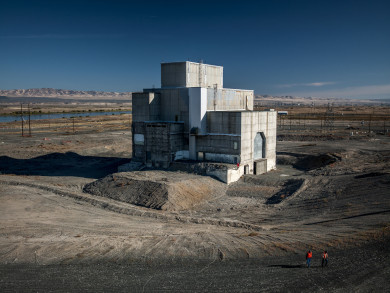
Beginning in 1943, the site was used to produce plutonium for the “Fat Man” bomb that was dropped on Nagasaki, Japan that brought an end to World War II. After a short lull, plutonium production was ramped up in 1947 and continued until 1987 when the last reactor ceased operation. Weapons production processes left solid and liquid radioactive wastes that posed a risk to the local environment including the Columbia River. In 1989, the U. S. Department of Energy (DOE), Environmental Protection Agency (EPA), and Washington State Department of Ecology began clean up of Hanford.
Tri City Herald, BY ANNETTE CARY OCTOBER 26, 2022
A reactor at the Hanford site has been “cocooned” for the first time in a decade. The addition of a new steel enclosure for the 1950s reactor is an “iconic change to the landscape” at the nuclear reservation along the Columbia River and helps protect the river, said John Eschenberg, president of Department of Energy contractor Central Plateau Cleanup Co. Eight of the nine plutonium production reactors that line the Columbia River in Eastern Washington are being put in temporary storage for up to 75 years to allow radiation in their core to decay to lower levels before a permanent solution is attempted.
The newest cocoon, with its straight sides and sloping roof, creates a new look for the Hanford skyline, much different from the other cocooned reactors which retain much of the original shape of the reactors. Completion of the cocoon over the K East Reactor leaves just one more to be cocooned at Hanford.
The K East Reactor was number seven, with its twin, the K West Reactor, not expected to be cocooned until about 2030. The ninth reactor, B Reactor, will remain unsealed and open for tours as part of the Manhattan Project Historical National Park. From World War II through the Cold War Hanford produced about two-thirds of the plutonium for the nation’s nuclear weapons program.
Production stopped with the end of the Cold War, and now the nation is spending for than $2.5 billion a year on environmental cleanup work at the 580-square-mile nuclear reservation by Richland.
For the K East Reactor a new form of temporary storage was used that Hanford officials expect to save money and better protect the reactor as it waits for final disposition in the coming decades.
No decision has been made on the final plan for disposing of Hanford’s defunct reactors, but allowing radiation to decay will provide safer conditions for workers then. In Hanford’s traditional cocooning, reactors are torn down to little more than their radioactive core, any openings are sealed up and the roof is replaced. NEW TYPE OF REACTOR COCOON But for the K East Reactor, a new, free-standing structure 123 feet tall and nearly 154 feet wide was built over the reactor for the first time.
The new method of cocooning should better protect the nearly 80-year-old concrete of the reactor from wind, sand and cycles of freezing and thawing that take a toll on Hanford structures, Eschenberg said. It also should reduce the need for roof maintenance.
Although the new steel enclosure was designed to last 75 years, Eschenberg said final disposition of the reactor is not likely to be done that late. No decision has been made on what final disposition will be.
Every five years Hanford workers will enter the reactor to check on its condition. New lighting installed within the reactor and between the steel cocoon and the original reactor walls will help make that easier as workers check the condition of the concrete, look for any rodents or other animals, and make sure there has not been any intrusion of water.
………………………………………………… DECADES OF CLEANUP BEFORE COCOONING The initial work at the K East Reactor to allow cocooning of the reactor, which operated from 1955 to 1971, started decades ago. The water basins at the K West and K East reactors were used to store uranium fuel irradiated at N Reactor but not processed to remove plutonium at the end of the Cold War.
The fuel was removed from the two basins, each holding 1.2 million gallons of water, in a 10-year project completed in 2004.
But the fuel had decayed after decades underwater, leaving a highly radioactive sludge that was not all contained and shipped to dry storage at Hanford’s T Plant until 2019, after first being consolidated at the K West Reactor.
Water next was drained from the K East Reactor basin, which is work not yet done at the K West Reactor. The dry K East Reactor basin was filled with grout that was then cut into pieces and removed, requiring the site to be backfilled.
A village of support structures had to be demolished, including the reactor’s powerhouse and fuel oil storage. In addition, sediment basins used for reactor cooling water had to be cleaned up.
Tens of thousands of tons of contaminated soil and debris, including underground piping and utilities, were removed, with most of it taken to a huge lined landfill in central Hanford for disposal.
Most of the soil contamination was from chromium, which was used as a corrosion inhibitor in reactor cooling water. Groundwater contaminated with chromium is pumped up, cleaned and returned to the ground before it enters the Columbia River, about 300 yards from the K Reactors. …………………………… more https://www.tri-cityherald.com/news/local/hanford/article267895437.html
Tactical Nuclear Fantasists
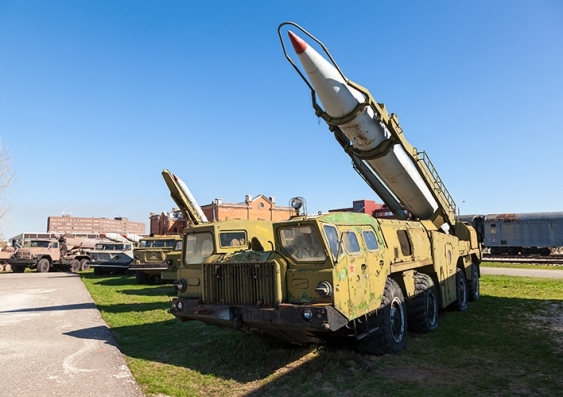
one category of nuclear weapon has continued to mark a grey area, lending a disturbed, even lunatic’s legitimacy to the battlefield deployment of such weapons. The tactical nuclear weapon is deceptively seductive to military planners.
Australian Independent Media, October 27, 2022 by: Dr Binoy Kampmark
Bogeyman politics tends to be flatly unimaginative. The image of the nuclear-mad Russian President, counting his diminishing options, has caught the imagination of press and propaganda outlets across the West. Will Mad Vlad go the distance and deploy a nuclear weapon in Ukraine?
Certainly, his rhetoric suggests the possibility. Vladimir Putin has promised to “make use of all weapon systems available to us” in the event Russia’s territorial integrity is threatened. ………….
The moment the innocents of Hiroshima were incinerated in August 1945, a weapon of mass lethality became a political option, the means to extract concessions and terrify opponents. Even more disturbingly, it also created an incentive on the part of powers to prevent others from getting it, thereby creating an exclusive club equipped with special amenities and privileges.
During a number of teeth-chattering moments of the Cold War, the use of nuclear weapons was contemplated. Historians note Cuba, Berlin and the Middle East. That they were not actually unleashed was a matter of unalloyed dumb luck and faux theory. Over time, this spawned an accepted, if nonsensical literature about the merits of having such lethal means. Precisely because of their potency, such weapons would never be used. Possessing them would be, to use a modern comparison, much like having unconvertible digital currency of huge value, more a matter of impressing your rivals than drawing direct benefit from them.
Having said that, one category of nuclear weapon has continued to mark a grey area, lending a disturbed, even lunatic’s legitimacy to the battlefield deployment of such weapons. The tactical nuclear weapon is deceptively seductive to military planners. Being of lower yield than their strategic, all-killing counterparts, they are seen as, in the words of the Union of Concerned Scientists, “more militarily useful, and less politically objectionable, and thus more likely to be used.” This does little to dampen the awful reality that such weapons can have yields greater than that of the first atomic weapon ever used.
The nature of such weapons is disturbingly nebulous in the military argot. In 2018, James Mattis, as US Secretary of Defense, opined to the House Armed Services Committee that there was no “such thing as a ‘tactical nuclear weapon’. Any nuclear weapon used at any time is a strategic game changer.”
Tactical nuclear weapons can comprise any number of devices with yields ranging from 1 kiloton to 50 kilotons. Alistair Millar, writing for Arms Control Today, mentions a few, including nuclear landmines, nuclear artillery shells, and missile warheads dropped by air or launched by missiles.
The 2018 US Nuclear Posture Review does away with much of the sentiment of the 2010 NPR in stressing the need to improve capabilities against Russia in various areas, including nonstrategic nuclear options. Moscow is specifically blamed for embracing a “limited first use” policy involving low-yield weapons that might “provide coercive advantage in crises and at lower levels of conflict.”……………………..
Ambiguity when it comes to a prospective use of nuclear weapons is considered one of the great flaws of military and political planning. Each party should know what the other proposes to do in certain circumstances, be it in terms of command structure, control and communications. Who has the authority to launch what weapons and when? What are the safeguards to cope with error? ………………….
Opacity is another factor complicating the whole business of how we cope with nonstrategic nuclear weapons. Numbers regarding the world’s tactical nuclear stockpiles remain sketchy………..
Paradoxically, even as such measures as the Treaty on the Prohibition of Nuclear Weapons gather greater popularity, the old members of the nuclear club continue to make mischief, modernising and adjusting their arsenals with little intention of ever abolishing them. The sheer allure of such weapons is unlikely to dissipate till their political dividends diminish. In the Ukraine War, such dividends abound. https://theaimn.com/tactical-nuclear-fantasists/
Kucinich Says Call for Diplomacy to end Ukraine-Russia War Must be Heard; Silencing of Congressional Progressive Caucus Casts Democrats as the “War Party”
https://worldbeyondwar.org/kucinich-says-call-for-diplomacy-to-end-ukraine-russia-war-must-be-heard-silencing-of-congressional-progressive-caucus-casts-dems-as-the-war-party/By Dennis Kucinich, World BEYOND War, October 26, 2022
CLEVELAND (Oct. 26) Weds – – Dennis J. Kucinich, former Congressman and former Democratic Presidential candidate today called upon Congressional Democrats to “rethink their opposition to diplomacy” as a means to end the war between Russia and Ukraine.
During his eight terms in congress, Kucinich led Democratic members’ efforts against the US-sponsored wars in Afghanistan, Iraq, Libya, Syria and worked to end the war in the Balkans and to divert war against Iran.
“War is ultimately a failure of political leadership. Diplomacy is difficult. It requires intelligence, skill and patience. The only way wars end is at the negotiating table,” Kucinich said.
Kucinich spoke in response to the recent retraction by the Congressional Progressive Caucus of the letter, signed by 30 Members of Congress, which called upon the Administration to aggressively seek diplomacy to end the most recent conflict which began with Russia’s invasion on February 24 of this year and which has resulted in over 15,000 deaths of Ukrainian civilians, and the deaths of tens of thousands of soldiers from both Ukraine and Russia.
“The Caucus’ letter, far from being sympathetic to Russia, sought to end the suffering of the Ukrainian people, while preserving their independence. The letter revealed an understanding of the risks of wider war, even a nuclear war, unless diplomacy is pursued,” Kucinich said.
Kucinich reminded Members of Congress that President Jimmy Carter used US diplomacy to achieve the Camp David Accords on September 17, 1978, with Israeli Prime Minister Menachem Begin and Egyptian President Anwar Sadat. US diplomacy brought about the Dayton Accords of November 21, 1995, which ended war in the Balkans. US Senator George Mitchell of Maine negotiated with multiple parties to bring about the Good Friday Agreement on April 10, 1998, which ended 30 years of deadly conflict in Northern Ireland, known as “The Troubles.”
“Remember the words from John F. Kennedy’s January 20, 1961, Inaugural Address: ‘Let us never negotiate out of fear. Let us never fear to negotiate.’ It was that type of thinking which produced negotiations between the US and the Soviet Union which averted a nuclear war during the Cuban Missile Crisis, October 16, 1962 – October 29, 1962.
Kucinich said that the obvious strong-arming and silencing of Caucus members who want a negotiated settlement in Ukraine casts the Democratic Party as a “Party of War,” he said. “It’s time for the Party to rethink Democratic opposition to diplomacy.”
“Democrats must not make support for the war, and its expansion, a test of party loyalty. We owe it to the people of Ukraine, Russia, the United States and the world to help negotiate a settlement to end this war which has already had severe global consequences, created energy and food scarcity and propelled sharp price increases,” he said.
US aid to Ukraine in 2022 currently stands in excess of $60 billion.
Russian delegation at UN calls on USA to join initiative to renounce weapons in space
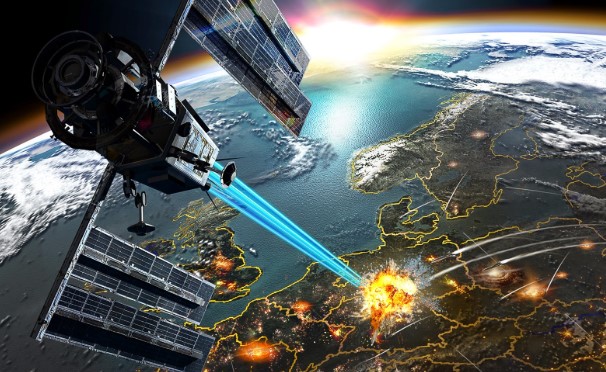
Foreign Ministry Spokeswoman Maria Zakharova’s comment on the US initiative in the UN General Assembly First Committee
The other day, the US delegation submitted to the UN General Assembly First Committee an aide-memoire on proposed UN General Assembly resolution on destructive direct-ascent anti-satellite missile testing. We analysed the text to discover that our apprehensions concerning this US initiative were valid.
As before, we regard the moratorium on testing the above type of anti-satellite weapon (ASW) announced by the White House in April as a purely declarative move. The UN General Assembly statements and draft resolutions are clearly not enough to prevent an arms race in space (PARIS), all the more so for a country that has had experience – at least since 2008 – destroying space objects with ASW.
The United States remains bashfully silent about the most important thing: are they willing to permanently rule out the combat use of this type of weapon? The resolution says nothing about it. There are no commitments regarding the development and production of such systems, or the prospect of ever destroying the Pentagon’s existing anti-satellite capabilities.
Moreover, the possibility of deploying ASW means on the US reusable unmanned space shuttle X-37B, which is capable of staying in orbit for a long time, performing manoeuvres and carrying a payload, cannot be ruled out. By the way, our multiple requests to the United States to clarify the X-37B platform’s goals and objectives have so far remained unanswered.
Military dominance and superiority in outer space being set as clear goals in US doctrinal documents, their view of space as an arena of confrontation and their plans for achieving these goals are quite telling if one wants to understand Washington’s genuine motives. It is no coincidence that the US delegation at the Geneva Conference on Disarmament is doing its utmost to hinder the start of talks on a multilateral instrument which contains reliable international legal guarantees against deploying weapons of any kind in outer space and the renunciation of the use of force or the threat of force against space objects. The Americans are using every pretext to avoid working on the Russian-Chinese draft treaty designed to fulfill PARIS goals………………….
Washington can prove it has serious intentions if it revises its destructive stance and the US delegation that is participating in the Conference on Disarmament joins the efforts to start talks as soon as possible on a legally binding instrument with guarantees of non-deployment of weapons in space, non-use of force or threat of force against space objects.
Specifically, the approach promoted by Russia involves the following commitments:
– not to use space objects as a means of destroying any targets on Earth, in the air or outer space;
– not to create, test or deploy weapons in space to perform any tasks, including for anti-missile defence, anti-satellite activity, or use against targets on Earth or in the air, and to eliminate such systems that the states already possess;
– not to create, test, deploy or use space weapons for anti-missile defence, anti-satellite activity, or use against targets on Earth or in the air;
– not to destroy, damage, or disrupt the normal functioning and not to change the flight paths of space objects owned by other states;
– not to assist or encourage other states, groups of states, international, intergovernmental, or any non-governmental organisations, including non-governmental legal entities that were established, registered or located on the territory under their jurisdiction and/or control, to participate in the above activities.
In addition, the accession of the United States and its allies to the international initiative/political commitment not to be the first to place weapons of any kind in outer space would be a really important confidence-building measure. We are once again calling on Washington to follow the example of more than 30 UN member states and join this initiative, as well as to support the UNGA draft resolution on that matter.
We are ready to substantively and professionally discuss the US initiative in this context of multilateral efforts to arrive at a comprehensive solution to PARIS issues. https://mid.ru/en/foreign_policy/news/1835061/
US, Japan, S Korea vow response if N Korea tests nuclear bomb
US says full military capabilities will be used, including nuclear, to protect its allies South Korea and Japan.
An “unparalleled” scale of response would be warranted if North Korea conducts a seventh test of a nuclear weapon, the United States, Japan and South Korea have warned.
The warning was issued on Wednesday amid concerns by the US and its regional allies that North Korea could be poised to resume nuclear bomb testing for the first time since 2017.
“We agreed that an unparalleled scale of response would be necessary if North Korea pushes ahead with a seventh nuclear test,” South Korean first vice foreign minister Cho Hyun-dong told a news conference in Tokyo.
Cho made his comments alongside Japan’s vice foreign minister Takeo Mori and US Deputy Secretary of State Wendy Sherman.
North Korea has been carrying out weapons tests at an unprecedented pace this year, firing more than two dozen short and medium-range ballistic missiles in recent weeks, including a missile that over-flew Japan.
We urge (North Korea) to refrain from further provocations,” Sherman said, calling the North’s actions “reckless” and deeply destabilising for the region.
Sherman also said that the US will use its full military capabilities, “including nuclear, conventional and missile defence”, to protect its allies Japan and South Korea.
North Korea needs to understand that the US commitment to the security of South Korea and Japan is “iron clad”, she said.
“And we will use the full range of US defence capabilities to defend our allies, including nuclear, conventional and missile defence capabilities,” she said.
US State Department spokesman Ned Price said in a statement that Sherman also reiterated that the US was continuing to “seek serious and sustained dialogue with the DPRK” (Democratic People’s Republic of Korea) – the official name for North Korea.
Cho, during his talks with Sherman, raised concern that a new North Korean nuclear weapons policy adopted in September increases the possibility of its arbitrary use of nuclear weapons.
“This is creating serious tension on the Korean peninsula,” Cho said.
In September, the USS Ronald Reagan and accompanying ships conducted joint military exercises with South Korean forces in response to a North Korean ballistic missile test in what was their first joint military training involving a US aircraft carrier since 2017.
Angered by South Korea’s military activities, Pyongyang last week fired hundreds of artillery shells off its coasts in what it called a grave warning to its neighbour to the south.
Sherman met earlier on Tuesday with Japan’s Mori and reaffirmed the further strengthening of the Japan-US alliance and other shared goals, including the complete denuclearisation of North Korea and their joint response to China’s increasingly assertive actions in the region.
Japanese defence minister Yasukazu Hamada recently said that North Korea is believed to have achieved a miniaturisation of nuclear warheads while significantly advancing its missile capabilities by diversifying its launch technologies, making interceptions more difficult.
Japan has joined South Korea in also warning of a possible nuclear test by North Korea in the near future.
Russia is funding its war on Ukraine by selling $billions of uranium to Europe’s nuclear industry- no sanctions on that!
The Russian nuclear industry has once again managed to avoid inclusion in the latest round of EU sanctions – the eighth in a row to skirt this vital issue in an apparent acknowledgment that Europe’s dependence on Russian nuclear fuel cannot easily be reversed.
Since the start of the war in February, the media has been so focused on Russian fossil fuels, particularly natural gas, that it has avoided any discussion of Europe’s nuclear dependence on Russia completely. However, the topic can no longer be safely ignored. The Kremlin has already earned several hundred billion dollars so far this year by selling fossil fuels to Europe, a financial cushion that has allowed Moscow to fund its horrific war in Ukraine.
While Europe is less reliant on Russia supplying its atomic energy sector than it is its fossil fuel sector, the dependence of the European atomic energy industry on Russian nuclear fuel is as surprising as it is alarming. Much work has gone into weaning Europe off Russian fossil fuels, with time being of the essence as Brussels seeks to curtail Moscow’s lucrative revenue streams as quickly and as comprehensively as possible. However, its nuclear industry has not yet been the focus of any such efforts.
Moscow Times 22nd Oct 2022
https://www.themoscowtimes.com/2022/10/22/europe-should-sanction-russias-nuclear-industry-now-a79089
EU ‘dancing on edge of volcano’ with Ukraine – French ex-president
https://www.rt.com/news/565187-eu-ukraine-peace-sarkozy/ 24 Oct 22, Nicolas Sarkozy says the bloc’s policy is driven by “miscalculation, exaltation, anger, superficial reactions”
It’s high time for the EU to abandon its emotionally driven policies on Ukraine and start talking about achieving peace, former French president Nicolas Sarkozy has suggested.
In an interview with Le Journal du Dimanche on Saturday, Sarkozy criticized Brussels for its involvement in the conflict between Russia and Ukraine, which has included sweeping sanctions on Moscow, weapons deliveries to Kiev, and calls for a military solution to the crisis.
“The European Commission is primarily an administrative body. Moreover, I still haven’t understood under which article of the European treaties [the body’s president Ursula] von der Leyen justifies her competence in the field of arms purchases and foreign policy,” he said.
“The only thing the Europeans are hearing now is more and more billions of euros being spent on the purchase of weapons. More weapons, more deaths, more war,” the 67-year-old politician added.
The EU’s policy regarding the conflict in Ukraine is driven by “miscalculation, exaltation, anger, superficial reactions,” and because of this “we’re dancing at the edge of a volcano,” said Sarkozy, who was the president of France between 2007 and 2012.
The bloc was right to condemn Russia and show solidarity with Ukraine, but it also needs to exercise “composure” and work to prevent the escalation of the conflict, he added. “It’s high time for serious initiatives to be taken to start talking about the future and peace.”
Sarkozy also criticized Ukrainian President Vladimir Zelensky for signing a decree earlier this month, which officially made it “impossible” for him to hold talks with his Russian counterpart Vladimir Putin.
Such a stance amounted to “demanding a regime change in Moscow,” the veteran politician pointed out. “I consider this to be a dangerous leap into the unknown, although it’s understandable that it’s difficult for the Ukrainian president to talk to Putin,” he said.
Moscow, which has repeatedly invited Kiev to come to the negotiating table in recent months, has blamed the Ukrainian side for undermining any potential for a peaceful settlement of the crisis. It has also repeatedly condemned the deliveries of weapons to Zelensky’s government by the US, EU, UK and some other countries, arguing that they won’t change the outcome of the conflict, but will prolong the fighting and increase the risk of a direct confrontation between Russia and NATO.
Cities should increase role in effort to abolish nuclear weapons
Mayors for Peace comprises 8,213 cities from 166 countries and regions, including the United States, Russia and other nuclear weapon states.
https://www.asahi.com/ajw/articles/14750556, October 24, 2022
Foreign representatives to the general conference of Mayors for Peace pose for a photograph in Hiroshima on Oct. 20. (The Asahi Shimbun)
While disarmament by nuclear weapon states progresses only at a snail’s pace, Russia has invaded Ukraine and has repeatedly threatened to use nuclear weapons.
The developments have brought home a reality where nuclear arms could be used again in the manner of what was done to Hiroshima and Nagasaki.
In light of the situation, we are left to ask what role could be played by local governments, which are closer to citizens than central governments, in striving for the goal of abolishing nuclear weapons.
Mayors for Peace held its 10th General Conference in Hiroshima on Oct. 19-20.
The international nongovernmental organization was founded 40 years ago in the midst of the Cold War in response to a proposal made by Hiroshima’s mayor at a U.N. meeting.
The Hiroshima Appeal, adopted at the meeting last week, expressed alarm at the risk of nuclear war, which it said has been raised to “the highest level,” and emphasized that “the only absolute viable measure for humanity to take against repeated threats of nuclear weapons is their total elimination.”
The document called on nuclear weapon states to fulfill their disarmament obligations spelled out in the Nuclear Nonproliferation Treaty (NPT) and to ratify the Treaty on the Prohibition of Nuclear Weapons (TPNW), which took effect at the initiative of countries with no nuclear arsenals, in lockstep.
Mayors for Peace comprises 8,213 cities from 166 countries and regions, including the United States, Russia and other nuclear weapon states.
While nuclear weapon states and their allies continue to adhere to the nuclear deterrence theory, the organization has called on local governments to unite across national borders and return to the basic principle that nuclear arms should be abolished. It has played a significant role.
A number of cities, particularly in Europe, have moved to join Mayors for Peace since Russia invaded Ukraine.
In a resolution last year, the U.S. Conference of Mayors called on the U.S. government to welcome the TPNW and take immediate action toward nuclear abolition. Cities that are members of Mayors for Peace played a major part in that process.
Mayors for Peace should expand its activities by capitalizing on the current trend of the growing presence of local governments.
The essential thing is to work hand in hand with civil society in sending out messages.
Mayors for Peace has been supported by pleas from survivors of the atomic bombings of Hiroshima and Nagasaki that the error should never be repeated.
During the meeting in Hiroshima, cases of efforts being made in Japan and abroad were presented. They include how a group of 26 cities in western Tokyo have been working together to archive people’s accounts of their war experiences and to provide peace education.
We hope more local governments will draw on their networks to share and expand their diverse attempts.
Japan, as the only nation that has suffered atomic bombings in war, has a major role to play.
Of all municipalities in the nation and Tokyo’s wards, more than 99 percent, or 1,737, are members of Mayors for Peace.
At a general meeting of Japanese member cities held on the sidelines of the 10th general conference, a written request was approved calling on the government to participate as an observer in the second meeting of the state parties to the TPNW, which is scheduled for next year, and sign and ratify the treaty.
Hiroshima is expected to host the first meeting of a new international group of eminent persons to discuss nuclear disarmament by year-end and a Group of Seven summit next spring.
Prime Minister Fumio Kishida, who will be presiding over both meetings, should take the appeal of Mayors for Peace seriously and discard his stance of continuing to turn his back on the TPNW as soon as possible.
This Abandoned Nuclear City Is Trapped Under Ice, What Happens If It Thaws?
https://twistedsifter.com/videos/what-happens-if-this-frozen-abandoned-nuclear-city-thaws 24 Oct 22, In an effort to stop the spread of Soviet influence during the height of the Cold War, the United States and Denmark signed the 1951 Defense of Greenland Act. Soon after, the U.S. Army constructed a state-of-the-art nuclear-powered Arctic research center, with multiple military bases built out on the ice sheet, one of them was Camp Century.
Watch the video on why Project Iceworm was aborted before it began, and the state of Camp Century today. In the midst of a warming climate, who is responsible for the abandoned base, and how do we protect the environment from the physical, biological, and radiological wastes at the site?
For more on this unfolding threat, read about Denmark’s Camp Century Climate Monitoring Programme and scientists’ warning of melting Artic releasing banned toxins.
Allegations fly about plans to use “dirty bomb” and nuclear weapons in Ukraine war
The warning from the United States comes as Russia alleges Ukraine is in the “final stage” of plans to deploy a “dirty bomb”, with Western nations accusing Moscow of using the claim as a pretext to escalate the war.
Russia warned nuclear weapons use would bring ‘severe consequences’ amid allegations of war escalation plot SBS News 25 Oct 22,
The United States has warned there would be severe consequences if Russia used a nuclear weapon in Ukraine, as Western countries accused Moscow of plotting to escalate the war on the pretext that Ukraine was planning to deploy a so-called “dirty bomb” laced with nuclear material.
With Ukrainian forces advancing into Russian-occupied Kherson province, top Russian officials phoned Western counterparts on Sunday and Monday to tell them of Moscow’s suspicions. Russia plans to raise the issue at the United Nations Security Council on Tuesday, diplomats said
The foreign ministers of France, Britain and the United States rejected the allegations and reaffirmed their support for Ukraine.
“Our countries made clear that we all reject Russia’s transparently false allegations that Ukraine is preparing to use a dirty bomb on its own territory,” they said in a joint statement. “The world would see through any attempt to use this allegation as a pretext for escalation.”
……………………………… Russian military Chief of General Staff Valery Gerasimov spoke to the chairman of the US Joint Chiefs of Staff, Mark Milley, on Monday, Russia’s RIA news agency reported. The call was the first between the top generals since May, a US military official said, and came eight months to the day since Russia invaded Ukraine.
US officials said there was no indication Moscow had made the decision to use nuclear weapons.
“We continue to see nothing in the way of preparations by the Russian side for the use of nuclear weapons,” White House national security spokesman John Kirby told reporters. “And nothing with respect to the potential use for a dirty bomb at this point.”
Russia’s defence ministry said the aim of a “dirty bomb” attack by Ukraine would be to blame Russia for the resulting radioactive contamination. The ministry has begun preparing for such a scenario, it said, readying forces and resources “to perform tasks in conditions of radioactive contamination.”
In a statement on Monday, Russian Lieutenant General Igor Kirillov said: “According to the information we have, two organisations in Ukraine have specific instructions to create a so-called ‘dirty bomb’. This work is in its final stage.”
Russia’s Foreign Minister Sergei Lavrov insisted the threat was real and that Russia had a “keen interest in preventing such a terrible provocation.”
But Ukrainian President Volodymyr Zelenskyy had said the Russian accusation was a sign Moscow was planning such an attack itself and would blame Ukraine.
“If Russia calls and says that Ukraine is allegedly preparing something, it means one thing: Russia has already prepared all this,” Mr Zelenskyy said in an overnight address.
The UN’s nuclear watchdog said on Monday it was preparing to send inspectors in the coming days to two Ukrainian sites at Kyiv’s request, in an apparent reaction to the Russian “dirty bomb” claims.
What is a dirty bomb?
At its most basic, a “dirty bomb” is a conventional bomb laced with radioactive, biological or chemical materials which get disseminated in an explosion.
Using radioactive materials would make it a type of radiological dispersal device, a term often used interchangeably with “dirty bomb”.
Nobody has ever exploded a “dirty bomb”, but there is suspicion that extremists may have tried to build one……………………. https://www.sbs.com.au/news/article/russia-warned-nuclear-weapons-use-would-bring-severe-consequences-amid-allegations-of-war-escalation-plot/q19cw4ou2
Kremlin diplomat assures that Russia has no intention of using nuclear weapons in Ukraine
https://euroweeklynews.com/2022/10/25/kremlin-diplomat-assures-that-russia-has-no-intention-of-using-nuclear-weapons-in-ukraine/ By Chris King • 25 October 2022,
Russia has no intention of using nuclear weapons in Ukraine claimed Kremlin diplomat Vasily Nebenzya in a letter to the UN Secretary-General.
As reported by TASS on Monday, October 24, in a letter from Vasily Nebenzya from the Permanent Mission of the Russian Federation to the UN Secretary-General Antonio Guterres, he stated that Russia never intended to, and never will, use nuclear weapons in Ukraine.
Konstantin Vorontsov, the Deputy Director of the Department for Non-Proliferation and Arms Control of the Russian Foreign Ministry, noted earlier that Russia has not threatened and is not threatening Ukraine with nuclear weapons.
This was reiterated by Dmitry Peskov, the press secretary of the Russian president, Vladimir Putin, who stressed that the Russian Federation does not participate in Western rhetoric about the use of nuclear weapons in Ukraine. These arguments are only on the conscience of American and European leaders he added.
Prior to this, Mikhail Podolyak, the adviser to the head of the office of the President of Ukraine stated that the likelihood of a nuclear conflict with the Russian Federation at the moment is minimal. He recalled that Russia signed the Treaty on the Non-Proliferation of Nuclear Weapons. That is, it is forbidden to use nuclear weapons against a state that does not have them.
In turn, the head of European diplomacy, Josep Borrell, said that an attack against Ukraine with nuclear weapons would provoke a powerful military response from NATO, the European Union, and the United States, as reported by gazeta.ru.
‘The nuclear bomb was so bright I could see the bones in my fingers’: The atomic veterans fighting for justice
https://inews.co.uk/inews-lifestyle/nuclear-bomb-bright-bones-fingers-atomic-veterans-2-1930293 24 Oct 22, Veterans of British nuclear testing in the Cold War say they – and their children and grandchildren – are still living with the health effects. And 70 years on, they want to see recognition of their part in the missions
RAF veteran John Lax is about to describe what it’s like seeing a nuclear bomb being detonated. “Even if I tell you what it was like,” he tells i, “you probably can’t really imagine it unless you’ve witnessed it yourself.”
Now 81, Lax was a 20-year-old air wireless mechanic when he was sent to take part in Britain’s nuclear testing programme in the Pacific in 1962.
Like many servicemen, he didn’t know there would be bomb tests when he arrived on Christmas Island, then a British territory, now a republic named Kiribati.
“We were told to put on long trousers and a long-sleeved shirt,” he says, “and we had these dark goggles which meant you couldn’t see your hand in front of you. Then we had to go and sit on the football pitch with our backs to the detonation, because if we’d faced it, the fireball would have burned our eyes.
“When the bomb went off, it was so bright that I could see the spine and ribs of the guy sitting a metre in front of me, like an X-ray. I put my hands over my eyes and could see the bones in my fingers, and could see the blood pumping around my hands. It was 4am but the sky turned blue, like it was daytime. The blast was like the sound of a pistol, except 1,000 times louder. After the fireball, a couple of minutes later, you feel the blast and a strong gust of very hot wind – if you had no shirt on it feels like it would burn through your back – then once the fireball starts to dissipate you get the mushroom cloud.”
This month it is 70 years since Britain first began developing and testing nuclear weapons, becoming the world’s third nuclear power (after the United States and the Soviet Union).
Between 1952 and 1965, detonations were carried out in Australia and the Pacific, in a series of operations involving the participation of more than 20,000 British service personnel, as well as some Fijian and New Zealand soldiers. Inhabitants of the test areas were moved offshore or to protected areas.
Read more: ‘The nuclear bomb was so bright I could see the bones in my fingers’: The atomic veterans fighting for justiceLax, who bore witness to 24 nuclear detonations over 75 days, was at the time given a “film badge”, containing photographic material that was intended to measure the levels of radiation the young men had been exposed to.
“They weren’t much good,” he says, “nobody kept a record of who had which badge, and you’d just put it in a box with all the other badges. These badges are pretty much useless in humid conditions, and Christmas Island was a tropical monsoon climate and very humid. So we had no record of radiation exposure.”
There were no long-term health studies of nuclear test veterans. Those who were there during the tests at Christmas Island were not given medical examinations when they left, and their health was not studied after they finished their service. Many servicemen – and many islanders – later reported severe health problems, which they believed where due to the radioactive fallout from nuclear bomb tests – from rare cancers to organ failure.
Some said they had fertility issues and difficulty conceiving, and many of those who did have children and grandchildren reported high incidences of birth defects, hip deformities, autoimmune diseases, skeletal abnormalities, spina bifida, scoliosis and limb abnormalities. Lax’s own health has been OK, but he does wonder about his children, who have both undergone surgery for a series of tumours, one at 14 years old.
Lax’s nuclear veteran friend has three types of cancer, which he says the specialist attributes “100 per cent to exposure to radiation”.
Another veteran, Doug Hern, who witnessed five thermonuclear explosions, says his skeleton is “crumbling” and has skin problems and bone spurs. His daughter died aged 13 from a cancer so rare that doctors didn’t have a name for it, and he believes all of this is due to the genetic effects of radiation exposure.
The Ministry of Defence (MoD) says it is grateful to Britain’s nuclear test veterans for their service, but maintains there is no valid evidence to link participation in these tests to ill health.
In 1983, the MoD did commission a study of more than 21,000 veterans, but – while the study found a slightly elevated risk of leukaemia – it concluded that the veterans had experienced no ill health as a result of their nuclear exposure. But nuclear veterans and their advocates have questioned the accuracy of the study.
For years, UK veterans have been campaigning with The British Nuclear Test Veterans Association, and Labrats – an organisation for nuclear test survivors – to be formally recognised, urging the Government to honour the nuclear test veterans’ service and sacrifice with an official recognition medal.
“I was a guinea pig,” says Lax, who believes he was placed there to see what would happen to people when the bomb went off.
The UK is the only nuclear power to deny special recognition and compensation to its bomb test veterans, of which there are estimated to be 1,500 surviving today.
In 2015, Fiji compensated all its veterans of British nuclear tests in the Pacific, with prime minister Frank Bainimarama announcing: “Fiji is not prepared to wait for Britain to do the right thing. We owe it to these men to help them now, not wait for the British politicians and bureaucrats.”
The United States Radiation Exposure Compensation Act has been providing compensation to its nuclear veterans since 1990.
Ed McGrath, 84, who was based at RAF Mildenhall in Suffolk, was 18 when he was sent to Australia and then flown to Maralinga to witness a test explosion.
At the Australian base camp we had good food and we had sunshine,” he tells i.
“As an 18 year-old, you’re travelling to places you can only imagine, but then when we were flown to witness the bombs, that’s where it went dark and nasty. They had the scientists and the engineers there, but I did nothing except stand there being told to put my hands over my eyes and turn my back to the blast. You were going up there to stand in the vicinity of a very powerful bomb 1,000 times more powerful than Hiroshima or Nagasaki.”
Despite persistent allegations by veterans that they had been used as guinea pigs in the tests, the Ministry of Defence denies this. McGrath is not convinced.
“There was no reason for us to be there, and I think the politicians who are responsible for sending us there must have come to the conclusion that, ‘Well, these lads are the price we’ve got to pay to find out what on earth is going on in the future.’
Veterans say that Boris Johnson recently at least gave them some hope of recognition, because as one of his last outings as Prime Minister, he met a group of veterans and campaigners and wrote in an open letter: “I’m determined that your achievements will never be forgotten. I have asked that we look again at the case for medallic recognition because it is my firm belief that you all deserve such an honour.”
Campaigners also showed the Prime Minister evidence that servicemen’s medical records from their time at the tests were missing from archives. Former prime minister Liz Truss, who promised to support their fight when she entered No 10, had not acted to put these promises into action. After she took office, she dismissed the veterans’ minister Johnny Mercer.
The Government’s Office for Veterans’ Affairs has this month announced it will launch a £250,000 oral history project to chronicle the voices and experiences of those who supported the UK’s effort to develop a nuclear deterrent. However, Lax says this is “too little, too late” and nowhere near what nuclear veterans should have.
McGrath has spent time worrying and feeling guilty that his family may face health problems because of his exposure to nuclear tests. His granddaughter had a brain tumour when she was a child but he says: “It’s very difficult to link the two directly and it’s not something you want to think about, to be honest.”
A Brunel University study found in 2021 that nuclear test veterans have double the normal levels of psychological stress for their age.
A survey and interviews by the Centre for Health Effects of Radiological and Chemical Agents found that most of the veterans report having become anxious in the mid-80s, when evidence first emerged of cancers, rare blood disorders, miscarriages in wives and birth defects in their children.
Yet this July, researchers at Brunel University published a study that showed “no significant increases in the frequency of newly arising genetic changes in the offspring of nuclear test veteran fathers. This result should reassure the study participants and the wider nuclear test veteran community.”
However, it seems that the legacy of nuclear testing has taken its toll in ways that we perhaps don’t yet fully understand, because there are communities of people across the world who feel their lives have been hugely affected by their nuclear veteran fathers and grandfathers.
Susan Musselwhite, 42, was eight when her father walked out on the family. When she saw him once again in her twenties, he said his leaving had all been down to the mental and physical anguish of being a test veteran on Christmas Island. Musslewhite lives with chronic migraines and Grave’s disease, sometimes barely being able to lift her head off the pillow, spending 90 per cent of her time indoors. “Sometimes I’m like an 80-year-old woman with dementia,” she says. She started to talk to other descendants and discovered that they were saying similar things about their mental and physical health. “I realised I wasn’t going through this alone. I truly believe that if my dad wasn’t at the test site, I wouldn’t be like this.”
Elin Doyle, an actress who has written a semi-autobiographical new play called Guinea Pigs about the tests’ generational effect, spent her early years witnessing her nuclear veteran father’s fight for justice. He had a rare form of cardiac sarcoidosis, an inflammatory condition that can result in heart rhythm abnormalities, in his forties. “Many years later,” says Doyle, “he was asked by a specialist whether he’d ever worked with radiation. So somebody else made the link and that was a bit of a shock for him. At that point I’d already had a sibling who was born with a birth defect.”
Doyle’s father died of heart failure in his sixties. “You can argue it’s because of radiation or not, but he didn’t have the sort of morbidities that would expose him to young heart disease, and we don’t have a history of it in the family, so the belief was that it was linked.”
Doyle also talks about the many of the veterans’ feelings of betrayal.
“Sending a bunch of 19-year-olds off in the 1950s to work on nuclear tests and assuring them that it’s perfectly safe, and then to find out actually, they probably weren’t safe and quite possibly, the powers that be knew that that was the case – that has an impact on the rest of a veteran’s life.”
Steve Purse, 47, from Denbighshire, Wales, remembers how his father David, an RAF flight lieutenant, was too scared to talk about his experience of being posted to test nuclear weapons in 1962 because of the Government secrecy around the nuclear mission.
He did, however, open up about it years later when he developed a skin condition over his arms and legs and the dermatologist asked whether he’d spent most of his life exposed to intense sunlight in the tropics. He said no, he had spent one year in Australia with nuclear tests. The dermatologist said that this was severe radiation damage to the skin.
Steve has a form of short stature, which doctors don’t know how to diagnose. “All they say is that I’m unique,” he says, “but my dad was exposed to alpha-radiation which causes mutation in DNA, so I believe it’s down to that. It feels like nuclear tests have left a legacy of genetic Russian roulette.”
For veteran McGrath, it feels as though the nuclear tests, and the men who were exposed to them, are a forgotten part of Cold War history. “It’s encouraging, though, that young people are beginning to take notice,” he says.
1 This Month


Read the Public Inquiry Report, the Commissioners’ report, Surrendering Australia: The AUKUS Deception is available to download for free at aukuspublicinquiry.com. Or just watch the replay of the National Press Club Luncheon.



19 November – Webinar – The Reality of Reprocessing
Time: 11:00 AM Pacific Time (US & Canada) / 2:00 PM Eastern / 7:00 PM UK / 8:00 PM CET
Register for the Zoom Event Here



Shut down the radiation-damaged Heysham nuclear reactors now
To see nuclear-related stories in greater depth and intensity – go to https://nuclearinformation.wordpress.com

Say No to NASA’s Reckless Nuclear Reactor on the Moon
Say No to NASA’s Reckless Nuclear Reactor on the Moon
-
Archives
- November 2026 (119)
- October 2026 (302)
- September 2026 (339)
- August 2026 (330)
- July 2026 (355)
- June 2026 (287)
- May 2026 (306)
- April 2026 (356)
- March 2026 (251)
- February 2026 (267)
- January 2026 (308)
- December 2025 (358)
-
Categories
- 1
- 1 NUCLEAR ISSUES
- business and costs
- climate change
- culture and arts
- ENERGY
- environment
- health
- history
- indigenous issues
- Legal
- marketing of nuclear
- media
- opposition to nuclear
- PERSONAL STORIES
- politics
- politics international
- Religion and ethics
- safety
- secrets,lies and civil liberties
- spinbuster
- technology
- Uranium
- wastes
- weapons and war
- Women
- 2 WORLD
- ACTION
- AFRICA
- Atrocities
- AUSTRALIA
- Christina's notes
- Christina's themes
- culture and arts
- Events
- Fuk 2022
- Fuk 2023
- Fukushima 2017
- Fukushima 2018
- fukushima 2019
- Fukushima 2020
- Fukushima 2021
- general
- global warming
- Humour (God we need it)
- Nuclear
- RARE EARTHS
- Reference
- resources – print
- Resources -audiovicual
- Weekly Newsletter
- World
- World Nuclear
- YouTube
-
RSS
Entries RSS
Comments RSS

