‘Target Australia ’: Australia’s Defence Strategic Review must address nuclear risks

Pine Gap near Alice Springs, RAAF Base Tindal for US B-52’s near Katherine, Darwin Harbour, North-West Cape near Exmouth, and the Stirling submarine base near Fremantle are all potential targets for a strike by China in a conflict with the US over Taiwan or the South China Sea
Pearls and Irritations, By David Noonan, Nov 3, 2022
The Defence Strategic Review must act in accordance with Australia’s commitment to sign the UN “Treaty on the Prohibition of Nuclear Weapons” (the ‘Ban Treaty’) and not seek to compromise that path by supporting roles in nuclear warfare alongside the US.
Anthony Albanese made a commitment in his “Changing the World” Speech (ALP National Conference, 18 Dec 2018), stating:
“We have on our side the overwhelming support of the Australian people. …
Our commitment to sign and ratify the nuclear weapons ban treaty in government is Labor at our best”
The ALP National Platform (2021, p.117) commits “to sign and ratify the Ban Treaty” and Australia must do so in this term of the ALP in federal office.
The Ban Treaty Article 1 Prohibitions require nations to never under any circumstance use or threaten to use nuclear weapons, OR to assist or encourage, in any way, anyone to do so.
To come into compliance with the Ban Treaty, the Defence Review must evolve our Alliance with the US to put an end to defence reliance on US ‘nuclear deterrence’.
The US ‘nuclear weapons umbrella’ is a threat to use nuclear weapons in Australia’s defence policy – a threat that has long been contrary to International Humanitarian Law and is now illegal since the Ban Treaty came into force as a permanent part of International Law from 22 January 2021.
The roles of Pine Gap and the North-West Cape communications base must evolve to exclude military operations related to the use, or threat to use, nuclear weapons.
The ICAN Report “Choosing Humanity” (July 2019) best sets out the case for Australia to sign the Ban Treaty. Foreign Affairs Minister Penny Wong should now refer the Ban Treaty to an Inquiry by the Joint Standing Committee on Treaties as a proposed treaty action.
Australians have a right to know the risk exposure we face in peace time and in war:
While preparing for war, a second lead task for the Defence Review is to provide transparency on the consequences for Australia as a target in an escalating conflict between the US and China.
The Review must report on the scenarios, risks, and consequences of a nuclear or conventional attack by China on bases in Australia and on the potential resultant health calamity.
Both China and Russia’s priority and capacity to attack US bases in Australia has long been recognised. An ASPI Report (Sept 2022) states Pine Gap is a high-level nuclear target, noting:
“We need to understand what the implications would be for Alice Springs, which is a town of 32,000 people only 18 kilometres from the base.”
The lead author of the report, Paul Dibb has stated: “The risk of nuclear war is now higher than at any time since the Cold War. … Australia should not feel its geographic distance from the epicentre of conflict affords it any significant protection. … We need to plan on the basis that Pine Gap continues to be a nuclear target, If China attacks Taiwan, Pine Gap is likely to be heavily involved.”
A Lowy paper (09 August 2021) also cites Darwin as a potential target in a US-China conflict:
“The arena of hostilities for any such conflict would be mostly confined to East Asia, with the possible exception of strikes against US forces using Darwin as a rear-area staging base.”
No doubt Australia acquiring nuclear powered attack submarines and visits or basing US or UK nuclear subs at Stirling naval base near Fremantle escalates the risk profile we face.
Beijing’s Global Times “China needs to make a plan to deter extreme forces of Australia” (07 May 2021) threatened “retaliatory punishment” with missile strikes “on the military facilities and relevant key facilities on Australian soil” if Australia coordinates with the US in a war over Taiwan:
“China has a strong production capability, including producing additional long-range missiles with conventional warheads that target military objectives in Australia when the situation becomes highly tense.”
Pine Gap near Alice Springs, RAAF Base Tindal for US B-52’s near Katherine, Darwin Harbour, North-West Cape near Exmouth, and the Stirling submarine base near Fremantle are all potential targets for a strike by China in a conflict with the US over Taiwan or the South China Sea……………………more

David Noonan B.Sc., M.Env.St., is an Independent Environment Campaigner and was a long-term campaigner for Australian Conservation Foundation.
See the public submission to the Defence Review by David Noonan (29 Oct 2022).
USA’s new nuclear policies: first strike OK, “usable”weapons, nukes for Europe, for any purpose USA likes, and against non-nuclear nations.

Brandon’s “Usable Nukes” Are the Fast-Track to Jopocalypse MIKE WHITNEY • OCTOBER 31, 2022
“The Biden administration’s Nuclear Posture Review is, at heart, a terrifying document. It not only keeps the world on a path of increasing nuclear risk, in many ways it increases that risk. Citing rising threats from Russia and China, it argues that the only viable U.S. response is to rebuild the entire U.S. nuclear arsenal, maintain an array of dangerous Cold War-era nuclear policies, and threaten the first use of nuclear weapons in a variety of scenarios.” Stephen Young, Union of Concerned Scientists
Maybe you’re one of the millions of people who think the US would never use its nuclear weapons unless the threat of a nuclear attack was imminent.
Well, you’d be wrong, because according to the recently-released Nuclear Posture Review, the bar for using nukes has been significantly lowered. The new standard reads like this: (nukes can be used) “in extreme circumstances to defend the vital interests of the United States or its allies and partners.”
“Defend the vital interests of the United States or its allies”??
That’s a pretty broad net, isn’t it? That could include anything from a serious threat to national security to an ordinary economic competitor. And that loosy-goosy definition appears to be just what the authors were looking for. The hardliners wanted to fundamentally change US nuclear doctrine so the conditions under which nukes could be used was greatly expanded. The obvious objective of this dramatic policy-shift is to eliminate any obstacle to the free and unfettered use of nuclear weapons. Which is precisely what the neocons have always wanted; a green light to Armageddon. Now they got what they wanted. Here are a few of the changes in policy that suggest that a full-blown nuclear war is no longer a remote possibility, but an increasingly likely prospect.
1– First-Strike Use: Biden refuses to rule out first-strike use of US nuclear weapons …in reversal of his campaign promise. This is from The Daily Mail:
“… on the campaign trail, Biden had vowed to switch to a ‘sole purpose’ doctrine, which maintains that the US would only use nuclear weapons to respond to another nation’s nuclear attack….
President Joe Biden is abandoning a campaign vow to alter longstanding US nuclear doctrine, and will instead embrace existing policy that reserves America’s right to use nukes in a first-strike scenario, according to multiple reports.” (Daily Mail)
2– Nuclear Escalation: The Biden team has accelerated the deployment of modernized U.S. B61 tactical nuclear weapons to NATO bases in Europe. (The B61-12 carries a lower yield nuclear warhead than earlier versions but is more accurate and can penetrate below ground.) This is from Reuters:
Russia said on Saturday that the accelerated deployment of modernised U.S. B61 tactical nuclear weapons at NATO bases in Europe would lower the “nuclear threshold” and that Russia would take the move into account in its military planning.
Amid the Ukraine crisis, Politico reported on Oct. 26 that the United States told a closed NATO meeting this month that it would accelerate the deployment of a modernised version of the B61, the B61-12, with the new weapons arriving at European bases in December, several months earlier than planned.
“We cannot ignore the plans to modernize nuclear weapons, those free-fall bombs that are in Europe,” Russian Deputy Foreign Minister Alexander Grushko told state RIA news agency. (Reuters)
3– ‘Tactical’ means ‘Usable’: Biden’s new regime of low-yield nukes (which can still blow up a city the size of New York.) are called “tactical” weapons because they are designed for use on the battlefield, which is to say, Biden no longer limits the use of nukes for national defense but also supports their use in conventional wars. (like Ukraine?) This is from Aljazeera:
“Tactical nuclear warheads were created to give military commanders more flexibility on the battlefield. In the mid-1950s, as more powerful thermonuclear bombs were being built and tested, military planners thought smaller weapons with a shorter range would be more useful in ‘tactical’ situations,” according to Al Jazeera’s defence analyst Alex Gatopoulos. (Aljazeera)
4– Fasttrack to Nuclear War: Biden’s New Euro-Nukes have lowered the threshold for nuclear war. This is from MSN:
Russia said on Saturday that the accelerated deployment of modernized US B61 tactical nuclear weapons at NATO bases in Europe would lower the “nuclear threshold” and that Russia would take the move into account in its military planning…
“The United States is modernizing them, increasing their accuracy and reducing the power of the nuclear charge, that is, they turn these weapons into ‘battlefield weapons’, thereby reducing the nuclear threshold,” Grushko said….
Russia’s ambassador to Washington, Anatoly Antonov, said on Saturday on Telegram that the new B61 bombs had a “strategic significance” as Russia’s tactical nuclear weapons were in storage, yet these U.S. bombs would be just a short flight from Russia’s borders.
“We cannot ignore the plans to modernize nuclear weapons, those free-fall bombs that are in Europe,” Russian Deputy Foreign Minister Alexander Grushko told state RIA news agency. (MSM)
5– Increasing the Reasons for using Nukes: The Nuclear Posture Review abandons Biden’s promise to ensure that US nuclear weapons would be used for the “sole purpose” of deterring or responding to a nuclear attack. Instead, the NPR states that the US will consider the use of nuclear weapons “in extreme circumstances to defend the vital interests of the United States or its allies and partners.”
Sole purpose could significantly reduce the risk of unintended escalation and increase the credibility of more flexible and realistic nonnuclear response options in a range of importance contingencies.” (Federation of American Scientists)
6– More Escalation: The US now reserves the right to use its nukes against non-nuclear weapon countries. This is from an article at Bloomberg News:
The Pentagon’s new National Defense Strategy rejected limits on using nuclear weapons long championed by arms control advocates and in the past by President Joe Biden.
Citing burgeoning threats from China and Russia, the Defense Department said in the document released Thursday that “by the 2030s the United States will, for the first time in its history face two major nuclear powers as strategic competitors and potential adversaries.” In response, the US will “maintain a very high bar for nuclear employment” without ruling out using the weapons in retaliation to a non-nuclear strategic threat to the homeland, US forces abroad or allies.” (“Pentagon’s Strategy Won’t Rule Out Nuclear Use Against Non-Nuclear Threats”, Bloomberg)………………………………………………………………………….
The White House, the Pentagon and the entire US foreign policy establishment now march in lockstep behind the most fanatically-lethal defense policy in the nation’s 246-year history. The National Defense Strategy, the Nuclear Posture Review and the National Security Strategy all embrace the same reckless warmongering policy that will inevitably lead to mass annihilation and civilizational collapse. The doves and critical thinkers have all been removed from the foreign policy apparatus while the madmen and warhawks drag the world inexorably towards catastrophe. God help us. https://www.unz.com/mwhitney/brandons-usable-nukes-are-the-fast-track-to-jopocalypse/
French nuclear corporation EDF – facing huge debts, but cosily enmeshed with UK government

But what about the future? EDF is predicted to stack up 100 billion Euros (£87.8 billion) in debt this year and the French government already pumped €3 billion (£2.6 billion) into the company in Spring.
But as you’ll see below, no matter how bad things are there’s always room to give the CEO a pay rise.
In 2020, CEO Lévy was listed as the 9th highest-paid CEO in the utility sector worldwide taking home a salary of €450,000 (£389,500) and €3,660 (£3,150) in benefits.
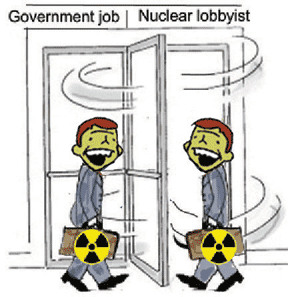
EDF has been getting cosier and cosier with the government.
And the cosiness isn’t set to end anytime soon, EDF stands in good stead under Liz Truss. The new PM nominated former EDF lobbyist Michael Stott as Downing Street’s new business liaison. Stott, who is also an ex-Tory press officer, is expected to lead the government’s new-build nuclear programme.
EDF: WHEN THE STATE GOES FULL CAPITALIST. https://newint.org/features/2022/10/31/edf-when-state-goes-full-capitalist 31 October 2022
What happens when a state energy company goes multinational? In the second installment of its Heat the Rich series on Britain’s big six energy giants, Corporate Watch puts the spotlight on EDF Energy.
EDF is the fifth biggest energy supplier in the UK currently controlling over 10% of the market. The French multinational is best known for “leading the UK’s nuclear renaissance” operating all eight of the UK’s nuclear power stations.
It’s owned by Electricity of France S.A. (Électricité de France, EDF). A multinational energy producer and supplier primarily (and soon to be solely) owned by the French government. It is one of the world’s top five utility companies.
Created in 1946 by the French government, EDF was set up with the intention of rebuilding France’s power grid following World War Two. Now, 70 years on, EDF has branched out a lot further than France, cashing in on energy users from the USA to India. The group is now made up of 144 subsidiaries.
Despite its name, EDF isn’t just in the energy business. EDF is also involved in the data software, vehicle traceability, investment, and real estate sectors, to name just a few.
EDF uses strategic partnership deals to build its brand, for example, the company is a ‘premium partner’ (and official energy supplier) for the Olympic and Paralympic Games in Paris in 2024.
HOW MANY UK ENERGY CUSTOMERS DOES EDF HAVE?
Electricity (excluding pre-payment): 3 million
Gas (excluding pre-payment): 2.1 million
WHO OWNS IT?
EDF Energy (UK) Ltd is ultimately owned by EDF SA, a French company which is majority owned (84%) by the French government and listed on Euronext, the French stock exchange.
In July 2022, the French government announced it would buy out the outstanding 16% of EDF’s shares, reversing the partial privatization of the company in 2005. But it hit a brick wall when investors threatened to sue the government for losses. The French state started finalising their buyout of 100% shares in EDF in September. But at what price? The other shareholders are demanding a fortune, with the government set to pay a total of 9.7 billion euros (£8.7 billion) of French taxpayers’ money. It’s worth noting that the shareholders set to cash in from this nationalization are investment giants Blackrock and Vanguard Group.
IS EDF SUFFERING AS A RESULT OF THE COST OF LIVING CRISIS?
On the face of it, it does seem like EDF profits have nose-dived in recent years. According to EDF Energy (UK) Ltd’s 2021 accounts, EDF operated a €4.8 billion (£4.2 billion) loss compared to €268 million (£239 million) in 2020. No dividends were paid by EDF Energy (UK) Ltd. in 2021 nor in 2020. However, another UK subsidiary, EDF Energy Holdings Ltd did pay dividends of £1 million in 2021, and £60 million in 2020.
Despite these losses, at the end of 2021 EDF Energy (UK) Ltd still had net assets of €17.9 billion (£16 billion).
Regardless of the UK subsidiary’s accounts, the EDF Group achieved all its financial targets in 2021. Group sales for the year amounted to £8,720m, an increase of 8%. The Group reaped profits of €360 million (£324 million) in 2021, a total reverse in performance from 2020 when the Group made a loss of €2.6 billion (£2.3 billion).
But what about the future? EDF is predicted to stack up 100 billion Euros (£87.8 billion) in debt this year and the French government already pumped €3 billion (£2.6 billion) into the company in Spring. But as you’ll see below, no matter how bad things are there’s always room to give the CEO a pay rise.
WHO RUNS EDF?
Jean-Bernard Lévy, the current CEO of the Group, is due to leave six months early after a fallout at the top between Lévy and French president, Emmanuel Macron, over nuclear energy. Lévy is – however – unlikely to be out of a job after EDF. He was formerly CEO of weapons company Thales, and media company Vivendi, and even did a stint as a technical adviser to a government ministry. In 2020, Lévy was listed as the 9th highest-paid CEO in the utility sector worldwide taking home a salary of €450,000 (£389,500) and €3,660 (£3,150) in benefits.
Moreover, Lévy’s probable successor, Luc Remont, cherrypicked by Macron (whose appointment is just waiting for parliamentary approval), will start on on a lucrative footing after the French Government announced that it would like to increase the new EDF CEO’s salary to attract more candidates. The company CEO’s salary is currently capped at €450,000 (£389,500). Whilst no figure has been publicly stated, the EDF Group is known to pay high salaries. In 2013 it was revealed that former UK CEO, Vincent de Rivaz, received a pay package of £1 million annually in remuneration.
Simone Rossi has been at EDF since 2004, Rossi switched roles from Head of the International Division to UK CEO in 2017. But Rossi’s influence goes far beyond the British Isles. As a member of the Executive Committee, Rossi is at the very top of the EDF Group. At first it appears Rossi accepted a big pay cut, with a 2017 payment package capped at just over £100,000. A modest salary in comparison to his predecessor, de Rivaz, who was on £1 million a year. But it is highly probable that Rossi’s remuneration is now identical to de Rivaz at £1 million, as the highest-paid director in EDF Energy Holdings Ltd.
EDF
It’s not just customers at the receiving end of EDF’s profit-led strategy. Kashmir Singh, a Prospect trade union organizer, has been fighting against workplace racism and discrimination for half a century. Singh was presented with a 50-year long-service award in 2021 by Simone Rossi. But Singh’s union released a statement explaining how, during his career, he had been subject to two grievance and disciplinary proceedings for daring to raise EDF’s failure to hire and promote staff from Asian or Black Ethnic (ABLE) backgrounds.
SUBSIDIARIES IN TAX HAVENS
EDF Energy (UK) Ltd owns EDF Energy Holdings Ltd, the top holding company for EDF’s UK subsidiaries. Whilst EDF Energy (UK)’s accounts from 2021 detail tax payments of €905m (£780m) of corporation tax in 2021, some of its subsidiaries are registered in notorious tax havens including a holdings company registered in Hong Kong and an insurance company in Guernsey.
Over the last two decades, EDF has funded the Conservative party to the tune of £38,499.
Most recently, last October EDF Energy Renewables Ltd donated £4,999 to the Conservative Tees Valley Mayor, Ben Houchen. And like clockwork, by March 2022, EDF announced its plan to construct a new hydrogen production centre near the former Redcar steelworks in Teeside. The centre is called Tees Green Hydrogen.
EDF also made two £6,000 in donations to the Labour Party in October 2003 and September 2005. The timing of these donations coincided with Labour PM Tony Blair’s announcement in November 2005 that the government was looking into new nuclear for the UK’s future energy supplies. This set the ball rolling for EDF’s £18 billion government contract for the construction of Hinkley Point C power station.
Over the last decade, EDF has been getting cosier and cosier with the government. The company has had at least five independent opportunities to promote its agenda in meetings with UK prime ministers, once with David Cameron and four times with Boris Johnson. Company representatives even had an intimate one-to-one with Johnson in January 2022 to chat about the UK’s nuclear energy supply, which EDF holds the monopoly over.
Since 2012, company representatives have also attended at least 151 meetings with government ministers, including 24 solo meetings with the former Secretary of State for Business, Energy and Industrial Strategy, Kwasi Kwarteng, who is now the Chancellor of the Exchequer, the person in charge of UK economic policy.
And the cosiness isn’t set to end anytime soon, EDF stands in good stead under Liz Truss. The new PM nominated former EDF lobbyist Michael Stott as Downing Street’s new business liaison. Stott, who is also an ex-Tory press officer, is expected to lead the government’s new-build nuclear programme.
Failure of the “nuclear renaissance” leaves Britain with super-costly closures of reactors, and electricity shortage
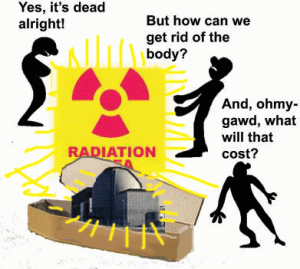
UK facing electricity supply woes after nuclear power stations shut, MPs told
Larger and smaller reactors carry risks, island nation failed to keep pace with nuclear fleet closure
Lindsay Clark, 1 Nov 2022 , Electricity shortages appear inevitable for the UK due to the decommissioning of the nation’s aging estate of nuclear power stations, according to evidence submitted by industry to politicians.
…….. Writing to the Commons Science and Technology Committee, Manchester University’s Dalton Nuclear Policy Group said: “Sadly, it is now much too late to avoid a negative impact on the UK’s electricity supply due to the closure of our nuclear fleet. All eleven of Britain’s Magnox plants have been shut down for many years – the last being the Wylfa plant on Anglesey which ceased operation on New Year’s Eve 2015.
It added: “The fleet of Advanced Gas-cooled Reactors (AGRs) operated by [French energy firm] EDF is also now seeing closures.”
In February, the UK government was warned taxpayers would have to make up a multibillion-pound shortfall to decommission nuclear power stations unless a history of overspending is reversed. EDF Energy runs seven AGR stations in the UK, part of eight second-generation reactors set to be decommissioned which provide 16 percent of the nation’s electricity. The AGR stations are scheduled to stop producing electricity by 2028.
Last year the government injected £5.1 billion ($5.8 billion) into the Nuclear Liabilities Fund – now valued at £14.8 billion ($17 billion) – which it set up in 1996 to meet the costs of decommissioning AGR and Pressurized Water Reactor stations. But EDF’s latest cost estimate to decommission the stations in March last year was £23.5bn ($27 billion). Public spending watchdog the National Audit Office has warned more money will be needed unless the government and EDF avoid overspending.
But as well as overspending, decommissioning also presents a problem for electricity supply.
“It is unlikely that there will be any significant extension to these projected dates, although there may be scope for some slight delays in closure. Once the AGRs are all closed, the UK will only have one reactor from the current nuclear fleet still operational – the pressurised water reactor at Sizewell B,” Dalton Nuclear Policy Group said.
……. “it is due to the failure since 2008 – with the exception of the long-delayed Hinkley Point C – of all proposals for a nuclear renaissance in the UK to move from plans to reality,” the group said.
In May, EDF admitted to another year’s delay and £3 billion ($3.5 billion) extra cost in Hinkely Point C – the UK’s first nuclear power station to be built in 20 years. The revised operating date for the site in Somerset is now June 2027 and total costs are estimated to be in the range of £25 billion to £26 billion ($29 billion).
EDF said it would have no cost impact on British consumers or taxpayers. The power station had been due online by 2017 at a cost of around £20 billion ($22 billion)………………….. The Science and Technology Committee is set to hear oral evidence for its inquiry on Delivering Nuclear Power during hearings this week.
The Register 1st Nov 2022
https://www.theregister.com/2022/11/01/electricity_shortages_uk/
Nice work if you can get it: £750 a day for leading Lincolnshire’s nuclear dump bid
A typical employee working full-time in the East Lindsay Council area can
expect to be paid just over £90 per day, according to the latest
government survey of earnings. With the 2022 Annual Survey of Hours and
Earnings reporting that median earnings in the district are just £462.50
per week, many local workers will be envious upon hearing that the Interim
Chair of the Theddlethorpe GDF Community Partnership continues to be paid
£750 per day for his work leading the bid to bring an unwanted nuclear
waste dump to the Lincolnshire coast. The revelation was contained in a
response from Nuclear Waste Services (NWS) to a recent Freedom of
Information Act request about the ongoing renumeration of Mr Jon Collins
made by the Nuclear Free Local Authorities (NFLA).
NFLA 2nd Nov 2022
Loosening the Nuclear Knot – ARMS CONTROL TODAY
Arms Control Association
November 2022 By Daryl G. Kimball
Over the long, dangerous course of the nuclear age, the easing of tensions and resolution of crises between the nuclear-armed states have relied not only on good luck and self-restraint, but on effective, leader-to-leader dialogue.
For example, a key turning point in the 1962 Cuban missile crisis was the decision by President John F. Kennedy to listen to advisers recommending a diplomatic course of action and back-channel talks. This allowed the two sides, as Soviet leader Nikita Khrushchev described it, to “take measures to untie that knot” and thus avoid “the catastrophe of thermonuclear war.”
…….. the risk of nuclear war is probably higher than at any point since 1962. The invasion has also led to the suspension of the U.S.-Russian strategic stability dialogue and talks designed to maintain limits on their strategic nuclear arsenals.
…………………. senior U.S. officials say that, despite intensified military competition with China, it is vital to engage in talks with leaders in Beijing on improved crisis communication, forms of mutual restraint, and arms limitations. Unfortunately, Chinese officials have rebuffed U.S. overtures for bilateral strategic risk reduction talks.
To loosen the knot of war, the Biden administration needs to explore other pathways for dialogue. One option surely under consideration but not yet deployed in this crisis is the multilateral P5 process, which involves all five nations recognized as nuclear-weapon states under the nuclear Nonproliferation Treaty (NPT) (China, France, Russia, the United Kingdom, and the United States).
The group has met annually since 2009 to explore confidence-building measures in relation to their nuclear forces. The United States holds the rotating chair, but has not yet convened a meeting. To date, the P5 process has been underutilized and has underperformed. But in this time of heightened nuclear danger, the Biden administration must try to use it to ease nuclear tensions with China and Russia.
Leaders in Beijing continue to tout the process. Last month, Li Song, Chinese ambassador for disarmament affairs, told a UN meeting that the five NPT nuclear-weapon states “should further enhance communication on such issues as strategic stability and reduction of nuclear risks.” With Russia continuing to issue veiled nuclear threats, it is in the vital interest of all five states to pursue joint steps and joint statements designed to lower the temperature.
For instance, the group might consider updating and implementing the 1973 U.S.-Soviet Agreement on the Prevention of Nuclear War, which pledges the two states “to refrain from the threat or use of force against the other party” and “avoid military confrontations, and as to exclude the outbreak of nuclear war.” The agreement requires that “if at any time there is the risk of a nuclear conflict,” each side “shall immediately enter into urgent consultations with each other and make every effort to avert this risk.”
The United States might also propose that the P5 process be augmented to allow for sustained discussions on specific arms control proposals relevant to all five states. Since the recent collapse of the Intermediate-Range Nuclear Forces Treaty, Russia and the United States have expressed interest in negotiating a new arrangement to limit or ban certain types of these weapons. At their February 2022 summit, Putin and Chinese President Xi Jinping called for talks with the United States to curtail possible deployments of missiles that had been limited by the treaty. The Biden administration should test their seriousness by advancing proposals for mutual restraints on these types of ballistic and cruise missile systems by all three states through the P5 process.
As they stared into the nuclear abyss 60 years ago, Kennedy and Khrushchev turned to diplomacy to reach the compromises necessary to preserve their nations’ survival. Today’s leaders must be even more creative and persistent in the pursuit of risk reduction and disarmament if we are to avoid arms racing and the possibility of nuclear catastrophe. https://www.armscontrol.org/act/2022-11/focus/loosening-nuclear-knot
Israeli finance minister added to Kiev’s ‘kill list’
Rt.com 31 Oct 22,
The Mirotvorets website labeled Avigdor Lieberman a “Russian agent of influence,” who took part in acts of “humanitarian aggression” against Ukraine
Israeli finance minister, Avigdor Lieberman has been added to the controversial Mirotvorets website “enemies of Ukraine” database on Sunday.
The authors of the site, which is believed to have links to the Ukrainian security services, described Lieberman as an “agent of influence” for Russia, who had been manipulating publicly significant information in favor of Moscow. They also blamed him for taking part in acts of “humanitarian aggression” against Ukraine.
Among the actions that led to Lieberman being placed on the list, were his refusal to finance an Israeli field hospital in Ukraine in March and his neutral stance on who is to blame for the massacre in the Kiev suburb of Bucha in April. The website also shared a link to an article, claiming that he had ties with Russian gas giant Gazprom.
Ukrainian authorities have frequently expressed their disappointment with the level of support they’ve been getting from Israel during the conflict with Russia. The country has only provided Kiev with humanitarian aid and life-saving defense equipment, but not weapons and munitions. Israel also refrained from joining international sanctions on Moscow. Last week, Liberman said that Israeli assistance to Ukraine since the outbreak of the fighting between Russia and Ukraine in late February amounted to some $40 million……………………………..
The Mirotvorets website, translated as ‘peacemaker’, was launched in 2014, positioning itself as an independent database run by anonymous moderators to help Ukrainian authorities and “special services” apprehend pro-Russian terrorists, separatists, and war criminals, among others.
However, some have branded the database a ‘kill list,’ which is backed by the government, after several individuals, including writer Oles Buzina, politician Oleg Kalashnikov, and Russian journalist Darya Dugina were assassinated shortly after their profiles appeared on the website.
The most recent high-profile additions to Mirotvorets included Kazakhstan’s president, Kassym-Jomart Tokayev, Pink Floyd co-founder Roger Waters. There were claims that the world’s richest man, Elon Musk, was put on the database in mid-October, but swiftly removed from it. The alleged addition happened after Musk offered a peace plan, which envisaged Kiev giving up territories to Moscow. https://www.rt.com/russia/565651-lieberman-israel-ukraine-mirotvorets/
US troops on the ground in Ukraine – media
https://www.rt.com/russia/565747-us-troops-in-ukraine/ 2 Nov 22, The military personnel are reportedly inspecting Western weapons deliveries.
American troops are on the ground in Ukraine, where they are monitoring NATO arms deliveries to the country, an anonymous Pentagon official told several US media outlets on Monday. It is unclear how many personnel are involved, or where they are located.
Speaking to the Associated Press, NBC News, and other members of the Pentagon press pool, the official said that the contingent of troops is led by Brigadier General Garrick Harmon, the US defense attache to Kiev.
“There have been several of these inspections,” the official told reporters, without revealing where the examinations have taken place. He added that the checks are not happening “close to the front lines,” but where security conditions allow.
The US inspected its arms shipments to Ukraine before Russia launched its military operation in February, but pulled its personnel out of the country days before it began. It is unclear how many troops have returned or when the checks restarted.
The Pentagon official would only say that a “small” number of troops are involved.
The US State Department announced last week that it would allocate “personnel to assist the government of Ukraine with handling…of US security assistance,” although it did not mention that these personnel would be drawn from the ranks of the military. The plan was announced after media reports, citing US intelligence agencies, claimed that Washington could not trace the weapons it sends to Ukraine.
One intelligence source told CNN in April that these weapons disappear “into a big black hole” once they enter the country. The anonymous Pentagon official told journalists that Kiev has been “transparent,” and has cooperated with inspectors thus far.
While Americans have fought and died in Ukraine of their own accord, Monday’s announcement marks the first time since February that Washington has acknowledged the presence of uniformed troops in Ukraine.
Russian President Vladimir Putin has cautioned the US and its NATO allies against getting involved in the conflict, and even before the announcement, he stated that the Kremlin views itself as fighting the “entire Western military machine” in Ukraine.
Finland hints at allowing NATO to station nuclear weapons (?targets) on its soil

https://euroweeklynews.com/2022/10/31/finland-hints-at-allowing-nato-to-station-nuclear-weapons-on-its-soil/ By Chris King • 31 October 2022 ,
The Prime Minister of Finland, Sanna Marin, hinted that nuclear weapons could be deployed on Finnish soil should the country’s application to join NATO be approved.
It was recently reported by a newspaper in Helsinki that nuclear weapons could soon be stationed on Finland’s border with Russia if the country’s bid to join NATO is approved. Should it come to that, it is bound to anger Moscow.
Nuclear missiles launched from the Finnish border would take far less than a minute to reach Moscow. That is a very short warning period. It is certain that the Kremlin will not like this at all, but it could soon become reality.
The reason: Finland – together with Sweden – submitted an application to join NATO in response to the Russian invasion of Ukraine. According to the Helsinki newspaper Iltalehti, the draft accession law, as submitted by the Finnish government to Parliament, does not include an exemption for nuclear weapons
Finnish Foreign and Defence Ministers Pekka Haavisto and Antti Kaikkonen both pledged to NATO in July that they would not seek ‘restrictions or national reservations’ if Helsinki’s proposal goes through. This was reported by various defence sources to exxpress.at.
Foreign policy insiders said that NATO nuclear weapons could be moved through Finnish territory or stationed there. In addition, there are no restrictions on establishing NATO bases in the country.
Finnish Prime Minister Sanna Marin told Finnish broadcaster Yle on Saturday 29: “I think it’s very important that we don’t set any preconditions or limit our own room for manoeuvre when it comes to permanent bases or nuclear weapons”. It is thought highly unlikely though that nuclear weapons would be stationed on Finnish soil.
According to the Federation of American Scientists, the US already has around 100 nuclear weapons in Europe. They are located in Belgium, Germany, Italy, the Netherlands, and Turkey. Britain and France, both NATO members, also maintain their own independent nuclear arsenals.
Earlier this month, the Polish government said it had held talks with Washington about hosting US nuclear weapons, but the Americans have not confirmed this. Polish President Andrzej Duda said there was a ‘potential opportunity’ for his country to engage in ‘nuclear sharing’.
NATO Secretary General Jens Stoltenberg welcomed Finland and Sweden’s applications for membership in May, calling the move a ‘historic moment’ for the alliance.
As Australia gets American nuclear-capable bombers, it risks becoming a dangerous military mess and target – like Guam

China’s furious reaction as Australia gets US nuclear-capable bombers A furious Beijing has blasted reports of the US gifting Australia nuclear-capable bombers, prompting a concerning warning from China.
https://www.news.com.au/technology/innovation/military/chinas-ominous-threat-to-australia-over-us-nuclearcapable-bombers/news-story/ca67d55d29ef716883078e4fb8e2101f Ally Foster and Frank Chung, November 1, 2022 –
Australia has been issued an ominous threat, after China lashed out at reports of the US sending nuclear-capable bombers to the Northern Territory.
According to an investigation by the ABC’s Four Cornersthat aired on Monday, Washington has drawn up plans to build a dedicated a “squadron operations facility” at the Tindal air base south of Darwin that will house “six B-52s”.
These aircraft are capable of delivering both nuclear and conventional weapons, with a combat range of more than 14,000km.
The news has prompted a furious response from Beijing, with the former editor-in-chief of the CCP-run Global Times issuing an ominous warning to Australia.military
Commentator Hu Xijin said Australia would need to “bear the risks” of this move.
“The PLA’s Dongfeng missiles definitely fly faster than the B-52 bombers,” he wrote on Twitter.
“If Australia wants to become a “big Guam,” then it must bear the corresponding strategic risks.”
There have even been warnings that accepting these bombers could “trigger a regional arms race”.
Chinese Ministry of Foreign Affairs spokesman Zhao Lijian said by sending the bombers to Australia, the US had “increased regional tensions, seriously undermined regional peace and stability, and may trigger a regional arms race”.
“Defence and security co-operation between any countries should be conducive to regional peace and stability and not target or harm the interests of third parties,” he told reporters in Beijing.
Mr Zhao said Beijing was urging all the countries concerned to “abandon the old Cold War zero-sum thinking and narrow geopolitical concepts”.
The focus should instead be on contributing more to regional peace and stability and enhancing “mutual trust”, he said.
The nuclear threats that hang over the world
Even a limited strike in Ukraine would have catastrophic global effects
Ft.com GIDEON RACHMAN, 31 Oct 22,
“A nuclear war cannot be won and must never be fought.” That joint statement was issued at the beginning of this year by China, France, Russia, the UK and the US — the five official nuclear weapons states. The following month, Russia invaded Ukraine. Ever since, world leaders have been grappling with the threat that a nuclear war might indeed be fought — quite soon.
From the outset, Vladimir Putin has described the conflict as existential for Russia and hinted that he might use nuclear weapons to prevail………………………………….
Please use the sharing tools found via the share button at the top or side of articles. Copying articles to share with others is a breach of FT.comT&Cs and Copyright Policy. Email licensing@ft.com to buy additional rights. Subscribers may share up to 10 or 20 articles per month using the gift article service. More information can be found here.
https://www.ft.com/content/f3dce448-a7e4-4fbe-80a4-d317af4b8317
The US and its allies are focused on preventing Russia from making that fatal step across the nuclear threshold — through a mixture of deterrence and diplomacy. But they are also already thinking hard about the global aftermath of the use of a Russian nuclear weapon. This is unknown territory and the pressure is intense…….
Broadly speaking, there are four main scenarios to consider: nuclear normalisation, nuclear blackmail, avoidance of war, and Armageddon.
It is not hard to see how the use of a Russian nuclear weapon could spiral into an all-out nuclear war — leading to what President Biden himself has termed “Armageddon”. Washington has warned that if Moscow were to use a nuclear weapon, there would be a response with “catastrophic” consequences for Russia.
The Americans have not spelt out in public what that response would be. Many commentators think that it would be military, but non-nuclear. General David Petraeus, a former CIA head, has talked of Nato forces attacking Russian troops on the ground in Ukraine with conventional weapons and sinking the Russian Black Sea fleet……………
But direct western military involvement would probably trigger a further Russian response. The west and Russia might then rapidly move up the “escalation ladder”, making the nightmare of all-out nuclear war distinctly possible. As one US official puts it: “I don’t think anyone should be confident that we can control the escalation risks.”
Because the prospect of escalation to Armageddon is so horrific, there is also a real possibility that even the use of a Russian nuclear weapon would not trigger a direct western military response — with the US instead trying to organise the complete economic and diplomatic isolation of Russia. But that would open the door to another disturbing future: “nuclear normalisation”.
Nuclear weapons would have been shown to be tools that can be used in a war of aggression — not just for deterrence. Russia, and even China, might be tempted to cross the nuclear threshold again. And non-nuclear states — such as Japan, South Korea, Germany and a host of others — would rush to acquire nuclear weapons to protect themselves.
Global turmoil would follow the use of a nuclear weapon. Markets would crash and publics might panic across the world, with the possibility of large-scale population movements out of cities………………………………..
The three darkest scenarios — Armageddon, normalisation and successful nuclear blackmail — are all far more possible than they should be. But, collectively, they remain less likely than the fourth possibility — that nuclear war is avoided. In all previous nuclear crises since 1945, the leaders of great powers have drawn back from the brink. The knowledge that a false move could cause millions of deaths — or even destroy the planet — is enormously sobering. It has kept the world from sliding into nuclear conflict since 1945. It should work again. Probably. https://www.ft.com/content/f3dce448-a7e4-4fbe-80a4-d317af4b8317—
World Nuclear Industry Status Report delivers all the empirical data we need to know about nuclear power’s decline
The Annual Goldmine https://beyondnuclearinternational.org/2022/10/31/the-annual-goldmine/ By Linda Pentz Gunter 31 Oct 22
The annual goldmine of empirical data on nuclear power that is the World Nuclear Industry Status Report (WNISR) was duly rolled out on October 5th, this year in Berlin. The 2022 edition is available for download here and is an indispensable reference source, updated each year.
While delivering an in-depth overview, as its title suggests, of the status of nuclear power worldwide, the report also provides sections focused on particular areas of the technology or on certain countries or regions of the world.
As its principal author, Mycle Schneider, pointed out during the rollout, the report’s authors are big fans of empirical data. Indeed, many of the findings in the report are taken from the nuclear industry itself. Facts and physics are pretty much immutable when it comes to nuclear power, and neither favor the industry very well. No amount of nuclear industry aspirational rhetoric can hide the truth about a waning and outdated technology.
The over-riding finding of the 2022 edition of the report is that nuclear power’s share of global commercial gross electricity generation in 2021 dropped to below 10 percent for the first time ever, sinking to its lowest in four decades.
As in past years, if you take China out of the picture — a country with 21 new reactors under construction as of mid-2022 — the decline of nuclear power worldwide is even more dramatic.
At close to 400 pages, the WNISR is a tome, but it is packed full of essential detail on every important topic related to nuclear power and its declining place in the world. Whether you are interested in new builds or closure, decommissioning or small modular reactors, or a specific country, there is something in the report that will flesh out the details.
And this year, there is an important chapter late in the report — Nuclear Power and War — dealing with the fate of nuclear power plants caught up in the Russian invasion of Ukraine and the warfare that is exploding around them.
We have of course been talking, writing and warning about the perils of reactors in a war zone since the time a Russian invasion was first intimated late in 2021. But the WNISR helpfully lays out all the possible causes and consequences of a nuclear disaster in Ukraine. It answers the many questions we have about the robustness, or not, of reactors, fuel pools and radioactive waste casks to withstand and survive a bombardment or even a prolonged power outage.
As former IAEA director of nuclear safety, Aybars Gurpinar, told Bloomberg when addressing the risks to reactors in Ukraine: “Even if structures are extremely well designed, you cannot expect them to withstand a military-style attack. They are not designed for this.”
The WNISR concludes, on page 259: “Nuclear power plants are immediately vulnerable in war situations. This is directly due to the constant and permanent need for cooling. Extensive failure of the necessary electrical power or destruction of the cooling systems would lead to overheating of the reactor core. It is relatively unimportant whether this damage is intentional, unintentional, or of indeterminate cause and motivation.
“On the other hand, with increasing duration, the specific stress on the personnel and poorer maintenance worsens the operating conditions which also increases the probability of triggering serious accidents.”
In addition to covering the most obviously disastrous impacts, such as loss of coolant leading to fires and meltdowns, the report also explores some of the other essentials that could be lost during war but that are less often discussed.
These include lack of access to the plant due to the destruction of roadways; absence of diesel fuel supplies for backup generators; the continued presence of a fire department with necessary equipment and access; the availability of a skilled operating personnel and the consequences of staff working under duress or takeover; and the necessity of continued maintenance, repairs and inspections.
These add to the already long list of technical things that could go wrong at a reactor under war conditions. This makes it particularly important to focus on the prevention of such a disaster, rather than speculating about who is at fault.
Speculation is not to be found in the WNISR. Accordingly, the authors chose to point out in conclusion that the reports coming in about who is firing on what and why are not necessarily reliable. All they, and we, can assess, is what the damage might be and what the consequences of that damage could lead to.
“In a war situation, it is particularly difficult to verify whether certain reports cover indisputable facts, are exaggerated, or false,” the WNISR authors write. “The warring parties, as well as organizations and individuals interacting with them, have an interest in a representation that is not necessarily objective.”
Wars will happen and the fog of war will mask and confuse what is actually going on. But the one abiding problem is the nuclear power plants being there in the first place. And that’s the one thing we do have the power to change.
Linda Pentz Gunter is the international specialist at Beyond Nuclear and writes for and curates Beyond Nuclear International.
Nuclear gravity bomb more powerful than Hiroshima blast to be added to NATO’s arsenal
it makes using nuclear weapons thinkable for the first time since the 1940s and deploying the B61-12 only encourages this trend further………………….. The new bombs will be able to be dropped from numerous aircraft including B-2 stealth bombers, and smaller warplanes like the F-15, F-35 and Tornado.
The new B61-12 gravity nuclear bomb which can carry a yield more powerful than the Hiroshima blast will be delivered by the US to Europe months earlier than planned
By Rachel Hagan, World News Reporter, 28 Oct 2022
The US is speeding up the delivery of highly accurate guided tactical nuclear weapons to Europe by around four months as tensions rise between Moscow and the West.
The B61-12 gravity bomb was due for Spring 2023 but they are now accelerating plans to have it ready for this December, US officials told NATO allies during a closed-door meeting in Brussels this month.
But what are these weapons and what are they capable of?
The new thermonuclear bombs are “dial-a-yield” devices and are one of the most versatile in the US’ arsenal because its explosive power can be ramped up or down depending on the target.
Specialist defence magazine, the National Interest, called the bomb the most devastating nuclear bomb in the arsenal of the US……………………………
They say it makes using nuclear weapons thinkable for the first time since the 1940s and deploying the B61-12 only encourages this trend further………………….. The new bombs will be able to be dropped from numerous aircraft including B-2 stealth bombers, and smaller warplanes like the F-15, F-35 and Tornado.
The climate crisis and the danger of nuclear war are deeply intertwined
A lesson from the TPNW. by beyondnuclearinternational
A Fossil-Fuel Non-ProliferationTreaty will save lives, By Ira Helfand and Marjaneh Moini
“…………………………………………………………………………The two overriding issues of our era—the climate crisis and the danger of nuclear war—are deeply intertwined. The climate crisis is leading to greater international conflict and stockpiling nuclear weapons redirects precious resources away from equitable climate actions while increasing risk of a nuclear conflict. A nuclear war, in addition to killing billions of people and disrupting all aspects of our economy, would also cause abrupt and catastrophic climate disruption.
How are the politicians running our governments on the global stage responding to these threats? The policies our governments are implementing will lead to fossil fuel production in 2030 that is double the cap we need to maintain to limit warming to 1.5 degrees. Carbon dioxide emissions in 2021 were 36.3 billion tonnes, the highest ever. They are also stockpiling nuclear weapons and will not even promise not to start a nuclear war in Ukraine.
How is our government responding? The United States continues to increase subsidies to fossil fuel operations and expands its investments in nuclear weapons, reinforcing the two existential threats faced by humanity today. In turn, fossil fuel companies and the military industrial complex use their profits in lobbying efforts…………………more https://beyondnuclearinternational.org/2022/10/31/a-lesson-from-the-tpnw/
Biden lost temper with Zelenskyy in June phone call when Ukrainian leader asked for more aid
Biden had barely finished telling Zelenskyy he’d just greenlighted another $1 billion in military assistance when the Ukrainian president started listing all the additional help he needed.
NBC News, Oct. 31, 2022, By Carol E. Lee, Courtney Kube and Dan De Luce
It’s become routine since Russia invaded Ukraine: President Joe Biden and Ukrainian President Volodymyr Zelenskyy speak by phone whenever the U.S. announces a new package of military assistance for Kyiv.
But a phone call between the two leaders in June played out differently from previous ones, according to four people familiar with the call. Biden had barely finished telling Zelenskyy he’d just greenlighted another $1 billion in U.S. military assistance for Ukraine when Zelenskyy started listing all the additional help he needed and wasn’t getting. Biden lost his temper, the people familiar with the call said. The American people were being quite generous, and his administration and the U.S. military were working hard to help Ukraine, he said, raising his voice, and Zelenskyy could show a little more gratitude.
Administration officials said Biden and Zelenskyy’s relationship has only improved since the June phone call, after which Zelenskyy made a statement praising the U.S. for its generous assistance. But the clash reflects Biden’s early awareness that both congressional and public support for sending billions of dollars to Ukraine could begin to fade. That moment has arrived just as the president prepares to ask Congress to greenlight even more money for Ukraine.
Biden now faces resistance from some Republicans and Democrats that wasn’t present when Congress approved previous Ukraine funds. The White House has discussed asking Congress for billions of dollars during the lame-duck legislative session after the midterm elections.
The White House hasn’t specified an amount publicly. Lawmakers and Ukraine lobbyists hope for $40 billion to $60 billion, and some officials familiar with the discussions expect the number to be roughly $50 billion.
A source familiar with the conversation said that Biden was direct with Zelenskyy about handling the issues in the appropriate military channels but that the exchange wasn’t heated or angry.
A spokesperson for the National Security Council declined to comment on the story.
A spokesperson for Zelenskyy didn’t respond to a request for comment.
Top U.S. officials warn there are no signs the war is ending any time soon.
Before the June 15 phone call, the president’s frustrations with Zelenskyy had been building for weeks, three people familiar with the call said. Biden and some of his top aides felt that the administration was doing as much as it could as quickly as it could but that Zelenskyy continued to focus publicly on only what wasn’t being done.
From Zelenskyy’s perspective — as well as that of some Eastern European governments and U.S. lawmakers from both parties — there has been repeated frustration that the Biden White House moves too slowly on weapons requests, initially hesitating to approve certain capabilities Ukraine requested most urgently, only to relent weeks or months later under pressure, according to two sources familiar with the Ukraine government’s view, congressional aides and two European officials……………………………………..
The proportion of Americans who are extremely or very concerned about Ukraine’s losing the war has dropped by 17 percentage points since May, from 55% to 38%, according to a Pew Research Center survey conducted last month. And the proportion of Americans who say they’re not too concerned or not at all concerned about Russia’s winning was up from 16% to 26%, according to the survey.
The potential change in political will in the U.S. for continuing to send aid to Ukraine could upend how both the White House and Zelenskyy have approached the issue so far.
Since Russia invaded Ukraine in February, the Biden administration has been criticized for moving too cautiously. Now the president faces potential pushback from some Republican lawmakers and progressive Democrats that he’s providing too much aid.
The shifting dynamics on Capitol Hill also could force Zelenskyy’s team to rethink how it engages with Washington, as it has often tried to leverage its support in Congress to get more out of the White House. https://www.nbcnews.com/politics/national-security/biden-lost-temper-zelenskyy-phone-call-ukraine-aid-rcna54592
—
1 This Month

Read the Public Inquiry Report, the Commissioners’ report, Surrendering Australia: The AUKUS Deception is available to download for free at aukuspublicinquiry.com. Or just watch the replay of the National Press Club Luncheon.


19 November – Webinar – The Reality of Reprocessing
Time: 11:00 AM Pacific Time (US & Canada) / 2:00 PM Eastern / 7:00 PM UK / 8:00 PM CET
Register for the Zoom Event Here



Shut down the radiation-damaged Heysham nuclear reactors now
To see nuclear-related stories in greater depth and intensity – go to https://nuclearinformation.wordpress.com

Say No to NASA’s Reckless Nuclear Reactor on the Moon
Say No to NASA’s Reckless Nuclear Reactor on the Moon
-
Archives
- November 2026 (109)
- October 2026 (302)
- September 2026 (339)
- August 2026 (330)
- July 2026 (355)
- June 2026 (287)
- May 2026 (306)
- April 2026 (356)
- March 2026 (251)
- February 2026 (267)
- January 2026 (308)
- December 2025 (358)
-
Categories
- 1
- 1 NUCLEAR ISSUES
- business and costs
- climate change
- culture and arts
- ENERGY
- environment
- health
- history
- indigenous issues
- Legal
- marketing of nuclear
- media
- opposition to nuclear
- PERSONAL STORIES
- politics
- politics international
- Religion and ethics
- safety
- secrets,lies and civil liberties
- spinbuster
- technology
- Uranium
- wastes
- weapons and war
- Women
- 2 WORLD
- ACTION
- AFRICA
- Atrocities
- AUSTRALIA
- Christina's notes
- Christina's themes
- culture and arts
- Events
- Fuk 2022
- Fuk 2023
- Fukushima 2017
- Fukushima 2018
- fukushima 2019
- Fukushima 2020
- Fukushima 2021
- general
- global warming
- Humour (God we need it)
- Nuclear
- RARE EARTHS
- Reference
- resources – print
- Resources -audiovicual
- Weekly Newsletter
- World
- World Nuclear
- YouTube
-
RSS
Entries RSS
Comments RSS

