Enforcement action revealed after Hinkley Point C worker death
THREE enforcement notices have been served on owners and contractors at the
Hinkley Point C nuclear power station development following a worker’s
death in November. The Office for Nuclear Regulation (ONR) said it could
now reveal the action it had taken because the statutory period for
appealing against the notices had passed. It said inspectors issued three
prohibition notices relating to specific activities on the site involving
vehicles and plant machinery.
West Somerset Free Press 4th Jan 2023
https://www.wsfp.co.uk/news/enforcement-action-revealed-after-hinkley-point-c-site-death-586395
US and South Korea hold talks on “nuclear sharing”.

the US Council for Foreign Relations highlighted a proposal to establish an Asian Nuclear Planning Group, “mirroring the format of the NATO Nuclear Planning Group, that would provide a platform for South Korea, Japan, and Australia to discuss policies regarding US nuclear forces and the US nuclear planning process.”
What is underway not just in South Korea are high level discussions to integrate US allies throughout the region with the US military as preparations accelerate for a potentially catastrophic war with China that would inevitably involve the use of nuclear weapons.
Peter Symond WSWS 5 Jan 23
The US and South Korea are actively discussing closer collaboration in the deployment and potential use of nuclear weapons, which is part of the far broader US-led military build-up throughout the region. While nominally directed against North Korea, US war preparations including with South Korea are above all aimed at China.
In an interview in the Chosun Ilbo newspaper on Monday, South Korea’s right-wing president, Yoon Suk Yeol, said the discussions had focussed on joint planning and exercises with American nuclear forces. He described the arrangements being discussed as being “as good as nuclear-sharing”—a phrase, he said, that Washington was uncomfortable with……….
When asked at the White House whether joint nuclear military exercises with South Korea were being planned, President Biden flatly declared “no” and made no further comment. However, subsequent comments by American officials make clear that the closer integration of South Korea into US preparations for nuclear war is indeed under way……………………….
The discussions mark a significant escalation in the preparations for nuclear war. While South Korea, a US military ally, was protected by the so-called nuclear umbrella or what is known as “extended deterrence,” Yoon is pushing for a greater South Korean say in the use of nuclear weapons.
In his interview, Yoon declared: “What we call ‘extended deterrence’ means that the United States will take care of everything, so South Korea should not worry about it… But now, it is difficult to convince our people with just this idea.”…………….
Throughout much of the Cold War, the US had hundreds of tactical nuclear weapons in South Korea supposedly to counter a North Korean invasion. The number peaked at 950 during the mid-1960s before declining. In 1991, amid the moves to dissolve the Soviet Union, US President George H.W. Bush announced the return of all tactical nuclear weapons to the US, including those that remained in South Korea.
While Yoon has not publicly repeated his proposals as president, there have already been significant steps to a greater US nuclear presence in South Korea. In a joint press conference last November, US Defense Secretary Lloyd Austin and South Korean Defense Minister Lee Jong-seop announced plans for the de facto permanent stationing of US nuclear-capable assets in South Korea for the first time since 1991………….
As far as Washington is concerned, the North Korean “threat” is a convenient pretext as its nuclear planning is primarily focussed on war with China. Strategically located close to the Chinese mainland, South Korea is deeply integrated into the US strategy for such a conflict. Not only does it house key US military bases and some 28,500 military personnel but it also has a key anti-ballistic missile system—a recently upgraded Terminal High Altitude Area Defense (THAAD) system—critical in any nuclear conflict.
The US is boosting its nuclear weapons capacity throughout the region with the announcement last year that it will effectively station nuclear-capable B-52 bombers at the Tindal air force base in Northern Australia. At the same time, prior to his assassination last July, former Japanese prime minister, Shinzo Abe, initiated a discussion in ruling circles about stationing US nuclear weapons in Japan, despite enormous popular opposition to such a move.
The Biden administration has already taken steps to strengthen its military alliances in the Indo-Pacific by kickstarting the Quadrilateral Security Dialogue or “Quad” with Japan, Australia and India as well as initiating the AUKUS pact with Australia and the United Kingdom, which, in particular, will arm Australia with nuclear-powered attack submarines. At the same time, it has sought to strengthen intelligence sharing between South Korea and Japan, essential in any nuclear conflict.
Broader “nuclear sharing” is also being discussed in US strategic think tanks. A comment published last August by the US Council for Foreign Relations highlighted a proposal to establish an Asian Nuclear Planning Group, “mirroring the format of the NATO Nuclear Planning Group, that would provide a platform for South Korea, Japan, and Australia to discuss policies regarding US nuclear forces and the US nuclear planning process.”
What is underway not just in South Korea are high level discussions to integrate US allies throughout the region with the US military as preparations accelerate for a potentially catastrophic war with China that would inevitably involve the use of nuclear weapons. https://www.wsws.org/en/articles/2023/01/05/tzjb-j05.html
—
Before the Bombs Come the Platitudes
By Robert C. Koehler, http://commonwonders.com/before-the-bombs-come-the-platitudes/ 4 January 2023
What is democracy but platitudes and dog whistles? The national direction is quietly predetermined — it’s not up for debate. The president’s role is to sell it to the public; you might say he’s the public-relations director in chief:
“. . . my Administration will seize this decisive decade to advance America’s vital interests, position the United States to outmaneuver our geopolitical competitors, tackle shared challenges, and set our world firmly on a path toward a brighter and more hopeful tomorrow. . . . We will not leave our future vulnerable to the whims of those who do not share our vision for a world that is free, open, prosperous, and secure.”
These are the words of President Biden, in his introduction to the National Security Strategy, which lays out America’s geopolitical plans for the coming decade. Sounds almost plausible, until you ponder the stuff that isn’t up for public discussion, such as, for instance:
The national defense budget, recently set for 2023 at $858 billion and, as ever, larger than the rest of the world’s military budget combined. And, oh yeah, the modernization — the rebuilding — of the nation’s nuclear weapons over the next three decades at an estimated cost of nearly $2 trillion. As Nuclear Watch put it: “It is, in short, a program of nuclear weapons forever.”
And the latter, of course, will go forward despite the fact that in 2017 the countries of the world — well, most of them (the vote in the United Nations was 122-1) — approved the Treaty on the Prohibition of Nuclear Weapons, which flat-out bans the use, development and possession of nuclear weapons. Fifty countries ratified the treaty by January 2021, making it a global reality; two years later, a total of 68 countries have ratified it, with 23 more in the process of doing so. Not only that, as H. Patricia Hynes points out, the mayors of more than 8,000 cities all across the planet are calling for the abolition of nuclear weapons.
I mention this to put Biden’s words in perspective. Does “a brighter and more hopeful tomorrow” ignore the demands of most of the world and include the presence of thousands of nuclear weapons, many still on hair-trigger alert? Does it mean the ever-present possibility of war and the ongoing manufacture and sale of every imaginable weapon of war? Is a near-trillion-dollar annual “defense” budget the primary way we intend to “outmaneuver our geopolitical competitors”?
And here’s another flicker of reality that’s missing from Biden’s words: the non-monetary cost of war, which is to say, the “collateral damage.” For some reason, the president fails to mention how many civilians’ deaths — how many children’s deaths — will be necessary to secure a brighter and more hopeful tomorrow. How many hospitals might it be necessary, for instance, for us to accidentally bomb in coming years, as we bombed the hospital in Kunduz, Afghanistan in 2015, killing 42 people, 24 of whom were patients?
Public relations platitudes do not seem to have room to acknowledge videos of U.S.-inflicted carnage, such as Kathy Kelly’s description of a video of the Kunduz bombing, which showed the president of Doctors Without Borders (a.k.a., Médecins Sans Frontières) walking through the wreckage a short while later and speaking, with “nearly unutterable sadness,” to the family of a child who had just died.
“Doctors had helped the young girl recover,” Kelly writes, “but because war was raging outside the hospital, administrators recommended that the family come the next day. ‘She’s safer here,’ they said.
“The child was among those killed by the U.S. attacks, which recurred at fifteen-minute intervals, for an hour and a half, even though MSF had already issued desperate pleas begging the United States and NATO forces to stop bombing the hospital.”
Those who believe in the necessity of war — such as the president — may well feel shock and sadness when a child, for instance, is unintentionally killed by U.S. military action, but the concept of war comes complete with flowers of regret: It’s the fault of the enemy. And we will not be vulnerable to his whims.
Indeed, the dog whistle in Biden’s brief quote above is the calm acknowledgement of U.S. intention to stand up to the dark forces on the planet, the autocrats, who do not share our vision of freedom for all (except little girls in bombed hospitals). Those who, for whatever reason, believe in the necessity, and even the glory, of war, will feel the pulse of the U.S. military budget coursing through his positive, happy words.
When public relations circumvents reality, an honest discussion is impossible. And Planet Earth is in desperate need of an honest discussion about the elimination of nuclear weapons and, God help us, ultimately transcending war.
As Hynes writes: “If the U.S. could once again replace its masculinist power with creative foreign policy and reach out to Russia and China with the purpose of dismantling nuclear weapons and ending war, life on Earth would have a heightened chance.”
How can this become a country with a creative foreign policy? How can the American public move beyond being spectators and consumers and become actual, literal participants in U.S. foreign policy? Here’s one way: the Merchants of Death War Crimes Tribunal, an online event scheduled for November 10-13, 2023.
As Kelly, one of the organizers, describes it: “The Tribunal intends to collect evidence about crimes against humanity committed by those who develop, store, sell, and use weapons to commit crimes against humanity. Testimony is being sought from people who’ve borne the brunt of modern wars, the survivors of wars in Afghanistan, Iraq, Yemen, Gaza, and Somalia, to name but a few of the places where U.S. weapons have terrified people who’ve meant us no harm.”
Victims of war will be interviewed. Those who wage war, and those who profit from it, will be held accountable to the world. My God, this sounds like real democracy! Is this the level at which truth shatters the platitudes of war?
A surging supply of green power is likely to limit any nuclear renaissance.
Green surge is circuit breaker on nuclear revival
By Robert Cyran, https://www.reuters.com/breakingviews/green-surge-is-circuit-breaker-nuclear-revival-2023-01-04/ 4 Jan 23,
NEW YORK, Jan 4 (Reuters Breakingviews) – Nuclear power received what seem like two plum gifts for 2023. High energy prices and the desire to decarbonize have spurred renewed interest in the technology that provides about 10% of the world’s electricity supply. Yet a surging supply of green power is likely to limit any renaissance.
There are 425 active reactors worldwide, according to the World Nuclear Association, about the same as three decades ago. Plants have opened in places like China and closed in Western countries.
Nuclear plants are expensive to build, and their complexity often causes projects to go way over budget. Plant Vogtle in the state of Georgia will be America’s first since the 1990s when finished in 2023. The $30 billion price tag is twice the initial estimate. Reactor opening delays in Finland and China show difficulties transcend borders.
The cost of a new nuclear power station is around $168 per megawatt hour according to Lazard. An efficient gas plant costs about a third as much, and solar and wind about one-fifth as much. So there’s little incentive to build. Running existing nuclear plants makes sense. A depreciated plant costs around $29 per MWh, reckons Lazard. And power is available rain or shine, day or night.
This reliability is the big reason there are 55 plants under construction, despite the cost, as wind and solar power currently need backup. Yet that appeal is limited. Over the past decade, green power production, excluding hydropower, has grown 15% annually worldwide according to BP’s Statistical Review of World Energy. Nuclear production was unchanged. China has 22 nuclear reactors under construction, but built renewables about twice as fast.
The price discrepancy keeps widening as wind and solar get cheaper, while nuclear hasn’t budged. Moreover, the cost of storing power in batteries is plummeting. NextEra Energy (NEE.N), America’s biggest deployer of green energy, estimates that by the late 2020s, wind and solar tied to batteries will be about as reliable as other sources during peak hours, but for roughly half the cost of depreciated nuclear or gas plants, and about one-seventh that of a new, small nuclear plant.
Shareholders may yet get some juice from nuclear players like $10 billion uranium producer and wannabe reactor servicer Cameco (CCO.TO). But wind and solar power’s burgeoning advantages have $172 billion NextEra and its rivals looking more plugged in.
John LaForge Set to Be First US Activist Jailed in Germany for Anti-Nuke Protests
More than a dozen German anti-nuclear activists and one Dutch campaigner have also been jailed in Germany for protesting U.S. hydrogen bombs housed at Büchel Air Base.
BRETT WILKINS, Common Dreams, Jan 03, 2023
As Russia’s invasion and NATO’s support of Ukraine have heightened nuclear tensions in Europe to their highest level since the Cold War, a Wisconsin peace activist is set to become the first American jailed in Germany for an anti-nuclear protest.
John LaForge, the 66-year-old co-director of Nukewatch, was convicted in December 2021 by the Regional Court in Koblenz, Germany on two charges of trespassing in connection with two 2018 protests against U.S. nuclear weapons at Büchel Air Base near Cochem. LaForge has been ordered to serve 50 days behind bars at JVA Billwerder prison in Hamburg and was also fined €600 ($633).
During one of the demonstrations, LaForge and other activists entered the base, and climbed a bunker likely housing B61 thermonuclear gravity bombs.
LaForge has refused to pay the fine and has appealed his convictions to the Federal Constitutional Court in Karlsruhe.
In an opinion piece published last month by Common Dreams, LaForge noted that the $28 billion-per-bomb, variable-yield B61—whose military value U.S. Joint Chiefs of Staff Vice Chair Gen. James Cartwright admitted is “practically nil”—”has 24 to 40 times the destructive power of the U.S. bomb that killed 170,000 people at Hiroshima in 1945.”
As Beyond Nuclear International points out, Büchel Air Base and six other facilities in Europe each house at least 20 B61s “under a controversial U.S./NATO program known as ‘nuclear sharing.’ The U.S. Air Force’s 702nd Munitions Support Squadron maintains the U.S. bombs in readiness for German PA 200 Tornado jet fighter/bomber crews.”
Writing for Counterpunch last year, LaForge asserted that “NATO’s cold-blooded ‘strategic’ preparation for meaningless, genocidal atomic violence is cosmetically presented in defensive, sanctimonious, antiseptic language depicting hydrogen bombs as reasonable, measured, protective security blankets. This is a childishly naïve mindset that the wargamers promote but do not share.”
The Nuclear Register reports:……………….
More than a dozen German activists and Dutch anti-nuclear campaigner Frits ter Kuile have been jailed for Büchel protests.
At the peak of the anti-nuclear movement during the Cold War’s perilous closing decade, hundreds of thousands and even over a million demonstrators would turn out to protests in then-West Germany.
Nukewatch will host a “jail sendoff” for LaForge via Zoom on Thursday, January 5 at 7:00 pm Central European Time, which is 1:00 pm U.S. Eastern Standard Time. https://www.commondreams.org/news/activists-buchel
Editorial: New Mexico right to ask for accounting of nuclear waste
https://www.abqjournal.com/2561734/nm-right-to-ask-for-accounting-of-nuclear-waste.html BY ALBUQUERQUE JOURNAL EDITORIAL BOARD, JANUARY 4TH, 2023
“I think there’s this mentality that New Mexico can just be the forever home for all the nation’s waste. It’s an exploitative mentality regarding our state.”
— Sen. Jeff Steinborn, D-Las Cruces
It is more than fair, when you house a radioactive waste facility like the Waste Isolation Pilot Plant, to ask how much waste from the nation’s nuclear weapons program still needs a home.
Especially when the nation keeps making more.
In the proposed permit for the federal government to continue storing nuclear waste at WIPP in southeastern New Mexico, the New Mexico Environment Department is seeking a full accounting from the U.S. Energy Department of materials still needing to be cleaned up and shipped to WIPP from laboratories and defense-related sites around the country. It also suggests developing another storage site (Hint: How about the $13.5 billion already spent on Yucca Mountain?). And it puts Congress — the same Congress that just approved spending more to make key plutonium components for the nation’s nuclear arsenal, which will also make more radioactive waste — on notice that if lawmakers expand the type of waste accepted at WIPP, the permit will be revoked.
WIPP currently takes transuranic waste from the weapons program contaminated with radioactive elements heavier than uranium — lab coats, rubber gloves, tools and other contaminated debris.
State Sen. Jeff Steinborn, D-Las Cruces and head of the Legislature’s radioactive and hazardous materials committee, points out our state has been left to deal with contamination from uranium mining, oil and gas development and the use of toxic firefighting chemicals known as PFAS at Air Force bases. With the proposed permit “it’s good to see our state setting boundaries.”
New Mexico has a long history when it comes to dealing with nuclear weapons and radioactive waste — from the Trinity site at White Sands to Urenco in Eunice, Los Alamos National Laboratory to the Holtec storage project with Hobbs and Carlsbad.
We have smart, capable, highly trained individuals who are experts in these fields.
But they are only as good as the information they are provided, and they deserve a full accounting of what they will ultimately have to deal with.
As Steinborn implies, too often our state has been left to deal with the federal government’s mess (we would add a gold mine spill, an Air Force fuel leak and catastrophic prescribed burns to his list).
The permit is now in a 60-day comment period, and the DOE says it is eager to participate. Here’s hoping they are just as eager to be forthright with what they plan to send to the Land of Enchantment.
This editorial first appeared in the Albuquerque Journal. It was written by members of the editorial board and is unsigned as it represents the opinion of the newspaper rather than the writers.
Number of civilians killed in Donbass revealed
https://www.rt.com/russia/569348-number-civilians-killed-donbass-revealed/ 3 Jan 2023, Over 4,400 people have been killed in the Donetsk People’s Republic alone since the start of the conflict between Moscow and Kiev
A total of 4,405 civilians have been killed on the territory of the Donetsk People’s Republic (DPR) since mid-February 2022, the Joint Center for Control and Coordination (JCCC), a monitoring group tracking attacks on the two Donbass regions, as well as war crimes committed by Ukraine, said on Tuesday. Over the same time period, as many as 132 children became victims of the ongoing conflict, it added.
Only 636 civilians, including 26 children, were killed on a territory controlled by the DPR before the start of the Russian military campaign in Ukraine, the center said, adding that over 3,700 civilians and more than 100 children were killed on the territory seized by the Russian forces and the Donbass militias during the conflict.
Almost 4,000 civilians sustained injuries during the conflict, the center said in a Telegram post. At least 87 people, including four children, were injured after tripping on the anti-personnel ‘Lepestok’ (Petal) land mines, the statement added. The mines are typically scattered around an area through remote mining operations.
The Ukrainian forces launched over 93,500 projectiles at the DPR territory during the conflict, the statement said, adding that the strikes and attacks resulted in the destruction of more than 9,400 residential buildings, 2,285 civilian infrastructure facilities, including 123 hospitals and clinics and 61 critical infrastructure facilities.
Last weekend, the JCCC also published similar data on the neighboring Lugansk People’s Republic (LPR). In 2022, 169 civilians, including 21 children, were killed there, a statement published on January 1 said. The conflict also left 455 civilians in the region injured, it added.
The Ukrainian forces used a total of 11,000 pieces of ammunition in their strikes on LPR territory, including 609 US-made HIMARS missiles, the JCCC said. Both the DPR and LPR joined Russia last fall, together with two other former Ukrainian regions – Kherson and Zaporozhye – as the move was overwhelmingly supported at the regional referendums.
Russia sent troops into Ukraine on February 24, citing Kiev’s failure to implement the Minsk agreements, brokered by Germany and France, and designed to give the regions of Donetsk and Lugansk special status within the Ukrainian state. Former Ukrainian president Pyotr Poroshenko has since admitted that Kiev’s main goal was to use the 2014 ceasefire to buy time and “create powerful armed forces.”
US Says ‘All Options’ On Table As Iran Nuclear Talks Remain Deadlocked.
US State Department said Tuesday that nuclear talks with Iran remain dormant and although diplomacy is the preferred approach, other options remain on the table.
Iran International Newsroom 4 Jan 23
Spokesperson Ned Price said the United States has not observed any change from the Iranian side to warrant a resumption of negotiations to revive the 2015 nuclear accord known as the JCPOA. The Biden administration’s 18-month-long diplomatic effort to reach agreement with Tehran arrived at a deadlock in early September.
“We continue to believe that diplomacy is the best way to achieve that goal, but we’ve always been clear we’re not going to remove options from the table, and we’re going to discuss all options with our partners, including, of course, Israel,” Price asserted.
Israeli leaders have repeatedly said that they will use any means for stopping Iran from obtaining nuclear weapons…………………..
The Biden administration has been quick in starting discussion with the new Israeli right-wing government headed by Benjamin Netanyahu, a staunch opponent of the JCPOA. Secretary of State Antony Blinken held discussion with the new Israeli foreign minister Elie Cohen in recent days. He told new Israeli Foreign Minister Eli Cohen in a 40-minute phone-call that the JCPOA was finished, and that the US wanted the European Union to step up sanctions against Iran.
Blinken’s reported statement about JCPOA being “finished” echoed President Joe Biden’s remark during an election stomp in early November, when he was heard in a video saying the JCPOA “is dead.”……………….. more https://www.iranintl.com/en/202301049694
Japan to use Self-Defense Forces to guard nuclear power plants
Government thinks critical infrastructure could be targeted, as seen in Ukraine.
Nikkei Asia 4 Jan 23, TOKYO –– The Japanese government will task the country’s Self-Defense Forces with protecting critical infrastructure, such as nuclear power plants, as it plans to respond immediately if civilian facilities become the target of an attack………….
Attacks on critical civilian infrastructure are banned under the Geneva Conventions, which sets the ground rules for the conduct of war. Russia’s strikes have highlighted the need to develop a response.
In Japan’s National Security Strategy, which was approved by the cabinet in December, the government states that measures to ensure the safety of critical facilities will be taken, not only in the event of an armed attack but in the run-up to a crisis that does not lead to such an attack………… https://asia.nikkei.com/Politics/Japan-to-use-Self-Defense-Forces-to-guard-nuclear-power-plants
Zelensky Expands Crackdown on Ukrainian Media
by Kyle Anzalone and Will Porter | Jan 2, 2023 https://libertarianinstitute.org/news/zelensky-expands-crack-down-on-news-media-in-ukraine/
President Volodymyr Zelensky has signed a new bill into law which strengthens government control over public access to news in Ukraine. Zelensky has already nationalized the country’s media under martial law powers invoked after Russia’s invasion last year, stoking criticism from press freedom groups.
Signed on December 29, the law expands the Ukrainian broadcast regulator’s powers over news agencies ”dramatically,” now including both print and online sources, according to the Kyiv Independent. The measure requires publications to obtain licenses to operate, and any media org without the proper paperwork can be shut down, the outlet reported, adding that the body handing out the permits will be under Zelensky’s control.
According to Ukraine’s Institute of Mass Information, under the law, the media regulator is likely to be controlled by the incumbent authorities because its members are appointed by Zelensky and the Ukrainian parliament, where his party has an absolute majority.
In March, Zelensky issued a presidential decree which nationalized Ukraine’s broadcast media, stressing the need for a ”unified information policy” to combat Russian disinformation and voices critical of the government. Around the same time, he also banned a long list of opposition political parties with alleged links to Russia, and has since taken punitive action against Orthodox churches also said to have ties with Moscow, effectively quashing all dissent under martial law powers.
While Zelensky’s power-grabs throughout the 11-month conflict have largely gone unnoticed in the American mainstream press – which has devoted ample coverage to similar wartime repression in Russia – the New York Times highlighted calls from human rights groups to rescind the law over fears that it will crush the free press.
”Ukraine will demonstrate its European commitment by promoting a free and independent media, not by establishing state control of information,” said Ricardo Gutiérrez, the general secretary for the European Federation of Journalists.
The Committee to Protect Journalists and other civil rights orgs also slammed the legislation while it was being debated by lawmakers in December. While Ukraine’s legislature agreed to strip away some of the bill’s more extreme measures, the final draft still hands the federal government near total control over Ukraine’s news media.
Solar power innovation by two British local councils.
Over 100 council car parking spaces in Sudbury and Stowmarket have been
covered with solar panels to help power and reduce carbon emissions at two
council-owned leisure centres. Babergh and Mid Suffolk District Councils
have finished building solar carports more than 110 of their existing car
parking spaces to help power two of their leisure centres.
They are among the UK’s first rural local authorities to trial the technology, which will
reduce the centres’ reliance on the grid and cut carbon emissions. Seventy
solar carports are located at Mid Suffolk Leisure Centre in Stowmarket,
providing up to almost 24% of the centre’s annual electricity demand.
The remaining 40 are located at Kingfisher Leisure Centre in Sudbury, providing
over 16% of its annual electricity demand. Each site also includes battery
storage so excess energy produced during sunnier periods can be saved for
later, as well as eight electric vehicle charging points, including two
rapid chargers.
New Anglia 3rd Jan 2023
Electromagnetic radiation – cellphones as a health hazard
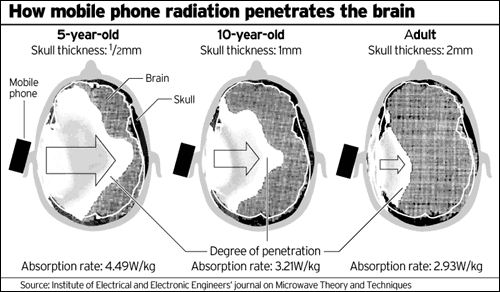
What to Know About Cellphone Radiation, https://www.propublica.org/article/what-to-know-about-cellphone-radiation, by Peter Elkind Jan. 4,2023
To many people, the notion that cellphones or cell towers might present a health risk long ago receded into a realm somewhere between trivial concern and conspiracy theory. For decades, the wireless industry has dismissed such ideas as fearmongering, and federal regulators have maintained that cellphones pose no danger.
But a growing body of scientific research is raising questions, with the stakes heightened by the ongoing deployment of hundreds of thousands of new transmitters in neighborhoods across America. ProPublica recently examined the issue in detail, finding that the chief government regulator, the Federal Communications Commission, relies on an exposure standard from 1996, when the Motorola StarTAC flip phone was cutting edge, and that the agency brushed aside a lengthy study by a different arm of the federal government that found that cellphone radiation caused rare cancers and DNA damage in lab animals.
The newest generation of cellphone technology, known as 5G, remains largely untested.
Here’s what you need to know:
Do cellphones give off radiation?

Yes. Both cellphones and wireless transmitters (which are mounted on towers, street poles and rooftops) send and receive radio-frequency energy, called “nonionizing radiation.” The amount of this radiation absorbed by the human body depends on how close a person is to a phone and a cell transmitter, as well as the strength of the signal the phone needs to connect with a transmitter. Cellphones displaying fewer bars, which means their connection with a transmitter is weak, require stronger power to communicate and so produce more radiation. Wireless transmitters, for their part, emit radiation continually, but little of that is absorbed unless a person is very close to the transmitter.
What does the science say about this? Is it harmful?
That’s the multibillion-dollar question. Government-approved cellphones are required to keep radiation exposure well below levels that the FCC considers dangerous. Those safeguards, however, have not changed since 1996, and they focus exclusively on the unlikely prospect of “thermal” harm: the potential for overheating body tissue, as a microwave oven would. The government guidelines do not address other potential forms of harm.
But a growing body of research has found evidence of health risks even when people are exposed to radiation below the FCC limits. The array of possible harms ranges from effects on fertility and fetal development to associations with cancer. Some studies of people living near cell towers have also confirmed an array of health complaints, including dizziness, nausea, headaches, tinnitus and insomnia, from people identified as having “electromagnetic hypersensitivity.”
The most sensational — and hotly debated — health fear about wireless radiation is cancer. In 2011, the International Agency for Research on Cancer, an arm of the World Health Organization, cited troubling but uncertain evidence in classifying wireless radiation as “possibly carcinogenic to humans.” In 2018, a study by the federal government that was nearly two decades in the making found “clear evidence” that cellphone radiation caused cancer in lab animals. A major study in Italy produced similar results.
Do cellphones pose any special health risks for kids?
Some experts say they do, citing studies suggesting children’s thinner, smaller skulls and developing brains leave them more vulnerable to the effects of cellphone radiation. The American Academy of Pediatrics embraces this concern and has for years urged the FCC to revisit its radiation standards, saying they don’t adequately protect kids. More than 20 foreign governments, as well as the European Environment Agency, urge precautionary steps to limit wireless exposure, especially for children.
What about risks in pregnancy?
A Yale study found hyperactivity and reduced memory in mice exposed to cellphone radiation in the womb, consistent with human epidemiological research showing a rise in behavioral disorders among children who were exposed to cellphones in the womb. Dr. Hugh Taylor, the author of the mouse study and chair of the obstetrics, gynecology and reproductive sciences department at the Yale School of Medicine, told ProPublica: “The evidence is really, really strong now that there is a causal relationship between cellphone radiation exposure and behavior issues in children.”
What does the U.S. government say about cellphone radiation?
The key federal agencies — the FCC and the Food and Drug Administration — have echoed the wireless industry and a number of other groups in rejecting evidence of any “nonthermal” human health risk, saying it remains unproven. The government websites also reject the claim that children face any special risk.
In 2019, during the administration of President Donald Trump, the FCC shut down a six-year review of its 1996 wireless-radiation safety standards. The agency rejected pleas to make the standards more stringent, saying it had seen no evidence its safeguards were “outdated or insufficient to protect human safety.” In 2021, however, a federal appeals court ordered the FCC to revisit the issue, saying the agency had ignored evidence of an array of noncancer harms to humans, animals and the environment, and that its decision to uphold its exposure standard failed to meet “even the low threshold of reasoned analysis.” The FCC has taken no formal action since then.
Why is the issue not resolved?
Determining wireless radiation’s health effects with certainty is difficult. Researchers cannot ethically subject people to endless hours of cellphone radiation to gauge the results. Scientists have to rely on alternatives such as animal studies or epidemiological research, where challenges include getting subjects to accurately recount their wireless use and pinpointing the specific causes of disease or harm. Many health effects of toxic exposure, especially cancer, take years or decades to appear. And the mechanisms of how wireless radiation could affect the body at the cellular level are poorly understood.
Research funding on the issue has also been scarce in the U.S., despite frequent calls for more study. Research (and researchers) raising health concerns have come under sharp attack from industry, and government regulators have remained skeptical. A key FDA official, for example, dismissed the relevance of the federal study that found “clear evidence” of cancer in lab animals, saying it wasn’t designed to test the safety of cellphone use in humans, even though his agency had commissioned the research for that reason.
Linda Birnbaum, who led the federal agency that conducted the cellphone study, said that while proof of harm remains elusive, what is known means that precautions are merited. “Do I see a smoking gun? Not per se,” she told ProPublica. “But do I see smoke? Absolutely. There’s enough data now to say that things can happen. … Protective policy is needed today. We really don’t need more science to know that we should be reducing exposures.”
If I’m concerned about the risk, are there precautions I can take to protect myself and my family?
Because exposure varies dramatically with your proximity to the source of the radiation, experts say a key to minimizing risk is increasing your distance from the phone. This means keeping any cellphone that’s turned on away from direct contact with your body. Don’t keep it in your bra, in your pocket or (especially if you’re pregnant) against your abdomen, they say. And instead of holding the phone against your head when you talk, use a speaker or wired earphones. (Wireless headsets, such as AirPods, also emit some radiation.) Try to avoid making calls when the phone is telling you the signal is weak because that boosts the radiation level. You can also limit exposure by simply reducing how much time you spend talking on your cellphone and texting instead, they say. Using an old-fashioned landline avoids the problem altogether.
Los Alamos National Laboratory’s record $4.6B budget will still mostly fund nuclear weapons

Sante Fe New Mexican By Scott Wyland Jan 4, 2023
Los Alamos National Laboratory’s record $4.6 billion budget for this fiscal year will give officials an unprecedented amount of money for its nuclear weapons program, which still makes up the bulk of the lab’s spending.
The lab’s hefty funding was part of the U.S. Energy Department’s budget request tucked into the recently passed $1.7 trillion omnibus spending package, which will cover the costs of agencies and programs through this fiscal year, ending in October.
Roughly 70 percent of the lab’s funding is for its nuclear weapons program, which includes research, computer testing and pursuing the goal of producing 30 plutonium bomb cores, or “pits,” per year by 2026.
Plans call for Savannah River Site in South Carolina to make an additional 50 pits by 2035. The combined 80-pit goal was established under the Trump administration and is being carried forth by President Joe Biden……………..
This year’s $858 billion military budget is the largest in memory. And the National Nuclear Security Administration, the Energy Department branch that oversees nuclear weapons, received $22.3 billion, a bump from the $20.7 billion it got last year.
………………….. About $1.6 billion of the lab’s new budget is to modernize plutonium operations to prepare for manufacturing 30 pits, an amount that almost triples the most pits the lab has ever produced in a year.
The plutonium funding is a 60 percent increase from last year’s $1 billion, and about five times the $308 million budgeted three years ago.
In an email, a watchdog group called the lab’s ballooning nuclear weapons budget “a staggering amount of money” that was leveraged through world events, such as the war in Ukraine.
“I think the writing should be on the wall that we have entered a new nuclear arms race,” wrote Geoff Wilson, director of the Center for Defense Information at the Project on Government Oversight. “The nuclear spending floodgates have opened in the name of defending against China and a belligerent Russia, and the labs are defense contractors. This is going to be a boom season for them.”
Producing new pits lays the groundwork to create new warheads, Wilson wrote. He noted the lab is developing the first new warhead since the 1980s, the submarine-launched W93.
What’s worrisome about devising new warheads is the computer simulations now used for testing might be rendered obsolete, leading to explosive nuclear testing — banned since 1992 — being revived, he wrote.
The U.S. has the most powerful arsenal in the world and stands little chance of falling behind adversaries, but amping up its weaponry could drive other countries to do likewise, creating a destabilizing effect globally, Wilson wrote.
“I think everyone should be concerned where this sort of escalation could take us, and whether or not this is really necessary for our security, or just going to fund the defense contractor industry base,” he wrote………………………………………..
the nonweapons programs are a lesser part of the lab’s budget. In several public town halls, lab Director Thom Mason has said the nuclear mission is the primary focus.
One longtime anti-nuclear activist said the race to produce pits at the lab has proved to be more costly and difficult than was initially imagined.
In 2017, the nuclear security agency estimated it would cost about $2 billion total to ramp up pit production, and the costs have already grown to many times that amount, said Greg Mello, executive director of the Los Alamos Study Group.
Mello called the endeavor “a runaway train” that’s unsustainable in the long run and unnecessary.
“It’s a product of successful lobbying,” Mello said. “We don’t need new generations of nuclear weapons.” https://www.santafenewmexican.com/news/local_news/lanls-record-4-6b-budget-will-still-mostly-fund-nuclear-weapons/article_18c59118-8b85-11ed-85d2-dfcab050252f.html
What’s an SMR? Canada’s bet on the contentious next-gen nuclear tech, explained.
National Observer Cloe Logan | News | January 4th 2023
What is an SMR?
An SMR, or small modular reactor, is a nuclear power unit used to produce energy. As of now, SMRs don’t technically exist; no unit has been fully built. But like nuclear energy in general, the tech is especially polarizing: while many — including the federal government — tout SMRs as a way to reach net-zero greenhouse gas emissions and achieve our climate goals, others say the risk they pose heavily outweighs any potential reward.
SMRs create energy through nuclear fission, similar to traditional nuclear reactors. That process creates heat, which generates electricity but doesn’t create greenhouse gas emissions, unlike fossil fuel energy sources such as coal and natural gas.
What does SMR stand for, and how are they different from existing reactors?
SMR stands for small modular reactor. Here’s a word-by-word definition……………………
Small: SMRs have a smaller energy output compared to traditional nuclear reactors…………..
Modular: According to the federal government, this means the reactors “are factory constructed, portable and scalable.” Compared to traditional nuclear plants, which are built from the ground up, SMRs can be constructed in a central factory and shipped elsewhere as a whole. However, that process will rely on how much demand there is for SMRs and how feasible it is to ship the units once they’re built. Because SMR technology is still in its early stages, this is still to be determined.
Reactor: The type of reactor an SMR uses can vary.
Why do we need SMRs?…………………………………. According to the federal government, SMRs could be used to help achieve our climate goal in three ways: by replacing coal plants, powering heavy industry operations in places like the oilsands and remote mines, and providing electricity for remote communities reliant on diesel.
……………………………… An analysis published in Policy Options found that as of 2018, 24 remote mines reliant on diesel were potential candidates for SMRs by 2030. However, the authors concluded the cost of producing an SMR was too high to justify an electricity demand of this magnitude. Rather, wind and solar are more affordable
The role of SMRs in powering remote, mostly Indigenous communities that now rely on diesel has also been contested. Research has shown SMRs to be one of the least desirable energy options to those communities, who are concerned with being left with nuclear waste and the high costs of SMRs compared to cheaper renewables.
Why are people against SMRs?
Those against SMRs often oppose them for three main reasons:
1. They will be in operation too late to address the climate crisis.
In Canada, the first SMR is supposed to be ready by 2028 for the Darlington Nuclear Generating Station in Ontario. However, some say that goal is unrealistic. An early SMR built by Oregon’s NuScale was originally supposed to generate electricity by 2016, but the completion date has since been pushed to 2029 or 2030. A new report by the Institute for Energy Economics and Financial Analysis described the project as “too late, too expensive, too risky and too uncertain.”
Meanwhile, renewable sources of energy like wind and solar already have technology that is developed and proven.
2. They’re too expensive.
Since SMRs haven’t yet been built, it’s hard to say how much they will ultimately cost, but it’s in the billions. Don Morgan, minister responsible for SaskPower in Saskatchewan, said a small reactor would cost around $5 billion. And the costs of projects underway have often ballooned: the NuScale project went from costing $3.1 billion in 2014 to $6.1 billion in 2020. As a result, the power generated by SMRs is expensive. A 2015 report from the International Energy Agency and the OECD Nuclear Energy Agency found electricity costs from SMRs are predicted to be 50 to 100 per cent higher than typical nuclear reactors.
3. They create harmful nuclear waste.
According to research from Stanford University and the University of British Columbia, SMRs are actually set to produce more nuclear waste than conventional plants. As of now, Canada’s nuclear waste is stored on site at facilities, but all of the locations are designed to be temporary. There is no waste disposal plan for nuclear waste from SMRs, and Canada has been struggling with where to dispose of the nuclear waste already created from existing and past reactors for around a decade. The Canadian Environmental Law Association notes: “SMR wastes will also have higher concentrations of radiation and the SMR designs that claim to ‘burn up’ existing radioactive waste will create new, even more toxic waste streams.”
Who is building SMRs in Canada and how far along are they?
In Canada, the federal government is currently backing SMR technology through its action plan, as are the provinces of Alberta, Ontario, Saskatchewan and New Brunswick, all of which signed a memorandum of understanding expressing support for SMRs.
According to provincial SMR plans, the first one in operation will be at the Darlington nuclear site in Ontario in 2028. Plans are also underway in Alberta and New Brunswick, where ARC Clean Energy is aiming to have an SMR in operation by 2029, and Moltex Energy says its spent fuel recovery system and reactor will come online in the early 2030s. Four more SMRs will follow between 2034 and 2042 in Saskatchewan.
In the plans, they also note another type of SMRs which would be smaller and have less power generation. Rather than supplying grids, they’re designed “primarily to replace the use of diesel in remote communities and mines.” The plan also notes the nuclear research facility at Chalk River, Ont., which is aiming to be in operation by 2026.
Are SMRs viable?
That is the biggest question surrounding SMRs. Although the plans for these next-generation nuclear units might hypothetically work, their viability hasn’t been proven anywhere. Proponents of the tech don’t let that get them down: they say the proposals are strong and are the key to reducing emissions.
But there is no sign that opponents will back down, either. In Canada, numerous Indigenous, scientific, environmental and citizen groups have called the technology a “dirty, dangerous distraction” from real climate action. https://www.nationalobserver.com/2023/01/04/news/what-is-an-smr-canada
1 This Month

Read the Public Inquiry Report, the Commissioners’ report, Surrendering Australia: The AUKUS Deception is available to download for free at aukuspublicinquiry.com. Or just watch the replay of the National Press Club Luncheon.


19 November – Webinar – The Reality of Reprocessing
Time: 11:00 AM Pacific Time (US & Canada) / 2:00 PM Eastern / 7:00 PM UK / 8:00 PM CET
Register for the Zoom Event Here



Shut down the radiation-damaged Heysham nuclear reactors now
To see nuclear-related stories in greater depth and intensity – go to https://nuclearinformation.wordpress.com

Say No to NASA’s Reckless Nuclear Reactor on the Moon
Say No to NASA’s Reckless Nuclear Reactor on the Moon
-
Archives
- November 2026 (103)
- October 2026 (302)
- September 2026 (339)
- August 2026 (330)
- July 2026 (355)
- June 2026 (287)
- May 2026 (306)
- April 2026 (356)
- March 2026 (251)
- February 2026 (267)
- January 2026 (308)
- December 2025 (358)
-
Categories
- 1
- 1 NUCLEAR ISSUES
- business and costs
- climate change
- culture and arts
- ENERGY
- environment
- health
- history
- indigenous issues
- Legal
- marketing of nuclear
- media
- opposition to nuclear
- PERSONAL STORIES
- politics
- politics international
- Religion and ethics
- safety
- secrets,lies and civil liberties
- spinbuster
- technology
- Uranium
- wastes
- weapons and war
- Women
- 2 WORLD
- ACTION
- AFRICA
- Atrocities
- AUSTRALIA
- Christina's notes
- Christina's themes
- culture and arts
- Events
- Fuk 2022
- Fuk 2023
- Fukushima 2017
- Fukushima 2018
- fukushima 2019
- Fukushima 2020
- Fukushima 2021
- general
- global warming
- Humour (God we need it)
- Nuclear
- RARE EARTHS
- Reference
- resources – print
- Resources -audiovicual
- Weekly Newsletter
- World
- World Nuclear
- YouTube
-
RSS
Entries RSS
Comments RSS

