Suffolk: Sizewell C ‘should not get licence’ due to erosion
Campaigners opposed to the new Sizewell C nuclear power station have
written to a nuclear industry regulator calling for it to reject the new
plant due to coastal erosion.
Together Against Sizewell C (TASC) has sent a
letter to the Office for Nuclear Regulation calling for Sizewell C’s
nuclear operating licence to be ruled out after photos emerged showing the
extent of coastal erosion near to where the new facility will be sited,
raising safety concerns.
Pete Wilkinson, from TASC, said: “This
generation’s inactivity on climate change has already compromised future
generations. To proceed with Sizewell C while being fully aware that it is
highly vulnerable to sea level rise, storm surges and flooding, only adds
to the inter-generational burden we pass on.” However, a spokesperson for
Sizewell C said: “The design of the power station, including its sea
defence and the raised platform it will be built on, will protect Sizewell
C from flooding. “Our plans take account of the effect of climate change
and the predicted rise in sea levels over the coming decades.”
East Anglian Daily Times 18th Jan 2023
https://www.eadt.co.uk/news/23257671.suffolk-sizewell-c-should-not-get-licence-due-erosion/
“Great British Nuclear “- it’s high time that they came clean on what this will cost.

Bowen is right to think Britain’s nuclear plans will require “substantial” taxpayer support.
It’s high time the government spelt out how much financial fuel it’s willing to burn.
Maybe Great British Nuclear will prove as successful as Great British
Railways: another government invention still stuck in the sidings while the
strike-bound network grinds to a halt.

But at least Simon Bowen is after an
improvement on that. Who he? The industry adviser picked by ministers to
make their nuclear nirvana a reality. He’s setting up GBN, the “flagship
body” to corral the construction of up to 24 gigawatts of new capacity by
2050: a shopping list, he says, that will involve at least three more
mega-nukes on top of Hinkley Point C, plus a litter of small modular
reactors.
As he told MPs on the science committee, the new body will be the
“glue within the industry to drive the nuclear programme”. Always
assuming it gets set up, of course — because you can already sense
Bowen’s frustration with the government.
In a post-Ukraine war push for
energy security, it was Boris Johnson who declared that Britain should
“go nuclear and go large”, not that he spelt out the eye-popping costs
to the taxpayer. But Bowen’s report into how the new body should work,
complete with 25 recommendations, has since been passed from Liz Truss to
Rishi Sunak and deemed top secret.
To boot, from the latest PM he sees no
“overarching strategy” on what’s needed for energy security: the
“quantum of nuclear” or other technologies. That’s crucial because
“the investment required in nuclear is substantial”, he says, with the
same stuff underpinning successful international projects: “A substantial
amount of government leadership and fiscal support, not just in terms of
financing but who bears the risk.”
No private financier can see how
Sizewell gets built without the government injecting £5 billion-plus equity
and insulating investors from most construction risk. Build three big nukes
and you treble that problem before taking on small modular reactors — an
untried technology to which Rolls-Royce’s new boss, Tufan Erginbilgic,
seems disinclined to bring blue-sky finance. Add it up and Bowen is right
to think Britain’s nuclear plans will require “substantial” taxpayer
support. It’s high time the government spelt out how much financial fuel
it’s willing to burn.
Times 19th Jan 2023
https://www.thetimes.co.uk/article/great-british-nuclear-puts-treasury-on-alert-jjt987rlr
U.S. approves design for NuScale small modular nuclear reactor, but significant problems remain.

By Timothy Gardner WASHINGTON, Jan 20 (Reuters) – The U.S. nuclear power regulator has certified the design for the NuScale Power Corp’s (SMR.N) small modular reactor, the first such approval in the country for the next generation technology.
The Nuclear Regulatory Commission’s approval, published in the Federal Register late on Thursday, clears a hurdle for NuScale. The company plans to build a demonstration small modular reactor (SMR) power plant at the Idaho National Laboratory. NuScale says the six-reactor, 462 megawatt Carbon Free Power Project will be fully running in 2030.
There are significant questions about rising costs of the demonstration plant, expected to provide electricity to the Utah Associated Municipal Power Systems (UAMPS). NuScale said this month the target price for power from the plant is $89 per megawatt hour, up 53% from the previous estimate of $58 per MWh.
Backers of next generation reactors including President Joe Biden’s administration and many Republican lawmakers, say they are crucial in curbing climate change. NuScale says they will be safer than today’s far larger conventional reactors, but the reactors, like conventional nuclear plants, are expected to produce highly toxic waste, for which no permanent fix has been developed.
The U.S. Department of Energy has provided more than $600 million since 2014 to support the design, licensing and siting of NuScale’s power plant and other small modular reactors. NuScale and other companies that succeed in building next generation reactors could receive for the first time lucrative production tax credits contained in last year’s Inflation Reduction Act signed by Biden……………..
NuScale also hopes to build SMRs in Romania, Kazakhstan and Poland, despite concerns from nuclear safety experts who say Russia’s invasion of Ukraine and occupation of the Zaporizhzhia plant should make the industry think seriously about developing plants in the region. https://www.reuters.com/business/energy/us-approves-design-nuscale-small-modular-nuclear-reactor-2023-01-20/
Call to end practice of transporting nuclear warheads through Cumbria
A CAMPAIGN group have called for an immediate end to the practice of
transporting nuclear warheads by lorry along motorways and roads in Cumbria
and elsewhere. Their renewed call comes in response to news that the
Ministry of Defence has admitted that 40 safety incidents involving convoys
transporting nuclear warheads were logged during 2019, 2020 and 2021,
following a freedom of information request.
Carlisle News & Star 18th Jan 2023
https://www.newsandstar.co.uk/news/23256357.call-end-practice-transporting-nuclear-warheads-cumbria/
Many years for removal and disposal of radioactive waste from historic subterranean vaults at Berkeley nuclear power station.
Work is underway to remove intermediate level radioactive waste (ILW) from
historic subterranean vaults at Berkeley nuclear power station. The removal
and transfer of this ILW into newly designed concrete boxes before moving
it into an interim on-site storage facility is a milestone step in the
decommissioning of the site.
This is part of Magnox’s strategy for dealing
with legacy waste in a consistent and cost-effective manner across its
different sites. The first concrete box of radioactive waste has now been
filled and safely stored at the Gloucestershire site, pending long-term
disposal in a future Geological Disposal Facility (GDF).
It is expected to take between four and five years to remove the full inventory of waste from
the vaults at Berkeley. ONR has maintained regulatory oversight throughout
the planning phase and will continue to do as the retrieval phases
progress.
ONR 17th January 2023
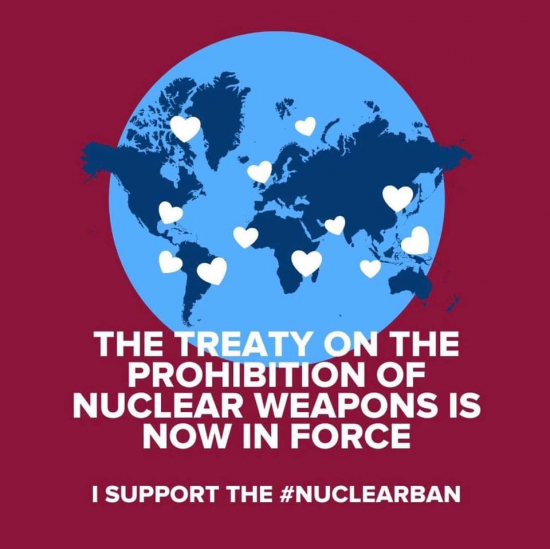
The Treaty on the Prohibition of Nuclear Weapons is a good step towards a nuclear-free world
https://www.canberratimes.com.au/story/8054916/nuclear-danger-is-strong-but-landmark-agreement-offers-hope/ By Marianne Hanson, Margaret Beavis, January 21 2023
January 22 marks the two-year anniversary of the entry into force of the United Nations Treaty on the Prohibition of Nuclear Weapons (TPNW), a landmark agreement that made nuclear weapons illegal on the basis of international humanitarian law.
Yet the potential for nuclear war remains as great as ever.
Fears that the unthinkable might happen were raised most clearly last year when President Vladimir Putin implied that Russia would consider using ‘all forces and means’ necessary in its fight against Ukraine.
It reminded us of the Cuban missile crisis 60 years earlier, once again bringing to the fore the prospect that nuclear war was in fact quite thinkable.
Thankfully, no nuclear weapons have been used in this war, but we cannot be complacent. Deterrence cannot be relied on forever. If Russia (or the United States) were to use even one small “tactical” nuclear weapon, a greater conflagration could easily follow.
It is not only Putin who has threatened to use nuclear weapons; nor is it the case that nuclear dangers vanished after the Cuban crisis or even after the end of the Cold War.
The leaders of every one of the nine states which possess these weapons of mass destruction – Russia, the US, France, China, Britain, India, Pakistan, Israel and North Korea – regularly signal that they would indeed use these weapons.
Their nuclear doctrines, the ongoing modernisation of their nuclear arsenals, their war-fighting practices and nuclear targeting all threaten the use of weapons which have the potential to kill millions and devastate the planet.
The end of the Cold War did nothing to reduce these dangers. While there was a period when goodwill between the major powers prevailed, and the US and Russia embarked on a program of reduction via the Strategic Arms Reduction Treaties, in truth a window of opportunity was lost when the nuclear-armed states refused to move seriously to eliminate their nuclear arsenals completely.
At the time, Australia was at the forefront of calls for the total elimination of nuclear weapons; the Labor government’s Canberra Commission in 1996 put forward a sober and considered assessment of the utility of nuclear weapons.
Nineteen commissioners from around the world, including several military leaders from the US, Britain and elsewhere, concluded that nuclear arsenals had very little military utility, that their existence continued to threaten the world – via deliberate or accidental use – and that as long as any one state possessed nuclear weapons, other states would want them too.
As predicted, three more states have acquired these WMDs since the Cold War ended.
The Canberra Commission set out a comprehensive program to encourage the phased, balanced, mutual, and verified elimination of nuclear weapons. It did not call for unilateral disarmament, nor did it insist that this should happen overnight. But it did warn that dangers would increase if the world did not act to eliminate these most destructive of all weapons.
Several other organisations and think tanks around the world added to the Canberra Commission’s message in subsequent decades and the nuclear states made clear promises to disarm. But they have stalled in the process of disarmament and are, instead, making their existing arsenals even more destructive than they were before.
Thoroughly fed-up with this intransigence, more than 120 states at the United Nations in 2017 voted to adopt a treaty outlawing nuclear weapons. The TPNW entered into force two years ago, and now has 92 state signatures.
Formed in Melbourne, the International Campaign for the Abolition of Nuclear weapons (ICAN) was awarded the Nobel peace prize for its work in raising awareness of nuclear dangers and its contribution towards the new treaty. This was the first and only time that an Australian-born group has been awarded the Nobel peace prize.
ICAN’s work was premised on the history of banning other weapons considered to be inhumane, unjust, and uncivilised. Landmines have been banned and are hardly used at all today, a far cry from a few decades ago. Chemical and biological weapons have been banned, and any state that attempts to use them is immediately stigmatised and reprimanded.
In the same way, the TPNW is designed to stigmatise, delegitimise, and in time lead to the elimination of nuclear weapons. ICAN, the 92 governments which have signed, and people around the world who support nuclear disarmament understand that a legal instrument banning nuclear weapons is a necessary step in the move to a nuclear weapons-free world.
It might surprise readers to know that several prominent politicians and military leaders also support this goal; Henry Kissinger and William Perry from the US are notable advocates of disarmament; so too were Ronald Reagan and Mikhail Gorbachev. Here in Australia, Labor promised at its 2018 and 2021 National Conferences that it will sign the TPNW when in government.
More than 100 federal parliamentarians have called on Canberra to fulfil this promise, as have hundreds more from around Australia, including in local government.
The call to eliminate nuclear weapons also finds strong support at the grassroots level in Australia; doctors and other health practitioners, environmental groups, trade unions, faith-based leaders, lawyers and others are calling on the government to sign the TPNW.
This is because banning and abolishing nuclear weapons is seen as a public health and humanitarian imperative. Our planet is worth preserving and human life should be valued. The Australian Red Cross as well as prominent Rotarians around the world are calling for the elimination of nuclear weapons, in the same way that they are working to eliminate polio and malaria.
On this second anniversary of the Treaty on the Prohibition of Nuclear Weapons’ entry into force, Australia must again take up the message of the Canberra Commissioners. Indeed, while Australia’s high-risk nuclear propelled submarine proposal clearly creates global proliferation concerns, by signing the TPNW Australia can demonstrate its non-proliferation commitments.
A nuclear-free world requires visionary and bold leadership. It is a global public good. Signing the TPNW, and playing an active role internationally for balanced, phased and verified disarmament will be an excellent start.
- Associate Professor Marianne Hanson and Dr Margaret Beavis are co-chairs of the International Campaign to Abolish Nuclear Weapons (Nobel peace prize 2017) Australia.
Slovenia’s nuclear power plant gets permit for a 20 year operating extension
nsion
Krško nuclear power plant has obtained an environmental permit for its
lifetime extension from 40 to 60 years. The only NPP in Slovenia will be so
able to operate until 2043.
European Nuclear Society 17th Jan 2023
France’s nuclear waste agency applies to create a long-term underground storage in Eastern France.
France’s national agency for managing nuclear waste has applied to the
ministry of ecological transition for the creation of a project for the
long-term storage of high-level radioactive waste, the agency said on
Tuesday. The application, which was filed on Monday, represents a new phase
in which French authorities will examine the plan for safety to ensure it
guards against radioactive leaks.
The project, called Cigéo, calls for the
waste to be stored 500 metres below ground in the Callovo-Oxfordian clay
formation in eastern France. Currently the waste is temporarily stored on
the surface, the agency said. Construction could begin as soon as 2027 if
the French nuclear safety authority approves the application. Authorisation
for an industrial pilot phase to store some waste could come from 2035 to
2040, with full operational approval between 2040 and 2050, the agency
said. Finland, Sweden, Switzerland, Belgium and the Netherlands are also
examining the construction of long-term high-level radioactive waste
storage sites.
Reuters 17th Jan 2023
France’s new law on nuclear energy will be a gift to the nuclear lobby.
The new nuclear law, under debate in the Senate, is a gift offered to the atom lobby. And the majority on the right could further strengthen it. The public debate on the creation of new EPR2 nuclear reactors is not yet over and the government already wants to speed up their construction.
OnTuesday, January 17, his bill for an “ambitious and sustainable” nuclear revival will be presented to the Senate. The text proposes various technical measures to simplify the development of EPR2s . But above all, it sends a political signal: the government is in working order to advance its cause. Even if it means radically changing the deadlines for administrative authorizations, the legal procedures and the frameworks of environmental democracy.
When presenting her bill to the Economic Affairs Committee , Agnès Pannier-Runacher first began by apologizing. “I’m sorry, it’s a horribly technical text… But the modalities for reviving nuclear power
will go through unattractive considerations , ” she continued. For her, the current difficulties of nuclear power – its slowness and its high cost – would be, above all, linked to bureaucratic and normative heavinesses that it would be a question of doing away with.
“It’s important that the cost of this new program be competitive, which is much easier said than done ,” she
said. Renewable energies have an exit cost of 60 to 80 euros (MWh) and this is the price level that should be had for nuclear power.
Reporterre 17th Jan 2023 https://reporterre.net/Tapis-rouge-pour-le-nucleaire-au-Senat
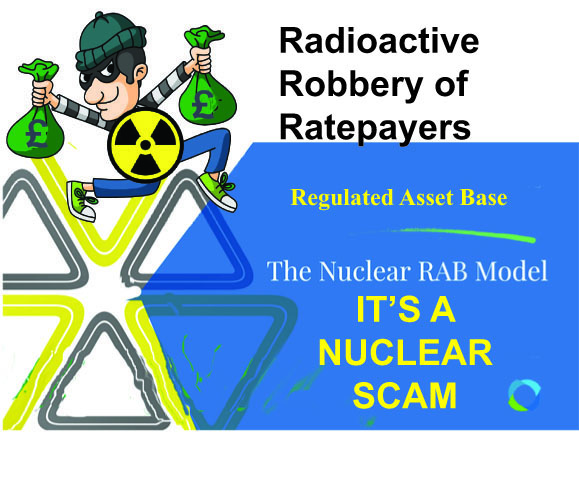
The British government’s Regulated Asset Base – the test case for reviving its nuclear power dream
After years of false dawns, can Britain realise its nuclear ambitions? FT, 19 Jan 23 “…………………………………………………………………………………. Nuclear test case
Fresh hopes of encouraging the development of a new fleet of nuclear reactors — both large and small — now rest on a complex hybrid public-private partnership financing model known as the Regulated Asset Base. Already used for other infrastructure projects such as energy networks and airport terminals, RAB promises potential investors an “allowed revenue” — overseen by a regulator — from the start of construction, funded via a surcharge on consumer energy bills.
Supporters of the model, such as EDF, argue it significantly cuts the cost of financing because it lowers the interest that builds up during the construction phase and reduces the amount of compounded debt that needs to be serviced and paid off during the station’s lifespan. Financing costs account for roughly two-thirds of the overall cost of a nuclear plant. The allowed revenue payments continue after the plant is operational. Rather than paying a price for every unit of electricity produced, the model essentially pays for new nuclear power stations to be available.
But the RAB model is also divisive. Critics argue it would saddle bill payers with high additional costs if projects run over time and over budget.
The UK government intends for that risk to be shared between the project’s owners and consumers, according to people familiar with the discussions, although it is yet to reveal how that would work in the case of Sizewell C, which is unlikely to be connected to the electricity grid before the 2030s.
“If the cost of overruns and delays cannot just be lumped on to consumers, I think it would be implausible any investor would look at the deal,” says Steve Thomas, emeritus professor of energy policy at the University of Greenwich. “How would you feel if your pension fund was taking the risk of a nuclear project not being built to time and cost?”
For long-running nuclear sceptics, the latest attempt at ushering in a new civil nuclear golden age in Britain risks diverting attention and investment away from other technologies, such as wind, solar and storage, which could be delivered sooner to achieve the country’s near-term emissions targets.
The UK government is working towards a fivefold increase in offshore wind to 50GW by 2030 — which it claims would be enough to “power every home” — and to raise solar deployment to 70GW from 14GW by 2035. Renewables supporters claim these could still meet a lot of demand even on calmer, less bright days.
“If you want to hit your 2035 target and Sizewell C is not going to get you there [in time] then you have got to do something else . . . so why do Sizewell C as well if you are going to get there without it?” says Alison Downes, a former head of direct actions at Greenpeace UK who is now spearheading a campaign to stop Sizewell C being built.
Among longstanding nuclear proponents, there are still nerves about whether Britain’s latest attempt to revive an industry will come to fruition, even if they feel the politics are now on their side.
If a final investment decision is taken by the end of 2024 as hoped, Sizewell C will be the first test of the financing model for nuclear projects and only the second nuclear power station to enter construction since 1995, when the last of the current fleet opened. The other, Hinkley Point C, began construction in 2016 but is running over-time and over-budget. It is not currently envisaged to generate any electricity before mid-2027.
Nuclear industry executives have also been pushing ministers to confirm a new nuclear reactor construction programme beyond Sizewell C as part of GBN’s launch.
This should, in the short-term, include a commitment to take final investment decisions on two further nuclear projects in the next parliament.
But to get to that stage and avoid adding to the roster of failed nuclear projects, the impasse within government must first be resolved.
Graham Stuart, energy and climate minister at the BEIS, alluded on Wednesday to the tussle between departments, saying a date for the launch of GBN would be set once it had “a resolved and finalised agreement with His Majesty’s Treasury”.
A government insider confirmed the rollout was being held up by chancellor Jeremy Hunt who “wants to do due diligence on GBN before approving it”.
“Is there haggling over money?” the person says. “There always is.” https://www.ft.com/content/c4c481d3-99e0-4c2f-8d4e-96b4c9a3bd59
IAEA sends staff to all Ukraine nuclear plants to reduce risk of accidents
PBS NewsHour, Jan 18, 2023
KYIV, Ukraine (AP) — The International Atomic Energy Agency is placing teams of experts at all four of Ukraine’s nuclear power plants to reduce the risk of severe accidents as Russia’s war against the country rages on, agency head Rafael Grossi said Wednesday.
The IAEA, which is affiliated with the United Nations, already has a permanent presence at Ukraine’s — and Europe’s — largest nuclear plant in Zaporizhzhia that is held by Russian forces.
The IAEA’s permanent presence at all of Ukraine’s nuclear facilities, with at least 11 staff in total, marks an unprecedented expansion for the agency. IAEA technicians will also be at Chernobyl, the now-closed nuclear plant that was the site of a deadly nuclear accident in 1986 that spread fallout over much of Europe…………………………………. more https://www.pbs.org/newshour/world/iaea-sends-staff-to-all-ukraine-nuclear-plants-to-reduce-risk-of-accidents
Mini nuclear reactor firm snubs Britain for the French: Newcleo blames political chaos for decision to build prototype across Channel
Britain’s nuclear power ambitions suffered another setback as a UK company
chose France to build its prototype reactor. Newcleo blamed political
upheaval in Westminster for its decision. The mini-nuclear power station
company said it waited in vain for ministers to give the green light over
where to site the project – leaving it no option but to take the work over
the Channel.
The move will cost hundreds of potential UK jobs and casts
further doubt on the country’s nuclear future. Speaking at the World
Economic Forum in Davos, Newcleo chief executive Stefano Buono told the
Mail: ‘Changing government three times has not helped. ‘We were
expecting a decision before, but I understand that when the government
changes, it’s very difficult to take decisions.’ Britain is scrambling to
replace its fleet of six large nuclear plants, five of which are due for
closure by 2028 and one, Sizewell B, in 2035.
Hopes for the mini-nuclear sector were raised by Boris Johnson’s plans for a government-backed body
called Great British Nuclear (GBN) to support the development of new sites.
Speaking in the Commons yesterday, the former prime minister urged the
Government ‘to exploit this country’s technological lead and build a
fleet of small modular nuclear reactors as part of our Great British
Nuclear programme’. Business Secretary Grant Shapps said GBN would be up
and running shortly and said small modular reactors would play ‘an
important part’ in boosting nuclear power supplies. The Government wants 25
per cent of power to come from nuclear by 2050. Last year it supplied 15.5
per cent. Privately-owned Newcleo, which is about to launch a £900million
funding round, is one of a number of companies planning to build
mini-nuclear power stations around the UK.
Daily Mail 17th Jan 2023
Fukushima: court upholds acquittals of three Tepco executives over disaster
Three former executives from the company that operates the wrecked
Fukushima Daiichi nuclear plant have had their not-guilty verdicts upheld
by a court in Japan, dealing a blow to campaigners demanding the firm take
legal responsibility for the disaster in March 2011.
The Tokyo high court
on Wednesday cleared Tsunehisa Katsumata, the former chairman of Tokyo
Electric Power (Tepco), along with former vice-presidents Ichiro Takekuro
and Sakae Muto, of professional negligence resulting in death. The court
said the defendants could not have predicted the massive tsunami that
crippled the power plant and triggered the world’s worst nuclear accident
since Chornobyl in 1986.
The three men were indicted in 2016 for allegedly failing to take measures
to defend the plant against tsunamis, resulting in the deaths of 44 people,
including elderly patients at a hospital, who had to be evacuated after the
disaster.
Guardian 18th Jan 2023
South Korea keen to market nuclear technology to United Arab Emirates, and missile technology, too.

South Korea president, in UAE, backs return to nuclear power
MRO, ABU DHABI, United Arab Emirates (AP) 16 Jan 23, – South Korean President Yoon Suk Yeol said on Monday that his nation’s efforts to be carbon neutral by 2050 would rely in part on returning to nuclear power, even though his predecessor had tried to move away from atomic power.
Yoon’s comments at a summit in the United Arab Emirates, made in front of the country’s leader, Sheikh Mohammed bin Zayed Al Nahyan, served to underline Seoul’s commitment to nuclear power as it works to finish the Arabian Peninsula’s first atomic power plant. That could see South Korea in line for lucrative maintenance contracts and future projects in the UAE, which Seoul has grown closer to over recent years.
Yoon’s predecessor, President Moon Jae-in, sought to move South Korea away from nuclear power amid safety and graft scandals and Japan’s 2011 Fukushima nuclear disaster………..
Yoon traveled later Monday to the Barakah nuclear power plant in Abu Dhabi’s far western desert near Saudi Arabia with Sheikh Mohammed before a planned business summit back in the capital.
On his arrival back, Yoon told the summit that, using the Barakah plant as an example, he hoped the Emirates and South Korea could expand this “new model of cooperation” to include nuclear fuel, small reactors and other joint advances to third countries…….
Yoon’s embrace of nuclear power also provides a guarantee of sorts that South Korea remains invested in servicing the Barakah plant. France, also home to nuclear power plants and another Emirati business and military ally, has sought contracts here as well.
Already, Yoon’s four-day trip the UAE has seen a promise from Sheikh Mohammed to invest some $30 billion in the country. Heavyweight business leaders from Hyundai, Samsung and other companies also are taking part in the state visit.
On Sunday, Yoon also visited South Korean special forces stationed in the United Arab Emirates, a murky deployment that grew out of Seoul’s deal over the nuclear power plant. The Akh unit is comprised of some 150 troops………..
Already, the Emiratis have paid $3.5 billion for the Cheongung II, or “Heaven’s Bow,” surface-to-air missile system from South Korea …. https://www.mromagazine.com/2023/01/16/south-korea-president-in-uae-backs-return-to-nuclear-power/
Poland’s energy company agrees to buy France’s NOT YET DESIGNED so-called “small” Nuward nuclear reactor!

Poland’s Respect Energy considers deploying French SMR design
WNN, 16 January 2023
Polish renewable energy trader Respect Energy has signed an agreement with EDF to cooperate on the development of nuclear power projects in Poland based on France’s Nuward small modular reactor (SMR) technology.
“This agreement marks Respect Energy’s and EDF’s firm intention to jointly proceed with the development of SMR projects in Poland and confirms the strong interest towards Nuward technology which has been selected by the energy trader to expand its footprint in the nuclear energy field,” the companies said in a joint statement. “Respect Energy and EDF will now jointly start the evaluation process of specific new greenfield sites and continue to work on detailing the business and financing plans for this endeavour.”
In October 2021, EDF made an offer to the Polish government to build as many as six EPR units. The “non-binding preliminary offer” represented a range of options for Poland. It detailed the engineering, procurement and construction that would be needed for four to six EPR units, at either two or three sites. The EPR units would produce 1650 MWe each if selected – the Polish government announced late last year that it had selected Westinghouse technology for at least the first three of its planned fleet of reactors……………….
The Nuward project was launched in September 2019 by the French Alternative Energies and Atomic Energy Commission (CEA), EDF, Naval Group and TechnicAtome. The Nuward – consisting of a 340 MWe SMR plant with two pressurised water reactors (PWRs) of 170 MWe each – has been jointly developed using France’s experience in PWRs……………..
Nuward is currently in the conceptual design phase, which focuses on choosing the major technical features while delivering real competitive advantages. Belgian engineering firm Tractebel was contracted in May last year to conduct studies for the completion of the conceptual design of “the first SMR in the European Union”.
The next phase of the project, the basic design completion, is expected to start this year and to be completed by 2025. The design should be in the “advanced concept phase” between 2025 and 2030, during which time Nuward is expected to be certified and the supply chain developed.
Construction of a demonstration Nuward SMR is expected to start in 2030. The construction of that unit is anticipated to take three years.
In June, it was announced the Nuward design will be the case study for a European early joint regulatory review led by the French nuclear safety regulator with the participation of the Czech and Finnish nuclear regulators….. https://world-nuclear-news.org/Articles/Poland-s-Respect-Energy-considers-deploying-French
1 This Month

Read the Public Inquiry Report, the Commissioners’ report, Surrendering Australia: The AUKUS Deception is available to download for free at aukuspublicinquiry.com. Or just watch the replay of the National Press Club Luncheon.


19 November – Webinar – The Reality of Reprocessing
Time: 11:00 AM Pacific Time (US & Canada) / 2:00 PM Eastern / 7:00 PM UK / 8:00 PM CET
Register for the Zoom Event Here



Shut down the radiation-damaged Heysham nuclear reactors now
To see nuclear-related stories in greater depth and intensity – go to https://nuclearinformation.wordpress.com

Say No to NASA’s Reckless Nuclear Reactor on the Moon
Say No to NASA’s Reckless Nuclear Reactor on the Moon
-
Archives
- November 2026 (103)
- October 2026 (302)
- September 2026 (339)
- August 2026 (330)
- July 2026 (355)
- June 2026 (287)
- May 2026 (306)
- April 2026 (356)
- March 2026 (251)
- February 2026 (267)
- January 2026 (308)
- December 2025 (358)
-
Categories
- 1
- 1 NUCLEAR ISSUES
- business and costs
- climate change
- culture and arts
- ENERGY
- environment
- health
- history
- indigenous issues
- Legal
- marketing of nuclear
- media
- opposition to nuclear
- PERSONAL STORIES
- politics
- politics international
- Religion and ethics
- safety
- secrets,lies and civil liberties
- spinbuster
- technology
- Uranium
- wastes
- weapons and war
- Women
- 2 WORLD
- ACTION
- AFRICA
- Atrocities
- AUSTRALIA
- Christina's notes
- Christina's themes
- culture and arts
- Events
- Fuk 2022
- Fuk 2023
- Fukushima 2017
- Fukushima 2018
- fukushima 2019
- Fukushima 2020
- Fukushima 2021
- general
- global warming
- Humour (God we need it)
- Nuclear
- RARE EARTHS
- Reference
- resources – print
- Resources -audiovicual
- Weekly Newsletter
- World
- World Nuclear
- YouTube
-
RSS
Entries RSS
Comments RSS

