Nuclear-powered rockets to Mars – there are serious safety risks.

No one wants to see nuclear debris raining down on the Florida coast or Disneyland, and that’s not the only possible scenario.
An accident in orbit could potentially drop radioactive material into the atmosphere.
Nuclear powered rockets could take us to Mars, but will the public accept them?
Bob McDonald’s blog: NASA and DARPA are beginning development of a new fission rocket, Bob McDonald · CBC Radio · Jan 27, 2023
NASA has signed an agreement with the U.S. Defense Advanced Research Projects Agency (DARPA) to develop a nuclear rocket that could shorten travel time to Mars by about one quarter compared to traditional chemical rockets. But before nuclear technology is launched into space, there are risks that need to be addressed to ensure public safety…………………….
While the technology of nuclear propulsion is certainly feasible, it may not be readily embraced by the public. The accidents at Chernobyl, Three Mile Island and Fukushima have left many people skeptical about nuclear safety. And there will be risk.
A nuclear rocket wouldn’t be used to launch a spacecraft from the Earth’s surface — it would be designed to run in space only. It would have to launch into orbit on a large chemical rocket — so the public would have to accept the risk of launching a nuclear reactor on a standard rocket filled with explosive fuel.
And rockets have and will malfunction catastrophically, in what with black humour rocket scientists sometimes call RUD — “rapid unscheduled disassembly.”
No one wants to see nuclear debris raining down on the Florida coast or Disneyland, and that’s not the only possible scenario. An accident in orbit could potentially drop radioactive material into the atmosphere.
Nuclear technology in another form has been used since the very beginning of the space program, just not for propulsion. Radioisotope Thermoelectric Generators (RTGs) have provided power to deep space probes for instruments, radios and cameras on a range of missions…………………….
The U.S. has seen several accidents, including one in 1968 when a launch failure of a Nimbus-1 weather satellite threw its RTG into the ocean. It was recovered intact and the fuel was reused on a later mission.
But there have been more serious accidents. Canadians may remember an incident from 1978, when a Soviet reconnaissance satellite scattered 50 kg of uranium from its nuclear thermal generator over 124,000 square kilometres of Canada’s North.
But a fission reactor is a much more complicated device involving higher temperatures, coolants and more nuclear fuel.
……………………. the engineers face a challenge to ensure that all checks and balances have been made to reassure the astronauts who will fly these machines — and people on the ground — that they can be operated safely before the technology is adopted. https://www.cbc.ca/radio/quirks/nuclear-powered-rockets-could-take-us-to-mars-but-will-the-public-accept-them-1.6727217
Rolls Royce wants to make sure that the tax-payer cops the cost of their small nuclear reactor folly

Rolls-Royce calls on government for more clarity on nuclear. https://www.energylivenews.com/2023/01/26/rolls-royce-calls-on-government-for-more-clarity-on-nuclear/
Executives of the engineering giant have cited Britishvolt as an example of a company which committed to a factory without having orders.
Dimitris Mavrokefalidis
Rolls-Royce has urged the government to provide more clear vision of its target to roll out 24GW of nuclear power generation by 2050.
During a session at the House of Commons Welsh Affairs Committee, asked when Rolls-Royce will start the process of building its first Small Modular Reactor factory, Alastair Evans, Director of Corporate and Government Affairs at Rolls-Royce SMR, said: “If you look at the Britishvolt example, that is an example of a company that committed to a factory without orders. We don’t have clarity on orders in the UK.
“So, as soon as we have that clarity that the UK Government wants to deploy Rolls-Royce SMRs, we will be able to get the first factory moving, but our shareholders need that clarity. Britishvolt is a very good example of where you try and run a business and build a factory and get things moving without that certainty, orders and customers.”
A few days ago, company representatives visited the first four sites which have the potential to host 15GW of new nuclear power capacity.
Mr Evans confirmed that once Rolls-Royce receives the green light from the government, then the whole process around the development of its first SMR facility will accelerate.
He said: “That was the purpose of doing our planning processes, getting the selection of our heavy pressure vessel sites – we’ve got 600 people in the Rolls-Royce SMR business today. So we are set up to deliver at pace. We are 600 UK-based workers looking at manufacturing, assembly, lead skills, and module concept. We are ready to go.”
Campaigners fear changes at Hinkley Point C ‘could kill millions of fish every day’
By Burnham-On-Sea.com, January 27, 2023
Campaigners fear millions of fish could be killed every day by the Hinkley Point C nuclear power station near Burnham-On-Sea if owner EDF is allowed to back out of a planning condition.
The Stop Hinkley anti-nuclear group has said this week that EDF Energy had refused to fit acoustic fish deterrents on its two off-shore massive cooling water intake heads.
Stop Hinkley spokeswoman Katy Attwater said EDF now looked to be pressuring the Environment Agency to drop the planning condition which required the acoustic fish deterrent measures.
It comes as the Environment Agency launches a four-week consultation on whether the Hinkley C site’s operational water discharge activity permit should be varied.
Stop Hinkley Spokesperson Katy Attwater adds: “It looks to us very much like the Environment Agency is being forced to make a decision which conservation groups fear will result in the death of millions of fish every day.”
“The Severn Estuary supports some of the most important and protected habitats in the UK, EDF appears to be absolutely determined not to spend the money to install AFD’s and is pressurising the Agency into backing down.”
“This change would be disastrous for the Severn estuary and all the fish species it supports, to breed and travel into its tributaries, nine of the greatest rivers of England and Wales.”
However, Chris Fayers, Head of Environment for Hinkley Point C, told Burnham-On-Sea.com: “EDF has decades of experience and data gained from taking cooling water from the Bristol Channel, which shows the activity has an insignificant impact on protected species………… https://www.burnham-on-sea.com/news/campaigners-fear-changes-at-hinkley-point-c-could-kill-millions-of-fish-every-day/
Documents show no sign Australia’s Albanese government lobbied the US to bring Julian Assange home

https://michaelwest.com.au/documents-show-no-sign-albanese-government-lobbied-the-us-to-bring-julian-assange-home/, by Rex Patrick | Jan 24, 2023
The government is hosting a media freedom roundtable yet Freedom of Information inquiries show no evidence of entreaties to the Biden administration to free Australia’s number one victim of political and media persecution, Julian Assange. Actions speak louder than words, writes Rex Patrick.
When Independent MP Monique Ryan stood up in the Parliament in late November and asked Prime Minister Anthony Albanese if his Government would intervene to bring Australian journalist Julian Assange home, those in the community that care about freedom of the press were provided with a glimmer of hope.
The PM answered: “I, some time ago, made my point that enough is enough. It is time for this matter to be brought to a conclusion. In that, I don’t express any personal sympathy with some of the actions of Mr Assange. I do say though that this issue has gone on for many years now, and when you look at the issue of Mr Assange and compare that with the person responsible for leaking the information, Bradley Manning, now Chelsea Manning, she is now able to participate freely in US society.”
He went on to say:
The government will continue to act in a diplomatic way, but can I assure the member for Kooyong that I have raised this personally with representatives of the United States government. My position is clear and has been made clear to the US administration that it is time that this matter be brought to a close.
Press protections or press protection?
When the Attorney General, Mark Dreyfus MP, KC announced on the 19th of this month that he was calling together media organisations to discuss improved protections for press freedom, Assange supporters could also reasonably crack a smile. Dreyfus pronounced:
“The Albanese Government believes a strong and independent media is vital to democracy and holding governments to account. Journalists should never face the prospect of being charged or even jailed just for doing their jobs.”
But it’s now clear there’s a big difference between saying, and doing. A set of Freedom of Information (FOI) requests has bought the Government’s Assange façade crumbling to the ground.
In response to a Freedom of Information request to the Prime Minister for all correspondence or other records of communication sent after 23 May 2022 by or on behalf of the Prime Minister, the Hon Anthony Albanese MP, to United States President Joe Biden that related to Julian Paul Assange, his office has come up with nothing.

In response to a Freedom of Information request to the Attorney General for correspondence or records of communication between him and his US counterpart Merrick Garland that relates to Assange his office also came up bare.
FOI Response from Houston Ash, Senior Adviser to the Attorney-General
It’s a response that’s left independent MP Monique Ryan disturbed.
“The US Government’s prosecution of Australian journalist and publisher Julian Assange poses a major threat to press freedom around the world. Unfortunately, the evidence now available shows that, contrary to their statements, Prime Minister Albanese and his Ministers have done little to secure Mr Assange’s freedom. None of them has written to their US counterparts to press for the espionage prosecution to be dropped”, said Ms Ryan.
She’s now rightly called on the government to disclose exactly what they have done, and will do, to secure Assange’s release.
In media statements she referred also to a further request made to Foreign Minister Penny Wong’s office for Assange related correspondence between her and United States Secretary of State Antony J Blinken. It also drew a blank.

Ms Ryan observed:
“If the Albanese Government was serious about working to secure an end to the US prosecution and Mr Assange’s release, then he and his Ministers would have raised the matter formally, in writing, with their counterparts at the top levels of the US Government”, It is now confirmed that they have not done so via any formal means.”
Ms Ryan went on to highlight the Attorney’s duplicitous stand. “Last week, in announcing a forthcoming national media roundtable, Attorney-General Dreyfus declared that ‘Journalists should never face the prospect of being charged or even jailed just for doing their jobs‘.” Julian Assange is an Australian journalist who faces lifelong imprisonment for doing his job.”
The Independent MP for Kooyong has signalled her intent to take the matter further. “When the Federal Parliament reconvenes in February, the Government will need to explain – in much more detail – when we can expect to see Mr Assange return to Australia”
The Albanese Government has been caught out saying something but not meaning it. They just want to appear that they’re doing something, when behind the scenes they’re doing very little, if anything much at all.
Nothing is to be gained by the continuing prosecution of Julian Assange. The US espionage prosecution sends precisely the wrong message at a time when freedom of the press is under threat in many countries worldwide.
The Albanese Government serve the United States better, and promotes a solid position itself, in pressing for the attack on Assange and media freedom to stop.
A clear signal to the US leadership that there will be no survivors in any nuclear exchange between the US and Russia
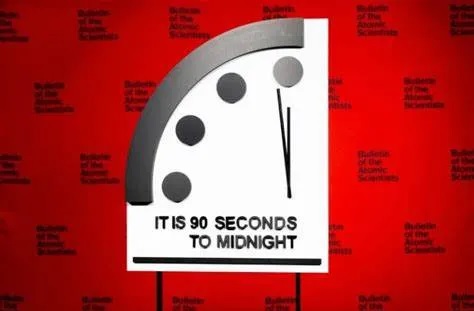
90 Seconds to Midnight? https://www.scottritterextra.com/p/90-seconds-to-midnig Scott Ritter, Jan 25
A clear signal to the US leadership that there will be no survivors in any nuclear exchange between the US and Russia
A quick history lesson for the Bulletin of Atomic Scientists:
- It was the US, not Russia, that withdrew from the Anti-Ballistic Missile and Intermediate Nuclear Forces treaties.
- It is the US, not Russia, that has frozen talks on the extension of the New Strategic Arms Treaty.
- It is the US, not Russia, that has recently promulgated a nuclear posture policy which allows for the preemptive use of nuclear weapons in a non-nuclear scenario.
- It is the US, not Russia, that has deployed a low-yield (i.e., “usable) nuclear warhead (the W-76-2) on Trident submarine launched ballistic missiles, and conducted war games where the Secretary of Defense has practiced the communications procedures necessary to launch this weapon where Russia was the named target of the missile.
- It is the US, not Russia, that is building a Ukrainian proxy army designed by intent to be able to capture territory Russia claims as its own (the four former Ukrainian provinces annexed by Russia in September 2022, and Crimea), knowing full well that one of the triggers for release of Russian nuclear weapons is any conventional military force that threatens the existential survival of Russia.
https://www.scottritterextra.com/p/90-seconds-to-midnig Scott Ritter, Jan 25
The Russian guided missile frigate, the Admiral Gorshkov, is in the middle of the Atlantic Ocean, ostensibly heading toward the east coast of the United States, part of a planned journey which began on 4 January 2023 and is expected to transit the Atlantic and Indian Oceans, as well as the Mediterranean Sea. The Admiral Gorshkov is outfitted with 16 vertical launch tubes, each of which, in theory, could be armed with nuclear-capable Zircon hypersonic missiles capable of covering 1,000 kilometers in less than 10 minutes.
To put it bluntly, soon Russia will be in a position where a single ship could, in a matter of minutes, fire 16 nuclear armed hypersonic missiles at the United States which not only cannot be intercepted by anything in the US arsenal, but also would impact their respective targets before any meaningful evacuation could be conducted. It is, literally, a decapitation weapon.
Current Russian nuclear doctrine does not allow for a nuclear first strike; indeed, Russian President Vladimir Putin has made it clear that Russia would not be the first nation to use nuclear weapons in any future nuclear conflict. But he also emphasized that Russia would not be the second, either, meaning that Russia would release its nuclear arsenal without waiting for any US first strike to impact Russian soil.
The Admiral Gorshkov is sending a clear signal to the US leadership that there will be no survivors in any nuclear exchange between the US and Russia.
Amid this muscle flexing, the Science and Security Board of the Bulletin of the Atomic Scientists, a disarmament advocacy group founded in 1945 by Albert Einstein and University of Chicago scientists who helped develop the first atomic weapons in the Manhattan Project, and which currently maintains what is known as the “Doomsday Clock” that reflects the risk of nuclear conflict, decided to move the hands of the clock ten seconds forward from the current 100 seconds to midnight. In a statement announcing this decision, “A time of unprecedented danger: It is 90 seconds to midnight,” the board declared the following:
“The war in Ukraine may enter a second horrifying year, with both sides convinced they can win. Ukraine’s sovereignty and broader European security arrangements that have largely held since the end of World War II are at stake. Also, Russia’s war on Ukraine has raised profound questions about how states interact, eroding norms of international conduct that underpin successful responses to a variety of global risks.
“And worst of all, Russia’s thinly veiled threats to use nuclear weapons remind the world that escalation of the conflict—by accident, intention, or miscalculation—is a terrible risk. The possibility that the conflict could spin out of anyone’s control remains high.”
The ignorance of this statement is manifest. What the Board calls “Russia’s war on Ukraine” ignores the fact-based historical truth that the Ukraine conflict was, and is, solely the byproduct of a concerted plan by the United States and NATO to use Ukraine as a foil to generate conflict designed to bring down the government of Russian President Vladimir Putin.
This plan has been in place since at least 2008, when the former US Ambassador to Russia (and current Director of the CIA), William Burns, warned that any effort by NATO to bring Ukraine into its ranks would precipitate an eventual Russian military intervention. Despite this stark warning, NATO extended an invitation to Ukraine in November 2008, clearly initiating a known cause-effect relationship that defined NATO’s policy toward Russia as being one which sought a proxy conflict using Ukraine as a stand-in for NATO.
This policy as furthered by the US, EU and NATO all acting in concert to precipitate a coup in Ukraine in February 2014 designed to oust the constitutionally elected president, Victor Yanukovych, and replace him with a new, ultra-nationalist government dominated by adherents of the odious ideology of Stepan Bandera. The coup succeeded, and in April the new Ukrainian government declared war on the ethnic Russian population of the Donbas. This action triggered the Russian annexation of Crimea and the provision of military support by Russia to the Donbas, triggering the very military intervention William Burns had warned about six years prior.
Ukraine and its NATO allies then sued for peace, initiating negotiations that led to the adoption of the Minsk Agreement, which put in place a ceasefire in exchange for guarantees regarding Ukrainian sovereignty over the Donbas as well as relative autonomy for the ethnic Russians of the Donbas, protecting their language, religion, culture, and traditions.
The Minsk Accords floundered for eight years, with Ukraine failing to implement the required constitutional changes necessary to secure the rights of the ethnic Russians of the Donbas. The reasons for this delay are today well known, thanks to the public confessions of former Ukrainian President Petro Poroshenko, former German Chancellor Angela Merkel, and former French President Francois Hollande, all three signatories to the accords. These three national leaders have acknowledged that the Minsk Accords were simply a sham designed by Ukraine to buy time to build a NATO proxy military capable of reclaiming both the Donbas and Crimea.
Russia’s decision to invade Ukraine on February 24, 2022 was not an unprovoked act of aggression, but rather a legitimate exercise of its right, together with the newly independent republics of Lugansk and Donetsk, of preemptive collective self-defense in the face of the imminent threat of aggression by Ukraine’s newly trained army which was, by design, little more than a NATO proxy.
The fact that the esteemed members of the Bulletin of Atomic Scientists – which includes among its ranks ten Nobel laureates – seem ignorant of this history, colors their ability to comprehend the true nature of the threat facing the world today, and from whence that threat comes.
The United States, having deliberately provoked a pre-meditated conflict with Russia, is now trying to implement a two-tracked policy designed to trigger a Maidan-like moment in Moscow (named after Maidan Square, in Kiev, where US-backed neo-Nazi’s staged a violent coup against former Ukrainian President Victor Yanukovych) where the Russian population would rise up against the government of President Vadimir Putin, overthrowing him and installing a pro-western leader who would return Russia to the colonial-like existence of the 1990’s, when Boris Yeltsin allowed the collective west to rape Russia economically and dominate Russia politically.
The two-tracks of this policy involve the imposition of economic sanctions linked to Russia’s decision to militarily intervene in Ukraine, and the prosecution of a proxy conflict in Ukraine designed to bleed Russia white. The goal of this policy is to engender massive unrest among a demoralized Russian population which would in turn rise and remove President Putin from power.
The insanity of such a plan is incomprehensible. Imagine for a moment that Russia embarked on a plan of action designed to strip away Mexico from the US sphere of influence and, in doing so, promulgated a conflict the goal of which was to have Mexico re-take by force the territory encompassing the states of California, Arizona, New Mexico, and Texas. The idea that the United States would sit idly in the face of such a threat is ludicrous. So, too, is any concept that Russia should do the same.
A quick history lesson for the Bulletin of Atomic Scientists:
- It was the US, not Russia, that withdrew from the Anti-Ballistic Missile and Intermediate Nuclear Forces treaties.
- It is the US, not Russia, that has frozen talks on the extension of the New Strategic Arms Treaty.
- It is the US, not Russia, that has recently promulgated a nuclear posture policy which allows for the preemptive use of nuclear weapons in a non-nuclear scenario.
- It is the US, not Russia, that has deployed a low-yield (i.e., “usable) nuclear warhead (the W-76-2) on Trident submarine launched ballistic missiles, and conducted war games where the Secretary of Defense has practiced the communications procedures necessary to launch this weapon where Russia was the named target of the missile.
- It is the US, not Russia, that is building a Ukrainian proxy army designed by intent to be able to capture territory Russia claims as its own (the four former Ukrainian provinces annexed by Russia in September 2022, and Crimea), knowing full well that one of the triggers for release of Russian nuclear weapons is any conventional military force that threatens the existential survival of Russia.
Forgetting World War II, Germany joins in the frenzy of hostility to Russia
SCOTT RITTER: The Nightmare of NATO Equipment Being Sent to Ukraine

In a turn of events which must have Vasily Chuikov and the Soviet heroes to whom the Tiergarten war memorial was dedicated turning in their graves, the forces of fascism have once again reared their odious heads, this time manifested in a Ukrainian government motivated by the neo-Nazi ultra-nationalistic ideology of Stepan Bandera and his ilk.
The West’s recent approval of more military assistance for Kiev risks nuclear nightmare, fails Ukrainian expectations and rebukes the World War II history enshrined in a prominent Soviet war memorial in Berlin.
On Tuesday the White House decided that it would send about 30 M1 Abrams tanks to Ukraine, which was seen as political cover for Germany, which decided to ship 14 Leopard 2 tanks to Kiev.
By Scott Ritter, Consortium News 24 Jan 23
Early on the morning of May 2, 1945, General Vasily Chuikov, the commander of the Soviet 8thGuards Army, accepted the surrender of the German garrison of Berlin.
Two days prior, soldiers from the 150th Rifle Division, part of the Soviet 5th Shock Army, had raised the victory banner of the Red Army over the Reichstag. An hour after the banner went up, Adolf Hitler and his mistress, Eva Braun, committed suicide in his study inside the Furhrerbunker.
Chuikov, the hero of Stalingrad whose battered 62nd Army was renamed the 8th Guards Army in honor of their victory in holding that city in the face of a massive German onslaught, had led his troops into the heart of the Nazi capital, battling stubborn Nazi resistance in the Tiergarten district of Berlin, where the den of the Nazi beast was located. The Soviet general was rewarded for the courage and sacrifice of his soldiers by being in position to accept the German surrender.
In honor of this accomplishment, and the sacrifice it entailed, the Soviet Army inaugurated, in November 1945, a commemorative monument along the Tiergarten. Constructed from red marble and granite stripped away from the ruins of Adolf Hitler’s Neue Reichskanzlei (New Imperial Chancellery), the monument, consisting of a concave colonnade of six joined axes flanked by Red Army artillery and a pair of T-34 tanks, with a giant bronze statue of a victorious Red Army soldier standing watch from the center pylon.
From 1945 until 1993, when the Russian Army withdrew from Berlin, Soviet guards stood guard over the monument. Since that time, the monument has been maintained according to the terms of the German Reunification Treaty of 1990, which brought West and East Germany together in the aftermath of the fall of the Berlin Wall.
Carved into the granite of the monument, in Cyrillic letters, is an inscription that reads “Eternal glory to the heroes who fell in battle with the German fascist occupiers for the freedom and independence of the Soviet Union.”
In a turn of events which must have Vasily Chuikov and the Soviet heroes to whom the Tiergarten war memorial was dedicated turning in their graves, the forces of fascism have once again reared their odious heads, this time manifested in a Ukrainian government motivated by the neo-Nazi ultra-nationalistic ideology of Stepan Bandera and his ilk.
Bandera and his murderous movement had been physically defeated by Soviet forces in the decade following the end of the Second World War. However, its ideology survived in a western Ukrainian diaspora formed from the survivors of that movement who found safe haven in West Germany (where Bandera himself settled until assassinated by the Soviet KGB in 1959); Canada (where Chrystia Freeland, the granddaughter of a former publisher of pro-Bandera propaganda, currently serves as deputy prime minister), and the United States (where the followers of Stepan Bandera have constructed a “heroes park” outside Ellenville, New York, including a bust of Bandera and other neo-Nazi Ukrainian ultra-nationalists.)
The ideology also survived in the shadows of the western Ukrainian districts that had been absorbed by the Soviet Union following the dismemberment of Poland in 1939, and later, after the reoccupation of these territories by Soviet forces in 1945.
CIA-Funded Political Underground
Here, beginning in 1956, (following the de-Stalinization policies instituted by Soviet Premier Nikita Khrushchev in the aftermath of his “secret speech” to members of the Communist Party), thousands of members of the Ukrainian Insurgent Army (UPA)/Organization of Ukrainian Nationalists-Bandera (OUN-B), who had been arrested and convicted by Soviet authorities, were released from the Gulag and returned to their homes, ostensibly to be reintegrated into Soviet society. This reintegration never materialized, however.
Instead, Ukrainian fascists, funded by the C.I.A., operated as a political underground, running sabotage operations and fomenting anti-Soviet/anti-Russian ideology amongst a population where the precepts of Ukrainian nationalist ideology ran strong.
[Related: JOE LAURIA: On the Influence of Neo-Nazism in Ukraine]
Following the collapse of the Soviet Union, at the end of 1991, these Ukrainian nationalists emerged from the shadows and began organizing into political parties backed by gangs of violence-prone extremists who promulgated, through physical intimidation, a cult of personality built around the person of Stepan Bandera………………………………………………………………………… more https://consortiumnews.com/2023/01/24/scott-ritter-the-nightmare-of-nato-equipment-being-sent-to-ukraine/
Former US Secretary of State says Pakistan’s 2019 conflict with India almost sparked nuclear war
A former high-ranking US official has revealed he will “never forget the night” when the world witnessed what almost became a nuclear catastrophe.
Alex Blair news.com.au 25 Jan 23
Former US Secretary of State Mike Pompeo has detailed just how close the world came to nuclear war in 2019.
In February 2019, the relationship between rival nuclear powers India and Pakistan came dangerously close to escalating into a full-blown conflict, Pompeo writes in his memoir.
It all kicked off when India launched a military operation against militants within Pakistani territory, in response to an attack on its own troops in the disputed region of Kashmir that left 40 Indian soldiers dead.
Pakistan retaliated by shooting down two Indian aircraft and capturing a fighter pilot.
Both nations lay claim to Kashmir, but currently control only portions of the region. India has long accused Pakistan of supporting separatist militants in the Kashmir Valley, a claim that Pakistan denies.
The two nations, both nuclear powers, have engaged in multiple conflicts throughout their history, with the majority of these conflicts centred around the disputed region.
In his memoir, Never Give An Inch: Fighting for the America I Love, Pompeo emphasises that the world was unaware of the sheer gravity of the situation……………………………………………………….. more https://www.news.com.au/technology/innovation/military/former-us-secretary-of-state-says-pakistans-2019-conflict-with-india-almost-sparked-nuclear-war/news-story/75da26ebea96f1064d024205c6108bc2
NASA partners with the military to test nuclear fission-powered spacecraft engine by 2027
The technological advancement has long been seen as critical to long-haul missions, including a manned trip to Mars.
Aljazeera 24 Jan 2023
The top official at the United States space agency NASA has said the country plans to test a spacecraft engine powered with nuclear fission by 2027, an advancement seen as key to long-haul missions including a manned journey to Mars.
NASA will partner with the US military’s Defense Advanced Research Projects Agency (DARPA) to develop the nuclear thermal propulsion engine and launch it into space, NASA administrator Bill Nelson said on Tuesday. The project has been named the Demonstration Rocket for Agile Cislunar Operations or DRACO……………………..
Under the NASA-DARPA agreement, NASA’s Space Technology Mission Directorate will lead technical development of the nuclear thermal engine, which will eventually be integrated with an experimental spacecraft created by the military.
The agency said the last US nuclear thermal rocket engine tests were discontinued in the 1970s… https://www.aljazeera.com/news/2023/1/24/nasa-to-test-nuclear-fission-powered-spacecraft-engine-by-2027
Don’t dump on us
Japan has also benefited from the (inevitable) support of the (nuclear power-promoting) International Atomic Energy Agency, an organization that never met a nuclear danger it couldn’t downplay. The agency has described the proposed discharges as “far below the Japanese regulatory limits,” in a statement last April.
Pacific Islanders, marine scientists, urge Japan not to dump Fukushima radioactive water into ocean
By Linda Pentz Gunter, Beyond Nuclear International, 24 Jan 23,
The nuclear power industry has a long history of disproportionately impacting people of color, Indigenous communities and those living in the Global South. As Japan prepares to dump more than 1 million tonnes of radioactive water from its stricken Fukushima-Daiichi nuclear power plant site into the Pacific Ocean some time this year, history is about to repeat itself.
To remind us of that — and to warn against this reckless and entirely unnecessary action (Japan could and should expand the cask storage pad on site and keep storing the radioactive water there) — the leader of the Pacific Islands Forum (PIF) has spoken out.
In a recent column in the UK daily newspaper, The Guardian, Henry Puna wrote that “continuing with ocean discharge plans at this time is simply inconceivable”, given how directly it once again discriminates against — and will likely seriously harm the health of — the peoples of the Pacific. Puna took care to remind readers “that the majority of our Pacific peoples are coastal peoples, and that the ocean continues to be an integral part of their subsistence living.”
Going forward with the dump without further study and serious consideration of viable alternatives, would, Puna said, mean that “the region will once again be headed towards a major nuclear contamination disaster at the hands of others.” Victims of years of atomic testing, Pacific Islanders are rightly not ready to be dumped on yet again.
Tepco and the lapdog Japanese government announced last May that they would release around 1.3 million tonnes of radioactive waste water from the Fukushima site next spring. Recently, authorities suggested the dump could be delayed until the summer but seem undeterred by the loud chorus of opposition from multiple quarters.
The plant produces 100 cubic metres of contaminated water daily, a combination of groundwater, seawater and water used to keep the reactors cool. The water is theoretically filtered to remove most harmful isotopes, other than tritium, which is radioactive hydrogen and cannot be separated from water. It is then stored in casks on site where authorities claim they are running out of space. However, independent watchdogs are not convinced that the filter system has successfully removed other dangerous radioactive isotopes from the waste water.
Most recently, the 100-member American group, the National Association of Marine Laboratories (NAML), expressed its fervent opposition in a strongly worded position paper released last month. Their opposition, they wrote, “is based on the fact that there is a lack of adequate and accurate scientific data supporting Japan’s assertion of safety. Furthermore, there is an abundance of data demonstrating serious concerns about releasing radioactively contaminated water.”
The report went on: “The proposed release of this contaminated water is a transboundary and transgenerational issue of concern for the health of marine ecosystems and those whose lives and livelihoods depend on them. We are concerned about the absence of critical data on the radionuclide content of each tank, the Advanced Liquid Processing System (ALPS), which is used to remove radionuclides, and the assumption that upon the release of the contaminated wastewater, ‘dilution is the solution to pollution.’”
The scientists accused Japan of ignoring the inevitable processes of bioaccumulation and bioconcentration, which contradict the dilution contention. The Association also called out what it saw as shoddy or incorrect science conducted by Tepco and the Japanese government, including “flaws in sampling protocols, statistical design, sample analyses, and assumptions, which in turn lead to flaws in the conclusion of safety and prevent a more thorough evaluation of better alternative approaches to disposal.”
Japan has consistently rejected on-going onsite storage — presumably due to the expense, given the land space is there and more casks could be provided. In the view of some, the eagerness to dump the water— largely contaminated with tritium (a form of radioactive hydrogen that cannot be separated from water) and likely other undeclared radionuclides — is a public relations exercise to make the problem “go away” and restore normal optics to the site. The site cannot also be fully decommissioned so long as the tanks are there.
Japan has also benefited from the (inevitable) support of the (nuclear power-promoting) International Atomic Energy Agency, an organization that never met a nuclear danger it couldn’t downplay. The agency has described the proposed discharges as “far below the Japanese regulatory limits,” in a statement last April.
After sending in a task force and several earlier reports, the IAEA released a new report in December in which it said “the IAEA will conduct its own independent checks of the radiological contents of the water stored in the tanks and how it will analyse environmental samples (for example seawater and fish) from the surrounding environment.” However, the IAEA has not expressed opposition to the dumping of the radioactive water even now and instead indicates that its safety reviews will continue “before, during, and after the discharges of ALPS treated water.”
Japan has faced down opposition from fishermen and environmentalists, particularly from those in the Marshall Islands who have suffered decades of horrific health issues, especially birth defects, after enduring 67 US atomic tests there. A Pacific region collective advocacy group, Youngsolwara Pacific, expressed dismay that the Japanese, of all people, would not empathize with them and condemn the Fukushima water dump………………………….. https://beyondnuclearinternational.org/2023/01/24/dont-dump-on-us/—
Military offensives increase nuclear accident odds in Ukraine, warns atomic safety chief

Earlier this month, Petro Kotin, president of Ukraine’s state-run Energoatom nuclear operator, said a U.N. security buffer was not “realistic” and instead called for Ukraine’s forces to take the facility back by force.
But Grossi warned that any attack “puts the installation at great risk.”
Rafael Mariano Grossi wants ‘every’ EU country to push for a security buffer around the occupied Zaporizhzhia plant.
POLITICO, BY VICTOR JACK, JANUARY 25, 2023
The risk of an accident at Ukraine’s Russia-occupied Zaporizhzhia nuclear power plant will “undoubtedly” increase as both Kyiv and Moscow prepare for military offensives in the coming months, warned the chief of the U.N.’s nuclear watchdog.
“There is a lot of talk about bigger, larger maneuvers and action in the early spring or late winter,” Rafael Mariano Grossi, the International Atomic Energy Agency (IAEA) director general, told POLITICO, “which makes me think that any increase in bombing and shelling will undoubtedly increase the possibility of a nuclear accident.”
Russia is likely to launch a fresh push to take Ukrainian territory this spring, a top NATO official said last week, while Ukraine also says it is readying a major counter-offensive……………………………………….
Earlier this month, Petro Kotin, president of Ukraine’s state-run Energoatom nuclear operator, said a U.N. security buffer was not “realistic” and instead called for Ukraine’s forces to take the facility back by force.
But Grossi warned that any attack “puts the installation at great risk.”
He’s pressing for EU foreign ministers to get involved and use their “own channels of communication” with Ukraine and Russia to “pass the message … that avoiding a nuclear accident is a must” and a security zone is needed.
Grossi also addressed the increasingly frequent calls from Russian propagandists and some politicians that Moscow should respond to its battlefield setbacks by unleashing its nuclear weapons.
“I don’t see how a conventional war — no matter how dramatic it is — between a non-nuclear weapon state and a nuclear weapon state could … justify the use of nuclear weapons,” he said. https://www.politico.eu/article/ukraine-war-military-nuclear-accident-atomic-safety-chief-rafael-mariano-grossi/
Julian Assange and the US government’s war on whistleblowers
Chris Hedges, The Real News Network, Fri, 20 Jan 2023
Thirteen years ago, WikiLeaks published extensive leaked US government documents detailing a range of criminal and unethical acts, from the slaughter of civilians in the “War on Terror” to acts of espionage against foreign heads of state. Since then, the persecution of Julian Assange has not ceased. This year, Assange is expected to stand trial in the US for violations of the Espionage Act. Journalist Kevin Gosztola joins The Chris Hedges Report to review the cases of Julian Assange and Chelsea Manning, and discuss Washington’s wider war against whistleblowers and the truth itself.
Kevin Gosztola is the managing editor of Shadowproof, where he writes The Dissenter. He is the author of Guilty of Journalism: The Political Case Against Julian Assange.
TRANSCRIPT
Chris Hedges: The long persecution of Julian Assange, the publisher of WikiLeaks, is set to culminate in its final act: a trial in the United States, probably this year. Kevin Gosztola has spent the last decade reporting on Assange, WikiLeaks, and the wider war on whistleblowers. His new book, Guilty of Journalism: The Political Case against Julian Assange, methodically lays out the complex issues surrounding the case, the gross distortions to the legal system used to facilitate the extradition of Julian, now in a high security prison in London, the abuses of power by the FBI and the CIA, including spying on Julian’s meetings when he sought refuge in the Ecuadorian embassy in London with his family, doctors, and attorneys, and the dire consequences, should Julian be convicted, for the press.
Joining me to discuss his new book is Kevin Gosztola. So Kevin, you do a very… I think your book and Nils Melzer are the two books I would recommend for people who don’t understand the case. I use this show in this interview to really lay out for people who are unfamiliar with the long persecution of Julian and the legal anomalies that have been used against him. You know, what those are. So let’s just start with what are the charges, what are the allegations, which is where you begin your book.
Kevin Gosztola: Yeah. And the intention was to look ahead and say, Julian Assange is likely to be brought to the US by the end of 2023, maybe 2024. We need something out there for the general public so they can wrap their head around the unprecedented nature of what’s unfolding. And so the charges against Julian Assange, he was first indicted back in April of 2019. Or sorry, that was when it was unveiled. He was charged first with a computer crime offense. They alleged, essentially, a password cracking conspiracy. And that was of intrusion, of essentially agreeing to help Chelsea Manning anonymously access military computers.
And then the other charges were 17 espionage act offenses. ………………………………………………………… https://therealnews.com/julian-assange-and-the-us-governments-war-on-whistleblowers

Doomsday Clock reset to 90 seconds to midnight
Humanity is closer to Armageddon than ever, according to a team of
scientists, who said global conflict had helped to push the world towards
calamity.
The Doomsday Clock, a symbolic measure of the threats facing the
world, has been set at 90 seconds to midnight, the Bulletin of the Atomic
Scientists said. The organisation has been adjusting the clock since it was
created in 1947, set at seven minutes to midnight. Since 2020 the clock had
been set at 100 seconds to midnight but yesterday the hands were moved as
scientists weighed the danger of the war in Ukraine, climate change and
Covid.
Times 25th Jan 2023
https://www.thetimes.co.uk/article/world-10-seconds-closer-doomsday-clock-8fckkk792
Former DEA Nuclear Security Official Says Wyoming Reactor Not Safe

the sodium reactor planned for Kemmerer has a high degree of potential for explosive accidents and proliferation of nuclear weapons material.
Sodium reacts with water and air, which Tallen said poses a huge risk for accidents.
Cowboy State Daily, By Kevin Killough, State Energy Reporter
Kevin@CowboyStateDaily.com January 25, 2023January 25, 2023
When TerraPower and PacifiCorp announced in November 2021 that they had selected Kemmerer as the location of its Natrium reactor demonstration project, many welcomed the opportunity as a path to a diverse energy economy for Wyoming.
In the next few months, TerraPower plans to break ground on a sodium testing project for the larger demonstration project. If the reactor design is proven, it would provide lots of carbon-free energy and provide a viable replacement for retiring coal plants in the state, TerraPower said.
Wapiti resident Bill Tallen had a 20-year career with the Department of Energy that was focused on the threat posed by terrorists who sought ways to create improvised nuclear devices.
Tallen argues that the sodium reactor planned for Kemmerer has a high degree of potential for explosive accidents and proliferation of nuclear weapons material. Henry Sokoloski, executive director of the Nonproliferation Policy Education Center (NPEC), which is based in Washington D.C., has a lot of the same concerns.
Jeff Navin, director of external affairs with TerraPower, says these concerns have been considered and addressed as much as reasonably possible in the project’s design and development.
Not Opposed To Nuclear
Tallen said he’s not ideologically opposed to nuclear power. He said he rubbed elbows with that crowd years ago, but it’s not where he stands today.
“The distrust of nuclear power is one of the major ideological tenets of left-wing, anti-establishment politics,” Tallen said. “I had to say to them, I can’t agree with you on many of your basic assumptions. I’m just saying that this particular [Natrium] technology pursued the way it is right now – I don’t think it’s a good idea.”
Reaction Risk
The Natrium reactor being built in Kemmerer uses sodium instead of water as a heat sink for the reactor core. That heat will then be transferred to water, which will produce steam to turn turbines.
Sodium reacts with water and air, which Tallen said poses a huge risk for accidents.
“There’s never been a sodium reactor that has actually met its promises. They’ve all had leaks and fires and explosions and toxic releases,” Tallen said. “Granted, in America we haven’t had big problems, but the past is not always prologue. The risk is still there.” ……………………
Plutonium And Proliferation
Sokolski with NPEC said these reactors produce plutonium during the fission process.
“The plutonium produced in these machines isn’t just weapons usable. It isn’t even weapons grade. It’s super weapons grade,” Sokolski said.
The Natrium reactors run on high-assay low-enriched uranium, known commonly as HALEU. It’s currently produced only in Russia, and due to the invasion of Ukraine, supplies of the material are scarce. This has led to a delay in the Kemmerer project.
Tallen said that as these reactors grow and more HALEU is produced, it’s just inviting a nation like Iran to find sources of the material, which can be enriched to weapons-grade with the right facilities.
“These are parties that do in fact have, or can construct, enrichment capabilities and will not be concerned by U.S. export restrictions,” Tallen said. ……………………….. https://cowboystatedaily.com/2023/01/25/former-dea-nuclear-security-official-says-wyoming-reactor-not-safe/
The Nightmare of NATO Equipment Being Sent to Ukraine
By Scott Ritter, Consortium News 24 Jan 23“…………………………………………………………………………… What the West is Giving
Operational training, no matter how competently delivered and absorbed, does not paint an accurate picture of the true combat capability being turned over to Ukraine by the West. The reality is most of this equipment won’t last a month under combat conditions; even if the Russians don’t destroy them, maintenance issues will.
Take, for instance, the 59 M-2 Bradley vehicles being supplied by the United States. According to anecdotal information obtained from Reddit, the Bradley is, to quote, “a maintenance NIGHTMARE.”
“I can’t even begin to commiserate how f***ing awful maintenance on a Bradley is,” the author, a self-described U.S. Army veteran who served in a Bradley unit in Iraq, declared.
“Two experienced crews MIGHT be able to change one Brad’s track in 3 or 4 hours, if nothing goes wrong (something always goes wrong). Then you got the track adjuster arms, the shock arms, the roadwheels, the sprocket itself, that all need maintained and replaced as needed. I haven’t even started talking about the engine/transmission pack yet. When you do services on that, it’s not like you just raise the engine deck lid. You got to take the armor OFF the Bradley so an M88 Wrecker vehicle can use its crane to LIFT the engine/tranny out of the hull.”
The Stryker isn’t any better. According to a recent article in Responsible Statecraft, U.S. soldiers who used the vehicle in both Iraq and Afghanistan called the Stryker “a very good combat vehicle, so long as it traveled on roads, it wasn’t raining — and didn’t have to fight.”
The Stryker is also a difficult system to maintain properly. One of the critical features of the Stryker is the “height management system,” or HMS. In short, it is what keeps the hull from riding on the tires. A failure to constantly maintain and monitor the HMS system will result in the hull rubbing up against the tires, causing tire failure and a non-operable vehicle.
The HMS is complex, and a failure to maintain or operate one component will result in the failure of the entire system. The likelihood of the future Ukrainian operators of the Stryker properly maintaining the HMS under combat conditions is near-zero — they will lack the training as well as the “logistical support” necessary (such as spare parts).
The German Marder IFV appears to represent a similar maintenance headache for the Ukrainians: according to a 2021 article in The National Interest, “The vehicle was considered unreliable from the outset: Tracks rapidly wore out, transmissions often failed, and soldiers could not easily remove the vehicle’s engine for field maintenance.”
While Germany is preparing to invest a significant amount of money to upgrade the Marder, this hasn’t yet been done. Ukraine is inheriting an old weapons system that brings with it a considerable maintenance problem Ukraine is not prepared to properly handle.
The Swedish CV 90 saw some limited combat in Afghanistan when deployed with the Norwegian Army. While there is not enough publicly available data about the maintainability of this system, one only needs to note that even if the SV 90 proves easy to maintain, it represents a completely different maintenance problem from that of the Bradly, Stryker, or Marder.
In short, to properly operate the five battalion-equivalents of infantry fighting vehicles being supplied their NATO partners, Ukraine will need to train its maintenance troops on four completely different systems, each with its own unique set of problems and separate logistical/spare part support requirements.
It is, literally, a logistical nightmare that will ultimately prove to be the Achilles heel of the Ramstein tranche of heavy equipment.
But even here, neither NATO nor Ukraine seems able to see the forest for the trees. Rather than acknowledging that the material being provided is inadequate to the task of empowering Ukraine to carry out large-scale offensive operations against Russia, the two sides began haranguing each other over the issue of tanks, namely the failure of Germany to step up to the plate in Ramstein and clear the way for the provision to Ukraine of hundreds of modern Leopard 2 main battle tanks.
German History & Optics
The Ramstein meeting was hampered by concern within the German Parliament over the optics associated with Germany providing tanks which would be used to fight Russians in Ukraine……………………………………………………………………….
The Consequences for Ukraine
The reality is, however, that the consequences of the Ramstein Contact Group’s work will be far more detrimental to Ukraine than Russia.
The reality is, however, that the consequences of the Ramstein Contact Group’s work will be far more detrimental to Ukraine than Russia.
Under pressure from the West to carry out a major offensive designed to expel Russian forces from the territories captured last year, General Zaluzhnyi will be compelled to sacrifice whatever reserves he would be able to assemble in the aftermath of Ramstein for the purpose of engaging in fruitless attacks against a Russian opponent that is far different from the one Ukraine faced in September and October of last year……………….
Today, Russia’s military presence in Ukraine is a far cry from what it was in the autumn of 2022. In the aftermath of Putin’s September 2022 decision to mobilize 300,000 reservists, Russia has not only consolidated the frontline in eastern Ukraine, assuming a more defensible posture, but also reinforced its forces with some 80,000 mobilized troops, allowing for Russia to sustain offensive operations in the Donetsk regions while solidifying its defenses in Kherson and Lugansk.
……….. Moving forward, Russia will be waging war by the book. Defensive positions will be laid in a manner designed to defeat concerted NATO attack, both in terms of troop density along the frontline, but also in depth………………………………………………..
While the modern-day soldiers of the 8th Guards Army may not be mounting a new generation of tanks on display in the Berlin Tiergarten, rest assured they know fully well their historical legacy and what is expected of them.
This, more than anything else, is the true expression of the Ramstein effect, a cause-effect relationship that the West does not seem either able or willing to discern before it is too late for the tens of thousands of Ukrainian soldiers whose lives are about to be sacrificed on an altar of national hubris and ignorance.
Scott Ritter is a former U.S. Marine Corps intelligence officer who served in the former Soviet Union implementing arms control treaties, in the Persian Gulf during Operation Desert Storm and in Iraq overseeing the disarmament of WMD. His most recent book is Disarmament in the Time of Perestroika, published by Clarity Press. https://consortiumnews.com/2023/01/24/scott-ritter-the-nightmare-of-nato-equipment-being-sent-to-ukraine/
Doomsday Clock set to 90 seconds to midnight, here’s the plan – ICAN

Doomsday Clock set to 90 seconds to midnight, here’s the plan. ICAN has
a roadmap for ridding the world of nuclear weapons in four steps:
prohibition, stigmatisation, negotiation, elimination.
ICAN 24th Jan 2023
https://www.icanw.org/doomsday_clock_no_more_excuses_the_plan
1 This Month

Read the Public Inquiry Report, the Commissioners’ report, Surrendering Australia: The AUKUS Deception is available to download for free at aukuspublicinquiry.com. Or just watch the replay of the National Press Club Luncheon.


19 November – Webinar – The Reality of Reprocessing
Time: 11:00 AM Pacific Time (US & Canada) / 2:00 PM Eastern / 7:00 PM UK / 8:00 PM CET
Register for the Zoom Event Here



Shut down the radiation-damaged Heysham nuclear reactors now
To see nuclear-related stories in greater depth and intensity – go to https://nuclearinformation.wordpress.com

Say No to NASA’s Reckless Nuclear Reactor on the Moon
Say No to NASA’s Reckless Nuclear Reactor on the Moon
-
Archives
- November 2026 (94)
- October 2026 (302)
- September 2026 (339)
- August 2026 (330)
- July 2026 (355)
- June 2026 (287)
- May 2026 (306)
- April 2026 (356)
- March 2026 (251)
- February 2026 (267)
- January 2026 (308)
- December 2025 (358)
-
Categories
- 1
- 1 NUCLEAR ISSUES
- business and costs
- climate change
- culture and arts
- ENERGY
- environment
- health
- history
- indigenous issues
- Legal
- marketing of nuclear
- media
- opposition to nuclear
- PERSONAL STORIES
- politics
- politics international
- Religion and ethics
- safety
- secrets,lies and civil liberties
- spinbuster
- technology
- Uranium
- wastes
- weapons and war
- Women
- 2 WORLD
- ACTION
- AFRICA
- Atrocities
- AUSTRALIA
- Christina's notes
- Christina's themes
- culture and arts
- Events
- Fuk 2022
- Fuk 2023
- Fukushima 2017
- Fukushima 2018
- fukushima 2019
- Fukushima 2020
- Fukushima 2021
- general
- global warming
- Humour (God we need it)
- Nuclear
- RARE EARTHS
- Reference
- resources – print
- Resources -audiovicual
- Weekly Newsletter
- World
- World Nuclear
- YouTube
-
RSS
Entries RSS
Comments RSS

