Maintenance impacted at Zaporizhzhia, says IAEA

24 April 2023 https://www.world-nuclear-news.org/Articles/Maintenance-impacted-at-Zaporizhzhia,-says-IAEA
The current situation at the Zaporizhzhia nuclear power plant is having a significant impact on the plant’s maintenance capability, the International Atomic Energy Agency (IAEA) said.
Plant management informed the IAEA experts present at plant that the scope of maintenance performed during outages on all units in 2022 was reduced compared with the planned scope, due to reduced maintenance staff, absence of external contractors who perform a significant part of the work, and a lack of spare parts needed for the maintenance, including critical components.
The Zaporizhzhia plant currently has only about one-quarter of its regular maintenance staff available, the IAEA said. It noted new staff are being hired but it will take some time until they are fully trained. The plant said a substantial list of required spare parts has recently been submitted to Russian state nuclear corporation Rosatom.
“As a result of the significant reduction of staff, the ZNPP currently does not have a systematic maintenance and in-service inspection schedule,” the IAEA said. “Before restarting any of the reactor units, the site is considering obtaining advice from an engineering organisation within Rosatom that will assess the status of the plant and provide recommendations for all structures, systems and components important to safety regarding their maintenance or any necessary replacement before operation. The site considers that this maintenance/replacement work may be undertaken using the services of a centralised Rosenergoatom company that is capable of performing these types of maintenance tasks.”
“This shows again the continuing detrimental impact that the current situation on the site is having on the seven indispensable pillars for ensuring nuclear safety and security, in this case pillars two and five on safety and security systems and equipment and logistical supply chain,” IAEA Director General Rafael Mariano Grossi said.
The IAEA noted that the Zaporizhzhia plant continues to rely on the only remaining functioning 750kV power line for the external electricity it needs for reactors cooling and other essential nuclear safety and security functions. Meanwhile, a back-up 330kV power line that was damaged on 1 March on the other side of the Dnipro River from the Russian-controlled plant remains unrepaired, with Ukraine having said military action is preventing its experts from safely accessing the location situated in territory it controls to repair the line.
Russia reported last month that Rosatom was working to remove damaged equipment from the open switchyard, with the aim of restoring three 330kV lines to the grid system in currently Russian-controlled territory. The IAEA team will access the site to assess the situation.
Four of the six reactors have been in cold shutdown, with two (units 5 and 6) in hot shutdown – which allows them to provide heat to the plant and the nearby town of Energodar where many of the workers live. However, the IAEA said that, with the weather warming, unit 6 has now been transferred to cold shutdown.
France’s struggle to deliver a second nuclear era
An ambitious reactornconstruction programme aimed at reducing carbon emissions is running into the realities of skilled worker shortages.
For 10 years, Gaetan Geoffray
worked as a plasterer and painter, before learning metalwork at a company
that made cranes. Arnaud Dupuy was a policeman. A third colleague at their
factory in the depths of rural Burgundy used to be a baker.
The factory is owned by Framatome, a subsidiary of state-controlled power utility EDF, and the trio are hoping to qualify for one of the most sought-after jobs in
France, as nuclear-grade welders. If all goes well, they’ll one day be
allowed to work on the most intricate features of the steel parts assembled
in the plant, where the all-important 24-metre-long casings protecting the
core of atomic reactors are made.
For now, that goal is at least three to
four years off, so exacting are the demands in a field in which imperfect
finishes can delay a project by months and cost millions, if not billions,
of dollars. For France, the next intake of hires and welding apprentices
can’t come a day too soon.
After years of political dithering over whether
or not to cut its reliance on nuclear power, a hesitation echoed globally
after the 2011 Fukushima nuclear accident in Japan, the country has gone
all-in with Europe’s most ambitious atomic construction project in decades.
In order to stand a chance of turning this vision into reality, the
government estimates it needs to find another 100,000 nuclear specialists
of all guises, from engineers and project supervisors to boilermakers and
electricians, over the coming six years.
Looming large, beyond hurdles with
design approvals and financing for the €52bn programme, is an even more
basic question — whether France, Europe’s main atomic nation, still has
the industrial capacity and people to make the projects happen on a scale
it has not contemplated since the 1970s.
FT 23rd April 2023
https://www.ft.com/content/d23b14ae-2c4e-458c-af8a-22692119f786
Water shortage at Sizewell: the environmental cost
Pete Wilkinson: (From Feb 2022) Building the Sizewell C plant, which
requires vast amounts of fresh water, in an area of water scarcity makes no
sense. The availability of water is something we barely give a thought to:
only ten percent of people consider water shortage to be an environmental
issue, yet without it, it’s curtains. According to the Environment Agency
(EA), England could fail to meet national demand by 2050.
As the driest part of the country, Eastern England has been designated as a
water-stressed area and future pressures include climate change, economic
and housing development. Suffolk is recognised as an area of water
scarcity, facing predictions of a water shortage in the coming years.
East Anglia Bylines (accessed) 23rd April 2023
Oh Goody – America is going to sell heaps of Holtec’s Small Nuclear Reactors to Ukraine!

“This cooperation agreement will lead to economic development, creation of jobs, establishment of modern manufacturing facilities, training facilities, R&D, and thus help Ukraine emerge as the regional hub for Holtec’s nuclear reactor technology…….”
Mass deployment of Holtec SMRs in Ukraine is part of accord’s aims
WNN 24 April 2023, Up to 20 Holtec SMR-160 plants will be built in Ukraine under a cooperation agreement signed between Holtec International and Ukrainian national nuclear operator Energoatom. The agreement calls for the first plant to begin supplying power by March 2029.
The agreement was signed on 21 April by Energoatom President Petro Kotin in Kiev and Holtec CEO Kris Singh in Camden, New Jersey, USA. The ceremony was also attended by Ukraine’s Minister of Energy Herman Galushchenko and the vice president of Holtec International operations in Ukraine Riaz Avan……………………………………………..
“This cooperation agreement will lead to economic development, creation of jobs, establishment of modern manufacturing facilities, training facilities, R&D, and thus help Ukraine emerge as the regional hub for Holtec’s nuclear reactor technology…….”
………………………………………………………… In June 2019, Holtec, Energoatom and Ukraine’s State Scientific and Technology Centre formally entered into a partnership to advance the SMR-160 for deployment in Ukraine. The partners ratified the creation of a consortium partnership that bound the three companies into a cooperative undertaking to progress the deployment of the SMR-160 small modular reactor in the country. The consortium is a US company registered in Delaware with each of the three parties owning allotted shares. Its technology operation centre will be based in Kiev, Ukraine. https://www.world-nuclear-news.org/Articles/Accord-sees-mass-deployment-of-Holtec-SMRs-in-Ukra
Russia’s political and economic winner – its nuclear exports to Western countries
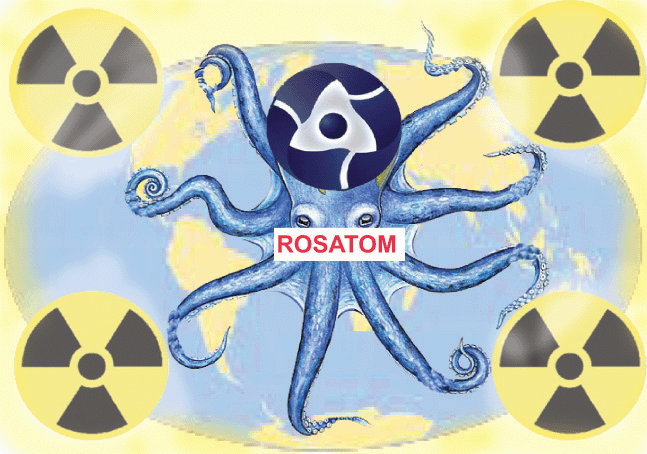
West scrambles as Putin reveals his energy war trump card. Kremlin has
spread its tentacles through the US and Europe – and countries are
struggling to fight back. In an effort to punish Vladimir Putin, western
governments have hit Russia’s energy industry with a barrage of punishing
sanctions since his invasion of Ukraine.
But one sector has conspicuously
escaped their ire so far: nuclear power. Since the conflict erupted,
Russian nuclear exports are actually thought to have increased while those
of coal, oil and gas have been squeezed.
Meanwhile, despite the key role it
has played in Moscow’s takeover of the Zaporizhzhia nuclear power plant
in Enerhodar, eastern Ukraine, state monopoly Rosatom remains untouched by
western sanctions.
The reason, say experts, is the complicated nature of
nuclear supply chains – from the supply of uranium to the construction of
reactors – and the dominant role Russia currently plays in many of them.
Through its global nuclear network, Moscow can exert political and economic
pressure on friends and foes alike, the White House has warned. A new
partnership between the UK, the US, Canada, Japan and France aims to change
this. Together the five countries want to squeeze Russia’s share of
nuclear exports and “ensure Putin, nor anyone like him, can ever think
they can hold the world to ransom over their energy again,” said Grant
Shapps, the Energy Security Secretary. The group aims to become independent
from Moscow and help other countries do the same, the agreement says.
Telegraph 24th April 2023
SpaceX: Should we colonise the solar system?
April 24, 2023 https://onefiniteplanet.org/wp/spacex-should-we-colonise-the-solar-system/
heard an on-air debate about the merits of the program in light of the explosion of the SpaceX starship rocket on April 20th.
Viewpoints were of course varied. They included the “we have this beautiful planet already and it makes no sense to be spending so much to go elsewhere” and very much focused on “colonising” the solar system with the viewpoint that this involves potentially many wealth people leaving Earth. Also discussed with the idea Mars could have had its own civilization in the past, and questions as to who owns space.
The points I feel should be highlighted:
The beautiful planet took 4 billion years before humans could survive on it without a spacesuit, won’t support us for much longer, and will become inadequate after the next big step for humanity.
Yes, we need to expand beyond Earth, and doing so takes many steps, and will take way longer than most people realise. All that we are working towards at this point is the possibility of some small outposts on the Moone, Mars or elsewhere in vast solar system that has no existing place other than Earth that can ever be home to a significant number of humans.
Oh…and yes while there was some “spin” (rapid unscheduled disassembly?), it was stated in advance that expectations beyond getting off the ground were limited, and yes it did “self-destruct” rather than simply just “blow up”.
Presidential candidate Robert F. Kennedy Jr. vows to ‘unwind US empire’
Rt.com 23 Apr 23
Robert F. Kennedy Jr., nephew of JFK, is set to challenge Joe Biden for the Democratic nomination in 2024
US presidential candidate Robert F. Kennedy Jr has pledged to wind down American military interventionism abroad if he is elected to the White House in 2024.
Kennedy, who is the son of Robert F. Kennedy and the nephew of former President John F. Kennedy, confirmed his candidacy for the Democratic nomination at a campaign rally in Boston last week, placing him in competition with current US leader Joe Biden.
Also known for being a prominent anti-vaccine activist, the 69-year-old environmental lawyer has acknowledged that he is not an “ideal” candidate given his often-controversial brand of discourse, but has argued that he is “not one of those people who said I have to be careful because one day I’m going to be in the White House.”
Chief among Kennedy’s campaign proposals, as noted in a six-point plan published on his official website, would be drawing a line through US military interventionism abroad and “start[ing] the process of unwinding [an] empire.”
We will bring the troops home. We will stop racking up unpayable debt to fight one war after another. The military will return to its proper role of defending our country,” the plan stated, adding that “America cannot be an empire abroad and a democracy at home.”
Regarding the Ukraine conflict, Kennedy stated that the US mission is “to end the suffering of the Ukrainian people.” However, he argued that Ukrainians are “victims” not just of Russia, but also of “American geopolitical machinations going back to at least 2014.”
Kennedy, who has never held significant public office, has drawn criticism from health experts – and even members of his own family – amid various outspoken comments throughout his career. In 2005, a prominent science publication issued a stinging rebuke of claims he made in which he appeared to link the development of autism to vaccines.
His wife, the actress Cheryl Hines, condemned Kennedy last year for invoking the name of Anne Frank and the Holocaust while describing US vaccine requirements. He later withdrew the comments…..https://www.rt.com/news/575267-us-kennedy-unwin-empire/
 | |||
| to me | |||
Renewable Energy Is Charging Ahead.

Renewable energy has seen considerable
growth in recent years, but there is a long way to go to achieve a clean
energy future that averts the worst effects of the climate crisis. The
window is quickly closing on our ability to meet the goal of the 2015 Paris
climate agreement: keeping global temperature rise well below two degrees
Celsius by the end of the century.
The latest report from the
Intergovernmental Panel on Climate Change (IPCC) stressed that the world
needs fast and deep emissions cuts to meet that goal and eventually reach
net zero emissions by 2050. Switching to renewable forms of power
generation, such as solar, wind and hydropower, will be a key component of
that effort. “The target is very ambitious,” says Heymi Bahar, a senior
energy analyst at the International Energy Agency.
And every year that goes
by without major climate action, “we are basically losing the carbon
[budget] that is left, and we need to go faster in a more expansive way. In
that sense, most of the job, according to our models, needs to be done in
the coming seven years,” Bahar says.
Globally, renewables account for
about one third of electricity generation—and that share is rising. In
2022 renewable generation capacity grew by a record 295 gigawatts,
according to the International Renewable Energy Agency (IRENA). Further,
renewables accounted for more than 80 percent of all added power capacity
last year, the agency reported. Last year renewables produced more
electricity than coal-powered plants for the first time in the U.S. Wind
and solar now produce about 14 percent of the country’s electricity, up
from virtually nothing just 25 years ago. The U.S. Energy Information
Administration expects that more than half of electric generation capacity
added to the nation’s grid in 2023 will be from solar energy.
The main reason renewable energy has grown so much in recent years is a dramatic
decline in the expense of generating solar and wind power. The cost of
solar photovoltaic cells has dropped a stunning 90 percent over the past
decade, partly because of ramped-up manufacturing—particularly in
China—Bahar says. Government subsidies in countries such as the U.S. also
helped renewables grow in the early years, as did policies making
commitments to renewable adoption, says Inês Azevedo, an associate
professor in the department of energy science and engineering at Stanford
University.* For example, many U.S. states set standards for how much of
their electricity needs should be met with renewable energy by a particular
year.
Scientific American 21st April 2023
https://www.scientificamerican.com/article/renewable-energy-is-charging-ahead/
Inadequate Protection: Current Radiation PPE is Failing to Shield Female Healthcare Workers
SciTechDaily By BMJ APRIL 22, 2023
Adequate protection cannot be guaranteed by standard personal protective equipment for breast tissue; employers should invest in protective gear that ensures the safety of all employees.
In an article published recently in The BMJ, doctors advocate for improved ionizing radiation protection for women in healthcare who are regularly exposed to radiation through X-rays and other imaging procedures, in order to reduce their risk of developing breast cancer.
Due to the high sensitivity of breast tissue to radiation and the fact that ionizing radiation is a well-established human carcinogen, there are apprehensions that frequent exposure to ionizing radiation during image-guided procedures could increase the likelihood of female healthcare workers developing breast cancer.
Personal protective equipment (PPE) such as lead gowns are used to shield the body from harmful radiation during these procedures. But studies have shown that current radiation PPE provides inadequate protection to breast tissue as it leaves the area close to the armpit (known as the upper outer quadrant and axilla — the most common site of breast cancer) exposed.
“Providing adequate breast covering PPE could therefore reduce radiation exposure and potentially help prevent breast cancer in female healthcare workers,” write Isobel Pilkington and colleagues.
They acknowledge that measuring the risk of occupational radiation-induced breast cancer in women working in healthcare is challenging, but as the number of female trainees entering these specialties increases, they say “it is essential that the available evidence is considered and equipment provision improved to minimize this risk.”
They point to observational evidence suggesting an increase in breast cancer risk among female US orthopedic surgeons compared with an age-matched female population, and to a small Finnish study showing breast cancer at 1.7 times the expected rate in radiologists, surgeons, and cardiologists compared with female physicians not working with radiation.
In a study using artificial female torsos to measure radiation exposure, researchers found inadequate upper outer quadrant protection and no statistically significant reduction in dose when standard PPE was compared with a torso without PPE………………………………….
Reference: “Protecting female healthworkers from ionising radiation at work” by Isobel Pilkington, Hannah Sevenoaks, Emily James and Deborah Eastwood, 12 April 2023, The BMJ.
DOI: 10.1136/bmj-2023-075406
New Zealand’s nuclear test veterans seek recognition
More than 500 sailors on New Zealand navy ships were exposed to tests of hydrogen bombs in the late 1950s. Aaron Smale spoke to one ahead of Anzac Day.
newsroom, Aaron Amale 23 Apr 23
He was a 17-year-old kid from Te Kuiti when he was ordered onto the deck of a Navy ship and told to sit down with his back facing out to sea. He and his mates donned dark glasses and wore what was grossly inadequate protection. Then he saw the bones in his hands from the flash of a hydrogen bomb being detonated.
Ordered to stand up and turn around, Tere Tahi saw what should have been a frightening sight but his reaction was one of awe and wonder.
“It was the most beautiful thing. It was fantastic. It was fantastic seeing all the different colours in the blast. It was a marvellous experience to see something like that, but we didn’t know what effects it would have on us after that. We went in close to the fallout when the sea was being drawn towards the mushroom.”
Tahi had joined the Navy as a teenager and was stationed on the ship Rotoiti, one of two New Zealand ships that was sent to Christmas Island and witnessed the British testing hydrogen bombs in 1958. The legacy of those tests continues to affect those who saw them and has been passed down through their families.
“We were told to get on to the upper deck with anti-flash gear, put on dark glasses and to have our backs towards the detonation and when that was completed, we were told to turn and watch the blast. We had all this gear on and dark glasses and when it went off we could see the bones in our fingers, in our hands, with our hands over the dark glasses.”
“I wasn’t scared, because we didn’t know what the after effects would be.”…………
Tahi is now the president of the Nuclear Test Veterans Association in New Zealand and has taken on the fight to try and help veterans and their families affected by the impacts of being exposed to radiation. The association is having a reunion on April 28-30 in Palmerston North.
“I’ve set up some projects to help our veterans that have illnesses. What I want to do is give them some assistance helping them out with the illnesses. Some of them are finding it difficult to finance.”
The illnesses are not limited to the veterans themselves.
“Another problem that we faced with is a lot of our children, a lot of the veterans’ children have been born with deformities. It’s been very bad too. And that’s my final legacy – if you try and do something for them.”………………………
It wasn’t only New Zealand personnel who were exposed to the blasts. British sailors were also present and have been waging the same war to get recognition.
“I went to England to a nuclear test veterans association commemoration. I was invited by the English government to go over there, this was in November of last year. It was the British. It was them that dropped the bomb.”
He says in hindsight he believes they were being used in an experiment. He worked as a radio operator and heard the secret communications coming through.
“As a radio man we receive secret signals saying that the reason they wanted troops there was to see what effects it would have on the equipment, which would have been our ships and the equipment on the ships, and to what see what effects it would have on the men. It was terrible. They wanted to see what effects it would have on us. It was obvious we were guinea pigs.
“Hiroshima and Nagasaki, our bomb was a hundred times worse than that. A hundred times worse.”……………………………….
An estimated 20,000 British servicemen, 524 New Zealand soldiers and 300 Fijian soldiers were deployed to “Christmas Island” from 1956 to 1962.
Between May 1957 and September 1958 the British government tested nine thermonuclear weapons on Kiritimati for Operation Grapple. In 1962, the UK cooperated with the US on Operation Dominic, detonating another 31 bombs on Kiritimati.
The long-term impact on their lives and families largely hasn’t been formally acknowledged. The inhabitants of the islands have never been acknowledged either. https://www.newsroom.co.nz/nuclear-test-veterans-still-waiting-for-recognition—
Japan hopes to start discharging Fukushima nuclear wastewater in July
Gong Zhe https://news.cgtn.com/news/2023-04-23/Japan-hopes-to-start-discharging-Fukushima-nuclear-wastewater-in-July-1jfbTfpbNvy/index.html
Japan is hoping to start discharging radioactive waste water from its destroyed Fukushima nuclear plant into the ocean in July.
Tokyo Electric Power Company (TEPCO) told Kyoto News on Saturday that the excavator is near the exit of the tunnel located one-kilometer offshore. The 1,030-meter tunnel is used to discharge the treated water stored in the Fukushima Daiichi Nuclear Power Plant into the sea. As long as 1,017 meters of the tunnel have been excavated.
TEPCO is trying to complete the tunnel and other facilities related to water discharging before the end of June, and the possibility of starting discharge operations as early as July has increased.
The Japanese government and TEPCO are trying to start discharging around this summer, but fishermen and others continue to oppose it. The plan faces opposition at home and has raised “grave concern” in neighboring countries, including but not limited to China and South Korea.
TEPCO plans to use a large amount of seawater for dilution to make the activity of tritium in treated water less than one-fortieth of national standards, and then discharge it through a seabed tunnel. It is expected to be discharged for several decades.
S.Korea’s Yoon to meet Biden as doubts grow over nuclear umbrella
By Hyonhee Shin, SEOUL, April 24 (Reuters) – South Korean President Yoon Suk Yeol set off on Monday for the for the United States and a summit with President Joe Biden at a time of rare questioning in South Korea of an alliance that has guaranteed its security for decades.
………….. as North Korea races ahead with the development of nuclear weapons and missiles to carry them, there are growing questions in South Korea about the relying on “extended deterrence”, in essence the American nuclear umbrella, and calls, even from some senior members of Yoon’s party, for South Korea to develop its own nuclear weapons.
A recent poll by the Asan Institute for Policy Studies showed that more than 54% of respondents believed the U.S. would not risk its safety to protect its Asian ally.
More than 64% supported South Korea developing its own nuclear weapons, with about 33% opposed.
Yoon has been pushing to boost South Korea’s say in operating the U.S. extended deterrence but exactly what that might entail has not been spelt out…………… https://www.reuters.com/world/skoreas-yoon-meet-biden-doubts-grow-over-nuclear-umbrella-2023-04-24/
‘It Is Skynet’: Pentagon Envisions Robot Armies in a Decade

Blitzkrieg 2040
Nazi Germany, overran Europe in a very, very short period of time … because they were able to take those technologies and put them together in a doctrine which we now know as Blitzkrieg,” he said.

Milley, and the Pentagon with him, hopes to do the same now by bringing together emergent capabilities like robotics, AI, cyber and space platforms, and precision munitions into a cohesive doctrine of war.
By being the first to integrate these technologies into a new concept, Milley says, the United States can rule the future battlefield.
The Pentagon’s quest for an AI-dominated battlefield is becoming a reality
Epoch Times, By Andrew Thornebrooke, April 20, 2023
WASHINGTON—Robotic killing machines prowl the land, the skies, and the seas. They are fully automated, seeking out and engaging with adversarial robots across every domain of war. Their human handlers are relegated to the rearguard, overseeing the action at a distance while conflicts are fought and won by machines.
Far from science fiction, this is the vision of Joint Chiefs of Staff Chairman Gen. Mark Milley.
The United States, according to Milley, is in the throes of one of the myriad revolutions in military affairs that have spanned history.
Such revolutions have spanned from the invention of the stirrup to the adoption of the firearm to the deployment of mechanized maneuver warfare and, now, to the mass fielding of robotics and artificial intelligence (AI).
It is a shift in the character of war, Milley believes, greater than any to have come before.
“Today we are in … probably the biggest change in military history,” Milley said during a March 31 discussion with Defense One.
“We’re at a pivotal moment in history from a military standpoint. We’re at what amounts to a fundamental change in the very character of war.”
Robotic Armies in 10 Years
Many would no doubt be more comfortable with the idea of robots battling for the control of Earth if it were in a science-fiction novel or on a movie screen rather than on the list of priorities of the military’s highest-ranking officer.
Milley believes, however, that the world’s most powerful armies will be predominantly robotic within the next decade, and he means for the United States to be the first across that cybernetic Rubicon.
“Over the next ten to fifteen years, you’ll see large portions of advanced countries’ militaries become robotic,” Milley said. “If you add robotics with artificial intelligence and precision munitions and the ability to see at range, you’ve got the mix of a real fundamental change.”
“That’s coming. Those changes, that technology … we are looking at inside of 10 years.”
That means that the United States has “five to seven years to make some fundamental modifications to our military,” Milley says, because the nation’s adversaries are seeking to deploy robotics and AI in the same manner, but with Americans in their sights.
The nation that gets there first, that deploys robotics and AI together in a cohesive way, he says, will dominate the next war.
“I would submit that the country, the nation-state, that takes those technologies and adapts them most effectively and optimizes them for military operations, that country is probably going to have a decisive advantage at the beginning of the next conflict,” Milley said.
The global consequences of such a shift in the character of war are difficult to overstate.
Milley compared the ongoing struggle to form a new way of war to the competition that occurred between the world wars
In that era, Milley says, all the nations of Europe had access to new technologies ranging from mechanized vehicles to radio to chemical weapons. All of them could have developed the unified concept of maneuver warfare that replaced the attrition warfare which had defined World War I.
But only one, he said, first integrated their use into a bona fide new way of war.
“That country, Nazi Germany, overran Europe in a very, very short period of time … because they were able to take those technologies and put them together in a doctrine which we now know as Blitzkrieg,” he said.
Blitzkrieg 2040
Milley, and the Pentagon with him, hopes to do the same now by bringing together emergent capabilities like robotics, AI, cyber and space platforms, and precision munitions into a cohesive doctrine of war.
By being the first to integrate these technologies into a new concept, Milley says, the United States can rule the future battlefield.
To that end, the Pentagon is experimenting with new unmanned aerial, ground, and undersea vehicles, as well as seeking to exploit the pervasiveness of non-military smart technologies from watches to fitness trackers.
Though the effort is just gaining traction, Milley has in fact claimed since 2016 that the U.S. military would field substantial robotic ground forces and AI capabilities by 2030.
Just weeks from now, that idea will begin to truly culminate, when invitations from the Defense Department (DoD) go out to leaders across the defense, tech, and academic spheres for the Pentagon’s first-ever conference on building “trusted AI and autonomy” for future wars.
The Pentagon is on a correlating hiring spree, seeking to pay six figures annually for experts willing and able to develop and integrate technologies including “augmented reality, artificial intelligence, human state monitoring, and autonomous unmanned systems.”
Likewise, the U.S. Army Futures Command, created in 2018, maintains as a critical goal the designing of what it calls “Army 2040.” In other words, the AI-dependent, robotic military of the future.
Though slightly further out than Milley’s assumption of 10 to 15 years, Futures Command deputy commanding general Lt. Gen. Ross Coffman believes that 2040 will mark the United States’ true entry into an age characterized by artificially intelligent killing machines.
…………………….. Everything Spins Out of Control’
Remaking the American military and forming a new, cohesive way of war is a tall order. It is nevertheless one that the Pentagon appears prepared to pay for.
The DoD is requesting a record $1.8 billion in funding for AI projects for the next year alone. That amount will exceed the estimated $1.6 billion in AI investments being made by China’s military.
……………….. John Mills, former director of cybersecurity policy, strategy, and international affairs at the Office of the U.S. Secretary of Defense, believes that this path is rife with the potential for unintended consequences.
“It is Skynet,” Mills told the Epoch Times, referencing the fictional AI that conquers the world in “The Terminator” movie franchise. “It is the realization of a Skynet-like environment.”
“The question is, what could possibly go wrong with this situation? Well, a lot.”
…………… “The integration of AI with autonomous vehicles, and letting them action independently without human decision-making, that’s where everything spins out of control.”
To that end, Mills expressed concern about what a future conflict might look like between the United States and its allies, and China in the Indo-Pacific.
Imagine, he said, an undersea battlespace in which autonomous submarines and other weapons systems littered the seas.
Fielded by Chinese, American, Korean, Australian, Indian, and Japanese forces, the resulting chaos would likely end with autonomous systems engaging in war throughout the region, while manned vessels held back and sought to best launch the next group of robotic war machines. Anything else would risk putting real lives in the way of the automated killers.
“How do you plan for engagement scenarios with autonomous undersea vehicles?” Mills said
“This is going to be absolute chaos in subsurface warfare.”
……………………… There is just one caveat to that ethical, trustworthy, governable, deployment of lethal AI systems: The Pentagon does not have any hard and fast rules to prohibit autonomous systems from killing…………………………………………………………….
more https://www.theepochtimes.com/in-depth-it-is-skynet-pentagon-envisions-robot-armies-in-a-decade_5207504.html?utm_source=China&src_src=China&utm_campaign=uschina-2023-04-20&src_cmp=uschina-2023-04-20&utm_medium=email&est=vibelq5SAFOai0xZ2IdvvJe4uwKWVBE7hfxTKp%2FcR9S0a9BSSEoQCAfiSObFUg%3D%3D
Three nuclear superpowers, rather than two, usher in a new strategic era

Beijing and Moscow point to the overhaul as a motivating factor for their own upgrades. Arms controllers see a spiral of moves and countermoves that threatens to raise the risk of miscalculation and war.
BY DAVID E. SANGER, WILLIAM J. BROAD AND CHRIS BUCKLEY, THE NEW YORK TIMES Apr 23, 2023
WASHINGTON – On the Chinese coast, just 215 kilometers (135 miles) from Taiwan, Beijing is preparing to start a new reactor the Pentagon sees as delivering fuel for a vast expansion of China’s nuclear arsenal, potentially making it an atomic peer of the United States and Russia. The reactor, known as a fast breeder, excels at making plutonium, a top fuel of atom bombs.
The nuclear material for the reactor is being supplied by Russia, whose Rosatom nuclear giant has in the past few months completed the delivery of 25 tons of highly enriched uranium to get production started. That deal means that Russia and China are now cooperating on a project that will aid their own nuclear modernizations and, by the Pentagon’s estimates, produce arsenals whose combined size could dwarf that of the United States.
………………………………………………………………“By the 2030s the United States will, for the first time in its history, face two major nuclear powers as strategic competitors and potential adversaries,” the Pentagon said last fall in a policy document. “This will create new stresses on stability and new challenges for deterrence, assurance, arms control, and risk reduction.”
………………………………………………… The dynamic is, indeed, more complicated now — the Cold War involved only two major players, the United States and the Soviet Union; China was an afterthought. Its force of 200 or so nuclear weapons was so small that it barely figured into the discussion, and Beijing never participated in the major arms control treaties.
…………………………….Deepening tensions between Beijing and Washington appear to have hardened Xi’s judgment that China must counter “all-around containment,” including with a more robust nuclear deterrent……………………………………………………………
In Russia and the U.S., rolling out new weapons
…………………………… The Pentagon sees at least one of the emerging weapons as potentially threatening, in part because it could, if perfected, outwit the United States’ anti-missile defenses. The weapon is a long-range nuclear-powered undersea torpedo that, once unleashed, could move autonomously toward one of the nation’s coasts. Its warhead, as described by Russia, would create “areas of wide radioactive contamination that would be unsuitable for military, economic, or other activity for long periods of time.” Kristensen said the torpedo was close to operational.
For its part, the Biden administration has announced plans to make the first new warhead for the nation’s nuclear arsenal since the Cold War — an update that the White House says is long overdue for safety reasons. The weapon, for submarine missiles, is a small part of a gargantuan overhaul of the nation’s complex of atomic bases, plants, bombers, submarines and land-based missiles. Its 30-year cost could reach $2 trillion.
Beijing and Moscow point to the overhaul as a motivating factor for their own upgrades. Arms controllers see a spiral of moves and countermoves that threatens to raise the risk of miscalculation and war.
Like all top nuclear arms, the new warhead, known as the W93, is thermonuclear. That means a small atom bomb at its core acts as a match to ignite the weapon’s hydrogen fuel, which can produce blasts a thousand times stronger than the Hiroshima bomb. The atomic triggers are usually made of plutonium. Experts say that is true of Beijing’s arsenal and explains its building of breeder reactors.
The United States has about 40 tons of plutonium left over from the Cold War that is available for weapons and needs no more. It is, however, building two new plants that can fashion the old plutonium into triggers for refurbished and new thermonuclear arms, such as the W93. Recently, the agency that does investigations for Congress estimated the new plants could cost up to $24 billion.
Many arms-controllers decry the new facilities. They say Washington has in storage at least 20,000 plutonium triggers from retired hydrogen bombs and that some of them, if needed, could be recycled.
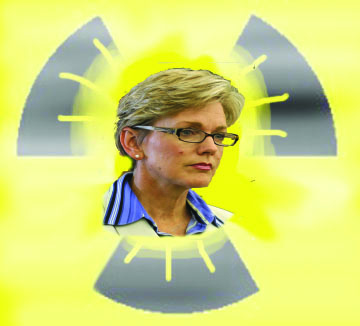
Despite such criticism, the Biden administration is pushing ahead, insisting that trigger recycling is risky. Jennifer M. Granholm, the energy secretary, has declared the new plants essential for “a safe, secure and effective nuclear deterrent.”
………………………….. “We don’t know what to do,” said Henry D. Sokolski, a former Pentagon official who now leads the Nonproliferation Policy Education Center. “What’s the response to this — do we just build more, and are we going to be able to build many more than they are?” https://www.japantimes.co.jp/news/2023/04/23/world/china-russia-us-nuclear-arsenal-buildup/
Daniel Ellsberg is still fighting — Beyond Nuclear International

For Ellsberg there was “no greater cause” than confronting the evils of nuclear weapons
Daniel Ellsberg is still fighting — Beyond Nuclear International
Legendary whistleblower keeps giving in his final months
By Linda Pentz Gunter
Most of us who have been around long enough in this movement probably have their own Daniel Ellsberg story. With the 91-year old famous whistleblower’s recent announcement that he has terminal pancreatic cancer, with just months to live, many were re-telling theirs. It was an apt outpouring of admiration, respect and love. So much so, that April 24-30 is now Daniel Ellsberg Week.
……………………………………….Thus I came to learn that one of the great heroes of our time, who was prepared to sacrifice a lifetime of freedom for a just cause, was indeed a man of quiet humility and one who has filled that lifetime that he views as some sort of unexpected bonus, with endlessly generous gifts of writing, insight, analysis and conviction.
His recent book — The Doomsday Machine, confessions of a nuclear war planner — is essential and definitive and nightmare-inducing. In other words, desperately important.
“In public, he has been a beacon of integrity and truth, willing to say and do what the warmakers and nuclear-holocaust planners find completely unacceptable,” RootsAction co-founder and director Norman Solomon told Common Dreams columnist, Brett Wilkins. ”In private, his thoughtful kindness and daily commitment to humanity are central to his being. And I want to emphasize right now that nothing in the world is more important to read and heed than Dan’s monumental book The Doomsday Machine.”
……………………………………………………………………….When I copied the Pentagon Papers in 1969, I had every reason to think I would be spending the rest of my life behind bars…………………………
………………………………………………….I was able to devote those years to doing everything I could think of to alert the world to the perils of nuclear war and wrongful interventions: lobbying, lecturing, writing and joining with others in acts of protest and non-violent resistance.
…………………………………………………..China and India are alone in declaring no-first-use policies. Leadership in the US, Russia, other nuclear weapons states, NATO and other US allies have yet to recognize that such threats of initiating nuclear war–let alone the plans, deployments and exercises meant to make them credible and more ready to be carried out–are and always have been immoral and insane: under any circumstances, for any reasons, by anyone or anywhere…………………………………………………….. more https://beyondnuclearinternational.org/2023/04/23/daniel-ellsberg-is-still-fighting/
1 This Month

Read the Public Inquiry Report, the Commissioners’ report, Surrendering Australia: The AUKUS Deception is available to download for free at aukuspublicinquiry.com. Or just watch the replay of the National Press Club Luncheon.


19 November – Webinar – The Reality of Reprocessing
Time: 11:00 AM Pacific Time (US & Canada) / 2:00 PM Eastern / 7:00 PM UK / 8:00 PM CET
Register for the Zoom Event Here



Shut down the radiation-damaged Heysham nuclear reactors now
To see nuclear-related stories in greater depth and intensity – go to https://nuclearinformation.wordpress.com

Say No to NASA’s Reckless Nuclear Reactor on the Moon
Say No to NASA’s Reckless Nuclear Reactor on the Moon
-
Archives
- November 2026 (84)
- October 2026 (302)
- September 2026 (339)
- August 2026 (330)
- July 2026 (355)
- June 2026 (287)
- May 2026 (306)
- April 2026 (356)
- March 2026 (251)
- February 2026 (267)
- January 2026 (308)
- December 2025 (358)
-
Categories
- 1
- 1 NUCLEAR ISSUES
- business and costs
- climate change
- culture and arts
- ENERGY
- environment
- health
- history
- indigenous issues
- Legal
- marketing of nuclear
- media
- opposition to nuclear
- PERSONAL STORIES
- politics
- politics international
- Religion and ethics
- safety
- secrets,lies and civil liberties
- spinbuster
- technology
- Uranium
- wastes
- weapons and war
- Women
- 2 WORLD
- ACTION
- AFRICA
- Atrocities
- AUSTRALIA
- Christina's notes
- Christina's themes
- culture and arts
- Events
- Fuk 2022
- Fuk 2023
- Fukushima 2017
- Fukushima 2018
- fukushima 2019
- Fukushima 2020
- Fukushima 2021
- general
- global warming
- Humour (God we need it)
- Nuclear
- RARE EARTHS
- Reference
- resources – print
- Resources -audiovicual
- Weekly Newsletter
- World
- World Nuclear
- YouTube
-
RSS
Entries RSS
Comments RSS

