‘Barbenheimer’ highlights U.S. ignorance of nuclear reality
Lack of images depicting the real-life horrors of the atomic bombs left a generation in the dark
BY DON CARLETON 4 Aug 23 https://www.japantimes.co.jp/commentary/2023/08/04/japan/barbie-oppenheimer-nuclear-weapons/
As we approach the 79th anniversary of the bombings of Hiroshima and Nagasaki, America is gripped in a confusing and (as some have argued) insensitive cultural moment.
The release of very different movies, “Barbie” and “Oppenheimer,” on the same day has spawned the “Barbenheimer” craze where the two come together in a strange yet symbiotic fashion. Box office records have been broken across America and it has become a trend among moviegoers to express an ironic sense of humor by seeing both films on the same day.
In addition, countless internet jokes and memes — some showing “Barbie” and “Oppenheimer” juxtaposed against the backdrop of atomic explosions — have gone viral. However, the resulting satire has led to deep offense and anger among many Japanese. Things culminated earlier this week when Warner Bros. (the makers of “Barbie”) issued an apology after their official U.S. social media account reacted positively to a Barbenheimer meme.
These memes aren’t harmless fun, because atomic bombs are never harmless. The two bombs dropped by the American armed forces on Hiroshima and Nagasaki created immense and intense human suffering. The Barbenheimer trend thus glosses over the tragedy at the core of “Oppenheimer” and points to the fact that few Americans have ever fully grappled with the enormous devastation of the atomic bombings. In large part, that’s because few Americans have ever seen that reality.
In 2018, I was approached by Hankaku Shashin Undo, the Anti-Nuclear Photographer’s Association (ANPM), who have worked since 1982 to preserve the legacy of Japanese photographers who documented the bombings and their immediate aftermath firsthand in Hiroshima and Nagasaki.
As the executive director of the Briscoe Center for American History at the University of Texas at Austin, a research center dedicated to fostering scholarly and public understanding of U.S. history, I was interested in ANPM’s invitation to collaborate. At the heart of ANPM’s activism is a desire to remove the danger of nuclear war from the world
— a motive we can all support, regardless of how we feel about the American decision to drop the bombs. In working together, we hoped to raise visual awareness of “what actually happened” in Hiroshima and Nagasaki so that a new generation of Americans might better understand the realities of nuclear war.
ANPM agreed to place a large digital archive of photographs at the Briscoe Center and I agreed to publish a book and create an exhibition of selected images. Along with two members of my staff, I visited Hiroshima and Nagasaki in 2018, meeting with museum staff, journalists and hibakusha.
The result was “Flash of Light, Wall of Fire,” a 2020 book and subsequent exhibit. Throughout the project, our goal was simple. We wanted to show Americans something that they had never seen before: comprehensive visual evidence of the devastation and suffering atomic bombs cause.
Why have Americans not seen this evidence until now?
After World War II, photographs of Hiroshima and Nagasaki were immediately suppressed by the Japanese military and later by the American occupation forces in Japan, meaning very few were published on either side of the Pacific Ocean. After the end of the occupation in the 1950s (when Japanese books documenting the bombings began to be published and the memorial museums in Hiroshima and Nagasaki were founded), few photographs made their way from Japan to the United States.
If Americans thought of the bomb at all, their only visual memory was of the mushroom cloud, not the horrors inflicted on the Japanese civilians. This void led to a strange cultural dichotomy during the 1950s.
On the one hand, Americans took the bomb very seriously, with the Cold War fueling moments of political and cultural hysteria from McCarthyism to suburban fallout shelters. On the other hand, cultural fads such as “Miss Atomic Bomb” to atomic-themed candy made light of the bombings. Today, with Barbenheimer, we see that the pattern still resonates — seriousness on one hand, silliness on another, all smushed together in our popular culture.
“Oppenheimer” is a moving and serious film that raises important questions about the consequences of nuclear weapons through the personal experiences of physicist Robert Oppenheimer. It includes harrowing depictions of the July 1945 Trinity test site explosion in New Mexico, as well as a compelling scene where Oppenheimer briefly envisions the terrifying human effects of the bombs during a victory speech.
However, there is no attempt to depict the resulting terrors from the perspective of the people of Hiroshima and Nagasaki. Director Christopher Nolan explains this decision, in part: “(Oppenheimer) learned about the bombings of Hiroshima and Nagasaki on the radio, the same as the rest of the world.” It would be unreasonable to criticize Nolan for not including longer and more graphic scenes of this nature, given his vision for the film’s focus on Oppenheimer’s perspective. But without those scenes, and without any visual record in our collective memory, it is easier to avoid the ramifications of Hiroshima and Nagasaki when our view is taken from the bomb bay doors of the Enola Gay or Bockscar.
Conversely, it is impossible to deny the terror and tragedy of the bombings when one looks through the eyes of Yoshito Matsushige, Yosuke Yamahata, Eiichi Matsumoto, Shigeo Hayashi and other photographers on the ground in 1945. Thus, when the Briscoe Center agreed to receive, display and publish photographs donated by the ANPM, the desire was to get the American mind to look from under the mushroom cloud, so to speak.
Unfortunately, the COVID-19 pandemic disrupted our project (as well as the 75th anniversary commemorations in Japan) and diminished the impact of the center’s book and exhibit. Nevertheless, next year’s 80th anniversary gives historians, archivists and curators around the world a new opportunity.
The Barbenheimer moment shows us that much work remains to be done. If Americans are going to take the very real nuclear dangers of our age more seriously than previous generations (not to mention having a clearer view of what was done to the people of Hiroshima and Nagasaki), they must be confronted with the stark visual evidence of what actually happened. On the whole, Americans are still looking at the history of Hiroshima and Nagasaki from a distance — visually, emotionally and intellectually.
As we approach the 80th anniversary of the bombings, it is time to make a renewed push to change that perspective.
Pacific anti-nuclear groups condemn Fiji’s Prime Minister Sitiveni Rabuka for backing Fukushima wastewater stance
Kelvin Anthony, RNZ 4 Aug 23
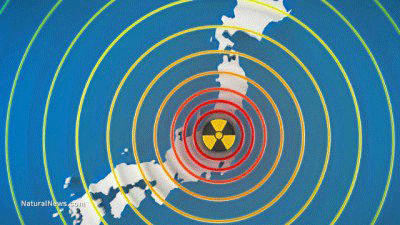
Pacific anti-nuclear advocacy groups and campaigners have condemned the Fijian Prime Minister Sitiveni Rabuka’s backing of Japan’s plans release over one million tonnes of treated nuclear wastewater into the Pacific Ocean.
On Thursday, Rabuka announced he was “satisfied” with Japan’s efforts to demonstrate that the release will be safe………………………………..
the Alliance for Future Generation Fiji [https://www.afgfiji.org/post/afg-condemns-fijipm-support-for-fukushima-wastewater said it was “deeply concerned” and “condemned” Rabuka’s stance.
The group is urging Rabuka to reconsider “and take a stronger position” on the issue.
AFG Fiji said releasing treated nuclear wastewater into the Pacific Ocean would have “far-reaching consequences for the entire Pacific region and beyond”.
“This action has the potential to inflict lasting damage to marine ecosystems, threatening the livelihoods of countless communities that depend on the ocean for sustenance and economic well-being. Our concerns regarding this matter are deeply rooted in the Pacific Ocean as a source of identity for all Pacific communities,” it said.
“We urge the Fiji Prime Minister and by extension, his government, to reconsider its stance and take a stronger position in advocating for the implementation of alternative, safe, and sustainable solutions for the Fukushima nuclear wastewater.
“We also urge Pacific leaders to trust the independent panel of scientific experts, appointed by the Pacific Islands Forum to review the data and information provided by Japan. As members of the global community, it is our collective responsibility to uphold principles of environmental stewardship and to prioritize the health and safety of our oceans and the lives they sustain,” the NGO said.
The campaigners are also calling on the international community to show solidarity and “demand that Japan seeks alternative solutions to handle its nuclear waste responsibly”. https://www.rnz.co.nz/international/pacific-news/495162/anti-nuclear-group-condemns-sitiveni-rabuka-s-fukushima-wastewater-stance
UN nuclear watchdog finds no explosives at Zaporizhzhia plant
Experts given access to two units at Russian-held site month after Ukraine claimed there were devices on roofs
The UN nuclear watchdog says it has found no explosives in areas of the Russian-held Zaporizhzhia nuclear power plant in southern Ukraine to which it had requested access a month earlier.
On 4 July, Russia and Ukraine accused each other of planning to stage an attack on Europe’s biggest nuclear power plant, with the latter claiming “operational data” showed “explosive devices” had been placed on the roofs of two units.
The following day the International Atomic Energy Agency, which has repeatedly warned of nearby military clashes potentially causing a nuclear disaster, said access to the roofs of the two units and parts of the turbine halls was essential.
A small IAEA team based at the plant sought to verify the accusations by inspecting areas of the site to which it had already been granted access. It issued updates in the ensuing weeks to say it had found no signs of explosives in those areas, except mines outside the perimeter that appeared to pose no danger to the plant’s safety.
On Friday, it said in a statement: “[IAEA] experts have observed no mines or explosives on the rooftops of unit three and unit four reactor buildings and the turbine halls … after having been given access yesterday afternoon.
“Following repeated requests, the team had unimpeded access to the rooftops of the two reactor units and could also clearly view the rooftops of the turbine halls. The team will continue its requests to visit the roofs of the other four units.”
Why is Ontario Government bent on building a new nuclear reactor, at a much greater cost than solar or wind technologies?
Ontario Power Generation (OPG), which is 100% owned by the Government of
Ontario, is proposing to build a first of its kind GE-Hitachi 300 megawatt
(MW) boiling water reactor at its Darlington Nuclear Station, east of
Oshawa.
OPG has still not submitted GE-Hitachi’s proposed reactor design
to the Canadian Nuclear Safety Commission for review and potential
approval, despite claiming that construction of the reactor will be
completed by 2028.
According to Lazard, one of the most respected names in
global financial services, the cost of electricity from a new nuclear
reactor is 1.7 times greater than the cost of offshore wind, three times
greater than the cost of solar power, and 3.6 times greater than the cost
of onshore wind.
Clean Air Alliance 3rd Aug 2023
Saudi Arabia could convert civilian nuclear to military, Israeli expert warns

Former deputy head of Atomic Energy Commission fears that Riyadh’s demand to enrich uranium as part of Israel normalization deal may open ‘Pandora’s box,’ launch Mideast arms race
Times of Israel, By TAL SCHNEIDER2 August 2023,
Illustrative: A US nuclear bomb test at the Marshall Islands, 1954. (Wikicommons/US Department of Energy)
A former top official for the Israel Atomic Energy Commission has warned that agreeing to Saudi Arabia’s demand to be allowed to build a nuclear power plant as part of a normalization deal with Israel may create a dangerous international precedent and effectively prompt a nuclear arms race in the Middle East.
“It won’t matter how many guarantees we receive from the International Atomic Energy Agency,” Ariel (Eli) Levite, who served as principal deputy director general for policy at Israel’s Atomic Energy Commission from 2002 to 2007, told Zman Israel, The Times of Israel’s Hebrew-language sister site, on Monday.
Saudi Arabia has reportedly set three conditions for signing a normalization agreement with Israel — access to advanced American defense technology such as the THAAD missile system, the establishment of a defense alliance with the United States, and a green light to develop nuclear power for civilian purposes.
…………………………………………………. “If Saudi Arabia builds a reactor, they can only place it near the Red Sea, because a reactor needs large amounts of water for cooling, and if a disaster or terrorist attack occurs there it won’t be a simple matter — for us too, since we are not far away,” – Levite, the former Atomic Energy Commission deputy director
Illustrative: A US nuclear bomb test at the Marshall Islands, 1954. (Wikicommons/US Department of Energy)
A former top official for the Israel Atomic Energy Commission has warned that agreeing to Saudi Arabia’s demand to be allowed to build a nuclear power plant as part of a normalization deal with Israel may create a dangerous international precedent and effectively prompt a nuclear arms race in the Middle East.
“It won’t matter how many guarantees we receive from the International Atomic Energy Agency,” Ariel (Eli) Levite, who served as principal deputy director general for policy at Israel’s Atomic Energy Commission from 2002 to 2007, told Zman Israel, The Times of Israel’s Hebrew-language sister site, on Monday.
Saudi Arabia has reportedly set three conditions for signing a normalization agreement with Israel — access to advanced American defense technology such as the THAAD missile system, the establishment of a defense alliance with the United States, and a green light to develop nuclear power for civilian purposes.
Binary Options Fraud – ToI journalist Simona Weinglass’ storyPauseNext playlist itemUnmute
Loaded: 49.91%Picture-in-PictureFullscreenClose
For the last demand, National Security Adviser Tzachi Hanegbi said Monday that Israel’s approval would not be required.
“Dozens of countries operate civilian nuclear programs. This is not something that endangers them or their neighbors,” Hanegbi told the Kan public broadcaster, adding that the issue would be solely between Washington and Riyadh.
Get The Times of Israel’s Daily Editionby email and never miss our top storiesNewsletter email addressGET IT
By signing up, you agree to the terms
Levite, the former Atomic Energy Commission deputy director, said there was no problem with nuclear reactors for energy production as long as they are properly maintained. However, he cautioned, “If a security or operational failure occurs, there can be an enormous environmental fallout. We know this from several incidents in the past, such as Chernobyl and Fukushima” — two severe nuclear leaks in Ukraine in 1986 and Japan in 2011.
“If Saudi Arabia builds a reactor, they can only place it near the Red Sea, because a reactor needs large amounts of water for cooling, and if a disaster or terrorist attack occurs there it won’t be a simple matter — for us too, since we are not far away,” he added.
Ariel (Eli) Levite speaking at a conference at the Reichman Institute in Herzliya, 2019. (YouTube screenshot via Zman Israel; used in accordance with Clause 27a of the Copyright Law)
Israel is also worried about the possibility of a civilian reactor being converted for military applications, Levite noted.
He said the biggest problem with Riyadh’s demand was that “they’re not satisfied with reactors for energy purposes, but are also interested in a uranium enrichment program. This is the most problematic and sensitive part of the deal that may be currently in the making.”…………………………………. more https://www.timesofisrael.com/saudi-arabia-could-convert-civilian-nuclear-to-military-israeli-expert-warns/
Nuclear catastrophe threat is ‘great and growing’, warn over 100 top medical journals
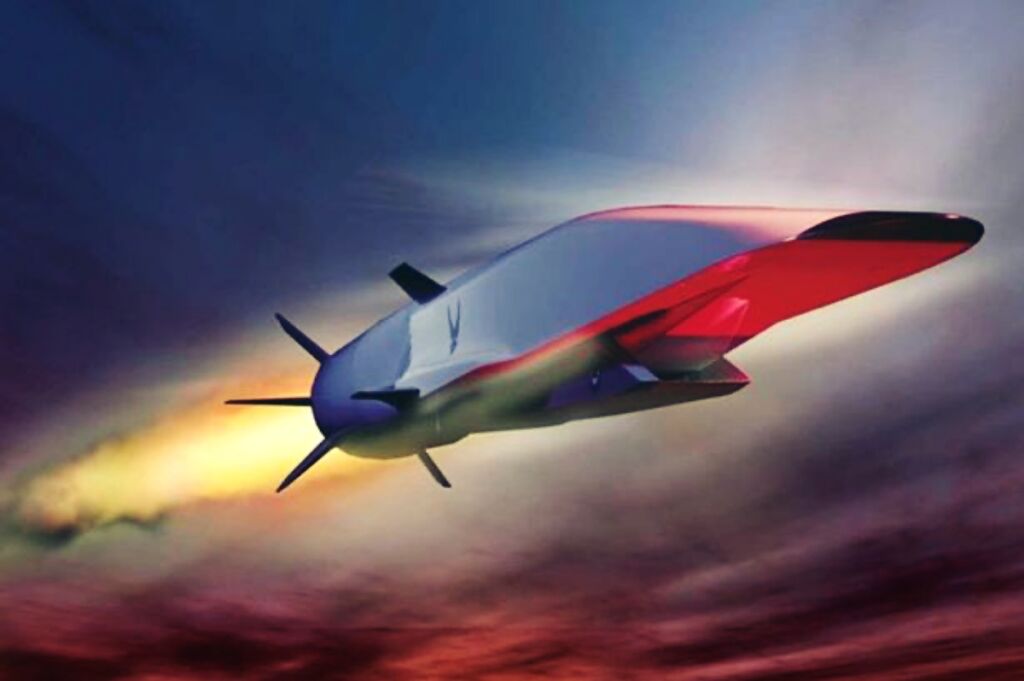
hypersonic missiles under constant development by many countries decrease the time available to distinguish between an attack and a false alarm.
Even ‘limited’ nuclear war with 250 of 13,000 nuclear weapons could kill 120 million people outright, op-ed says
Vishwam Sankaran, 3 Aug, https://www.independent.co.uk/world/nuclear-catastrophe-threat-risk-growing-b2386802.html
The threat of a nuclear catastrophe is “great and growing” under the current global political environment, over 100 top medical journals have warned in a joint editorial.
Current efforts to control nuclear arms, as well as those for non-proliferation are “inadequate” to protect the world’s population against the threat of nuclear war, the editors of the journals warned, while pointing to the danger underlined by growing tensions between many nuclear armed states.
“As editors of health and medical journals worldwide, we call on health professionals to alert the public and our leaders to this major danger to public health and the essential life support systems of the planet – and urge action to prevent it,” the editors of journals like Lancet, BMJ, JAMA and the New England Journal of Medicine said in the op-ed.
They also warned of the increasing risk of rapid escalation with the modernisation of nuclear arsenals by many countries, including China and the US.
Citing an example, the editors noted that hypersonic missiles under constant development by many countries decrease the time available to distinguish between an attack and a false alarm.
“Any use of nuclear weapons would be catastrophic for humanity,” they said.
“Even a ‘limited’ nuclear war involving only 250 of the 13,000 nuclear weapons in the world could kill 120 million people outright and cause global climate disruption leading to a nuclear famine, putting two billion people at risk,” the editorial said.
Once a nuclear weapon is detonated in any part of the world, escalation to an all-out nuclear war can occur rapidly.
They called for the prevention of any use of nuclear weapons as an urgent public health priority, adding that fundamental steps be taken to abolish all nuclear weapons.
The editors called on health professional associations worldwide to support efforts urging the adoption of a “no first use policy” and urge all states currently involved in conflicts to publicly and unequivocally pledge that they will not use nuclear weapons in these conflicts.
“The danger is great and growing. The nuclear armed states must eliminate their nuclear arsenals before they eliminate us,” they wrote.
UK’s Radioactive Waste Management holds meetings in Lincolnshire, seeking a location for nuclear waste dump
Geologists and nuclear scientists will be speaking about nuclear waste
disposal as part of a consultation. A former gas terminal in Theddlethorpe,
near Mablethorpe in Lincolnshire, was identified as a potential location
for an underground disposal site.
Radioactive Waste Management (RWM), a
government agency, is looking at the suitability of possible sites across
the country. The discussion sessions will take place at venues in
Lincolnshire. The events aim to give people an opportunity to find out what
is involved in geological disposal and the process of finding a potential
site for a Geological Disposal Facility (GDF) in the area, according to the
agency.
The GDF would see waste being stored under up to 1,000m of solid
rock until its radioactivity had naturally decayed.
” The sessions will feature a model of what
the GDF could look like as well as items including fuel rods, geological
rock samples, maps and information boards. The events take place on 4
August at Louth Town FC in Louth from 17:00 BST to 20:00, on 5 August at
Mablethorpe Community Hall from 11:00 to 14:00, on 8 August at Gayton Le
Marsh Village Hall from 17:00 to 20:00, on 9 August at Legbourne Village
Hall from 17:00 to 20:00 and on 11 August at St Mary’s Church Hall,
Mablethorpe from 17:00 to 20:00.
BBC 4th Aug 2023
How Have Nuclear Weapons Evolved Since Oppenheimer and the Trinity Test?
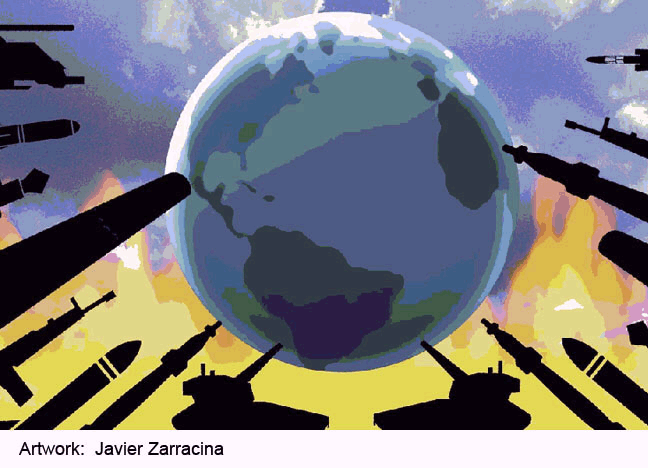
currently the nine states possessing nuclear weapons have approximately 13,000 nuclear weapons, with US and Russia accounting for almost 90% of the inventory These modern nuclear warheads are significantly more lethal compared to the atomic bombs used in Hiroshima and Nagasaki.
despite sometimes being referred to as “small nukes”, tactical nuclear weapons weapons still cause devastating destruction. The explosive yield of tactical nuclear weapons today ranges from anywhere below one kt to above 100 kt: the high-end surpasses the yield of Little Boy and Fat Man by up to five times.
Sulgiye Pak, Senior Scientist, August 4, 2023 https://blog.ucsusa.org/sulgiye-park/how-have-nuclear-weapons-evolved-since-oppenheimer-and-the-trinity-test/
It took the Manhattan project three years to develop a nuclear bomb: and only weeks between the first nuclear test explosion and the use of a nuclear weapon in war. Almost 80 years later – how have nuclear weapons evolved?
A brief history of nuclear testing
In 1945, the United States dropped two atomic bombs on Japan. The first bomb, codenamed “Little Boy” was dropped on Hiroshima on August 6, 1945.Three days later, the US dropped the second bomb, “Fat Man,” on Nagasaki. The two bombs, each with an estimated yield of around 15 and 21 kilotons (15,000 and 21,000 tons of TNT equivalent), respectively, caused widespread destruction, resulting in the loss of more than 100,000 lives.
After the war, the US conducted atmospheric nuclear tests in the Pacific Proving Grounds in the Marshall Islands and in Nevada and many more underground. The Soviet Union, Great Britain, France, China, India, Pakistan, and North Korea tested nuclear weapons of their own. Since the first development of nuclear weapons, the total number of nuclear tests exceeds 2,000, with 528 tests conducted above ground. These above ground tests had a destructive force of more than 400,000 kilotons TNT. The tests provided the information to increase the sophistication of nuclear weapons designs. But the nuclear tests, and particularly the atmospheric tests, were enormously destructive to the land and communities that were exposed to their explosive power and radiation.
The largest bomb ever made
Today’s modern nuclear warheads have undergone significant advancements in terms of design, technology, and destructive power. Notably, modern warheads are almost exclusively thermonuclear bombs, or hydrogen (H) bombs, which use both fusion and fission reactions to generate higher release of energy – tens of kilotons to several megatons TNT equivalent, or tens of times more powerful than the early atomic bombs. These bombs essentially use an atomic bomb as a trigger for the powerful fusion explosion.
The largest nuclear weapon to ever been tested, Tsar Bomba, had an estimated yield of 50 megatons (although it had a capacity double that) – an explosive yield greater than that of the Little Boy by a factor of 3,500. Literally translated as “King of bombs,” this monster atomic bomb, designed by the Soviet Union, generated a fireball that reached a diameter of 4 km (2.5 miles), and a mushroom cloud that rose over 60 km (40 miles) into the atmosphere.
The blast wave was felt over 1,000 km away (over 620 miles), and its shockwave was detected 4,000 km away from its source, or nearly 2,500 miles away. To illustrate the increased scale of destructive power, if the same bomb dropped on Hiroshima was detonated in a major US city like New York City, 264,000 lives will be lost, along with 512,000 injuries. Tsar Bomba, on the same city, would kill more than 7.6 million people while injuring additional 4.2 million (Figure 2 on original).
Notably, however, such weapons are too large to be considered ‘operational’. Tsar Bomba, for example, weighed 27 tons with a size of 8 meters length and 2 meters diameter – making it impractical to be deployed in a ballistic missile.
Smaller, lighter, faster
Nuclear states have not just pursued larger and more powerful weapons. They have pushed to make weapons that are lighter and more compact, so that they can be carried in multiples, and lower yield, so that they can plausibly be used on a battlefield.
60 years after the biggest nuclear test, nuclear weapons have become smaller and more compact – a process of miniaturization that allows integration into various delivery systems. Some modern weapons are also designed with multiple warheads, with enhanced precision for guidance and targeting systems, allowing a single delivery vehicle to carry multiple independent nuclear payloads.
Alongside high-yield strategic nuclear weapons, there has been significant development of non-strategic, or tactical nuclear weapons designed for limited use scenarios. These weapons are generally of lower yield and intended for use on the battlefield i.e., strikes against relatively close and specific targets that minimize collateral damage affecting the civilian population.
But despite sometimes being referred to as “small nukes”, these weapons still cause devastating destruction. The explosive yield of tactical nuclear weapons today ranges from anywhere below one kt to above 100 kt: the high-end surpasses the yield of Little Boy and Fat Man by up to five times. Despite the lower yield and smaller size, the use of tactical nuclear weapons carries a high risk of escalation from potential misinterpretation, miscalculation, or an unintended response from adversaries, all of which can lead to a full-scale nuclear war. The availability of weapons, especially at low yields designed to facilitate battlefield use, increases the probability of their use in a conflict scenario.
In addition to the nuclear weapons themselves, the nuclear weapons state and non-weapons state have invested heavily in many delivery systems – strategic missile and conventional missile capabilities, as well as in missile defense systems. Nuclear strategists and scientists have long argued that the development and deployment of missile defense systems are ineffective against determined adversaries, but the US budget requested for $10.9 billion to strengthen and expand the deployment of missile defenses in 2023. Such development of missile defense systems has potential for encouraging an arms race dynamic and the Anti-Ballistic Missile Treaty’s role in trying to arrest that dynamic.
Almost 80 years after the first nuclear weapon was dropped on Japan, there hasn’t been any use of nuclear weapons on another country. But since then, nuclear states accumulated as many as 60,000 weapons in total at one time, and currently the nine states possessing nuclear weapons have approximately 13,000 nuclear weapons, with US and Russia accounting for almost 90% of the inventory These modern nuclear warheads are significantly more lethal compared to the atomic bombs used in Hiroshima and Nagasaki. The radius of devastation and the resulting blast effects, such as firestorms, radioactive fallout, and thermal radiation, would be significantly larger, amplifying the casualties and long-term environmental and health consequences. Despite the danger posed by nuclear weapons, the US continues programs to build new nuclear weapons, including a nuclear-armed sea-launched cruise missiles (SLCM-N).
The use of nuclear weapons would have catastrophic humanitarian, environmental and geopolitical consequences. As we continue to invest and enhance nuclear weapons technologically, the global community continues to grapple with the challenges and risks associated with their existence. The pursuit of disarmament, nonproliferation, arms control, and diplomatic dialogues remains more crucial today than ever in promoting peace and global security.
USA flexes its belligerent muscles in Western Australia, showing off its nuclear submarines

US military shows off nuclear capable submarine in Western Australia By 9News Staff Aug 4, 2023 https://www.9news.com.au/national/us-military-shows-off-nuclear-capable-submarine-in-western-australia/9b152141-2e3f-4a2a-a73f-37b7a02738cb
The United States military is flexing its nuclear fleet of submarines in Western Australia.
The arrival of the USS North Carolina is the first visit since a landmark defence deal was signed earlier this year.
Australia is buying eight of the nuclear-powered Virginia class submarines in a deal costing $368 billion.
Australia’s Ambassador to the US Kevin Rudd was on Garden Island touring the 110-metre vessel which can go three months underwater.
WA will permanently house nuclear subs from next decade.
HMAS Stirling is set for an upgrade as thousands more submariners file through Perth.
The public is not allowed to know how long the North Carolina will be docked in Perth – that information is classified even from Australia’s defence minister.
However, there have been reassurances the AUKUS deal is watertight regardless of who is in the White House.
Advisor to the US secretary of defence Abe Denmark said there has been broad bipartisan support.
Rudd described the move as an opportunity to step up the capabilities of the Royal Australian Navy and the sovereign capabilities of Australia “in a highly uncertain period strategically”.
AUKUS, Australia and the drive to war

By John Minns, Aug 2, 2023 https://johnmenadue.com/aukus-australia-and-the-drive-to-war/
My fear is not that AUKUS SSNs, if they arrive, will be late, ineffective, and obsolete. My fear is that they will arrive and will be effective and even lethal. Because, if that is the case, they will play a part in the drive to a potentially devastating war with China that would be a disaster for the entire world.
This was a speech given at an anti-AUKUS protest at the ANU on 28 July 2023
Friends, I have been proud to have been part of a number of protests against the AUKUS alliance and the nuclear submarine deal that is part of it. However, to be truthful, I haven’t always completely agreed with everything that has been said at them.
I heard at one of the protests a speaker opposing the subs deal because they might never arrive, or might be delivered very late, or that, by then, they would be ineffective and obsolete. Apart from the enormous cost, my concern is not that they will be late or obsolete. My fear is that they will arrive and will be effective and even lethal. Because, if that is the case, they will play a part in the drive to a potentially devastating war with China that would be a disaster for the entire world.
In a war with China – what would victory look like? It would certainly not end, like the Second World War, with allied troops occupying Germany and Japan. Even to imagine Australian, British and US troops patrolling the streets of Shanghai is to realise what a ludicrous prospect that is. China – a vast and nuclear-armed country – is not going to be physically occupied.
Would victory mean that China’s dynamic economy would no longer stock the shelves of Kmart and the like around the world and that it would revert to a poor semi-agricultural country. Hardly – unless it is turned into a nuclear wasteland – it will clearly go on to be the largest economy in the world.
Would victory be the successful defence of Taiwan. Well, China has claimed Taiwan since 1949. But it has made no attempt to invade it. In any case, are we prepared to go to war to defend the independence of a place whose independence we don’t recognise and don’t support. It makes no sense.
Would victory mean that China is prevented from interfering in the affairs of other countries – something which every large or wealthy power does – including Australia in the Asia-Pacific. I study Latin America and, when US politicians talk about China’s interference in the domestic affairs of others, I hear, somewhere in my head, roars of bitterly ironic laughter from all over Latin America. Because the US has interfered in the affairs of every country in Latin America and the Caribbean – instigating coups, supporting military dictatorships, blockading harbours, embargoing trade and even military invasion. And it has done so for the last two hundred years – ever since President James Munro in 1823 proclaimed the doctrine that only the US had the right to interfere in the region.
Would victory mean that so-called Chinese military expansionism is halted. Well, it’s true that China has set up military bases on a number of artificial islands. But the US has around 750 foreign military bases in more than 80 countries. To my knowledge, China has one – in Djibouti. If bases and the ability to project military force is the problem, then China is not the main culprit.
Also, the US spends more on its military than the next 10 countries combined and most of them are US allies.
The chances of being killed by the US military are enormously higher than by any other country. A recent research project from Brown University in the US showed that, since 2001, about 900,000 people have been killed directly by the US military – nearly half of those were civilians. On top of that, what the project calls “the reverberating effects” of US military action – such as famine, destruction of sanitation, health care and other infrastructure has led to several times as many civilian deaths as caused directly.
Would victory in a war with China mean the successful defence of our trade routes and shipping lanes. Where do our trade routes and shipping lanes lead? Largely to China! So, would we fight China to defend our trade with China?
Another thing I’ve heard said that I disagree with is that the AUKUS deal might drag Australia into a war with China. Australia is not being dragged anywhere. The Australian government is eagerly jumping into this alliance – with eyes wide open – rather than being forced into something not of its own making.
There has never been a war conducted by our great and powerful friends that Australia has not been eager to join – whether to the Maori Wars in New Zealand, to Sudan and to South Africa in the 19th century, to the First and Second World Wars, to Korea, Malaysia, Vietnam, Afghanistan and Iraq – twice. We should not be protesting calling for Australia’s independence – it is independent – we should be calling for it to use that independence to help halt the drive to war – rather than to enthusiastically join it.
I’ve heard some on the other side of this argument repeat the old cliché – “if you want peace, prepare for war”. It sounds good – a nice juxtaposition of opposites etc. But it is logical and historical rubbish. It is essentially the argument of the National Rifle Association of America. The NRA says that to be safe, we need to have everyone armed. Security comes from allowing all to buy AR-15 assault rifles. We know how that has worked out in practice. Preparing for war to ensure peace is the same argument on an international scale.
When we look at the great periods of arms build-up, we see that they led to war rather than peace. It was the case with the arms build-up – especially the naval build-up – before World War One, with rearmament in the 1930s, with the Cold War arms economy which was accompanied by very hot and devastating wars – in Vietnam and Korea for example – which were among the most destructive on a per capita basis in modern history..
The world today contains great possibilities. We have the resources and the human ingenuity to deal with some of our real problems – like housing, poverty, health, education, climate. Some of that ingenuity is right here at the ANU. Let us set that ingenuity to the task of solving the real problems which affect our lives and our society rather than to the exacting but grisly science of blowing human bodies apart.
Why The Niger Coup Has Sparked Concerns About Nuclear Power

Forbes, Ana Faguy, Forbes Staff, 1 Aug 23
When a coup left Niger’s democratically elected president detained and rebellious soldiers in charge of the West African nation last week, it also sparked concern about how the supply of uranium to European countries, used to fuel nuclear reactors, might be at risk —those fears materialized Monday when the junta reportedly said it was suspending exports if the heavy metal to France, but some European agencies are squashing those concerns and noting there’s enough uranium inventories to last a few years regardless of what happens in Niger.
While Niger only accounts for a small percentage of global production of uranium—about 5% according to the World Nuclear Association—it is a major supplier of uranium for France, which receives some 15% of its uranium supply from the Western African nation, according to Politico and the EU which gets more than 20% of its uranium from Niger, according to the Euratom Supply Agency.
The junta purportedly said it was suspending exports of uranium to France—Niger’s once longtime colonial ruler—immediately, the Financial Times reported Monday.
…………………………………EU officials have also tried to downplay concerns, with European Commission spokesman Adalbert Jahnz noting that EU utilities have sufficient inventories of natural uranium to mitigate short-term supply risks and “for the medium and long term there are enough deposits on the world market to cover the EU needs,” he said to AFP.
………………………………………..
The need for uranium in many European countries could prevent the EU from adopting nuclear sanctions against Russia, Phuc-Vinh Nguyen, an energy expert at the Jacques Delors Institute in Paris, told Politico. Uranium, and nuclear power more generally, is currently not subject to EU sanctions. If the supply of uranium decreases from Niger, then EU countries could look elsewhere to find supply. Meanwhile, Russia is one of the world’s largest uranium exporters, producing some 2,500 tons in 2022, according to the World Nuclear Association.
…………………………..If the militant leaders who took over in the coup—and expressed their dismay for how the Nigerien president has run the country—took Wagner up on his offer, it’s possible that his support could affect the amount of uranium supplied to the EU. https://www.forbes.com/sites/anafaguy/2023/08/01/why-the-niger-coup-has-sparked-concerns-about-nuclear-power/?sh=253224392738
What you won’t learn about in Oppenheimer: the potential effects of a nuclear winter

CBC Science What on Earth? James Westman 4vAug 23
“………………………………………………. One potential effect of the atom bomb wasn’t understood until years after the death of J. Robert Oppenheimer, the director of the Manhattan Project. Specifically, the concept of nuclear winter, which was first brought to the world’s attention by astrophysicist and author Carl Sagan in 1983.
Virtually every modern climate model has confirmed the initial findings: nuclear war would cool the planet.
“Nuclear weapons dropped on cities and industrial areas would produce fires, the fires would produce smoke, and that smoke would be lofted up into the stratosphere in a giant thunderstorm,” Alan Robock, a climate scientist at Rutgers University in New Jersey, said in a recent interview.
………………. “The basic physics are very simple: if you block out the sun, it gets cold at the ground,” Robock said. “We have analogues of that. We have nighttime, we have winter.”
…………………….. Why has the smoke from wildfires not caused global cooling? Unless smoke particles reach the stratosphere, they get washed out of the lower atmosphere by precipitation.
………………………..According to a 2007 paper, a nuclear war between the U.S. and Russia would send 150 million tonnes of black soot into the stratosphere, resulting in global average surface cooling of 7 C to 8 C that would persist for years. Even after a decade, the world would still be 4 C cooler.
This would be a massive problem for global food production. Countries at higher latitudes, like Canada, would be particularly hard hit by nuclear winter, since much of the country is already too cold for significant agriculture.
If you’re wondering if nuclear winter would stop global warming, you’re not alone. It’s a question Robock gets all the time. A full-scale nuclear war and a global famine resulting from nuclear winter would lead to the collapse of industrial society and human civilization. Robock said that if the U.S. and Russia had a nuclear war, it would largely halt carbon emissions, since most human activities would have ceased……………..
Human-caused climate change poses the threat of an average global temperature change of several degrees on the timescale of decades. Nuclear winter, on the other hand, poses that danger on the timescale of years — even within a year.
“A nuclear war’s impact on global food systems comes as a shock. It basically comes overnight. There’s no way to adapt,” said Jonas Jaegermeyr, a climate scientist and crop modeller who studies nuclear winter at Columbia University in New York.
A paper released last year in Nature Food found that up to 5.3 billion people would die from starvation two years after a full-scale nuclear exchange between the U.S. and Russia and the ensuing nuclear winter. (The paper also found 99 per cent of Canadians would starve to death.)
Clearly, nuclear winter is just about the worst way imaginable to stop global warming. It would replace steady planetary warming with abrupt planetary cooling.
“If you want to solve the global warming problem, the first answer is to just leave the fossil fuels in the ground and stop and use the sun and the wind [for power],” said Robock. “We have enough to power the world.” https://www.cbc.ca/news/science/what-on-earth-oppenheimer-nuclear-winter-climate-change-1.6926861
Is the US preparing to dump the proxy war in Ukraine so it can start another in Taiwan?
4 Aug 23 https://sputnikglobe.com/20230803/is-biden-preparing-to-dump-ukraine-for-taiwan-1112361859.html
US President Joe Biden is reportedly seeking congressional approval for financing military aid for Taiwan as part of the supplemental budget for Ukraine. What’s behind the move?
The White House is going to ask the US Congress to fund the arming of the island of Taiwan via the Ukraine budget in order to speed up weapons transfers to Taipei, as per Western media. The request followed the Biden administration’s announcement that the US would deliver $345 million worth of weapons to the island through a mechanism known as the “presidential drawdown authority.” The mechanism has long been used by the US to send arms to Ukraine.
Taiwan, an island located at the junction of the East and South China Seas in the northwestern Pacific Ocean, is regarded by Beijing as an inalienable part of the People’s Republic of China.
“Well, what it shows is that the Biden administration has no regard or concern for angering China,” Larry Johnson, a veteran of the CIA and the State Department’s Office of Counterterrorism, told Sputnik.
“China has made it very clear that it views any effort by the United States to provide weapons or military training to Taiwan as a direct threat to China. And for some reason, the Biden administration refuses to accept or acknowledge the position of the Chinese. In submitting this aid package, I don’t think the Biden administration will have any problem getting it passed. We’ve still not reached a point in the United States where there is opposition to funding the war in Ukraine, or the potential for war in China. So, I think it’s likely to go through, which means it’s going to make relations between China and the United States worse, not better.”
At the same time, the CIA veteran does not consider the development as lessening support for Ukraine. It’s likely that the Biden administration has come under pressure to show support for Taiwan, per Johnson. The expert sees the funding maneuver “as a convenient legislative vehicle to get approval for the funding in a way that expedites it, doesn’t delay it.”
“I’m still not clear that it represents a cut in funds for Ukraine and a shifting of those funds to Taiwan. I think it’s more a function of the US legislative process, that Congress must appropriate money before the administration, in theory, can spend it. Because this legislation had already been presented, they were able, I think, decided to carve out some of the funds in that for Taiwan, because they had made prior commitments to Taiwan to provide some kind of support,” Johnson explained.
China has repeatedly urged the US to stop escalating tensions in the Taiwan Strait. Nonetheless, US government officials and congressional leaders continue to send mixed signals to the island and meet with Taiwan’s leadership. Furthermore, the US is encouraging its allies to beef up their military presence in the Asia Pacific, citing the “China threat” to the island. To cap it off, President Joe Biden has repeatedly pledged to protect Taiwan “militarily,” with the White House then downplaying his vows as gaffes. Why is Washington continuing to develop the conflict around Taiwan?
“Well, because, number one, the United States continues to believe that it is the most powerful country in the world and can dictate to other countries reality. It’s a consequence of arrogance and hubris. The United States refuses to accept the fact that China and Russia have an equal say in matters. And I think, unfortunately, the United States, if it persists in taking actions like this, will provoke a conflict that will be very damaging to the United States and will weaken it, not make it stronger. The United States can’t even fund the one proxy war in Ukraine right now. It’s been losing. It can’t provide sufficient artillery shells, for example. The United States fails to recognize that it’s reached the limits of its power,” Johnson concluded.
Sellafield seeks partners for £4.8bn nuclear decommissioning works
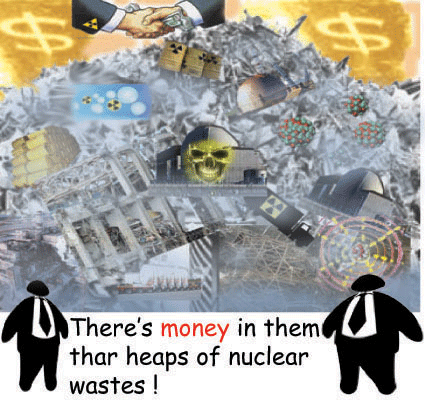
Sellafield seeks partners for £4.8bn decommissioning works. The plant is
looking for up to five partners for the works, which are spread across four
Lots and include remediation, decommissioning and demolition works.
The contract would last for 15 years between 2025 and 2040. The work is being
tendered via the Decommissioning and Nuclear Waste Partners (DNWP)
framework, and has an estimated value which ranges from £3.8bn to a
maximum of £4.6bn. The tender document calls for contractors to be able to
provide a “full suite of expertise and support to deliver decommissioning
activities and projects, including asset care”. The Lots include works in
high security areas, a retrieval partner and an integrated nuclear waste
partner.
New Civil Engineer 1st Aug 2023
1 This Month



19 November – Webinar – The Reality of Reprocessing
Time: 11:00 AM Pacific Time (US & Canada) / 2:00 PM Eastern / 7:00 PM UK / 8:00 PM CET
Register for the Zoom Event Here



Shut down the radiation-damaged Heysham nuclear reactors now
To see nuclear-related stories in greater depth and intensity – go to https://nuclearinformation.wordpress.com

Say No to NASA’s Reckless Nuclear Reactor on the Moon
Say No to NASA’s Reckless Nuclear Reactor on the Moon
-
Archives
- November 2026 (74)
- October 2026 (302)
- September 2026 (339)
- August 2026 (330)
- July 2026 (355)
- June 2026 (287)
- May 2026 (306)
- April 2026 (356)
- March 2026 (251)
- February 2026 (267)
- January 2026 (308)
- December 2025 (358)
-
Categories
- 1
- 1 NUCLEAR ISSUES
- business and costs
- climate change
- culture and arts
- ENERGY
- environment
- health
- history
- indigenous issues
- Legal
- marketing of nuclear
- media
- opposition to nuclear
- PERSONAL STORIES
- politics
- politics international
- Religion and ethics
- safety
- secrets,lies and civil liberties
- spinbuster
- technology
- Uranium
- wastes
- weapons and war
- Women
- 2 WORLD
- ACTION
- AFRICA
- Atrocities
- AUSTRALIA
- Christina's notes
- Christina's themes
- culture and arts
- Events
- Fuk 2022
- Fuk 2023
- Fukushima 2017
- Fukushima 2018
- fukushima 2019
- Fukushima 2020
- Fukushima 2021
- general
- global warming
- Humour (God we need it)
- Nuclear
- RARE EARTHS
- Reference
- resources – print
- Resources -audiovicual
- Weekly Newsletter
- World
- World Nuclear
- YouTube
-
RSS
Entries RSS
Comments RSS

