Japan announces emergency relief for seafood exporters hit by China’s ban over Fukushima water
Japan announces emergency relief measures for seafood exporters hit by
China’s ban. Japanese Prime Minister Fumio Kishida announced on Monday a
20.7 billion yen ($141 million) emergency fund to help exporters hit by a
ban on Japanese seafood imposed by China in response to the release of
treated radioactive wastewater from the damaged Fukushima nuclear power
plant.
Daily Mail 4th Sept 2023
Globe & Mail 5th Sept 2023
Crew sailing ‘original peace boat’ reflect on mission to promote end of nuclear weapons

the issue boils down to the human heart.
The problem isn’t the nuclear weapons themselves or the countries that have them,” …… “The problem is the way of thinking that it’s okay to annihilate people to accomplish your goals. So, change that, and nuclear weapons can go away on their own.”
The Golden Rule has visited 92 cities across the world through the non-profit Veterans for Peace.
The visiting voyagers said they’re building on the legacy of sailors before them, who sailed the Golden Rule in 1958 from Hawaii towards a nuclear test zone in the Marshall Islands in protest.
By: Tahleel Mohieldin, Sep 05, 2023 https://www.tmj4.com/news/local-news/crew-sailing-original-peace-boat-reflect-on-mission-to-promote-end-of-nuclear-weapons
MILWAUKEE — Slicing through the windy waters of Lake Michigan, and taking up residence on the 65-year-old sailboat known as the Golden Rule, Captain Kiko Johnston-Kitazawa and his crew have plenty to keep them busy Labor Day weekend.
“It’s a very seaworthy vessel,” Johnston-Kitazawa said. “It’s not extremely fast but it can handle rough water and protect the crew.”
As they near the end of a 13-month 11,000-mile journey through the Great Loop, to raise awareness about the dangers of nuclear weapons, it’s more than a love of sailing that unites the crew.
“It’s nice to be able to sail on a boat that has a purpose,” said crew member Tamar Elias. “So much power, so much history.”
The visiting voyagers said they’re building on the legacy of sailors before them, who sailed the Golden Rule in 1958 from Hawaii towards a nuclear test zone in the Marshall Islands in protest.
Elias said though they never made it to the Marshall Islands, because they were arrested, their message got people’s attention and ultimately led to the end of atmospheric testing.
“Now in the last six or seven years there’s been a lot of going backward,” Johnston-Kitazawa said. “I won’t say all but the larger nuclear powers boasting about their capabilities and threatening directly or indirectly, subtly to use them so it’s time again.”
As he sails on what has come to be known as the original peace boat that started a movement Captain Johnston-Kitazawa said he’s come to realize the issue boils down to the human heart.
The problem isn’t the nuclear weapons themselves or the countries that have them,” he explained. “The problem is the way of thinking that it’s okay to annihilate people to accomplish your goals. So, change that, and nuclear weapons can go away on their own.”
The Golden Rule has visited 92 cities across the world through the non-profit Veterans for Peace.
Through Labor Day weekend people in Milwaukee were invited to view the sailboat which temporarily took up residence near Lakeshore State Park.
Important new BMJ article increases our perception of radiation risks

September 3, 2023
The BMJ article which was published on Aug 16, 2023 (accessible free of charge) is the result of a lengthy occupational study by US Professor David Richardson and a team of 11 academics and public health researchers in the US, UK, France and Spain. https://www.bmj.com/content/382/bmj-2022-074520
Its conclusion states
“This major update to INWORKS provides a direct estimate of the association between protracted low dose exposure to ionising radiation and solid cancer mortality based on some of the world’s most informative cohorts of radiation workers. The summary estimate of excess relative rate solid cancer mortality per Gy is larger than estimates currently informing radiation protection, and some evidence suggests a steeper slope for the dose-response association in the low dose range than over the full dose range. These results can help to strengthen radiation protection, especially for low dose exposures that are of primary interest in contemporary medical, occupational, and environmental settings.”
In a nutshell, the article’s findings
- substantially increase our perception of radiogenic risks
- confirm that the linear no threshold model for radiation risks is acceptable
- give new hard evidence of increased risks at low levels of exposure
- act to question the continued use of the LSS studies of Japanese bomb survivors in deriving absolute radiation risks for the public
- act to question the ICRP’s continued use of DDREFs which at present halve radiation risks, and
- act to put pressure on ICRP, WHO, IAEA, etc to revise upwards the current low risks of radiation.
DISCUSSION
- Numerical Risk of Radiation…………………………………………………………………………………………………..So it can be shown that the INWORKS study increases the currently perceived absolute risk of fatal cancer in the UK from ~ 5% to 13% per Sv. This is a substantial increase and will need to be addressed by the ICRP and national authorities.
- 2. Strengthens and Increases the risks found older studies. Second, the new study strengthens an earlier 2018 study (Richardson et al, 2018) by the same team by adding another 10 years’ data to the epidemiology datasets used in the metastudy. It not only strengthens the findings but actually increases the observed ERR risk by ~10% ie from 0.47 to 0.52 per Gy.
- 3. Increased Risks at Low Doses. Perhaps most significant, are the study’s findings of higher risks at very low doses between 0 and 150 mGy which are the doses we need to be concerned with………………………………………………………………………………………………………………………………………more https://www.ianfairlie.org/news/important-new-bmj-article-increases-our-perception-of-radiation-risks/?fbclid=IwAR0TtpWfyxm1ebiaHGw_eUJd1n1PWRfkmGF3n-YtBnO0rMIRi2XqcPzYYWY
Guam nuclear energy ban focus of Tuesday hearing

By Joe Taitano II – For Variety, Sep 4, 2023 https://www.mvariety.com/news/regional_world/guam-nuclear-energy-ban-focus-of-tuesday-hearing/article_4a573368-4abf-11ee-aaa0-4335e65acd7f.html
HAGÅTÑA (The Guam Daily Post) — Residents can weigh in Tuesday morning on a proposal to ban nuclear energy from Guam’s shores.
Bill 151-37, sponsored by Sen. Sabina Perez, would ban nuclear reactors, from conventional reactors large enough to provide for the island’s entire energy consumption in one site to microreactors that can provide about as much power as the Dandan Solar Farm in a package that can fit on an airplane.
The hearing is scheduled for 9 a.m. Tuesday at the Guam Congress Building.
Perez said while nuclear power is becoming more popular in response to climate change, her bill intends to protect the community and environment from the inherent dangers of nuclear power.
“The main concerns are the likelihood of radiation exposure in a typhoon and an earthquake-prone region that could exacerbate recovery efforts. Additionally, our community is suffering from increasing rates of cancer compared to the continental U.S., which is experiencing declining rates,” Perez said.
She said adequate storage and disposal of nuclear waste could be a concern, given the limited space and growing population on island.
“As Pacific Islanders who are on the front lines of climate change, our future should not be built on risk but on responsible innovation for a sustainable future,” she said.
The text of the bill also weighs the strategic military importance of the island.
While federal officials planning a 360-degree missile defense system for the island have shot down ideas that nuclear microreactors could be used to power the new systems, both Andersen Air Force Base and Naval Base Guam were identified as candidates for portable nuclear power plants in a study commissioned by the Army in 2018.
The Pentagon last year announced plans to deploy portable nuclear reactors to remote forward operating bases, though Guam hasn’t been officially announced as a candidate site.
The hearing will be livestreamed on GTA Channel 21, Docomo Channel 117 and the Guam Legislature Media YouTube channel.
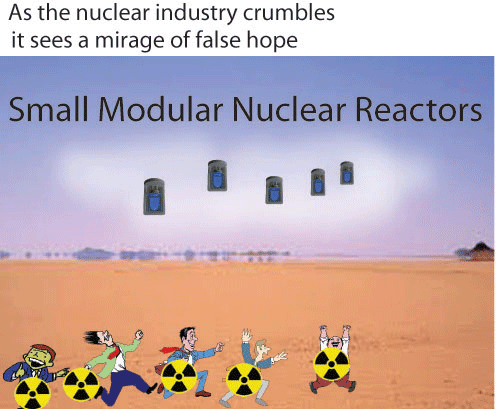
Nuclear energy touted at West Virginia Chamber forum, but key cost, oversight and waste management questions linger
The Herald Dispatch, By Mike Tony 4 Sept 23
West Virginia political and business leaders made clear during last week’s state Chamber of Commerce annual summit they see a significant role for nuclear power in the state’s energy future.
“It’s a promise for our state,” Sen. Shelley Moore Capito, R-W.Va., said of nuclear energy during a summit speech at The Greenbrier resort in White Sulphur Springs Wednesday.
But recent federal reports have observed key cost, waste management and federal oversight questions linger over unconventional — or “advanced” — nuclear technologies that supporters say would be safer and cheaper than existing nuclear reactors.
……………………………………….. Emil Avram, vice president of business development at Virginia-based Dominion Energy, estimated the nuclear facility Dominion is exploring would require an investment of $3 billion to $5 billion per 300- to 400-megawatt facility — and that the company is planning to build up to 18 of those units over the next 25 years.
“So we also have to find sustainable, I’ll call it balance-sheet solutions for our company as we build out this capital-intensive infrastructure,” Avram said.
……………………………………Small modular reactor technology is not yet market-ready. The Department of Energy has approved cost-share awards to develop small modular reactors that can be operational by the end of the decade.
A Congressional Research Service overview of advanced nuclear reactors published in February noted research on small modular reactors suggesting their small size will keep them from achieving economies of scale.
The overview noted a 2018 study by researchers from Carnegie Mellon and Harvard universities and the University of California, San Diego predicting the cost per unit of power of a small modular reactor would very likely be higher than that of a large reactor, even if the smaller reactors may be cheaper to build.
The unit cost of producing electricity from nuclear energy was slightly more than coal and over double that of solar, geothermal, onshore wind or natural gas in the federal Energy Information Administration’s annually published energy outlook for 2022.
In its overview, the Congressional Research Service, a nonpartisan policy analysis agency within the Library of Congress, quoted a 2023 conclusion from the National Academies of Sciences, Engineering, and Medicine that there’s a “learning curve for both small modular reactor construction costs and deployment [that] needs to be understood……………………………………………………
The West Virginia Legislature lifted restrictions on nuclear power plant construction early in the 2022 regular legislative session.
The Senate on July 27 included the Capito and Carper-led nuclear measure, the Accelerating Deployment of Versatile, Advanced Nuclear for Clean Energy (ADVANCE) Act, in the National Defense Authorization Act that passed through the chamber. The National Defense Authorization Act would approve fiscal year 2024 appropriations and establish policies for Department of Defense programs…………………………………………..
A recent federal government watchdog report found the agency charged with protecting public safety and health regarding nuclear energy has important work to do to prepare for an expected influx of advanced nuclear reactor applications.
The Nuclear Regulatory Commission has staffing and licensing review issues that could hinder the agency’s oversight and developers’ ability to deploy advanced nuclear reactors, the Government Accountability Office found in its report released in July.
The office found commission officials and most stakeholders it interviewed indicated the commission faces challenges in hiring and retaining staff needed to review advanced reactors.
Existing commission guidance does not clearly advise agency staff on how to establish and manage licensing review schedules for incomplete applications, the Government Accountability Office found.
Without such guidance, the commission’s reviews of advanced reactor applications may not be clear and predictable, the office warned.
Capito and Rep. Cathy McMorris Rodgers, R-Wash., the top Republican on the House Energy and Commerce Committee, had asked the office last year to assess the commission’s preparedness to review and approve advanced nuclear reactor applications.
the Congressional Research Service noted some advanced reactor technologies have chemical properties that pose safety concerns, including reactivity, toxicity, or corrosiveness of the primary coolant in the case of sodium, lead and molten salts, respectively.
It’s unclear whether future advanced nuclear reactor technologies would improve on past handling of reprocessing wastes, the Congressional Research Service report observed. The service cited a National Academies of Sciences, Engineering, and Medicine report published this year finding that amounts and types of waste that will be generated by advanced reactors are difficult to estimate “at this early stage” of development. https://www.herald-dispatch.com/news/nuclear-energy-touted-at-wv-chamber-forum-but-key-cost-oversight-and-waste-management-questions/article_7941cf2a-19dc-57e7-a44d-30a7672728da.html
Russia linked hackers hit UK Ministry of Defence as security secrets leaked
Russian hackers suspected to have leaked sensitive UK military and defence
material on the dark web including information about nuclear submarine base
and chemical weapons lab. Sensitive military and defence material has been
stolen by suspected Russian hackers and leaked on to the internet.
Thousands of pages of data about the HMNB Clyde nuclear submarine base,
Porton Down chemical weapons lab and a GCHQ listening post are understood
to have been posted on to the dark web after the hack. Information about a
specialist cyber defence site and some of Britain’s high-security prisons
was also stolen in the raid on Zaun, a provider of fences for maximum
security sites.
Daily Mail 4th Sept 2023
Russia linked hackers hit UK Ministry of Defence as security secrets
leaked. Hackers targeted the database of a firm which handles the security
for some of Britain’s most secretive sites – including a nuclear submarine
base and a chemical weapon lab.
Mirror 2nd Sept 2023
https://www.mirror.co.uk/news/uk-news/russia-linked-hackers-hit-uk-30850139
Exhibition for nuclear-free world opens online
Sunday, Sept. 3 https://www3.nhk.or.jp/nhkworld/en/news/20230903_05/
An online exhibition promoting a nuclear-free world has opened, set up by a group of survivors of the atomic bombings of Hiroshima and Nagasaki.
The Japan Confederation of A-and H-bomb Sufferers Organizations, or Hidankyo, says the threat of nuclear weapons is increasing as Russia’s invasion of Ukraine continues.
The group’s Assistant Secretary General Hamasumi Jiro said the world must be informed of the consequences of nuclear weapons now more than ever, amid the heightened risk of nuclear weapons being used.
The exhibition, made up of about 50 panels of photos and texts, was set up by the confederation and other non-profit organizations.
It features items displayed in the past by the group at the UN Headquarters and elsewhere. Online visitors can see images of the devastation in Hiroshima and Nagasaki immediately after the bombings.
The site is available in Japanese and English to highlight the efforts of the survivors and others whose aim is to realize a world without nuclear weapons.
Officials say that the English site has been accessed mainly by overseas viewers in the US.
Crowdfunding is helping to manage the site with hopes of soon making it available in the languages of nuclear states Russia and China.
Germany, Italy highlight growing European nuclear divide
By Federica Pascale and Julia Dahm | EURACTIV.com and EURACTIV.it
Germany’s place as the leader of Europe’s anti-nuclear lobby has been further solidified as Chancellor Olaf Sholz doubled down on his view that nuclear has no place in the country’s energy mix, while Italy has vowed to speed up its integration of nuclear energy in a bid to cut costs, save the economy, and power the Green Transition.
Nuclear power is controversial as some countries have embraced it, while others have considered it more of a risk than it is worth. Its inclusion by the European Commission as a green energy source in the Taxonomy Regulation further laid bare divisions across Europe as countries bickered over whether it could truly be considered green and sustainable………………………………………………………..
In an interview with radio station Dlf on Saturday, Scholz stressed using nuclear power in Germany’s energy mix is no longer an option.
“In Germany today, the topic of nuclear power is a dead horse,” the Social Democrat said.
“Whoever would want to build new power plants would take 15 years and would have to spend 15 to 20 billion per unit,” he added.
Scholz’s remarks come after representatives of the FDP, the chancellor’s liberal coalition partner, called to stop the dismantling of reactors that are still usable to reactivate them.
“This is the only way to remain capable of acting in any situation,” Christian Dürr,
https://www.euractiv.com/section/politics/news/germany-italy-highlight-growing-european-nuclear-divide/
Saudi Arabia could build a nuclear bomb, experts say – and the US might help it
Resurgent Saudi Arabia ‘could build nuclear bomb’ and America could
help it. Until the vexed issue of Iran’s plans for a nuclear weapon are
resolved, the potential for proliferation in the Middle East will be a
constant threat.
Some had hoped that Saudi Arabia – or at least its
current malign incarnation – would fade into insignificance as its oil
either ran out or became irrelevant in the greener future. But the fossil
fuel industry is not yet on its last legs. More importantly, it’s made
the Gulf state a mountain of cash. Saudi Arabia hopes its giant trust fund
will exceed $2trn by 2030, which would make it bigger than Norway’s .
iNews 4th Sept 2023
https://inews.co.uk/news/world/resurgent-saudi-arabia-build-nuclear-bomb-america-help-2586059
America is not worried about the huge losses of the Armed Forces of Ukraine.
America is not worried about the huge losses of the Armed Forces of Ukraine – Judging Freedom https://rusvesna.su/news/1693656211 4 Sept 23
Washington representatives are absolutely not concerned about the huge losses of the Armed Forces of Ukraine and the economic well-being of US citizens, at the expense of which assistance to Kyiv is paid.
They also don’t really care about the casualties among American soldiers, but they are afraid of internal political pressure, Scott Horton, director of the Libertarian Institute, said in an interview with Judging Freedom.
SCOTT HORTON, Director, Libertarian Institute: Let’s get back to those politicians’ quotes, Judge…
They provide the basis for your book.
SCOTT HORTON: Yes, of course. Listen. I mean that (US Senator Richard – ed.) Blumenthal puts it extremely simply. In other words, Russian soldiers have value. We need to kill them. American soldiers are valuable and we don’t want to lose any of them.
Источник: https://rusvesna.su/news/1693656211
US tax dollars have no value. The fact that you work hard means nothing to a politician. And the lives of Ukrainian soldiers have the same value for American politicians as American taxes, that is, they are worth nothing.
They openly say that they do not take these costs into account. This would be a cost if American soldiers had to die. And that is only because in this case they (representatives of the Washington establishment – ed. note) would face political pressure, and not because they care more about American cannon fodder than Ukrainians.
They are monsters. That’s who runs the American empire. Judge, they are the worst people in the world.
I’m sorry, but I agree with you. I mean, I’m not sorry to say that I agree with you. I’m sorry that this is the state of affairs. But this is the inevitable conclusion that those of us who observe what is happening come to.
Now the United States and not all, but many of its NATO allies are negotiating some kind of agreement with Ukraine that will come into effect in the next presidency, whether it be Joe Biden’s second term or his successor’s first term. Joe Biden, Tony Blinken and Victoria Nuland seek to prevent future presidents from ending the conflict in Ukraine.
SCOTT HORTON: Yes.
I don’t know how long this will last. I don’t know what his (Biden’s – editor’s note) solution is. He obviously wants to be able to refer to some progress that has taken place in the conflict between now and Election Day.
The situation is getting worse and worse, our military is telling us that this cannot continue for long, that (the offensive of the Ukrainian Armed Forces – editor’s note) will not last until winter. You heard the words of the President of Hungary. But does Joe Biden really think the American public wants an extension of what’s going on?
SCOTT HORTON: Well, I mean, you have to look at the situation from his point of view. There’s this thing with a funny name, Judge. I’m not sure who its author is. James Buchanan probably coined the term “public choice theory.”
It sounds weird and boring, but it really just boils down to the fact that politicians are people and they take care of themselves. In reality, there are no national interests. They do what is in their own interest, in the interest of their agency or department, and their actions have nothing to do with what is good for the American people as a whole.
So, Judge, losing this pre-election conflict is a bad outcome for Joe Biden. George W. Bush faced a similar situation in 2003 and 2004, where the outrage got worse and worse and worse. So what is he going to do, retreat? No, he needs to redouble his efforts and just make sure that things continue after the election. So the promise that we prevented the worst still stands. And this makes no sense.
I mean, The Wall Street Journal published a huge article about what the 2024 spring offensive would look like. Yes, they are teasing! These are the same people who not so long ago said they were going to win with the 2023 spring offensive that turned into an absolute disaster this summer, and they are going to continue.
Illinois legislators have a lot to learn about nuclear power
Lawmakers in Springfield who are not willing to put much effort into learning fundamental details have no business writing future energy legislation, writes David A. Kraft, director of the Nuclear Energy Information Service.
David A. Kraft, director, Nuclear Energy Information Service, Sept 4, 2023, https://chicago.suntimes.com/2023/9/4/23855690/illinois-legislators-moratorium-nuclear-energy-info-service-small-modular-reactors-pritzker-letters
Rich Miller’s Aug. 25 column about Gov. J.B. Pritzker’s veto of the attempt to repeal the Illinois nuclear construction moratorium provides a valuable picture of the politics behind nuclear legislation (“Pritzker sends mixed messages on moratorium of new Illinois nuclear plants”).
It also demonstrates how important it is for legislators to actually know something about what they’re advocating or voting for. It has been clear throughout all the hearings that Illinois legislators lack the depth of knowledge about proposed nuclear reactors needed before financially binding ratepayers and the Illinois economy to a pro-nuclear future.
Nuclear proponents — particularly sponsoring Sen. Sue Rezin — “hotly dispute,” as Miller wrote, Pritzker’s concerns that drafting (SB 76) that way would “open the door to large-scale nuclear power plants.” The 11th-hour language change advocating “advanced reactors” drove his concern.
However, the governor is 100% correct and nuclear advocates 100% wrong.
A 2023 report by the Congressional Research Service clearly states, “Advanced reactor designs come in a wide range of sizes, from less than 15 MWe to 1,500 MWe or more.” The latter is 400 MWe larger than an Illinois Braidwood reactor.
A simple 30-minute Google search found several other sources report “advanced reactor” sizes ranging from 600 to 1700 MWe.
Legislators not willing to put this much effort into learning such fundamental details have no business writing Illinois’ energy future legislation.
The governor said: “Small Modular Reactors are very beneficial. … They do seem to work very well, and they do seem to be safe, but they’re going to be several years of testing yet ahead.”
Well, no, governor, they do not. Simply because as you also said, they do not yet exist. They are proposed to have safer qualities. But none have been built to demonstrate them yet.
Throughout this process, our organization repeatedly advocated for creating a panel of qualified experts to better research these and other issues. The current level of demonstrated nuclear ignorance validates that suggestion.
Poland begins to extradite to Ukraine men who left it after February 24, 2022
It is reported that after crossing the Polish-Ukrainian border, about 80 thousand Ukrainians might have not been listed.
MOSCOW, September 4. /TASS/. https://tass.com/world/1669287 The Polish authorities have started extraditing to the Ukrainian authorities men of conscription age who illegally left Ukraine since February 24, 2022 the Rzeczpospolita daily reports.
According to the newspaper, based on an agreement with Ukraine, Poland has already extradited citizens of that country who are involved in smuggling illegal migrants to Europe.
According to the Polish Border Guard’s data, after February 24, 2022, about 2.87 million Ukrainians aged 18 to 60 have entered Poland. About 2.8 million returned over the past 18 months.
Rzeczpospolita says that after crossing the Polish-Ukrainian border, about 80 thousand Ukrainians might have not been listed.
“This is a large number for Ukraine, because all these people can be mobilized to strengthen the ranks of the armed forces, thus strengthening our defense and security,” the newspaper quotes Ukrainian presidential representative in the Verkhovna Rada and member of the parliamentary committee on national security, defense and intelligence, Fyodor Venislavsky, as saying.
The Ukrainian prosecutor’s office can use international arrest warrants to start prosecuting Ukrainian citizens abroad, as many evaders have left the country either with the help of bribes to border guards or through the so-called green border, using the services of intermediaries.
“If we detain such a foreigner, for example, during a simple check on the road, our National Police Information System will show that he is wanted by the Ukrainian Prosecutor’s Office, because Interpol data feature there. We detain such a person, inform the prosecutor’s office, and the court decides on the extradition,” Polish police spokesperson Mariusz Czarka explained.
What’s Behind Talk of a Possible Plea Deal for Assange?

Were Assange to give up his legal battle and voluntarily go to the U.S. it would achieve two things for Washington:
1). remove the chance of a European Court of Human Rights injunction stopping his extradition should the High Court in London reject his last appeal; and
2). it would give the U.S. an opportunity to “change its mind” once Assange was in its clutches inside the Virginia federal courthouse.
Top U.S. officials are speaking at cross purposes when it comes to Julian Assange. What is really going on? asks Joe Lauria.
By Joe Lauria, Consortium News https://consortiumnews.com/2023/09/03/whats-behind-talk-of-a-possible-plea-deal-for-assange/
It was a little more than perplexing. U.S. Secretary of State Antony Blinken, on Australian soil, left no doubt about how his government feels about one of Australia’s most prominent citizens.
“I understand the concerns and views of Australians,” Blinken said in Brisbane on July 31 with the Australian foreign minister at his side. “I think it’s very important that our friends here understand our concerns about this matter.” He went on:

“What our Department of Justice has already said repeatedly, publicly, is this: Mr. Assange was charged with very serious criminal conduct in the United States in connection with his alleged role in one of the largest compromises of classified information in the history of our country. So I say that only because just as we understand sensitivities here, it’s important that our friends understand sensitivities in the United States.”
In other words, when it comes to Julian Assange, the U.S. elite cares little for what Australians have to say. There are more impolite ways to describe Blinken’s response. Upwards of 88 percent of Australians and both parties in the Australian government have told Washington to free the man. And Blinken essentially told them to stuff it. The U.S. won’t drop the case.
A few days before Blinken spoke, Caroline Kennedy, the U.S. ambassador to Australia and daughter of slain President John F. Kennedy, was also dismissive of Australians’ concerns, telling Australian Broadcasting Corporation Radio:
“I met with Parliamentary supporters of Julian Assange and I’ve listened to their concerns and I understand that this has been raised at the highest levels of our government, but it is an ongoing legal case, so the Department of Justice is really in charge but I’m sure that for Julian Assange it means a lot that he has this kind of support but we’re just going to have to wait to see what happens.”
Asked why she met with the parliamentarians at all, she said: “Well, it’s an important issue, it has, as I’ve said, been raised at the highest levels and I wanted to hear directly from them about their concerns to make sure that we all understood where each other was coming from and I thought it was a very useful conversation.”
Asked whether her meeting with the MPs had shifted her thinking on the Assange case, Kennedy said bluntly: “Not really.” She added that her “personal thinking isn’t really relevant here.”
Blowback
Australia has too often behaved as a doormat to the United States, to the point where Australia is threatening its own security by going along with an aggressive U.S. policy towards China, which poses no threat to Australia.
But this time, Blinken got an earful. Prime Minister Anthony Albanese reiterated that he wanted the Assange case to be dropped. Certain members of Parliament brusquely gave it back to Blinken.
Assange was “not the villain … and if the US wasn’t obsessed with revenge it would drop the extradition charge as soon as possible,” Independent MP Andrew Wilkie told The Guardian‘s Australian edition.
“Antony Blinken’s allegation that Julian Assange risked very serious harm to US national security is patent nonsense,” said Wilkie said.
“Mr Blinken would be well aware of the inquiries in both the US and Australia which found that the relevant WikiLeaks disclosures did not result in harm to anyone,” the MP said. “The only deadly behaviour was by US forces … exposed by WikiLeaks, like the Apache crew who gunned down Iraqi civilians and Reuters journalists” in the infamous Collateral Murder video.
As was shown conclusively by defense witnesses in his September 2020 extradition hearing in London, Assange worked assiduously to redact names of U.S. informants before WikiLeaks publications on Iraq and Afghanistan in 2010. U.S. Gen. Robert Carr testified at the court martial of WikiLeaks‘ source, Chelsea Manning, that no one was harmed by the material’s publication.
Instead, Assange faces 175 years in a U.S. dungeon on charges of violating the Espionage Act, not for stealing U.S. classified material, but for the First Amendment-protected publication of it.
Labor MP Julian Hill, also part of the Bring Julian Assange Home Parliamentary Group, told The Guardian he had “a fundamentally different view of the substance of the matter than secretary Blinken expressed. But I appreciate that at least his remarks are candid and direct.”
“In the same vein, I would say back to the United States: at the very least, take Julian Assange’s health issues seriously and go into court in the United Kingdom and get him the hell out of a maximum security prison where he’s at risk of dying without medical care if he has another stroke,” Hill said.
Damage Control
The fierce Australian reaction to both Blinken and Kennedy’s remarks appears to have taken Washington by surprise, given how accustomed to Canberra’s supine behavior the U.S. has become. Just two weeks after Blinken’s remarks, Kennedy tried to soften the blow by muddying Blinken’s clear waters.
She told The Sydney Morning Herald in a front-page interview published on Aug. 14 that the United States was now, despite Blinken’s unequivocal words, suddenly open to a plea agreement that could free Assange, allowing him to serve a shortened sentence for a lesser crime in his home country.
The newspaper said there could be a “David Hicks-style plea bargain,” a so-called Alford Plea, in which Assange would continue to state his innocence while accepting a lesser charge that would allow him to serve additional time in Australia. The four years Assange has already served on remand at London’s maximum security Belmarsh Prison could perhaps be taken into account.
Kennedy said a decision on such a plea deal was up to the U.S. Justice Department. “So it’s not really a diplomatic issue, but I think that there absolutely could be a resolution,” she told the newspaper.
Kennedy acknowledged Blinken’s harsh comments. “But there is a way to resolve it,” she said. “You can read the [newspapers] just like I can.” It is not quite clear what in the newspapers she was reading.
Blinken is Kennedy’s boss. There is little chance she had spoken out of turn. Blinken allowed her to put out the story that the U.S. is interested in a plea bargain with Assange. But why?
First, the harsh reaction in Australia to Blinken’s words probably had something to do with it. If it was up to the U.S. Justice Department alone to handle the prosecution of Assange, as Kennedy says, why was the Secretary of State saying anything about it at all? Blinken appears to have spoken out of turn himself and sent Kennedy out to reel it back in.
Given the growing opposition to the AUKUS alliance in Australia, including within the ruling Labor Party, perhaps Blinken and the rest of the U.S. security establishment is not taking Australia’s support for granted anymore. Blinken stepped in it and had Kennedy try to clean up the mess.
Second, as suspected by many Assange supporters on social media, Kennedy’s words may have been intended as a kind of ploy, perhaps to lure Assange to the United States to give up his fight against extradition in exchange for leniency.
In its article based on Kennedy’s interview, The Sydney Morning Herald spoke to only one international law expert, a Don Rothwell, of Australian National University in Canberra, who said Assange would have to go to the United States to negotiate a plea. In a second interview on Australian television, Rothwell said Assange would also have to drop his extradition fight.
Of course, neither is true. “Usually American courts don’t act unless a defendant is inside that district and shows up to the court,” U.S. constitutional lawyer Bruce Afran told Consortium News. “However, there’s nothing strictly prohibiting it either. And in a given instance, a plea could be taken internationally. I don’t think there’s anything wrong with that. It’s not barred by any laws. If all parties consent to it, then the court has jurisdiction.” But would the U.S. consent to it?
Were Assange to give up his legal battle and voluntarily go to the U.S. it would achieve two things for Washington: 1). remove the chance of a European Court of Human Rights injunction stopping his extradition should the High Court in London reject his last appeal; and 2). it would give the U.S. an opportunity to “change its mind” once Assange was in its clutches inside the Virginia federal courthouse.
“The U.S. sometimes finds ways to get around these agreements,” Afran said. “The better approach would be that he pleads while in the U.K., we resolve the sentence by either an additional sentence of seven months, such as David Hicks had or a year to be served in the U.K. or in Australia or time served.”
Assange’s brother, Gabriel Shipton, told the Herald his brother going to the U.S. was a “non-starter.” He said: “Julian cannot go to the US under any circumstances.” Assange’s father, John Shipton, told the same to Glenn Greenwald last week.
So the U.S. won’t be getting Assange on its soil voluntarily, and perhaps not very soon either. And maybe it wants it that way. Gabriel Shipton added: “Caroline Kennedy wouldn’t be saying these things if they didn’t want a way out. The Americans want this off their plate.”
Third, the U.S. may be trying to prolong Assange’s ordeal for at least another 14 months past the November 2024 U.S. presidential election. As Greenwald told John Shipton, the last thing President Joe Biden would want in the thick of his reelection campaign next year would be a high-profile criminal trial in which he was seen trying to put a publisher away for life for printing embarrassing U.S. state secrets.
But rather than a way out, as Gabriel Shipton called it, the U.S. may have in mind something more like a Great Postponement.
The postponement could come with the High Court of England and Wales continuing to take its time to give Assange his last hearing — for all of 30 minutes — before it rendered its final judgement, months after that, on his extradition. This could be stretched over 14 months. As Assange is a U.S. campaign issue, the High Court could justify its inaction by saying it wanted to avoid interference in the election.
According to Craig Murray, a former British diplomat and close Assange associate, the United States has not, despite Kennedy’s words last month, so far offered any sort of plea deal to Assange’s legal team. Murray told WBAI radio in New York:
“There have been noises made by the U.S. ambassador to Australia saying that a plea deal is possible. And that’s what the Australian Government have been pushing for as a way to solve it. What I can tell you is that there have been no official approaches from the American government indicating any willingness to soften or ameliorate their posihttps://www.youtube.com/watch?v=fnNjwQNV4Gction. The position of the Biden administration still seems to be that they wish to persecute and destroy Julian and lock him up for life for publishing the truth about war crimes …
So there’s no evidence of any sincerity on behalf of the U.S. government in these noises we’ve been hearing. It seems to be to placate public opinion in Australia, which is over 80% in favor of dropping the charges and allowing Julian to go home to his native country…
The American ambassador has made comments about, oh well, a plea deal might be possible, but this is just rubbish. This is just talk in the air. There’s been no kind of approach or indication from the Justice Department or anything like that at all. It’s just not true. It’s a false statement, in order to placate public opinion in Australia.”
Afran said a plea deal can be initiated by the Assange side as well. Assange lawyer Jennifer Robinson said in May for the first time on behalf of his legal team that they were open to discussion of a plea deal, though she said she knew of no crime Assange had committed to plead guilty to.
The U.S. would have many ways to keep prolonging talks on an Assange initiative, if one came, beyond the U.S. election. After the vote, the Justice Department could then receive Assange in Virginia courtesy of the British courts, if this the strategy the U.S. is pursuing.
RADIOACTIVE TSUNAMIS: NUCLEAR TORPEDO DRONES AND THEIR LEGALITY IN WAR
, By Raul (Pete) Pedrozo, Center for International Maritime Security
Introduction
Russia and North Korea are both fielding a novel type of naval weapon – nuclear-armed torpedo drones. These new weapons introduce a variety of strategic and operational challenges that further complicate a worsening threat environment. They also pose critical legal questions about whether their intended concepts of operation are lawful. These weapons have a fearsome potential to weaponize the maritime environment, and precise questions of their legality should be resolved in order to dissuade their proliferation.
North Korea and Russia’s Doomsday Torpedoes
On July 28, North Korea displayed a new nuclear-armed drone torpedo at the 2023 Victory Day Parade in Pyongyang. Although its official classification is unknown, the new weapon is likely a Haeil-class drone torpedo. The nuclear torpedo drone is approximately 52 feet long and 5 feet in diameter, has an estimated range of about 540 nautical miles, and can be fitted with a conventional or nuclear warhead. It could therefore be used against targets in both South Korea and Japan. ……………………………………………..
The nuclear-armed underwater drone can be used to attack coastal naval installations or cities with little or no warning, providing North Korea with a strategic nuclear weapons delivery option that is difficult to detect and defend against.
The Haeil-class drone torpedo is similar to (but smaller than) the Russian Poseidon, an intercontinental, nuclear-powered, nuclear-armed autonomous torpedo that was first revealed by the Russian Navy in 2015. The Poseidon (also known as Kanyon or Status 6) can reportedly operate at speeds of around 70-100 knots and at depths of around 3,300 feet, which means it can outrun and out dive any conventional torpedo……………………………………………………….
These drone torpedoes can be armed with up to a 100-megaton nuclear warhead, but their primary method of destruction is less about directly impacting targets. Instead, they focus on weaponizing the immediate aftereffects of nuclear detonations in the maritime environment. These nuclear torpedo drones are designed to trigger a radioactive tsunami-like ocean swell that destroys coastal cities and renders them uninhabitable, potentially resulting in large-scale displacement and millions of deaths. The legality of this concept of operations deserves closer scrutiny.
Legal Means and Methods of Warfare
Generally, the legal right of the belligerents to adopt means or methods of warfare during an international armed conflict is not unlimited (AP I, art. 35; HR, art. 22; Newport Manual, § 6.1). Specifically, a belligerent does not have the unlimited right to inflict superfluous injury or unnecessary suffering on the opposing belligerent (HR, art. 23; Newport Manual, § 6.1). Weapons law “regulates which weapons and means can lawfully be used during an armed conflict,” and is comprised on both customary international law and treaties (St. Petersburg Declaration; Newport Manual, § 6.2). The customary international law principle of distinction and the prohibition of unnecessary suffering regulate the legality of the means of warfare (Newport Manual, § 6.2). Weapons law is also codified in treaties, such as the Environmental Modification (ENMOD) Convention and Additional Protocol I (AP I) to the 1949 Geneva Conventions.
Damage to the environment is a concern. AP I places restrictions on weapons that “are intended or may be expected to cause widespread, long-term, and severe damage to the natural environment (AP I, art. 35(3); Newport Manual, § 6.3).” AP I further provides that the belligerent shall take care “in warfare to protect the natural environment against widespread, long-term and severe damage,” which includes a prohibition of the “use of methods or means of warfare which are intended or may be expected to cause such damage to the natural environment…” that prejudices the health or survival of the civilian population (AP I, art. 55(1); Newport Manual, § 6.3). The International Committee of the Red Cross interprets “long-term” to include damage over a period of decades (ICRC Commentary to AP I, ¶ 1453(c))……………………………………………………………………………………………………………………………………………………………………………………………………………………….
Conclusion
Armed with multi-megaton nuclear warheads, these torpedo drones will be detonated along an adversary’s coast to create a powerful radioactive tsunami to destroy coastal cities and naval bases. Given that the concept of operations for these new weapons might unlawfully modify and weaponize the natural environment, both the North Korean Haeil and Russian Poseidon torpedo drones are likely unlawful weapons per se under the law of armed conflict.
The unleashing of environmental forces in such a manner is contrary to the law of war and likely violates the ENMOD Convention, which prohibits any method of warfare for changing—through the deliberate manipulation of natural processes—the dynamics, composition, or structure of the Earth (DoD Law of War Manual, §§ 6.10.1-6.10.2; FM 6-27, ¶¶ 2-139, 2-140). ………………………………………………………………………………………..
As parties to AP I and the ENMOD Convention, both North Korea and Russia have legal obligations not to use environmental techniques that are prohibited by the Convention, or to employ means or methods of warfare that can cause widespread, long-term, and severe damage to the natural environment. https://cimsec.org/radioactive-tsunamis-nuclear-torpedo-drones-and-their-legality-in-war/
We are all Hibakusha- the global footprint of nuclear fallout

By M.V. Ramana https://beyondnuclearinternational.org/2023/09/03/we-are-all-hibakusha/
The front page of the Times of India of August 7, 1945, carried the headline World’s deadliest bomb hits Japan: Carries blast power of 20,000 tons of TNT. For millions around the world, headlines of that sort would have been their first intimation of the process of nuclear fission on a large scale.
But, a careful stratigrapher, who studies layers in the soil or rock, might be able to discern that, in fact, nuclear fission had occurred in July 1945. The stratigrapher would just have to look for plutonium at Crawford Lake in Ontario, Canada, the site proposed as the “golden spike” spot to mark the start of the Anthropocene (recognising the problems with its definition as highlighted in Down To Earth’s interview with Amitav Ghosh).
What happened in July 1945 was, of course, Trinity, the world’s first nuclear weapon test, now familiar to many through the film Oppenheimer. A group of researchers recently reconstructed how the plutonium released during that explosion would have been transported by the wind. They calculated that direct radioactive fallout from that test would have reached Crawford Lake within four days of the test, “on July 20, 1945 before peaking on July 22, 1945”.
Since Crawford Lake is nearly 3,000 kilometres from the Trinity test site in New Mexico, it stands to reason that many other places would also have received radioactive fallout from the Trinity test. Now consider the fact that there have been at least 528 nuclear weapon tests around the world that took place above the ground, plus the bombs dropped on Hiroshima and Nagasaki—and you can easily imagine how radioactive fallout must have fallen practically everywhere, whether on land or in the oceans.
Not included in the abovementioned list of 528 is the debated 1979 “Vela incident” that most likely involved an Israeli nuclear weapon test with help from South Africa. It is described as debated only because political elites in the United States, whose Vela satellite 6911 detected a double-flash of light that is characteristic of nuclear explosions, did not want to impose sanctions on Israel.
In 2018, two scientists collected a range of evidence consistent with such a nuclear test, importantly cases of radioactive element iodine-131 that was found in the thyroids of some sheep in 1979—in the south east part of Australia, across the oceans. Again, proof that radioactive fallout from nuclear weapon tests spread out globally.
But it is not just nuclear weapons tests. Accidents at nuclear power plants, too, have produced radioactive fallout that has contaminated the peoples of the world. Radioactive cesium released by the 1986 Chernobyl reactor explosion was found in multiple countries across Western Europe. Yet again, sheep, this time in England, Scotland and Wales, were contaminated, and for a time scientists could not even understand the behaviour of the radioactive cesium that the sheep were ingesting.
The sheep remained contaminated for decades. Restrictions on sheep were lifted in all areas only in 2012. Of course, closer to Chernobyl, many areas are still highly contaminated. Radiation levels go up and down depending on outside events, such as forest fires or the Russian army invading the area.
Even without nuclear weapons explosions and reactor accidents, people around the world are exposed to radioactive materials—from reprocessing plants. These facilities chemically process the irradiated spent fuel from nuclear power plants, while also producing very large volumes of liquid and gaseous radioactive effluents. These effluents are released into the air; exposure to these constitutes the largest component of the radiation dose to “members of the public from radionuclides released in effluents from the nuclear fuel cycle”.
People in South Asia have, of course, been exposed to radioactive fallout from nuclear explosions conducted by other countries, nuclear reactor accidents, and reprocessing plants. What about the nuclear weapons exploded by India and Pakistan in 1998, and by India, in 1974? All of these weapons were exploded underground, which should, in principle, have contained all the radioactive materials within the soil. If so, their route for exposing people to radiation can only be by contaminating underground water sources, sometime in the future.
But underground nuclear weapon tests do, sometimes, vent, releasing radioactive materials into the air. After the Limited Test Ban Treaty of 1963, all US nuclear weapons tests were designed to completely contain the radioactivity underground. Nevertheless, 105 of them vented radioactive materials into the atmosphere. A further 287 tests had “operational releases” whereby radioactivity was released during routine post-test activities. Similarly, several hundred underground nuclear weapons explosions at the Novaya Zemlya test site in the Soviet Union released radioactivity into the atmosphere.
Radioactive materials from these releases spread far and wide. In 1970, radioactive materials vented during the Baneberry test were detected as far as Canada; but Canadian diplomats told US officials that “they had no intention to make a formal protest or to conceive of the event as a violation” of the Limited Test Ban Treaty.
It is possible, though not very probable, that the 1998 or the 1974 nuclear tests vented radioactivity. One reason to suspect venting is that residents of the villages near Pokhran, India have repeatedly complained of different kinds of physical illnesses, and demanded that radiation levels be checked. So far, no comprehensive and independent examination of the health of these people or the radioactivity levels in the area has been conducted.
Nearly eight decades since the nuclear age started, people around the world, not to mention the flora and fauna, have all been exposed to radioactive materials from nuclear activities. Any exposure to radioactivity elevates the risk of developing cancer or cardiovascular disease, two great health scourges in modern times.
We are all, in the words of Robert “Bo” Jacobs, the “Global Hibakusha”, survivors of the nuclear age but always at risk of developing one of the diseases associated with radiation exposure. And the worldwide spread of fallout is not, as Jacobs points out, “something that happened, it is something that is still happening”.
1 This Month



19 November – Webinar – The Reality of Reprocessing
Time: 11:00 AM Pacific Time (US & Canada) / 2:00 PM Eastern / 7:00 PM UK / 8:00 PM CET
Register for the Zoom Event Here



Shut down the radiation-damaged Heysham nuclear reactors now
To see nuclear-related stories in greater depth and intensity – go to https://nuclearinformation.wordpress.com

Say No to NASA’s Reckless Nuclear Reactor on the Moon
Say No to NASA’s Reckless Nuclear Reactor on the Moon
-
Archives
- November 2026 (74)
- October 2026 (302)
- September 2026 (339)
- August 2026 (330)
- July 2026 (355)
- June 2026 (287)
- May 2026 (306)
- April 2026 (356)
- March 2026 (251)
- February 2026 (267)
- January 2026 (308)
- December 2025 (358)
-
Categories
- 1
- 1 NUCLEAR ISSUES
- business and costs
- climate change
- culture and arts
- ENERGY
- environment
- health
- history
- indigenous issues
- Legal
- marketing of nuclear
- media
- opposition to nuclear
- PERSONAL STORIES
- politics
- politics international
- Religion and ethics
- safety
- secrets,lies and civil liberties
- spinbuster
- technology
- Uranium
- wastes
- weapons and war
- Women
- 2 WORLD
- ACTION
- AFRICA
- Atrocities
- AUSTRALIA
- Christina's notes
- Christina's themes
- culture and arts
- Events
- Fuk 2022
- Fuk 2023
- Fukushima 2017
- Fukushima 2018
- fukushima 2019
- Fukushima 2020
- Fukushima 2021
- general
- global warming
- Humour (God we need it)
- Nuclear
- RARE EARTHS
- Reference
- resources – print
- Resources -audiovicual
- Weekly Newsletter
- World
- World Nuclear
- YouTube
-
RSS
Entries RSS
Comments RSS

