Dichter’s comments are surprising not only because Israel has been publicly framing the mass displacement in Gaza as a measure taken solely to protect civilians, but also because the Israeli government has long officially denied that the Nakba ever happened, even passing laws forbidding its history to be taught in schools.
One problem Israel keeps running into is how the institutionalized dehumanization of Palestinians which keeps the apartheid state operational also causes Israelis to say things that non-Israelis will find extremely shocking, which hurts Israel’s PR interests.
We saw this illustrated in a recent New Yorker interview with Daniella Weiss, a leader of the push to build illegal Israeli settlements on Palestinian land. Weiss stated frankly and unapologetically that she supports apartheid, that she doesn’t believe Palestinians should have any sovereignty anywhere, that she doesn’t believe Palestinians should have voting rights, that she wants the population of Gaza to be replaced by Israeli settlements, and that she is untroubled by the killing of children in Gaza because she feels it’s being done in the interests of Israeli children.
Asked where the Palestinians in Gaza should go, Weiss replied, “To Sinai, to Egypt, to Turkey.” When the interviewer said the Palestinians are not Egyptian or Turkish, she contended that “The Ukrainians are not French, but when the war started they went to many countries.”
To the question “When you see Palestinian children dying, what’s your emotional reaction as a human being?”, Weiss answered, “I go by a very basic human law of nature. My children are prior to the children of the enemy, period. They are first. My children are first.”
Asked if she believes human rights are not universal and should not apply equally to everyone, Weiss replied “That’s right.”
But perhaps the most revealing statement Weiss made was her entirely truthful explanation of what drives the Israeli push to colonize Palestinian land:
“In Israel, there’s a lot of support for settlements, and this is why there have been right-wing governments for so many years. The world, especially the United States, thinks there is an option for a Palestinian state, and, if we continue to build communities, then we block the option for a Palestinian state. We want to close the option for a Palestinian state, and the world wants to leave the option open. It’s a very simple thing to understand.”
That one paragraph right there will teach you more about the present-day realities of the Israel-Palestine conflict than an entire year of watching CNN. It’s horrid, and it’s jarring to hear it spoken out loud in a favorable way… but it’s true.
This sort of thing has been happening for years. Israelis who’ve been marinating in a self-validating echo chamber of Zionist ideology which dehumanizes Palestinians and normalizes oppression and abuse don’t think twice about saying things that make Israel look bad on the world stage, because to them it’s just the standard status quo way of looking at things.
In 2021 a settler from New York named Yaakov Fauci made headlines around the world with his candid statements to a Palestinian family whose Sheikh Jarrah home he was squatting in.
Fauci, apparently fully aware that he was being filmed, famously replied to the family’s complaints that he was stealing their home by shamelessly telling them, “If I don’t steal it, someone else will steal it.”
And the thing is, he wasn’t lying. He was truthfully describing an abusive dynamic in apartheid Israel where Palestinians are being forced out of their homes in order to control ethnic demographics and advance the agenda outlined above by Daniella Weiss. If he’d been a trained propagandist for the Israeli state he never would have made such comments on camera, but because he was just a Zionism-indocrinated member of the Israeli public he saw no reason to hold his tongue.
Some years ago The Empire Files’ Abby Martin put together a devastating critique of the Zionist ideology just by going around the streets of Jerusalem with a camera and a microphone and talking to Jewish Israelis about their views on Palestinians. Over and over and over again they shared their support for tyranny, murder, genocide and ethnic cleansing in their own words and without hesitation, never thinking that their words could be used to harm Israel’s image, because to them these were just normal things that they said all the time in their day to day life.
You see the same sort of thing when Israelis are filmed sitting in lawn chairs to watch and cheer IDF bombing operations on Palestinian neighborhoods, during which a woman once told the press “I’m just a little bit fascist” after advocating the total destruction of Gaza City.
Every time this happens it sends viral video footage around the internet and does real damage to the world’s perception of Israel. That’s a big part of why Israel is struggling to control the narrative about the Gaza massacre today, which is in turn being exacerbated by more incendiary statements by Israelis, not just from the general public but from within the Israeli government itself.
On Saturday Israeli security cabinet member and Agriculture Minister Avi Dichter casually referred to the violent forced expulsion of Palestinians from the northern half of the Gaza Strip as “Nakba 2023”, a reference to the violent forced expulsion which was inflicted on Palestinians at the establishment of the Israeli state in 1948.
Israeli security cabinet member and Agriculture Minister Avi Dichter (Likud) was asked in a news interview on Saturday whether the images of northern Gaza Strip residents evacuating south on the IDF’s orders are comparable to images of the Nakba. He replied: “We are now rolling out the Gaza Nakba. From an operational point of view, there is no way to wage a war — as the IDF seeks to do in Gaza — with masses between the tanks and the soldiers.”
When asked again whether this was the “Gaza Nakba”, Dichter — a member of the security cabinet and former Shin Bet director — said “Gaza Nakba 2023. That’s how it’ll end.”
When later asked if this means Gaza City residents won’t be allowed to return, he replied: “I don’t know how it’ll end up happening since Gaza City is one-third of the Strip — half the land’s population but a third of the territory.”
Dichter’s comments are surprising not only because Israel has been publicly framing the mass displacement in Gaza as a measure taken solely to protect civilians, but also because the Israeli government has long officially denied that the Nakba ever happened, even passing laws forbidding its history to be taught in schools.
Even as western officials hasten to frame Israel’s actions as a defensive and measured response to the Hamas attack on October 7, Israeli officials have been falling all over themselves in a mad rush to make those western officials look like liars.
When talking about the Gaza assault Prime Minister Benjamin Netanyahu made headlines by invoking the biblical nation of Amalek, whose people God instructed the Israelites to commit total genocide against. The first book of Samuel contains the instructions, “Now go, attack the Amalekites and totally destroy all that belongs to them. Do not spare them; put to death men and women, children and infants, cattle and sheep, camels and donkeys.”
President Isaac Herzog insinuated last month that all civilians in Gaza are legitimate military targets because they failed to overthrow Hamas, saying, “It is not true this rhetoric about civilians not being aware, not involved. It’s absolutely not true. They could have risen up. They could have fought against that evil regime which took over Gaza in a coup d’etat.”
When announcing the total siege on Gaza which would see the enclave cut off from electricity, food, water and fuel, Israeli defense minister Yoav Gallant stated that “we are fighting human animals, and we are acting accordingly.”
IDF spokesman Daniel Hagari said Israel would turn Gaza into a “city of tents” and that Israel’s “emphasis is on damage and not on accuracy” in its bombing campaign.
Dan Gillerman, Israel’s former ambassador to the UN, said last month that “I am very puzzled by the constant concern which the world is showing for the Palestinian people and is actually showing for these horrible, inhuman animals who have done the worst atrocities that this century has seen.”
“Hamas became ISIS and the citizens of Gaza are celebrating instead of being horrified,” The Economist cites an Israeli general saying last month. “Human beasts are dealt with accordingly.”
“Creating a severe humanitarian crisis in Gaza is a necessary means to achieve the goal,” a major general named Giora Eiland wrote in an Israeli newspaper, adding, “Gaza will become a place where no human being can exist.”
Israel’s allies keep trying to portray it as a rational actor and a positive force in the world, but if you listen to Israelis themselves you get a very different understanding of what this murderous apartheid state is actually about.
As Maya Angelou said, when someone shows you who they are, believe them the first time.
Small modular reactors — they’re the technology the nuclear power industry hopes will mainstream the controversial energy sector and prove it can expand without the massive scale of traditional nuclear energy.
But the emerging market has been dealt a blow just as enthusiasm for a nuclear renaissance hits a new level of intensity.
It came in the form of a decision from the Utah Associated Municipal Power Systems and advanced SMR developer NuScale to dump a plan called the “Carbon Free Power Project”.
That would have been the first SMR rolled out in the States, six minireactors due to be constructed in Idaho Falls from 2026. But NuScale and UAMPS deemed it unviable after subscriptions fell well below the level required to underwrite the project’s construction.
Wood Mackenzie vice-chair of Americas Ed Crooks said it was a serious setback for the SMR industry.
“But while the end of the Carbon Free Power Project was not entirely unexpected, it is still a serious setback for nuclear power in the US, and for hopes of reducing greenhouse gas emissions globally,” he said in a note.
“It is increasingly likely that no new SMRs will be built in the US or Europe in the 2020s.”
According to Crooks the levelised cost of energy for the power to be delivered by the dumped project was over double that of utility-scale solar and materially higher than gas turbines.
“Estimates published in January set a target levelised cost of energy (LCOE) for the plant of US$89 per megawatt hour, up from an earlier estimate of US$58/MWh, including the benefit of tax credits and federal government support,” he wrote.
“But even that revised target relied on some favourable assumptions. Hitting that US$89/MWh target depended on cutting US$700 million from the Carbon Free Power Project’s estimated cost of US$5.1 billion.
“Without that, the LCOE would be US$105/MWh, and there were clear risks that it could rise higher.
“Wood Mackenzie calculated last year that the average LCOE from a combined-cycle gas turbine power plant in the US was US$58/MWh, while utility-scale solar was US$43/MWh.
“That makes the Carbon Free Power Project’s cost estimates seem expensive, even before any additional overruns.”
Enthusiasm for nuclear continues
Despite that news, SMR developer NuScale has, predictably, rebutted a short seller’s report from Iceberg Research on its operations last month.
Months after Russia’s ally Belarus received tactical nuclear weapons from Moscow, there is indication that the United States is assisting the Dutch F-35A in taking on its role as a nuclear carrier platform.
Amid increased nuclear threat looming over Europe, the Netherlands announced that it had obtained “initial certification for the deterrence mission,” suggesting that some of the F-35A stealth fighters that are part of NATO’s fleet are getting closer to being fully nuclear-capable.
The F-35A was to be certified as a “Dual Capable Aircraft (DCA)” by January 2024, according to an earlier announcement by the US Air Force, with the capability to carry the B61-12 nuclear bomb. The US Air Force has not yet disclosed if any other country or its F-35As have received certification to deploy the B61-12.
The Dutch Air Combat Command commander Johan van Deventer posted on X: “#ACC “Ready for Operations” was the result of the US team that inspected us this week. This gives us our initial certification for the deterrence mission with the F-35. An important step in the transition. Made possible by teamwork.”
Even though The Netherlands does not have nuclear weapons, NATO’s ‘Nuclear Sharing’ doctrine enables members without nukes of their own to take part in NATO’s nuclear deployment.
As of now, Belgium, Germany, Italy, and the Netherlands have access to other B61 family of weapons provided by the United States. The F-16 fighter jets of the Dutch Air Force are currently capable of carrying these nuclear bombs.
The Royal Netherlands Air Force (RNLAF) anticipates announcing full operational capability with its F-35A in early 2024. However, that announcement will be made once the F-35A fighter can complete all the objectives allocated to the F-16.
With work progressing steadily on turning the aircraft into a nuclear carrier, the integration of B61-12 would likely have to be completed before that.
The operational preparedness of the Royal Netherlands Air Force’s (RNLAF) F-35A fleet was inspected by US Air Force officers who visited the Dutch Air Combat Command. Though the bombs themselves are unknown to have been made available to date, a determination was made regarding the RNLAF’s capacity to assume the nuclear strike mission with the F-35A, leading to the associated certification.
A photo was also published, which showed an RNLAF F-35A carrying the test variants of the B61-12 nuclear bombs. On its part, the B61-12 is an 825-pound, 12-foot-long bomb that features an inertial navigation system (INS) guidance package. It comprises both new parts — such as the precision guiding tail kit and reconditioned components, all of which have varying yields — from the previous B61 variants.
All 150 or so of the older B61 variants presently housed at six European bases will probably be replaced by B61-12s. This includes bombs stationed in locations in Belgium, Germany, Italy, and the Netherlands, where the Dutch Volkel Air Base is home to ten to fifteen B61 nuclear bombs that RNLAF F-16s deliver. ……………………………………………………………………………………………….
Russia’s Nuclear Sabre Rattling Continues
The possibility of a nuclear exchange between Moscow and the West has returned to the forefront of attention due to Russia’s full-scale invasion of Ukraine. Although allies concur that there is little chance of Russia intensifying the conflict in Ukraine, there is increasing divergence amongst them over the circumstances under which this risk might rise and how.
According to some US and other NATO defense officials, if Russia’s forces appear to be about to collapse or if Ukraine appears set to seize Crimea and sizable swaths of occupied territory in southern and eastern Ukraine, there may be a greater chance that Russia will launch a limited nuclear strike using a low-yield tactical nuclear weapon to prevent a significant military defeat.
Moreover, the Belarusian President, who is the only ally that Russia has in Europe, announced in June this year that his country received tactical nuclear weapons from Russia. He went so far as to say that some of these weapons were three times more powerful than the atomic bombs the US dropped on Hiroshima and Nagasaki in 1945…………………………………………………………………… more https://www.eurasiantimes.com/returns-to-europe-after-belarusian/—
Would the U.S. or Denmark be responsible for cleaning up over 47,000 gallons of Cold War-era radioactive waste?
BY DAN POSSUMATO , 25 Aug 19, BRUNSWICK — President Trump’s flippant yet repeated comments about the possibility of the United States purchasing Greenland – Denmark’s semi-autonomous island, which is 25 percent larger than Alaska – are both amusing and worrisome. Amusing because the comments show an astounding lack of diplomatic decorum, and worrisome because the Russians are paying attention, as they are well aware of previous American attempts to utilize the island for military purposes. Since the early 1950s the U.S. has maintained Thule Air Base on the northwest of the island for the purpose of detecting missiles launched against North America, previously from the Soviet Union and now from Russia.
However, the Russians also are aware that in the 1960s, a top-secret U.S. Army operation code-named Project Iceworm attempted to place up to 600 nuclear missiles at another base underneath Greenland’s thick ice shelf. The location of the missiles, so close to our Cold War adversary, would have had enormous offensive capability. Flight time to their targets in the Soviet Union would have been mere minutes, and, therefore, virtually impossible to stop. The missiles were to be constantly moved over rail lines in a network of tunnels dug deep beneath the ice, a plan intended to foil Soviet intelligence from knowing which of the 2,100 siloswould house the missiles. A Cold War version of the old shell game.
Officially, the Army claimed to be operating a facility named Camp Century, whose purported purpose was to conduct experimentation in Arctic construction techniques and engage in other “research.” The installation that Camp Century concealed – Project Iceworm – was powered by an experimental nuclear reactor, which, according to the Atomic Heritage Foundation, produced over 47,000 gallons of radioactive waste that still lies buried, along with the entire camp, under more than 100 feet of ice. Other estimates put the figure at more than 63,000 gallons. The thinking at the time was that the ice would keep the waste entombed forever.
The whole operation proved impractical, as the Army engineers had miscalculated how fast the ice shelf was shifting. The 21 tunnels began to shift and collapse because of the pressure from the ice, the rail tracks buckled, and the reactor began to melt the ice below and it began to sink. Without fanfare, the whole project was abandoned in 1967.
However, the ice is now melting faster than anyone back then had thought possible. In a 2016 article, Science magazine reported that “melting could begin to release waste stored at the camp, including sewage, diesel fuel, persistent organic pollutants like PCBs, and radiological waste from the camp’s nuclear generator.” Fortunately, even with the effects of climate change, the base won’t be exposed for another 90 years or more. Still, who will take ownership of the problem and expend vast sums of money to remediate the environment: the USA or Denmark?
Project Iceworm was so secret that the Danish government was not formally asked for its permission to allow the establishment of the base; thus, it could disavow any knowledge if the operation were ever exposed. Denmark officially did and still does have ban nuclear weapons there, but the country’s prime minister and foreign minister had tacitly allowed U.S. nuclear weapons to be kept in Greenland, at Thule Air Base and at Project Iceworm. The Danish Parliament was unaware of this clandestine decision. (Ultimately, no U.S. missiles were ever deployed to Greenland.)
If President Trump should ever get Denmark to sell us Greenland, perhaps he could get the former base listed on the National Register of Historic Places, and thus preclude any nuclear-waste cleanup for the purpose of preserving a part of our history.
As Ukraine slips quietly from the top of the Western media’s news agenda, fascinating insights into the granular nature of the CIA’s involvement in Kiev’s assassination program are being revealed. By the very same outlets that had previously suggested Ukraine was on a solo run with its slew of extrajudicial killings and terror attacks.
Western media has routinely ignored the brutal exploits of Kiev’s successor to the KGB, the SBU. When they are reported upon, instead of calling out the illegal killing of journalists and activists, the press seeks to frame them as masterful operations of a band of freedom fighters administering tough justice to the “enemies of Ukraine.” A key element of that narrative was that while the US, British, and French intelligence services worked closely with the SBU, they didn’t have any direct control of its actions, particularly when those actions involved assassinating unarmed civilians. However, a recently published article in the Washington Post has now revealed that the CIA had, and continues to have, a central role in the group’s most disturbing activities.
A Washington Post article “Ukrainian spies with deep ties to CIA wage shadow war against Russia” outlines a labyrinthine relationship between the two intelligence agencies, and while the CIA still maintains it doesn’t sanction particular operations, the details revealed in the telling article suggest that this is nothing more than the usual stock disclaimer which accompanies most of Langley’s covert operations. The article is based on interviews with “more than two dozen current and former Ukrainian, US and Western intelligence and security officials” and its revelations are both shocking and fascinating.
One of the first claims it makes is that the relationship between the Ukrainian SBU and the CIA has been developing for decades with the latter working to “develop” Ukraine’s abilities to carry out sabotage and “operations” since at least 2014. The CIA has also been providing detailed intelligence, equipment and training to the SBU during that period and continues to spend “tens of millions” of dollars developing its capabilities. The sources quoted also confirm that the CIA even designed and built a new headquarters for the SBU in Kiev and currently share “levels of information and intelligence unthinkable” prior to Russia’s intervention in Ukraine.
According to the Washington Post, the CIA also now maintains a significant presence in Kiev, not only in terms of men and materiel but also information flow, all of which suggests that despite maintaining an overt distance, the CIA is in fact intimately involved in all aspects of SBU operations including the planning and execution of operations outside the state.
One such operation, and probably the most infamous carried out by the SBU since February 2022, was the assassination of Daria Dugina, daughter of prominent Russian philosopher Aleksandr Dugin. The Washington Post article goes into great detail to outline the complexity of the “operation” performed by the SBU that resulted in the death of the unarmed 23-year-old non-combatant in a car bombing outside Moscow in August 2022. It tells of the use of a pet carrier to transport explosives into Russia, and of the surveillance of the deceased woman’s home by the assassin, who then fled across the border soon after the horrendous killing, which was cynically referred to by the SBU as a “liquidation.”
The granular details outlined in the article suggest sources either within the CIA or SBU have now confirmed that their relationship, once presented as purely advisory and business-like, is in fact a deep and long-standing partnership. The article goes on to confirm the SBU’s involvement in several other targeted murders on Russian territory, including the assassination of Vladlen Tatarsky with a bomb in a crowded St. Petersburg cafe and the murder of ex-submarine commander Stanislav Rzhitsky, who was shot in the back while jogging unarmed in a park in Krasnodar.
The revealing article also refers to “uneasiness” in Kiev and Washington regarding the SBU’s penchant for this kind of assassination, noting concern that they could tarnish Ukraine’s image abroad especially among donor countries who recently admitted that without their help Ukraine would collapse within weeks.
What is most interesting about this piece is probably not its confirmation that the CIA is intimately involved in the operations of the SBU, what’s most fascinating is why a newspaper widely recognized as itself having an intimate relationship with the CIA has suddenly decided to basically confirm what many analysts already knew when it comes to Langley and the SBU.
The Washington Post’s revelation comes not only in the aftermath of the bloody Hamas incursion into Israel and the subsequent Israeli assault on Gaza but also as international attention, and more importantly, appetite to support Kiev, wanes. This shift in attention, not only in the media but also potentially in the scale of aid, bodes poorly for President Vladimir Zelensky’s regime, as it faces increasing domestic pressures and war-weary neighbors.
Couple this with the oncoming winter and the view looks increasingly grim for Zelensky even before mentioning Ukraine’s failed counteroffensive and recent Russian battlefield gains. It now also looks inevitable that Ukraine will find itself playing second fiddle to an emerging political and potentially military crisis in the Middle East while competing for the vital US aid that keeps the Kiev regime afloat. Crucially, all of these woes offer a beleaguered NATO an opportunity to apply pressure on Zelensky to seek peace, potentially solving an increasingly difficult puzzle for Kiev’s backers as they head towards elections that will be decided by populations ever more vocal in their disdain for the conflict.
So as Kiev’s woes compound and the world’s gaze shifts towards Gaza, it seems the truth about the West’s intimate relationship with the SBU is now being pulled out of the closet, not by a whistleblower or dissenting investigative journalist, but by a stalwart of the US intelligence community, the Washington Post. The question we should all be asking is why? How does this benefit or promote a Western ‘victory’ in Ukraine? The answer may well be that it’s not a victory that these revelations are supposed to facilitate. It’s more likely that it’s part of a strategy of edging Kiev towards accepting the undeniable reality that the entire US project in Ukraine is set to fail, and for Zelensky to seek accommodation before there’s nothing left to negotiate with.
The task now is to end it as painlessly as possible for NATO and Kiev’s exhausted backers, and to move on to the next crusade, leaving a devastated and dysfunctional Ukraine to be consigned to the growing graveyard of bloody US foreign policy misadventures.
It was the behavior of the ice that proved to be the program’s undoing (alongside its estimated $2.37 billion price tag, equivalent to $25.24 billion today). The slow but gradual winter movement of the Greenland ice sheet caused the trenches to warp, with the ceiling of the nuclear reactor room dropping by five feet in 1962.
Long before Greenland’s shifting ice threatened sea level rise, it doomed one of the military’s most audacious projects
In the late 1950s, the U.S. Army was under attack from a formidable foe: budgeting.
President Dwight D. Eisenhower’s “New Look” strategy sought to reorganize Cold War military funding so that it focused on tactical nuclear weapons as America’s main deterrent against potential attacks from the Eastern bloc. Defense spending would now be split among the Air Force (49 percent), the Navy (29 percent) and the Army, which was allocated the smallest share (22 percent).
Determined to preserve its status, the Army focused on promoting the ground deployment of mobile missiles as a key part of America’s nuclear deterrent. What the Army brass needed was a terrain that was within striking distance of the Soviet border and that offered a degree of natural concealment.
They found it in the frozen wilds of Greenland, which became the setting for Project Iceworm, a top-secret plan to convert part of the Arctic into a launchpad for nuclear missiles — and at the same time construct “a city under the ice.”
The goal of Project Iceworm, described by ProfessorNikolaj Petersen of Denmark’s Aarhus University in 2007 in the Scandinavian Journal of History, seemed straightforward. Rather than base long-range Minuteman intercontinental ballistic missiles (ICBMs) at silos in the United States where the Soviet Union might target them, the Army could instead burrow beneath a less monitored location, closer to the U.S.S.R.
The Greenland ice sheet lies less than 3,000 miles from Moscow. The plan called for digging underground trenches, through which medium-range ballistic missiles (MRBMs) could be deployed.
But before the requisite number of warheads could be installed, Project Iceworm came up against a force even greater than the Soviet Union or budget constraints: Mother Nature.
Long before a study last week found that a warming planet had claimed all but five of northern Greenland’s ice shelves and threatened a dangerous sea level rise, Greenland’s shifting ice compromised one of the U.S. military’s most audacious projects.
The plan to station nuclear missiles under Greenland’s ice was inspired by Bernt Balchen, a Norwegian-born U.S. Army colonel who in the 1930s had spearheaded polar aviation and who had pointed out the strategic advantage of Greenland’s location between the superpowers.
Balchen had been involved in the construction of two U.S. air bases in Greenland. He noted that the United States was permitted to store nukes in Greenland under the Thulesag 1 agreement, signed with Denmark in 1941 following the country’s occupation by the Nazis, which gave America jurisdiction over the defense of Greenland. (Greenland had been under Danish control since the 1814 Treaty of Kiel, and there were fears that the Germans might use Greenland as a base from which to attack North America.)
Despite the threat’s dissolution at the end of World War II, Soviet ICBM tests conducted in the 1950s and the launch of the Russian Sputnik satellite in 1957 reaffirmed the belief that a U.S. military presence on Greenland should be maintained. But how could America install underground nuclear missiles without transparently violating Denmark’s 1957 nuclear-free policy?
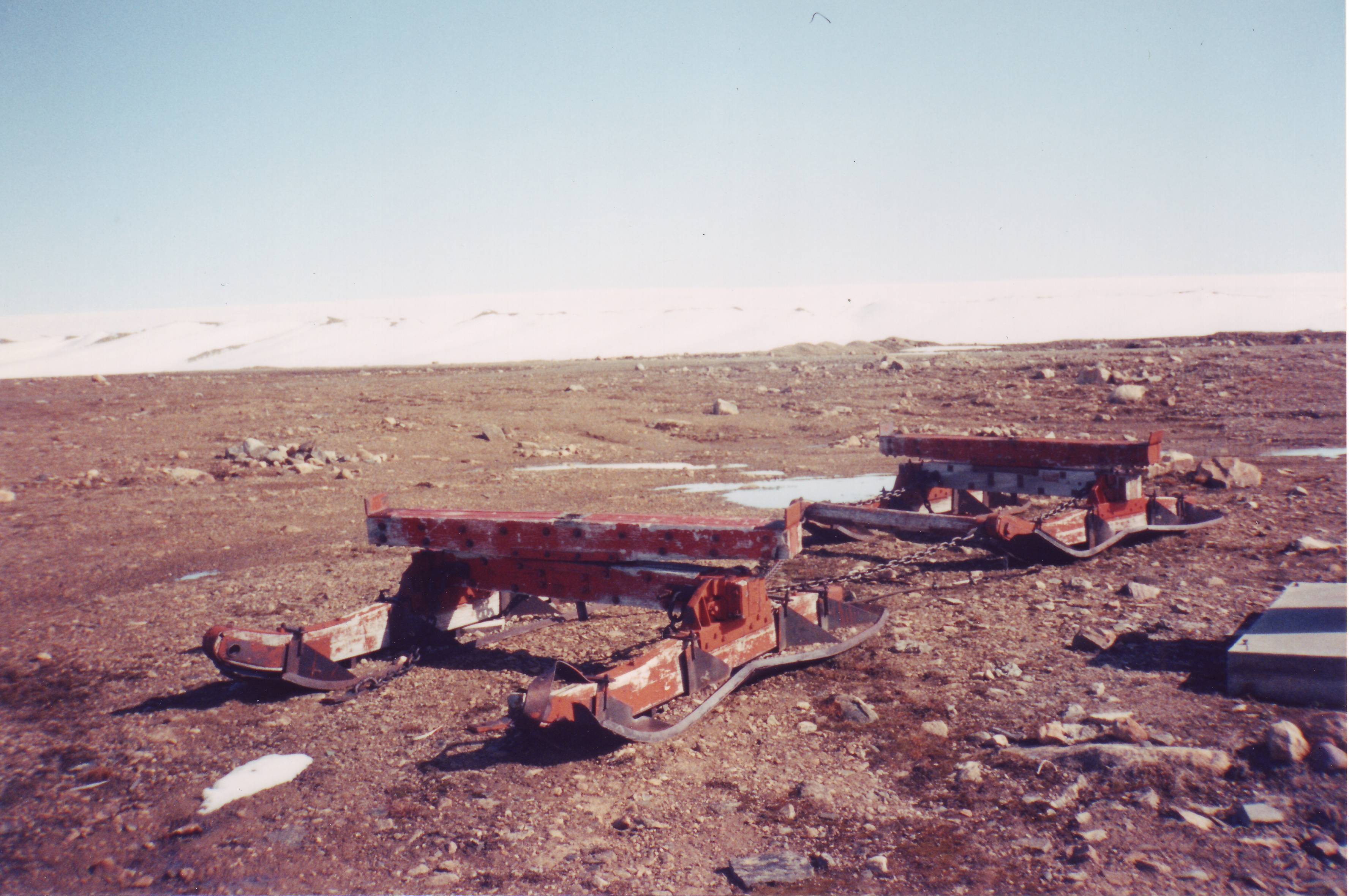
The solution was the construction of a polar training facility that would double as a cover story for digging into the ice. Camp Century was established in 1958, approximately 150 miles east of Thule, and was presented to the Danes as a scientific research site and a test area for construction work in arctic conditions.
In reality, Camp Century was a major military installation, with almost two miles of covered trenches as well as laboratories, an underground railway track and a PM-2A portable nuclear reactor to supply power. But it served as only a microcosm of what Iceworm was intended to be.
The so-called underground city was planned to eventually be three times the size of Denmark, at 52,000 square miles, and include more than 2,000 firing positions through which the 600 MRBMs (nicknamed “Iceman missiles”) could be moved on rail cars. Eleven thousand service personnel would live under the ice and be rotated out of their posts via aircraft equipped with landing skis that would touch down on surface airstrips.
To keep those prospective personnel motivated, Camp Century would offer greater amenities than just the standard military running track and rec center. The base would feature a hospital, school and movie theater, and it was scheduled to receive two more nuclear generators to supply the installation’s energy once it had been fully constructed.
Snowplows designed in Switzerland began to dig trenches into the ice. The longest of these, at more than 1,000 feet, was nicknamed “Main Street.” Covered with steel arches and a layer of camouflaging snow, it was sturdy enough to house the convoy of Iceman missiles that would be transported under the ground, each of which would carry a warhead with a 2.4-megaton yield (150 times as powerful as the bomb dropped on Hiroshima in 1945).
If launched, 600 of these missiles would be sufficient to destroy 80 percent of U.S. targets in the Soviet Union and Eastern Europe. By contrast, the U.S.S.R. would need to launch an estimated 3,500 eight-megaton missiles to destroy the missile installation in Greenland — if it even knew of the facility’s existence beneath the ice.
It was the behavior of the ice that proved to be the program’s undoing (alongside its estimated $2.37 billion price tag, equivalent to $25.24 billion today). The slow but gradual winter movement of the Greenland ice sheet caused the trenches to warp, with the ceiling of the nuclear reactor room dropping by five feet in 1962.
Despite an attempt to raise it during that summer, the military — now aware of how tenuous an atomic city hemmed in by shifting ice seemed — took the cautious approach of downgrading Century to a summer camp in 1964, before finally abandoning the site in 1967.
Instead of launching missiles, the last noteworthy exercise performed at the base was the drilling of a probe a mile down into the underlying bedrock, which at least lent the “scientific test area” cover story fed to Denmark a note of truth.
Ironically, it was this drilling that gave Iceworm its greatest success. While the bedrock core extracted in 1966 was stored and ultimately forgotten, its rediscovery in 2017 revealed it to contain fossilized leaf and twig fragments, proving that plants had once grown under one of the coldest regions on earth.
This helped thaw some of the frostiness that had developed between the United States and Denmark when Project Iceworm was publicly disclosed in 1997. Similar tensions had struck decades earlier, when, during a routine surveillance flight south of Thule Air Base in 1968, a B-52 bomber crashed and spread its payload — four 1.1-megaton thermonuclear bombs — over sea ice in North Star Bay. Air Force personnel and the local Inuit population were requested to assist with the cleanup, which became informally known as “Dr. Freezelove” and recovered only three of the four ruptured warheads.
A missing atomic bomb isn’t the only U.S. military debris left in Greenland. When Project Iceworm was abandoned, it was hoped that the shifting ice that had compromised its construction would entomb the materiel the U.S. Army Corps of Engineer had left behind. This included 9,200 tons of building equipment, 53,000 gallons of diesel fuel, carcinogenic chemicals used in paint, and radioactive cooling water from the camp’s portable nuclear reactor.
A 2016 study suggested that these contaminants are likely to be released in a few decades’ time as a warmer climate continues to melt the ice sheet. This news seemed to confirm a Greenlandic proverb: “If you hush up a ghost, it grows bigger.”
China’s President Xi Jinping and US President Joe Biden will meet this week.
They’re expected to agree to limit the use of AI in nuclear weapons, a report said.
The meeting comes amid increasing tensions between the US and China.
US President Joe Biden and his Chinese counterpart Xi Jinping are set to sign a deal limiting the use of artificial intelligence in nuclear weapon control systems, according to The South China Morning Post.
The leaders are due to meet Wednesday at the Asia-Pacific Economic Cooperation (APEC) summit in San Francisco against a backdrop of increasing tensions between the superpowers.
Among the top items on the agenda is the proliferation of AI in military technologies, two sources familiar with the planned discussions told The South China Morning Post.
Biden and Xi will pledge a deal limiting the use of AI in autonomous weaponry, such as drones, as well as the systems used for the control and deployment of nuclear warheads, the report said.
most of the exposure people received came in the form of internal exposures from ingesting radioactivity, not from external, ambient gamma rays in the environment.
Medical examinations of people in contaminated regions showed a significant increase in the general number of chromosomal mutations in newborns, and the frequency of birth defects in southern Belarus was found to be significantly higher than the control. In terms of general health, Konoplia reported, adults showed an increase in diseases of the circulatory system, hypertension, coronary illness, heart attacks, and myocardial problems, plus a rise in respiratory diseases.
Researchers on the UN team who had security clearances had access to classified studies that showed that 79 percent of children in the Marshall Islands exposed to American bomb blasts under the age of ten had developed thyroid cancer. Seventy-nine percent of several hundred children had thyroid cancer when the background rate was one in a million.
Health physicists fear lawsuits more than nuclear accidents
In 1987, a year after the Chernobyl accident, the US Health Physics Society met in Columbia, Maryland. Health physicists are scientists who are responsible for radiological protection at nuclear power plants, nuclear weapons plants, and hospitals. They are called on in cases of nuclear accidents. The conference’s keynote speaker came from the Department of Energy (DOE); the title of his talk drew on a sports analogy: “Radiation: The Offense and the Defense.” Switching metaphors to geopolitics, the speaker announced to the hall of nuclear professionals that his talk amounted to “the party line.” The biggest threat to nuclear industries, he told the gathered professionals, was not more disasters like Chernobyl and Three Mile Island but lawsuits.
After the address, lawyers from the Department of Justice (DOJ) met in break-out groups with the health physicists to prepare them to serve as “expert witnesses” against claimants suing the US government for alleged health problems due to exposure from radioactivity issued in the production and testing of nuclear weapons during the Cold War. That’s right: the DOE and the DOJ were preparing private citizens to defend the US government and its corporate contractors as they ostensibly served as “objective” scientific experts in US courts.
Health physics is an extremely important field for our everyday lives. Health physicists set standards for radiation protection and evaluate damage after nuclear emergencies. They determine where radiologists set the dial for CT scans and X-rays. They calculate how radioactive our food can be (and our food is often radioactive) and determine acceptable levels of radiation in our workplaces, environments, bodies of water, and air. Despite its importance, as it is practiced inside university labs and government organizations, health physics is far from an independent field engaged in the objective, open-ended pursuit of knowledge.
Compromised Science
The field of health physics emerged inside the Manhattan Project along with the development of the world’s first nuclear bombs. From the United States, it migrated abroad. For the past seventy-five years, the vast majority of health physicists have been employed in national nuclear agencies or in universities with research underwritten by national nuclear agencies. As much as we in the academy like to make distinctions between apolitical, academic research and politicized paid research outside the academy, during the Cold War those distinctions hardly made sense. From the end of World War II until the 1970s, federal grants paid for 70 percent of university research. The largest federal donors were the Department of Defense, the US Atomic Energy Agency, and a dozen federal security agencies.
Historian Peter Galison estimated in 2004 that the volume of classified research surpassed open literature in American libraries by five to ten times. Put another way, for every article published by American academics in open journals, five to ten articles were filed in sealed repositories available only to the 4 million Americans with security clearances. Often, the same researchers penned both open and classified work. Health physics benefited from the largesse of the Pentagon and the Atomic Energy Commission, which produced nuclear weapons for US arsenals. Correspondingly, the field suffered from a closed circle of knowledge that has had a major impact on our abilities to assess and respond to both nuclear emergencies and quotidian radioactive contamination.
Tracking the production of knowledge in the field of health physics shows how the effective renunciation of facts has played a major role in this branch of science. More generally, it demonstrates how the boundary between open and classified research is critical yet rarely acknowledged. The response of international health physicists to the Chernobyl disaster, which occurred in Soviet Ukraine in April 1986, shows heavily politicized science in action. History reveals that the official, federally sponsored cultivation of “alternative facts” is not new but has deep roots in the twentieth century.
Chernobyl came at an unfortunate time for nuclear professionals. As the Cold War creaked to an end, lawsuits abounded. In the 1980s, Marshall Islanders—their homes blasted in nuclear tests, their bodies subjected to classified medical study by scientists contracted by the Atomic Energy Agency—went to court. In Utah and Nevada, those who lived downwind from the Nevada Test Site were lining up for lawsuits. Meanwhile, the Metropolitan Edison Company in Pennsylvania faced lawsuits from plaintiffs living near the Three Mile Island nuclear power plant, which suffered a partial meltdown in 1979.
In the late 1980s, reporters and congressional investigators began to inquire into US government agencies’ wide-scale engagement in human radiation experiments, which included exposing tens of thousands of soldiers to nuclear blasts. These legal actions and investigations constituted an existential threat for nuclear industries, civilian and military. Chernobyl cast into doubt industry statements that nuclear energy is safer than coal, than flying, than living in high-altitude Denver. If another nuclear accident were to occur, UN International Atomic Energy Agency (IAEA) head Hans Blix told the IAEA board of governors a few weeks after the Chernobyl explosions, “I fear the general public will no longer believe any contention that the risk of a severe accident was so small as to be almost negligible.”
Because radioactivity is insensible, society relies on scientists and their technologies to count ionizing radiation and analyze its effect on biological organisms. In 1986, the three-decades-old Life Span Study of Japanese bomb survivors served in the West as the “gold standard” for radiation exposure. It became the chief referent in lawsuits over health damage from radioactive contaminants. The Life Span Study started in 1950. In subsequent decades, American and Japanese scientists followed bomb survivors and their offspring, looking for possible health effects from exposure to the bomb blasts. By 1986, the group had detected a significant increase in a handful of cancers and, surprisingly, no birth defects, though geneticists had expected them.
The Life Span Study told scientists a great deal about the effects of a single exposure of a terrifically large blast of radiation lasting less than a second but little about the impact of chronic, low doses of radioactivity—the kind of exposures served up by the Chernobyl accident and related to the ongoing lawsuits in the United States. At the time, like now, scientists confessed they knew very little about the effects of low doses of radioactivity on human health. For that reason, after Chernobyl, leading scientific administrators in UN agencies and national health agencies called for using the Chernobyl accident to carry out a long-term, large-scale epidemiological study to determine the effects of low doses of radiation on human health. Unfortunately, those requests went nowhere at first because Soviet officials asserted that health damage was limited to the two dozen firefighters who died from acute radiation poisoning. They insisted that they were monitoring the health of neighboring residents and found no change in their health. Soviet spokespeople told the international community that they did not need help, thank you very much.
Silos of Knowledge
Health physics, a moribund field in the West and a secretive field in the Soviet Union, suddenly appeared in the spotlight after the Chernobyl accident. Archival records show that two silos of knowledge about the effects of low doses of radiation on human health emerged in the wake of the Chernobyl accident. Western health physicists oriented around the Life Span Study, while Soviet health physicists worked from specialized, closed clinics producing literature that mostly was filed in classified libraries. A few months after the accident, Western health physicists— extrapolating from Hiroshima—announced that, given the reported levels of radioactivity released in the accident, they expected to see no detectable health problems as a result. From the Soviet side, spokespeople gave vague assurances, but scientists were silent. For security reasons, Soviet health physicists did not take the podium. Anyway, they were busy.
Behind the Iron Curtain, Soviet scientists near the accident quietly got to work figuring out the extent of the damage. A few days after the accident, Anatolii Romanenko, minister of health in Ukraine, called up medical brigades to examine evacuees and villagers in contaminated areas. Several thousand doctors and nurses fanned out across the Soviet countryside. The effort would have been unimaginable outside of a socialist state highly skilled in the art of mass mobilization. In Ukraine alone, doctors examined seventy thousand children and over one hundred thousand adults in the summer following the accident. People judged to have received high doses were sent to hospitals in Kiev, Leningrad, and Moscow. By late May, the number of hospitalized citizens rose to the tens of thousands.
For the subsequent five years, the last years of the Soviet Union, doctors and medical researchers in Ukraine and Belarus tracked health statistics in contaminated regions. They reported the results in classified documents each year. Their reports show that after the accident, frequencies of health problems in five major disease categories grew annually. Soviet doctors did not have access to ambient measurements of radioactivity in the environment and the food chain because that information was classified, so doctors did what they had long done in the Soviet Union. They used their patients’ bodies as biological barometers to determine doses of radioactivity. Medical practitioners counted white and red blood cells, held radiation detection counters to the thyroids of their patients, measured blood pressure, and scanned urine. They looked for chromosomal damage in blood cells and counts of radioactivity in tooth enamel. Using these biomarkers, Soviet doctors determined the doses of radioactivity their patients had encountered externally and ingested internally. Doctors calculated the range of radioactive isotopes lodged in their patients’ bodies. A KGB general who ran his own KGB clinic in Kiev for KGB agents and their families counted twelve different radioactive isotopes in organs and tissue of his patients.
In 1986, in neighboring Belarus, which received the majority of Chernobyl fallout, scientists at the Belarusian Academy of Science set up case-control studies to track the impact in real time on the health of children and pregnant women, two populations judged to be especially vulnerable. The academy also commissioned dozens of studies of radioactive contamination in the atmosphere, soils, plants, agricultural products, and livestock. They drew on a body of knowledge that Soviet scientists had clandestinely developed over four decades in clinics stationed near secret nuclear installations that had suffered a large number of accidents and spills of radioactive effluents during the Cold War rush to produce weapons. In April 1989, the respected president of the Belarusian Academy of Science sent to Moscow a twenty-five-page report that reflected the renaissance of science in the fields of radioecology and radiobiology that had flourished in the contaminated regions as a result of the Chernobyl disaster. Evgenii Konoplia laid out what his Institute of Radiobiology had found.
Almost the entire territory of Belarus had been contaminated, Konoplia wrote, except for a few northern regions.
Thousands of lives are at risk as Al-Shifa Hospital becomes non-operational, with ICUs and incubators shutting down due to lack of fuel, and medical staff and patients trapped waiting to die. Israeli forces continue to shell hospitals in north Gaza.
SCHEERPOST, By Mustafa Aby Sneineh / Mondoweiss, November 13, 2023
Casualties
11,078 killed*, including 4,506 children, and 27,490 wounded in Gaza
184 Palestinians killed in the occupied West Bank and East Jerusalem
Israel revises its estimated October 7 death toll down from 1,400 to 1,200
*The casualty numbers from Gaza have not been updated in at least 2 days, as the “collapse of services and communications” has made it nearly impossible for the health ministry to document and update the numbers
Key Developments
Israeli heavy fire targeting Al-Shifa trapped thousands of people who were displaced, wounded, sick, and medical staff inside it, without electricity, food, water, or fuel.
Al-Jazeera reported that Israeli forces are located approximately 700 meters from the Al-Shifa hospital’s gates, and firing, and armed clashes could be heard in the distance.
WHO: “There are reports that some people who fled the hospital have been shot at, wounded and even killed.”
Al-Quds Hospital in Gaza City stopped working completely after running out of fuel to generate electricity.
Doctors at al-Ahli Arab Hospital say it is now the last functioning hospital in Gaza City and the northern areas and that it is “overwhelmed” with casualties.
Israeli forces are surrounding the medical quarter in the center of Gaza City, where three major hospitals are located, including Al-Nasr Medical Complex, Al-Rantisi, and St John of Jerusalem Eye Hospital.
Israel said 43 soldiers were killed since October 28, and Hamas released footage of targeting tanks in Gaza.
Hamas’s Izz el-Din al-Qassam Brigades spokesperson said that fighters documented the destruction, completely or partially, of 160 Israeli military vehicles, which includes tanks, bulldozers and personnel carriers.
The Israeli army said that it killed 150 Hamas fighters last week during battles in the Al-Shati refugee camp northwest of Gaza City, and claimed that it captured a station of Hamas’s Badr unit.
Thousands protest worldwide while Israel carries on arrest campaign in the occupied West Bank.
Al-Shifa Hospital ‘completely out of service’: Patients dying, bodies piling up outside
Following days of relentless attacks from the air and land on northern Gaza’s hospitals, the healthcare system in the north has seen a near-complete collapse, with only one hospital, the previously-bombed Al-Ahli Arab Hospital, remaining functional.
Gaza’s largest hospital, Al-Shifa Hospital, is“completely out of service”, Gaza’s health ministry spokesperson Ashraf al-Qudra told Al Jazeera. Several people, including at least two premature infants and five ICU patients, have already died due to a lack of oxygen, medical supplies, and the inability of doctors and medical staff to perform life-saving surgeries as a result of power outages and no fuel.
The Ramallah-based Palestinian Ministry of Health spokesperson Mai al-Kaila released a statement on Sunday detailing the desperate conditions at the Al-Shifa hospital.
“The Israeli occupation army does not evacuate hospitals, but rather throws the wounded and sick into the street to certain death,” al-Khaila said, referring to reports and eyewitness testimony that Israeli forces were shooting at people inside the hospitals, as well as those attempting to evacuate.
“This is not an evacuation, but an expulsion at gunpoint,” she said.
Among the patients dying or facing imminent death, al-Kaila said, are children and adults on kidney dialysis who “die in their homes without receiving dialysis sessions.”
Al-Kaila confirmed the death of 12 patients inside the Al-Shifa Medical Complex so far. She added that all 3,000 cancer patients who were being treated at the Al-Rantisi and Al-Turki Hospital in Gaza “have now been left to die” after they were forcibly expelled from the hospitals due to Israeli bombardment.
“All pregnant women and those with dangerous pregnancies are at risk, as women do not find anyone to provide them with treatment and medical services in Gaza. Every woman about to give birth will not find anyone to provide her with any medical service,” Al-Kaila went on to say.
Early on in Israel’s bombardment, medical officials reported that there were an estimated 50,000 pregnant women in Gaza, including around 5,000 expecting mothers due to deliver at any moment. Over the weeks, several reports have emerged of pregnant women among those killed by Israeli airstrikes, causing doctors to have to cut out their unborn fetuses in an attempt to save the babies.
In addition to sick patients in the hospital who can’t be treated, as well as chronically ill patients being left to die, hundreds of Palestinians who are becoming wounded and sick as a result of Israeli bombardment cannot reach the hospital itself. Over the past month of Israeli bombardment, Gaza’s infrastructure, including roads around hospitals, have been decimated, making it nearly impossible for ambulances to move to and from the hospital to reach bombed-out buildings and the wounded.
Additionally, medical staff inside the hospital cannot physically move inside the hospital, as Israeli drones and ground forces “fire at everyone who moves inside the complex.” Doctors and staff, as well as the sick and displaced, have little to no food, while water has been completely cut off in the complex.
Medical waste is piling up inside the departments, while the hospital’s blood reserves have spoiled due to power outages, meaning that needy patients can no longer receive life-saving blood transfusions.
Outside the hospital, bodies of Palestinian martyrs are piling up, with medical teams unable to reach them safely without coming under Israeli fire.
According to al-Kail, the bodies have begun to decompose in the hospital courtyard. She added that stray dogs have “mauled” some of the bodies.
Wafa news agency’s correspondent reported Sunday that dozens of martyrs’ bodies were still lying in the hospital’s courtyard and the surrounding area. Paramedics could not reach them due to the intensity of Israeli fire, and since 9 p.m. local time on Saturday, up until 9 a.m. on Sunday, no ambulances were seen leaving or arriving at Al-Shifa Hospital.
Patients, medical staff unable to evacuate al-Shifa
Al-Shifa Hospital saw a mass exodus of Palestinians over the weekend, including patients, their families, some medical staff, and thousands of Palestinians who were seeking shelter at the hospital.
It remained unclear exactly how many people, including patients, medical staff, and internally displaced persons, remained inside the hospital, but several reports put that number around several thousand. …………………………………………………………………………………………………………
Al-Qudra said the only safe way to evacuate the 650 patients at al-Shifa would be to Egypt, not to southern Gaza, as the hospitals there are overwhelmed and are also under imminent threat of shutting down due to fuel shortages.
According to the International Committee of the Red Cross, among the patients still at Al-Shifa are nearly 60 patients in ICUs, dozens of premature babies in incubators, and more than 500 patients in the dialysis department.
Calling for an immediate ceasefire, the WHO said: “Patients seeking health care should never be exposed to fear, and health workers who have taken an oath to treat them should never be forced to risk their own lives to provide care.”……………………………………………………………………………
Al-Quds Hospital in Gaza City stopped working completely
On Sunday morning, the Palestine Red Crescent Society (PRCS) announced that Al-Quds Hospital in Gaza City stopped working completely after running out of fuel to generate electricity………………………………………………………………………………………………
Israeli forces shell UN agency headquarters as thousands of Palestinians take shelter
On Sunday morning, Israeli forces shelled the compound of the United Nations Development Programme (UNDP), where thousands of Palestinians are sheltering in Gaza City, in the northern Gaza Strip.
UNDP said that it was “deeply distressed” upon hearing the development. It vacated its staff from the location on 13 October.
“The shelling has reportedly resulted in a significant number of deaths and injuries,” the UNDP said in a statement. Wafa reported that at least five were killed till Sunday afternoon. ……………
Israel says 43 soldiers killed, Hamas releases footage targeting tanks in Gaza………………………………………………………………………………………………………………..
Thousands protest worldwide while Israel carries on arrest campaign in occupied West Bank
Hundreds of thousands of people marched in Europe’s major cities and in the U.S., calling for a ceasefire in the Gaza Strip, and showing their support and solidarity with the Palestinians.
Pro-Palestine protests rallied near U.S. President Joe Biden’s home in Wilmington, Delaware, as frustration grew at his administration’s failure to call for a ceasefire and the unwavering support of Israel……………………………………………………………………………..
The Archbishop of Canterbury, Justin Welby, tweeted on Saturday that “the relentless bombardment of hospitals and civilians in Gaza is intolerable. It’s against international humanitarian law – it must stop and stop now.”…………..
The Al-Shifa hospital ran out of fuel due to the ongoing siege by Israeli forces. Occupation snipers and drones have been positioned all around the hospital complex, opening fire at any sign of movement.
The Al-Shifa hospital in Gaza, the largest medical facility in the besieged strip, was forced to suspend its operations on the morning of November 11 after it ran out of fuel. Patients have already begun to die as Israeli occupation forces have laid siege to the hospital.
Israeli snipers and drones positioned all around the hospital have opened fire at any sign of movement.
Abed Ghazal, a health activist from Palestine with the People’s Health Movement, said on Saturday, that it is “astounding that hospitals are being treated as legitimate targets.” As Ghazal provided updates, the people working at Al-Shifa, as well as those sheltering there, remained under direct attack.
Health workers at Al-Shifa are now forced to provide care with access to virtually no medical supplies at all, and patients are forced to cram in the corridors, Ghazal said. As many nurses and doctors have spent weeks in the hospitals without stopping, with little news about families and friends, the pressure is now getting worse.
While Al-Shifa’s health workers vowed to remain as long as patients needed care, they have criticized the international response to what has been happening around the hospital. The international reaction to the attacks on Al-Shifa and other hospital complexes in Gaza is far from enough, Ghazal said, and it should be denounced for what it is.
Speaking to Al Jazeera, Al-Shifa’s director, Muhammad Abu Salmiya had said, “Patients are dying by the minute, victims and wounded are also dying”, confirming that one baby in an incubator had died, as well as a young man in the intensive care unit.
Gaza’s Deputy Health Minister, Dr. Youssef Abu Alreesh later told the news publication that all generators and power sources in the hospital were off. There are 39 newborn babies in incubators at Al-Shifa, now kept alive by manual support as both generators and solar panels have become non-operational.
Shortly after the power blackout on Saturday, Al-Shifa’s yard was also struck by shelling, causing a fire. Ambulances have been prevented from entering or leaving the hospital complex.
The IOF has cordoned off the hospital complex, while buildings in its vicinity have been shelled non-stop for over 12 hours as of Saturday morning. “Any moving person within the compound is targeted”, Salmiya said, adding that one member of the medical personnel had been shot and killed by a sniper as he tried to reach the babies in the incubator.
“A few families tried to leave but they were targeted, now they are lying dead outside the hospital”, Alreesh told Al Jazeera, adding that the hospital’s intensive care unit had also been hit by mortar fire.
Al-Shifa no longer has electricity and internet, and has been left without fuel, food, water, and medical supplies. Doctors Without Borders (MSF) stated early on Saturday that it was unable to contact any of its staff inside Al-Shifa, adding that there were patients in the hospital who were in critical condition and unable to move.
Tens of thousands of people displaced by the Israeli bombardment who were seeking shelter in the hospital yard are currently also trapped.
Palestinian Health Ministry’s Director-General, Mounir Al-Barsh has stated that a mass grave would have to be dug at Al-Shifa on Saturday to bury the bodies of 100 people who have died at the hospital– “We cannot move within or outside the perimeter of the hospital. We are surrounded, we cannot bury our dead.”
Israel had bombed the Al Shifa Hospital at least five times between November 9 and 10, as confirmed by the spokesperson of the Palestinian Health Ministry, Ashraf al-Qudra. At least 13 people were killed after Israel bombed Al-Shifa’s obstetrics department and courtyard early on Friday.
The Israeli forces also dropped internationally-banned white phosphorus bombs on neighborhoods around Al-Shifa on Friday, the Wafa News Agency reported.
Two people were also killed in an attack in the vicinity of the Al-Nasr Medical Center. The attack forced the closureof the facility’s children’s hospital which is the sole remaining specialized pediatric care unit in North Gaza, according to the World Health Organization.
In a separate statement on Friday night, the Palestinian Red Crescent Society (PRCS) condemned a direct attack by occupying forces on Al-Quds hospital, including the direct firing of live ammunition at its intensive care unit (ICU). The attack killed one displaced person and injured 28 others.
As of Friday, the hospital had remained isolated for the fifth consecutive day amid shortages of food, water and medical supplies, due to continuous Israeli shelling destroying buildings and streets in the vicinity, and cutting off access routes to Al-Quds.
The head of the Al-Nasr hospital and the Al Rantisi Pediatric Hospital, Mustafa al-Kahlout, toldCNN that the facilities were “completely surrounded” and that Israeli tanks were positioned outside. Al-Rantisi Hospital was also directly hit on November 9, which caused fires and damage, according to an update by the UN OCHA. The Al Awda hospital in Jabalia was also bombarded on November 10, in what is being called a “day of war against hospitals”.
According to an update published by the UN OCHA on November 10, 20 out Gaza’s 36 hospitals are no longer functioning because of Israel’s attacks. Israel has killed at least 11,078 Palestinians since the start of its genocidal bombardment of Gaza on October 7. Another 27,490 people have been injured during this period.
The Nuclear Notebook is researched and written by the staff of the Federation of American Scientists’ Nuclear Information Project: director Hans M. Kristensen, senior research fellow Matt Korda, research associate Eliana Johns, and Scoville fellow Mackenzie Knight. The Nuclear Notebook column has been published in the Bulletin of the Atomic Scientists since 1987. This issue’s column examines the current state of global nuclear sharing arrangements, which include non-nuclear countries that possess nuclear-capable delivery systems for employment of a nuclear-armed state’s nuclear weapons.
ollectively, the world’s estimated 12,512 nuclear warheads belong to just nine countries. However, there are more than two dozen additional countries that participate in nuclear mission-related arrangements. While these countries do not have direct launch authority over any nuclear warheads, they play an important role in their storage, planning, delivery, and safety and use-control, and therefore merit a degree of scrutiny alongside their nuclear-armed peers.
Nuclear sharing: what it is and is not
A common misconception surrounding nuclear sharing is that it refers to one country simply handing its nuclear weapons or launch authority to another country. While there have been specific instances during the Cold War when the United States’ allies maintained a relatively high degree of control over the nuclear weapons stationed on their soil, this is no longer the case in peacetime.
Nuclear sharing, not to be confused with burden sharing, generally refers to the practice of allowing non-nuclear countries to operate specially configured launchers to employ a nuclear-armed state’s nuclear weapons in time of war. The nuclear sharing mission is a subset of a much broader range of nuclear-related activities that can take several forms (see also Figure 1 on original):
Maintain nuclear forces to provide nuclear protection for non-nuclear countries;
Permanently hosting another country’s nuclear weapons or delivery systems;
Providing delivery systems to be capable of employing another country’s nuclear weapons;
Providing conventional capabilities to support another country’s nuclear strike mission; or
Cooperating with another country on nuclear planning and targeting.
In recent years, nuclear sharing arrangements have reentered the international spotlight. The United States is modernizing the infrastructure that supports its nuclear sharing mission in Europe and is preparing to deploy its new B61-12 gravity bombs to European air bases for delivery by US and allied aircraft. Meanwhile, following its invasion of Ukraine in 2022, Russia says it is transferring nuclear-capable delivery systems to Belarus, training Belarusian military personnel on how to use them, and claiming to have deployed Russian nuclear weapons on Belarusian territory.
Participation in nuclear-related arrangements will increase in the coming years, as new NATO members Sweden and Finland join the Alliance’s Nuclear Planning Group and potentially decide to participate in NATO’s annual nuclear strike exercise, and countries like Poland and South Korea have advocated a role in the United States’ nuclear mission as well.
US-NATO nuclear sharing
The governance of US nuclear weapons deployments in Europe is administered through distinct types of parallel agreements with the host or “user nation:”…………………………………………………………………………………………………………………………………………………..
Nuclear sharing during the Cold War………………………………………………………………………………..
Nuclear sharing today
Today, approximately 100 US nuclear weapons are estimated to be stored at six bases in five countries, with one additional base (RAF Lakenheath) currently undergoing modernization to potentially store nuclear weapons in the future.
The United States is preparing to replace all legacy versions of the B61 gravity bomb deployed in Europe with the incoming B61-12, which uses a modified version of the warhead used in the current B61-4 gravity bomb. In addition to US heavy bombers, the B61-12 will also be integrated onto US- and allied-operated tactical aircraft, ………………………………………………………………………………
—Kleine Brogel Air Base, Belgium……………………….
—Volkel Air Base, the Netherlands……………………………
—Aviano Air Base, Italy……………………………………..
—Ghedi Air Base, Italy……………………………….
—Lakenheath Royal Air Force Base, United Kingdom………………………………….
Nuclear sharing and the Nuclear Non-Proliferation Treaty………………………………………………. Nuclear authorization and consultation
As the war between Israel and Hamas enters its second month, one of the top priorities of all parties involved is to prevent the conflict from expanding regionally. Israeli concerns over the emergence of a northern front with Hezbollah along Israel’s border with Lebanon have prompted the US to deploy significant military power to the eastern Mediterranean Sea as a show of force to deter both Hezbollah and Iran from intervening. The prospect of a larger war between Israel and Iran has also shone an uncomfortable light on Israel’s nuclear weapons capability, and the possibility of these weapons being used if the fighting in Gaza were to expand regionally. Both Israel and the US have accused Iran of pursuing a covert nuclear weapons program, which Iran vehemently denies.
Recent comments by Israeli Heritage Minister Amichai Eliyahu, where he alluded to the possibility that one of Israel’s options in the war against Hamas could be to use nuclear weapons in the Gaza Strip, thrust the reality of Israel’s unacknowledged nuclear weapons program into the international spotlight. Eliyahu’s comments were quickly disavowed by Israeli Prime Minister Benjamin Netanyahu, and the heritage minister was suspended from attending cabinet meetings.
Eliyahu, a member of National Security Minister Itamar Ben Gvir’s far-right Otzma Yehudit (Jewish Power) party, made his comments while answering a question during a live radio interview. “Your expectation is that tomorrow morning we’d drop what amounts to some kind of a nuclear bomb on all of Gaza, flattening them, eliminating everybody there?” the interviewer asked. “That’s one way,” Eliyahu responded.
It should be noted that Eliyahu never mentioned nuclear weapons himself. Likewise, the questioner did not speak of an actual nuclear weapon, but rather something “that amounts to” a nuclear weapon. Many observers of the ongoing Gaza conflict have made comparisons with the volume of high explosives that have been dropped on Gaza by the Israeli Air Force since Oct. 7, when Hamas launched a surprise attack on Israeli military and civilian infrastructure surrounding Gaza, killing some 1,400 Israelis, most of them civilians. The tonnage dropped on Gaza is estimated at more than 20,000 tons, the equivalent of a 20 kiloton nuclear bomb, which is larger than either of the atomic bombs dropped by the US on the Japanese cities of Hiroshima and Nagasaki at the end of the World War II.
Nuclear Ambiguity
That the mere allusion to the existence and possible use of nuclear weapons by an Israeli government official, however vague and indistinct, could attract such attention underscores the controversy that surrounds Israel’s nuclear weapons program.
The Israeli nuclear weapons program dates to the mid-1950s, when the country’s first prime minister, David Ben-Gurion, ordered the Israeli military to develop a nuclear insurance plan designed to offset the combined conventional military superiority of Israel’s Arab neighbors. Developed in great secrecy with the assistance of France, the Israeli program was centered on a nuclear weapons production facility located at Dimona, in the Negev Desert, where Israel, under the guise of a civilian nuclear power program, began to produce the plutonium necessary for a nuclear weapon.
US President John F. Kennedy confronted Ben-Gurion about Dimona during a May 1961 meeting. Under pressure, Ben-Gurion stated that the Dimona plant had a pilot plutonium extraction capability that could be used for military purposes but sought to mollify US concerns by declaring that Israel had “no intention to develop weapons capacity now.”
The administration of President Richard Nixon subsequently worked with Israel to craft a policy of mutual obfuscation, where Israel promised that it would not be the first to “introduce” nuclear weapons to the Middle East, but premised this on the notion that the term “introduce” meant the acknowledgement of the existence of such a weapon — in short, “introduction” was not about physical possession, but about public acknowledgment of that possession.
While Israel has sought to assiduously maintain its policy of nuclear ambiguity, there have been some notable incidents that strain the credulity of this posture. In 2004, while speaking at a political party gathering in Tel Aviv, Israeli Prime Minister Ariel Sharon made an indirect comparison between the nuclear ambitions, real and imagined, of Libya and Iran, which he indicated should be halted, and Israel, which Sharon said, “must not be touched when it comes to its deterrent capability.”
In a December 2006 interview with German television, Sharon’s successor, Ehud Olmert, appeared to openly acknowledge Israel’s nuclear status when he criticized Iran for aspiring “to have nuclear weapons, as America, France, Israel, Russia.”
The Israeli Deterrence Model
In 1986 Mordechai Vanunu, an Israeli nuclear technician who had been employed at the Dimona facility, went public with information about the technical capacity of Israel to produce the fissile material necessary for nuclear weapons. The Stockholm International Peace Research Institute currently estimates that Israel’s nuclear arsenal consists of 80 weapons — 50 for delivery using ballistic missiles, and 30 for delivery by aircraft. Israel is also believed to possess an unknown number of nuclear artillery shells and atomic demolition munitions.
How Israel might transition from its posture of nuclear ambiguity to being a self-declared nuclear state remains unknown. However, given Israel’s close collaboration with South Africa over the development and probable testing of nuclear weapons, the South African model of making its nuclear deterrence public is likely to resemble Israel’s approach. This involves a three-phase strategy, with phase one being nuclear ambiguity. Phase two involves what is known as covert conditioning, involving a variety of non-attributable methods to reveal nuclear capacity as a means of inducement, persuasion and/or coercion. The third phase involves overtly acknowledging possession of weapons capability, followed by a series of escalating steps — public announcement, public display, demonstration (e.g. a nuclear test), threatened use, and lastly, battlefield use.
Existential Threat
In the aftermath of the Oct. 7 attack by Hamas, Israel faces a crisis that its senior-most leadership describes as existential in nature. In 2022 and 2023, Israel carried out large-scale military exercises designed to test the Israel Defense Forces’ ability to respond to simultaneous attacks from all known enemies of Israel — Hamas, Hezbollah, Syria and Iran. While the official results of these exercises remain a state secret, some conclusions have been alluded to by Israeli military sources. First, any military conflict between Israel and Iran could only be conducted with significant military assistance from the US, which might not be forthcoming. Second, Hezbollah possesses sufficient missile capacity to overwhelm Israeli air defenses, enabling them to inflict serious harm to Israeli economic, political and military infrastructure. Thirdly, the Israeli exercises did not envision a major attack by Hamas that would consume so much of Israel’s conventional military power in response.
If the current conflict with Hamas were to escalate to involve both Hezbollah and Iran, Israel most probably lacks the conventional military capability to defeat this combined threat. At this juncture, Israel would face the decision of initiating the third phase of its nuclear deterrent posture: overt acknowledgement followed by escalatory steps. The decision to publicly declare an Israeli nuclear capability is a matter of great political sensitivity which, if done improperly, could turn even its US ally against it. This is why Israeli Prime Minister Benjamin Netanyahu responded so harshly to the indiscreet ruminations of an obscure Israeli minister. Any step of this magnitude must be conducted in a very controlled fashion, with very specific objectives in mind — all of which should be linked to deterring the potential for operational use, not encouraging it.
Scott Ritter is a former US Marine Corps intelligence officer whose service over a 20-plus-year career included tours of duty in the former Soviet Union implementing arms control agreements, serving on the staff of US Gen. Norman Schwarzkopf during the Gulf War and later as a chief weapons inspector with the UN in Iraq from 1991-98. The views expressed in this article are those of the author.
What Does the U.S. Space Force Actually Do? Inside the highly secretive military branch responsible for protecting American interests in a vulnerable new domain
NYT, By Jon Gertner, Nov. 8, 2023
Chief Master Sgt. Ron Lerch of the U.S. Space Force sat down in his office in Los Angeles one morning in September to deliver a briefing known as a threat assessment. The current “threats” in space are less sci-fi than you might expect, but there are a surprising number of them: At least 44,500 space objects now circle Earth, including 9,000 active satellites and 19,000 significant pieces of debris.
What’s most concerning isn’t the swarm of satellites but the types. “We know that there are kinetic kill vehicles,” Lerch said — for example, a Russian “nesting doll” satellite, in which a big satellite releases a tiny one and the tiny one releases a mechanism that can strike and damage another satellite. There are machines with the ability to cast nets and extend grappling hooks, too. China, whose presence in space now far outpaces Russia’s, is launching unmanned “space planes” into orbit, testing potentially unbreakable quantum communication links and adding A.I. capabilities to satellites.
An intelligence report, Lerch said, predicted the advent, within the next decade, of satellites with radio-frequency jammers, chemical sprayers and lasers that blind and disable the competition. All this would be in addition to the cyberwarfare tools, electromagnetic instruments and “ASAT” antisatellite missiles that already exist on the ground. In Lerch’s assessment, space looked less like a grand “new ocean” for exploration — phrasing meant to induce wonder that has lingered from the Kennedy administration — and more like a robotic battlefield, where the conflicts raging on Earth would soon extend ever upward.
The Space Force, the sixth and newest branch of the U.S. military, was authorized by Congress and signed into law by President Donald Trump in December 2019. Its creation was not a partisan endeavor, though Trump has boasted that the idea for the organization was his alone. The initiative had in fact been shaped within the armed forces and Congress over the previous 25 years, based on the premise that as satellite and space technologies evolved, America’s military organizations had to change as well……………………………………………………………………………….
nearly every aspect of modern warfare and defense — intelligence, surveillance, communications, operations, missile detection — has come to rely on links to orbiting satellites………………
the strategic exploitation of space now extends well beyond military concerns. Satellite phone systems have become widespread. Positioning and timing satellites, such as GPS (now overseen by the Space Force), allow for digital mapping, navigation, banking and agricultural management. A world without orbital weather surveys seems unthinkable. Modern life is reliant on space technologies to an extent that an interruption would create profound economic and social distress…………………………………………………………………………………………………………………
Guardians tend to think of the realm they patrol as a kind of structured multilevel terrain — Earth as being surrounded by three highways, or three rings. The nearest level, low Earth orbit (LEO), is host to constellations like SpaceX’s Starlink network and the International Space Station, which moves about 250 miles above us at 17,500 miles per hour. A medium Earth orbit (MEO), between 1,200 and 22,000 miles above, is where GPS satellites circle. At the highest ring — at least for now — is a track known as “geosynchronous” orbit (GEO), because an object in such an orbit keeps pace with Earth’s rotation. This band is home to DirectTV satellites, weather-tracking instruments from the National Oceanic and Atmospheric Administration and crucial Defense Department communication links.
It’s a technological zoo up there. The satellite mix is foreign and domestic, young and old, sinister and peaceful. The technologies are all different sizes, flying at different speeds and altitudes. The challenge for the force is to monitor all movement but also to track the threatening presence of debris, some of which is naturally occurring (tiny rocks, for instance) and some of which has human origins (like shards of old rockets). Because space junk can move at extraordinary velocities, a floating screw might pack a destructive punch equivalent to a small bomb……………………………………………………………………………………………………………………………………
Capt. Raymond Pereira, drawing on a white board, pointed me to another concern: the crowd of satellites in low Earth orbit. “I would say we’re probably already entering into an area where congestion is a problem,” he said, “and anything that would generate debris would be catastrophic for the domain.” One plausible theory is known as the Kessler Syndrome, named after the former NASA scientist Donald Kessler, which posits that a release of wreckage and fragments in this orbit could eventually lead to a domino effect of unstoppable destruction. Pereira pointed out that if someone (or something) were to touch off such an event, “they would not only be harming their adversary; they would be harming themselves.” But even short of that, a single collision or attack might hamstring science missions to the moon, or to Mars, or lead to failures for GPS and communications systems, a problem that could have huge consequences for life on Earth.
………………………. A treaty from the late 1960s, signed by most of the major nations on Earth, prohibits the use of nuclear weapons in space and designates the moon for peaceful purposes. But recently, I was told, satellites from foreign adversaries have been coming close to machines from the United States and its allies. The treaty says nothing about such provocations — or about grappling hooks, nesting dolls and cyberwarfare.
Space Force leaders readily describe their guardians as working toward a state of combat readiness…………………………………………………………..
Debris has led military strategists to ponder a related issue: In space, it’s difficult to get out of the way of conflict……………………………………………………………………………………………………………….
………………….. “And then potentially every satellite becomes more debris,” Saltzman remarked. “Every peaceful satellite could become a weapon accidentally.”…………………………………………………………………………………. more https://www.nytimes.com/2023/11/08/magazine/space-force.html
The Pacific Collective on Nuclear Issues has denounced once again the dumping of radioactive wastewater from the damaged Fukushima nuclear power plant into the Pacific Ocean, calling on Pacific leaders to suspend Japan’s status as a Pacific Islands Forum (PIF) dialogue partner.
The Collective, composed of civil society groups, non-governmental organizations and movements in the Pacific, issued a statement this week, during which the 52nd Pacific Islands Forum Leaders Meeting was held in the Cook Islands.
The statement condemned the Japanese government and the facility operator, Tokyo Electric Power Company (TEPCO), for insisting on this flawed and dangerous course of action.
“The findings of the independent panel of scientific experts commissioned by the Pacific Islands Forum were unequivocal – the data provided so far, to support Japan’s claim that the treated wastewater is safe, is inconsistent, unsound and therefore far from reliable,” the statement said, adding that “if the Japanese government and TEPCO believe the radioactive wastewater is safe, they should be prepared to safely dispose of it within terrestrial Japan.”
The Collective also declared that such dumping into the Pacific Ocean is a direct violation of human rights.
Aside from being a brazen violation of international law, the Collective said, Japan’s behavior and handling of this matter is an affront to the very sovereignty of Pacific states and unbecoming of a dialogue partner of the PIF.
Founded in 1971, the PIF is the region’s premier political and economic policy organization which comprises 18 members.
The Collective called on the Pacific leaders to reaffirm the long-held position of the Pacific to keep their region nuclear-free and to review diplomatic relations with Japan at the next Pacific Islands Forum Leaders Meeting in 2024.
They also called on the international community not to turn a blind eye to the threat that dumping radioactive wastewater into the Pacific Ocean poses to Pacific peoples, their livelihoods, safety, health and well-being.
Japan conducted the third round of release of nuclear-contaminated wastewater from the crippled Fukushima Daiichi Nuclear Power Plant into the Pacific Ocean earlier this month, despite numerous and repeated objections by governments and communities, environmental groups, NGOs, and anti-nuclear movements in Japan and the Pacific
The U.S. depends on Russian state-operated firm Rosatom for nearly 50% of global uranium enrichment, essential for the nation’s nuclear energy production. America’s reliance on Russian nuclear supply chains continues despite sanctions, inadvertently funding Russia’s defense sector and creating a critical vulnerability in energy security. The Biden administration is seeking $2.16 billion to boost domestic uranium enrichment capabilities, emphasizing the urgency to diminish dependence on Russian nuclear fuel for national security and energy independence.