Japan’s Hokuriku Elec reports second oil leak from Shika nuclear plant
Reuters, January 11, 2024
TOKYO, – Japan’s Hokuriku Electric Power (9505.T) on Wednesday reported a second oil leak at its Shika nuclear power station which was shaken by a powerful earthquake on New Year’s Day.
External radiation levels were not affected, the company said.
The magnitude 7.6 quake, which killed more than 200 people in the Hokuriku region, shook the idled Shika power station, which is located around 65 kilometres (40 miles) from the quake’s epicentre.
After a first oil leak detected on Sunday, a film of oil was detected on Wednesday in several gutters surrounding the main transformer of the No.2 reactor, the company said.
Also, an oil slick measuring about 100 meters by 30 meters was found floating on the sea in front of the power station, near the area where the first slick was observed.
Hokuriku Electric said it had placed oil absorption mats in the gutters and on oil fences in the coastal areas, and closed the drainage gate for rainwater after the latest leak.
The gate was opened on Tuesday because no additional oil was detected during monitoring patrols conducted three times a day.
“We regret that we should have been more careful in our decision,” Masayuki Nunotani, general manager of Hokuriku Electric’s nuclear energy division, told reporters.
The utility believes the second oil leak originated from a transformer during the Jan. 1 quake, but said it was still analysing further details…………………….. more https://www.reuters.com/world/asia-pacific/japans-hokuriku-elec-reports-second-oil-leak-shika-nuclear-plant-2024-01-10/
2023 confirmed as world’s hottest year on record

The year 2023 has been confirmed as the warmest on record, driven by
human-caused climate change and boosted by the natural El Niño weather
event. Last year was about 1.48C warmer than the long-term average before
humans started burning large amounts of fossil fuels, the EU’s climate
service says. Almost every day since July has seen a new global air
temperature high for the time of year, BBC analysis shows.
Sea surface temperatures have also smashed previous highs. The Met Office reported last
week that the UK experienced its second warmest year on record in 2023.
These global records are bringing the world closer to breaching key
international climate targets. “What struck me was not just that [2023] was
record-breaking, but the amount by which it broke previous records,” notes
Andrew Dessler, a professor of atmospheric science at Texas A&M University.
The margin of some of these records – which you can see on the chart below
– is “really astonishing”, Prof Dessler says, considering they are averages
across the whole world.
BBC 9th Jan 2024
Ukrainians will benefit from Zelensky’s fall – exiled opposition leader
Signs of The Times (SOTT) 10 Jan 2024
President Vladimir Zelensky is doomed to be ousted this year, having antagonized all of his domestic and foreign allies, exiled Ukrainian opposition leader Viktor Medvedchuk has said. Zelensky’s demise, however, will be good for the Ukrainian people, he added.
Medvedchuk was the leader of the Opposition Platform – For Life party, which Zelensky’s government banned for allegedly being “pro-Russian.” He was arrested and forced out of Ukraine in a prisoner exchange with Moscow.
The politician has since been promoting a project, which would make his home nation a neutral state, prioritizing national interests, as opposed to being a Russian enemy.
In a column published on Wednesday, Medvedchuk blasted the incumbent Ukrainian president, branding him an “unfunny parody of a dictator,” whose weakness sends a signal to all “political predators to eat him.”
“Zelensky has antagonized everyone he could: big businessmen, whom he blacklisted as traitors and oligarchs, professional Nazis, who see his cowardice, the military, who sees his incompetence, and last but not least the people, who see his indifference and cruelty.”
Ukraine is in a deep crisis that is bound to lead to a national disaster once Western funding for the proxy war against Russia is reduced, he claimed.
Ukrainian citizens need to realize that Zelensky’s downfall “does not necessarily mean a defeat of the Ukrainian people.”Instead, the opposite is true, according to Medvedchuk. It will be a victory for them, since the president “has long betrayed them and is selling them out for cannon fodder.”
The column predicted hard times for the US, which Medvedchuk believes has lost its direction, and the EU, which he expects to be sacrificed by Washington to support the American economy.For Ukraine, it means no EU membership, and its citizens should know that “Europeans will have to give their financial goodies to the American elites, not Ukrainian refugees.”………………………………………………………………………………….https://www.sott.net/article/487699-Ukrainians-will-benefit-from-Zelenskys-fall-exiled-opposition-leader
CNN Admits ‘Disturbing’ Israel-Palestine Coverage Policy ‘Has Been in Place for Years’
“It’s Israel’s way of intimidating and controlling news,” said one critic.

Common Dreams, JULIA CONLEY, Jan 05, 2024
CNN has long been criticized by media analysts and journalists for its deference to the Israeli government and the Israel Defense Forces in its coverage of the occupied Palestinian territories, and the cable network admitted Thursday that it follows a protocol that could give Israeli censors influence over its stories.
A spokesperson for the network confirmed to The Intercept that its news coverage about Israel and Palestine is run through and reviewed by the CNN Jerusalem bureau—which is subject to the IDF’s censor.
The censor restricts foreign news outlets from reporting on certain subjects of its choosing and outright censors articles or news segments if they don’t meet its guidelines.
Other news organizations often avoid the censor by reporting certain stories about the region through their news desks outside of Israel, The Intercept reported.
“The policy of running stories about Israel or the Palestinians past the Jerusalem bureau has been in place for years,” the spokesperson told the outlet. “It is simply down to the fact that there are many unique and complex local nuances that warrant extra scrutiny to make sure our reporting is as precise and accurate as possible.”
The spokesperson added that CNN does not share news copy with the censor and called the network’s interactions with the IDF “minimal.”
But James Zogby, founder of the Arab American Institute, said the IDF’s approach to censoring media outlets is “Israel’s way of intimidating and controlling news.”
A CNN staffer who spoke to The Intercept on condition of anonymity confirmed that the network’s longtime relationship with the censor has ensured CNN‘s coverage of Israel’s bombardment of Gaza and attacks in the West Bank since October 7 favors Israel’s narratives.
“Every single Israel-Palestine-related line for reporting must seek approval from the [Jerusalem] bureau—or, when the bureau is not
staffed, from a select few handpicked by the bureau and senior management—from which lines are most often edited with a very specific nuance,” the staffer said.
Jerusalem bureau chief Richard Greene announced it had expanded its review team to include editors outside of Israel, calling the new policy “Jerusalem SecondEyes.” The expanded review process was ostensibly put in place to bring “more expert eyes” to CNN‘s reporting particularly when the Jerusalem news desk is not staffed.
In practice, the staff member told The Intercept, “‘War-crime’ and ‘genocide’ are taboo words. Israeli bombings in Gaza will be reported as ‘blasts’ attributed to nobody, until the Israeli military weighs in to either accept or deny responsibility. Quotes and information provided by Israeli army and government officials tend to be approved quickly, while those from Palestinians tend to be heavily scrutinized and slowly processed.”
Meanwhile, reporters are under intensifying pressure to question anything they learn from Palestinian sources, including casualty statistics from the Palestinian Ministry of Health.
The Ministry of Health is run by Hamas, which controls Gaza’s government. The United Nations agency for Palestinian refugees said in October, as U.S. President Joe Biden was publicly questioning the accuracy of the ministry’s reporting on deaths and injuries, that its casualty statistics have “proven consistently credible in the past.”
Despite this, CNN‘s senior director of news standards and practices, David Lindsey, told journalists in a November 2 memo that “Hamas representatives are engaging in inflammatory rhetoric and propaganda… We should be careful not to give it a platform.”………………………………………….
At least 22,600 people have been confirmed killed in Gaza and 57,910 have been wounded in Israeli attacks on Gaza since October 7. Thousands more are feared dead under the rubble left behind by airstrikes. In Israel, the death toll from Hamas’ attack stands at 1,139.
Jim Naureckas, editor of the watchdog group Fairness and Accuracy In Reporting, noted that the Israeli government is controlling journalists’ reporting on Gaza as it’s been “credibly accused of singling out journalists for violent attacks in order to suppress information.”
“To give that government a heightened role in deciding what is news and what isn’t news is really disturbing,” he told The Intercept.
Meanwhile, pointed out author and academic Sunny Singh, even outside CNN, “every bit of reporting on Gaza in Western media outlets has been given unmerited weight which not granted to Palestinian reporters.”
“Western media—not just CNN—has been pushing Israeli propaganda all through” Israel’s attacks, said Singh. https://www.commondreams.org/news/israel-cnn-censor—
Unplanned nuclear power outages are reducing UK’s electricity output
Unplanned outages at Hartlepool nuclear power plant’s two 620-MW reactors
are set to last until Feb. 4 and Feb. 6, UK operator EDF Energy said in
transparency notes Jan. 8. Production at the County Durham site in
northeast England had ceased Jan. 6 “for maintenance activities”, EDF
Energy said. No further details were available.
The outage at Hartlepool
compounds UK nuclear problems in the new year after an unplanned outage at
Heysham nuclear plant Dec. 29 took another 585-MW reactor out of service.
Failure of a steam valve at reactor 1 at Heysham 1 saw reactor 2 taken
offline for inspections. Reactor 1 is due back Jan. 24, EDF data showed.
An inspection of similar valves at reactor 2 at Heysham 1, meanwhile, is
expected to keep the unit offline until Jan. 16. Meanwhile, reactor 7 at
Heysham 2 has been offline since early December for planned refueling, due
back Jan. 27, with only reactor 8 (624 MW) currently online at the
Lancashire site on the northwest coast of England.
S&P Global 8th Jan 2024
Utility scale solar farms contribute to bird diversity
New research has shown that solar parks can play a positive role in promoting bird diversity in the agricultural landscape of Central Europe. The scientists said solar farms offer food availability and nesting sites.
JANUARY 9, 2024 LIOR KAHANA, PV Magazine
A European group of researchers has conducted a study on the impact of solar parks on birds in a Central European agricultural landscape. They surveyed 32 solar park plots and 32 adjacent control plots in Slovakia during a single breeding season.
“We selected ground-mounted photovoltaic power plants with an area of at least 2 hectares,” the researchers explained. “All of the studied solar parks had fixed-tilt solar racks, one of which also had panels mounted on biaxial trackers, and were developed at least eight years earlier. Seventeen solar parks were developed on arable land, and 15 parks were developed on grassland.”…………………………………………………………………..
According to the research group, bird species richness, diversity, and invertebrate-eater species richness and abundance were higher in the solar parks than in the control plots. Among the reasons provided by the research group is the food availability for insectivorous birds, as the PV panels attract various species of water-seeking aquatic insects.
“As food availability and accessibility is low in winter, it can be assumed that solar parks can have a positive impact on farmland birds outside the breeding season, as they can serve as stopover, foraging and roosting sites during migration and wintering as the ground under the solar panels can remain snow-free in winter,” the academics explained……………………………..
They presented their analysis in the study “Solar parks can enhance bird diversity in the agricultural landscape,” published in the Journal of Environmental Management. The research was a collaborative work of scientists from Slovakia’s Slovak Academy of Sciences, Gemer-Malohont Museum, Comenius University in Bratislava, Catholic University in Ružomberok, Slovak Ornithological Society/BirdLife Slovakia, and Belgium’s University of Antwerp. https://www.pv-magazine.com/2024/01/09/utility-scale-solar-farms-contribute-to-bird-diversity/
Setback for Japan’s Nuclear Revival as Reactor Restart Delayed

Shoko Oda, Bloomberg News, 9 Jan 24, https://www.bnnbloomberg.ca/setback-for-japan-s-nuclear-revival-as-reactor-restart-delayed-1.2019978
Japanese utility Tohoku Electric Power Co. has delayed the restart of a key nuclear power plant by several months, a setback to the nation’s climate goals and efforts to become more self-sufficient in energy.
The company said Wednesday that it needs more time to fireproof electric cables at its Onagawa No. 2 reactor, as part of safety work which it had planned to finish by next month. It had earlier expected to resume commercial operation of the unit around May and said it would publish an updated safety work and restart schedule later.
The Japanese government is doubling down on the use of nuclear in an effort to curb costly imports of fossil fuels, achieve energy security and cut emissions. The restart of Onagawa No. 2 is especially symbolic as it would be the first unit in the east of the nation to restart since the 2011 Fukushima disaster.
Japan currently has 33 commercially available reactors, and has restarted 12 units in the western part of the country since the Fukushima tragedy. Tohoku had in September also pushed back the completion of safety work, leading to a drop in its shares. The utility fell as much as 2.9% on Wednesday.
Analysis: Record opposition to climate action by UK’s right-leaning newspapers in 2023

Last year saw a record number of UK newspaper editorials opposing climate
action – almost exclusively from right-leaning titles – new Carbon
Brief analysis shows.
The analysis is based on hundreds of UK national
newspaper editorials, which are the formal “voice” of the publications.
The 354 editorials published in 2023 relating to energy and climate change
add to thousands more collected in a long-running project started by Carbon
Brief. Newspapers such as the Sun and the Daily Mail published 42
editorials in 2023 arguing against climate action – nearly three times
more than they have printed before in a single year.
They called for delays
to UK bans on the sale of fossil fuel-powered cars and boilers, as well as
for more oil-and-gas production in the North Sea. In response to such
demands, prime minister Rishi Sunak performed a “U-turn” in September
on some of his government’s major net-zero policies. Last year also saw a
surge in hostility towards climate protesters, with editorial attacks
doubling compared to recent years.
Carbon Brief 9th Jan 2024
UK’s dwindling nuclear fleet – four ageing reactors to be kept going beyond their planned closure date.
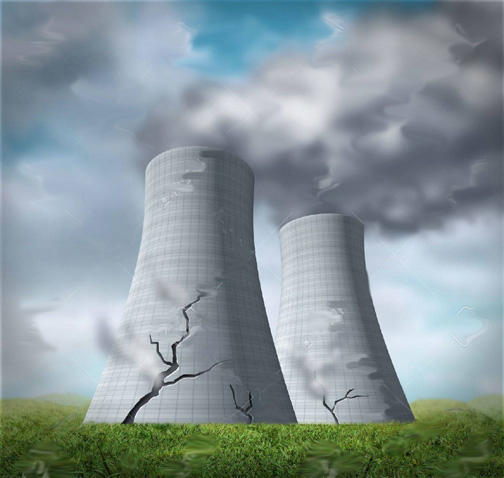
EDF looks to delay closure of four UK nuclear power plants
Four of Britain’s dwindling fleet of nuclear power plants look set to
remain on stream for at least a further two years, EDF Energy announced on
Tuesday, as the French state-owned operator said it aimed to halt seven
years of declining output.
The UK’s nuclear generating capacity has
fallen rapidly since the start of the decade as three of the country’s
eight ageing power stations closed. But EDF, which owns the country’s
nuclear fleet via a joint venture with Centrica, said it now planned to
explore keeping two of the power stations — Heysham 2 and Torness —
open beyond their planned closure date of 2028.
This follows an
announcement last year by the company of similar plans to keep the two
other power stations that use the same reactor design — Hartlepool and
Heysham 1 — open for at least two years beyond their scheduled closure
date of 2024. The company said a decision on the planned extensions for
Heysham 2 and Torness power stations, which have a joint generating
capacity of 2.4GW, will be taken by the end of the year, subject to plant
inspections and regulatory approvals.
The Office for Nuclear Regulation
said in a statement: “Several safety cases for the stations are likely to
require updating to achieve EDF’s stated ambitions, together with
investment in plant to sustain equipment reliability, all while ensuring
that the necessary people and skills are on site.” Other nuclear power
plants based on the same design as Hartlepool and Heysham have been forced
to close earlier than planned because cracks were found in the reactors’
graphite cores. But EDF said in 2022 that the graphite at both Hartlepool
and Heysham 1 remained intact, and regular inspections have continued since
then.
FT 9th Jan 2024
https://www.ft.com/content/06f524ac-2515-432c-97a1-e71aa25189e6
Housing unaffordability – implications for Somerset with huge increase in nuclear workers for Hinkley Point C
EDF Energy is once again in talks with Somerset Council to negotiate an
increase in workers on the site. Cllr Leigh Redman, Bridgwater Town Council
spokesperson for Nuclear Issues, said that the original development consent
order (DCO) signed by the secretary of state, indicated that at peak the
number of workers on site would be 5,600.
This number was since raised to
8,600 due to the conversion of Pontins in Brean to become an accommodation
site for Hinkley Point C workers, which is now full. Back in November 2023,
EDF Energy approached the council to bring the workforce to over 10,000 as
the project entered its ‘peak construction phase’.
There are now over
11,000 workers at Hinkley Point C, and EDF plans to bring in more staff in
the near future. Cllr Redman said that although he appreciates the good
things EDF Energy has brought to Bridgwater, he feels people are losing out
on housing due to the company’s ‘disregard for limits set and agreed’. The
Bridgwater Town Councillor also explained that he frequently receives
messages from people struggling to find affordable properties to rent
locally, including one family of three squashed into a third floor flat
with nowhere to go.
Bridgwater Mercury 9th Jan 2024
https://www.bridgwatermercury.co.uk/news/24036533.edf-talks-somerset-council-workforce-increase/
Somerset 9th Jan 2024
https://www.somersetcountygazette.co.uk/news/24036578.edf-talks-somerset-council-workforce-increase/
EDF Energy plans to extend life of four UK nuclear power plants
EDF Energy is planning to extend the life of four nuclear power stations
in the UK and step up investment in its British nuclear fleet. The French
energy company said it would make a decision on whether to extend the life
of the four UK plants with advanced gas-cooled reactors (AGR) – Torness,
Heysham 1 and 2, and Hartlepool – by the end of the year.
This would require regulatory approval. A spokesperson for the company said it would
depend on inspections, adding there would not be long lifetime extensions
but “incremental”. Last March, EDF extended lifetimes at Hartlepool and
Heysham 1 by a further two years to March 2026. Heysham 2 and Torness power
stations are now due to stay operational until March 2028.
Guardian 9th Jan 2024
https://www.theguardian.com/business/2024/jan/09/edf-energy-uk-nuclear-power-plants
‘PR Fairy Dust’ Has Canada Tripling Nuclear Capacity by 2050.

So far, federal and provincial taxpayers have been footing the bill for Small Nuclear Reactor development in Canada, with little private sector investment—meaning the investor scrutiny and cost controls that torpedoed the NuScale project are muted at best.
Would Canadian taxpayers be OK with continuing to shell out up to a trillion dollars for a technology with no proven track record of producing reliable, affordable electricity?
So far, federal and provincial taxpayers have been footing the bill for SMR development in Canada, with little private sector investment—meaning the investor scrutiny and cost controls that torpedoed the NuScale project are muted at best. Would Canadian taxpayers be OK with continuing to shell out up to a trillion dollars for a technology with no proven track record of producing reliable, affordable electricity?
January 8, 2024, Susan O’Donnell and M.V. Ramana, https://www.theenergymix.com/odonnell-and-ramana-pr-fairy-dust-has-canada-tripling-nuclear-capacity-by-2050/
Near the end of 2023, the government published its second nuclear fantasy of the year. The December statement declares that Canada will work with other countries to “advance a global aspirational goal of tripling nuclear energy capacity from 2020 by 2050.”
In a sprinkling of public relations fairy dust, the declaration is labeled “COP28”, although written well before the two-week climate summit in Dubai. The nuclear declaration managed to attract only 25 endorsing countries, in contrast to the official COP28 pledge to triple renewable energy and energy efficiency by 2030, signed by 123 countries and eventually adopted by consensus in the final COP declaration.
The currently operating power generating capacity of all nuclear plants in the world is 365 gigawatts. Tripling that total by 2050, in the next 26 years, will mean reaching close to 1,100 gigawatts. Looking back 26 years, the power capacity of the global nuclear fleet has grown an average of 0.8 gigawatts each year. At that rate, nuclear capacity in 2050 will be a mere 386 gigawatts.
And tripling today’s nuclear capacity would require the industry to overcome the significant setbacks and delays in new reactor construction that have plagued it forever with no solution in sight, while building an additional large number of reactors to replace old ones shut down over the same period.
Earlier last year, the Canada Energy Regulator (CER) published the country’s previous nuclear fantasy document, with scenarios that also projected roughly a tripling of nuclear generation capacity by 2050. Canada’s six nuclear plants currently produce about 13 gigawatts of power; a tripling would bring that to 39 GW. The CER report envisions this new nuclear capacity coming from so-called small modular nuclear reactors (SMRs).
Only two public utilities in Canada are proposing to build SMRs: NB Power in New Brunswick, and Ontario Power Generation (OPG). The most authoritative report to date on SMRs, from the U.S. National Academies, found that the designs planned for New Brunswick—a molten salt reactor and a sodium-cooled reactor—are unlikely to reach commercial deployment by 2050.
OPG is promising that its SMR design, a 300-megawatt boiling water reactor, will be the first in the world to be deployed commercially starting in 2030, although the design has not yet been licenced to build in Canada or anywhere else. Assuming that this unit is chosen for widespread deployment in Canada, nearly 90 would need to be built and operating effectively on the grid between 2030 and 2050 to achieve the proposed tripling. Given the known construction time overruns for nuclear power plants, this also is impossible.
The news on the SMR front from around the world has been bleak—especially in the United States, which has been trying to commercialize SMR designs for more than a decade. The flagship SMR design in the U.S., the NuScale light-water reactor, was the first to receive design approval by the U.S. Nuclear Regulatory Commission. However plans to build an array of NuScale reactors were shelved in November when the estimated construction costs ballooned to US$9.3-billion (C$12.8-billion) for 462 megawatts and potential customers fled. Earlier this month, NuScale laid off nearly half of its work force.
Assuming the NuScale construction costs of $27.7 million per megawatt would be an acceptable price range to customers in Canada, that would give the OPG design, also a light-water reactor, a cost of $8.3 billion per unit. If 90 units were built as a way to triple nuclear energy capacity, the total price tag would be $747 billion. That assumes that costs won’t go up during construction, as has been the case with the majority of nuclear projects in Canada and around the world.
So far, federal and provincial taxpayers have been footing the bill for SMR development in Canada, with little private sector investment—meaning the investor scrutiny and cost controls that torpedoed the NuScale project are muted at best. Would Canadian taxpayers be OK with continuing to shell out up to a trillion dollars for a technology with no proven track record of producing reliable, affordable electricity? Particularly when the energy efficiency, solar, and wind technologies explicitly favoured by the Intergovernmental Panel on Climate Change as the quickest path to emission reductions are already proven, affordable, and ready for prime time?
Last month’s bogus “COP28” nuclear declaration is posted on the Natural Resources Canada website. Like its counterpart in the United States, the Department of Energy, NRCan is the department responsible for promoting the interests of the nuclear industry. In both the United States and Canada, that industry has been failing for decades, and one of its strategies for securing government support has been to appeal to geopolitical interests. In recent years, that appeal has usually involved pointing out how Western countries are falling behind Russia, the largest exporter of nuclear power plants, and China, which has built more nuclear plants than any other country over the past decade.
The U.S. government has responded by using its diplomatic clout to promote nuclear energy, especially small modular reactors. In Washington, Energy and Natural Resources Minister Jonathan Wilkinson delivered Canada’s statement on nuclear energy that linked Canadian exports of uranium and nuclear technology to energy security in response to Russia’s invasion of Ukraine. This geopolitical context explains why Russia and China were conspicuously missing from the list of signatories to the declaration to triple nuclear energy capacity by 2050.
The nuclear industry’s other argument to stay alive is the bogus claim that it can help solve climate change. But as veteran energy modeller and visionary Amory Lovins pointed out: “To protect the climate, we must abate the most carbon at the least cost—and in the least time—so we must pay attention to carbon, cost, and time, not to carbon alone.” The climate crisis is urgent. The world has neither the financial resources nor the luxury of time to expand nuclear power.
Meanwhile, the website of Environment and Climate Change Canada, the department truly responsible for the country’s international climate commitments, has a genuine COP28 statement that does not mention nuclear. Instead, it highlights “groundbreaking goals to triple renewable energy, double energy efficiency, and, for the first time ever… a historic consensus to move away from fossil fuels in energy systems.”
Tripling nuclear energy by 2050 is a nuclear industry fantasy and complete make-believe. Tripling renewable energy and doubling energy efficiency by 2030 is sensible and doable, as long as the requisite political will is present. It is past time to get real about the energy generation technologies we need to be supporting.
Susan O’Donnell is Adjunct Research Professor and leader of the CEDAR project at St. Thomas University in Fredericton, New Brunswick. M.V. Ramana is Professor and Professor and Simons Chair in Disarmament, Global and Human Security at the University of British Columbia.
Israel is NOT promising to ‘scale back’ its war

Spencer Ackerman, The Nation, Mon, 08 Jan 2024, https://www.sott.net/article/487700-Israel-is-not-promising-to-scale-back-its-war
As the US secretary of state shuttles to stop the war from expanding, the Israeli defense minister vows “months” more war on Gaza and suggests taking the fight to Iran.
Readers of The New York Times were treated on Monday morning to a breaking-news alert heralding what seemed like a welcome development: “Israel says it has begun to scale back war.” That description, which led the Times website, is about as close to the opposite of the way Israel’s war is heading as could appear in the leading US newspaper.
The Israeli Defense Forces spokesman, Radm. Daniel Hagari, gave the Times the interview that it used for its headline. But Hagari’s quotes never actually promise the “less intense phase” in the Times paraphrase. Hagari instead describes the focus of the pitiless Israeli campaign shifting southward — while his superiors in the Israeli government indicate that it could expand regionally.
Northern Gaza, which has been the focus of intense Israeli ground operations, will apparently see more of what the Times calls “targeted raids” rather than attacks from larger-scale infantry, artillery, and airstrikes. Some Israeli brigades will redeploy out of Gaza, a development announced last week — but one intended to make the war more sustainable for “prolonged fighting,” as Hagari put it then. That fighting will refocus on the central and the southern regions of Gaza, where Israel had previously demanded that most of the population relocate. “It was far from clear that the new phase of Israel’s offensive would be less dangerous for Gazan civilians,” the Times‘ Patrick Kingsley observed. That was quite an understatement, considering the starvation and spread of infectious disease the war has inflicted upon those civilians, all as Israel has destroyed Gaza’s healthcare infrastructure.
The description of a “less intense” war was rendered all the more absurd by Israel’s lethal strike on a senior Hezbollah commander, Wissam al-Tawil, in southern Lebanon on Monday. (Haaretz, the liberal Israeli newspaper, attributed the strike to Israel.) Since the beginning of the Israeli reprisal on Gaza for Hamas’s October 7 massacre, Hezbollah has hit northern Israel with its missile arsenal to raise the costs of sacking Gaza, and the IDF has responded in kind. The persistent exchanges of fires have stayed just under the threshold of a declared second front. But that’s an arbitrary measure, not one that changes the reality faced by anyone who lives in northern Israel or southern Lebanon, tens of thousands of whom have fled.
The killing of al-Tawil follows two other high-profile IDF slayings over the last two weeks that look more like the future of the current conflict than its past. On Christmas, an Israeli strike in Damascus killed the Iranian Gen. Razi Mousavi of the Islamic Revolutionary Guard Corps. And on Wednesday, in the Dahiyeh suburb of Beirut, an Israeli drone killed Saleh al-Arouri, a senior political figure in Hamas.
While any Hamas leader must have considered his days numbered after October 7, Israel’s willingness to strike into the heart of Lebanon, which is reeling from a protracted economic crisis, has created deep fear that the so-called “Northern Front” will formally open.For the second time since October 7, Hassan Nasrallah of Hezbollah last week declined in a speech to declare war, but reiterated that there is only so much it will tolerate. The “Lebanese don’t want to be dragged, even Hezbollah does not want to be dragged into a regional war,” implored Abdallah Bou Habib, Lebanon’s foreign minister.
If there is a shift in Israel’s war, it’s less about a reduction in intensity in Gaza than it is a refocus against a more distant, formidable enemy. Israeli Defense Minister Yoav Gallant told The Wall Street Journal on Sunday night that Israel’s ultimate targets live far beyond Gaza. “My basic view: We are fighting an axis, not a single enemy,” Gallant told the paper. “Iran is building up military power around Israel in order to use it.” Like his colleagues in the Israeli government, Gallant signaled that Israel is running out of patience to negotiate calm on the Lebanese border — but did so by threatening Lebanese civilians, not Hezbollah: “They see what is happening in Gaza. They know we can copy-paste to Beirut.”
As for Gaza itself, Gallant portrayed the shift in military focus away from northern Gaza less as a decision to tamp down the war than a function of the IDF’s accomplishing most of what it can in the north. The coming phase, dependent more on “different types of special operations” — something no one should confuse with de-escalation — will “last for a longer time,” Gallant told the Journal.
This promise of a protracted war comes as the United Nations’ most senior humanitarian-aid official, Martin Griffiths, has already judged Gaza to be “uninhabitable” and South Africa brings a genocide case against Israel that will get underway on Thursday at the International Criminal Court.
The longer that Israel culls Gazans — something Israeli government officials have recently phrased as an “opportunity” to ethnically cleanse Gaza — the greater the pressures for the war to spiral outward. Tamping those pressures down is the express purpose of Secretary of State Antony Blinken, who has returned to the Middle East and is expected in Israel early this week. “This is a conflict that could easily metastasize, causing even more insecurity and even more suffering,” Blinken correctly observed in Qatar this weekend.

The response the Israelis provided Blinken, who has often looked hapless during his post-October 7 Mideast visits, was to kill al-Tawil in Lebanon while telling American news outlets it will kinda-sorta-but-not-really lower the scale of violence inflicted upon Gazans so President Biden can have some domestic and diplomatic breathing room.
Blinken is right that the war could escalate and grow more destructive. But the reality is that regionalization is already here. Much as Gallant looked beyond Hamas to the Iranian “Axis of Resistance” coalition that includes Hamas, Iranian strategy since October 7 has aimed beyond Israel and at its geopolitical patrons.
If Iranian strategy operates beneath the waterline of formally declared conflict, those waters are heavily mined and are already prompting counterproductive US actions. The Houthis in Yemen have jeopardized commercial shipping in the Red Sea, an economically crucial waterway for global trade, prompting the United States to assemble an international naval task force amid pressures to attack the Houthis on land. In Iraq and Syria, more than 120 rocket, missile, and drone strikes on US bases since October 7 have prompted US retaliatory strikes on Iran-backed militias. The most recent of them, Thursday’s US drone strike in Baghdad — the first there since 2020 — killed a senior figure in the quasi-official Popular Mobilization Forces and prompted Prime Minister Mohammed Shia al-Sudani, who is no Iranian catspaw, to demand that the US military finally leave Iraq.
Each provocation, whether from Israel, the United States, or the Iranian coalition, prompts a response that various partisans can individually justify on its own terms. But this is the logic that produces regional escalation. Nearly 100 days of it have yielded nothing but devastation for Palestinians, Lebanese, Iraqis, and indeed Israelis, with Yemenis potentially next.The way out is in the hands of the Biden administration, since only the US can impose a cease-fire on Israel, thereby removing the impetus for the Iranian-backed attacks and the US or Israeli reprisals. Yet Biden continues to show no inclination that he is willing to do what is necessary to forestall the regional conflagration he seeks to avoid.
And if American journalists can’t quite present that to their audiences, the Palestinian journalists who have heroically brought the reality of Gaza to the world can — or they could,before Israeli missiles and bullets killed them and their families, often to the silence of their American counterparts, who instead print dubious narratives about Israeli de-escalation.
About the Author:
Spencer Ackerman, a Pulitzer Prize and National Magazine Award-winning reporter, is the author of Reign of Terror: How The 9/11 Era Destabilized America and Produced Trump.
Kebaowek First Nation strongly opposes nuclear waste storage facility in Chalk River

Radioactive waste site in Chalk River a go
National Observer, By Natasha Bulowski / Local Journalism Initiative / Canada’s National Observer, 9 Jan 24
The Canadian Nuclear Safety Commission has greenlit a proposed nuclear waste storage facility in Chalk River, Ont., after a years-long battle waged by concerned citizens, environmentalists and First Nations.
On Jan. 9, the commission announced Canadian Nuclear Laboratories’ operating licence will be changed to allow construction of a “near-surface disposal facility” to hold up to a million tonnes of radioactive and hazardous waste. Stored in a large mound, the waste would sit about a kilometre from the Ottawa River, a culturally important river for Algonquins, and this proximity to drinking water for millions is one of many factors that raised alarm bells for opponents.
The proposed facility, referred to as the NSDF, “is not likely to cause significant adverse environmental effects” as long as Canadian Nuclear Laboratories sticks to its proposed mitigation and monitoring measures, the commission said in its decision.
Within hours of the announcement, Kebaowek First Nation put out a press release calling on the federal government to intervene and stop the project. Organizations representing 10 of the 11 Algonquin First Nations have opposed the project, alongside leaders and elders from those nations. Pikwakanagan First Nation, the only Ontario-based Algonquin Nation and closest to Chalk River, signed a long-term relationship agreement with Canadian Nuclear Laboratories on June 9, 2023………………………………………………
Kebaowek First Nation Chief Lance Haymond called the commission’s decision “unacceptable” because it goes against the rights of Indigenous Peoples and environmental protection in a press release issued a few hours after the decision.
“I want to be very clear: the Algonquin Peoples did not consent to the construction of this radioactive waste dump on our unceded territory,” Haymond said. “We believe the consultation was inadequate, to say the least, and that our Indigenous rights are threatened by this proposal.”
Algonquin leaders from Kebaowek and Kitigan Zibi Anishinabeg First Nations and Algonquins of Barriere Lake have long opposed the NSDF and have urged the commission to heed their concerns about environmental and human health. At the final licensing hearing in August, Kebaowek and Kitigan Zibi Anishinabeg argued the consultation was inadequate because it began far too late in the decision-making process and did not appear to take their concerns or traditional knowledge seriously………………………………………….
James Walker, a nuclear waste expert and former director of safety engineering and licensing at AECL, disputed the proclamation that all waste will be low-level in a submission to the commission. His calculations, based on the inventory of waste provided by Canadian Nuclear Laboratories, show that much of it is intermediate-level radioactive waste and should not be placed in a near-surface facility. There is also no inventory management system to properly verify the waste complies with the acceptance criteria, he wrote. Walker said the project is “non-compliant with International Safety Standards” for these reasons……………………..
Last month, concerned citizen Ole Hendrickson initiated a House of Commons petition (authorized by Pontiac, Que. MP Sophie Chatel) calling for an international review of three radioactive waste projects including the NSDF at Chalk River. At the time of writing, it has almost 2,950 signatures. Petitions require a minimum of 500 signatures to be presented in the House of Commons and receive an official response from the government. https://www.nationalobserver.com/2024/01/09/news/radioactive-waste-site-chalk-river-go#
France Moves Away from Renewable Targets in Favor of Nuclear Power

By ZeroHedge – Jan 09, 2024, https://oilprice.com/Alternative-Energy/Nuclear-Power/France-Moves-Away-from-Renewable-Targets-in-Favor-of-Nuclear-Power.html
- The bill proposes a change from reducing to just tending towards a reduction in greenhouse gas emissions.
- It includes the removal of various objectives related to renewable energy production and consumption.
- The bill strongly affirms the use of nuclear energy as a sustainable choice and includes it as a key objective in the multi-annual energy program.
Authored by Mike Shedlock via MishTalk.com,
Four Key Things
- The wording of this preliminary bill relating to energy sovereignty is of course not final. It can still evolve between now and its presentation to the Council of Ministers and, then, during its discussion in Parliament. However, it already demonstrates a significant change in the executive’s conception of national energy policy.
- This draft bill weakens France’s climate objectives, starting with the objective of reducing our greenhouse gas emissions. The objective would no longer be to “reduce” but to tend towards a reduction in “our greenhouse gas emissions.
- This preliminary draft proposes to translate into law the executive’s choice to maintain a preponderant share of nuclear energy in electricity production. A choice which breaks with that of reducing this share of nuclear power and which was included in law no. 2015-992 of August 17, 2015 relating to the energy transition for green growth.
- This preliminary bill also reflects concern, on the eve of the European elections in June 2024; to abandon the legal category of renewable energies” in favor of a new category, that of “carbon-free energies”.
Removals
- The removal of quantified objectives for production and consumption of renewable energies in mainland France.
- The removal of the objective of encouraging the production of hydraulic energy.
- The removal of the quantified objective for the development of offshore wind power.
- The removal of the objective of encouraging the production of agrivoltaic electricity.
- The removal of the contribution objective to achieving air pollution reduction objectives.
- The removal of the building’s energy performance objective.
- The removal of the multiplication objective ofthe quantity of renewable and recovery heat and cold.
- Removal of the condition for shutting down the operation of a nuclear reactor
New Objectives
- The affirmation of the “sustainable choice of using nuclear energy”
- The new objective of using nuclear energy in the multi-annual energy program
Wow!
How often does France lead the way in common sense?
This has not passed yet, but it represents a clear change in direction if any of it passes, and that seems highly likely.
I wonder if President Emmanuel Macron is starting to look at French polls. Then again, the next French presidential election is not until 2027.
In the US, Biden doubles down on the only tactic he knows, running on Bidenomics while claiming Trump will be a dictator if he wins.
Both are losing tactics.
Via Zerohedge.com
1 This Month



19 November – Webinar – The Reality of Reprocessing
Time: 11:00 AM Pacific Time (US & Canada) / 2:00 PM Eastern / 7:00 PM UK / 8:00 PM CET
Register for the Zoom Event Here



Shut down the radiation-damaged Heysham nuclear reactors now
To see nuclear-related stories in greater depth and intensity – go to https://nuclearinformation.wordpress.com

Say No to NASA’s Reckless Nuclear Reactor on the Moon
Say No to NASA’s Reckless Nuclear Reactor on the Moon
-
Archives
- November 2026 (32)
- October 2026 (302)
- September 2026 (339)
- August 2026 (330)
- July 2026 (355)
- June 2026 (287)
- May 2026 (306)
- April 2026 (356)
- March 2026 (251)
- February 2026 (267)
- January 2026 (308)
- December 2025 (358)
-
Categories
- 1
- 1 NUCLEAR ISSUES
- business and costs
- climate change
- culture and arts
- ENERGY
- environment
- health
- history
- indigenous issues
- Legal
- marketing of nuclear
- media
- opposition to nuclear
- PERSONAL STORIES
- politics
- politics international
- Religion and ethics
- safety
- secrets,lies and civil liberties
- spinbuster
- technology
- Uranium
- wastes
- weapons and war
- Women
- 2 WORLD
- ACTION
- AFRICA
- Atrocities
- AUSTRALIA
- Christina's notes
- Christina's themes
- culture and arts
- Events
- Fuk 2022
- Fuk 2023
- Fukushima 2017
- Fukushima 2018
- fukushima 2019
- Fukushima 2020
- Fukushima 2021
- general
- global warming
- Humour (God we need it)
- Nuclear
- RARE EARTHS
- Reference
- resources – print
- Resources -audiovicual
- Weekly Newsletter
- World
- World Nuclear
- YouTube
-
RSS
Entries RSS
Comments RSS

