Establishment Papers Fell Short in Coverage of Genocide Charges

the two most widely circulating newspapers in the US ………In the lead-up to the hearing (12/29/23–1/10/24), the New York Times only published three articles focused on the case (1/8/24, 1/9/24, 1/10/24), while another Times piece (1/10/24) included a brief mention of the genocide charges.
the two most widely circulating newspapers in the US cannot say the same. In the lead-up to the hearing (12/29/23–1/10/24), the New York Times only published three articles focused on the case (1/8/24, 1/9/24, 1/10/24), while another Times piece (1/10/24) included a brief mention of the genocide charges.
South Africa on December 29 presented a historic case to the International Court of Justice (ICJ)—the highest court in the world. In an 84-page lawsuit, South Africa asserted that Israel’s deadly military campaign in Gaza—following the October 7 Hamas attacks, which killed 1,200 Israelis and foreigners—constitutes genocide. So far, more than 30,000 Palestinians in Gaza have been slaughtered, while over 71,000 have been injured in Israeli attacks.
Establishment media in the US were slow to cover South Africa’s “epochal intervention” in the ICJ—initially providing the public with thin to no reporting on the case. While the quantity of coverage did eventually increase, it skewed pro-Israel, even after the court in January found it “plausible” that Israel is committing genocide in Gaza, and ordered Tel Aviv to comply with international law.
Thin early coverage
FAIR used the Nexis news database and WSJ.com to identify every article discussing the genocide case published in the print editions of the New York Times and Wall Street Journal for one month, from the announcement of the case on December 29 through January 28, two days after the ICJ’s preliminary ruling.
Under international law, genocide is one of the gravest charges that can be brought against a state. Since its 1948 ratification by the UN, the Convention on the Prevention and Punishment of the Crime of Genocide has only been presented to the ICJ on a handful of occasions, and the historic nature of the complaint was not lost on its applicant: “South Africa is acutely aware of the particular weight of responsibility in initiating proceedings against Israel for violations of the Genocide Convention.”
Unfortunately, the two most widely circulating newspapers in the US cannot say the same. In the lead-up to the hearing (12/29/23–1/10/24), the New York Times only published three articles focused on the case (1/8/24, 1/9/24, 1/10/24), while another Times piece (1/10/24) included a brief mention of the genocide charges.
The Wall Street Journal ran no pieces focused on the charges prior to the hearing. The Journal‘s only mention of the genocide case in the pre-trial period came in a broader article about the war (12/29/23), which included six paragraphs about South Africa’s application. The paper did not reference the case again until the trial began.
‘Without any basis in fact’
During the two-day hearing, each paper ran two articles about it in their print editions. Each published an overview of the case (New York Times, 1/11/24; Wall Street Journal, 1/11/24). For their second piece, the New York Times (1/11/24) looked at both Israeli and Palestinian reactions, while the Journal (1/12/24) focused only on Israeli reactions; the one Palestinian it quoted was identified as an Israeli citizen…………………………………………………………….
Uneven sourcing………………………………………………..
Unchallenged Israeli talking points………………………………………………….
Unscrutinized statements……………………………………………….
With no scrutiny of Israeli officials’ statements, US news becomes little more than a bullhorn for government propaganda.
The West’s Nuclear Power Revival Could Be Slower Than Hoped.

By Tsvetana Paraskova – Mar 21, 2024
Western nations may be getting ahead of themselves in their ambition to
swiftly roll out new nuclear power capacity in the current push to reduce
dependence on Russian uranium and meet net-zero targets with more
nuclear-generated electricity. Most Western governments – with the
notable exception of Germany – are now betting on nuclear power to help
them with the carbon emission targets. But many may have become too
optimistic they would see a fast rollout of nuclear reactors and capacities
in an industry notoriously known for years of delays and huge cost
overruns. “Clients, governments and ourselves as the industry
players . . . we all become too optimistic,” Ian Edwards, chief
executive of Canada’s engineering giant AtkinsRéalis, told the Financial
Times.
Oil Price 21st March 2024
Just Seeing Through The Propaganda Isn’t Enough – We’ve Got To Open Our Hearts As Well

CAITLIN JOHNSTONE, MAR 23, 2024, https://www.caitlinjohnst.one/p/just-seeing-through-the-propaganda?utm_source=post-email-title&publication_id=82124&post_id=142877144&utm_campaign=email-post-title&isFreemail=true&r=1ise1&triedRedirect=true&utm_medium=email
—
Humanity doesn’t just need to escape from the mental prison of imperial indoctrination. It needs to escape from the heart prison as well.
I’m always talking here about the need to fight empire propaganda to help the public awaken to the fact that everything we’ve been trained to believe about the world is a lie, because that insight taking root in sufficient numbers would be the first step toward the revolutionary changes our world so desperately needs.
But large numbers of people opening their eyes to the reality of mass-scale psychological manipulation by the powerful would by itself be insufficient, because people need not only to see the truth — they also need to care.
Realizing the depravity and immense human suffering the US-centralized empire is responsible for creates an opportunity to respond to this insight with horror and begin resisting it — but it is only an opportunity. At that juncture it’s still possible for someone to realize that we’re not being told the truth about what’s happening in the world, but decide to play along with the lies anyway, either because the existing world order has made them wealthy, or because they are too indoctrinated with support for western power structures, or because they ideologically support Israel, or because they’re afraid of the changes and upheaval that would come with an overturning of the status quo, or because they are intellectually and morally lazy, or some other selfish reason.
Realizing that you’ve been indoctrinated into accepting a pernicious status quo unlocks an important door within yourself, but just because that door is opened doesn’t mean you have to walk through it. Walking through it requires another kind of awakening — an awakening of the heart.
Really no amount of knowledge or intellectual insight will ever set us free as a species in and of itself. You could upload the sum total of human knowledge into the brain of everyone on earth — including even government secrets that aren’t public knowledge — but unless this is accompanied by a collective opening of the heart, it wouldn’t make any difference. Unless people can find it within themselves to care deeply about the horrific things our rulers have been doing to our fellow human beings, no amount of knowledge about those things will catalyze real change.
And there are plenty of people who know but don’t care. The most powerful government agencies in the world are run by people who know terrible secrets about our ruling power structures that we ordinary members of the public are not allowed to know, but because their loyalty is to the empire and not to humanity, they don’t care about the moral implications of what they know or the human suffering the empire is responsible for.
So the demand of this moment in history is not just to understand, but to care. Not just to know what’s wrong with the world, but to feel it. Not just to awaken on the level of the head, but to awaken on the level of the heart as well. Not just to value our own personal understanding, but to value humanity as a whole.
Knowledge of the truth can lead to a profound compassion for the victims of the globe-spanning power structure which rules over us and a determination to oppose its cruelty — that’s why said power structure pours so much energy into keeping everyone propagandized. But it doesn’t necessarily need to lead to such compassion. The light of truth can stop its expansion at the gates of the heart, unless there’s some willingness from somewhere deep inside us to throw those gates open.
Ultimately humanity just needs to wake up, on every level. We need to liberate ourselves from the shackles of propaganda. We need to liberate ourselves from the shackles on our hearts. We need to liberate ourselves from the shackles of the ego. We need to liberate ourselves from the shackles of the dualistic perspective which obfuscates the oneness of all of reality from our vision.
That’s what’s being asked of us at this juncture. To wake all the way up and become a conscious species. That’s the only way we’ll ever be able to move about on this planet in a healthy and harmonious way.
And we’ll either rise to the occasion or we won’t. We’ll either wake up, or we’ll destroy ourselves. I believe we have the freedom as a species to go either way.
The International Atomic Energy Agency (IAEA) Cannot Both Police Proliferation and Promote Nuclear Power

“We are playing with fire, and something very, very catastrophic could take place,” lamented Grossi during a September 2022 UN Security Council briefing, referring to the six Zaporizhzhia reactors in Ukraine, the closest ones to the fighting.
And yet, Grossi has also stated: “It’s very simple, the problem in Ukraine and in Russia is they are at war. The problem is not nuclear energy”. But nuclear energy is very much the problem. Wind farms and solar arrays would present no such dangers under similar circumstances.
Counter Punch, BY LINDA PENTZ GUNTER, 2o Mar 24, https://www.counterpunch.org/2024/03/21/the-iaea-cannot-both-police-proliferation-and-promote-nuclear-power/
The UN agency is sounding the alarm about Ukraine’s reactors and Iran’s nuclear intentions, while at the same time promoting the very technology that delivers these risks
On March 21 in Brussels, Belgium, the International Atomic Energy Agency (IAEA) will host what it is billing as the “First ever Nuclear Energy Summit.” The event follows a pledge made by 22 countries last December during the COP28 climate summit in Dubai to triple global nuclear capacity by 2050.
The Brussels summit, co-hosted by the IAEA and the Belgian government, and featuring prominent officials from the US Department of Energy, will bring together world leaders and other officials to “highlight the role of nuclear energy in addressing the global challenges to reduce the use of fossil fuels, enhance energy security and boost economic development,” according to the event’s website.
Ignoring for a moment that tripling anything by 2050 will be far too late to address the climate crisis now upon us, the Brussels summit is troubling as it marks a notable ramping up of aggressive nuclear power marketing by the IAEA, an agency of the United Nations that is mandated “to deter the spread of nuclear weapons”.
This goal is inherently thwarted by the promotion of civil nuclear energy, which effectively hands over the keys to the nuclear weapons castle by affording non-nuclear weapons countries the technology, materials, know-how and personnel to develop nuclear weapons. History has already demonstrated this with the nuclear weapons programs of India, Pakistan, Israel and North Korea, all of which were acquired via the civil nuclear route.
This is precisely the conundrum with Iran, a signatory to the nuclear Non-Proliferation Treaty that affords non-nuclear weapons countries the “inalienable right” to develop a civil nuclear power program. Iran has long claimed to be doing precisely that and yet the IAEA’s director general, Rafael Grossi, sounded the alarm in late February when he noted that Iran appears to have enriched uranium “well beyond the needs for commercial nuclear use.” This should not be a surprise.
Another contradiction lies in the IAEA’s stated mission to work for “the safe, secure and peaceful application of nuclear science and technology”. To achieve this, the agency eagerly advocates for the global expansion of nuclear power while at the same time worrying about the extreme peril of Ukraine’s 15 civil reactors embroiled in the current Russian war in that country.
“We are playing with fire, and something very, very catastrophic could take place,” lamented Grossi during a September 2022 UN Security Council briefing, referring to the six Zaporizhzhia reactors in Ukraine, the closest ones to the fighting.
In late February this year Grossi warned again that an “extremely vulnerable off-site power situation continues to pose significant safety and security challenges for this major nuclear facility”, calling the safety and security situation at the Zaporizhzhia plant “precarious”.
And yet, Grossi has also stated: “It’s very simple, the problem in Ukraine and in Russia is they are at war. The problem is not nuclear energy”. But nuclear energy is very much the problem. Wind farms and solar arrays would present no such dangers under similar circumstances.
At COP28, Grossi trumpeted that “global net zero carbon emissions can only be reached by 2050 with swift, sustained and significant investment in nuclear energy”, entirely ignoring the faster, cheaper and safer contribution renewable energy is already making to that end.
In the same statement Grossi described nuclear power as “resilient and robust” when it is manifestly neither. Nuclear energy’s share of global commercial gross electricity generation hit a four-decade record low in 2022 according to the 2023 World Nuclear Industry Status Report, a downward trend that is unlikely to change.
The IAEA’s triple nuclear energy plan is both a massive over-reach and a reckless and unattainable diversion, given that no new nuclear construction has ever come anywhere close to this pace, even with known and familiar reactor designs. In fact, nuclear power plants have been taking even longer to build in recent years, at even higher cost.
The proposed “new” smaller reactors — not new at all and rejected for decades as too uneconomical — are designs on paper only that have zero chance of delivery in time and in enough numbers to make any impact on the climate crisis.
The IAEA cannot be both nuclear policeman and promoter. In pushing nuclear power across the globe, the IAEA is complicit in a climate crime that wastes time and money on the needless expansion of expensive, slow and dangerous nuclear power. This takes away vital resources from renewable energy and energy efficiency that would rapidly, safely and affordably address the climate crisis, none of which nuclear power can achieve.
Linda Pentz Gunter is the editor and curator of BeyondNuclearInternational.org and the international specialist at Beyond Nuclear.
Nuclear test veterans demand compensation and medical records access
By Anna Lamche, BBC News, 20 Mar 24
Veterans exposed to radiation during British nuclear tests are calling for the government to create a “special tribunal” to oversee compensation.
The group, who say their lives have been blighted by ill health as a result of the tests, also want access to their missing military medical records.
The Ministry of Defence (MoD) says no information is withheld from veterans.
But on Tuesday it was threatened with legal proceedings by alleged victims and their families.
Former military personnel and their families served a “letter before action” on the MoD and handed a petition into Downing Street earlier.
Veterans and their families developed cancer, heart problems and even lost babies after the tests – and their children have been born with obvious disabilities, the group claims.
The campaigners have called on the government to establish a “special tribunal” that would investigate, compensate and commemorate alleged victims of the nuclear tests, which took place between 1952 and 1967 in Australia and the South Pacific.
The government is under pressure to act quickly because many of the claimants are now getting older.
The group is demanding access to blood and urine samples taken during the Cold War weapons trials.
Regis
Nuclear test veterans demand compensation and medical records access
By Anna Lamche, BBC News 20 Mar 24
Veterans exposed to radiation during British nuclear tests are calling for the government to create a “special tribunal” to oversee compensation.
The group, who say their lives have been blighted by ill health as a result of the tests, also want access to their missing military medical records.
The Ministry of Defence (MoD) says no information is withheld from veterans.
But on Tuesday it was threatened with legal proceedings by alleged victims and their families.
Former military personnel and their families served a “letter before action” on the MoD and handed a petition into Downing Street earlier.
Veterans and their families developed cancer, heart problems and even lost babies after the tests – and their children have been born with obvious disabilities, the group claims
The campaigners have called on the government to establish a “special tribunal” that would investigate, compensate and commemorate alleged victims of the nuclear tests, which took place between 1952 and 1967 in Australia and the South Pacific.
The government is under pressure to act quickly because many of the claimants are now getting older.
The group is demanding access to blood and urine samples taken during the Cold War weapons trials…………………………………………. https://www.bbc.com/news/uk-68611769
IAEA’s Rafael Grossi in Iraq to market nuclear reactors

IAEA to Help Iraq Develop Peaceful Nuclear Program, Agency Head Says , https://english.aawsat.com/business/4917976-iaea-help-iraq-develop-peaceful-nuclear-program-agency-head-says%C2%A0 20 Mar 24
The head of the International Atomic Energy Agency Rafael Grossi met Iraq’s prime minister in Baghdad on Monday as part of a visit to help the country develop a peaceful nuclear program.
“We have discussed several projects in Iraq, including building a nuclear reactor for peaceful purposes,” Iraqi Education Minister Naim al-Aboudi told reporters following a meeting between Grossi and Iraqi Prime Minister Mohammed Shia al-Sudani.
Grossi said that a team of Iraqi experts would visit the agency’s headquarters in Vienna in a few days to hold meetings to “set out a road map for the Iraqi peaceful nuclear program” amid growing interest in nuclear energy in the region.
“We see that in the (United Arab) Emirates, we see that in Egypt … and of course we should see it here in Iraq,” Grossi told reporters.
Iraq in the past had three nuclear reactors in Tuwaitha, its main nuclear research site, south of Baghdad. One was destroyed by an Israeli air raid in 1981 and the two others by US warplanes in the 1991 Gulf war that followed Iraq’s 1990 invasion of Kuwait.
“Definitely, turning the page on this complex past is of the essence and we’re doing just that,” Grossi said.
Nuclear power station workers set to walk out in dispute over pay
The union say that the dispute is a result of an ‘inadequate’ pay offer of 4.5%, effective from April 2023.
Caitlyn Dewar, 18 Mar 24, https://news.stv.tv/highlands-islands/dounreay-nuclear-power-station-workers-in-highlands-set-to-walk-out-in-dispute-over-pay
Hundreds of workers at a nuclear power station in the Highlands are being balloted for strike action in a pay dispute.
Unite the union confirmed that around 450 members employed by Magnox Limited based at Dounreay power station are being balloted for strike action in a pay dispute.
The union say that the dispute is a result of an “inadequate” pay offer of 4.5%, effective from April 2023 which was rejected by 95% in a consultative pay ballot.
Unite said the offer amounts to a substantial real terms pay cut, adding that the true rate of inflation based on the RPI stood at 11.4%.
Unite’s Magnox membership includes craft technicians, general operators, chemical and electrical engineers, and maintenance fitters and safety advisors.
Unite general secretary Sharon Graham said: “The Dounreay workforce are highly-skilled and they undertake an extremely important job.
3 days ago
Share this story
Posted in
Hundreds of workers at a nuclear power station in the Highlands are being balloted for strike action in a pay dispute.
Unite the union confirmed that around 450 members employed by Magnox Limited based at Dounreay power station are being balloted for strike action in a pay dispute.
The union say that the dispute is a result of an “inadequate” pay offer of 4.5%, effective from April 2023 which was rejected by 95% in a consultative pay ballot.
Unite said the offer amounts to a substantial real terms pay cut, adding that the true rate of inflation based on the RPI stood at 11.4%.
Unite’s Magnox membership includes craft technicians, general operators, chemical and electrical engineers, and maintenance fitters and safety advisors.
Unite general secretary Sharon Graham said: “The Dounreay workforce are highly-skilled and they undertake an extremely important job.
Ad
“The failure to pay our members a decent pay increase is outrageous, Magnox seems to have money to burn for directors and shareholders but thinks it is acceptable to deny its workers a decent pay increase.”
“Unite will fully support our members at Dounreay power station in the fight for better jobs, pay and conditions.”
Magnox Ltd, currently trading as Nuclear Restoration Services, is a wholly owned subsidiary of the Nuclear Decommissioning Authority (NDA).
The Dounreay power station is scheduled to be fully decommissioned and cleaned-up in 2033.
The union said that the remuneration package of the highest paid Magnox director went up from £331,000 to £651,000 in March 2023, and the company paid dividends of £2.1m in the same period.
Marc Jackson, Unite industrial officer, added: “Pay negotiations with Magnox have been ongoing since January 2023 with next to no movement by the company. However, Magnox has not been slow in making sure the remuneration packages for directors have been bolstered with the highest paid director seeing their package double in the space of a year.
“Unite’s membership at Dounreay power station will no longer accept these double standards, and that’s why we are balloting our members for strike action.”
Magnox has been contacted for comment.
It’s Journalistic Malpractice To Say Gazans Are Starving Without Saying Israel Is Starving Them
CAITLIN JOHNSTONE, MAR 19, 2024, https://www.caitlinjohnst.one/p/its-journalistic-malpractice-to-say?utm_source=post-email-title&publication_id=82124&post_id=142753938&utm_campaign=email-post-title&isFreemail=true&r=1ise1&triedRedirect=true&utm_medium=email
The mass media are printing some amazingly depraved headlines about a new UN-backed report on starvation in Gaza from the Integrated Food Security Phase Classification, who says half the enclave’s population is now at the highest-possible threat level for starvation.
The mass media are printing some amazingly depraved headlines about a new UN-backed report on starvation in Gaza from the Integrated Food Security Phase Classification, who says half the enclave’s population is now at the highest-possible threat level for starvation.
At a time when only 20 percent of news readers ever make it past the headline of a given story, this is an extremely destructive and propagandistic act of journalistic malpractice. The editors of The New York Times know exactly what they’re doing packaging a story about Israel’s deliberate starvation of Palestinian civilians like it’s a troubling prediction about the weather.
Contrast the New York Times’ headline with that of Al Jazeera’s report on the same story: “Gaza headed towards famine amid Israeli aid curbs: What to know”. That’s the normal way to present a story about a deliberately inflicted famine upon an imperiled population. If a population was being deliberately starved by siege warfare from a nation like Russia, China or Iran, we may be absolutely certain that the name of that nation would appear in the headline.
But because the western media exist to generate propaganda and not to report the news, we get headlines like “Gaza faces famine during Ramadan, the holy month of fasting” from the BBC, and “Famine in northern Gaza is imminent as more than 1 million people face ‘catastrophic’ levels of hunger, new report warns” from CNN, and “Famine imminent in northern Gaza, says UN-backed report” from Reuters, and “‘Catastrophic levels of hunger’ in Gaza mean famine is imminent, says aid coalition” from The Guardian.
We saw this with Saudi Arabia’s US-backed starvation of Yemen as well. When the mass media talked about Yemen at all (usually they just ignored it), editors consistently obfuscated the fact that this was a population being deliberately starved by a cruel blockade and the deliberate targeting of food infrastructure. The fact that it was being made possible by the United States was almost never mentioned.
This is a very good example of how western propaganda works, by the way. The mainstream western press don’t generally make up whole-cloth lies (though they will uncritically print claims made by western government agencies who have an extensive history of lying); what they do is rely on half-truths, distortions and lies by omission to give their audiences a wildly slanted picture of what’s going on in the world. By always going out of their way to tell you an enemy of the US-centralized empire is committing an atrocity the millisecond it looks like they might be, while being furtive and obfuscatory about the crimes of the US and its allies, they give their audience a skewed understanding of who is and is not committing the real evils in our world.
This doesn’t typically happen as a result of any grand monolithic conspiracy; it’s mostly just the natural consequence of having all the major news platforms controlled by wealthy and powerful people who each have a vested interest in manufacturing consent for the status quo upon which their wealth and power are premised. The oligarchs control the media, and they hire the executives who run the media, and the executives hire the editors who write the headlines and guide the reporters to report a certain way, and this gives rise to a system where everyone working for the outlet conducts themselves in a way that just so happens to suit the powerful people on top.
Then before you know it you’ve got editors at The New York Times — a paper that’s been published by the same family for over a century — packaging a story about starvation caused by an Israeli siege to look like it’s a story about an innocent crop failure. Odds are nobody told them to do that; they just learned over the years that that’s how you rise to the top in an outlet like The New York Times.
Heavy resistance to Canada’s 1st nuclear waste repository, while Nuclear Waste Management Organization (NWMO) says it is safe.
Nuclear Waste Management Organization (NWMO) reaffirms safety of Canada’s 1st nuclear waste repository but there’s still heavy pushback
Preferred site, in either southern or northwestern Ontario, to be chosen by year’s end
Sarah Law · CBC News Mar 18, 2024
The body tasked with selecting the future storage site for Canada’s nuclear waste has reaffirmed its confidence in the project’s safety, but others remain concerned about the potential risks of burying spent nuclear fuel hundreds of metres below the earth’s surface.
By the end of this year, the Nuclear Waste Management Organization (NWMO) is expected to decide on its preferred site for the country’s first deep geological repository for used nuclear fuel.
The potential locations are:
- The Wabigoon Lake Ojibway Nation-Ignace area, about 250 kilometres northwest of Thunder Bay.
- The Saugeen Ojibway Nation-South Bruce area in southern Ontario, about 130 kilometres northwest of London.
Earlier this month, the NWMO released updated “Confidence in Safety” reports, which say both sites are suitable for the safe, long-term storage of spent nuclear fuel.
However, We the Nuclear Free North and the First Nations Land Defence Alliance, for example, remain concerned about what’s known as the Revell site in northwestern Ontario.
The alliance issued a letter to NWMO president and CEO Laurie Swami on March 5, saying: “Our Nations have not been consulted, we have not given our consent, and we stand together in saying ‘no’ to the proposed nuclear waste storage site near Ignace. We call on you to respect our decision.”
……. “They’re both good sites. We think that both of the sites would be safe,” said Paul Gierszewski, technical subject matter expert with the NWMO and lead author of the “Confidence in Safety” reports.
Brennain Lloyd is project co-ordinator with Northwatch, which is part of We the Nuclear Free North. Members of the organization feel less confident about the project’s safety, she said.
“I think this newest report from the NWMO tries to put the best face possible on a project which is absolutely loaded with risk and uncertainty, and uses a lot of language that’s difficult for the public, for non-technical leaders to work through,” Lloyd said.
“There are no resources available in any part of this process for the public to be able to get technical assistance from independent third-party peer reviewers.
While Gierszewski says the 2023 reports expand on the previous year’s findings, Lloyd questions whether they contain new information or airbrushed statements that “paint a better picture.” …………………………………
Demand for in-person meetings
Chief Rudy Turtle of Grassy Narrows First Nation, 250 kilometres northwest of Ignace, said no one from the NWMO has met with him in person to discuss the proposed nuclear waste site.
Grassy Narrows has a particular interest in which Ontario site is chose, given the First Nation’s experiences dealing with contaminated fish in the 1960s and ’70s. Mercury from a Dryden pulp and paper mill was dumped into the English Wabigoon River, upstream from the First Nation. Research indicates past mercury exposure continues to impact the health of people in the community.
In the case of a nuclear waste repository, Turtle said, “Should there be any leak or if the containment fails, there is the possibility that [toxic chemicals] can leak downriver again.”
Turtle would like to see a series of in-person meetings so people can better understand the safety measures being proposed and the potential risks………………………………………..
Chief Michele Solomon of Fort William First Nation said it is unlikely her community’s position against the site will change.
Band council passed a resolution last September calling for the Ontario government to adopt the proximity principle, which means nuclear waste would be stored at the point of generation and not transported elsewhere.
“Anything that has the potential to get into our waterway that would cause harm to the fish or to the animals or to our people … we take that very seriously,” Solomon said.
………………………………………………. https://www.cbc.ca/news/canada/thunder-bay/nuclear-waste-repository-safety-reports-1.7145240
—
Canada to stop arms sales to Israel – Foreign Minister
https://www.rt.com/news/594529-canada-ceases-exports-israel/ 20 Mar 24
The parliament has passed a resolution calling for an end to weapons deliveries as the war in Gaza continues.
Canada will halt future arms sales to Israel, Foreign Minister Melanie Joly told the Toronto Star on Tuesday.
The statement came after the parliament passed a resolution on the matter amid a growing push among MPs to condemn Israel’s military operation against the Palestinian militant group Hamas in Gaza, which has entered its sixth month.
Despite the non-binding nature of the document, Joly confirmed that the government will cease the transfer of weapons to Israel. “It is a real thing,” she said, answering a reporter’s question.
The parliamentary motion was part of a larger vote originally put forward by the minority left-leaning New Democrats (NDP), who pitched it as a way to revive peace talks and support the Palestinians. The resolution calling for a ceasefire in Gaza was passed on Monday after MPs agreed to tone down its language and include a demand that Hamas “must lay down its arms.”
The document calls on Ottawa to “cease the further authorization and transfer of arms exports to Israel,” the CBC reported on Tuesday. The original text demanded the suspension “of all trade in military goods and technology with Israel.”
The resolution also calls for “the establishment of the State of Palestine as part of a negotiated two-state solution.”
Israeli Foreign Minister Israel Katz condemned Joly’s remarks on X (formerly Twitter), arguing that the refusal to sell weapons “undermines Israel’s right to self-defense against Hamas terrorists.” He added that “history will judge Canada’s current action harshly.”
Hamas launched a series of raids on Israel on October 7, killing more than 1,100 people and taking more than 200 hostages. Israel’s subsequent military operation in Gaza has killed nearly 32,000 Palestinians, according to the local health authorities.
Despite the mounting international calls for a lasting ceasefire, Israeli Prime Minister Benjamin Netanyahu reiterated on Tuesday that the Israel Defense Forces will continue their advance on Gaza’s southernmost city of Rafah, which he described as a stronghold of the militants. “We do not see a way to eliminate Hamas militarily without destroying these remaining battalions,” he told legislators.
“Anonymous” claims it has infiltrated Israel’s nuclear plant in Dimona
Hacker group discloses 7GB of documents it claims to have stolen, though Israeli sources view this primarily as psychological warfare rather than an act of substantive harm
AUDIO FILE here https://www.ynetnews.com/business/article/byblpvdaa
Israel Wullman, 20 Mar 24
NATO Builds Largest Europe Base Near Black Sea
NewsWeek, Mar 18, 2024
Romania has now begun construction of what will eventually be the NATO alliance’s largest European military base, as the transatlantic bloc seeks to bolster its capabilities in the Black Sea region with an eye on Russian activity there.
The $2.7 billion project will expand the Romanian Air Force 57th Air Base Mihail Kogălniceanu, which is located close to the Black Sea port city of Constanța. The new facility will have a perimeter of almost 20 miles, cover around 11 square miles, and will be home to some 10,000 NATO personnel and their families.
Romania has long been a key hub for NATO operations in the Black Sea region. Thousands of U.S. troops have cycled through the country on training and security missions since the beginning of Russia’s full-scale war on Ukraine. American combat and surveillance aircraft regularly operate from there as part of NATO’s policing operations………………………….
NATO began building its network of four Enhanced Forward Presence multinational battlegroups in the Baltic region following Russia’s annexation of Crimea in 2014.
Comment: 2014 was the year of the US coup in Ukraine.
After the start of the full-scale invasion in February 2022, the alliance reinforced those missions and established four additional battlegroups in Bulgaria, Hungary, Romania and Slovakia.
France is the framework nation for the Romanian battlegroup, with Belgium, Luxembourg, North Macedonia, Poland, Portugal, and the U.S. all contributing forces.
Bucharest is looking towards closer cooperation with its NATO allies — and the U.S. in particular — as the Black Sea becomes an increasingly fraught theater of confrontation between Ukraine and Russia, as well as between Moscow and its Western rivals.
“Romania has already established itself as an anchor of the eastern flank of NATO and the EU,” Prime Minister Marcel Ciolacu told Newsweek in June. https://www.newsweek.com/nato-builds-largest-europe-base-black-sea-romania-1880210
US Air Force tests very expensive third-stage rocket motor for next nuclear missile
The U.S. Air Force and two main contractors on the LGM-35A Sentinel intercontinental ballistic missile program on Saturday tested the solid-rocket motor that will power the nuclear weapon’s third stage.
The test, which also involved Northrop Grumman and Aerojet Rocketdyne, took place in a closed chamber at the Arnold Engineering Development Complex in Tennessee. It followed static fire tests of the first and second stages’ rocket motors in March 2023 and January 2024, respectively.
This third stage that was tested is the smallest of Sentinel’s three-stage propulsion system. The Air Force did not offer further details about the test, nor did it identify whether the event was successful.
“This test is the latest in our ground and flight test program and is designed to help us refine Sentinel’s air vehicle design,” Maj. Gen. John Newberry, commander of the Air Force Nuclear Weapons Center and the service’s program executive officer for strategic systems. “It demonstrates the progress the Air Force is making on modernizing our nation’s strategic land-based nuclear deterrent.”
The Sentinel program is intended to replace the aging LGM-30G Minuteman III ICBM, which has been a key part of the United States’ nuclear triad since the Cold War. The Air Force now has roughly 400 Minuteman III weapons in silos spread out across Wyoming, Montana, North Dakota, Colorado and Nebraska…………………………………………..
The price tag for the Sentinel program has spiked enough to trigger a cost overrun process known as a Nunn-McCurdy breach. Top Air Force leaders have pinned the bulk of the cost growth on its highly complex command and launch segment, which involves securing real estate from hundreds of landowners across the Midwest, building more than 400 launch facilities and 7,500 miles of utility corridors, and laying thousands of miles of fiber-optic networks…………………https://www.defensenews.com/industry/techwatch/2024/03/20/us-air-force-tests-third-stage-rocket-motor-for-next-nuclear-missile/—
Glorious new financial jargon from the nuclear lobby – the “International Bank for Nuclear Infrastructure (IBNI)”

International Bank for Nuclear Infrastructure (IBNI) will become the ‘Gold Standard’ of nuclear finance.
the IBNI will have an estimated 30+ sovereign governmental member shareholders, each with aligned views on nuclear energy and other global policy objectives. …….. IBNI – as a specialised ‘global nuclear infrastructure bank’ – will have a global mandate to finance and support nuclear sector projects, programmes and industries in all its member countries .
where the bank aims to achieve the most significant global impacts will be in catalysing a highly significant ‘capital multiplier impact’, which represents the total quantum of global financial markets capital mobilised relative to each dollar of public investment (by sovereign shareholder member states) in the bank.
IBNI will become the ‘Gold Standard’ of nuclear finance.
Why nuclear energy needs exclusive global multilateral infrastructure bank By Daniel Dean, 18 Mar 2024 https://www.nsenergybusiness.com/features/why-nuclear-energy-needs-exclusive-global-multilateral-infrastructure-bank/—
The mobilisation of trillions of dollars of global capital necessary for the nuclear sector to scale in the near-term can be supported by a new kind of financial institution – an international multilateral infrastructure bank focused exclusively on nuclear energy, writes Daniel Dean, IBNI-IO SAG chairman.
Attaining current policy objectives, including 2050 Net Zero, will require global nuclear technologies to scale to an unprecedented magnitude and at breakneck speed.

COMMENT on Lie number 1. Attaining 2050 Net Zero may well be impossible anyway, but there is zero likelihood of nuclear power to have anything meaningful to do with it, other than to slow down real solutions – energy conservation and renewable energy .
This historically unmatched scaling will also require the very rapid mobilisation of multiple trillions of dollars of capital into the sector.quick online loans. Existing nuclear project delivery and financing mechanisms rely mainly on governmental support and attract very limited risk appetite from the global financial markets. Such existing models will be insufficient for catalyzing the very significant quanta of capital necessary required to enable nuclear to scale as quickly as possible to achieve multiple 100s of GW’s of additional global nuclear generation capacity. If the world is going to achieve its ambitious climate, clean energy, energy transition and energy security goals in this short period of time, there simply needs to be a fundamental change in the approach toward financing nuclear infrastructure.
Scaling of the nuclear sector faces numerous and multidimensional impediments. These interrelated impediments span a broad spectrum and include among others: public policy; regulatory, markets and ESG frameworks; social license; geopolitical; commercial and risk allocation models; and perhaps most importantly, affordability and accessibility. Each of the nuclear sector’s impediments is manifested in the form of financial risk. Clearly, the nuclear industry will need to do its part through increased on-time and on-budget performance and other progressive improvements, alongside the key roles of governments, owner-operators, end-users/ratepayers and all other stakeholder groups that will each need to do their part. However, the ‘sum of these parts’ (e.g. what each stakeholder can individually do) does not add up to a solution that will enable nuclear to scale.
The mobilisation of the necessary capital required for nuclear to scale, requires formulation of systemic and multidimensional risk mitigation solutions. The nuclear sector is currently caught in a ‘vicious circle’, whereby nuclear cannot and will not scale without access to a ‘runway’ of cost-efficient capital and such capital is not accessible unless nuclear becomes sufficiently de-risked due to scaling. Nuclear’s ‘vicious circle’ needs to be very rapidly transformed into a ‘virtuous circle’, which will require immediate risk mitigation solutions and unlocking capital flows well before scaling can begin.
From a financial risk management perspective, the nuclear sector poses excessive financial risk as it is measured in the form of the Value at Risk (“VaR”) metric. From a financier’s perspective, VaR can be described simply as: the amount of at-risk capital deployed and the probability of loss.
Because nuclear sector financings are both highly capital intensive and the real and perceived risks of the sector are viewed to be high, it is intuitive that the nuclear sector’s VaR profiles currently compare unfavourably against many other alternative asset classes.

Well that one sure is true!
A new nuclear investor
The proposed International Bank for Nuclear Infrastructure (IBNI) will be a new multilateral nuclear infrastructure bank that will be focused on enabling nuclear technology to rapidly scale and become both highly affordable and accessible within all its member countries, globally. Importantly, IBNI will finance and support both the production and supply chain (supply side) as well as the customer side (demand side) of the nuclear sector in member countries ranging from developing countries to highly developed ‘nuclear mature’ countries. The bank will act as the global early and long-term patient capital provider and it will finance and support all areas of the nuclear value spectrum on a technology-, vendor-, and country-neutral basis including new-build (Gen. III/ III+, Gen IV and future fusion, other); life-extensions and re-starts; refinancing and restructurings; fuel cycle (mining through repository); production and supply chains; nuclear infrastructure; and decommissioning and nuclear waste management projects, programs and industries.
IBNI will be capitalised, governed and operated using models similar to those that have been proven mission-successful by the world’s major global multilateral banks, which have been in existence for many decades. Those models include the World Bank Group (WBG); the European Bank for Reconstruction and Development (EBRD); and the Asian Development Bank (ADB). In other words, the IBNI will have an estimated 30+ sovereign governmental member shareholders, each with aligned views on nuclear energy and other global policy objectives. Whereas those existing ‘multilateral development banks’ like the WBG, EBRD and ADB are generally focused on missions such as economic development and poverty eradication (and generally, within defined geographies, developmental and/or income strata), IBNI – as a specialised ‘global nuclear infrastructure bank’ – will have a global mandate to finance and support nuclear sector projects, programmes and industries in all its member countries (not limited to geography, developmental status or income level). The existing multilateral banks are currently not providing any material support for the nuclear sector. While the change in longstanding policies of these institutions toward nuclear is highly encouraged and would be complimentary (not competitive), these institutions are ill-equipped to be seen as a substitute for IBNI’s proposed role as the global nuclear financing institution.
On the one hand, the bank will use its own capital to directly co-finance and support qualified nuclear projects based on the principle of ‘additionality’ (i.e. ‘bridging gaps’ throughout the nuclear value spectrum where existing public and private funding and financing are not adequately accessible on a cost-efficient basis). It is anticipated that the bank’s main commercial operating arm, the IBNI Ordinary Operations Fund will be a self-sustaining entity that will issue long-term debt in the global ‘sovereign and supranational bond markets’. Based on the strong shareholder liquidity and support offered by the bank’s shareholders, it is envisaged that the fund will achieve ‘triple-A’ credit ratings or the highest credit quality that will allow IBNI to borrow funds at the lowest cost and in turn, pass along lowest cost financing for the benefit of the bank’s programme participants. Certainly, accessing least-cost capital is one critical element that will drive down nuclear generation costs and enable nuclear technologies to achieve affordability targets, which are critical for enabling nuclear to scale.
On the other hand, and most importantly, where the bank aims to achieve the most significant global impacts will be in catalysing a highly significant ‘capital multiplier impact’, which represents the total quantum of global financial markets capital mobilised relative to each dollar of public investment (by sovereign shareholder member states) in the bank. IBNI’s advisory team projects that the bank should reasonably target a ‘capital multiplier impact’ of more than 100x, from the bank’s targeted establishment date in 2024/25 through 2050. Accordingly, the potential for the highly significant ‘capital multiplier impact’ effect targeted by IBNI will provide the highest value for money for each public dollar invested. Thus, a comparative investment in the bank would represent the most efficient means of achieving both national and global policy objectives, relative to strictly inward investments in a countries own nuclear sector’s domestic and bilateral initiatives (which the bank would not compete with).
COMMENT: utterly convincing? Not really.
Managing nuclear risk
In order to accomplish the bank’s core mission of scaling nuclear to attain a sustainable 2050 Net Zero World, IBNI will need to enable multidimensional risk mitigation solutions that will rapidly and sufficiently reduce nuclear sector VaR profiles to levels that become acceptable and in line with other similar infrastructure asset classes.
IBNI will implement programmes and offer customised financial product lines that will be engineered to systemically and progressively ‘flatten’ the VaR curves all across the nuclear sector. This ambition goes well beyond the necessary goal of developing market confidence through the necessary demonstration of global fleet deployments of serialised, repeatable, successful nuclear projects delivered within schedule and budget. IBNI will also serve as a global aggregator of an adopted set of universal nuclear-specific standards and criteria and the bank will aim to become a global institutional repository of nuclear financing expertise, which will become relied upon by investors, lenders and financing institutions for their own evaluation of nuclear sector financing transactions. Borrowing from the World Bank’s phraseology, IBNI will become the ‘Gold Standard’ of nuclear finance. While currently there are discrete elements of nuclear-specific financing standards and expertise available (from the International Atomic Energy Agency, Organisation of Economic Cooperation and Development, and Equator Principles IV, International Finance Corporation Standards, for example), there is, by no means, the necessary comprehensive set of nuclear-specific financing standards and criteria, such as those that pertain to every other asset class which are available from the existing major multilateral financing institutions like the World Bank. Nuclear is a very unique asset class that deserves its own global financial institution that would have deep expertise within the sector and an understanding of the unique multidimensional risk elements of nuclear finance. Such an institution would be able to adopt a set of standards and criteria specific to these unique elements.
Without an IBNI, and despite the valiant combined efforts of individual governments, sporadic international cooperation and the nuclear industry itself, the nuclear sector’s ability to scale will most likely continue to be constrained and the ‘vicious circle’ will persist unbroken.
COMMENT. Yes – agreed – the nuclear sector’s ability to scale will most likely continue to be constrained and the ‘vicious circle’ will persist
IBNI offers a unique ‘whole of the world’ proposition that will enable the global nuclear sector to rapidly and efficiently break the ‘vicious circle’ that persistently plagues the sector. Only through a global and systemic approach toward mitigating nuclear’s multidimensional risk elements and sufficiently ‘flattening’ the nuclear sector’s VaR curves can the sector’s ‘vicious circle’ be transformed into a ‘virtuous circle’. IBNI offers this unique global risk mitigation solution which will enable the mobilisation of trillions of dollars of global capital necessary for the nuclear sector to scale in the near term.

This article first appeared in Nuclear Engineering International magazine.
Nuclear Deterrence At Sea – France Begins Work On ‘Cutting Edge’ Nuke-Powered Ballistic Missile Submarine
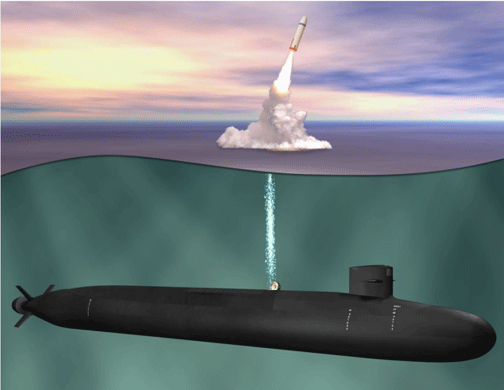
By EurAsian Times Desk -March 21, 2024
The steel cutting of the first third-generation French SSBN took place at Naval Group’s shipyard in Cherbourg on March 20th. This symbolic gesture marks the start of hull production for these submarines, which will ensure France’s nuclear deterrence posture until the end of the 21st century.
Among the most complex systems, SSBNs are the cornerstones of France’s strategic oceanic force (FOST) and ensure that nuclear deterrence remains at sea.
Launched in February 2021, the SNLE 3G program for the French Navy brings together the armed forces, the French defense procurement agency (Direction Générale de l’Armement – DGA), which is responsible for overall project management, the French Atomic Energy Commission (CEA), for the nuclear boilers, and Naval Group, which is responsible for overall project management of the submarines, in association with TechnicAtome for the nuclear boilers………………………………………………………………………………………………………………………….. https://www.eurasiantimes.com/nuclear-deterrence-at-sea-france-starts-constructing/
1 This Month




Shut down the radiation-damaged Heysham nuclear reactors now
To see nuclear-related stories in greater depth and intensity – go to https://nuclearinformation.wordpress.com

Say No to NASA’s Reckless Nuclear Reactor on the Moon
Say No to NASA’s Reckless Nuclear Reactor on the Moon
-
Archives
- October 2026 (302)
- September 2026 (339)
- August 2026 (330)
- July 2026 (355)
- June 2026 (287)
- May 2026 (306)
- April 2026 (356)
- March 2026 (251)
- February 2026 (267)
- January 2026 (308)
- December 2025 (358)
- November 2025 (359)
-
Categories
- 1
- 1 NUCLEAR ISSUES
- business and costs
- climate change
- culture and arts
- ENERGY
- environment
- health
- history
- indigenous issues
- Legal
- marketing of nuclear
- media
- opposition to nuclear
- PERSONAL STORIES
- politics
- politics international
- Religion and ethics
- safety
- secrets,lies and civil liberties
- spinbuster
- technology
- Uranium
- wastes
- weapons and war
- Women
- 2 WORLD
- ACTION
- AFRICA
- Atrocities
- AUSTRALIA
- Christina's notes
- Christina's themes
- culture and arts
- Events
- Fuk 2022
- Fuk 2023
- Fukushima 2017
- Fukushima 2018
- fukushima 2019
- Fukushima 2020
- Fukushima 2021
- general
- global warming
- Humour (God we need it)
- Nuclear
- RARE EARTHS
- Reference
- resources – print
- Resources -audiovicual
- Weekly Newsletter
- World
- World Nuclear
- YouTube
-
RSS
Entries RSS
Comments RSS

