IAEA Unaware Of Secret Iranian Nuclear Site Targeted By Israel
Iran International Newsroom, https://www.iranintl.com/en/202403252483—26 Mar 24
The International Atomic Energy Agency (IAEA) says it has no information about a purported Iranian nuclear site that was set on fire in Tehran’s Shadabad neighborhood in 2020.
This after Iran International’s investigative report revealed Tehran concealed an Israeli sabotage operation that targeted a covert nuclear facility owned by the Atomic Energy Organization of Iran.
Iran International’s in-depth investigative report relied on authenticated documents obtained from both the judiciary and the Ministry of Intelligence. These resources were made available through Ali’s Justice – a network of hacktivists known for their ongoing disclosure of Iranian government documents.
In late July 2020, the destruction of the nuclear site swiftly escalated into a critical national security concern for Iran, prompting reports to reach Ali Khamenei, the Supreme Leader of the Islamic Republic.
Of particular note, mere weeks after the incident, the IAEA’s Director General, Rafael Mariano Grossi, made a visit to Iran – seemingly oblivious to the events.
Following months of tension between Iran and the agency, Grossi had arrived in Tehran to negotiate access for inspectors to two suspected former atomic sites.
Though the IAEA did not identify the sites, Israeli intelligence officials pinpointed one as the Abadeh Nuclear Weapons Development Site.
Iran’s then-nuclear chief, Ali Akbar Salehi, lauded the talks with Grossi as “constructive,” heralding a supposed “new chapter of cooperation” between Iran and the agency.
Fast forward about four years: This month, Grossi informed the IAEA Board that his agency has lost crucial “continuity of knowledge” regarding Tehran’s activities.
The IAEA concluded a meeting earlier this month without passing a resolution against the Islamic Republic for advanced work on its atomic program and its refusal to cooperate with the IAEA.
While the US called on the IAEA Board to be ready for further action if Iran’s cooperation does not significantly improve, it remains to be seen whether this latest report could lead to Iran’s censure over its non-compliance.
The facility, undisclosed to the IAEA, raises serious concerns about Iran’s nuclear program and its compliance with safeguards obligations – and it prompts concerns about the existence of other undisclosed facilities and the extent to which Iran may be concealing other nuclear activities.
Israel And Iran’s Nuclear Program
According to judicial documents, the Islamic Republic considers the Israeli intelligence service, Mossad, as the main perpetrator of this sabotage operation.
Despite its belief that Israel was responsible, Tehran tried to conceal the sabotage.
Following Iran International’s reporting, a spokesman from the Israeli Prime Minister’s Office simply stated, “No comment: “We have no comment.”
Sabotage operations targeting Iranian nuclear facilities are not unprecedented.
From 2009 to 2011, five individuals associated with Iran’s nuclear industry, whom the Islamic Republic regarded as scientists, were assassinated.
Tehran has consistently accused Israel of these assassinations.
Arguably the most prominent instance of sabotage within Iran’s nuclear program was the assassination of Mohsen Fakhrizadeh, the former head of the Ministry of Defense’s Research and Innovation Organization, which occurred on November 27, 2020.
Israel had labeled Fakhrizadeh as a key figure within Iran’s “nuclear weapons program” two years prior to his assassination.
The 2020 sabotage at the nuclear warehouse in Shadabad in Tehran occurred approximately five months before Fakhrizadeh’s assassination.
In contrast, Israel did officially claim responsibility for the theft of Iran’s nuclear documents from a warehouse in Tehran’s Shourabad area in 2018 – with Benjamin Netanyahu revealing that Israel had obtained 55,000 pages and 55,000 digital files through an intelligence operation.
Weaponizing Reality: The Dawn of Neurowarfare

Stavroula Pabst explores the race to apply emerging neurotechnologies, such as brain-computer interfaces (BCIs), in times of both war and peace, expanding conflicts into a new domain — the brain — while perhaps forever changing humans’ relationship with machines.
Hangout, BYSTAVROULA PABST, MARCH 21, 2024
Billionaire Elon Musk’s brain-computer interface (BCI) company Neuralink made headlines earlier this year for inserting its first brain implant into a human being. Musk says such implants, which are described as “fully implantable, cosmetically invisible, and designed to let you control a computer or mobile device anywhere you go,” are slated to eventually offer “full-bandwidth data streaming” to the brain.
Brain-computer interfaces (BCIs) are quite the human achievement: as described by the University of Calgary, “A brain computer interface (BCI) is a system that determines functional intent – the desire to change, move, control, or interact with something in your environment – directly from your brain activity. In other words, BCIs allow you to control an application or a device using only your mind.”
Developers and advocates of BCIs and adjacent technologies emphasize that they can help people regain abilities lost due to aging, ailments, accidents or injuries, thus improving quality of life. A brain implant created by Swiss-based École Polytechnique Fédérale in Lausanne (EPFL), for example, has allowed a paralyzed man to walk again just by thinking. Others go further: Neuralink’s goal is to help people “surpass able-bodied human performance.”
Yet, great ethical concerns arise with such advancements, and the tech is already being used for questionable purposes. To better plan logistics and boost productivity, for example, some Chinese employers have started using “emotional surveillance technology” to monitor workers’ brainwaves which, “combined with artificial intelligence algorithms, [can] spot incidents of workplace rage, anxiety, or sadness.” The example showcases how personal the technology can become as it is normalized in daily life.
But the ethical ramifications of BCIs and other emerging neurotechnologies don’t stop at the consumer market or the workplace. Governments and militaries are already discussing — and experimenting on — the roles they could play in wartime. Indeed, many are describing the human body and brain as war’s next domain, with a 2020 NATO-backed paper on “cognitive warfare” describing the phenomenon’s objective as “mak[ing] everyone a weapon…The brain will be the battlefield of the 21st century.”
On this new “battlefield,” an era of neuroweapons, which can broadly be defined as technologies and systems that could either enhance or damage a warfighter or target’s cognitive and/or physical abilities, or otherwise attack people or critical societal infrastructure, has begun.
In this exploration of the race to apply the latest neurotechnologies to war and beyond, I investigated how the neuroweapons of tomorrow, including BCIs that may allow for brain-to-brain or brain-to-machine communication, have the capacity to expand conflicts into a new domain — the brain — while also bringing a new dimension to both hard- and soft-power struggles of the future.
In response to ongoing neurotechnology developments, some allege “neurorights” will protect peoples’ minds from possible privacy infringements and myriad ethical issues that new neurotechnologies may pose in the years to come. However, neurorights advocates’ close proximity to the very organizations advancing these neurotechnologies deserves scrutiny and potentially suggests that the “neurorights” movement is poised instead to normalize advanced neurotechnologies’ presence in daily life, perhaps forever changing humans’ relationship with machines.
The Military–Intelligence Complex’s Decades-Long Pursuit of Neurowarfare
Indeed, neuroscience’s very origins lie in war. As Dr. Wallace Mendelson explains in Psychology Today, “Just as American neurology was born in the Civil War, the roots of neuroscience are embedded in World War II.” He explains that while the bond between war and neuroscience has contributed to meaningful advances for the human condition, like the improved understanding of ailments like post-traumatic stress disorder (PTSD), it has left some worried about neuroscience’s possible military applications.
………………………………. Initiatives and research explored in this article, like the BRAIN Initiative and the United States Defense Advanced Research Projects Agency’s (DARPA) Next-Generation Nonsurgical Neurotechnology (N³), are often portrayed as altruistic strides towards improving brain health, helping people recover lost physical or mental abilities, and otherwise improving quality of life. Unfortunately, a deeper look reveals a prioritization of military might.
Enhance…
The military is intensely interested in emerging neurotechnologies. The Pentagon’s research arm DARPA directly or indirectly funds about half of invasive neural interface technology companies in the US. In fact, as Niko McCarthy and Milan Cvitkovic highlight in their 2023 writeup of DARPA’s neurotechnology efforts that DARPA has initiated at least 40 neurotechnology-related programs over the past 24 years. From the Interface describes the current state of affairs as DARPA funding “effectively driving the BCI research agenda.”
………………………………………………………………………………………………………………………………………………………….. Like many neurotechnology and adjacent initiatives, the BRAIN Initiative depicts itself as a research-forward, public effort that can improve human well-being. Yet, cash flows suggest that its priorities lie more in the military sphere: as per 2013 reporting from Scientific American, DARPA is the biggest funder of the BRAIN Initiative.
………………………………………… neurotech advancements include improving or “augmenting” the brain’s capacity to operate in myriad ways that will assist fighters on the battlefield. “Enhancements” that claim to improve soldiers’ battlefield performance are not a new phenomenon and have previously included currently illicit drugs, like cocaine. Recent developments in neuroscience have jumpstarted new possibilities, with technologies and techniques including BCIs, neuropharmocologies, and/or electric currents to stimulate the brain potentially, according to the Small Wars Journal, “improv[ing] warfighter performance by enhancing memory, concentration, motivation, and situational awareness while negating the physiological ills of decreased sleep, stress, pain, and traumatic memories.”
…………………………………….. any advancements made to boost a warfighter’s performance can often be applied towards destructive purposes. In neurowarfare, in other words, the brain is capable of being enhanced as well as attacked……………………………………………………………………………………………………………………………………………………………………………………………………………………………….. more https://unlimitedhangout.com/2024/03/investigative-reports/weaponizing-reality-the-dawn-of-neurowarfare/
NRC admits San Onofre Holtec nuclear waste canisters are all damaged
San Onofre Safety.org, 29/11/2018
The San Onofre Holtec nuclear waste thin-wall storage canisters and system are lemons and must be replaced with thick-wall casks. There are no other safe options.
The Nuclear Regulatory Commission (NRC) admits in their November 28, 2018 NRC Inspection Report and Notice of Violation, ML18332A357 (page 8 and 9) every Holtec canister downloaded into the storage holes is damaged due to inadequate clearance between the canister and the divider shell in the storage hole (vault). The NRC states canister
walls are already “worn”. This results in cracks. Once cracks start, they continue to grow through the wall.
The NRC stated Southern California Edison (and Holtec) knew about this since January 2018, but continued to load 29 canisters anyway. Edison’s August 24, 2018 press release states they plan to finish loading mid 2019.
The NRC states Edison must stop loading canisters until this issue is resolved. However, there is no method to inspect or repair cracking canisters and the NRC knows this.
The NRC should admit the Holtec system is a lemon — a significant defective engineering design. They should revoke both San Onofre and Holtec dry storage system licenses.
The NRC should require all San Onofre thin-wall canisters be replaced with thick-wall transportable storage casks.
These are the only proven dry storage systems that can be inspected, maintained, repaired and monitored in a manner to prevent major radiological releases and explosions.
California state agencies should revoke San Onofre permits and withhold Decommissioning Trust Funds until these issues are resolved.
The Navy should consider revoking the San Onofre Camp Pendleton lease until Edison agrees to replace thin-walled canisters with proven thick-wall transportable storage casks. This is a national security issue…………………………………………https://sanonofresafety.files.wordpress.com/2018/11/nrc-allholteccanistersdamaged2018-11-29.pd
UK court orders delay to extradition of WikiLeaks founder Julian Assange to US on espionage charges
By Associated Press, By OLIVER PRICE , 27 March 2024 https://www.dailymail.co.uk/news/article-13239885/Julian-Assange-appeal-against-extradition-court-rules.html?fbclid=IwAR05bAhgRzHKwygiC0ljNnPEU_bL1uwPz2mIRy7vU9RzSU0J_Qbi4aOpK_M_aem_AahKjiDK6G3wRltDvIaC_MtPOcRzYRMwUFpdRPeR7yiJcdMyJyjQi03SWVMX6MWQenTiiAm9LmgWVamqopIy9ZT_
The United States must give assurances that Julian Assange will not face the death penalty before judges will consider dismissing the WikiLeaks founder’s bid to bring an extradition appeal, the High Court has ruled.
Assange, 52, faces prosecution in the US over an alleged conspiracy to obtain and disclose national defence information following the publication of hundreds of thousands of leaked documents relating to the Afghanistan and Iraq wars.
In a 66-page ruling, Dame Victoria Sharp said: ‘Before making a final decision on the application for leave to appeal, we will give the respondent an opportunity to give assurances.
‘If assurances are not given then we will grant leave to appeal without a further hearing.
‘If assurances are given then we will give the parties an opportunity to make further submissions before we make a final decision on the application for leave to appeal.’
These assurances are that Assange would be protected by and allowed to rely on the First Amendment – which protects freedom of speech in the US, that he is not ‘prejudiced at trial’ due to his nationality, and that the death penalty is not imposed.
The judges said the US authorities had three weeks to give those assurances, with a final hearing potentially taking place in late May.
In her ruling, Dame Sharp said any assurances from the United States would need to include ‘that the applicant (Julian Assange) is permitted to rely on the First Amendment, that the applicant is not prejudiced at trial, including sentence, by reason of his nationality, that he is afforded the same First Amendment protections as a United States citizen, and that the death penalty is not imposed’.
Speaking after the judgment, the Australian’s wife Stella Assange described the ruling as ‘astounding’.
She said: ‘What the courts have done has been to invite a political intervention from the United States… send a letter saying ‘its all ok’. I find this astounding.
‘This case is a retribution. It is a signal to all of you that if you expose the interests that are driving war they will come after you, they will put you in prison and will try to kill you.
‘The Biden administration should not issue assurances. They should drop this shameful case that should never have been brought.’
Addressing Julian Assange’s legal ground about freedom of speech guarantees in the US, Dame Victoria Sharp said: ‘The applicant wishes to argue, at any trial in the United States, that his actions were protected by the First Amendment.
‘He contends that if he is given First Amendment rights, the prosecution will be stopped. The First Amendment is therefore of central importance to his defence to the extradition charge.’
She continued: ‘If he is not permitted to rely on the First Amendment because of his status as a foreign national, he will thereby be prejudiced, potentially very greatly prejudiced, by reason of his nationality.’
Dame Victoria concluded: ‘It follows that it is arguable that the applicant might be treated differently at trial on the grounds of his nationality.
‘Subject to the question of whether this could be addressed by means of an assurance from the respondent, we would grant leave to appeal.’
WikiLeaks initially reacted positively to the news, saying Assange had been granted ‘leave to appeal’ his extradition, but he will only be allowed to do so if ‘assurances’ are not met.
Reacting to the ruling on X, formerly Twitter, this morning, WikiLeaks posted: ‘Julian Assange has been granted leave to appeal extradition to the US.
‘Having spent almost five years detained at the UK’s most secure prison the publisher will continue his long detention separated from his young family for revealing war crimes. #FreeAssangeNOW.’
WikiLeaks has now deleted this tweet.
WikiLeaks later added: ‘The court has given US Gov 3 weeks to give satisfactory assurances: That Mr. Assange is permitted to rely on the First Amendment to the US constitution; not prejudiced at trial by reason of his nationality; and that the death penalty is not imposed. #FreeAssange.’
The hearing at the Royal Courts of Justice today was attended by Assange’s wife Stella, dozens of journalists and members of the public, with hundreds observing remotely.
Dozens of people stood outside the central London courthouse to await the judgment, holding placards bearing the message ‘Free Julian Assange’ and chanting ‘There is only one decision, no extradition’.
Speaking at a press conference after Julian Assange’s bid to appeal against extradition to the US was delayed, Jennifer Robinson, WikiLeaks legal counsel, said the decision raised ‘fundamental concerns about free speech’.
She added: ‘It is absurd that we are five years into this case and the US has not offered assurance to protect him from (the death penalty).’
Ms Robinson added: ‘The judgment today demonstrates that if Julian was extradited to the United States there is a real risk and concern that he would not be afforded free speech protections.
‘We say the US should not be offering assurance in response to this judgment, they should be dropping the case and it is a case that should never have been brought in the first place.’
Speaking after the latest Julian Assange ruling, Michelle Stanistreet, general secretary of the National Union of Journalists, said: ‘A temporary reprieve is clearly preferable to an extradition that would have taken place in the coming days.
‘However, the conditionality around the grounds of appeal, which are contingent on the examination of US government assurances that he will not face the death penalty and has the right to free speech, mean the risks to Assange and press freedom remain stark.
‘Assange’s prosecution by the US is for activities that are daily work for investigative journalists – finding sources with evidence of criminality and helping them to get their stories out into the world.
‘If Assange is prosecuted, free expression the world over will be damaged.’
She added: ‘The nuanced nature of this appeal judgment makes an alternative ending to this situation even more pressing.
‘In recent months there has been increasing speculation about some kind of plea deal, to bring this saga to a swift and straightforward conclusion. I urge the US to return to these options.
‘Media freedom is under threat all over the world, compassion and common sense from the US Department of Justice would do much to restore Washington’s reputation as a bastion of free expression.’
Former Labour leader Jeremy Corbyn has called for the US to drop the charges against Julian Assange.
Speaking outside the Royal Courts of Justice, Mr Corbyn said Tuesday’s decision was ‘big step forward’ for Assange’s case but that it is ‘not the victory’ his supporters are looking for.
Mr Corbyn said: ‘Above all, the pressure has to be on the US administration to drop the charges against Julian Assange.
‘He’s a brave journalist who tells the truth.’
When asked why Assange’s case was important to him, the Corbyn said: ‘Because he’s told some very uncomfortable truths about the military activities in Iraq and Afghanistan and other places around the world, but also the effects of corporate greed on the natural world and environment.
‘If Julian goes down for that, then every serious journalist around the world is going to be feel a bit constrained, and that’s dangerous.’
n a January 2021 ruling, then-district judge Vanessa Baraitser said that Assange should not be sent to the US, citing a real and ‘oppressive’ risk of suicide, while ruling against him on all other issues.
But later that year, US authorities won their High Court bid to overturn this block, paving the way towards Assange’s extradition.
During a two-day hearing in February, lawyers for the 52-year-old asked for the go-ahead to challenge the original judge’s dismissal of other parts of his case to prevent his extradition.
And in a judgment today, Dame Victoria Sharp and Mr Justice Johnson dismissed most of Assange’s legal arguments but said that unless assurances were given by the United States, he would be able to bring an appeal on three grounds.
The judges said the US authorities had three weeks to give those assurances, with a final decision to be made in late May.
At the start of Assange’s bid last month, Mark Summers KC argued the US’s prosecution would be retribution for his political opinions, meaning it would be unlawful to extradite him under UK law.
However the two judges rejected this argument.
Dame Victoria said: ‘The applicant’s case before us amounts simply to a reassertion of his case on this issue, and a disagreement with the (district) judge’s conclusion.
‘It does not engage with the judge’s reasoning. Far less does it identify any flaw in her factual conclusions.’
UK Court to Decide Tuesday If Julian Assange Can Appeal Extradition

The decision will be issued at 10:30 am London time
by Dave DeCamp March 25, 2024, https://news.antiwar.com/2024/03/25/uk-court-to-decide-if-julian-assange-can-appeal-extradition/
London’s High Court will rule on Tuesday whether WikiLeaks founder Julian Assange can appeal his extradition to the United States, where he would face trial for exposing US war crimes.
According to WikiLeaks, the written ruling is due to be delivered by 10:30 am London time.
Last month, Assange’s legal team presented its case for the appeal. His lawyers also introduced new evidence, including a bombshell report from Yahoo News that revealed the CIA in 2017, under Mike Pompeo at the time, considered kidnapping and even discussed assassinating Assange over WikiLeaks publishing detailed the CIA’s hacking tools, known as Vault 7.
Assange did not attend the two-day hearing due to his poor health, and he remains in London’s Belmarsh Prison, where he’s been held since 2019. Assange’s family and legal team believe he will die if extradited to the US.
The news of the High Court’s impending decision comes after The Wall Street Journal reported that the US was considering offering a plea deal to Assange and that Justice Department officials had preliminary talks with his legal team. However, Assange’s lawyer, Barry Pollack, said in response to the report that the US has “given no indication” that the US will take a deal.
Assange faces 17 counts under the Espionage Act and one charge for conspiracy to commit a computer intrusion for obtaining and publishing documents from a source, a standard journalistic practice. If Assange is convicted, it would set a grave precedent for press freedom in the US and around the world. A plea deal that criminalizes the journalist-source relationship could also set a dangerous precedent.
WikiLeaks has been asking Americans to put pressure on the Biden administration to stop its pursuit of Assange by contacting their House representatives and telling them to support H.Res.934, a bill introduced by Rep. Paul Gosar (R-AZ) that calls for the US to drop the charges against Assange.
UN Security Council ceasefire resolution a turning point in Gaza war
March 26, 2024, by: The AIM Network, m https://theaimn.com/un-security-council-ceasefire-resolution-a-turning-point-in-gaza-war/
Australian Council for International Development Media Release
Australia’s peak body for international humanitarian organisations welcomes the United Nations Security Council’s resolution calling for an immediate ceasefire in Gaza and release of all hostages as a crucial turning point in the war.
Australian Council for International Development (ACFID) CEO Marc Purcell said it marked a significant breakthrough despite the United States’ decision to abstain from voting.
“This passage of this binding resolution, following four failed attempts since the start of the war, shows global leaders are no longer willing to accept the deaths of tens of thousands of civilians, many of them children, as collateral,” he said.
“The US’ decision to abstain is disappointing, particularly since it put forward its own failed proposal for a ceasefire just days ago. It is essential the US use its influence and relationship with Israel to obtain a permanent ceasefire.
“We are hopeful the passage of this resolution overnight marks a crucial turning point in the war that has killed nearly 32,000 civilians through bombing, starvation and dehydration.
“It is vital that both the state of Israel and militant groups immediately lay down arms to allow for the passage of humanitarian assistance, which is still being blocked from entry into Gaza, and the release of all hostages.”
ACFID is urging the Australian government to commit additional and ongoing funding for the humanitarian response in Gaza and the West bank, including for Australian non-government organisations providing lifesaving assistance.
BASE study: Alternative reactor concepts do not solve the repository problem

A new scientific study commissioned by the Federal Office for the Safety of Nuclear Waste Management (BASE) indicates that the market launch of alternative reactor concepts (also known as “Generation IV”) is currently not on the horizon.
“Despite some intensive advertising by manufacturers, we currently see no development that would make the construction of alternative reactor types on a large scale likely in the coming years. On the contrary: “From a safety perspective, we should expect the potential advantages of these reactor concepts to be outweighed by the disadvantages and the questions that remain unresolved,” says BASE President Christian Kühn, and emphasises that “The concepts solve neither the need to find a repository for radio-active waste nor the pressing issues of climate protection.”
The alternative reactor concepts, which include SMRs, are also often linked to the hope that they can minimise or even resolve the safety risks and disposal problems associated with nuclear power. To examine these claims, BASE commissioned the “Analysis and evaluation of the development status, the safety and the regulatory framework for so-called novel reactor concepts” study. The scientific work was carried out by the Öko-Institut, the Technical University of Berlin and the Physikerbüro Bremen.
“No alternative reactor type would make a repository superfluous”
The study analysed seven technology lines for alternative reactor concepts, which have been discussed internationally for many years, and are sometimes referred to as “fourth-generation reactors”. These include, for example, so-called lead and gas-cooled reactors, molten salt reactors and accelerator-driven systems. “Anyone who is euphoric about alternative reactor concepts today is ignoring unanswered questions and safety risks. As far as the safety of nuclear waste management is concerned, one thing is clear: no alternative reactor type makes the construction of a repository superfluous,” thus BASE President Kühn.
According to their developers, the reactors of the generation IV reactors will offer advantages over today’s nuclear power plants in terms of fuel utilisation, safety and reliability, economic efficiency and nuclear non-proliferation. Another advantage is said to be that less high-level radioactive waste is produced or that even existing waste can be disposed of with the help of these reactors.
The study compared the reactor concepts in terms of their safety, efficiency, proliferation resistance and fuel consumption.
“Individual technology lines could – with a systematic design – achieve potential advantages over today’s light water reactors regarding some of the criteria. However, none of the technology lines can be expected to have an overall advantage; in some areas, disadvantages compared to today’s light water reactors are also possible,” says Christoph Pistner of the Öko-Institut.
An analysis of six countries revealed as follows: “Even in an international context, alternative reactor concepts neither call into question the current trend towards light water reactors, nor do they represent a feasible, economical option for future energy supply,” says Christian von Hirschhausen of TU Berlin. “The study explains this on the basis of six detailed country studies (USA, Russia, China, South Korea, Poland, Belgium). Especially the United States, who are often the subject of public discussion, have not achieved any breakthroughs in the development of non-light water reactors, and have even cancelled previously announced inventions (“travelling wave reactor”).”
Findings of the study
The BASE-funded research project draws the following conclusions:
- State of development: All the concepts that are currently being discussed as belonging to the term “Generation IV” have been under development for decades, in some cases since the 1950s, and have not yet reached market maturity. There is still a considerable need for research and development. If the technical hurdles and safety issues can be resolved, further development would most likely take several decades. Against this background, we cannot assume that such reactor concepts will be used on a relevant scale by the middle of this century. In particular, individual country studies show that a system change from light water reactors to alternative reactor concepts ready for series production is not in sight.
- Waste generation: The alternative reactors would still generate high-level radioactive waste, some of which would be very different to the waste from light water reactors, for example because it would not be present as solid fuel elements but as molten salt. This would make waste treatment much more difficult, as current repository plans are generally not designed for this kind of waste. The volume of high-level radioactive waste could be reduced in conjunction with reprocessing technologies, but the volume of intermediate and low-level radioactive waste would increase significantly.
Transmutation properties: Some of the reactor concepts studied could, in theory, be used to split (transmute) individual parts of the existing high-level radioactive waste. This would involve a great deal of effort over a long period of time. However, the foreseeable effect of these measures would only make a comparatively small contribution to reducing the space requirements of a repository and to its long-term safety. This is due, in particular, to the fact that the substances with the greatest impact on safety (long-lived fission products) are difficult to transmute, and are therefore not intended for this purpose.- Regulations: The regulations of international organisations (e.g. IAEA) and national regulations (USA, Canada and the UK) examined in this study sometimes make very detailed, technology-specific provisions based on decades of operating experience with light water reactors. These regulations are, therefore, not directly applicable to the alternative reactor concepts studied. Revisions are currently underway, but due to a significantly lower level of operating experience, the time required to produce a similarly well-founded set of rules is likely to be very long.
Transmutation properties: Some of the reactor concepts studied could, in theory, be used to split (transmute) individual parts of the existing high-level radioactive waste. This would involve a great deal of effort over a long period of time. However, the foreseeable effect of these measures would only make a comparatively small contribution to reducing the space requirements of a repository and to its long-term safety. This is due, in particular, to the fact that the substances with the greatest impact on safety (long-lived fission products) are difficult to transmute, and are therefore not intended for this purpose.- Regulations: The regulations of international organisations (e.g. IAEA) and national regulations (USA, Canada and the UK) examined in this study sometimes make very detailed, technology-specific provisions based on decades of operating experience with light water reactors. These regulations are, therefore, not directly applicable to the alternative reactor concepts studied. Revisions are currently underway, but due to a significantly lower level of operating experience, the time required to produce a similarly well-founded set of rules is likely to be very long.
Conclusion: The expectation expressed both in public debate and by developers that the alternative reactor concepts can make a significant contribution to solving today’s problems in nuclear technology cannot be considered realistic in view of the current state of development of these systems and the actually proven and expected advantages and disadvantages of the individual technology lines.
The summary of the study results (in German only)
Conclusion: The expectation expressed both in public debate and by developers that the alternative reactor concepts can make a significant contribution to solving today’s problems in nuclear technology cannot be considered realistic in view of the current state of development of these systems and the actually proven and expected advantages and disadvantages of the individual technology lines
Oil company chief urges investment in fossil fuels, as world heats at a record pace

Talk about unfortunate timing. At the start of last week, the head of the
world’s largest oil company, Saudi Aramco, was applauded when he told the
CERAWeek energy conference in Houston it was time to “abandon the fantasy
of phasing out oil and gas”. Amin Nasser said the world needed instead to
invest in fossil fuels to meet demand at a time when the clean energy
transition was “visibly failing on most fronts”.
One day later, the head of the UN’s World Meteorological Organization, Celeste Saulo, received no applause for issuing a report that showed climate records had been not
just broken but smashed in 2023, the hottest year on record. More than 90
per cent of the world’s oceans suffered heatwave conditions, glaciers lost
the most ice on record and the extent of Antarctic sea ice fell to by far
the lowest levels ever measured.
To an extent not widely appreciated, the
world is now warming at a pace that scientists did not expect and,
alarmingly, do not fully understand. At a Financial Times conference this
month, Jim Skea, the chair of the UN’s Intergovernmental Panel on Climate
Change, said last year’s spike in temperatures was “quicker than we all
anticipated”. “It was a surprise,” he said. “Ocean temperatures
were just off the scale in terms of historic records. It was completely
unusual and we still need to do more work to explain it.”
FT 24th March 2024
https://www.ft.com/content/6f858196-0a9c-4f0f-9720-a0a81849a998
UK’s Energy Regulator ,Ofgem, flags concerns over Sizewell C costs

https://www.energylivenews.com/2024/03/21/ofgem-flags-concerns-over-sizewell-c-costs/
The energy regulator has highlighted concerns in a letter to the Energy Secretary regarding potential modifications to the Sizewell C project, emphasising the need for certainty in project costs
Ofgem has conveyed its concerns to the Energy Secretary regarding proposed modifications to the Sizewell C project’s Regulated Asset Base licence.
In a letter, Ofgem underscores the importance of certainty in underlying project costs and contracts for the economic regulatory regime’s fairness to consumers, taxpayers and potential investors.
The letter emphasises the need for thorough progress on all aspects of the project before implementing any licence modifications, especially in light of “challenges” faced by EDF with the construction of Hinkley Point C.
The energy regulator said: “It is important to ensure all aspects of the project are appropriately progressed before making licence modifications.
“This is especially pertinent given the ongoing challenges being experienced by EDF with the construction of Hinkley Point C, which shares many design elements with the proposed Sizewell C plant.
“When considering responses to this consultation, our expectation is that the Department for Energy Security and Net Zero (DESNZ) will continue to ensure that value for money for consumers is a priority consideration in any analysis and decision making around potential changes to the licence, and that any changes made are well justified and evidenced.
“In addition, it is vital that DESNZ also takes into account the effect of any potential changes on the overall operability of the licence and Ofgem’s ability to effectively discharge our obligations over time.”
MPs claim Zelensky has total control of Ukraine – media
https://www.rt.com/russia/594576-ukraine-parliament-crisis-zelensky-media/ 24 Mar 24
The president has reduced the national legislature to a tool for rubber-stamping his decisions, a major outlet reports
Ukraine is now essentially under the personal rule of President Vladimir Zelensky, leading Kiev news outlet Ukrainskaya Pravda (UP) reported on Wednesday. He has virtually stripped the national parliament – the Verkhovna Rada – of its powers and reduced it to a mere rubber-stamp body, UP outlined in a piece based on numerous interviews with Ukrainian MPs.
The Rada has long been tightly controlled by the presidential administration, according to UP. The outlet claims that Zelensky’s office is not only determining the priority of bills on the agenda but also deciding “whether the parliament should convene at all or its MPs should be promptly sent to the trenches.”
“The president’s office despises the parliament,” an unnamed senior MP reportedly said. Zelensky and his team believe his party – the Servant of the People – which holds a majority in the legislature, “would vote for anything” the president needs, according to the lawmaker.
Meanwhile, Zelensky is losing support within his own party, UP claimed. In the last parliamentary election in 2019, Servant of the People won 254 seats in the Rada. This number has been reduced to 235 due to lawmakers leaving the president’s party. Many of them, who are still formally considered members, skip parliamentary sessions, according to the outlet’s sources. Only between 170 and 180 Servant of the People MPs still actively vote on bills, the sources stated.
”First of all, everyone is tired of the war,” a senior lawmaker told UP. Members also understand they are “not influencing the developments in the state and see no role for themselves in the Rada or any sense of being there,” he said.
According to the article, the president’s faction in the parliament is on the verge of “total disorganization,” with MPs apparently ready to surrender their mandates and leave altogether. Dozens have already attempted to do so, UP reported, citing its sources. A “lion’s share” of members would also like to see the parliament dissolved, it added.
Zelensky deals with the parliament “from a position of power,” the UP report observed, and the parliament essentially works only when the president “needs something.” Otherwise, it is “unable to function” and the Ukrainian leader could not care less about it, the outlet wrote.
The absence of real power in the Rada also makes those on the other side of the aisle reluctant to take over the reins, according to the article. “Our ruling [party] has no power and the opposition avoids it as well,” an opposing politician said. He explained that “no one needs any authority or power” and everyone just thinks about escaping responsibility for current conditions in the country.
“We have a unique situation in Ukraine: one person decides everything,” another opposition MP complained. “There is one very specific decision-making center,” he said, referring to Zelensky.
Iranian Cleric Calls For Nuclear Arms
https://www.iranintl.com/en/202403243726
Mohammad Faker Meybodi, a faculty member at the Center for Islamic Sciences, has sparked controversy with his recent remarks advocating for the possession of nuclear arms.
Speaking on the historical context of military weaponry as outlined in the Quran, Meybodi emphasized the need for contemporary armaments to deter adversaries effectively.
“At the time when the verse related to military weapons was revealed in the Quran, the weapon of that era was the swords and spears… Today, it may be necessary for us to possess nuclear weapons to intimidate the enemy. We must equip ourselves with modern weapons,” Meybodi stated.
His statements contrast with the stance previously expressed by Iran’s Supreme Leader, Ali Khamenei, who feigned to denounce the acquisition and use of nuclear weapons, citing religious prohibitions. Khamenei’s fatwa against nuclear arms dates back to the mid-1990s and has been reiterated on numerous occasions, emphasizing Iran’s commitment to “peaceful nuclear endeavors.”
Despite Iran’s assertions that its program is for civilian purposes, UN inspectors last year claimed Iran has accelerated its nuclear enrichment program.
In December, the UN’s atomic weapons watchdog agency, the IAEA, sounded alarm bells regarding Iran’s illicit enrichment of uranium. Tehran was reported to have reversed a months-long slowdown in the rate of uranium enrichment, reaching levels of up to 60-percent purity, approaching the approximately 90-percent threshold for weapons-grade uranium.
The Joint Comprehensive Plan of Action (JCPOA), an agreement reached in 2015, aimed to address these concerns by limiting Iran’s nuclear capabilities in exchange for sanctions relief. However, the withdrawal of the United States from the JCPOA in 2018 reignited tensions and cast uncertainty over the agreement’s future.
Karma: After US vetoes 3 good UN ceasefire resolutions, its bad ceasefire resolution vetoed
Walt Zlotow, West Suburban Peace Coalition, Glen Ellyn IL , 24 Mar 24
The US watered down ceasefire resolution in Gaza failed to pass when the UN Security Council vetoed it. China, Russia and Algeria all cast vetoes compared to America’s lone veto in 3 previous non US sponsored ceasefire resolutions.
Why ‘watered down’?
It does not demand immediate ceasefire, just that ceasefire is “imperative.” It would require continued negotiations as promoted by the US designed to ensure Israeli priorities but none of the Palestinians. Nor is it permanent, with the implication that ethnic cleansing of Palestinians can continue if and when remaining hostages are released.
Furthermore, the resolution expresses no demand against, just “concern” that the impending Israeli invasion of Rafah, will cause major harm to the 1.5 million refugees sheltered there. But that’s meaningless happy talk when Netanyahu proclaims he’s ready to launch that grotesque invasion with or without US support.
So the UN is back to Square One in the effort to end Israeli’s destruction of Palestinians in Gaza, , supported and enabled by their partner in genocide, America.
Nuclear ranks last on list of good investments by big institutions
Marion Rae, Mar 25, 2024, https://reneweconomy.com.au/nuclear-ranks-last-on-list-of-good-investments-by-big-institutions/
Nuclear energy is last on the list of technologies that investors want exposure to, according to a survey of big financial institutions.
The vast majority of investors do not see nuclear power as a good investment, with less than one in 10 exploring this technology, the survey released on Monday found.
Opposition Leader Peter Dutton is spruiking nuclear reactors as an option for Australia’s future low-carbon economy although the energy source is illegal under existing laws and Labor has ruled it out.
Renewable energy is tipped to deliver the best long-term financial returns, with half the investors surveyed exploring opportunities to invest.
Investors have also become more confident about Australian climate policy under the Albanese government, according to the survey by the Investor Group on Climate Change.
“Investors have given the government a pretty good report card,” the group’s policy chief Erwin Jackson said.
But Australia will need globally competitive, targeted incentives to suit the nation’s economic strengths and values to stop “ongoing capital flight” to the United States and Europe where there are more generous tax breaks.
Clear timelines for the phase-out of fossil fuels by 2050 would also help investors manage transition risks and remain invested in the Australian economy, according to the group.
This year’s data includes 63 superannuation funds as well as other asset owners and managers, with more than $37 trillion in assets under management globally. Their beneficiaries include more than 15 million Australians.
Emerging priorities include clear timelines for phasing out coal, oil and gas and clear policies to build resilience and adapt to physical damage from climate change.
Opinions citing policy and regulatory uncertainty as a barrier to clean economy investment in Australia have changed dramatically, supported by four out of 10 investors compared with 7 out of 10 in 2021.
Renewable energy (47 per cent) was picked as the best option for long-term climate solutions, followed by nature-based schemes including biodiversity projects (34 per cent).
But investors are still in the dark on the federal government’s sector-by-sector decarbonisation plans for heavy polluters such as the energy, transport, agriculture and resources industries – and on the scope of the 2035 emissions reduction target.
“Credible and clear sector by sector decarbonisation plans to achieve a 2035 target with the highest possible level of ambition are critical for investment and it is critical to build on the steps already taken,” Mr Jackson said.
Climate Change and Energy Minister Chris Bowen has said the 2035 target will be “ambitious and achievable”, with advice to come from Australia’s recently beefed-up Climate Change Authority.
The sectoral review by the authority has an August 1 deadline, and will be released shortly afterwards.
AAP
Report: Justice Department Considering Plea Deal for Assange
While such a deal could potentially secure Assange’s freedom, it could still set a dangerous precedent since it would criminalize the relationship between a journalist and his source.
the US could have leaked the talk of a plea deal to the press to portray Assange as unreasonable if he didn’t take it.
A plea deal could free Assange from prison
by Dave DeCamp March 20, 2024 https://news.antiwar.com/2024/03/20/report-justice-department-considering-plea-deal-for-assange/
The Justice Department is considering whether to offer WikiLeaks founder Julian Assange the opportunity to plead guilty to a reduced charge of mishandling classified information, The Wall Street Journal reported on Wednesday, citing people familiar with the matter.
The report said DOJ officials and Assange’s legal team have already had preliminary talks on what a plea deal might look like. However, Barry Pollack, a lawyer for Assange, said he has been given no indication that the department will take a deal.
“It is inappropriate for Mr. Assange’s lawyers to comment while his case is before the UK High Court other than to say we have been given no indication that the Department of Justice intends to resolve the case and the United States is continuing with as much determination as ever to seek his extradition on all 18 charges, exposing him to 175 years in prison,” Pollack said in a statement.
Consortium News reported later in the day that it had previously learned of the talks between the US and Assange’s legal team on a potential deal, but the information was given off the record, so the outlet did not publicize it.
Under the DOJ’s indictment against Assange, he could face up to 175 years in prison under the Espionage Act for exposing US war crimes by publishing classified documents leaked to WikiLeaks by former Army Private Chelsea Manning in 2010.
If Assange is convicted, it would set a dangerous precedent for press freedom since publishing information obtained by a source is a standard journalistic practice, whether classified or not.
The Journal report said that if the DOJ offers a deal for Assange to plead guilty to a lesser charge of mishandling classified information, it would be a misdemeanor, and he could potentially enter the plea remotely without going to the US. His time in London’s Belmarsh Prison, where he’s been held since April 2019, would count toward his sentence, and Assange could be free shortly after reaching the deal.
While such a deal could potentially secure Assange’s freedom, it could still set a dangerous precedent since it would criminalize the relationship between a journalist and his source.
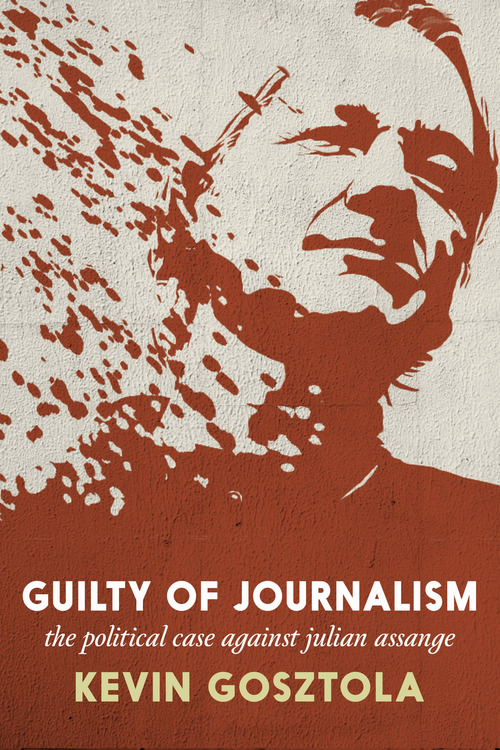
Kevin Gostzola, author of the book “Guilty of Journalism: The Political Case Against Julian Assange,” suggested the US could have leaked the talk of a plea deal to the press to portray Assange as unreasonable if he didn’t take it.
“Basically, US officials chat to the press about some possible plea deal for Assange when he isn’t guilty of any crime. If Assange’s team signals it would never be acceptable, then it is Assange’s fault that he remains in prison. Officials can say he wants to martyr himself,” Gostzola wrote on X.
Last month, Assange’s legal team presented its case for an appeal to the UK home secretary’s decision to extradite Assange to the US, and a decision on whether or not he can appeal is expected to happen soon.
The Australian government has been calling on President Biden to drop the charges against Assange, who is an Australian citizen. Some members of Congress have also been calling for an end to the persecution of the WikiLeaks founder, including Rep. Thomas Massie (R-KY), who brought Assange’s brother, Gabriel Shipton, to President Biden’s State of the Union.
WikiLeaks and Assange supporters are asking Americans to add to the pressure by contacting Congress. Americans can call their House representatives to support H.Res.934, a bill introduced by Rep. Paul Gosar (R-AZ) that calls for the US to drop the charges against Assange.
Click here to find your representative, or call the House switchboard operator at (202) 224-3121. Tell them to support the resolution to protect the First Amendment and press freedom.
“Man-Made Hell On Earth”: A Canadian Doctor on His Medical Mission to Gaza

“I saw scenes that were horrific and I never want to see again,” said Yasser Khan, a surgeon from Toronto.
Jeremy Scahill, Intercepted, March 23 2024,
THROUGHOUT THE PAST five and a half months, Israel has waged a full-spectrum war against the civilian population of the Gaza Strip. The United States and other Western nations have supplied not only the weapons for this war of annihilation against the Palestinians, but also key political and diplomatic support.
The results of the actions of this coalition of the killing have been devastating. Conservative estimates hold that more than 31,000 Palestinians have been killed, including 13,000 children. More than 8,000 people remain missing, many of them believed to have died in the rubble of buildings destroyed in Israeli attacks. Famine conditions are now present in large swaths of the Gaza Strip. The fact that the International Court of Justice has found grounds to investigate Israel for plausible acts of genocide in Gaza has not deterred the U.S. and its allies from continuing to facilitate Israel’s war.
The massive scale of human destruction caused by the attacks would pose grave challenges to well-equipped hospitals. In Gaza, however, many health care facilities have been decimated by Israeli attacks or evacuated, while a few remain open but severely limited in the care and services they offer. Israeli forces have repeatedly laid siege to hospital facilities, killing hundreds of medical workers and taking captive scores of others, despite thousands of internally displaced Palestinians sheltering in the health care complexes. This week, Israel again launched raids on Al-Shifa Hospital, reportedly killing more than 140 people.
For months, doctors across Gaza have performed amputations and other high-risk procedures without anesthetics or proper operating rooms. Antibiotics are in short supply and often unavailable. Communicable diseases are spreading, as hundreds of thousands of Palestinians are forced to live in makeshift shelters with little access to toilets or basic sanitary supplies. Many new mothers are unable to breastfeed and infant formula shortages are common. Israel has repeatedly blocked or delayed aid shipments of vital medical supplies to Gaza. Basic preventative medical care is nearly nonexistent, and medical experts predict that malnutrition will condemn a new generation of young Palestinians to a life of developmental struggles.
The result of the onslaught against medical facilities is that there is only one fully functional hospital remaining in the territory, the European Hospital in Khan Younis. Dr. Yasser Khan, a Canadian ophthalmologist and plastic surgeon, just left Gaza where he spent 10 days at the hospital performing eye surgeries on victims of Israeli attacks. It was his second medical mission to Gaza since the war began last October.
What follows is a transcript of a lightly edited interview with Khan.
………………………Yasser Khan: Well, I’m from the greater Toronto area here in Canada, and I’ve been in practice for about 20 years. I’m an ophthalmologist, but I specialize in eyelid and facial plastic and reconstructive surgery.
So that’s my sub-specialty and that’s what I’ve been doing for about 20 years. And I’m a professor. I’ve been to over 45 different countries on a humanitarian basis where I’ve taught surgery, I’ve done surgery, I’ve established programs. And so I’ve been to many types of areas and zones in Africa, Asia, and South America…………………………………………………………………………………………………………………………………………………….
So that’s the kind of mass chaos that I encountered initially, and then I was told that every time there’s a bomb, give it about 15 minutes and the mass casualties come. That was the other thing that at the time shocked me: What we’d been seeing livestreamed on Instagram, on social media or whatever, I actually saw myself and it was worse than I can imagine. I saw scenes that were horrific that I’d never witnessed before and I never want to see again…………………………………………………….
It was quite demoralizing. You’ve gotta be on the ground to see how bad it is. In two months, things were not only the same in a bad way, but they’re much, much worse because now, two months later, Khan Younis has literally been destroyed as a city. It was an active, hustling, bustling city. The Nasser Hospital, as you know, it’s destroyed now. It’s basically a death zone. And there’s decomposing bodies in the hospital now. It’s been evacuated. And I will add one thing: As a health care worker, I know fully well that to build a major, fully functioning hospital takes years to perfect and build and process, right? So it’s a sheer tragedy that it’s destroyed in mere hours, so it’s really unfortunate…………………………………
So now [at European Gaza Hospital] instead of 20,000 people, there’s about 35,000 people seeking shelter in a hospital that’s already beyond capacity. And so now, both outside and inside, there’s a mass of people. There’s no place to move now in the hallways. The sterility of the hospital has significantly decreased. The European Gaza Hospital, all you have to do is go online and look at their pictures before. It was a beautiful, gorgeous hospital. Well-built, well-run, good quality control — and now it’s reduced to a place that is a mess. It’s a mess. There’s people cooking inside the hospital hallways, there’s the bathrooms, there’s people mixed in with the people who are sick, with major orthopedic injuries, post op. There’s no beds. So sometimes people go and just sleep in their little makeshift shelters. And so infection is, if you can imagine, infection is rampant. So if you don’t die the first time or if your leg or arm is not amputated the first time, it is for sure with infection. So then they have to amputate it to save your life. So it’s much, much worse.
The other thing I noticed was now, more so than even before, the health care workers and nurses and the doctors, they’re just burnt out. I mean, they’re just spent. They’ve witnessed so much in almost six months now. They’ve seen so much on a regular, hourly, daily basis. When I operate [at a hospital in Canada], typically speaking, I’ve got a few mostly elective lists, elective kind of not urgent problems that you gotta fix. And then there’s some trauma, or something that comes in that’s a bit more urgent once in a while, right? That’s my usual list. But [Palestinian medical workers], they are working on a daily basis on the most horrific, explosive trauma that you’ve ever seen. They’re doing sometimes 14, 15 amputations, mostly on children, per day, and they’ve been doing it for six months now.
The thing I try to emphasize to people is that it’s not only the actual medical trauma, it’s the other trauma associated with it in that these patients come in, if you’ve been involved in an explosive injury, and you come in injured, guaranteed you’ve lost loved ones. Guaranteed. So you’ve either lost a father, a mother, a child, all your children, all your family, your uncle, aunt, grandparents, your house, whatever. You’ve lost something. So every patient that comes in, not only is severely injured, is dealing with this trauma.
I had one girl who basically lost all her siblings, 8-year-old beautiful girl, lost her siblings. She came in for a leg fracture, was under the rubble for 12 hours. And her mother died, all her siblings gone. And all her family [were] gone, her aunts and uncles. As you know, it’s a generational killing, like slaughter. Generations. There’s about 2,000 families that have been erased now completely, are gone. ………………………………………………………………………………………………………
This has been a systematic, intentional attack on the health care system. The bizarre thing of all of this is that the Israeli politicians have not hidden it. They have said open statements about creating epidemics. There’s been tons of open statements about what they intend to do. So you can’t even make this stuff up. It’s bizarre how they have openly said this, right? But having said that, I think over 450 health care workers have been killed — doctors, nurses, paramedics, over 450 — when they’re not supposed to be a target, right? They’re protected by international law. Doctors have been kidnapped, specific doctors who are of unique specialties have been targeted and killed.
Doctors have been kidnapped, and, yes, they have been tortured. They dehumanize the doctors and health care workers when they capture them. We’ve seen pictures of them, so we know this happens, and it does indeed happen. A few of the doctors went through torture, and one doctor that came back, he’s a general surgeon, he came back, I was speaking to his wife, and he’s not the same anymore. He was tortured and he still has torture marks over his body, and he’s a general surgeon. That’s it, just a medical professional. The assistant director of the hospital was basically declothed and beat up in front of all the other hospital workers just to kind of insult and degrade him because he’s their boss. And they’re beating him up and kicking him and swearing at him, and everybody witnessed this, and they did it purposely in front of his workers. So, it’s a further dehumanization of a human being. These doctors when they come back, the few that are released, there’s still a lot that are under custody with the Israeli forces, they’re not the same anymore. For me, as a surgeon, it’s really heartbreaking for me to see that. As a surgeon, we have people’s lives in our hands and we heal. And then to see them mentally reduced to nothing is hard to take. Yeah. It’s hard to stomach……………………………………………………………………………………………
What I saw — I’m an eye surgeon, an eye plastic surgeon, and so I saw the classic, what I penned “the Gaza shrapnel face,” because in an explosive scenario, you don’t know what’s coming. When there’s an explosion, you don’t go like this [cover your face], you kind of actually, in fact, open your eyes. And so shrapnel’s everywhere. It’s a well-known fact that the Israeli forces are experimenting [with] weapons in Gaza to boost their weapon manufacturing industry. Because if a weapon is battle-tested, it’s more valuable, isn’t it? It’s got a higher value. So basically they’re using these weapons, these missiles that purposely, intently create these large shrapnel fragments that go everywhere. And they cause amputations that are unusual…………………………………………………………………………………….
And so I saw these facial injuries, I saw limbs of children just kind of hanging off, barely connected. I saw abdominal wounds where you had, of course, the intestines exposed. And the thing is that the emergency does not have room, so they’re all over the floor. So you have these massive trauma, and [the patients] are on the floor. And sometimes they get forgotten in the mass chaos………………………………………………………………………………………………………………………………………………………………………………………………………………………………….. more https://theintercept.com/2024/03/23/intercepted-doctor-gaza-interview/?utm_medium=email&utm_source=The%20Intercept%20Newsletter
1 This Month




Shut down the radiation-damaged Heysham nuclear reactors now
To see nuclear-related stories in greater depth and intensity – go to https://nuclearinformation.wordpress.com

Say No to NASA’s Reckless Nuclear Reactor on the Moon
Say No to NASA’s Reckless Nuclear Reactor on the Moon
-
Archives
- October 2026 (302)
- September 2026 (339)
- August 2026 (330)
- July 2026 (355)
- June 2026 (287)
- May 2026 (306)
- April 2026 (356)
- March 2026 (251)
- February 2026 (267)
- January 2026 (308)
- December 2025 (358)
- November 2025 (359)
-
Categories
- 1
- 1 NUCLEAR ISSUES
- business and costs
- climate change
- culture and arts
- ENERGY
- environment
- health
- history
- indigenous issues
- Legal
- marketing of nuclear
- media
- opposition to nuclear
- PERSONAL STORIES
- politics
- politics international
- Religion and ethics
- safety
- secrets,lies and civil liberties
- spinbuster
- technology
- Uranium
- wastes
- weapons and war
- Women
- 2 WORLD
- ACTION
- AFRICA
- Atrocities
- AUSTRALIA
- Christina's notes
- Christina's themes
- culture and arts
- Events
- Fuk 2022
- Fuk 2023
- Fukushima 2017
- Fukushima 2018
- fukushima 2019
- Fukushima 2020
- Fukushima 2021
- general
- global warming
- Humour (God we need it)
- Nuclear
- RARE EARTHS
- Reference
- resources – print
- Resources -audiovicual
- Weekly Newsletter
- World
- World Nuclear
- YouTube
-
RSS
Entries RSS
Comments RSS

