‘Julian Assange Is Free’: WikiLeaks Founder Strikes Plea Deal With US
“We thank all who stood by us, fought for us, and remained utterly committed in the fight for his freedom,” said WikiLeaks. “Julian’s freedom is our freedom.”
COMMON DREAMS STAFF, Jun 24, 2024, https://www.commondreams.org/news/julian-assange-plea-deal
WikiLeaks founder Julian Assange on Monday reached a deal with the U.S. government, agreeing to plead guilty to one felony related to the disclosure of national security information in exchange for his release from Belmarsh Prison in the United Kingdom.
A related document was filed in federal court in the Northern Mariana Islands, a U.S. commonwealth. Under the plea agreement, which must still be approved by a judge, the Department of Justice will seek a 62-month sentence, equal to the time that the 52-year-old Australian has served in the U.K. prison while battling his extradition to the United States.
Assange faced the risk of spending the rest of his life in U.S. prison if convicted of Espionage Act and Computer Fraud and Abuse Act charges for publishing classified material including the “Collateral Murder” video and the Afghan and Iraq war logs. Before Belmarsh, he spent seven years in the Ecuadorian Embassy in London with asylum protections.
“Julian Assange is free,” WikiLeaks declared on the social media platform X, confirming that he left Belmarsh Friday “after having spent 1,901 days there,” locked in a small cell for 23 hours a day.
He was granted bail by the High Court in London and was released at Stanstead Airport during the afternoon, where he boarded a plane and departed the U.K.,” WikiLeaks said. “This is the result of a global campaign that spanned grassroots organizers, press freedom campaigners, legislators, and leaders from across the political spectrum, all the way to the United Nations.”
“He will soon reunite with his wife Stella Assange, and their children, who have only known their father from behind bars,” the group continued. “WikiLeaks published groundbreaking stories of government corruption and human rights abuses, holding the powerful accountable for their actions. As editor-in-chief, Julian paid severely for these principles, and for the people’s right to know. As he returns to Australia.”
The news of Assange’s release was celebrated by people around the world, who also blasted the U.S. for continuing to pursue charges against him and the U.K. for going along with it.
“Takeaway from the 12 years of Assange persecution: We need a world where independent journalists work in freedom and top war criminals go to prison—not the other way around,” the progressive advocacy group and longtime Assange supporter RootsAction said on social media.
Leftist Colombian President Gustavo Petro said in a statement: “I congratulate Julian Assange on his freedom. Assange’s eternal imprisonment and torture was an attack on press freedom on a global scale. Denouncing the massacre of civilians in Iraq by the U.S. war machine was his “crime”; now the massacre is repeated in Gaza I invite Julian and his wife Stella to visit Colombia and let’s take action for true freedom.”
Australian Greens leader Adam Bandt, who represents Melbourne in Parliament, said on social media that “Julian Assange will finally be free. While great news, this has been over a decade of his life wasted by U.S. overreach.”
“Journalism is not a crime,” Bandt added. “Pursuing Assange was anti-democratic, anti-press freedom, and the charges should have been dropped.”
The women-led peace group CodePink said in a statement:
Without Julian Assange’s critical journalism, the world would know a lot less about war crimes committed by the United States and its allies. He is the reason so many anti-war organizations like ours have the proof we need to fight the war machine in the belly of the beast. CodePink celebrates Julian’s release and commends his brave journalism.
One of the most horrific videos published by WikiLeaks was called “Collateral Murder,” footage of the U.S. military opening fire on a group of unarmed civilians–including Reuters journalists–in Baghdad. While Julian has been in captivity for the past 14 years, the war criminals that destroyed Iraq walked free. Many are still in government positions today or living off the profits of weapons contracts.
While Julian pleads guilty to espionage—we uphold him as a giant of journalistic integrity.
Vahid Razavi, founder of Ethics in Tech and host of multiple NSA Comedy Nights focusing on government mass surveillance, told Common Dreams that “they took a hero and turned him into a criminal.”
“Meanwhile, all of the war criminals in the files exposed by WikiLeaks via Chelsea Manning are free and never faced any punishment or even their day in court,” he added. “You can kill journalists with impunity, just like Israel is doing right now in Gaza.”
British journalist Afshin Rattansi said, “Let no one think that any of us will ever forget what the British state did to the most famous journalist of his generation.”
“They tortured him—according to the United Nations special rapporteur on torture—at the behest of the United States,” Rattansi noted.
Andrew Kennis, a professor of journalism and social media at Rutgers University, told Common Dreams that “Julian Assange is nothing less than the Daniel Ellsberg of our time.”
Scary truths on civilian nuclear power are coming to the fore
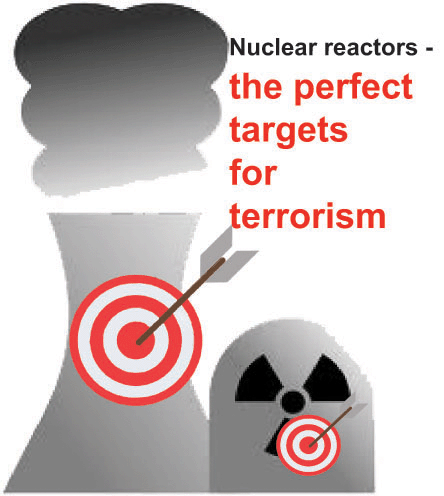
Firstly, everyone agrees that climate breakdown will flip heretofore stable regions into unstable. Adding the reasons mentioned above, a proliferation of civilian nuclear power stations will give potential non-nuclear conflicts a new nuclear dimension. Add to that the cheaper, supposedly even sometimes mobile, small nuclear reactors that are seen as “dirtier” than existing NPPs.
It’s no surprise therefore that the civil nuclear lobby would rather not talk about it.
Bill Ramsay, The National 24 June 24
IT’S entirely natural that the UK civilian nuclear power lobby pitch is behind Labour.
Probably some who support Scottish independence think that the stance of the SNP on nuclear power is a marginal vote-loser. However, if looked at properly through a national security lens, it’s actually a vote-winner.
Occasionally, the threat of some limited non-state terrorist attack on a civilian nuclear facility gets an airing. The more important issue of the implication of the presence of civilian nuclear power stations in a war zone rarely does.
………………………………. the lack of discussion – in the public domain at least – of the implications of the presence of a civilian nuclear power station in a so-called non-nuclear conventional battlefield.
I did nothing more on the issue until my sort-of retirement from education as a senior official of the EIS aligned with the Russian invasion of Ukraine. Ukraine hosts Europe’s largest nuclear power station and some others. More than half of Ukraine’s electricity is generated by its nuclear power stations.
My first attempt at a paper was rather “undercooked” – as the rejection from the Royal United Services Institute (RUSI) rightly pointed out – but the final effort – after helpful further consultation with Paul Rodgers, emeritus professor of peace studies at Bradford University – is now available on the Scottish CND website.
In Castle Zaporizhzhia: War Fighting Implications Linked To The Proliferation Of Nuclear Power As Part Solution To Climate Chaos, I unpack the dangers that the nuclear lobby would rather not discuss.
I argue that from a purely military perspective, the occupying Russian forces – whose current, if not future, capabilities are far from overwhelming – will militarily milk the Zaporizhzhia NPP for all its worth and more.
Militarily, the intimidatory potential of the Zaporizhzhia NPP of today and future Zaporizhzhias are huge. Zaporizhzhia NPP performs a similar role for the Russian invaders of Ukraine that the motte-and-bailey castle did for the Norman invaders of England after 1066. These castles of wood then stone were designed to intimidate the Saxon natives.
Zaporizhzhia NPP does the same. Russia can use it as a base of operations from which it can project its power in the full knowledge that the Ukrainians cannot attack it without the risk of another Chornobyl nuclear disaster.
If they wished, the Russians could fire long-range ordnance from it, in the full knowledge the Ukrainians dare not fire back. Indeed, although Zaporizhzhia NPP was discussed at the Ukrainian summit held in Switzerland a few days ago, the bigger global security risks associated with civilian nuclear power production was not. Why? Because the civil nuclear lobby sees nuclear power as a clean alternative to fossil fuels.
In my view, civil nuclear power as a climate chaos mitigator is triply flawed.
Firstly, everyone agrees that climate breakdown will flip heretofore stable regions into unstable. Adding the reasons mentioned above, a proliferation of civilian nuclear power stations will give potential non-nuclear conflicts a new nuclear dimension. Add to that the cheaper, supposedly even sometimes mobile, small nuclear reactors that are seen as “dirtier” than existing NPPs.
It’s no surprise therefore that the civil nuclear lobby would rather not talk about it. Though, to be fair to RUSI, soon after the publication of my report by Scottish CND, RUSI published another which was followed up by a seminar and more recently it has established an ongoing project on strategic and security aspects of civil nuclear power.
Despite all this, the security aspects of civil nuclear power remain very much an elite issue with very little reportage in the mainstream media.
It’s a similar strategy to that employed by John Cleese’s hotelier character Basil Fawlty when faced by an influx of a coach-load of elderly German tourists to his establishment. Paranoid that his staff would make reference to the Second World War, he threatened them with dismissal if they did.
We would all like the war in Ukraine to end, not least because of the death and destruction. The nuclear lobby’s motives are rather less altruistic as the longer the war goes on, the more likely their so-called solution to climate chaos will be exposed to a more searching critique. https://www.thenational.scot/politics/24405095.scary-truths-civilian-nuclear-power-coming-fore/
Unable to back down, Israel and Hezbollah move closer to all-out war
BBC, 22 June 24, By Lucy Williamson, Reporting from the Israel-Lebanon border
Full-scale war between Israel and Hezbollah would be “a catastrophe”, the UN Secretary-General says. But to David Kamari, who lives under near-daily fire on the Israeli side of the border, it would be a solution.
Last month, a Hezbollah rocket fired from Lebanon landed in his front garden in the border town of Kiryat Shmona, cracking his house in several places and filling it with rubble.
He points out the gaping holes where shrapnel sliced through the walls, missing him by inches. And then to the hills above us, where Hezbollah-controlled territory begins.
“Every day, every night: bombs. [It’s a] problem,” he said. “And I was born here. If you live here one night, you go crazy.”
David is still living in his rubble-filled house, pieces of shrapnel entangled with the remains of his television set. Outside is the blackened relic of his car, burned by the fire that swept through his front yard after the rocket hit.
Most of the population of Kiryat Shmona was evacuated after the 7 October Hamas attacks, as Hezbollah rockets began raining down in support of their Palestinian ally.
David is one of the few who stayed. “I’ve lived here 71 years,” he said. “I won’t go. I was in the army, I’m not afraid.”
His solution? “War with Hezbollah; kill Hezbollah,” he says.
Israel has been striking back hard against Hezbollah, killing senior commanders and hitting targets further inside Lebanon.
Hezbollah has sent larger volleys of drones and missiles across the border this month, and threats on both sides have increased. Earlier this week, the group published drone footage of military installations and civilian infrastructure in the Israeli city of Haifa.
Tough talk has long been part of a mutual strategy of deterrence, with both sides seen as wary of all-out war.
But as the tit-for-tat conflict grinds on, and more than 60,000 Israelis remain evacuated from their homes in the north, there are signs that both Israel’s leaders and its citizens are prepared to support military options to push Hezbollah back from the border by force……………………………………………………………………………………..
As difficult as this border conflict is for people on both sides, a full-scale war would lift the crisis onto a different scale.
Some residents of Beirut are keeping suitcases packed and passports ready, in case of all-out conflict, and the Hezbollah leader, Hassan Nasrallah, said this week that nowhere in Israel would be spared.
Hezbollah is a well-armed, well-trained army, backed by Iran; Israel, a sophisticated military power with the US as an ally.
Full-scale war is likely to be devastating for both sides.
The UN Secretary-General, Antonio Guterres, said it would be a “catastrophe that goes […] beyond imagination”.
The problem for Israel is how to stop the rockets and get its people back to the abandoned northern areas of the country.
The problem for Hezbollah is how to stop the rockets when its ally, Hamas, is being pounded by Israeli forces in Gaza.
The longer that situation grinds on, the more the risks of a miscalculation increase, and the more Israel’s government is under pressure to resolve the situation.
The Hamas attacks on 7 October changed security calculations in Israel. Many of those with homes near the border – and some of those in positions of power – say the kind of agreement made with Hezbollah in the past is no longer enough.
Tom Perry lives in kibbutz Malkiya, right up against the Lebanese border fence. He was out drinking with friends when a Hezbollah rocket slammed through the front of his house earlier this month.
“I think the Secretary-General’s warning is right – [war] will be a catastrophe to the area,” he said.
“But unfortunately it looks like we have no other option. No agreement lasts forever, because they want death for us. We are doomed to wars forever, unless Israel can eliminate Hezbollah.”
Israel’s leaders lost all credibility after the 7 October attacks, he says, and don’t have a strategy to deliver peace.
“They need to quit – all of them. The biggest failure of our army and our country was 7 October, and they were our leaders. We don’t need these leaders.”
Demands for political change are likely to increase when Israel’s conflicts end.
Many believe Israel’s prime minister is playing for time: caught between growing demands for a ceasefire in Gaza, and growing support for a war in the north. https://www.bbc.com/news/articles/c4nn145p20qo
The insane amount it could cost to turn Australia nuclear – as new detail in Peter Dutton’s bold plan is revealed
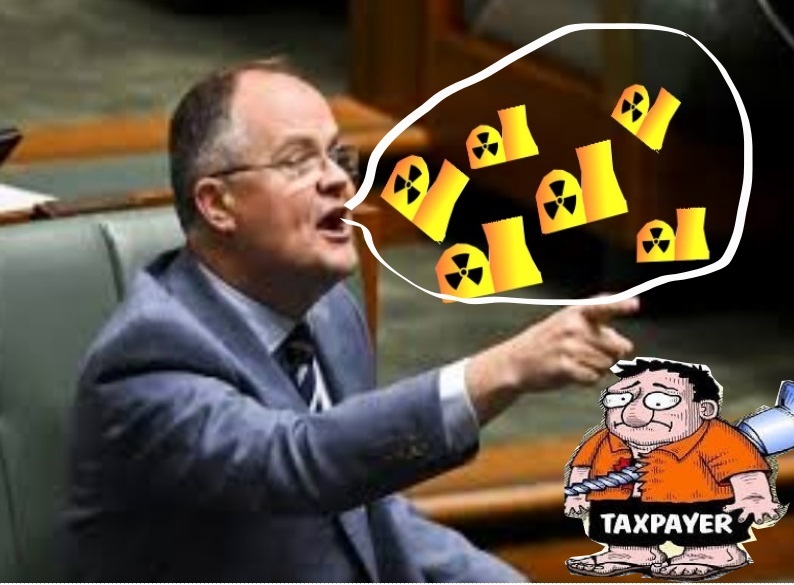
The large-scale and small modular generators would be Commonwealth-owned, similar to arrangements governing the Snowy Hydro 2.0 scheme, requiring a multibillion-dollar funding commitment from taxpayers.
- Peter Dutton nuclear plan slammed
- Proposal could cost $600billion
By JACK QUAIL FOR NCA NEWSWIRE and AUSTRALIAN ASSOCIATED PRESS 23 June 2024, more https://www.dailymail.co.uk/news/article-13559019/The-insane-cost-turn-Australia-nuclear-Peter-Dutton-slammed-completely-irrational-plan.html
Labor frontbencher Tanya Plibersek has added her voice to the tirade of criticism against the Opposition’s nuclear energy push, labelling the proposal as ‘completely irrational’ and ‘designed to be a distraction’.
Speaking on Sunday, the environment and water minister criticised the Coalition for its refusal to detail the estimated cost to add nuclear generation to the national electricity market in the biggest overhaul of energy policy in decades.
‘He’s saying to Australians: ‘I don’t trust you. I don’t trust you with the costing we’ve done,’ if he’s got costings,’ Ms Plibersek told Sky News.
According to analysis released by the Smart Energy Council using data from the latest GenCost report, Labor’s non-nuclear energy plan is estimated to cost $117bn through to 2050, while the Coalition’s pledge would cost upwards of $600bn.
Opposition energy spokesman Ted O’Brien has flagged an evolution in the Coalition’s nuclear power policy, revealing that each of the seven sites could host multiple reactors.
But in a major concession, Mr O’Brien said on Sunday the Coalition would not go to the election announcing the estimated generation capacity of its nuclear power plan, leaving this decision to an independent body until after the election.
‘One of the lessons we learned from overseas, in order to get prices down, you need multi-unit sites,’ Mr O’Brien told the ABC’s Insiders program.
‘Let’s say the small modular reactors … When you talk about a nuclear plant, these are modularised compartments. You can add another 300, add another 300.
‘You’re talking about multi-unit plants.’
An independent nuclear energy coordinating authority would make recommendations on the number and type of reactors per site, Mr O’Brien said, which would then determine the final generation capacity.
‘The independent body would look at each plant, and come up with a recommendation as to what sort of technology should be used,’ he said.
‘From there, it would be exactly what capacity based on that technology.
‘Only from there can you come down to a specific number of gigawatts’.
Last week Coalition unveiled plans to build seven nuclear power plants by 2050 with the first reactor slated to be operational in just over a decade in a move designed to deliver cheaper, zero-emissions and reliable power supply.
The large-scale and small modular generators would be Commonwealth-owned, similar to arrangements governing the Snowy Hydro 2.0 scheme, requiring a multibillion-dollar funding commitment from taxpayers.
The Coalition has proposed to locate the reactors in Queensland, NSW, Victoria, South Australia and Western Australia on the sites of former coal fired power stations, adding no more than 10GW to the power grid, meaning renewables will remain the vast majority of the energy mix.
Smart Energy Council chief executive John Grimes said Mr Dutton’s nuclear proposal would deliver ‘at best’ 3.7 per cent of the energy required at the same cost as the government’s current strategy.
‘In reality, current cost overruns happening right now in the UK could mean a $600 billion bill to Australian taxpayers, whilst delivering a small proportion of the energy that is actually required,’ he said.
Nuclear had no place in a country with cheap, reliable energy powered by the sun and wind and backed up by renewable energy storage, Mr Grimes said.
‘The most optimistic assessment of Peter Dutton’s nuclear proposal indicates it is a pale shadow of the reliable renewables plan outlined and costed by the Australian Energy Market Operator,’ he said.
The council has called on the opposition to release its analysis of the costings and generation capacity from the seven proposed nuclear reactor sites.
‘They need to explain how their forecasts contradict the experts at the CSIRO and AEMO,’ Mr Grimes said.
‘It is extraordinary that the details are being hidden from the Australian public.’
Separate analysis released by CSIRO put the cost of building a large-scale nuclear reactor at $8.6bn, bringing the total cost to approximately $60bn, however nuclear projects are often subject to hefty delays and soaring cost overruns.
Asked why Australia had eschewed nuclear power when many other advanced economies had adopted the technology, Ms Plibersek pointed to Australia’s comparative advantage in renewable power generation.
‘We’ve got the room, we’ve got the resources, we’ve got the critical minerals we need, battery manufacturing, we’re investing in green hydrogen,’ Ms Plibersek said.
‘We can be a renewable energy superpower and instead Peter Dutton wants to slam the brakes on, instead of leading the world with renewable energy investment.
‘He wants to fast track nuclear, and put us on the slow lane when it comes to renewables. It’s just mad.’
Ukraine hit Russia’s space communications and early warning center
COMMENT. This is really serious. The US is really trying to start a war with Russia. Russia will definitely respond to these attacks. And the vast majority of Americans will know nothing about the US provocation because of our censorship. So, they will be outraged at the Russian attacks and support US counterattacks. They’ve hit a few other early warning facilities in Russia in the last few weeks that Scott Ritter has talked about, and that Putin has given very grave and serious warnings about because it blinds Russia to knowing if they are about to be attacked by intercontinental ballistic missiles, making their loss an existential threat for Russia.
After the strikes in Sevastopol and the loss of Russian civilians in Crimea and Dagestan, Ukraine also hit the valuable NIP-16 space monitoring and communication center near the city of Yevpatoria on the Black Sea coast.
This is a Soviet facility that was placed under the command of the Russian Aerospace Defense Forces for Nuclear Early Warning and Command Operations after Russia’s unification with Crimea.
As can be seen, Kiev is now systematically hitting Russian targets of strategic importance. Moscow can no longer afford not to take action.
The NIP-16 installation includes two sites located 10 km apart: the receiving station at site 1, near the village of Vitino, and a transmitting station at site 2, near the village of Uyutnoe.………………………………………………………. https://seemorerocks.substack.com/p/ukraine-hit-russias-space-communications?utm_source=substack&utm_medium=email#media-2d576da4-cd74-4647-81eb-57e26fc5d6a8
IDF Report Found Multiple Cases of Friendly Fire Deaths on Oct 7
The probe identified numerous examples of Israeli forces overreacting or failing to act during the Hamas assault
by Kyle Anzalone June 20, 2024 t https://news.antiwar.com/2024/06/20/idf-report-found-multiple-cases-of-friendly-fire-deaths-on-oct-7/
A review by the Israel Defense Forces (IDF) set to be released this summer will conclude that Israeli soldiers killed many of their own people on October 7, Israeli media reported. The inquiry is expected to identify multiple failures of the IDF during the Hamas rampage in southern Israel.
According to Israel’s Channel 12 News, the IDF report due to be released in mid-July found “many casualties due to our forces firing on our forces.” Tel Aviv has been accused of ordering its soldiers to kill hostages rather than allow Hamas to use them in negotiations, a policy long known as the ‘Hannibal Directive.’
The IDF’s October 7 review appears to point to incompetence rather than the intentional killing of its own civilians. However, Israeli outlet Ynet’s investigation of the IDF’s conduct found Tel Aviv had ordered troops to follow the Hannibal policy.
Still, the conclusions from the forthcoming report will amount to an official admission that scores, if not more, of Israelis were killed by IDF soldiers, not Hamas.
On October 7, Hamas launched a large-scale assault on southern Israel that left hundreds of attackers, 767 Israeli civilians, and 376 members of the Israeli security forces dead. The Jerusalem Post recently reported that many of the Israeli deaths were caused by IDF overreaction or inaction.
“According to the report, the probe will find numerous cases of friendly fire errors leading to tragic deaths, groups of IDF soldiers who were too hesitant to confront Hamas invaders (as still others rushed to fight without being formally summoned),” the outlet noted, adding that “higher-up commanders ordering some groups of soldiers to remain in a reserve second-line capacity – when they should have headed into the front, and not knowing how to handle complex battlefield questions involving a hostage.”
While Tel Aviv has denied that the Hannibal Directive was put into effect and insists it is no longer used, evidence has emerged of Israeli forces firing on homes knowing civilians were inside. One incident in Kibbutz Be’eri left 12 Israeli civilians dead.
There are multiple probes investigating the IDF’s actions on October 7, though one Israeli government-led inquiry was shut down by the country’s top court this week amid objections from the IDF and a number of senior officials.
Kyle Anzalone is the opinion editor of Antiwar.com, news editor of the Libertarian Institute, and co-host of Conflicts of Interest.
The US nuclear arms control community needs a strategic plan
in By Stewart Prager | June 24, 2024
It is a commonplace that the danger of nuclear weapons is becoming more severe year by year. This is reflected in the Bulletin’s Doomsday Clock, for which the time to midnight has declined steadily since 1996. At this trend, the international security situation will continue to grow even more perilous, despite the ongoing efforts of the US arms control community.
To avert such a tragic outcome and drastically slash nuclear risk, the arms control community needs a new approach. It is usual within the scientific community, when faced with a grand challenge, to erase the blackboard, think fresh, and develop a new vision and strategic plan—with great positive effect in many sub-fields. Yet, such brainstorming and planning is not underway in the field of US nuclear arms control.
The US nuclear arms control community has been extremely resourceful and effective, with many past successes despite its constrained resources. However, the current approach of the collection of arms control organizations—each with independent efforts and plans—is unlikely to map to a more secure future. It is now the time for members of this community to challenge themselves with a community-wide effort to develop a strategic plan commensurate with the challenge of reducing nuclear risk.
Losing the debate. Currently, the United States is increasing the capability of its nuclear weapons through its massive modernization program. With this escalating capability—and the growing political pressure for further expansion to respond to nuclear plans in China and Russia—in 10 years the prominence of nuclear weapons will likely be even greater than it is today.
Societal forces that argue for increased dominance of nuclear weapons as providers of security have far larger influence on US policy than arms control advocates—and are winning the debate.
Funding for the nuclear weapons complex in 2024 is approaching $70 billion. The annual congressional lobbying effort that spawns is funded at over $100 million. Lobbying for nuclear weapons exceeds by several-fold the entire budget for all activities within the arms control community, which includes research, education, information dissemination, policy analysis, and lobbying. The relative persuasive power of arms control advocates likely exceeds its relative funding; ideas are not measured by the dollar. But the current level of effort and the approach for nuclear threat reduction advocacy are sorely inadequate, despite the creative, savvy, and persistent work of this community.
The arms control community is sufficiently under-resourced that it is difficult to free up the energy and time for a process of strategic planning, given the challenges of preserving even the funding currently available. However, it is at such a time that strategic planning is most crucial and must be provided priority.
The need for a strategic plan. The US arms control and disarmament community is united in the overarching goal of reducing the salience of nuclear weapons in international relations. But the community lacks not only a plan on how to fulfill that goal, but even a common statement of its grand challenge. An example of such a statement is “to alter the US nuclear arsenal and posture to accomplish global arms reduction in 10 years and disarmament in 20 years.”…………………………………………………………………………………………………………… more https://thebulletin.org/2024/06/the-us-nuclear-arms-control-community-needs-a-strategic-plan/?utm_source=Newsletter+&utm_medium=Email&utm_campaign=MondayNewsletter06242024&utm_content=NuclearRisk_USNuclearArmsControlPlan_06242024
The US, Russia, and Ukraine: 75 Years of Hate Propaganda
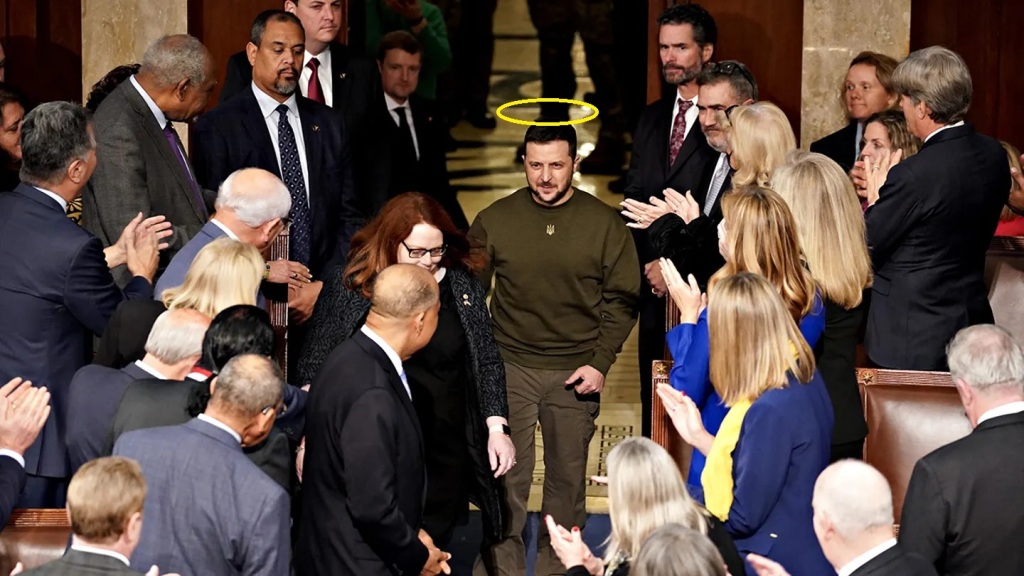
Zelensky: The “Winston Churchill of Our Time” (George W. Bush)
In the Western symphony of propaganda, the hated Putin, the “autocrat,” is contrasted with the heroic Zelensky the “democrat” (Time magazine’s 2022 “person of the year”). But how democratic is Zelensky?
His man-of-the-hour image had help from international friends. Zelensky’s global perception management team is run by a well-connected London-based British firm, The PR Network, that helps him prepare messages for global consumption.
BY GERALD SUSSMAN APRIL 18, 2023, https://www.counterpunch.org/2023/04/18/the-us-russia-and-ukraine-75-years-of-hate-propaganda/
“It is not a matter of what is true that counts, but a matter of what is perceived to be true.”
– Henry Kissinger
“But the most brilliant propagandist technique will yield no success unless one fundamental principle is borne in mind constantly and with unflagging attention. It must confine itself to a few points and repeat them over and over.”
– Adolf Hitler
“We lied, we cheated, we stole. We had entire training courses [on deceiving the public].”
– Mike Pompeo on his time as CIA director
What is state propaganda? It is a disciplined and coordinated discourse using mass persuasion on behalf of state interests. It’s one instrument of what’s called realpolitik – foreign policy designed to advance “national interests,” which in a neoliberal economy like the US means corporate interests. The oligarchs, the billionaire class in the age of neoliberalism, in their unfettered greed have employed both US political parties and their accessories in the media, the intelligence community, and Congress and turned them into a collective ministry of (dis)information and subalterns of empire. Propaganda as a tool in foreign policy commonly relies on hate-laden ideology to mobilize public consensus.
Enemies
A key to successful mass mobilization of the public mind is the enemy construct. One of the key studies on the subject found that the US has had a permanent need for enemies, and when not “readily available, we have created them” (Finlay, Holsti, and Fagen, cited in Murray & Myers, 1989, p. 555). Russia as enemy (Russophobia) works just as well if not better when it’s conceived in demeaning ethnic rather than political economic terms. That’s because hierarchical race and ethnicity ideas are closer to the surface of public prejudice than those focused on, for example, effigies of socialism or communism. In other words, it is easier to orchestrate hatred toward Russia and Putin when there preexists a deep distrust of Russians, their history, and (orthodox religious) culture and its people based on “difference” and a perceived civilizational threat to the West. Under such collective psychological conditioning, this has led to a rejection of Russia membership in the congregation controlled by white European Christian nations.
The US has manufactured innumerable enemies during the course of its existence, and it has had to in order to become a world superpower. Since 1776, there have been only 16 years when the country was not at war. In the pantheon of America’s villains during its 247-year history, one of the most prominent portraits is that of the demonic Vladimir Putin, whose “enemy” status among Americans was pumped up to 70% by March 2022, soon after the start of Russia’s “special operation” in Ukraine.
The “liberal” Democrats are found to be far more inclined to carry out a proxy war against Russia than Republicans and much more supportive of supplying Ukraine with advanced weapons and US troops: tanks (67% to 48%), long-range missiles (60% to 41%), fighter jets (56% to 39%), direct invasion (33% to 22%) (Frankovic and Orth, 2023). Former CIA director and defense secretary under Obama, Leon Panetta bluntly declared, ‘It’s a proxy war with Russia, whether we say so or not” (Bloomberg, 2022).
The massive US “proxy” assault on Russia, more like a full-scale invasion but without its own troops physically on the ground and in the air, is only the latest episode of a hundred-year-old effort to impose Western hegemony over that country. It started with the joint “expedition” that the sanctimonious Woodrow Wilson (“I am going to teach the South American republics to elect good men”) sent to Siberia and northern Russia in a failed attempt, along with mainly European allies, to back the White Russians in the civil war and overthrow the Bolshevik government. Anti-communism was toned down during the Second World War, as it was the Soviet Union, including Ukraine, tactically allied with the US and the British Empire, that bore by far the heaviest burden, suffering 27 million deaths, in defeating the Nazi regime. It’s a sobering reality of historical proportions that is rarely acknowledged in the US. Immediately following the war, the US quickly converted the USSR/Russia from ally to enemy (and their enemies to allies) and worked closely with anti-communist groups in Ukraine and the larger Soviet region in efforts to break apart the Soviet state.
The then newly formed CIA, established in 1947, covertly supervised underground far right organizations in Ukraine, in particular the pro-Nazi Organization of Ukrainian Nationalists (OUN) and the anti-Soviet Ukraine Insurgent Army (UPA), as part of its “psychological warfare activities
Continue readingAustralian Opposition Leader Peter Dutton’s nuclear plan could cost as much as $600bn and supply just 3.7% of Australia’s energy by 2050, experts say

Coalition proposal would cost a minimum of $116bn – the same as Labor’s plan for almost 100% renewables by 2050, the Smart Energy Council says
Jordyn Beazley, Sun 23 Jun 2024 https://www.theguardian.com/australia-news/article/2024/jun/23/peter-duttons-nuclear-plan-could-cost-as-much-as-600bn-and-supply-just-37-of-australias-energy-by-2050-experts-say
The Coalition’s pledge to build seven nuclear reactors as part of its controversial energy plan could cost taxpayers as much as $600bn while supplying just 3.7% of Australia’s energy mix by 2050, according to the Smart Energy Council.
The analysis found the plan would cost a minimum of $116bn – the same cost as delivering the Albanese government’s plan for 82% renewables by 2030, and an almost 100% renewable energy mix by 2050.
The Coalition has drawn widespread criticism for not releasing the costings of the nuclear power proposal it unveiled on Wednesday as part of its plan for Australia’s energy future if elected. On Friday, the opposition leader, Peter Dutton, said the costings would come “very soon”, but did not confirm whether it would be days, weeks or months.
The Smart Energy Council came to the $116bn figure using data from the CSIRO and the Australian Energy Market Operator’s latest GenCost report. It factored in the Coalition’s proposed timeframe and the capital costs of replacing the 11 gigawatts of coal capacity produced on the seven sites with nuclear reactors.
But factoring in the experience of cost and timeframe blowouts in the UK, the refurbishment of coal-fired power stations, and Dutton’s plan to compensate the states, the Smart Energy Council found the cost could reach as much as $600bn.
The council found the large nuclear reactors – of which there will be five alongside two smaller reactors – would probably cost $60bn each and were unlikely to be built by 2040. Dutton has said that they plan for the reactors to be built and operational by the second half of the 2030s.
“At best, Peter Dutton’s nuclear proposal would deliver 3.7% of the energy required at the same cost as the government’s comprehensive strategy,” John Grimes, the chief executive of the Smart Energy Council, said.
“In reality, current cost overruns happening right now in the UK could mean a $600bn bill to Australian taxpayers, whilst delivering a small proportion of the energy that is actually required.
“The most optimistic assessment of Peter Dutton’s nuclear proposal indicates it is a pale shadow of the reliable renewables plan outlined and costed by the Australian Energy Market Operator (Aemo).”
The Smart Energy Council called on the opposition to immediately release its costings and the generation capacity of the proposed seven nuclear reactors.
“They need to explain how their forecasts contradict the experts at the CSIRO and Aemo. It is extraordinary that the details are being hidden from the Australian public,” said Grimes.
The CSIRO and Aemo have assessed the cost of different electricity sources and found nuclear generation would be the most expensive technology available for consumers.
It found that solar and wind backed by storage energy, new transmission lines and other “firming” – in other words, what the country is building now – were the cheapest option.
The Coalition’s promise has met widespread scepticism from Australia’s energy sector and industry groups, which have warned about the risks of cost blowouts and destroying private sector investment.
During an address to party officials in Sydney on Saturday, Dutton said his nuclear energy plan would cost a fraction of Labor’s renewable energy rollout, and would assist in achieving the party’s goal for “cheaper, cleaner and consistent power.
Why ‘no’ to NATO?
David Swanson, beyondnuclearinternational
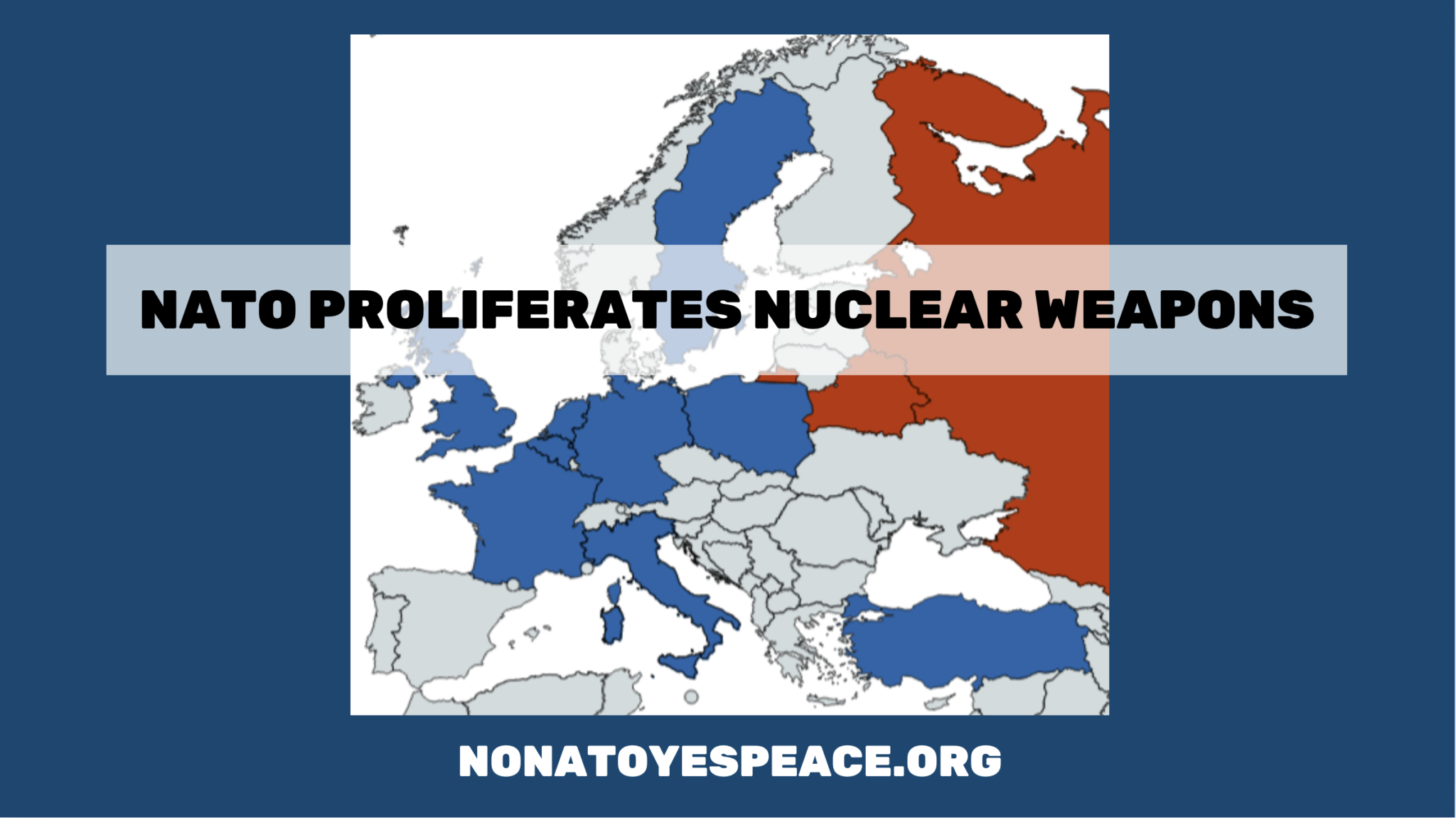
The Nuclear Nonproliferation Treaty forbids transferring nuclear weapons to other nations. It contains no NATO exception. Yet NATO proliferates nuclear weapons
Five NATO members have U.S. nuclear weapons stored and controlled by the U.S. military within their borders: Belgium, Germany, Italy, the Netherlands, and Turkey.
The people of each of these countries routinely protest the presence of nuclear weapons and have never been asked to vote on the matter.
Alliance spreads nuclear weapons, nuclear energy and risk, writes David Swanson
Article 5 of the North Atlantic Treaty declares that NATO members will assist another member if attacked by “taking action as it deems necessary, including the use of armed force.” But the UN Charter does not say anywhere that warmaking is authorized for whoever jumps in on the appropriate side.
The North Atlantic Treaty’s authors may have been aware that they were on dubious legal ground because they went on twice to claim otherwise, first adding the words “Any such armed attack and all measures taken as a result thereof shall immediately be reported to the Security Council. Such measures shall be terminated when the Security Council has taken the measures necessary to restore and maintain international peace and security.” But shouldn’t the United Nations be the one to decide when it has taken necessary measures and when it has not?
The North Atlantic Treaty adds a second bit of sham obsequiousness with the words “This Treaty does not affect, and shall not be interpreted as affecting in any way the rights and obligations under the Charter of the Parties which are members of the United Nations, or the primary responsibility of the Security Council for the maintenance of international peace and security.” So the treaty that created NATO seeks to obscure the fact that it is, indeed, authorizing warmaking outside of the United Nations — as has now played out in Yugoslavia, Afghanistan, and Libya.
While the UN Charter itself replaced the blanket ban on all warmaking that had existed in the Kellogg-Briand Pact with a porous ban plagued by loopholes imagined to apply far more than they actually do — in particular that of “defensive” war — it is NATO that creates, in violation of the UN Charter, the idea of numerous nations going to war together of their own initiative and by prior agreement to all join in any other member’s war. Because NATO has numerous members, as does also your typical street gang, there is a tendency to imagine NATO not as an illegal enterprise but rather as just the reverse, as a legitimizer and sanctioner of warmaking.
The Nuclear Nonproliferation Treaty forbids transferring nuclear weapons to other nations. It contains no NATO exception. Yet NATO proliferates nuclear weapons, and this is widely imagined as law enforcement or crime prevention. The prime minister of Sweden said in May that NATO ought to be able to put nuclear weapons in Sweden as long as somebody has determined it to be “war time.” The Nonproliferation Treaty says otherwise, and the people who plan the insanity of nuclear war say “What the heck for? We’ve got them on long-range missiles and stealth airplanes and submarines?”
The people of Sweden seem, at least in large part, to also want to say No Nukes — but when were people ever asked to play a role in “defending democracy”? The purpose of bringing nukes into Sweden, for those in the Swedish government who favor it, may in fact be purely a show of subservience to U.S. empire, driven by fear of its obliging partner in the arms race, the militarists in Russia.
Poland’s president says his country would be happy to have “NATO” nuclear weapons there, “war time” or not, and this proposal is reported in U.S. corporate media with no mention of any legal concerns and with the claim that it comes as a response to the Russian placement of nuclear weapons in Belarus. Last year I asked the Russian ambassador to the United States why putting nuclear weapons into Belarus wasn’t a blatant violation of the Nonproliferation Treaty, and he said, oh no, it was perfectly fine, because the United States does it all the time.
In fact, NATO itself owns and controls no nuclear weapons. Three NATO members own and control nuclear weapons. We cannot be certain how many weapons they have, since nuclear weapons are both justified with the dubious alchemy of “deterrence” and, contradictorily, cloaked in secrecy. The United States has an estimated 5,344 nuclear weapons, France an estimated 290, and Great Britain an estimated 240.
NATO calls itself a “nuclear alliance” and maintains a “Nuclear Planning Group” for all of its members — those with and those without nuclear weapons — to discuss the launching of the sort of war that puts all life on Earth at risk, and to coordinate rehearsals or “war games” practicing for the use of nuclear weapons in Europe. NATO partners Israel and Pakistan are estimated to possess 170 nuclear weapons each.
Five NATO members have U.S. nuclear weapons stored and controlled by the U.S. military within their borders: Belgium, Germany, Italy, the Netherlands, and Turkey. These are estimated at 35 nuclear weapons at Aviano and Ghedi Air Bases in Italy, 20 at Incirlik in Turkey, and 15 each at Kleine Brogel in Belgium, Volkel Air Base in the Netherlands, and Büchel Air Base in Germany. The United States is reportedly also moving its own nuclear weapons into RAF Lakenheath in the UK, where it has stored them in the past.
The people of each of these countries routinely protest the presence of nuclear weapons and have never been asked to vote on the matter. The notion that the nuclear weapons in a European country are still U.S. nuclear weapons and thus haven’t been proliferated is an odd fit with the general understanding of international treaties, which are conceived and written as if there were no such thing as empire……………………………………………………………………………………………………………………………………….. more https://beyondnuclearinternational.org/2024/06/23/why-no-to-nato/
David Swanson is an author, activist, journalist, and radio host. He is executive director of WorldBeyondWar.org and campaign coordinator for RootsAction.org.
Senate Nuclear Fetishists Take Lid Off of Pandora’s Box

“It’s extremely disappointing that, without any meaningful debate, Congress is about to erase 50 years of independent nuclear safety oversight by changing the NRC’s mission to not only protect public health and safety but also to protect the financial health of the industry and its investors
19 June 2024, David Kraft, Director, NEIS
CHICAGO—In a lopsided 88-2 vote (with 10 not voting, including Sen. Richard Durbin), the Senate passed S.870 – the so-called ADVANCED Act, a bill which quite literally takes the lid off of the nuclear safety box, both domestically and internationally.
So proud and confident were the Senators in nuclear power’s promises, rather than being introduced as stand-alone legislation, the 93-page bill had to be snuck into the 3-page Fire Grants and Safety Act – a bill reasonably assured to pass at a time when huge parts of the nation are again in the process of burning to the ground.
Using the logic similar to that of an adolescent purchasing a first car (“If it’s red, fast, and a convertible – that’s it! What could go wrong?”), bill advocates trotted out the usual litany of at best contestable at worst discredited arguments for its passage: nuclear is clean and green, is needed to fight the climate crisis, creates jobs, and is over-regulated.
Sen. Shelley Moore Capito (R-W.Va.), the bill’s lead sponsor, (quite erroneously) stated, “Today, nuclear power provides about 20% (18.2% in 2022; 18.6% in 2023) of our nation’s electricity. Importantly, it’s emissions-free electricity (allowed to release radionuclides into the air and water, below regulatory limits) that is 24/7, 365 days a year. (except for outages and maintenance)”
While critics of the legislation warned of significant weakening of regulatory oversight built into the bill, John Starkey, director of public policy at the pro-nuclear American Nuclear Society, stated the Nuclear Regulatory Commission (NRC), “is a 21st century regulator now.”
That statement alone should send shivers up the spine, since that list would include: the FAA allowing Boeing to self-regulate in designing the 737-MAX, resulting in two crashes and hundreds of deaths, and the revelation that sub-standard parts have been manufactured into new planes; Norfolk Southern preventing desperately needed rail safety measures from passing in Congress, resulting in the East Palestine train disaster; and the federal pipeline regulatory agency PIMSA being asleep at the wheel, resulting in the Sartortia, Mississippi CO2 pipeline explosion.
Residents of Illinois – the most nuclear state in the U.S., which recently repealed its nuclear construction moratorium, opening the door to new reactors – might begin to feel some elevated distress, but – relax. There’s nothing you can do about it, since homeowners are unable to obtain private insurance coverage against nuclear disasters.
Nuclear safety expert Dr. Ed Lyman of the Union of Concerned Scientists had this to say about the ADVANCED Act:
“It’s extremely disappointing that, without any meaningful debate, Congress is about to erase 50 years of independent nuclear safety oversight by changing the NRC’s mission to not only protect public health and safety but also to protect the financial health of the industry and its investors. Just as lax regulation by the FAA—an agency already burdened by conflicts of interests—can lead to a catastrophic failure of an aircraft, a compromised NRC could lead to a catastrophic reactor meltdown impacting an entire region for a (many) generations.
“Make no mistake: This is not about making the reactor licensing process more efficient, but about weakening safety and security oversight across the board, a longstanding industry goal. The change to the NRC’s mission effectively directs the agency to enforce only the bare minimum level of regulation at every facility it oversees across the United States.
“Passage of this legislation will only increase the danger to people already living downwind of nuclear facilities from a severe accident or terrorist attack, and it will make it even more difficult for communities to prevent risky, experimental reactors from being sited in their midst.”
The Biden Administration legislation of the past few years has lavished more than $7 billion on the development of experimental, still non-existent “small modular nuclear reactors” (SMNRs) as a way to fight climate change. Yet, only one design has passed NRC licensing muster to date, and these reactors will not be commercially available in sufficient numbers to have an appreciable effect on climate disruption until well into the 2030s – assuming the proposed designs actually work.
As alarming as the domestic implications of the ADVANCED Act are, the international implications can be devastating. The Act fast-tracks the development of SMNRs, which nuclear industry companies intend to sell oversees. Some of these reactor designs require fuel that is more highly “enriched” – just barely below weapons-grade concerns – than that used in contemporary reactors. Currently, the only available source for this fuel – called “HALEU”, for “high assay low-enriched uranium” – is RUSSIA. Another design, using a different fuel concept, requires specially refined carbon, the main source of which is CHINA.
It is not unreasonable to ask: just where would SMNRs have been placed in, say – Mariupol, Ukraine? Or in Gaza? Or any of the other world hot spots? Again, not an unreasonable line of questioning since a recent priority of the Biden Administration is to sell nuclear technology to Saudi Arabia – where apparently the sun no longer shines, and journalists are hacked to pieces for covering such controversial topics.
Viable alternatives to nuclear expansion do exist: renewable energy, energy efficiency, energy storage, and transmission improvements are ALL cheaper, quicker to implement, reduce carbon emissions, produce no radioactive wastes, create no nuclear proliferation issues, and, most importantly – ALREADY EXIST. Nothing more needs to be invented; just implemented.
The Federal Energy Regulatory Commission (FERC) stated in December, 2023 that roughly 2,600 giga-watts (GW) of electric power projects – over twice the entire electrical use of the US, and roughly 27 times the entire output of all current US reactors combined. The large majority of this backlog are renewable energy projects awaiting connection access to the aging transmission grid. New EXISTING transmission technologies like reconductoring could double the capacity of the grid, creating greater ease of access for renewables and storage.
To summarize, The ADVANCE ACT:
• kick-starts more radioactive releases and exposures using tax dollars;
• spreads contamination to more places in the US and abroad;
• ignores the potential increased harm from nuclear reactors large and small;
• creates more intensely radioactive fuel;
• less regulatory oversight;
• export to other countries, and
• foreign control of nuclear sites within our homeland.
Yet, the nuclear zealots continue to pour tax dollars into the nuclear power black hole by means of the ADVANCED Act. This legislation was indeed a Trojan Horse – filled with killer bees. And they don’t make honey.
Nuclear Energy Information Service (NEIS) was formed in 1981 to watchdog the nuclear power industry, and to promote a renewable, non-nuclear energy future.
Australia’s Nuclear debate is getting heated, but whose energy plan stacks up?

by Mike Foley, June 24, 2024, https://www.smh.com.au/politics/federal/nuclear-debate-is-getting-heated-but-whose-energy-plan-stacks-up-20240624-p5jo45.html
The Coalition’s nuclear power policy is less than a week old, but the political debate about Australia’s energy future has been raging since. The opposition’s claims about both its policy and the renewables-focused government plan have prompted plenty of questions about their veracity.
We take a look through the biggest of those talking points to see whether they stack up.
*** Labor’s ‘renewables-only’ plan will cost more than $1 trillion: False
The opposition says it will cost more than $1 trillion for the Albanese government to reach its target of boosting renewables to 82 per cent of the electricity grid by 2030. Currently, about 40 per cent of the grid is renewable electricity.
Nationals Leader David Littleproud on Sunday attributed the numbers to Net Zero Australia: a think tank of academics from University of Melbourne, University of Queensland and Princeton University.
The think tank calculated the estimated cost of reaching net zero across the entire economy, not just the electricity grid.
They found that it would cost more than $1 trillion by 2030 and up to $9 trillion by 2050, largely driven by private investment. The figure includes a range of actions, from integrating electric vehicles into the transport fleet to heavy industry, such as smelting switching from gas to electric power.
The Australian Energy Market Operator (AEMO) forecasts that the cost of reaching 82 per cent renewables, again largely driven by private investment in wind and solar farms and transmission lines, will cost $121 billion in today’s money.
The Albanese government has also committed $20 billion to underwrite transmission-line construction and has set up a fund called the Capacity Investment Scheme, estimated to be worth tens of billions of dollars. It will underwrite new renewable projects, and if private investors fail to achieve forecast returns, taxpayers could be on the hook to subsidise operations but will get a cut of the profits when they exceed a set threshold.
*** Nuclear energy will deliver cheaper power bills: False
Dutton said on Wednesday last week his plan would “see Australia achieve our three goals of cheaper, cleaner and consistent power”.
The opposition has committed to release the costings of their plan before the next election.
Many experts disagree, arguing nuclear power delivers the most expensive form of electricity.
The same report cited by the opposition for a $1 trillion cost of the renewables rollout said there is “no role” for nuclear power in Australia’s energy mix.
“We only see a potential role for nuclear electricity generation if its cost falls sharply and the growth of renewables is constrained,” Net Zero Australia’s report in July last year said.
Internationally recognised financial services firm Lazard also found renewable energy sources continued to be much cheaper than nuclear. It said onshore wind was the cheapest, with a cost between $US25 and $US73 per megawatt hour. The second cheapest was large-scale solar at between $US29 and $US92. Nuclear was the most expensive, at between $US145 and $US222.
The CSIRO found the cheapest electricity would come from a grid that draws 90 per cent of its power from renewables, which would supply electricity for a cost of between $89 and $128 per megawatt hour by 2030 – factoring in $40 billion in transmission lines and batteries to back up renewables.
CSIRO calculated that a large-scale nuclear reactor would supply power for $136 to $226 per megawatt hour by 2040.
** The renewables rollout needs 28,000 kilometres of transmission lines: False
“Labor has promised 28,000 kilometres of new poles and wires, there’s no transparency on where that will go, and we’ve been very clear about the fact that we don’t believe in that model,” Opposition Leader Peter Dutton said last week.
The AEMO releases a document each year called the Integrated System Plan, after consulting private industry, that details a road map of what the most efficient energy system will look like in coming years, including new infrastructure, up to 2050.
The Integrated System Plan includes directives set by policymakers, like the Albanese government’s commitment to reach 82 per cent of energy generation coming from renewables by 2030, and to hit net zero emissions by 2030.
The most recent plan, from January, says around 5000 kilometres of transmission lines are needed in the next 10 years to deliver the Albanese government’s goals, including 4000 kilometres of new lines and upgrading 1000 kilometres of existing lines. AEMO said 10,000 kilometres of transmission lines will be needed for Australia to reach net zero by 2050.
The 28,000-kilometre figure cited by the opposition resembles the 26,000 kilometres of transmission AEMO said would be needed by 2050 if Australia was to transform its economy to a clean energy export powerhouse, including large-scale production of green hydrogen and decarbonisation of other industrial processes.
*** The first reactor would be built before 2037: Questionable
The opposition says if elected, they would build a nuclear reactor and have it hooked up to the grid within 12 years of forming a government.
Its nuclear energy policy document, released last week, states that depending on what technology it chooses to prioritise, a large-scale reactor would start generating electricity by 2037 and a small modular reactor (SMR) by 2035. SMRs are a developing design not yet in commercial production.
This rollout would be as quick as anywhere in the world. The United Arab Emirates has set the global pace. It announced in 2008 that it would build four reactors under contract from Korean company KEPCO. Construction began in 2012, and the first reactor connected to the grid in 2020.
There are significant differences between the UAE and Australia. The former is a dictatorship without comparable labour laws or planning regulations that relies on cheap imported labour, whereas the latter has rigorous workforce protections, environmental laws and planning processes.
Opposition energy spokesman Ted O’Brien said a Coalition government would establish a Nuclear Energy Coordinating Authority that would assess each of the seven nuclear sites it has identified and determine what specific type of reactor would be built where, while also committing to two and half years of community consultation. A new safety and management regime would need to be developed, and parliament would have to repeal the current federal ban on nuclear energy within this timeframe.
If the Coalition forms government in May next year, following the consultation phase, it assumes construction could begin in late 2027 and would take 10 years for a large-scale reactor. That is far quicker than other Western nations have achieved recently.
The UK’s Hinkley Point nuclear plant began construction in 2018 and is not expected to be completed until at least 2030. The only reactor now under construction in France is the Flamanville EPR. Construction began in 2007 and is currently incomplete. A reactor at Olkiluoto Island, Finland, began in 2005 and was completed in 2022.
*** The annual waste from a reactor fits into a Coke can: False
Opposition Leader Peter Dutton’s claim that the annual waste generated by an SMR amounts to the size of a Coke can is incorrect, experts say, with such facilities likely to generate multiple tonnes of high-level radioactive waste each year.
“If you look at a 450-megawatt reactor, it produces waste equivalent to the size of a can of Coke each year,” Dutton said on Tuesday.
Multiple experts told this masthead a 450-megawatt reactor referenced by Dutton would generate many tonnes of waste a year.
Large-scale reactors, which have been deployed in 32 countries around the world, have a typical capacity of 1000 megawatts and generate about 30 tonnes of used fuel a year. This includes high-level radioactive waste toxic to humans for tens of thousands of years and weapons-grade plutonium.
SMRs are still under commercial development, and expert opinion is divided over whether they would produce more or less waste per unit of energy compared to a large reactor.
Emeritus Professor Ian Lowe of Griffith University’s School of Environment and Science said it was safe to assume an SMR would generate many tonnes of waste per year, and it was likely that waste would be more radioactive than the waste from a large-scale reactor.
“For a 400-megawatt SMR, you’d expect that to produce about six tonnes of waste a year. It could be more or less, depending on the actual technology, but certainly multiple tonnes a year,” he said.
Mike Foley is the climate and energy correspondent for The Age and The Sydney Morning Herald. Connect via email.
Ten Holocaust survivors condemn Israel’s Gaza genocide
Holocaust survivors say using the Holocaust to justify genocide in Gaza and repress student protest on college campuses is a complete insult to the Holocaust’s memory.
BY OPEN LETTER https://mondoweiss.net/2024/06/ten-holocaust-survivors-condemn-israels-gaza-genocide/
Below is a letter signed by ten Holocaust survivors condemning the genocide in Gaza and the misuse of antisemitism accusations by politicians.
The co-founder of Human Rights Watch, Aryeh Neier, has recently said that Israel is engaged in genocide in Gaza. He’s also said that using accusations of antisemitism to attack Israel’s critics “debases the whole concept of antisemitism.” As Holocaust survivors, we are writing to agree wholeheartedly with Professor Neier — who himself only survived the Holocaust by escaping Nazi Germany as a child in 1939.
At a recent Holocaust memorial, Netanyahu declared: “We’ll defeat our genocidal enemies. Never again is now!”
Meanwhile, at another memorial, Biden warned of a “ferocious surge of antisemitism” on college campuses.
In our opinion, to use the memory of the Holocaust like this to justify either genocide in Gaza or repression on college campuses is a complete insult to the memory of the Holocaust.
The dehumanization of Palestinians, describing them as “human animals,” the killing of tens of thousands of civilians, indiscriminate bombing, the destruction of universities and hospitals, and the use of mass starvation — these are clearly stages of ethnic cleansing and genocide. They cannot be defended any more than sending weapons to commit this genocide or refusing funding to UNRWA. With no better arguments, our politicians have resorted to misusing the memory of the Holocaust while claiming that protesting against Israeli genocide is somehow antisemitic.
As Holocaust survivors, we have no special authority on the Middle East but we do know about antisemitism. It’s simply wrong to claim that it’s antisemitic to oppose Israeli genocide. It’s also wrong to claim that calling for equal rights for Jews and Arabs “from the river to the sea” is antisemitic.
As Holocaust survivors, we are just a few individuals but we want to add our voices to the growing global movement to demand a permanent ceasefire, an Israeli withdrawal from Gaza, and for the West to stop arming and supporting genocide.
Signatories
Jacques Bude (Brussels Belgium), survived in hiding in Belgium, parents killed in Auschwitz.
Marione Ingram (Washington DC), survived in hiding in Nazi Germany.
Stephen Kapos (London UK), survived the Budapest ghetto.
H. Richard Leuchtag (Houston TX), escaped Germany in 1938.
Rene Lichtman (Southfield MI), survived in hiding in France.
Adam Policzer (Vancouver BC), survived in hiding in Hungary.
Lillian Rosengarten (Cold Spring NY), escaped Germany in 1936.
Suzanne Ross (New York), escaped Nazi-occupied Belgium
Suzanne Berliner Weiss (Toronto Ont.), survived in hiding in France, mother killed in Auschwitz.
Ervin Somogyi (Oakland, CA), survivor from Hungary.
1 This Month
Tell Congress: Prevent Nuclear Catastrophe in Iran

Tell Congress: Prevent Nuclear Catastrophe in Iran

Read the Public Inquiry Report, the Commissioners’ report, Surrendering Australia: The AUKUS Deception is available to download for free at aukuspublicinquiry.com. Or just watch the replay of the National Press Club Luncheon.


Shut down the radiation-damaged Heysham nuclear reactors now
To see nuclear-related stories in greater depth and intensity – go to https://nuclearinformation.wordpress.com

Say No to NASA’s Reckless Nuclear Reactor on the Moon
Say No to NASA’s Reckless Nuclear Reactor on the Moon
-
Archives
- November 2026 (214)
- October 2026 (302)
- September 2026 (339)
- August 2026 (330)
- July 2026 (355)
- June 2026 (287)
- May 2026 (306)
- April 2026 (356)
- March 2026 (251)
- February 2026 (267)
- January 2026 (308)
- December 2025 (358)
-
Categories
- 1
- 1 NUCLEAR ISSUES
- business and costs
- climate change
- culture and arts
- ENERGY
- environment
- health
- history
- indigenous issues
- Legal
- marketing of nuclear
- media
- opposition to nuclear
- PERSONAL STORIES
- politics
- politics international
- Religion and ethics
- safety
- secrets,lies and civil liberties
- spinbuster
- technology
- Uranium
- wastes
- weapons and war
- Women
- 2 WORLD
- ACTION
- AFRICA
- Atrocities
- AUSTRALIA
- Christina's notes
- Christina's themes
- culture and arts
- Events
- Fuk 2022
- Fuk 2023
- Fukushima 2017
- Fukushima 2018
- fukushima 2019
- Fukushima 2020
- Fukushima 2021
- general
- global warming
- Humour (God we need it)
- Nuclear
- RARE EARTHS
- Reference
- resources – print
- Resources -audiovicual
- Weekly Newsletter
- World
- World Nuclear
- YouTube
-
RSS
Entries RSS
Comments RSS

