Sizewell C funding decision may not be made this year
19 July 2024, Ben Parker & Alice Cunningham, https://www.bbc.com/news/articles/c2x0k87z400o
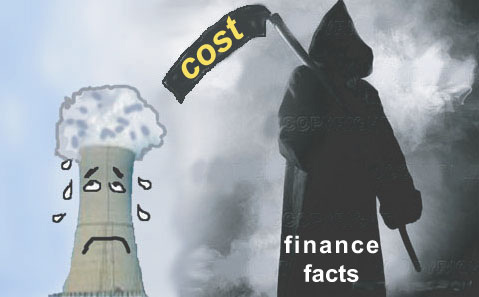
An investment decision into Sizewell C in Suffolk may not be made this year by the new Labour government.
The previous Conservative-led government said it would secure funding this year for the power plant and £2.5bn has already been spent on the project.
Alison Downes of Stop Sizewell C said she hoped ministers were taking the time to “reconsider their support”.
A spokesperson for Sizewell said the project was progressing while the Department for Energy Security and Net Zero said the government was committed to the project but did not comment on when a decision on the funding would be made when asked by the BBC.
………………………………….The official cost of Sizewell C has been put at £20bn and the project will be partly funded by French energy company EDF.
Ms Downes said she felt by the time Sizewell C was built, it would be too late to tackle the climate emergency.
“Given that Sizewell C cannot in any way help the new government achieve its target of a net zero grid by 2030, we very much hope Ministers are taking the time to seriously reconsider their support,” she said.
“Not only would it be too late to help our climate emergency, this project would increase household bills throughout construction and beyond, and suck billions of pounds of taxpayers’ money away from other urgent priorities.
“Doubling down on the £2.5 billion already spent would be just throwing good money after bad.”
Building permission for the project has already been granted and if funding is secured, construction could take about 12 years.
Black bears to be evicted for nuclear waste site
Matteo Cimellaro, Urban Indigenous Communities in Ottawa, August 13th 2024 https://www.nationalobserver.com/2024/08/13/news/black-bear-habitat-nuclear-waste-Canadian-Nuclear-Laboratories?utm_source=National+Observer&utm_campaign=13ad847627-EMAIL_CAMPAIGN_2024_08_16_11_38&utm_medium=email&utm_term=0_-13ad847627-%5BLIST_EMAIL_ID%5D#:~:text=As%20many%20as%20eight%20black,facility%20near%20the%20Ottawa%20River.
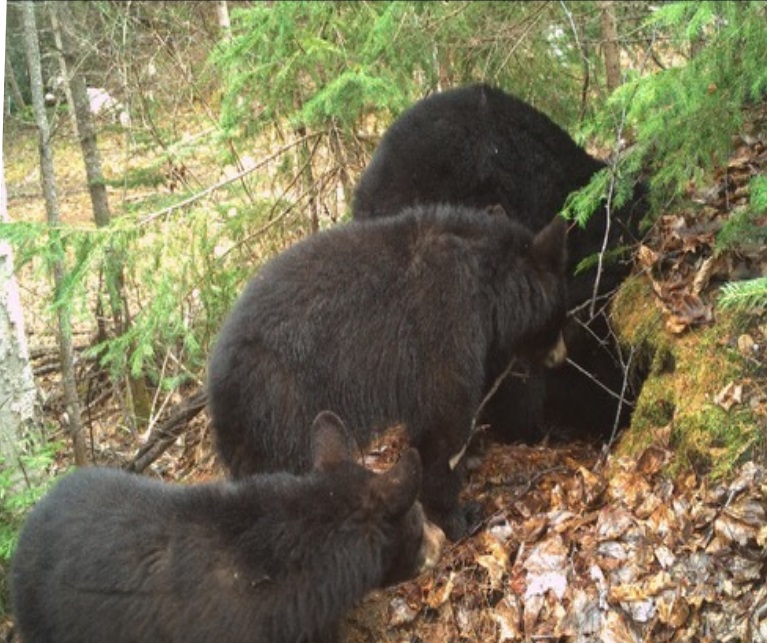
As many as eight black bears are facing eviction from their homes by Canadian Nuclear Laboratories, the company building a nuclear waste facility near the Ottawa River.
A letter sent to the Kebaowek First Nation and obtained by Canada’s National Observer says the company is taking action to block the bears from their dens. The letter was sent after representatives from the First Nation found evidence of at least three active bear dens during a tour of the area three weeks ago, Lance Haymond, chief of Kebaowek First Nation, said.
Evidence of those bear dens traces back to data collected for the Algonquin-led environmental assessment of the waste facility published in 2023.
The timing of CNL’s decision to evict the bears, with only a week’s notice, has left Kebaowek representatives wondering if the action over the bear dens is “retaliatory” after it challenged the decision to approve the site last month. It is also leaving Kebaowek “no choice” but to look towards a court injunction over the bear dens, Haymond said.
Canada’s National Observer contacted CNL to confirm the number of active dens in the region within and surrounding the waste facility’s pre-construction area, but did not hear back by time of publication.
The company plans to deter the bears from their dens using sensor-based noise emitting devices, as well as weighted plywood and tarps, the letter to Kebaowek states.
Land guardians from the Algonquins of Pikwakanagan, the only Algonquin First Nation within Ontario, will be present to monitor and observe the installation of the deterrents, according to the letter. Pikwakanagan and CNL have a long-term relationship agreement that provides funding for a guardian program to provide monitoring for the nuclear organization.
In an interview, Haymond criticized CNL for using Pikwakanagan to “justify” the construction of the waste facility and the environmental harms it poses. In particular, Haymond is concerned about black bear habitat and the precedent this poses for the eastern wolf. Last month, the wolf species, also known as the Algonquin wolf, was upgraded from a status of special concern to threatened species.
We should have been fully involved from the beginning,” Haymond said. Negotiations around Kebaowek involvement in monitoring is ongoing, but right now CNL is “just pushing us aside,” he added.
In the letter, CNL maintains the activities will not result in any irreparable harm to black bears. But Haymond is not buying it. The location of the forested slope is ideal for the dens given its natural protection from climate change events, according to the Algonquin-led assessment.
“If that’s the way they’re treating the black bear, can you imagine what they’re going to do or want to be doing with the eastern wolf?” Haymond asks.
It’s still unclear what regulations apply to the pre-construction activities. In Ontario, it is illegal to interfere with, damage or destroy black bear dens, but nuclear regulations fall under federal jurisdiction. Canada’s National Observer contacted Ontario and federal officials about jurisdiction, but did not hear back by time of publication.
Even before Kebaowek had heard about the bears, the First Nation filed a judicial review over the construction of the nuclear waste facility, citing it did not do enough to consult and consider Kebaowek’s inherent rights as Indigenous peoples.
“It’s just very presumptuous and ignorant of them to go ahead,” Haymond said. “They’re operating like they’re already going to win [the judicial review].”
Kebaowek has been actively campaigning against the Near Surface Disposal Facility, a nuclear waste site that was approved and licensed by Canada’s nuclear regulator last January. That led to the legal challenge, which brought the consortium before a judge last month.
The court action centres around the United Nations Declaration Act (UNDA), which enshrined the United Nations Declaration on the Rights of Indigenous Peoples (UNDRIP) into Canadian law. The declaration specifically references the need for free, prior and informed consent when hazardous waste will be stored in a nation’s territory.
The judge’s decision is not expected for another few months, Haymond told Canada’s National Observer.
— with files from Natasha Bulowski
Matteo Cimellaro / Canada’s National Observer / Local Journalism Initiative
California legislators break with Gov. Newsom over loan to keep state’s last nuclear plant running

greenwich time, By MICHAEL R. BLOOD, Associated Press, Aug 15, 2024
LOS ANGELES (AP) — The California Legislature signaled its intent on Thursday to cancel a $400 million loan payment to help finance a longer lifespan for the state’s last nuclear power plant, exposing a rift with Gov. Gavin Newsom who says that the power is critical to safeguarding energy supplies amid a warming climate.
The votes in the state Senate and Assembly on funding for the twin-domed Diablo Canyon plant represented an interim step as Newsom and legislative leaders, all Democrats, continue to negotiate a new budget. But it sets up a public friction point involving one of the governor’s signature proposals, which he has championed alongside the state’s rapid push toward solar, wind and other renewable sources.
The dispute unfolded in Sacramento as environmentalists and antinuclear activists warned that the estimated price tag for keeping the seaside reactors running beyond a planned closing by 2025 had ballooned to nearly $12 billion, roughly doubling earlier projections. That also has raised the prospect of higher fees for ratepayers……………………..
The votes in the Legislature mark the latest development in a decades-long fight over the operation and safety of the plant, which sits on a bluff above the Pacific Ocean midway between Los Angeles and San Francisco…………………….
In 2016, PG&E, environmental groups and plant worker unions reached an agreement to close Diablo Canyon by 2025. But the Legislature voided the deal in 2022 at the urging of Newsom, who said the power is needed to ward off blackouts as a changing climate stresses the energy system. That agreement for a longer run included a $1.4 billion forgivable state loan for PG&E, to be paid in several installments.
California energy regulators voted in December to extend the plant’s operating run for five years, to 2030.
The legislators’ concerns were laid out in an exchange of letters with the Newsom administration, at a time when the state is trying to close an estimated $45 billion deficit. Among other concerns, they questioned if, and when, the state would be repaid by PG&E, and whether taxpayers could be out hundreds of millions of dollars if the proposed extension for Diablo Canyon falls through.
…………………………………………..The questions raised by environmentalists about the potential for soaring costs stemmed from a review of state regulatory filings submitted by PG&E, they said. Initial estimates of about $5 billion to extend the life of the plant later rose to over $8 billion, then nearly $12 billion, they said.
“It’s really quite shocking,” said attorney John Geesman, a former California Energy Commission member who represents the Alliance for Nuclear Responsibility, an advocacy group that opposes federal license renewals in California. The alliance told the state Public Utilities Commission in May that the cost would represent “by far the largest financial commitment to a single energy project the commission has ever been asked to endorse.”……….. https://www.greenwichtime.com/business/article/correction-california-s-last-nuclear-plant-story-19658633.php?fbclid=IwY2xjawEuMDlleHRuA2FlbQIxMQABHVvxRKXYzA1jZri4TZdyt4rL1rA9cxRHZHKTVFATkmwDmExIrs3feHydxA_aem_8Q7on7q9UlKUH6RZYqNx5w
6 Billionaire Fortunes Bankrolling Project 2025

More than $120 million from a few ultra-wealthy families has powered the Heritage Foundation and other groups that created the plan to remake American government.
DeSmog, ByJoe Fassler, Aug 14, 2024
Since 2020, donor networks linked to just six family fortunes have funneled more than $120 million into Project 2025 advisory groups, a DeSmog analysis has found.
More than 100 nonprofits led by the Heritage Foundation, a right-wing think tank that has engaged in climate change denial and obstruction for decades, have signed on as advisors to the Project 2025’s 900-page “Mandate for Leadership” document — a plan to rapidly “reform,” or radically alter, the U.S. government by shuttering bureaus and offices, overturning regulations, and replacing thousands of public sector employees with hand-picked political allies.
In its official Project 2025 materials, Heritage Foundation leadership repeatedly draws attention to the size and diversity of its advisory board, suggesting that its numerous “coalition partners” are part of a broad, “movement-wide effort” representing a variety of independent viewpoints.
“Project 2025 is unparalleled in the history of the conservative movement—both in its size and scope but also for organizing [so many] different groups under a single banner,” the organization wrote in an October 2023 press release.
But an analysis of financial disclosure forms shows the same small group of donors supporting Project 2025’s advisors again and again — hardly a sign of ideological diversity. Of the 110 nonprofits formally supporting Project 2025, almost 50 received major donations from the same six sources of wealth since 2020.
Many of the organizations the six families funded also have close ties to Donald Trump and his running mate, Ohio Senator JD Vance, DeSmog found. Trump has repeatedly denied involvement in or knowledge of Project 2025, though that position conflicts with a growing number of news reports — a disavowal made more awkward by the fact that Vance wrote the forward to Dawn’s Early Light, a forthcoming book by Heritage Foundation president Kevin D. Roberts that describes his Project 2025 vision. DeSmog’s review of Project 2025’s financial backers found additional links to Trump, Vance, and key figures in their orbit that had not been previously known.
These six donor networks, linked to the family fortunes of a handful of wealthy industrialists, have spent years working to loosen environmental regulations and promote climate change denial. Though Heritage describes Project 2025 as a mainstream effort to “return government to the people,” its funding sources suggest something far less populist: a vehicle for the obsessions of ultra-rich donors on the far-right fringe, pushing an agenda to reshape American democracy and overturn regulations needed to maintain a livable climate.
Representatives from the six donor networks did not respond to DeSmog’s outreach on this story. The Heritage Foundation did not reply to a request for comment.
The Coors Family
At least $2.7 million to Project 2025 groups since 2020 …………………………………………………………..
Charles G. Koch
At least $9.6 million to Project 2025 groups since 2020 ……………………………………………
Richard and Elizabeth Uihlein
At least $13 million to Project 2025 groups since 2020
The Uihleins are co-founders of Uline, a company that sells shipping and packing supplies — including its ubiquitous brand of cardboard boxes — and other bulk business goods. ……………………………………………………………..
The Scaife Family
At least $21.5 million to Project 2025 groups since 2020
Richard Mellon Scaife died in 2014, but his contribution to conservative causes is still felt today. ……………………………………………………………..
Barre Seid
At least $22.4 million to Project 2025 groups since 2020
The enigmatic industrialist Barre Seid primarily built his fortune through his company Tripp Lite, an electronics manufacturer specializing in surge protectors…………………………………………………………….
The Bradley Family
At least $52.9 million to Project 2025 groups since 2020
The Lynde and Harry Bradley Foundation was originally established in 1942 by brothers Lynde and Harry Bradley, founders of the Allen-Bradley company, which made its fortune manufacturing a wide range of electronic products. Their descendants have continued to financially support the foundation for years to come, including with a reported $200 million gift in 2015.
But it was Michael W. Grebe, who served as CEO of the foundation between 2002 and 2016, who cemented its reputation as a conservative powerhouse, steering donations to a network of activist organizations like The Heritage Foundation, the Mackinac Center for Public Policy, and the Heartland Institute (all Project 2025 coalition partners). The current chairman is James Arthur “Art” Pope, CEO of the North Carolina grocery chain Variety Wholesalers, a longtime Koch ally. …………………………………………more https://www.desmog.com/2024/08/14/project-2025-billionaire-donor-heritage-foundation-donald-trump-jd-vance-charles-koch-peter-coors/
Chalk River: A river in troubled waters
https://www.ledevoir.com/opinion/editoriaux/818270/dechets-nucleaires-editorial-riviere-eaux-troubles
Marie Vastel August 16

Anything that even remotely touches on the nuclear industry requires a risky leap of faith. Neighbors and residents living near these plants must take their word for it that the improbable will not happen this time. The storage of nuclear waste is no exception, and the fears raised are just as difficult to allay. All the more so when these radioactive residues must be buried near the banks of a river that supplies drinking water to millions of citizens downstream. The laboratories of the Chalk River plant may seem far away, but the cloud of concern surrounding the fate of their radioactive debris extends all the way to the St. Lawrence River.
Near the landfill site that will be built in Deep River, first, residents are anxious about the idea of welcoming a million cubic metres of nuclear waste under their neighbouring lands, just one kilometre from the Ottawa River. The fact that these residues are of low radioactive intensity does not reassure them. Nor do the guarantees put forward by the consortium managing the plant, Canadian Nuclear Laboratories, or by the municipality. Local residents, for their part, fear welcoming nothing more than a “leaking dump”, they anxiously confided this summer to Le Devoir journalist François Carabin.
And they are not the only ones to worry about the fate of this river, which flows between Ontario and Quebec to the St. Lawrence River. The cities of Ottawa and Gatineau, which it crosses, as well as Montreal, where it empties, have also denounced, like a hundred other municipalities, the approval of the landfill project.
The Quebec government, while refraining from doing the same, did not hide its own concerns— shared by its advisor on protection against radioactivity—by calling on the federal government to “respond” to the public’s fears. And by opining this summer that Ottawa had “still not fulfilled this obligation.”
The Anishinaabe community of Kebaowek is contesting before the Federal Court the green light from the Canadian Nuclear Safety Commission (CNSC) for the burial of this nuclear waste near the surface, believing that it was consulted too late.
The verdict was delivered last January. The CNSC said it was of the opinion that the project “is not likely to cause significant environmental effects” or “significant adverse effects on the Ottawa River.”
The landfill will be located in a seismic zone, but a low to moderate one, the Commission wrote in its decision . The risk posed by forest fires is mitigated because the project will be at a sufficient distance from the forest edge. Management of torrential rains has been taken into account and the site, located 50 metres above the level of the Ottawa River, is above potential flood plains. The facility takes into account “the possible effects of climate change ,” the CNSC ruled.
However, these radioactive residues will have to remain buried there for 500 years… It would be very clever to be able to predict today the evolution of the climate and the natural disasters that it will cause for the next centenarians.
Past nuclear accidents, however rare, have sown apprehension and skepticism. The citizens of Deep River, whose nearby Chalk River plant suffered two incidents in the 1950s, are not immune. The fact that former employees doubt the categorization of nuclear liabilities over the years — and that they are all indeed “low intensity” — does nothing to reassure them.
History now demands an excess of transparency, because it is up to the promoters and approvers of such projects to restore confidence, and not for the population to overcome its legitimate fears on its own. Other terrible deceptions, such as that of the Horne Foundry, which was wrongly claimed to be “safe” for years, have also instilled a nagging doubt.
Mistrust has its source in past excesses that are too real. However, we must not be blinded to the point of rejecting any solution to get rid of these radioactive residues that must nevertheless be disposed of.
The spontaneous reaction will always be to not want it in your yard, or in your river. “But once this cry from the heart has been expressed, the question of the best choice, or the least worst choice, remains,” wrote our late colleague Jean-Robert Sansfaçon on this subject in 2009. Fifteen years later, and while a possible return to nuclear power is being considered in Quebec, a permanent and adequate solution to the management of this waste is still being sought. It is becoming urgent to find it.
High Detections of Plutonium in Los Alamos Neighborhood

As We Enter a New Nuclear Arms Race the Last One is Still Not Cleaned Up
https://nukewatch.org/high-detections-of-plutonium-in-los-alamos-neighborhood/ 16 Aug 24
Santa Fe, NM – In April Nuclear Watch New Mexico released a map of plutonium contamination based on Lab data. Today, Dr. Michael Ketterer, Professor Emeritus of Chemistry and Biochemistry, Northern Arizona University, is releasing alarmingly high results from samples taken from a popular walking trail in the Los Alamos Town Site, including detections of some of the earliest plutonium produced by humankind.
On July 2 and 17 Dr. Ketterer, with the assistance of Nuclear Watch New Mexico, collected water, soil and plant samples from Acid Canyon in the Los Alamos Town Site and soil and plant samples in Los Alamos Canyon at the Totavi gas station downstream from the Lab. The samples were prepared and analyzed by mass spectrometry at Northern Arizona University to measure concentrations of plutonium, and to ascertain its sources in the environment. For water samples, concentration is expressed in picocuries[1] per liter (pCi/L) and for soil and plants in picocuries per gram (pCi/g). The provenance of the plutonium was determined through isotopic examination of the ratio of 239Pu atoms to 240Pu atoms, which distinguishes it from global nuclear weapons testing fallout.
Acid Canyon is located in the heart of the Los Alamos Town Site, contiguous to the busy Aquatic Center which also has the trailhead for the popular walk into the Canyon. From 1943 to 1963 radioactive liquid wastes were disposed by piping them over the Canyon wall (plutonium is often processed with nitric acid, hence the Canyon’s name). Acid Canyon ultimately drains via the Los Alamos Canyon through San Ildefonso Pueblo lands to the Rio Grande. Earlier studies have identified Lab plutonium as far as 17 miles south in Cochiti Lake.
The Atomic Energy Commission “cleaned up” Acid Canyon in 1967 and released the land to Los Alamos County without restrictions. The Department of Energy performed some additional remediation and in 1984 certified that Acid Canyon was “in compliance with applicable DOE standards and guidelines for cleanup and that radiological conditions were protective of human health and the environment… No monitoring, maintenance, or site inspections are required.” [2]
Forty years later, Dr. Ketterer’s monitoring and inspections strongly indicate otherwise. His samples showed 239+240Pu activities as high as 86 pCi/L in water, 78 pCi/g in sediments, and 5.7 pCi/g in plant ash. He concluded:
“The 239+240Pu activities in all four water samples exceed the federal Environmental Protection Agency’s relevant gross alpha standard of 50 pCi/L and draw attention to an egregious water contamination problem mandating prompt USEPA and/or State intervention. This warrants immediate postings and efforts by State/local agencies to warn people and their pets away from contacting Acid Canyon water.”
While noting the threat of wildfires, as locals will recall the 2000 Cerro Grande Fire that forced the mandatory evacuations of the Lab and Los Alamos Town Site, Dr. Ketterer added,
“Of particular concern is the possibility of wildfire in Acid Canyon. The activity concentrations of 239+240Pu in Acid Canyon sediments and plant matter, along with the Canyon’s close proximity to residential areas of Los Alamos, represents an alarming potential situation of plutonium releases into the air, should a wildfire engulf the canyon.”
Approximately seven miles downstream from Acid Canyon, Dr. Ketterer found “Significant plant uptake of 239+240Pu near the Totavi Philips 66 station along NM Highway 502.”
Of historic interest, he noted,
“The repeated, consistent pattern of 240Pu/239Pu in the range 0.010 – 0.015, observed in the highly contaminated Acid Canyon sediments, water and vegetation, indicates that the Pu in Acid Canyon is some of the oldest known Pu contamination in the ambient environment – a portion of which likely pre-dates the Trinity Test itself.”
Jay Coghlan, Director of Nuclear Watch, commented,
“Dr. Ketterer’s independent sampling of historic plutonium contamination demonstrates once again that we can’t trust the Department of Energy. This rings especially true as LANL plans to cut cleanup while spending at least $8 billion over the next 5 years to expand the production of plutonium “pit” bomb cores. We demand comprehensive cleanup of past radioactive contaminants and protection from the future radioactive wastes that will be generated by the new nuclear arms race.”
Dr. Michael Ketterer’s methodology, findings and conclusions are available at https://nukewatch.org/wp-content/uploads/2024/08/Ketterer-AcidCanyon-13Aug2024.pdf
Is Nuclear Waste Poisoning This Missouri Suburb? How 2 Moms Teamed Up for Answers, Even If They Die Trying
“I think the kindest, and meanest, thing anybody’s ever said about us is we’re lovable pains in the ass,” Dawn Chapman tells PEOPLE
People By Johnny Dodd, Eileen Finan, and Brian Brant, August 15, 2024
The first warning sign was the stench that seemed to fill the air of Dawn Chapman’s suburban St. Louis neighborhood in 2012.
“You could smell burning, but there was something different about it, like jet fuel,” she says in this week’s issue of PEOPLE. Her three children started to wake in the night with irritated eyes or bloody noses caused, she believes, by the caustic fumes.
By January 2013 Chapman, then a full-time mom, had discovered the source of the overpowering odor: a fire in an underground quarry at the Bridgeton Landfill about two miles from her home.
The blaze raised fresh alarm about a decades-old issue — how much atomic waste had been stored in the region post-World War II, with some radioactive material mixing with a local creek and, separately, 43,000-plus tons of it piling up at West Lake Landfill, which is next to Bridgeton Landfill.
Frightened for her family, Chapman went to a community event about air quality and met Karen Nickel, a fellow stay-at-home mom who was wondering whether her own health issues were connected to the nuclear waste. The two bonded immediately.
“We were in shock because of what we were learning,” says Nickel, 60.
Both landfills have the same owner, who strongly disputes claims of danger from either site, citing federal research that found there was no risk.
Still, outside analyses by the state of Missouri and news organizations suggest a pattern of unusual health problems around Bridgeton that stretches back years.
In the past decade, as Chapman’s husband and oldest son fell ill with chronic diseases that she links to the radioactive waste, she and Nickel cofounded Just Moms STL, building up 100,000 supporters to confront the landfill company and government while pushing the EPA to clean up the waste site, matching work being done with local Coldwater Creek.
Activist Lois Gibbs, who helped fix similar issues in New York’s Love Canal in the ’70s, mentored the women. “They’re extraordinarily effective,” she says.
But Chapman and Nickel don’t relish their mission. “We wanted simple lives,” says Chapman, 44. “This didn’t just rob us of our health. It robbed us of that too.”
Their suburban dream was tainted by toxic remnants of the country’s wartime past. After the bombing of Pearl Harbor in 1941, the U.S. chose St. Louis as one of the places to process the uranium used in the nation’s atomic weapons program the Manhattan Project.
In the decades that followed, the resulting radioactive waste was dumped close to the city airport, and contaminants washed into nearby Coldwater. In the ’70s the waste was moved to the West Lake Landfill, amid single-family homes in Bridgeton. In 1990 the landfill was designated a Superfund site — one of the nation’s most contaminated areas.
Many residents were none the wiser. Nickel grew up in the ’60s and ’70s playing softball in the parks beside Coldwater, where years later scientists would discover Manhattan Project-era radioactive material in the soil.
“Fifteen people on my street passed from rare cancer in their 40s and 50s,” she says.
Three of her four adult children, whom she raised with husband Todd in a house less than two miles from the landfill, live with neurodevelopmental challenges, she says. And Nickel has lupus, an autoimmune disease she blames on exposure to radioactivity.
…………………..Advocates like her and Nickel, together with some lawmakers, continue to clash with the Environmental Protection Agency and the landfills’ owner over the extent of any risk.
Experts say there’s no evidence that directly connects cancers or autoimmune diseases to a single cause like radiation, but a 2014 study by Missouri health officials found zip codes bordering the creek and landfill had rates of leukemia, breast cancer and, in one zip code, pediatric brain cancer (all often associated with radiation) that were “significantly higher” than those in the rest of the state………………
Chapman and Nickel have mobilized thousands through Just Moms to call attention to what they insist is a crisis, organizing more than 300 community meetings and making 20 trips to Washington, D.C., to lobby Congress and the EPA, including a new Radiation Exposure Compensation Act to provide money and medical support to victims………………………………………… more https://people.com/is-nuclear-waste-poisoning-this-missouri-suburb-how-2-moms-teamed-up-for-answers-even-if-they-die-trying-8695532
NATO member gives Ukraine green light to use its weapons in Russia
Rt.com 16 Aug 24,
Kiev is free to use donated Leopard tanks and other combat vehicles during its incursion into Kursk Region, Canada has said
Ukraine has been given approval to use Canadian-donated tanks and armored vehicles on Russian soil, according to a statement by Canada’s Department of National Defense on Thursday. Kiev is currently waging a large-scale incursion into Russia’s Kursk Region.
Ottawa has donated to Kiev a total of eight German-made Leopard 2A4 tanks as well several dozen armored combat vehicles, hundreds of armored patrol vehicles, and several M-777 howitzers. Last month, the Canadian government also announced an additional $367 million military aid package for Kiev.
“Ukrainians know best how to defend their homeland, and we’re committed to supporting their capacity,” Canadian Defense Department spokesperson Andree-Anne Pulin told the media on Thursday…………………………………….
Russian officials have also repeatedly condemned the West for continuing to provide military support to Kiev, arguing that the Ukraine conflict is effectively a proxy war being waged by NATO against Russia, in which Ukrainians serve as ‘cannon fodder.’………………………….. more https://www.rt.com/russia/602685-ukraine-canada-wepons-russia/
South Africa halts plans for nuclear power.
Minister of Energy and Electricity, Dr Kgosientsho Ramokgopa, has announced
that the Ministerial Determination for the procurement of 2 500MW of
nuclear energy, has been withdrawn. The Minister was speaking during a
media briefing held on Friday in Pretoria. The determination, and the
National Energy Regulator of South Africa’s (Nersa) concurrence of the
process, had come under legal pressure with groups contending that, amongst
others, public comments had not been sought and the procedure had not been
fair.
Business Tech 16th Aug 2024
https://businesstech.co.za/news/energy/787277/south-africa-halts-nuclear-plans-for-now/
Japan: Radioactive water leaks reported at crippled Fukushima power plant
Economic Times 14 Aug 24
About 25 tons of radioactive water have leaked within the crippled Fukushima Daiichi Nuclear Power Plant, the plant’s operator has reported, a week after the latest round of ocean discharge started.
Tokyo: About 25 tons of radioactive water have leaked within the crippled Fukushima Daiichi Nuclear Power Plant, the plant’s operator has reported, a week after the latest round of ocean discharge started.
The nuclear-contaminated water, which leaked from a surge tank connected to the Unit 2 reactor building, was meant to be contained in a tank receiving overflow from the spent nuclear fuel pool, reports Xinhua news agency, quoting Tokyo Electric Power Company (TEPCO).
Accumulating on the first basement level of the reactor building, the leaked water led to a rise in the level of contaminated water already present in the area, TEPCO introduced on Tuesday, confirming that the contaminated water had not escaped outside the reactor building.
The leak was first identified last Friday when a decrease in the water level of the surge tank was detected, according to TEPCO, which, upon further investigation, discovered water flowing into a drain in a room on the third floor of the reactor building…………………………. https://energy.economictimes.indiatimes.com/amp/news/japan-radioactive-water-leaks-reported-at-crippled-fukushima-power-plant/112522815?fbclid=IwY2xjawErZw1leHRuA2FlbQIxMQABHSWwmPKOPQUA1lBz87XbNFrQ3wk0wpyhN7qtxdfQuEx-DbXmtfHad_QMGg_aem_4DBCWO0jAgCiBqQbTvKONA
The two faces of Kamala Harris on Israeli genocide in Gaza.
Kamala Harris’s seeks to have it both wars on Israeli genocide in Gaza.
Walt Zlotow, West Suburban Peace Coalition, Glen Ellyn IL 16 Aug 24
The sensible, mentally centered Harris, tells Israeli Genocide In Chief Benjamin Netanyahu to implement a ceasefire to end the destruction of sustainable life for 2,300,000 Palestinians in Gaza.
But then the pandering Harris, seeking millions in Israel Lobby money, and trying to avoid The Lobby throwing their full support to her even more pro genocide opponent, tells Netanyahu, ‘Here’s another $23.5 billion in genocide weapons to finish the job.’
Harris has yet to learn that opposing genocide is a one way street. Her moving back and forth seeking to both end and enable genocide in Gaza, may cost her millions of Biden’s 2020 voters and a 4 year lease on the White House. It’s already costing 2,300,000 Palestinians in Gaza infinitely worse.
Ukraine’s plan to buy Russian-made nuclear reactors sparks uproar

Lawmakers argue buying aging atomic energy equipment from Bulgaria won’t help keep the lights on and could fuel corruption.
Politico, August 15, 2024 , By Gabriel Gavin
Ukraine’s government is fighting off growing opposition to a multimillion-dollar scheme to buy mothballed nuclear reactors, facing accusations that officials are opening the door to corruption just as they push to clean up the country’s energy sector.
The government wants to bring two new units online at the Khmelnytskyi Nuclear Power Station in Western Ukraine, arguing they will help shore up the country’s energy grid that Russian bombs have decimated. The quickest and fastest way to do so, they argue, is to buy Russian-made reactors currently sitting in storage in Bulgaria at an estimated cost of $600 million.
But the deal needs lawmakers’ sign-off, and several parliamentarians — including at least one from President Volodymyr Zelenskyy’s own party — are alleging the deal could blow a massive hole in the country’s tattered budget for outdated technology that won’t necessarily help Ukrainians stave off looming blackouts.
………………………………………The row has created another point of contention as Ukraine tries to crack down on corruption in its energy sector. Earlier this week, Galushenko’s deputy minister, Oleksandr Kheil, was arrested over allegations he pushed for a bribe of half a million dollars in exchange for transferring coal mining equipment belonging to a state enterprise.
Zhupanyn and his colleagues claim the Russian nuclear reactor purchase will become another venue for such dodgy dealing.
“In the last 10 years, there have been many criminal cases against people using tenders to extract cash from Ukraine’s state nuclear power company,” he said in an interview. “If you allow them to spend billions of hryvnia on this, you can expect a pipeline of criminal cases in the next 10 years.”
Galuschenko denied accusations the government was withholding information…………………………………….
“There are a lot of MPs from basically all factions that are not supporting it,” Yaroslav Zheleznyak, an economist and MP from Ukraine’s liberal Holos party, told POLITICO following the meeting on Tuesday. “We are concerned about corruption in this procurement process and we have not received any explanations.”………………………………………………………………………..
Ukrainian energy and environment NGO Ekodiya has also raised concerns about the proposals for Khmelnytskyi, arguing that the project would rely on “obsolete Russian-made equipment” and that “the use of outdated technology can lead to serious safety and efficiency problems.”
Instead, the group argues, the better investment would be in smaller electricity-generating facilities, including renewables, distributed across a wider area. Volodymyr Kudrytskyi, the chief executive of state power firm Ukrenergo, told POLITICO earlier this year that building a broad green energy network would make the grid less susceptible to Russian attacks……………………………………….. https://www.politico.eu/article/ukraine-buy-russia-made-nuclear-reactor-uproar-war-corruption/
No amount of money is worth turning Wyoming into a nuclear waste dump

Wyoming needs legislators willing to protect public health and seek viable economic development.
WyoFile, by Kerry Drake, August 13, 2024
Last year Steinborn, a Democrat, led a successful effort to ban the transportation and storage of high-level nuclear waste in his home state. It would take a GOP version of the legislator to accomplish that in deep-red Wyoming.
One of Steinborn’s main arguments for the ban was economic. He didn’t buy the claims of a private company that planned to build a temporary storage facility for spent nuclear fuel rods near Carlsbad, N.M. Backers had visions of billions of dollars dancing in their heads.
It’s the same dream some Wyoming legislators have embraced — fortunately without success — since the early 1990s. Now the idea has reared its ugly head again.
Rep. Donald Burkhart Jr. (R-Rawlins) said he will bring a draft bill to October’s Joint Minerals, Business and Economic Development Committee to allow a private nuclear waste dump (my description, not his) to be built in Wyoming.
Burkhart, who co-chairs the panel, said the state could reap more than $4 billion a year from nuclear waste storage “just to let us keep it here in Wyoming.” What a sweet deal!
Except the prospect of that much annual revenue may be a tad overstated. It could be about $3.974 billion less than Burkhart suggested, which means the trial balloon he floated won’t get off the ground.
How much money Wyoming could earn for hosting a nuclear waste storage facility is debated whenever the state has a budget crunch and legislators decide it’s time to reap the windfall.
I naively thought whether to establish a temporary “Monitored Retrievable Storage,” as they used to be called, had long been settled in Wyoming
In 1992, then-Gov. Mike Sullivan rejected a proposed Fremont County project. Two years later, a University of Wyoming survey found 80% of respondents opposed a high-level nuclear waste facility……………………………………………………………..
In 2019, the Legislative Management Committee narrowly decided — in a secret vote by email — to authorize a Spent Fuel Rods Subcommittee to study the issue. The panel’s chair, Sen. Jim Anderson (R-Casper), said it could be an annual $1 billion bonanza, which certainly captured people’s attention.
The subcommittee’s enthusiasm for such a project sank, though, when it learned the feds were only going to pony up $10 million a year. That figure has since increased, but not by much.
The Department of Energy announced in 2022 that it would make $16 million available to communities interested in learning more about “consent-based siting management of spent nuclear fuel.” Last year President Joe Biden’s administration sweetened the pot to $26 million.
We’ll have to wait until October’s Joint Minerals meeting to find out more details about Burkhart’s proposal. He circulated a rough draft of his bill to members of the committee on July 31, but declined to share it with the public or the media.
………………………………..Steinborn told Source NM the nation needs a permanent solution for storing spent nuclear fuel. “But New Mexico can’t just be the convenient sacrifice zone for the country’s contamination,” he said.
And neither should Wyoming. Yes, the U.S. Department of Energy and Microsoft billionaire Bill Gates are backing a $4 billion Natrium nuclear power plant near Kemmerer, and BWXT Advanced Technologies is considering establishing a microreactor manufacturing hub. But Wyoming has no obligation to take other states’ nuclear trash.
I can see why some Wyoming legislators want to believe there are billions at the end of the nuclear dump rainbow. The federal government has collected more than $44 billion from energy customers since the 1980s, but the Nuclear Waste Fund was intended to be spent on a permanent facility. Temporary facilities, like what Burkhart proposes, don’t rake in the big bucks.
The feds have spent around $9 billion to pay interim nuke storage costs at the 80 current and former nuclear reactor sites located in 35 states, where a total of 90,000 metric tons of nuclear waste is stored. Meanwhile, the Department of Energy’s Agency Finance Report estimated it will cost more than $30 billion until a permanent waste disposal option is completed.
But it’s increasingly unlikely a permanent site will ever be built………………………………..
There is a significant legal obstacle to siting a “temporary” waste site in Wyoming or anywhere else. Congress would have to amend the Nuclear Waste Policy Act, which prohibits the Department of Energy from designating an interim storage site without a viable plan to establish a permanent deep-mined geologic repository — like the Yucca Mountain project, but one that could actually be approved and built.
…………………..Why in the world do Wyoming legislators who brag about their distrust of federal government — and in some cases even argue we shouldn’t take its money at all — see nothing wrong with a federal agency managing nuclear waste here? They’ve turned down an estimated $1.4 billion for Medicaid expansion since 2013, but they’re willing to take peanuts from the federal government to be a nuclear dumping ground?
……………………………. https://wyofile.com/no-amount-of-money-is-worth-turning-wyoming-into-a-nuclear-waste-dump/
Nuclear Free Local Authorities send message of solidarity to Canadian First Nations opposed to nuke dump

14th August 2024
Following the United Nations’ International Day of the World’s Indigenous Peoples (9 August), the UK/Ireland Nuclear Free Local Authorities have joined the Cumbrian campaign group, Lakes against Nuclear Dump (LAND) in sending a message of solidarity and support to the Canadian First Nations who have publicly declared their opposition to the development of an underground nuclear waste dump at Ignace, Ontario.
On July 15, the Anishinaabeg of Kabapikotawangag Resource Council (the “AKRC”), representing five tribal groups, published their Declaration of Opposition in which the Council states declared that the Deep Geological Repository proposed near Ignace ‘poses and unprecedented threat to the integrity, safety, and sanctity of Kabapikotawangag and its surrounding environments. It has the potential to compromise the health, welfare, and cultural heritage of our Anishinaabeg people.
As stewards of the lands and waters in our territory, we have not provided our free, prior, and informed consent. We have a duty to protect and safeguard Kabapikotawangag (also known as Lake of the Woods). We cannot let this type of project move forward.’
The Nuclear Waste Management Organisation was established by the Canadian nuclear industry to lead the effort to find a location for an underground nuclear waste repository. Its attempt to foist a nuclear waste dump on First Nation land near Ignace, in collaboration with provincial and local authorities, appears to contravene the legal obligations made originally by the British Government to the First Nations under Treaty 3 and the commitments made by the Canadian Government in signing the UN Declaration on the Rights of Indigenous People.
………………………………………………………………………………………..This represents another example of ‘nuclear colonialism’, in which militaries, the nuclear industry, and their supporters in government disproportionately locate their activities in lands traditionally occupied by Indigenous People, impacting their environment, health, culture and future. At the first and last of the nuclear cycle, from the mining of uranium to the disposal of radioactive waste, the lands of Indigenous people are seen as fair game by big business, whilst their land has also been seen as ideal for nuclear weapons testing by the major powers.
The NFLAs have participated in several online meetings with campaign groups in the UK and Canada which are opposed to nuclear waste dumps in their locality. We are delighted now to be in contact with the Canadian First Nations. https://www.nuclearpolicy.info/news/nflas-send-message-of-solidarity-to-canadian-first-nations-opposed-to-nuke-dump/
TODAY. Low dose ionising radiation as a cause of illness and death

It’s not fashionable to talk about low level radiation as causing illness. If it gets mentioned at all, well, we tentatively state low level radiation as linked with or associated with illness.
Nice and vague. We all know that you can’t respectably experiment on humans, to get absolute proof.
The nuclear lobby doesn’t mind admitting to the harmful effects of immediate high doses of ionising radiation. Those effects are so bad for the relatively few individuals that suffer them, – why it almost seems to prove that low doses are OK, (even good for you as the “hormesis” fans claim)! It’s easier to dwell on, and deplore the effects of high dose radiation on one person, which is, for some unknown reason, now the most popular topic on my nuclear-news website.

What is ignored, especially by the nuclear lobby, is the collective effect over time, of low level radiation. Nobody seems to have a figure for this. But there have been several thoroughly researched epidemiological studies, showing the harmful effects on exposed populations. The most recent was published in the British Medical Journal (BMJ Aug 16, 2023 accessible free of charge).
The thing is – people can get their head around the idea of one individual having a painful illness and death.
The less dramatic thought is – say for example – if 10 million people were exposed over time to low level radiation, and their risk of fatal cancer was increased from the normal risk of 5%, by another 8% (as the BMJ study showed) that would result in one million three hundred thousand fatal cancers.
When we pause to think about this less exciting information about slowly developing illness of great numbers of people – it’s pretty serious!
So this is the collective effect of low level radiation – that doesn’t get talked about.
One huge study recently has been based on dual research – i.e. on epidemiological research and experimentation on mice. This kind of study is similar to the work of Sir Richard Doll in the 1950s proving that cigarette-smoking causes cancer.
Now the corporate world prefers terms like “linked” and “associated with’ – terms that blur the reality of the scandals of environmental pollution and health. And there’s no bigger scandal than the pervasive lie that low level ionising radiation does not matter.
1 This Month
23-25 October – on Zoom – World BEYOND War’s annual global conferenc


Shut down the radiation-damaged Heysham nuclear reactors now
To see nuclear-related stories in greater depth and intensity – go to https://nuclearinformation.wordpress.com

Say No to NASA’s Reckless Nuclear Reactor on the Moon
Say No to NASA’s Reckless Nuclear Reactor on the Moon

-
Archives
- October 2026 (190)
- September 2026 (339)
- August 2026 (330)
- July 2026 (355)
- June 2026 (287)
- May 2026 (306)
- April 2026 (356)
- March 2026 (251)
- February 2026 (267)
- January 2026 (308)
- December 2025 (358)
- November 2025 (359)
-
Categories
- 1
- 1 NUCLEAR ISSUES
- business and costs
- climate change
- culture and arts
- ENERGY
- environment
- health
- history
- indigenous issues
- Legal
- marketing of nuclear
- media
- opposition to nuclear
- PERSONAL STORIES
- politics
- politics international
- Religion and ethics
- safety
- secrets,lies and civil liberties
- spinbuster
- technology
- Uranium
- wastes
- weapons and war
- Women
- 2 WORLD
- ACTION
- AFRICA
- Atrocities
- AUSTRALIA
- Christina's notes
- Christina's themes
- culture and arts
- Events
- Fuk 2022
- Fuk 2023
- Fukushima 2017
- Fukushima 2018
- fukushima 2019
- Fukushima 2020
- Fukushima 2021
- general
- global warming
- Humour (God we need it)
- Nuclear
- RARE EARTHS
- Reference
- resources – print
- Resources -audiovicual
- Weekly Newsletter
- World
- World Nuclear
- YouTube
-
RSS
Entries RSS
Comments RSS

