Moscow continues to warn the West about the risk of nuclear escalation
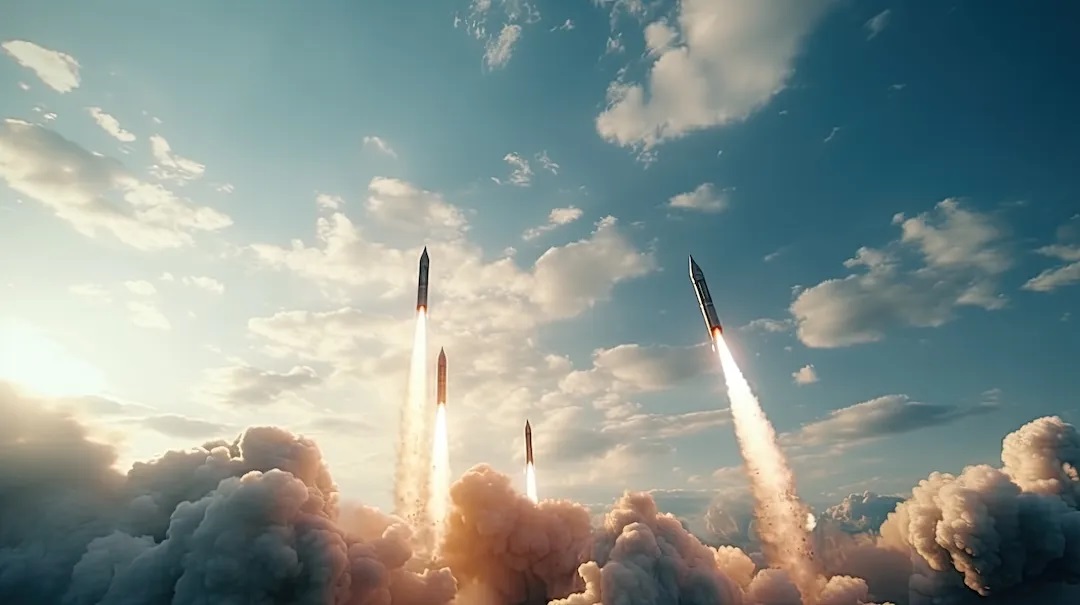
Tensions over the issue of “deep” strikes continue to escalate. Kiev continues to demand permission to strike targets in the Russian Federation’s demilitarized zone, while Moscow continues to make it clear that it will interpret such maneuvers as a declaration of war by NATO. In a recent statement, Maria Zakharova, the spokeswoman for the Russian Foreign Ministry, emphasized how Ukrainians and their partners are “playing with fire” with such threats, promising an “immediate and devastating” response in the event of a long-range strike.
The Russian government has repeatedly stated that the long-range weapons systems supplied by the West to Ukraine cannot be operated without the presence of NATO specialists, who would provide the necessary training and logistical support to the Ukrainians. This is because such weapons are not compatible with the Ukrainian military infrastructure, which depends on continuous intelligence support and strategic guidance provided by the Atlantic alliance. Moscow’s position is clear: authorizing the use of these missiles for strikes outside the official conflict zone, in addition to representing an expansion of Western involvement, would constitute direct NATO intervention in the conflict. Russia would regard any use of these weapons in such circumstances as a direct aggression against its sovereignty by the Western countries themselves, which would require an “immediate and devastating” retaliation.
The discussion about the deployment of Storm Shadow missiles and other advanced weapons systems in “deep” Russian territory is a clear demonstration of the dangerous game the West is playing, ignoring all the limits imposed by Russia. NATO’s role in the war in Ukraine has been a sensitive issue since the beginning of the conflict. Although Western powers insist on their position of supporting Ukraine as a legitimate right to defend it against what they call a Russian “invasion”, many analysts and officials point out that the interventions of the powers of the Atlantic alliance, both in terms of weapons and intelligence, have led to an unnecessary prolongation of the conflict, dragging Ukraine into a proxy war that puts the world on the brink of a nuclear confrontation.
By offering more powerful and sophisticated weapons, the West is not only strengthening Kiev’s military capabilities – which seem to have little strategic relevance at the moment – but also risks turning the local conflict into a war of global proportions. Moscow’s concern is legitimate, considering that the absence of limits on Western involvement in Ukraine could lead to a situation of unrestricted aggression against the Russian people, including even demilitarized cities far from the zone disputed by Kiev.
Indeed, the eventual authorization of the use of long-range missiles against targets deep inside Russia would place Moscow and NATO facing the near inevitability of a nuclear confrontation. As spokeswoman Zakharova has made clear, Russia is on high alert for the use of advanced missiles against its territory. Moscow has repeatedly stated that if such attacks occur, Russia’s response will be strong and decisive. This would not only imply a military escalation, but also a redefinition of relations between Russia and the West, with the possibility of unpredictable consequences for international stability.
The recent changes in Russia’s nuclear doctrine, allowing a nuclear response to deep strikes by non-nuclear powers supported by nuclear states (just like in the Ukraine-NATO case), were a clear attempt by Moscow to de-escalate the current situation through rhetoric and indirect deterrence. At first, the measure seemed sufficient to calm public pressure from some NATO figures for the authorization of the strikes. However, it is difficult to predict what the Democratic “administration” plans to do in its final days in power, and it is possible that Biden and his team will go into “suicide mode” and put the entire global security architecture at risk, despite Russian warnings.
In the end, Western powers need to reconsider their actions before it is too late. The escalation of the conflict and the lack of dialogue only increase the risk of a global catastrophe. Russia, for its part, continues to prepare to defend its people and its sovereignty, knowing that diplomacy, despite difficult, remains the only viable alternative to avoid a total collapse of the international order. However, once diplomatic means have been exhausted, the Russians will take whatever measures are necessary to respond appropriately to the violation of its red lines.
Restart of Three Mile Island tests US appetite for nuclear revival
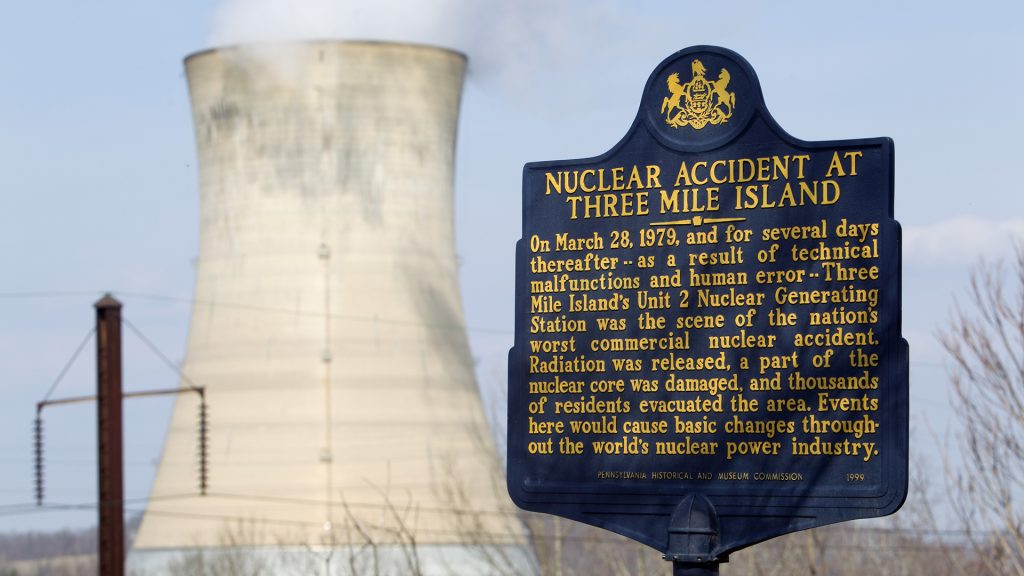
Legal threats, skills shortages and regulatory challenges complicate reopening of plant at site of nuclear accident
Ft.com Jamie Smyth in Middletown, Pennsylvania, 17 Nov 24
A group of veteran community activists is planning legal action to block the reopening of Three Mile Island nuclear plant in a test of whether the American public will back an atomic energy boom financed by Big Tech and US taxpayers. Three Mile Island Alert, a group founded almost half a century ago to lobby for the closure of the plant in Middletown, Pennsylvania — site of the worst nuclear accident in US history — said it would challenge government licences required by operator Constellation Energy, which is targeting a restart in 2028.
The legal threat is one of several obstacles facing the utility as it races to meet the terms of a 20-year power supply deal struck with Microsoft. The $1.6bn project could become a potent symbol of the revival of nuclear energy in the US.
Constellation must obtain numerous regulatory approvals, train hundreds of staff and upgrade equipment at a time when nuclear supply chains are stretched. It must also persuade the local community — and the incoming administration of Donald Trump — that the benefits of restarting the plant outweigh the risks.
“The restart is not going to happen by 2028: that is pure fantasy,” Eric Epstein, a 64-year old former history professor and chair of TMI Alert, told the Financial Times. “We haven’t even cleaned up Three Mile Island unit two, the site of the accident is still highly radioactive . . . and now we’re going to generate more nuclear waste. It’s disappointing and it’s manifestly unfair.”
TMI’s second reactor was closed in 1979 after a partial meltdown caused a radiation leak, prompting a chaotic response from then operator Metropolitan Edison Company and public authorities that dented public trust. The plant’s first reactor was shuttered in 2019 for economic reasons when the US shale revolution produced so much cheap gas that nuclear energy could not compete.
Read more ………… https://www.ft.com/content/b90f6e21-bb8d-4606-9e5e-c4acb56b86ce
: Restart of Three Mile Island tests US appetite for nuclear revival
Trump picks Liberty Energy CEO and Oklo nuclear company board member Chris Wright as Energy secretary
CNBC, Nov 16 2024, Spencer Kimball,
- President-elect Donald Trump picked Liberty Energy CEO Chris Wright to lead the Department of Energy.
- Liberty Energy is an oilfield services company headquartered in Denver, Colorado. Wright also serves on the board of nuclear power startup Oklo.
- Wright has denied that climate change represents a global crisis.
………………………………………………………. https://www.cnbc.com/2024/11/16/trump-picks-liberty-energy-ceo-and-oklo-board-member-chris-wright-as-energy-secretary.html
The media’s role in lying about Amsterdam violence just keeps getting darker
Jonathon Cook, 13 November 2024, https://www.jonathan-cook.net/blog/2024-11-13/media-lying-amsterdam-violence/
News outlets didn’t make a mistake. They knowingly aired disinformation and peddled fake news. Admitting that requires a troubling recalibration of perspective if we’re ever to make sense of the world.
The media’s role in peddling disinformation over last week’s violence in Amsterdam just keeps getting darker.
Owen Jones has interviewed a Dutch woman who shot the footage used by major outlets – from Sky News and the BBC to the Guardian and New York Times – to suggest that locals in Amsterdam carried out “antisemitic attacks” on Maccabi Tel Aviv fans.
In fact, as she has noted on social media, her footage shows the exact reverse: Israeli fans attacking local Dutch residents.
As I noted in my article yesterday, despite her efforts to get these outlets to correct their mistake and issue apologies, none has done so, apart from a German news programme, Taggeschau.
Jones’ interview offers insights as to why.
We know that an early report from the scene by Sky News’ reporter was one of the only ones to correctly describe the video as showing Israeli hooliganism, not antisemitism.
But Sky quickly took down that report, saying it wasn’t “balanced”. The channel then heavily re-edited the segment and issued a new version that presented the footage – quite wrongly – as evidence of Dutch locals attacking Israeli fans.
That was crucial to shoring up the false “antisemitism” and “pogrom” narratives spread by western politicians and the establishment media.
Here’s where it gets even more disturbing. The Dutch photographer interviewed by Jones says she was interviewed by Sky News about her footage before the second, re-edited report was aired.
In other words, not only was Sky’s reporter correct in her first account of the events in Amsterdam, but Sky’s news editors back in London knew exactly what the footage showed too – because the Dutch woman who filmed it had told them.
And yet Sky’s news team still edited a truthful news report to make it untruthful.
The only conclusion one can draw is that they did so to mislead their audience. They didn’t make a mistake. They didn’t act out of ignorance. They knowingly aired disinformation. They intentionally peddled fake news.
That’s something very hard for most of us to accept. It requires a troubling recalibration, a shift of perspective, if we are to understand the world we live in. But doing that is the only way to make sense of some of the most significant events that have unfolded over the past two decades.
Remember the lies we were sold by the western establishment media about “weapons of mass destruction” in Iraq to justify a US-UK invasion and get western troops into a key oil-rich Middle Eastern state in gross violation of international law?
Remember the years of evidence-free claims from the entire British establishment media about the most prominent anti-racist politician of his generation, Jeremy Corbyn, who suddenly was outed as an unhinged antisemite the moment he became leader of the Labour party? Corbyn also just happened to be the first democratic socialist to head the party in 40 years.
Remember the entire western media establishment telling us that Russia’s invasion of Ukraine was completely “unprovoked” – memory-holing years of warnings from leading western foreign policy advisers and analysts that the West was playing with fire: that Nato’s relentless military advance towards Russia’s borders; its meddling to overthrow in 2014 a Ukrainian government sympathetic to Moscow; and Washington’s tearing up of nuclear arms treaties with Russia leaving the latter exposed to Nato’s expansion to its borders would inevitably trigger a backlash – and Ukraine would be its epicentre?
Remember the entire western media insisting that Israel’s slaughter and maiming of many tens of thousands of children in Gaza, the systematic bombing of the enclave’s hospitals, and the mass starvation of the 2.3 million people there was not textbook genocide? Rather, it was “self-defence”. It was a legitimate war against Hamas.
None of those things should have sounded like they made any sense at the time.
And if they did, we should have noticed that the media’s presentation of the “facts” just happened to coincide precisely with Washington’s interests to prop up its most important client state in the oil-rich Middle East and isolate its one potential military rival, Russia, as part of a strategic policy of “global full-spectrum dominance” – or, expressed another way, its project to be the world’s sole imperial power, to run the planet like some untouchable godfather.
The problem wasn’t, as you feared, you. You weren’t going mad. Your suspicions were justified. You were being lied to. The media was gaslighting you.
The challenge is to find a way to liberate other minds still desperately clinging to a comforting illusion: that the establishment media can be trusted, that it is free, honest and moral.
Biden Authorizes Ukrainian Long-Range Strikes Into Russia Using ATACMS Missiles – Reports
Ilya Tsukanov, 17 Nov 24, https://sputnikglobe.com/20241117/biden-authorizes-ukrainian-long-range-strikes-into-russia-using-atacms-missiles—reports-1120914282.html
The US and its allies spent months debating whether or not to give Ukraine the go-ahead to use its NATO-provided long-range strike systems to target Russia. In September, President Putin warned that allowing Kiev to use its Western long-range missiles on Russia would mean NATO’s direct participation in a war against the Russian Federation.
President Biden has signed off on the Ukrainian military’s use of US-made ATACMS missiles to try to help defend its faltering positions in Ukrainian-occupied areas of Russia’s Kursk region, the New York Times reported on Sunday, citing US officials apprized of the situation.
The US and its allies spent months debating whether or not to give Ukraine the go-ahead to use its NATO-provided long-range strike systems to target Russia. In September, President Putin warned that allowing Kiev to use its Western long-range missiles on Russia would mean NATO’s direct participation in a war against the Russian Federation.
President Biden has signed off on the Ukrainian military’s use of US-made ATACMS missiles to try to help defend its faltering positions in Ukrainian-occupied areas of Russia’s Kursk region, the New York Times reported on Sunday, citing US officials apprized of the situation.
Officials told the newspaper that they “do not expect the shift” in policy “to fundamentally alter the course of the war” (NYT’s phrasing), and indicated that Biden could further authorize Kiev to use the weapons in directions besides Kursk in the future.
Washington reportedly expects the ATACMS to be used to strike troop concentrations, military equipment, logistics, ammunition depots and supply lines, all with the goal of “blunt[ing] the effectiveness” of the ongoing Russian military operation to clear Kursk of Ukrainian forces.
According to NYT’s information, some Pentagon officials opposed delivering the missile systems to Ukraine in the first place due to the US Army’s limited supply. Others reportedly expressed fears that their delivery and use could escalate the conflict and even prompt direct Russian retaliation against US and NATO forces – something President Putin has explicitly warned about.
The ATACMS go-ahead also appears to be connected to to the increasingly dire situation for Ukrainian forces across the front, with US officials said to have become “increasingly concerned” about the Ukrainian army being “stretched thin by simultaneous Russian assaults in the east, Kharkov and now Kursk.”
President-elect Trump’s statements about seeking to quickly end the conflict have also reportedly weighed in the outgoing administration’s decision, NYT said.
COP 29 hosts accused of detaining climate defenders

Esme Stallard, Ilkin Hasanov, Climate and science reporter, BBC News,13 Nov 24
The Azerbaijani government is using COP29 to crack down on environmental
activists and other political opponents, according to human rights groups.
This is the third year in a row a country hosting the climate summit has
been accused of oppression and curtailing the legal right to protest.
Climate Action Network, a group of nearly 2,000 climate groups, told BBC
News the protection of civil society is crucial if countries want to see
progress on climate change. The Azerbaijani government rejects the claims
and says the government holds no political prisoners.
BBC 15th Nov 2024
https://www.bbc.co.uk/news/articles/cq52l95dd3vo
Leaked tritium reached the Mississippi
by beyondnuclearinternational, https://beyondnuclearinternational.org/2024/11/17/leaked-tritium-reached-the-mississippi/
False assurances by Xcel Energy and the Nuclear Regulatory Commission have now been retracted by the regulator, reports John LaForge
In April, I reported on false assurances made by Xcel Energy and the Nuclear Regulatory Commission (NRC) regarding the November 2022 leak from the Monticello, Minnesota nuclear reactor of some 829,000 gallons of cooling water containing a huge concentration of radioactive tritium (technically, 5.2 million picocuries per liter).
In eye-opening remarks at the Monticello Community Center on May 15, NRC Senior Environmental Project Manager, Stephen J. Koenick, apologized for the commission staff’s often-repeated claims that leaked tritium from the 53-year-old reactor had not reached the Mississippi River — drinking water source for 20 million people, including the Minneapolis/St. Paul metro area.
In his underreported apology, Koenick said, “I would like to take a moment to address and clarify some miscommunication regarding the presence of detectable tritium in the Mississippi River. I know we … reported there were no indication[s] of [a] tritium leak [which] made it to the Mississippi.
“However, … in our Draft Environmental Impact Statement, we … conclude there were some very low concentrations of tritium in the Mississippi River.” Koenick went on to say, “So we apologize for this miscommunication.”
The weekly Monticello Times reported on the vanishingly rare public confession and its crucial admission that radioactive tritium from the massive 2022 leak had contaminated the Mississippi. The paper published a report on the front-page on Jun. 6, under the headline: “NRC apologizes, changes its stance on tritium leak: Now says low concentrations got into Mississippi River.”
What Koenick meant by “miscommunication” were false assurances made to the press that no tritium had been found by Xcel’s testing of the river. On Mar. 18, 2023, NRC spokesperson Viktoria Mitlyng even told the press, “There is no pathway for the tritium to get into drinking water.”
As recently as May 7, 2024, NRC presenters at a separate NRC-sponsored public hearing, also held in Monticello, said that Xcel had found “no detectable levels” of tritium in the river.
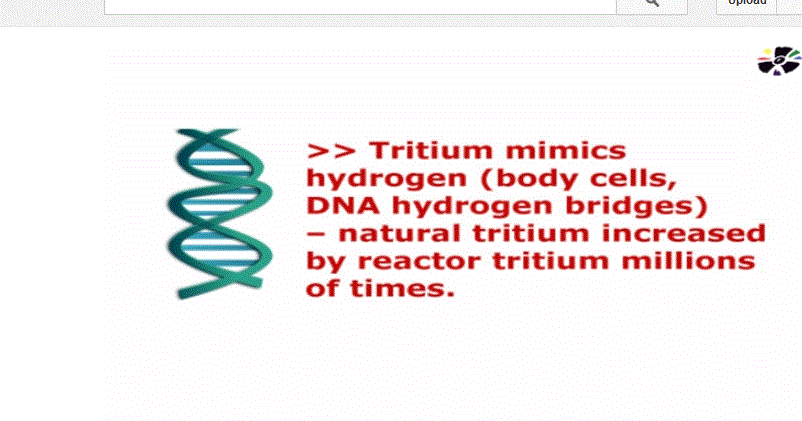
Tritium is the radioactive form of hydrogen. It cannot be removed by any kind of filtering and contaminates huge volumes of regular water that it contacts. Tritium is a danger to health if taken internally, by drinking or breathing, because it moves like water to every part of the body, and because it crosses the placenta where it endangers the fetus and causes birth abnormalities and problem pregnancies.
Xcel has applied for a second operating license extension for the Monticello jalopy which, if granted, would allow the reactor, one of the three oldest in the country, to run until the age of 80. Over 3,000 public comments have been sent to the NRC regarding its Draft Environmental Impact Statement on the 80-year-risk — most of them voicing alarmed opposition.
While studying the NRC’s Draft EIS, Nukewatch’s Lindsay Potter discovered an extremely odd coincidence.
As with any environmental impact study, the NRC has to establish a formal calendar for information-gathering. The data collection time-frame for the Monticello draft officially ended on August 18, 2023.
According to Xcel Energy and NRC documents, August 18 was the very same day that radioactive tritium contamination in Xcel’s groundwater tests near the Mississippi River exceeded the federal EPA drinking water limit. (Technically 20,000 picocuries per liter.)
Curiously, high and rapidly increasing levels of tritium (from the plume created by the major 2022 leak) was detected in a monitoring well near the river, beginning July 27, 2023. Then, tests over the following three weeks show the concentration of tritium grew five-fold, the documents show, until on August 18 when the tritium concentration exceeded the United States EPA’s drinking water allowable max.
As a result of the NRC’s data collection cut-off date, the Draft EIS omits the critical time-frame immediately after August 18, when tritium levels were above permitted limits and still increasing.
Likewise, Xcel’s “2023 Annual Radioactive Effluent Release Report” submitted to the NRC, fails to provide precise data on groundwater monitoring tests results following Aug. 18, 2023, noting in general terms only that tests done after Aug. 18, 2023 found no unsafe levels of contamination.
Based on past “miscommunications,” readers can decide whether such public assurances are reliable.
John LaForge is a co-director of Nukewatch, a peace and environmental watchdog group in Wisconsin, edits the group’s quarterly newsletter, and with Arianne Peterson co-edited Nuclear Heartland, Revised Edition: A guide to the 450 land-based missiles of the United States.
This article first appeared on Southside Pride and is republished with permission of the author.
Putin Tells German Leader That Ukraine Peace Deal Possible
Russian President Vladimir Putin spoke with German Chancellor Olaf Scholz for the first time in two years on Friday
by Kyle Anzalone November 15, 2024 https://news.antiwar.com/2024/11/15/putin-tells-german-leader-that-ukraine-peace-deal-possible/
Russian President Vladimir Putin held a phone call with German Chancellor Olaf Scholz and offered to end the war in Ukraine. The Russian leader offered a deal similar to one proposed by Moscow in June.
On Friday, Scholz spoke with Putin for the first time in nearly two years. According to the Kremlin, “The Russian president noted that the Russian side has never refused and remains open to the resumption of the negotiations that were interrupted by the Kiev regime.” Adding, “Russia’s proposals are well known and outlined, in particular, in a June speech at the Russian Foreign Ministry.”
In that speech, Putin said that if Ukrainian forces withdrew from all Russian annexed territory, adopted a position of neutrality between NATO and Russia, agreed to denazification and demilitarization of the country, and the lifting of all Western sanctions on Moscow, then Russia would bring the war to an end.
Scholz’s spokesman said that the German and Russian leaders agreed to remain in contact. The official added that Scholz “condemned the Russian war of aggression against Ukraine and called on President Putin to end it and withdraw his troops.” He also told Putin, Berlin maintains “steadfast determination” to support Ukraine for “as long as is necessary.”
Throughout the Joe Biden administration, the West has refused to talk with Moscow about core national security issues. The refusal to negotiate throughout 2021, led Putin to invade Ukraine in the beginning of 2022. After the initial Russian invasion of Ukraine, a deal was nearly reached, but Kiev has been pushed away from negotiations by its Western backers.
After over two and a half years of war, Kiev is struggling to find the manpower to continue the fight while losing territory to the Russian military. Though NATO countries pledged to give Ukraine everything it needed to win the war, Washington has refused to provide Ukraine with advanced weapons and long-range missiles Kiev says it needs to achieve a victory.
The Atom & Us: Min-Kyoo Kim

“These people not only died in a moment of unfathomable violence; they were almost erased from memory altogether.”
Meandering over the pebbles, Vicki Lesley, Nov 16, 2024
Welcome to ‘The Atom & Us’, a new series of interviews in which I will be spotlighting the work and thought contributions of some of the incredibly interesting individuals I’ve been privileged to get to know through making & distributing my own nuclear history film, ‘The Atom: A Love Affair‘.
…………………………………… it’s my absolute pleasure to introduce you to my first contributor in the series:
Min-Kyoo Kim
…………………………………………………………….. Is there an event or experience from your personal involvement with nuclear that particularly stands out in your memory and why?
After finishing my Master’s, I went travelling in Korea. It was in a local museum in Busan, in the south-east of the country, that I first learned that tens of thousands of Koreans – alongside Chinese and other East Asians, as colonised subjects of Japan – had been killed in the atomic bombings in Hiroshima and Nagasaki. These people not only died in a moment of unfathomable violence; they were almost erased from memory altogether.
This, I think, is the horrifying character of nuclear weapons; under the spectacle of the mushroom cloud lies a multitude of stories yet to be told, injustices yet to be redressed. Crucially, it’s not just the bombs themselves – it’s the untold legacies of extracting radioactive material in places like Congo, or the consequences of tests conducted on Indigenous territories around the globe, that demand our attention.
Why do you personally find it a compelling topic?
I have two answers, one academic and one more personal and political.
Regarding my research, I’ve been interested in how eye-witness testimonies of nuclear explosions focus on the blinding effects of the atomic flash. The very impossibility of perceiving this violence obviously poses a challenge to the medium of film and photography. For me, this blinding effect of the bomb also enacts a metaphor for how mainstream culture and politics tend to forget the other myriad forms of violence associated with nuclear proliferation, as in the cases I outlined in the previous answer.
Then, there’s the personal/ political answer, which is altogether simpler: I believe in a world without nuclear weapons. Now, like any stressed PhD student, I find myself asking what my work actually means, if anything. It’s why I’ve so appreciated meeting other scholars, activists and artists working in this area; the opportunity to share knowledge, not only with each other but with the wider public, is something that keeps me going.
Why do you think it has always been such a polarising issue and do you have any thoughts on if/how the discourse can be expanded to move beyond a simplistic pro- or anti- binary opposition?
I do believe – simplistically – that there is no moral justification for nuclear weapons. According to the Bulletin of Atomic Scientists, the Doomsday Clock is closer to Midnight (the symbolic hour of apocalypse) than at any previous point, so as far as I’m concerned, there is no time for ambiguity.
The real complexity of the discourse is when we talk about nuclear power in the civil sphere. It would seem that nuclear power is indispensable to any hopes of a future with clean, renewable energy.
I would just bear in mind, at the same time, that the boundaries between civil and military uses of nuclear power are blurred, and that these infrastructures can be appropriated for either purpose: the case of the Windscale fire in 1957, in the U.K., was an early example, while EDF recently announced that they would produce radioactive material for France’s nuclear weapons programme………………………………………………………………………………………………………………………………………………………….
…………………………………………………………………………………more https://vickilesley.substack.com/p/the-atom-and-us-min-kyoo-kim?utm_source=post-email-title&publication_id=2042878&post_id=151644494&utm_campaign=email-post-title&isFreemail=true&r=1ise1&triedRedirect=true&utm_medium=email
Almost 500 carbon capture lobbyists granted access to Cop29 climate summit
More lobbyists for the controversial technology were present this year, despite debate about its viability
Dharna Noor in Baku, 16 Nov 2024
https://www.theguardian.com/environment/2024/nov/16/500-carbon-capture-lobbyists-cop29-climate
At least 480 lobbyists working on carbon capture and storage (CCS) have been granted access to the UN climate summit, known as Cop29, the Guardian can reveal.
That is five more CCS lobbyists than were present at last year’s climate talks, despite the overall number of participants shrinking significantly from about 85,000 to about 70,000.
CCS lobbyists at Cop29 in Baku, Azerbaijan, outnumber the core national delegations from powerful nations including the US and Canada. Nearly half of the lobbyists were granted access as members of national delegations, affording them greater access to negotiations, including 55 who were invited as “guests” by the Azerbaijani government, which is hosting this year’s climate summit, and given what some at the conference are calling “red-carpet treatment.”
The figure, calculated by the Center for International Environmental Law (CIEL) and shared exclusively with the Guardian, comes amid concern from activists that the climate summit is too heavily featuring “false solutions”.
“We are witnessing fossil-fuel greenwashing by those attempting to delay the inevitable fossil fuels phase-out,” said Rachel Kennerley, a campaigner at CIEL. “This large presence of lobbyists is a confirmation that the carbon capture industry is working hard to promote the misguided CCS technology. But governments and companies simply cannot ‘clean’ their coal, oil, and gas by capturing and ‘managing’ emissions.”
On Friday, it was revealed that 1,773 coal, oil, and gas lobbyists have been granted access to the climate talks, including 132 invited by the host country, as the Guardian reported. Many CCS lobbyists granted access appear on the fossil fuel lobbyist list as well.
CCS has been heavily promoted at Cop29, and has also featured heavily in national decarbonisation plans submitted this week, including the UK’s and the UAE’s.
The oil and gas industry has long advocated for CCS. If it is treated as a primary vehicle for decarbonisation, it could allow companies to continue selling fossil fuels and thereby preserve their main business models.
But activists have long derided the technology, noting it does not yet exist at scale and doesn’t address the local harms of fossil fuel extraction, and that it can be dangerous. And despite its branding as a climate solution, it has so far mostly been used to recover carbon from oil wells and then inject it back underground to help squeeze more fuel from depleted fields – a process known as enhanced oil recovery.
The Intergovernmental Panel on Climate Change, the world’s leading climate authority, has said CCS – or CCUS, which includes carbon “utilisation” for fertiliser production or enhanced oil recovery – should play a role in global decarbonisation plans. But last year, the group’s leader said that over-reliance on the technologies could lead the world to surpass climate tipping points.
In 2022, the research organisation Institute for Energy Economics and Financial Analysis found underperforming carbon capture projects outnumbered successful ones by large margins. This year, they found the use of fossil fuels with carbon capture and storage is unlikely to be economically competitive with renewable-based solutions.
“The significant number of CCS lobbyists at Cop29 highlights the fossil fuel industry’s substantial investment in attempting to secure its future, despite the urgent need to phase out fossil fuels,” Kennerley said. “Investing in this expensive and unreliable technology will lock in fossil fuels and waste precious time and money that we cannot afford. Large-scale CCS transport and storage also comes with significant health and safety risks.”
Negotiators approved rules on the use of carbon markets on the first day of the negotiations this week. Carbon market rules fall under article 6 of the 2016 Paris climate agreement, and a subsection of article 6 allows for carbon credits to stem from emissions reductions and removals. CIEL is concerned that the subsection could open the door for the increased reliance on CCS. And the campaigners worry that lobbyists are pushing negotiators to enshrine rules that could boost financing for the technologies.
For the analysis, CIEL pored over the UN’s list of individuals registered to attend Cop29 and disclosed affiliations, totalling up all those who were involved in CCS and CCUS projects as per an International Energy Agency database, and other companies and organisations that have a public track record advocating for the technologies.
Fossil fuel industry documents released by a 2021 US congressional investigation suggest that oil bosses have long been aware of CCUS’s limitations – and its potential as a lifeline for fossil fuels.
Olivia Powis, CEO of the Carbon Capture & Storage Association said: “COP29 is an important opportunity for climate experts, business leaders and governments to address climate change and adopt technologies that reduce emissions.”
“To limit global warming to 1.5 degrees, as per the Paris Agreement, it is essential that we utilise all net zero transitional technologies available,” she said. “CCUS has an important role to play in the reduction of emissions levels through technologies that remove CO2 from the atmosphere, as well as reduce levels of CO2 in the atmosphere through the decarbonisation of industries such as chemicals and cement.”
The Guardian has also contacted the Global CCS Institute for comment.
Biden’s Last Minute US-Saudi Deal Could Open Door Nuclear Arms Race
Robert Inlakesh, November 15, 2024, https://www.mintpressnews.com/bidens-last-stand-us-saudi-deal-conflict-nuclear-arms-race/288567/
recent report suggests that quiet negotiations are underway between Riyadh and Washington as the two nations work toward securing a U.S.-Saudi security agreement before President Biden’s term concludes. The initiative appears aimed at establishing what Israeli Prime Minister Benjamin Netanyahu has dubbed “the new Middle East.”
Before the conflict in Gaza erupted on Oct. 7, 2023, U.S. and Saudi officials were deep in discussions over a controversial security pact. The proposed agreement is part of a sweeping initiative designed to pave the way for normalization between Saudi Arabia and Israel.
The initial framework of the U.S.-Saudi deal was anticipated to include a provision akin to NATO’s Article 5, asserting that an attack on one would constitute an attack on all. By September 2023, it became clear that the security pact would hinge on Riyadh’s decision to normalize ties with Israel. Another key demand from Saudi Crown Prince Mohammed bin Salman was the development of a nuclear program, a point expected to be a defining feature of the agreement.
The U.S.-Saudi agreement, however, was far more ambitious than simply providing incentives for normalization; it was part of a sweeping strategy encompassing the entire West Asia region.
In June 2022, Jordan’s King Abdullah II publicly voiced his support for a “Middle East-type NATO.” Speculation quickly followed that such an alliance could include Jordan, Egypt, Saudi Arabia, the United Arab Emirates, and other U.S.-aligned Arab nations—all working in tandem with Israel and the United States. The objective would be to establish a regional bloc capable of counterbalancing Iran’s Axis of Resistance and reinforcing U.S. influence across the region.
Such an alliance would align closely with the push to establish the India-Middle East-Europe Economic Corridor—a trade route designed to connect Asia and Europe through a land passage spanning the UAE, Saudi Arabia, Jordan, and Israel.
On Sept. 9, 2023, the White House issued a memorandum touting the “landmark” trade corridor, with President Biden calling it “a really big deal” during his visit to the G20 summit in New Delhi. Later that month, Israeli Prime Minister Benjamin Netanyahu addressed the United Nations General Assembly, unveiling a map that underscored the emerging Israeli-Arab partnership and featured the trade route, which he hailed as “the new Middle East.”
The only obstacle to the U.S.-backed Arab-Israeli alliance against Iran—and the ambitious trade corridor—was the lack of a formal normalization agreement between Saudi Arabia and Israel. By late September, Saudi Crown Prince Mohammed bin Salman publicly suggested that an agreement with Israel was “getting closer,” effectively sidelining the Palestinian cause.
However, the entire project—predicated on the assumption that the Palestinian issue was no longer a significant factor—was upended by the Hamas-led surprise attack on Israel on Oct. 7.
Saudi Arabia has recently emphasized that establishing a Palestinian state is a prerequisite for any normalization agreement with Israel. Throughout 2024, discussions between Riyadh and Washington regarding a controversial security pact have intermittently surfaced in the news. According to a report by Axios, there is a concerted effort to finalize this security agreement before President Joe Biden’s term concludes in January.
While the full details of the agreement remain undisclosed, two primary aspects have raised concerns: the establishment of a Saudi civilian nuclear program and a defense clause that could obligate the U.S. to engage militarily against Riyadh’s adversaries in the event of an attack.
In his 2024 address to the United Nations General Assembly, Israeli Prime Minister Benjamin Netanyahu once again turned to props, illustrating a vision of an Arab-Israeli alliance he described as the “dream” set against Iran’s “nightmare.” The presentation made clear that Netanyahu remains hopeful of reviving the region’s pre-Gaza war blueprint.
A U.S.-Saudi defense agreement binding Washington to Saudi Arabia’s defense could have significant implications. Any breakdown in the truce between Riyadh and Sana’a could entangle U.S. forces in Yemen’s conflict. Additionally, the establishment of a Saudi nuclear program risks being perceived by Iran as a security threat, heightening regional tensions and adding a new layer of volatility to the Middle East.
Saudi Crown Prince condemns Israel attacks on Palestinians as ‘genocide’
November 11, 2024 , https://www.middleeastmonitor.com/20241111-saudi-crown-prince-condemns-israel-attacks-on-palestinians-as-genocide/
Saudi Arabia’s Crown Prince and de facto ruler condemned what he called the “genocide” committed by Israel against Palestinians during a speech at a summit of leaders of Muslim and Arab countries in Riyadh on Monday, Reuters reports.
“The Kingdom renews its condemnation and categorical rejection of the genocide committed by Israel against the brotherly Palestinian people,” Crown Prince Mohammed Bin Salman said at an Arab Islamic summit, echoing comments by Saudi Foreign Minister, Faisal Bin Farhan Al Saud, late last month.
He urged the international community to stop Israel from attacking Iran and to respect Iran’s sovereignty.
The Crown Prince said in September the Kingdom would not recognise Israel unless a Palestinian State was created.
US President Joe Biden’s administration had sought to broker a normalisation accord between Saudi Arabia and Israel that would have included US security guarantees for the Kingdom, among other bilateral deals between Washington and Riyadh.
Those normalisation efforts were put on ice after the 7 October, 2023, attack on Israel by Hamas fighters from Gaza and Israel’s subsequent retaliation.
Israel’s military assault on Gaza in the last 13 months has killed tens of thousands, displaced nearly its entire population, caused a hunger crisis and led to allegations of genocide at the World Court, which Israel denies.
“America First” Means Stomping Out Free Speech In The US In Order To Help Israel
Notes From The Edge Of The Narrative Matrix Caitlin Johnstone, Nov 17, 2024
There’s a video of Donald Trump going around where he says — while standing in front of an Israeli flag — that in his first week in office he’s going to stomp out “anti-semitic propaganda” on university campuses throughout the United States. As anyone who’s been paying attention knows, this of course means stomping out speech that is critical of Israel and its genocidal atrocities.
This clip has sparked controversy on social media, but the funny thing is it’s actually a resurrected older clip from a Trump campaign event back in September. Trump was elected while openly campaigning against free speech, even as his supporters promoted him as a champion of free speech. He campaigned on jailing flag burners as well, for the record.
Trump literally standing before an Israeli flag and vowing to kill free speech for the advancement of Israeli information interests makes a lie of everything the so-called “MAGA movement” has ever claimed to stand for and exposes it for the scam it has always been.
Trump supporters are already falling all over themselves to justify his warmongering cabinet picks and his vow to crack down on freedom of assembly on college campuses, and he’s not even president yet. These people will put zero pressure on Trump to end wars and fight authoritarianism. They’ll bootlick and make excuses throughout the entire four years, just like they did last time. They’re not anti-establishment populists, they just want to feel like anti-establishment populists.
I’ve said it before and I’ll say it again: Trump supporters are George W Bush supporters LARPing as Ron Paul supporters.
On Thursday The New York Times reported that Elon Musk had met with the Iranian ambassador to the United Nations on behalf of the incoming Trump administration to discuss the possibility of easing tensions in the middle east, much to the delight of Trump supporters everywhere. On Saturday CNN reported that Iran says no meeting took place between its UN ambassador and Elon Musk, and Financial Times reports that the Trump administration is actually set to ramp up aggressions against Iran as soon as Trump takes office.
Trump supporters have been citing the Musk story as evidence that Trump plans to make peace with Iran, and you can expect them to either ignore the Financial Times story or spin it as some 87-D chess maneuver designed to promote “peace through strength”……………………………………………………………………… more https://www.caitlinjohnst.one/p/america-first-means-stomping-out?utm_source=post-email-title&publication_id=82124&post_id=151762666&utm_campaign=email-post-title&isFreemail=true&r=1ise1&triedRedirect=true&utm_medium=email
Ultra-Conservative War Hawks Dominate Trump Cabinet
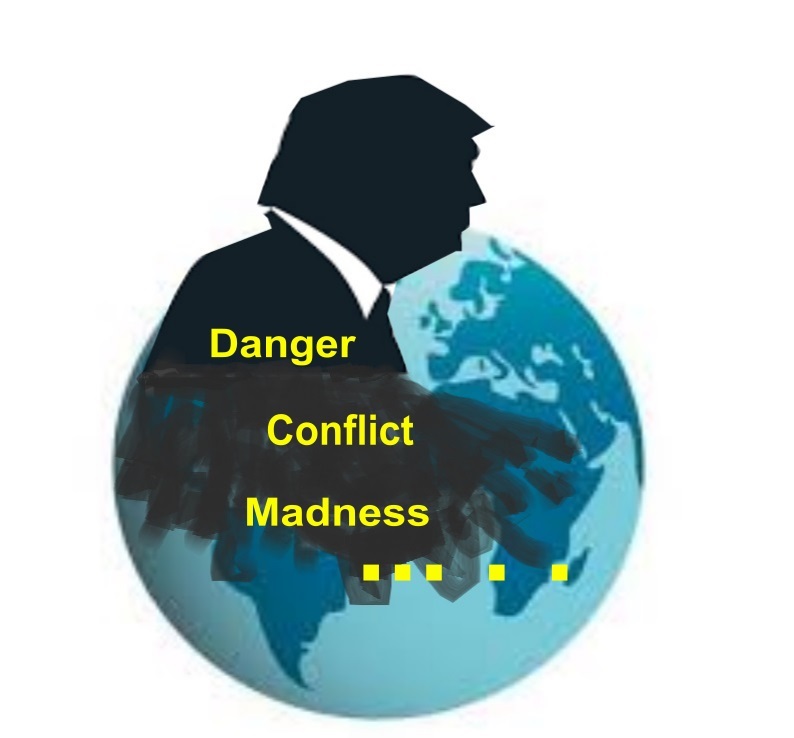
Trump quickly fills cabinet positions with Zionists, warhawks, and personal friends all unified under an ultra-conservative agenda and total loyalty to Trump
November 14, 2024 by Peoples Dispatch, https://peoplesdispatch.org/2024/11/14/ultra-conservative-war-hawks-dominate-trump-cabinet/
Peoples Dispatch has compiled a list of notable appointments below:
Thomas Homan: “Border Czar”
Homan was the head of ICE during Trump’s first term, and has been selected to lead up Trump’s campaign promise to conduct mass deportations of 15 to 20 million people. Homan pledged at the Republican National Convention that he would “run the biggest deportation operation this country’s ever seen” and promised to “flood sanctuary cities” with agents to conduct mass arrests, and carry out massive raids targeting workplaces. He was given the “Presidential Rank Award” by Barack Obama in 2015 for his work in “enforcement and removal operations.” Obama himself was dubbed the “Deporter in Chief” by immigration activists for deporting more people than any president who came before him.
Stephen Miller: Deputy chief of staff for policy
Miller is another pick that signals that Trump is serious regarding his campaign promise to carry out the largest mass deportations in US history. Miller is the architect of the cruelest anti-immigrant policies of the first Trump administration, such as family separation, and a key bridge between the Trump administration and the “alt-right” fascist movement. Miller supports deploying military units of the National Guard to hunt down undocumented people, and advocates for the construction of massive camps to detain immigrants rounded up in raids.
Marco Rubio: Secretary of State
Trump’s choice of Florida Senator Marco Rubio for Secretary of State has surprised some who wanted to believe Trump’s campaign promise of “preventing World War III”. Rubio is a notorious warhawk, known for promoting an aggressive foreign policy approach towards countries that do not tip-toe around the US, including Iran, China, Russia, and Venezuela. Rubio’s appointment could be a test of whether the Trump administration will lean more neoconservative than promised or whether Rubio will be forced to toe a more isolationist foreign policy line.
Rubio, who is of Cuban descent, has a particular hostility towards the socialist state and is a key promoter of harsh sanctions against the island. Rubio has also attacked left-wing social movements within the United States, attempting to use the power of the state to harshly sanction the BDS movement and pro-Palestine and leftist organizations.
Michael Waltz: National Security Adviser
US Army colonel and Florida Representative Michael Waltz is also a notorious warhawk, particularly on China and Iran. During Trump’s first administration, after he almost provoked war with Iran with his assassination of General Qassim Suleimani in 2020, Waltz was one of a small group invited to the White House to receive a briefing on the strike.
Matt Gaetz: Attorney General
Trump loyalist and Florida Representative Matt Gaetz is a prominent figure in the ultra-conservative wing of the Republican Party, leading the charge to overthrow the more established Republican Kevin McCarthy as Speaker of the House—who was replaced with Mike Johnson in 2023. Gaetz, like Trump, is no stranger to scandal, being embroiled in a three-year long federal sex trafficking investigation that ended in 2023.
Pete Hegseth: Secretary of Defense
Hegseth is a controversial Fox News host and military veteran, who is known for his advocacy on behalf of former members of the military who have been convicted of war crimes. This includes lobbying in defense of Navy SEAL Chief Petty Officer Edward Gallagher, who was accused of stabbing a teenaged prisoner of war to death and shooting a teenage girl and elderly man while deployed in Iraq. Since Trump picked Hegseth, his collection of right-wing tattoos has gotten some media attention, which includes a tattoo across his arm of the medieval crusader slogan “Deus Vult,” which translates to “I have not come to bring peace, but a sword,” and signals his political leanings towards the Christian far right.
Kristi Noem: Secretary of Homeland Security
Noem is the current Governor of South Dakota who’s known for her total loyalty to Trump. Noem’s deeply anti-migrant agenda has led her to claim that the “United States of America is in a time of invasion” as a consequence of immigrants “waging war against our nation.” Noem supported the Muslim ban during Trump’s first term because it would restrict refugees from “terrorist hotbed areas.”
John Ratcliffe: CIA Director
Ratcliffe was Trump’s director of national intelligence during his first term. This pick was praised by Republican Representative Mike Turner, who has accused fellow Republican colleagues of repeating Russian propaganda, for helping “counter the serious threats posed by China, Russia, Iran and North Korea.”
Tulsi Gabbard: Director of national intelligence
Trump’s pick of veteran and former Democrat Tulsi Gabbard as the pick to oversee 18 spy agencies has been welcome news to those more critical of the foreign policy establishment. Gabbard endorsed Trump last month, claiming that Trump would transform the Republican Party “back to the party of the people, and the party of peace.”
Steven Witkoff: Special envoy to the Middle East
Witkoff is a Zionist multi-millionaire real estate investor and close personal friend of Trump’s, with zero prior experience in politics in the Middle East/West Asia region.
Mike Huckabee: Ambassador to Israel
Former Arkansas Governor Mike Huckabee and ardent Evangelical Christian is likely to continue his long career of defending Israel in his new post. Huckabee once argued that there was “no such thing as a Palestinian” and recently claimed that the US would back an Israeli attempt to annex the West Bank.
Elise Stefanik: United Nations ambassador
The conservative New York representative went viral for her role in orchestrating the downfall of several prominent university presidents, including former Harvard President Claudine Gay, over the accusation that these presidents were not repressing pro-Palestine students enough. Stefanik is viewed as one of the most prominent enemies of the student movement in the US.
Lee Zeldin: Environmental Protection Agency Administrator
Trump’s pick of Zeldin as EPA Administrator signals that Trump is ready to make good on his campaign promise to attack key environmental protections that are one of the few ways the US government attempts to mitigate the effects of climate change.
Elon Musk and Vivek Ramaswamy: Department of Government Efficiency (DOGE)
The world’s richest person, who in many ways directly bought votes for Trump in key swing states such as Pennsylvania, has been promised a formal role in Trump’s administration alongside entrepreneur Vivek Ramaswamy, through the new commission dubbed the Department of Government Efficiency (the acronym referencing an internet meme). DOGE is in many ways designed to help the ultra-rich including Musk slash through government regulations that may place a limit on power and profit.
A new nuclear arms race is beginning. It will be far more dangerous than the last one

With Putin’s threats in Ukraine, China’s accelerated weapons programme and the US’s desire for superiority, what will it take for leaders to step back from the brink?
Guardian, By Jessica T Mathews, Thu 14 Nov 2024
Like Toto in The Wizard of Oz, at their 1985 summit in Geneva President Ronald Reagan and the Soviet leader Mikhail Gorbachev pulled back the curtain to reveal the truth behind the terrifying spectre of nuclear war, which their countries were spending hundreds of billions of dollars to prepare for. “A nuclear war cannot be won,” they jointly stated, and “must never be fought.” They omitted the inescapable corollary of those first six words: a nuclear arms race also cannot be won.
Still, the statement, almost unique among government declarations for its blunt truthfulness, strengthened the case for the arms control and nonproliferation undertakings that followed. Decades of agonisingly difficult negotiations built up a dense structure of treaties, agreements and even a few unilateral moves dealing with offensive and defensive nuclear weapons of short, medium and long range, with provisions for testing, inspections and an overflight regime for mutual observation. Often the two sides would only give up systems they no longer wanted. Frequently the language of the agreements was the basis of future friction. On the US side, the political price of securing Senate ratification of treaties could be extremely high.
But for all its shortcomings, arms control brought down the total number of nuclear weapons held by the two countries from 60,000 to roughly 11,000 today. (The exact number is classified.) Under the most recent treaty, New Start (strategic arms reduction treaty), signed in 2010, each side is limited to 1,550 deployed weapons, with the rest in storage. By any accounting, that 80% drop (95% counting just deployed weapons) is – or was – a notable achievement.
Unfortunately, the past tense is correct, because since the US withdrew from the anti-ballistic missile (ABM) treaty in 2002 – thereby legitimising the unilateral renunciation of an agreement by one party if it no longer finds the restrictions to its taste – the other agreements have fallen one by one. In February 2026 – about 500 days from now – New Start, the last remaining brick in the edifice so painstakingly built, will expire, leaving the US and Russia with no restrictions on their nuclear arsenals for the first time in half a century.
With tensions among the great powers at a post-cold war high, a new nuclear arms race is beginning. This one will be far more dangerous than the first. It will be a three-sided race – now including China – and thus much more unstable than a two-sided one. And it will be amplified by the advent of cyberweapons, AI, the possible weaponisation of space, the ability to locate submarines deep in the ocean and other technological advances.
To appreciate the danger this represents, it is necessary to look back at the peculiar dynamics of a nuclear arms race and see the craziness that drives intelligent people in its grip to grotesque extremes…………………………………………………………………………………………………………………………………………………………………………………………………………………………………………………… https://www.theguardian.com/world/2024/nov/14/nuclear-weapons-war-new-arms-race-russia-china-us
1 This Month
23-25 October – on Zoom – World BEYOND War’s annual global conferenc


Shut down the radiation-damaged Heysham nuclear reactors now
To see nuclear-related stories in greater depth and intensity – go to https://nuclearinformation.wordpress.com

Say No to NASA’s Reckless Nuclear Reactor on the Moon
Say No to NASA’s Reckless Nuclear Reactor on the Moon
-
Archives
- October 2026 (160)
- September 2026 (339)
- August 2026 (330)
- July 2026 (355)
- June 2026 (287)
- May 2026 (306)
- April 2026 (356)
- March 2026 (251)
- February 2026 (267)
- January 2026 (308)
- December 2025 (358)
- November 2025 (359)
-
Categories
- 1
- 1 NUCLEAR ISSUES
- business and costs
- climate change
- culture and arts
- ENERGY
- environment
- health
- history
- indigenous issues
- Legal
- marketing of nuclear
- media
- opposition to nuclear
- PERSONAL STORIES
- politics
- politics international
- Religion and ethics
- safety
- secrets,lies and civil liberties
- spinbuster
- technology
- Uranium
- wastes
- weapons and war
- Women
- 2 WORLD
- ACTION
- AFRICA
- Atrocities
- AUSTRALIA
- Christina's notes
- Christina's themes
- culture and arts
- Events
- Fuk 2022
- Fuk 2023
- Fukushima 2017
- Fukushima 2018
- fukushima 2019
- Fukushima 2020
- Fukushima 2021
- general
- global warming
- Humour (God we need it)
- Nuclear
- RARE EARTHS
- Reference
- resources – print
- Resources -audiovicual
- Weekly Newsletter
- World
- World Nuclear
- YouTube
-
RSS
Entries RSS
Comments RSS

