Today in History – January 24: Pure luck stops two nuclear bombs destroying US city

By Nick Pearson, Jan 24, 2026, https://www.9news.com.au/world/today-in-history-january-24-what-happened-on-this-day/67dc0e76-b5a5-4799-8fd0-ef2c401b7812
Two concurrent nuclear explosions over a US town were narrowly averted on January 24, 1961.
A B-52 bomber flying over Goldsboro, North Carolina, started to break up in mid-air after a fuel leak.
The centrifugal forces set off a trigger in the cockpit which would be used to drop the payload in the back of the plane.
That payload was two hydrogen bombs, which dropped out of the plane as it broke up in the sky.
Five of the eight crew were able to bail out safely, but three were killed.
Meanwhile, the two hydrogen bombs fell to the ground.
By pure luck, neither of the weapons exploded.
The first weapon had landed in a field on a farm, landing reasonably softly because of its deployed parachute.
With one of the 24-megaton warheads, there were six interlocking safety mechanisms which needed to be triggered for the bomb to explode.
“When Air Force experts rushed to the North Carolina farm to examine the weapon after the accident, they found that five of the six interlocks had been set off by the fall,” nuclear safety supervisor Parker F. Jones wrote in a 1969 report.
“Only a single switch prevented the 24-megaton bomb from detonating and spreading fire and destruction over a wide area.”
The second bomb landed in a muddy field, leaving a 1.5m hole in the ground.
When it was recovered after a three-day operation, they found the safety switch had been turned to “Armed”.
It created a mystery as to why this bomb did not detonate.
The conclusion from investigators was that the impact from hitting the earth shifted the switch to “Armed”, but that same impact had broken the circuits that would have set the bomb off.
After breaking up on impact and sinking into deep mud, some major components of the bomb have still not been recovered.
If either bomb had detonated, it would have likely wiped out a city of about 30,000 people.
The farmer was paid $100 by the US government for a 61m-radius section of the farm.
They are still allowed to use the land for agricultural purposes but forbidden from digging more than five feet down.
Kushner Reveals Dystopic Plan to Build Data Centers on Ruins of Gaza Genocide.

“This is a plan to erase Gaza’s indigenous character, turn what remains of her people into a cheap labor force to manage their ‘industrial zones’ and create an exclusive coastline for ‘tourism,’”
The plan appears to be to finish Israel’s bulldozing of Gaza to make real estate opportunities for investors.
“This is a plan to erase Gaza’s indigenous character, turn what remains of her people into a cheap labor force to manage their ‘industrial zones’ and create an exclusive coastline for ‘tourism,’”
The plan appears to be to finish Israel’s bulldozing of Gaza to make real estate opportunities for investors.
By Sharon Zhang , Truthout, January 22, 2026, https://truthout.org/articles/kushner-reveals-dystopic-plan-to-build-data-centers-on-ruins-of-gaza-genocide/

White House Adviser Jared Kushner revealed a neocolonial plan to transform Gaza into a home for luxury tourist resorts and data centers at the World Economic Forum on Thursday.
The plan has been widely condemned by human rights advocates, who say it is an an attempt to erase Palestinians by building a capitalist dystopia on the ruins of Israel’s genocide.
At the signing ceremony for President Donald Trump’s “Board of Peace,” Kushner shared a set of slides depicting a colonialist fantasy of the Gaza Strip under a hypothetical “demilitarization” of Hamas — despite the group’s repeated refusal to disarm, saying it would leave them defenseless against further attacks by Israel or otherwise.
The slides show computer-generated photos of high rise buildings along the coast and rows of residential buildings elsewhere.
The presentation includes a blueprint of Gaza divided into sections, which Kushner says is the U.S.’s plan for “catastrophic success” in the event of demilitarization of Hamas. The blueprint, labelled as the “Master Plan,” shows the entirety of the coast — where Palestinians have long fished for sustenance — dedicated to “coastal tourism,” with a sea port and an airport. There are large swaths dedicated to “parks, agriculture, and sports facilities.”
Tellingly, numerous parts of the map located next to residential areas are dedicated to industry and “data centers.” Ruinous technology like AI, reports have said, are slated to be a major part of the White House’s plan for Gaza, with other slides in the pitch deck reported by The Wall Street Journal showing a transformation of the Strip into a “smart city” with “tech driven governance.”
Nowhere is there a designation for cultural sites, nor does the map seem to be built around keeping or restoring any parts of Gaza that retain Palestinian heritage or life. The plan appears to be to finish Israel’s razing of the territory, clear the rubble in which thousands of Palestinians’ bodies are thought to be trapped, and replace it with real estate opportunities for investors.
“Gaza, as President Trump has been saying, has amazing potential,” said Kushner.
At the signing ceremony, Trump said that Gaza, home to millions of Palestinians, is “a great location” that should be viewed as a “big real estate site,” and expressed his interest in the region as a “real estate person at heart.”
“I said, look at this location on the sea, look at this beautiful piece of property — what it could be for so many people, it’ll be so great, people that are living so poorly are gonna be living so well,” Trump said.
Kushner touted the White House’s goal of applying “free market economy principles” to the razing and redevelopment of Gaza. He also expressed a desire to replace the humanitarian aid system for Palestinians in the region using those principles.
Palestinians have strongly condemned the plan.
“This is a plan to erase Gaza’s indigenous character, turn what remains of her people into a cheap labor force to manage their ‘industrial zones’ and create an exclusive coastline for ‘tourism,’” wrote Palestinian American writer Susan Abulhawa. “Palestinians will be pushed behind walls and gates, retrained in ‘technical schools’ to serve Israel’s supremacists ideology. The indigenous traditions and social fabric of this land will be obliterated utterly.”
“If the goal is truly peace, then the path is simple: end the occupation and help restore the rights that have been taken from Palestinians since 1948,” said Mosab Abu Toha, a Palestinian writer from Gaza. “We, the Palestinian people, are the ones who must determine our own future. Peace cannot be imposed while our land is occupied, our lives controlled, and our voices ignored.”
Nuclear project with locals opposed will get federal review
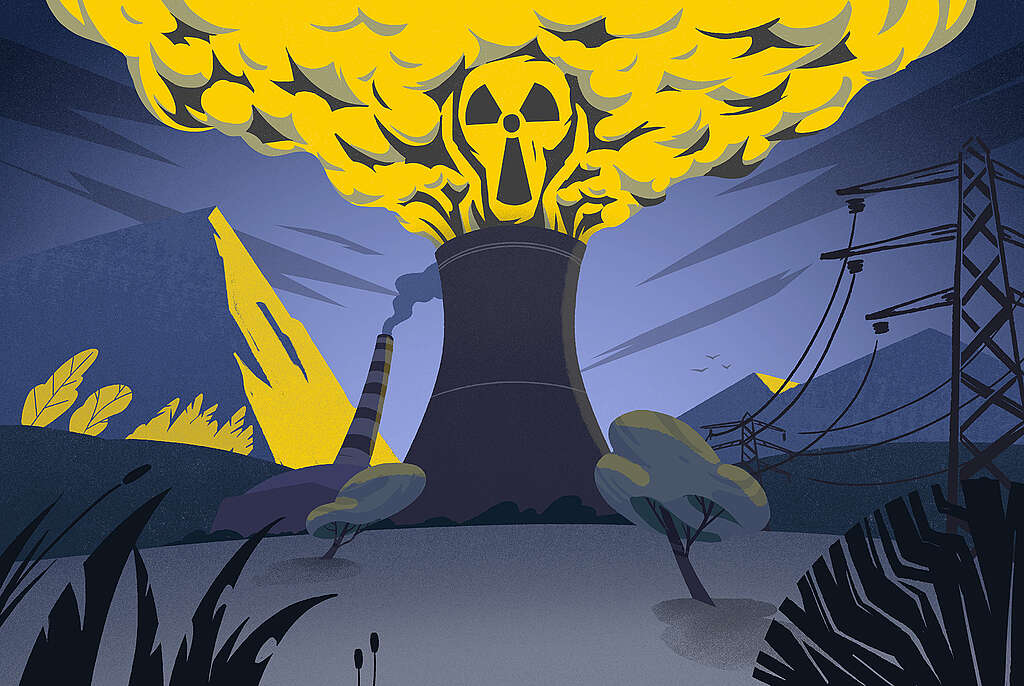
Federal law requires large projects to examine whether there are other feasible ways to meet the same goals with fewer risks.
That opens the door to arguments that renewables, storage and grid upgrades could deliver similar benefits faster, more cheaply and with less environmental harm.
Recent studies from the Ontario Clean Air Alliance suggest alternatives exist and that the province could save up to $19 billion per year by investing in wind, solar and storage instead of pursuing the Wesleyville nuclear megaproject.
Canada’s National Observer, By Abdul Matin Sarfraz, January 22nd 2026
For most of her life, Faye More has lived in the shadow of nuclear waste, grappling with radioactive contamination in her home and her hometown left behind by uranium and radium processing.
She grew up in Port Hope, a lakeside community about 100 kilometres east of Toronto that is still undergoing cleanup of contaminated soil that continues to be removed from neighbourhoods and stored in a huge engineered mound about the size of 70 hockey rinks, visible from Highway 401.
In the 1970s, government investigators found high levels of radon gas at St. Mary’s elementary school in Port Hope, where radioactive mining waste from the town’s uranium mine had been used as fill beneath the building. The school was closed and tests were conducted elsewhere around the town. Investigators uncovered contamination in unexpected places — including backyards and basements.
“I grew up in a contaminated house. I later ended up buying a contaminated property without knowing it and I raised my family there because the locations of radioactive waste were not being disclosed,” More said.
Radon is a colourless, odourless radioactive gas that forms naturally as uranium breaks down in soil and can seep into homes through foundations — it’s naturally occurring in many places but, in Port Hope, levels were significantly higher than normal. Health Canada says radon is the second-leading cause of lung cancer after smoking, linked to about 16 per cent of cases nationwide, or more than 3,000 deaths each year.
Now, More’s community is being asked by the Ford government to shoulder another nuclear burden, one of the largest nuclear projects in the world. This time, she is fighting back, helping lead local residents who say they have already paid the price.
The province last year announced that Ontario Power Generation (OPG) is proposing a new nuclear generating station on its Wesleyville property. The company says the project could eventually host up to 10,000 megawatts of generating capacity, enough to power up to 10 million homes for roughly 78 years.
In its own documents, the Ontario Power Generation says it is not considering alternatives to the Wesleyville project itself. It describes nuclear expansion as a policy decision already made by the province.
The Ford government celebrated the project, claiming more nuclear power is essential to meet rising electricity demand while helping Canada hit its climate targets.
Nuclear energy is frequently cited as a clean, reliable alternative to fossil fuels…………………….
“I was really shocked and appalled,” said More, now chair of the Port Hope Community Health Concerns Committee. “I felt it was very disrespectful to the people, the way it was announced as good news.”
More says the group has more than 100 members and is a volunteer-run non-profit formed in 1995 to address health and environmental risks linked to radioactive contamination in the town.
The group organizes public meetings, shares information online, writes letters to officials and urges residents to take part in public consultations.
Last week, the federal government formally designated the proposed Wesleyville project for a federal environmental impact assessment, opening the door to public consultation.
Unlike most major infrastructure projects, nuclear plants fall largely under federal jurisdiction. The Federal Impact Assessment Act requires a full review for any new nuclear facility larger than 200 megawatts.
The Canadian Nuclear Safety Commission must then decide whether the project meets safety and environmental rules under the Nuclear Safety and Control Act and the Impact Assessment Act before issuing a licence.
More hopes the federal process will stop the project altogether. She says the risks to nearby communities are too great, that safer alternatives exist and that the Ford government ignored Port Hope’s long and painful history with the nuclear industry.
For her, the idea of building one of the world’s largest nuclear plants nearby feels surreal.
“To suddenly hear that in this beautiful rural area they are going to build what could be the largest nuclear plant in the world is really unimaginable,” she said.
More worries about what that would mean for land, water and ecosystems. “It is hard to picture the scope of changes that would happen out there,” she told Canada’s National Observer. “And with that scale comes enormous risks, including emissions to the water, the air and impacts on biodiversity.”
OPG’s filings describe major physical changes that would come with the project. These include shoreline filling, dredging, building docks and large-scale excavation and blasting.
The company also says the plant would rely on cooling water from Lake Ontario. The company acknowledges the site includes wetlands, creeks and fish habitat. It also says parts of the area fall within highly vulnerable aquifer zones.
More says the pace of the project is almost as alarming as its size. She believes people should have veto power, a view not shared by the Ford government, which like the federal government is seeking to build infrastructure more quickly.
“One of the most basic questions in any environmental assessment is: Do we actually need this much energy? And if we do, why does it have to come from here?”
The company says it already owns the property, that it has been intended for electricity generation for decades and that the region has major infrastructure nearby such as transmission corridors, rail access and road that make the site ideal for the expansion plans.
Moving faster than expected
Legal experts note the project is moving at unusual speed.
Theresa McClenaghan, executive director and counsel at the Canadian Environmental Law Association, has followed nuclear projects for decades and says the timeline alone should raise red flags.
“From the very first idea, where the province asked OPG to look at potential new sites, to filing a project description with the federal agency, it’s been something like a year,” she told Canada’s National Observer. “That’s incredibly fast for something of this scale.”
McClenaghan believes OPG is trying to secure approvals while political conditions are favourable.
““They see a friendly Nuclear Safety Commission. They see a supportive provincial government and a supportive federal government,” she said.
“I think they’re thinking: let’s get this licence in our back pocket.”
She points to earlier cases where OPG obtained approvals long before construction began, protecting itself from future political or economic shifts. That strategy matters, she says, because nuclear megaprojects often face soaring costs.
Recent regulatory changes mean many of those costs can now be passed on to ratepayers long before any electricity is produced.
McClenaghan says the federal impact assessment may be the only real opportunity for the public to closely examine the project’s risks, costs and alternatives.
“It’s extremely rare for nuclear projects to be denied,” she said. “But it’s not impossible.”
The review will eventually combine two decisions into one: whether the project’s impacts are acceptable under federal law and whether the Canadian Nuclear Safety Commission should grant OPG a licence.
Under federal rules, the process must look at accident scenarios, long-term environmental effects and whether the project makes sense in its proposed location, including near population centres. In its own documents, OPG says it is not considering alternatives to the Wesleyville project itself. It describes nuclear expansion as a policy decision already made by the province.
McClenaghan says that stance could become a major sticking point. Federal law requires large projects to examine whether there are other feasible ways to meet the same goals with fewer risks.
That opens the door to arguments that renewables, storage and grid upgrades could deliver similar benefits faster, more cheaply and with less environmental harm.
Recent studies from the Ontario Clean Air Alliance suggest alternatives exist and that the province could save up to $19 billion per year by investing in wind, solar and storage instead of pursuing the Wesleyville nuclear megaproject.
Ontario’s big nuclear bet
More than half of Ontario’s electricity currently comes from nuclear power.
Under the province’s long-term planning, that share is projected to rise above 70 per cent by 2050 as electricity demand is expected to increase by about 75 per cent.
Nuclear projects are expensive and complex. The province says it plans to explore new ownership models and equity partnerships to attract private capital.
The government argues nuclear power is more cost-effective and land-efficient than renewables. It says alternatives would require vast amounts of land and major new transmission infrastructure, a claim challenged by energy experts.
For More, the fight has already begun. She is organizing meetings, sharing information online and urging people to take part in the consultation. But she says the timelines are too short for communities to respond in a meaningful way.
She worries that political efforts to “cut red tape” are turning health and environmental protections into barriers to be removed.
“What happens at Wesleyville doesn’t stay at Wesleyville. The reach of a nuclear plant is enormous,” More said. “When a wind turbine fails, it doesn’t contaminate an entire region,” she said. “Nuclear is different.”
More says her community has already paid the price of Canada’s nuclear history once and they are not willing to do it again.
All Unquiet on the Ukrainian Front
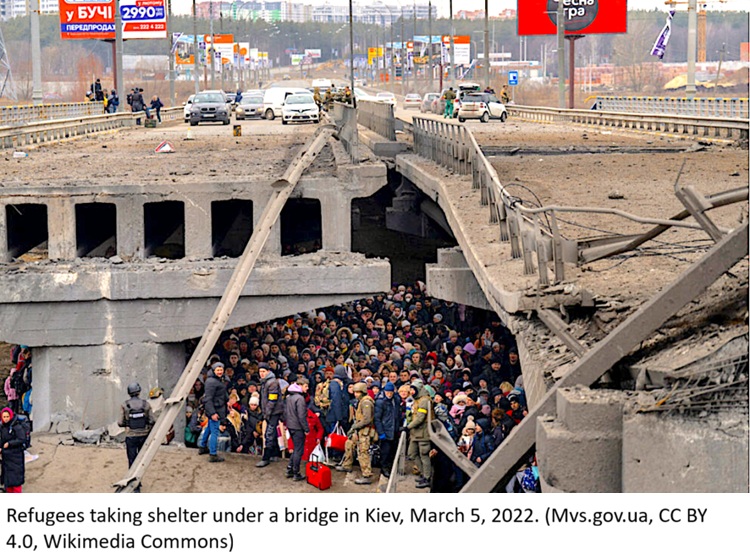
“The Kremlin has tried every which way to bring its ‘special military operation,’ along with its broader confrontation with the West, to a mutually beneficial conclusion.”
The Europeans have run out of postures and gestures in the way of performative statecraft: This is my conclusion. And the Russians, evidently sharing it in one or another form, see no point in indulging them any further.
By Patrick Lawrence, Consortium News, 22 Jan 26, https://consortiumnews.com/2026/01/21/patrick-lawrence-all-unquiet-on-the-ukrainian-front/
The Europeans have run out of postures and gestures in the way of performative statecraft, and the Russians see no point in indulging them any further.
Sometimes wars have occasions that can be read — immediately, soon or in time — as turning points, clarifying moments. D–Day, June 6, 1944, is an obvious case: The Allies and the Red Army were in Berlin less than a year later.
The Tet Offensive, which began 58 years ago next week (Can you believe it?), is another: All the victory-is-near illusions the American command had cultivated for years collapsed. There were many more casualties at the altar of imperial delusion, but the war in Southeast Asia was on the way to over.
On Jan. 8 Russia attacked Lviv, the city in western Ukraine, with an Oreshnik missile. To me this looks very like a clarifying event in the Ukraine war — Moscow’s announcement that it has decided to begin the beginning of the end.
The Oreshnik is a new-generation weapon that already wears a little of the mystique of Ares, the Greek god of war. It travels at hypersonic speeds and is undetectable by air-defense systems. It is capable of carrying nuclear warheads, although the missile that hit Lviv wasn’t armed with one.
This was not Russia’s first use of the Oreshnik in Ukraine. Its first was in November 2024, when the target was a munitions factory in Dnipro, not far from the front lines. That blew minds as well as production lines.
But the missile that hit Lviv seemed to have more to say to the regime in Kiev and its Western backers, notably all those supercilious Europeans. Lviv, Ukraine’s cultural capital, has been a safe haven these past four years of conflict. Not to be missed, it lies roughly 45 miles from the border with Poland.
Russia’s declared intent in launching its second Oreshnik was to respond to the Dec. 29 drone attack the Ukrainians, with the usual assistance of the Americans and Brits, launched on President Vladimir Putin’s secondary residence in Valdai, northwest of Moscow.
Parenthetically, Kiev and the C.I.A., two famous truth-tellers, deny any such attack took place, but let us not waste any time with this silliness. The Russians have reportedly presented Western officials with evidence of the event.
Would Putin raise it in a telephone exchange with President Trump were it, as corporate media now have it, just another disinformation operation?
These things said, the Oreshnik hit in Lviv merits a broader reading, in my view.
Here is an account of the Oreshnik as it descended through the winter clouds above Lviv. It is written by Mike Mihajlovic, who publishes, edits and writes frequently for Black Mountain Analysis, a Substack newsletter I have found worth looking at on previous occasions.
This passage is based on Mihajlovic’s apparently diligent study of digital evidence and eyewitness accounts. Good enough we know what happens when these things arrive, as there may be more of them in the skies above Ukraine as the war begins its fifth year:
“As the hypersonic penetrators broke through the cloud layers, each was enveloped in a luminous plasma sheath, producing brief but violent flashes that momentarily illuminated the surrounding atmosphere. These flashes were not explosions in the conventional sense, but visual signatures of extreme velocity, friction, and compression as the warheads tore through dense air at hypersonic speed.
Observers on the ground reported an unsettling soundscape that followed the visual phenomenon. Rather than a single detonation, there were sharp, cracking noises that seemed to ripple across the terrain, as if the ground itself were fracturing under stress.
“What made the event particularly striking was the setting. The impacts occurred against the backdrop of an idyllic winter landscape: fields and forests blanketed in snow, small settlements dimly lit, and a horizon that, moments earlier, conveyed calm and stillness.
Against this muted palette, the light generated by the strike stood out with almost surreal intensity. Reflections danced across the snow, briefly turning the ground into a mirror that amplified the event’s brightness. Witnesses described the glow as unnatural, a cold, shimmering illumination that lingered just long enough to be noticed and remembered.”
The Lviv attack seems to be part of an intensifying campaign to cripple Ukraine’s power grids, energy infrastructure and productive capacity. The Russians have been hitting such targets for years, of course, but these new operations suggest Moscow is after the endgame now.
Moscow’s Attempts to End Conflict
The Kremlin has tried every which way to bring its “special military operation,” along with its broader confrontation with the West, to a mutually beneficial conclusion. You can go back to the spring of 2022, when was ready to sign an accord with Kiev a few months into the war — only for the Brits, with American consent, to scotch it.
Or December 2021, when it sent Washington and NATO draft treaties as a basis of negotiating a new security framework between the Russian Federation and the West. They were dismissed as “nonstarters,” a British-ism the Biden regime thought was clever.
Or the Minsk Protocols, September 2014 and February 2015, which the British and French sabotaged. Or back to the early 1990s, when Michail Gorbachev hoped to bring post–Soviet Russia into “a common European home.”
The Kremlin has proven exceptionally restrained, not to say forebearing, through all of this. And it would be a mistake now to conclude the Russians have lost their patience.
No, in my read they have simply concluded there is no point waiting around while the Western powers indulge themselves in pantomime statecraft or — maybe better put —some kind of group onanism they seem to find satisfying.
And in public, no less.
For weeks toward the end of last year we read incessantly of the intense diplomatic work Kiev, the Europeans and the Trump regime’s contingent were getting up to. The swashbuckling Musketeers cooked up a 20–point peace plan that was supposed to supersede Trump’s 28–point document.
Volodymyr Zelensky, Ukraine’s unconstitutional president, went from one European capital to another and then to Washington and then to Mar-a–Lago and then back to Europe, all along asserting he and his backers were “90 percent there.”
Ninety percent there on security guarantees providing for European troops to serve as peacekeepers on Ukrainian soil. Ninety percent there on a territorial settlement. And so on.
You watched all this with your jaw dropping. None of it had anything to do with fashioning an accord Moscow would find even preliminarily negotiable. The 20–point plan’s intent, indeed, was to subvert the 28–point plan, the first pieces of paper since the spring 2022 attempt that Moscow appeared to find worth its time.
Not Enough Delusion
No, the Trump plan was too realistic as a draft of a settlement accord in recognizing that Moscow was the victor in its war with Ukraine, Kiev the vanquished. There wasn’t enough delusion in it.
And now, roughly since the start of the year, more or less complete silence from Zelensky and the Musketeers — Kier Starmer, Emmanuel Macron and Friedrich Merz, a prime minister, a president and a chancellor.
There is no establishing any certain causality between the Oreshnik attack in previously safe — relatively speaking — western Ukraine, and this nothing-to-say lapse in Kiev, London, Paris and Berlin (and for that matter Washington). But the point may prove the same.
The Europeans have run out of postures and gestures in the way of performative statecraft: This is my conclusion. And the Russians, evidently sharing it in one or another form, see no point in indulging them any further.
As to the Trumpster, it seemed to me unimaginable from the outset that the national security state in all its appendages would ever allow him to reach a comprehensive settlement with Moscow that would open into a new era in East–West relations.
So has the war turned. So do matters clarify. So does the war in Ukraine appear set to end — not with a single detonation, no, rather with sharp cracking noises that seemed to ripple across the terrain.
Nuclear lapses overshadow reactor restarts in post-Fukushima Japan.

Power provider admits to manipulating data to downplay effect of large
earthquake. This month, one of Japan’s biggest utilities admitted to
manipulating data to downplay the effect of a large earthquake on a nuclear
power plant under review for reopening.
The admission followed a security
failure at Japan’s nuclear energy watchdog, in which an employee lost a
work phone with contact details of staff involved in nuclear security
during a personal trip to China.
The compliance lapses at Chubu Electric
and the Nuclear Regulation Authority threaten confidence in Japan’s safety
regime as the country tries to reopen its nuclear plants 15 years after a
massive quake caused a tsunami that inundated reactors in Fukushima.
FT 22nd Jan 2026,
https://www.ft.com/content/0bb511ab-80dc-44c2-ab06-d0e587c8367e
Nuclear reactor owned by Fukushima plant operator TEPCO to shut down again hours after restart.
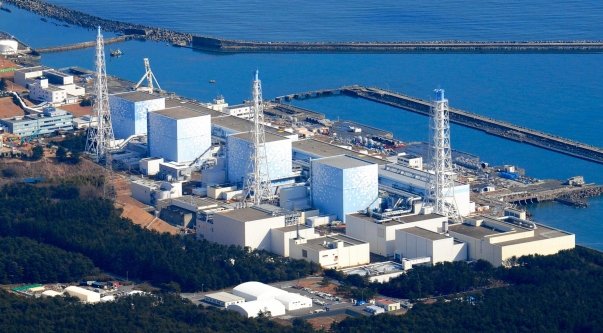
By ASSOCIATED PRESS, 22 January 2026 https://www.dailymail.co.uk/wires/ap/article-15487139/Nuclear-reactor-owned-Fukushima-plant-operator-TEPCO-suspends-hours-old-restart.html
TOKYO (AP) – A reactor at the world’s largest nuclear power plant that restarted for the first time since the 2011 Fukushima nuclear disaster is now being shut down again Thursday due to a glitch that occurred hours after the unit’s resumption, its operator said.
The No. 6 reactor at the Kashiwazaki-Kariwa plant in north-central Japan reactivated Wednesday night for the first time in 14 years, as plant workers started removing neutron-absorbing control rods from the core to start stable nuclear fission.
But the process had to be suspended hours later due to a malfunction related to control rods, which are essential to safely starting up and shutting down reactors, the Tokyo Electric Power Company Holdings said.
TEPCO, which also manages the wrecked Fukushima plant, said there was no safety issue from the glitch.
Kashiwazak-Kariwa plant chief Takeyuki Inagaki told a news conference that he has decided to shut down the reactor to ensure safety. The operation had to stop when an alarm went off after 52 of the 205 control rods were removed from the core, he said. Inagaki said he hoped to start putting them back in later Thursday to bring the No. 6 reactor to a shutdown.
“The equipment is essential to safe operation, and we will examine it inside out,” he said, adding that the reactor will not be restarted until the cause is found and measures are taken.
“I don’t think this is going to be resolved in a couple of days,” Inagaki said.
The restart at the Kashiwazaki-Kariwa plant was being watched closely since TEPCO also runs the Fukushima Daiichi plant that was ruined in the 2011 quake and tsunami. Resource-poor Japan is accelerating atomic power use to meet soaring electricity needs.
All seven reactors at Kashiwazaki-Kariwa have been dormant since a year after the meltdowns of reactors at the Fukushima plant contaminated the surrounding land with radioactive fallout so severe that some areas are still uninhabitable.
TEPCO is working on the cleanup at the Fukushima site that´s estimated to cost 22 trillion yen ($139 billion). It’s also trying to recover from the damage to its reputation after government and independent investigations blamed the Fukushima disaster on TEPCO´s bad safety culture and criticized it for collusion with safety authorities.
Fourteen other nuclear reactors have restarted across Japan since 2011, but the Kashiwazaki-Kariwa plant, about 220 kilometers (135 miles) northwest of Tokyo, is the first TEPCO-run unit to resume production.
A restart of the No. 6 reactor could generate an additional 1.35 million kilowatts of electricity, enough to power more than 1 million households in the capital region.
The Kashiwazaki-Kariwa plant´s combined output capacity of 8 million kilowatts makes it the world´s largest, though TEPCO plans to resume only two of the seven reactors in coming years.
Anti-climate opinion columns becoming a regular feature in UK newspapers.

Sidhi Mittal, 21st January 2026, https://www.edie.net/anti-climate-opinion-columns-becoming-a-regular-feature-in-uk-newspapers/
Nearly 100 UK newspaper editorials were published opposing climate action in 2025, a record figure that shows the scale of the backlash against net-zero policies in the right-leaning press.
Carbon Brief examined editorials published since 2011. These included those written by external columnists and those acting as a publication’s official editorial ‘voice’.
In 2025, it identified 98 editorials rejecting climate action, compared with 46 in support. This was the first year in which opposition overtook support across the 15 years of data.
All 98 editorials opposing climate action appeared in right-leaning titles. The largest contributors were the Sun, the Daily Mail and the Daily Telegraph, followed by the Times and the Daily Express.
By contrast, almost all of the editorials pushing for more climate action were published in the Guardian and the Financial Times, which have far smaller circulations than several of the conservative papers.
Overall, 81% of climate-related editorials in right-leaning newspapers in 2025 rejected climate action – either overall, or due to specific policy interventions.
Carbon Brief said this marked a sharp change from a few years earlier, when many of the same papers showed increased enthusiasm for climate policy as Conservative governments under Theresa May and Boris Johnson introduced the net-zero by 2050 target and backed measures to deliver it.
Right-leaning press drives opposition
The media shift has coincided with political changes on the UK right, according to the research.
Over the past year, the Conservative party has distanced itself from the net-zero target it legislated for in 2019 and from the Climate Change Act.
Tory Leader Kemi Badenoch has stated that she would scrap the Act altogether if elected. This would spell the end of the UK Government’s official climate advisory body and all future carbon budgets.
Reform UK has also been rising in the polls while pledging to “ditch net-zero”. Carbon Brief said the positions taken by right-leaning newspapers tend to reflect and reinforce the politics of the parties they support.
None of the editorials opposing climate action questioned the existence of climate change or the science behind it. Instead, they criticised the policies designed to address it, a position Carbon Brief describes as “response scepticism”.
In many cases, newspapers attacked “net-zero” without mentioning climate change at all.
The report links this to earlier research by Dr James Painter of the University of Oxford, which found that UK newspaper coverage has been “decoupling net-zero from climate change”. This comes despite polling showing majority public support for many of the policies that underpin net-zero and for the 2050 target itself.
Economic arguments dominated the opposition. Carbon Brief found that more than eight in ten of 2025’s editorials rejecting climate action cited cost as a reason, describing net-zero as “ruinous” or “costly” and blaming it for driving up energy bills.
Earlier this month, several national newspapers also gave prominent coverage to a pamphlet from the Institute of Economic Affairs (IEA) on the “cost of net-zero” that misrepresented the work of the National Energy Systems Operator (NESO).
The IEA claimed net-zero costs could exceed £7.6trn, but the figures were based on the flawed assumption that no investment would be made in energy systems if the UK did not have its 2050 climate target.
Critics also say the IEA mischaracterised NESO’s analysis. Regardless, the pamphlet appeared on the front page of the Daily Express and was reported by political correspondents at the Express, Daily Mail and Daily Telegraph without scrutiny of the underlying energy data.
Miliband under sustained attack
Alongside criticism of policy, newspapers also targeted the Labour Government’s energy security and net-zero secretary, Ed Miliband.
In 2025, UK newspapers published 112 editorials taking personal aim at him, nearly all in right-leaning titles. The Sun alone published 51.
Six in ten editorials opposing climate action used criticism of climate advocates as part of their justification, and almost all of these mentioned Miliband.
Miliband was described as a “loon”, a “zealot” and the “high priest of net-zero”, and accused of “eco insanity” and “quasi-religious delusions”.
Newspapers frequently framed policies as “Ed Miliband’s net-zero agenda”, “Mr Miliband’s swivel-eyed targets” or “Mr Miliband’s green taxes”, presenting climate measures as being imposed on the public by the energy secretary. This is despite the fact that many targets and initiatives were kick-started under the Tories.
Renewables, nuclear and fossil fuels
Carbon Brief additionally analysed editorials on specific energy technologies.
There were 42 editorials criticising renewable energy in 2025. For the first time since 2014, anti-renewables editorials outnumbered those supporting them.
Cost was the dominant argument, with 86% of critical editorials using economic justifications.
The Sun referred to “chucking billions at unreliable renewables”, while the Daily Telegraph warned of an “expensive and intermittent renewables grid”.
At the same time, right-leaning newspapers continued to support nuclear power despite its high costs. There were 20 editorials backing nuclear energy in 2025, nearly all in conservative titles, and none opposing it.
The Times was the only right-leaning newspaper to publish any editorials backing renewables.
Support for fracking also reappeared. After falling away in 2023 and 2024, there were 15 editorials in 2025 arguing that fracking would be economically beneficial, even as the Government plans to ban the practice permanently.
North Sea oil and gas remained a major focus. Thirty editorials, all in right-leaning newspapers, mentioned the issue, with most arguing for increased extraction while also opposing climate action or renewable expansion.
Related article: Tories invoke fears of electricity blackouts to criticise renewable energy roll-out
Why the Nuclear Regulatory Review is flawed – and how itcould turn the nature crisis into a catastrophe.

January 2026, Research commissioned by The Wildlife Trusts
“…………………………………………………. Large nuclear projects, using potentially risky technology, have potential for significant environmental impacts on sensitive places and so it is right for there to be robust environmental assessments of these projects. The Government has an ambitious programme of nuclear
deployment. It has published a new National Policy Statement for nuclear power.3
It has removed the restriction on new nuclear power to eight sites around the UK. It has said it will aid
the completion of Hinkley Point C, provide additional funding for Sizewell C, and consider one
large new nuclear power plant alongside the deployment of Small Modular Reactors. Due to
their requirements and the types of site needed, nuclear projects have often impacted on
ecologically sensitive areas. The new National Policy Statement on nuclear reiterates the
importance of the Habitats Regulations and the protection of legally protected sites and wildlife.
As part of its efforts to boost nuclear deployment, the Government commissioned John
Fingleton to lead a taskforce review of nuclear regulation. The final report of the Nuclear
Regulatory Review was published in November 2025.
It diagnosed environmental regulations
as a blocker to nuclear deployment and included recommendations to water down those
regulations. The Prime Minister and the Chancellor have said that the Government accepts the
principles of the Review, that within three months a plan will be published by DESNZ to
implement the Review, and that its recommendations will be implemented within two years
using legislation.6 Environmental groups are very concerned the recommendations will be
adopted for the nuclear sector using legislation and potentially applied to other types of major
infrastructure.
The Nuclear Regulatory Review is part of a wider pattern of the Government adopting the
arguments of developers to pinpoint where delays are coming from; however, it is inaccurate
and does not represent reality. Research by The Wildlife Trusts already shows that – despite
the headlines and claims by the Chancellor and others – bats and newts, for example, were a
factor in just 3.3% of planning appeals.7 This briefing will highlight how the claims made by the
Nuclear Regulatory Review are similarly short on evidence and, if adopted, will do little to speed
up planning decisions but, instead, will turn the nature crisis into a catastrophe. Many industries
already say that the uncertainty caused by constantly changing regulations holds back
development; the Nuclear Regulatory Review threatens to do just that.
Flaws and Inaccuracies in the Nuclear Regulatory Review
The Review, commissioned by the Government, identifies three major areas for reform: risk
aversion, process over outcomes, and a lack of incentives. The Review also turns nature into a
scapegoat for a failure to deliver nuclear projects.
Recommendation 11 calls for various changes to the Habitats Regulations, including removing
the requirement for compensation to be like-for-like. Recommendation 12 calls for nuclear
developers to be allowed to comply with the regulations simply by paying a fixed sum (an
amount per acre), which would be used by Natural England for nature somewhere else. When it
comes to local planning, The Wildlife Trusts remain concerned with the related idea of
payments for Environmental Delivery Plans as a way for developers to meet their legal
obligations. A strategic approach might be appropriate when it comes to, for example, pollution
impacts, but would not be suitable for irreplaceable habitats or species that cannot re-establish
elsewhere easily.8
Recommendation 19 would remove the duty on Local Authorities to seek and further National
Parks and Landscapes, returning to the old language of “have regard to”. The combination of
these changes would not only substantially weaken protections for nature but would also
introduce significant uncertainty in the nuclear sector and for other sectors about whether
standards and regulations that are bedding in and increasingly becoming well understood are in
fact about to change.
The Review was produced without enough environmental expertise – and this shows. It
contains a number of errors when it comes to environmental evidence, which has led to a
misdiagnosis of the problem and to damaging recommendations about environmental
regulations.
The Review relies heavily on the case study of the Hinkley Point C nuclear power station. It is
quick to use the case study to blame nature without examining the actions and decisions of the
developer. A large amount of confusing and misleading information has been issued to the
media and in the Review itself to further this narrative.
Here are some of the facts:
- Hinkley Point C is on the edge of one of the most highly ecologically protected sites in
Europe and will draw through a swimming pool’s worth of water every second for 70
years of operation. This will have enormous impacts on surrounding ecosystems, fish,
and other species.9 - A £700 million figure has been widely circulated in the press relating to fish deterrents
and is quoted in the Review. This is incorrect. The cost of the fish deterrent system is
£50 million.10 - EDF themselves unilaterally decided in 2017 not to proceed with the fish deterrent
system, despite it being a requirement. They then proceeded to apply for permit
variations, undertake further environmental assessments and initiate a public inquiry to
attempt to remove the requirement. These developer decisions have caused selfinflicted delays.11 - Hinkley Point C’s original budget was £18 billion. It has since risen to an estimated £46
billion. The fish deterrent (at £50 million) comes to just 0.1% of this increased £46
billion budget. Nearly £30 billion in cost increases for Hinkley Point C have nothing to
do with nature.12 - The Nuclear Regulatory Review says (for example) that just 0.08 salmon, 0.02 trout,
and 6 lamprey per year would be saved. This deliberately downplays the impact on
nature. This statement relies on analysis by the developer EDF, who captured fish and
put trackers on them and used old data from Hinkley B power station. Since then ,a
more thorough analysis has been completed for the Environment Agency, who have found that 4.6 million adult fish per year being killed is a more accurate number, or 182 million fish in total over sixty years.13 These fish populations are a foundation stone for the wider ecosystem of the Severn Estuary, supporting internationally important migratory bird populations and other species. Many of the fish are rare or endangered. Damage on the scale suggested by the Environment Agency figures could have calamitous impacts on that ecosystem and the economic and social activities that rely on it………………………………………………………………………………
Environmental Damage of Nuclear Regulatory Recommendations………………………………………………………………………………………………………………………………………………………………………………………………
Conclusion
The Nuclear Regulatory Review recommendations 11, 12 and 19 will harm nature and
biodiversity. They are based on flawed evidence relating to environmental regulations and how
they have been applied. As discussed, the true reasons for nuclear delay lie elsewhere.
Implementing the Nuclear Regulatory recommendations would devastate nature without
speeding up the nuclear planning and delivery process. The Government must reject the three
Nuclear Regulatory Review’s recommendations on environmental regulations and end its
confected war on nature as a barrier to planning.
20th January 2026
Research commissioned by The Wildlife Trusts and conducted by Matt Williams, https://www.wildlifetrusts.org/sites/default/files/2026-01/WhyTheNuclearRegulatoryReviewIsFlawed_TheWildlifeTrusts.pdf
Nature groups question UK’s Fingleton nuclear review
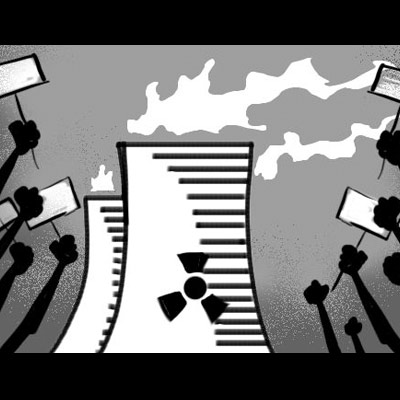
The Engineer, 21 Jan 2026, https://www.theengineer.co.uk/content/news/nature-groups-question-fingleton-nuclear-review
More than a dozen environmental groups and over 60 MPs are questioning the ‘Fingleton recommendations’ set out in the recent Nuclear Regulatory Review.
Led by economist John Fingleton, the Nuclear Regulatory Review made several recommendations designed to ease the path of nuclear development. Among these were proposals to weaken the Habitats Regulations which protect nature sites. But environmental groups, led by The Wildlife Trusts, claim that the review is based on flawed evidence, and that the recommendations could have a catastrophic effect on nature across the UK.
“The dice were loaded from the start – the nuclear review confirms a false narrative that was already being circulated by certain industry lobby groups and think tanks,” said Craig Bennett, chief executive of The Wildlife Trusts.
“The errors in the review form a clear pattern: repeated exaggeration of the costs of preventing harm to nature – and minimisation of the impact to wildlife of nuclear development without those measures. The fact that no environmental experts served on the panel is a disgrace and the resulting distorted picture obscures the value the natural world delivers for economic stability and net zero.”
A new report from The Wildlife Trusts points to specific examples where it believes the nuclear review falls short. It claims that, rather than £700m, Hinkley C’s much-debated fish deterrent system would actually cost £50m. This is against a total project cost of £46bn, up from an original estimate of £18bn.
The Nuclear Regulatory Review also claims that the fish deterrent system would save just 0.08 salmon, 0.02 trout and 6 lamprey per year. However, The Wildlife Trusts cites a report from the Environment Agency that suggests up to 4.6 million adult fish per year could be killed per year if no protective measures are put in place.
“There is limited evidence that environmental protections impose undue costs on infrastructure developers,” said Bennet. “In fact, evidence shows that frequently cited examples of expensive mitigation measures originated from developer mistakes and were unconnected to environmental issues. Blaming nature is unacceptable and a way of avoiding accountability.
“The developers of Hinkley C are trying to blame everyone but themselves for their own failure to think about nature from the outset. When developers think about nature too late in the design process, they end up creating bolt-on engineering solutions for ecological problems, which tend to be more expensive and less effective than committing to make infrastructure nature positive from the very start of the designing process. It’s pretty pathetic that the government is now trying to bail out energy infrastructure developers for this failure of commitment and imagination.”
The Wildlife Trusts’ campaign to save the environmental protections that are threatened by the recommendations of the Nuclear Regulatory Review is supported by 14 other organisations: Wildlife and Countryside Link, Rivers Trust, Campaign for National Parks, Marine Conservation Society, Plantlife, Buglife, Bat Conservation Trust, Amphibian Reptile Conservation, Badger Trust, Beaver Trust, Bumblebee Conservation Trust, Butterfly Conservation, Open Spaces Society, and Client Earth.
A Board of Peace built on the rubble of Gaza

22 January 2026 Michael Taylor, https://theaimn.net/a-board-of-peace-built-on-the-rubble-of-gaza/
There are moments in politics when language becomes so detached from reality that it tips from cynicism into a farce. Appointing Israeli Prime Minister Benjamin Netanyahu to Donald Trump’s so-called “Board of Peace” for Gaza is one such moment.
Netanyahu is not a neutral stakeholder. He is not a reluctant participant dragged into a tragic conflict. He is the leader who has overseen the systematic destruction of Gaza: tens of thousands of civilians killed, entire neighbourhoods erased, hospitals flattened, universities bombed, and a population deliberately deprived of food, water, shelter, and hope. He is also the subject of an arrest warrant from the International Criminal Court for alleged war crimes and crimes against humanity.
That Israel has rejected those charges or dismissed them as political is beside the point. Courts exist precisely because perpetrators rarely accept responsibility for their own actions. The question is not whether Netanyahu agrees with the accusations – it is whether the facts on the ground support them.
They do.
International law defines genocide not by slogans or historical analogies, but by actions and intent. Killing members of a protected group. Causing serious bodily or mental harm. Deliberately inflicting conditions of life calculated to bring about a group’s destruction, in whole or in part. Gaza today bears the unmistakable imprint of each of these elements.
Add to this the repeated, dehumanising rhetoric from senior Israeli officials – Palestinians described as “human animals”, Gaza spoken of as something to be “flattened”, “erased”, or emptied – and the claim that this is merely an unfortunate but lawful military campaign collapses under its own weight.
Legal processes move slowly. They always do. Genocide is almost never recognised as such while it is unfolding. Rwanda was denied until the machetes were put down. Srebrenica was minimised until the mass graves were opened. History shows that moral clarity arrives long before judicial finality.
Which is precisely why Netanyahu’s elevation to a “Board of Peace” is so grotesque. Peace is not brokered by those actively prosecuting a war of annihilation. Reconstruction is not overseen by those who created the ruins. And justice is not served by rehabilitating leaders while the bodies are still being pulled from the rubble.
Trump’s board is not a peace initiative. It is a branding exercise – one that launders responsibility, flattens moral distinctions, and asks the world to accept Orwellian doublespeak as diplomacy.
Calling this arrangement a farce is not rhetorical excess. It is an accurate description. When an alleged war criminal is recast as a peacemaker, language itself has been bombed into submission.
And Gaza, once again, is expected to pay the price.
Loosening radiation exposure rules won’t speed up nuclear energy production.

Relaxing radiation safety standards could place women and children at higher risks of health issues
By Katy Huff, 24 Jan 26, https://www.scientificamerican.com/article/weaker-radiation-limits-will-not-help-nuclear-energy/
Get an x-ray, and you get a small dose of radiation to visualize your bones and body structures to help you medically. Buy a smoke detector, you’re inviting a tiny source of radiation, americium-241, into your home to keep you safe. But we don’t just take on that radiation heedlessly. Until perhaps now.
The U.S. regulates the amount of radiation people are exposed to using something called the linear no-threshold model, which says that every additional dose of ionizing radiation, however small, adds a small risk to health. It’s a simple equation that describes the relationship between dose and risk. For decades it has anchored radiation dose limits for both the public and radiation workers. But by February 23, the Nuclear Regulatory Commission (NRC) is expected to overhaul its regulations, potentially retiring this risk model, per a May executive order by President Donald Trump.
Why loosen this protection? Supposedly to spur nuclear energy production. The administration says that this risk model is too cautious, leading to costly conservatism in reactor design, staffing redundancies and stringency in licensing. The executive order promises that lifting it will accelerate nuclear reactor licensing while lowering the costs of providing nuclear energy to the grid.
As a nuclear energy advocate and former Department of Energy official, I want to see more nuclear energy on the grid soon. But loosening the protections of the linear no-threshold (LNT) model is not supported by current research. Some experts warn that relaxing it could especially place women and children at higher risk of damage from radiation.
The LNT model is based on the idea that exposure to any amount of radiation proportionally increases health risks, including the risk of cancer. From data on high radiation exposures, scientists extrapolate, or predict, what might happen if people are exposed to lower levels of radiation. At low doses, however, it becomes difficult to distinguish the health effects of radiation from the other environmental and lifestyle factors that can affect health. That uncertainty is why regulators rely on a cautious approach like the LNT model, and also why some people question its use.
People are willing to accept the radiation risks inherent in medicine, industry and energy because they trust that standards have been set by credible experts relying on evidence who err on the side of caution and protecting human health. Weakening regulations without new evidence would do the opposite. The last time the question of raising the public dose limit came up, the NRC said no—there wasn’t enough evidence. We must urge the NRC’s current commissioners to demand evidence and heed science over political agenda.
DAVOS: THE RULE OF THE RICH

Jonathon Porritt, 24 Jan2026, https://jonathonporritt.com/davos-rule-of-the-rich/
I’ve always hated the very idea of the annual World Economic Forum in Davos. I’ve never been myself, but that hasn’t stopped me ridiculing former NGO colleagues only too happy to go on squandering their supporters’ money rubbing shoulders with the business world’s ‘great and good’– or, more accurately, the worst of the world’s grasping, greedy, earth-trashing, plutocratic scumbags. And the politicians aren’t that much better either – and I’m not just talking about the increasingly deranged Donald Trump. Which made this year’s Parade of the Plutocrats a real corker.
Organisers and attendees pride themselves on Davos being the place to address the ‘biggest threats’ that the world faces. And, to be fair, its annual Global Risks Report regularly features the climate crisis, ecosystem collapse, and even worsening inequality and social polarisation. But it never mentions the source of all these interlocking crises, namely neoliberal capitalism itself. The Davos elite is far too self-serving ever to go there.
Every year, Oxfam piggybacks on this obscene jamboree by publishing its own annual wealth survey. This year’s report – (“Resisting the Rule of the Rich: Protecting Freedom from Billionaire Power”) provides some mind-boggling insights, including the fact that the twelve richest individuals now hold more wealth than the poorest half of humanity — 4 billion people! Billionaires control more than half of the world’s media companies, and nine of the ten biggest social media platforms are in their hands.
So how does it make you feel to hear that there were more than 3,000 billionaires in 2025, with a combined wealth of $18.3 trillion, representing an increase of 16% over 2024 figures? That increase is 3 times faster than the average 5% annual increase. Since 2020, billionaire wealth has increased by a staggering 81%.
It’s almost beyond comprehension. We’ve seen these statistics moving in the same direction for so long that we’ve become inured to the annual repetition- “for whomsoever hath, more shall be given.” And we’ve simultaneously normalized the inevitability that these statistics will continue in the same direction, accepting that today’s politicians (in both autocratic and democratic countries) appear to have neither the will nor the capacity to do anything to reverse that trend.
Elastic bands immediately come to mind: at some point, however many times one twists that band, it somehow stays intact- until it doesn’t. Overstretched, as it were.
Is that process now underway?
Over the last year or so, we’ve seen uprisings in many different countries, including Nepal, Madagascar, the Philippines, Bangladesh, Kenya, Sri Lanka, Morocco, Peru, Mexico — more often than not led by young people. Rage at the growing influence of the billionaire class is very much part of this ‘Gen Z’ phenomenon — Oxfam’s report highlights the way in which the super-rich have emerged from the shadows in terms of their increasingly brazen interventions in politics. Just think Elon Musk here, with a chainsaw in one hand whilst giving a Nazi salute with the other.
The USA is the epicentre of this deeply disturbing trend. Stubbornly persistent adherence to the myth of the American Dream accounts for an almost inconceivable number of twists in that rubber band. But we’re not immune here in the UK either. Oxfam’s report reveals that the richest 56 people in the UK (all billionaires) now hold more wealth than nearly 40% of the population — 27,000,000 citizens. One in five UK citizens now lives in poverty, and yet the super-rich still pay lower taxes than anyone else – including such illustrious plutocrats as Sir James Dyson, Sir Anthony Bamford, and the utterly loathsome Sir Jim Ratcliffe.
Intuitively, it’s so obvious what the consequences of this look like- even if our political elites (in Labour as much as in the Tories) spurn such insights. A recent report from the Fairness Foundation (“Inequality Knocks”) revealed that more than 60% of UK citizens believe the rich have far too much influence in UK politics, and that poverty and inequality are eroding the living conditions of people up and down the country. Fairness is fundamental to a functional society and democracy: “Growing inequality presents a genuine risk to the UK’s resilience, acting as both cause and amplifier of multiple societal challenges.” As a result, people are losing faith in our democracy, leading to “the very real possibility of societal breakdown.”
Over the top? Possibly. But polling insights are consistently stark: around 20% of UK voters under the age of 45 believe that our country would be “better off with a strong leader who doesn’t have to bother about elections,” compared with only 8% of those over 45.
It’s the failure of the centre-left to confront these issues when in power (in the UK, Germany, France, Spain, Holland, and even in Scandinavian countries) that has paved the way for the rise of often xenophobic nationalist movements. As the economist Thomas Piketty puts it, “We seem to have given up on some ambitious continuation of the egalitarian agenda of making the most powerful economic actors accountable to democratic control, making them contribute to the public goods we need to fund.”
Whenever this model of capitalism fails (as it did in 2008, through a combination of economic austerity and populist scapegoating), citizens rightly become frustrated. But it’s the right wing that benefits from this frustration, with their devastatingly effective social media strategies emphasising people’s loss of control and dignity. As well as the basic lack of fairness — caused, as we all know, primarily by the right wing’s own policy prescriptions. Western politicians must address this challenge — before authoritarianism turns into fascism, the kind of fascism “that arrives in fancy dress”, as the poet Michel Rosen puts it. This challenge must be addressed by western politicians — before it’s too late. Before democracy weakens further.
Moreover, that demands one thing above all else: wealth taxes, both globally and in every Western country. The Global Solidarity Levies Task Force (led by France, Kenya, Barbados, the World Bank, the European Commission, and the African Union) is advocating for a targeted tax of 2% for today’s 3,000 billionaires, which would bring in somewhere between $200 billion and $250 billion a year. By some calculations, this would affect no more than 100 extended families around the world- even if, as the Task Force wryly observes, implementation would be “very challenging.”
Here in the UK, the Patriotic Millionaires and New Economics Foundation have also suggested a 2% annual wealth tax on assets of more than £10 million, taxing income from wealth at the same level as income from work, effectively creating an “extreme wealth line” to match the UK’s “extreme poverty line.” Around 20,000 taxpayers in the UK would be affected, generating revenues of between £20 billion and £24 billion a year.
That’s what fair taxation looks like in a country like the UK, filling gaps in our public finances, restoring trust in basic fairness, increasing investment in sustainable infrastructure, and so on. And in the process, reinforcing the first line of defence around the integrity of our democratic processes and institutions keeping authoritarianism at bay.
As you might imagine, I’m absolutely delighted that the case for wealth taxes here in the UK is now being made so articulately by Zack Polanski, leader of today’s resurgent Green Party. It’s already far too late for Labour to distance itself from the Rule of the Rich – Rachel Reeves looked completely at ease mingling with the rest of the Davos elite — raising the very real prospect of the Green Party becoming the principal opposition to today’s neoliberal nexus made-up of the Tories, Reform and Labour at the next General Election. With the Lib Dems taking their customary seat on that ideological fence!
Just think of that!
World’s Largest Nuclear Station or Lower Electricity Bills?

Nuclear Power: The Most Expensive and Slowest Option
Nuclear reactors are the highest cost option to meet Ontario’s electricity needs – up to 10 times higher than energy efficiency, and 2 to 8 times higher than new wind and solar energy.
They are also far too slow. According to OPG, these new nuclear reactors would not come online until 2040 – 2048. That means more than 20 years of construction, cost overruns, and continued reliance on polluting gas.
By contrast, new wind and solar projects can be built in 6 months – 2 years, reducing emissions and lowering bills quickly.
A Risky Dependence on Foreign Fuel
To make matters worse, OPG is considering purchasing American-designed reactors from GE-Hitachi or Westinghouse. These reactors would require Ontario to import enriched uranium from the United States to fuel them. Does that seem like a good idea given the current political craziness unfolding south of the border?
The Better Alternative
OPG’s proposal fails to examine crucial alternatives.
Could Ontario meet its electricity needs more cheaply, more quickly, and more safely by investing in energy efficiency, wind power, solar energy, and energy storage (such as batteries and compressed air storage)?
This is a question that the Impact Assessment Agency of Canada (IAAC) must examine during its mandatory review. That will only happen if the public demands it.
What you can do
 Submit Public Comments – Deadline: Midnight, Wed. Feb. 11
The IAAC is accepting public comments on OPG’s application.
Submit your comments through the IAAC portal or email them to: wesleyville@iaac-aeic.gc.ca
Ask the IAAC to direct OPG to evaluate whether energy efficiency, renewables, and energy storage are lower-cost, faster, safer, and more secure ways to meet Ontario’s electricity needs than building a massive new nuclear station at Port Hope
Venezuela, the Revival of Regime Change
And the Decline of Empire
Tom Dispatch By William D. Hartung, January 22, 2026
William D. Hartung, Trump’s Doubling Down on Imperialism in Latin America Is a Formula for Dec
The Trump administration’s exercise in armed regime change in Venezuela should have come as no surprise. The U.S. naval buildup in the Caribbean and the attacks on defenseless boats off the Venezuelan coast — based on unproven allegations that they contained drug traffickers — had been underway for more than three months. By the end of December 2025, in fact, such strikes on boats near Venezuela (and in the Eastern Pacific) had already killed 115 people.
And those attacks were just the beginning. The U.S. has since intercepted oil tankers as far away as the North Atlantic Ocean, run a covert operation inside Venezuela, and earlier this month, launched multiple air strikes that killed at least 40 Venezuelans while capturing that country’s president, Nicholas Maduro, and his wife.
Both of them are now imprisoned in New York City and poised to face a criminal trial for narco-terrorism and cocaine importing conspiracies, plus assorted weapons charges. Even more strikingly, President Donald Trump recently told the New York Times that the U.S. could run Venezuela “for years.” On how that would be done, he (of course!) didn’t offer a clue. Naturally, a Venezuelan government forged in the face of a possible U.S. occupation would comply with the whims of the Trump administration — assuming that such a government, capable of stabilizing the country and earning the loyalty of the majority of its people, can even be pulled together.
Trump’s rush to war in Latin America is a phenomenon that, until recently, seemed long over. Its revival should raise multiple red flags, given the history of Washington’s failed efforts to install allied governments through regime change. (Can you spell Iraq?) In fact, given this country’s lack of success with such attempts since the Soviet Union collapsed in 1991, it’s a good bet that regime change in Venezuela will not end well for any of the parties concerned, whether the Trump administration, the new leaders of Venezuela, or the people of our two countries.
In the meantime, Trump has already suggested that he might entertain the idea of launching military strikes on neighboring Colombia. After a White House phone call between that country’s president Gustavo Petro and him, however, Time Magazine speculated that, when it comes to “who’s next?,” it might not be Colombia but Cuba, Mexico, Greenland, or even Iran. What’s not yet clear is whether Trump and crew will use the U.S. military, CIA-style covert action, economic warfare, or some combination of all of them in pursuit of their goals (whatever they might prove to be).
The one thing that should be clear by now is that pursuing such global regime-change campaigns would be sheer madness. Going that route would sow chaos and instability, while harming untold numbers of innocent civilians, all in pursuit of a futile quest for renewed U.S. global supremacy.
When, long ago, President Trump first started using the term “Make America Great Again,” I assumed he was thinking of the 1950s, when a surge of post-World War II economic growth and government investment lifted the prospects of a select group of Americans (while pointedly excluding others). That period, of course, was when the efforts that produced the modern civil rights, women’s rights, and gay and trans rights movements were in their early stages. Prejudice was the norm then in most places where Americans lived, worked, or got an education, while McCarthyism cost untold numbers of people their jobs and livelihoods and had a chilling effect on the discussion or pursuit of progressive goals.
Such a return to the 1950s would have been bad enough. However, Trump’s fixation on actually grabbing territory and his hyper-militarized interpretation of the 200-year-old Monroe (now, Donroe) Doctrine suggest that perhaps he wants to take America back to the 1850s. If so, count on one thing: we’ll pay a high price for any such exercise in imperial nostalgia.
Intervention as the Norm: The History of U.S. Aggression in Latin America
The Trump administration’s attempt to control Latin America and intimidate its leaders and citizens is, of course, nothing new. At the start of the twentieth century, President Teddy Roosevelt announced his own “corollary” to the Monroe Doctrine, which went well beyond the original pronouncement’s warning to European powers to avoid challenging Washington’s dominance of the Western Hemisphere. Roosevelt then stated that “chronic wrongdoing… may in America, as elsewhere, ultimately require intervention by some civilized nation, and in the Western Hemisphere the adherence of the United States to the Monroe Doctrine may force the United States, however reluctantly, in flagrant cases of such wrongdoing or impotence, to the exercise of an international police power.”
The Office of the Historian at the U.S. State Department points out that, “[o]ver the long term, the [Roosevelt] corollary had little to do with relations between the Western Hemisphere and Europe, but it did serve as justification for U.S. intervention in Cuba, Nicaragua, Haiti, and the Dominican Republic.”
In fact, there were dozens of U.S. interventions in Latin America and the Caribbean in the wake of Roosevelt’s statement of his doctrine. Later in the century, there were U.S.-aided coups in Guatemala (1954), Brazil (1964) and Chile (1973); invasions of Cuba (1961), the Dominican Republic (1983), and Grenada (1983); armed regime change in Panama (1989); the arming of the Contras in Nicaragua (1981) and death squads in El Salvador (1980 to 1992); and support for dictatorships in Argentina, Bolivia, Brazil, Chile, Uruguay, and Paraguay in the 1970s and 1980s.
In all, according to historian John Coatsworth, the United States intervened in the Western Hemisphere to change governments 41 times from 1898 to 1994. Seventeen of those cases involved direct U.S. military intervention.
In short, the Trump administration is now reprising the worst of past U.S. policies towards Latin America, but as with all things Trumpian, he and his cohorts are moving at warp speed, and on several fronts simultaneously.
The Perils of Regime Change
Although Trump officials are no doubt celebrating their removal of Nicolás Maduro from power in Venezuela, the battle there is far from over. When the U.S. drove Saddam Hussein’s Iraqi forces out of Kuwait in a six-week military campaign in 1991, there was a great deal of celebratory rhetoric about how “America is back” or even that the United States was the single most impressively dominant nation in the history of humanity. But as historian Andrew Bacevich has pointed out, the 1991 Gulf War was just the start of what became a long war in Iraq and the greater Middle East. In Iraq, the ejection of Hussein was followed by relentless bombing, devastating sanctions, and a 20-year war of occupation that ended disastrously………………………………….
Why Venezuela? Oil, Ego, and the Quest for Dominance
………………………………………………..Donald Trump has since stated repeatedly (as in a January 3rd press conference), that the intervention he ordered was, in fact, about seizing Venezuela’s oil resources and developing them to the benefit of the U.S. through the activities of American oil companies.
…………………………………The Venezuelan debacle — which is surely what it will be considered once all is said and done — is but another sign that the Trump administration’s tough-guy rhetoric and bullying foreign and economic policies are, in fact, accelerating the decline of American global power. The question is, given the administration’s costly and dangerous military-first foreign policy, how much damage will this country do to people here and abroad on the way down?
It doesn’t have to be this way, of course. …………………………………………………………………………………….. https://tomdispatch.com/venezuela-the-revival-of-regime-change/
Is the end now in sight for the war in Ukraine?
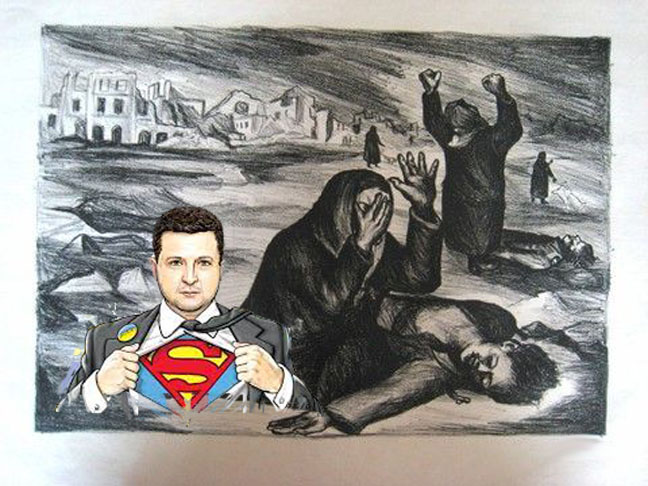
James WhiteJanuary 22, 2026.
German companies have already begun negotiations with their connections in Russia to resume trade once the sanctions are lifted. Thus German business leaders plainly ignore Chancellor Merz and his bellicose provocations toward Russia.
Funding and arms for Ukraine from NATO countries have all but dried up. The pipeline of conscripts in Ukraine has likewise run short of victims.
Zelensky continues to flit from one European capital to another seeking more billions in handouts. But his veneer of propaganda has grown thin at best. The warm wet kisses and embraces he received from neocons and Democrats in the U.S. as well as the WEF puppets of Europe, Macron, Starmer, Merz, Von der Leyen no longer present the same appeal.
Kiev Mayor Klitschko has advised everyone to evacuate the capital city, as electrical power has been cut off. This can only increase the flow of Ukrainians into Europe, already weary from hosting millions of Ukrainians for the past 4 years.
Anyone paying attention has seen the wretched excess of corrupt Ukrainian oligarchs in expensive sports cars with Ukrainian license plates in Monaco and various other luxury European holiday locales.
The U.S. has cut off the Ukraine grift while all of Europe is tapped out.
Von der Leyen’s insatiable greed for more billions from Europeans and her plans to steal ‘frozen’ Russian assets have petered out once the European banks understood that doing so would be an existential threat to the Euro and themselves.
Momentum for the end of the war in Ukraine keeps building.
The only question that remains is if Ukraine can negotiate any of their surrender terms with Russia or if the government will finally collapse as the economy collapses and the battle front recedes toward Kharkiv, Odessa and Kiev.
1 This Month

of the week – Shut Down Drone Warfare!


Tell the Ukrainian Government to Drop Prosecution of Peace Activist Yurii Sheliazhenko

Petition to revoke the licensing of the Near Surface Nuclear Disposal Facility (NSDF) at Chalk River. https://www.ourcommons.ca/petitions/en/Petition/Details?Petition=e-7247
To see nuclear-related stories in greater depth and intensity – go to https://nuclearinformation.wordpress.com
-
Archives
- April 2026 (7)
- March 2026 (251)
- February 2026 (268)
- January 2026 (308)
- December 2025 (358)
- November 2025 (359)
- October 2025 (376)
- September 2025 (257)
- August 2025 (319)
- July 2025 (230)
- June 2025 (348)
- May 2025 (261)
-
Categories
- 1
- 1 NUCLEAR ISSUES
- business and costs
- climate change
- culture and arts
- ENERGY
- environment
- health
- history
- indigenous issues
- Legal
- marketing of nuclear
- media
- opposition to nuclear
- PERSONAL STORIES
- politics
- politics international
- Religion and ethics
- safety
- secrets,lies and civil liberties
- spinbuster
- technology
- Uranium
- wastes
- weapons and war
- Women
- 2 WORLD
- ACTION
- AFRICA
- Atrocities
- AUSTRALIA
- Christina's notes
- Christina's themes
- culture and arts
- Events
- Fuk 2022
- Fuk 2023
- Fukushima 2017
- Fukushima 2018
- fukushima 2019
- Fukushima 2020
- Fukushima 2021
- general
- global warming
- Humour (God we need it)
- Nuclear
- RARE EARTHS
- Reference
- resources – print
- Resources -audiovicual
- Weekly Newsletter
- World
- World Nuclear
- YouTube
-
RSS
Entries RSS
Comments RSS
 nuclear-news