A game of chicken between the US and Denmark
The people of Greenland are merely pawns on a neo-colonial chessboard
Ian Proud, Jan 08, 2026, https://thepeacemonger.substack.com/p/a-game-of-chicken-between-the-us?utm_source=post-email-title&publication_id=3221990&post_id=183816648&utm_campaign=email-post-title&isFreemail=true&r=1ise1&triedRedirect=true&utm_medium=email
Trump’s attempt to claim Greenland as his own is running up against plucky Denmark. This is a David v Goliath game of chicken in which Trump hopes the Danes will back down and they, in turn, are waiting Trump out, hoping that his increasingly unhinged foreign policy leads to a change in power in 2029, whereupon the issue will go away.
Until then, the people of Greenland will remain pawns on a neo-colonial chessboard.
Even though they’ll get no support from European military powers, Denmark should call Trump’s bluff over military action and signal a willingness to defend, even though they would be quickly defeated. Their biggest ally is US public opinion.
But whatever happens, the Greenlanders have the right to self-determination under the 2009 Act and may ultimately be swayed by Trump’s cash.
Report: Nuclear Power Isn’t Viable In Hawaiʻi

Constitutional issues are the basis for the conclusion of the Nuclear Energy Working Group’s final report for the state energy office.
By Lynda Williams, January 6, 2026 , https://www.civilbeat.org/2026/01/nuclear-power-isnt-viable-in-hawaii/
The Hawaiʻi State Energy Office has released the final report of the Nuclear Energy Working Group created by the Legislature under SCR-136. I served on the working group as a representative of 350 Hawaiʻi.
The report concludes that nuclear power is not viable in Hawaiʻi and that the state should not change its laws or constitution to enable it.
The most fundamental obstacle is legal. Hawaiʻi’s Constitution restricts nuclear fission construction, and nuclear power is excluded from the state’s Renewable Portfolio Standard. These restrictions apply regardless of reactor size, design, fuel type or branding. Small modular reactors and so-called “advanced” reactors are still nuclear fission reactors. Making nuclear power legal in Hawaiʻi would require amending the constitution — a process that requires a two-thirds legislative vote. The working group did not recommend taking this step.
Beyond the law, the technology itself remains unfeasible. No advanced nuclear reactors are operating commercially in the United States, and none are expected to come online in any timeframe relevant to Hawaiʻi’s energy or climate goals. Projects cited by nuclear advocates remain stuck in licensing pipelines, demonstration phases or heavily subsidized pilot programs.
Without commercially operating reactors, reliable cost estimates, construction schedules, or grid-integration analyses do not exist. Nuclear power cannot meaningfully address climate change when it cannot be deployed at scale.
The report also acknowledges that radioactive waste is a decisive and unresolved problem. There is no permanent disposal repository operating anywhere in the United States. Hawaiʻi has no capacity to store or manage spent nuclear fuel, and no federal facility exists to accept it.
The Hawaiʻi Constitution explicitly bars nuclear waste storage and disposal facilities unless approved by a two-thirds vote of both legislative chambers. Any nuclear project would therefore require indefinite on-island storage of radioactive material in direct conflict with the constitution, creating ongoing risks related to containment failure and transport. For an isolated island state, this reality alone makes nuclear power unrealistic.
The Hawaiʻi State Energy Office has released the final report of the Nuclear Energy Working Group created by the Legislature under SCR-136. I served on the working group as a representative of 350 Hawaiʻi.
The report concludes that nuclear power is not viable in Hawaiʻi and that the state should not change its laws or constitution to enable it.
The most fundamental obstacle is legal. Hawaiʻi’s Constitution restricts nuclear fission construction, and nuclear power is excluded from the state’s Renewable Portfolio Standard. These restrictions apply regardless of reactor size, design, fuel type or branding. Small modular reactors and so-called “advanced” reactors are still nuclear fission reactors. Making nuclear power legal in Hawaiʻi would require amending the constitution — a process that requires a two-thirds legislative vote. The working group did not recommend taking this step.
Ideas showcases stories, opinion and analysis about Hawaiʻi, from the state’s sharpest thinkers, to stretch our collective thinking about a problem or an issue. Email news@civilbeat.org to submit an idea or an essay.
Beyond the law, the technology itself remains unfeasible. No advanced nuclear reactors are operating commercially in the United States, and none are expected to come online in any timeframe relevant to Hawaiʻi’s energy or climate goals. Projects cited by nuclear advocates remain stuck in licensing pipelines, demonstration phases or heavily subsidized pilot programs.
Without commercially operating reactors, reliable cost estimates, construction schedules, or grid-integration analyses do not exist. Nuclear power cannot meaningfully address climate change when it cannot be deployed at scale.
The report also acknowledges that radioactive waste is a decisive and unresolved problem. There is no permanent disposal repository operating anywhere in the United States. Hawaiʻi has no capacity to store or manage spent nuclear fuel, and no federal facility exists to accept it.
The Hawaiʻi Constitution explicitly bars nuclear waste storage and disposal facilities unless approved by a two-thirds vote of both legislative chambers. Any nuclear project would therefore require indefinite on-island storage of radioactive material in direct conflict with the constitution, creating ongoing risks related to containment failure and transport. For an isolated island state, this reality alone makes nuclear power unrealistic.
Emergency preparedness and regulatory capacity further reinforce that conclusion. Hawaiʻi does not have a nuclear regulatory agency, a trained nuclear emergency-response workforce, evacuation-planning capacity, or land suitable for exclusion zones. These are not minor administrative gaps. They reflect the absence of the institutional and physical capacity needed to respond to potentially catastrophic nuclear accidents.
The analysis also places nuclear power in the context of Hawaiʻi’s history in the Pacific, including nuclear weapons testing and long-term harm to island and Indigenous communities. Public trust cannot be assumed, and meaningful public evaluation is impossible without concrete information about reactor designs, fuel cycles, waste handling, and accident scenarios — information that does not exist.
Hawaiʻi is not alone in facing industry efforts to dismantle state-level protections. Over the past decade, several states with laws restricting or prohibiting new nuclear plant construction — including Wisconsin, Kentucky, Montana, West Virginia, Connecticut and Illinois — have repealed or weakened those laws to allow so-called advanced nuclear technologies such as small modular reactors, often justified by climate or grid-reliability claims. These rollbacks occurred despite the continued absence of commercially operating advanced reactors, the lack of a permanent nuclear waste repository, and mounting evidence that nuclear power cannot be deployed fast enough to play a meaningful role in addressing climate change.
Now is not the time to weaken Hawaiʻi’s protections against nuclear power. At the federal level, environmental protection and public oversight under the National Environmental Policy Act are being aggressively gutted through executive orders and legislation such as the SPEED Act. These measures are designed to shorten environmental review, eliminate meaningful public participation, restrict judicial oversight, and prevent courts from stopping unlawful projects even when agencies violate the law. As federal safeguards are dismantled, Hawaiʻi’s constitutional and statutory protections against nuclear power become more critical, not less.
The report’s only weak point is its suggestion that the state revisit nuclear power every three to five years. Even under the most optimistic assumptions, advanced nuclear reactors, including SMRs, will not be commercially operating, fully tested, or economically viable within that timeframe. Any nuclear reactor operated in Hawaiʻi would require radioactive waste to remain on island for extended periods to cool before transport, and shifting that waste burden onto other Indigenous lands is not an ethical solution and is inconsistent with the values of aloha ʻāina.
Nuclear power is not viable in Hawaiʻi and never will be; the state should instead focus on renewable energy, storage, efficiency, grid modernization and community-centered planning grounded in reality.
Click here to read the final Nuclear Energy Working Group report. You can read more about the Nuclear Energy Working Group at nuclearfreehawaii.org.
Venal Reactions: US Allies Validate Maduro’s Abduction.
5 January 2026 Dr Binoy Kampmark, https://theaimn.net/venal-reactions-us-allies-validate-maduros-abduction/
On the surface, abducting a Head of State is a piratical act eschewed by States. A Head of State enjoys absolute immunity from foreign criminal jurisdiction, known as ratione personae, at least till the term of office concludes. The International Court of Justice was clear enough about this principle in the 2002 Arrest Warrant Case, holding that high ranked government officials such as a foreign minister are granted immunity under customary international law to enable the effective performance of their functions “on behalf of their respective States.”
That said, international law has been modified on this score by the jurisdiction of theInternational Criminal Court, whose founding Rome Statute stipulates that the official standing of a serving Head of State is no exemption from criminal responsibility. The effectiveness of this principle lies in the cooperation of State parties, something distinctly unforthcoming regarding certain serving leaders. (Israeli Prime Minister Benjamin Netanyahu springs to mind.)
US domestic law puts all of this to side with the highwayman logic of the Ker-Frisbie doctrine. Decided in Ker v Illinois in 1886, the decision overlooks the way, lawful or otherwise, a defendant is apprehended, even if outside the jurisdiction. Once American soil is reached, judicial proceedings can commence without challenge. The US Department of Justice has further attempted to puncture ancient notions of diplomatic immunity by recategorizing (how else?) the standing of a leader – in this case Venezuela’s Nicolás Maduro – as nothing more than a narco-terrorist. Maduro was seized, explains US Secretary of State Marco Rubio, as part of a law enforcement operation.
In addition to being a violation of the leadership immunity principle, the January 3 kidnapping of Maduro and his wife by US forces was an audacious breach of the sovereignty guarantee under Article 2 of the United Nations Charter. Operation Absolute Resolve involved 150 aircraft, strikes on military infrastructure including surface-to-air missile and communication systems, and various depots. The security fantasists from the White House to the State Department treated Venezuela as not merely a dangerous narco-state but one hosting undesirable foreign elements, but it has never posed a military threat to the US homeland.
In the face of such unalloyed aggression – a crime against peace, if you will – the response from Washington’s allies has been feeble and worse. This is made all the more grotesque for their claims to purity when it comes to defending Western civilisation against the perceived ogres and bogeymen of international relations: Russia and China.
From the United Kingdom, Prime Minister Keir Starmer could not have been clearer about his contempt for the processes of international law. “The UK has long supported a transition of power in Venezuela,” he declared in his January 3 statement. “We regarded Maduro as an illegitimate President and we shed no tears about the end of his regime.” Having given a coating of legitimacy to the banditry of the Trump administration, he could still claim to “support” international law. His government would “discuss the evolving situation with US counterparts in the days ahead as we seek a safe and peaceful transition to a legitimate government that reflects the will of the Venezuelan people.” Certainly, judging from this, the will of President Donald Trump.
An official statement from the European Union released by its high representative, Kaja Kallas, was even more mealy-mouthed: “The EU has repeatedly stated that Nicolás Maduro lacks the legitimacy of a democratically elected president and has advocated for a Venezuelan-led peaceful transition to democracy in the country, respectful of its sovereignty.”
The tactic here involves soiling the subject before paying some false respect for such concepts as democracy and sovereignty. We can do without Maduro, and won’t miss him, but make some modest effort to respect some cardinal virtues when disposing of him. All those involved should show “restraint […] to avoid escalation and to ensure a peaceful resolution of the crisis.”
The arrogance of this position is underlined by the concession to diplomacy’s importance and the role of dialogue, when there has been no dialogue or diplomacy to speak of. “We are in close contact with the United States, as well as regional and international partners to support and facilitate dialogue with all parties involved, leading to a negotiated, democratic, inclusive and peaceful resolution to the crisis, led by Venezuelans.”
From the Canadian Minister for Foreign Affairs, Anita Anand, there was not a whisper of Maduro’s abduction, or the US breach of the UN Charter. The phantom conveniently called the Venezuelan People stood as an alibi for lawbreaking, for they had a “desire to live in a peaceful and democratic society.” And there was the familiar call “on all parties to exercise restraint and uphold international law,” marvellous piffle in the face of illegal abductions.
Australian Prime Minister Anthony Albanese did little to improve upon the weak formula in his shabby statement, similarly skipping over the violations of the UN Charter and Maduro’s abduction. “We urge all parties to support dialogue and diplomacy in order to secure regional stability and prevent escalation.” A bland acknowledgement of “the need to respect democratic principles, human rights and fundamental freedoms” is made, along with the risible reference to supporting “international law and a peaceful, democratic transition in Venezuela that reflects the will of the Venezuelan people.”
Who, then, are these idealised people? Presumably these Venezuelans are the vetted ones, sanitised with the seal of approval, untainted by silly notions of revolution and the poverty reduction measures initially implemented by the government of Hugo Chávez. But if EU officials and other states friendly to Washington thought that a Venezuelan appropriately representative of the People’s Will might be the opposition figure and travesty of a Nobel laureate, María Corina Machado, Trump had other ideas. To date the Maduro loyalist Vice President Delcy Rodríguez, has caught his fickle eye. “I think,” he said with blunt machismo, “it would be very tough for [Machado] to be the leader. She doesn’t have the support within or the respect within the country. She’s a very nice woman, but she doesn’t have the respect.” The Venezuelan people’s choice will be, putting democracy and dialogue to one side, the same as Trump’s.
CIA Played Instrumental Role in Maduro Kidnapping.
In reality, while U.S. and British companies were involved in early oil exploration in Venezuela, Venezuela’s oil belongs to Venezuela, pursuant to the international law principle of permanent sovereignty over natural resources.
Venezuela’s socialist government, meanwhile, has used oil revenues to adopt social programs for the poor and to develop Venezuela’s economy, accounting for its electoral successes.
The financial elite the CIA serves is now salivating over the prospects of U.S. corporations retaking control of Venezuela’s oil industry
Jeremy Kuzmarov, Substack, Jan 05, 2026
The Trump administration welcomed the New Year by ordering a brazen Special Forces raid into Venezuela that resulted in the kidnapping of Venezuelan President Nicolás Maduro, who was brought to the U.S. to face charges for alleged drug trafficking.
Called Operation Absolute Resolve, the kidnapping had been preceded by months of terrorist activities that included bombing a Venezuelan oil tanker and fishing vessels, resulting in the deaths of more than 100 civilians.
On January 3, The New York Times reported that a CIA source within the Venezuelan government had monitored Maduro’s location in the days and moments before his capture, tipping off the Special Forces about his whereabouts. The CIA also produced the intelligence that led to Maduro’s capture with a fleet of stealth drones.
According to a person familiar with the agency’s work, the CIA was able to recruit informants in Maduro’s inner circle because of the $50 million bounty placed on Maduro’s head.
Donald Trump watched the Operation Absolute Resolve from Mar-O-Lago with CIA Director John Ratcliffe and Secretary of State Marco Rubio. [Source: yahoo.com]
Beginning in August, the informants worked clandestinely to provide the CIA with information about Maduro’s “pattern of life” and daily movements.
The CIA had Maduro so precisely monitored that even his pets were known to U.S. intelligence agents, according to General Dan Caine, Chairman of the Joint Chiefs of Staff and former CIA associate director for military affairs.
In late December, the CIA used an armed drone to conduct a strike on a dock that U.S. officials claimed was being used by a Venezuelan gang to load drugs onto boats.
These actions fulfilled a promise of CIA Director John Ratcliffe in his confirmation hearing that he would lead a more aggressive CIA willing to conduct large-scale covert operations.
Despite claiming to be doing battle with the “deep state,” President Donald Trump authorized the CIA to take more aggressive action last fall and openly authorized CIA operations in Venezuela when the CIA normally operates covertly.
To the Victor Go the Spoils
The symbiotic relationship between the CIA and the financial elite intent on profiting from regime change are epitomized by the CIA’s former Venezuelan station chief, Enrique de la Torre, who advertised immediately after Maduro’s kidnapping that his lobbying firm, Tower Strategy,[1] was supporting clients intent on “rebuilding Venezuela’s energy sector.”
De la Torre published a blog post in late November entitled “The Case for Ending Maduro’s Rule………………
Venezuela’s Bolivarian Revolution under Hugo Chávez (1998-2013) and then Maduro (2013-present) had in fact been designed to establish Venezuela’s economic sovereignty, empower the poor and Indigenous people, and revitalize the legacy of Latin America’s great liberator, Simón Bolívar.
It was opposed by the U.S. financial elite precisely because it threatened to inspire other Latin American and Third World countries to take control over their own economies and limit the influence of American corporations.
Donald Trump echoed de la Torre in stating after the announcement of Maduro’s capture that “we’re going to have our very large United States oil companies, the biggest anywhere in the world, go in and spend billions of dollars and fix the oil infrastructure—the badly broken oil infrastructure—and start making money for the country.”[2]
Similarly, former CIA Director Mike Pompeo told Fox & Friends last week that, in the event of the overthrow of the Maduro government, “American companies can come in and sell their products — Schlumberger, Halliburton, Chevron — all of our big energy companies can go down to Venezuela and build out an economic capitalist model.”
These latter comments combined with de la Torre’s action make clear the agenda behind Operation Absolute Resolve.
Stephen Miller, a top aide to President Trump, openly proclaimed that Venezuela’s oil belongs to Washington, describing the nationalization of Venezuela’s petroleum industry as “theft.”
According to Miller, “American sweat, ingenuity and toil created the oil industry in Venezuela. Its tyrannical expropriation was the largest recorded theft of American wealth and property. These pillaged assets were then used to fund terrorism and flood our streets with killers, mercenaries and drugs.”
In reality, while U.S. and British companies were involved in early oil exploration in Venezuela, Venezuela’s oil belongs to Venezuela, pursuant to the international law principle of permanent sovereignty over natural resources.
The Venezuelan government never actually denied the U.S. access to its oil and, as late as 2017, remained the U.S.’s third-largest foreign supplier of energy.[3]
Venezuela’s socialist government, meanwhile, has used oil revenues to adopt social programs for the poor and to develop Venezuela’s economy, accounting for its electoral successes.
During his presidency from 1998 to 2013, Hugo Chávez cut poverty by 20% and extreme poverty by 30%.
Literacy rates in this period also increased, child malnutrition rates declined dramatically, millions of hectares of state-owned land were distributed, and Venezuela’s UN Human Development Index, a composite measure of national income (GDP), access to education, and child mortality—rose from seventh in the region to fourth.[4]
Maduro was continuing the same trajectory as Chávez, though Venezuela’s economy was undermined during his presidency by declining world oil prices, internal corruption typical of South and North American countries and harsh U.S. sanctions imposed by the Obama, Trump I and Biden administrations, whose purpose was to set the groundwork for regime change.[5]
Long War Against Venezuela’s Left
In Modernizing Repression: Police Training and Nation-Building in the American Century, I detail how the Kennedy, Johnson and Nixon administrations set the groundwork for today’s foreign policy by providing significant police aid to help prop up centrist governments in Venezuela that carried out a dirty war against left-wing movements.
The latter sought to nationalize Creole Petroleum Company, Venezuela’s largest oil company, which was largely controlled by the Rockefeller-owned Standard Oil empire.
Run under the cover of the United States Agency for International Development (USAID), the CIA-led Office of Public Safety (OPS) provided riot-control gear and other repressive police instruments and assisted Venezuelan police in compiling blacklists of left-wing “subversives.”
The OPS’s support for hard-line police tactics was apparent in its push to eliminate the requirement that a policeman who killed a suspect be arrested, paving the way for death-squad activity.
Showing where their true priorities rested, OPS police advisers met monthly with security officials of Creole Petroleum and the major foreign mining companies in Venezuela to discuss “insurgency problems.”……………………………………………………………………………………………………………………………………………………………………………………… https://jeremykuzmarov.substack.com/p/cia-played-instrumental-role-in-maduro?publication_id=2091638&post_id=183483325&isFreemail=true&r=3alev&triedRedirect=true&utm_source=substack&utm_medium=email
Rubio Says “Not a War” as Trump Threatens Half the Hemisphere
By Joshua Scheer, SCHEEPOST, 5 Jan 26
Welcome to another day in the empire we might as well call 1984. Marco Rubio, who only yesterday said the U.S. didn’t need congressional approval because the situation in Venezuela is not a war but the capture of a fugitive, adding, to the BBC saying “That’s not a war. I mean, we are at war against drug trafficking organizations. That’s not a war against Venezuela,”
But has the narrative really shifted, or is this just good cop/bad cop—or whatever you want to call the times we are living in? Meanwhile, with President Trump threatening both the incoming president of Venezuela and other left-leaning nations, the United States seems to be lurching toward a space where it resembles a new Rome—a power with seemingly no regard for history.
That was made clear in an interview with The Atlantic yesterday, when asked about Iraq and the current intensifying situation, Trump said: “I didn’t do Iraq. That was Bush. You’ll have to ask Bush that question, because we should have never gone into Iraq. That started the Middle East disaster.”
He threatened Venezuela’s new president Delcy Rodríguez, saying that “if she doesn’t do what’s right, she is going to pay a very big price—probably bigger than Maduro,” adding that “she’s essentially willing to do what we think is necessary to make Venezuela great again.” He went on to declare, “The country’s gone to hell. It’s a failed country. It’s a totally failed country. It’s a disaster in every way.”
I wonder why a country that has been subjected to coercive actions by the United States and repeated coup attempts can’t get ahead—especially when, even now, its oil is being seized and treated as if it belongs to the U.S. This is a madman being guided by what I would describe as delusional people. The truly frightening part, however, is that they know exactly what they are doing, and that is what makes it so dangerous.
This was a man when campaigning in 2016 spoke saying “stop racing to topple foreign regimes that we know nothing about.” He had campaigned that year in opposition to “nation building,”
Great—who’s paying attention? Which Trump are we seeing this morning—the 2016 isolationist of the highest order? Reports are emerging of a split within the MAGA camp (Make America Great Again, for those unfamiliar), with the New York Times highlighting tensions among the more isolationist figures from Trump’s first administration. “The lack of framing of the message on a potential occupation has the base bewildered, if not angry,” said Stephen K. Bannon, the pro-Trump podcaster. “While President Trump makes the case for hemispheric defense, Rubio confuses with talk of removing Hamas and Hezbollah.”
At the same time MAGA darling Candice Owens tweeting “Venezuela has been “liberated” like Syria, Afghanistan, and Iraq were “liberated”. The CIA has staged another hostile takeover of a country at the behest of a globalist psychopaths. That’s it. That’s what is happening, always, everywhere. Zionists cheer every regime change. There has never been a single regime change that Zionists have not applauded because it means they get to steal land, oil and other resources.”
In the video below, [on original] in a strange twist, right‑wing superstar Tucker Carlson—of all people—defends Venezuela, apparently because it’s the most Christian nation in Latin America. So there you go.
Of course, this MAGA split—and the difference between Trump in 2016 and now—really shows that the true worm in the drink is Marco “the Neocon” today believes that countries shouldn’t have friends—because the threat is global. Why? Because Venezuela is friends with Iran, Russia, and China… oh my. Of course they are—they certainly aren’t ours.
Here’s “little” Marco discussing why he feels the need to protect the oil because “Why does China need their oil? Russia? Iran? This is the West. This is where we live”Adding, for good measure, that after we take our “fair share,” maybe the people of Venezuela would finally get theirs. That’s entirely on brand for the United States—its free‑market ideology and trickle‑down economic system.
Speaking about China’s reaction, they strongly condemned the U.S. seizure of President Maduro, calling it a violation of international law and an overreach of U.S. power, even as some analysts note Beijing may see the situation as a chance to challenge American global dominance and assert its own influence on the world stage.
Many commentators have draw parallels between Washington’s actions in Venezuela and China’s ambitions toward Taiwan, analysts suggest that China is less concerned with the sovereignty of the self-ruled island. Instead, Beijing sees the U.S. move as an opening to question America’s leadership on the world stage. ……………………………………………………. https://scheerpost.com/2026/01/05/rubio-says-not-a-war-as-trump-threatens-half-the-hemisphere/
Editorial Boards Cheer Trump Doctrine in Venezuela.
Even now we’re still asking: Why? Why is the US taking such drastic military action? Is it to “take back” our oil? To deport Venezuelans en masse? To fight drug trafficking? To send a message to Cuba?
Perhaps this cloud of justifications just conceals the truth—there is no real reason. Trump seems to be doing this because he can.
FAIR, Ari Paul, 6 Jan26
“……………………………. ‘Hemispheric hygiene’
The Wall Street Journal editorial board (1/3/26) called the abductions “an act of hemispheric hygiene,” a dehumanizing comparison of Venezuela’s leaders to germs needing to be cleansed.
For the Journal, the abductions were justified because they weren’t just a blow to Venezuela, but to the rest of America’s official enemies. “The dictator was also part of the axis of US adversaries that includes Russia, China, Cuba and Iran,” it said. It called Maduro’s “capture…a demonstration of Mr. Trump’s declaration to keep America’s enemies from spreading chaos in the Western Hemisphere.” It amplified Trump’s own rhetoric of adding on to the Roosevelt Corollary, saying “It’s the ‘Trump Corollary’ to the Monroe Doctrine” ”—a nod to the long-standing imperial notion that the US more or less owns the Western Hemisphere.
The next day, the Journal editorial board (1/4/26) even seemed upset that the Trump administration didn’t go far enough in Venezuela, worrying that it left the socialist regime in place, whose “new leaders rely so much on aid from Cuba, Russia, China and Iran.” “Despite Mr. Trump’s vow that the US will ‘run the country,’ there is no one on the ground to do so,” the paper complained, thus reducing “the US ability to persuade the regime.”
The Washington Post board (1/3/26) took a similar view to the Journal. “This is a major victory for American interests,” it wrote. “Just hours before, supportive Chinese officials held a chummy meeting with Maduro, who had also been propped up by Russia, Cuba and Iran.”
The Post, which has moved steadily to the right since Trump’s inauguration a year ago, seemed to endorse extreme “might makes right” militarism. “Maduro’s removal sends an important message to tin-pot dictators in Latin America and the world: Trump follows through,” the board wrote. (Really? Did we miss when Trump “followed through” on his promise to end the Ukraine War within 24 hours? Or to take back the Panama Canal? Or make Canada the 51st state?) It belittled Democratic President Joe Biden, who “offered sanctions relief to Venezuela, and Maduro responded to that show of weakness by stealing an election.”
Like the Journal, the Post board (1/4/26) followed up a day later to push Trump to take a more active role in Venezuela’s future. It worried about his decision to leave in place “dyed-in-the-wool Chavista” Delcy Rodriguez and other “hard-liners” in Maduro’s administration.
The Post chided Trump for dismissing the idea of installing opposition leader María Corina Machado, who it deemed a worthy partner in imperial prospects: “She has a strong record of standing for democracy and free markets, and she’s committed to doing lucrative business with the US.” As with the Journal, the assumption that it’s up to the US to choose Venezuela’s leadership went unquestioned.
‘Fueled economic and political disruption’
The New York Times editorial board (1/3/26), on the other hand, condemned the abductions, saying Trump’s attack “represents a dangerous and illegal approach to America’s place in the world.”
But the board only did so after the requisite vilifying, asserting that “few people will feel any sympathy for Mr. Maduro. He is undemocratic and repressive, and has destabilized the Western Hemisphere in recent years.”
You’re writing from the country that has spent the past four months blowing up small craft in the Caribbean, and you think it’s Maduro who has “destabilized the Western Hemisphere”?
Even as CBS News content czar Bari Weiss spiked a 60 Minutes piece about the plight of Venezuelan migrants under the administration’s brutal round-ups, the Times editorial blamed Maduro alone for the humanitarian crisis at hand. “He has fueled economic and political disruption throughout the region by instigating an exodus of nearly 8 million migrants,” the editorial said. As is typical in US commentary on Venezuela (FAIR.org, 2/6/19), the word “sanctions” does not appear in the editorial, though US strictures have fueled an economic collapse three times worse than the Great Depression.
And it comes after the Times opinion page gave space calling for regime change in Venezuela. “Washington should approach dismantling the Maduro regime as we would any criminal enterprise,” wrote Jimmy Story (New York Times, 12/26/25), a former US ambassador to Venezuela. Right-wing Times columnist Bret Stephens wrote a piece simply headlined “The Case for Overthrowing Maduro” (11/17/25).
The Times didn’t mention the recent seizures of ships carrying Venezuelan oil (BBC, 12/21/25; Houston Public Media, 12/22/25)—or the issue of Venezuela’s oil at all, though even the paper’s own news section (1/3/25) admitted that oil was “central” to the kidnapping. “They stole our oil,” Trump dubiously claimed in his public address, bragging that the door to the country was now open to have “very large United States oil companies, the biggest anywhere in the world, go in, spend billions of dollars…and start making money for the country.”
These are glaring oversights by the Times board, even if it ultimately waved its finger at the administration for its military action. Contrast this to the editorial board of the Houston Chronicle (1/3/26), which serves a huge portion of the energy sector:
Even now we’re still asking: Why? Why is the US taking such drastic military action? Is it to “take back” our oil? To deport Venezuelans en masse? To fight drug trafficking? To send a message to Cuba?
Perhaps this cloud of justifications just conceals the truth—there is no real reason. Trump seems to be doing this because he can.
‘Not a guarantee’
Elsewhere in the press, the operation against Maduro won support from editorial boards that also reserved the right to say “I told you so.” “Maduro Had to Be Removed,” said the Dallas Morning News editorial board (1/3/26) in its headline, adding in the subhead, “But the US Cannot ‘Run’ Venezuela.”
And the Miami Herald editorial board (1/3/26), which serves a large anti-socialist Latin American population, said that while Maduro out of power was “obviously cause for enormous joy,” this was “not a guarantee for democracy.” “Is Trump’s true interest to see democracy in Venezuela,” it asked, “or to install a new leader who’s more friendly to the US and its interests in the nation’s oil reserves?”
The Chicago Tribune editorial board (1/5/25) heaped paragraphs of praise on the Maduro mission—”we don’t lament Maduro’s exit for a moment”—and scoffed at “left-wing mayors” who “howled in protest at the weekend actions.” But it saw a moral dilemma:
What moral authority does the US now have if, say, China, removes the Taiwanese leadership, deeming it incompatible with Chinese interests? Not much. And this action surely weakens the moral argument against Vladimir Putin, though Ukrainian President Volodymyr Zelenskyy is now hoping Russia’s leader is the next authoritarian Trump takes out.
The New York Times editorial board (12/21/89) said something similar 36 years ago, when the US invaded Panama. While justifying the invasion, it asked, “What kind of precedent does the invasion set for potential Soviet action in Eastern Europe?”
Perhaps rather than worrying that US behavior will encourage some other country to behave lawlessly, US papers could be more concerned about their own country’s lawlessness. By kidnapping a foreign head of state, the Trump administration is saying that international law doesn’t apply to the United States. That’s a sentiment most American editorialists are all too ready to applaud—despite the danger it poses for Americans, and for the world. https://fair.org/home/editorial-boards-cheer-trump-doctrine-in-venezuela/
Maduro’s kidnapping marks the return of spheres of influence to geopolitics
The UK and Europe will be the biggest losers
Ian Proud, Jan 06, 2026
In my first ever full YouTube video, I spend half an hour talking about the dramatic kidnapping of Nicolas Maduro and his wife at the weekend.
Let’s be clear, this was not about drugs, but about Trump announcing that the USA now decisively controls the western hemisphere.
This was foreshadowed in the new US National Security Strategy.
The Russians may make noise but will accept it, as Putin is more concerned about a bigger strategic reset with the US and finishing the Ukraine war on terms favourable to Russia.
China will see a massive opportunity to gain more influence in the developing world and Trump’s actions will manufacture more consent for a muscular Chinese posture over Taiwan.
But Europe and the UK will be diminished most by this move. Unable to criticise Trump, for fear of losing his support for the Ukraine proxy war, they will appear increasingly duplicitious and mendacious, shattering their geopolitical credibility in the developing world even further.
Buckle up for the return of spheres of influenc
New roads police team for major construction work
Alice Cunningham, BBC 4th Jan 2026, Suffolk
A police force is hiring a road team to escort abnormal loads heading to and from nationally significant infrastructure projects such as Sizewell C nuclear power station.
Suffolk Police said it was recruiting a designated abnormal indivisible loads (AIL) team that would consist of police motorcyclists.
It envisaged the team would work with several projects for several years, and noted that its current project with the new Sizewell C nuclear plant near Leiston was for 12 years.
Chief Constable Rachel Kearton said the “uplift required to support the policing element of the Sizewell C development has been secured through the planning process and paid for by the Sizewell C developer”……………………a “carefully co-ordinated roads policing provision” was in place to ensure safe movement of the abnormal loads to and from Sizewell.
The UK government, which is the largest shareholder in Sizewell C Limited, is building a new two-reactor nuclear power station on the coast next to the Sizewell A and B sites, that could power the equivalent of about six million homes and will generate electricity for 60 years.
Permission for the project was granted in July 2022 before the government gave its final funding approval last year…………………. https://www.bbc.com/news/articles/cddg773172jo
The Venezuela Playbook: How Australian Media Sold Us Another War
4 January 2026 David Tyler AIM Extra , https://theaimn.net/the-venezuela-playbook-how-australian-media-sold-us-another-war/
Part One: The Anatomy of an Imperial Project
“Venezuelan strongman Maduro seized in daring US operation.”
That’s how our ABC led its coverage when American forces stormed Caracas in January. Over at The Australian, it was “Narcoterrorist-in-chief finally brought to justice,” a newly-minted international crime, ingeniously linking two scourges, drugs and terror.
The Sydney Morning Herald went with the risible “Democracy’s long-delayed victory in Venezuela.”
Not one dare say that what we’d just witnessed was an illegal military invasion of a sovereign nation. Dear SMH, how is the invasion democratic? Not one asked why Australian media were suddenly experts on Venezuelan “narcoterrorism”, a freshly-pressed grape of wrath? Or brand-new imperial panic button.
And not a soul bothered to note that we’ve seen this movie before, frame for frame, lie for lie.
Welcome to the second level of contempt: not just the violence itself, in which we all through our membership of various organisations failed the people of Venezuela, but the propaganda about the propaganda, served up by our own trusted news sources.
It’s as if we’re too dim to remember Iraq’s WMDs or Libya’s “humanitarian intervention.” They’re counting on our goldfish memories, our inability to hold a pattern in our heads long enough to shout: “Hang about, haven’t we been down this path before?”
Narcoterrorism: The Empire’s Latest New Designer Label
Every imperial adventure needs its signature scare. Saddam had (invisible) WMDs that could strike London in 45 minutes. John Howard, hadn’t actually seen them but he was prepared to lie that proof existed. Gaddafi was about to massacre Benghazi. Assad gassed his own people (some of which was true, conveniently omitting our backing of jihadists fighting him). Now Maduro runs a “narcoterrorist state”, a portmanteau phrase that fuses two reliable panic buttons into one handy package.
If he could remember his earlier phrase, Trump would doubtless call Venezuela a shithole country.
But let’s be clear, we are being sold a smash and grab raid. Cool. Maduro had it coming. It’s Marketing 101 for illegal invasion. Drugs? Terrifying. Terrorism? Even worse. Mash them up and you’ve got a villain so vile that international law is just a mere technicality. Far-fetched? It’s a hoot. The United States; the world’s largest consumer of cocaine, its biggest market and architect of the catastrophic “War on Drugs”, now poses as global sheriff, with just a whiff of the crusader against narcotics? Hilarious.
But the crusader copy writes itself. And our media newshounds are selling it with a straight face.
It’s not the drugs. It’s the oil. Venezuela sits atop the world’s largest heavy sour crude oil reserves. Bigger than Saudi Arabia. Bigger than Iraq. And unlike those compliant petrostates, Venezuela has had the temerity to suggest that its oil might benefit Venezuelans rather than Exxon-Mobil shareholders.
That’s the real crime. The drugs are just the marketing.
Our media know this. They’re not stupid, just complicit. When The Australianquotes “Western intelligence sources” on Maduro’s drug empire, they’re parroting CIA talking points. When the ABC describes Venezuela as a “failed state,” they skip over how it got that way. And when they mention sanctions at all, it’s as a footnote, “pressure for reform”, not as the economic siege warfare it actually is.
But always check your oil. A reality check: Venezuela’s Orinoco Belt contains extra‑heavy, sulphur‑laden crude that’s expensive and technically finicky to extract and refine. CNN reports that gulf refineries in Texas and Louisiana are already tooled up for this dirty work—cheaper than retro-fitting to deal with local shale oil.
Despite Venezuela needing $58 billion for infrastructure upgrades, refining Venezuelan oil remains cheaper long-term due to low production costs and refinery optimisation. This could stabilise US diesel amid tight global supply, potentially dropping American refining costs 10-20% versus Saudi or Canadian alternatives.
Economic Strangulation as Prelude to Invasion
Since 2017, Washington has waged silent war on Venezuela, strangling its economy with a sadistic deliberation that would make any medieval besiegers green with envy. To be fair, corruption in Caracas and mismanagement helped. But billions in Venezuelan funds were frozen. Oil exports blocked. Access to global financial markets cut. Ships intercepted. Assets seized. The whole machinery of dollar dominance weaponised against a country whose real offence is daring to chart its own course.
The arithmetic of empire is written in bodies. Forty thousand preventable deaths from sanctions-induced medicine shortages by 2024, according to Physicians for Human Rights. Three hundred thousand Venezuelans with cancer, diabetes, HIV at risk of death because medical supplies can’t get through the blockade. Maternal mortality at 125 deaths per 100,000 live births. A population where 75% collectively lost an average of over 8 kilograms to hunger. Seven point six million people, nearly a quarter of the population, driven into exile, generating the largest displacement crisis in Latin American history.
UN human rights experts have condemned these sanctions as collective punishment, noting that unilateral coercive measures enforced through armed blockades violate international law. Human Rights Watch criticised the sanctions for lacking humanitarian exemptions. In 2025, UN rapporteurs called US actions “collective punishment,” violating international law by inducing suffering without UN Security Council approval. They are, in plain English, economic warfare against civilians.
Now Australian media perform their best trick: they report the humanitarian crisis while erasing its primary cause. Venezuela is “collapsing under Maduro’s mismanagement,” we’re told. True enough; the man couldn’t run a chook raffle. But the sanctions turbo-charged a crisis into a catastrophe, and that’s the bit that gets memory-holed. It’s like reporting on a bushfire while forgetting to mention the arsonist.
It’s America’s classic neocon playbook. Throttle the economy. Wait for the suffering to mount. Blame the government. Present military intervention as mercy. Rinse and repeat. We did this to Iraq. We did this to Libya. We did this to Syria. And now, with barely a change in script, we’re doing it to Venezuela while the ABC and its fellow travellers play their assigned role: cheerleaders for the latest passage in a very old US game play.
From Sanctions to Shock and Awe: The Long Con
The January military assault isn’t some sudden eruption. It is the logical endpoint of a strategy perfected over generations. The USA has been toppling Latin American governments since before most of us were born.
Guatemala’s Jacobo Árbenz in 1954, was overthrown for daring to redistribute land owned by United Fruit Company. Chile’s Allende was sent packing in 1973, because socialism and copper don’t mix (from Washington’s perspective). Panama’s Manuel Noriega in 1989.
Yes it’s the same narcotics pretext, when a former CIA asset outlived his usefulness. Nicaragua, Honduras, El Salvador, Haiti: the list reads like a greatest hits of manufactured regime change.
Each time, the script is identical. Step one: demonise the target government. (Check: Maduro’s been “dictator” and “strongman” in our papers for years, never mind that he’s been elected multiple times under international observation.) Step two: manufacture or exploit a crisis. (Check: sanctions created the crisis, now presented as evidence of governmental failure.) Step three: present military action as the only solution. (Check: “No choice but to act,” as the Pentagon spokesman put it, parroted faithfully by our lot.)
The “kidnapping” of Maduro; let’s call it what it is, not “arrest”, represents peak imperial theatre. A sitting president of a sovereign nation, indicted by a US court on charges of narcoterrorism and having guns and stuff, (the real charge sheet is preposterous), seized in a military raid that violated every principle of international law, paraded before cameras like a trophy buck.
Legal scholars and a UN Secretary-General have warned this sets a catastrophic precedent. Without Security Council authorisation, without credible self-defence claims, this is simply illegal. An act of war.
But watch how Australian media runs with it: as if it were a police procedural, not an invasion. “Wanted man captured.” “Fugitive seized.” The language of law enforcement, not the language of international aggression. This is propaganda by omission, the most insidious kind.
Australian Complicity: Our Shame
Australia isn’t some innocent bystander tutting from the sidelines. We’re up to our necks in this.
Check our UN voting record on Venezuela: lockstep with Washington, backing every condemnatory resolution, every sanctions package, every diplomatic manoeuvre designed to isolate Caracas. We’ve imposed our own sanctions; targeting oil, gold, and individual officials, all while the Australian press trumpet this as righteous punishment of corruption rather than a lethal punching-down in economic warfare.
Not spelled out: Through Five Eyes intelligence sharing, we’re part of the machinery that provided targeting data for the Caracas raid. Our Pine Gap facility, that polite lie of “joint defence,” played a role in communications and surveillance. We’re not just cheer-leading; we’re materially enabling the US.
And the media? They’re the propaganda arm of this operation, whether they admit it or not. When The Australian runs pieces about Venezuela’s “criminal regime” sourced entirely to the US State Department and the CIA-backed opposition, that’s just stenography, not journalism.
When the ABC describes Maduro as “widely regarded as illegitimate” without noting that “widely” means “by Western governments who want his oil,” that’s editorialising posing as fact.
Compare the coverage to Saudi Arabia, for example, a real autocracy that dismembers journalists, starves Yemen, and funds extremism globally. The press might tut occasionally, but there’s no drumbeat for regime change, no breathless coverage of Saudi “crimes against humanity,” no earnest panels discussing whether we have a “responsibility to protect” Yemeni children from starvation.
Why? Because the Saudis play ball with Western oil interests. Venezuela doesn’t. That’s the difference, and our media know it.
This is the second level of contempt I feel: they think we’re mugs. They think we won’t notice the pattern. They think we can’t hold two ideas together long enough to ask: “Hang on, didn’t they sell us this same pig in a poke before?”
The Oil They’re Not Talking About
Let’s cut through the smoke: this is about oil. Always has been, always will be.
Venezuela holds roughly 300 billion barrels of reserves; the largest in the world. After years of sanctions crippled Russian oil exports following Ukraine, and with OPEC playing hard to get on production increases, those reserves are irresistible to Washington. Add China’s deepening energy partnerships with Venezuela; Belt and Road investments, oil-for-loans deals, and you get the strategic picture.
Maduro’s great sin isn’t drugs or authoritarianism (Washington has backed far worse). It’s keeping Venezuela’s oil revenues at home instead of letting them flow north to Houston. It’s partnering with Beijing instead of bowing to the Monroe Doctrine. It’s being an example, however flawed, of resource nationalism in a region where the US prefers compliant client states.
The press mention the oil in passing, if at all. It’s treated as context, not cause. But follow the money, follow the barrels, and the whole “narcoterrorism” narrative reveals itself as window dressing for a very old-fashioned resource grab.
Chevron, notably, got a sanctions exemption in 2022 to restart Venezuelan operations. Funny how the “criminal narco-state” is fine for doing business with when it suits corporate interests, but requires military intervention when it doesn’t play ball politically.
The Human Cost: What They Won’t Count
And now, in the January strikes: at least 40 dead in the initial assault, Venezuelan and Cuban military personnel alongside civilians. An apartment block in Catia La Mar with its exterior wall blown off, one confirmed dead, others seriously injured. “Unspecified” casualties—that bureaucratic language that erases individual lives. The Venezuelan government is still counting bodies while the American press celebrates “liberation.”
Add to that the 115 people killed in the boat strikes from August through December 2025, fishermen and alleged traffickers alike, all part of the same operation. Governments and families of those killed say many were civilians, primarily fishers. The Pentagon insists they were all “narco-terrorists.” The bodies can’t argue back.
But this is developing information, casualties still being tallied. What we know for certain: Venezuelan Vice President Delcy Rodríguez confirmed deaths among both military and civilians. Trump confirmed two US soldiers injured. One US helicopter was hit but remained flyable. The 30-minute assault involved over 150 aircraft striking military bases, ports, communication facilities, and yes, civilian areas too.
Resistance: The Story They’re Burying
Here’s what should terrify the Pentagon but won’t make the ABC news: Venezuela isn’t collapsing in grateful relief. The Bolivarian militia, whether 1.6 million or government claims of eight million, represents a genuine popular defence force. Millions of Venezuelans, whatever they think of Maduro’s economic management, won’t thank the Americans for bombing their capital and kidnapping their president.
Across Latin America, governments from Mexico to Argentina have condemned the invasion. Not because they love Maduro; many don’t, but because they recognise the precedent: if Washington can do this to Venezuela, it can do it to anyone. Regional solidarity isn’t about personality; it’s about sovereignty.
China and Russia have issued sharp condemnations. They’ve got skin in the game: billions in loans and infrastructure investments that a US-installed puppet government might default on. This isn’t ideological—it’s the emerging reality of a multi-polar world where US military adventurism faces actual push-back.
And in the streets, from Caracas to Mexico City, from Barcelona to Sydney; protests are building. Not because protesters are Maduro fans, but because they’re sick of watching the same imperial playbook run again and again while their media gaslight them about “liberation” and “democracy promotion.”
The press is busting a gut to ignore or minimise this resistance.
Can’t have the narrative complicated by inconvenient facts like Latin American solidarity or popular opposition to invasion. Better to focus on the “drama” of Maduro’s capture, the “terrorism” charges, the grateful (CIA-vetted) Venezuelan exiles welcoming “freedom.”
Lest We Forget
What ought to enrage us: the utter contempt for our minds. They genuinely believe we won’t remember.
Colin Powell’s vial of “anthrax” at the UN, the aluminium tubes, the mobile weapons labs lies. Or Libya, where “protecting civilians” became regime change and now boasts open-air slave markets. Syria’s Assad was gassing his people (true) so we’d better arm the jihadists (catastrophic).
Won’t remember that every single time, the pattern is identical: demonisation, sanctions, crisis, intervention. And every single time, our media play their part in manufacturing consent.
The difference now? They’re not even trying that hard. The “narcoterrorism” frame is lazy; transparently so. But they’re banking on our scattered attention being too fragmented to notice. They’re counting on the dopamine hit of outrage at the “dictator” overwhelming any critical thought about whether invading a sovereign nation might be, you know, illegal and catastrophic.
This is what I mean by the second level of contempt. The violence itself is bad enough. But being propagandised about it by our own media, who know better but do it anyway? That’s the deepest cut.
What Comes Next
The US may have captured Maduro, but they haven’t captured Venezuela. Guerrilla resistance, regional backlash, and international condemnation are already brewing. This may not be the clean victory our media are selling. It could be messy, bloody, protracted; another forever war to add to the collection.
But then our media could “both-sides” Gaza. Australia is complicit. Our government will back it. Our media will sell it. And most of us will scroll past, troubled but not troubled enough to actually do anything.
Unless we start holding the pattern in our heads. Unless we start asking the questions our media won’t: Who benefits? What’s being omitted? Where have we seen this before?
The anatomy of an imperial project isn’t complicated. It’s the same operation, over and over. The only variable is whether we’re awake enough to recognise it.
Time to wake up.
[To be continued in Part Two: The Media’s Role in Manufacturing Consent
This article was originally published on URBAN WRONSKI WRITES
Exposing the World Nuclear Association’s Bullshit
5 January 2026 Noel Wauchope https://theaimn.net/the-world-nuclear-association-looks-forward-to-a-successful-2026/
From an edited transcript of World Nuclear Association Director General Sama Bilbao y León’s World Nuclear News podcast interview.
“What do you think are the main priorities for the year ahead?“
“I think that for everybody in the global nuclear industry, it is essential that we move from ambition to action, to see real projects deployed, many of them.We also need to see many final investment decisions, and see more countries moving forward with nuclear projects.”

COMMENT: Well, the nuclear industry has certainly been big on ambition. But in 2025, not so much on action. It has been bogged down with financial wrangling over the costs of new projects, such as the UK’s Hinkley Point C, and Sizewell C projects, and of the plethora of small nuclear reactor wannabe.
“Finance continues to be an important piece of the puzzle, and in more and more projects we see private investors understanding how they can contribute. We are seeing this in Poland, we saw this in the UK, and I think that we are going to see this in many other jurisdictions. We will continue to work on the supply chain.” This year we will have our second World Nuclear Supply Chain Conference. We are really pleased that it is going to be held in Manila in the Philippines… Also, we are looking closely at India’s plans.”

“This year we will have our second World Nuclear Supply Chain Conference. We are really pleased that it is going to be held in Manila in the Philippines. The ASEAN region is moving forward with nuclear projects very, very quickly and most of the countries are growing their economies incredibly quickly, which of course translates into enormous energy demand. And many of them – Vietnam, Indonesia, Malaysia, Philippines, Singapore – they are really looking at nuclear as a key piece of the puzzle.”

COMMENT: There’s a fair bit of confusion in the Western world about who’s to pay for the setting up of a few very big nuclear reactors, of thousands of “small’ and “mini” reactors, of the security costs, and the huge decommissioning and waste disposal costs. Even government-run nuclear in Russia finds this a financial burden, while China, still pursuing some new nuclear, is investing massively in solar and wind. No wonder the World Nuclear Association is keen to sell to the “third world.”

“We are seeing the realignment of some of the laws in India, the Atomic Energy Act and also the liability laws, that are going to hopefully incentivise international cooperation, international participation in the Indian market. because India has incredible ambitions for 100 GW of new nuclear by 2047. India has great capabilities itself, but global contributions could also be fabulous for these ambitions. The changes also encourage more involvement from the Indian private sector, which could be really game-changing.”
COMMENT: India’s new law undercuts the operator’s cost of nuclear incidents while allowing foreign suppliers to walk away with no liability. This is in line with moves in the USA to weaken safety regulations.
“One of the big issues for the public is nuclear waste.”
“That is true, but I think that in 2026 we are going to see the entering into operation of the geological repository in Onkalo, Finland. I think this will be a key opportunity to show the world that the questions about what to do with nuclear waste and used nuclear fuel are not a technology problem. It is actually most often a problem of policy, politics, and political will. So I think it is great that Finland is being proactive. I think that Sweden is a minute behind, and then France is also very close by. So I think it will be a key year for that part of the fuel cycle also.
COMMENT: Not that simple. Further delay in Finnish repository licence review. A multi-million dollar dispute rages over Olkiluoto 3 – only lawyers will win. Sweden is building the world’s second nuclear waste storage site amid safety concerns. Sweden’s nuclear waste plan is a 100,000 year gamble. France’s plan to bury accumulated highly radioactive waste at Bure, 250 kilometres east of Paris, remains at an impasse.
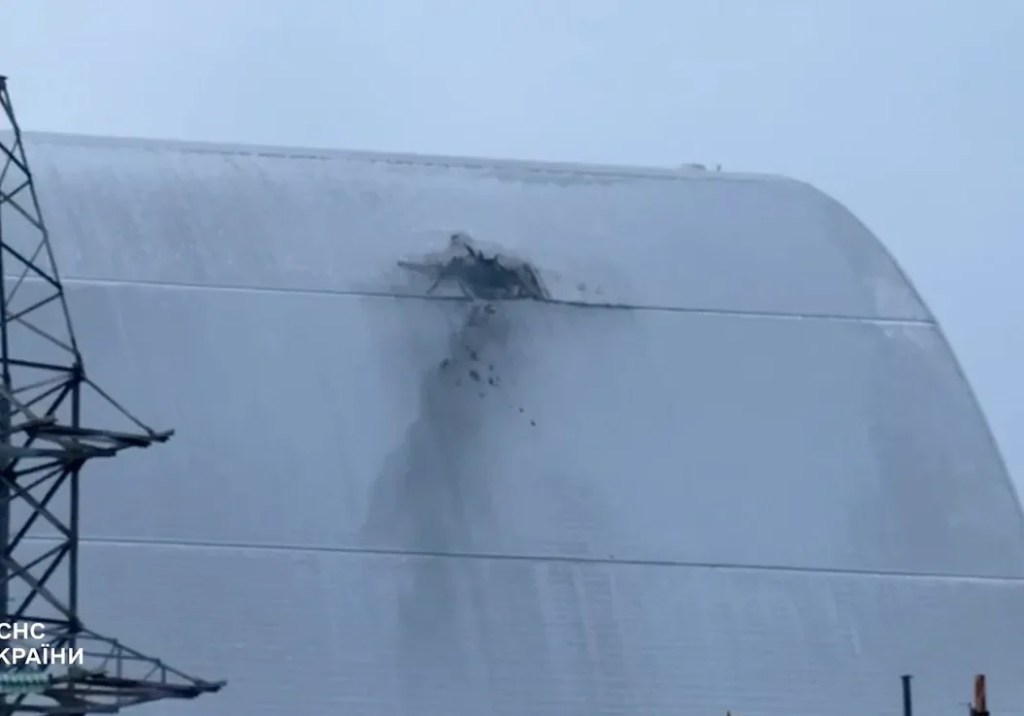
April will see the 40th anniversary of the Chernobyl accident
COMMENT Doncha love the way these nuclear hypocrites turn every bad thing into a plus?
Chernobyl’s so good as a lesson. Never mind the fact that the damaged protection dome is spewing radiation out, and they can’t get rid of the toxic melded waste inside .
“It is always good to look back and make sure that we have really learned all the lessons and taken the opportunities for improvement from previous events. 2026 will also be the 15th anniversary of Fukushima. I think that the industry has been very good at reflecting on these events and extracting all the lessons to be learned.”

“I think that the safety culture at a global level continues to be better than ever. I think that international collaboration has always been great in nuclear, but certainly the collaboration that ensued after Chernobyl, and certainly after Fukushima is a testament to how well the nuclear industry is collaborating. “
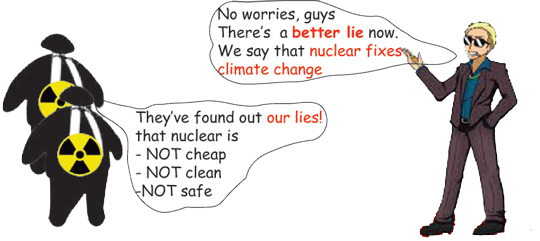
COMMENT. Note that here the WNA boasts that nuclear power helps action on climate change, (but later on, boasts its partnership with with fossil fuel industries)
“but they need to be put in context with the impacts of things like using fossil fuels on human health, on the environment and obviously on climate change. We really need to look at the entire life-cycle of all energy sources and to recognise that there is not one energy source that is a silver bullet for anything. I think that perhaps Fukushima’s anniversary and Chernobyl’s anniversary will be an opportunity for us as a society to become more pragmatic and realistic about the risks and opportunities of all these technologies.”
What do you think are the key planned events for the year?
“We hit the ground running at Davos at the World Economic Forum this year, from 19 January – this is perhaps the second time that nuclear energy is really going to be visible there, so we are excited about that opportunity. Immediately after Davos there is India Energy Week in Goa, which is the second-largest energy conference in the world.”
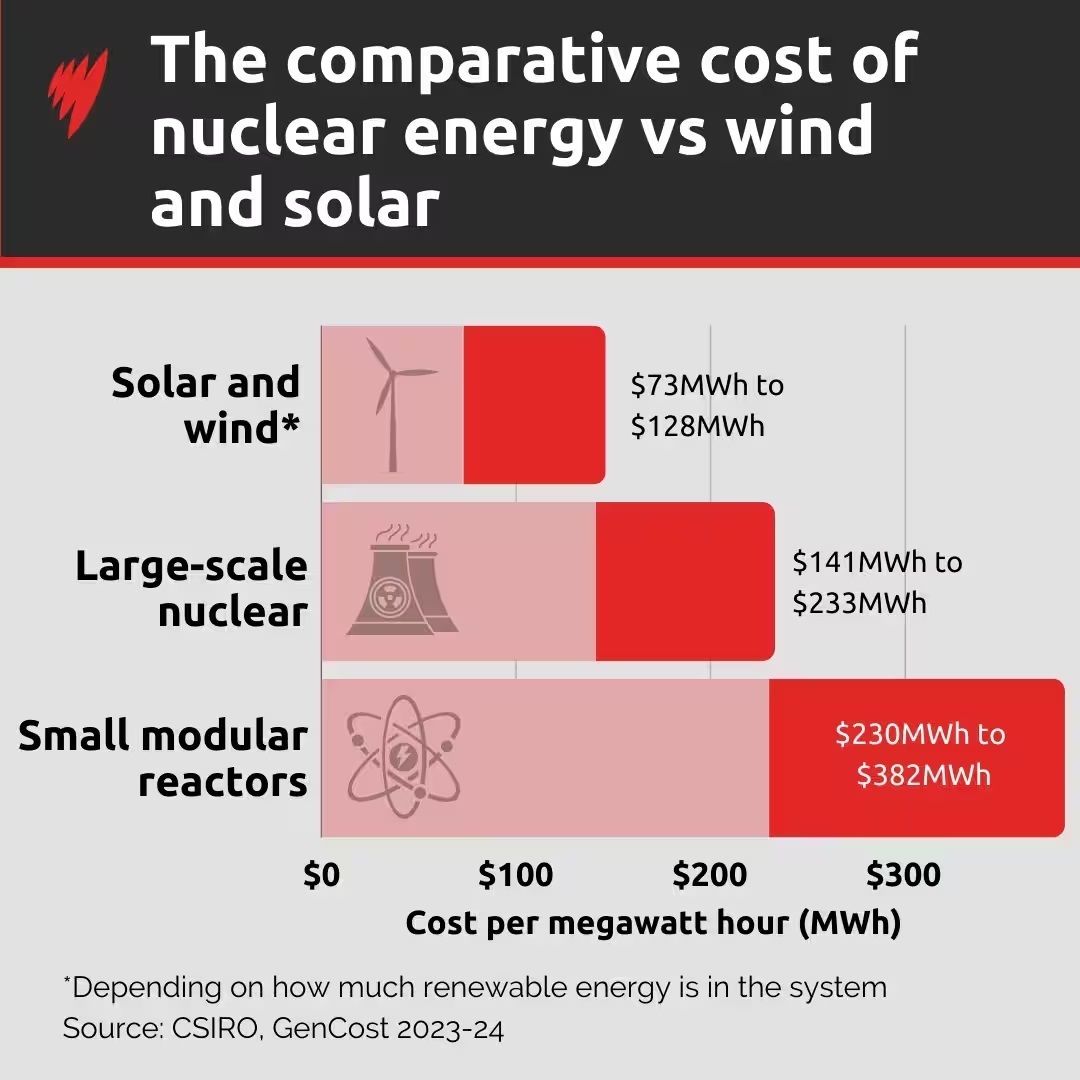
“In March, we will be at CERAWeek in Texas, a very important event where we are bringing together nuclear energy with many of these large energy users, in particular the oil and gas industry, that are really aligning themselves to best understand how nuclear can contribute to their decarbonisation and energising efforts. “
“And then, in April, we will have the World Nuclear Fuel Cycle Conference in Monaco. In May, we will be in Manila at the World Nuclear Supply Chain Conference, and World Nuclear University’s Summer Institute will be in the summer in Lyon in France. And of course we will come back together in September here in London for the World Nuclear Symposium, which will be even bigger and better than the one that we did in 2025. We really wanted to bring the nuclear and finance communities together to answer each other’s questions and demystify nuclear, so financiers recognise that nuclear projects are nothing more, nothing less, than large infrastructure projects. We are now working together with the finance community to put together a nuclear financing guide to pull together best practices and lessons learned to support financiers and nuclear developers going forward. “
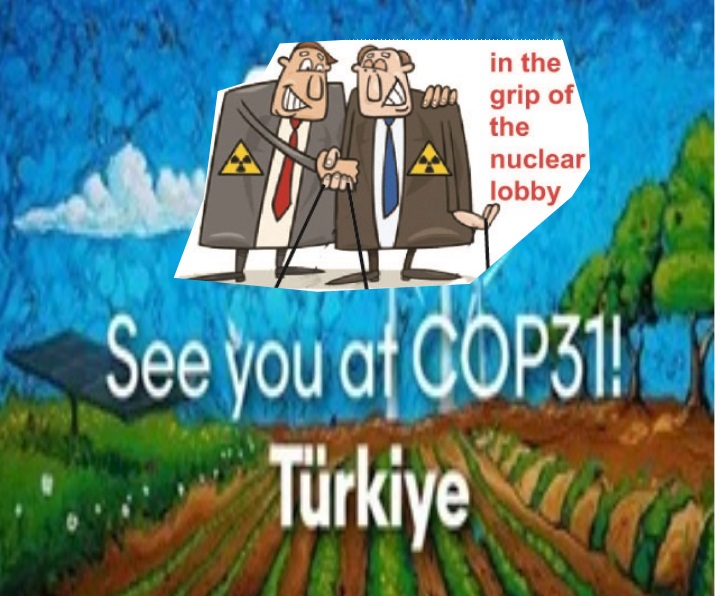
COMMENT. Note that while the nuclear lobby pretends to solve climate change, in reality they’re not only in cahoots with oil and gas lobbies, but they intend to take over global climate action, as they planned for in previous COPs
“Later in the year, there will be Africa Energy Week at the end of September in Cape Town, and Singapore International Energy Week is a great opportunity to bring together all those ASEAN countries. There will also be the World Energy Congress taking place in Saudi Arabia and also COP31 in Turkey. So if people thought that 2025 was crazy, I think it is clear that 2026 is looking like it will be just as busy.”
“So interesting times ahead…
“Definitely. This is the time. We’ve been discussing how the stars are aligning for nuclear energy and I think that we are there. The stars are definitely aligned. This is the moment where we, the global nuclear industry, really need to be proactive and active and make the most of this opportunity. We really need to work together with our governments. We need to work together definitely with the nuclear regulators, with the finance community, with large energy users, and we cannot leave behind civil society. We have seen major improvements in public acceptance and interest in nuclear, but we need to continue to be proactive to engage with civil society, to make sure that no question is left unanswered. ”
COMMENT: A lot of questions not even asked. The mind boggles. Not a mention of the now terrifying possibilities of cheap little drones targeting nuclear reactors, and nuclear waste pools. Not a mention of the fearful progress being made on smaller nuclear “tactical weapons”. Not a mention of the new Highly Enriched nuclear fuels for new generation nuclear reactors – that bring big risks of nuclear weapons proliferation. And of course, in the current energy economics – really no need for new nuclear reactors. (except to provide technical staff, academic “cover” and hidden funding for the nuclear weapons industry).
https://www.world-nuclear-news.org/articles/in-quotes-what-to-watch-out-for-in-2026
“We’re Going to Run the Country:” Preparing an Illegal Occupation in Venezuela
This press conference wasn’t just about Venezuela. It was about whether empire can say the quiet part out loud again, whether it can openly claim the right to govern other nations and expect the world to shrug.
January 3, 2026, By: Michelle Ellner , https://scheerpost.com/2026/01/03/were-going-to-run-the-country-preparing-an-illegal-occupation-in-venezuela/
I listened to the January 3 press conference with a knot in my stomach. As a Venezuelan American with family, memories, and a living connection to the country being spoken about as if it were a possession, what I heard was very clear. And that clarity was chilling.
The president said, plainly, that the United States would “run the country” until a transition it deems “safe” and “judicious.” He spoke about capturing Venezuela’s head of state, about transporting him on a U.S. military vessel, about administering Venezuela temporarily, and about bringing in U.S. oil companies to rebuild the industry. He dismissed concerns about international reaction with a phrase that should alarm everyone: “They understand this is our hemisphere.”
For Venezuelans, those words echo a long, painful history.
Let’s be clear about the claims made. The president is asserting that the U.S. can detain a sitting foreign president and his spouse under U.S. criminal law. That the U.S. can administer another sovereign country without an international mandate. That Venezuela’s political future can be decided from Washington. That control over oil and “rebuilding” is a legitimate byproduct of intervention. That all of this can happen without congressional authorization and without evidence of imminent threat.
We have heard this language before. In Iraq, the United States promised a limited intervention and a temporary administration, only to impose years of occupation, seize control of critical infrastructure, and leave behind devastation and instability. What was framed as stewardship became domination. Venezuela is now being spoken about in disturbingly similar terms. “Temporary Administration” ended up being a permanent disaster.
Under international law, nothing described in that press conference is legal. The UN Charter prohibits the threat or use of force against another state and bars interference in a nation’s political independence. Sanctions designed to coerce political outcomes and cause civilian suffering amount to collective punishment. Declaring the right to “run” another country is the language of occupation, regardless of how many times the word is avoided.
Under U.S. law, the claims are just as disturbing. War powers belong to Congress. There has been no authorization, no declaration, no lawful process that allows an executive to seize a foreign head of state or administer a country. Calling this “law enforcement” does not make it so. Venezuela poses no threat to the United States. It has not attacked the U.S. and has issued no threat that could justify the use of force under U.S. or international law. There is no lawful basis, domestic or international, for what is being asserted.
But beyond law and precedent lies the most important reality: the cost of this aggression is paid by ordinary people in Venezuela. War, sanctions, and military escalation do not fall evenly. They fall hardest on women, children, the elderly, and the poor. They mean shortages of medicine and food, disrupted healthcare systems, rising maternal and infant mortality, and the daily stress of survival in a country forced to live under siege. They also mean preventable deaths, people who die not because of natural disaster or inevitability, but because access to care, electricity, transport, or medicine has been deliberately obstructed. Every escalation compounds existing harm and increases the likelihood of loss of life, civilian deaths that will be written off as collateral, even though they were foreseeable and avoidable.
What makes this even more dangerous is the assumption underlying it all: that Venezuelans will remain passive, compliant, and submissive in the face of humiliation and force. That assumption is wrong. And when it collapses, as it inevitably will, the cost will be measured in unnecessary bloodshed. This is what is erased when a country is discussed as a “transition” or an “administration problem.” Human beings disappear. Lives are reduced to acceptable losses. And the violence that follows is framed as unfortunate rather than the predictable outcome of arrogance and coercion.To hear a U.S. president talk about a country as something to be managed, stabilized, and handed over once it behaves properly, it hurts. It humiliates. And it enrages.
And yes, Venezuela is not politically unified. It isn’t. It never has been. There are deep divisions, about the government, about the economy, about leadership, about the future. There are people who identify as Chavista, people who are fiercely anti-Chavista, people who are exhausted and disengaged, and yes, there are some who are celebrating what they believe might finally bring change.
But political division does not invite invasion.
Latin America has seen this logic before. In Chile, internal political division was used to justify U.S. intervention, framed as a response to “ungovernability,” instability, and threats to regional order, ending not in democracy, but in dictatorship, repression, and decades of trauma.
In fact, many Venezuelans who oppose the government still reject this moment outright. They understand that bombs, sanctions, and “transitions” imposed from abroad do not bring democracy, they destroy the conditions that make it possible.
This moment demands political maturity, not purity tests. You can oppose Maduro and still oppose U.S. aggression. You can want change and still reject foreign control. You can be angry, desperate, or hopeful, and still say no to being governed by another country.
Venezuela is a country where communal councils, worker organizations, neighborhood collectives, and social movements have been forged under pressure. Political education didn’t come from think tanks; it came from survival. Right now, Venezuelans are not hiding. They are closing ranks because they recognize the pattern. They know what it means when foreign leaders start talking about “transitions” and “temporary control.” They know what usually follows. And they are responding the way they always have: by turning fear into collective action.
This press conference wasn’t just about Venezuela. It was about whether empire can say the quiet part out loud again, whether it can openly claim the right to govern other nations and expect the world to shrug.
If this stands, the lesson is brutal and undeniable: sovereignty is conditional, resources are there to be taken by the U.S., and democracy exists only by imperial consent.
As a Venezuelan American, I refuse that lesson.
I refuse the idea that my tax dollars fund the humiliation of my homeland. I refuse the lie that war and coercion are acts of “care” for the Venezuelan people. And I refuse to stay silent while a country I love is spoken about as raw material for U.S. interests, not a society of human beings deserving respect.
Venezuela’s future is not for U.S. officials, corporate boards, or any president who believes the hemisphere is his to command. It belongs to Venezuelans.
Following U.S. coup in Venezuela, the CIA’s former station chief is advertising support for corporate exploitation of the country’s oil
The CIA’s former Venezuela chief of station, Enrique de la Torre, advertised that his lobbying firm, Tower Strategy, is supporting clients “rebuilding the country’s energy sector.”
Jack Poulson, Jan 04, 2026, https://jackpoulson.substack.com/p/following-us-coup-in-venezuela-the?utm_source=post-email-title&publication_id=1269175&post_id=183365776&utm_campaign=email-post-title&isFreemail=true&r=8cf96&triedRedirect=true&utm_medium=email
“We’re going to have our very large United States oil companies, the biggest anywhere in the world, go in and spend billions of dollars and fix the oil infrastructure — the badly broken oil infrastructure — and start making money for the country,” U.S. President Donald Trump declared on Saturday morning. The remarks followed a raid by the U.S. military’s elite commando team, Delta Force, which kidnapped Venezuelan president Nicolás Maduro and his wife, Cilia, using what Trump described as cover of darkness implied to have been provided by a U.S. cyberattack.
“It was dark, the lights of Caracas were largely turned off, due to a certain expertise we have,” Trump stated, before adding that, “It was dark, and it was deadly.” A series of photos from the “deadly” raid was quickly published by the wire service Reuters.
A special operations source was summarized by the investigative journalism outlet The High Side as stating that a “local source network … helped install jammers and other technical equipment on the ground, including beacons for airstrikes.” “The operational preparation of the battlespace was conducted by Task Force Orange, which throughout its history has been known by a host of cover names, including the U.S. Army Office of Military Support, Titan Zeus and the Intelligence Support Activity,” reported The High Side.
“We’re ready to stage a much larger second attack,” continued the U.S. president, before adding that, “we have a much bigger wave that we probably won’t have to do.”
A recent CIA chief of station in Venezuela, Enrique de la Torre, quickly took to the professional networking site LinkedIn to claim that his newly formed lobbying firm with former U.S. Ambassador to Venezuela James B. Story, Tower Strategy, was “already working with clients focused on democratic recovery, restored U.S. engagement, and the serious work of rebuilding the country’s energy sector.”
Tower Strategy has so-far publicly disclosed representing four companies: the controversial treasure-hunting company Odyssey Marine Exploration, the Singapore-based and Tether-affiliated cryptocurrency company Bitdeer, the solar supply chain company T1 Energy, and the international solar power export company UGT Renewables / Sun Africa.
De la Torre spent roughly the first ten months of 2025 working for the lobbying and foreign influence firm Continental Strategy, which is run by Carlos Trujillo, a former U.S. Ambassador to the Organization of American States with close ties to U.S. secretary of state Marco Rubio. The former CIA station chief’s partner at Tower Strategy, Ambassador Story, further launched the consulting firm Global Frontier Advisors alongside former Pentagon artificial intelligence chief Michael S. Groen in late July, with partner David Kol noted in the press release to be the CEO of Zodiac Gold Inc.
Former CIA director Michael R. Pompeo similarly told the media platform Fox & Friends on Monday that the U.S. Government’s seizures of Venezuela-linked oil tankers was the “right course of action” and that, in the event of the overthrow of the Maduro government, “American companies can come in and sell their products — Schlumberger, Halliburton, Chevron — all of our big energy companies can go down to Venezuela and build out an economic capitalist model.”
Trump further declared in his Saturday press conference that, “We’re going to run the country [Venezuela] until such time as we can do a safe, proper and judicious transition,” further stating that the members of his administration standing behind him in the press conference would be designated to lead the country in the short term. Venezuelan president Delcy Rodriguez, who was today sworn in as the new leader of the country following the U.S. kidnapping of President Maduro, was claimed by Trump to have effectively agreed to concede to U.S. demands in a recent conversation with U.S. secretary of state Marco Rubio.
Trump described his government as having “superseded” the longstanding U.S. policy of dominating the politics of the Western Hemisphere, known as the Monroe Doctrine, by “a lot.” “They now call it the Donroe Doctrine,” Trump stated, in reference to the now-popular phrase.
The U.S. Government’s claim to legal legitimacy of the kidnapping and broader coup have centered upon allegations that Maduro and his administration have been engaged in large-scale cocaine trafficking meant to destabilize the United States. A U.S. Drug Enforcement Administration (DEA) jacket was partially visible in the background of a photograph published by Trump on his social media platform Truth Social on Saturday, showing a blindfolded Maduro aboard the U.S. warship Iwo Jima.
Several U.S. State Department-backed media and lobbying organizations helped amplify the impact of unilateral U.S. sanctions over the past several years, effectively providing a form of international legal top cover for the Trump administration’s coup this morning. The most notable were perhaps Transparency International through its Venezuelan branch, the National Endowment for Democracy-backed media platform Connectas, and the CIA-affiliated think-tank Center for Advanced Defense Studies (C4ADS).
Brazilian president Luiz Inacio Lula da Silva condemned the unilateral U.S. kidnapping of Venezuela’s leader as having crossed “an unacceptable line,” while UN Secretary-General Antonio Guterres described the U.S. raid as setting “a dangerous precedent.”
Jan 04, 2026
I stand with the people of Venezuela
This is not strength. It is lawlessness.
The U.S. Constitution is explicit. Congress – not the president – has the power to declare war.
3 January 2026 Roswell, https://theaimn.net/i-stand-with-the-people-of-venezuela/
I never imagined I would be writing these words, but here we are:
I stand with the people of Venezuela.
Not with any particular government or leader, but with a nation that has just been attacked – illegally – by the President of the United States, without the approval of Congress, in clear violation of both American constitutional law and international law.
Yet, true to form, Trump will demand universal acceptance. To trust the instincts of a man who has repeatedly expressed admiration for authoritarians, hostility to international law, and contempt for democratic norms. A man whose foreign policy is indistinguishable from impulse, grievance, and spectacle. A man who treats war as performance and human lives as collateral to political theatre.
The precedent here is terrifying
If the United States – a country that never stops lecturing others about the “rules-based international order” – can simply discard those rules when inconvenient, then they cease to be rules at all. They become weapons, deployed selectively against enemies and ignored for friends.
This is how the post-war order collapses: not with a single catastrophic moment, but through repeated acts of hypocrisy that hollow it out from within.
Let’s be honest about who pays the price.
It will not be Donald Trump, safely insulated from consequences.
Strip away the chest-thumping rhetoric and the familiar justifications, and what remains is uncomfortable in its simplicity: a unilateral act of war, ordered by one man, without democratic consent, against a sovereign country that posed no imminent threat to the United States.
This is not strength. It is lawlessness.
The U.S. Constitution is explicit. Congress – not the president – has the power to declare war. That safeguard exists precisely to prevent impulsive, politically motivated, or self-serving military adventures. When a president bypasses it, he is not defending democracy. He is undermining it.
International law is just as clear. The UN Charter prohibits the use of force against another state except in self-defence or with Security Council authorisation. Venezuela attacked no one. No such authorisation exists. Labeling this as anything but an illegal act of aggression demands willful ignorance.
It will not be the architects of escalation in Washington think tanks.
It will be Venezuelan civilians – people who have already endured years of economic pain, sanctions, and instability – who will now live under the shadow of foreign bombs and regional chaos.
Standing with Venezuela does not require romanticising its politics or ignoring its internal problems. It requires recognising a basic principle that should never be negotiable: no country has the right to attack another simply because it can.
For decades, the United States has insisted that sovereignty matters – except when it doesn’t. That democracy must be respected – except when the outcome is inconvenient. That international law is sacred – except when it restrains American power.
This attack strips away the pretence.
If you believe in peace, you must oppose it.
If you believe in democracy, you must oppose it.
If you believe in international law, you must oppose it.
Silence now is complicity. Hand-wringing later will be meaningless.
The world does not need another “coalition of the willing”, another illegal war sold with vague threats and manufactured urgency. It needs restraint. It needs accountability. It needs leaders who understand that power without law is not leadership – it is empire in decay.
So yes, I stand with the people of Venezuela.
I stand against illegal war.
I stand against presidential authoritarianism masquerading as strength.
I stand against the dangerous idea that some nations are entitled to break the rules simply because they wrote them.
And I stand with the people – everywhere – who will suffer the consequences long after the press conferences end.
History is watching. And it will not be kind to those who cheered this on.
Microsoft wants to resurrect Three Mile Island. It will never happen.
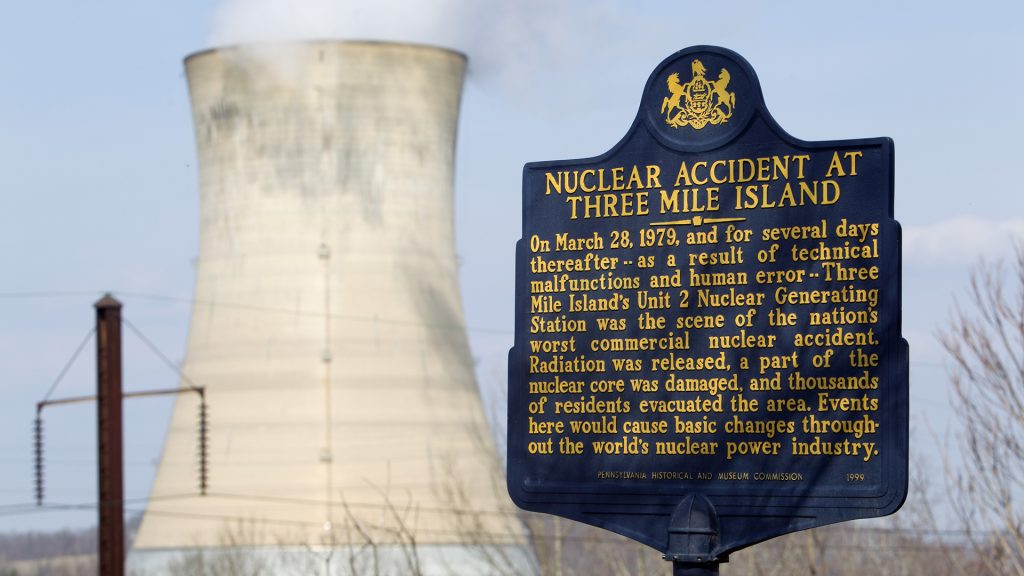
regulatory barriers are just the start. Nuclear reactors can’t be simply switched back on like a light bulb. They’re more like a car left undriven in a garage for too long with old oil, putrid gasoline, rat-chewed wires and a rusty frame — except that nuclear plants are infinitely more complicated than any car.
The Hill. by Neil Chatterjee, opinion contributor – 01/02/26
Microsoft and Constellation Energy have spent the last year trying to resurrect the Three Mile Island Nuclear power plant in Pennsylvania. The plant shut down in 2019 under economic pressure, after a separate part of the facility was decommissioned following a partial meltdown in 1979.
The effort is laudable, especially in light of Microsoft’s rapidly rising demand for [?] clean energy to fuel its artificial intelligence data centers. Unfortunately, it will never work. A fully shut-down nuclear plant has never been restarted in America for good reason: There are too many regulatory, material and logistical hurdles to overcome.
So far, Constellation Energy has painted a rosy picture. It originally stated the plant would be back online by 2028. Then, in early 2025, it revised its estimated opening date to 2027 following various inspections and the restoration of the plant’s water systems.
But traditional nuclear projects have a long history of going over budget and past schedule. A big factor is that the U.S. regulatory environment is not friendly to traditional nuclear power.
As the former head of the Federal Energy Regulatory Commission in the first Trump administration, I have seen firsthand how red tape can choke even the best-intentioned projects under goodwill regulators. Reactors that were permanently shut down must go through an extensive regulatory review process and request special exemptions for both their operations and use of radioactive fuel.
Constellation Energy and Microsoft have some solace in that the Department of Energy offered their project public support. But the Department of Energy isn’t the only player in town.
To ensure safety, Three Mile Island will also have to pass rigorous rounds of inspections, receive environmental approval and get the green light from the likes of the Environmental Protection Agency, the U.S. Nuclear Regulatory Commission, FERC and other state and local offices.
Even under a pro-business, pro-energy, regulation-slashing Trump administration, this is quite a gauntlet — especially because pro-nuclear government officials may nevertheless be hemmed in by existing laws and review processes outside of their control.
If regulatory barriers were the only holdup, perhaps there would be reasons to be more bullish on Three Mile Island. After all, President Trump has offered full support to nuclear energy and is committed to winning the energy-intensive AI race against China, red tape or not.
But regulatory barriers are just the start. Nuclear reactors can’t be simply switched back on like a light bulb. They’re more like a car left undriven in a garage for too long with old oil, putrid gasoline, rat-chewed wires and a rusty frame — except that nuclear plants are infinitely more complicated than any car.
At Three Mile Island, the reactor vessel could be brittle and fatigued. The core rods may need to be refurbished, the steam generators might have corroded, the turbines may break after not being rotated for years. And we know the cooling tower was partially removed as a fire hazard.
Replacing and restoring this equipment and more will not come cheaply. Constellation Energy originally projected it would take $1.6 billion to bring the facility back onto the grid, but that was before it fully cracked open the hood.
Then there are the basic economic realities of traditional reactors. Three Mile Island, Indian Point, Crystal River and others were shut down not because they were unsafe or failed to produce energy, but because maintenance was costly and they couldn’t keep up with the low price of other energy sources like natural gas.
As energy demand rises, those costs may become more comparable. But restarting Three Mile Island is still an expensive bet that will take years or decades of the right economic conditions to pay off.
And all of this does not even count the difficulties with accessing or creating a supply chain for nuclear fuel and long-unused components, integrating with the local electricity grid, hiring and training a highly competent workforce and overcoming the (unjustified) cultural stigma against a power plant that shares a name with the only major nuclear meltdown in American history…………………………… https://thehill.com/opinion/energy-environment/5667831-microsoft-constellation-nuclear-challenges/
Russia-US nuclear pact set to end in 2026 and we won’t see another
After the New START treaty expires in February, there will be no cap on the number of US and Russian nuclear weapons – but some are sceptical about whether the deal actually made the world safer
By Matthew Sparkes, New Scientist, 30 December 2025
In February 2026, for the first time in decades, there will be no active treaty limiting the size of the US and Russian nuclear arsenals. Experts are divided on whether the New START treaty genuinely made the world safer, but there is far more agreement on one thing: a replacement is unlikely.
The US and Russia first agreed to place limits on their nuclear weapons and allow each to inspect the other’s stockpiles with the START I treaty in 1991, and this was succeeded by New START in 2011. In 2021, Joe Biden and Vladimir Putin agreed to extend the treaty by five years. It is now due to expire on 5 February and talks on a replacement have faltered………………….(Subscribers only) https://www.newscientist.com/article/2504635-russia-us-nuclear-pact-set-to-end-in-2026-and-we-wont-see-another/
1 This Month
19 February – VIRTUAL EVENT-Decision Time: AI and Our Nuclear Arsenal
12:45 p.m. Central / 1:45 p.m. Eastern
To see nuclear-related stories in greater depth and intensity – go to https://nuclearinformation.wordpress.com
-
Archives
- February 2026 (127)
- January 2026 (308)
- December 2025 (358)
- November 2025 (359)
- October 2025 (376)
- September 2025 (258)
- August 2025 (319)
- July 2025 (230)
- June 2025 (348)
- May 2025 (261)
- April 2025 (305)
- March 2025 (319)
-
Categories
- 1
- 1 NUCLEAR ISSUES
- business and costs
- climate change
- culture and arts
- ENERGY
- environment
- health
- history
- indigenous issues
- Legal
- marketing of nuclear
- media
- opposition to nuclear
- PERSONAL STORIES
- politics
- politics international
- Religion and ethics
- safety
- secrets,lies and civil liberties
- spinbuster
- technology
- Uranium
- wastes
- weapons and war
- Women
- 2 WORLD
- ACTION
- AFRICA
- Atrocities
- AUSTRALIA
- Christina's notes
- Christina's themes
- culture and arts
- Events
- Fuk 2022
- Fuk 2023
- Fukushima 2017
- Fukushima 2018
- fukushima 2019
- Fukushima 2020
- Fukushima 2021
- general
- global warming
- Humour (God we need it)
- Nuclear
- RARE EARTHS
- Reference
- resources – print
- Resources -audiovicual
- Weekly Newsletter
- World
- World Nuclear
- YouTube
-
RSS
Entries RSS
Comments RSS
 nuclear-news