EDF signals ageing British nuclear fleet can run into ‘the 2030s’.
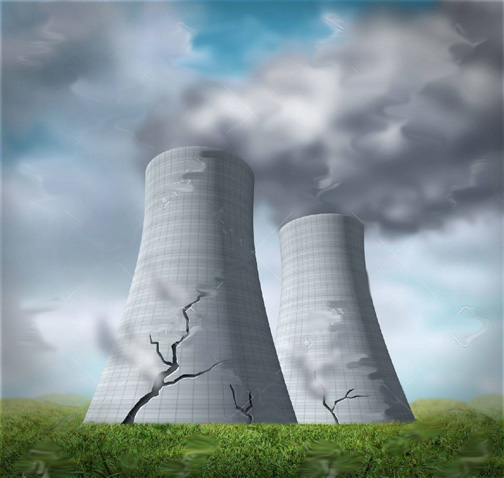
EDF has signalled that Britain’s fleet of ageing
nuclear power plants can keep running into the next decade amid a scramble
to hit Ed Miliband’s [?]clean power targets. The company on Monday said it
aimed to “maximise output” from the remaining gas-cooled nuclear
reactors to “2030+”, providing this can be agreed with regulators.
It is the strongest sign yet that EDF, which is owned by the French state,
believes the plants can go even further beyond their planned lifespans
after extensions were most recently announced in December. Further
extensions would deliver a boost to Mr Miliband, the Energy Secretary, as
he seeks to make the electricity grid at least 95pc reliant on “clean”
sources of power – including wind, solar, batteries and nuclear – in
just five years.
Two of EDF’s oldest nuclear power stations, Heysham 1 in
Lancashire and Hartlepool in Teesside, have had their shutdowns postponed
from spring 2026 to 2027, while the other two, Heysham 2 and Torness in
East Lothian, were extended from 2028 to 2030. But in a newly-published
fleet update, EDF says there is a potential opportunity for all four plants
to remain online until at least 2030.
Telegraph 27th Jan 2025, https://www.telegraph.co.uk/business/2025/01/27/edf-signals-ageing-british-nuclear-fleet-can-run-into-2030s/
The Evolution of the Militarized Data Broker

As the front of modern warfare slowly evolved from direct military action into weaponized financial speculation, the market for data became just as valuable as the defense budget itself.
Facebook, not unlike Palantir, was one of the vehicles used to privatize controversial U.S. military surveillance projects
While often mythologized as having been created to champion human freedom, the internet and many of its most popular companies were directly birthed out of the national security apparatus of the United States.
UNLIMITED HANGOUT, by Mark Goodwin, January 16, 2025
Today, the world’s economy no longer runs on oil, but data. Shortly after the advent of the microprocessor came the internet, unleashing an onslaught of data running on the coils of fiber optic cables beneath the oceans and satellites above the skies. While often posited as a liberator of humanity against the oppressors of nation-states that allows previously impossible interconnectivity and social organization between geographically separated cultures to circumnavigate the monopoly on violence of world governments, ironically, the internet itself was birthed out of the largest military empire of the modern world – the United States.
The ARPANET
Specifically, the internet began as ARPANET, a project of the Advanced Research Projects Agency (ARPA), which in 1972 became known as the Defense Advanced Research Projects Agency (DARPA), currently housed within the Department of Defense. ARPA was created by President Eisenhower in 1958 within the Office of the Secretary of Defense (OSD) in direct response to the U.S.’ greatest military rival, the USSR, successfully launching Sputnik, the first artificial satellite in Earth’s orbit with data broadcasting technology. While historically considered the birth of the Space Race, in reality, the formation of ARPA began the now-decades-long militarization of data brokers, quickly leading to world-changing developments in global positioning systems (GPS), the personal computer, networks of computational information processing (“time-sharing”), primordial artificial intelligence, and weaponized autonomous drone technology.
In October 1962, the recently-formed ARPA appointed J.C.R. Licklider, a former MIT professor and vice president of Bolt Beranek and Newman (known as BBN, currently owned by defense contractor Raytheon), to head their Information Processing Techniques Office (IPTO). At BBN, Licklider developed the earliest known ideas for a global computer network, publishing a series of memos in August 1962 that birthed his “Intergalactic Computer Network” concept. Six months after his appointment to ARPA, Licklider would distribute a memo to his IPTO colleagues – addressed to “Members and Affiliates of the Intergalactic Computer Network”– describing a “time-sharing network of computers” – building off a similar exploration of communal, distributed computation by John Forbes Nash, Jr. in his 1954 paper “Parallel Control” commissioned by defense contractor RAND – which would build the foundational concepts for ARPANET, the first implementation of today’s Internet.
Prior to the technological innovations explored by Licklider and his ARPA colleagues, data communication – at this time, mainly voice via telephone lines – were based on circuit switching, in which each telephone call would be manually connected by a switch operator to establish a dedicated, end-to-end analog electrical connection between the two parties. The RAND Corporation’s Paul Baran, and later ARPA itself, would begin to work on methods to allow formidable data communication in the event of a partial disconnection, such as from a nuclear event or other act of war, leading to a distributed network of unmanned nodes that would compartmentalize the desired information into smaller blocks of data – today referred to as packets – before routing them separately, only to be rejoined once received at the desired destination.
While certainly unbeknownst to the technologists at the time, this achievement of both distributed routing and global information settlement via data packets created an entirely new commodity – digital data.
A Brief History of Weaponized Financial Intelligence
Long before the USSR spooked the United States into formalizing ARPA due to fears of militarized satellite applications post-Sputnik launch, data brokers have played a significant role in warfare and specifically the markets surrounding military conflict……………………………………………….
As the front of modern warfare slowly evolved from direct military action into weaponized financial speculation, the market for data became just as valuable as the defense budget itself. It is for this reason that the necessity of sound data emerged as the foremost issue of national security, leading to a proliferation of advanced data brokers coming out of DARPA and the intelligence community, akin to the 21st century’s Manhattan Project.
The San Jose Project: Google, Facebook, and PayPal
Exemplified by the creation of the CIA’s venture firm, In-Q-Tel, and the proliferation of Silicon Valley-based venture firms coalescing on Sand Hill Road in Palo Alto, CA, the financialization of a new crop of American data brokers was complete. The first firm to grace Sand Hill Road was Kleiner Perkins Caufield & Byers, better known as KPCB, which participated in funding internet pioneers Amazon, AOL, and Compaq, while also directly seeding Netscape and Google. KPCB partners have included such government stalwarts as former Vice President Al Gore, former Secretary of State Colin Powell, and Ted Schlein – the latter being a board member of In-Q-Tel and member of the NSA’s advisory board. KPCB also had an intimate connection with internet networking pioneer Sun Microsystems, best known for building out the majority of network switches and other infrastructure needed for a modern broadband economy.
……………………… Perhaps the world’s most famous data broker, Google, whose founders both came out of Stanford University, was seeded by former Sun Microsystems founder Andy Bechtolsheim and his partner at the Ethernet switching company Granite Systems (later acquired by Cisco), David Cheriton, with Google’s most iconic CEO, Eric Schmidt, being the former CTO of Sun Microsystems.
The emergence of Silicon Valley out of the academic circuit in Northern California was no accident, and in fact was directly influenced by an unclassified program known as the Massive Digital Data Systems (MDDS) project. The MDDS was created with direct participation from the CIA, NSA, and DARPA itself within the computer science programs at Stanford and CalTech, alongside MIT, Harvard and Carnegie Mellon……………… over a few years, more than a dozen grants of several million dollars each were distributed via the NSF (the National Science Foundation) in order to capture the most promising efforts, ensuring that those efforts would become intellectual property controlled by the United States regulatory regime.
……………………………………………….The first unclassified briefing for scientists was titled “birds of a feather briefing” and was formalized during a 1995 conference in San Jose, CA, which was titled the “Birds of a Feather Session on the Intelligence Community Initiative in Massive Digital Data Systems.” That same year, one of the first MDDS grants was awarded to Stanford University, which was already a decade deep in working with NSF and DARPA grants. The primary objective of this grant was to “query optimization of very complex queries,” with a closely-followed second grant that aimed to build a massive digital library on the internet. These two grants funded research by then-Stanford graduate students and future Google cofounders, Sergey Brin and Larry Page. Two intelligence-community managers regularly met with Brin while he was still at Stanford and completing the research that would lead to the incorporation of Google, all paid for by grants provided by the NSA and CIA via MDDS.
…………………………………………………………………………………………….It was also during these formative years that the PayPal team worked closely with the intelligence community. …………………………………………………………………..In 2003, a year after PayPal was sold to eBay, Thiel approached Alex Karp, a fellow alumnus of Stanford with a new venture concept: “Why not use Igor to track terrorist networks through their financial transactions?” Thiel took funds from the PayPal sale to seed the company, and after a few years of pitching investors, the newly-formed Palantir received an estimated $2 million investment from the CIA’s venture capital firm, In-Q-Tel.
………………………………..As of 2013, Palantir’s client list included “the CIA, the FBI, the NSA, the Centre for Disease Control, the Marine Corps, the Air Force, Special Operations Command, West Point and the IRS” with around “50% of its business” coming from public sector contracts…………… As The Guardian reports: “Palantir does not just provide the Pentagon with a machine for global surveillance and the data-efficient fighting of war, it runs Wall Street, too.”
Facebook, not unlike Palantir, was one of the vehicles used to privatize controversial U.S. military surveillance projects after 9/11, having also been birthed out of one of the MDDS partners, Harvard University. PayPal and Palantir co-founder Peter Thiel became Facebook’s first significant investor at the behest of file-sharing pioneer Sean Parker, whose first contact with the CIA took place at age 16. ………………………… Facebook’s long-standing ties to the military and intelligence communities go far beyond its origins, including revelations about its collaboration with spy agencies as part of the Snowden leaks and its role in influence operations – some have even directly involved Google and Palantir.
The Military Origins of Facebook
Facebook’s growing role in the ever-expanding surveillance and “pre-crime” apparatus of the national security state demands new scrutiny of the company’s origins and its products as they relate to a former, controversial DARPA-run surveillance program that was essentially analogous to what is currently the world’s largest social network.
An unspoken outcome of the global proliferation of Facebook was the sly, roundabout creation of the first digital ID system – a necessity for the coming digital economy. Users would set up their profiles by feeding the social network with a plethora of personal information, with Facebook being able to use this data to generate large webs of connectivity between otherwise unknown social groups. There is even evidence that Facebook generated placeholder accounts for individuals that appeared in user data but did not have a profile of their own. Both Google and PayPal would also use similar digital identification methods to allow users to sign into other websites, creating interoperable identification systems that could permeate the internet.
A similar evolution is occurring in the financial sector, as data broker social networks – including Facebook and Musk’s X (formerly Twitter) – are posturing themselves as the future of financial service companies. ……………………………
From Public-Private, to Private-Public
As outlined above, it is clear that the public sector’s intelligence community used the veil of the private sector to establish financial incentives and commercial applications to build out the modern data economy. A simple glance at the seven largest stocks in the American economy demonstrate this concept, with Meta (Facebook), Alphabet (Google), and Amazon – with founder Jeff Bezos being the grandson of ARPA founder Lawrence Preston Gise – leading the software side, and Microsoft, Apple, NVIDIA and Tesla leading the hardware component. While many of these companies have egregious ties to the intelligence community and the public sector during their incubation, now these private sector companies are driving the globalization and national security interests of the public sector.
The future of the American data economy is firmly situated between two pillars – artificial intelligence and blockchain technology. With the incoming Trump administration’s close advisory ties to PayPal, Tether, Facebook, Palantir, Tesla and SpaceX, it is clear that the data brokers have returned to roost at Pennsylvania Avenue. AI requires massive amounts of sound data to be of any use for the technologists, and the data provided by these private sector stalwarts is poised to feed their learning modules – surely after securing hefty government contracts. Private companies using public blockchains to issue their tokens generates not only significant opportunities for the United States to address its debt problem, but simultaneously serves as a “boon in surveillance”, as stated by a former CIA director.
Trump Embraces the “Bitcoin-Dollar”, Stablecoins to Entrench US Financial Hegemony

Trump’s recent speech on bitcoin and crypto embraced policies that will seek to mold bitcoin into an enabler of irresponsible fiscal policy and will employ programmable, surveillable stablecoins to expand and entrench dollar dominance.
Within the Trump administration’s embracing of the blockchain – itself the final iteration of the public-private commercialization of data, despite its libertarian posturing – reveals the culmination of a decades-long technocratic dialectic trojan horse. Nearly all of the foundational technology needed to push the world into this new financial system was cultivated in the shadows by the military and intelligence community of the world’s largest empire. While technology can surely offer solutions for greater efficiency and economic prosperity, the very same tools can also be used to further enslave the citizens of the world.
What once appeared as a guiding light beckoning us towards free speech and financial freedom has revealed itself to be nothing but the shine of Uncle Sam’s boot making its next step. https://unlimitedhangout.com/2025/01/investigative-reports/the-evolution-of-the-militarized-data-broker/
Renewables to dominate future EU energy supply despite nuclear buzz – German engineers

Clean Energy Wire, 24 Jan 2025, Benjamin Wehrmann, https://www.cleanenergywire.org/news/renewables-dominate-future-eu-energy-supply-despite-nuclear-buzz-german-engineers
The Association of German Engineers (VDI) has cautioned that new-found enthusiasm for nuclear power, as a means to mitigate global warming, must not slow the rollout of renewables, which are set to become the dominant power source. Germany and Europe therefore must stick to a path that maximises the potential of renewable power, and keeps the supplementary role of nuclear power in check, said VDI energy expert Harald Bradke. A recent paper from the International Energy Agency (IEA) titled “The Path to a New Era for Nuclear Energy” indicated there had been a recent shift towards nuclear energy, which according to the VDI “could lead to false conclusions if taken superficially.”
The IEA’s own World Energy Outlook 2024 painted a more nuanced picture, particularly for Europe, the VDI argued. The energy agency found that the EU’s nuclear power production dropped from 854 TWh in 2010 to 616 TWh in 2023, leading the technology’s share in electricity production to fall from 29 to 23 percent. One scenario on “announced pledges” that countries made in the context of the Paris Climate Agreement used by the IEA for the EU would mean that nuclear generation grows to 860 TWh by 2050 – while its share continues to slide to about 15 percent by that year. At the same time, renewables could grow from 45 to 84 percent. Solar PV’s share in this scenario grows form 9 percent to 24 percent and wind power’s share from 18 to 46 percent between 2023 and 2050. “These figures support the assumption that renewable energy sources are going to remain the main drivers of the energy transition despite the prognosed surge in nuclear energy production,” said VDI energy expert Badke.
Germany shuttered its last three nuclear reactors in April 2023. The step that ended a process which had been in the making for more than two decades was met with criticism both domestically and internationally due to its timing during the European energy crisis and the lost potential of nuclear energy generation for emissions reduction. However, despite a nuclear renaissance championed by Europe’s nuclear power leader France, most countries in the EU have much larger and more advanced plans to boost their renewable power capacities.
Globally, the IEA’s outlook found that nuclear power production grew by a mere 0.33 percent between 2010 and 2023 to 2,765 terawatt hours (TWh), while the share of nuclear power in global electricity production shrank from 13 to 9 percent during the same period. The IEA’s announced pledges scenario forecast a doubling of the world’s nuclear generation to 6,055 TWh by 2050. However, due to the simultaneous rapid surge in electricity demand that looks set to more than double, the technology’s share would remain at only 9 percent by the middle of the century, VDI pointed out.
At the same time, forecasts show that renewables will grow at a much faster pace worldwide during this time: solar power’s global electricity production share will rise from only 5 percent in 2023 to about 40 percent by 2050, while wind power’s share is expected to rise from 8 to 26 percent. All renewable energy sources together could increase their share from 30 to 83 percent, IEA found.
Towns near Fukushima plant struggle to attract families with children
Japan Times 27th Jan 2025
The Great East Japan Earthquake on March 11, 2011, and the subsequent meltdowns at the Fukushima No. 1 nuclear power plant have left deep scars on Fukushima Prefecture, which has seen a significant decline in its estimated population.
Futaba County, home to the Fukushima plant that straddles the towns of Futaba and Okuma, has been hit particularly hard, with the prolonged evacuation of residents drastically reducing the number of children in the area. The region’s population decline due to the disaster is beyond the scope of natural or social population shifts.
Municipalities in the region are trying to come up with measures to bring back residents or attract new ones, but increasing the number of children remains a tall order.
Futaba County once enjoyed a high birth rate and strong ties among its residents thanks to stable job opportunities provided by the Fukushima No. 1 and No. 2 power plants and related industries.
Saki Yoshizaki, 36, a worker who lives in the city of Iwaki, gave birth to her eldest daughter, now 14, in her hometown of Okuma in 2010, a year before the nuclear disaster.
“With many relatives, friends and acquaintances around, the whole community helped raise children. I had almost no worries about becoming a parent,” Yoshizaki said, recalling her hometown fondly. “In a good way, it was a tight-knit community.”
However, such an environment changed suddenly following the nuclear incident as residents fled elsewhere. Today, young parents who are bearing and rearing children in the region are voicing their feelings of loneliness where community ties have been severed.
Minami Suzuki, 34, a co-representative of the volunteer group Cotohana in the Futaba town of Tomioka, worries about the future of the region. “If we don’t strengthen connections among parents, it might become increasingly difficult for the younger generations to choose to have children here,” she says……………………………………………………………………………………..
https://www.japantimes.co.jp/news/2025/01/27/japan/society/fukushima-children-decline/
General in Charge of Nuclear Weapons Says Heck, Let’s Add Some AI

10.30.24, by Victor Tangermann https://futurism.com/the-byte/general-nuclear-weapons-add-ai?fbclid=IwY2xjawICdxRleHRuA2FlbQIxMQABHQVK6Dhf2RcZ8r9FlwBSZ7lEckVE5JvyMBu3NDqof8fQ2nUSnIuRRRNKCA_aem_sEXPy0BsSMOZ6wpMMcRzAQ
What could go wrong?
Air Force general Anthony Cotton, the man in charge of the United States stockpile of nuclear missiles, says the Pentagon is doubling down on artificial intelligence — an alarming sign that the hype surrounding the tech has infiltrated even the highest ranks of the US military.
As Air and Space Forces Magazine reports, Cotton made the comments during the 2024 Department of Defense Intelligence Information System Conference earlier this month.
Fortunately, Cotton stopped short of promising to hand over the nuclear codes to a potentially malicious AI.
“AI will enhance our decision-making capabilities,” he said. “But we must never allow artificial intelligence to make those decisions for us.”
Algorithmic Deterrence
The US military is planning to spend a whopping $1.7 trillion to bring its nuclear arsenal up to date. Cotton revealed that AI systems could be part of this upgrade.
However, the general remained pointedly vague about how exactly the tech would be integrated.
“Advanced AI and robust data analytics capabilities provide decision advantage and improve our deterrence poster,” he added. “IT and AI superiority allows for a more effective integration of conventional and nuclear capabilities, strengthening deterrence.”
Vagueness aside, nuclear secrecy expert and Stevens Institute of Technology expert Alex Wellerstein told 404 Media that “I think it’s safe to say that they aren’t talking about Skynet, here,” referring to the fictional AI featured in the sci-fi blockbuster “Terminator” franchise.
“He’s being very clear that he is talking about systems that will analyze and give information, not launch missiles,” he added. “If we take him at his word on that, then we can disregard the more common fears of an AI that is making nuclear targeting decisions.”
Nonetheless, there’s something disconcerting about Cotton’s suggestion that an AI could influence a decision of whether to launch a nuclear weapon.
Case in point, earlier this year, a team of Stanford researchers tasked an unmodified version of OpenAI’s GPT-4 large language model to make high-stakes, society-level decisions in a series of wargame simulations.
Terrifyingly, the AI model seemed mysteriously itchy to kick off a nuclear war.
Nuclear- not good vibrations in France
Renew Extra 25th Jan 2025, https://renewextraweekly.blogspot.com/2025/01/nuclear-not-good-vibrations-in-france.html
France is having problems with nuclear power. It was once the poster child for nuclear energy, which, after a rapid government funded build-up in the1980s based on standard Westinghouse Pressurised-water Reactor (PWR) designs, at one point supplied around 75% of its power, with over 50 reactors running around the country. Mass deployment of similar designs meant that there were economies of scale and given that it was a state-run programme, the government could supply low-cost funding and power could be supplied to consumers relatively cheaply.
But the plants are now getting old, and there has been a long running debate over what to do to replace them: it will be expensive given the changed energy market, with cheaper alternatives emerging. At one stage, after the Fukushima disaster in Japan in 2011, it was proposed by the socialist government to limit nuclear to supplying just 50% of French power by 2025, with renewables to be ramped up.
That began to look quite sensible when, in 2016, faults were found with the steel forgings of some of the old PWR plants. There was an extensive programme of reactor checks, with some units having to be shut down for the duration. But the industry, though chastened by stories about cover-ups, survived, and, with a new government in power led by Macron, the 50% limit was delayed. Indeed, proposals were made for significant expansion, based in part on an upgrade European Pressurised-water Reactor (EPR) design.
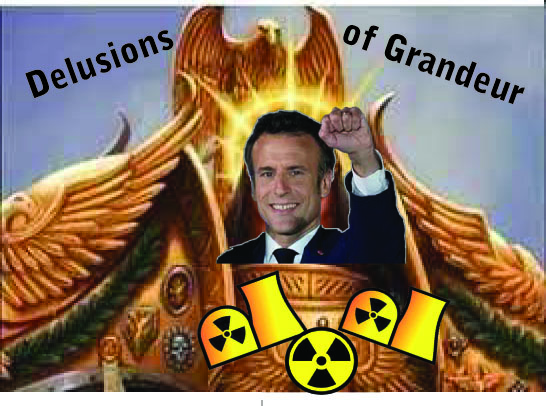
Macron said ‘Our energy & ecological future depends on nuclear power; our economic and industrial future depends on nuclear power; and France’s strategic future depends on nuclear power’:
The first EPR in France has been built at Flamanville on the Normandy coast, but all did not go well. It was 12 years late and four times overbudget. And new vibration problems could mean that it may not be able to run at full power. In addition, more problems (this time with stress corrosion) have been found with some of the old plants.
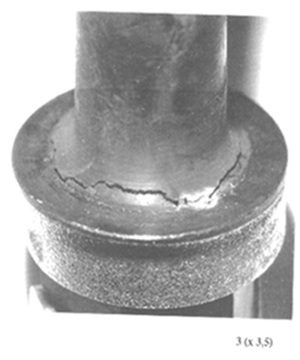
With at one stage, 28 of them shut down for tests and/or repairs, EDFs financial situation became increasingly weak. And, it has got worse. With, in 2024, the French government and economy also being in some disarray, it looked as if plans for more projects might have to be reconsidered, their being reports that ‘in the absence of financial commitment from the State, EDF (is) raising the possibility of halving the investments planned in the EPR2 program in 2025.’

It was the same for EDFs programme of building more EPRs in the UK- with one at Sizewell in Suffolk being proposed to follow on from the part-built one at Hinkley Point in Somerset. Indeed, the French Court of Auditors has just recommended ‘not approving a final investment decision for EDF in Sizewell C before obtaining a significant reduction in its financial exposure in Hinkley Point C’.
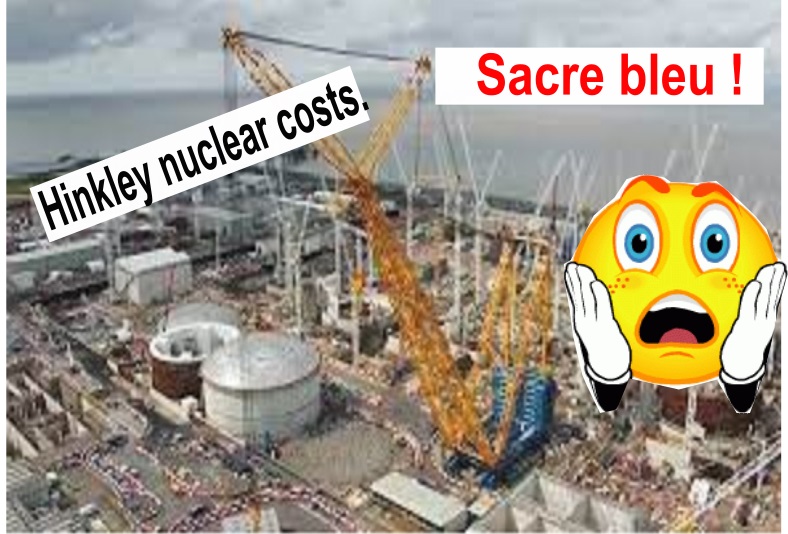
So what next? The somewhat beleaguered French government evidently wants the European Commission to revise EU renewable energy directive to also provide support for new nuclear! But back home, it is arguably ‘far from ready’ for a new nuclear expansion programme. And, with nuclear costs rising, the idea of treating it as ‘low risk’ compared with renewables in EU plans is being resisted. Then again EDF evidently think some new nuclear options are too risky- it has pulled out of work on its initial design for a Small Modular Reactor, so it is no longer a contender for the UK SMR competition.
What does all this mean for the UK? Well, although its overall finances are not good, up until recently, EDF has done quite well out of the UK, still running its fleet of old AGRs and its single PWR, with the UK’s funding subsidy schemes providing support for French profit-making via surcharges on UK consumers bills – in the case of the proposed new RAB scheme for Sizewell C, in advance of project completion. Indeed, some might say EDF’s exploitation of the UK has been overdone and not helpful!
Certainly, EDF’s current troubles add to the increasing level of uncertainty about Sizewell C. China had provided some backing for Hinkley, but, with there being growing concerns about security, the UK government decided that China could not be allowed to back Sizewell. So the hunt was on for new backers. However, it has proven to be hard, and with talk of the bills for these projects ballooning, allegedly to £46bn for Hinkley, the opposition lobby is getting more assertive. Hinkley Point C was originally meant to start up in 2017, but may finally get going in 2031 or so. It is a giant project, impressive in a way, but arguably not what is needed, with renewables getting so much cheaper. Same for Sizewell C- it’s getting increasingly hard to justify it.
EDF do seem to be having it tough with nuclear of late, but although the costs of the EPRs may be disputed, whatever they turn out to be, it’s far from clear if the French EPRs will be value for money. The UK has done quite well so far with renewables, which have helped it get its emissions down by a half between 1990 and 2022, compared to a 23% reduction in France, where nuclear is still predominant and renewable are, so far, less developed. Time for a change everywhere? Certainly, back in 2021, the IEA and RTE Agency in France produced a study asking if it was technically possible to integrate very high shares of renewables in large power systems like that in France. It concluded that, if coupled with adequate storage and system balancing, for renewables to supply 85-90% of power by 2050 and 100% by 2060. However, it would be expensive. But then so would continuing with nuclear, maybe more so.
Nuclear Proliferation and the “Nth Country Experiment”

“Do-it-yourself” Project Produced “Credible Nuclear Weapon” Design from Open Sources
Experimenters Developed a Plutonium Weapon Design with Potential for High Explosive Yield.
NATIONAL SECURITY ARCHIVE, Washington, D.C., January 23, 2025 – Today, the National Security Archive publishesnewly declassified information on a secret mid-1960s project in which a handful of young physicists at Lawrence Livermore Laboratory produced a design for a “credible nuclear weapon” based only on unclassified, open-source information and in just three years. One of the participants described the experiment as “truly a do-it-yourself project,” according to one of the recently declassified records. Begun in the spring of 1964, before China had conducted its first bomb test, the “Nth Country Experiment” concluded that a government with nuclear-weapons aspirations and limited resources could develop a “credible” weapon.
This new Electronic Briefing Book includes the relatively limited declassified literature on the project, including the 1967 “Summary Report on the Nth Country Experiment,” a document first released to the National Security Archive in the 1990s and that was the subject of an Archive press release in 2003. Today’s posting also includes a recently declassified, if massively redacted, Livermore report on “Postshot Activities of the Nth Country Experiment” that summarized classified briefings that two of the participants in the Experiment gave around the country to U.S. government officials. Also included is a State Department internal announcement of a forthcoming briefing on the “Nth Country Experiment” noting that “three young PhD physicists, working part-time, succeeded in achieving a workable nuclear weapons design in a period of about three years.”
……………………………….When the Experiment began in 1964, U.S. intelligence had been analyzing the problem of the potential spread of nuclear weapons capabilities for years. Before the term “nuclear proliferation” became widely used during the 1960s, however, analysts with the CIA and other intelligence organizations had thought in terms of a “4th country” problem: Which country was likely to join the U.S., the U.K., and the Soviet Union as the fourth country with nuclear weapons capabilities? After France tested its first bomb in early 1960 and became the fourth country, analysts began to think in terms of the “Nth country problem”—that some indeterminate number of countries might develop nuclear weapons capabilities. What concerned think tankers and academic experts was that Nth countries would create a more unstable and perilous world where the United States would have less influence and its interests would be under greater threat.[1] Consistent with this, during a 1963 press conference, President John F. Kennedy warned of the possibility of a world where, by the 1970s, there were 15 or 20 nuclear powers that posed the “greatest possible danger and hazard.”[2]
………………………………………..The Department of Energy’s reviewers massively excised the two reports on the Experiment on the grounds that they include “restricted data” (RD) relating to the design of nuclear weapons. The Experiment involved RD from the beginning, with the junior physicists involved receiving Q clearances; any nuclear weapons design information they created would, under the law, be considered secret and “born classified.” Thus, the DOE reviewers completely withheld all discussion and bibliographical entries related to the unclassified and open-source publications that the Experimenters consulted.
……………………………………………………………………………………………………………………………………………………. Future declassifications by the Department of Energy may lead to the release of more information about the “Nth Country Experiment” and its inception.
The Documents…………………………………………………………………………………………………..
UAE’s nuclear company seeks to capitalise on AI-induced energy demand in US

Enec’s CEO says it plans to expand overseas after rapid growth in its home market
Malcolm Moore in Abu Dhabi, Ft.com 26 Jan 25
The United Arab Emirates wants to build and consult on nuclear projects around the world, with the US as the fastest-growing market, the head of the country’s state-owned nuclear company has said.
Emirates Nuclear Energy Company has become a major player since it was established in 2009. It completed the four reactors of its Barakah nuclear power plant, the first in the Arab world, in under 12 years, and on budget. The project was developed in partnership with Korea Electric Power Corp.
The company, known as Enec, has built up investment and research and development teams to explore opportunities beyond the UAE, chief executive Mohamed Al Hammadi told the Financial Times. AI is set to drive a surge in demand for electricity to power data centres.
………………………………………………………Enec has been in discussions to invest in the UK’s Sizewell C project but Al Hammadi declined to comment on whether the company would proceed, only saying that negotiations had “been going through different cycles in the last year”.
The UK has pushed back the final investment decision on Sizewell, which was expected last year, to after the next government spending review expected in the spring, while the estimated cost of the project has doubled from less than five years ago.
Al Hammadi suggested that the US is seeing the fastest growth in demand for nuclear power because of the boom in AI computing. …………………………………………………………………………………. https://www.ft.com/content/f949780a-3eb2-44f2-9db1-f69ce16161b7
The Changing Goal Posts of Nuclear Wastes Crazily Earmarked for “Geological Disposal”

The following letter was sent today to Millom Town Council, 25 Jan 25
The Changing Goal Posts of Nuclear Waste Geological Disposal
Lakes Against Nuclear Dump is a Radiation Free Lakeland campaign with a Facebook group of almost 1000 many of whom live in the Millom area.
We would like to thank Millom Town Council for voting to pull out of the so called “Community Partnership” with Nuclear Waste Services. The developer NWS has one aim and that is to deliver a “Geological Disposal Facility.” Nuclear Waste Services are proving to be the very worst of developers. We all know of developers who put in an application for works to get initial approval knowing full well the goal posts are to be changed later down the line. The latest being to bury 140 tonnes of plutonium. The US is looking to bury a far smaller stockpile of plutonium at WIPP, this has generated criticism from the Bulletin of Atomic Scientists and others concerned with nuclear safety, We assume the burial of plutonium was a NDA decision rather than a “Community Partnership” decision.
This is all a far cry from the 1990s NIREX days. The nuclear wastes slated for burial then on what is now the Wasdale Mountain Rescue Centre at Longlands Farm, Gosforth were low and intermediate. A long public inquiry involving multiple scientists and geologists found the NIREX plan for burial of low and intermediate level nuclear wastes to be ultimately flawed and dangerous to public health. The nuclear dump mission creep now includes plutonium. Deep burial and abandonment of long lived nuclear wastes is not a safe option given the shortfalls in the technical and scientific knowledge of permanent containment. The wastes should be constantly monitored and repackaged when necessary. The push for burial in a very large, very deep (and earthquake inducing) sub-sea mine is a purely political choice in order to justify new nuclear wastes.
We believe you will be ratifying your decision on January 29th and we look forward to others including Friends of the Lake District, taking Millom Town Council’s lead and pulling out of the Geological Disposal Facility “Community Partnerships”. of South and Mid Copeland.
Yours sincerely
Marianne Birkby
Lakes Against Nuclear Dump – a Radiation Free Lakeland campaign
Risks of geologic disposal of weapons plutonium
By Cameron Tracy | January 13, 2025https://thebulletin.org/premium/2025-01/risks-of-geologic-disposal-of-weapons-plutonium/
Nuclear power: Engie CEO criticises Arizona ambitions to extend Doel and Tihange lifespan.

Brussels Times, 25 January 2025, https://www.brusselstimes.com/news/1409124/nuclear-power-engie-ceo-criticises-arizona-ambitions-to-extend-doel-and-tihange-lifespan
Negotiators for the new federal government can kiss goodbye their plans to extend additional nuclear reactors or keep Doel 4 and Tihange 3 running for another 20 years. In a frustrated communication on Friday, Engie Belgium’s managing director Vincent Verbeke branded the plans “unthinkable today.”
The work Engie must carry out on Belgium’s nuclear sites is already “colossal”, Verbeke stressed. He points in particular to the dismantling of nuclear power plants that have already been shut down, work to secure the reactors that are due to close in 2025 and above all, the extension of Doel 4 and Tihange 3 until 2035.
It is therefore simply unthinkable to plan to keep Tihange 1 open any longer, insists the head of Engie Belgium. “We’re concentrating on what we’ve agreed, in particular the ten-year extension. This already represents a gigantic amount of work.”
Furthermore, nuclear power is no longer part of Engie’s “strategic ambition”, Verbeke says. The French energy giant is focusing more on renewable energies and flexibility. “We are no longer investing in nuclear power,” adds the CEO.
Plans to extend Doel 4 and Tihange 3 for a further ten years also appear to have fallen on deaf ears for the time being. “A 20-year extension is a different project. It doesn’t exist.” Verbeke reiterated that nuclear power is too expensive and the cheapest option is to invest in renewable energies.
When Russian Radar Mistook a Norwegian Scientific Rocket for a U.S. Missile, the World Narrowly Avoided Nuclear War

The Norwegian rocket incident, which took place on this day in 1995, marked the only known activation of a nuclear briefcase in response to a possible attack
Laura Kiniry. January 25, 2025, https://www.smithsonianmag.com/smart-news/when-russian-radar-mistook-a-norwegian-scientific-rocket-for-a-us-missile-the-world-narrowly-avoided-nuclear-war-180985836/
When the Cold War ended in 1991 with the collapse of the Soviet Union, it greatly reduced the threat of global nuclear war. But on January 25, 1995, that threat once again came front and center when Russian officers mistook a Norwegian rocket sent to study the aurora borealis for a weapon of mass destruction.
While not as well known as the 1962 Cuban Missile Crisis, the “Norwegian rocket incident” is considered one of the world’s closest brushes with nuclear war.
In the early morning hours of January 25, a team of Norwegian and American scientists launched a Black Brant XII four-stage sounding rocket from Norway’s Andoya Rocket Range, a launch site off the country’s northwestern coast. Its purpose: to study the northern lights over Svalbard, a Norwegian archipelago in the Arctic Ocean.
Although the scientists had notified dozens of countries, including Russia, in advance of their high-altitude scientific experiment, the information never made its way to Russia’s radar technicians.
Just four years after the Cold War’s end, tensions between the former USSR and the United States remained high. So when Russian officers at the Olenegorsk Radar Station detected a fast-moving object that was traveling on a high northbound trajectory above the Barents Sea, near Russia’s northern border, they feared it might be a nuclear attack from U.S. submarines. After all, it was similar in speed and flight pattern to a missile. It reached an altitude of 903 miles, separating into several sections as it flew, in the same way warheads would detach from a submarine-launched Trident missile.
Russia’s modus operandi was to identify an attack, assess it and decide whether to retaliate, all within ten minutes. Tracking the trajectory of the “missile” had already taken up the bulk of that time.
As a result, Russian submarine commanders were put on alert and ordered to prepare for a nuclear response. Russian President Boris Yeltsin was notified and given the Cheget, Russia’s nuclear briefcase—typically kept near the leader of a nuclear-weapons state at all times. This holds the launch codes for the country’s missile arsenal, which can be used to order a nuclear strike. To this day, it’s the only known activation of a nuclear briefcase in response to a possible attack.
After conferring with his top advisers, Yeltsin concluded that the rocket was heading away from Russian airspace and didn’t pose any threat to the country.
Twenty-four minutes after its launch, the rocket fell into the sea near Spitsbergen, the only permanently inhabited island on the Svalbard archipelago. The entire incident was over as quickly as it seemingly began.
It was a harrowing false alarm, and one that had the potential to cause widespread casualties. Though the incident has largely flown beneath history’s radar, it did lead to the re-evaluation and redesign of notification and disclosure protocols in both the U.S. and Russia
Ministers urged to clarify nuclear deployment
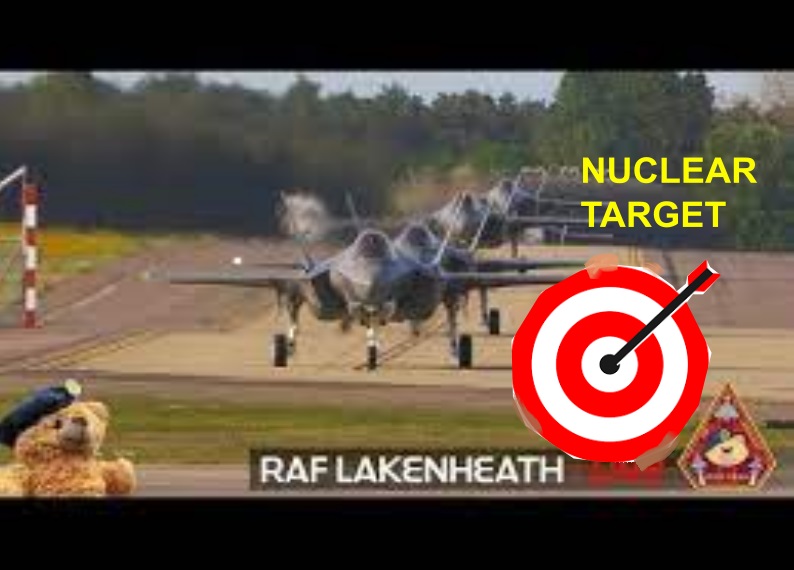
“US nuclear weapons at RAF Lakenheath will present a major threat, not only to communities near the base but to Britain as a whole, by putting us all on the US/Nato nuclear front line.”
Matt Precey, BBC News, Suffolk, 25th Jan 2025
The government is facing fresh demands to disclose whether US nuclear weapons are on British soil.
It comes as a senior American official confirmed the deployment of a new generation of bombs had been completed.
The Campaign for Nuclear Disarmament (CND) has written to the prime minister and the defence secretary to ask whether RAF Lakenheath in Suffolk is housing B61-12 munitions.
The UK and Nato have a long-standing policy to neither confirm nor deny the presence of nuclear weapons at a given location.
……………………………..The B61-12 is a thermonuclear bomb which can be carried by F-35A Lightning II aircraft, which are stationed at RAF Lakenheath.
US Department of Defense documents revealed $50m was being allocated to build new facilities at RAF Lakenheath known as “surety dormitories”, which the Federation of American Scientists claimed pointed to the arrival of nuclear weapons.
Another document seen by the BBC, which has since been removed from the internet, stated there was related work at the base in preparation for its “upcoming nuclear mission”.
Weapons of mass destruction were withdrawn from RAF Lakenheath in 2008.
The US and its Nato partners do not disclose figures for their European-deployed weapons but the Washington-based Center for Arms Proliferation and Control estimates there are 100 warheads stored across five countries.
Security risks
In a letter to the government, CND general secretary Sophie Bolt said Ms Hruby’s disclosure suggested the nuclear bombs could now be in the UK.
She said: “There has been no information presented to local communities about the new security risks that they face.
“US nuclear weapons at RAF Lakenheath will present a major threat, not only to communities near the base but to Britain as a whole, by putting us all on the US/Nato nuclear front line.”
The letter added that the public “has a right to know about the risks posed by such a deployment – and the right to express their opposition to it”.
In November, the US Air Force confirmed that unidentified drones had been spotted over three of its airbases in the UK, including RAF Lakenheath.
No further information has emerged as to the origin or intentions of these aircraft.
But CND said the sightings “increased risks” at the base.
Ms Bolt told the BBC: “An accident involving drones and an aircraft carrying nuclear material, or drones causing aircraft to crash on the base near where nuclear weapons are stored, could have catastrophic consequences.”
https://www.bbc.co.uk/news/articles/c20kwzyg721o
Nuclear Waste: The Dark Side of the Microreactor Boom

By Haley Zaremba – Jan 15, 2025, https://oilprice.com/Alternative-Energy/Nuclear-Power/Nuclear-Waste-The-Dark-Side-of-the-Microreactor-Boom.html
The nuclear energy sector is experiencing a revival, driven by factors such as increased energy demand and support from governments and tech companies.
Microreactors, a new form of nuclear technology, are being touted for their lower costs and smaller size, but they produce a significantly higher volume of nuclear waste.
Despite concerns about nuclear waste, the development and deployment of microreactors continue to gain momentum, driven in part by the growing energy needs of AI.
Nuclear energy is ready for its close-up. After decades of steep decline in the sector and relatively high levels of public mistrust for the controversial technology, the tides are turning in favor of a nuclear energy renaissance. The public memory of disasters like Fukushima, Three Mile Island, and Chernobyl is fading, and the benefits of nuclear – a zero-carbon, baseload energy source – are getting harder to ignore as deadlines for climate commitments grow closer and energy demand ticks ever higher. But the future of the nuclear energy sector will look a bit different than its last boom time, from technological advances to the makeup of its biggest backers.
In Russia and Asia, nuclear energy has stayed popular, but in the West, nuclear had almost entirely fallen out of favor up until the last few years. In the United States, the Biden administration helped to build momentum for a nuclear comeback through its flagship Inflation Reduction Act, which included tax breaks and other incentives for various nodes of the nuclear sector. Over in Europe, nuclear advocates are trying to push through policy supporting nuclear power as Europe reconfigures its energy landscape to contend with energy sanctions on Russia. Public opinion in the West is also shifting in favor of nuclear power. As of 2023, a Gallup poll showed that support for nuclear energy in the United States was at a 10-year high.
Some of the biggest proponents of the nuclear energy renaissance are big tech bigwigs, who point to the power source as a critical solution to feed the runaway power demand of Artificial Intelligence. In fact, the growth trend of data centers’ energy demand is so extreme that it will soon outstrip the United States’ production potential if nuclear energy – and a host of other low-carbon solutions – are not utilized, and soon. Tech bigwigs, therefore, have good reason to back nuclear energy – oh, and they also just so happen to be behind a rash of nuclear energy startups.
But the new kind of nuclear that these companies are trying to bring onto the scene will not be the same as the nuclear technologies that had so solidly fallen out of favor over the last few decades. Traditional nuclear energy has a number of drawbacks, most notably its extremely high up-front costs and the additional costly burden of storing hazardous nuclear waste. New nuclear advocates want to confront the former challenge by rolling out much smaller versions of nuclear reactors, which can essentially be mass-produced and then installed on site for much lower development costs.
Currently, the industry is undergoing a competitive race to corner the market on nuclear microreactors, which are about the size of a shipping container and function somewhat like a giant battery pack. “Microreactors have the ability to provide clean energy and have passive safety features, which decrease the risk of radioactive releases,” Euro News recently reported. “They are also much cheaper than bigger plants as they are factory-built and then installed where they are needed in modules.”
These microreactors can be used in a huge range of applications and do not require any on-site workers for their operation and maintenance. Instead, they can be operated remotely and autonomously. As a result, they have much lower overhead costs as well as lower up-front costs. So what’s the downside?
Well, it’s a big one. Scientists have found that, contrary to what nuclear advocates have touted, small nuclear reactors produce extremely high levels of nuclear waste, and could even be worse for the planet than their full-sized predecessors. “Our results show that most small modular reactor designs will actually increase the volume of nuclear waste in need of management and disposal, by factors of 2 to 30,” said Stanford study lead author Lindsay Krall. “These findings stand in sharp contrast to the cost and waste reduction benefits that advocates have claimed for advanced nuclear technologies.”Some members of the scientific community have taken notice: “Say no to small modular reactors,” blasted a recent headline from the Bulletin of Atomic Scientists.
However, the voices decrying the rollout of small- and microreactors seem to be in the minority, as the Silicon Valley-backed industry barrels full speed ahead. Countries across Europe have jumped into the race as well, and its high levels of momentum – fuelled by the seemingly unstoppable expansion of AI – are unlikely to be impeded by the scientists yelling doomsday warning, however well-founded, from the sidelines.
Heysham power station debate sparks questions on safety and incidents
By Robbie Macdonald, Lancaster Guardian 24th Jan 2025
Heysham nuclear power station safety, public health, waste, jobs, clean energy and the roles of councillors, from scrutiny to enthusiastic support, were raised in a Lancaster City Council debate.
It followed a recent announcement by the government and EDF about extending the generating lives of Heysham’s two nuclear reactors and the possibility of smaller reactors being there in the future.
Labour Coun Phillip Black, the former city council leader who resigned in November, put forward a motion backed by others, welcoming the news about extending Heysham 1’s and Heysham 2’s generating lives to 2027 and 2030.
Labour councillors and some others also wanted the council to state it had ‘confidence’ in the safety considerations underpinning the date extensions. And they also wanted the council to state support for new nuclear’ activity at Heysham in future.
However, others including many Greens, said Labour was irresponsible with the motion, given the wide spectrum of responsibilities councillors were supposed to consider.
Green Coun Gina Dowding said: “It’s really irresponsible to bring these two issues into one motion. Both are really important and deserve separate consideration.
“I recently asked a qualified architect, who has spent her working life on nuclear issues, about this. She said it would be deeply irresponsible for the council to ‘welcome’ the extensions. Extending the operating dates beyond the sites’ lifetimes should be questioned by the council – that is our role,” she emphasised. “These buildings were built in the 1980s based on reactor designs in the 1970s.”
She added: “We should also look at anomalies, such as an unforeseen circumstances , which are increasingly happening. There have been unplanned shut-downs. There was one last week. A loud bang was heard and a cloud seen, which concerned residents and the fire brigade was called.”
She also highlighted the proximity of the Heysham nuclear site, along with one at Hartlepool in the north-east, to areas with populations of over 100,000. She added: “At Heysham, the majority of people would be down-wind of any incident. So any motion saying this is ‘great for the future’ is not appropriate. Just because nothing has happened so far does not mean it couldn’t happen in future.
“Of course, there are skills and jobs in nuclear energy. But there are also skills and jobs in the decommissioning stages. Also in renewable energy, along with the potential to create more jobs and generate electricity for less cost.”
…………………………………….Fellow Green Tim Hamilton-Cox said. “Small modular reactors are still beyond the horizon and we have not yet got a permanent solution for nuclear waste. Some councillors have been against having that discussion. Speaking personally, I am not against nuclear power per se. But there are still many considerations and still no permanent solution for waste.”
Lib-Dem Peter Jackson, a member of the city council’s new cabinet, said: “I invite Labour councillors to bring forward a separate discussion about future Heysham questions as soon as possible.”
Morecambe Bay Independent Martin Bottoms, also on the new cabinet, also argued the extensions and any future developments should be treated separately. New modular reactors would not be on the horizon until at least 2025……………………………………
But Labour councillors opposed separating current and future topics. https://www.lancasterguardian.co.uk/news/national/heysham-power-station-debate-sparks-questions-on-safety-and-incidents-4958881
Brian Goodall slams MP over Rosyth Dockyard nuclear submarines move
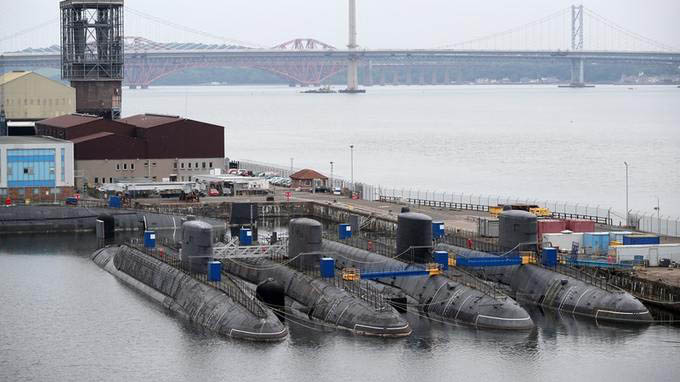
“As if it’s not bad enough that there are seven of these environmental time bombs already here, some of which have now been here for decades.“
By Ally McRoberts, Dunfermline Press 25th Jan 2025
A ROSYTH SNP councillor said he was “totally outraged” at the prospect of more nuclear submarines being brought to the dockyard for dismantling.
Brian Goodall said the “environmental time bombs” should be nowhere near the town and hit out at Labour MP Graeme Downie for pushing for more of the work to be done here.
One old Royal Navy sub, HMS Swiftsure, is being cut up and the radioactive waste removed as part of an innovative recycling scheme and there are six more vessels laid up at Rosyth, and another 16 at Devonport in Plymouth.
Mr Downie – who dismissed the criticism as “scaremongering” – wants the Ministry of Defence to put up the money to deal with all of the decommissioned boats and said it would “guarantee decades of work” and bring hundreds of jobs to the dockyard.
But Cllr Goodall hopes to sink that plan and said: “I’ve been totally outraged to see that our area’s Labour MP has called for even more nuclear submarines to be dumped and broken up in Rosyth.
“Labour’s MP for Dunfermline and Dollar has asked the MoD to bring all of the UK’s decommissioned nuclear submarines to Rosyth Dockyard.
“As if it’s not bad enough that there are seven of these environmental time bombs already here, some of which have now been here for decades.”
One of the seven at the yard, HMS Dreadnought has been laid up so long – since 1980 – that much of her low-level radiation has “disappeared naturally”.
As well as dealing with the 23 vessels at Rosyth and Devonport, three more are due to come out of service.
Cllr Goodall continued: “His call runs contrary to Fife Council’s long-standing commitment as a leading nuclear free local authority and I also fear the major impact on Rosyth Dockyard’s contribution to Scotland’s green transition, and the jobs that come with that, if this change of policy was secured, and the dockyard couldn’t become de-regulated as a nuclear site in the medium term.
“Rosyth is simply not the right place for the MoD, or anyone else, to be storing radioactive materials.
“There are homes, shops and businesses within metres of the dockyard.
“There’s a Fife College campus within the dockyard and our brand-new high school is being built within a few hundred metres of the site.”………………………..
Cllr Goodall said: “The compromise that could see the submarines that are already here, dismantled at the dockyard with all radioactive substances being removed to more suitable interim storage facilities down south, is one that I can, reluctantly, agree with, but any suggestion of additional nuclear submarines being brought to Rosyth is an outrage, and would be a breach of promise from the MoD.”……………………… https://www.dunfermlinepress.com/news/24883349.brian-goodall-slams-mp-rosyth-dockyard-subs-move/
1 This Month
29 Jan. Thursday 7-8 p.m. Webinar – World’s Largest Nuclear Station in Port Hope, ON?
To see nuclear-related stories in greater depth and intensity – go to https://nuclearinformation.wordpress.com/



31st January – Challenging the War Machine – a DECLASSIFIED UK SUMMIT


Website of the Week
Now until to February 10, 2026 Radioactive waste storage in France: the debate is finally open! How to participate?
-
Archives
- January 2026 (283)
- December 2025 (358)
- November 2025 (359)
- October 2025 (376)
- September 2025 (258)
- August 2025 (319)
- July 2025 (230)
- June 2025 (348)
- May 2025 (261)
- April 2025 (305)
- March 2025 (319)
- February 2025 (234)
-
Categories
- 1
- 1 NUCLEAR ISSUES
- business and costs
- climate change
- culture and arts
- ENERGY
- environment
- health
- history
- indigenous issues
- Legal
- marketing of nuclear
- media
- opposition to nuclear
- PERSONAL STORIES
- politics
- politics international
- Religion and ethics
- safety
- secrets,lies and civil liberties
- spinbuster
- technology
- Uranium
- wastes
- weapons and war
- Women
- 2 WORLD
- ACTION
- AFRICA
- Atrocities
- AUSTRALIA
- Christina's notes
- Christina's themes
- culture and arts
- Events
- Fuk 2022
- Fuk 2023
- Fukushima 2017
- Fukushima 2018
- fukushima 2019
- Fukushima 2020
- Fukushima 2021
- general
- global warming
- Humour (God we need it)
- Nuclear
- RARE EARTHS
- Reference
- resources – print
- Resources -audiovicual
- Weekly Newsletter
- World
- World Nuclear
- YouTube
-
RSS
Entries RSS
Comments RSS
 nuclear-news