Lost Opportunities to Halt Rising Military Spending
By Alice Slater, https://www.ipsnews.net/2026/01/lost-opportunities-to-halt-rising-military-spending/?utm_source=email_marketing&utm_admin=146128&utm_medium=email&utm_campaign=Skyrocketing_Military_Spending_Undermines_Development_Aid_to_Worlds_Poor_Consent_Ignored_Convictions
NEW YORK, Jan 6 2026 (IPS) – The United Nations issued a year end Fact Sheet: Rising global military expenditures, starkly illuminating that last year’s record high of $2.7 trillion in military expenditures, caused a cascade of devastating consequences to human well-being, the environment, possibilities for avoiding climate collapse, as well as blows to employment, ending hunger and poverty, providing health care, education, and other ills, due to a lack of adequate funding support.
The Fact Sheet does an admirable job of illustrating the shocking maldistribution of States massive military expenditures and what that money could buy in many instances, such as to end hunger and malnutrition, provide clean water and sanitation, education, environmental remediation, and so much more.
But isn’t it time for the UN to issue a Fact Sheet: Lost Opportunities to Halt Rising Military Expenditures and Heal the Earth? After all, just this summer on the 80th Anniversary of WWII, Russia and China issued a Joint Statement by the Russian Federation and the People’s Republic of China on Global Strategic Security in which they urged that in acknowledging that anniversary and the founding of the United Nations, States and their associations “should not seek to ensure their own security at the expense and to the detriment of the security of other States.” adding that ”the destinies of the peoples of all countries are interrelated.”
Even a cursory examination of the sorry history of the United States and its nuclear alliance, in seeking to secure military domination at the expense of Russia and China, shows a sad list of missed opportunities to accept Russia and China’s offers to negotiate for peace and disarmament, which would have freed up trillions of dollars over the years to address the crisis we now face for preserving all life on earth.
The most recent opportunity that should be on the list, (met with deafening silence by the corrupt western media, laboring under the heavy thumb of their corporate military sponsors, who delight in the billions lining their pockets to produce the burgeoning war machine) was China and Russia’s Joint Statement criticizing the US misbegotten Golden Dome space project and opposing any countries use of outer space for armed confrontation.”
They urged negotiations based on the Russian-Chinese draft treaty to prevent weapons and use of force in outer space, proposed at the UN Committee on Disarmament in 2008 and 2014, where consensus is required to negotiate a treaty and the United States vetoed it each time, preventing any discussion. Amazingly, they further pledged that to prevent an arms race in outer space and promote peace in space, they would “agree to promote on a global scale the international initiative/political commitment not to be the first to deploy weapons in outer space.” In other words, No First Use.
While peace in space is the most recent Lost Opportunity, the first Lost Opportunity happened in 1946 when President Truman rejected Stalin’s proposal that the US turn the bomb over to international supervision at the newly formed UN, so Russia got the bomb.
President Reagan rejected Gorbachev’s plea to give up Star Wars as a condition for both countries to eliminate all their nuclear weapons when the wall came down and Gorbachev released all of Eastern Europe from Soviet occupation, thus losing the opportunity to abolish our nuclear arsenals.
More Lost Opportunities: the expansion of the North Atlantic Treaty Organization (NATO) up to Russia’s border despite promises made when the wall came down that NATO would not expand east of a reunified Germany:
President Clinton’s refusal of Putin’s offer to go down to 1000 bombs each, and then call all nuclear states to negotiate for their elimination, provided the US stopped developing missile sites in Romania.
President Bush walked out of the 1972 Anti-Ballistic Missile Treaty and put the new base in Romania; President Trump put one in Poland.
President Obama rejected Putin’s offer to negotiate a treaty to ban cyber war! [i]
Had the US been more open over the years to cooperation, instead of losing so many opportunities to make peace, we would be so much more able to deal with the urgency of preserving a livable planet for all and avoiding the dire consequences enumerated in the new UN Fact Sheet on global military expenditures. It’s still not too late to take up the Russian-Chinese proposal for peace in space. May wiser heads prevail.
Alice Slater serves on the Boards of World BEYOND War and the Global Network Against Weapons and Nuclear Power in Space, and is a UN NGO Representative for the Nuclear Age Peace Foundation.
Ralph Nader: Ex-Presidents and Democratic Leaders Silent on the Impeachment of Donald Trump
Events can move very fast. First, Trump is the most powerful contributor to his own Impeachment. Day after day, this illegal closer of long-established social safety nets and services is alienating tens of millions of frightened and angry Americans.

By Ralph Nader, January 9, 2026, https://nader.org/2026/01/09/ex-presidents-and-democratic-leaders-silent-on-the-impeachment-of-donald-trump/
The staggering cowardliness by four ex-Presidents vis-à-vis Tyrant Trump’s wrecking of America cannot escape history’s verdict. However, there is still an opportunity for vigorous redemption by George W. Bush – whose life-saving AIDS Medicine Program in Africa was shut down by Trump – Bill Clinton, Barack Obama, and Joe Biden, if they have any self-respect for their patriotic duty.
As of now, these former Presidents are living lives of luxury and personal pursuits. They are at the apex of the ‘contented classes’ (see my column “Trump and the Contented Classes”, November 14, 2025) who have chosen to be bystanders to Trump’s tax cuts for the wRight off, they can upend the public discourse that Trump dominates daily with phony personal accusations, stunningly unrebutted by the feeble Democratic Party leaders. This counterattack with vivid, accurate words will further increase the majority of people who want Trump “Fired.” Just from their own observations of Trump’s vicious, cruel destruction of large parts of our government and civil service, which benefits and protects the populace, should jolt the former presidents into action.ealthy, deregulation, and the doling out of Trump’s corporatist welfare giveaways.
Imagine, if you will, what would happen if these four wealthy politicians, who still have most of their voters liking them, decided to band together and take on Trump full throttle. Privately, they believe and want Trump to be impeached (for the third time in the House) and convicted in the Senate. This time, on many impeachable actions that Trump himself boasts about, claiming, “With Article II, I can do whatever I want as President.”
Right off, they can upend the public discourse that Trump dominates daily with phony personal accusations, stunningly unrebutted by the feeble Democratic Party leaders. This counterattack with vivid, accurate words will further increase the majority of people who want Trump “Fired.” Just from their own observations of Trump’s vicious, cruel destruction of large parts of our government and civil service, which benefits and protects the populace, should jolt the former presidents into action.
Next, the bipartisan Band of Four can raise tens of millions of dollars instantly to form “Save Our Republic” advocacy groups in every Congressional District. The heat on both Parties in Congress would immediately rise to make them start the Impeachment Drive. Congressional Republicans’ fear of losing big in the 2026 elections, as their polls are plummeting, will motivate some to support impeachment. Congressional Republicans abandoned President Richard Nixon in 1974, forcing his resignation with Impeachment on his political horizon.
Events can move very fast. First, Trump is the most powerful contributor to his own Impeachment. Day after day, this illegal closer of long-established social safety nets and services is alienating tens of millions of frightened and angry Americans.
Daily, Trump is breaking his many campaign promises. His exaggerated predictions are wrong. Remember his frequent promise to stop “these endless wars,” his assurance that he would not impair government health insurance programs (tell that to the millions soon to lose, due to Trump, their Medicaid coverage), his promise of lifting people into prosperity (he opposes any increase in the federal minimum wage of $7.25 per hour) and he has signed GOP legislation to strip tens of millions of Americans from the SNAP food support and take away the Obama subsidies for Obamacare. Many Trump voters are among the vast number of people experiencing his treachery, where they live and raise their families, will lose out here. The catalytic opportunities of these four ex-presidents and their skilled operating teams are endless.
Further, this Band of Presidents, discovering their patriotic duty, will recharge the Democratic Party leaders or lead to the immediate replacement of those who simply do not want or know how to throw back the English language against this Bully-in-Chief, this abuser of women, this stunning racist, this chronic liar about serious matters, this inciter of violence including violence against members of Congress, this invader of cities with increasingly violent, law breaking storm-troopers turning a former Border Patrol force into a vast recruitment program for police state operators.
Trump uses the word “Impeachment” frequently against judges who rule against him, and even mentions it in relation to it being applied to him. Tragically, Democratic Party leaders Chuck Schumer and Hakeem Jeffries have made talk of Impeachment a taboo, arguing the time is not yet ripe. How many more abuses of power do they need to galvanize the Democrats in the House and Senate against the most blatantly impeachable president by far in American history? He keeps adding to his list – recently, he has become a Pirate and killer on the High Seas, an unconstitutional war maker on Iran and Venezuela, openly threatening to illegally seize the Panama Canal, Greenland, and the overthrow of the Cuban government.
Constitutional scholar Obama can ask dozens of constitutional law professors the question: “Would any of the 56 delegates who signed our U.S. Declaration of Independence in 1776 and the 39 drafters who signed our U.S. Constitution in 1787, being told about Monarch King Donald Trump, oppose his immediate Impeachment and Removal – the only tool left he doesn’t control?” Not one, would be their studied response.
Trump, a serial draft dodger, pushes through another $150 billion to the Pentagon above what the Generals requested while starving well-being programs of nutrition for our children and elderly, and cutting services, by staff reductions, for American veterans, and stripmining our preparedness for climate violence and likely pandemics.
He promised law and order during the election and then betrayed it right after his inauguration, pardoning 1,500 convicted, imprisoned criminals, 600 of them violent, emptying their prison cells and calling them “patriots” for what they did to Congress on Jan. 6, 2021.
MR. EX-PRESIDENTS, JUST WHAT ARE YOU WAITING FOR? WHAT ARE YOUR ESCAPIST EXCUSES? Call your friends who are ranking members of the GOP controlled Committees of Congress and tell them to hold prompt SHADOW HEARINGS to educate the public through witnesses about the TRUMP DUMP, impeachable, illegal, and unconstitutional government. The media would welcome the opportunity to cover such hearings. Congressman Jamie Raskin thought this was “a good idea” before being admonished by his frightened Democratic leaders to bide his time and remain silent.
As more of Trump’s iron boots drop on people’s livelihoods, their freedoms, their worry for their children and grandchildren, their antipathy to more aggressive wars against non-threatening countries, and their demands at town meetings and mass marches for action against Trump’s self-enriching despotism, the disgraceful, craven cowardliness of our former presidential leaders will intensify. Unless they wake up to the challenge. With the mainstream media attacked regularly and being sued by Trump’s coercive, illegal extortion, the action by the Band of Four will bolster press freedom, press coverage, and their own redemption.
Send these four politicians, who are friendly with one another, petitions, letters, emails, satiric cartoons, or whatever communications that might redeem them from the further condemnation of history.
Rest assured, with Trump in the disgraced White House, THINGS ARE ONLY GOING TO GET WORSE, MUCH WORSE! For that is the predictable behavior from the past year and from his dangerously unstable, arrogant, vengeful, and egomaniacal personality
The Non-Peaceful Atom
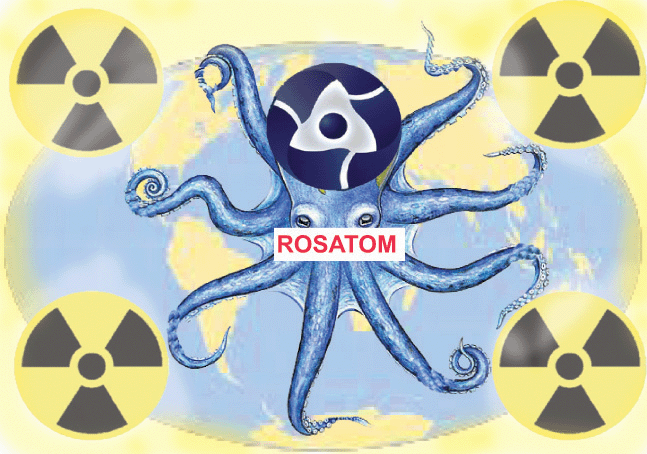
Vladimir Slivyak, January 7, 2026, https://www.posle.media/article/the-non-peaceful-atom
In what ways does Russia use nuclear energy as a strategic tool? Why have sanctions failed to end Europe’s dependence on the Russian nuclear industry? How is Rosatom involved in the war? Vladimir Slivyak, co-chair of the Eco-Defense group, answers these questions
As a strategic instrument of the Kremlin, Rosatom helps to create and entrench geopolitical dependencies. This dependence rests on the promotion of nuclear energy but has ramifications that extend far beyond the energy sector. Rosatom is both directly and indirectly involved in Russia’s war against Ukraine. In particular, Rosatom played a key role in Russia’s seizure of the Zaporizhzhia nuclear power plant and has offered to procure materials and components for Russian arms manufacturers under sanctions.
Nevertheless, the European nuclear industry continues to collaborate with Rosatom. For instance, Rosatom supplies uranium to Framatome’s ANF nuclear fuel plant in Lingen, Germany. Rosatom is also involved in expanding this facility, even though the German authorities have not yet approved such cooperation. If the Framatome-Rosatom project, which has been in development for over three years, goes ahead, the Russian regime will further strengthen its political influence in Western Europe despite the war in Ukraine.
Rosatom as a Civil-Military State Corporation
Rosatom is a state-owned corporation that operates in both the civilian and military spheres of nuclear energy and nuclear weapons. As the successor to Russia’s Ministry of Atomic Energy, Rosatom brings together over 350 companies engaged in nuclear activities. The corporation was created by a decree by Russian President Vladimir Putin in 2007.
Rosatom is directly owned by the Russian state. It is one of seven Russian “state corporations,” grouped together with Rostec, Roscosmos, and others. In 2012, former Prime Minister Dmitry Medvedev described Rosatom as a “corporation of a special kind” that not only seeks to expand its activities but also carries out “certain ministerial tasks.”
The corporation’s Supervisory Board is its main decision-making body. This board includes Sergey Kirienko, the deputy head of the Russian presidential administration, who is currently under sanctions from the EU, the UK, and the US, as well as Sergei Korolev, the first deputy director of the Federal Security Service of the Russian Federation (the main successor to the Soviet KGB). In relation to the war in Ukraine, Korolev has also been sanctioned by the EU, Australia, Canada, New Zealand, Switzerland, the UK, and Ukraine. The Supervisory Board also includes two Russian deputy prime ministers and two aides to President Vladimir Putin.
The European Parliament has repeatedly called for sanctions on Rosatom and for an end to all nuclear cooperation with Russia, including uranium imports and investments in critical infrastructure.
Participation in the War
Since Russia’s full-scale invasion of Ukraine began, Rosatom has been directly and indirectly involved in the war. According to a letter obtained by Ukrainian intelligence and published in the American press, Rosatom offered assistance to the Russian arms industry in securing goods needed for the production of weapons, tanks, and aircraft after that sector had been hit by international sanctions.
In his December 2022 address to Rosatom on the occasion of its 15th anniversary, President Vladimir Putin praised the corporation for its “enormous contribution to the development and deployment of advanced weapons systems and military equipment.”
In the early days of the invasion, Rosatom employees assisted Russian troops who occupied the Chernobyl exclusion zone in Ukraine. The Russian state corporation also facilitated the illegal seizure of Ukraine’s Zaporizhzhia Nuclear Power Plant. Rosatom employees have taken over key management positions at the facility. Following a decree by the Russian president, Rosatom created a new subsidiary specifically tasked with taking control of the plant.
In October 2023, Ukrainian nuclear operator Energoatom reported that the safety culture at the plant was deteriorating under Rosatom’s control. This deterioration included poorly performed work, insufficient staffing, and inadequate inspections. The company stated that these problems had led to significant damage to critical components of the Zaporizhzhya Nuclear Power Plant (NPP), including leaks in the radioactive primary coolant circuit. There is also credible evidence that Rosatom employees assisted the Russian military in selecting targets at the Zaporizhzhya NPP; they reportedly “helped direct Russian artillery fire at the plant.”
Rosatom as a Geopolitical Tool
Rosatom is a central player in the Russian regime’s “geopolitics.” The company’s goal is to make as many countries as possible dependent on Russian nuclear technology, services, and fuel. Rosatom purchases essential equipment for nuclear reactors under construction from European companies and supplies the EU with unenriched and enriched uranium, fuel, and other nuclear services. This cooperation helps fund the continuation of the war in Ukraine. It also locks Europe into dependence on Russian nuclear fuel and services, which ultimately translates into political influence.
Hungary is perhaps the clearest example. It is almost entirely dependent on Russia for nuclear energy services and has repeatedly blocked any attempt by the EU to impose sanctions on Rosatom. Russia controls the supply of nuclear fuel and the maintenance of existing Hungarian reactors and has provided a €10 billion loan for the construction of Paks-2 nuclear power plant. In addition, Siemens Energy and Framatome are providing key equipment and control systems for new Russian-made reactors in Hungary.
Rosatom states that it is currently building more than 30 new reactors in about a dozen countries. Last year, its subsidiaries exported approximately $2.2 billion worth of nuclear energy-related goods and materials. The Russian state budget covers more than 90% of the cost of Rosatom’s construction of new nuclear power plants around the world.
Rosatom has signed agreements with nearly 20 African countries to build nuclear power plants and research reactors. So far, however, only one plant is actually under construction: the Al Dabaa plant in Egypt. Rosatom has also purchased a uranium mine in Tanzania. A previous attempt to build a nuclear power plant in South Africa collapsed due to resistance from environmental activists. In South America, Rosatom is involved in smaller but still significant projects, such as a research reactor and lithium mining in Bolivia.
Despite Russia’s war in Ukraine, the French nuclear company Framatome continues to purchase uranium from Rosatom. Between 2022 to 2023, at least ten shipments of uranium went from Russia to the ANF nuclear fuel plant in Lingen, a Framatome subsidiary. According to the German government, these deliveries took place under two federal government licenses issued in September, November, and December 2022, as well as in April and May 2023. In August 2023, German authorities granted a new license authorizing up to 40 more shipments. Deliveries are still ongoing.
Prospects
In the four years since Russia’s full-scale invasion began, the EU has adopted nearly twenty packages of sanctions against the Russian economy and industry. Other countries, including the United States, the United Kingdom, Canada, and Japan, have also imposed sanctions. However, Russia has faced virtually no pressure in the field of nuclear energy, one of its key sectors with both civilian and military significance. On the contrary, Rosatom has expanded its operations and almost tripled its profits from trade with Western countries.
Europe’s dependence on Russia in the nuclear sphere is roughly comparable to its reliance on pipeline gas supplies before the war. First, Putin used gas deliveries as leverage over Europe, and then the Russian pipeline was destroyed in an act of sabotage. Without these developments, we would now likely be talking about the EU’s crippling dependence on Russia for both uranium and pipeline gas. In such a situation, it is reasonable to assume that Ukraine would not have been able to rely on the level of support it currently enjoys in Europe.
This dependence on Russian supplies did not arise by a happy accident for Moscow but from strategic steps the Russian regime has taken over the past 10–15 years. It is not known for certain whether Putin had been planning a full-scale war throughout this entire period. However, it is clear that making Europe’s economy as dependent as possible on Russian energy supplies was one of Moscow’s strategic priorities. Under this strategy, many European countries were meant to end up in the position Hungary finds itself in today.
As a result of the war in Ukraine, Europe’s dependence on Russian supplies has fallen sharply, though it has not disappeared. For instance, Germany, the EU’s largest economy, no longer relies on Russian pipeline gas. The fight against the “shadow fleet” transporting Putin’s oil to fund the war is under way, albeit with mixed results. Furthermore, Russian coal has been completely banned from Europe. Russia’s coal industry, one of the most profitable, is currently in a deep crisis — direct evidence that Russia has been unable to offset the consequences of Europe’s refusal to buy Russian coal. Even in the nuclear energy sector, the least affected by sanctions, there have been notable shifts. For instance, Finland has abandoned plans to build a major nuclear power plant with Russian involvement. In several cases, European companies have been unable to supply Rosatom with equipment for its projects in other countries.
Unfortunately, efforts to reduce dependence on Russian uranium are progressing extremely slowly, and there is still no clear timeline for this process. A full break with Russian uranium in the foreseeable future seems unlikely, especially if Hungary goes ahead with a new nuclear power plant project involving Rosatom. Russia is also trying to increase its liquefied natural gas exports to Europe. However, it now seems unlikely that European authorities will once again allow a situation in which Vladimir Putin can make their economies dependent on Russia.
Rosatom is arguably the biggest Russian thorn in Europe’s flesh today, and half-measures won’t remove it. A “surgical extraction” would cause severe and painful shocks to the economies — and, in turn, the politics — of several EU member states. The problem is not that the threat is underestimated; Europe understands it perfectly well. The issue is that freeing itself from this nuclear dependence would require enormous time and effort. The question is: will there be enough of either?
Cuba Vows to Defend Itself Against Trump to ‘The Last Drop of Blood’
“Cuba is a free, independent, and sovereign nation. Nobody dictates what we do,” said Cuba’s President Miguel Diaz-Canel in response to the latest threat from the authoritarian US president.
Jon Queally, Jan 11, 2026, https://www.commondreams.org/news/trump-threatens-cuba
President Donald Trump was ripped by humanitarians and anti-war voices on Sunday after he again threatened Cuba by saying the US military would be used to prevent oil and other resources from reaching the country, threats that come just over a week after the American president ordered the unlawful attack on Venezuela and the kidnapping of President Nicolas Maduro and his wife, Cilia Flores.
In a social media post Sunday morning, Trump declared:
Cuba lived, for many years, on large amounts of OIL and MONEY from Venezuela. In return, Cuba provided “Security Services” for the last two Venezuelan dictators, BUT NOT ANYMORE! Most of those Cubans are DEAD from last weeks U.S.A. attack, and Venezuela doesn’t need protection anymore from the thugs and extortionists who held them hostage for so many years. Venezuela now has the United States of America, the most powerful military in the World (by far!), to protect them, and protect them we will. THERE WILL BE NO MORE OIL OR MONEY GOING TO CUBA – ZERO! I strongly suggest they make a deal, BEFORE IT IS TOO LATE. Thank you for your attention to this matter. President DJT
Cuba’s President Miguel Diaz-Canel rejected Trump’s latest comments and threat of military force, saying the island nation was ready to defend itself.
“Cuba is a free, independent, and sovereign nation. Nobody dictates what we do,” Diaz-Canel said in a social media post. “Cuba does not attack; it has been attacked by the US for 66 years, and it does not threaten; it prepares, ready to defend the homeland to the last drop of blood.”
Progressive critics of the US president were also quick to hit back. Medea Benjamin, co-founder of the anti-war group CodePink, said the “true extortionist” in this situation is Trump himself, as she detailed the mutual benefit of the relationship between the Venezuelan and Cuban governments over recent decades:
“What is extortion?” Benjamin asks. “It’s what Donald Trump is doing: taking over those oil tankers, confiscating 30-50 million tons of oil—that is extortion. And saying to Venezuela, ‘We’re going to run your country.” Donald Trump is the greatest extortionist our country has seen.“
Reuters reports Sunday, citing shipping data, that Venezuela has been Cuba’s “biggest oil supplier, but no cargoes have departed from Venezuelan ports to the Caribbean country since the capture of Maduro.
Speaking with CBS News on Sunday, Rep. María Elvira Salazar (R-Fla.) said that Trump’s threats to strangle the people of Cuba by enforcing a resource blockade were “like magical” in her ears and those of her right-wing constituents who live in Miami’s large community of Cuban exiles.
Welcoming Trump’s efforts to bully Cuba into submission, Salazar claimed that Cuba’s government is “hanging by a threat” she said, before correcting herself, “a thread, I should say.”
Oddly—but notably—Salazar continued her remarks by saying it was Cuba that has been an “immense” threat to the United States, as she described it as a nation “with no water; they have no electricity; they have no food—nothing. So if you think Maduro is weak, Cuba is even weaker. And now they do not have one drop of oil coming from Venezuela.”
But progressive voices opposed to Trump’s authoritarian violations of international law, his bullying of allies and enemies alike with claims that the US can do whatever it likes in the name of national security and claims of national interest, are warning that the threats against Cuba and other nations represent a chilling development that must be met with international opposition and condemnation.
“The US blockade of Cuba is the longest-standing act of collective punishment in the world,” said David Adler, co-general coordinator of Progressive International, pointing to Trump’s remarks. “It is condemned by the entire international community every year at the UN. And now, the US president is doubling down on this cruel and illegal punishment. Enough.”
“This is an emergency,” Progressive International explained in a dispatch last week, warning about Trump’s overt hostility toward Cuba, Colombia, Mexico, and other nations in the wake of the US attack on Venezuela and the kidnapping of Maduro and Flores.
“The United States is rapidly escalating its assault on the Americas—and the principle of self-determination at large,” warned the international advocacy group. “Under the banner of the Monroe Doctrine, Donald Trump and his cronies are leading a campaign of imperial aggression that stretches from Caracas to Havana, Mexico City to Bogotá.”
According to the dispatch:
What we are witnessing today is class struggle played out through imperial violence. The United States stands as the political and military instrument of capital: Big Oil bankrolling politics; arms manufacturers profiting from destruction; and financial power thriving on plunder and permanent war. These sections of capital pay for the policies they desire and are richly rewarded. The share prices of US oil majors soared around 10% following Maduro’s kidnapping, representing a return of around $100 billion on an investment of $450 million in the last US elections.
The government serves its donors, so aggression can proceed without consent. Public opinion has repeatedly shown opposition to U.S. military action in Venezuela — a gap between elite appetite and popular will bridged by force, not democracy.
Venezuela — like many nations before it — represents a different possibility: that the popular classes might govern themselves, control their resources, and chart a future beyond imperial command. And that possibility represents an existential threat to empire.
The group said Sunday’s latest threat by Trump against Cuba—openly saying that the US military might will be used to prevent life-sustaining resources from reaching the island nation—should be seen for what it is: a coercive “threat to strangle Cuba of critical energy and resources” at the end of a barrel of a gun.
“Through manipulation, coercion, and now direct military action,” the group warns, the US government under Trump “has made absolutely clear its intention to dominate Latin America.”
‘Vomiting blood’: Witness claims US used powerful mystery weapon during Maduro raid
January 11th, 2026, https://www.couriermail.com.au/technology/innovation/vomiting-blood-witness-claims-us-used-powerful-mystery-weapon-during-maduro-raid/news-story/598d8a6d39bc5a8dc5f9d129e6e0e80c
The US used a powerful mystery weapon that left Venezuelan soldiers “bleeding through the nose” and vomiting blood during the Maduro raid, a witness claims.
Don’t miss out on the headlines from Innovation. Followed categories will be added to My News.follow
The US used a powerful mystery weapon that brought Venezuelan soldiers to their knees, “bleeding through the nose” and vomiting blood during the daring raid to capture dictator Nicolas Maduro, according to a witness account posted Saturday on X by the White House press secretary.
In a jaw-dropping interview, the guard described how American forces wiped out hundreds of fighters without losing a single soldier, using technology unlike anything he has ever seen — or heard.
“We were on guard, but suddenly all our radar systems shut down without any explanation,” the guard said. “The next thing we saw were drones, a lot of drones, flying over our positions. We didn’t know how to react.”
Moments later, a handful of helicopters appeared — “barely eight”, by his count — deploying what he estimated were just 20 US troops into the area.
But those few men, he said, came armed with something far more powerful than guns.
“They were technologically very advanced,” the guard recalled. “They didn’t look like anything we’ve fought against before.”
What ensued, he said, was not a battle, but a slaughter.
“We were hundreds, but we had no chance,” he said. “They were shooting with such precision and speed — it felt like each soldier was firing 300 rounds per minute.”
Then came the weapon that still haunts him.
“At one point, they launched something — I don’t know how to describe it,” he said. “It was like a very intense sound wave. Suddenly I felt like my head was exploding from the inside.”
The effects were immediate and horrific.
“We all started bleeding from the nose,” he said. “Some were vomiting blood. We fell to the ground, unable to move. We couldn’t even stand up after that sonic weapon — or whatever it was.”
The White House did not immediately respond to a question regarding whether Karoline Leavitt’s sharing of the post — captioned, “Stop what you are doing and read this …” — indicated the administration was verifying the veracity of the eyewitness account.
An estimated 100 Venezuelan security forces were killed in the January 3 attack, according to the country’s Interior Ministry.
It is unclear if any of those were caused by the mystery weapon.
The outmatched defenders were helpless as the small US unit wiped them out, the guard said.
“Those 20 men, without a single casualty, killed hundreds of us,” he claimed. “We had no way to compete with their technology, with their weapons. I swear, I’ve never seen anything like it.”
The US has had so-called directed energy weapons technology for years, an ex-US intelligence source told The Post, noting that some systems have the capability to produce at least some of the symptoms, including “bleeding, inability to move or function, pain and burning”.
“I can’t say all of those symptoms. But yes, some,” the source said. “And we’ve had versions for decades.”
After the raid, the message couldn’t be more clear — don’t tread on Uncle Sam, the Maduro loyalist said.
“I’m sending a warning to anyone who thinks they can fight the United States,” he said. “They have no idea what they’re capable of. After what I saw, I never want to be on the other side of that again. They’re not to be messed with.”
The guard said the raid has already sent shockwaves across Latin America — especially after President Donald Trump recently warned that Mexico is now “on the list”.
“Everyone is already talking about this,” he said. “No one wants to go through what we went through. What happened here is going to change a lot of things — not just in Venezuela, but throughout the region.”
This article originally appeared on NY Post
Results are in for one of the clearest measures of global heating in 2025. It should be raising alarm bells
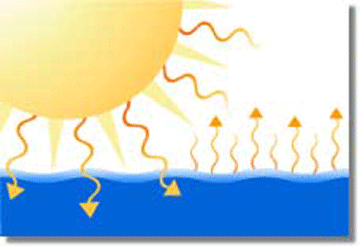
The world’s oceans absorbed more heat in 2025 than in any year since
modern records began, according to a major international analysis. Ocean
heat content rose by 23 zettajoules – the equivalent of detonating
hundreds of millions of Hiroshima atomic bombs, or roughly 200 times
humanity’s global electricity consumption in 2023 – according to the
analysis published in Advances in Atmospheric Sciences. Unlike sea surface
temperatures, ocean heat content is a measure of how much excess energy the
world’s oceans are storing over time, including at depth.
Independent 9th Jan 2026,
https://www.independent.co.uk/climate-change/news/ocean-heat-record-2025-b2895936.html
“Another Monroe Doctrine”: Journalists Warn U.S. Strikes on Venezuela Signal a New Era of Intervention
By Joshua Scheer, January 5, 2026, https://scheerpost.com/2026/01/05/another-monroe-doctrine-journalists-warn-u-s-strikes-on-venezuela-signal-a-new-era-of-intervention/
ith reporting from the streets of Caracas and analysis from Vijay Prashad, BreakThrough News breaks down what’s unfolding in Venezuela — from local resistance to the United States’ emerging new Monroe Doctrine.
Venezuelan journalist Andreína Chávez Alava, reporting from Caracas, describes the aftermath of the U.S. strikes and the capture of President Maduro. According to her reporting, local communities are organizing, following guidance from authorities, and preparing to “resist in the streets” in a show of solidarity. Chávez characterizes the attack as “an illegal U.S. bombing against a civilian population” and frames it as part of a broader effort to force regime change and assert control over Venezuela’s political direction and oil resources. She also warns that the operation may mark the opening phase of a wider U.S. campaign in Latin America, referring to it as “another Monroe Doctrine,” and says she intends to “continue denouncing by every means necessary” what she views as an assault on Venezuela.
In an interview from Caracas, Venezuelan journalist Andrea Nach Chavez describes the aftermath of a pre-dawn U.S. military attack on Venezuela, reporting that strikes hit multiple locations, including residential areas—contradicting Washington’s claim that only military targets were struck. Chavez asserts that President Nicolás Maduro has been kidnapped by the United States, rejecting U.S. narratives of an arrest or lawful capture and calling for proof of life and his immediate return.
Chavez reports that crowds have gathered in the streets of Caracas, not in celebration—as some Western outlets have suggested—but in solidarity and outrage, denouncing the attack as an illegal act of war and a renewed attempt at regime change aimed at seizing control of Venezuela’s oil resources. She dismisses U.S. claims about democracy promotion and drug trafficking as long-standing pretexts for intervention.
The interview also addresses what Chavez describes as a coordinated campaign of psychological warfare and misinformation, particularly on social media, contrasting it with the Venezuelan government’s insistence that Maduro remains the country’s legitimate president and its call for popular and institutional resistance.
Contrary to portrayals of chaos, Chavez describes a population responding with calm vigilance: businesses largely closed, communities checking on one another, and people focused on securing essentials rather than celebrating political upheaval. She emphasizes that years of U.S. sanctions—especially the devastating measures imposed in 2017–2018 that crippled the oil industry and triggered a humanitarian crisis—have hardened Venezuela’s capacity for resilience and self-organization.
Chavez points to community-based food distribution programs and renewed domestic production as evidence that Venezuela has become less vulnerable to external pressure. She concludes by stressing the strength of the civilian-military alliance and the necessity of international solidarity from Latin America and the Global South, warning that the current assault signals a broader U.S. interventionist strategy rooted in a revived Monroe Doctrine. The interviewer underscores the critical role of independent and community journalists in countering Western media narratives and documenting events on the ground.
Vijay Prashad, Executive Director of the Tricontinental Institute for Social Research, offers his analysis of the U.S. strikes on Venezuela and the capture of President Maduro. In his view, the operation is driven by Washington’s long‑standing interest in controlling Venezuela’s oil reserves and weakening the Bolivarian Revolution. Prashad describes what he calls the “Trump Corollary” to the Monroe Doctrine, placing the current actions within a broader historical pattern of U.S. intervention in Latin America. He also warns that Trump’s recent claim that the United States will “run Venezuela” could lead to what he characterizes as “a worse fiasco than Iraq.”
Prashad interprets Trump’s remarks not merely as bluster but as an implicit admission that Washington lacks a viable civilian proxy capable of governing Venezuela. He points to the political weakness and internal divisions of the U.S.-backed opposition—particularly the inability of figures like María Corina Machado to consolidate power—as well as the reconvening of Venezuela’s National Assembly, which complicates U.S. plans for a clean political handover.
Drawing on Trump’s past criticisms of the Iraq War, Prashad recalls Trump’s argument that the U.S. should have directly seized Iraq’s oil to finance the occupation. He notes that the legal groundwork for U.S. intervention in Venezuela predates Trump, tracing it to a 2015 Obama-era executive order that declared Venezuela a national security threat—an order Trump has expanded and weaponized.
While skeptical of the U.S. capacity to directly govern Venezuela—given catastrophic failures in Iraq and Afghanistan—Prashad warns that Trump’s rhetoric cannot be dismissed as harmless. Even limited intervention, he argues, could result in a debacle surpassing previous U.S. military disasters.
The discussion situates recent U.S. military strikes and electronic warfare operations in the Caribbean within a broader strategic doctrine. Prashad explains that Trump’s national security strategy revives the Monroe Doctrine, asserting unilateral U.S. dominance over the Western Hemisphere—a doctrine he describes as updated through a “Trump corollary” that justifies intervention by any means necessary. He likens recent operations to the U.S. raid that killed Osama bin Laden, suggesting a similar strategy of overwhelming force combined with symbolic spectacle.
Prashad further argues that Venezuela is only one node in a larger destabilization strategy aimed at isolating Nicaragua and Cuba, while facilitating a regional political shift. He points to the decline of Latin America’s “pink tide” governments and the rise of an “angry tide” of right-wing regimes, warning that upcoming elections in countries like Brazil and Colombia could further consolidate this shift.
Addressing economic justifications for intervention, Prashad rebuts claims—such as those made by Stephen Miller—that Venezuelan oil constitutes stolen “American wealth.” He explains that the Chávez government did not nationalize oil outright, but instead asserted greater state control over surplus extraction through the 2001 hydrocarbons law. The framing of Venezuelan oil as inherently American, he notes, has long been central to U.S. policy, reinforced by figures like Rex Tillerson, the former ExxonMobil CEO and Trump’s secretary of state.
Prashad emphasizes that U.S. interest in Venezuela is not driven by domestic energy needs—since the U.S. is a major oil exporter—but by the desire to control global energy flows and prevent oil revenues from supporting left-wing governments or international solidarity efforts, such as aid to Haiti.
In closing, Prashad offers a personal reflection on President Maduro, describing him as a reluctant leader who inherited a historic crisis rather than seeking power. He cautions against sections of the left abandoning Maduro without reckoning with the broader structures of imperial power at play. The discussion concludes with a call to engage with Tricontinental’s research on hyperimperialism and the shifting political terrain of Latin America and the Global South.
HOW ONTARIO KEEPS THE TRUE COST OF NUCLEAR POWER OFF YOUR HYDRO BILL
Toronto Star, MARCO CHOWN OVED CLIMATE CHANGE REPORTER, 11 Jan 2026, https://www.pressreader.com/article/282007563777540
Electricity prices in Ontario have long proven to be politically toxic.
Rapid increases between 2009 and 2016 contributed to the downfall of the Liberal governments of Dalton McGuinty and Kathleen Wynne.
Doug Ford and his Progressive Conservatives were elected on a pledge to bring hydro bills down, and the rapid increases have since ended — though it’s not because power is cheaper. The true costs are now invisible to the consumer.
For 15 years, Ontarians saw the cost of nuclear power on their hydro bills each month. Between 2002 and 2017, there was a line item called the “debt retirement charge” that enlisted every ratepayer to chip away at more than $20 billion in debt left over from the splitup of Ontario Hydro — debt largely run up by construction overruns at the Darlington nuclear plant, which was completed in 1993. The nuclear debt was removed from bills in 2018 — but it didn’t disappear. Instead, it was added onto the provincial books, where it is now considered part of the general public debt. As of last year, more than 30 years after Darlington went online, there was still $11.9 billion in debt remaining.
The province also brought in the Ontario Electricity Rebate, which subsidizes power bills with taxpayer dollars. While the rebate was introduced under McGuinty, Ford recently nearly doubled it — with an estimated price tag of $8.5 billion annually — to absorb an almost 30 per cent hike to the price of electricity.
The Ford government has blamed rate increases on the previous Liberal government’s Green Energy Act, which paid a premium for renewable energy in an effort to kickstart a domestic wind and solar industry. The domestic renewables manufacturing sector failed to take off in the face of competition from China, but more than 33,000 renewable projects remain on the grid at inflated prices on 20year contracts. Today, these legacy contracts have pushed the cost of solar power up to the point that it’s the highest among all types of generation in Ontario, when measured by kilowatt hour (kWh) of electricity produced. Wind isn’t far behind.
But what the per kWh figures hide is that renewables make up such a small proportion of the energy production mix that they cannot be responsible for overall rate increases, according to a Star analysis of Ontario Energy Board and Independent Electricity System Operator data. Even though solar costs threeandahalf times more than nuclear per kWh, it only accounted for two per cent of the total cost of electricity in 2024 — too little to drive overall cost increases. Nuclear, by contrast, accounted for 56 per cent of Ontario’s total cost of electricity last year. And while the costs of legacy renewables are inflated, they’re fixed or even going down as their contracts expire and have been renewed at 30 per cent less than they were paid previously.
In contrast, nuclear costs keep going up. The refurbishment of the Pickering plant will cost three times more per kWh than the refurbishments of Darlington and four times more than Bruce. The costs of these refurbishments will start to be added to hydro bills when they return to service.
Because nuclear makes up such a large part of the electricity mix, even a little increase to the cost of nuclear will affect the price Ontarians pay for electricity — either via monthly bills or taxpayer funds.
Spending big on nuclear
Ontario is investing billions into reactors — even as the rest of the world turns to solar and wind. Is this the wrong bet?
Toronto Star, MARCO CHOWN OVED, 11 Jan 2026, https://www.pressreader.com/article/281865829856772
In the race to prepare for an electrified future of AI, data centres, EVs and heat pumps, Ontario has placed a big bet on nuclear.
With more than $73 billion committed to building new and refurbishing old reactors — and two more plants in the pipeline that could add tens of billions more — Ontario taxpayers are counting on nuclear energy to pay off for decades to come.
Widely hailed for its ability to provide massive amounts of stable, emissionsfree power that the province will need to electrify the economy, nuclear has emerged as a solution advocates say is crucial to avoid the worst effects of climate change — all while supporting a wellestablished local industry. A single nuclear plant can provide the same amount of power as tens of thousands of solar panels and wind turbines — even when the wind isn’t blowing, and the sun isn’t shining.
“Nuclear brings a set of attributes and characteristics that you really can’t find with any other generating source,” said Brendan Frank, Director of Policy and Strategy at Clean Prosperity, a climate policy think tank. It’s large scale, [?] clean and reliable with a small land footprint, he says. “There’s a lot to like about nuclear.”
But the promise of nuclear power is tempered by the potential for peril.
Critics say nuclear proponents have never been able to address existing reactors’ significant shortcomings, including decadelong construction timelines, consistently large cost overruns, and the tiny but nonzero risk of catastrophic accidents. The cost considerations alone risk undermining the fight against climate change by making clean power more expensive than burning fossil fuels.
“Baked right into the nuclear option is centralization, a reliance on technical elites, the need for longterm stewardship and paramilitary security, a low tolerance for failure, and the acceptance of uninsurable risks,” said Ralph Torrie, the head of research with Corporate Knights and a veteran energy analyst.
And unlike nuclear opponents of the 1980s, today’s critics have a ready alternative in renewable energy, which is being built at an unprecedented speed and scale all over the world. Last year, more than 90 per cent of new power brought online globally has been wind and solar. Meanwhile, the nuclear industry has been mired in a 25year decline with more reactors decommissioned than built, according to the International Atomic Energy Agency.
Nuclear power is yesterday’s technology, the critics say.
“Every dollar we spend on new nuclear plants or reconditioning 20thcentury nuclear steam generators drives up the cost of building a sustainable energy system in Ontario and puts us further behind in the energy transition that is a defining feature of successful 21stcentury economies,” Torrie said.
In the search for climate solutions, the debate over nuclear power is particularly acute. For proponents, global warming cannot be addressed without a nuclear renaissance. For opponents, nuclear is a trap that diverts resources from better solutions while committing us for decades to a technology that has never lived up to its promises.
And Ontario has already picked its side.
“We’re doubling down on nuclear,” Energy Minister Stephen Lecce told the Star in an interview.
“If you care about jobs for Canadians, if you care about an ethical supply chain using a clean grid, not a coalfired grid, if you care about human rights, the rule of law, fundamental Canadian values, and the economic advantages for the workers, for the women and men who work in this province, then you will unapologetically defend and promote Ontario’s nuclear advantage, which is now an envy of the world.”
Why nuclear is considered a `very expensive’ option
This June, the province laid out a 25year road map for the electricity system that relies overwhelmingly on nuclear. It projects a massive 75 per cent increase in demand for power, the equivalent of adding fourandahalf Torontos to the grid. While there have been some investments in battery storage and hydro, most of this energy will come from refurbishing the existing fleet of reactors and building new ones, including one in Wesleyville — on the shore of Lake Ontario to the east of the existing Pickering and Darlington plants — that would be the world’s biggest nuclear plant. In doing so, the province would triple its nuclear generation, exceeding the entire electricity system’s output today.
“Ontario is putting a lot of eggs in a very expensive basket,” said David Pickup, an energy analyst at the Pembina Institute and the author of a report highlighting the risks of the province’s nuclear build out……………………………………………………………………………………………………………………………………………………………………. https://www.pressreader.com/article/281865829856772
Here’s who really weaponizes children in the Russia-Ukraine conflict
As accusations of abductions resurface, it’s clear the West doesn’t care about facts on the ground if they contradict the narrative.

By Eva Bartlett, a Canadian independent journalist. She has spent years on the ground covering conflict zones in the Middle East, especially in Syria and Palestine (where she lived for nearly four years). 9 Jan, 2026 https://www.rt.com/news/630762-russia-ukraine-abducted-children/
For the last three years, Ukraine and concerted legacy media campaigns have been screaming that Russia has abducted, or forcibly displaced, thousands of Ukrainian children – even up to 1.5 million!
The accusations resurged in December, with a UN General Assembly vote on a draft resolution on the return of Ukrainian children.
During the meeting, Ukraine’s Deputy Foreign Minister Mariana Betsa once again pushed claims that “at least 20,000 Ukrainian children have been deported to Russia,” in spite of the fact that months prior, during the June Istanbul talks, the Ukrainian side finally provided a list of the children it accuses Russia of abducting: 339 children, surprisingly far fewer than the number alleged for years.
The absence of over 19,500 on the list indeed leads to many questions, mainly: is Ukraine lying again? Recall that in 2022, the accusations by the (now former) Ukrainian ombudswoman, Lyudmila Denisova, about “sexual atrocities” allegedly committed by Russian soldiers, were revealed to be lies and propaganda. So much so that Denisova was sacked. But before her dismissal, legacy media and the UN all backed the lies.
Some recent accusations are that children were being sent to labor camps in Russia – “165 re-education camps where Ukrainian children are militarized and Russified” – or even of being sent to North Korea, as Katerina Rashevskaya of the Ukrainian Regional Center for Human Rights told the US Subcommittee on State, Foreign Operations, and Related Programs on December 3.
The footnotes of the claims made by Rashevskaya, instead of a source for the information, say “The Regional Human Rights Center can provide information upon request.” In other words, her sources are “trust me, bro.”
Regarding the North Korean camp in question, if two Russian teens were sent there, they’d potentially be made to enjoy water slides, basketball and volleyball courts, an arcade room, a rock climbing wall, art and performance halls, an archery range, a private beach, and hikes in the mountains.
Regarding the list of 339 children Ukraine says were abducted by Russia, Russian Foreign Ministry Spokeswoman Maria Zakharova remarked, “30 percent of the names on the list could not be verified, as most of those children were never in Russia, are now adults, or have already returned to their families. As for the Ukrainian children who are actually in our country, they are under state care in appropriate institutions. They are safe now; in many cases, their evacuation from combat zones saved their lives. Local children’s rights commissioners are now working to reunite them with their relatives.”
Just as legacy media has whitewashed the eight years of Ukraine’s war against Donbass civilians prior to Russia commencing its military operation in 2022, including the Ukrainian shelling which killed 250 children starting in 2014, media likewise ignore the children Russia says are missing.
During the talks in Istanbul, Zakharova noted, “the Russian side presented Ukraine with a list of 20 Russian children who are either currently in Ukraine or relocated from Ukraine to Western Europe, including to countries that endorsed this very statement. Now, the burden falls on these states to provide Russia with a substantive response regarding our ‘list of 20.’”
Over 500 Ukrainian orphans abused in Türkiye
Recently, Donbass-based journalist Christelle Néant wrote about a report published on a pro-Ukrainian website which broke the story of 510 Ukrainian children who had been evacuated by a Ukrainian oligarch in 2022 from Dnepropetrovsk to Türkiye, where the benevolent foundation which brought them there allegedly allowed its staff to beat the children, sexually assault them, and deny them food if they refused to perform on camera to raise funds for their lodging. These are just some of the reported violations of the orphans’ rights.
The details of the report show that the children suffered physically and psychologically. Additionally, two underage teens were impregnated by staff at the hotel they stayed in, with educators allegedly aware of the interactions.
According to Néant, the orphanage director’s response to the fact of one of the teens in her care becoming pregnant was to blame the girl: “This young girl comes from an asocial family. Well, this way of life is already inscribed in every cell, in the blood of these children.”
“In almost 10 years of work in Donbass,” Néant wrote, “I have conducted or filmed many humanitarian missions to orphanages in the region. And never ever have I heard a director make such vile remarks about one of the children in her care. Even the most difficult and recalcitrant were cared for with pedagogy, love, and patience.”
Ukraine hunting down children
In April 2023, Christelle Néant and I interviewed Artyomovsk civilians who had recently been rescued by Russian soldiers. In addition to being deliberately shelled by Ukrainian forces who knew they were sheltering in the basement of a residential building, the civilians we spoke to told us about Ukrainian military police hunting for children.
The evacuees told us some of these police went by the name ‘White Angels’, and were taking childrenaway without their consent or that of their parents.
Around that time, more reports came out about these abductions or attempted abductions, including an 11-year-old girl who spoke of how White Angels, who introduced themselves as military police, came to the basement she was sheltering in with a photo of her, looking for her, and saying they needed to take her away, because “Russia killed her mother.” According to the girl, her mother was alive and with her.
Reports of these abductions also emerged in Avdeyevka, Kupyansk, Slavyansk, Chasov Yar and Konstantinovka, as well as in Ukrainsk and Zhelannoye.
Néant wrote of a July 2023 conference on Ukraine’s crimes against the Donbass children, in which Liliya and her daughter Kira from Schastye, in the Lugansk People’s Republic, spoke.
They gave evidence of how, “at the start of the special military operation (when Ukraine controlled Schastye), around ten children were taken from a school in Schastye to western Ukraine by the headmistress of the school, on orders from Kiev, without informing their parents.”
The children were even forbidden to call their parents, Néant wrote, “But Kira knew her mother’s telephone number by heart and managed to call her to let her know that they were in Lviv and then Khoust. Thanks to Liliya’s determination to find her daughter, we discovered how Kiev ‘exports’ the children it abducts.” Ukraine had forged a new “original” birth certificate for Kira. The girl said she and the other children were to be sent to Poland.
Former SBU officer Vasily Prozorov spoke at the same conference, where he explained, according to Néant, “that one of his investigations had revealed that some of the children abducted by Ukraine are sent to pedophile networks in Great Britain, via a whole network of Ukrainian and British officials or former officials who work together. On the British side, members of MI6 and the Foreign Office are involved.”
Prozorov, she wrote, spoke of “another of his investigations on organizations registered in EU countries involved in ‘exporting’ children from Ukraine under the pretext of providing them with shelter. These organizations take unaccompanied Ukrainian children out of Ukraine. What happens to them afterwards is unknown.”
Evacuees from Kherson reject ‘abduction’ claims
In November 2022, in the southern Russian seaside city Anapa, I met numerous people displaced from Kherson who were being lodged in hotels and apartments in the city.
The first site I visited was a few minutes by taxi outside of the city, one of many hotels along the coast. The hotel director showing me around said they don’t call them refugees, “we call them guests of the building,” and spoke affectionately of them, how grateful they were to be there, far from any shelling. Just under 500 refugees had been living there since October, she told me.
No guards monitored the entrance/exit; the refugees walked around tidy grounds. But in any case, I asked about their freedom of movement, or lack thereof.
“They move freely, of course. We don’t prohibit them from going out. Many aren’t here now because they’re in town, looking for jobs, getting documents. Children are at school.”
With my hired translator, I spoke with two Kherson women, a young mother and her own mother, to hear their stories.
“We were living with explosions at night, it was very scary, not only for myself, but for my children and for my grandchildren,” the older woman said. “When you go to bed, you don’t know if you will get out of bed in the morning. We were forced to leave.”
I asked who was shelling them. “Word of mouth transmits very clearly, and people around us spoke about it. We were bombed by the Armed Forces of Ukraine. Russian soldiers protected us.”
The younger woman said she used to speak with the Russian soldiers there. “They are friendly. We wanted to hug them, because we felt protected. They helped us, gave us humanitarian aid, brought it to the house.”
Some minutes’ taxi ride away, I visited an apartment complex that could have served tourists in summer. There, fifty buildings housed around 1,500 refugees who had also arrived in October, mostly from Kherson Region.
My translator and I walked around, passing playgrounds, a pharmacy, a library, a swimming pool, a gym, a small petting zoo with peacocks, and a kindergarten. Near a playground, I spoke with a mother sitting on a bench with two of her four children.
“In the early days, there was bombing. We spent two and a half weeks in the basement. It was unbearable, the children were very afraid.” One of her daughters became ill. “She had acute inflammation of the lower jaw, we think due to hypothermia. We took her to Simferopol and she had surgery.”
In Anapa, she said, her children had full medical examinations. “We were helped by the mayor of the city of Anapa. We are grateful for everything.”
I mentioned that according to Western media, she and her family were kidnapped by Russia. She replied that her husband’s parents had demanded to see the children, having been told that children were being separated from their parents in Russia.
“His mother called three days in a row, saying, ‘Where are the children?’ We answered, ‘They went to the cinema. They’re playing, etc.’ She said, ‘Show me the children, they say that they took your children from you.’”
Details matter
Whereas legacy media continue to push the “Evil Russia child kidnapper” narrative, there is ample evidence that Ukraine is guilty of doing precisely what it accuses Russia of. The is also a significant absence of evidence regarding the ‘20,000 kidnapped children’ claims still being pushed.
Will media investigate the reports of abuse of Ukrainian children in Türkiye? Surely not. It wouldn’t suit their scripted anti-Russia bias.
The Coalition of the Willing has achieved nothing
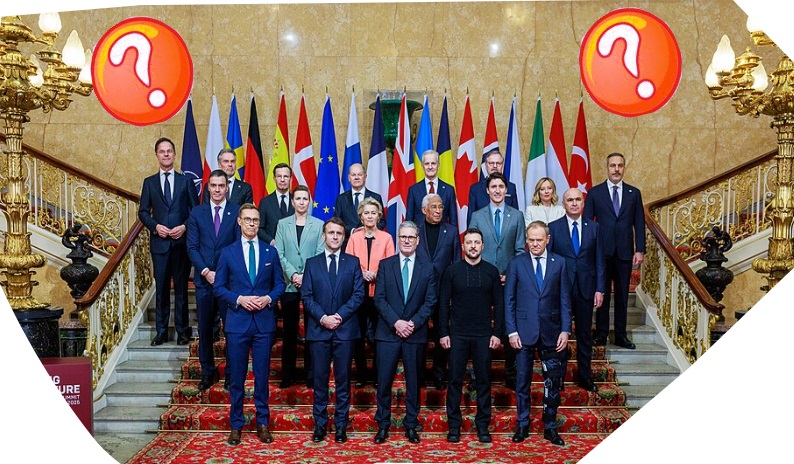
‘we agreed to finalise binding commitments setting out our approach to support Ukraine in the case of a future armed attack by Russia. These may include, military capabilities, intelligence and so on.’
In diplomatic parlance, agreeing to finalise commitments that may include basically means that nothing has been agreed.
What the declaration does achieve is to commit European nations to paying Ukraine to maintain an army of 800,000 personnel after the war ends which, by the way, is significantly higher than the total number of armed forces personnel of Germany, France and Britain combined.
Time to be more direct in telling Zelensky what he should do
Ian Proud, Jan 13, 2026, https://thepeacemonger.substack.com/p/the-coalition-of-the-willing-has?utm_source=post-email-title&publication_id=3221990&post_id=184
The war in Ukraine happened because western nations insisted that Ukraine be allowed to join NATO but were never willing to fight to guarantee that right.
That reality has never changed. Last week’s latest Summit of the Coalition of the Willing confirmed that it will not change any time soon.
The only countries that appear remotely willing to deploy troops to Ukraine in a vague and most certainly limited way are the British and French.
Both would need parliamentary approval which can’t be guaranteed. Reform Leader Nigel Farage has already come out to say that he wouldn’t back a vote to deploy British troops to Ukraine because we simply don’t have enough men or equipment, a point recently reinforced by General (ret’d) Sir richard Shirreff.
Even though Keir Starmer has the parliamentary numbers to pass any future vote on deploying British troops, it would almost certainly damage his already catastrophic polling numbers.
Macron is clinging on to his political life and would probably face a tougher tussle to get his parliament to approve the French sending their troops to Ukraine, potentially leaving the UK on its own.
In any case, it is completely obvious that Russia won’t agree to any deployment in Ukraine by NATO troops. This shows once again that western leaders have learned absolutely nothing over the past decade. It will never be possible to insist that Russia sues for peace under terms which is has long made clear are unacceptable at a time when it was winning on the battlefield, and European nations refuse to fight with their own troops.
Hawkish British journalist Edward Lucas, with whom I disagree on most things, summed it up well in an opinion in the Times Newspaper when he said
We are promising forces we do not have, to enforce a ceasefire that does not exist, under a plan that has yet to be drawn up, endorsed by a superpower (read the US) that is no longer our ally, to deter an adversary that has far greater willpower than we do.’
President Putin has shown an absolute determination not to back down until his core aims, namely to prevent NATO expansion, are achieved. And as I have said many times, the west can’t win a war by committee.
All of these pointless Coalition of the Willing meetings happen in circumstances where Europe refuses to talk to Russia upon whom an end to the war depends. Peace will only break out after Ukraine and Russia sign a deal, and the west appears deliberately to be doing everything possible to ensure that Russia never signs.
Instead, we entertain Zelensky with hugs and handshakes, reassuring him that we will do anything he wants for as long as he needs, only to offer insufficient help all of the time.
And, as Zelensky is in any case unelected, not likely to win elections in Ukraine as and when they happen, overseeing a corrupt regime that is adopting increasingly repressive tactics to keep a losing war going, it is not in his interest to see the war anyway.
His calculus continues to be that, if he clings on for long enough, the west will finally be dragged into a direct war with Russia. So, he’s happy to drag out an endless cycle of death by committee in which European leaders never agree to give him exactly what he wants and he uses that as a pretext not to settle.
Zelensky went on from Paris to Cyprus where, among other things, he has been pushing for more sanctions against Russia. At no point since 2014 have sanctions looked remotely likely to work against Russia, for reasons I have outlined many times.
The European Commission is now planning its twentieth round of sanctions to coincide with the fourth anniversary of the war on 24 February 2026. So with peace talks ongoing, Ursula von der Leyen and Kaja Kallas as always are doing their bit to ensure that nothing gets agreed.
None of this brings the war any closer to an end nor does it provide any security guarantees to Ukraine. As always, the biggest security guarantee should be the offer by European allies to intervene militarily in Ukraine should Russia decide to reinvade after any future peace deal.
But that was not agreed in Paris. Instead, the Paris Declaration said, ‘we agreed to finalise binding commitments setting out our approach to support Ukraine in the case of a future armed attack by Russia. These may include, military capabilities, intelligence and so on.’
In diplomatic parlance, agreeing to finalise commitments that may include basically means that nothing has been agreed.
The declaration also said:
We stand ready to commit to a system of politically and legally binding guarantees. However, the final communique gave individual countries opt outs from those guarantees by saying that any guarantees would be, ‘in accordance with our respective legal and constitutional arrangements’.
So, again, in diplomatic parlance, what this means is that some coalition members may be able to opt out of the security guarantees if they decide that their domestic framework does not allow for such an arrangement, thinking here in particular of Hungary, Italy and Spain, for example.
What the declaration does achieve is to commit European nations to paying Ukraine to maintain an army of 800,000 personnel after the war ends which, by the way, is significantly higher than the total number of armed forces personnel of Germany, France and Britain combined.
Even though these are Ukrainian troops, not European, Russia will undoubtedly see EU funding of a large Ukrainian army on its border as a form of NATO lite. Which, of course, Zelensky would welcome.’
So the process of holding near weekly Coalition of the Willing summits is entirely pointless, though perhaps that is the point. Since 2022, western leaders have been completely unable to say no to Zelensky, either through guilt or stupidity, or both.
Yet at some point, if only for their own political survival, Starmer and others will have to politely decline to offer more support and make it clear to Zelensky that he has no choice but to sue for peace. To me, at least, the European offer to Zelensky follows these lines:
Ukraine cannot join NATO (sorry we lied to you about that) but you can join the European Union and we will help you make the reforms you need to do so.
You will get significant investment when the war ends that boosts your economy. As your people return home, we believe Ukraine has potential to grow quickly and reconstruct.
However, it may still be many years before you receive EU subsidies on the level of other European Members, and you possibly may not receive them at all.
And you will have to become financially sustainable, including meeting the EU’s fiscal deficit like other EU member states.
I’m afraid that means that you won’t be able to maintain an army of 800,000 people at Europe’s expense (sorry we reassured you that you could).
But, as a European Union member you would have a security guarantee by virtue of your membership of this community, even though only Macron’s France has said it would send you troops (je m’excuse).
You should also be aware that Europe sees benefit in a normalised economic relationship with Russia, that includes purchasing cheap Russian energy. We can’t go on buying massively expensive US LNG just to avoid hurting your feelings.
Sanctions may have been a policy or war, but they won’t be a policy of peace, and you will need to accept that we will drop them too.
We have now reached the limit of the financial support that we can provide to you so we have reached the point of now or never in your signing a peace deal.
That requires you to make hard choices about de facto recognition of land on the lines of the peace deal that the US is trying right now to finalise with Russia.
Without that, he will simply continue this charade of endless pointless Summits and the war will drag Europe even further into the mire.
That’s a lot to take in and we’ve already apologised enough as it is. Look, we lied to you okay, but everyone makes mistakes.
Somehow, though, I predict the Europeans will continue to drift in circles. I wonder where the next Coalition of the Willing Summit will be? I hope it’s soon, as Zelensky might actually have to spend some time inside of Ukraine if there’s a delay. And he likes it in Europe as it’s the only place where everyone seems to love him.

Is the U.S. preparing to install another Shah to run Iran as a U.S. puppet?
13 January 2026 AIMN Editorial, By Walt Zlotow , West Suburban Peace Coalition Glen Ellyn IL, https://theaimn.net/is-the-u-s-preparing-to-install-another-shah-to-run-iran-as-a-u-s-puppet/
Nationwide anti-government protests are wracking Iran with over 500 killed and 10,000 detained. The U.S. political establishment is ecstatic about the possibility of regime change of the hated Iranian Islamic government which in 1979 toppled the American puppet Mohammed Reza Pahlavi (the Shah of Iran) the U.S. installed in 1953.
Iranian Foreign Minister Seyed Abbas Araghchi pounced on this statement by former US Secretary of State and CIA Director Mike Pompeo that implied both the US and Israel are involved in fomenting the protest:
“The Iranian regime is in trouble. Bringing in mercenaries is its last best hope. Riots in dozens of cities. 47 years of this regime; POTUS 47. Coincidence? Happy New Year to every Iranian in the streets. Also to every Mossad agent walking beside them.”
Araghchi responded:
“According to the US Government, Iran is ‘delusional’ for assessing that Israel and the US are fueling violent riots in our country. There is only one problem: President Trump’s own former CIA Director has openly and unashamedly highlighted what Mossad and its American enablers are really up to.”
Araghchi is well aware of historical precedence for US regime change in Iran. Seventy-three years ago the US joined Britain’s Operation TP-Ajax, the US-British coup that deposed Iran’s legitimate ruler Dr. Mohammad Mosaddegh. The Brits conceived the coup in 1952 and presented it to ‘Give ‘Em Hell’ Harry Truman, who literally told the Brits to go to hell.
A year later newbie Prez Ike greenlighted TP-AJAX to allow Britain to grab back its Iranian oil monopoly nationalized by elected Prime Minister Mosaddegh. For Ike, it was a chance to make his bones as a stanch anti-communist, due to Mosaddegh’s unwillingness to crush Iranian communist influence. Leading this first official CIA coup against a foreign leader who wouldn’t do our bidding was TR’s grandson Kermit Roosevelt Jr., following a family tradition of senseless and bellicose militarism.
Our handpicked successor was Mohammad Reza Shah Pahlavi, son of the first Pahlavi monarch Reza Shah Pahlavi. His reluctance and indecision almost wrecked Uncle Sam’s best laid plans, but our CIA Iranian operatives, masquerading as commies, shed enough blood to turn the tide against Mosaddegh. The Shah ruled Iran for another 26 years, with his CIA trained secret police killing thousands who dared speak out against his tyrannical rule.
And guess who has jumped into the current chaos in Iran… Reza Pahlavi, the US-based son of Iran’s ousted Shah whom the US installed after deposing Mosaddegh in 1953. Pahlavi praised the protests as “magnificent” and urged Iranian to plan more targeted actions “to seize and hold city centers.” He’s likely salivating at a chance to reclaim his father’s rule in Iran to once again do America’s bidding. Back then it was to protect British, US oil interests and counter communist influence in Iran. If installed today Pahlavi would complete both Israel and America’s decade’s long goal of weakening, destabilizing Iran to cement Israel’s Middle East hegemony.
Maybe the US has nothing to do with current unrest that may topple the Iranian regime. But based on US regime change history with Iran and numerous other countries, it would not surprise if the US was all in aiding it.
Who is to blame for blocking a new ‘golden era’ for nuclear power?
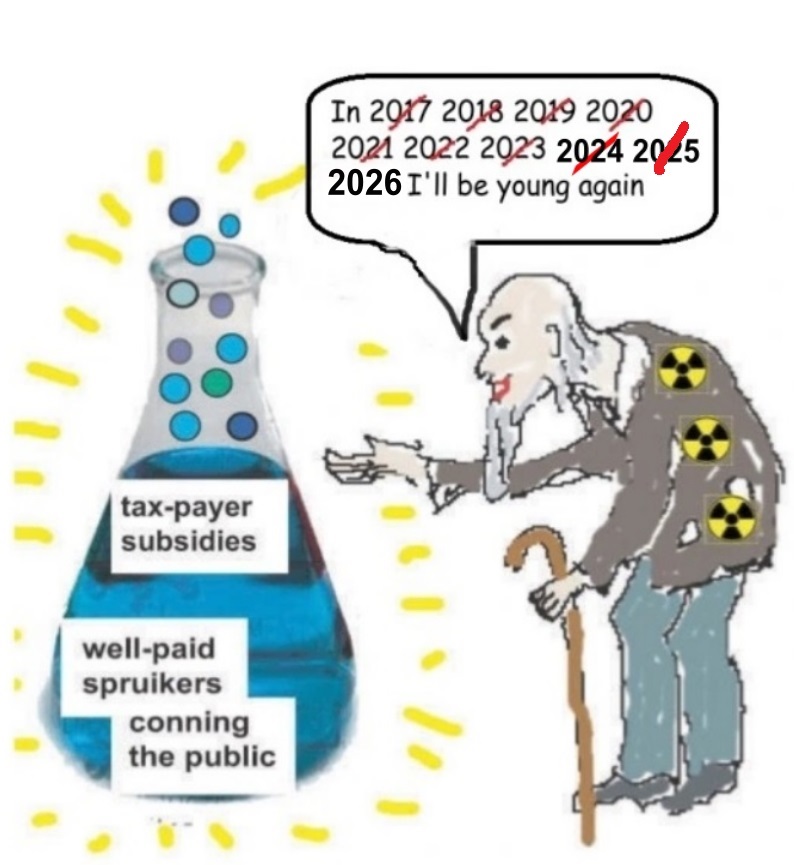
It is not the regulators or we so-called ‘blockers’ who are the main impediment to nuclear. It is the systemic failure of the nuclear industry to produce viable projects such as the much-hyped but non-existent Small Nuclear Reactors; its predictable inability to prevent cost overruns or to meet deadlines; let alone its lack of credible ideas to deal adequately with risk, safety and the management of its dangerous and interminable wastes. Nuclear is an industry that is bound to fail
7 January 2026, https://www.banng.info/news/regional-life/who-is-to-blame-for-blocking-nuclear-power/
Andrew Blowers tackles this question in the January edition of Regional Life magazine
The mantra that nuclear technology ‘is essential for achieving national security, energy security and Net Zero targets’ proclaimed by the Government’s Nuclear Regulatory Task Force has become the unequivocal, if deeply flawed, basis for government policy. The Government has pledged to ‘turbo-charge the build-out of new nuclear power stations and enter a ‘golden era’ of nuclear power.
Standing in its way are ‘gold-plated’ regulations and community groups like BANNG committed to protecting local environments, ecology and human health. The Task Force Review report just published (December) asserts, entirely without supporting evidence, that ‘The primary barrier’ to revitalising nuclear’s role is ‘systemic failure within the regulatory framework’.
So, here we have a familiar confrontation between energy and economic growth on the one side and environmental protection on the other. We have been here before. Every decade or so a new nuclear revival is promised but, after much huffing and puffing very little materialises. At the beginning of the century Tony Blair declared new nuclear was back ‘with a vengeance. In 2011 eight sites, including Bradwell, were declared ‘potentially suitable’ for new nuclear power plants.
In the event, only one, Hinkley Point, materialised and has become notorious for being too late, promised for 2017 but unlikely to power up until the next decade. Its cost overruns have become legendary. According to the Government, the culprits are environmental regulations and campaign groups who insist that previously agreed audio fish deterrents (AFDs) must be installed to help save millions of fish from becoming entrained and entrapped in the colossal intake and outflow pipes going into the Severn estuary. The developer has prevaricated, proposing cheaper but environmentally destructive methods of abatement. Politicians, including Sir Keir Starmer, have mindlessly mocked the ADF as a ‘fish disco’. It makes one wonder how they might deride oysters from the Blackwater if they stood in the way of nuclear power at Bradwell.

It is not the regulators or we so-called ‘blockers’ who are the main impediment to nuclear. It is the systemic failure of the nuclear industry to produce viable projects such as the much-hyped but non-existent Small Nuclear Reactors; its predictable inability to prevent cost overruns or to meet deadlines; let alone its lack of credible ideas to deal adequately with risk, safety and the management of its dangerous and interminable wastes. Nuclear is an industry that is bound to fail.
Meanwhile the importance of regulations imposed by independent regulators designed to protect people and the environment cannot be overstressed. And the essential role of community groups and councils in seeking to ensure the environmental protection and health and wellbeing of the places they represent is something to be cherished, not denigrated. It is a pity the Government does not see it that way.
7 January 2026
Andrew Blowers tackles this question in the January edition of Regional Life magazine
The mantra that nuclear technology ‘is essential for achieving national security, energy security and Net Zero targets’ proclaimed by the Government’s Nuclear Regulatory Task Force has become the unequivocal, if deeply flawed, basis for government policy. The Government has pledged to ‘turbo-charge the build-out of new nuclear power stations and enter a ‘golden era’ of nuclear power.
Standing in its way are ‘gold-plated’ regulations and community groups like BANNG committed to protecting local environments, ecology and human health. The Task Force Review report just published (December) asserts, entirely without supporting evidence, that ‘The primary barrier’ to revitalising nuclear’s role is ‘systemic failure within the regulatory framework’.
So, here we have a familiar confrontation between energy and economic growth on the one side and environmental protection on the other. We have been here before. Every decade or so a new nuclear revival is promised but, after much huffing and puffing very little materialises. At the beginning of the century Tony Blair declared new nuclear was back ‘with a vengeance. In 2011 eight sites, including Bradwell, were declared ‘potentially suitable’ for new nuclear power plants.
In the event, only one, Hinkley Point, materialised and has become notorious for being too late, promised for 2017 but unlikely to power up until the next decade. Its cost overruns have become legendary. According to the Government, the culprits are environmental regulations and campaign groups who insist that previously agreed audio fish deterrents (AFDs) must be installed to help save millions of fish from becoming entrained and entrapped in the colossal intake and outflow pipes going into the Severn estuary. The developer has prevaricated, proposing cheaper but environmentally destructive methods of abatement. Politicians, including Sir Keir Starmer, have mindlessly mocked the ADF as a ‘fish disco’. It makes one wonder how they might deride oysters from the Blackwater if they stood in the way of nuclear power at Bradwell.
It is not the regulators or we so-called ‘blockers’ who are the main impediment to nuclear. It is the systemic failure of the nuclear industry to produce viable projects such as the much-hyped but non-existent Small Nuclear Reactors; its predictable inability to prevent cost overruns or to meet deadlines; let alone its lack of credible ideas to deal adequately with risk, safety and the management of its dangerous and interminable wastes. Nuclear is an industry that is bound to fail.
Meanwhile the importance of regulations imposed by independent regulators designed to protect people and the environment cannot be overstressed. And the essential role of community groups and councils in seeking to ensure the environmental protection and health and wellbeing of the places they represent is something to be cherished, not denigrated. It is a pity the Government does not see it that way.
Top 15 US Billionaires Gained Nearly $1 Trillion in Wealth in Trump’s First Year.

The US has 935 billionaires, roughly a dozen of whom have jobs within the Trump administration.
By Sharon Zhang , Truthout, January 7, 2026, https://truthout.org/articles/top-15-us-billionaires-gained-nearly-1-trillion-in-wealth-in-trumps-first-year/
new analysis finds that the richest 15 billionaires in the U.S. saw their wealth skyrocket by nearly $1 trillion in the first year of President Donald Trump’s second term, which also contained one of the single largest cuts to welfare benefits in U.S. history.
The Institute for Policy Studies (IPS) report, citing data from Forbes, has found that U.S. billionaires’ assets surged by a whopping 21 percent in 2025.
The 935 billionaires in the U.S. now control $8.1 trillion in wealth, the analysis found — nearly double the amount of wealth held by the bottom 50 percent of Americans, which comprises over 170 million people. Roughly a dozen of these billionaires work in the Trump administration.
The very richest billionaires saw the biggest gains. The top 15 richest people in the U.S. gained 33 percent in wealth last year, with their wealth skyrocketing from $2.4 trillion to $3.2 trillion — a gain of roughly $800 billion, IPS found.
A significant portion of this gain was driven by the wealth accumulation of one person: Elon Musk, the richest man on earth. In 2025, Musk’s wealth rose from $421 billion to $726 billion, a gain of $305 billion.
With this amount of money, Musk could singlehandedly pay for Republicans’ newly enacted cuts to Medicare for the next decade, estimated to cost $536 billion. He could fund health benefits for tens of millions of Americans and still be left with nearly $200 billion to spare.
IPS points out that Musk’s net worth has increased by 2,800 percent since 2020, when he was valued at just under $25 billion.
Other billionaires and billionaire families saw gains of tens of billions of dollars last year, including Google cofounder Larry Page, Oracle cofounder Larry Ellison, and the Walton family.
“The affordability crisis is hitting ordinary Americans particularly hard as we head into the new year, but not everyone is feeling the pain: billionaires are raking in staggering profits off the backs of ordinary workers,” said Chuck Collins, who directs IPS’s Program on Inequality and the Common Good.
Regular Americans are indeed struggling. At the end of 2025, polls were already finding that an affordability crisis was spreading across the U.S., with roughly 30 percent of Americans saying they skipped medical care in the past year due to cost, according to surveys by Politico and GQR for The Century Foundation.
This is slated to become far worse as Republicans’ cuts to Medicaid and Affordable Care Act (ACA) subsidies kick in this year. Last week, on New Year’s Day, Affordable Care Act subsidies for tens of millions of Americans expired overnight, causing premiums to double on average as a result of cuts to the Republican budget bill. Meanwhile, the Congressional Budget Office has estimated that 16 million people will lose their health care benefits altogether due to the Medicaid and ACA cuts.
These cuts were enacted to pay for a massive tax cut for billionaires and the rest of the top richest Americans. The CBO estimated that the richest Americans would see a gain of $12,000 each year as a result of the bill, while the poorest 10 percent would see their wealth decrease by $1,600 yearly on average.
“It’s not just that U.S. billionaires are entering 2026 with record-breaking increases in extreme wealth: it’s that they are also paying far less in taxes compared to the huge amount of wealth they amass. Average taxpayers like you and I pay income tax at triple the rate of the wealthiest Americans,” said Omar Ocampo, inequality researcher for IPS, in a statement. “Not only are a small number of Americans holding more wealth than the rest of America, but they’re also not paying their fair share in taxes.”
‘We’ll Hit Them Very Hard’: Trump Threatens Iran Again as Protest Death Toll Rises

Critics pointed out that Trump has often endorsed violence against protesters when they opposed him.
Stephen Prager, Common Dreams, Jan 08, 2026
President Donald Trump doubled down on his threats to attack Iran on Thursday in response to its government’s increasingly violent crackdown on ongoing protests.
“If they start killing people, which they tend to do during their riots—they have lots of riots—if they do it, we’re going to hit them very hard,” he said.
Addressing the Iranian people, he added: “You must stand up for your right to freedom. There is nothing like freedom. You are a brave people. It’s a shame what’s happening to your country.”
The Norway-based Iran Human Rights (IHR) reported on Thursday that Iranian security forces have killed at least 45 protesters since demonstrations against the regime began in late December. Wednesday was the bloodiest day yet, with 13 people reportedly killed.
On Thursday, Iranian authorities shut down internet access for the population, which has limited the flow of information in and out of the country.
The protests kicked off in response to the sudden collapse in the value of Iran’s currency, the rial, which exacerbated the country’s already spiraling cost-of-living crisis, heightening inflation and putting many basic goods out of reach for many Iranians.
This economic crisis has been shifted into hyperdrive since Trump returned to office last year and re-implemented his “maximum pressure” strategy against Iran, including more severe economic sanctions and a 12-day war in June during which the US struck several Iranian nuclear sites. Over the past year, the average cost of food has increased by 70%, while the cost of medicine has increased by 50%……………………………………..
Iran has blamed the unrest on “interference in Iran’s internal affairs” by the United States. The nation’s president, Masoud Pezeshkian, has urged authorities to exhibit the “utmost restraint” in handling protesters. But earlier this week, Supreme Leader Ayatollah Ali Khameini said “rioters” must be “put in their place,” while a top judge accused demonstrators of being agents of the US and Israel.
The latest swell of protests began after Reza Pahlavi, the former crown prince and son of Iran’s former US-backed shah, called for demonstrators to take to the streets. On Thursday, Pahlavi, who has lived most of his life in the US after the royal family was run out of Iran during the 1979 revolution, met with Israeli leaders, including Prime Minister Benjamin Netanyahu and President Isaac Herzog.
On Thursday, Iranian authorities shut down internet access for the population, which has limited the flow of information in and out of the country.
The protests kicked off in response to the sudden collapse in the value of Iran’s currency, the rial, which exacerbated the country’s already spiraling cost-of-living crisis, heightening inflation and putting many basic goods out of reach for many Iranians.
This economic crisis has been shifted into hyperdrive since Trump returned to office last year and re-implemented his “maximum pressure” strategy against Iran, including more severe economic sanctions and a 12-day war in June during which the US struck several Iranian nuclear sites. Over the past year, the average cost of food has increased by 70%, while the cost of medicine has increased by 50%.
The rial has lost 95% of its value since 2018, when Trump withdrew the US from the nuclear agreement with Iran, which included sanctions relief.
Last Friday, just one day before he bombed Venezuela as part of an operation to overthrow its leader Nicolás Maduro and seize the nation’s oil reserves, Trump wrote on Truth Social that “if Iran shoots and violently kills peaceful protesters, which is their custom, the United States of America will come to their rescue. We are locked and loaded and ready to go.”
On Tuesday, US Sen. Lindsey Graham (R-SC), a leading proponent of regime change, warned Iran’s leaders that “if you keep killing your people who are demanding a better life—Donald J. Trump is going to kill you.” Just days before, Graham said that Iran’s “weakened” state was thanks in part to Trump’s efforts to “economically isolate” the country.
Iran has blamed the unrest on “interference in Iran’s internal affairs” by the United States. The nation’s president, Masoud Pezeshkian, has urged authorities to exhibit the “utmost restraint” in handling protesters. But earlier this week, Supreme Leader Ayatollah Ali Khameini said “rioters” must be “put in their place,” while a top judge accused demonstrators of being agents of the US and Israel.
The latest swell of protests began after Reza Pahlavi, the former crown prince and son of Iran’s former US-backed shah, called for demonstrators to take to the streets. On Thursday, Pahlavi, who has lived most of his life in the US after the royal family was run out of Iran during the 1979 revolution, met with Israeli leaders, including Prime Minister Benjamin Netanyahu and President Isaac Herzog.
Critics pointed out that Trump has often endorsed violence against protesters when they opposed him. Just a day before he issued his latest threat, he defended a federal immigration agent who fatally shot an unarmed mother in Minneapolis, while members of his administration falsely described her as a “domestic terrorist.”
He has previously advocated for the US military to be deployed to use force against protesters and threatened to invoke the Insurrection Act to quell peaceful protests, including the No Kings demonstrators who mobilized nationwide in October. https://www.commondreams.org/news/trump-hit-iran-protests
1 This Month
To see nuclear-related stories in greater depth and intensity – go to https://nuclearinformation.wordpress.com/
12 February – Webinar The Big Push: New Nuclear Projects in Canada
Thursday, February 12, 7 pm Eastern | 2nd of 4 sessions in the 2026 Nuclear Waste Online webinar series
Join a webinar on the push for new nuclear generation in Canada. Go to Northwatch.org to register or use the registration link https://us02web.zoom.us/webinar/register/WN_ZfWOf1GITqSRIZX8CB-A9w

-
Archives
- February 2026 (127)
- January 2026 (308)
- December 2025 (358)
- November 2025 (359)
- October 2025 (376)
- September 2025 (258)
- August 2025 (319)
- July 2025 (230)
- June 2025 (348)
- May 2025 (261)
- April 2025 (305)
- March 2025 (319)
-
Categories
- 1
- 1 NUCLEAR ISSUES
- business and costs
- climate change
- culture and arts
- ENERGY
- environment
- health
- history
- indigenous issues
- Legal
- marketing of nuclear
- media
- opposition to nuclear
- PERSONAL STORIES
- politics
- politics international
- Religion and ethics
- safety
- secrets,lies and civil liberties
- spinbuster
- technology
- Uranium
- wastes
- weapons and war
- Women
- 2 WORLD
- ACTION
- AFRICA
- Atrocities
- AUSTRALIA
- Christina's notes
- Christina's themes
- culture and arts
- Events
- Fuk 2022
- Fuk 2023
- Fukushima 2017
- Fukushima 2018
- fukushima 2019
- Fukushima 2020
- Fukushima 2021
- general
- global warming
- Humour (God we need it)
- Nuclear
- RARE EARTHS
- Reference
- resources – print
- Resources -audiovicual
- Weekly Newsletter
- World
- World Nuclear
- YouTube
-
RSS
Entries RSS
Comments RSS
 nuclear-news