Nuclear Free Local Authorities express support for Democracy Day at USAF Lakenheath

The NFLAs have sent a message of solidarity and support to the organisers
of the Peace Camp at RAF / USAF Lakenheath for Democracy Day being hosted
today. The Lakenheath Alliance for Peace has kept up a 24/7 vigil at the
gates of the airbase since 14th April. LAP consists of 59 organisations,
including the NFLAs, who are opposed to the siting of US nuclear weapons at
the base and campaign in favour of nuclear disarmament. Although notionally
an RAF station, Lakenheath is really the largest US airbase in the UK
hosting the 48th ‘Liberty’ Fighter Wing of around 6,000 personnel and
F-15C/D Eagle, F-15E Strike Eagle, and F-35A Lightning II fighter bomber
aircraft. From 1954 until 2008, the station held nuclear weapons in its
inventory. Now there are plans to reintroduce them.
NFLA 22nd April 2025, https://www.nuclearpolicy.info/news/nflas-express-support-for-democracy-day-at-usaf-lakenheath/
‘Spiral of silence’: climate action is very popular, so why don’t people realise it?

Researchers find 89% of people around the world want more to be done, but
mistakenly assume their peers do not.
The Guardian is joining forces with
dozens of newsrooms around the world to launch the 89% project—and
highlight the fact that the vast majority of the world’s population wants
climate action. The illusion that climate action is not popular is global.
So imagine dispelling that myth: such a shift, experts say, could be a
gamechanger, pushing the world over a social tipping point into unstoppable
climate progress. Such a communication campaign, low-cost and scalable,
could be among the most powerful tools available to fight the climate
crisis, they say. Decades of psychological research indicates that
correcting such misunderstandings can change people’s views across a
swathe of issues, from participating in protests to voting for Donald
Trump.
Guardian 22nd April 2025
https://www.theguardian.com/environment/2025/apr/22/spiral-of-silence-climate-action-very-popular-why-dont-people-realise
Nuclear Free Local Authorities call for more NGO cash and solar panels on Sellafield nuke plant.

Responding to the Nuclear Decommissioning Authority’s consultation on its latest three-year draft Business Plan (2025 – 8), the NFLAs have made modest calls for more cash for nuclear groups engaged in stakeholder consultation and for Sellafield to install solar panels to reduce electricity use.
Reiterating a request made forcefully by the NFLA Secretary to last year’s NDA Stakeholder Summit, we once more requested financial support for non-government organisations engaged in stakeholder dialogue. At present, a wide range of NGOs are represented on two Forums, one generalist, but the other specialising in examining the challenges attendant to the Geological Disposal Facility. Delegates invited to in-person Forum meetings or other events have historically had expenses reimbursed but have never received an honorarium. At the last Stakeholder Summit, NGO participants were refused reimbursement of travel costs and, facing the possibility of being substantially out of pocket, attendance declined. By way of pushback, we stated in our response: ‘If the NDA truly valued stakeholder consultation it would set out in this Business Plan a commitment to provide some financial support to the NGO community.’
The NFLAs have also made an appeal for GDF Community Partnerships to be granted cash and autonomy to commission third-party independent research and advice. At present, Nuclear Waste Services has a tight hold on the purse-strings and any request for information initiated by GDF panel members is vetted by NWS who draw on NDA group resources or go to other approved external sources.
In the second core strand of our response, we returned to a past aspiration – that the NDA generate ‘an increasing proportion of the energy that it consumes in the course of its work from installing renewable energy technologies on its estate’. Sellafield places great demands on the national grid; the business may have made a great play on replacing its carbon-guzzling shunting locomotives with electric ones, yet, on a recent visit, the NFLA Secretary saw that there was currently zero renewable electricity generation on site. There are a huge number of buildings, many of which will not be decommissioned and demolished for decades, so there must be possible to install solar panels on many of them. The NDA also has significant land holdings around Sellafield that could accommodate wind turbines.
Activate climate’s ‘silent majority’ to supercharge action, experts say
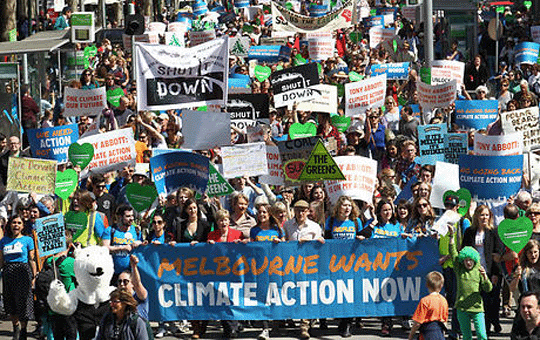
Making concerned people aware their views are far from alone could unlock the change so urgently needed.
‘Spiral of silence’: climate action is very popular, so why don’t people realise it? The Guardian is joining forces with dozens of newsrooms around the world to launch the 89% project—and highlight the fact that the vast majority of the world’s population wants climate action. Read more
Making people aware that their pro-climate view is, in
fact, by far the majority could unlock a social tipping point and push
leaders into the climate action so urgently needed, experts say. The data
comes from a global survey that interviewed 130,000 people across 125
countries and found 89% thought their national government “should do more
to fight global warming”. It also asked people if they would
“contribute 1% of their household income every month to fight global
warming” and what proportion of their fellow citizens they thought would
do the same. In almost all countries, people believed only a minority of
their fellow citizens would be willing to contribute. In reality, the
opposite was true: more than 50% of citizens were willing to contribute in
all but a few nations. The global average of those willing to contribute
was 69%. But the percentage that people thought would be willing was 43%.
The gap between perception and reality was as high as 40 percentage points
in some countries, from Greece to Gabon.
Damian Carrington Guardian 22nd April 2025, https://www.theguardian.com/environment/2025/apr/22/activate-climate-silent-majority-support-supercharge-action
DOE Releases More Funding to Reopen Palisades Nuclear Plant
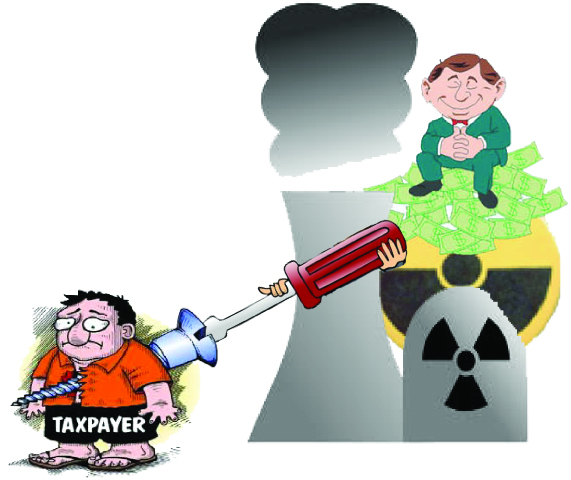
Energy Secretary Chris Wright on April 22 announced the release of a third
loan disbursement to Holtec for the reopening of the Palisades Nuclear
Plant in southwest Michigan. Today’s action releases $46,709,358 of the
up to $1.52-billion loan guarantee to Holtec for the Palisades project.
The 800-MW Palisades plant, located in Covert Township, was closed in 2022.
Holtec bought the power station from Entergy that year, with intent to
decommission the facility, before deciding instead to restart the plant.
Palisades at present would be the first U.S. nuclear power plant to restart
after being closed.
The plant still needs licensing approvals from the U.S.
Nuclear Regulatory Commission (NRC).
Opponents of restarting the nuclear power plant have said they will appeal a recent decision by a three-judge panel of the NRC’s Atomic Safety and Licensing Board, which refused to grant a hearing on the merits for seven safety-related contentions brought by a coalition that includes Beyond Nuclear, a nonprofit group. Beyond Nuclear and other groups have argued the plant should not be restarted.
Powermag 22nd April 2025,
https://www.powermag.com/doe-releases-more-funding-to-reopen-palisades-nuclear-plant/
No Joke: US considering nuclear power for Saudi in grand bargain

Surprise — the Trump team’s latest bid for Saudi-Israel normalization goes way too far and appears to be a one-way street.
Ivan Eland, Apr 21, 2025, https://responsiblestatecraft.org/no-joke-us-considering-nuclear-power-for-saudi-in-grand-bargain/
The Trump administration is reportedly pursuing a deal with Saudi Arabia that would be a pathway to developing a commercial nuclear power industry in the desert kingdom and maybe even lead to the enrichment of uranium on Saudi soil.
U.S. pursuit of this deal should be scrapped because the United States would bear all the increased commitments, costs, and risks with very little in return.
In the Abraham Accords of 2020 and early 2021, the first Trump administration brokered bilateral agreements between Israel and the Middle Eastern countries of Bahrain, United Arab Emirates, Morocco, and Sudan to normalize diplomatic relations. The administration also attempted to get Saudi Arabia to recognize Israel as a sovereign state and open similar relations, to no avail.
The Biden administration carried the torch in this regard but it became even more difficult to get Riyadh on board after the 2023 Hamas attacks on Israel and ensuing war in Gaza. The rising civilian death toll and humanitarian crisis led to an elevation of the Palestinian cause and engendered region-wide animosity toward Israel. The Saudis demanded at that point that Israel commit to meaningful steps toward the creation of an independent Palestinian state before any normalization would occur.
That continued into this year as the Saudi government denied President Donald Trump’s assertion that it had dropped its demand for a Palestinian state in order to normalize relations with Israel.
Even though efforts aimed at ending the war in Gaza have been unsuccessful, the second Trump administration is seemingly now reviving its efforts toward brokering an Israel-Saudi rapprochement, albeit beginning with a new U.S.-Saudi agreement first, as hinted by U.S. Secretary of Energy Chris Wright.
The problem is that all the countries would benefit from such a grand bargain except the one brokering it — the United States, which would also absorb all of the costs. Israel and Saudi Arabia would gain the most. The Saudis have desperately wanted a nuclear power deal for some time. Meanwhile, if there is eventual normalization, Israel would neutralize what is now a powerful Arab rival and likely even gain a new ally in its quest to counter Iran (but it had better do it fast as Riyadh and Tehran have been approaching some level of detente for some time now).
Saudi Arabia has also sought formal security guarantees, which were reportedly on the table during the Biden administration. This would supplant the long-standing informal agreement between President Franklin Roosevelt and Saudi King Abdul Aziz Ibn Saud, which provided security for the desert kingdom in exchange for U.S. access to cheap oil supplies.
Yet, with a $37 trillion national debt, why would the United States take on another ward that doesn’t pay its fair share for security (a common Trump gripe about other U.S. allies)? With fracking, the United States is no longer running out of oil, as FDR assumed would be the case, and is again the world’s largest oil producer. A formal defense pact with Saudi Arabia would incur yet more costs, further entrench the U.S. in the region, and put our own troops in harm’s way if Washington is expected to defend and bail out Riyadh in any military dispute with its neighbors.
In addition, what could go wrong if Saudi Arabia was given a nuclear program? Talks on an Israel-Saudi agreement previously faltered when the Saudis opposed restrictions that would have prevented them from using a commercial nuclear program to build nuclear weapons (to counter any Iranian nuclear capability), or to assist other countries in obtaining them.
The truth is, the Saudis have wanted to be able to enrich uranium — perhaps to bomb-grade levels — on their own soil rather than import uranium already enriched only to a level capable of generating commercial energy, for some time.
Some in the United States insist that the Saudis could get nuclear technology from other nations like Russia or China, but if they resist safeguards to prevent them from getting a weapon, then it wouldn’t matter who gave them the technology that would allow them to do it.
Thus, the Trump administration should desist in reaching any such agreement with the Saudis in its (right now) futile quest for Israel-Saudi grand rapprochement. Normalization of relations between the two countries would be a fine aspiration for the region (if it is not merely to isolate and poke Iran), but the United States meeting the Saudis’ exorbitant demands to achieve it would come at too great a cost.
After all, bilateral normalization should be in the interest of both countries, so they should negotiate it on their own without being coddled by the United States.
Sam Altman steps down as chair of nuclear power supplier Oklo to avoid conflict of interest.

The modular reactor company he funded and led is in
talks to deliver energy to OpenAI. OpenAI chief executive Sam Altman is
stepping down as chair of Oklo to avoid a conflict of interest ahead of
talks between his company and the nuclear start-up on an energy supply
agreement, as the race to power artificial intelligence intensifies.
Altman, who was an early-stage investor in Oklo, will step down immediately
and be replaced by Jacob DeWitte, the group’s CEO and co-founder. The
move comes as the AI industry strives to procure high-wattage, low-carbon
energy supplies. Although it may be years before tech companies can benefit
from nuclear power, the launch of DeepSeek, the less energy-intensive
Chinese large language model competitor, has underscored the urgency for
western companies such as OpenAI to compete.
Oklo has yet to enter into any firm partnerships or receive approval for any of its designs from the Nuclear Regulatory Commission in the US.
FT 22nd April 2025,
https://www.ft.com/content/a511bae0-d19f-4ebd-9520-69d3f89d8556
Locals call for transparency after nuclear drill
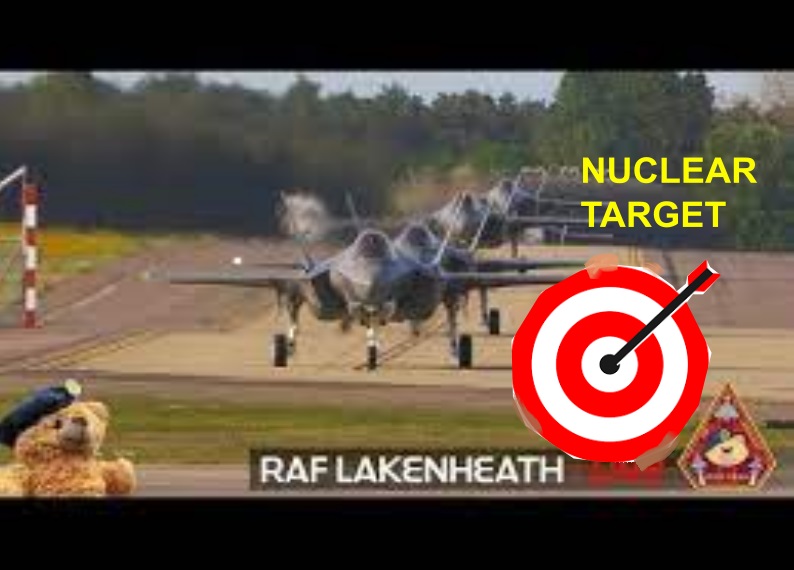
Vikki Irwin, BBC political reporter, Suffolk, Matt Precey, Suffolk,
BBC 22nd April 2025
People living near a US airbase earmarked to house nuclear weapons say they are being left in the dark about what would happen in the event of a radiation alert.
It comes after a drill simulating an accident involving such material was held, with personnel from RAF Lakenheath in Suffolk taking part.
Nick Timothy, Conservative MP for West Suffolk, said while the US military was “welcome”, there needed to be “transparency as far as possible on issues like this exercise”.
A Ministry of Defence (MoD) spokesman said: “Exercise Diamond Dragon demonstrated our preparedness to respond to any incident, no matter how unlikely”……………………………………….
The Suffolk Resilience Forum, which leads on emergency planning in the county, confirmed the scenario in both instances was a simulated crash in the UK of a US aircraft carrying “defence nuclear materials”.
Lakenheath Parish Council chairman Gerald Kelly said he had been told informally about the latest drill.
He said the area had an emergency plan, but added: “There is nothing in there about this sort of incident.”
The MoD should inform residents “what it wants us to do” if the event of an incident, he said.
Mr Kelly called for a siren system to be installed and for the local community to be involved in any future exercises.
https://www.bbc.co.uk/news/articles/cde2dyk5rjpo
Iran-US talks wrap up in Rome with agreement to establish framework for potential nuclear deal
Omani officials stated that the indirect talks are ‘gaining momentum’ after Tehran and Washington agreed to establish technical delegations to draft a potential replacement for the Obama-era JCPOA
The second round of indirect talks between Iranian and US officials concluded in the Italian capital, Rome, on 19 April, with both sides agreeing to establish working groups to draft a “general framework” for a potential new nuclear deal.
“In this round of talks, senior Iranian and US negotiators outlined the general framework for the talks and exchanged views on some important issues in the areas of sanctions relief and the nuclear issue. The two sides agreed to continue the next round of indirect talks next Saturday in Muscat,” the Iranian Foreign Ministry said in a statement.
Tehran also stated that talks to limit the country’s uranium enrichment program in exchange for sanctions relief “require more detailed discussion and examination at the expert level.” As such, the two sides agreed to send technical delegations to the Omani capital next Wednesday for detailed discussions.
Following Saturday’s talks, Iranian Foreign Minister Abbas Araghchi described the atmosphere as “positive” and said that officials “made clear how many in Iran believe that the [2015 Joint Comprehensive Plan of Action] is no longer good enough for us.”
“For now, optimism may be warranted but only with a great deal of caution,” he told reporters.
The Omani Foreign Ministry said the second round of talks “led to the parties agreeing to move to the next phase of targeted negotiations to achieve a fair, permanent, and binding agreement that ensures Iran is free from nuclear weapons and the full lifting of sanctions while preserving the country’s right to develop nuclear energy for peaceful uses and purposes.”
“Dialogue and clear communication are the only way to achieve a credible and reliable understanding that will benefit all parties in the regional and international context,” Omani officials said.
There was no immediate comment from the US side following the talks.
Nevertheless, soon after Saturday’s talks ended, Israeli TV broadcast a pre-recorded address by Prime Minister Benjamin Netanyahu, in which he reiterated his commitment to preventing Iran from developing a nuclear weapon.
“I am committed to preventing Iran from attaining nuclear weapons. I won’t give on this, I won’t let up on this, and I won’t withdraw from this — not a millimeter,” Netanyahu said.
Earlier in the day, Reuters reported that Tel Aviv “has not ruled out” launching an attack on Iran’s nuclear facilities in the near future without US involvement.
Bribery at Hinkley Point
A claim for unfair dismissal by project director Garrick Nisbet against Notus Heavy Lift Solutions – one of the heavy lift subcontractors working for EDF on the construction the Hinkley Point C nuclear power station in the UK – has highlighted cases of bribery and corruption at the site, relating to the supply of heavy lift and rigging services.
An employment tribunal held last year was told that Ashley Daniels – at the time EDF’s head of lifting and temporary works at Hinkley Point C – accepted gifts from Nisbet on the basis that it would help ensure more business for him and his employer Notus. The ‘gifts’ included an £11,000 quad bike, £2,000 worth of tickets for a boxing match and of all things a refill for a Montblanc pen. Daniels’ activities are reportedly the subject of an ongoing investigation by EDF.
Notus Heavy Lift dismissed Nisbet without notice in April 2023 when evidence came to light, indicating that he had given the quad bike to Daniels in exchange for more work or to retain existing work levels. Daniels had apparently told Nisbet that the quad bike would give “Notus a bit of breathing space”.
In evidence given by the former managing director of Notus Heavy Lift, the tribunal heard that Daniels had “the full authority to decide who came on site and that without Ashley’s approval, Notus would not have any work on the site”.
Nisbet claimed that the ‘favours’ he had offered Daniels were limited to lunches, coffee and biscuits, and argued that he had nothing to do with the boxing tickets, adding that the Montblanc refill was simply a spare he had bought, which Daniels had asked for.
Employment judge Colm O’Rourke found that Nisbet’s use of the word “favours” was “disingenuous”, adding that the items given were “clearly bribes”………………………
………………………….More information on the ruling and evidence
This case was concluded in October last year but updated earlier this month.
To see the full list of reasons and evidence in this case go to: https://assets.publishing.service.gov.uk/media/673c76869a48a5ab14acc394/Mr_G_Nisbet_-vs-_Notus_Heavy_Lift_Solutions_Limited_-_6001564.2023_-_Written_Reasons.pdf
Vertikal 24th April 2025
https://vertikal.net/en/news/story/46007/bribery-at-hinkley-point
Security fears over mini nuclear plant network with ‘1,000s more police needed’.

Keir Starmer’s plans for a ‘proliferation’ of small reactors – potentially nearer UK towns – would require an urgent rethink of how armed officers protect them, experts warn.
Government plans to build a network of
“mini” nuclear power stations across the country have failed to
adequately assess major security threats to the public, top policing
experts have warned.
Sir Keir Starmer has pledged to “rip up the rules”
governing the nuclear industry to fast-track so-called Small Modular
Reactors (SMRs) to generate affordable low-carbon electricity, boosting the
economy and powering energy-intensive technology such as AI data centres.
However, security analysts caution that arrangements for guarding SMRs from
terrorists, enemy states and criminal groups need radical rethinking to
protect the public. They told The i Paper that thousands more armed
officers could be required to defend these facilities – which may be
located nearer towns and cities – plus the vehicles carrying their
radioactive fuel.
They believe these policing operations would be so much
larger, more complex and more costly than existing arrangements that a new
force may be required – yet fear ministers are overlooking or
underestimating the challenges ahead.
The Government hopes the first SMRs
will open in less than 10 years, probably at some of the country’s eight
existing nuclear sites, but the network may later expand to other locations
in England and Wales. Professor Fraser Sampson, a national security expert
at Sheffield Hallam University, said these will necessitate “a very
different policing and security model,” especially if they are located
“much nearer or even within areas of significant population, and you have
many more of them.”
Sampson, a former solicitor and police officer who
recently served as the UK’s biometrics and surveillance camera
commissioner, worries the Government is not focusing enough on security.
Anticipating a “proliferation of smaller sites,” he said: “The thing
that I think is missing, and Two researchers at King’s College London, Dr
Zenobia Homan and Dr Ross Peel, have warned that SMRs increase the
possibility of “insider threat.”
iNews 20th April 2025
https://inews.co.uk/news/crime/security-fears-mini-nuclear-plant-network-police-3648464
Iran to brief China as it accuses Israel of ‘undermining’ US nuclear talks
Tehran official’s Beijing trip comes before third round of talks with the US and follows consultations with Russia.
Iran says it will brief China this week in advance of a third round of talks with the United States on its nuclear programme, as Iranian officials separately accused Israel of seeking to “undermine and disrupt the diplomatic process”.
Iranian Foreign Minister Abbas Araghchi will visit Beijing on Tuesday to discuss the latest talks with the administration of US President Donald Trump on the country’s nuclear programme, spokesman Esmaeil Baqaei said on Monday.
The trip echoes “consultations” Iran held with Russia last week, before the second round of direct US-Iran talks was held over the weekend. A third round of talks between Araghchi and US envoy Steve Witkoff is scheduled to take place in Oman on Saturday.
Araghchi has previously said Tehran always closely consults with its allies, Russia and China, over the nuclear issue.
“It is natural that we will consult and brief China over the latest developments in Iran-US indirect talks,” Baqaei said.
Russia and China, both nuclear-armed powers, were signatories to a now-defunct 2015 deal between Iran, the US and several Western countries intended to defuse tensions around Tehran’s nuclear programme.
The 2015 deal, known as the Joint Comprehensive Plan of Action (JCPOA), from which Trump withdrew in 2018, saw Tehran curtail its nuclear programme in exchange for sanctions relief.
The US and Israel have accused Iran of seeking to use the programme to develop nuclear weapons. Tehran has staunchly denied the claim, saying the programme is for civilian purposes.
On Monday, the Chinese Ministry of Foreign Affairs stressed close ties between Beijing and Tehran, but did not confirm the Iranian minister’s planned visit.
“China and Iran have maintained exchanges and contacts at all levels and in various fields. With regard to the specific visit mentioned, I have no information to offer at the moment,” Guo Jiakun, spokesperson for the ministry, said.
Strengthened alliance
Israel’s war in Gaza has seen Iran pull closer to Russia and China. Recent diplomatic moves surrounding the US-Iran talks have further underscored the strengthened ties.
Araghchi met his Russian counterpart, Sergey Lavrov, last week, just before his second round of negotiations with Witkoff.
On Monday, Russian President Vladimir Putin signed off on a 20-year strategic partnership treaty agreed earlier this year with his Iranian counterpart, Masoud Pezeshkian.
Meanwhile, Iran’s already fraught relations with Israel and its “ironclad” ally, the US, have nosedived amid the war. Since taking office, Trump has reinstated a “maximum pressure” sanctions campaign against Tehran, while repeatedly threatening military action if a new nuclear deal is not reached.
Speaking on Monday, Foreign Ministry spokesman Baqaei accused Israel of trying to disrupt the nascent negotiations to open the way for military action.
In comments carried by the AFP news agency, he declared that Israel is behind efforts from a “kind of coalition” to “undermine and disrupt the diplomatic process”.
“Alongside it are a series of warmongering currents in the United States and figures from different factions,” the spokesman said.
Last week, Prime Minister Benjamin Netanyahu reiterated that Israel would not allow Iran to acquire nuclear weapons.
His statement came a day after The New York Times reported that Trump had dissuaded Israel from striking Iran’s nuclear sites in the short term, saying Washington wanted to prioritise diplomatic talks.
‘Consultations must continue’
Baqaei added that “consultations must continue” with countries that were party to the JCPOA.
Iran has gradually breached the terms of the treaty since Trump abandoned it, most notably by enriching uranium to levels higher than those laid out in the deal.
The International Atomic Energy Agency says Iran has enriched uranium to 60 percent, close to the 90 percent level needed to manufacture weapons. The JCPOA had restricted it to 3.67 percent, the level of enrichment needed for civilian power.
Speaking last week, Witkoff sent mixed messages on what level Washington is seeking. He initially said in an interview that Tehran needed to reduce its uranium enrichment to the 3.67 percent limit, but later clarified that the US wants Iran to end its enrichment programme.
Moscow may gain key role in Iran nuclear deal as US talks progress
Russia touted as possible destination for Iran’s uranium stockpile and could also act as arbiter of deal breaches
Russia could play a key role in a deal on the future of Iran’s nuclear
programme, with Moscow being touted not only as a possible destination for
Iran’s stockpile of highly enriched uranium, but also as a possible
arbiter of deal breaches.
Donald Trump, who abandoned a 2015 nuclear pact
between Tehran and world powers in 2018 during his first term, has
threatened to attack Iran unless it reaches a new deal swiftly that would
prevent it from developing a nuclear weapon.
Four hours of indirect talks
between the US and Iran in Rome on Saturday, under the mediation of Oman,
made significant progress, according to US officials. Further technical
talks are due in Geneva this week, followed by another high-level
diplomatic meeting next weekend in Oman.
Guardian 20th April 2025 https://www.theguardian.com/world/2025/apr/20/moscow-may-gain-key-role-in-iran-nuclear-deal-as-us-talks-progress
80 years after atomic bombs devastated Japan, Donald Trump’s actions risk nuclear proliferation
The Conversation 20th April 2025
- Jamie LevinAssociate Professor of Political Science, St. Francis Xavier University
- Youngwon ChoAssociate Professor of Political Science, St. Francis Xavier University
The policy of every American president since Harry S. Truman has been to limit the proliferation of nuclear weapons.
They have not always been successful. The world’s most powerful weapons spread, with nine countries now possessing them. But no United States president has actively sought their further proliferation, as the belligerent policies of Donald Trump are now set to do.
In 2018, during his first term as president, Trump tore up the Iran nuclear deal, which had successfully placed limits on the enrichment of weapons-grade materials in exchange for sanctions relief.
Iran has since accelerated its nuclear weapons program. Estimates now put Iran within months or even weeks of producing several bombs.
A short time later, after a series of escalating threats, Trump suggested that North Korea had agreed to denuclearize. Talks ensued, but a deal never materialized.
In fact, Trump failed to stop, let alone roll back, North Korea’s ambitious nuclear weapons programs. North Korea is now said to possess at least 50 warheads as well as the means to deliver them.
No longer an ally
Under the second Trump administration, the world is facing a rapidly growing proliferation risk of a different kind, one that is found not only among the usual suspects in Iran and North Korea, but also among a long list of U.S. allies who once basked in American security guarantees.
Merely two months into Trump’s second term, America’s European allies have grown increasingly concerned that the U.S. is no longer a reliable ally.
That’s due to his suspension (and then reinstatement) of weapons transfers and intelligence sharing with Ukraine, an explicitly prioritized rapprochement with Russia, open denigration of its NATO allies, suggestions that the U.S. would not come to their defence if attacked, and his active and repeated threats to the sovereignty and territorial integrity of Canada, Greenland and Panama.
Against this backdrop, Trump’s guiding Project 2025 principles advocate escalating nuclear testing, breaking a long-held taboo.
Once protected by its nuclear umbrella, America’s closest allies are now threatened by it. Europe’s loss of confidence in the U.S. is so severe that finding alternatives has now become part of serious discussions in capitals across the continent. France and the United Kingdom are poised to fill the void by extending their nuclear deterrence to the likes of Germany and Poland.
The scene in Asia
But the risk of proliferation is greatest in East Asia. On the campaign trail in 2016, Trump mused that Japan and South Korea might need to develop nuclear weapons. “It’s only a matter of time,” he said.
That time is unfortunately now…………………………………………………………………………………………………………
Catastrophic dangers
While going nuclear may be individually rational for the East Asian countries, the collective outcome for the region and beyond is fraught with catastrophic risks.
The world is now grappling with the most dangerous collective action problem because the solution that has worked so well for decades — credible American security assurance — is eroding.
In upending the very international order that the U.S. established, the Trump administration is not merely chipping away at the global security architecture underpinned by myriad American security guarantees. It’s imploding the post-Second World War security order from within and the moral, political and institutional bulwark against nuclear proliferation.
In this predatory, zero-sum world of Trumpian foreign policy, putting America First necessarily means putting everyone else last — and, along the way, inadvertently fuelling nuclear proliferation. https://theconversation.com/80-years-after-atomic-bombs-devastated-japan-donald-trumps-actions-risk-nuclear-proliferation-254459
INSIDER THREAT SECURITY CONSIDERATIONSFOR ADVANCED AND SMALL MODULAR REACTORS.
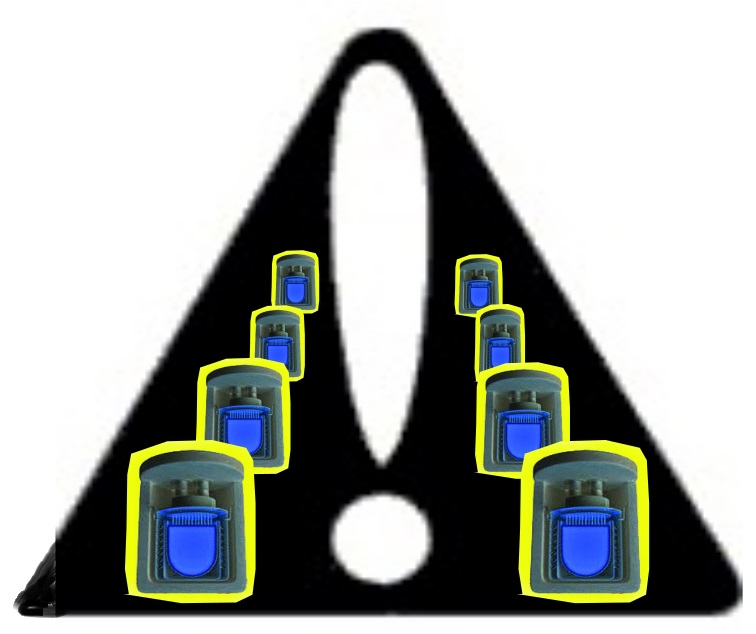
The wide range of nuclear power plant technologies currently in design
globally have an assortment of unique characteristics that create novel
security considerations compared to large conventional nuclear power
plants.
Some of these characteristics create “insider threat”
considerations for nuclear security, where insiders are defined as
individuals with legitimate access to nuclear facilities and materials who
use this access to carry out sabotage or theft of nuclear material.
These include a lack of mature security culture in developer organisations,
serial plant manufacturing in a production line environment, plant siting
in remote and isolated areas, minimised staff numbers, teleoperation of
plants by offsite staff, the increased reliance on digital instrumentation
and control systems, and the potential for greater involvement of foreign
experts and third-party suppliers, especially on short-term bases for, e.g,
refuelling and maintenance.
The paper takes a technology agnostic approach
to examine what these factors may mean for insider threat risks and
suggests that plant designers should be identifying and minimising the
opportunities of insiders to act throughout the engineering design process.
Doing so is anticipated to strengthen effective insider threat mitigation
in deployed small and advanced reactors.
Kings College 21st April 2025 – https://kclpure.kcl.ac.uk/ws/portalfiles/portal/311074601/Paper_381_Insider_Threat_for_SMR.pdf
1 This Month
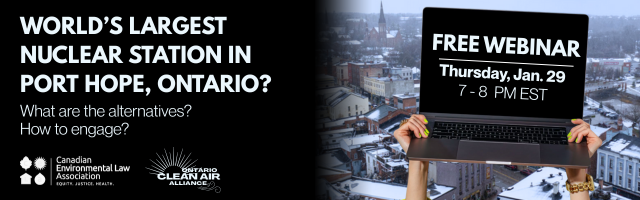
29 Jan. Thursday 7-8 p.m. Webinar – World’s Largest Nuclear Station in Port Hope, ON?
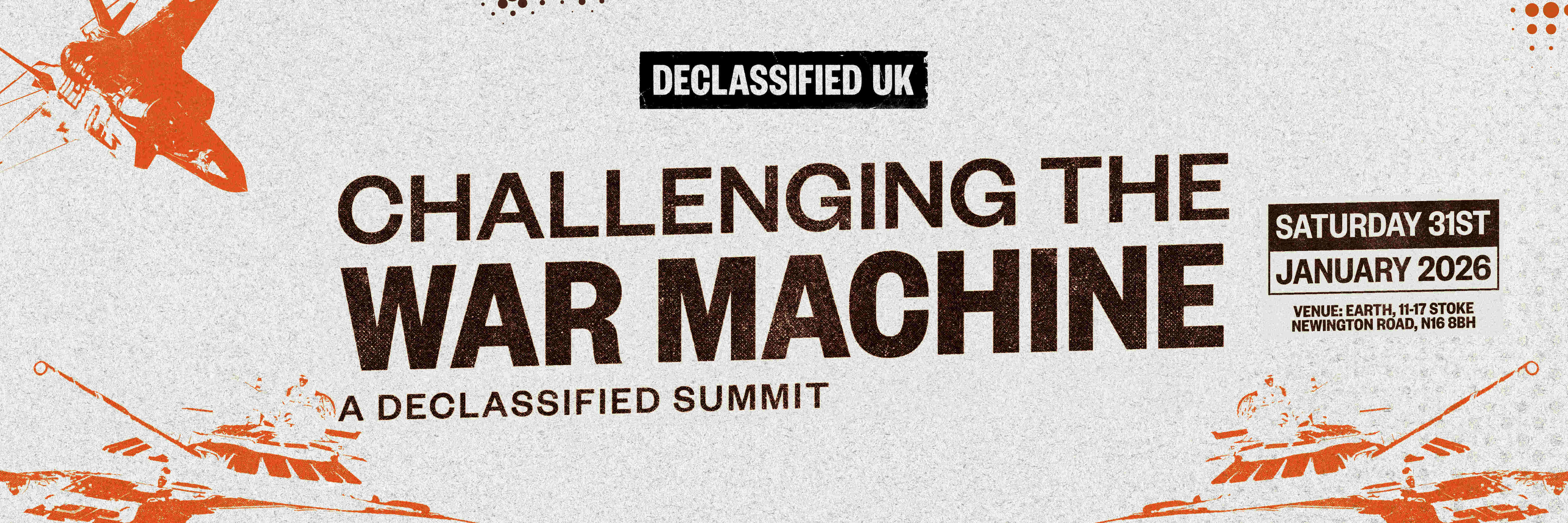
31st January – Challenging the War Machine – a DECLASSIFIED UK SUMMIT


Website of the Week
Now until to February 10, 2026 Radioactive waste storage in France: the debate is finally open! How to participate?
-
Archives
- January 2026 (246)
- December 2025 (358)
- November 2025 (359)
- October 2025 (376)
- September 2025 (258)
- August 2025 (319)
- July 2025 (230)
- June 2025 (348)
- May 2025 (261)
- April 2025 (305)
- March 2025 (319)
- February 2025 (234)
-
Categories
- 1
- 1 NUCLEAR ISSUES
- business and costs
- climate change
- culture and arts
- ENERGY
- environment
- health
- history
- indigenous issues
- Legal
- marketing of nuclear
- media
- opposition to nuclear
- PERSONAL STORIES
- politics
- politics international
- Religion and ethics
- safety
- secrets,lies and civil liberties
- spinbuster
- technology
- Uranium
- wastes
- weapons and war
- Women
- 2 WORLD
- ACTION
- AFRICA
- Atrocities
- AUSTRALIA
- Christina's notes
- Christina's themes
- culture and arts
- Events
- Fuk 2022
- Fuk 2023
- Fukushima 2017
- Fukushima 2018
- fukushima 2019
- Fukushima 2020
- Fukushima 2021
- general
- global warming
- Humour (God we need it)
- Nuclear
- RARE EARTHS
- Reference
- resources – print
- Resources -audiovicual
- Weekly Newsletter
- World
- World Nuclear
- YouTube
-
RSS
Entries RSS
Comments RSS
 nuclear-news