Nuclear fallout: Coalition’s nuclear energy policy proved toxic to Australian voters

SMH, By Mike Foley, May 5, 2025
The Coalition’s nuclear energy policy was toxic to voters, delivering big swings against Peter Dutton’s candidates in electorates chosen to host reactors, while support for Labor grew in many places it chose for massive offshore wind farms.
Dutton’s energy policy was built on opposing Labor’s “reckless race to renewables”, which the Coalition claimed was trashing farmland in the path of transmission lines and solar panels, in favour of a nuclear and gas-led strategy.
“I’m very happy for the election to be a referendum on energy, on nuclear,” Dutton said on June 19, when he announced his planned nuclear plant locations.
Dutton had not visited any of his proposed nuclear sites by the time the election was over, while the party quietened its advertising for the policy.
In the NSW electorate of Hunter, which borders where the Coalition planned to build a reactor on the site of the old Liddell coal plant, Labor MP Dan Repacholi significantly increased his support.
Repacholi’s first-preference votes jumped from 39 per cent in 2022 to 44 per cent in 2025, while the Nationals fell from 27 per cent to 18 per cent.
The central west NSW seat of Calare was also slated for a reactor near Lithgow, and the election turned into a three-cornered contest between the pro-nuclear Nationals, their former member-turned-nuclear sceptic independent Andrew Gee, and nuclear opponent Kate Hook……………………………
south of the border in the electorate of Gippsland, where the Coalition planned to build a reactor at the Loy Yang A coal plant, Nationals MP Darren Chester defied the trend with his primary vote falling from 55.2 per cent in 2022 to 53.5 per cent in 2025.
The figures could change as the Australian Electoral Commission continues to tally ballots.
The nuclear vote also appears to have inflicted pain on Coalition seats where no nuclear plants were planned.
Chief architect and advocate for the policy, energy spokesman Ted O’Brien, the Liberal National Party MP for Fairfax in Queensland, dropped to 38 per cent on the primary vote from 44 per cent in 2022, while Labor ticked up 2 per cent and anti-nuclear independent candidate Francine Wiig captured 12 per cent.
Nationals leader David Littleproud’s primary vote dropped from 54 per cent in 2022 to 52 per cent.
On the day after the election, Littleproud said nuclear was not responsible for the Coalition’s historic loss.
“I think this was a schmick campaign by Labor destroying Peter Dutton’s character,” he told Sky News.
Dutton vigorously campaigned against wind farms, visiting electorates planned for development and claiming the industry would harm whales, commercial fishing and seascape views.
The Coalition pledged to ban four of Labor’s six offshore wind zones, and Dutton campaigned on this commitment in Paterson, north of Sydney, as well as Whitlam and Cunningham south of Sydney, and Forrest south of Perth.
In Forrest, the Liberal vote fell from 43 per cent in 2022 to 31.5 per cent. First-time independent candidate Sue Chapman, who backed assessment of offshore wind in the area “based on the evidence and [would] aim to bring the community along”, picked up 18.5 per cent of primary votes.
In Cunningham, Wollongong Labor MP Alison Byrnes increased her primary vote from 40.5 per cent in 2022 to 45 per cent.
Down the road in Shellharbour, part of the electorate of Whitlam, Labor’s Carol Berry maintained the 38 per cent primary vote from the past election (although, in terms of ……..the two-candidate preferred vote, Whitlam recorded a 2 per cent swing against Labor)……….https://www.smh.com.au/politics/federal/nuclear-fallout-coalition-s-energy-policy-proved-toxic-to-voters-20250504-p5lwcp.html
Israel Will Even Persecute Palestinians For Simply Talking To Journalists
Caitlin Johnstone, May 05, 2025, https://www.caitlinjohnst.one/p/israel-will-even-persecute-palestinians?utm_source=post-email-title&publication_id=82124&post_id=162858742&utm_campaign=email-post-title&isFreemail=true&r=1ise1&triedRedirect=true&utm_medium=email
Israeli soldiers have been harassing a Palestinian activist who appeared in Louis Theroux’s recent documentary The Settlers to talk about Israel’s apartheid abuses in the occupied West Bank. Issa Amro shared footage of IDF troops raiding his home over the weekend, days after Theroux’s film debuted on the BBC.
Israelis not only murder journalists, attack journalistic institutions and block journalists from entering the Gaza Strip, they also persecute Palestinian civilians who speak with journalists.
If you haven’t yet watched The Settlers, I highly recommend doing so. It’s so damning that I’ve seen people expressing astonishment that it made it past the BBC’s censors, but really, what’s to censor? It’s an hour of Israelis telling a video camera what Israelis think in their own words.
One of the best ways to tell the truth about the real Israel is to just point a camera at these freaks and let them tell it themselves. Theroux’s interviewing style lends itself particularly well to this type of exposure.
A ship trying to bring humanitarian aid to Gaza was drone bombed by Israel near Malta on Friday. Activist Greta Thunberg was preparing to board the ship to travel with it to its destination.
Which is just wild to think about. Things are so fucked up on this timeline that there is a non-zero probability that Israel ends up assassinating Greta Thunberg.
Imagine the western reaction if Iran had bombed a humanitarian aid ship trying to feed starving civilians.
Imagine the reaction if Chinese forces were caught massacring medical workers in ambulances.
Imagine the reaction if Russia bombed an international humanitarian aid convoy in clearly marked vehicles.
It would be all we’d hear about for weeks.
My social media feeds are filling up with footage of skeletal starving children in Gaza. If we had sane and responsible news media in the west, this would be the lead story in every outlet and publication. But we do not have sane and responsible news media. We have propaganda services disguised as news media.
People who continue to support Israel are only able to do so because they actively avoid watching the video footage the rest of us are watching.
If I built a home and then discovered that it could only remain standing if I constantly massacred children, I would simply change my living arrangements.
I would not claim my building “has a right to exist”.
I would not spend years explaining why my child massacres are okay.
I would not spend decades accusing anyone who criticized my child massacres of unfair discrimination against me and my family.
I would simply change my building so that its existence no longer required me to routinely massacre children. If I could not find a way to restructure my building in this way, I would move.
I would not do this because I am a remarkably kind and special person. I would do it because I am not a psychopath.
Only a psychopath would want to continue living in that kind of building. Only a psychopath would want that kind of building to remain standing.
I said the preceding on Twitter yesterday and Israel apologists immediately came in yelling at me for saying evil things about Israel, but what’s funny is that I never mentioned Israel once; I just talked about a building. They only knew I was actually talking about Israel because of all the stuff I said about constantly massacring civilians.
Gets ’em every time.
❖
It’s good that Trump’s “MAGA” base opposes war with Iran so forcefully, but it’s pretty revealing how absent they’ve been on Trump’s butchery in Yemen and Gaza. They’re not opposed to war or mass murder, they’re just opposed to fighting people who are strong enough to fight back.
Who are Britain Remade?

Britain Remade is a Tory think-tank and lobby group campaigning on behalf of nuclear power.
By Mike Small, https://bellacaledonia.org.uk/2025/05/01/who-are-britain-remade/
There’s a concerted attempt to attack Scotland’s long-standing commitment to no new nuclear power, alongside a full-scale assault on the idea of Net Zero, and the very basics of climate policy (however inadequate mainstream policy is).
This is being led by Nigel Farage who has called Net Zero ‘the New Brexit’, whatever that means. All this has been echoed by Tony Blair’s intervention this week where he argued that any attempt to limit fossil fuels in the short term or encourages people to limit consumption is “doomed to fail”. Alongside this we can see Scottish Labour’s recent commitment to the cause of new nuclear power in Scotland.
Today The Scotsman ran with a front-page splash all about how ‘SNP voters back nuclear power’ by Deputy Political Editor David Bol and Alexander Brown.
he article was replete with quotes from Labour MSP for East Lothian, Martin Whitfield, Scottish Conservative MP, John Lamont, who said the Scottish Government embracing nuclear power would be “basic common sense”. Then there’s a quote from Sam Richards, founder and campaign director for Britain Remade, who, it turns out commissioned the poll and was also enthusiastically pro-nuclear.
What The Scotsman didn’t explain though, was who ‘Britain Remade’ are? They’re presented as if they’re maybe pollsters or some independent think-tank.
But Britain Remade is a Tory think-tank and lobby group campaigning on behalf of nuclear power. Jason Brown is Head of Communications for Britain Remade, a former No. 10 media Special Adviser and Ben Houchen’s comms Adviser.
Jeremy Driver is the Head of Campaigns at Britain Remade, a former Lloyds Banker and Parliamentary Assistant to Ann Soubry. Sam Dumitriu is Head of Policy at Britain Remade who formerly worked at the Adam Smith Institute. These are Tory SPADS working on their own campaign to support new nuclear in Scotland: Lift The Ban On New Scottish Nuclear Power.
Britain Remade claimed they are not affiliated: “We’re an independent grassroots organisation. We are not affiliated with, or part of, any political party” their website says. They may not be officially affiliated to any party, but it’s very clear where their politics (and their staff) come from.
So here we have the Scotsman giving over its front-page to a Tory lobby group to promote their campaign. On the same day they published a similar piece in the Telegraph “SNP’s ‘senseless’ nuclear ban ‘damaging Scotland’” so it’s really working for them.
This is not just a question of client journalism, it’s a question of how far right-wing forces, often working with dark money, will attempt to derail even the most modest (and completely inadequate) environmental policies. Quite why Saudi-funded Tony Blair should jump on the anti Net Zero bandwagon is anybody’s guess, but it’s quite clear there is a coordinated pro-nuclear lobbying group in action in Scotland that pans across the Conservatives and Labour parties, and is supported by astroturf groups and pliant media friends. Watch this space for more on the new nuclear lobby.
Durbin successor must not be co opted by the Israel Lobby.
Walt Zlotow, West Suburban Peace Coalition, Glen Ellyn IL 5 May 25
My outgoing senator Dick Durbin spent his entire 29 year Senate career beholding to the Israel Lobby. In the past 25 years alone he’s received $1,131,900 in campaign cash to ignore Israel’s ethnic cleansing of Palestinians in Gaza, transformed into genocide after the October 7, 2023 Hamas attack. His support for a 2 state solution (Palestinian statehood) is worthless virtue signaling as he’s done nothing of substance to achieve that goal along with making America the 148th nation out of 193 to recognize Palestinian statehood.
We need to replace Durbin with a principled candidate not ensnared by Israel Lobby money. Alas, the 5 Illinois House members mentioned as possible successors are all in the tank to remain mum on truly promoting Palestinian statehood and seeking end to US enabling Israel’s genocidal ethnic cleansing of 2,300,000 Palestinians in Gaza.
Raja Krishnamoorthi (D-IL 8) $269,530
Nikki Budzinski (D-IL 13) $187660
Darin LaHood (R-IL 16) $112,687
Robin Kelly (D-IL 2) $187,272
Lauren Underwood (D-IL 14) $ 75,593,
Tho not mentioned as a possible candidate, we of peace should encourage Congresswoman Delia Ramirez (D-IL 3) to seek Durbin’s open seat next year.
Her take from the Israel Lobby since her election in November 2022? Zero, nada, zilch.
That allowed Ramirez to push back against US billions funding the Israeli genocide, saying this in March, 2024: “The death toll in Gaza continues to rise. Gazans are starving. Over 1.5 million people have been displaced. Hostilities between the U.S. and Iran are escalating. And just this morning, The New York Times reported that one-fifth of the hostages still in captivity since the start of the conflict have likely died. We must change course. Under no circumstances could I have voted for today’s H.R. 7217 to provide $17.6 billion in unconditioned military funding for Israel. The supplemental funding proposed, which includes no humanitarian aid for Gaza, supports weapons of war and destruction that further jeopardize Israeli hostages and Palestinian civilians. Each U.S.-made or funded bomb dropped in Gaza further jeopardizes the chances of long-lasting peace for Israelis and Palestinians. I’ve said it before, and I’ll say it now: I will only support actions that bring us closer to peace.”
Come on Krishnamoorthi, Budzinski, LaHood, Kelly, Underwood, either drop accepting Israel Lobby money to ignore the genocidal ethnic cleaning of Gaza, or drop any consideration of replacing the Lobby’s million dollar Senator Dick Durbin.
The Anglo-Nazi Global Empire That Almost Was
Polls of European citizens conducted in the immediate aftermath of World War II showed there was little public doubt that the Red Army was primarily responsible for Nazi Germany’s destruction, while Britain and the US were perceived as playing mere walk-on roles.
For example, in 1945, 57% of French citizens believed Moscow “contributed most to the defeat of Germany in 1945” – just 20% named the US, and 12% Britain. By 2015, less than a quarter of respondents recognised the Soviet role, with 54% believing the US to be Nazism’s ultimate vanquisher. Meanwhile, a survey on the 80th anniversary of D-Day in June 2024 found 42% of Britons believed their own country had done more to crush Hitler than all other allies combined.
Kit Klarenberg, May 04, 2025, https://www.kitklarenberg.com/p/the-anglo-nazi-global-empire-that
As VE Day approaches, Western officials, pundits and journalists are widely seeking to exploit the 80th anniversary of Nazism’s defeat for political purposes. European leaders have threatened state attendees of Russia’s grand May 9th victory parade with adverse consequences. Meanwhile, countless sources draw historical comparisons between appeasement of Nazi Germany throughout the 1930s, and the Trump administration’s ongoing efforts to strike a deal with Moscow to end the Ukraine proxy conflict.
As The Atlantic put it in March, “Trump Is Offering Putin Another Munich” – a reference to the September 1938 Munich Agreement, under which Western powers, led by Britain, granted a vast portion of Czechoslovakia to Nazi Germany. Mainstream narratives of appeasement state that this represented the policy’s apotheosis – its final act, which it was believed would permanently sate Adolf Hitler’s expansionist ambitions, but actually made World War II inevitable.
Appeasement is universally accepted today in the West as a well-intentioned but ultimately catastrophically failed and misguided attempt to avoid another global conflict with Germany, for peace’s sake. According to this reading, European governments made certain concessions to Hitler, while turning a blind eye to egregious breaches of the post-World War I Versailles Treaty, such as the Luftwaffe’s creation in February 1935, and Nazi Germany’s military occupation of the Rhineland in May the next year.
In reality though, from Britain’s perspective, the Munich Agreement was intended to be just the start of a wider process that would culminate in “world political partnership” between London and Berlin. Two months prior, the Federation of British Industries (FBI), known today as the Confederation of British Industry, made contact with its Nazi counterpart, Reichsgruppe Industrie (RI). The pair eagerly agreed their respective governments should enter into formal negotiations on Anglo-German economic integration.
Representatives of these organisations met face-to-face in London on November 9th that year. The summit went swimmingly, and a formal conference in Düsseldorf was scheduled for next March. Coincidentally, later that evening in Berlin, Kristallnacht erupted, with Nazi paramilitaries burning and destroying synagogues and Jewish businesses across Germany. The most infamous pogrom in history was no deterrent to continued discussions and meetings between FBI and RI representatives. A month later, they inked a formal agreement on the creation of an international Anglo-Nazi coal cartel.
British officials fully endorsed this burgeoning relationship, believing it would provide a crucial foundation for future alliance with Nazi Germany in other fields. Moreover, it was hoped Berlin’s industrial and technological prowess would reinvigorate Britain’s economy at home and throughout the Empire, which was ever-increasingly lagging behind the ascendant US. In February 1939, representatives of British government and industry made a pilgrimage to Berlin to feast with high-ranking Nazi officials, in advance of the next month’s joint conference.
As FBI representatives prepared to depart for Düsseldorf in March, British cabinet chief Walter Runciman – a fervent advocate of appeasement, and chief architect of Czechoslovakia’s carve up – informed them, “gentlemen, the peace of Europe is in your hands.” In a sick twist, they arrived on March 14th, while Czechoslovakian president Emil Hácha was in Berlin meeting with Hitler. Offered the choice of freely allowing Nazi troops entry into his country, or the Luftwaffe reducing Prague to rubble before all-out invasion, he suffered a heart attack.
After revival, Hácha chose the former option. The Düsseldorf conference commenced the next morning, as Nazi tanks stormed unhindered into rump Czechoslovakia. Against this monstrous backdrop, a 12-point declaration was ironed out by the FBI and RI. It envisaged “a world economic partnership between the business communities” of Berlin and London. That August, FBI representatives secretly met with Herman Göring to anoint the agreement. In the meantime, the British government had via back channels made a formal offer of wide-ranging “cooperation” with Nazi Germany.
‘Political Partnership’
In April 1938, journeyman diplomat Herbert von Dirksen was appointed Nazi Germany’s ambassador to London. A committed National Socialist and rabid antisemite, he also harboured a particularly visceral loathing of Poles, believing them to be subhuman, eagerly supporting Poland’s total erasure. Despite this, due to his English language fluency and aristocratic manners, he charmed British officials and citizens alike, and was widely perceived locally as Nazi Germany’s respectable face.
Even more vitally though, Dirksen – in common with many powerful elements of the British establishment – was convinced that not only could war be avoided, but London and Berlin would instead forge a global economic, military, and political alliance. His 18 months in Britain before the outbreak of World War II were spent working tirelessly to achieve these goals, by establishing and maintaining communication lines between officials and decisionmakers in the two countries, while attempting to broker deals.
Dirksen published an official memoir in 1950, detailing his lengthy diplomatic career. However, far more revealing insights into the period immediately preceding World War II, and behind-the-scenes efforts to achieve enduring detente between Britain and Nazi Germany, are contained in the virtually unknown Dirksen Papers, a two-volume record released by the Soviet Union’s Foreign Languages Publishing House without his consent. They contain private communications sent to and from Dirksen, diary entries, and memos he wrote for himself, never intended for public consumption.
The contents were sourced from a vast trove of documents found by the Red Army after it seized Gröditzberg, a castle owned by Dirksen where he spent most of World War II. Mainstream historians have markedly made no use of the Dirksen Papers. Whether this is due to their bombshell disclosures posing a variety of dire threats to established Western narratives of World War II, and revealing much the British government wishes to remain forever secret, is a matter of speculation.
Read more: The Anglo-Nazi Global Empire That Almost WasImmediately after World War II began, Dirksen “keenly” felt an “obligation” to author a detailed post-mortem on the failure of Britain’s peace overtures to Nazi Germany, and his own. He was particularly compelled to write it as “all important documents” in Berlin’s London embassy had been burned following Britain’s formal declaration of war on September 3rd 1939. Reflecting on his experiences, Dirksen spoke of “the tragic and paramount thing about the rise of the new Anglo-German war”:
“Germany demanded an equal place with Britain as a world power…Britain was in principle prepared to concede. But, whereas Germany demanded immediate, complete and unequivocal satisfaction of her demands, Britain – although she was ready to renounce her Eastern commitments, and…allow Germany a predominant position in East and Southeast Europe, and to discuss genuine world political partnership with Germany – wanted this to be done only by way of negotiation and a gradual revision of British policy.”
‘German Reply’
From London’s perspective, Dirksen lamented, this radical change in the global order “could be effected in a period of months, but not of days or weeks.” Another stumbling block was the British and French making a “guarantee” to defend Poland in the event she was attacked by Nazi Germany, in March 1939. This bellicose stance – along with belligerent speeches from Prime Minister Neville Chamberlain – was at total odds with simultaneous conciliatory approaches such as Düsseldorf, and the private stances and utterances of British officials to their Nazi counterparts.
In any event, it appears London instantly regretted its pledge to defend Poland. Dirksen records in his post-mortem how subsequently, senior British officials told him they sought “an Anglo-German entente” that would “render Britain’s guarantee policy nugatory” and “enable Britain to extricate her from her predicament in regard to Poland,” so Warsaw would “be left to face Germany alone”.
In mid-July 1939, Horace Wilson – an extremely powerful civil servant and Chamberlain’s right hand man – approached Göring’s chief aide Helmuth Wohlthat during a visit to London. Wilson “outlined a program for a comprehensive adjustment of Anglo-German relations” to him, which amounted to a radical overhaul of the two countries’ “political, military and economic arrangements.” This included “a non-aggression pact”, explicitly concerned with shredding Britain’s “guarantee” to Warsaw. Dirksen noted:
“The underlying purpose of this treaty was to make it possible for the British gradually to disembarrass themselves of their commitments toward Poland, on the ground that they had…secured Germany’s renunciation of methods of aggression.”
Elsewhere, “comprehensive” proposals for economic cooperation were outlined, with the promise of “negotiations…to be undertaken on colonial questions, supplies of raw material for Germany, delimitation of industrial markets, international debt problems, and the application of the most favoured nation clause.” In addition, a realignment of “the spheres of interest of the Great Powers” would be up for discussion, opening the door for further Nazi territorial expansion. Dirksen makes clear these grand plans were fully endorsed at the British government’s highest levels:
“The importance of Wilson’s proposals was demonstrated by the fact that Wilson invited Wohlthat to have them confirmed by Chamberlain personally.”
During his stay in London, Wohlthat also had extensive discussions with Overseas Trade Secretary Robert Hudson, who told him “three big regions offered the two nations an immense field for economic activity.” This included the existing British Empire, China and Russia. “Here agreement was possible; as also in other regions,” including the Balkans, where “England had no economic ambitions.” In other words, resource-rich Yugoslavia would be Nazi Germany’s for the taking, under the terms of “world political partnership” with Britain.
Dirksen outlined the contents of Wohlthat’s talks with Hudson and Wilson in a “strictly secret” internal memo, excitedly noting “England alone could not adequately take care of her vast Empire, and it would be quite possible for Germany to be given a rather comprehensive share.” A telegram dispatched to Dirksen from the German Foreign Office on July 31st 1939 recorded Wohlthat had informed Göring of Britain’s secret proposals, who in turn notified Nazi Foreign Minister Joachim von Ribbentrop.
Dirksen noted elsewhere Wohlthat specifically asked the British how such negotiations “might be put on a tangible footing.” Wilson informed him “the decisive thing” was for Hitler to “[make] his willingness known” by officially authorising a senior Nazi official to discuss the “program”. Wilson “furthermore strongly stressed the great value the British government laid upon a German reply” to these offers, and how London “considered that slipping into war was the only alternative.”
‘Authoritarian Regimes’
No “reply” apparently ever came. On September 1st 1939, Nazi Germany invaded Poland, Britain declared war on Germany two days later, and the rest is history – albeit history that is subject to determined obfuscation, constant rewriting, and deliberate distortion. Polls of European citizens conducted in the immediate aftermath of World War II showed there was little public doubt that the Red Army was primarily responsible for Nazi Germany’s destruction, while Britain and the US were perceived as playing mere walk-on roles.
For example, in 1945, 57% of French citizens believed Moscow “contributed most to the defeat of Germany in 1945” – just 20% named the US, and 12% Britain. By 2015, less than a quarter of respondents recognised the Soviet role, with 54% believing the US to be Nazism’s ultimate vanquisher. Meanwhile, a survey on the 80th anniversary of D-Day in June 2024 found 42% of Britons believed their own country had done more to crush Hitler than all other allies combined.
The same poll identified a staggering level of ignorance among British citizens of all ages about World War II more generally, with only two thirds of respondents even able to place D-Day as having occurred during that conflict. The pollsters didn’t gauge public knowledge of Britain’s long-running, concerted attempts to forge a global Empire with Nazi Germany in the War’s leadup, although betting is high that the figure would be approximately zero.
Meanwhile, in 2009 the European Parliament instituted a day of remembrance on August 23rd each year, to “mark the European Day of Remembrance for Victims of All Totalitarian and Authoritarian Regimes”. This is just one of several modern-day initiatives to perversely conflate Communism and Nazism, while transforming Wehrmacht and SS collaborators, Holocaust perpetrators, and fascists in countries liberated by the Red Army into victims, and laying blame for World War II at Russia’s feet, by dent of the Molotov-Ribbentrop pact.
What officials in London proposed to Hitler in 1939 far eclipsed the terms of that controversial agreement, but there will of course be no consideration of this when VE Day is celebrated in Western capitals in 2025. In Britain, the government has “encouraged” the public to host street parties, and attend a march by over 1,300 uniformed soldiers from Parliament Square to Buckingham Palace. It is a bitter irony the procession will start and end at the very places where, eight decades ago, support for Nazi Germany was strongest in the country.
‘Sitting ducks’: the cities most vulnerable to climate disasters.

Extreme weather means wildfires and flooding are becoming more likely,
posing a risk to urban areas around the world. Kostas Lagouvardos and his
colleagues at the Penteli Observatory, which offers sweeping views of
Athens, are what you would call experts on wildfires. They have spent
decades researching the link between meteorological conditions and deadly
infernos, as well as tackling the challenge of forecasting when and where
the disasters might happen.
But even they were caught off-guard by the
wildfire that arrived at their door last August. “It was ironic,” says
Lagouvardos, research director at the Institute for Environmental Research
and Sustainable Development at the National Observatory of Athens. The
Penteli site, which forms part of the NOA and is home to the historic
Newall refractor telescope, was almost engulfed by a blaze that spread from
nearby Mount Pentelicus. Flames whipped around the grounds, coming within
metres of the astronomy tower and other buildings, as helicopters dropped
water from above and firefighters below battled to save the crucial
scientific site. The observatory buildings were spared, but its nearest
neighbour was badly damaged, as were many other buildings in the area. One
person died.
The fact that a wildfire came so close to the very building
where scientists had long attempted to understand the phenomenon highlights
the key challenges for cities around the world as extreme weather
intensifies. Not only are wildfires becoming more common, they are
difficult to predict and are spreading ever closer to densely populated
urban areas. Just last week, Israel’s Prime Minister Benjamin Netanyahu
warned that wildfires in the country were at risk of reaching Jerusalem.
Athens, like other big cities including Dallas, Lisbon, Sydney and Cape
Town, are what some scientists refer to as “sitting ducks”. In these
places, the climate and geographical conditions mean they are extremely
vulnerable to global warming-related disasters.
This could be wildfires,
like those in Los Angeles in January, but also flooding, as seen in
Valencia last year. In some cases, one can follow the other. These
so-called sitting ducks “haven’t had an extreme event” so far, says
Erin Coughlan de Perez, a professor at Tufts University, an expert in
climate risk. “They’ve got lucky.” But the odds might be against
them.
With 2025 expected to be one of the hottest on record, despite a
cooling La Niña weather phenomenon earlier this year, scientists warn of a
rising risk of climate-related disasters. Climate change is causing a rise
in extreme heat, which helps fuel wildfires, while hotter temperatures can
also lead to more intense rainfall and flooding, because warmer air holds
more moisture.
FT 5th May 2025,
https://www.ft.com/content/57835a0c-9e58-4c1a-9c5a-f6a4cbe3f748
As Israelis Blockade Food to Gaza, 9,000 Children have been Admitted for Acute Malnutrition.

Juan Cole, 05/04/2025, https://www.juancole.com/2025/05/israelis-blockade-malnutrition.html
Ann Arbor (Informed Comment) – UNICEF Executive Director Catherine Russell said Friday that “malnutrition is … on the rise. More than 9,000 children have been admitted for treatment of acute malnutrition since the beginning of the year.”
At least 10 NGO aid kitchens have closed in recent weeks for lack of food, and 25 UN bakeries haven’t been operational for a month. The Israeli military has for two months been committing a war crime in preventing shipments of food from entering Gaza.
Meanwhile, a medical source in Gaza told the Anadolu Agency that on Saturday, a child “died from malnutrition and dehydration at Al-Rantisi Children’s Hospital in Gaza City.” Gaza medical authorities have documented 57 deaths from malnutrition in Gaza during the current conflict.
UNICEF says that over 75% of households in Gaza have reported declining access to water. Russell explained that many families with children have to choose between drinking, bathing and cooking.
Because of the lack of clean water, Russell explained, “acute watery diarrhea … now accounts for 1 in every 4 cases of disease recorded in Gaza. Most of these cases are among children under five, for whom it is life-threatening.”
UNICEF’s Russell said, “For two months, children in the Gaza Strip have faced relentless bombardments while being deprived of essential goods, services and lifesaving care. With each passing day of the aid blockade, they face the growing risk of starvation, illness and death – nothing can justify this.”
The UN Office for the Coordination of Humanitarian Affairs said in its weekly report on Gaza on Wednesday that “On 25 April, the World Food Programme (WPF) reported that its food stocks in Gaza have been depleted, as the agency delivered its last remaining supplies to kitchens preparing hot meals. WFP additionally highlighted the impact of deteriorating nutrition on vulnerable groups, including children under five, pregnant and breastfeeding women, and the elderly, warning that the situation has again reached ‘a breaking point.’”
OCHA added that “between 18 March and 27 April, the UN Human Rights Office (OHCHR) recorded 259 attacks on residential buildings and 99 on IDP tents. Most of the attacks resulted in fatalities, including of women and children. Among the strikes on IDP tents, 40 reportedly took place in Al Mawasi area, in Khan Younis, where the Israeli army repeatedly directed civilians to seek refuge.”
Over 400 Palestinians seem to be being killed each week by Israeli bombardment of the Gaza Strip, the vast majority women and children. Thousands have been wounded in the two months since the government of Benjamin Netanyahu breached the January ceasefire.
OCHA writes, “On 27 April, at about 20:10, 13 Palestinians, including a woman and her six children, were reportedly killed and others injured when a residential building was hit in southern Khan Younis. On 28 April, at about 00:30, 10 Palestinians, including at least three children, were reportedly killed and others, including a seven-year-old girl, were injured when a residential building was hit in Al Fakhoura area, west of Jabalya refugee camp, in North Gaza. On 28 April, at about 00:30, 10 Palestinians were reportedly killed and others injured when a residential building was hit in Al Karmah area in northwestern Gaza city.”
Israeli forces have been firing on Palestinian fishing boats, as fishermen desperately attempt to bring in some protein for their families.
Dispatch from France | May ’25
Clean Energy Wire, 02 May 2025, Camille Lafrance
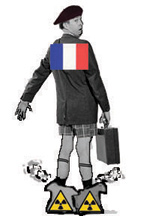
Against the backdrop of the major blackout on the Iberian Peninsula in late April, which also affected parts of France, the country is heading for controversial discussions about its energy strategy for the coming decade. A focus will be on the future roles of renewables and nuclear power. The launch of France’s new generation of nuclear power plants was postponed for several years, while the country’s older reactors continue to cause problems.
- Delay to new generation of nuclear power plants – France’s new generation of nuclear power plants (known as EPR2) is set to go online three years later than previously planned. It is now meant to become operational by 2038, instead of 2035. EPR2 reactors are supposed to be simpler and cheaper to build. The EPR2 programme will be financed by a government loan, which should cover at least half the construction costs. EDF has called for more state money in order to reign in debt.
- Uranium supply and diplomacy – France could lose a large part of its uranium stockpile in Niger as that country’s hostile military leadership might sell it to Russia or China. The mine was operated by French state-owned uranium company Orano’s local subsidiary until the end of 2024. France is entirely dependent on uranium imports. In response, state-owned uranium company Orano is planning to mine the raw material needed for France’s fleet of 57 nuclear reactors in Uzbekistan………………………..
- The Flamanville saga continues – A new malfunction at the controversial Flamanville nuclear power plant has reignited a debate about the future of France’s ageing fleet of nuclear reactors. One of its reactors suffered a steam leak in late March. The incident occurred just one week after the reactor returned to the grid following a two-month maintenance shutdown. The plant already has a twelve-year history of delays and a ballooning budget (from 3.3 billion to 13.2 billion euros)………………………………….. https://www.cleanenergywire.org/news/dispatch-france-may-25
The Challenge to Japan’s Nuclear Restart

The story of Japan’s nuclear village should serve as a
cautionary tale for other places engaged in debates on nuclear energy.
Nuclear power is a key plank in Japan’s national energy vision, but 14 years after the Fukushima meltdown, the restart process hasn’t overcome the central problem.
By Zhuoran Li, May 03, 2025
The restart of nuclear power plants is based on the Sixth Basic Energy
Plan, approved by the Cabinet in October 2021. Given that the trauma of the
2011 Fukushima nuclear disaster remains vivid in the public consciousness,
the government has adopted a cautious, step-by-step approach. The
reactivation of reactors must first be approved by the Nuclear Regulation
Authority under the new regulatory standards. Subsequently, the restart can
proceed only with the consent of local governments and residents.
The government hopes that its safety-first approach will reassure local
communities and alleviate their concerns about nuclear energy. In addition,
efforts are underway to develop and construct next-generation innovative
reactors. These include plans to replace decommissioned nuclear plants with
advanced models, contingent on securing local support.
While maintaining the effective 60-year operational limit, the government is also promoting a policy that excludes certain shutdown periods from being counted toward
that limit. The story of Japan’s nuclear village should serve as a
cautionary tale for other places engaged in debates on nuclear energy. For
example, Taiwan faces many of the same trade-offs as Japan. On one hand,
Taiwan is an energy importer with a vulnerable supply. On the other hand,
it is prone to earthquakes. As a result, nuclear energy has become a
central political debate.
The Diplomat 3rd May 2025,
https://thediplomat.com/2025/05/the-challenge-to-japans-nuclear-restart/
Nuclear threat is more real than at any time since second World War
Worldview: Nuclear non-proliferation is moving rapidly backwards. Frank Aiken’s vision and diplomacy are once more desperately needed.
Irish Times, Patrick Smyth, Sat May 03 2025
Last Monday night, the UN Security Council held a private meeting on nuclear non-proliferation. The French presidency warned that efforts to limit the spread of nuclear weapons are “facing increasingly serious challenges”
The Nuclear Non-Proliferation Treaty (NPT) obliges nuclear states not to transfer nuclear weapons to other states, and commits others to not acquiring them. It is arguably Ireland’s most important diplomatic achievement, coming into force 55 years ago after a four-year campaign by late former tánaiste Frank Aiken and the passing of his “Irish resolution”.
Only five states – the US, the Soviet Union, China, Britain and France – were recognised then as having nuclear weapons. Four more – India, Israel, Pakistan and North Korea – have since acquired the bomb. Others are lining up.
Aiken saw non-proliferation as an essential complement to the stalled disarmament process – as he put it in a speech to the UN, “to preserve a Pax Atomica while we build a Pax Mundi”. The NPT, he argued, would bridge the gap between states opposed to nuclear weapons and those who saw them as essential to deterrence, including Nato members.
His advocacy of annual “non-dissemination” resolutions, UCC academic Morgan O’Driscoll writes, was inspired by a pragmatic belief that incremental, concrete steps would ease international tensions. Stopping the spread of nukes could help to prevent a runaway arms race……………..
The preoccupations evident at the recent UN meeting were the “ongoing proliferation crises” over North Korea, whose nuclear weapons programme, UN inspectors say, has grown “exponentially”, and Iran, which is in talks with the US on restoring the Joint Comprehensive Plan of Action treaty (JCPOA) restricting its nuclear programme, which US president Donald Trump scuppered at the end of his first term.
Notwithstanding these concerns, there is a broader context to the discussion – a growing fear that multilaterally driven disarmament, specifically non-proliferation, is moving rapidly backwards, dangerously undoing decades of important, albeit slow, progress. Trump has a lot to do with it.
“The Trump phenomenon,” says Ankit Panda, author of The New Nuclear Age, “has provided a powerful accelerant for voices in US-allied states who now see nuclear weapons in their own hands as fundamentally solving the problem posed by American unreliability.”
Trust in allies’ promises has been the key cornerstone of the acceptance of non-proliferation commitments
……………………..The promises of mutual support underpinning the constraints of the NPT on acquiring nuclear weapons are seen increasingly as inadequate. Now, states want their own.
Germany and Poland are publicly talking of needing nuclear options, at least by sharing French or UK nuclear deterrents. Support is growing in South Korea, and the long-taboo debate is surfacing even in Japan. In the Middle East, Turkey, Egypt and Saudi Arabia have signalled they would want to match Iranian capabilities if Tehran obtained a bomb.
After the Cuban missile crisis, Washington assured European and Asian allies that they could rely on the US for their nuclear security. Only after they were convinced of the credibility of guarantees did Germany and Japan forego a national nuclear option to join the new NPT.
French determination in the 1960s to build its own nuclear deterrence, against the wishes of Washington, was born out of Charles de Gaulle’s conviction that Washington‘s promises were unreliable. Would the US really risk a nuclear attack on Washington if Paris was hit?
And China, in a similar calculation regarding Moscow, followed suit after its split with the USSR in the 1960s.
Trump’s unwillingness to unequivocally endorse Nato‘s Article 5 mutual defence pledge has profoundly undermined trust at the core of the alliance, just as his reluctance to do the same in respect of Ukraine has led Kyiv to discuss nuclear rearmament.
Ukraine, Poland and South Korea are all believed to possess the technology to build nuclear weapons. Japan, the only state to have suffered a nuclear attack, and whose population remains deeply opposed to nuclear weapons, was an early signatory to the NPT, but as North Korea became a nuclear power, and China more militarily assertive, what was seen as impossible is being discussed.
Aiken‘s vision and passionate diplomacy are once more desperately needed to save the NPT and the parlous multilateral disarmament process from its continuing downward spiral. That should be the central focus of Ireland’s diplomacy. https://www.irishtimes.com/opinion/2025/05/03/threat-of-a-nuclear-exchange-is-more-real-than-at-any-time-since-second-world-war/
Shut down Elbit Systems everywhere!
Bruce K. Gagnon, Organizing Notes, May 03, 2025
Elbit Systems is an Israeli military corporation making weapons for its current multiple wars as the zionists attempt to build ‘Greater Israel’ and take over the region from indigenous populations.
They are the world’s leading terrorists.
Elbit builds weapon production plants in nations around the globe in order to ‘buy support’ for its colonizing agenda.
Check around and you will likely find one near your community.
Congrats to the movement in Boston for forcing MIT, thru organizing pressure, to cut links with Elbit. Activists in the UK have shut down a couple Elbit facilities and forced some of their other corporate links to be severed such as with insurance companies and the like.
The Elbit facility in nearby Merrimack, New Hampshire has also drawn important protests in recent years. I was involved in one where I got arrested for serving as the police liaison. ……………………………………… https://space4peace.blogspot.com/2025/05/shut-down-elbit-systems-everywhere.html?utm_source=substack&utm_medium=email
A resounding win for the world’s nuclear-free clean energy movement

https://theaimn.net/a-resounding-win-for-the-worlds-nuclear-free-clean-energy-movement/ 5 May 25
In early analyses of the historic Labor election victory, commentators have tut-tutted over the Liberal Coalition’s policies that didn’t impress voters – like reduced tax on petrol, like poor housing plans, and certain Trump-like aspects. These were the things, and the “cost-of living” issues that brought down the vote for the Coalition. And a number of interviews with voters did show that these issues were important.
BUT, in the media build-up to the election, those issues were hammered, and it seemed to me, that Peter Dutton’s party was happy with that, and especially, to stay OFF the topic of nuclear power.
But nuclear power was the core policy in the Opposition’s campaign. Its quiet partner policy was the drastic slowing down of solar power, and renewable energy in general. Along with this went a downgrading of climate change – Dutton coming close to climate-change denial – “I’m not a scientist” was his answer to questions about the impacts of global heating. The inevitable delay in nuclear power becoming operational would be a gift for the fossil fuel industries,
And it was a pretty amazing policy- to bring in nuclear power across a very special country! Australia is the only country in the world that is a nation-continent, a great island -continent with one federal government, and one predominant language. There is no doubt that, had the Coalition won this election, it would have been a grand coup for the global nuclear lobby.
The Labor government is also beholden to the nuclear lobby. Anthony Albanese, as Opposition leader in 2021, agreed to the then Liberal government’s AUKUS nuclear submarine deal. In 2024, his Labor government cemented its agreement by signing an updated version of the AUKUS Exchange of Naval Nuclear Propulsion Information Agreement (ENNPIA).
So no wonder that both of Australia’s major parties are playing down the significance of the nuclear issue, now that across the nation, voters have rejected nuclear power. And the obedient mainstream media is playing it down, too.
Australia’s unique advantage is that it is the only nuclear-power -free nation-continent , and is also a world leader in renewable energy.
Even in 2023, 33% of Australian households had rooftop solar panels. generating their own electricity. Australia is a world leader in rooftop solar adoption, with solar panels installed on more homes per capita than any other country. This trend continues to increase, with Australians making huge savings on energy costs.
To be fair to the Albanese Labor government, it has done well on promoting renewable energy. It has not done so well on climate change action – The Australian government is continuing its long-standing support for fossil fuels both at home and abroad.
Despite its two major political parties being wedded to the fossil fuel industries, and both of them sycophantic to American militarism and the nuclear lobby, Australia really does have the opportunity to lead the world in the direction of clean safe nuclear-free energy.
The AUKUS agreement, the nuclear submarine deal , is looking a bit wobbly at this moment -with the Trumpian uncertainty clouding Australia’s relationship with the USA.
All in all, it is a positive outlook for Australia, and its leading role in clean energy. But don’t expect the corporate media, or the timid ABC, to genuinely emphasise the importance of this election victory over the nuclear lobby.
Will the World Speak up Against Israel’s Likely Attack on Humanitarian Activists?
The Conscience was carrying no weapons. It posed no threat. Its only crime was daring to challenge a brutal siege and slaughter that the United Nations itself has condemned as illegal and inhumane.

Medea Benjamin, May 02, 2025, Common Dreams, https://www.commondreams.org/opinion/freedom-flotilla-attack
In the early hours of May 2, the quiet of night was shattered aboard the Conscience, a civilian vessel anchored in international waters, 17 kilometers off the coast of Malta. Aboard were 18 crew members and passengers, jolted from sleep by the sound of two explosions. Flames and smoke filled the air. The ship had just been struck—by what the crew members say were drone attacks.
The very day of the attack, more passengers from 21 countries were waiting in Malta to be ferried out to join the Conscience. Among those slated to join the ship were world-renowned environmentalist Greta Thunberg, retired U.S. Army Colonel Ann Wright, and longtime CODEPINK activist Tighe Barry.
The Conscience is part of the Freedom Flotilla Coalition, a network of international activists that has been challenging Israel’s maritime blockade of Gaza since 2008.
“The U.S. condemns the Houthis for stopping ships carrying weapons to Israel—and bombs Yemen mercilessly for it. But will they condemn Israel for attacking a peaceful ship on a humanitarian mission to Gaza?”
The group alleges that the attack came from Israel—an allegation bolstered by a CNN investigation. According to CNN, flight-tracking data from ADS-B Exchange showed that an Israeli Air Force C-130 Hercules aircraft departed from Israel early Thursday afternoon and flew at low altitude over eastern Malta for an extended period. While the Hercules did not land, its path brought it in proximity to the area where the Conscience was later attacked. The plane returned to Israel approximately seven hours later. The Israel Defense Forces (IDF) declined to comment on the flight data.
The ship suffered significant damage, but fortunately, no one was hurt. That was not the case when the Freedom Flotilla was attacked in 2010. This May 2 attack comes just weeks before the 15th anniversary of the infamous raid on the Mavi Marmara, the Turkish ship that led a previous flotilla to Gaza in 2010. On May 31 of that year, Israeli naval commandos stormed the ship in international waters, killing 10 people and injuring dozens. The Mavi Marmara had been carrying over 500 activists and humanitarian supplies. That attack drew condemnation from around the world and calls for an international investigation—calls that Israel dismissed.
One of this year’s flotilla organizers, Ismail Behesti, is the son of a man killed in the 2010 raid. In videos circulating after the recent strike, Behesti is seen walking through the damaged interior of the Conscience, his voice resolute as he condemns what he believes was another Israeli act of aggression against civilians on a humanitarian mission.
“People are asking how Israel can get away with attacking a civilian ship in international waters,” said Tighe Barry, speaking from the port in Malta. “But since October 8, 2024, Israel has shown complete disregard for international law—from bombing civilian neighborhoods to using starvation as a weapon by blocking food from entering Gaza. This is just one more example of its impunity.”
“Where is the outrage?” Barry continued. “The U.S. condemns the Houthis for stopping ships carrying weapons to Israel—and bombs Yemen mercilessly for it. But will they condemn Israel for attacking a peaceful ship on a humanitarian mission to Gaza?”
The Freedom Flotilla Coalition and activist groups such as CODEPINK are calling on governments and international bodies to speak out and take action.
The Conscience was carrying no weapons. It posed no threat. Its only crime was daring to challenge a brutal siege and slaughter that the United Nations itself has condemned as illegal and inhumane. That’s the real threat Israel fears—not the ship itself, but the global solidarity it represents.
So, will the world speak up about Israel’s latest outrage? Or will this, too, be quietly buried beneath the waves?
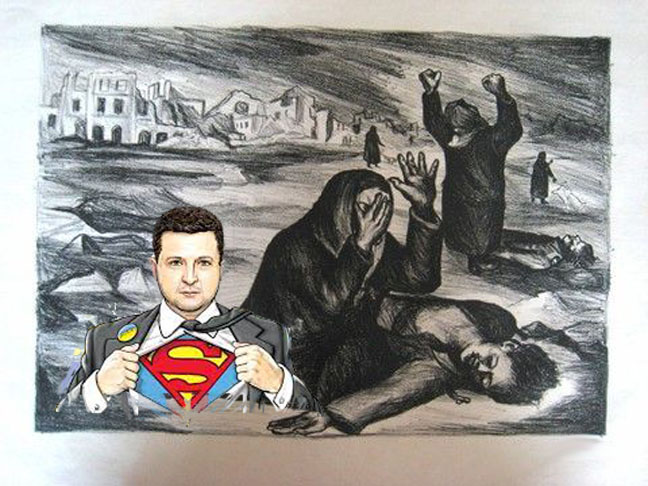
NATO leaders as delusional as Zelensky on lost Ukraine war
no chance of prevailing.
Yet, Zelensky won’t budge on his goals of reclaiming all captured territory including Crimea, lost 5 years before his presidency. Nor will Zelensky give up his delusional goal of NATO membership.
Walt Zlotow, West Suburban Peace Coalition, Glen Ellyn IL, 4 May 25
Thruout the 3 year, 3 month Russo Ukraine war, Ukrainian President Zelensky has steadfastly ignored battlefield reality of Ukraine’s destruction and impending defeat.
His delusions started in April, 2022 when he swallowed US and UK demands he walk away from the negotiated peace deal that would have cost Ukraine no new lost territory, albeit no NATO membership for Ukraine and neutrality between East and West.
Since then he’s lost roughly a fifth of his land, a hundred thousand plus casualties, a shattered economy…and no chance of prevailing.
Yet, Zelensky won’t budge on his goals of reclaiming all captured territory including Crimea, lost 5 years before his presidency. Nor will Zelensky give up his delusional goal of NATO membership.
But outside of US realism under Trump, Zelensky is not alone in his war delusions.
Recently, retired Deputy Supreme Allied Commander in Europe Sir Richard Shirreff advised that Europe will build up its troops, ships and planes if America pulls back from European defense against imaginary enemy Russia, “if only Europe has the will.” Shirreff appears clueless that due to European economic decline from supporting a lost war, most Western European people only have the will that it end
Current NATO Secretary General Mark Rutte is even more Zelensky-like. He trumpet’s Russia’s casualties of a thousand troops daily and that “Ukraine is not losing…and we must ensure Russia does not capture even one more square kilometer of Ukraine territory.” Rutte is oblivious that his intransigence to supporting Trump’s peace plan costs Ukraine more square kilometers of land every single day. Rutte is channeling delusional Baghdad Bob talking about “the mother of all victories” during the second Iraq war..
The oddity of all this delusion is that on just about every domestic and foreign policy issue, Trump is the poster president for delusion. On the Ukraine war he’s the only realist in the war room.
US-Ukraine minerals deal ‘hides secret agreements’ – Ukrainian MP
2 May 25 https://www.rt.com/news/616662-ukraine-us-deal-secret-agreements/
Separate provisions outline Kiev’s “indefinite obligations” and bypass parliamentary ratification, Irina Gerashchenko has claimed.
The US-Ukraine minerals agreement announced this week “hides” details of Kiev’s “indefinite obligations” to Washington, a Ukrainian lawmaker has claimed.
In a Facebook post on Friday, Irina Gerashchenko, a member of European Solidarity party said the deal includes two “secret,” supplementary documents that will not be subject to parliamentary ratification.
The minerals deal reportedly grants the US preferential access to Ukrainian mining projects in exchange for assistance with an investment fund to support the country’s reconstruction. Initially portrayed by Washington as repayment forbears of military support – estimated at $350 billion by President Donald Trump – the final text, published on Thursday by the Ukrainian government, states that only future aid will count toward US contributions to the fund.
Gerashchenko claimed however that instead of one agreement, the US and Ukraine signed three.
“The Zelensky government has not provided deputies and society with all the agreements signed in the US, which, as it turned out, are three, not one,” she wrote. “Meanwhile, they want to ratify only one framework document in the Verkhovna Rada. Others are labeled ‘implementation documents,’ despite the fact that it is in these two secret agreements that all the technical details of indefinite Ukrainian obligations are hidden.”
Ukrainian Prime Minister Denis Shmigal “avoided” commenting on the two documents and the lack of security guarantees in the published agreement – reportedly a key point of contention during negotiations – Gerashchenko told the country’s parliament on Friday.
The claim has raised questions among Ukrainian lawmakers and the public on the actual scope of the agreement. MP Yaroslav Zheleznyak claimed on Telegram that, when pressed, Shmigal acknowledged the two additional documents but downplayed them as “technical” and exempt from ratification. The texts “must be signed after the ratification” of the main agreement, Shmigal claimed, noting that lawmakers would see them when the Ukrainian negotiating team returns from the US next week.
Western media reports have also noted the existence of additional documents and claimed that a last-minute dispute arose when Washington demanded Kiev sign all three. Ukrainian officials reportedly argued they could not sign the annexes until the main agreement was ratified in Parliament. Later reports suggested all three documents were ultimately signed.
Further details about the contents of the supplementary documents have not been publicly released, and the Ukrainian government has not issued an official statement addressing their existence or content.
1 This Month
29 Jan. Thursday 7-8 p.m. Webinar – World’s Largest Nuclear Station in Port Hope, ON?

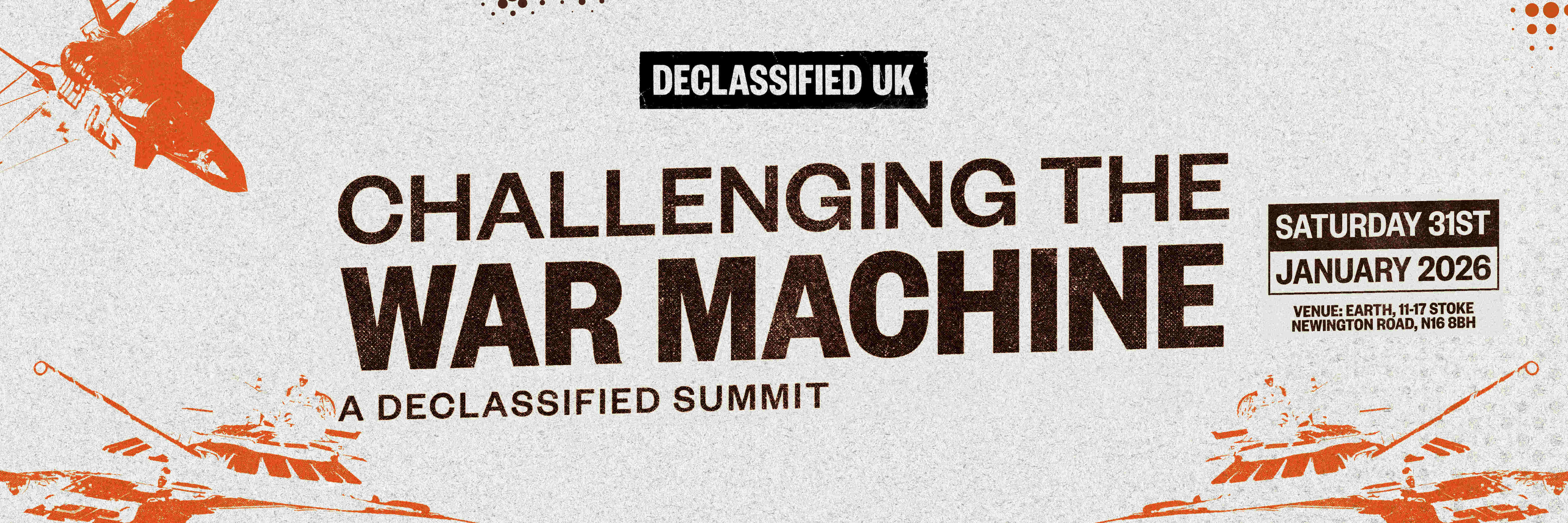
31st January – Challenging the War Machine – a DECLASSIFIED UK SUMMIT



Website of the Week
Now until to February 10, 2026 Radioactive waste storage in France: the debate is finally open! How to participate?
-
Archives
- January 2026 (246)
- December 2025 (358)
- November 2025 (359)
- October 2025 (376)
- September 2025 (258)
- August 2025 (319)
- July 2025 (230)
- June 2025 (348)
- May 2025 (261)
- April 2025 (305)
- March 2025 (319)
- February 2025 (234)
-
Categories
- 1
- 1 NUCLEAR ISSUES
- business and costs
- climate change
- culture and arts
- ENERGY
- environment
- health
- history
- indigenous issues
- Legal
- marketing of nuclear
- media
- opposition to nuclear
- PERSONAL STORIES
- politics
- politics international
- Religion and ethics
- safety
- secrets,lies and civil liberties
- spinbuster
- technology
- Uranium
- wastes
- weapons and war
- Women
- 2 WORLD
- ACTION
- AFRICA
- Atrocities
- AUSTRALIA
- Christina's notes
- Christina's themes
- culture and arts
- Events
- Fuk 2022
- Fuk 2023
- Fukushima 2017
- Fukushima 2018
- fukushima 2019
- Fukushima 2020
- Fukushima 2021
- general
- global warming
- Humour (God we need it)
- Nuclear
- RARE EARTHS
- Reference
- resources – print
- Resources -audiovicual
- Weekly Newsletter
- World
- World Nuclear
- YouTube
-
RSS
Entries RSS
Comments RSS
 nuclear-news