Ayatollah Rejects US Nuclear Proposal, Vows Iran To Keep Enriching Uranium

by Tyler Durden, Thursday, Jun 05, 2025 –https://www.zerohedge.com/geopolitical/ayatollah-rejects-us-nuclear-proposal-vows-iran-will-keep-enriching-uranium
Iran has finally reacted to the US proposal for a fresh nuclear deal which was submitted Saturday via Omani mediators, and as expected it has dismissed Washington demands to take uranium enrichment down to zero.
Iran’s Supreme Leader Ayatollah Ali Khamenei has made clear in fresh statements Wednesday that abandoning uranium enrichment was “100%” against the Islamic Republic’s interests. This comes on the heels of a Truth Social post issued by President Trump which said in all caps: WE WILL NOT ALLOW ANY ENRICHMENT OF URANIUM.
Khamenei as the Ayatollah, or top Shia religious cleric, has final say over all matters of state policy, but notably he didn’t call for halting the talks altogether, after it’s gone through five rounds, including at Rome.
He said the US proposal “contradicts our nation’s belief in self-reliance and the principle of ‘We Can'”. This is consistent with Iranian officials’ prior position defending enrichment as a matter of national sovereignty that cannot fully be abandoned.
The question that remains is whether the US would allow for limited, lor low-levels of enrichment, instead of the ‘down to zero’ position which is being hotly debated about. “Uranium enrichment is the key to our nuclear program and the enemies have focused on the enrichment,” Khamenei said during a televised speech.
He addressed the nation on the anniversary of the death of the Islamic Republic’s founder, Ayatollah Ruhollah Khomeini. He made it very clear where Tehran stands on the proposal currently offered by the Trump White House:
“The proposal that the Americans have presented is 100% against our interests … The rude and arrogant leaders of America repeatedly demand that we should not have a nuclear programme. Who are you to decide whether Iran should have enrichment?,” he added.
There has been somewhat contradictory messaging coming out of Washington, with the Wall Street Journal having reported Sunday that the White House issued a directive last week telling federal agencies to halt the imposition of any new sanctions on Iran. Does this mark a step back from ‘maximum pressure’ in order to give talks a better chance?
The new policy went out to top officials at the National Security Council and Treasury Department, and then to the State Department,” WSJ said.
“Relevant officials working on the Middle East were looped in, but the directive had to spread much further. Iran sanctions intersect with U.S. policy toward China, where buyers take in more than 90% of Iran’s oil exports, as well as Japan, Europe, India and Southeast Asia.”
Greta Thunberg Speaks from Aid Ship Heading to Gaza Despite Israeli Threats: It’s My Moral Obligation
SCHEERPOST, June 5, 2025 By DemocracyNow!
As Gaza faces over three months of Israeli blockade, a group of 12 activists is sailing to Gaza to deliver humanitarian aid. The Madleen ship was launched by the Freedom Flotilla Coalition and initially planned to sail from Malta last month, but the group’s ship was damaged in a drone attack. The new mission includes the renowned Swedish climate activist Greta Thunberg, who speaks with Democracy Now! live from the Madleen. “We deem the risk of silence and the risk of inaction to be so much more deadly than this mission,” says Thunberg.
Transcript…………………………..
GRETA THUNBERG: “A month after our latest attempt to go on with this mission, the boat was bombed twice. All evidence suggests Israel. And we are doing this because we have to keep our promise to the Palestinians to do everything in our power to protest against the genocide and to try to open up a humanitarian corridor.“………………………………………………..
…. I happen to have a platform for some reason, and then it is my moral obligation to use that platform. And if my presence on this boat can make a difference, if that can show in any way that the world has not forgotten about Palestine, and to try once again to attempt to break the siege and open up a humanitarian corridor and deliver the extremely needed humanitarian aid, then that is a risk I am willing to take.
And it’s something that we just simply have to do. We cannot just sit, sit around and do nothing and watch this like live-streamed genocide unfold in front of our very eyes. So we are doing this because we are human beings who care about justice. And when our complicit governments fail to step up, it falls on us, unfortunately, to do so.
………………………………. My message is that right now international law is failing us. International institutions, our governments are failing us. Media, our companies are all failing us. Or “failing us” is a diplomatic way of saying that our system seems to be designed in a way that is built upon exploitation and oppression of people. And so, there’s no one to turn to. There’s no one we can turn to to rescue the situation, but it falls on us to step up, to continue flooding the streets, to continue organizing, boycotting, to speak up on all platforms to try to send a clear message that we will not stand for what is happening right now.
……………………………………………………………………………………………………………………………………. https://scheerpost.com/2025/06/05/greta-thunberg-speaks-from-aid-ship-heading-to-gaza-despite-israeli-threats-its-my-moral-obligation/
Vatican City Is Now Powered By Solar

Carolyn Fortuna, May 2025
Vatican City Is Now Powered By Solar. Pope Francis had a dream that the
Vatican would run entirely on green energy. He wanted to highlight the need
“to make a transition to a sustainable development model that reduces
greenhouse gas emissions into the atmosphere, setting the goal of climate
neutrality.”
To model what this could look like, he announced that solar
panels would be installed on a Vatican-owned property outside Rome, and the
power generated from that could supply all of Vatican City’s energy
needs. The future installation would be projected to “ensure, not only
the power supply of the radio station existing there, but also the complete
energy support of Vatican City State,” he wrote. Fast forward to 2025,
and the project is completed.
Clean Technica 29th May 2025,
https://cleantechnica.com/2025/05/29/vatican-city-is-now-powered-by-solar/
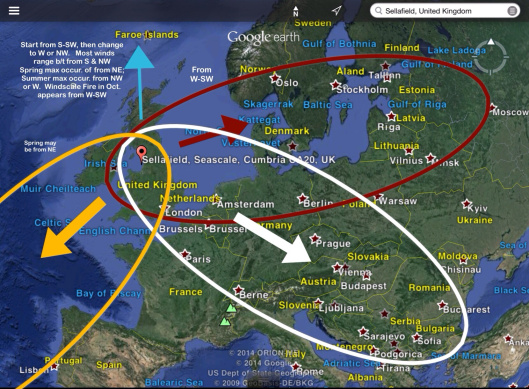
Sellafield failing to address ‘intolerable risks’, damning parliamentary report warns
Sam Baker, Staff reporter, The Chemical Engineer, 6 June 25
MANAGEMENT of the Sellafield nuclear facility in Cumbria, UK is not responding quickly enough to “intolerable risks” at the site posed by ageing assets, a damning new report has warned.
In the report published yesterday, the UK Public Accounts Committee (PAC), a group of MPs tasked with evaluating the cost-effectiveness of public spending projects, said that deteriorating assets are making the site “increasingly unsafe”.
Sellafield, the UK’s oldest nuclear site, has been in the long process of decommissioning since it stopped generating power in 2003, overseen by wholly state-owned Sellafield Ltd, and now works primarily in processing spent nuclear fuel.
The PAC’s report found that sluggish progress in decommissioning Sellafield has meant Sellafield Ltd has missed most of its annual targets in retrieving waste. This includes radioactive waste currently stored in Sellafield’s Magnox Swarf Storage Silo (MSSS), the UK’s most hazardous building.
After setting a target to have emptied the MSSS of waste by 2046, Sellafield Ltd now does not expect to achieve this until between 2054 and 2059. Problems at the MSSS are also behind the plant’s “single biggest environmental issue” – radioactive water has been leaking into the ground since 2018. Sellafield Ltd has confirmed that radioactive particles are “contained” in the soil and that there is no risk to the public…………………………………………………………………………………………………………………………..
Money not well spent
The current estimate for the total cost to the public of decommissioning Sellafield is £136bn (US$184bn), with completion expected no earlier than 2125, although problems identified by the PAC are likely to see the cost rise and the completion delayed.
One example of overspend highlighted in the report was the water sample lab refurbishment, which the PAC said was “very poorly managed” leading to a “waste” of £127m.
The report also resurfaced past issues of bullying and harassment at Sellafield, which the NDA settled in 2023-24 for £377,200. The PAC pointed out that Sellafield Ltd has signed 16 non-disclosure agreements in the last three years. These are separate from the Official Secrets Act which most staff routinely sign when joining Sellafield.
Clifton-Brown acknowledged the “early indications of some improvement” at Sellafield but said that the “government must do far more to hold all involved immediately accountable to ensure these do not represent a false dawn, and to better safeguard both the public purse and the public itself”………………………………………………………………………………………………………………………………………………………………
Not going underground
Sellafield’s troubles this week do not end with the PAC report. On Tuesday, Lincolnshire County Council withdrew its candidacy to host a geological disposal facility (GDF) that could store radioactive plutonium for thousands of years once retrieved from stockpiles at Sellafield.
As recently as July 2024, a site in Theddlethorpe in Lincolnshire was a leading candidate to build the GDF. However, the newly elected council, led since May 2025 by Reform UK, this week revoked its membership of the nuclear waste community partnership, which council leader Sean Matthews described as a “nuclear nightmare”.
Announcing the results of the vote to withdraw membership, Matthews, a former London police officer, said: “Now, Lincolnshire people can get back to living their lives, assured that this nuclear nonsense is over.” https://www.thechemicalengineer.com/news/sellafield-failing-to-address-intolerable-risks-damning-parliamentary-report-warns/
Nuclear-powered submarines, F35A fighter jets, a ‘more lethal’ army by 2035, and AI: How Starmer will spend billions to beef up Britain’s defences to make country ‘war-ready’
By MARK NICOL DEFENCE AND DIPLOMACY EDITOR, 3 June 2025 , https://www.dailymail.co.uk/news/article-14773857/Nuclear-powered-submarines-fighter-army-2035-Starmer.html
More submarines, soldiers and drones, along with an airborne nuclear strike capability and the exploration of technologies such as lasers, AI and robotics, are among the proposals in the Strategic Defence Review.
These are the key ambitions outlined in the SDR:
Army to be ‘ten times more lethal’
This ambition relies on the harnessing of new technologies and weapon systems, particularly drones. Lethality is difficult to measure and the claim is strong on political rhetoric.
Only a couple of months ago, the Chief of the Defence Staff, Admiral Sir Tony Radakin, said the ambition was to double lethality by 2027 and triple it by 2030.
The new Archer artillery system, the belated introduction of the Ajax vehicle and Challenger 3 tanks will increase lethality… but to what extent?
Three forces to be integrated into one
The Integrated Force, unveiled as part of the SDR, is not a merger of the Armed Forces, but they will lose much of the traditional
independence as they are moulded into a centralised Integrated Force. The SDR suggested the services were ‘siloed’. The need for them to train together and prepare for war shoulder to shoulder was essential in the months and years ahead.
£15billion boost for nuclear warheads
Britain’s nuclear deterrent has long been in need of recapitalisation. The £15billion will pay for these weapons to be upgraded or replaced.
It will also see the significant modernisation of infrastructure at the Atomic Weapons Establishment at Aldermaston, supporting more than 9,000 jobs at the Berkshire site
Up to 12 new nuclear attack submarines
The as yet uncosted pledge to develop ‘up to’ 12 new attack submarines has been welcomed by military observers but the first boat is not expected to enter service before the late 2030s.
The submarines will support the AUKUS security alliance between the UK, Australia and the United States and will be used to protect the Pacific from Chinese aggression.
Over the decades ahead, the boats will replace the Royal Navy’s current fleet of seven Astute-class submarines. They will be built at key sites such as BAE in Barrow-in-Furness.
Over the decades ahead, the boats will replace the Royal Navy’s current fleet of seven Astute-class submarines. They will be built at key sites such as BAE in Barrow-in-Furness.
Six new factories to make munitions
The SDR proposes at least six factories making munitions and energetics such as explosives and propellants for weapons.
The SDR recommends creating an ‘always on’ munitions production capacity in the UK, allowing production to be scaled up at speed if needed.
Britain’s military warehouses are bare after £5billion in weaponry and munitions was provided for Ukraine since the start of the conflict in 2022. The programme will create more than 1,000 skilled jobs, according to the SDR.
Robotics, cyber warfare and AI
The review says AI will improve the quality and speed of decision-making and operational effectiveness for Britain’s military, its allies… and its enemies.
It should be an immediate priority to ‘shift towards greater use of autonomy and AI within the UK’s conventional forces’. This has shown to be transformational in Ukraine. Chiefs will launch a Defence AI Investment Fund by February 2026.
The report warns cyber threats will become harder to mitigate as technology evolves, with government departments, military hardware, communications, increasingly vulnerable.
Hardening critical defence functions to cyber-attack is crucial. Directed Energy Weapon systems, such as the UK’s DragonFire, a world-leading laser ground to air system being developed at Porton Down, Wiltshire, can save millions of pounds in expenditure on ordnance systems.
The review also calls for the MoD to seize the opportunities presented by technologies such as robots and lasers.
£4billion expansion of the drone force
The Government unveiled a £4billion investment package for drones and autonomous systems. Drones are dominating the conflict in Ukraine and in Russia, following the audacious Ukrainian attack on Russian airfields in Siberia just days ago.
Hardening critical defence functions to cyber-attack is crucial. Directed Energy Weapon systems, such as the UK’s DragonFire, a world-leading laser ground to air system being developed at Porton Down, Wiltshire, can save millions of pounds in expenditure on ordnance systems.
The review also calls for the MoD to seize the opportunities presented by technologies such as robots and lasers.
£4billion expansion of the drone force
The Government unveiled a £4billion investment package for drones and autonomous systems. Drones are dominating the conflict in Ukraine and in Russia, following the audacious Ukrainian attack on Russian airfields in Siberia just days ago.
Fighter jets to carry nuclear bombs
Britain is exploring the potential return of air-delivered nuclear weapons in collaboration with the United States. America’s F-35A Lightning II aircraft is capable of carrying tactical gravity nuclear bombs.
The proposal marks the most significant shift in UK nuclear posture since the Cold War. Currently, this country’s nuclear deterrent is carried by the Royal Navy’s ‘bomber’ submarines.
The air-launched nuclear weapons would carry a much smaller payload. The lower yield B61 munitions are already integrated into US aircraft stationed on continental Europe and could be brought to Britain.
Thousands of new long-range weapons
At least 7,000 long-range weapons will be made to restock UK military warehouses and to prepare for an extended conflict against an adversary such as Russia.
Children taught value of the military
Defence chiefs will work with the Department for Education to develop understanding of the Armed Forces among young people in schools, by means of a two-year series of public outreach events across the UK, explaining current threats and future trends.
Schools and community-based cadet forces will also be expanded, with an ambition of a 30 per cent rise by 2030 with a view to the UK having 250,000 cadets, many of whom will then go on to join the armed forces.
More reservists and investment in them
To meet the challenge of engaging in a lengthy conflict, the report identified the need to boost the number of reservists.
These part-time personnel, many of whom are former regulars with operational experience, would join full-time troops on the frontline.
The report identified the need to increase the size of the UK’s Active Reserve forces by at least 20 per cent ‘when funding allows, most likely in the 2030s’.
The UK has around 25,000 Army reservists, 3,500 Royal Navy and Royal Marines reservists and 3,200 RAF reservists.
US vetoes Gaza ceasefire again, due to concerns it could save Palestinian lives
Thank god for AIPAC…
Laura and Normal Island News, Jun 05, 2025, https://www.normalisland.co.uk/p/us-vetoes-gaza-ceasefire-again-due?utm_source=post-email-title&publication_id=1407757&post_id=165255653&utm_campaign=email-post-title&isFreemail=true&r=ln98x&triedRedirect=true&utm_medium=email
The US has vetoed a draft resolution at the UN Security Council that called for an immediate ceasefire, the release of all hostages, and unrestricted entry of humanitarian aid, basically all the things Netanyahu doesn’t want.
The resolution was co-sponsored by the Hamas-controlled countries of Algeria, Denmark, Greece, Guyana, Pakistan, Panama, the Republic of Korea, Sierra Leone, Slovenia, and Somalia who are collectively called the E-10 (presumably the “E” stand for evil).
Horrifyingly, the resolution received 14 votes in favour, with no abstentions, and only one against. Even the UK and France sided with the Evil 10. History will not be kind to them. Thank god the US representative proudly raised a hand that was dripping with Palestinian blood. One day her grandkids are going to look back at this moment with pride.
The US has now single-handedly vetoed a ceasefire in Gaza for the fifth time to avoid the risk of saving Palestinian lives.
If you didn’t know, the veto power was introduced for the US to protect Israel, no matter how many international laws it breaks. If the entire world objects to Israel’s actions, Israel can simply overrule them through its proxy. Isn’t that nice?
Reassuringly, more than half of the vetoes the US has ever used have been to protect Israel. Just imagine what might have happened if AIPAC had not purchased so many members of congress. It doesn’t bear thinking about…
If the resolution was accepted, it would mean that Hamas could quickly rearm with medicines and baby food. No wonder the US called it a “performative resolution” and made it clear Palestinians will not be spared until Hamas has been removed from Gaza.
Just don’t mention that Hamas offered to release all hostages, disarm and leave Gaza in return for a permanent ceasefire, and Netanyahu said “no” because he wants to do ethnic cleansing. The last thing we need is people noticing the hypocrisy .
Russia at a Crossroads

Ukraine’s devastating drone strike deep into Russian territory is a gauntlet thrown down. Will Russia under Putin’s leadership ever be able to persevere to the point of claiming a clear victory?
Or has Ukraine under the leadership of Zelensky just changed the dynamic to the point of proving to the collective West that he is a leader worthy of continued support to the point of victory at all cost?
June 3, 2025, Consortium News, https://consortiumnews.com/2025/06/03/russia-at-a-crossroads/
Moscow’s military campaign under Putin’s leadership has focused on avoiding escalation, says John Wight. But Ukraine’s drone strike deep into Russian territory is a gauntlet thrown down.
Russian President Vladimir Putin now finds himself at a monumental crossroads when it comes to his stewardship of Russia at a time when nuclear Armageddon has never been closer.
Ukraine’s devastatingly successful and audacious strike against Russia’s long-range strategic bomber aircraft stock marks a major inflection point in a conflict that evidences no sign of ending.
But let us not lose sight of the salient fact that Russia is not engaged in a conflict with President Volodymyr Zelensky’s Ukraine. This is instead a conflict pitting the Russian Federation against NATO, with Ukraine a proxy of the latter. And NATO is taking advantage of Putin’s caution.
No consequential conflict has ever been won by half-measures. General William Sherman’s “March to the Sea” arguably did more to break the Confederacy than President Abraham Lincoln’s famed Emancipation Proclamation. The Allies firebombing of Dresden in February 1945 and the Soviets arrival on the outskirts of Berlin on April 25, 1945, did more to break the back of the Germans than Hitler’s suicide nine days later. The Vietnamese won their national liberation with the fully-committed and symbolically important Tet Offensive of 1968 rather than all of the diplomatic machinations that came thereafter.
Russia’s military campaign at Putin’s direction has placed a priority on avoiding escalation. But it is a posture that has invited escalation, evidenced by this latest major turn of events.
Russia has been fighting the West diplomatically but not militarily, while Ukraine under Zelensky has been waging its conflict with Russia in the name of the strategic aims of NATO, rather than the interests of Ukraine and its people.
Russia is at a decisive point. Does it continue its war carefully to avoid confrontation with NATO, while encouraging its continued provocations, or does it take the hardline approach of Yevgeny Prigozhin, the late outspoken leader of Russia’s Wagner Group, who made repeated demands for national mobilization in the name of a speedy victory dictated by Russia’s far superior mass and weight of industrial potential.
Putin is a deft leader. Even his adversaries in the corridors of power in the West would grudgingly admit this given his long record in power in the Kremlin. It was he who dragged Russia out of the free market abyss into which the country and its people were plunged in the wake of the demise of the Soviet Union in the early 1990s.
Putin’s Rebuilding of Russia
In the process, Putin succeeded in restoring the primacy of the state over a new rising Russian economic oligarchy — one that had been happy to allow the masses of the Russian people into the arms of destitution and despair because of its own greed and corruption.
The Russian leader then set about rebuilding state institutions that had been destroyed in the name of the religion of free market capitalism, with the result that slowly but surely a new state emerged from the ashes of the old. Russia regained pride in a new identity embraced the indispensable role of the Soviet Union in defeating the Nazis in World War II with respect for the pre-Bolshevik role of the Russian Orthodox church as a pillar of spiritual stability and social cohesion.
From the Russian standpoint, this is why Putin is credited as their historical version of Franklin Delano Roosevelt, the U.S. president who likewise saved his country from the abyss during the 1930s, when the Great Depression was at its terrible and destructive zenith and then went on to lead the bulk of the U.S. war effort during World War II.
But Putin has, it appears, misread the West’s resolve in this period of the rapidly shifting tectonic plates of geopolitics. Putin’s reasoning has been the avoidance of escalation to direct military conflict with the collective Western powers. However those powers are already heavily involved in the arming, training and direction of Kiev’s war effort.
So where now and what now?
Ukraine’s devastating drone strike deep into Russian territory is a gauntlet thrown down. Will Russia under Putin’s leadership ever be able to persevere to the point of claiming a clear victory? Or has Ukraine under the leadership of Zelensky just changed the dynamic to the point of proving to the collective West that he is a leader worthy of continued support to the point of victory at all cost?
President Donald Trump’s dressing down of the Ukrainian leader in the Oval Office back in March was driven and motivated by the belief that Ukraine’s war effort was faltering. Zelensky in this context appeared isolated, adrift and weak.
Well, not anymore.
They Dumped 200,000 Radioactive Barrels Into the Atlantic: 35 Years Later, French Scientists Are Going After Them.

For decades, radioactive barrels have sat hidden beneath the Atlantic, untouched and untracked. Now, French scientists are setting out on a mission unlike any before.
Arezki Amiri, May 29, 2025, https://indiandefencereview.com/they-dumped-200000-radioactive-barrels-into-the-atlantic-35-years-later-french-scientists-are-going-after-them/
For decades, they lay untouched and largely forgotten—hundreds of thousands of barrels filled with radioactive waste, scattered across the abyssal plains of the Atlantic Ocean. Now, more than 30 years after the last were submerged, a French scientific mission is preparing to search for them, raising fresh questions about the long-term impact of nuclear dumping at sea.
Decades-Old Barrels, Deep-Sea Mysteries
Between 1946 and 1990, over 200,000 barrels of radioactive waste were deliberately sunk into the Atlantic by various nations, including France. Packed in bitumen or cement, the containers were lowered into what scientists at the time considered to be lifeless zones, thousands of meters below the ocean surface and far from any coastline.
The practice was permitted until 1990, when it was banned under the London Convention following growing awareness of deep-sea ecosystems and the potential environmental risks of radioactive leakage. The barrels were never retrieved, and no comprehensive effort has since been made to assess their state—or their potential impact on marine life.
An Ambitious Mission Beneath 4,000 Meters
This summer, a group of French researchers will head into the Atlantic to do just that. The mission, called Nodssum, is a collaboration involving CNRS, Ifremer, and the French Oceanographic Fleet. Their immediate goal is to map a 6,000-square-kilometer section of the seafloor where a significant number of barrels are believed to be resting.
To locate them, the team will deploy a high-resolution sonar system and the autonomous submersible UlyX, one of the few underwater vehicles capable of operating at depths greater than 4,000 meters. UlyX will scan the ocean bottom, helping to establish the precise location of the containers and assess their current condition.
Questions of Leakage and Contamination
So far, the environmental effects of the submerged barrels remain unknown. As the article notes, “no one knows what impact the dumping of these barrels may have had on deep-sea ecosystems, or whether they still represent a radiological risk.” Part of the challenge lies in the vastness and inaccessibility of the ocean floor where the barrels were dropped.
Once the mapping phase is complete, a second campaign will be launched to collect samples of sediments, seawater, and marine organisms near the barrels. These samples will help determine whether radioactive materials have begun to escape their containers and what effect, if any, that may be having on surrounding ecosystems.
Unknowns Beneath the Surface
The mission represents one of the first large-scale scientific efforts to investigate this Cold War-era dumping ground. While scientists long assumed that the deep sea was barren and isolated, more recent research has shown that it is home to complex ecosystems, many of which remain poorly understood.
The researchers hope that the project will provide new insights into the long-term stability of radioactive waste in deep-sea environments and offer a clearer understanding of how past nuclear policies continue to shape today’s oceans.
Sellafield nuclear clean-up too slow and too costly, say MPs

Alex Lawson, 4 June 25 https://www.theguardian.com/business/2025/jun/04/sellafield-nuclear-clean-up-mps-public-accounts-committee
Parliamentary committee raises concerns over ‘suboptimal’ workplace culture at ageing waste dump.
MPs have warned about the speed and cost of cleaning up the Sellafield nuclear waste dump and raised concerns over a “suboptimal” workplace culture at the site.
Members of parliament’s public accounts committee (PAC) urged the government and bosses at the sprawling collection of crumbling buildings in Cumbria to get a grasp on the “intolerable risks” presented by its ageing infrastructure.
In a detailed report into the site, the PAC said Sellafield was not moving quickly enough to tackle its biggest hazards; raised the alarm over its culture; and said the government was not ensuring value for money was being achieved from taxpayer funds.
In 2023, the Guardian’s Nuclear Leaks investigation revealed a string of safety concerns at the site – including escalating fears over a leak of radioactive liquid from a decaying building known as the Magnox swarf storage silo (MSSS) – as well as cybersecurity failings and allegations of a poor workplace culture.
The PAC – which heard evidence in March from Sellafield and its oversight body, the Nuclear Decommissioning Authority (NDA) – found that the state-owned company had missed most of its annual targets to retrieve waste from several buildings, including the MSSS.
“As a result of Sellafield’s underperformance [the MSSS] will likely remain extremely hazardous for longer,” the MPs said.
The ultimate cost of cleaning up Sellafield, which contains waste from weapons programmes and atomic power generation, has been estimated at £136bn and could take more than 100 years.
Geoffrey Clifton-Brown, the chair of the PAC, said: “Unfortunately, our latest report is interleaved with a number of examples of failure, cost overruns, and continuing safety concerns. Given the tens of billions at stake, and the dangers on site to both the environment and human life, this is simply not good enough.”
He added: “As with the fight against climate change, the sheer scale of the hundred-year timeframe of the decommissioning project makes it hard to grasp the immediacy of safety hazards and cost overruns that delays can have.
“Every day at Sellafield is a race against time to complete works before buildings reach the end of their life. Our report contains too many signs that this is a race that Sellafield risks losing.”
MPs noted that one project, a now-paused replacement of an on-site lab, had resulted in “£127m wasted”.
The cost of cleaning up Sellafield has caused tensions with the Treasury as the chancellor, Rachel Reeves, attempts to tighten public spending and spur growth. Sellafield, which is home to the world’s largest store of plutonium, said in February that nearly £3bn in new funding was “not enough”.
Last year, Sellafield apologised and was fined £332,500 after it pleaded guilty to criminal charges over years of cybersecurity failings.
The PAC noted that the timeline for a government project to create a long-term deep underground store for nuclear waste, including that held at Sellafield, had slipped from 2040 to the late 2050s. The government is considering sites in Cumbria and Lincolnshire, although Lincolnshire county council is expected to withdraw the latter from the process after vocal local opposition.
The MPs said they had found “indications of a suboptimal culture” at Sellafield, and noted that the NDA paid £377,200 in 2023-24 to settle employment-related claims. Alison McDermott, a former HR consultant who raised concerns over bullying and a “toxic culture” at the site, said she felt “vindicated” by the report.
The PAC urged the government to set out how it would hold the NDA and Sellafield to account over its performance. It said Sellafield should report annually on progress against targets and explain how it is addressing the deteriorating condition of its assets. The NDA should publish data on the prevalence of bullying and harassment at nuclear sites, it said.
Clifton-Brown said there were “early indications of some improvements in Sellafield’s delivery” but said the government needed to do “far more” to ensure bosses safeguard the public and taxpayer funds.
The NDA’s chief executive, David Peattie, responding on behalf of Sellafield, said: “We welcome the scrutiny of the committee and their report. We will now look in more detail at the recommendations and consider how best to address them.
“We take the findings seriously, and the safety of the site and the wellbeing of our people will always be our highest priorities.”
A spokesperson for the Department for Energy Security and Net Zero said: “We expect the highest standards of safety and security as former nuclear sites are dismantled, and the regulator is clear that public safety is not compromised at Sellafield.
“We continue to support the Nuclear Decommissioning Authority in its oversight of Sellafield, while driving value for money. This is underpinned by monthly performance reviews and increased responsibility for overseeing major project performance, enabling more direct scrutiny and intervention.
“We have zero-tolerance of bullying, harassment and offensive behaviour in the workplace – we expect Sellafield and the NDA to operate on this basis, investigate allegations and take robust action when needed.”
Sizewell C nuclear power plant ‘could get go-ahead within weeks’

Keir Starmer expected to confirm result of 15-year search for investment at UK-France summit next month
Jillian Ambrose, 3 June 25, https://www.theguardian.com/business/2025/jun/03/sizewell-c-nuclear-power-plant-keir-starmer-uk-france-edf
UK ministers could give the go-ahead to the new Sizewell C nuclear power plant in Suffolk within weeks, according to reports.
Keir Starmer is expected to give the final nod to begin construction of Britain’s second new nuclear power project in a generation, alongside the French nuclear developer EDF, at a Franco-British summit next month.
The final approval for Sizewell C, first reported by the Financial Times, would mark the end of a 15-year journey to secure investment for the plant since the site was first earmarked for new nuclear development in 2010.
The government is understood to be in the final stages of securing billions of pounds of investment from the private sector to back the project, which follows the Hinkley Point C nuclear plant, which is under construction in Somerset.
Ministers are expected to use the government’s spending review, scheduled for 11 June, to set out the UK’s investment in the project, which will ultimately rely on a mix of funding from taxpayers and via energy bills.
The final go-ahead from Starmer and the French president, Emmanuel Macron, will then follow during the Anglo-French summit due to take place in London on 8-10 July, according to the Financial Times.
The UK government’s stake in the project stood at 84% at the end of last year compared with EDF’s 16% share of the project. The French state’s cash-strapped utilities company is understood to be eager to reduce its stake in the project even further.
Potential investors in the project according to the report include Schroders Greencoat, Equitix, the Canadian pension fund CDPQ, Amber Infrastructure Partners, Brookfield Asset Management, the UK pension fund USS and the insurer Rothesay, backed by the Singaporean infrastructure fund GIC.
EDF had originally planned to build the nuclear plant alongside China’s state nuclear developer China General Nuclear Power Corp, which also holds a stake in the Hinkley Point C project, but its partner was forced to step back from the project by the UK government on security grounds.
The project has secured £6.4bn of government funding to support its development to date, of which £2.5bn was granted by the Conservative government under Rishi Sunak and a further £3.9bn has come from the current Labour administration.
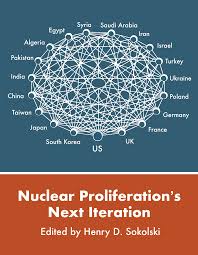
Nuclear Proliferation’s Next Iteration
Henry Sokolski, May 2025, https://npolicy.org/nuclear-proliferations-next-iteration/
The world is about to experience the second iteration of nuclear proliferation. The first era began in 1949 with Russia’s first nuclear weapons test. It ended in 2002 when North Korea set off its own first device. Nuclear weapons spread, but slowly. Most would-be bomb-makers – South Africa, Argentina, Brazil, Iraq, Taiwan, South Korea, Libya, Ukraine, Kazakhstan, Sweden, Italy, Romania, Australia, and Syria – gave up their weapons projects. Only nine completed and kept them (the United States, Russia, the United Kingdom, France, China, Israel, India, Pakistan and North Korea).
It’s unclear if we’ll be as lucky with nuclear proliferation’s next iteration. Poland, Germany, Turkey, Saudi Arabia, South Korea and Japan will tell the tale. If any go nuclear, others — Egypt, Algeria, the UAE, Vietnam, Australia, Ukraine—will surely be tempted.
Two other headaches compound these concerns. The first is the prospect that states will target reactors in war and release dangerous amounts of radiation. The war in Ukraine serves as a poster child. Recent Chinese, North Korean, and Israeli threats to bomb their neighbors’ nuclear plants suggest Kyiv’s predicament is not a one-off.
The second concern is increased interest in nuclear weapons sharing. NATO states, Ukraine, South Korea, Japan, and Russia have all expressed an interest in either hosting or placing weapons on other nation’s soil. This practice, which was so popular during the 1950s and 1960s, will stress U.S. friendships and alliances if renewed.
There are several factors behind these developments. One is the erosion of American security guarantees and the augmentation of Chinese, Russian and North Korean nuclear arsenals. Yet another is the emergence of precision guided munitions and their use against civilian infrastructure in Ukraine. Finally, nuclear supplier nations are pushing the wholesale export of “peaceful” nuclear reactors, all of which are potentially bomb program building blocks. The key markets include the world’s most war-torn regions (e.g., Eastern Europe, the Middle East, South and East Asia).
All of this should raise concerns. Instead, governments have either ignored or denied these developments.
States have used nuclear plants to make bombs and targeted them in war. Nuclear power advocates downplay these worries. New, smaller reactors, they insist, will be extremely safe and proliferation resistant. However, some of their favorite reactor designs use or produce materials helpful to make bombs. China, Ukraine, Taiwan and Japan have publicly fretted about the military vulnerability of their plants. The U.S. and most other governments, though, are quite silent.
Then, there’s nuclear sharing. The United States largely got out of this business. It pulled thousands of U.S.nuclear weapons from South Korea, Taiwan, the Philippines, Okinawa, and most of NATO. But in 2023, Russia went the other way: To intimidate NATO and Ukraine, Moscow re-deployed nuclear weapons to Belarus.
Polish officials took notice and asked the United States and France to forward deploy nuclear weapons on Polish soil. South Korea’s hawkish political party leadership made similar demands, as did Japan’s former prime minister, Shinzo Abe. All of these requests reflect a deeper, not-so-secret desire to acquire bombs of their own. The latest public U.S. response to these allied requests, however, has been to dismiss them.
And what might unfold if these nations go nuclear?
We may soon find out. Saudi Arabia’s Crown Prince Mohammed Bin Salman and his lieutenants have warned that the Kingdom must go nuclear if Iran gets a bomb. With any bad luck, Tehran and Riyadh could be the first of several new Middle Eastern nuclear dominos to fall.
One could imagine other new nuclear entrants. Australia once had a nuclear weapons program. So did Taiwan, Brazil, Argentina, South Africa, and Iraq. It’s also conceivable that Vietnam, the Philippines, and Bangladesh, which are all developing peaceful nuclear energy programs of their own, might exploit their civil programs to get bombs.
Why should one care? The short answer is the world may go off the rails. As Henry Kissinger explained:
“If one imagines a world of tens of nations with nuclear weapons and major powers trying to balance their own deterrent equations, plus the deterrent equations of the subsystems, deterrence calculation would become impossibly complicated. To assume that, in such a world, nuclear catastrophe could be avoided would be unrealistic.”
This volume peeks at this not-so-brave world.
NPEC designed and hosted two nuclear games. The volume features their after-action reports. The first game has China goading North Korea to get South Korean proxies to attack reactors and spent fuel ponds at South Korea’s Kori nuclear plant. These assaults prompt radiological releases and massive South Korean and Japanese evacuations. They also make military sense: They tie down and distract the United States, Japan, and South Korea from fending off a Chinese military assault against Taiwan. Beijing is pleased.
NPEC’s second scenario answers a more dire question — how might a nuclear-armed Israel and Iran face off in a crisis? Both have waged massive aerial wars against one another (twice in 2024). Some of these strikes targeted nuclear facilities. Would Israel ever use its nuclear weapons against Iran? Might Iran retaliate in kind? The game concluded the answer is yes.
The volume also features detailed analysis of what Russia’s military has gained from targeting Ukraine’s nuclear plants and supporting electrical supply system. This analysis also examines the military advantages of temporarily disabling such facilities rather than damaging them and releasing significant radiation.
It also explores five additional questions. What does international law and military science recommend to discourage dangerous assaults against nuclear plants? What does the history of Israel’s nuclear weapons acquisition and modernization tell us about these weapons’ possible use? What legal sanctions might their use trigger? What does unclassified modeling reveal about the radiation nuclear plants might release if attacked? How effective might nuclear strikes be against nuclear plants and materials?
This volume tries to tease out the answers. Its purpose is to prompt others to weigh in.
To read the full book, click here. To purchase a hard copy, click here.
Stop Sizewell C carries out bold projection on Sizewell B dome a week before the Spending Review, highlighting alternatives for Sizewell C’s £40 billion cost.

Stop Sizewell C tonight projected a series of messages to the Prime Minister onto Sizewell B’s dome, stating that the £40 billion Sizewell C project is a Nuclear Waste of Money. [1] The messages urge him to make alternative choices for spending taxpayers’ money on ways to generate cheaper electricity and to reduce household bills.
In one week, on 11 June, the Chancellor is expected to set out taxpayers’ commitment to Sizewell C at the conclusion of the Spending Review. Sizewell C has already swallowed £6.4 billion of taxpayers’ money [2] and the entire project is bogging down the government balance sheet. The two-year equity raise process remains ongoing with an uncertain outcome, meaning the much-delayed Final Investment Decision is unlikely before next month at the earliest. The Financial Times says this could take place at an Anglo French Summit between 8-10 July. [3]
Alison Downes of Stop Sizewell C said: “Every pound sunk into risky, expensive Sizewell C is a pound lost to alternative energy sources and critical social funding that the voting public cares deeply about. It’s not too late to redirect money to offshore wind, or warm homes – creating thousands of jobs – or to restoring the most unpopular and unjust cuts. Sizewell C, given the terrible track record of Hinkley Point C, would be £40 billion badly spent.”
Stop Sizewell C 4th June 2025,
https://docs.google.com/document/d/1IugTc5hAy7N9SlPrdvbfevH5USEfIsjJKw-jIDoo74c/edit?tab=t.0
The World Isn’t Ready for the Mental Health Toll of Extreme Heat

The coming summer is forecast to be a scorcher across the U.S. And climate
scientists predict that at least one of the next five years will beat 2024
as the hottest year ever recorded globally. As heat waves are getting more
intense and prolonged, their effect on the mind and body are also becoming
more dire. Children and older people, as well as those who work outdoors,
are most at risk. So are those with mental health disorders. Heat waves are
the single highest cause of weather-related deaths in the U.S., where an
estimated 1,300 fatalities from heat stroke and other temperature-related
complications occur every year. Even those who survive a period of extreme
heat may suffer serious neurological or other mental-health-related
disorders. A new study published in Current Environmental Health Reports
finds that the world is startlingly unprepared to deal with the mental
health consequences of climate change. Of 83 action plans for heat-related
health problems that were reviewed for the study, fewer than a third
acknowledged the mental health effects of extreme or prolonged high
temperatures. And only a fifth of these plans outlined specific actions to
deal with contingencies such as increased hospitalizations for mental
health disorders.
Scientific American 2nd June 2025, https://www.scientificamerican.com/article/the-world-isnt-ready-for-the-mental-health-toll-of-extreme-heat/
Britain considering fleet of nuclear strike aircraft
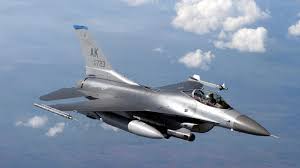
The UK may acquire F-35A fighter jets as part of a broader effort to
deepen its contribution to NATO’s nuclear sharing arrangements, following
a key recommendation in the newly published Strategic Defence Review (SDR).
The document states:
“More F-35s will be required over the next decade.
This could comprise a mix of F-35A and B models according to military
requirements to provide greater value for money.”
This reference to a
potential F-35A acquisition has been interpreted by experts and
parliamentarians as linked to the UK’s possible future role in NATO’s
nuclear sharing mission—an arrangement under which non-nuclear states
host US nuclear weapons and are capable of delivering them in wartime.
While the UK already possesses its own independent nuclear deterrent via
the submarine-based Trident system, participation in NATO’s air-delivered
nuclear mission would mark a significant evolution in its commitment to
Alliance nuclear burden-sharing.
UK Defence Journal 3rd June 2025,
https://ukdefencejournal.org.uk/britain-considering-fleet-of-nuclear-strike-aircraft/
It’s over! Anti-nuke dump campaigners in East Lincolnshire celebrate victory
The UK/Ireland Nuclear Free Local Authorities are delighted to share in
the celebrations of East Lincolnshire residents and their elected members
as Nuclear Waste Services announces that it shall now take the ‘immediate
steps needed to close the Community Partnership and the communities of
Withern and Theddlethorpe, and Mablethorpe will leave the GDF (Geological
Disposal Facility) siting process’.
The announcement came hot on the
heels of the decision this morning by the Lincolnshire County Council
Executive to withdraw its support from the GDF process.
NFLA 3rd June 2025, https://www.nuclearpolicy.info/news/its-over-anti-nuke-dump-campaigners-in-east-lincolnshire-celebrate-victory/
1 This Month


31st January – Challenging the War Machine – a DECLASSIFIED UK SUMMIT



Website of the Week
Now until to February 10, 2026 Radioactive waste storage in France: the debate is finally open! How to participate?
-
Archives
- January 2026 (227)
- December 2025 (358)
- November 2025 (359)
- October 2025 (377)
- September 2025 (258)
- August 2025 (319)
- July 2025 (230)
- June 2025 (348)
- May 2025 (261)
- April 2025 (305)
- March 2025 (319)
- February 2025 (234)
-
Categories
- 1
- 1 NUCLEAR ISSUES
- business and costs
- climate change
- culture and arts
- ENERGY
- environment
- health
- history
- indigenous issues
- Legal
- marketing of nuclear
- media
- opposition to nuclear
- PERSONAL STORIES
- politics
- politics international
- Religion and ethics
- safety
- secrets,lies and civil liberties
- spinbuster
- technology
- Uranium
- wastes
- weapons and war
- Women
- 2 WORLD
- ACTION
- AFRICA
- Atrocities
- AUSTRALIA
- Christina's notes
- Christina's themes
- culture and arts
- Events
- Fuk 2022
- Fuk 2023
- Fukushima 2017
- Fukushima 2018
- fukushima 2019
- Fukushima 2020
- Fukushima 2021
- general
- global warming
- Humour (God we need it)
- Nuclear
- RARE EARTHS
- Reference
- resources – print
- Resources -audiovicual
- Weekly Newsletter
- World
- World Nuclear
- YouTube
-
RSS
Entries RSS
Comments RSS
 nuclear-news