New Addition to List of Nuclear Near Catastrophes

By David Swanson, World BEYOND War, February 23, 2026, https://worldbeyondwar.org/new-addition-to-list-of-nuclear-near-catastrophes/
There are many lists of nuclear close calls. We have a new one to add.
On Monday I visited a site in Caracas, Venezuela, where, very early in the morning on January 3, two powerful missiles slammed into the top of a hill, several feet apart, both beneath a tall telecommunications tower. The tower is largely gone. Debris flew for great distances — many times the distance of 270 meters to a nuclear reactor (white in the background in the photo above on original) and nuclear storage facility. The Earth shook. Buildings a great distance away were damaged and glass windows broken. A building adjacent to the nuclear reactor had rooms most significantly damaged. Electricity was cut off to a wide area, including to the nuclear reactor.
Any use of force whatsoever on any target at all is excessive when attacking someone’s country with violence, but it’s likely that much less force than two massive missiles could have sufficed for the crime of depriving people of electricity and communications. It’s also possible that something could have gone slightly wrong, resulting in a need to evacuate millions of men, women, children, and infants.
Does this bode well for the crime, threatened yet again, of attacking Iran? Will care be taken to avoid nuclear disasters, or in fact will such care be strictly avoided?
Or if Trump loses interest in Iran, could worse be in store for Venezuela?
The site of this nearly nuclear attack was the Venezuelan Institute of Scientific Research, a non-military facility. The nuclear reactor is for medical purposes, and nuclear materials are returned to this site from hospitals for storage.
The missiles were reportedly fired from perhaps a kilometer away by an F-35 — a wonderful airplane with its own long list of horrors and disasters.
The attack put a halt to research at the institute, and — according to people who had worked there for 30 years — was the first crime of any kind committed on the campus.
Workers were able to use generators and then to restore some power to the reactor in 4 days and full power in 10 days. There is talk of rebuilding the tower. There has also been a proposal to build a memorial on the site.
Visiting this location was part of the fourth day of a peace delegation to Venezuela. See reports on the first three days here:
Stop Trump’s New Mass-Murder Spree

By David Swanson, World BEYOND War, February 28, 2026, https://worldbeyondwar.org/stop-trumps-new-mass-murder-spree/
The latest location where Trump has given the orders to murder people is Iran.
Remember a couple of months back when establishment U.S. lawyers and human rights groups were admitting that Trump’s attacks on boats in the Caribbean and Pacific were nothing other than murder?
Murder doesn’t cease being murder because it’s further away or grander or provokes a more dramatic response or targets victims who speak a different language.
By all means hunt in the Epstein files for evidence of Trump raping or murdering, but don’t pretend we don’t already know.
Did Trump have no choice but to start slaughtering people? The mediator said a deal was within reach.
The deal was a solution in search of a problem to begin with, given the absolute lack of evidence of the existence of an Iranian nuclear weapons program and the openly admitted possession of nuclear weapons by numerous other nations not being bombed, including the one currently sending missiles into schools in Iran.
Didn’t Trump need to murder people to prevent the Iranian government from murdering them? Hmm. Is more murder or more high-tech murder or more distant murder better? Should we pretend the people have not been protesting economic hardship largely created by illegal and murderous U.S. sanctions? Must we all conspire to act as if nonviolent activism does not exist? Are we really going to pretend Israel hasn’t demanded this crime — and provided a rotating selection of ludicrous excuses and frauds to justify it — for decades?
Public pressure helped prevent a U.S. war on Iran several times in recent decades, and helped create public opinion in the U.S. that as of the start of this war was more against such a war than ever, and more against such a war than against almost any other evil thing ever asked about in opinion polls.
So why did a war happen now?
One reason is of course that Trump is a psychopath with no qualms about acting on the most horrific advice given to him most recently.
A second reason is that there is no opposition party in Washington. Schumer and Jeffries, the “leaders” of the Democrats, actually prevented votes prior to the start of this crime on the War Powers Resolution ritual of redundantly declaring that this crime would be a crime.
A third reason is that there is almost no opposition among the governments of wealthy nations or in the United Nations.
A fourth reason is — depending on how you want to look at it — either the onslaught of numerous threats and crises from the Trumpoctopus wrecking ball targeting of Venezuela, Mexico, Minneapolis, Greenland, Canada, Russia, the natural environment, healthcare, etc., etc., or the established pattern of the people of the United States, their local governments, their state governments, the Congress, the media, and the two corporate political parties in the U.S. Congress failing to effectively stand up to any of these things with votes, impeachments, prosecutions, sit-ins, boycotts, or truth commissions.
A fifth reason is that you get what you pay for, and the institutions and television viewers of much of the world have collectively hallucinated military spending as a public good to be maximized at the expense of all that is useful or decent in the world.
Is all hopeless? Of course not.
What’s needed is obvious. But we have to be willing to do it. We have to stop picking which type of people to care about. We have to stop worrying about the risks. We have to all stand up together, no matter whom we’ve voted for or against, no matter what myths we’ve believed in the past, no matter what corner of the planet we live in, and work every nonviolent educational and media and activist angle to effectively demand NO MORE.
US-Israeli War on Iran is NOT About Nuclear Weapons- It’s About Imperialism
March 1, 2026 By Ben Norton for Geopolitical Economy Report, https://scheerpost.com/2026/03/01/us-israeli-war-on-iran-is-not-about-nuclear-weapons-its-about-imperialism/
The United States and Israel are waging a war of aggression against Iran. This is not about nuclear weapons; it’s about imperialism.
Trump published a video on social media early on the morning of February 28, announcing, “The United States military began major combat operations in Iran”.
As the US and Israel brutally bombed Tehran, Donald Trump admitted that they want regime change.
Trump ordered members of Iran’s military to “lay down your weapons”, or “face certain death”.
The US president then called on Iranian opposition supporters to “take over your government”, claiming, “It will be yours to take. This will be probably your only chance for generations”.
Israel’s Prime Minister Benjamin Netanyahu claimed the war would overthrow the government in Tehran, to “cast off the yoke of tyranny and bring freedom and peace-loving values to Iran”. (Meanwhile, Netanyahu faces an ongoing arrest warrant from the International Criminal Court, due to the genocidal crimes against humanity he committed against the Palestinian people in Gaza, with steadfast US support.)
Iran immediately retaliated, launching strikes in self-defense against multiple US military bases in Qatar, Bahran, Kuwait, and the UAE. The Pentagon’s largest base in the region, Al-Udeid in Qatar, was hit.
The absurd narrative that Washington and Tel Aviv are promoting is that they had to carry out “preemptive” attacks (which are illegal under international law), because Tehran supposedly seeks nuclear weapons.
This is nonsense. Iran signed the nuclear deal, the Joint Comprehensive Plan of Action (JCPOA), in 2015, in which it agreed not to pursue nuclear weapons in return for the US and European countries lifting their illegal unilateral sanctions.
The International Atomic Energy Agency (IAEA) admitted that Iran was abiding by the nuclear deal. Nevertheless, Trump unilaterally tore it up in 2018, during his first term as US president, in flagrant violation of international law (given that the JCPOA had been endorsed by UN Security Council Resolution 2231, which even the US had voted for, under Obama).
Iran’s current president, Masoud Pezeshkian, is ironically a reformist who sought to negotiate another deal with the same US aggressors who sabotaged the previous one just a few years before.
When Trump entered office for his second term, in 2025, he oversaw several rounds of bad-faith “negotiations” with Iran. Then, during those talks, the US and Israel suddenly bombed Iran in June 2025. The Wall Street Journal admitted: “In Twist, U.S. Diplomacy Served as Cover for Israeli Surprise Attack”.
The same thing happened in February 2026. The Trump administration participated in fake “negotiations” with Iran.
On February 27, Oman’s Foreign Minister Badr Albusaidi, who moderated the talks, said they had made “substantial progress”, and a “peace deal is within our reach”.
Mere hours later, Trump and Netanyahu launched a massive bombing campaign in Iran.
The reality is that the US and Israel do not want peace.
The goal of this war of aggression is clear: Washington seeks to topple Iran’s independent government and finally overturn the Iranian Revolution of 1979, which removed one of the pillars of the US empire’s “twin pillars” strategy in West Asia.
The US empire, and more specifically the large US corporations that it represents, want to control the plentiful resources not only in Iran, but in the entire region, which is home to the world’s top producers of oil and natural gas, as well as critical minerals and other important commodities.
Washington also hopes to cut off China’s access to its top energy providers.
Wesley Clark, a former top US general and NATO commander, revealed more than two decades ago that, following the attacks of September 11, 2001, imperial strategists at the Pentagon made plans to overthrow the governments of seven countries in West Asia and North Africa.
On the US empire’s target list was Iraq, Syria, Lebanon, Libya, Somalia, Sudan, and Iran.
Washington succeeded in destabilizing governments in six of those seven. Iran is the last one standing.
With its war, the United States hopes to install in Tehran a puppet, like the son of the former shah, the murderous monarch who came to power following a CIA-orchestrated coup in 1953 against Iran’s democratically elected Prime Minister Mohammad Mosaddegh.
A Fox News correspondent reported that the CIA-linked US state media outlet VOA Persian is broadcasting propaganda in Iran in support of the so-called “exiled crown prince”, Reza Pahlavi, who has spent much of his life living in the US, and whose dictatorial father terrorized Iran, with staunch US backing, until the 1979 revolution.
Top US officials have been secretly meeting with the so-called “exiled crown prince”, the former Israeli intelligence officer Barak Ravid reported in January. On Twitter, Reza Pahlavi heaped praise on Trump, claimed “the Islamic Republic is collapsing”, and called for the Iranian people to help put him in power.
US imperial strategists believe the Iranian government is weak at this moment, and they are going for the jugular.
In doing so, the billionaire supposed “populist” Trump is fulfilling the dreams of the most ardent neoconservative hawks — even as he calls himself a “peace president”.
Australian Greens say no war with Iran as Albanese’s Labor issues support of Trump and Netanyahu’s illegal attacks.

Last night, US President Trump launched a new illegal bombing campaign against Iran. The Australian Government’s support for Trump’s latest illegal war is a clear breach of international law and the prohibition on wars of aggression.
The Iranian people deserve to be free from persecution and domination, both from the current regime and from foreign powers. History shows, and the world knows, that US military attacks and Donald Trump’s kidnappings and assassinations do not produce peace and do not produce justice.
While US bombs and missiles rain down on Iran, there is every likelihood that they are being targeted with the direct or indirect assistance of “joint” US-Australian military facilities at Pine Gap and North West Cape.
The Greens have consistently and clearly condemned the Iranian Regime’s violent response to recent protests and long history of oppression, and we have backed the Woman Life Freedom movement. We know that the people of Iran who have been the victims of the regime will be the same people who are right now being killed, injured and driven into further poverty and fear by US bombing.
Senator Waters, Leader of the Australian Greens, said:
Trump and Netanyahu’s illegal attacks last night have unleashed chaos across the Middle East.
“This war will not bring safety to the brave Iranian people who are fighting for liberation from the brutal regime. Innocent people have already been massacred, including at least 60 children in Southern Iran killed by US and Israeli strikes on an elementary school last night. Our hearts ache for their families. This war will see homes and cities razed to the ground and countless innocent lives lost.
“The Greens condemn these illegal, abhorrent and unilateral attacks. Australians do not want to be dragged into another US-Israeli war.
“Australia’s support of Trump and Netanyahu’s illegal attack last night was disgraceful.
“We cannot bomb our way to peace.
“The Labor government must immediately rule out Australian support for Trump and Netanyahu’s illegal war. No resources. No intelligence. No more cover.
“The Labor government must also confirm to the Australian people that no intelligence from Pine Gap or other US bases in Australia was used last night, and rule out allowing these bases to be used in this illegal war going forward.
“End AUKUS. Australia must be a force for peace and diplomacy across the world.”
Senator Shoebridge, Greens spokesperson on Foreign Affairs, said:
“No one seriously believes that Donald Trump cares about the rights or lives of people in Iran. Just like other US wars that Australia has supported in Vietnam, Iraq and Afghanistan, the talk is about freedom and democracy but the reality is killing and destruction. Already, we are seeing reports of schools being destroyed and children killed in airstrikes.
“With barely a moment’s pause the Albanese Government has backed Trump and another US-led war in the Middle East. This proves without a shadow of a doubt that Labor has outsourced Australian foreign policy to Washington.
“Labor has made Australia a part of this war by allowing Pine Gap and other US military bases here to be used to gather intelligence and target US bombs and missiles. People see through Labor when it says it believes in international law and then repeatedly backs the US and its illegal wars.
“Time and time again the US has betrayed the people it was claiming to protect, leaving bloodshed in its wake while serving its own corporate and military interests. Trump is no different, even if he is more blatant.
“The Greens are the only anti-war party in the Federal Parliament and we will not shift from that stance, having seen the horrifying scale of killing and displacement that war has visited on the world.
“The world has been watching the bravery of the Iranian people pushing back against a brutal regime and calling for liberation and freedom. The Greens know that a Trump-led military assault on Iran is not a pathway to freedom or a pathway to a democratic regime that is supported by the Iranian people. This attack, like the last, is a pathway to chaos and more killing in Iran.
“There is more Australia can do for the people of Iran, starting with offering safety to those who have fled the regime, especially those already in Australia who are trapped in an unfair refugee process.”
France arrests activists blocking ship over alleged Russia uranium links
Police arrested four Greenpeace activists on Monday for blocking a cargo ship in France that they alleged was transporting uranium from Russia for the country’s nuclear power plants.
By:RFI, 02/03/2026 ,
https://www.rfi.fr/en/france/20260302-france-arrests-activists-blocking-ship-over-alleged-russia-uranium-links-ukraine-war
Around 20 protestors carrying signs reading “Stop toxic contracts” and “Solidarity with Ukrainians”, blockaded the Mikhail Dudin at the northern port of Dunkirk early on Monday morning, to prevent it from unloading its cargo, a journalist from French news agency AFP observed.
French authorities then arrested four individuals, Dunkirk police told AFP, adding that the blockade was lifted around 9am local time.
Greenpeace has repeatedly accused France of maintaining ties with Russia’s state-owned energy company, Rosatom, despite President Vladimir Putin’s war in Ukraine.
Activists, some on kayaks, had impeded the ship while a large banner stretched across the lock read, “Uranium: EDF loves Putin” – a jab at the French state-owned energy giant.
In 2018, France’s EDF signed a 600-million-euro deal with a Rosatom subsidiary, Tenex, for reprocessed uranium from French nuclear power plants to be sent to Russia to be converted and then re-enriched before being reused in power production.
Rosatom has the only facility in the world – in Seversk in Siberia – capable of carrying out key parts of the conversion of reprocessed uranium to enriched reprocessed uranium.
“This trade, which indirectly fuels Putin’s war, must stop,” said Pauline Boyer, an energy campaigner for Greenpeace France on Monday.
The environment group alleges it has “on numerous occasions” observed the Mikhail Dudin unloading Russian natural and enriched uranium in France.
An AFP analysis of Global Fishing Watch tracking data shows the Mikhail Dudin has made more than 20 round trips between Dunkirk and the Russian ports of Vistino, Ust-Luga and Saint Petersburg since Russia’s full-scale invasion of Ukraine began on 24 February, 2022.
The Baltiyskiy-202 – another vessel that Greenpeace alleges has transported uranium between France and Russia – has completed more than 15 round trips during the same period.
Both sail under the Panamanian flag and are owned by companies registered in Hong Kong, according to the International Maritime Organisation’s register.
EDF did not immediately respond to AFP’s request for comment.
In 2022, France ordered EDF to halt its uranium trade with Rosatom when Greenpeace first revealed the contracts in the wake of Russia’s invasion.
But in March 2024, Jean-Michel Quilichini, head of the nuclear fuel division at EDF, said the company planned to continue to “honour” its 2018 contract.
France in March 2024 said it was “seriously” looking at the possibility of building its own conversion facility to produce enriched reprocessed uranium.
AFP analysis of French customs data shows that in 2025, France imported at least 112 tonnes of enriched uranium and its compounds from Russia, accounting for a quarter of total purchases by volume – a level stable compared to 2024.
These imports however fell significantly between 2022 and 2024.
Nuclear flashpoints to fallout
Devonport doesn’t just work on operational nuclear submarines, it is also a ‘graveyard’ for retired ones. Twelve out of the 16 decommissioned submarines at Devonport are still carrying their fuel – effectively a stockpile of nuclear waste.
New Internationalist 1st Jan 2026
Could the threat of nuclear war be closer than ever? Amy Hall explores how we got here and the pathways out of the crisis.
If you want to get a nuclear-powered submarine refitted, repaired or refuelled in Britain, there is only one place to go – Devonport dockyard in Plymouth, the biggest naval base in Western Europe.
Running across more than six kilometres of waterfront, the dockyard has been part of the landscape for generations. It dominates the western edge of the South West England city, encased by high fenced walls, security cameras and warning signs about police dogs and potential arrest for ‘unauthorized activity’.
The main refit and maintenance area is owned and operated by British defence company Babcock International, which in 2024 made $1,273 million in revenue from nuclear weapons work. In 2025, it celebrated a 51 per cent surge in profit.
But Plymouth itself has not seen the same boost. ‘Most of the money generated goes out of the city,’ says local campaigner Tony Staunton, who is also the vice chair of the Campaign For Nuclear Disarmament (CND). Authorities say that Devonport generates around 10 per cent of Plymouth’s income, but neighbourhoods next to the dockyard remain among the poorest five per cent in the country.
Devonport doesn’t just work on operational nuclear submarines, it is also a ‘graveyard’ for retired ones. Twelve out of the 16 decommissioned submarines at Devonport are still carrying their fuel – effectively a stockpile of nuclear waste.
Over the last 30 years, at least 10 serious radioactive leaks have been documented at Devonport, and chemicals like plutonium, americium and tritium have been found on the Plymouth coastline, including at a wildlife reserve close to the dockyard. Staunton says he has met former dockworkers with cancer who are convinced that their illnesses date back to the time they worked at Devonport, but a ‘culture of secrecy’ about any negative impact of the docks pervades over this military city.
Local authorities have taken steps to prepare for a serious radiation leak at the dockyard, which is within a residential area. An investigation by Declassified UK found that in 2018 the Ministry of Defence distributed 60,900 iodine tablets to schools, emergency services and healthcare settings in local areas.
Nuclear-powered submarines are not only able to carry warheads; they are an essential part of the nuclear warfare infrastructure. And, as the British government jumps with both feet into the nuclear arms race, Devonport is key. The facility is set to receive £4.4 billion (just over $5 billion) in government investment over the next 10 years.
In 2024 the UK spent a larger percentage of its military budget (13 per cent) on nuclear weapons than any other country. The 2025 Strategic Defence Review described them as ‘the bedrock of the UK’s defence and the cornerstone of its commitment to NATO and global security’.
The race is on
As the world becomes more insecure, nuclear-armed states are reaffirming commitments to the most destructive weapons humans have developed. During the first six months of 2025, five nuclear-armed countries were engaged in military hostilities or outright war. And, after decades of decline, the trend of more retired nuclear warheads being dismantled than new ones being deployed looks set to be reversed.
Nearly all of the nine nuclear-armed states (US, Russia, Britain, France, China, Israel, India, Pakistan, North Korea) have been busy modernizing and growing their arsenal. Over the past five years global spending on nuclear weapons increased by just over 32 per cent, with the US and UK’s spending rising by 45 and 43 per cent respectively between 2019 and 2023. One year of global nuclear weapons spending could feed 45 million people in danger of famine for 13 years…………………………………………………………………………………………………………………………………………………..
The bombs dropped on Hiroshima and Nagasaki are considered ‘low-yield’ by modern standards. International Campaign to Abolish Nuclear Weapons (ICAN) estimates that casualties from a major nuclear war between the US and Russia would reach hundreds of millions. The use of less than one per cent of the world’s nuclear arsenal could disrupt the climate and threaten two billion people with starvation.
Escalations in global conflict continue despite the existence of nuclear weapons. ‘This concept of nuclear deterrence is really a faith belief system – that having nuclear weapons is necessary to make sure they’re not used,’ says Alicia Sanders-Zakre, policy and research coordinator at ICAN. ‘As long as this theory continues to hold value within the political establishment of nuclear armed states, it’s not possible to get rid of nuclear weapons.’……………………………………………………………………………………………………………………………………………………………
Today, as the British government itself admits, ‘the future of strategic arms control … does not look promising’. But civil society has got behind the Treaty on the Prohibition of Nuclear Weapons (TPNW) which makes acquiring, proliferating, deploying, testing, transferring, using and threatening to use nukes illegal.
‘TPNW is really significant,’ explains Sanders-Zakre. A nuclear-armed state joining it must agree to a time-bound programme for eliminating its arsenal https://newint.org/arms/2026/nuclear-flashpoints-fallout
Labour panned as nuclear project ‘to cost more than Scotland’s block grant’
THE SNP have hit out at the projected costs for the Labour Government’s
flagship nuclear project. It comes after EDF pushed back the start-up of
the Hinkley Point C nuclear plant again, pushing up the final bill.
The French state energy company said the plant was now expected to cost £35bn
in 2015 prices — or almost £49bn at today’s prices. The project was
costed in 2016 at £18bn at the then-current prices. The SNP have now hit
out at Labour and the party’s push for more nuclear, highlighting that
the Scottish Government’s block grant from Westminster was £47.6 billion
in 2025/2026 – less than the new projected cost.
The SNP have opposed the
creation of new nuclear plants and are able to use planning policy to block
developments, despite energy policy being largely reserved to Westminster.
The Scottish Government instead wishes to focus on renewable developments,
with Scotland’s last nuclear plant, Torness, set to be decommissioned in
2030.
The National 2nd March 2026, https://www.thenational.scot/news/25900166.labour-nuclear-project-to-cost-scotlands-block-grant/
Mendacious Rationales: The Lies Behind Operation Lion’s Roar
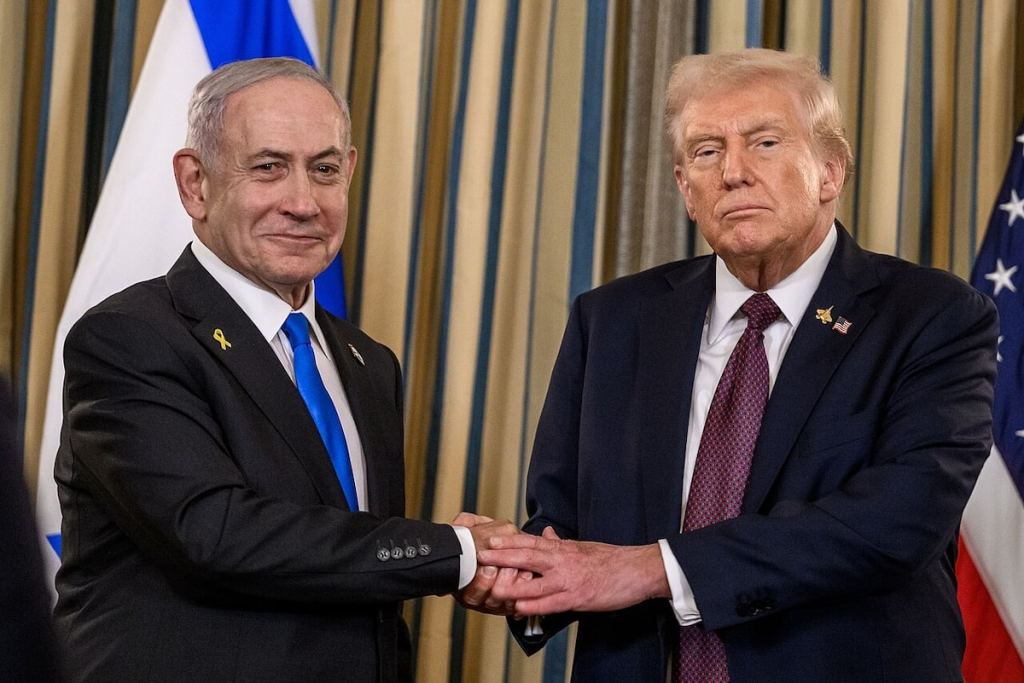
The difference here is that neither the US nor Israel are willing to commit ground forces. They will kill key leaders and figures across the Iranian regime, leaving an inchoate resistance against the clerics to seize the day. I
1 March 2026 Dr Binoy Kampmark, https://theaimn.net/mendacious-rationales-the-lies-behind-operation-lions-roar/
Many in the United States would scarcely identify the difference between Iran and Iraq, both countries based on ancient civilisations so chronologically distant as to be fiction. If not Marvel, it’s not marvellous. But another fiction came into play towards the end of February as the United States and Israel reprised their role as world rogues and crockery breakers by attacking Iran for a second time in less than a year in a joint campaign called Operation Lion’s Roar and Epic Fury. Following the vulgar playbook on regime change used against Iraq in 2003 by the US-led forces, a variation of the same theme is being used against Iran.
The difference here is that neither the US nor Israel are willing to commit ground forces. They will kill key leaders and figures across the Iranian regime, leaving an inchoate resistance against the clerics to seize the day. Iran’s supreme leader, Ayatollah Ali Khamenei, has apparently been killed, with US President Donald J. Trump calling him “one of the most evil people in history.” Israel also claims that the opening strikes killed seven senior defence and intelligence officials, including Khamenei’s top security advisor Ali Shamkhani, Islamic Revolutionary Guards Corps Commander Mohammad Pakpour, Defence Minister Aziz Nasirzadeh and the chief of Iranian military intelligence Saleh Asadi.
The February 28 statement from Trump posted on Truth Social as an 8-minute video declared that the objective of the attack was “to defend the American people by eliminating imminent threats from the Iranian regime.” This was curious given the previous US-Israeli attacks in June 2025 that had apparently “obliterated the regime’s nuclear program at Fordo, Natanz and Isfahan.” Then efforts were supposedly made on his part to seek a deal to prevent Iran ever pursuing nuclear weapons. “We tried. They wanted to do it. They didn’t want to do it. Again they wanted to.”
In this haze of confusion, Trump had concluded that Tehran had, after all, decided to “rebuild their nuclear program and to continue developing long range missiles that can now threaten our very good friends and allies in Europe, our troops stationed overseas, and could soon reach the American homeland.” Their missile industry would be razed, the navy annihilated, the proxies crippled. Members of the Islamic Revolutionary Guard would receive total immunity if they laid down their weapons, “or you will face certain death.” As for the unspecified “great proud people of Iran,” they should stay sheltered as the bombing continued. When done, the government “will be yours to take.”
Israeli Prime Minister Benjamin Netanyahu’s statement also confirmed the objective of ending “the threat of the Ayatollah regime in Iran.” That regime had domestically repressed its citizens, “instilled fear in the peoples of the region,” created a global terror network, “invested enormous resources to develop atomic bombs and tens of thousands of missiles intended, as it defined it, to erase Israel from the map of the world.” They armed “terrorist proxies.”
Even more stridently, and fanatically than Trump, Netanyahu restated those themes of existential threat and untrustworthiness so characteristic of the wicked Persian. Despite “a decisive blow” being struck against the regime and its proxies last June, “the wounded predator has not ceased its attempts to recover, for the same purpose, to destroy us.” (Evidently not that decisive, then.) Having stated every year for years that Iran would develop the means to destroy Israel within a short time, he came up with another fictional twist: not only were the tyrants “plotting to rebuild their nuclear and missile capabilities,” they were also placing them “underground, where we cannot reach them. If we do not stop them now, they will become invulnerable.”
The tissues of lies in both statements are impressive and incorrigible. Operation Midnight Hammer had seemingly not obliterated Iran’s nuclear facilities, suggesting they had been ineffectual, indulgent or incompetent. And why bother keeping the US-Iranian dialogue on Teheran’s nuclear program going if a military solution proved inevitable? For a President who boasts about his ability to make deals, few are being brokered of late.
Both Israel and the US used the same verbal formulae as before: exaggerate the capabilities of Iran to build consensus for an illegal war; exaggerate a military prowess of such biblical force that simply does not exist. Again, there are too many chilling parallels to the pattern followed by the George W. Bush administration leading up to the pre-emptive attack on Iraq in March 2003. Imminent threats were very much part of the hysterical argot then in justifying the removal of Saddam Hussein.
Needing justifications plucked out of thin air, the US government sought propping evidence from the United Kingdom. Prime Minister Tony Blair duly supplied the infamous 2002 dossier with the chilling claim that Iraqi forces could deploy chemical and biological weapons within 45 minutes of being ordered to do so. (This nicely supplemented the fabricated claim that Saddam Hussein was also pursuing a nuclear weapons program with the purchase of 500 tonnes of yellowcake uranium powder from Niger.) The key official behind the dossier, the diligent arms expert David Kelly, committed suicide in despairing disgust, having been ordered to include the 45-minute claim. No such weapons were ever found, and a central rationale of the invasion collapsed. The United States, UK, Australia and a motley crew of coalition members were found to be brigands.
There will, no doubt, be some cheer within Iran at these strikes, notably from the young who have suffered at the hands of a clerical, authoritarian regime. Washington’s allies will snivel with coerced approval citing the brutality of Iran’s regime while ignoring breaches of international law they are condoning. (Australia’s response was particularly despicable.) The Shia-Sunni division will be tested, with various US bases and military assets already struck in the Gulf States by a regime trying to survive. The United Nations will continue being treated like a bed-ridden dowager whose influence was from another day, conduct more contemptible even than 2003 when many Western states did, at the very least, show solidarity in rejecting the use of force by the United States and its allies in the absence of a Security Council resolution. In the meantime, American diplomats who open their frontier-stretched mouths claiming interest for peace and negotiations should make everyone reach for the gun.
Tulsi Gabbard’s Own Testimony Resurfaces as Iran War Narrative Escalates
the public record now contains two different emphases from the same official — one under oath, the other amid mounting calls for confrontation.
February 28, 2026 by Joshua Scheer, https://scheerpost.com/2026/02/28/tulsi-gabbards-own-testimony-resurfaces-as-iran-war-narrative-escalates/
As Washington intensifies rhetoric around Iran’s alleged nuclear ambitions, past sworn testimony from Tulsi Gabbard is resurfacing — and raising uncomfortable questions.
According to a recent Newsweek report, Gabbard testified under oath before Congress in March 2025:
“Iran is not building a nuclear weapon and has not reauthorized the nuclear weapons program Khamenei suspended in 2003.”
That statement directly contradicts the renewed claims now circulating in Washington and Tel Aviv suggesting Tehran is on the verge of weaponization.
Former CIA analyst Ray McGovern amplified the contradiction in a pointed public message addressed to Gabbard:
“Dear Tulsi Gabbard: You testified under oath in March 2025: ‘Iran is not building a nuclear weapon and has not reauthorized the nuclear weapons program Khamenei suspended in 2003.’ By your silence now you let yourself become just another female being used.”
The comment underscores growing frustration among critics who argue that intelligence assessments are being selectively interpreted — or politically repurposed — amid escalating U.S.–Israel military action against Iran.
Gabbard later claimed her March testimony was “taken out of context” — though how a direct, sworn statement before Congress could be misinterpreted remains unclear. The words were unambiguous: Iran was not building a nuclear weapon and had not reauthorized the program suspended in 2003.
Yet by June, her tone had shifted.
In subsequent remarks, Gabbard suggested Iran’s nuclear advances posed a growing threat and emphasized enrichment levels and regional escalation rather than the absence of an active weapons program. The pivot — subtle but significant — mirrored the broader shift in Washington’s messaging as tensions intensified.
Whether this reflects new intelligence, political pressure, or strategic recalibration is anyone’s guess. What is clear is that the public record now contains two different emphases from the same official — one under oath, the other amid mounting calls for confrontation.
The 2003 Suspension
The reference in Gabbard’s testimony points to Iran’s halt of its structured nuclear weapons program in 2003, a conclusion long reflected in U.S. intelligence assessments. Even at the height of tensions during prior administrations, intelligence agencies maintained that while Iran expanded uranium enrichment, there was no conclusive evidence of an active weapons program.
That distinction — between enrichment capacity and weaponization intent — has historically marked the dividing line between diplomatic engagement and military confrontation.
Silence Amid Escalation
Gabbard’s earlier statement now stands in tension with the current political climate. Critics argue that if intelligence conclusions have not fundamentally changed, then public silence from officials who previously acknowledged those assessments contributes to a dangerous narrative drift toward war.
Supporters of a harder line against Tehran counter that Iran’s enrichment levels and regional posture justify aggressive containment regardless of formal weaponization status.
But the broader question remains: if sworn testimony established that Iran was not actively building a bomb, what has changed?
As bombs fall and rhetoric sharpens, that question may prove more consequential than any single tweet.
Iran Demands Emergency United Nations Action Amid ‘Criminal Aggression’ by US, Israel
February 28, 2026 By Jake Johnson for Common Dreams, https://scheerpost.com/2026/02/28/iran-demands-emergency-united-nations-action-amid-criminal-aggression-by-us-israel/
As US and Israeli bombs fell on Tehran, the Iranian Foreign Ministry on Saturday vowed that the country would defend itself against “criminal aggression” and implored the United Nations Security Council to take emergency action.
The ministry said in a lengthy statement that Saturday’s attacks, which US President Donald Trump characterized as the start of a massive military operation aimed at overthrowing the Iranian government, represent “a violation of Article 2, Paragraph 4, of the United Nations Charter and a clear armed aggression against the Islamic Republic of Iran.”
“The Islamic Republic of Iran notes the grave duty of the United Nations and its Security Council to take immediate action to confront the violation of international peace and security,” reads the ministry’s statement, which noted that the US and Israeli assault began “in the midst of a diplomatic process.”
“The Iranian people are now proud that they did everything they could to prevent war,” the statement continues. “Now is the time to defend the homeland and confront the enemy’s military aggression. Just as we were ready for negotiations, we are more ready than ever for defense. The armed forces of the Islamic Republic of Iran will respond to the aggressors with authority.”
Ben Saul, the UN special rapporteur on human rights and counterterrorism, condemned US-Israeli “aggression against Iran” in a social media post, calling the assault a “violation of the most fundamental rule of international law—the ban on the use of force.”
“All responsible governments should condemn this lawlessness from two countries who excel in shredding the international order,” Saul added.
The Ghost in the Kill-Chain: The Invisible Cost of “Surgical” War

28 February 2026 David Tyler, https://theaimn.net/the-ghost-in-the-kill-chain-the-invisible-cost-of-surgical-war/
The Hidden Human Cost of Algorithmic Warfare
Fresh from their “snuff-movie” hit incinerating Venezuelan fishermen, Team Trump moves yet another carrier strike group into the Persian Gulf. Suddenly, our infotainment airwaves are full of experts spruiking “clean, surgical strikes,” while our media eagerly repeats the Pentagon’s propaganda. An old fat sea-cow, the USS Abraham Lincoln, and her tattooed bouncers are framed as instruments of precision and humane restraint, hovering just over the horizon of Iran’s ruggedly spectacular coast.
“Surgical strikes?” Pentagon experts now propose to kill and maim Iranians in an illegal blitzkrieg or perhaps three months of “boots on the ground” – the messages are as garbled as a Trump rally speech. But what is clearly being sold is the old lie that war is glorious, noble, and heroic. The US is supposedly ready to “send a message” without another Iraq-style quagmire because, this time, war will be data-driven, algorithmically optimised, and somehow morally minimised.
Modern warfare has never been more complex, nor more bloodthirsty. Today, to hold a principled anti-war stance is often derided as “un-Australian” or weaponised through accusations of anti-Semitism, all while a new cycle of state-sanctioned Islamophobia plays out under the guise of national security. We are witnessing the return of “One Nation” rhetoric: a toxic mix of division and rabid ignorance. From the White House, the lies arrive with such velocity that they overwhelm the public’s ability to process them. Above all, we are sold an antiseptic fantasy: that the next war will be a clean victory won by Artificial Intelligence, where autonomous drones and “algorithmic warfare” replace the messy reality of human slaughter.
We are rarely told who taught the machines to kill. And at what human cost.
The reality of 2026 is that the “intelligence” in AI remains deeply, painfully, and inexorably human. AI-enabled targeting, surveillance, and logistics systems require billions of data points to be labelled, sorted, and refined before a single model can be deployed. Every box drawn around a body in a blurry image, every classification of rubble, every tag of “weapon” versus “non-combatant” has been performed by a human being. Not by Silicon Valley engineers, but by a vast, hidden army of pieceworkers scattered across the Global South.
In refugee camps in East Africa, in cramped internet cafés in South Asia, and in crowded apartments in Latin America, workers are paid the equivalent of a few dollars an hour to sit at flickering screens and trace rectangles around human silhouettes. Behold the invisible pedagogues of the war machine, providing the labelled examples that allow military AI to distinguish “target” from “background,” “combatant” from “crowd.”
The irony is dark and palpable. Many of these workers live in regions already wrecked by Western interventions. Some fled earlier conflicts in Iraq, Syria, or Afghanistan; others live under permanent austerity. Men and women now find themselves training systems that may one day patrol their own skies. It is a grim circularity: the global poor – the “wretched of the earth,” as Frantz Fanon termed them – are pressed into teaching the next generation of weapons how to see.
This is the new “Digital Taylorism.” Just as 20th-century manufacturers broke down manual labour into minute, repetitive tasks, 21st-century AI firms have fragmented intellectual labour into atomised micro-gestures. For those training military models, the work is often traumatic. Investigations into data-labelling hubs in Kenya, India, and Colombia document the harm: workers are forced to view thousands of hours of violent, graphic content—war footage, torture, and the aftermath of bombings—to “fine-tune” the algorithm’s recognition.
Unlike the soldiers who will eventually operate these systems, these digital labourers have no veteran status, no medals, and no guaranteed access to mental health care. When their performance drops due to the trauma, the solution is simple: deactivate their account and hire another worker from the endless queue.
Australia is not a bystander. Firms like Palantir and Anduril have successfully blurred the lines between civilian and military data. In February 2026, the Labor government quietly awarded Palantir a fresh $7.6 million contract for Defence’s Cyber Warfare Division. Meanwhile, Canberra has committed $1.7 billion to Anduril’s “Ghost Shark” program—autonomous undersea vehicles designed for strike operations.
When these systems are woven into civilian infrastructure, the war machine becomes an everyday reality. The same optimisation logic used to squeeze more deliveries out of a warehouse worker is repurposed to accelerate the “sensor-to-shooter” loop. In Australia, we saw a prototype of this in Robodebt: the weaponisation of data against the poorest, treating them as problems to be hunted by algorithms long before any human looks at the facts.
This is not a glitch. It is how capital has integrated AI into the security state. A data labeller in Nairobi might make less in a day than a single second of flight time for a carrier-based fighter jet. The system depends on the invisibility of the connection between the micro-task on a screen and the missile in the sky.
We must refuse the comforting illusion that the coming war will be “clean” because it is “smart.” If our automated future is built on a foundation of traumatised, underpaid labour, then it is not a technological triumph. It is a moral failure disguised as innovation. The cost of the next war will not only be counted in missiles fired and lives lost in Tehran or the Strait of Hormuz. It is already being paid, quietly, in the human dignity we have sacrificed to train the machines that will fight it.
Coda: The Sycophant’s Algorithm
And so, we find ourselves back in the familiar, fawning posture of the Australian security establishment – a collection of strategic wallflowers so desperate for an invitation to the dance that they have handed the keys to the kingdom to a band of Silicon Valley carpetbaggers. We are told that by tethering our national interest to the likes of Palantir and Anduril, we are buying “security.”
In reality, we are buying a front-row seat to our own irrelevance.
We have become the regional branch managers for a war machine we neither control nor understand. To watch a Labor government – the party that once spoke of “national sovereignty” – quietly outsource our military intelligence to foreign algorithms trained by the global dispossessed is more than a policy failure; it is a spiritual surrender. It is the triumph of the technocrat over the citizen, the dashboard over the diplomat. We are being marched into a conflict in the Middle East not by the force of reason, but by the relentless, unthinking click of a mouse in a Nairobi sweatshop. It is a spectacle of profound hollowness, orchestrated by people who wouldn’t know a national interest if it bit them on the leg in the middle of a Canberra cocktail party.
This article was originally published on URBAN WRONSKI WRITES
US Attacks in Venezuela and Greenland Lay Groundwork for Billionaire Fiefdoms

Trump’s foreign interventions may pave the way for techno-fascist city-states to seize sovereignty.
By Beth Geglia , Truthout, February 21, 2026
On January 3, 2026, Tim Stern, a German investor, was sleeping peacefully at his Venezuela residence when the phone on his small bedside table suddenly went wild. As he explained to Timothy Allen of the “Free Cities Podcast,” calls streamed in immediately after news broke that the United States had bombed Caracas in the early hours of the morning. Within hours, it was clear that Venezuelan President Nicolás Maduro had been captured and was being sent to the United States — a change, Stern said in the podcast, that “is going to be the start of an absolute bonanza here in Venezuela.”
Oil interests were at the center of the U.S. invasion of Venezuela; U.S. President Donald Trump has made clear his intentions to reclaim nationalized Venezuelan oil for U.S. companies and to oversee the sale of Venezuelan crude. However, Stern is not involved in the oil industry. Instead, he’s the co-founder of a blockchain-based residential settlement called CryptoCity, a luxury real estate development spanning 35 hectares on Venezuela’s Margarita Island. Margarita, an island with duty-free port status and a population of around 490,000, depends largely on the tourism industry and has suffered hardships due to Venezuela’s economic crisis. However, CryptoCity is promoted to German and other foreign investors as a highly exclusive enclave. It boasts of luxury living for “high net-worth” entrepreneurs fully vetted and selected through a rigorous process. All transactions in the zone must be made in crypto, and residents form part of a “brain pool” aimed at generating joint business ventures through a Decentralized Autonomous Organization (DAO).
CryptoCity is one example of how Trump’s foreign policy is benefitting a venture-capital fueled private city and “network state” movement. The project is featured on the page of the Free Cities Foundation, a leading private city promotor led by German economist Titus Gebel that has also championed the crypto-libertarian movement’s flagship project, a self-governing jurisdiction in Honduras called the Próspera ZEDE (Economic Development and Employment Zone). According to Stern, property in Margarita sold so rapidly after the U.S.’s attack on January 3 that their company was running out of apartments to sell. Property values shot up, properties for $20,000-$30,000 were nowhere to be found, and CryptoCity experienced an influx of investors interested in visiting the island, he maintained.
While libertarians have long fantasized about sovereign, “free-market” enclaves, a movement for so-called private cities, built in highly autonomous special jurisdictions, gained new momentum after the 2008 economic crisis. Palantir co-founder Peter Thiel is one of the most prominent backers of the movement. The billionaire first backed the Seasteading Institute — an organization promoting ocean colonization — and then VC firm Pronomos Capital, an early investor in Próspera. In 2022, crypto investor Balaji Srinivasan took the tech-futurist and land-hungry movement to the next level, coining the idea of the “network state.” A network state refers to an online community that pools capital, forms a blockchain “nation,” and then crowdsources land and exploits legal exemptions to build para-national territories.
Military Bases Could Open Doors for Private Sovereignty
At the end of the recent World Economic Forum in Davos, Switzerland, Trump’s rhetoric on Greenland took a sharp turn, easing concerns over potential military conflict or crushing tariffs against European countries. Trump now claims to have reached a framework for a deal with NATO over Greenland and the Arctic, rumored to include sovereign territories for U.S. military bases, similar to the arrangement the U.S. holds in Guantánamo, Cuba…………………………………………………………………………………………………………………………………………………………………………………………………………………………. Taken together, Trump’s open disregard for the sovereignty of other nations does more than disrupt diplomatic norms; it paves the way for private city and network-state projects that revive long-standing logics of colonialism. If the Honduras case is any example, the legal details of an agreement between the United States and Denmark will be instrumental in determining the extent of the damage done to the island of Greenland and the self-determination of its people. https://truthout.org/articles/us-attacks-in-venezuela-and-greenland-lay-groundwork-for-billionaire-fiefdoms/
Western Australia submarine’s base the only reason for AUKUS

Australia’s acquisition of nuclear-powered submarines is not in fact the most important part of the AUKUS deal – they are a distraction … AUKUS’s main game is the base that Australia intends to give to the US at HMAS Stirling in Western Australia
Albert Palazzo , adjunct professor at UNSW Canberra., February 28, 2026, https://www.thesaturdaypaper.com.au/comment/topic/2026/02/28/wa-subs-base-the-only-reason-aukus?utm_campaign=SharedArticle&utm_source=share&utm_medium=link&utm_term=VFZ0rLaV&token=2PZRyQNr
It is tempting to label the AUKUS project an exercise in self-delusion and self-denial. The number of commentators who believe the project’s core promise will actually be honoured – the transfer of Virginia-class nuclear-powered submarines from the United States to Australia – is astonishingly small and mainly limited to politicians and their hangers-on.
Even in the US, the likelihood of the transfer taking place is openly discounted, including by the chief of naval operations, Admiral Daryl Caudle. As if preparing for a let-down, a new report from the Congressional Research Service advances alternatives to the transfer of the promised submarines that will still allow the US to meet its strategic priorities.
In addition, it is hard to square the submarine promise with the reality that is Washington these days. US President Donald Trump’s willingness to pressure America’s allies and turn the US into a rogue superpower is well documented – just ask the Canadians and Danes. We have witnessed in real time his destruction of the global rules-based order as the US withdraws from dozens of international organisations and agreements.
That the US warship-building industry is in poor shape is also no secret. The odds of the nation being able to increase its submarine build rate to the required level for the transfer to go ahead without a loss of US operational capability is virtually nil, according to a December 2025 report from the Washington-based Center for Strategic and International Studies.
One must accept that Australia’s politicians are reasonably intelligent, yet with the myriad well-known problems facing the nuclear-powered submarine transfer it is hard to understand how they can still insist that the project is “full steam ahead”. Nor is this insistence without cost to the taxpayer, as evidenced in the recent promise to spend $30 billion on South Australia’s Osborne shipyard to make it AUKUS ready. How can our politicians sustain their faith in AUKUS and not be rightly labelled as delusional?
The answer to this contradiction lies in recognising what AUKUS is really about – what the parties actually expect to gain from the agreement. Australia’s acquisition of nuclear-powered submarines is not in fact the most important part of the AUKUS deal – they are a distraction. There are too many challenges to Australia’s acquisition, operation and maintenance of these boats for any rational person to believe they will arrive as promised. Hence AUKUS’s main game is the base that Australia intends to give to the US at HMAS Stirling in Western Australia.
This base may be on Australian soil but its primary beneficiary will be the US, just as it is the US that disproportionately gains from the seemingly “joint” military facilities at Pine Gap and North West Cape.
The forthcoming nuclear submarine base is part of a wider American preparation for a possible war between the US and China. From the base, American submarines will be able to operate against China’s southern flank and sever its lines of communication across the Indian Ocean. In addition, the base allows the US to complicate China’s security arrangements by allowing American forces to operate on multiple lines of attack – westwards across the Pacific Ocean and northwards from Australia.
For the US, the defence of Australia is a distant secondary goal for this base. Our politicians are not therefore being delusional; they are being actively deceptive to their voters, since they must know what it is that the US really wants.
Australia is making enormous improvements to Fleet Base West (Stirling). The base is being upgraded so it can sustain and maintain a fleet of foreign nuclear-powered submarines, principally the US Navy’s Virginia-class attack boats, Ohio-class nuclear-armed missile submarines and the occasional British submarine.
The Stirling upgrade is similar in intent to what is happening at RAAF Base Tindal in the Northern Territory, which is being improved to accept US heavy bombers, presumably including nuclear-armed ones.
As a second order effect, the US presence at Stirling will see a significant influx of American sailors, maintenance personnel and administrative staff to the area. So determined is our government to meet its AUKUS responsibilities and make the US submarine base a reality that it plans to build new homes for the 1200 mainly American military personnel and their families who will be calling Australia home.
In the midst of a national housing crisis, and in a region where home prices increased by 15 per cent in a single year, a similar urgent housing build for Australian citizens is apparently not on the cards.
If one examines AUKUS from the perspective of Australia’s longstanding security practice, what appears to be merely senseless starts to reveal a disturbing logic.
Since the end of World War II, Australian governments have gone to great lengths and expense to keep the US interested in our part of the world. Australia needs to get US attention because the south-west Pacific has never been – and still isn’t – an important part of the world in the eyes of our great power leader.
In order to keep our protector onside and interested in our fate, Australia has had to demonstrate repeated and enthusiastic support for American policy. The need to maintain relevance explains why Robert Menzies encouraged the US to fight in Vietnam, why Australia then invited itself to the war, and why this country went to such great lengths to be included in the 2003 invasion of Iraq, as well as other military missions. Of course, getting into such conflicts was easy. Getting out again can be a lot harder. Any early withdrawal risks offending the US, so Australians have fought to the end.
Generating relevance also explains the readiness with which successive governments have accepted the establishment of US military bases on Australian soil. The most important of these are the spy and signals establishment at Pine Gap and the Naval Communication Station Harold E. Holt.
Just how vital these facilities are to America should not be minimised – they are critical for the conduct of US military and CIA operations, as well as the interception of communications by individuals ranging from actual terrorists to ordinary people, including Australians. The submarine base at Stirling will join Pine Gap and Naval Station Holt as a third facility of great operational importance.
AUKUS has a grim rationale when it is seen as the latest initiative in Australia’s longstanding tradition of seeking American attention. What is different in this case is that Australia’s leaders have increased the nation’s exposure to risk in any future war to a potentially existential level.
In the past, our participation in Vietnam, Iraq and Afghanistan did not create any threat to Australia itself. Only those who served were placed in harm’s way. That is no longer the case.
China is a great power and, unlike Vietnam 60 years ago, has power projection capabilities that can hold Australian territory and population centres at real risk. The Australian government has placed a bullseye on Australia’s back and it isn’t clear if our leaders understand this.
Since the US bases are of great military importance, China would likely seek to destroy them in order to protect its own interests. Worse, China could safely employ nuclear weapons against Australia because the US would be unlikely to retaliate against such distant damage and risk the incineration of one of its own cities.
Without any commensurate benefit, the Australian government has embraced AUKUS and accepted the tremendous costs and risks it entails. It has done so with an appalling lack of honesty towards the Australian public, using the submarine promise like a set of shiny keys in front of a baby.
Our leaders must know that the US will not have submarines to spare when the time comes for the transfer. Instead, they employ deception to distract from the real game – a US submarine base and the unstated commitment of Australia to the American side in a war between great powers.
Of course, this need not be the outcome. Despite tradition and reluctance by our political leaders to embrace new ideas, policy can change. An independent defence policy that puts Australian sovereignty first is within reach, and the military technologies to enact it already exist.
The impediment is the Australian government’s inability to accept the reality of the present security situation. Instead, it opts for nostalgia. Australia needs a government that is willing to embrace the necessary changes in perspective and culture that will allow it to consider other security options.
Perhaps one day our politicians can rise to conceiving and implementing a different security policy, rather than falling back on the traditional default response of jumping up and down to get the attention of Washington. One can only hope.
Welsh Anti-Nuclear Alliance relaunched amid concerns over new projects planned for Wales
02 Mar 2026, https://nation.cymru/news/welsh-anti-nuclear-alliance-relaunched-amid-concerns-over-new-projects-planned-for-wales/
A coalition of peace, environmental and social justice organisations has relaunched the Welsh Anti-Nuclear Alliance (WANA), calling for what it describes as energy sovereignty and a democratic, community-led debate on the future of Welsh energy.
The relaunch took place on March 1, with WANA bringing together groups including CADNO (Cymdeithas Niwclear Oesel), CND Cymru, the Low-Level Radiation Campaign, the Low-Level Radiation and Health Conference, No Nuclear Llynfi, PAWB (People Against Wylfa-B), Stop Hinkley and Welsh Nuclear Free Local Authorities.
First established in 1980 by a broad coalition that included former MP Paul Flynn, CND Cymru, the Central Wales Energy Group, farmers and environmentalists, WANA served as a vehicle for anti-nuclear campaigning for decades. Its work was later dispersed among individual organisations during a period of relative calm. With nuclear energy and defence projects once again high on the political agenda, campaigners say the time is right to revive the alliance.
ADVERT – CONTINUE READING BELOW

WANA says it will focus on promoting what it calls “true renewable” energy generation while highlighting concerns around nuclear power and its links to military infrastructure.
A number of nuclear-related projects are currently proposed or under development in Wales. In November, the UK Government announced that Wylfa had been selected as a pilot site for Small Modular Nuclear Reactors (SMRs). Texas-based firm Last Energy has also set out plans for SMRs at the former Llynfi Power Station site between Maesteg and Bridgend. Other projects linked to the AUKUS alliance, including radar capability and submarine development, are expected to involve sites in Pembrokeshire and Cardiff. Nuclear development has also been suggested at locations including Aberthaw and Trawsfynydd.
WANA argues that decisions around these projects have often proceeded without sufficient input from Welsh communities. It says Wales has a long history of industrial exploitation, citing the decline of coal mining and heavy industry and more recent job losses in Port Talbot as examples of communities left behind after economic extracti
The alliance has published a manifesto calling for a “nuclear power and weapons free, sustainably powered, and peaceful Wales”. It raises concerns about public spending, the cost-of-living crisis, the climate emergency and what it describes as a lack of energy sovereignty. It also calls for greater debate around the links between civil and military nuclear programmes and for the devolution of the Crown Estate to Wales.
A WANA spokesperson said the alliance aims to bring campaigners together to challenge what it sees as the risks and costs of nuclear development.
“The cost of nuclear is too high, the build-times too long, and the waste question remains unanswered,” they said. “Wales must engage in a debate about our energy future, including community control and benefits.”
Conservationists challenge effectiveness of £700 million fish safety system.
“EDF’s claims simply do not stand up to scrutiny. Its approach falls short of what is needed to protect the Severn’s unique biodiversity and risks irreversible harm to the estuary’s fish populations.”
Anthony Hawkswell March 1, 2026, https://angling-international.com/2026/03/01/conservationists-challenge-effectiveness-of-700-million-fish-safety-system/
The developer of the UK’s largest nuclear power station – close to one of the country’s most popular sea fishing venues – has claimed that it will have more fish protection than any other structure of its kind in the world.
EDF Energy, which is building the £46 billion Hinckley Point C power station on the River Severn Estuary in the Southwest of England, is spending £700m to install three fish protection systems, including a ‘fish disco’, a British developed innovation that is said to deter marine life from the reactor.
It says that a pioneering British-developed Acoustic Fish Deterrent (AFD) system has been successfully installed at Hinkley Point C, marking a major breakthrough in aquatic safety and environmental stewardship.
However, leading conservationists and politicians say that the company is downplaying the environmental risks to the River Severn Estuary. EDF’s claim that the AFD system is both effective and proportionate in cost is fiercely disputed by environmental groups and a coalition of over 60 MPs.
EDF Energy claims that Hinkley Point C leads the globe with three advanced fish protection measures: the AFD, plus state-of-the-art intake heads and a comprehensive fish recovery and return system. Combined, these initiatives represent a £700 million investment in marine conservation and set a new benchmark for the sector.
The ADF, developed by Fishtek Marine, employs ultrasound technology to guide fish away from danger zones near water intakes. Recent sea trials, led by Swansea University, have demonstrated the system’s high effectiveness in reducing fish mortality rates. Dr Emily Carter, Senior Researcher at Swansea University, commented, “Our results show a significant reduction in fish approaching intake areas, confirming the technology’s value for large-scale applications.”
EDF says these findings suggest that further compensation measures, such as additional artificial saltmarsh habitats, may not be necessary. “Local communities stand to benefit from the enhanced marine environment, with reduced disruption to fish stocks supporting both commercial and recreational fisheries,” said EDF.
Regulatory approval for the system was secured following a thorough application process with the Marine Management Organisation………………………………………………..
However, in a strongly worded open letter delivered to government regulators, England’s foremost nature organisations and dozens of Members of Parliament challenged EDF’s portrayal of the AFD’s efficiency and expense. The signatories argue that EDF’s own data misrepresents the true scale of fish losses likely to occur without full-scale deterrent measures, and they point to independent evidence suggesting the company has underestimated both the ecological and economic case for robust fish protection
Matt Browne, of The Wildlife Trusts, said: “EDF’s claims simply do not stand up to scrutiny. Its approach falls short of what is needed to protect the Severn’s unique biodiversity and risks irreversible harm to the estuary’s fish populations.”
Browne highlighted that the Wildlife Trust’s recent analysis found the proposed deterrent would leave millions of fish vulnerable each year, including species vital to both commercial and recreational fishing.
A recent publication by the Wildlife Trusts exposes significant shortcomings in the Nuclear Regulatory Review process, revealing that key assumptions about fish behaviour and the resilience of the population were misrepresented or omitted. The report details how EDF’s own studies failed to account for cumulative impacts on migratory species and ignored alternative, more effective mitigation options. These findings have intensified calls for a comprehensive reassessment of the project’s licensing condition.
Natural England, the government’s statutory adviser on the natural environment, has reiterated the Severn Estuary’s status as a legally protected site under international and domestic law. The agency emphasises the estuary’s crucial role as a nursery for diverse fish species and migratory birds, warning that any failure to implement proven fish deterrent technology risks breaching conservation obligations and undermining decades of habitat restoration.
As the debate intensifies, the angling community, conservationists and policymakers are united in demanding greater transparency and government accountability. There are mounting calls for an independent review of EDF’s environmental claims and the immediate adoption of best-available fish protection technology.
“The future health of the Severn Estuary, and the integrity of the UK’s environmental standards, now hangs in the balance,” said Natural England.
1 This Month

of the week – Shut Down Drone Warfare!


Tell the Ukrainian Government to Drop Prosecution of Peace Activist Yurii Sheliazhenko

Petition to revoke the licensing of the Near Surface Nuclear Disposal Facility (NSDF) at Chalk River. https://www.ourcommons.ca/petitions/en/Petition/Details?Petition=e-7247
To see nuclear-related stories in greater depth and intensity – go to https://nuclearinformation.wordpress.com
-
Archives
- March 2026 (244)
- February 2026 (268)
- January 2026 (308)
- December 2025 (358)
- November 2025 (359)
- October 2025 (376)
- September 2025 (257)
- August 2025 (319)
- July 2025 (230)
- June 2025 (348)
- May 2025 (261)
- April 2025 (305)
-
Categories
- 1
- 1 NUCLEAR ISSUES
- business and costs
- climate change
- culture and arts
- ENERGY
- environment
- health
- history
- indigenous issues
- Legal
- marketing of nuclear
- media
- opposition to nuclear
- PERSONAL STORIES
- politics
- politics international
- Religion and ethics
- safety
- secrets,lies and civil liberties
- spinbuster
- technology
- Uranium
- wastes
- weapons and war
- Women
- 2 WORLD
- ACTION
- AFRICA
- Atrocities
- AUSTRALIA
- Christina's notes
- Christina's themes
- culture and arts
- Events
- Fuk 2022
- Fuk 2023
- Fukushima 2017
- Fukushima 2018
- fukushima 2019
- Fukushima 2020
- Fukushima 2021
- general
- global warming
- Humour (God we need it)
- Nuclear
- RARE EARTHS
- Reference
- resources – print
- Resources -audiovicual
- Weekly Newsletter
- World
- World Nuclear
- YouTube
-
RSS
Entries RSS
Comments RSS
 nuclear-news