Secrets of the deep, deep tunnels where nuclear waste is buried.
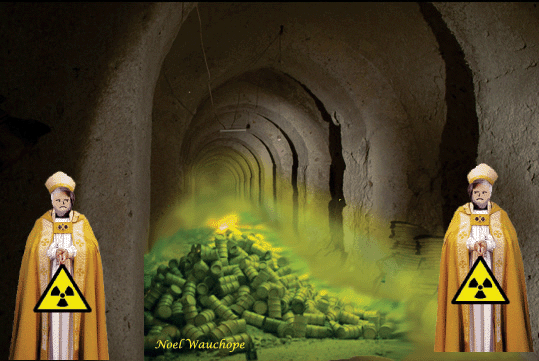
Almost half a kilometre underground, engineers in Finland are about to seal
radioactive material safely for ever. Britain wants to do the same. If all
goes to plan, spent nuclear fuel will be transported early next year down
dedicated lift shafts before robotic machines bury the 24-tonne copper and
iron canisters in the rock where they will remain for the rest of time.
This is the world’s first deep geological disposal facility for nuclear
fuel, a concept that has been discussed by engineers and politicians for
half a century. More than 20 other countries including the UK, US, France
and Sweden have plans to follow suit. But the Finns have got there first.
Fiona McEvoy, 50, the head of site characterisation and research and
development at the British government agency Nuclear Waste Services, is
here as part of a fact-finding mission to see how a similar feat could be
achieved in the UK. She says: “It’s a watershed moment for the nuclear
sector. Long-lived, dangerous waste will be locked away, safe for eternity.
That is amazing.”
Martin Walsh, 51, head of engineering at Nuclear Waste
Services, also on the visit, says: “Nobody disagrees that for the legacy
for nuclear waste in the UK, geological disposal is necessary.” The most
radioactive nuclear waste produced by Britain’s nuclear power stations will
remain hazardous, Walsh says, “beyond our lifetime, and beyond the
lifetime of our children and our children’s children”.
Burying it deep in
the earth is considered a “final disposal”, a solution that has been
calculated to enable the radioactive waste to remain undisturbed for a
nominal 500,000 years, surviving ice ages, tectonic shifts, earthquakes and
sea level rise.
The two private companies that run these facilities, TVO
and Fortum, jointly founded Posiva in 1995, developing this repository to
dispose of their waste. Every week, for the next 100 years, one canister of
spent nuclear fuel will be transported 433m down into the earth.
In the UK,
plans for a similar geological disposal scheme have experienced false
starts because no council has yet agreed to host a site. In June, the newly
elected Reform leadership of Lincolnshire county council pulled the plug on
long-running discussions to site a geological disposal site near the
coastal village of Theddlethorpe.
The most likely location for a site is
now off the Cumbrian coast, close to Sellafield. Nuclear Waste Services is
in discussions with Mid Copeland and South Copeland community partnerships
for a proposal for an access tunnel to be sunk onshore, and then run ten
miles out below the seabed, where 250 miles of disposal tunnels would be
dug, nearly ten times the size of the Finnish scheme.
Subject to local
approval and the go-ahead of whichever government is then in power,
construction is expected to start in the 2040s and start being filled in
the 2050s. It will be filled with waste for 150 years before it is sealed
in 2200.
The lifetime cost of the UK project is estimated at up to £53
billion, compared with about £5 billion for the Finnish scheme, which at
roughly a tenth of the size, serving a nation with a tenth of the
population, is roughly comparable. The speed at which progress has been
made, however, is not comparable. But Walsh defends the cautious pace the
British experts have taken. “The thought process, particularly around
nuclear, has to be robust. You have to make sure your relationship with
safety and security and the environment is sound.”
Times 28th Sept 2025,
https://www.thetimes.com/uk/environment/article/nuclear-power-waste-finland-bkq8sq0lj
Netanyahu’s General Assembly Tirade Telegraphs A Resumption of Israel’s War On Iran.
Dimitri Lascaris, Sep 28, 2025, https://reason2resist.substack.com/p/netanyahus-general-assembly-tirade?utm_source=post-email-title&publication_id=2811845&post_id=174714909&utm_campaign=email-post-title&isFreemail=true&r=1ise1&triedRedirect=true&utm_medium=email
On September 26, indicted war criminal Benjamin Netanyahu delivered a bombastic speech in the UN General Assembly in which he set Israel’s sights squarely upon the Islamic Republic of Iran.
Netanyahu also castigated many of Israel’s few remaining allies for taking the purely cosmetic step of recognizing a Palestinian state.
Shortly before Netanyahu’s speech at the UN, U.S. Secretary of War Pete Hegseth summoned hundreds of senior U.S. military officers from around the world to a highly unusual, emergency meeting in Virginia. The Trump regime is being tight-lipped about the purposes of this meeting.
n this episode of Reason2Resist, I examine these recent developments and argue that we may be mere days away from a resumption of Israel’s criminal war of aggression on Iran.
I also discuss a new poll by Quinnipiac University which confirms that support for Israel continues to plummet in the United States.
Iran angry as sweeping UN sanctions take effect after failure of nuclear talks
Foreign ministry attacks ‘unjustifiable’ return of measures expected to have wide effects on troubled economy
Guardian, Agence France-Presse 28 Sept 25
Widespread UN sanctions against Iran have come back into force for the first time in a decade, prompting anger from Tehran, after last-ditch nuclear talks with western powers failed to produce a breakthrough.
The sanctions, which came into effect late on Saturday and three months after Israel and the US bombed Iran, bar dealings related to Tehran’s nuclear and ballistic missiles programme and are also expected to have wider effects on the country’s troubled economy.
In a statement on Sunday, as the Iranian rial plummeted to a record low against the US dollar, the Iranian foreign ministry hit out at the move. “The reactivation of annulled resolutions is legally baseless and unjustifiable,” it said. “All countries must refrain from recognising this illegal situation.”
European and US diplomats stressed immediately after the resumption of sanctions that diplomacy was not over…………………………………
Iran has allowed UN inspectors to return to its nuclear sites, but the president, Masoud Pezeshkian, said the US had offered only a short reprieve in return for handing over its whole stockpile of enriched uranium, a proposal he described as unacceptable.
An 11th-hour effort by Iran’s allies Russia and China to postpone the sanctions until April failed to win enough votes in the security council on Friday, leading to the measures taking effect at 1am BST on Sunday…………………………………..
The sanctions are a “snapback” of measures frozen in 2015 when Iran agreed to major restrictions on its nuclear programme under a deal negotiated by the former US president Barack Obama.
The US has already imposed massive sanctions, including trying to force all countries to shun Iranian oil, in steps taken by Donald Trump when he withdrew from the deal in his first presidential term.
Iran and the US had held several rounds of Omani-brokered talks this year before they collapsed in June when first Israel and then the US attacked Iranian nuclear facilities.
Iran recalled its envoys from the UK, France and Germany for consultations on Saturday, state television reported…………………………………………. https://www.theguardian.com/world/2025/sep/28/sweeping-un-sanctions-on-iran-come-into-effect-after-nuclear-talks-fail
When Palestinians Die in Israeli Captivity, US Media Almost Never Take Note
Drew Favakeh, FAIR, September 27, 2025
The different treatment accorded to the plights of Palestinian and Israeli prisoners by US corporate media illustrates a persistent double standard that treats some people as more human than others.
Take 20-year-old Palestinian prisoner Ahmed Saeed Tazaz’a, who died in Israel’s Megiddo Prison after nearly three months of illegal detention, according to the Commission of Detainees and Ex-Detainees Affairs (CDA), an agency of the Palestinian Authority (8/3/25).
Tazaz’a, who was from Jenin in the northern occupied West Bank, was imprisoned on May 6 of this year without a charge or a trial. He was held under Israel’s policy of “administrative detention,” which locks up Palestinians indefinitely “on the grounds that he or she plans to break the law in the future,” according to the Israeli human rights group B’Tselem. Tazaz’a did not suffer from prior health problems before his arrest, according to his family (WAFA, 8/7/25).
There are currently some 3,613 Palestinians under administrative detention in Israeli prisons, according to the July 2025 CDA report, and more than 10,000 Palestinians in Israeli custody (not including those held in military camps) in total. Even Israel’s own military intelligence only identifies a quarter of its detainees from Gaza as “fighters,” while human rights groups and Israeli soldiers have reported even fewer—roughly 15%—as Hamas members (Guardian, 9/4/25).
The CDA reports that Tazaz’a was the 76th identified Palestinian to die in Israeli custody since October 7, 2023.
And yet, while the fates of Israelis held captive by Hamas regularly make front-page news, US corporate media have not reported on Tazaz’a’s death—much less investigated it. Among the few news outlets to report his death were the Palestine News & Information Agency (WAFA, 8/7/25), Yemen News Agency (8/3/25), Haaretz (8/6/25), DropSite (8/3/25), Middle East Monitor (8/4/25) and Middle East Eye (8/19/25).
“There is no value for life”
Since January 1, 2025, the CDA and foreign media have recorded at least 13 deaths of Palestinians held captive by Israel:
- Musab Al-Ayadeh, age 20, at Ofer Prison (died on 8/25/25);
- Ahmed Saeed Tazaz’a, 20, at Megiddo Prison (reported 8/3/25);
- Sameer Mohammad Yousif al-Rifai, 53 (7/17/25);
- Mohyee al-Din Fahmi Najem, 60, at Naqab Prison (5/4/25);
- Walid Ahmad, 17, at Megiddo Prison (3/22/25);
- Rafaat Abu Fanouneh, 34, at Ramla Prison (2/26/25);
- Khaled Mahmoud Qassem Abdullah, 40, at Megiddo Prison (2/23/25);
- Ali Ashour Ali al-Batsh, 62, at Naqab Prison (2/21/25);
- Sayel Rajab Abu Nasr, 60 (1/21/25, revealed on 6/30/25);
- Mutaz Abu Znaid, at Gadot Prison (1/13/25);
- Musab Haniya, 35 (1/5/25, revealed on 2/24/25);
- Ibrahim Adnan Ashour, 25 (6/23/24, revealed on 1/29/25);
- Mohammad Sharif al-Asali, 35 (5/17/24, revealed on 1/29/25).
Of these 13 deaths, only one—that of 17-year-old Brazilian-Palestinian Walid Ahmad—prompted any coverage in US corporate news outlets, according to a FAIR search of the US Newsstream Collection on ProQuest and supplemental Nexis and Google searches.
Ahmad died in Megiddo Prison on March 22, reportedly the youngest Palestinian to die in an Israeli prison since October 7. The Associated Press ran two original reports about Ahmad’s death (4/1/25, 4/6/25, plus a brief followup at the end of another piece—4/11/25) that a few other outlets republished, and CNN (4/6/25) ran one original report .
On April 1, the AP published a detailed report by Julia Frankel headlined “A Palestinian From the West Bank Is First Detainee Under 18 to Die in Israeli Prison, Officials Say.” The article reported that Ahmad “was held in an Israeli prison for six months without being charged [and] died after collapsing in unclear circumstances.” …………………………………………………………………………
Palestinian prisoners: not newsworthy?
By all measures, the AP’s stories were well-sourced, humanizing and put into appropriate context—yet few other US outlets picked them up. …………………………………………………………………………………………..
International and independent accounts
It’s not particularly difficult for US journalists to find details about these deaths—including the unlawful conditions and/or abuse causing or coinciding with them—as the details are extensively documented by their overseas counterparts (mainly in the Middle East)……………………………………………………………………………………
Prison abuses continue, coverage doesn’t
In 2024, at least a few deaths of Palestinian prisoners were covered by US corporate media outlets, including those of Dr. Adnan Ahmad Albursh, chief of orthopedics at Al-Shifa hospital (New York Times, 5/3/24) and Iyad al-Rantisi, director of the Kamal Adwan Hospital in Beit Lahia (Washington Post, 7/1/24). The Journal notably published an article (more than 2,500 words) about how the deaths of Albursh and other imprisoned Palestinians “fuel allegations of abuse” (8/8/24).
In 2024, at least a few deaths of Palestinian prisoners were covered by US corporate media outlets, including those of Dr. Adnan Ahmad Albursh, chief of orthopedics at Al-Shifa hospital (New York Times, 5/3/24) and Iyad al-Rantisi, director of the Kamal Adwan Hospital in Beit Lahia (Washington Post, 7/1/24). The Journal notably published an article (more than 2,500 words) about how the deaths of Albursh and other imprisoned Palestinians “fuel allegations of abuse” (8/8/24).
The lack of US media attention in 2025 cannot be attributed to a lack of either abuses or available leads. In July, an exposé by Israeli newspaper Haaretz (7/6/25) showed Megiddo Prison to be one of the more brutal of Israeli prisons. The report revealed “medical neglect,” including the “rampant spread” of scabies and a “high probability of an outbreak of a contagious intestinal disease” leading to diarrhea and weight loss, which was also caused in part by reduced food rations. Routine violence at Megiddo Prison is also prevalent, including gas spray in the prisoners’ faces, baton beatings, kicking and the assault of inmates with fists or clubs.
Haaretz described the deaths of two Palestinian prisoners, one of whom suffered “broken ribs and a broken sternum” and was “severely beaten in the head before his death” and another of whom suffered from “broken ribs, a damaged spleen and severe inflammation in both of his lungs.” Such conditions had previously been documented repeatedly by the CDA (4/13/25, 4/13/25, 5/28/25) and Addameer (3/14/25, 5/12/25).
The Haaretz article expanded on the death of Ahmad, including that he “collapsed in the prison yard and died.” Haaretz included the doctor’s finding that Ahmad “had almost no fatty tissue left in his body, suffered from colon inflammation and was infected with scabies.”
Haaretz also reported that, when asked whether the autopsy “led to any action,” the Health Ministry “refused to provide details.” The article included input from a 16-year-old inmate, identified by Haaretz under the pseudonym “Ibrahim,” who said that after Ahmad’s death, “the violence decreased but didn’t stop.”
No corporate US news outlet has covered or followed up on Haaretz‘s report.
Front-page news: ‘Israeli hostages’
By comparison, the US corporate press has put far greater focus on Israeli prisoners held by Hamas—highlighting a long-documented double-standard.
……………………………………………………………………………………………………………. To be clear, media should be reporting on Israeli captives—not just on their deaths, but when they are released as well, detailing their experiences.
It only serves the interests of the Israeli government, however, for US corporate media to foreground the plight of Israelis held by Hamas while failing to do so for Palestinians in Israeli captivity—especially when the latter are a part of what many nations, politicians, scholars, experts and others deem a “genocide.” https://fair.org/home/when-palestinians-die-in-israeli-captivity-us-media-almost-never-take-note/
Nuclear waste in a landfill?

Navajo communities want pros and cons delivered in language all can understand, writes Kathy Helms
Explaining the rationale of burying low-level radioactive waste in a solid waste landfill to Navajo elders, especially if English is not their first language, obviously would be a bit daunting. Regulators relish acronyms like one would a yummy bowl of alphabet soup – RCRA, SMCRA, NORM, TENORM. Elders, not so much.
Regulators need to bring the discussion down to the people’s level, Judy Platero, secretary/treasurer of Thoreau Chapter, told federal, state and tribal officials during an August 14 tour of the Red Rock Landfill.
“A lot of our community members are not here because they don’t understand this,” Platero said. “There’s no understanding of this because all of this language, all of this information that’s being disseminated, is all technical. We’ve asked many times, ‘Bring it to us in our own language.’”
Not against cleanup
Platero made it clear that the people of Thoreau are not against cleanup of the former Quivira uranium mine near Church Rock. They understand the need for the removal of 1.1 million cubic yards of radioactive waste rock and sand from within the Red Water Pond Road community. Residents have been saddled with those Cold War remnants for more years than they care to remember.
“What we are trying not to have happen is the transport and the storage here in Thoreau. That’s what we are talking about. “We want everybody, all our people, to be safe,” Platero said.
The proposed removal plan means that an estimated 76,710 truckloads – over 60 truckloads a day – will travel a 44-mile haul route along New Mexico Highway 566 to Interstate 40E, across the Continental Divide to and through downtown Thoreau to the Red Rock Landfill. Another 3,300 truckloads of waste from Sections 32 and 33 mines in Casamero Lake are expected to travel a more rural haul route, including a private toll road, according to the U.S. Environmental Protection Agency’s Region 9.
If the landfill “test pilot” for the waste is successful, the state of New Mexico could approve the disposal of more waste in other areas of the landfill on a case-by-basis in the future, tour-goers were told.
Another tour, another time
Platero recalled participating in a smaller tour of the landfill within the last couple years. “We were taken to this place over on the other side and told, ‘This is where the proposed site is.’ But now we’re over here on this side. I see it as there is really nothing definite – and I’m glad there’s nothing definite – except for the cleanup,” she said.
During a June 30, 2023, meeting of the Eastern Navajo Land Commission, Jay R. DeGroat, who worked with the Bureau of Indian Affairs and Eastern Navajo Agency for many years, informed land commissioners that back when the landfill first was being proposed, they were talking to the Elkins family which was acquiring land for the Red Rock facilities.
“They assured us that the area with the Indian mineral rights was a buffer zone to the location and they weren’t ever going to put anything on there,” DeGroat said. But upon hearing EPA’s proposal to haul uranium- and radium-contaminated mine waste to the landfill, DeGroat said he was afraid the agency might have a problem with obstructing the mineral rights of Navajo allottees.
“What you’re putting on there, the way it’s going to be, you can’t ever, ever remove it again,” he said. “My understanding is that part of the landfill area included these lands that still had mineral rights that belonged to the allottees.”
Mine waste ‘reality’
…………………………………………………………………………………………………..Keyanna wants a safe place to live. She has been fighting for removal of the waste pretty much all her life. Figuratively speaking, her son basically cut his teeth on Nuclear Regulatory Commission and EPA meetings.
“My kids, unfortunately for them, they have been brought up in the capacity of learning how to be a leader in their community because I had to do that,” she said. “My children have probably gone to more meetings than some of you here because they’re involved.”
Keyanna noted that Platero was correct about the language barrier. “You are completely right. It needs to be explained to you in our Dine´ language,” she said.
………………………………………………………………………Too close for comfort?
Stephen Etsitty, executive director of Navajo Nation EPA, said during the 2023 meeting that it had taken a lot of internal meetings within U.S. EPA and the state of New Mexico to reach possible solutions for disposal of the Quivira wastes. “We have been advocating for the initial position that the Nation took, which is off-site reservation disposal,” he said
The Thoreau community had hoped that “off-site” meant taking the waste to an established repository far away from the reservation, according to Platero “I know it was said, ‘off the Navajo Nation.’ You know what? Navajo Nation is just a skip and a hop away.” She sees it as a continuing pattern of the federal government – regulators “pitting neighbor against neighbor” in the name of money. EPA estimates the pilot project cost at $189 million – about $100 million more than they have currently.
Talia Boyd, a Navajo tribal member, works with communities on environmental issues. She sees regulators’ proposal as an indication of just how much federal agencies, state agencies, and industry don’t listen to the communities.
“From the get-go, our communities have always asked that this waste be removed far from our homelands. Over the years, we haven’t been listened to. They’ve been giving us the bare minimum as far as coming up with solutions on where to take this waste,” she said. “So far, the best thing they’ve come up with is, really, putting it right on the other side of Navajo federal trust land, which is absolutely unacceptable.”
While there is no permanent repository for high-level nuclear waste in the United States, there are four active, licensed low-level waste disposal facilities. Those are located in Barnwell, SC.; Richland, Wash.; Clive, Utah; and Andrews County, Texas.
There are over 520 abandoned uranium mines on the Navajo Nation, Boyd said. “We have a lot of waste that we need to be removed … We understand and hear the communities on both parts – the community of Church Rock and Red Water Pond Road who want their waste removed, and the Thoreau community who don’t want this waste housed in their backyard.
“This is how our communities are being pitted against each other by federal agencies, by the industry, and sometimes even our own tribal governments who don’t step in to help advocate for the people and demand transparency and accountability and justice on behalf of their people,” she said.
Kathy Helms is a retired investigative journalist who has spent her career either editing or covering courts, corruption, energy and environmental issues in Tennessee, Indiana, Arizona and New Mexico. https://beyondnuclearinternational.org/2025/09/28/nuclear-waste-in-a-landfill/
The uphill battle ahead: Four different leaders, four different takes on global warming

By SETH BORENSTEIN and MELINA WALLING, September 26, 2025
UNITED NATIONS (AP) — Four men. Four corners of the globe. Four vastly different visions and experiences on climate change.
At the United Nations this week, a quartet of leaders with distinct personal styles and decidedly different national agendas demonstrated why saving the planet isn’t simple, fast or something they can even agree on.
U.S. President Donald Trump, a real estate tycoon and television personality, kicked off the issue a day early when he played skunk at a garden party. He told fellow leaders at the United Nations not to worry about climate change because it’s a scam and insisted that renewable energy, such as wind and solar, would wreck their economy. He was basically alone on that.
Then, on Wednesday, when more than 100 leaders gathered specifically to work on climate, it was the engineer-turned-president, Xi Jinping of China, who seized the moment, attention and headlines in a controlled video. He announced that for the first time, the world’s top carbon polluter would cut emissions. Though experts called it timid, he positioned his country to amass ever more economic might by cornering the market of the very renewables that Trump denigrated.
Feleti Penitala Teo, the soft-spoken prime minister of the small island nation of Tuvalu, talked of watching the beaches of his childhood get swallowed up by climate change’s rising seas. His role, he said in a Thursday interview, is to be the conscience of his colleagues.
And finally, playing host even though he lives a continent away was Brazilian President Luiz Inacio Lula da Silva, a former trade negotiator who represents a country that acts as a common middle ground for issues between North and South, rich and poor. He will host climate negotiations in Belem, Brazil, in November.
Their differences on the issue tell an important and intricate story…………………………………………………………………………………………………………….. https://apnews.com/article/climate-change-united-nations-trump-lula-xi-8ab619c37a5471fc0de0a063feaf7b9e
Nuclear reactor Tihange 1 to cease operations after fifty years
27 September 2025, https://www.belganewsagency.eu/nuclear-reactor-tihange-1-to-cease-operations-after-fifty-years
Next Tuesday, the plug will be pulled on the Tihange 1 nuclear reactor after 50 years of service. However, the Belgian government hopes that this will not be the end.
Tihange 1 is the fourth Belgian nuclear reactor to be shut down, following the permanent shutdown of Doel 3, Tihange 2 and Doel 1. Doel 2 will follow at the end of November. The two remaining reactors – Doel 4 and Tihange 3 – are allowed to operate for another ten years, until 2035.
Construction of the reactor on the banks of the Meuse near Huy, Liège province, began in 1969. Electricity was generated for the first time in 1975. Normally, the reactor – half owned by Engie and half by EDF Belgium – should have ceased operations already in 2015, but in the context of security of supply, it was allowed to remain open until 2025. Today, Tihange has a capacity of 962 megawatts
On Tuesday 30 September, the operators in the control room will shut down the reactor and disconnect it from the high-voltage grid. Then the decommissioning phase will begin, a preparation for the actual dismantling. The reactor will be unloaded and the fuel cooled, so that it can later be transported to temporary storage. Afterwards, the primary circuit will be chemically cleaned, amongst others. All this work will take years to complete.
The decommissioning phase is not scheduled to begin until 2028 and will continue until 2040. But if it were up to the government, all this work would be delayed. The government hopes to keep the reactor open for longer and is asking nuclear operator Engie not to carry out any irreversible work. Discussions about an extension are ongoing.
Engie itself has repeatedly made it clear that it is not keen to operate any nuclear power plants other than Doel 4 and Tihange 3. Keeping Tihange 1 open for longer would also come with a hefty price tag due to the necessary upgrades, and the reactor would also have to undergo a ten-year safety review.
UN sanctions reimposed on Iran over alleged nuclear deal violation
The United Nations has reinstated sanctions on Iran on Saturday, following
a process triggered by the United Kingdom and key European powers that
Tehran has warned will be met with a harsh response.
Britain, France and
Germany triggered the return of sanctions on Iran at the UN Security
Council over accusations the country has violated a 2015 deal that aimed to
stop it developing a nuclear bomb. Iran denies seeking nuclear weapons. The
move prompted Iran to recall its ambassadors to all three countries.
iNews 28th Sept 2025, https://inews.co.uk/news/world/un-sanctions-reimposed-on-iran-over-alleged-nuclear-deal-violation-3943152
Steve Witkoff’s Latest ‘Peace Plan’ Is A Scam
Only weeks after Israel attempted to murder the negotiating team of the Palestinian resistance in Qatar, Israeli media report that Donald Trump’s ‘peace envoy’, Steve Witkoff, has developed a 21-point peace plan.
Moreover, both Trump and U.S. Vice-President Donald Trump claim that the U.S. government is on the precipice of ending Israel’s war on Gaza.
Is any of this credible?
Dimitri Lascaris examines closely the reported substance of Witkoff’s proposal, as well as the record of the Trump and Netanyahu regimes, with a view to assessing whether Witkoff’s proposal stands a serious chance of ending Israel’s genocide in Gaza.
Starmer’s new nukes break Non-Proliferation Treaty, legal experts say
Keir Starmer’s plans to splash out on new nukes are in breach of
international law, according to new legal opinion obtained by the Campaign
for Nuclear Disarmament (CND).
The Prime Minister announced his intention
earlier this year to expand Britain’s nuclear capabilities, pledging to buy
nuclear-capable F-35A fighter jets from the US as well as ploughing on with
Trident renewal.
It would mean that, for the first time in decades, Britain
could launch weapons of mass destruction from both air and sea, despite
being a signatory to the nuclear Non-Proliferation Treaty (NPT). By signing
the NPT, Britain committed to “pursue negotiations in good faith on
effective measures relating to cessation of the nuclear arms race at an
early date and to nuclear disarmament and on a treaty on general and
complete disarmament under strict and effective international control.”
Arguing Sir Keir’s plans breach this obligation, the legal opinion from
international law experts Professor Christine Chinkin and Dr Louise
Arimatsu commissioned by the CND argues: “The decision of the UK to
purchase F-35a fighter jets rather than any other model is precisely
because the aircraft can ‘deliver both conventional and nuclear weapons’
and thereby enable the RAF to reacquire ‘a nuclear role for the first
time since 1998.’
Morning Star 26th Sept 2025, https://morningstaronline.co.uk/article/starmers-new-nukes-break-non-proliferation-treaty-legal-experts-say
Netanyahu Tells UN Israel Will ‘Finish the Job’ in Gaza
The Israeli leader gave his speech to a mostly empty room after a mass walkout
by Kyle Anzalone | September 26, 2025, https://news.antiwar.com/2025/09/26/netanyahu-tells-un-israel-will-finish-the-job-in-gaza/
Prime Minister Benjamin Netanyahu spoke to a mostly empty room at the UN as delegates engaged in a mass walkout before the Israeli leader began speaking. Netanyahu claimed Israel had eliminated leadership in Yemen, Gaza, Lebanon, and Syria. He went on to say Israel would “finish the job” in Gaza.
“The final remnants of Hamas are holed up in Gaza City. They vow to repeat the atrocities of Oct. 7,” Netanyahu said on Friday. “That is why Israel must finish the job. That is why we want to do so.”
He demanded the release of the remaining 48 Israeli hostages held by Hamas in Gaza. The family members of the captives released a statement following Netanyahu’s speech, saying his calls to finish the job endangered their loved ones.
“Netanyahu’s call to ‘finish the job’ and continue fighting endangers the very people we’re fighting to save,” their statement explains. “Every day of continued war puts the living hostages at greater risk.”
The father of one hostage attempted to disrupt Netanyahu’s speech.
Tel Aviv has undermined the diplomatic process to free the Israeli captives and end the onslaught in Gaza. In March, Israel broke a deal that would have led to the release of all hostages.
Earlier this month, Israel attempted to assassinate Hamas leadership as they were meeting to discuss a proposal made by Donald Trump that would have seen the release of all the Israeli hostages before a ceasefire was implemented.
The Israeli leader asserted in 2024 that Israel was close to “finishing the job” by eliminating the remnants of Hamas in Gaza. While the IDF completely destroyed Rafah last year, Hamas continues to have tens of thousands of fighters in Gaza and holds Israeli hostages.
“We are advancing to the end of the stage of eliminating the Hamas terrorist army; we will continue striking its remnants,” Netanyahu said last July.
Several top Israeli officials have said the goal in Gaza goes beyond returning the hostages, and the actual objective is to ethnically cleanse Palestine from the Strip.
Additionally, the Israeli leader’s remarks put him at odds with the American President. Trump told reporters on Friday before Netanyahu’s address that a deal to end the war was “close.”
Trump and Netanyahu also appear divided on the future of the West Bank. The President held a meeting with Arab leaders on the sidelines of the UN summit and said that he would not allow Israel to annex the West Bank.
Netanyahu asserted that Israel would never allow the creation of a Palestinian state, calling the idea “sheer madness.” He added, It would be like “giving Al-Qaida a state one mile from New York City after September 11.”
Tel Aviv’s refusal to allow the two-state solution to materialize has put the US out of line with its European and Arab allies, who voted to recognize the state of Palestine earlier this week.
During his address, Netanyahu claimed Israel has waged multiple successful wars across the Middle East over the past two years. He asserted that half of Ansar Allah’s leadership in Yemen had been killed. While Israeli forces assassinated the Prime Minister of Yemen, Ansar Allah continues its blockade of Israeli shipping in the Red Sea, and a drone launched from Yemen injured 22 people at a hotel in southern Israel on Wednesday.
He went on to say Israel had eliminated the leadership of Hamas, Hezbollah, and the Syrian government led by Bashar al-Assad. Netanyahu then threatened to attack Shia militias in Iraq and restart Israel’s aggressive war against Iran.
While most UN delegates left the General Assembly hall as Netanyahu began to speak, the Israeli leader said the IDF was broadcasting his speech to Gaza via loudspeakers and by livestreaming it through Palestinians’ phones.
Kyle Anzalone is the opinion editor of Anitwar.com and news editor of the Libertarian Institute. He hosts The Kyle Anzalone Show and is co-host of Conflicts of Interest with Connor Freeman.
Newcleo, Europe’s largest nuclear startup in financial difficulty
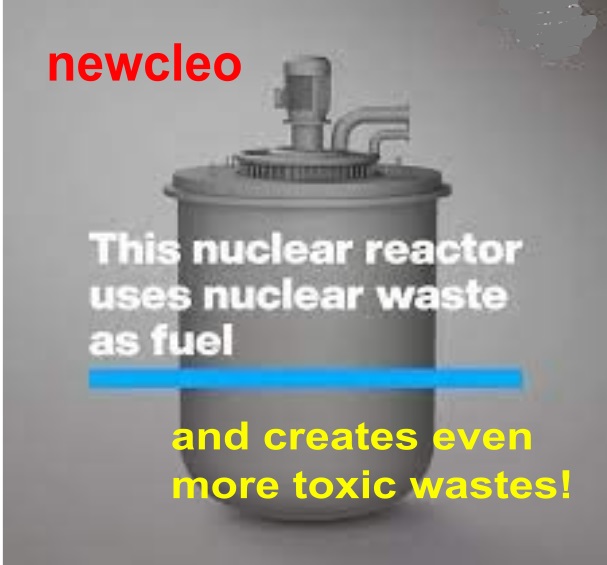
The future of Newcleo, Europe’s largest nuclear startup, is uncertain. According to an audit of its accounts seen by the online business daily La Tribune , there is a ” significant risk “ to the group’s ability to continue operating if it fails to secure new financing within ” twelve months . “
Founded in 2021 by three Italians, the startup is developing a small modular reactor ( SMR ) with lead-cooled fast neutrons. It plans to launch a dedicated Mox fuel plant in Aube in 2030, then install a 30-megawatt demonstrator—the power of a conventional nuclear power plant can reach up to 1,500 megawatts—near Chinon (Indre-et-Loire) in 2031. The young company recorded losses of €103 million in 2024, more than double its losses in 2023 (€45 million).
It spends an average of €13 million per month, mainly to pay its approximately 1,000 European employees, and in April had only €160 million in cash, enough money for a year. It has been trying for several months to secure a new fundraising round, without success so far: private investors are waiting for governments to invest before committing, and France and Italy have still not fulfilled their commitments. In response, Newcleo has already cut 150 jobs in the United Kingdom and plans to reduce its engineering contracts with external service providers.
Reporterre 1st Sept 2025, https://reporterre.net/La-plus-grosse-start-up-europeenne-du-nucleaire-en-difficulte-financiere
Living with the legacy of France’s nuclear weapons testing
Nina Werkhäuser 26 Sept 25, https://www.dw.com/en/living-with-the-legacy-of-frances-nuclear-weapons-testing/a-74131800
France tested nuclear weapons for 30 years in the Pacific. The people of French Polynesia bore the brunt of the testing.
“For 30 years, we were France’s guinea pigs,” says Hinamoeura Morgant-Cross, a young member of parliament from French Polynesia.
This South Pacific archipelago, a French overseas territory that includes Tahiti and is famed for its white beaches, swaying palms, and turquoise waters, is often romanticized as a paradise.
But beneath the idyllic image lies a painful legacy: decades of nuclear testing and its enduring consequences.
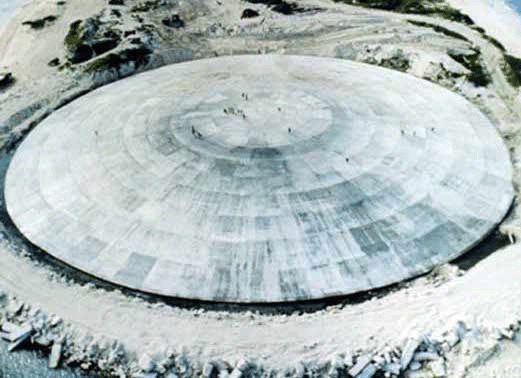
Between 1966 and 1996, the French military detonated 193 nuclear bombs on the remote atolls of Mururoa and Fangataufa. These tests were carried out in Ma’ohi Nui, as the territory is known to its indigenous inhabitants. The first explosion, codenamed Aldebaran, took place on July 2, 1966. It marked the beginning of a long chapter that would leave deep scars on the land and its people.
In 2025, Morgant-Cross journeyed over 15,000 kilometers (more than 9,320 miles) to Berlin to speak at an event in May, hosted by the international medical NGO International Physicians for the Prevention of Nuclear War, or IPPNW. There, she delivered a searing testimony about the long-term consequences of France’s nuclear testing program: disproportionately high cancer rates, children born with deformities and ongoing contamination of the region’s water and soil.
“So they really poisoned the ocean where we found all our food,” says Morgant-Cross who has also addressed the United Nations in New York. “We have been poisoned for the greatness of France, for France to be a state with a nuclear weapon.”
The ‘clean bomb’ myth
The French government at the time knowingly gave false assurances to the islanders about the dangers of the nuclear testing.
Then-President Charles de Gaulle described the French atomic bomb as “green and very clean,” suggesting it was safer or more environmentally friendly than the bombs dropped on Hiroshima and Nagasaki .
Morgant-Cross calls it nothing more than “French propaganda.”
In reality, radioactive clouds drifted across vast parts of the South Pacific and even reached the main island of Tahiti, more than 1,000 kilometers from the test site. Often, residents of nearby islands weren’t informed or evacuated.
No Apology from France
France didn’t cease its nuclear testing program until 1996, following intense domestic and international outcry. Despite the halt, the French government has never formally apologized for the harm caused to its overseas territories.
During a 2021 visit to French Polynesia, President Emmanuel Macron acknowledged France’s role, stating, “The guilt lies in the fact that we conducted these tests.”
“We would not have carried out these experiments in Creuse or Brittany [in mainland France],” he said.
United Nations and various NGOs have observed September 26th as the International Day for the Total Elimination of Nuclear Weapons since 2014. The days is a solemn reminder of the ongoing responsibility borne by nuclear-armed states.
Yet the suffering endured by victims of nuclear testing is in danger of being forgotten. In response, a rising generation from former test sites is refusing to accept the silence of those in power. They are mobilizing across borders, channeling their concern into coordinated action.
Parliamentarian Hinamoeura Morgant-Cross is among those speaking out. While visiting Berlin, she shared her family’s painful legacy: her grandmother was 30 when the nuclear tests began and later developed thyroid cancer as did her mother and aunt.
Morgant-Cross, born in 1988, revealed that both she and her sister also developed cancer, underscoring the generational toll of radioactive exposure.
Cancer can develop generations later
Experts warn that nuclear testing has led to clusters of cancer cases within affected families. Exposure to ionizing radiation can cause genetic mutations, which may be inherited by subsequent generations.
“The insidious nature of ionizing radiation lies in its ability to affect people across generations,” says nuclear weapons expert Jana Baldus of the European Leadership Network (ELN). “It significantly increases the risk of various cancers, particularly lymphoma and leukemia.”
Another consequence of nuclear testing is reproductive harm.
“Women exposed to radiation during the tests have given birth to children with congenital defects and have suffered miscarriages,” Baldus tells DW. “These effects can be passed down through generations, potentially leading to infertility in women.”
For Hinamoeura Morgant-Cross, the multiple cancer diagnoses in her family were a driving force behind her decision to enter politics.
She is now calling on France — the state responsible for the nuclear tests — to provide greater support for her fellow citizens.
“We don’t have the medical care that we should have, that we deserve, because we are 30 years late, in terms of medicines. We don’t have technology like medical scans.” she says. “It really pushed me to go into politics, and to demand that we deserve a better hospital, we deserve better treatment.”
Only a small fraction of those affected have the means to travel to Paris for medical treatment, leaving many without access to adequate care.
Victims face an uphill battle for compensation
In 2010, the French government enacted legislation to provide compensation to victims of nuclear testing. However, each case is assessed individually, and claimants must demonstrate a direct link between their illness and the nuclear tests. That burden of proof is not always easily achieved.
Expert Jana Baldus points out a major hurdle.
“Victims must prove they were physically present at the exact location when the tests occurred — a nearly impossible task decades later.” In addition, compensation is limited to a narrow list of officially recognized illnesses. According to the global coalition ICAN (International Campaign to Abolish Nuclear Weapons), only 417 residents of French Polynesia received compensation between 2010 and July 2024.
For Hinamoeura Morgant-Cross, the fight isn’t only about securing practical support, it’s also about education.
In her homeland, a persistent narrative still portrays the nuclear tests as a so-called clean endeavor that brought prosperity.
“For decades, we had pictures of the nuclear mushroom in all the living rooms of the Tahitian people because we were proud the French decided to choose us,” she recalls. Her mission now is to dismantle what she calls that “colonial mindset” and shed light on the true consequences of the tests.
The future of nuclear testing: risk or rhetoric?
France wasn’t alone in conducting extensive nuclear tests. The Soviet Union, the United States, the United Kingdom and China also carried out large-scale detonations.
In total, more than 2,000 nuclear explosions have taken place. The resulting radioactive fallout not only contaminated the immediate test sites but also contributed to elevated radiation levels across the globe.
Nuclear testing was halted primarily through moratoriums and international negotiations surrounding the Comprehensive Nuclear-Test-Ban Treaty (CTBT).
In recent years, North Korea has been the only country to conduct such tests. Yet amid rising geopolitical tensions, experts warn that a resurgence of nuclear testing remains a real possibility.
A hungrier, poorer and more anxious Iran awaits ‘snapback’ of UN sanctions over its nuclear program.

By ASSOCIATED PRESS, 28 September 2025, https://www.dailymail.co.uk/wires/ap/article-15139177/A-hungrier-poorer-anxious-Iran-awaits-snapback-UN-sanctions-nuclear-program.html
DUBAI, United Arab Emirates (AP) – As Iran’s ailing economy braced Saturday for the reimposition of United Nations sanctions over its nuclear program, it is ordinary people who increasingly find themselves priced out of the food they need to survive and worried about their futures.
Iran’s rial currency already sits at a record low, increasing pressure on food prices and making daily life that much more challenging. That includes meat, rice and other staples of the Iranian dinner table.
Meanwhile, people worry about a new round of fighting between Iran and Israel – as well as potentially the United States – as missile sites struck during the 12-day war in June now appear to be being rebuilt.
Activists fear a rising wave of repression within the Islamic Republic, which already has reportedly executed more people this year than over the past three decades.
Sina, the father of a 12-year-old boy who spoke on condition that only his first name be used for fear of repercussions, said the country has never faced such a challenging time, even during the deprivations of the 1980s Iran-Iraq war and the decades of sanctions that came later.
“For as long as I can remember, we´ve been struggling with economic hardship, and every year it´s worse than the last,” Sina told The Associated Press. “For my generation, it´s always either too late or too early – our dreams are slipping away.”
Early Sunday at 0000 GMT (8 p.m. Eastern), barring any last-minute diplomatic breakthrough, U.N. sanctions on Iran will be reimposed through “snapback,” as the mechanism is called by the diplomats who negotiated it into Iran´s 2015 nuclear deal with world powers. Snapback was designed to be veto-proof at the U.N. Security Council, meaning China and Russia cannot stop it alone, as they have other proposed actions against Tehran in the past.
The measure will again freeze Iranian assets abroad, halt arms deals with Tehran, and penalize any development of Iran´s ballistic missile program, among other measures.
France, Germany and the United Kingdom triggered snapback over Iran further restricting monitoring of its nuclear program and the deadlock over its negotiations with the U.S.
Iran further withdrew from the International Atomic Energy Agency monitoring after Israel´s war on the country in June, which also saw the U.S. strike nuclear sites in the Islamic Republic. Meanwhile, the country still maintains a stockpile of uranium enriched up to 60% purity – a short, technical step away from weapons-grade levels of 90% – that is largely enough to make several atomic bombs, should Tehran choose to rush toward weaponization.
Iran has long insisted its nuclear program is peaceful, though the West and IAEA say Tehran had an organized weapons program up until 2003.
Tehran has further argued that the three European nations shouldn´t be allowed to implement snapback, pointing in part to America´s unilateral withdrawal from the accord in 2018, during the first term of President Donald Trump´s administration.
“The Trump administration appears to think it has a stronger hand post-strikes, and it can wait for Iran to come back to the table,” said Kelsey Davenport, a nuclear expert at the Washington-based Arms Control Association. “Given the knowledge Iran has, given the materials that remain in Iran, that´s a very dangerous assumption.”
Risks also remain for Iran as well, she added: “In the short term, kicking out the IAEA increases the risk of miscalculation. The U.S. or Israel could use the lack of inspections as a pretext for further strikes.”
Iran on Saturday recalled its ambassadors to France, Germany and the U.K. for consultations ahead of the sanctions being reimposed, the state-run IRNA news agency reported.
The aftermath of the June war drove up food prices in Iran, putting already expensive meat out of reach for poorer families.
Iran’s government put overall annual inflation at 34.5% in June, and its Statistical Center reported that the cost of essential food items rose over 50% over the same period. But even that doesn’t reflect what people see at shops. Pinto beans tripled in price in a year, while butter nearly doubled. Rice, a staple, rose more than 80% on average, hitting 100% for premium varieties. Whole chicken is up 26%, while beer and lamb are up 9%.
“Every day I see new higher prices for cheese, milk and butter,” said Sima Taghavi, a mother of two, at a Tehran grocery. “I cannot omit them like fruits and meat from my grocery list because my kids are too young to be deprived.”
The pressure over food and fears about the war resuming have seen more patients heading to psychologists since June, local media in Iran have reported.
“The psychological pressure from the 12-day war on the one hand, and runaway inflation and price hikes on the other, has left society exhausted and unmotivated,” Dr. Sima Ferdowsi, a clinical psychologist and professor at Shahid Beheshti University, told the Hamshahri newspaper in an interview published in July.
“If the economic situation continues like this, it will have serious social and moral consequences,” she warned, with the newspaper noting “people may do things they would never think of doing in normal circumstances to survive.”
Iran has faced multiple nationwide protests in recent years, fueled by anger over the economy, demands for women’s rights and calls for the country’s theocracy to change. The most recent came in 2022 over the death of Mahsa Amini, a young woman who died after being detained by police allegedly for not wearing her hijab, or headscarf, to their liking.
In response to those protests and the June war, Iran has been putting prisoners to death at a pace unseen since 1988, when it executed thousands at the end of the Iran-Iraq war. The Oslo-based group Iran Human Rights and the Washington-based Abdorrahman Boroumand Center for Human Rights in Iran put the number of people executed in 2025 at over 1,000, noting the number could be higher as Iran does not report on each execution.
“Political and civic space in Iran has shrunk to nothing, and outside Iran, civil society activists and dissidents face transnational repression,” the center warned. “The Iranian people, millions of whom aspire to more than a closed and brutal theocracy, have tried every option within their reach. Their leaders have not.”
Vahdat reported from Tehran, Iran. Associated Press writer Nasser Karimi in Tehran contributed to this report. ___
UN Security Council rejects Russia and China’s last-ditch effort to delay sanctions on Iran
By FARNOUSH AMIRI, STEPHANIE LIECHTENSTEIN and EDITH M. LEDERER, September 27, 2025
UNITED NATIONS (AP) — The U.N. Security Council on Friday rejected a last-ditch effort to delay reimposing sanctions on Iran over its nuclear program, a decision that the country’s president immediately called “unfair, unjust and illegal.” The decision on the “snapback sanctions” came a day before the deadline and after Western countries claimed weeks of meetings failed to result in a concrete agreement.
The resolution put forth by Russia and China — Iran’s most powerful and closest allies on the 15-member council — failed to garner support from the nine countries required to halt the series of U.N. sanctions from taking effect Saturday, as outlined in Iran’s 2015 nuclear deal with world powers. The vote was 4-9 with two abstentions.
“We had hoped that European colleagues and the U.S. would think twice, and they would opt for the path of diplomacy and dialogue instead of their clumsy blackmail, which merely results in escalation of the situation in the region,” Dmitry Polyanskiy, the deputy Russian ambassador to the U.N., said during the meeting.
Shortly after the vote, Iranian President Masoud Pezeshkian spoke at a meeting with journalists and Iran experts on the sidelines of the U.N. General Assembly, a day before the deadline for the sanctions to kick in. Pezeshkian said that despite previous threats, Iran won’t withdraw from the Nuclear Nonproliferation Treaty like North Korea, which abandoned the treaty in 2003 and then built atomic weapons.
Barring an eleventh-hour deal, the reinstatement of sanctions — triggered by Britain, France and Germany — will once again freeze Iranian assets abroad, halt arms deals with Tehran and penalize any development of Iran’s ballistic missile program, among other measures. That will further squeeze the country’s reeling economy.
The move is expected to heighten already magnified tensions between Iran and the West. But despite previous threats to withdraw from the Nuclear Nonproliferation Treaty, Pezeshkian said in an interview with a group of reporters that the country had no intention to do so right now. North Korea, which abandoned the treaty in 2003, went on to build atomic weapons.
Four countries — China, Russia, Pakistan and Algeria — once again supported giving Iran more time to negotiate with the European countries, known as the E3, and the United States, which unilaterally withdrew from the accord with world powers in 2018 during Trump’s first administration…………………………………………………………………………………………………………………
Barring an eleventh-hour deal, the reinstatement of sanctions — triggered by Britain, France and Germany — will once again freeze Iranian assets abroad, halt arms deals with Tehran and penalize any development of Iran’s ballistic missile program, among other measures. That will further squeeze the country’s reeling economy.https://apnews.com/article/iran-snapback-sanctions-united-nations-nuclear-program-europe-1f1f6e1781bdb6b27f8bfad2661db4c5
1 This Month
19 February – VIRTUAL EVENT-Decision Time: AI and Our Nuclear Arsenal
12:45 p.m. Central / 1:45 p.m. Eastern
To see nuclear-related stories in greater depth and intensity – go to https://nuclearinformation.wordpress.com
-
Archives
- February 2026 (192)
- January 2026 (308)
- December 2025 (358)
- November 2025 (359)
- October 2025 (376)
- September 2025 (258)
- August 2025 (319)
- July 2025 (230)
- June 2025 (348)
- May 2025 (261)
- April 2025 (305)
- March 2025 (319)
-
Categories
- 1
- 1 NUCLEAR ISSUES
- business and costs
- climate change
- culture and arts
- ENERGY
- environment
- health
- history
- indigenous issues
- Legal
- marketing of nuclear
- media
- opposition to nuclear
- PERSONAL STORIES
- politics
- politics international
- Religion and ethics
- safety
- secrets,lies and civil liberties
- spinbuster
- technology
- Uranium
- wastes
- weapons and war
- Women
- 2 WORLD
- ACTION
- AFRICA
- Atrocities
- AUSTRALIA
- Christina's notes
- Christina's themes
- culture and arts
- Events
- Fuk 2022
- Fuk 2023
- Fukushima 2017
- Fukushima 2018
- fukushima 2019
- Fukushima 2020
- Fukushima 2021
- general
- global warming
- Humour (God we need it)
- Nuclear
- RARE EARTHS
- Reference
- resources – print
- Resources -audiovicual
- Weekly Newsletter
- World
- World Nuclear
- YouTube
-
RSS
Entries RSS
Comments RSS
 nuclear-news