“Get the Hell Off”: The Indigenous Fight to Stop a Uranium Mine in the Black Hills

An unidentified member of AIM Native American woman sits with her rifle at ready on steps of building in Wounded Knee, South Dakota, March 2, 1973. Indians still have control of town having seized it on Tuesday. Eleven hostages they had taken were finally released. (AP Photo/Jim Mone)
Get the Hell Off”: The Indigenous Fight to Stop a Uranium Mine in the Black Hills
Can the Lakota win a “paper war” to save their sacred sites?
Mother Jones, BY DELILAH FRIEDLER; PHOTOS BY DANNY WILCOX FRAZIER, MARCH/APRIL 2020 ISSUE, Regina Brave remembers the moment the first viral picture of her was taken. It was 1973, and 32-year-old Brave had taken up arms in a standoff between federal marshals and militant Indigenous activists in Wounded Knee, South Dakota, on the Pine Ridge Indian Reservation. Brave had been assigned to guard a bunker on the front lines and was holding a rifle when a reporter leaped from a car to snap her photo. She remembers thinking that an image of an armed woman would never make the papers—“It was a man’s world,” she says—but the bespectacled Brave, in a peacoat with hair pulled back, was on front pages across the country the following Sunday……..
In October, Brave spoke at Magpie Buffalo Organizing’s inaugural “No Uranium in Treaty Territory” summit, which offered a crash course on tribal sovereignty. The activists are closely tracking the various Keystone XL permits, which the Rosebud Sioux Tribe is challenging in court as a treaty violation. As the threat of both uranium and gold mining looms, there’s talk of occupying land in the Black Hills, as the American Indian Movement did in 1981.
Beyond Nuclear opposes Holtec nuclear waste plan: the Nuclear Regulatory Commission is not above the law
 Group Plans To Fight Effort To Build Nuclear Waste Dump In New Mexico https://www.krwg.org/post/group-plans-fight-effort-build-nuclear-waste-dump-new-mexico
Beyond Nuclear has challenged the NRC’s authority to approve Holtec’s license application because it contemplates that the U.S. Department of Energy (DOE) may become the owner of the irradiated reactor fuel. The federal Nuclear Waste Policy Act (NWPA) prohibits federal ownership of spent fuel, however, unless and until a federal repository for permanent disposal is operating.
The NRC Commissioners acknowledged that Federal law prohibits federally-sponsored storage of irradiated reactor fuel unless and until a repository for permanent disposal is in operation. Nevertheless the NRC threw out Beyond Nuclear’s legal challenge to the project on the ground that Holtec could be depended on not to implement the unlawful provision if the license were granted.
The Commissioners’ decision affirms an earlier ruling by the NRC’s Atomic Safety and Licensing Board that the storage facility may be licensed despite the illegal license terms contemplating federal ownership of the irradiated fuel. The Licensing Board accepted arguments by Holtec and the NRC’s technical staff that the license containing illegal provisions could be approved as long as it also contained a provision that would allow private ownership of the spent fuel.
Mindy Goldstein, a lawyer for Beyond Nuclear, stated, “the NRC’s decision flagrantly violates the federal Administrative Procedure Act (APA), which prohibits an agency from acting contrary to the law as issued by Congress and signed by the President.” Goldstein also stated that “the Commission lacks a legal or logical basis for its rationale that the illegal provisions could be ignored in favor of other provisions that are legal, or that an illegal license could be issued in ‘hopes’ that the law might change in the future. The APA gives the NRC no excuse to ignore the mandates of federal law.”
Diane Curran, also a lawyer for Beyond Nuclear, said the group will pursue a federal court appeal of the NRC decision. “Our claim is simple,” she declared. “The NRC is not above the law.”
Kevin Kamps, radioactive waste specialist for Beyond Nuclear, called the federal Nuclear Waste Policy Act “the public’s best protection against an interim storage facility becoming a de facto permanent, national radioactive waste dump at the surface of the Earth.” According to Kamps, “Congress knew, in passing the NWPA, that the only safe long-term strategy for care of irradiated reactor fuel is to place it in a permanent repository for deep geologic isolation.
Congress acted wisely in refusing to allow nuclear reactor licensees to transfer ownership of their irradiated reactor fuel to the DOE until a repository was up and running. The carefully crafted Nuclear Waste Policy Act thus protects a state like New Mexico from being railroaded by the powerful nuclear industry, its friends in the federal government, and other states looking to off-load their mountain of forever deadly high-level radioactive waste.”
Kamps added: “A deep geologic repository for permanent disposal should meet a long list of stringent criteria. These include legality, environmental justice, consent-based siting, scientific suitability, mitigation of transport risks, regional equity, intergenerational equity, and non-proliferation, including a ban on reprocessing. This is why a coalition of more than a thousand environmental, environmental justice, and public interest organizations, representing all 50 states, have opposed the Yucca Mountain dump targeted at Western Shoshone Indian land in Nevada for 33 years.”
“On behalf of our members and supporters in New Mexico, and across the country along the road, rail, and waterway routes in most states, that would be used to haul the high risk, high-level radioactive waste out West, we will appeal the NRC Commissioners’ bad ruling to the federal court,” Kamps added.
Beyond Nuclear is a 501(c)(3) nonprofit membership organization. Beyond Nuclear aims to educate and activate the public about the connections between nuclear power and nuclear weapons and the need to abolish both to safeguard our future. Beyond Nuclear advocates for an energy future that is sustainable, benign and democratic. The Beyond Nuclear team works with diverse partners and allies to provide the public, government officials, and the media with the critical information necessary to move humanity toward a world beyond nuclear. Beyond Nuclear: 7304 Carroll Avenue, #182, Takoma Park, MD 20912. Info@beyondnuclear.org. www.beyondnuclear.org.
Taiwan environmentalists mark Chernobyl nuclear disaster anniversary, call for renewables not nuclear
Anniversary of Chernobyl sees anti-nuclear appeals. https://www.taipeitimes.com/News/taiwan/archives/2020/04/28/2003735431
Two environmental groups issued online statements over the weekend to mark the 34th anniversary of the Chernobyl nuclear disaster on Sunday and call for the abolition of nuclear power in Taiwan.
The government should bolster safety mechanisms at the nation’s nuclear power plants, safely handle nuclear waste and educate the public on the risks of nuclear energy ahead of a referendum next year on whether to resume work on the mothballed Fourth Nuclear Power Plant, the National Nuclear Abolition Action Platform wrote on Facebook on Saturday.
The Chernobyl nuclear power plant disaster, which was caused by an explosion at the plant’s No. 4 reactor during maintenance, resulted in several thousand deaths, and the area around the plant would remain uninhabitable long into the future, it said.
The anniversary of the 1986 disaster should highlight the dangers of using nuclear power, it added.
Taiwan’s three operating nuclear power plants have been in operation for nearly 40 years, the Taiwan Environmental Protection Union wrote on Facebook on Sunday.
“Can the plants still safely operate, or should they be decommissioned? Policies on the plants are a major compromise between power needs and hopes for decommissioning,” it said.
Some people are concerned that the plants could be contaminating the air or the water supply, it added.
Radioactive waste from the 2011 Fukushima Dai-ichi nuclear power plant disaster in Japan has still not been completely cleaned up, showing that coping with nuclear disasters is beyond human capability, the union said.
The dangers of nuclear power — as evidenced by the atomic bombs used in World War II, and the Chernobyl and Fukushima disasters — should not be overlooked in favor of the economy’s demand for power, it said.
The government should focus its efforts on energy transformation and push for the development of renewable energy, it added.
There is a pressing need to combat climate change, but nuclear power is not a viable alternative, the union said.
“There is a cheaper, faster and safer option to reduce carbon emissions, and that is for the government to put all of its effort into energy efficiency and the development of sustainable energy,” it said.
Piscataway Community Energy Aggregation (PCEA) program DOES NOT INCLUDE NUCLEAR ENERGY

 Clearing the Air on the PCEA: Nuclear power NOT included By ANN BASTIAN
https://www.tapinto.net/towns/piscataway/sections/green/articles/clearing-the-air-on-the-pcea-nuclear-power-not-included The Piscataway Community Energy Aggregation (PCEA) program, just rolled out for township residents, does NOT include nuclear power as one of its “renewable energy” sources. The referendum voters passed last November required that the PCEA use only Class 1 Renewables: wind, solar, geothermal, hydro and other sustainable sources.
We passed the PCEA in order to move our town and state away from dirty power, from the air pollution of fossil fuels and the radioactive wastes of nuclear power. Bulk purchasing as a community also gives us cost savings, along the way to addressing the climate crisis.
nd that’s what we’re getting: a win-win. Residents can access 30% clean electricity by automatically staying in the basic plan, with a savings on their electric bill. If residents want to “opt UP”, they can choose to go immediately to 50% Class 1 Renewables or to 100% Class 1 Renewables, at reasonable rates. The whole town will move forward in stages, reaching 100% clean renewables in 2035. Individual households can also opt out at any time, and businesses can opt in.
Still, there may be some confusion about how the PCEA will work:
1) SOURCING: The energy provider, EnergyHarbor, is a diversified power company, with some nuclear and fossil fuel holdings. But its PCEA contract with the Township is only for clean energy.
(2) SHADE: The Mayor has always knocked the referendum, which let voters decide town policy, not the insiders. OK, the people have spoken, 64%-36%, let’s move on.
(3) INFORMATION: The town website, which is hard to navigate for basic information, is nearly impossible to navigate for PCEA facts and options, including the choice to opt out. We do need to inform ourselves. Here’s an upcoming forum for residents who have questions:
his Wednesday, April 22 at 6 pm: the town’s PCEA administrator, Good Energy LP, is holding an online Q & A session: https://www.tapinto.net/towns/piscataway/events/facebook-live-piscataway-community-energy-aggreg
And Piscataway Progressive Democrats, who endorsed the PCEA referendum, did a special segment explaining the PCEA and your PSE&G bill last Saturday, April 18:
https://www.facebook.com/pwayprogressivedems/?epa=SEARCH_BOX
Let’s celebrate this Earth Day by making Piscataway cleaner and greener!
Formal petition to close Fermi 2 nuclear reactor in Michigan, from coalition of watchdog groups
Groups that include Beyond Nuclear and Don’t Waste Michigan have asked the Nuclear Regulatory Commission (NRC) to halt reopening within the next week or so of Fermi 2 — currently shut down for routine scheduled maintenance.
The petition was filed Thursday and requires an NRC review board to make an emergency decision on the application over the next week on whether the groups have valid concerns or that Fermi 2 be allowed to resume operations when its current outage for “refuelling” is completed.
“It is a very high-risk situation,” said Michael Keegan of Don’t Waste Michigan. “It is dangerous since the plant, should it reopen, will be operating in a compromised position. They have got a problem that could be a major nuclear accident.”
A spokesman for DTE, which owns and operates the nuclear generating station, said Sunday that proper maintenance and repairs are being conducted and that the facility is safe.
Thousands of residents in Amherstburg and Boblo Island are among those at greatest risk of a nuclear accident at Fermi — which sits across Lake Erie — but there are also potential health risks for thousands more stretching through LaSalle and into Windsor, as well as Michigan, should a Fermi 2 incident occur.
The petition calls on NRC to take enforcement action to inspect Fermi 2 and make full repairs to what’s known as the “torus,” a donut-type structure at the base of the reactor. ……. https://windsorstar.com/news/local-news/watchdog-groups-file-safety-concerns-on-fermi-2-nuclear-reactor/
Ordinary people can beat the nuclear establishment: it’s been done before
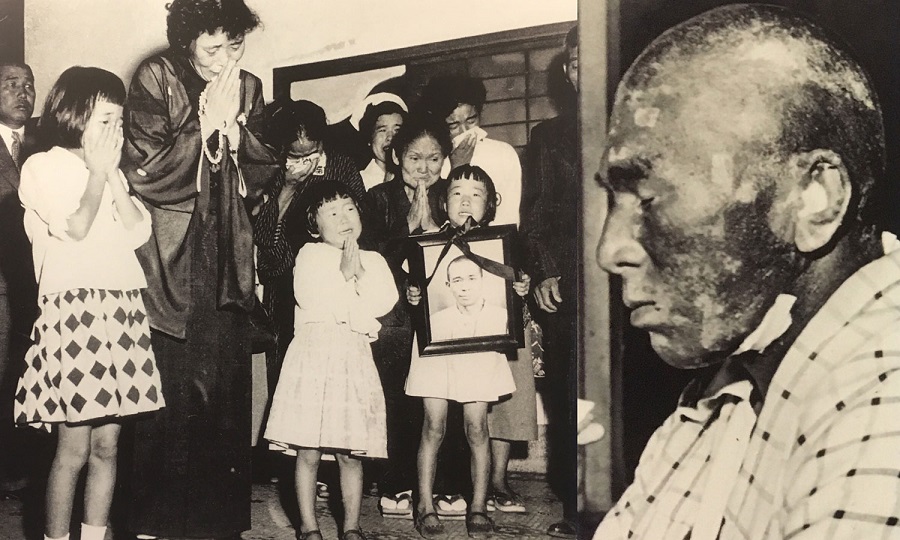
Housewives and Fishmongers Defeat the U.S. Nuclear Establishment https://allthingsnuclear.org/gkulacki/housewives-and-fishmongers-defeat-the-u-s-nuclear-establishment
It was the height of the McCarthy era. The nuclear arms race was just beginning and opposing it was called un-American. But a crew of Japanese fishermen and a small group of Japanese housewives would change the debate. Their signature campaigns set off a chain reaction of global awareness that eventually led the United States to sign an international agreement banning nuclear weapons tests in the atmosphere, under water, and in outer space.
Castle Bravo
On March 1, 1954 the United States tested a nuclear weapon 1,000 times more powerful than the bomb that destroyed Hiroshima. The blast over the Bikini Atoll in the Marshall Islands left a crater on the ocean floor 6,500 feet wide and 250 feet deep. Radioactive debris from the blast rained down over a 7,000 square mile area.
This wasn’t the first U.S. nuclear weapon tested in the Marshall Islands—an impoverished nation of scattered coral atolls close to the equator in the central Pacific Ocean—nor would it be the last. Between 1946 and 1958 the United States conducted 67 explosive nuclear weapons tests there.. The United States took control of the islands from Japan during WWII and administered them as part of a Trust Territory of the Pacific under a mandate from the United Nations until 1986.
It’s hard to imagine a more egregious betrayal of that trust. Several hours after the test—code named Castle Bravo—radioactive debris began falling on the unsuspecting inhabitants of the Rongelap atoll 150 km to the east of the crater. Children ran out to play in the snow-like powder that covered the island. Some ate it. The United States waited two days before evacuating the endangered islanders to a safer atoll more than 650km to the southeast.
Lucky dragon
A Japanese fishing boat called the Daigo Fukuryū Maru—the Lucky Dragon No. 5—got caught in a dirty rain of radioactive fallout from the Castle Bravo test. It pelted the fisherman for hours, stuck to their exposed skin and got into their eyes, noses and mouths. By the time they returned to Japan two weeks later their skin was burned, their hair was falling out, and their gums were bleeding. Six months after returning home, Aikichi Kuboyama, the ship’s radio operator, died from his exposure.
The Japanese media was fascinated and appalled by their story, which was reported around the world. Memories of the horrors of Hiroshima and Nagasaki were revived and amplified. But this time the Japanese public, and people throughout Asia, began to realize the potential danger was not confined to the site of the explosion. They could all become victims of the atomic bomb. Indonesia’s President Suharto put it this way in his opening address to the first ever international conference of the newly independent nations of Africa and Asia in the city of Bandung in April 1955:
“The food that we eat, the water that we drink, yes, even the very air that we breathe can be contaminated by poisons originating from thousands of miles away. And it could be that, even if we ourselves escaped lightly, the unborn generations of our children would bear on their distorted bodies the marks of our failure to control the forces which have been released on the world.”
The Suganami appeal
Japanese fishmongers saw their businesses crippled by widespread public fear of eating “A-bombed tuna.” Five-hundred of them met in Tokyo’s famous Tsukiji Market and decided to launch a signature campaign against atomic and hydrogen bombs. Their efforts inspired the Suganami City Assembly to pass a supportive resolution.
Six months earlier a group of housewives had begun meeting in the newly opened Suganami Community Center to read books and discuss social issues, including the causes of war, with the center’s part-time director, Kaoru Yasui. After the Castle Bravo test, they joined with neighbors to form the Suganami Council and launched an appeal to the people of Japan, and the world, to ban hydrogen bombs.
The housewives, fishmongers and many other groups who collected signatures were not part of an organized movement. They were ordinary people. Within a month, 250,000 had signed. By the end of 1955 it was 20 million. According to some accounts, nearly a third of the population of Japan eventually signed the appeal.
The notoriety of the Japanese campaign, along with increased scientific investigation of the distribution and consequences of radioactive fallout, created global public health concerns and inspired people to press the nuclear weapons states to stop testing. The U.S. Joint Chiefs of Staff and the U.S. nuclear weapons laboratories were strongly opposed to any agreement on testing. But President Eisenhower joined the Soviets in a testing moratorium in 1958 and negotiations on a treaty began in Geneva. This eventually led to the entry into force the Partial Test Ban Treaty in 1963, which banned nuclear testing in the atmosphere as well as underwater and in space.
This year the survivors of the atomic bombings of Hiroshima and Nagasaki 75 years ago have launched an appeal to ban nuclear weapons. You can do your part to advance the process of nuclear disarmament by lending your signature to the cause.
277,700 Vietnamese support “Appeal of the Hibakusha ” – call to eliminate nuclear weapons
 Over 277,700 signatures collected in Hanoi supporting elimination of nuclear weapons https://en.vietnamplus.vn/over-277700-signatures-collected-in-hanoi-supporting-elimination-of-nuclear-weapons/171278.vnp Over 277,700 signatures collected in Hanoi supporting elimination of nuclear weapons https://en.vietnamplus.vn/over-277700-signatures-collected-in-hanoi-supporting-elimination-of-nuclear-weapons/171278.vnp
Hanoi (VNA) – Over 277,700 signatures have been collected in Hanoi in the first phase of a campaign called “Appeal of the Hibakusha (atomic bomb survivors)”, which calls for the elimination of nuclear weapons. VNA Monday, April 06, 2020
Collected by the Hanoi Union of Friendship Organisations (HUFO), the signatures have been handed over to the Vietnam Peace Committee (VPC), HUFO said on April 6. According to HUFO Vice President Tran Thi Phuong and Hanoi Peace Committee President Tran Thi Ngoc Thanh, the signatures were collected from people at government offices and residential zones as well as at bus stations and public spaces around Hanoi. They expect to gain more signatures from students in the capital during subsequent phases, when local schools and universities re-open after the COVID-19 pandemic ends. VPC Secretary General Dong Huy Vuong spoke highly of HUFO and the Hanoi Peace Committee’s contributions to the campaign./.
|
|
Protesters call for Capenhurst Urenco nuclear plant to be closed down
|
Protesters call for Capenhurst nuclear plant to be closed down https://www.cheshire-live.co.uk/news/chester-cheshire-news/protesters-call-capenhurst-nuclear-plant-17873816 Demonstration held as Urenco celebrated its 50th birthday By
David HolmesChief reporter 6 MAR 2020
Urenco’s nuclear plant at Capenhurst this week celebrated 50 years since the government-owned international company was founded . But outside protesters lamented the damage to human health and the environment caused by disasters like Chernobyl in Ukraine and Fukushima in Japan. Close Capenhurst campaigners argued the sector was unsafe from uranium mining to nuclear power production and the transportation and storage of highly radioactive waste.
Concerns have been raised about the Urenco plant itself which enriches uranium for use as fuel in nuclear reactors with the depleted uranium – a low level radioactive and toxic byproduct of the process – stored on site. Marianne Birkby, an anti-nuclear campaigner from Cumbria, speaking at the small demonstration outside the plant, said: “The start of the nuclear fuel cycle is here and where it ends up is Sellafield in Cumbria and every day, virtually, there’s nuclear waste transported on the roads, rail, sea and nobody wants the waste. “It’s all very well for Urenco to say ‘enriching the future’ and how fantastic it all is but nobody wants nuclear waste at the end of the day. And nuclear waste is the product of nuclear power.” Japanese campaigner Kaori Mikata-Pralat read out a statement on behalf of a group pursuing legal action against the Tokyo Electric Power Company over the 2011 Fukushima disaster when a tsunami swamped the plant leading to the release of radioactive contamination. Explaining that Fukushima had alerted her to the dangers, she told CheshireLive: “I wasn’t quite aware of the scale of the problem of this nuclear industry.” She has met victims of nuclear accidents, adding: “What they want is this tragedy should not be repeated any where in the world. Fukushima people suffered a lot.” Kaori said the ocean had also been poisoned. Even nuclear power stations functioning normally affected the eco-system as sea and river water was used to cool the reactors with the hot water put back, harming fish and plant life. Pointing at the sun, fellow protester Philip Gilligan said: “That nuclear power station up there is supplying the energy. It’s the only nuclear power station we want. So the energy coming to earth could easily be used with zero carbon output and zero nuclear. The problem is we need a bomb. And it’s hidden in statements like ‘energy as cheap as water’ which was current when Sellafield went critical in the ‘70s.” Urenco highlights the alleged green credentials of nuclear because there are no CO2 emissions during energy generation but the protesters claim the carbon footprint is ‘enormous’ after taking into account uranium mining, transport and the manufacture of thousands of tons of concrete for the installations. But what of the job losses if plants like Capenhurst, which employs 550 people, were closed? The campaigners argue the Government should reskill the workforce to produce renewable technology like solar panels. |
Anti nuclear activists break into France’s Tricastin nuclear station
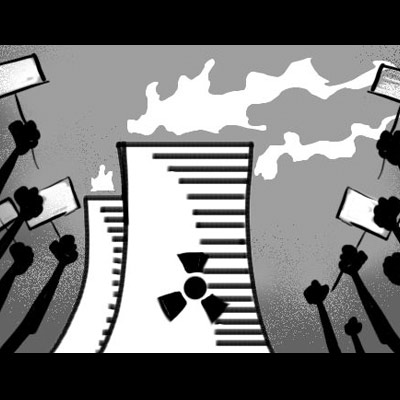 Reuters 21st Feb 2020. Activists from Greenpeace broke into the Tricastin nuclear power plant in southern France in order to demand its closure, the environmental pressure group said on Friday. “Some 50 Greenpeace activists gained access to several points at the Tricastin nuclear power plant this morning,” said Greenpeace spokeswoman Cecile Genot. “We are protesting and drawing attention to an aging nuclear power plant that is dangerous and should be shut down.” Officials for French state-controlled power group EDF, which runs Tricastin, had no immediate comment on the situation.
 |
ReplyForward
|
Bruce County, Ontario, protest against nuclear waste dump plan
 MillerVideographer@ScottMillerCTV Contact
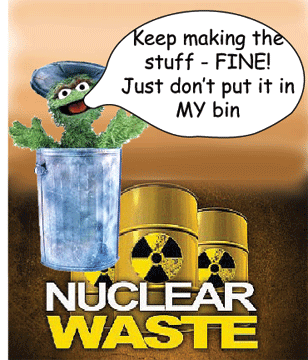
https://london.ctvnews.ca/nuclear-tanks-no-thanks-say-bruce-county-protesters-1.4820155 Thursday, February 20, 2020 LONDON, ONT. — About 40 Bruce County residents protested outside Bruce County council chambers in Walkerton this morning.They’re protesting plans to bury Canada’s used nuclear fuel under 1300 acres of farmland north of Teeswater. South Bruce is one of two communities in Canada left in the running to host the country’s high level nuclear waste.
A 1300 acre site just north of Teeswater has been identified as a potential underground site for the multi-billion dollar project, that would house approximately 5.2 million used fuel bundles, that remain dangerously radioactive for hundreds of thousands of years.
The Nuclear Waste Management Organization says they’ll pick one site between South Bruce and Ignace, in Northern Ontario, by 2023.
Michelle Stein lives near the proposed site in South Bruce. She organized today’s protest. “Burying your problems to get them out of site is never the answer. I don’t want this underground mess to be the heritage that I leave for my children and grandchildren.”
Saugeen Shores Mayor Luke Charbonneau is the one bringing forward today’s motion to support DGR’s to store nuclear waste. “There’s an international scientific consensus that the best way to store waste materials from nuclear power production is through passive isolation in a Deep Geological Repository.”
The protest comes as Bruce County council debates a motion to reinforce its support for a permanent solution to the country’s nuclear waste, specifically the Deep Geological Repository model that encases the waste in copper containers, encased in clay “buffer boxes”.
Estonia, Latvia and Lithuania oppose energy imports from a Belarusian nuclear power plant
|
Emerging Europe 13th Feb 2020. Estonia, Latvia and Lithuania are joining forces to oppose energy imports from a Belarusian nuclear power plant (NPP) Lithuania has declared a national security threat. The governments of the three Baltic nations have announced that they will sign a declaration of intent to oppose electricity purchases from Russian-built NPP at Astravets near the Lithuanian border.
We are pleased to be moving closer to a common position,”
Lithuania’s prime minister Saulius Skvernelis told reporters, adding that the three Baltic nations and the European Commission will work on finding “an appropriate mechanism controlling the origin of electricity entering our networks from third countries”.https://emerging-europe.com/news/baltic-states-will-not-buy-energy-from-belarus-npp/ |
|
Indigenous community votes down proposed nuclear waste bunker near Lake Huron,
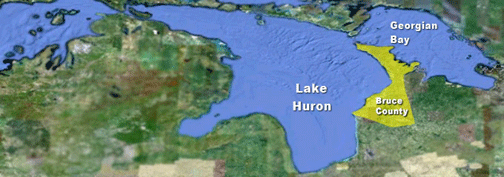
‘We were not consulted when the nuclear industry was established in our territory’,https://nationalpost.com/news/canada/indigenous-community-votes-down-proposed-nuclear-waste-bunker-near-lake-huron The Canadian Press, Colin Perkel. February 1, 2020
TORONTO — An Indigenous community has overwhelmingly rejected a proposed underground storage facility for nuclear waste near Lake Huron, likely spelling the end for a multibillion-dollar, politically fraught project years in the making.
After a year of consultations and days of voting, the 4,500-member Saugeen Ojibway Nation announced late Friday that 85 per cent of those casting ballots had said no to accepting a deep geologic repository at the Bruce nuclear power plant near Kincardine, Ont.
“We were not consulted when the nuclear industry was established in our territory,” SON said in a statement. “Over the past 40 years, nuclear power generation in Anishnaabekiing has had many impacts on our communities, and our land and waters.”
The province’s giant utility, Ontario Power Generation, had wanted to build the repository 680 metres underground about 1.2 kilometres from Lake Huron as permanent storage for low and intermediate-level radioactive waste. The project was tentatively approved in May 2015.
In August 2017, then-environment minister Catherine McKenna paused the process to ensure buy-in from Indigenous people in the area
While Kincardine was a “willing host,” the relative proximity of the proposed bunker to the lake sparked a backlash elsewhere in Canada and the United States. Politicians, environmentalists and scores of communities expressed opposition.
Successive federal governments have withheld final approval. In August 2017, then-environment minister Catherine McKenna paused the process — the last in a string of delays for the project — to ensure buy-in from Indigenous people in the area.
The generating company, which insisted the stable bedrock would safely contain the waste, items such as contaminated reactor components and mops, said it respected SON’s decision.
“OPG will explore other options and will engage with key stakeholders to develop an alternate site-selection process,” Ken Hartwick, head of OPG, said in a statement shortly after the vote was announced. “Any new process would include engagement with Indigenous peoples as well as interested municipalities.”
The apparent end of the road for the project comes shortly after the federally-mandated Nuclear Waste Management Organization said it was making progress toward choosing a site for storing millions of far more toxic spent nuclear fuel bundles.
The organization, comprising several nuclear plant operators, said it had struck deals with landowners in South Bruce — about 30 minutes east of Kincardine — that will allow it to begin site tests. The only other site under consideration for high-level waste storage is in Ignace in northern Ontario.
Despite the rejection of OPG’s proposal, the utility said it planned to continue a relationship “based on mutual respect, collaboration and trust” with the Saugeen Ojibway Nation, which comprises the Chippewas of Saugeen First Nation and the Chippewas of Nawash Unceded First Nation.
Chippewas of Saugeen Chief Lester Anoquot called the vote — 170 for and 1,058 against — a “historic milestone and momentous victory” for the community.
“We worked for many years for our right to exercise jurisdiction in our territory and the free, prior and informed consent of our people to be recognized,” Anoquot said. “We didn’t ask for this waste to be created and stored in our territory.”
At the same time, Anoquot said, the vote showed the need for a new solution for the hazardous waste, a process he said could take many years.
Ontario depends heavily on nuclear power for its electricity but a permanent storage solution for the increasing amounts of waste now stored above ground has proven elusive. The radioactive material, particular from used fuel, remains highly toxic for centuries.
The utility insists exhaustive science shows a repository in stable and impermeable rock offers the best solution.
“Permanent and safe disposal is the right thing to do for future generations,” Hartwick said.
The Japanese want to phase out nuclear power
|
No to nuclear: Japan wants reactors phased out, post-Fukushima
Japan is less reliant on atomic energy, but concerns are growing about its return to climate-damaging fossil fuels. Aljazeera, by Kelly Olsen -20 Dec 19, Tokyo, Japan – At the end of a decade in which northeastern Japan was devastated by a tsunami that triggered a nuclear disaster at Fukushima, atomic energy looks unlikely to make a comeback. In the nearly nine years following the world’s worst nuclear accident since Chernobyl, the country’s reliance on atomic power for electricity generation has plummeted to between 3 and 5 percent from about 30 percent before the disaster, according to the Tokyo-based Citizens’ Nuclear Information Center. And despite a period of uncertainty in the immediate aftermath of the meltdowns triggered when Fukushima’s cooling systems were overwhelmed by the tsunami created by the magnitude 9.0 undersea earthquake, the world’s third-largest economy has shown it can function with radically less nuclear power. The public mood turned dramatically after Fukushima and the national trauma that ensued and combined with the increasing costs from aligning ageing plants with stringent post-disaster safety requirements, it is unlikely the nuclear industry will return to previous levels, according to experts, even as the government envisions nuclear power accounting for about 20-22 percent of electricity generation in 2030. “It is obvious that it is very difficult to meet this target,” said Hajime Matsukubo, secretary-general of the Citizens’ Nuclear Information Center. And while experts say while the anti-nuclear movement may seem to have quietened down, anti-nuclear feeling is firmly entrenched. ‘They say no’“Japanese people’s sentiment (has) changed after Fukushima Daiichi and it is continuing until now,” said Matsukubo, whose non-profit organisation was established in 1975 by concerned atomic scientists to gather and publicise nuclear information and raise public awareness on the industry. He said that even if people appear not as focused, if they are asked pointedly if they agree with nuclear power: “They say no.” Before Fukushima, Japan had 54 operational reactors and for a brief time in the accident’s aftermath, not a single one was in operation. So far, nine have been restarted and authorities are considering the cases of a dozen more, according to Ministry of Economy, Trade and Industry figures. A further 24 are either under decommissioning or lined up for it….. Safety costsJapan’s mass-circulation newspaper Mainichi Shimbun in an editorial after the Onagawa decision cited the newspaper’s own research that found 11 top power suppliers had spent in excess of 5 trillion yen ($45.7bn) on nuclear safety since Fukushima. “As costs balloon, it is becoming increasingly difficult, even absurd, for the government and power companies to maintain the argument that nuclear power is ‘cheap’,” the editorial said…….. “There’s a sort of built-in time limit to how long the industry as a whole can continue,” said Alexander Brown, currently a Japan Society for the Promotion of Science international research fellow at Japan Women’s University. He also emphasised, however, that Japan’s turn against nuclear energy had also coincided with a key change in its domestic economy; less industrially robust and therefore not as hungry for energy as before. “Why have the lights stayed on,” Brown asked rhetorically. “One is, yes, increased fossil fuel use, but another is there’s just less demand than there was in the peak time of manufacturing onshore in Japan.” Brown calls that an “uncomfortable truth” for much of Japan’s ruling establishment – including the prime minister and his eponymous “Abenomics” economic revitalisation programme – which clings to a belief in a model of vigorous growth. “And I think one of the amazing things when I look at the anti-nuclear movement, to me, was it was full of people looking at what are other ways that we can live,” he said. “How can we embrace other values other than high consumption, high pollution, extreme overwork and look at things like de-growth economics.” https://www.aljazeera.com/news/2019/12/japanese-turn-nuclear-decade-wrought-fukushima-191220000003532.html |
|
Maryland’s Back From the Brink” resolution to support the U.N. Nuclear Ban Treaty
 The Montgomery County Council has joined Baltimore and Washington, D.C. with its own “Back From the Brink” resolution to support the U.N. Nuclear Ban Treaty, alongside the U.S. Conference of Mayors and 40 municipalities and state legislatures from California to Maine calling on the Trump Administration and Congress to exercise global leadership in preventing nuclear war by:
- Renouncing the option of using nuclear weapons first;
- Ending the President’s sole, unchecked authority to launch a nuclear attack;
- Taking U.S. nuclear weapons off hair-trigger alert;
- Canceling the the $1.7 trillion dollar plan to replace the entire U.S. nuclear arsenal with enhanced weapons;
- Supporting the U.S. entry into the Treaty on the Prohibition of Nuclear Weapons; and
- Requiring the U.S. to pursue a verifiable agreement among nuclear-armed states to eliminate their nuclear arsenals.
The U.N. treaty is two-thirds of the way toward the 50 ratifying nations needed to make it operational, whereupon nuclear weapons will be prohibited, stigmatized and eventually eliminated.
Maryland jurisidictions join “back from the brink” nuclear war movement Baltimore Sun, By DAVID GROSSO, BILL HENRY and TOM HUCKER, BALTIMORE SUN |, DEC 16, 2019 “A nuclear war cannot be won and must never be fought.”
— President Ronald Reagan in his 1984 State of the Union address
U.S. presidents have always understood the calamitous power of nuclear weapons. They held the fate of our planet and human civilization in their hands with sole authority to launch a nuclear warhead that could not be recalled.
Under President Donald Trump, the danger of putting planetary fate of the world in the hands of one person has never been clearer. He refuses to listen to, or abide by, the advice of our career military and diplomatic experts. His ill-advised and impetuous withdrawal of U.S. forces from Syria is only the most recent example. Since taking office, President Trump has abandoned the multilateral agreement that constrained Iran’s nuclear program. He also announced plans to withdraw from the Intermediate-Range Nuclear Forces Treaty, which for more than 30 years banned intermediate range missiles and has contributed to stability in Europe.
According to the Bulletin of Atomic Scientists: “The INF treaty’s potential death foreshadows a new competition to deploy weapons long banned. Continue reading
1 This Month
Chernobyl: The Lost Tapes – A good documentary on Chernobyl on SBS available On Demand for the next 3 weeks– https://www.sbs.com.au/ondemand/tv-program/chernobyl-the-lost-tapes/2352741955560

of the week–London Campaign for Nuclear Disarmament

Tell the Ukrainian Government to Drop Prosecution of Peace Activist Yurii Sheliazhenko
To see nuclear-related stories in greater depth and intensity – go to https://nuclearinformation.wordpress.com
-
Archives
- April 2026 (126)
- March 2026 (251)
- February 2026 (268)
- January 2026 (308)
- December 2025 (358)
- November 2025 (359)
- October 2025 (376)
- September 2025 (257)
- August 2025 (319)
- July 2025 (230)
- June 2025 (348)
- May 2025 (261)
-
Categories
- 1
- 1 NUCLEAR ISSUES
- business and costs
- climate change
- culture and arts
- ENERGY
- environment
- health
- history
- indigenous issues
- Legal
- marketing of nuclear
- media
- opposition to nuclear
- PERSONAL STORIES
- politics
- politics international
- Religion and ethics
- safety
- secrets,lies and civil liberties
- spinbuster
- technology
- Uranium
- wastes
- weapons and war
- Women
- 2 WORLD
- ACTION
- AFRICA
- Atrocities
- AUSTRALIA
- Christina's notes
- Christina's themes
- culture and arts
- Events
- Fuk 2022
- Fuk 2023
- Fukushima 2017
- Fukushima 2018
- fukushima 2019
- Fukushima 2020
- Fukushima 2021
- general
- global warming
- Humour (God we need it)
- Nuclear
- RARE EARTHS
- Reference
- resources – print
- Resources -audiovicual
- Weekly Newsletter
- World
- World Nuclear
- YouTube
-
RSS
Entries RSS
Comments RSS
 nuclear-news