Opposition to more nuclear waste in Texas – unlikely alliance of environmental groups and oil companies
West Texas is on track to get even more nuclear waste — thanks to the federal government,Texas Tribune, BY ERIN DOUGLAS FEB. 10, 2021 “………..Nuclear debate in Texas The nuclear power industry prides itself on operating no-emissions plants without burning fossil fuels like coal and natural gas, which create the greenhouse gas emissions that contribute to climate change. By locating in the Permian Basin, one of the most productive oil fields in the world, Waste Control Specialists has found itself in a political fight against fossil fuel interests that its customers often compete with.
Elaine Magruder is co-owner of an Andrews County ranch where her family has raised cattle and pumped oil since 1893. She’s also a member of a coalition of Permian Basin landowners and oil and gas operators that oppose radioactive waste storage and disposal in Andrews County. The coalition is led by Fasken Oil and Ranch, which owns thousands of acres in Andrews County.
Magruder says she’s worried that a transportation accident could expose local residents to radioactive material and disrupt oil and gas operations. She also worries that a leak at the facility could allow radioactive material to seep into the ground, contaminating area drinking water. The facility is near the Ogallala Aquifer of the Great Plains, which provides drinking water for millions in the West………….
Ewing, the Stanford University nuclear security professor, said the larger risk is environmental contamination due to the facility’s proximity to the aquifer — a concern shared by some other nuclear scientists and geologists.
This unlikely alliance of environmental groups and oil companies has Abbott on its side. In November, the governor sent a letter urging the Nuclear Regulatory Commission to deny the application for storing spent nuclear fuel in Andrews County, arguing in part that the proposed facility “imperils America’s energy security” by making the region an even greater possible terrorism target than it is today due to its oil and gas reserves………… https://www.texastribune.org/2021/02/10/nuclear-waste-government-rules/
Canadian local community group opposes nuclear waste dump on farming land

South Bruce nuclear dump opponents address Minto council . Group: site near Teeswater would mean transporting waste through neighbouring communities, https://www.wellingtonadvertiser.com/south-bruce-nuclear-dump-opponents-address-minto-council/ , Wellington Advertiser, Patrick Raftis, February 4, 2021 MINTO – A group fighting a proposal to locate an underground dumpsite for radioactive nuclear waste in neighbouring South Bruce brought its concerns to council here on Feb. 2.
“Over 50 years ago the nuclear industry told the government to let them start producing nuclear power and they would have a solution for the waste within five years,” said Michelle Stein of Protect Our Waterways – No Nuclear Waste (POWNNW), during a council video-conference meeting.
“But they didn’t. Now they have a problem.”
Stein explained POWNNW was formed last February after an announcement that 1,300 acres of prime farmland had been purchased and optioned by the Nuclear Waste Management Organization (NWMO).
NWMO is proposing to locate a deep geologic repository (DGR) in South Bruce to contain high-level radioactive nuclear waste from all of Canada’s nuclear reactors.
Stein said the radioactive waste from Canada’s reactors is “safe where it is right now.
“But politically, it’s no longer acceptable and the government and the public are demanding a solution before they grant the nuclear industry permission to expand.”
Stein continued, “There’s a lot of money on the line. So the industry has set up [NWMO], which is funded and directed by the nuclear industry and the best idea they’ve come up with is to take this highly radioactive nuclear waste that is dangerous for over 100,000 years and bury it under prime farmland in the municipality of South Bruce.”
The proposed site near Teeswater was selected, said Stein, because “that’s where they found owners willing to sell them land” and “South Bruce was one of the municipalities who offered to learn more in exchange for money – lots of money.
“A lot of the money is spent on promoting the project, but there’s also donations to local organizations and community projects,” she noted.
Stein told council l the proposed site “has the Teeswater river running through it, wetlands at the edge of the Greenock Swamp, springtime floodplain and the town of Teeswater is close enough to see, with its elementary schools and the Teeswater Gay Lea plant.”
Stein called the proposed South Bruce repository “an experiment,” noting there are currently no operating DGRs for high level nuclear waste on the planet.
She noted an almost complete, but not yet licensed, DGR in Finland is presently the closest to coming on line.
According to the Canadian Nuclear Safety Commission, said Stein, the Waste Isolation Plant Pilot (WIPP) in New Mexico is the only operational DGR in the world.
It accepts only low/intermediate nuclear waste, not high level, and is located in a desert, 35 kilometres from the nearest town and surrounded by a controlled safety zone encompassing more than 10,000 acres.
“The only thing we can really learn from this project is that accident happens and you can’t predict human error,” said Stein.
She added that in 2014 the WIPP “became radio actively contaminated by explosion of an underground drum of nuclear waste due to human error.”
Stein said the 2014 incident was “a mistake that took three years and $500 million to clean up.”
She pointed out establishing a DGR in South Bruce would massively increase the amount of nuclear waste being transported through a wide region.
“Currently they are around five loads of high level waste being moved per year, but an operating DGR would increase that to one or two shipments per day. These loads would be transported through surrounding communities,” she stated.
“And what does this mean for agriculture? Will consumers want to purchase products produced next to a nuclear dump? Will people want to buy freezer beef or chicken raised on or beside a nuclear dump?”
With the NWMO publicly stating it is looking for a “willing host,” Stein said POPNNW wants to see a clear benchmark that defines the term.
The group is lobbying for a standard that would require a two-thirds vote in favour of the proposed DGR, using a community referendum with a clear yes or no question, supervised by an independent third party.
Councillor Ron Elliott asked Stein what her group believes would be a better solution to burying the waste.
“You’re recommending we can’t get rid of the nuclear waste underground. What do you recommend we do with it? Because it’s there, we’ve got nuclear waste to get rid of,” said Elliott.
Stein replied, “At this time we’re recommending they go with rolling stewardship, which is keeping it above ground in a monitored state until they come up with a real solution.”
“So wouldn’t that be more dangerous?” asked Elliott
“Building a DGR doesn’t remove it from above ground. It still needs to be above ground (in containment pools) for 30 years before it can even be moved,” said Stein.
“What is a safe recommendation?” Elliott persisted.
“At the end of the day the nuclear industry has had over 50 years to come up with an idea and they haven’t,” Stein responded.
“To be honest, most of us have only been thinking about it for a year. But to accept the wrong solution is in fact no solution at all.”
Bill Noll, another member of the POPNNW delegation, said Ontario Power Generation has stated nuclear waste has been stored safely above ground for 60 years “and it can be stored longer.”
Noll said the group would like to see Canada wait for the results from the planned Finnish DGR in 2024 before going ahead with one here.
“Let them experiment for a couple of decades while we keep it above ground safely and then maybe we can consider whether or not the DGR is safe,” said Noll.
Deputy mayor Dave Turton asked Stein if local officials in South Bruce responded to the group’s concerns.
“Are they listening to you?” he asked.
Noll replied, “We are up against the wall to some degree. Our council is very much interested to see some economic development in the area, and we certainly understand and appreciate that, and so they’re very much in tune with the agenda being put forward by the NWMO.”
Mayor George Bridge thanked the group for sharing information with council.
Protesters call on Hopkins University to drop nuclear weapons research
 Protesters call on Hopkins to drop nuclear weapons research The Johns Hopkins Newsletter, By CHRIS H. PARK and MIN-SEO KIM | January 27, 2021 Members of Prevent Nuclear War Maryland, a Baltimore-based anti-war, anti-nuclear weapons organization, protested the University’s involvement in nuclear weapons research with the U.S. government on Friday, Jan. 22. Protesters call on Hopkins to drop nuclear weapons research The Johns Hopkins Newsletter, By CHRIS H. PARK and MIN-SEO KIM | January 27, 2021 Members of Prevent Nuclear War Maryland, a Baltimore-based anti-war, anti-nuclear weapons organization, protested the University’s involvement in nuclear weapons research with the U.S. government on Friday, Jan. 22.The group also celebrated the ratification of the Treaty on the Prohibition of Nuclear Weapons (TPNW) — a legally binding international treaty prohibiting the development, ownership and deployment of nuclear weapons by nation……….. On Friday, around a dozen protesters held bright yellow banners reading “nuclear weapons are illegal” on the Charles Street median and in front of the marble Hopkins sign on the Merrick Gateway, conversing with passers-by. Protesters criticized the University’s engagement with nuclear weapons research at the Applied Physics Lab (APL). Hopkins is the top recipient of federal research and development funds, receiving $2.351 billion in a contract from the U.S. Department of Defense (DOD) in 2019. The International Campaign to Abolish Nuclear Weapons identified Hopkins to be one of the universities involved in developing and maintaining the U.S. nuclear arsenal in its 2019 report. Max Obuszewski, one of the co-founders of Prevent Nuclear War Maryland, said he has been protesting nuclear weapons for over 30 years. He believes that continued development and possession of nuclear weapons poses an existential threat to the world. “Our government is going to spend trillions of dollars to refurbish the nuclear arsenal. We have to make the legislators give us security, like health care and education. We don’t have any of that,” he said. “What we’re doing now is to shame the United States and the nuclear weapons contractors into joining the treaty.” Prevent Nuclear War, the parent organization of the group Obuszewski founded, has worked to mobilize support for the “back from the brink” resolution in local and state governments. The resolution calls on the federal government to renounce its nuclear first-use policy, limit presidential authority to launch a nuclear attack, reduce spending on nuclear weapons research and work with other states to eliminate nuclear weapons. Baltimore was the first major city to endorse its version of the resolution, introduced by then-City Councilman Bill Henry. Because APL research is classified — unlike work in other University divisions — it is unclear how many of its contracts with the DOD are related to nuclear weapons. In an email to The News-Letter, Karen Lancaster, the assistant vice president of external relations for the Office of Communications, noted that the APL was a research division of the University, not an academic one, thus is exempt from the University-wide rule on not allowing classified work……. Lancaster did not comment specifically on APL’s nuclear weapons research program. Dr. Gwen DuBois, a co-founder of Prevent Nuclear War Maryland, stated that the University should turn its efforts to research that would have immediate positive effects on people’s lives. She is an alum of the Bloomberg School of Public Health and teaches part-time at the School of Medicine. “Johns Hopkins University of Medicine has played a great role in the COVID-19 pandemic. That is what we expect of this great institution, but not profiting off immoral and illegal weapons,“ she said. “What we want to see from Hopkins is to pull out from contracts with nuclear weapons. Hopkins is knee-deep in this stuff and isn’t transparent.” Obuszewski also stated that nuclear weapons research is a reckless avenue to allocate University resources. “We think it’s abominable,“ he said. “Especially in this pandemic, let’s not waste all this money on nuclear weapons.” DuBois expressed hope that Hopkins students and faculty would pressure the University leaders to stop engaging in this research, citing the impact made by students who protested the now-suspended plans to create a private police force. “[TPNW] is an opportunity for universities and corporations to reassess what they do. For corporations, it’s going to come from the shareholders. For universities, the pressure’s going to come from the students or professors,“ she said. “There’s nothing that gives us more hope than seeing students help us. If nothing else, if this opens up a dialogue with the University, that would be tremendous: Bring it out into the open and let the University debate this.” https://www.jhunewsletter.com/article/2021/01/protesters-call-on-hopkins-to-drop-nuclear-weapons-research |
|
Strong opposition to USA’s Nuclear Rubberstamp Commission extending nuclear reactors’ lives to 100 years
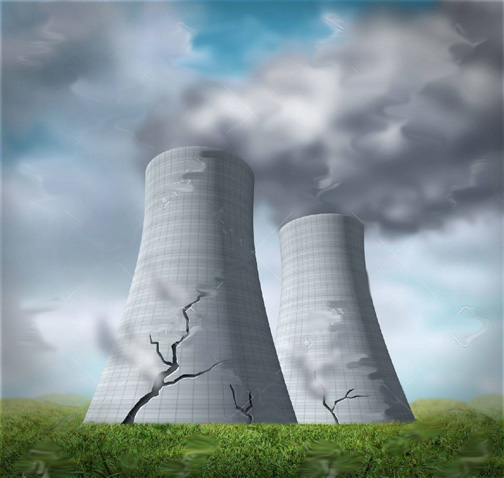

Well, I can’t help think that all these officials are looking out for themselves here. They hope that the disasters and cleanups won’t be their problem, – but the problem of future taxpayers.
|
RESOUNDING NO – TO LETTING NUCLEAR PLANTS RUN FOR 100 YEARS, The Sentinel By Karl Grossman, Jan 22, 2021
The U.S. Nuclear Regulatory Commission held a “public meeting” this week on what it titled “Development of Guidance Documents To Support License Renewal For 100 Years Of Plant Operation.” Comments from the “public” were strongly opposed to the NRC’s desire for it to let nuclear power plants run for a century. “I request you pause and consider before you go ahead on this reckless path,” testified Michel Lee, chairman of the New York-based Council on Intelligent Energy & Conservation Policy. “Our position and that of our constituents is a resounding no,” declared Paul Gunter, director of the Reactor Oversight Project at the national organization Beyond Nuclear. “It’s time to stop this whole nuke con job,” said Erica Gray, nuclear issues chair of the Virginia Sierra Club. There is “no solution” to dealing with nuclear waste, she said. It is “unethical to continue to make the most toxic waste known to mankind.” And, “renewable energy” with solar and wind “can power the world.” Jan Boudart, a board member of the Chicago-based Nuclear Energy Information Service, spoke, too, of the lack of consideration of nuclear waste. Cited was the higher likelihood of accidents with plants permitted to run for 100 years. Whether the NRC—often called the Nuclear Rubberstamp Commission—listens is highly unlikely considering its record of rubberstamping whatever has been sought by other nuclear promoters in government and the nuclear industry. Nuclear power plants when they began being built were not seen as running for more than 40 years because of radioactivity embrittling metal parts and otherwise causing safety problems. So operating licenses were limited to 40 years. But with the major decline of nuclear power—the U.S. is down to 94 plants from a high of 129 and only two are now under construction—the nuclear promoters in the U.S. government and nuclear industry are pushing to let nuclear power plants run for 100 years to somehow keep nuclear power going…….. In further discussing the “Life Beyond Eighty” scheme for nuclear power plants, Rosseel showed a U.S. Energy Information Administration slide projecting the amount of energy nuclear power would contribute to the U.S. energy supply in decline from 19% in 2019 to 12% in 2050 while renewable energy sources would jump from the current 19% to 38%. For the DOE, which inherited the role of promoting nuclear power from the U.S. Atomic Energy Commission, abolished by Congress in 1974 for being in conflict of interest for having a dual role of both promoting and regulating nuclear power, this decline is of great concern. At the start of the “public meeting” on January 21—held online as a teleconference—Allen L. Hiser, Jr., senior technical advisor for the Division of New and Renewed Licenses of the NRC, said the Atomic Energy Act of 1954 gave authority to the U.S. government to license nuclear power plants for 40 years. “But nothing in the AEA [Atomic Energy Act] prohibits a number of license renewals,” said Hiser. Using this lack of prohibition in the Atomic Energy Act, the NRC is now pushing ahead on the scheme to let nuclear power plants run for 100 years.
The NRC—which was supposed to only get the regulatory function from the eliminated U.S. Atomic Energy Commission—has also, with DOE, been a promoter of nuclear power. Earlier, it began extending the operating licenses of nuclear power plants to run for 60 years—and most of the plants in the U.S. now are being allowed to run for 60 years. And in recent years it has given the go-ahead for nuclear plants to run for 80 years, and several have been licensed for that length. In granting the license extensions to 60 and 80 years, the NRC has also been allowing the plants to be “uprated” to generate more electricity—to run hotter and harder—further asking for disaster. Gunter testified about an NRC cover-up involving the extending of nuclear power plant licenses. Using PowerPoint to reinforce his points, Gunter displayed a 2017 report commissioned by the NRC made by the DOE’s Pacific Northwest National Laboratory. The “very critical report,” said Gunter, looked at conducting research on the impacts of extending nuclear power plant operating licenses. It is titled “Criteria and Planning Guidance for Ex-Plant Harvesting to Support Subsequent License Renewal.” http://www.beyondnuclear.org/storage/aging/slr/autopsy_PNNL-27120_harvesting_Dec2017.pdf The report listed many significant issues considering the “harsh” degradation of nuclear power plant components over the years, he said. It pointed to “a host of critical technical gaps.” fter he “raised questions about” issues in the report at a meeting on operating license extensions held in 2018 at the NRC’s headquarters in Rockville, Maryland, the report was “taken down from government websites,” said Gunter. However, Beyond Nuclear saved a copy of the report. He spoke of an email that Beyond Nuclear obtained, after two years of trying under the U.S. Freedom of Information Act, from an NRC employee saying: “Big picture, I think the entire report needs to be scrubbed.” A “sanitized” version of the report, said Gunter, was “republished” in 2019. Gunter spoke of “public safety” being threatened. Gunter, also at the “public meeting” this week, said among the issues not being considered in the NRC’s drive to extend the licenses of nuclear power plants to 100 years is the management of the radioactive waste generated by the plants and “the advent of reliable, competitive and abundant renewable energy.” The oldest nuclear power plant in the U.S. was Oyster Creek in Toms River, New Jersey which opened in 1969 and was shut down 49 years later in 2018. What President Joe Biden does about nuclear power—he has said he is for “advanced” nuclear power—and the pro-nuclear NRC remains to be seen. The president appoints the five members of the NRC, and its current chairperson, a nuclear engineer and Trump appointee, is resigning. Biden could move to have done to the NRC what was done to its predecessor agency, the AEC, to have it abolished. And to push to end nuclear power in the U.S. Most U.S. nuclear power plants, according to a PowerPoint slide shown by the NRC’s Hiser, have already operated more than 40 years—the numbers of years they were seen as running safely when they began operating. https://www.thesentinel.com/communities/montgomery/news/science/resounding-no-to-letting-nuclear-plants-run-for-100-years/article_4cef89fc-5cc1-11eb-bfab-8b68f4bca770.html |
|
|
We need parliamentarians to stop project, prevent Ottawa River from being permanently contaminated — Concerned Citizens of Renfrew County and Area

January 18, 2021 Re “CNL working to accomplish responsible action in managing Canada’s nuclear research and development legacy” (The Hill Times, Letters to the Editor, December 14, 2020). This letter from Joe McBrearty, President and CEO of Canadian Nuclear Laboratories (CNL) deepens my concern about the handling of Canada’s $8 billion nuclear waste liability. Mr. […]
Hill Times Letter to the Editor ~ We need parliamentarians to stop project, prevent Ottawa River from being permanently contaminated — Concerned Citizens of Renfrew County and Area
………….Last month CNL published its final environmental impact statement listing a partial inventory of radionuclides that would go into the gigantic five-to-seven story radioactive mound (aka the “NSDF”).Twenty-five out of the 30 radionuclides listed in the inventory are long-lived, with half-lives ranging from four centuries to more than four billion years. To take just one example, the man-made radionuclide, Neptunium-237, has a half-life of 2 million years such that, after 2 million years have elapsed, half of the material will still be radioactive.
The inventory includes four isotopes of plutonium, one of the most deadly radioactive materials known, if inhaled or ingested.
It is incorrect to say that these materials “require isolation and containment for only a few hundred years.” Many of them will be dangerously radioactive for more than one hundred thousand years. The International Atomic Energy Agency states that materials like this must be stored tens of meters or more underground, not in an above-ground mound.
The CNL inventory also includes a very large quantity of cobalt-60, a material that gives off so much strong gamma radiation that lead shielding must be used by workers who handle it in order to avoid dangerous radiation exposures. The International Atomic Energy Agency considers high-activity cobalt-60 sources to be “intermediate-level waste” and specifies that they must be stored underground. Addition of high-activity cobalt-60 sources means that hundreds of tons of lead shielding would be disposed of in the mound along with other hazardous materials such as arsenic, asbestos, PCBs, dioxins and mercury.
CNL’s environmental impact statement describes several ways that radioactive materials would leak into surrounding wetlands that drain into the Ottawa River during filling of the mound and after completion. It also describes CNL’s intent to pipe water polluted with tritium and other radioactive and hazardous substances from the waste treatment facility directly into Perch Lake which drains into the Ottawa River.
I stand by my original conclusion: We need parliamentarians to step up now to stop this deeply flawed project and prevent the Ottawa River from being permanently contaminated by a gigantic, leaking radioactive landfill that would do little to reduce Canada’s $8 billion nuclear waste liability.
22 January – Trident Ploughshares, Scotland to celebrate entry into force of nuclear weapons ban
 The National 18th Jan 2021, MEMBERS of the anti-nuclear weapons group Trident Ploughshares will celebrate the entry into force of the UN Treaty on the Prohibition of Nuclear Weapons (TPNW) on January 22 with banner drops, billboards and
projections on buildings, and bell ringing in town centres across the UK.
In Edinburgh, messages will be projected on city centre buildings with
billboards proclaiming “UN outlaws nuclear weapons. Time for a clean
break”, with a variation asking “What about Scotland?” depicting
Nicola Sturgeon alongside her words: “No ifs, no buts, no nuclear weapons
on the Clyde, or anywhere.”
Why Japanese people should say ‘Sayonara’ to nuclear energy- a nun’s voice for nuclear victims

Sister Reiley, who has served as a missioner in Japan since 1968, was referring to the accident at Fukushima-Daichi Nuclear plant, which occurred on March 11, 2011. The accident was triggered by a devastating tsunami that followed a powerful 9.0 earthquake that hit a large part of Japan’s northern coast.
The quake and tsunami left more than 18,000 people dead or missing and hundreds of thousands of houses and businesses destroyed, according to Japan’s National Police Agency. More than 160,000 people fled the region near the nuclear plant because of the meltdown and more than 40,000 are still unable to return home due to radiation contamination.
Last June, Sister Reiley took the 3.5-hour train ride from Tokyo, where she lives, to Fukushima to give this Maryknoll reporter a tour around Haramachi, a town near where the Fukushima-Daichi nuclear accident happened.
The area had the feeling of a sci-fi apocalyptic movie: A ghost town with abandoned farmlands that could not be used; streets blocked with fences and no-trespassing signs; decaying houses damaged by the earthquake that cannot be repaired because they are contaminated; Geiger counter boxes under the street signs to measure the level of radioactivity; thousands of huge black vinyl bags filled with radioactive dirt; security guards wearing masks and radioactive protective gear at checkpoints, only allowing entrance to radioactive waste cleaning crews—many of them immigrants who are temporarily hired to do a job that could harm their health. …….
Sister Reiley has striven to show God’s love for the people by speaking out against nuclear energy in a country whose 52 nuclear plants, she believes, pose an enormous threat to human life.
After the triple disaster in 2011, Sister Reiley responded to the Japanese Catholic Church’s call for volunteers. “Initially I went several times a year to several different Japan Caritas bases wherever the need was at the time,” says Sister Reiley. “But gradually towns far away from the reactor returned to normal, (except) Haramachi where the need is still great for the elderly, differently abled and those people in a low economic bracket. They don’t have the means to move away from the reactor area.”
…….. Her concern about nuclear energy began in 1979 in her native Schuylkill County, Pa. She was visiting home from her mission in Japan when there was a reactor meltdown at the Three Mile Island nuclear plant in nearby Dauphin County. It is considered the most serious nuclear accident in U.S. history, according to the U.S. Nuclear Regulatory Commission.
“We’re poisoning our earth,” Sister Reiley remembers her father saying shortly after the nuclear accident.
“In 1999, there was a nuclear accident at the Tokaimura [nuclear facility] in Ibaraki Prefecture,” Sister Reiley says. “About two years after that accident happened, I asked the families [at the cancer hospital], ‘Where are you from?’ ‘Ibaraki.’ ‘Where are you from?’ ‘Ibaraki.’”
Out of the 24 beds for children with cancer at the hospital, at the time, seven children were from Ibaraki, explains the missioner. “But nobody can document that and say absolutely, ‘that’s why [the nuclear accident] they got cancer’.”
Still, the missioner works tirelessly to raise awareness about the dangers in nuclear energy Nearly 25 years after the 1986 nuclear accident in Chernobyl, in the former Soviet Union, Sister Reiley read an article, in a Japanese newspaper, about the high incidences of cancer linked to the nuclear accident. The report cited a study conducted by an international team of researchers led by the National Cancer Institute. That gave the Maryknoll sister an opportunity to question what happened at the nuclear facility in Japan. She visited the newspaper headquarters to speak to the editors.
“Won’t you please do some research about Tokaimura? About the accident that happened in Ibaraki?” she asked. The paper did not respond to her request. She was undaunted.
That sombre day in June in Haramachi, as we drove back to the train station, we saw a farm with cattle and stopped for a lesson from Sister Reiley. She explained that the government had asked the owner to kill the cattle. The cows’ milk could not be sold nor could the cows be slaughtered to sell their meat because they were contaminated. The cows, she continued, were innocent victims of problems caused by human beings.
“But this wonderful man asked the government to let the cows live a natural life and die a natural death,” says Sister Reiley.
Then she translated a sign at the cattle ranch. “We lived here with no fear of nuclear energy and now we realise that we lost something that can never be returned to us and we want people to understand that we have to say sayonara, goodbye, to nuclear energy.” https://catholicoutlook.org/jana-voice-for-nuclear-victims/
An act of love — Beyond Nuclear International

Courts threaten freedom of Russian nature protector
An act of love — Beyond Nuclear International
Lyubov Kudryashova loves nature. Now she may be jailed for defending it
By Jack Cohen-Joppa
In Russian, her name means love. And it’s true. Lyubov Kudryashova loves the broad valley of Russia’s Tobol River, where it meanders out of Kazakhstan into the Kurgan Oblast. Her grandfather is buried there, she was born there, and she’s raised three sons there. As far as she knows, her ancestors have always lived there.
There, below the southern Urals, frigid continental winters give way to spring floods that inundate a landscape of oxbow lakes, wetlands, forests and fields. The waters sustain a large aquifer that Russia recognizes as a strategic reserve of fresh water.
“We, native people of the land, are against a barbaric attitude towards nature,” she says. “But our voices are too low.”
Which is why the passion of this campaigning environmentalist and entrepreneur has been met with fabricated charges of encouraging terrorism via the internet. She’s now on trial in a military court in Yekaterinburg, six hours away from her small town.
But Lyubov Kudryashova will not be spurned. “My ecological activity is going to continue. Well, I guess till the day the unjust court could takes away my freedom.”
In 2017, the government awarded an operating license for borehole leeching of uranium to Dalur, a uranium mining subsidiary of the Russian state nuclear agency Rosatom. The license to tap the Dobrovolnoye deposit around the village of Zverinogolovskoye condemned the very farmland Kudryashova’s father managed when she would accompany him as a child.
Dalur has two other leaky in-situ uranium projects in the Kurgan.
Many Tobol Valley residents feared environmental disaster when they learned that hundreds of exploratory wells would be drilled through the aquifer into the mineral deposit lying beneath it, without any public environmental review. Borehole leeching would eventually involve drilling thousands of wells and the injection of a million tons of sulfuric acid over 20-30 years, then withdrawing the dissolved minerals and chemically extracting the uranium.
Several times, activists tried to start a referendum and demand an independent environmental review, but met only refusals from the local officials.
Last fall, environmentalists surveyed some of Dalur’s other boreholes in Kurgan and documented much higher radiation levels than permitted. Despite the concerns, construction began on an in-situ leaching pilot plant and the huge clay-lined “mud pits” needed to receive the massive volume of toxic, acidified sludge produced in the process.
Beginning in 2017, Kudryashova was involved in the legal case against the Russian Federation over its refusal to conduct an environmental impact assessment before awarding the license to develop the mine.
That year, she also co-founded the Public Monitoring Fund for the Environmental Condition and the Population Welfare with the regional branch of the Communist Party of the Russian Federation. One month later, a judge of the Kurgan Regional Court issued an order giving the Russian Federal Security Service (FSB) authority to wiretap her telephone.
The Fund publishes information on the environmental impact of Dalur’s mining activity. Kudryashova writes, “Shortly after the completion of the case in the Supreme Court of the Russian Federation and the registration of the environmental fund, a hidden judgment of another court was rendered that allowed the FSB to begin wiretapping my phone and, I believe, begin to look for fictitious crimes in order to stop my work.
“I guess money is more important than the radioactive contamination of land,” she observed.
So it was that on January 29, 2019, armed men led by an FSB captain broke into her family’s home and spent the day searching it. That summer the FSB got a local court to involuntarily commit Kudryashova to the Kurgan District Psychiatric Hospital for most of the month of July. She was kept from speaking with family or others outside without permission of the agency.
Then in March 2020, the FSB charged Kudryashova with 12 counts of “public justification of terrorism using the Internet” based on a specious forensic analysis of posts on the social network VKontakte, which, according to Kudryashova, never belonged to her page. The actual source of those posts remains unknown because the protocol and the DVD-R capturing those posts show evidence of fabrication and forgery. And at the most recent session of her trial in late December, a CD-R the defense had presented to the court for evidence was found to have been erased by an FSB operative.
Prosecutors say she advocated for violent overthrow of the constitutional order by re-posting memes with such seditious phrases as, “The fate of Russia is determined by each of us, what you personally or I do, then Russia will. A correct position can only be revolutionary” and “If the nation is convinced that the ruling power in the state is directed not at the development of its cultural, economic and other needs, but, on the contrary, at trampling them, then it is not only the right, but also the duty of the nation to overthrow that power and establish one corresponding to the national interests of the people.”
Kudryashova writes, “Nonviolent ecological activism, in the understanding of the rulers of my country, is a crime. That’s why prisons are full of people who wanted to protect nature, but those who harmed it are free… Ecological crimes against present and future generations are not subject to the judgement of a military court.
“I’m 55 years old and my life is not as important as the preservation of nature. My duty and responsibility are to make a small contribution in a great cause — to stop violence against nature and people. The price of atomic energy is the life of future generations.”
Her trial is in the Central District Military Court of Yekaterinburg, where the next hearing is scheduled for 28-29 January, 2021. Agora International Human Rights Group and the Memorial civil rights society in Russia have provided an attorney and other support for Kudryashova.
Letters in support of Lyubov Kudryashova and seeking dismissal of the charges against her should be addressed to the chair of the court collegium examining the case, Judge Sergei Gladkih, st. Bazhova 85, Yekaterinburg, Russia 62005, or by email to opo.covs.svd@sudrf.ru. Refer to Case №: 2-42/2020, Lyubov Kudryashova.
Jack Cohen-Joppa is the co-editor of The Nuclear Resister, the co-founder of the eponymous organization and co-winner with Felice Cohen-Joppa of the 2020 Nuclear Free Future Award in the category of Education.
Ten compelling reasons to stay away from nuclear power
|
Ten compelling reasons to stay away from nuclear power Proponents of nuclear power argue that it is safe, clean, infinite and the way of the future. They are wrong. Here are ten good reasons. https://www.dailymaverick.co.za/opinionista/2021-01-07-ten-compelling-reasons-to-stay-away-from-nuclear-power/
The South African government recently released an invitation for comments on its proposal to instal 2.5 gigawatts of new nuclear power. There are at least 10 compelling reasons not to – a few of which you may not have thought of before. Described briefly below, they are arranged in what I consider to be a rough order of importance.
If a nuclear power station – such as Koeberg – blows up, we might have to abandon the City of Cape Town for 200 years. Nuclear plants can’t be too far from urban centres due to the high cost of transmitting power over long distances. So, even if better sited, there is low risk, maybe, but unimaginable consequences, as well as long-term and, in the case of radiation, invisible ones.
At least equally important, however, is the risk of mismanagement and corruption. Nuclear is simply out of the question as a safe option in a state characterised by any degree of dodgy tendering and procurement, corrupt construction, or incompetent leadership and operation. We have seen enough issues within Eskom to say that this is a major and real concern — incompetent design checks, cheating on materials, and so on. Even just faulty welding in constructing a coal-fired power station – which we have heard about recently – is simply not an option in the case of a nuclear reactor. Cost is basic common sense, but the current South African governance context is perhaps the strongest single argument against the nuclear option.
Constructing a nuclear power station creates a lot of jobs, but only for a few years. It has long been established that renewables, as well as energy efficiency measures, create far more jobs on a long-term or permanent basis. They also create jobs which are spread out regionally, as opposed to a huge project at just one location. One example: making homes and buildings more energy efficient requires thousands of jobs, spread all over the country and, in addition, these are conventional jobs for building trades, including for unskilled and semi-skilled workers.
Nuclear energy results in hundreds of tons of incredibly hazardous waste, which our descendants will have to police for thousands of years after our time. This is simply irresponsible to the human race (and to the environment). After more than 50 years, almost no “permanent” safe storage facilities for nuclear waste have ever been created. We don’t need to talk about “nuclear fear”; it’s just a disgusting thing to leave to our children.
The risk of nuclear material getting into the hands of violent states or terror organisations is considerable. We have already seen dissidents being poisoned with polonium, probably with the backing of the Russian state. And North Korea making noises about nuclear bombs? How great is this threat? Even in light of strict international controls, this is still a powerful threat.
Hence, it would take decades — time we don’t have — for nuclear to become the major world energy source. Even longer in the poor countries, which are in most need. And that delay will also enable the “dirty energy” guys, the oil, coal and gas multinationals, to carry on wrecking the planet and making billions for a few more decades.
Nuclear energy is based on uranium. But uranium, like coal, gas and oil, is a limited resource; there’s only enough for a few decades, perhaps for 100 years. So why not go straight to the renewables, which are here forever?
Let us add that various newer forms of biomass energy can also become a major source of energy. There is a huge emerging industry of plant-based materials, including bioplastics, already used for many motor vehicle parts, textiles and consumer goods; as well as for renewable bioenergy. In many countries, very productive plants can be grown as “energy crops” — without competing with agriculture, as the US ethanol industry unfortunately did. One might also recall that South African John Fry was a world pioneer of biogas in the 1950s. Much of Brazil’s “petrol” is produced from waste from the sugar plantations. Bioenergy is thus also a new potential source of income for farmers and rural areas.
This is a common false argument in favour of nuclear power. For sure, the sun doesn’t always shine and the wind doesn’t always blow. But that has long been recognised as a minor problem. If the energy system as a whole contains both wind, solar, hydropower, biomass and some other option such as gas (or even, for some more years, a little coal) – then the energy system as a whole is diverse and robust all year round. We might remember that the wind blows mainly in winter, when we need the power most, and that we enjoy far more sunshine hours than many other countries that are “going solar”. The key point is that any energy system needs a certain amount of “base-load” power for times when there is neither wind nor sun, and if the dams are nearly empty too. This is where fossil fuels like coal, gas and oil are so useful because we can burn them when needed to produce power. And quickly, if there is a sudden surge in demand. But nuclear, on the other hand, is not very flexible; it takes 10 to 14 days to close down a nuclear reactor or fire it up to maximum output.
Other arguments against renewables Even after all these years, the nuclear lobby continues to spread fake arguments. For example:
As for “clean fossil fuels”, it’s fiction: coal is never clean, carbon capture and storage, as well as oil sands and fracking, are very expensive and environmentally damaging.
The low climate emissions from nuclear power are often cited as a reason in its favour. Yes, the emissions of climate gases such as carbon dioxide are low. But so are those of the renewables. Even cleaner are energy-efficiency measures. So why make a nuclear pact with the devil in order to reduce the carbon emissions? Reducing consumption A final point that must be made, is that the way out of the energy crisis is not, and can never be, endless continued growth in energy supply, or in resource use generally. All state-of-the-art research and policies are now turning towards the challenge of reducing our consumption; of meat, petrol, electrical gadgets, air miles and consumer goods. We know that with today’s solutions we can have exactly the same standard of living, the same life quality, with just a quarter of the energy. That means no need for more power stations — and certainly not nuclear. Hence, energy authorities are starting to turn their focus far more towards ways of reducing our consumption of energy. And this path, by the way, is in many cases free. |
|



LGBTQ Activists Jump Into the Atlantic to support Treaty banning nuclear weapons
 2012, LGBTQ activists Brendan Fay and Robert Croonquist huddled with other New York-based members of International Campaign to Abolish Nuclear Weapons and ran into the Atlantic Ocean at Far Rockaway on New Year’s Day as part of a public demonstration against nuclear weapons.
The activists, who plunged into the freezing waters at Rockaway Beach and 92nd Street, are pushing the City Council to move forward with a resolution asking the city comptroller to divest pension funds of public employees from sources of nuclear weapons and a bill creating an advisory committee that would evaluate nuclear disarmament and other issues geared towards making New York City a nuclear weapons-free zone. Those bills were proposed by out gay Councilmember Daniel Dromm of Queens, who has welcomed the support of dozens of co-sponsors in both cases.
The activists are asking out gay City Council Speaker Corey Johnson to advance the measures before the Treaty of the Prohibition of Nuclear Weapons becomes international law on January 22. …………
Croonquist, a former public school teacher who is a member of Rise and Resist and the Reclaim Pride Coalition, said he was driven to jump into the ocean when he thought about the high school students he taught at Jamaica High School in Queens.
“This legislation would divert my pension’s investments from weapons of mass destruction and redirect them to things that bring true security — investments in food, housing, climate, infrastructure and healthcare. ………… https://www.gaycitynews.com/lgbtq-activists-jump-into-the-atlantic-to-protest-nuclear-weapons/.
Dr Helen Caldicott as mentor for anti-nuclear activists
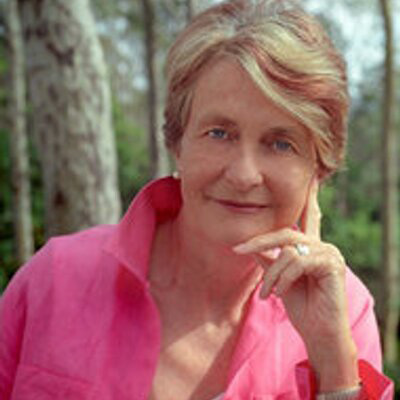 My Six Mentors, “………Helen Caldicott, MD, by Mary Olson, Gender and Radiation Impact Project, 1 January 20121
Helen Caldicott deserves a much greater place in our histories of the Cold War and ending the USA / USSR arms race than she generally gets. This is, perhaps, because she is powerful and a woman. A pediatrician, who in the 1970’s would not tolerate the radioactive fallout she and her patients were suffering from nuclear weapons tests in Australia, Helen and her family came to the USA. She and another physician named Ira Helfand revived what had been a local Boston organization of physicians and created a Nobel Prize winning organization called Physicians for Social Responsibility (PSR), which later participated in the creation of another Nobel Prize winning group, the International Physicians for the Prevention of Nuclear War (IPPNW). These two along with hundreds of other organizations committed to peace and nuclear disarmament formed the International Campaign for the Abolition of Nuclear Weapons (ICAN) which has helped to create the new Treaty on the Prohibition of Nuclear Weapons (see http://icanw.org/the-treaty ) and also won the Nobel Prize (2017).
Helen herself is a powerful communicator and will move audiences at a level that can change the course of someone’s life and work. She followed her own destiny to winning meetings with Mikhail Gorbachev, President of the Soviet Union, where she educated him about Nuclear Winter and the fact that nuclear is not a war that anyone can win. She also met with President Reagan in the era and diagnosing early-stage dementia… Her ability to bring the reality of the world to these men, and reality of these men to the world set her aside, in a class by herself—and was an enormous contribution to us all.
I first met Helen in the body of her Cold War block-buster book “Nuclear Madness.” I was in the midst of an existential crisis that could have become an even bigger health crisis. After college I needed a job (not yet a career) because I was broke, broken up from my first “true” love, and far from home. I got a job as a research assistant in a lab at a prestigious medical school; it was 1984.
Within 2 weeks, I was inadvertently contaminated with radioactivity (without my knowledge) by carelessness of a lab-mate. The radioactive material, Phosphorus-32 is used in research to trace biochemical activity in living organisms. This type of radioactivity is not deeply penetrating, so there was some reason not to panic, however the I was exposed continuously for over a week, and I also found radioactivity at home– my toothbrush was “hot”—so I had also had some level of internal exposure. I was terrified. The lab used concentrations of the tracer thousands of times higher than is typical.
The institution told me there was no danger, but because I was upset, they helped me transfer to a different job. No accident report was filed, and in the midst of transition, my radiation detection badge was never processed. It is not possible to know the dimensions of my exposure—I began having symptoms that were not normal for me. Many people, including some family members told me I was imagining things. No one in my circle understood how terrified I was.
I was fortunate that Helen had already written “Nuclear Madness”—the first edition came out in 1978, just before the March 1979 Three Mile Island nuclear meltdown in Harrisburg PA—an event that propelled the book into multiple printings including a Bantam Paperback edition that I found. It turned out that 7 years later I helped Helen to revise and update the same text for the 1994 WW Norton edition. It was Helen’s deep commitment to truth, to speaking and writing that truth, to empowering people to take action for good. Helen’s words accurately described radiation and its potential for harm, and in my panic about the unknown, this calmed me.
Every other authority I had encountered was trying to tell me there was no problem—when I knew they had no right to dismiss what had happened to me. I am quite certain that had I remained alone with my fear, despair, and confusion my panic would have resulted in behaviors that would have compounded any harm bodily from that radioactive contamination. Reading Helen’s work let me know there was at least one woman walking the Earth who did know what I was going through… it made it possible for me to choose recovery and walk away from a legal battle that would have forced me to maintain, hold and prove a myself a victim. Instead, following in Helen’s wake, I chose Peaceful Warrior. Thank you Helen! : ……….. https://www.genderandradiation.org/blog/2020/12/31/my-six-mentors
This is the sort of letter that citizens need to be writing – in support of the nuclear weapons ban
 Sudbury letter: Council should support banning of nuclear weapons, https://www.thesudburystar.com/opinion/letters/sudbury-letter-council-should-support-banning-of-nuclear-weaponsAuthor of the article:
The United Nations has passed the Treaty on the Prohibition of Nuclear Weapons and it will become international law on Jan. 22, 2021. Some 86 countries have signed this agreement. Unfortunately, Canada is not one of them.
As it is cities that will be targeted by nuclear weapons, Sudbury, a producer of nickel, would likely be a target. The International Campaign Against Nuclear Weapons (ICANw) is asking cities to support the Treaty on the Prohibition of Nuclear Weapons by passing the following motion (many Canadian cities have already passed this motion including Toronto, Halifax, Vancouver and Victoria):
“Our city of Sudbury, Ont., is deeply concerned about the grave threat that nuclear weapons pose to communities throughout the world. We firmly believe that our residents have a right to live in a world free from this threat. Any use of nuclear weapons, whether deliberate or accidental, would have catastrophic, far-reaching and long-lasting consequences for people and the environment. Therefore, we support the Treaty on the Prohibition of Nuclear Weapons and call on our governments to sign and ratify it.”
The world has about 14,000 nuclear weapons with about 1,500 on hair-trigger alert. The firing of these weapons could happen by accident, miscalculation, terrorism or an unstable government. The catastrophe would be immediate.
I would urge Sudbury city council to pass the motion and support the United Nations Treaty on the Prohibition of Nuclear Weapons.
Richard Denton
Sudbury
Non violent anti-nuclear action – the Clamshell Alliance model for success
Know Your Nonviolent History: In 1976 Clamshell Alliance Launches Mass Demonstrations https://www.riverasun.com/know-your-nonviolent-history-in-1976-clamshell-alliance-launches-mass-demonstrations/August 18, 2016, by Rivera Sun On August 1st, 1976, the first nonviolent mass demonstration of the Clamshell Alliance took place at the proposed site of the Seabrook Nuclear Energy Facility in New Hampshire. The Clamshell Alliance was a group of anti-nuclear activists who worked to stop nuclear power plant construction at a time when President Nixon’s “Project Independence” had proposed the construction of over 1,000 nuclear power plants throughout the nation. Although the Clamshell Alliance was only partially successful in halting the Seabrook facility, their mass mobilizations deterred the plans for other plants and changed the landscape of nuclear energy forever. If not for the Clamshell Alliance, it is possible that we would be living in the nuclear nightmare of President Nixon’s vision of a thousand plants by the year 2000.
|
The Clamshell Alliance used a model of affinity groups of 6-20 people, and a spokes council system that functioned on consensus decision-making by all members. In July 1976, the Clamshell Alliance adopted a Declaration of Nuclear Resistance and by August 1st had mobilized their first protest of 200-600 people. Later in August, a second protest and civil disobedience action occupied the Seabrook construction site for 75 minutes, singing songs and planting trees. Nearly all of the 200 participants were arrested. In April of 1977, the Clamshell Alliance mobilized 2,000 people for a demonstration. 1,400 participants were arrested, most refusing to post bail. They were held in jails and National Guard armories for up to two weeks. The activists used this time for training and networking, and subsequently, the detention of the activists was seen as a blunder on the part of Governor Meldrim Thomson. In 1978, the Clamshell Alliance successfully organized another series of mass demonstrations and arrests. From June 23-26th, the alliance accepted an agreement to legally protest on the site for three days. Some sources claim this protest was one of the largest on-site protests in the history of the anti-nuclear movement, citing over 20,000 participants and very few arrests. On March 29th, 1979, the meltdown of the Three Mile Island reactor in Harrisburg, Pennsylvania, propelled the dangers of nuclear power to the forefront of national concern. In collaboration with other groups, a huge anti-nuclear energy rally was organized in Washington, D.C. on May 6, 1979. Between 50,000 and 120,000 people gathered to protest nuclear power and demand safe alternatives. These demonstrations played a major role in slowing and stopping the rush toward nuclear energy. Although Unit 1 of Seabrook Power Plant went online in 1990, Unit 2 was cancelled altogether. The project cost seven times the original billion-dollar estimate and was completed 14 years later than anticipated. In that time, hundreds of other proposals were dropped, due to the high social and fiscal costs encountered by the Seabrook Power Plant. For decades after the inception of the Clamshell Alliance and other similar groups, no new nuclear power facilities were proposed or constructed. The Clamshell Alliance left a lasting legacy in its organizing structure, movement practices, consensus model, and strategies for change. These are all tools and resources that can be used by current movements for change. This article is from Rivera Sun’s book of nonviolent histories that have made our world. Click here for more information. |
|
Plowshare anti nuclear-weapons activists again face prison .
 Longtime Anti-Nuke Activists Face Prison, Again, After Breaking Into Naval Base https://www.npr.org/2020/12/28/948116757/longtime-anti-nuclear-activists-face-prison-again-after-breaking-into-naval-base
December 28, 20205: Heard on Morning Edition
EMMA PEASLEE. Dressed in black, the seven intruders cut through a fence and stole along the perimeter of the naval base, trying to avoid detection from the guard towers, as a loudspeaker overhead blared: “Deadly force is authorized!”
Patrick O’Neill, who had a GoPro strapped to his head, tried to reassure himself by remembering a scene in the Bible where Jesus escapes unscathed from a wrathful mob that wants to throw him off a cliff.
When O’Neill and the others reached their target, they poured their own blood on the shield of the Kings Bay naval base in Georgia and attached a poster of Martin Luther King Jr. to a mock-up of a Trident II D5 ballistic missile at the welcome area.
The anti-nuclear activists — Roman Catholics who call themselves Plowshares, from the Biblical passage about “beating swords into plowshares” — followed the metaphor quite literally and took a hammer to the replica of the warhead.
The break-in on the night of April 4, 2018, ended with the arrest and conviction on charges of trespassing and destruction of property for the seven activists aged 58 to 81.
And in the midst of a pandemic that’s wreaking havoc on prisons and disproportionately affecting older people, six of them have been sentenced to up to 33 months in prison. The seventh is scheduled to be sentenced in February.
The Plowshares activists were seeking to revive the anti-nuclear movement by committing acts of civil disobedience.
They are part of a larger faith-based movement that has been around since the 1980s, when anti-nuclear protests used to draw millions into the streets.
Those days are long gone, but the threat of nuclear warfare isn’t. According to some atomic scientists, the threat may be even greater now, and the activists are frustrated that in their view hardly anyone is paying attention.
Which is one reason why they have broken into military bases and sometimes succeeded in doing damage to actual nuclear armaments. In a highly publicized protest in 1980, Plowshares activists hammered two missile nose cones at a General Electric complex in King of Prussia, Pa., causing tens of thousands of dollars worth of damage. In 2012, another group that included an 82-year-old Catholic nun defaced a bunker holding weapons-grade uranium at the Y-12 National Security Complex in Oak Ridge, Tenn.
People are always astounded that a bunch of old people or unarmed people or whatever people can gain access to these weapons at all,” said O’Neill, 64.
Martha Hennessey, 65, had already been to prison three times before beginning her sentence at a federal prison in Danbury, Conn., on Dec. 14. She is the granddaughter of the journalist-turned-activist Dorothy Day, who founded the pacifist Catholic Worker Movement in the 1930s.
Rather than dwell on her own sentence, she drew attention to the mass incarceration of people who have committed minor offenses.
“I mean, there are people being thrown into prison for years for, you know, things that are not even crimes,” she said in an interview before reporting to prison.
Members of the Plowshares group prefer not to talk about the risks they might face in prison, but their families are worried.
“I’m afraid that my dad might die in prison,” said Maura O’Neill, 26, one of O’Neill’s eight children. “I worry that he might contract COVID and get really sick, and it feels like a real possibility.”
1 This Month
Chernobyl: The Lost Tapes – A good documentary on Chernobyl on SBS available On Demand for the next 3 weeks– https://www.sbs.com.au/ondemand/tv-program/chernobyl-the-lost-tapes/2352741955560

of the week–London Campaign for Nuclear Disarmament

Tell the Ukrainian Government to Drop Prosecution of Peace Activist Yurii Sheliazhenko
To see nuclear-related stories in greater depth and intensity – go to https://nuclearinformation.wordpress.com
-
Archives
- April 2026 (126)
- March 2026 (251)
- February 2026 (268)
- January 2026 (308)
- December 2025 (358)
- November 2025 (359)
- October 2025 (376)
- September 2025 (257)
- August 2025 (319)
- July 2025 (230)
- June 2025 (348)
- May 2025 (261)
-
Categories
- 1
- 1 NUCLEAR ISSUES
- business and costs
- climate change
- culture and arts
- ENERGY
- environment
- health
- history
- indigenous issues
- Legal
- marketing of nuclear
- media
- opposition to nuclear
- PERSONAL STORIES
- politics
- politics international
- Religion and ethics
- safety
- secrets,lies and civil liberties
- spinbuster
- technology
- Uranium
- wastes
- weapons and war
- Women
- 2 WORLD
- ACTION
- AFRICA
- Atrocities
- AUSTRALIA
- Christina's notes
- Christina's themes
- culture and arts
- Events
- Fuk 2022
- Fuk 2023
- Fukushima 2017
- Fukushima 2018
- fukushima 2019
- Fukushima 2020
- Fukushima 2021
- general
- global warming
- Humour (God we need it)
- Nuclear
- RARE EARTHS
- Reference
- resources – print
- Resources -audiovicual
- Weekly Newsletter
- World
- World Nuclear
- YouTube
-
RSS
Entries RSS
Comments RSS
 nuclear-news