Ten arrested at protest against nuclear weapons at Volkel airbase
The Koninklijke Marechaussee arrested ten people at Volkel Airbase on Tuesday morning. They had climbed over the fence and sat down on the runway in protest against nuclear weapons and CO2 emissions.
This is the second protest at the airbase in two days. On Monday, about 60 activists from het Vredeskamp demonstrated in front of the airbase’s entrance, Omroep Brabant reports. The protest lasted a symbolic 78 minutes – Sunday was the 78th anniversary of an atomic bomb hitting the Japanese city of Hiroshima.
The presence of nuclear weapons at the Volkel base was an open secret for many years. But it has now been leaked and confirmed multiple times, according to the broadcaster.
The demonstrators detained on Tuesday are six Americans, three Dutchmen, and one German, Het Vredeskamp told Omroep Brabant. The protest group is planning a “multi-day peace camp” with more demonstrations to come.
As Japan set to dump nuclear-contaminated wastewater in late August, Japanese nuclear expert vows to ‘fight it to the end’
Global Times, By Xu Keyue, Aug 07, 2023
As mainstream Japanese media revealed that Tokyo could start to dump the nuclear-contaminated wastewater as early as the end this month after the trilateral US-Japan-South Korea summit, observers and the wider public in China, Japan and South Korea reiterated their opposition to the irresponsible move with a Japanese nuclear expert stating that they would continue to protest against the plan.
“We plan to fight it to the end. We are planning to hold a big gathering in front of the prime minister’s office on August 18 and we plan to make a petition and submit signatures,” Hideyuki Ban, a Japanese nuclear expert and co-director of the Citizens’ Nuclear Information Center (CNIC), told the Global Times on Monday.
According to Japanese media outlet Asahi Shimbun, the Japanese government has entered into coordination to determine the wastewater release timing after the summit with the US and South Korea scheduled for August 18. After Prime Minister Fumio Kishida returns from the US, he will hold a ministerial meeting and make a decision over the dumping of contaminated wastewater.
Asahi cited several officials as saying that the dumping is estimated to begin as early as the end of August. The report claimed that Kishida is expected to explain “the safety of the treated water, its scientific basis, and measures to be taken after the release” to the two leaders of the US and South Korea to gain their understanding.
But Ban believes if the contaminated wastewater is dumped in late August, it is the Japanese government that would force the plan without caring for the concerns and opposition from fisheries and the relevant personnel………………………………….
As many parties in Japan and other countries including China oppose the wastewater dumping plan, the Japanese government must be thinking that it will at least get the consent of Seoul and Washington and if the three reach a consensus over the issue during the summit, it is expected to help Tokyo press ahead with its arbitrary plan, Ban pointed out.
Anonymous Japanese officials in the prime minister’s office were quoted by Asahi as saying that they believe since some offshore trawling will commence off the coast of Fukushima Prefecture in September, the government hopes to avoid starting the release after the fishing season has begun. For this reason, it is assumed that the dumping will start around the end of August, Asahi reported. https://www.globaltimes.cn/page/202308/1295820.shtml
Demonstrators protest development of nuclear weapons in Oak Ridge
by: Ella Wales, Aug 6, 2023
OAK RIDGE, Tenn. (WATE) — Demonstrators held a march in Oak Ridge Saturday against the development and use of nuclear weapons.
The Oak Ridge Environmental Peace Alliance (OREPA) held the demonstration ahead of the 78th Anniversary of the U.S. bombings of Hiroshima and Nagasaki, Japan. The group marched from Alvin K. Bissell Park to the Y-12 National Security Complex.
Tanvi Kardile, coordinator of OREPA, said they are an anti-violence grassroots organization.
“We work against development of nuclear weapons, we fight against Y-12 which is still producing weapons to this day and we want to spread public awareness about what they’re doing out there,” she said.
The group’s demonstration aimed to support nuclear abolition in the United States.
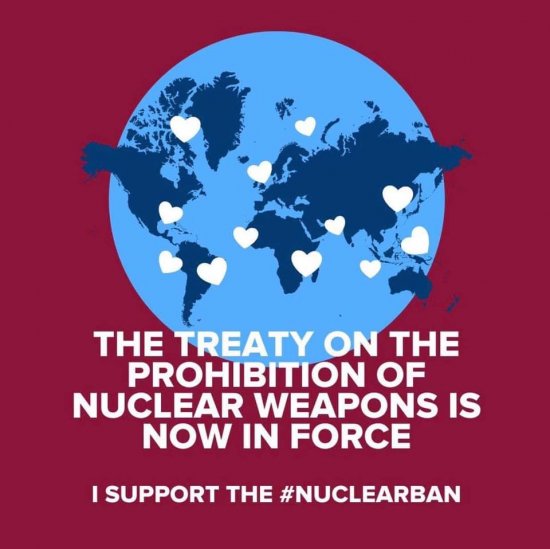
“We came here to talk about the Treaty on the Prohibition of Nuclear Weapons, which is the only viable treaty that’s currently on the path to end nuclear weapons. The U.S. has not signed onto this treaty yet, so we’re here to spread public awareness about that,” Kardile said.
Together Against Sizewell environmental group angry at the coming destruction of marine life, as acoustic fish deterrent will not be installed at Hinkley Point C nuclear
A notification from the Environment Agency distributed on the first of
August, starts with an encouraging statement reminding us that it is
responsible for regulating environmental protection at nuclear sites,
ensuring that people and the environment are properly protected.
But behind the corporate speak of ‘permit variation’, the addition of ‘new
limits and conditions’ and ‘discharge activity’ within the Water
Activity Discharge permit for Sizewell C’s so-called sister plant at
Hinkley Point C in Somerset, lies the cold, stark fact that the Environment
Agency, which claims to ‘protect and improve the environment’, has
removed the requirement to install an acoustic fish deterrent (AFD) at the
head of its seawater intake in the Bristol Channel.
In doing so the EA has condemned millions of fish and other marine creatures to their fate of
impingement, injury and death adding to the many millions of fish fry, fish
eggs, small fish and other marine biota that will be killed when entrained
in the cooling system of the plant.
Moreover, this situation is due to be repeated at Sizewell, meaning that Sizewell Bay fish stocks and marine creatures will likewise face decimation should the plant ever be built. A
spokesperson for Together Against Sizewell C (TASC), said today, ‘Our
spineless environmental regulator has simply rolled over to do the nuclear
industry’s dirty work, directly contradicting its promise to protect and
improve the environment and making itself complicit with the ceaseless
attack on this country’s biodiversity.
It is shocking that our young
people have to witness such shameless sacrifice of millions of creatures on
the altar of wildly misplaced government policy which is recognised by its
own Science and Technology Committee as fantasy. When will we have a
regulatory system in the UK which is capable of demonstrating enough spine
to put the environment above corporate greed and the arm lock of government
policy? The Environment Agency should be ashamed of itself.’
Together Against Sizewell C 2nd Aug 2023
Opposition to Aukus – especially from New Zealand, but also from Australia and the Pacific, and across the political spectrum

Military Initiative by Australia, the United Kingdom and the United States (AUKUS) is Another Major Step in Prospective War on China
Covert Action Magazine, By Murray Horton, June 29, 2023
“………………………………………………“We Are Not at War, But Neither Are We at Peace”
New Zealanders may not have appreciated the degree of militarization in Australia, much more so than here. AUKUS should jolt us out of any complacency about what is going on with our nearest neighbor—it is preparing for war. Australian media commentary at the time of the AUKUS launch made that clear. “The monumental price tag of the AUKUS pact has made it clear. We are not at war, but neither are we at peace…”
“Almost $A400b, even over three decades, is not peacetime spending in anyone’s book—a fact Government ministers concede privately. Rather, we are navigating a dangerous and unpredictable new grey zone of superpower rivalry between China and the United States. It’s a contest in which we are poised to be a central player despite our geographical isolation and relatively small population.”
“Accepting such a role will require tough spending decisions the nation as a whole is not yet ready to confront. Already, Opposition Leader Peter Dutton is flagging his willingness to support reduced spending on the National Disability Insurance Scheme to pay for the submarine programme. Other unsettling trade-offs will need to be discussed. Even in the short term, before the big bills start arriving, difficult calls will have to be made….This is because…it will cut $A3b from existing defence programmes…This is likely to anger other branches of the military, such as the Army, while the Navy is lavished with money.”[2]
Albanese tried to put a positive spin on it,……………………………………..
Criticism from Inside the Political Elite
Pleasingly, AUKUS was not unopposed among Australia’s political elite (or, at least, former leading members of it). Paul Keating, who was Labor Prime Minister from 1991 to 1996, really put the boot into the good submarine AUKUS and all who sail in her. He did so in a March 2023 speech, the day after the AUKUS announcement. “Former prime minister Paul Keating has launched an extraordinary attack on the Albanese government over its adoption of the AUKUS pact, accusing it of making the worst foreign policy decision by a Labor government since the attempted introduction of conscription in World War I.”
“He said signing up to AUKUS had broken Labor’s long ‘winning streak’ on foreign policy over the past century and was a ‘deeply pathetic’ moment in the Party’s history. ‘Falling into a major mistake, Anthony Albanese, befuddled by his own small-target election strategy, emerges as prime minister with an American sword to rattle at the neighbourhood to impress upon it the United States’ esteemed view of its untrammelled destiny…’”
“‘Naturally, I should prefer to be singing the praises of the government in all matters, but these issues carry deadly consequences for Australia and I believe it is incumbent on any former prime minister, particularly now, a Labor one, to alert the country to the dangerous and unnecessary journey on which the Government is now embarking.’”
“‘This week, Anthony Albanese screwed into place the last shackle in the long chain the United States has laid out to contain China…I don’t think I suffer from relevance deprivation, but I do suffer concern for Australia as it most unwisely proceeds down this singular and dangerous path,’ he said.”
“Keating presented a largely benign view of China’s rise, saying it was ‘not the old Soviet Union’ and was ‘not seeking to propagate some competing international ideology’ to the United States. The fact is China is not an outrider,’ he said. ‘China is a world trading state—it is not about upending the international system,’”
“Keating said: ‘Every Labor Party branch member will wince when they realise that the party we all fight for is returning to our former colonial master, Britain, to find our security in Asia—236 years after Europeans first grabbed the continent from its Indigenous people. That of all things, a contemporary Labor government is shunning security in Asia for security in and within the Anglosphere’”[3]
Nor was Keating alone in his criticism from within the elite. “The Australian National University’s Hugh White, an emeritus professor of strategic studies, unleashed a quite extraordinary criticism of Australia’s nuclear submarine plan…Professor White, a former deputy secretary of the Defence Department, said Australia was not only going to ‘hand over some serious dollars’ to the US but also pay with ‘a promise’ to enter any future conflict with China.’”
“‘This is a very serious transformation of the nature of our alliance with the United States,’ White said in an interview recorded for the ANU’s politics podcast Democracy Sausage. ‘The US don’t really care about our submarine capability—they care deeply about tying Australia into their containment strategy against China.’”
“White said he couldn’t see why the US would sell its own submarines—of which they have fewer than they need—unless it was absolutely sure Australia’s submarines would be available to it in the event of a major conflict in Asia. He said a war between America and China over Taiwan would be ‘World War III’ and have a ‘very good chance’ of being a nuclear conflict.”
“‘Australia’s experience of war [is] shaped by the fact that we’ve tended to be on the winning side, but there is no reason to expect America to win in a war with China over Taiwan,’ he warned. He suggested there was also a high chance the AUKUS deal could fall over under [sic] a future American administration and a worsening strategic environment.”
“White said there were cheaper, quicker, less risky and less demanding ways for Australia to get the submarines it needed, labelling the AUKUS plan a waste of money that ‘doesn’t make sense. There’s going to be no actual net increase in the number of submarines available until well into the 2040s, even if it goes to plan—which it probably won’t,’ he said.”[4]……………………………………………………………………………………………………………………………………………………………………..
Former New Zealand Prime Ministers from Rival Parties Dissent
When AUKUS was first announced in 2021, New Zealand, which was not invited to join, simply confined itself to saying that nuclear-powered submarines would not be allowed into New Zealand territorial waters, or ports, because of our nuclear-free law dating back to the 1980s. So, the issue flew below the radar (or sailed under the water, to put it more appropriately). However, once AUKUS really kicked off in March 2023, debate and disquiet started in New Zealand.
Helen Clark was the Labour Prime Minister (1999-2008) who has dined out for 20 years on having refused to let New Zealand join the U.S., UK and Australia in the illegal and disastrous 2003 invasion of Iraq (in all other aspects Clark was a very loyal servant of the U.S.). She came out quickly and said that New Zealand is better off outside AUKUS (the word she used was “entanglement”).
She was not alone as the only former New Zealand Prime Minister to criticize it. “…[F]ormer National prime minister Jim Bolger [1990-97] participated in a forum about New Zealand’s foreign policy in Wellington, in which he is reported by the Herald’s Audrey Young to have criticised the Australian submarine buy up as ‘beyond comprehension’ because of the cost and the damage to peace in the Pacific region.”
“Bolger said that New Zealand certainly doesn’t want any such submarines, and challenged proponents of the AUKUS deal to defend it: ‘If you can find any Australian official who can explain why they need nuclear-powered submarines, come and tell me. I’d like to know.’ And Young reported Bolger asking rhetorically, ‘How mad are we getting?’ She says ‘he spoke with despair about the near-daily threats of nuclear war, which had the potential to destroy the planet.’”[7]
Opposition Across the Political Spectrum
“As part of the AUKUS deal Western Australia will play host to US and UK nuclear submarines from 2027. With nuclear-capable American B52 bombers and thousands of American marines rotating through the Northern Territory, Australia is lining up as a loyal lieutenant to the United States in the Pacific and would be expected to fight should war break out.”
“Would New Zealanders fight in a war between the nuclear superpowers? While we aren’t required by treaty obligations to act if America or Taiwan are attacked we are if Australia is. It is not an exaggeration to say Australia could be a target in a future war and already the country has been threatened with missile attacks in that scenario.”
“The risks of New Zealand being dragged in are real. Unlike in Australia, the conversation in New Zealand has been much more muted with limited discussion on the likelihood of war. Why aren’t we talking about it? New Zealand is in a difficult situation contemplating conflict between our largest trading partner and traditional security partner.”
“We weren’t invited to join AUKUS and Australian nuclear submarines won’t be allowed to berth here under our nuclear-free legislation. That same legislation sees New Zealand as only a friend and not an ally of the United States, but we are increasingly acting like we are an ally. In the years since New Zealand’s principled decision not to join the invasion of Iraq we have become more enmeshed with the United States defence apparatus.”
………………………………………………………………………………………………….. “New Zealanders need to talk more about the risks, our decision-makers need to explain why New Zealand is aligning more closely with the United States military and as a sovereign country we have to ask are we acting independently or as a cog in a machine? Our role could be focused on reducing tensions, finding solutions and building trust. War is never inevitable.”[8]
Former politicians across the spectrum have come out against AUKUS. For example, Richard Prebble, one-time Labour Cabinet Minister and later ACT Party founder and Leader.
He is currently a relentless right-wing critic of the current Labour government. His take on AUKUS is the classic mercantilist one. “China is New Zealand’s biggest trading partner. This country has joined China’s Belt and Road initiative. China has signed a free trade agreement with New Zealand, something the U.S. Senate refuses to consider.”
“Foreign Minister Nanaia Mahuta has warned that New Zealand’s exports to China could be caught up in a ‘storm,…………….. New Zealand’s exporters are only too aware of their dependency. There is no other obvious alternative to the New Zealand-China trade.”
“New Zealand has no territorial disputes with China. When we recognised the Government of China 50 years ago, we acknowledged Taiwan is part of China. Paul Keating and Helen Clark are correct. New Zealand’s strategic interest is in the peaceful resolution of conflicts with China rather than sleepwalking into anti-Chinese alliances.”[9]
Academic Skepticism
Leading academic Robert Patman spelled it out in an article entitled “Why New Zealand Should Remain Sceptical About AUKUS.” He wrote that “the basic problem facing AUKUS is that it is based on a binary assumption that the fate of the Indo-Pacific will be largely shaped by the outcome of U.S.-China rivalry and, in particular, by the capacity of America and its closest allies to counterbalance Chinese ambitions in the region.”[10]
“Such a perspective is problematic on a number of counts. First, it exaggerates the influence of great powers in the 21st century in a large, diverse region like the Indo-Pacific. The region contains 60% of the world’s population including significant economic players like Japan, South Korea and fast-growing economies such as Vietnam and India.”
“Second, AUKUS does not factor in the Indo-Pacific and European nations’ quite distinctive security and economic interests in countering China. While countries like Malaysia, Indonesia and Vietnam and EU states like Germany and France are deeply worried about China’s forceful diplomacy in the Indo-Pacific, they remain sceptical that a security arrangement involving three English-speaking states, two of whom have baggage in the region, is an adequate response.”
“Third, China’s global ambitions are very real, but they should not be over-hyped. AUKUS states depict China as a ‘systemic threat’ and, according to US Secretary of Defence Lloyd Austin, the ‘only competitor out there with both the intent to reshape the international order and, increasingly, a power to do so.’ Really?…”
“Fourth, the provision of nuclear-powered submarines to Australia has raised very real fears in the Indo-Pacific about nuclear proliferation. In 1995, ASEAN [Association of Southeast Asian Nations] member states signed the Treaty of Southeast Asia Nuclear Weapon-Free Zone (SEANWFZ). Furthermore, Singapore is now the only ASEAN state yet to sign or ratify the Treaty on the Prohibition of Nuclear Weapons (TPNW), a diplomatic initiative heavily promoted by New Zealand.”
………………………………………………………………………. New Zealand remains sceptical that China is a systemic threat to US dominance, sees a good fit between its non-nuclear security policy and the Indo-Pacific region, and views detachment from AUKUS as both consistent with the goal of diversifying New Zealand’s trade ties and building a diplomatic network of like-minded states to strengthen the international rules-based order through measures like UN Security Council reform.”
Madness to Support U.S. War Against China
Mike Treen, veteran union leader and left-wing activist, put it all very succinctly in an article in the Daily Blog on April 21, 2023. He wrote: “The US is going to war against China because it is losing the international economic competition that previously enabled its military and economic bullying to dominate the globe. The empire is in slow decline.”[11]
“China’s extraordinary rise as an economic powerhouse over the past few decades means that it is now the top international trading partner for 120 countries. This has given the world the freedom to act in ways they have never before—politically and economically.
………………………………………………………………………………. “New Zealand was wrong to join the war against Afghanistan. We were wrong to join the occupation of Iraq. We were wrong to become an ‘observer’ at NATO. And it would be foolish and dangerous to become a participant in any way with the AUKUS military provocation against China. New Zealand should be a neutral power that offers medical aid to the world not a tiny jumped-up militarised puppet of the US empire like Australia has become.”
Defence Minister Tempted by AUKUS
The AUKUS carrot that is being dangled in front of New Zealand and Defence Minister Andrew Little is keen to take a bite……………………………………………………..
But Not PM or Minister of Foreign Affairs
However, both the Prime Minister, Chris Hipkins, and the Minister of Foreign Affairs, Nanaia Mahuta, have since “dismissed suggestions the Government has shown interest in joining aspects of the pact.”
Mahuta made a May 2023 speech stressing that New Zealand’s nuclear-free position is a “cornerstone of our independent stance” ………………………
AUKUS Causing Alarm in the Pacific.
“[T]he Pacific Islands Forum warns ‘AUKUS will bring war much closer to home and goes against the Blue Pacific narrative on nuclear proliferation and the cost to climate change.’ Forum secretary-general Mark Brown said AUKUS would heighten geopolitical tensions and disturb the peace and security of the region.”…………………………………………………………………….
New Zealand Needs to Be Aware of War Drums Next Door
…………………………. New Zealand is actively supporting Ukraine in its war against Russia. There is an irony in our government being so invested in a war, and its attendant geopolitics, on the other side of the world while, right next door to home, our Aussie Big Brother is making a major push toward war via AUKUS and accompanying militarization.
………Make no mistake—AUKUS is a major lurch toward war with China and it is unfolding before our eyes.
The Australian peace movement is waging a vigorous and very active campaign against AUKUS. Independent and Peaceful Australia Network (IPAN) https://ipan.org.au/
References:………………………………………………………..
Campaigners against Sizewell C nuclear plan welcome call for financial clarity from Science, Innovation and Technology Committee
Campaigners against the Sizewell C nuclear power plant project in Suffolk
welcomed the committee’s call for Government clarity on the financing of
gigawatt-scale nuclear projects. A spokesperson for the Stop Sizewell C
campaign said:
“We’re appalled that the committee has ignored
legitimate concerns about whether nuclear can deliver reliable, affordable
electricity.” The group said it supported “the committee calling for
the Government to publish Sizewell C’s cost and value for money, as doing
so will expose just how unjustifiable this slow, risky, expensive project
is”.
A Department for Energy Security and Net Zero spokesperson said:
“We have already made clear we will publish a nuclear roadmap and consult
on alternative routes to market by the end of the year.
Nation Cymru 31st July 2023
Protests held in Tokyo against nuclear water discharge

By Jiang Xueqing in Tokyo | chinadaily.com.cn 2023-07 https://global.chinadaily.com.cn/a/202307/31/WS64c7b5d8a31035260b819829.html
—
Japanese and South Korean civic groups gathered in front of the Japanese Prime Minister’s official residence on Monday in opposition to the administration’s plan to discharge nuclear-contaminated water from the Fukushima Daiichi nuclear power plant into the ocean.
People attending the rally said the Japanese government’s insistence on discharging nuclear-contaminated water into the sea is an irresponsible move.
They raised doubts about the Japanese government’s claim the nuclear-contaminated water will be diluted before being released. Whether diluted or not, the protesters said, the overall radioactive substance level in the water remain unchanged.
They stressed discharging the water into the ocean will have a significant impact on the global marine environment.
Last week, a similar protest was held by Japanese people in front of the Ministry of Economy, Trade and Industry in Tokyo.
Protesters said on Friday the ocean discharge plan is unacceptable because it poses a significant danger of radioactive contamination and will adversely affect the marine ecosystem and human health.
Some expressed concerns about Japan’s economy, which they believe will be affected by a boycott movement in neighboring countries and regions.
Scottish CND hit out over ‘nuclear threat’ in MPs’ military report
ANTI-NUCLEAR campaigners have criticised a report from MPs on defence in Scotland – accusing politicians on focusing on the “capacity for war”.
A new report from the Scottish Affairs Committee, chaired by SNP MP Pete Wishart, called on the UK Government to outline how the military presence in the High North of Scotland could be increased in response to potential security threats.
While noting the opposition of SNP committee members to Trident, the report said MPs recogised the “serious implications for the UK and Nato should the nuclear fleet ever be removed from Faslane”.
The report, which focused on the strategic importance of Scotland’s geography in light of perceived threats from China and Russia, also made the case for “devolved diplomacy from Edinburgh”.
Lynn Jamieson, chair of the Scottish CND, told the Morning Star: “It focuses on capacity for war fighting backed by nuclear threat, not collaboration to build peace, to strengthen international law and to mitigate climate change.
“Scotland is a ‘physical asset’ with military hardware and space for more and bigger bases.
“The nuclear weapons Scottish people did not vote to host are taken for granted.
“Their existential threat to the world and their everyday risks and harms in Scotland are ignored.
Former chair of UK CND and Alba Party member Marjorie Thompson said: “This report is the complete opposite of what the Scottish independence movement should be advocating, never mind actively promoting on behalf of the UK Parliament and Government.
“The national movement of Scotland has a proud anti-war tradition and has been at the forefront of the disarmament movement.
“All pro-independence parties should distance themselves from this report and ensure that the independence movement stays on the side of peace and disarmament – not the side of the military complex of failed Westminster foreign policy.”
Speaking when the report was published last week, Wishart said: “Because of its geography Scotland is home to a number of the UK’s strategic military assets and in our report we call on the UK Government to look at how the defence presence in Scotland could be scaled up if required to meet future threats. We are also calling for a review of the UK’s cold weather capabilities.”
Putting the Nuclear Genie Back in the Bottle
CounterPunch, BY KARL GROSSMAN 18 July 23
With the film Oppenheimer opening in theatres on Friday and being widely heralded by media, and this past Sunday the 78th anniversary noted of the first explosion of a nuclear device, and, so importantly, the Treaty on the Prohibition of Nuclear Weapons becoming international law, the time for putting the nuclear genie back in the bottle has arrived with great timeliness and strength.
Can it be done? Can nuclear weapons be abolished?
Yes.
Consider what the world did in the wake of World War I when the terrible impacts of poison gas had been tragically demonstrated. Mustard gas, chlorine gas, phosphene gas killed thousands on both sides of the conflict. Thereafter, the Geneva Protocol of 1925 and the Chemical Weapons Convention of 1933 outlawed chemical warfare, and to a large degree the prohibition has held.
This month The New York Time ran a front-page story headlined: “Toxic Arsenal Nears Its End, Decades Later.” The July 6th article began: “In a sealed room behind…armed guards and three rows of high barbed wire at the Army’s Pueblo Chemical Depot in Colorado, a team of robotic arms was busily disassembling some of the last of the United States’ vast and ghastly stockpile of chemical weapons. In went artillery shells filled with deadly mustard agent that the Army had been storing for 70 years. The bright yellow robots pierced, drained and washed each shell, then baked it at 1,500 degrees Fahrenheit. Out came inert a harmless scrap metal, falling off a conveyer belt into an ordinary brown dumpster with a resounding clank.”
The article continued: “’That’s the sound of a chemical weapon dying,’ said Kingston Rief, who spent years pushing for disarmament outside government and is now deputy assistant secretary of defense for threat reduction and arms control. He smiled as another shell clanked into the dumpster. The destruction of the stockpile has taken decades, and the Army says the work is just about finished.”
“They were a class of weapons deemed so inhumane that their use was condemned after World War I, but even so, the United States and other powers continued to develop and amass them,” said the piece.
The Treaty on the Prohibition of Nuclear Weapons, adopted by the United Nations in 2017—with 122 nations in favor—and entered into force in January 2021 can be the nuclear counterpart to the chemical weapons genie being, at long last, put back in the bottle.
…………………………………………………………………………………………………. “Let’s eliminate these weapons before they eliminate us,” said UN Secretary-General Antonio Guterres, the former prime minister of Portugal, at the conclusion last year of a “Political Declaration and Action Plan” for implementation of the Treaty on the Prohibition of Nuclear Weapons—“important steps,” he said, “toward our shared goal of a world free of nuclear weapons.” Guterres said that with 13,000 nuclear weapons still held across the globe, “the once unthinkable prospect of nuclear conflict is now back within the realm of possibility.”
“In a world rife with geopolitical tensions and mistrust, this is a recipe for annihilation. We cannot allow the nuclear weapons wielded by a handful of States to jeopardize all life on our planet,” he said. “We must stop knocking at doomsday’s door.”
Recently I did a TV program with Seth Shelden, a professor of law, an attorney, and UN liaison for the International Campaign to Abolish Nuclear Weapons which received the Nobel Peace Prize in 2017. The Treaty on the Prohibition of Nuclear Weapons was passed at the UN that year much due to the work of ICAN……………………………………. You can view the program by visiting www.envirovideo.com
The treaty declares that because of the “catastrophic humanitarian consequences that would result from any use of nuclear weapons, and recognizing the consequent need to completely eliminate such weapons, which remains the only way to guarantee that nuclear weapons are never used again under any circumstances,” nations agree not to “develop, test, produce, manufacture, otherwise acquire, possess or stockpile nuclear weapons.” Further, no country may “threaten to use” them.
Asked about the lack of coverage by media of the treaty creating a nuclear weapons-free world, and thus so few people being aware of it, Shelden points to “myopic framing” by media. He cites how long it took “for journalists to accept that there were not two sides to the climate crisis.” The horrendous impacts of nuclear weapons, “like the climate crisis, even more so, is a very black-and-white issue,” he says. Shelden notes that the abolition of nuclear weapons has been a focus of the UN since its formation, the subject of its first resolution. He discusses the years of work that have led to the treaty.
ICAN says: “The release of the Oppenheimer film, and the wave of (media) attention surrounding it, creates an opportunity to spark public attention on the risks of nuclear weapons and invite new audiences to get involved in the movement to abolish nuclear weapons. We can educate about the risks, and share a much-needed message of hope and resistance: Oppenheimer is about how nuclear weapons began, the UN Treaty on the Prohibition of Nuclear Weapons (TPNW) is how we end them. That is why we have put together some resources for all ICAN campaigners—or anyone who is willing to take action—to use at local theatres around the world or to join the conversation online!”
Shelden of ICAN on my Envirovideo TV program also has many suggestions for action.
Best foot forward: Campaigners are marching again for a Nuclear Free Wales
Nuclear Policy info 19 July 23
Campaigners from anti-nuclear campaign groups in Wales and beyond will be pulling on their walking boots to march the 44 miles (72 kms) from Trawsfynydd to the Eisteddfod at Boduan next month in support of a nuclear free Wales.
The march is being organised by CND Cymru (the Welsh Campaign for Nuclear Disarmament), CADNO (the Society for the Prevention of Everlasting Nuclear Destruction) and PAWB (People against Wylfa B). The marchers will also receive the full support of the Welsh Nuclear Free Local Authorities which are equally opposed to the plans being hatched in Westminster and Cardiff to redevelop new nuclear plants at inland Trawsfynydd in Gwynedd and at the coastal Wylfa site in Ynys Mon (Anglesey).
Since former Prime Minister Boris Johnson announced in April of last year his ill-judged intention to develop 24 gigawatts of nuclear power generating capacity in the UK by 2050, at Trawsfynydd, the Welsh Government has established a new company, Cwmni Egino, to attract inward investment in nuclear, whilst at Wylfa, following the abandonment of a nuclear power plant plan led by the Horizon consortium in 2021, a British government minister and the local Member of Parliament have both been courting US nuclear operators Bechtel and Westinghouse to bring their large reactors to the island.
There has also been persistent agitation within the nuclear industry, the media, and most recently from Parliament’s Welsh Affairs Committee to bring so-called Small Modular Reactors to the two sites, however none of the SMR designs have so far received the necessary licencing approvals to be deployed in the UK or none have even been built.
Since former Prime Minister Boris Johnson announced in April of last year his ill-judged intention to develop 24 gigawatts of nuclear power generating capacity in the UK by 2050, at Trawsfynydd, the Welsh Government has established a new company, Cwmni Egino, to attract inward investment in nuclear, whilst at Wylfa, following the abandonment of a nuclear power plant plan led by the Horizon consortium in 2021, a British government minister and the local Member of Parliament have both been courting US nuclear operators Bechtel and Westinghouse to bring their large reactors to the island.
There has also been persistent agitation within the nuclear industry, the media, and most recently from Parliament’s Welsh Affairs Committee to bring so-called Small Modular Reactors to the two sites, however none of the SMR designs have so far received the necessary licencing approvals to be deployed in the UK or none have even been built.
Since April of last year, Welsh anti-nuclear campaigners have also been especially active with an exhibition highlighting 40 years of nuclear free Wales touring the nation, with rallies held and declarations made at events in Caernarfon and Cardiff, and with actions opposing the dumping of radioactive water at Fukushima in Japan. A key part of the 2022 campaign was a first successful march, organised in the summer of last year from Trawsfynydd to Wylfa.
This time again the intrepid marchers will set off from Trawsfynydd on 2 August, but this year they are Eisteddfod bound!
……………………………………………………………………………………………………………….. For more details, and to book your place on the march, please contact Organiser Sam Bannon by email to sampbannon@gmail.com or telephone 07482536264. https://www.nuclearpolicy.info/news/best-foot-forward-campaigners-are-marching-again-for-a-nuclear-free-wales/
Campaign for Nuclear Disarmament (CND) condemns additional billions for Britain’s nuclear arsenal

https://cnduk.org/cnd-condemns-additional-billions-for-britains-nuclear-arsenal/ 19 Jul 23
CND condemns the multi-billion pound announcement for additional spending on Britain’s nuclear weapons, as outlined in the Defence Command Paper 2023 by the Defence Secretary on Tuesday.
It notes that further to the extra £3 billion over the next two years, already announced in this year’s budget, the MoD is receiving “a further £6 billion over the subsequent three years, which will be invested across the defence nuclear enterprise. This is in addition to our current levels of investment.”
CND has regularly highlighted that it is a political choice made by governments to possess nuclear weapons – and a political choice to deny crumbling public services vital funds while spending billions of pounds on maintaining and investing in these weapons of mass destruction.
CND General Secretary Kate Hudson said:
“A week ago, the Prime Minister was announcing a below-inflation pay rise for public sector workers, insisting it was their best and final offer. Now, the Defence Secretary is finding billions of pounds of new money for nuclear weapons seemingly without any pushback. They say there’s no magic money tree to fix the NHS, our schools, or the planet, but there always seem to be billions more pounds of tax payers’ money available for weapons of mass destruction that can destroy us all.”
Cuba condemns US deployment of nuclear submarine in its waters

https://morningstaronline.co.uk/article/w/cuba-condemns-us-deployment-nuclear-submarine-its-waters
BEN CHACKO, SUNDAY, JULY 16, 2023
CUBA protested at the weekend over the US deployment of a nuclear-armed submarine to its waters.
The Cuban Foreign Ministry said a nuclear submarine equipped with Trident II ballistic missiles had entered waters around Guantanamo Bay, the illegal US military base imposed on occupied Cuban territory from 1903, at the start of July.
“The presence of a nuclear submarine forces one to question the military reason for its presence in this peaceful region of the world, against what objective it is directed, and what strategic purpose it is pursuing.”
The submarine’s presence in its waters for at least a week “constitutes a provocative escalation by the United States, whose political or strategic motives are unknown,” it added.
But US State Department spokesman Matthew Miller retorted that “the United States will continue to fly and sail as well as move its military forces where it deems appropriate.”
All 33 countries of Latin America and the Caribbean had signed the declaration of the region as a zone of peace in Havana in 2014, Cuba pointed out: but despite this “the United States has established more than 70 military bases in the region.”
The US has nine military bases in Panama, 12 in Puerto Rico, nine in Colombia and eight in Peru.
The country’s Congress — which overthrew elected socialist president Pedro Castillo in December and has waged a crackdown that has killed scores of democracy protesters since — authorised “the entry of naval units and foreign military personnel with weapons of war” in January. Earlier this month, US congresswoman Alexandria Ocasio-Cortez introduced an amendment to the country’s military budget seeking to suspend funds for operations in Peru given their potential role in helping suppress the democracy movement.
The US claims to lease Guantanamo Bay from Cuba for a token rent of $4,085 (£3,120) a year, but Cuba has rejected the agreement since the revolution of 1959 and does not cash the cheques, which are still made out to the pre-revolutionary, now nonexistent post of “treasurer-general of the republic.” Cuban revolutionary leader Fidel Castro once showed journalists a desk in his office stuffed with the uncashed cheques.
Kenya has restated its commitment to ensuring nuclear energy and nuclear weapons are not used in the continent.

Kenya reiterates stand on nuclear weapons during exhibition
Ogola noted that Kenya recently enacted the Nuclear Regulatory Act 29 of 2019.
Star 16 July 23
In Summary
- The Treaty of Pelindaba is the international agreement that establishes Africa as a zone free of nuclear weapons.
- Hence contributing to peace and security in Africa.
Kenya has restated its commitment to ensuring nuclear energy and nuclear weapons are not used in the continent.
This was when stakeholders in the Energy sector convened on Saturday to commemorate the 14th Anniversary of the African Nuclear Weapon Free Zone treaty.
The treaty is called the Treaty of Pelindaba.
The Treaty of Pelindaba is the international agreement that establishes Africa as a zone free of nuclear weapons, hence contributing to peace and security in Africa.
The event took place at the Trademark Hotel in Nairobi under the auspices of the Kenyan government.
Former Prisons Commissioner Wycliffe Ogola, while speaking on behalf of Energy CS Davis Chirchir, reiterated Kenya’s stand against possession of nuclear weapons adding that Kenya recognises the pivotal role the treaty plays in protecting civilians against nuclear weapons.
Ogola noted that Kenya recently enacted the Nuclear Regulatory Act 29 of 2019.
“The Act has committed the country to exclusively exclude uses of nuclear technology, recognising the need to meet Kenya’s obligation under various international considerations and criminalised access to nuclear material and radiation sources,” Ogola said.
He called for more forums to allow for the exchange of ideas on how to ensure nuclear weapons and technology are not used in Africa. ………………………. more https://www.the-star.co.ke/news/realtime/2023-07-16-kenya-reiterates-stand-on-nuclear-weapons-during-exhibition/
Protests stopped nuclear waste dumping at Bradwell, and now will likely do so again
Bradwell Revisited – echoes of 1980s as Government looks for somewhere
to dump radioactive waste. Andrew Blowers records how protests stopped
nuclear dumping at Bradwell and would likely do so again in the June 2023. BANNG column for Regional Life.
Older readers will recollect the battle
that raged as mass protests saw off Government plans for a nuclear dump at
Bradwell in the 1980s. The Government is again looking at existing nuclear
sites in which to bury some of the nation’s nuclear wastes.
Bradwell may be in its sights but is wholly unsuitable and any attempt to develop a dump
here will once again be seen off by massive local protest and opposition.
In February, 1986, Bradwell, along with three other sites, in Humberside,
Lincolnshire and Bedfordshire, was identified by the Government’s agency,
Nirex, as a possible site for a shallow disposal facility to take the
nation’s short-lived intermediate level radioactive wastes (ILW). Over
the next two years there ensued what was dubbed the Four Site Saga, as the
communities, backed by their County Councils, worked together in opposition
to the whole project.
BANNG 8th June 2023
Boat arrives in Albany to raise awareness of dangers of nuclear weapons

by: Courtney Ward, Jul 12, 2023 more https://www.news10.com/news/albany-county/boat-arrives-in-albany-to-raise-awareness-of-dangers-of-nuclear-weapons/
ALBANY, N.Y. (NEWS10) — An historic ship that’s spreading a message of peace made a stop in Albany on Wednesday. The Golden Rule was first built in 1956 in Costa Rica and sailed around the Marshall Islands with the goal of preventing nuclear weapons testing.Get the latest, news, weather, sports and community events delivered right to your inbox!
The ship sank twice, most recently in 2010. It was restored and relaunched from California by a group of veterans, who said their message about nuclear disarmament still needs to be heard.
Their stop in Albany was part of a trip that started in Chicago last September.
1 This Month



Shut down the radiation-damaged Heysham nuclear reactors now
To see nuclear-related stories in greater depth and intensity – go to https://nuclearinformation.wordpress.com

Say No to NASA’s Reckless Nuclear Reactor on the Moon
Say No to NASA’s Reckless Nuclear Reactor on the Moon
-
Archives
- October 2026 (256)
- September 2026 (339)
- August 2026 (330)
- July 2026 (355)
- June 2026 (287)
- May 2026 (306)
- April 2026 (356)
- March 2026 (251)
- February 2026 (267)
- January 2026 (308)
- December 2025 (358)
- November 2025 (359)
-
Categories
- 1
- 1 NUCLEAR ISSUES
- business and costs
- climate change
- culture and arts
- ENERGY
- environment
- health
- history
- indigenous issues
- Legal
- marketing of nuclear
- media
- opposition to nuclear
- PERSONAL STORIES
- politics
- politics international
- Religion and ethics
- safety
- secrets,lies and civil liberties
- spinbuster
- technology
- Uranium
- wastes
- weapons and war
- Women
- 2 WORLD
- ACTION
- AFRICA
- Atrocities
- AUSTRALIA
- Christina's notes
- Christina's themes
- culture and arts
- Events
- Fuk 2022
- Fuk 2023
- Fukushima 2017
- Fukushima 2018
- fukushima 2019
- Fukushima 2020
- Fukushima 2021
- general
- global warming
- Humour (God we need it)
- Nuclear
- RARE EARTHS
- Reference
- resources – print
- Resources -audiovicual
- Weekly Newsletter
- World
- World Nuclear
- YouTube
-
RSS
Entries RSS
Comments RSS

