Coalition Grows Against Hochul’s Nuclear Plan

By Karl Grossman South Shore Press 5th March 2026
As Gov. Kathy Hochul pushes to make New York the “center” of a revival of nuclear power in the United States, the third in a series of “Forums for a Nuclear-Free New York” was held last week to counter her drive.
Meanwhile, more than 100 organizations—including Sag Harbor-based Coalition Against Nukes, founded by Priscilla Star, its director, and Huntington-based Healthy Planet, its executive director Bob DiBenedetto—sent an “open letter” to Governor Hochul, with copies to other state officials, pushing back on what it called New York’s “failing energy vision.”
It charged there now is an “increasingly likely failure…of will if not the targets themselves…to meet” the climate goals set by a 2019 state law which emphasizes solar and other renewable energy sources.
The “Forums for a Nuclear-Free New York” have been organized by a coalition of environmental organizations. The first was titled “Safe and Affordable Energy,” featuring Dr. Mark Z. Jacobson, professor of civil and environmental engineering at Stanford University and author of “No Miracles Needed,” a book about how existing green power sources led by solar and wind could provide all the energy the U.S. and world require. Also featured was Joseph Mangano, executive director of the Radiation and Public Health Project, who presented research linking nuclear power plants to cancer and other illnesses in communities near them.
The second forum was titled “Why Nuclear Power is Neither Low-Carbon nor Emissions-Free,” and it featured Susan Shapiro, an environmental attorney, and Dr. Marvin Resnikoff, a nuclear physicist who has worked on radioactive issues in the U.S. and internationally for five decades. A main Hochul claim is that nuclear power is “zero-emission” and thus needed, she says, as an answer to climate change. They countered that the nuclear fuel cycle was heavily carbon-intensive and nuclear power plants themselves emit a radioactive form of carbon, Carbon-14. To claim nuclear is emissions-free “is a fraud on the public,” said Shapiro.
The third forum featured Dr. Gordon Edwards and was titled: “Debunking Nuclear Hopium—Small Modular Nuclear Reactors, Advanced Nuclear Reactors, and Fusion.” Gordon is president of the Canadian Coalition for Nuclear Responsibility. He refuted Hochul’s claim that nuclear power plants are of new “safe” designs, detailing how they continue to be dangerous and expensive………………………………………………………………………………………………………………………………………………..To see and hear the illuminating presentations at the forums, visit: http://www.grassrootsinfo.org/forums
The Welsh dragon is getting ready to roar.
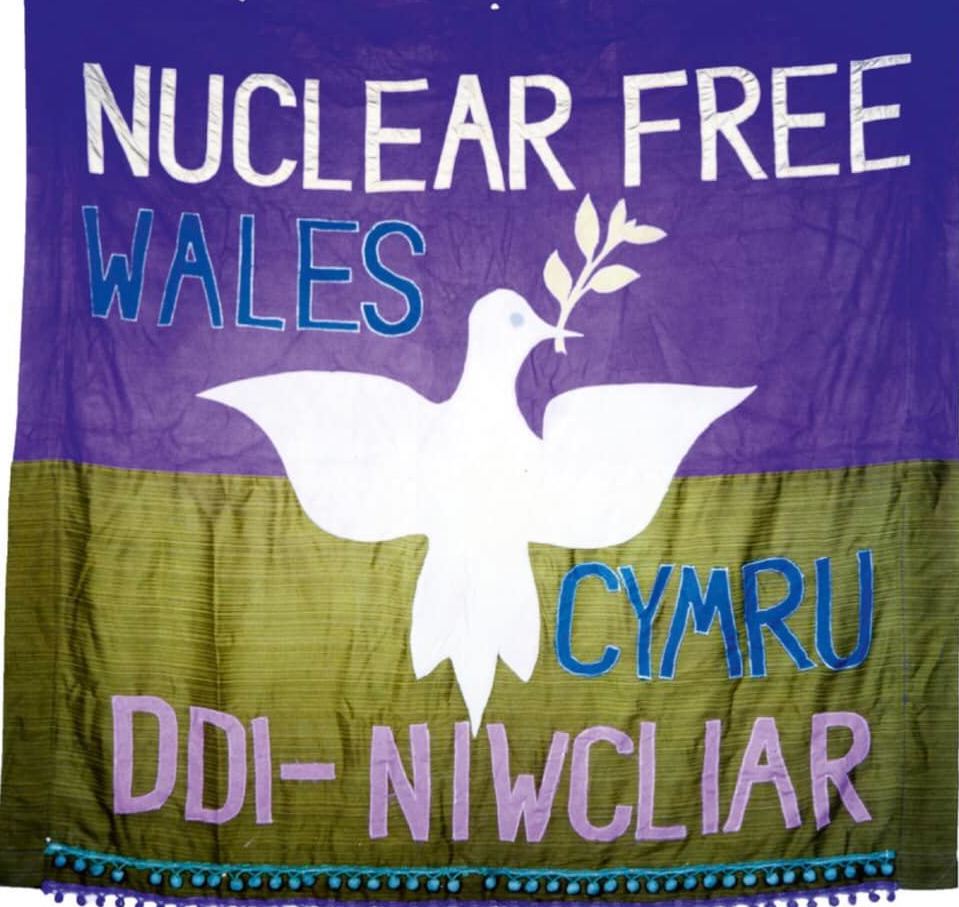
Citizens of Wales are gearing up for another assault on their right to a safe, clean and healthy environment
Anti-nuclear campaigners meeting in Wrexham last October issued a declaration calling on politicians representing Welsh constituencies in parliaments in Cardiff and Westminster to work for a nuclear-free, renewables-powered Wales.
Welsh campaigners are working with US, Canadian and other UK activists to establish a Transatlantic Nuclear-Free Alliance to campaign on issues of common concern. The new initiative came in conjunction with a screening of the award-winning film SOS: The San Onofre Syndrome, which highlights the impact of the decommissioning and the legacy of managing deadly radioactive waste faced by the neighbors of the San Onofre nuclear power plant in California.
The film’s messages resonate with international audiences faced with identical threats and challenges. At the screening, the audience heard from the filmmakers Marybeth Brangan and the now sadly late Jim Heddle as well as from Professor Stephen Thomas, Emeritus Professor in Energy Policy at Greenwich University and Richard Outram, Secretary of the Welsh Nuclear Free Local Authorities.
“The nuclear industry tries to assure us the radioactive waste disposal and reactor decommissioning are established processes with easily affordable costs,” Thomas said. “The truth is that we are three or more decades away from permanent disposal of waste and of carrying out the most challenging stages of decommissioning. The cost will be high, and the failure of previous funding schemes means the burden will fall on future taxpayers, generations ahead”.
Despite this, the UK Government will introduce developer-led siting plans, permitting nuclear operators to apply to locate new plants in sites throughout Wales, and intends to reduce regulation in the nuclear industry.
A recent Memorandum of Understanding was also signed with the United States that could lead to British regulators being obliged to accept US reactor designs not currently approved for deployment in the UK. Great British Energy – Nuclear has also acquired land at Wylfa in Anglesey (Ynys Môn) as a potential site for the deployment of one or more so-called Small Modular Reactors being commissioned from Rolls-Royce and the US company Westinghouse has also expressed interest in constructing a larger nuclear plant there.
The Welsh Government specifically created Cwmni Egino to develop a new nuclear plant on the Trawsfynydd site at the heart of the beautiful Eryri National Park. And in South Wales, US newcomer Last Energy is seeking permission to deploy multiple micro reactors on a former coal power station site at Llynfi outside Bridgend.
Eight leading campaign groups have backed the Wrexham Declaration which denounces the continued political obsession with the pursuit of nuclear power as a ‘fool’s errand’. NFLA Secretary Richard Outram explains why:
“Nuclear is too slow, too costly, too risky, contaminates the natural environment compromising human health, and leaves a legacy of nuclear plant decontamination and radioactive waste management lasting millennia that is ruinously expensive and uncertain. And nuclear plants represent obvious targets to terrorists and, as we have seen in Ukraine, to hostile powers in times of war”.
Campaigners are also convinced that nuclear power will worsen fuel poverty and climate change. As Welsh people face spiraling energy costs, with many in fuel poverty, while a new nuclear levy is to be added to all customers’ energy bills to help pay for the construction of the eye-wateringly expensive Sizewell C nuclear plant in Suffolk. Further, nuclear generation costs much more than generation from renewables, meaning more expensive electricity for consumers……………………………………………………………………………………………………………………………………………………………………………………………………………………… Read the Declaration. https://beyondnuclearinternational.org/2026/03/08/the-dragon-is-getting-ready-to-roar/
14 March – Protesters to rally at Faslane base in anti-nuclear demonstration

PROTESTERS are set to rally at the Faslane naval base to protest against
the UK’s nuclear arsenal. The rally, organised by the Scottish Campaign for
Nuclear Disarmament (CND), will be held at HMNB Clyde’s north gate on March
14. The Scottish CND told The National that “nuclear weapons are a threat
to Scotland and the whole world”, saying the presence of the UK’s nuclear
submarines in Scotland is putting “a target on our backs”.
The National 3rd March 2026,
https://www.thenational.scot/news/25903195.protesters-rally-faslane-base-anti-nuclear-rally/
Welsh Anti-Nuclear Alliance relaunched amid concerns over new projects planned for Wales
02 Mar 2026, https://nation.cymru/news/welsh-anti-nuclear-alliance-relaunched-amid-concerns-over-new-projects-planned-for-wales/
A coalition of peace, environmental and social justice organisations has relaunched the Welsh Anti-Nuclear Alliance (WANA), calling for what it describes as energy sovereignty and a democratic, community-led debate on the future of Welsh energy.
The relaunch took place on March 1, with WANA bringing together groups including CADNO (Cymdeithas Niwclear Oesel), CND Cymru, the Low-Level Radiation Campaign, the Low-Level Radiation and Health Conference, No Nuclear Llynfi, PAWB (People Against Wylfa-B), Stop Hinkley and Welsh Nuclear Free Local Authorities.
First established in 1980 by a broad coalition that included former MP Paul Flynn, CND Cymru, the Central Wales Energy Group, farmers and environmentalists, WANA served as a vehicle for anti-nuclear campaigning for decades. Its work was later dispersed among individual organisations during a period of relative calm. With nuclear energy and defence projects once again high on the political agenda, campaigners say the time is right to revive the alliance.
ADVERT – CONTINUE READING BELOW

WANA says it will focus on promoting what it calls “true renewable” energy generation while highlighting concerns around nuclear power and its links to military infrastructure.
A number of nuclear-related projects are currently proposed or under development in Wales. In November, the UK Government announced that Wylfa had been selected as a pilot site for Small Modular Nuclear Reactors (SMRs). Texas-based firm Last Energy has also set out plans for SMRs at the former Llynfi Power Station site between Maesteg and Bridgend. Other projects linked to the AUKUS alliance, including radar capability and submarine development, are expected to involve sites in Pembrokeshire and Cardiff. Nuclear development has also been suggested at locations including Aberthaw and Trawsfynydd.
WANA argues that decisions around these projects have often proceeded without sufficient input from Welsh communities. It says Wales has a long history of industrial exploitation, citing the decline of coal mining and heavy industry and more recent job losses in Port Talbot as examples of communities left behind after economic extracti
The alliance has published a manifesto calling for a “nuclear power and weapons free, sustainably powered, and peaceful Wales”. It raises concerns about public spending, the cost-of-living crisis, the climate emergency and what it describes as a lack of energy sovereignty. It also calls for greater debate around the links between civil and military nuclear programmes and for the devolution of the Crown Estate to Wales.
A WANA spokesperson said the alliance aims to bring campaigners together to challenge what it sees as the risks and costs of nuclear development.
“The cost of nuclear is too high, the build-times too long, and the waste question remains unanswered,” they said. “Wales must engage in a debate about our energy future, including community control and benefits.”
No to uranium mining in Greenland
February 27, 2026, by IPPNW – International Physicians fot the Prevention of Nuclear War
[Ed. note: Niels Henrik Hooge works with NOAH, the Danish branch of Friends of the Earth. He is also closely associated with Greenland’s No to Uranium Association (URANI? NAAMIK) in Nuuk. Patrick Schukalla, IPPNW Germany’s policy advisor on energy and climate, spoke with Hooge in February about the role of Greenland’s uranium resources and other subsurface wealth, and the potential threats to the territory during this period of geopolitical tension.]
PS: Although Greenland is currently on everyone’s mind, little is being learned about the island itself, its people or the Arctic ecology. Instead, the focus is on the geopolitical desires of others, both imagined and real. You have been working against large-scale mining in Greenland for a long time and have achieved significant political successes in this area. Could you tell us about that?
.NHH:………………………………………………………………….. . Denmark, which for centuries was in full control of Greenland, has made no attempts to integrate Inuit culture into the rest of Kingdom. Another striking fact is that private ownership of land does not exist and land cannot be bought or sold. You can own buildings, but not the ground. The paradox here is that you now have some of the biggest and greediest industrialists in the world trying to control property that so far has been collectively owned. This is really a clash of opposite cultures.
PS: The last time we spoke was in 2021, ahead of the COP26 Climate Summit in Glasgow. We discussed uranium mining and the false claims made by the industry and some governments under the slogan ‘Nuclear for Climate’. IPPNW is PS: committed to a world without nuclear threats. This includes calling for an end to uranium mining. What role does uranium play in Greenland and in your campaigns today?
NHH: Since 2021, when the Inuit Ataqigiit party came into power, there has been a ban on uranium mining. Inuit Ataqatigiit is mainly an ecological party and I guess to some extent you could compare it to the German Greens, because it is also a mainstream party. Until 2013, the ban had existed for a quarter of a century, but it was lifted on the request of the Australian mining company, Energy Transition Minerals (ETM, formerly known as Greenland Minerals Ltd., GML), which threatened to abandon the big Kvanefjeld uranium and rare earths mining project, if ETM could not exploit the uranium deposit.
Under GML’s ownership, the controversial project has been at the forefront of the public eye for more than a decade, and the mining project and uranium mining in general have been a major factor in the formation of at least five government coalitions since 2013. When the uranium ban was lifted, Greenlandic and Danish NGOs, including NOAH, started to cooperate to have it reinstated. Particularly, I want to emphasize our collaboration with URANI? NAAMIK, Greenland’s anti-uranium network, which played a crucial role in mobilising the public against uranium mining. Although this type of mining now is banned, the anti-uranium campaign cannot stop completely. Mining companies are lobbying the Trump administration and its associates in the private sector to intervene and changes in Greenland’s political community could fundamentally affect the status of uranium mining.
…………………………………………………………………………………….. PS: If European governments are now trying to satisfy the US without Greenland being annexed, are you worried that regulations will be weakened and the protection of the Arctic environment will be compromised?
NHH: Yes, unfortunately this is a real risk and it could start a race to the bottom. On one hand, EU’s Arctic Environment and Sustainability Strategy implies that oil, coal and gas should no longer be extracted in Arctic areas. On the other hand, EU has adopted a policy under the European Critical Raw Materials Act of fast-tracking mining projects even if they do not have support from the local population and show signs of flawed permitting or inadequate environmental impact assessments………………………………………..
PS: What are your next steps, and what would you like your friends and partners in other European countries and beyond to do?
NHH: Currently, URANI? NAAMIK and NOAH are campaigning to have mining companies which have played a role in getting the Trump administration to try to annex Greenland screened and if necessary, banned for security reasons. Furthermore, there is now a majority in the Greenlandic population to rejoin the EU as a member state, and obviously it would make sense, if EU institutions and the European NGO community started to prepare for this eventuality. In NOAH’s opinion, it would imply a conception of a European Arctic policy that includes an offer to support the Greenlandic government in protecting and preserving Greenland’s natural resources.
This could become a lighthouse project for Greenland, the Danish Kingdom and the EU, putting environmental protection on the global agenda. If mineral extraction is completely or partially abolished, the Greenlanders should of course be compensated financially. The European Parliament has supported the idea of an Arctic nature protection area in the past, using the Antarctic Treaty as a model. The idea is backed by 141 environmental organizations, including some of the largest in Europe and the world. https://peaceandhealthblog.com/2026/02/27/no-to-uranium-mining-in-greenland/
Britain must rethink its disastrous nuclear expansion – public protest can make it happen!

Sophie Bolt, CND General Secretary, 24 Feb 26, https://cnduk.org/britain-must-rethink-its-disastrous-nuclear-expansion-public-protest-can-make-it-happen/
Caroline Lucas is a former leader of the Green Party of England and Wales and a vice-president of the Campaign for Nuclear Disarmament. Here she writes ahead of Saturday’s national demonstration against Britain’s nuclear jets at RAF Marham and why public protest can make the government rethink its nuclear expansion plans.
With the end of the New START Treaty, the last remaining arms control agreement between the US and Russia, we now face the prospect of a new nuclear arms race without any limits on the two biggest nuclear armed states, who together own 90% of the world’s nuclear weapons. Given the world-destroying power of these nuclear arsenals it is critical that pressure is brought to bear on both Donald Trump and Vladimir Putin to support its voluntary extension for at least another year. This would give space to kick-start a formal extension of the Treaty, bringing an element of stability and transparency to what is an increasingly dangerous and unstable world in which the threat of nuclear weapons being used is higher than at any time since the Cold War.
The expiry of New START was one of the reasons given by the Bulletin of the Atomic Scientists to push forward the hands of the Doomsday Clock by four seconds. Now standing at 85 seconds to midnight, it acts as a stark warning of just how close we are to an irreversible catastrophe caused by humanity – through nuclear war or climate collapse. Rather than pursuing policies that will help push back the clock, nuclear states spent over $100 billion on these weapons in 2024, replacing and modernising them. Meanwhile, challenges to the nuclear taboo are intensifying with increasing calls for the use of so-called ‘tactical’ nuclear weapons on the battlefield.
Shamefully, Britain is part of the problem, with the ongoing replacement of its nuclear-armed submarine fleet and the announcement last summer of its decision to purchase US nuclear-capable F-35A fighter jets. Based at RAF Marham in Norfolk, the first 12 jets will be delivered by 2030 and a total of 75 will be bought over the course of the programme’s 40-year lifespan.
Even before the first delivery, expenditure on the programme has already spiralled out of control. The MoD initially costed the F-35 programme – which also includes non-nuclear F-35Bs – at £57 billion. However, this failed to include any sustainment costs, including staff, fuelling and maintenance. The National Audit Office has now estimated the programme will cost at least £71 billion. But this still doesn’t cover any of the costs for the lengthy, involved process of NATO integration. As the Public Accounts Committee revealed, this is because the MoD themselves have yet to figure this out. Footing the bill for this ‘blank cheque’ purchase will be the British public, at the expense of public services and climate action.
The purchase also ties us closer to the dangerous leadership of Donald Trump. These jets and their crews will be assigned to NATO’s nuclear Dual Capable Aircraft mission and RAF pilots will be trained to carry US B61-12 nuclear bombs now likely deployed to RAF Lakenheath in Suffolk. One of these bombs has the destructive power three times greater than the bomb dropped on Hiroshima in 1945. Modelling from Princeton University found that the use of these so-called ‘battlefield nukes’ could quickly escalate into a wider nuclear confrontation, leading to 2.6 million deaths in the first few hours alone. Rather than keeping us safe, these nuclear weapons undermine our security and ensure we are firmly on the frontline of a nuclear war.
The expansion also breaches international law. As a signatory to the nuclear Non-Proliferation Treaty, Britain is obliged to pursue disarmament in good faith. However, a new legal opinion argues ‘[t]he decision of the UK to purchase F-35A fighter jets rather than any other model is precisely because the aircraft can “deliver both conventional and nuclear weapons” and thereby enable the RAF to reacquire “a nuclear role for the first time since 1998.” Reinstating a nuclear role for the RAF represents a reversal of the UK’s long-term commitment to nuclear disarmament, including under the NPT.’
Given the grave consequences of this expansion, this would surely warrant a robust and serious debate in Parliament. Yet MPs were not consulted about the purchase ahead of Starmer’s announcement at last summer’s NATO summit. Since then, the government has stated it has no plans for such a debate.
Not surprisingly, there is widespread opposition to the decision, including from the Green’s Party Leader, Zack Polanski, and our MPs and Peers. They join many trade union leaders, faith communities, civil society and climate groups all calling for the government to rethink this disastrous nuclear expansion and instead pursue a foreign policy based on de-escalation, diplomacy, and international cooperation.
That’s why I’m urging all those who want to halt this deadly nuclear expansion to join CND’s upcoming demonstration at RAF Marham, in Norfolk, on Saturday 28 February. Not only is this base the central hub for the government’s notorious F-35 fighter jet programme, from where parts for these jets have been transported to Israel. It is also where these new nuclear-capable jets will be stationed. Of course, the government doesn’t want you to know what goes on at this base. And it certainly doesn’t want peaceful protesters shining a spotlight on it. But protest has always been central in making political leaders step back from the nuclear brink and take action to disarm nuclear weapons. It is a rich part of Britain’s history. And we need this now more than ever.
An environmental coalition defends Environmental Justice (EJ) against the Canadian Nuclear Waste Management Organization’s (NWMO) latest Deep Geological Repository (DGR) scheme.
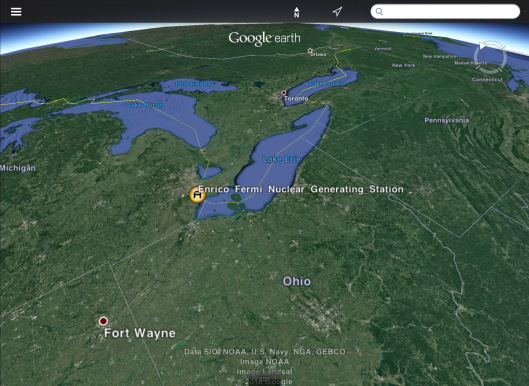
February 5, 2026, https://beyondnuclear.org/enviro-coalition-defends-ej-against-nwmo-dgr/
An environmental coalition — Beyond Nuclear, Coalition for a Nuclear-Free Great Lakes, Don’t Waste Michigan, and Nuclear Information and Resource Service (NIRS) — has defended Environmental Justice (EJ) against the Canadian Nuclear Waste Management Organization’s (NWMO) latest Deep Geological Repository (DGR) scheme.
The coalition submitted extensive comments on NWMO’s Initial Project Description Summary.
NWMO is targeting the Wabigoon Lake Ojibway Nation and the Township of Ignace, in northwestern Ontario, north of Minnesota and a relatively short distance outside of the Great Lakes (Lake Superior) watershed, for permanent disposal of a shocking 44,500 packages of highly radioactive irradiated nuclear fuel.
The Mobile Chornobyls, Floating Fukushimas, Dirty Bombs on Wheels, Three Mile Island in Transit, and Mobile X-ray Machines That Can’t Be Turned Off would travel very long distances, including on routes through the Great Lakes watershed, from Canadian reactors to the south and east, thereby increasing transport risks and impacts.
The watershed at the proposed Revell Lake DGR site flows through Lake of the Woods, Minnesota, sacred to the Ojibwe. Lake of the Woods contains many islands, some adorned with ancient rock art.
Indigenous Nations and organizations, including Fort William First Nation, Nishnawbe Aski Nation, Grassy Narrows First Nation, Neskantaga First Nation, and the Land Defence Alliance rallied against NWMO’s DGR last summer in Thunder Bay, Ontario, on the shore of Lake Superior.
Beyond Nuclear’s radioactive waste specialist, Kevin Kamps, traveled to Thunder Bay last spring, to speak out against NWMO’s DGR at the Earth Day annual meeting of Environment North.
We the Nuclear-Free North organized the public comment effort, greatly aiding our coalition to meet the deadline.
Our coalition groups worked with Canadian and Indigenous allies for two decades to stop another DGR, targeted by Ontario Power Generation (which dominates the NWMO) at the Bruce Nuclear Generating Station in Kincardine, Ontario, on the Lake Huron shore. Bruce is the largest nuclear power plant in the world by number of reactors — nine! The final nail in the Bruce DGR came from the very nearby Saugeen Ojibwe Nation, which voted 86% to 14% against hosting the DGR!
From the ashes, arises a Phoenix: Scottish NFLAs resolve to chart a new path

The UK/Ireland Nuclear Free Local Authorities will tomorrow pass into history as the Manchester-based Secretariat will cease to function and the post of NFLA Secretary will be disestablished.
But now at least there is the expectation that from out of the ashes a new phoenix will arise; for today our Scottish affiliated authorities took the decision ‘in principle’ to reform a Scottish Nuclear Free Local Authorities network with a Glasgow-based Secretariat.
NFLA Policy Advisor Pete Roche, known to many
of you for his invaluable daily and weekly information bulletins published
through No 2 Nuclear Power www.no2nuclearpower.org.uk, will continue to
support the new body. Over the next two months, the leadership of the
Scottish NFLAs will take legal and financial advice to best place the new
SNFLAs on a secure footing for the future. And, with Scotland facing
increasing nuclear threats from Ministers at Whitehall and a looming
Scottish Parliament election, the decision could not be timelier.
NFLA 30th Jan 2026, https://www.nuclearpolicy.info/news/from-the-ashes-arises-a-phoenix-scottish-nflas-resolve-to-chart-a-new-path/
Nuclear project with locals opposed will get federal review
Federal law requires large projects to examine whether there are other feasible ways to meet the same goals with fewer risks.
That opens the door to arguments that renewables, storage and grid upgrades could deliver similar benefits faster, more cheaply and with less environmental harm.
Recent studies from the Ontario Clean Air Alliance suggest alternatives exist and that the province could save up to $19 billion per year by investing in wind, solar and storage instead of pursuing the Wesleyville nuclear megaproject.
Canada’s National Observer, By Abdul Matin Sarfraz, January 22nd 2026
For most of her life, Faye More has lived in the shadow of nuclear waste, grappling with radioactive contamination in her home and her hometown left behind by uranium and radium processing.
She grew up in Port Hope, a lakeside community about 100 kilometres east of Toronto that is still undergoing cleanup of contaminated soil that continues to be removed from neighbourhoods and stored in a huge engineered mound about the size of 70 hockey rinks, visible from Highway 401.
In the 1970s, government investigators found high levels of radon gas at St. Mary’s elementary school in Port Hope, where radioactive mining waste from the town’s uranium mine had been used as fill beneath the building. The school was closed and tests were conducted elsewhere around the town. Investigators uncovered contamination in unexpected places — including backyards and basements.
“I grew up in a contaminated house. I later ended up buying a contaminated property without knowing it and I raised my family there because the locations of radioactive waste were not being disclosed,” More said.
Radon is a colourless, odourless radioactive gas that forms naturally as uranium breaks down in soil and can seep into homes through foundations — it’s naturally occurring in many places but, in Port Hope, levels were significantly higher than normal. Health Canada says radon is the second-leading cause of lung cancer after smoking, linked to about 16 per cent of cases nationwide, or more than 3,000 deaths each year.
Now, More’s community is being asked by the Ford government to shoulder another nuclear burden, one of the largest nuclear projects in the world. This time, she is fighting back, helping lead local residents who say they have already paid the price.
The province last year announced that Ontario Power Generation (OPG) is proposing a new nuclear generating station on its Wesleyville property. The company says the project could eventually host up to 10,000 megawatts of generating capacity, enough to power up to 10 million homes for roughly 78 years.
In its own documents, the Ontario Power Generation says it is not considering alternatives to the Wesleyville project itself. It describes nuclear expansion as a policy decision already made by the province.
The Ford government celebrated the project, claiming more nuclear power is essential to meet rising electricity demand while helping Canada hit its climate targets.
Nuclear energy is frequently cited as a clean, reliable alternative to fossil fuels…………………….
“I was really shocked and appalled,” said More, now chair of the Port Hope Community Health Concerns Committee. “I felt it was very disrespectful to the people, the way it was announced as good news.”
More says the group has more than 100 members and is a volunteer-run non-profit formed in 1995 to address health and environmental risks linked to radioactive contamination in the town.
The group organizes public meetings, shares information online, writes letters to officials and urges residents to take part in public consultations.
Last week, the federal government formally designated the proposed Wesleyville project for a federal environmental impact assessment, opening the door to public consultation.
Unlike most major infrastructure projects, nuclear plants fall largely under federal jurisdiction. The Federal Impact Assessment Act requires a full review for any new nuclear facility larger than 200 megawatts.
The Canadian Nuclear Safety Commission must then decide whether the project meets safety and environmental rules under the Nuclear Safety and Control Act and the Impact Assessment Act before issuing a licence.
More hopes the federal process will stop the project altogether. She says the risks to nearby communities are too great, that safer alternatives exist and that the Ford government ignored Port Hope’s long and painful history with the nuclear industry.
For her, the idea of building one of the world’s largest nuclear plants nearby feels surreal.
“To suddenly hear that in this beautiful rural area they are going to build what could be the largest nuclear plant in the world is really unimaginable,” she said.
More worries about what that would mean for land, water and ecosystems. “It is hard to picture the scope of changes that would happen out there,” she told Canada’s National Observer. “And with that scale comes enormous risks, including emissions to the water, the air and impacts on biodiversity.”
OPG’s filings describe major physical changes that would come with the project. These include shoreline filling, dredging, building docks and large-scale excavation and blasting.
The company also says the plant would rely on cooling water from Lake Ontario. The company acknowledges the site includes wetlands, creeks and fish habitat. It also says parts of the area fall within highly vulnerable aquifer zones.
More says the pace of the project is almost as alarming as its size. She believes people should have veto power, a view not shared by the Ford government, which like the federal government is seeking to build infrastructure more quickly.
“One of the most basic questions in any environmental assessment is: Do we actually need this much energy? And if we do, why does it have to come from here?”
The company says it already owns the property, that it has been intended for electricity generation for decades and that the region has major infrastructure nearby such as transmission corridors, rail access and road that make the site ideal for the expansion plans.
Moving faster than expected
Legal experts note the project is moving at unusual speed.
Theresa McClenaghan, executive director and counsel at the Canadian Environmental Law Association, has followed nuclear projects for decades and says the timeline alone should raise red flags.
“From the very first idea, where the province asked OPG to look at potential new sites, to filing a project description with the federal agency, it’s been something like a year,” she told Canada’s National Observer. “That’s incredibly fast for something of this scale.”
McClenaghan believes OPG is trying to secure approvals while political conditions are favourable.
““They see a friendly Nuclear Safety Commission. They see a supportive provincial government and a supportive federal government,” she said.
“I think they’re thinking: let’s get this licence in our back pocket.”
She points to earlier cases where OPG obtained approvals long before construction began, protecting itself from future political or economic shifts. That strategy matters, she says, because nuclear megaprojects often face soaring costs.
Recent regulatory changes mean many of those costs can now be passed on to ratepayers long before any electricity is produced.
McClenaghan says the federal impact assessment may be the only real opportunity for the public to closely examine the project’s risks, costs and alternatives.
“It’s extremely rare for nuclear projects to be denied,” she said. “But it’s not impossible.”
The review will eventually combine two decisions into one: whether the project’s impacts are acceptable under federal law and whether the Canadian Nuclear Safety Commission should grant OPG a licence.
Under federal rules, the process must look at accident scenarios, long-term environmental effects and whether the project makes sense in its proposed location, including near population centres. In its own documents, OPG says it is not considering alternatives to the Wesleyville project itself. It describes nuclear expansion as a policy decision already made by the province.
McClenaghan says that stance could become a major sticking point. Federal law requires large projects to examine whether there are other feasible ways to meet the same goals with fewer risks.
That opens the door to arguments that renewables, storage and grid upgrades could deliver similar benefits faster, more cheaply and with less environmental harm.
Recent studies from the Ontario Clean Air Alliance suggest alternatives exist and that the province could save up to $19 billion per year by investing in wind, solar and storage instead of pursuing the Wesleyville nuclear megaproject.
Ontario’s big nuclear bet
More than half of Ontario’s electricity currently comes from nuclear power.
Under the province’s long-term planning, that share is projected to rise above 70 per cent by 2050 as electricity demand is expected to increase by about 75 per cent.
Nuclear projects are expensive and complex. The province says it plans to explore new ownership models and equity partnerships to attract private capital.
The government argues nuclear power is more cost-effective and land-efficient than renewables. It says alternatives would require vast amounts of land and major new transmission infrastructure, a claim challenged by energy experts.
For More, the fight has already begun. She is organizing meetings, sharing information online and urging people to take part in the consultation. But she says the timelines are too short for communities to respond in a meaningful way.
She worries that political efforts to “cut red tape” are turning health and environmental protections into barriers to be removed.
“What happens at Wesleyville doesn’t stay at Wesleyville. The reach of a nuclear plant is enormous,” More said. “When a wind turbine fails, it doesn’t contaminate an entire region,” she said. “Nuclear is different.”
More says her community has already paid the price of Canada’s nuclear history once and they are not willing to do it again.
Nature groups question UK’s Fingleton nuclear review
The Engineer, 21 Jan 2026, https://www.theengineer.co.uk/content/news/nature-groups-question-fingleton-nuclear-review
More than a dozen environmental groups and over 60 MPs are questioning the ‘Fingleton recommendations’ set out in the recent Nuclear Regulatory Review.
Led by economist John Fingleton, the Nuclear Regulatory Review made several recommendations designed to ease the path of nuclear development. Among these were proposals to weaken the Habitats Regulations which protect nature sites. But environmental groups, led by The Wildlife Trusts, claim that the review is based on flawed evidence, and that the recommendations could have a catastrophic effect on nature across the UK.
“The dice were loaded from the start – the nuclear review confirms a false narrative that was already being circulated by certain industry lobby groups and think tanks,” said Craig Bennett, chief executive of The Wildlife Trusts.
“The errors in the review form a clear pattern: repeated exaggeration of the costs of preventing harm to nature – and minimisation of the impact to wildlife of nuclear development without those measures. The fact that no environmental experts served on the panel is a disgrace and the resulting distorted picture obscures the value the natural world delivers for economic stability and net zero.”
A new report from The Wildlife Trusts points to specific examples where it believes the nuclear review falls short. It claims that, rather than £700m, Hinkley C’s much-debated fish deterrent system would actually cost £50m. This is against a total project cost of £46bn, up from an original estimate of £18bn.
The Nuclear Regulatory Review also claims that the fish deterrent system would save just 0.08 salmon, 0.02 trout and 6 lamprey per year. However, The Wildlife Trusts cites a report from the Environment Agency that suggests up to 4.6 million adult fish per year could be killed per year if no protective measures are put in place.
“There is limited evidence that environmental protections impose undue costs on infrastructure developers,” said Bennet. “In fact, evidence shows that frequently cited examples of expensive mitigation measures originated from developer mistakes and were unconnected to environmental issues. Blaming nature is unacceptable and a way of avoiding accountability.
“The developers of Hinkley C are trying to blame everyone but themselves for their own failure to think about nature from the outset. When developers think about nature too late in the design process, they end up creating bolt-on engineering solutions for ecological problems, which tend to be more expensive and less effective than committing to make infrastructure nature positive from the very start of the designing process. It’s pretty pathetic that the government is now trying to bail out energy infrastructure developers for this failure of commitment and imagination.”
The Wildlife Trusts’ campaign to save the environmental protections that are threatened by the recommendations of the Nuclear Regulatory Review is supported by 14 other organisations: Wildlife and Countryside Link, Rivers Trust, Campaign for National Parks, Marine Conservation Society, Plantlife, Buglife, Bat Conservation Trust, Amphibian Reptile Conservation, Badger Trust, Beaver Trust, Bumblebee Conservation Trust, Butterfly Conservation, Open Spaces Society, and Client Earth.
The French Resistance at Bure: the campaign to oppose a nuclear waste dump.

Richard Outram, NFLA Secretary, 6 January 2026
Introduction.
The outline for this briefing was first written almost two years ago for British and Canadian campaigners working collaboratively in opposing plans to establish high level radioactive waste repositories in their respective nations, either an off-shore and undersea Geological Disposal Facility (UK) or an inshore and underground Deep Geological Repository (Canada).
It was intended to raise their awareness of the decades long struggle waged by colleagues against the similar Cigéo Project under development in France.
Contrary to the positive articles published by Nuclear Waste
Services Community Partnerships and puff pieces that have appeared in the pro-nuclear Cumbrian media all is not ‘sweetness and light’, for there have been public protests involving local people and environmental activists against this project for decades.
Protests have often been opposed by police using tear gas, water cannons, and stun grenades to disperse demonstrators. Authorities maintain a heavy police presence in the area, and multiple injuries have been reported on both sides during serious confrontations. The French state has also resorted to spying and the wholesome clearance and destruction of protestors’ camps.
This then is a background paper to the campaign in opposition to the Cigéo Project, and the tactics employed by the French State and Police in opposing them…………………………
Lengthy detailed history. with excellent photos and graphics.
Conclusion.
With sections of the media reporting that the British Government is looking to abandon the ‘consent based’ approach, and with the former Nuclear Minister suggesting that such a move is inevitable, there must be concerns that a nuclear waste dump might eventually be imposed on a wholly unwilling community in the UK.
Such an announcement would most likely lead to more robust public opposition. Could this lead in turn to the UK Government looking to resort to the heavy-handed policing seen at Bure?
Although UK police services have historically operated based on consent, this is perhaps less fanciful than it might appear. Ministerial approval has already been given to deploy armed officers of the Civil Nuclear Constabulary at national energy infrastructure sites outside of nuclear power stations and Ministers announced as part of the 2025 Defence Review that an armed auxiliary civilian guard force would be created for a similar purpose.
If the UK Government does move away from a ‘consent-based approach’ to GDF siting, Bure may provide a salutary lesson for an unwilling, and disenfranchised, community in the UK faced with the prospect of a highlevel nuclear waste facility being imposed by the British State.
Forewarned is forearmed. https://www.nuclearpolicy.info/wp/wp-content/uploads/2026/01/A446NB332-The-French-Resistance-at-Bure-the-campaign-to-oppose-a-nuclear-waste-dump-Jan-2026.pdf
Three things ICAN is looking forward to in 2026

3 Jan 2026, https://www.icanw.org/2026_3_things_anticipating
As 2026 begins, nuclear risks and the false myths about nuclear deterrence on the rise. ICAN, working with countries and partners across continents, are challenging nuclear weapons and taking our work to the next level. Here are three things we’re looking forward to this year:
Celebrating five years of the nuclear ban treaty
On 22 January, we’ll mark five years since nuclear weapons officially became illegal under international law. That’s not symbolic — it’s transformative.
ICAN and partners around the world will commemorate the moment that nuclear weapons finally became illegal. With celebrations, seminars, screenings, actions and activism across the globe. This anniversary is a chance to reflect on how far we’ve come — and to build momentum for the work ahead. The ban treaty has changed the global conversation. Now we’re making sure it changes reality.
Evidence for action: exposing the myths of nuclear deterrence
Nuclear deterrence is built on theory. Our campaign is built on facts.
Throughout the year, we’ll be working with our partners, scientists, health experts, economists and governments to make one truth unavoidable: any use of nuclear weapons would be catastrophic.
The evidence is clear. Nuclear weapons:
- threaten public health
- destabilise societies
- devastate ecosystems and undermine food systems
- have consequences that would last for decades.
We’ll use this evidence to challenge decision-makers, dismantle dangerous deterrence myths, and demand an end to the billions spent on weapons that put all life on Earth at risk.
Diplomacy that protects people, not power
Real security doesn’t come from weapons of mass destruction. It comes from negotiation and cooperation.
ICAN is working closely with governments that support the Treaty on the Prohibition of Nuclear Weapons (TPNW) to ensure diplomacy in 2026 reduces nuclear risks and advances disarmament. With two major nuclear weapons treaties under review, we’ll seize opportunities to:
- strengthen global norms against nuclear weapons
- hold governments accountable to their commitments
- push disarmament from words into action
Alongside these milestones, we’ll also publish impactful and informative reports, amplify survivor voices, engage media worldwide and support our partners.
The risks around nuclear weapons are growing, making our work to educate, empower and act together more urgent than ever.
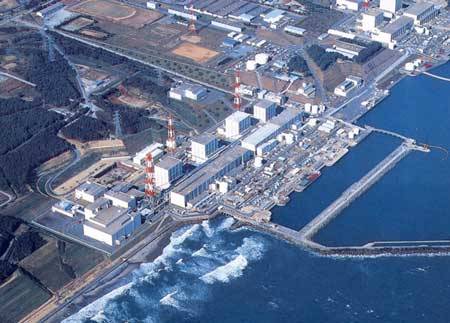
1A 15 years after Fukushima disaster locals fear return of Japan’s nuclear power.
Sarah Hooper, December 24, 2025, https://metro.co.uk/2025/12/24/15-years-after-fukushima-disaster-locals-fear-return-of-japans-nuclear-power-25764288/
Japan is returning to nuclear energy almost 15 years after the Fukushima disaster – but not everyone is convinced it’s a good idea.
The world’s largest nuclear power plant, Kashiwazaki-Kariwa, shut down most of its reactors after the deadly 2011 earthquake and tsunami.
The Fukushima nuclear disaster was triggered in March 2011 when four of the plant’s reactor buildings were damaged in the most powerful earthquake in Japan’s history, which had a magnitude of 9.0.
In the aftermath, Japan began the process of shutting down many of its nuclear power plants, including Kashiwazaki-Kariwa, north of Tokyo.
But as the country looks to become self-sufficient when it comes to energy, it’s rebooting many of the nuclear plants shut down after the tsunami.
Restarting nuclear facilities is a ‘significant move’ for Japan
Dr Leslie Mabon, a Senior Lecturer in Environmental Systems in the School of Engineering and Innovation at the Open University, has researched how nuclear facilities affect the environment and communities near Fukushima in Japan.
He told Metro that none of the reactors which are going to be restarted are in nuclear stations in Fukushima Prefecture, but restarting Kashiwazaki-Kariwa is a significant move
‘What is significant about this restart is not only the size of the plant – the largest in Japan – but also that it is operated by Tokyo Electric Power Company (TEPCO), who are also responsible for the Fukushima Dai’ichi plant that faced the meltdowns in 2011,’ he explained.
‘A crucial question at the heart of the controversy over nuclear restarts in Japan is: who does it benefit?’
Local governments and citizens living near nuclear plants have raised concerns about the safety of the plants, especially because the electricity produced won’t power their own communities.
‘Electricity from the plant primarily benefits those living in the Tokyo metropolitan area, some 200km south-east,’ Dr Mabon added.
‘Citizens and political figures in Niigata, and other regions like it, where restarts are on the horizon, may well be asking why they have to take up the risk for a power plant that benefits those living far away.’
An ageing and declining population in rural areas where the nuclear power plants are also located poses another problem.
‘Local and regional politicians face a very difficult balancing act between the jobs and economic benefits that hosting a nuclear plant brings on one hand, versus the concerns some of their citizens might have about safety and fairness on the other,’ he said.
Widespread outcry over nuclear power
Local residents aren’t supportive of the move, however, with dozens of protesters assembling outside after politicians voted to reopen the plant.
TEPCO, the energy company which will operate the plants, said in a statement: ‘We remain firmly committed to never repeating such an accident and ensuring Niigata residents never experience anything similar to 2011.’
Despite widespread outcry by residents – some 60% of whom don’t believe conditions to restart the plant have been met – it will reopen in January.
Local resident Ayako Oga was protesting after the vote – she was forced to relocate after the meltdown of the Fukushima plant placed her home inside the exclusion zone.
She said: ‘As a victim of the Fukushima nuclear accident, I wish that no one, whether in Japan or anywhere in the world, ever again suffers the damage of a nuclear accident.’
More than 200 environmental groups demand halt to new US datacenters.

Congress urged to act against energy-hungry facilities blamed for increasing bills and worsening climate crisis
Oliver Milman, Guardian 8 December 25
A coalition of more than 230 environmental groups has demanded a national moratorium on new datacenters in the US, the latest salvo in a growing backlash to a booming artificial intelligence industry that has been blamed for escalating electricity bills and worsening the climate crisis.
The green groups, including Greenpeace, Friends of the Earth, Food & Water Watch and dozens of local organizations, have urged members of Congress to halt the proliferation of energy-hungry datacenters, accusing them of causing planet-heating emissions, sucking up vast amounts of water and exacerbating electricity bill increases that have hit Americans this year.
“The rapid, largely unregulated rise of datacenters to fuel the AI and crypto frenzy is disrupting communities across the country and threatening Americans’ economic, environmental, climate and water security,” the letter states, adding that approval of new data centers should be paused until new regulations are put in place.
The push comes amid a growing revolt against moves by companies such as Meta, Google and Open AI to plow hundreds of billions of dollars into new datacenters, primarily to meet the huge computing demands of AI. At least 16 datacenter projects, worth a combined $64bn, have been blocked or delayed due to local opposition to rising electricity costs. The facilities’ need for huge amounts of water to cool down equipment has also proved controversial, particularly in drier areas where supplies are scarce.
These seemingly parochial concerns have now multiplied to become a potent political force, helping propel Democrats to a series of emphatic recent electoral successes in governor elections in Virginia and New Jersey as well as a stunning upset win in a special public service commission poll in Georgia, with candidates campaigning on lowering power bill costs and curbing datacenters.
This threatens to be a major headache for Donald Trump, who has aggressively pushed the growth of AI but also called himself the “affordability president” and vowed to cut energy costs in half in his first year………………………………………………………………………………………….
it is the growth of datacenters to service AI – with electricity consumption set to nearly triple over the next decade, equivalent to powering 190m new homes – that is the focus of ire for voters as well as an unlikely sweep of politicians ranging from Bernie Sanders on the left to Marjorie Taylor Greene on the far right…………………………………………………………………………………………….https://www.theguardian.com/us-news/2025/dec/08/us-data-centers
The Oldest Nuclear Power Plant In The World Is Facing Public Backlash
By Talia Roepel Dec. 14, 2025, https://www.bgr.com/2047450/oldest-nuclear-power-plant-world-controversy-beznau/
The oldest nuclear power plant in the world that is still operating is Beznau in Switzerland. With both units of the power plant fully operational in 1972, plans are for it to continue to operate until it is completely decommissioned in 2033. Switzerland has no policies in place to stop nuclear power plants after a set amount of time, instead, it is determined based on safety evaluations. However, because of Beznau’s age and its presence in general, it has come under plenty of backlash.
The Beznau nuclear power plant has seen its fair share of incidents. It has had nearly 100 safety incidents across its history, alarming the residents of the surrounding area. It was even temporarily closed for repairs from 2015 to 2018 due to issues with its steam generators, and its reactor was found to have cracks around it that same initial year.
The public isn’t entirely happy about Beznau still being in operation. Nuclear power tends to be controversial because of the danger accidents pose, as well as the fact that nuclear waste doesn’t ever truly go away. There have been gatherings of protestors around Beznau a couple of times in the past, with one protest attracting 20,000 people. Still, it doesn’t look like Beznau has plans to retire early.
1 This Month

of the week – Shut Down Drone Warfare!


Tell the Ukrainian Government to Drop Prosecution of Peace Activist Yurii Sheliazhenko

Petition to revoke the licensing of the Near Surface Nuclear Disposal Facility (NSDF) at Chalk River. https://www.ourcommons.ca/petitions/en/Petition/Details?Petition=e-7247
To see nuclear-related stories in greater depth and intensity – go to https://nuclearinformation.wordpress.com
-
Archives
- April 2026 (57)
- March 2026 (251)
- February 2026 (268)
- January 2026 (308)
- December 2025 (358)
- November 2025 (359)
- October 2025 (376)
- September 2025 (257)
- August 2025 (319)
- July 2025 (230)
- June 2025 (348)
- May 2025 (261)
-
Categories
- 1
- 1 NUCLEAR ISSUES
- business and costs
- climate change
- culture and arts
- ENERGY
- environment
- health
- history
- indigenous issues
- Legal
- marketing of nuclear
- media
- opposition to nuclear
- PERSONAL STORIES
- politics
- politics international
- Religion and ethics
- safety
- secrets,lies and civil liberties
- spinbuster
- technology
- Uranium
- wastes
- weapons and war
- Women
- 2 WORLD
- ACTION
- AFRICA
- Atrocities
- AUSTRALIA
- Christina's notes
- Christina's themes
- culture and arts
- Events
- Fuk 2022
- Fuk 2023
- Fukushima 2017
- Fukushima 2018
- fukushima 2019
- Fukushima 2020
- Fukushima 2021
- general
- global warming
- Humour (God we need it)
- Nuclear
- RARE EARTHS
- Reference
- resources – print
- Resources -audiovicual
- Weekly Newsletter
- World
- World Nuclear
- YouTube
-
RSS
Entries RSS
Comments RSS
 nuclear-news