Australia: Sovereignty mocked in the ‘proxy war’ in Ukraine
By William Briggs | 11 September 2023 https://independentaustralia.net/politics/politics-display/sovereignty-mocked-in-the-proxy-war-in-ukraine,17887
The cliché that truth is the first casualty of war may be a tired one but it is still true.
But in the war in Ukraine, if truth loses out, then hypocrisy is surely the biggest winner. The war shows this to be the case. Sides get taken in war. The protagonist states win allies to their banner. Third-party countries quickly “prove” to their people that right rests with one side or another. The media quickly step in to do their bit and heaven help any dissenting voice. Such has been the trajectory of the protracted war in Ukraine.
Our own government, in close alignment with the USA, NATO and the majority of the West, quickly made the determination that it was a relatively black-and-white affair. There is a “goody” and a “baddy” and that is as much as the people need to know. The media speak with one voice. There is more than a hint of Animal Farm in this. ‘Four legs good, too legs bad.’ Russia, we must believe, invaded Ukraine to grab territory, to grow an empire, and to return to a faded imperial past.
The courageous Ukrainian people, we must believe, are yearning for freedom, for justice and so they fight back to preserve democracy. It is a nice story, but as more and more authoritative but “dissident” voices have shown, there is a whole lot more to it than cheap slogans.
Three names among these “dissidents” stand out in the current propagandised media world. Seymour Hersch, Jeffrey Sachs and John Pilger. It is a terrible indictment on how distorted reality has become that these most eminent writers and multiple award-winning truth-tellers have been shunted to the sidelines, made virtual pariahs, and ridiculed in some rather important circles.
Who controls the past controls the future: who controls the present controls the past.’ Orwell was warning against the rise of authoritarianism and of the manipulation of thought. Both seem to have arrived.
Those giant figures have repeatedly stated a simple fact and a fact made more obvious with every passing blood-stained week of this unnecessary war. The fact, which cannot be denied is that the war is a proxy war between the USA, NATO and its allies including Australia on one side, and Russia on the other.
The forces that are waging this war may not have committed battle troops to Ukraine, but they train their forces, both in Ukraine and abroad, have special forces units inside Ukraine, and have spent well over $100 billion on providing materiel to ensure that the war, is, if not won, then will result in the economic and social destruction of Russia. Ukraine, in such a scenario, is simply collateral damage.
The hypocrisy, the propagandising, the manner that collective thought is created and dissent is silenced is complete. This Orwellian view of the world would be questioned by Orwell as being too improbable. No country, regardless of its own worldview is permitted to interact with the “enemy”. There has been much said about whether the government of the Democratic Republic of Korea (DPRK) will or will not enter into an arms deal with Russia.
The DPRK has been effectively the subject of sanctions since 1950. It believes that its existence is only guaranteed by perpetually building a deterrence to attack. It sees almost endless war games and drills close to its borders. It believes its sovereignty; its very existence is threatened. It sees no problem with dealing with an enemy of the United States.
White House security adviser Jake Sullivan in a press briefing promised that if Pyongyang provides weapons to Moscow, it is ‘not going to reflect well on North Korea and they will pay a price for this in the international community’.
The two recalcitrant states in this case are both sovereign nations, are both represented at the United Nations and if such a deal eventuates will be doing no more than what 49 nations are doing in pouring weapons, munitions and expertise into Ukraine to assist in the proxy war.
If the media were not quite so blinkered and committed to their role as propagandists for the war, then such a hypocritical position would be clear. Australian Foreign Minister Penny Wong recently stated that “Russia cannot be allowed to infringe upon another country’s sovereignty”. She is quite right. But in the spirit of hypocrisy and hyperbole, the U.S. pledge to impose all manner of penalties on the DPRK for exercising its own sovereign rights is to admit that the world has run mad.
Australian drones have been used in attacks on Russia. Apparently, this is not an “infringement” of sovereignty.
The war is a fact of life. It is a lamentable fact of life. It would be preferable for the war not to have begun. Reason, logic and humanity would demand that the war end. Every call to sense and humanity has been rejected. The most obvious and possible call came from China and its 12-point peace plan. The USA and its allies would not consider it.
Russia, rightly or not, believes that it is facing an existential crisis. The giants of investigative journalism, who have been all but cancelled, silenced from mainstream media and deemed to be irrelevant agree with the basis of Russia’s claims and are wary of the way this proxy war is being prosecuted. The Ukrainian people have been “sold a pup”. They are being used and manipulated by the West, NATO, and primarily by the USA.
Truth died on day one of this awful war. In its place, hypocrisy has unfurled its banner over the battlefield.
US Intelligence Official: Media Misleading Americans About Ukraine’s Battlefield Success

The massive push by Ukraine resulted in nearly no territorial gains.
Still, Washington has pushed Kyiv to continue the counteroffensive. The White House acknowledges that for Ukraine to have a possibility of success, Kyiv will have to be willing to sustain high casualties.
By Kyle Anzalone / Antiwar.com 8 Sept 23
In an interview with renowned reporter Seymour Hersh, a US intelligence official scolded the media for misleading the American public about Ukraine’s battlefield failures during the Spring counteroffensive. ………..
Responding to reports in recent weeks that Ukrainian forces were gaining momentum and recapturing territory, the official remarked, “Where are the reporters getting this stuff?” he asked. “There are stories talking about drunk Russian commanders while the Ukrainians are penetrating the three lines of Russian defense and will be able to work back to Mariupol.”
He continued, “The goal of Russia’s first line of defense was not to stop the Ukrainian offense, but to slow it down so if there was a Ukrainian advance, Russian commanders could bring in reserves to fortify the line.” The official added, “There is no evidence that Ukrainian forces have gotten past the first line. The American press is doing anything but honest reporting on the failure thus far of the offense.”
Secretary of State Antony Blinken delivered a similarly optimistic message during his trip to Kyiv on Wednesday. “In the ongoing counteroffensive, progress has accelerated in the past few weeks. This new assistance will help sustain it and build further momentum,” he said at a press conference.
The official says that message is being delivered from military intelligence to the White House, while the CIA has drawn other conclusions. “This kind of reporting from the military intelligence community is going to the White House. There are other views,” he said, referring to the CIA. The official explained those views do not reach President Joe Biden.
For over three months, Kyiv has ordered its forces to advance on entrench Russian defensive lines in southern Ukraine. Russian minefields caused Ukraine to lose a significant portion of its Western-trained soldiers and equipment in the opening weeks of the offensive. The massive push by Ukraine resulted in nearly no territorial gains.
Still, Washington has pushed Kyiv to continue the counteroffensive. The White House acknowledges that for Ukraine to have a possibility of success, Kyiv will have to be willing to sustain high casualties.
The official told Hersh no matter how committed Kyiv is to the war effort, President Zelensky’s goals are unattainable. “Zelensky will never get his land back,” he said……………. https://scheerpost.com/2023/09/08/us-intelligence-official-media-misleading-americans-about-ukraines-battlefield-success/
Ukraine war realises predictions of nuclear power plant threat, says Leicester civil safety expert

29 August 2023, https://le.ac.uk/news/2023/august/nuclear-power-plant-ukraine
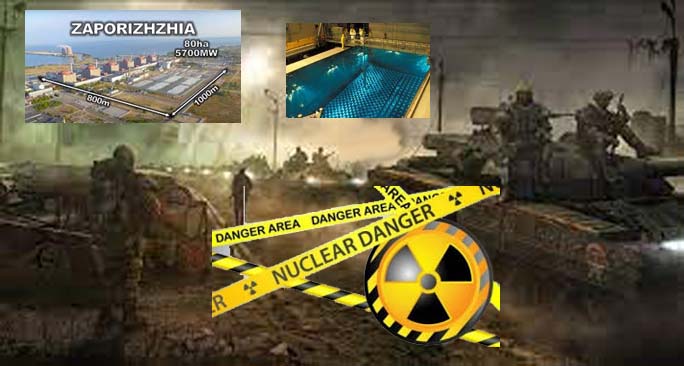
Governments need to be aware of the risk of their country’s nuclear power plants being weaponised as they turn to nuclear to tackle the ongoing energy crisis, a University of Leicester civil safety expert has argued.
In his new book Atomic Blackmail? The weaponisation of nuclear facilities during the Russia-Ukraine War, Dr Simon Bennett lays out how the ongoing conflict is confirming long-running concerns about the security of nuclear power plants and their potential to be weaponised to gain political traction over an opponent.
The events of the Russia-Ukraine War have demonstrated the capacity that nuclear power plants have to amplify protagonists’ hitting power, Dr Bennett argues. This is believed to be the first time in the history of nuclear electricity that nuclear power plants have been occupied by an invading force.
The installations at Chernobyl and Zaporizhzhia have been captured by Russian forces and Zaporizhzhia remains under Russian control. Other installations in Ukraine have been overflown by Russian munitions, such as cruise and ballistic missiles. Outbuildings at both the Chernobyl and Zaporizhzhia sites have been struck by munitions. Both Russia and Ukraine deploy munitions in the vicinity of nuclear power plants.
The possibility of gaining tactical or strategic advantage by weaponising an opponent’s nuclear facilities makes them an attractive target – especially for protagonists who find themselves on the back foot.
Dr Simon Bennett at the University of Leicester said: “The risk is not that of a nuclear detonation. Rather it is that of creating a dirty bomb when a conventional munition such as a ballistic or cruise missile, artillery shell or suicide drone breaches a containment, liberating radionuclides to the environment.
“A dirty bomb creates transborder or transboundary hazard, a serious radiological contamination of the environment – land, air and water – potentially over vast areas and for decades. Radionuclides liberated during the 26 April, 1986 Chernobyl fire were transported on easterly winds as far as Cumbria in north-west England.”
The International Atomic Energy Agency (IAEA) has called on the protagonists to create and respect cordons sanitaires around Ukraine’s nuclear installations, including the highly-vulnerable six-reactor Zaporizhzhia Nuclear Power Plant (NPP). A cordon sanitaire is defined by the IAEA as a military exclusion zone created to mitigate the risk of accidental damage to a NPP, which protagonists would be forbidden from entering. The UK has lent the IAEA diplomatic support.
Dr Bennett adds: “As countries expand existing nuclear electricity programmes, and as other countries go nuclear, the risk of weaponisation and atomic blackmail will grow. After years of prevarication, Britain, alarmed at the unreliability of so-called green energy and worried about energy insecurity, is set to expand its nuclear electricity programme. There is a positive relationship between the number of NPPs in a country and its atomic blackmail risk-exposure. In a European or World War, Britain’s NPPs would be as much a target as the NPPs of any other country.
“Any country with a nuclear power programme, and countries neighbouring countries with nuclear power programmes, should take note of what has happened in Ukraine, and what might happen in the future. There will probably be a 2024 Ukrainian offensive and, possibly, a 2025 offensive. This war will not end quickly.”
- Atomic Blackmail? The Weaponisation of Nuclear Facilities During the Russia-Ukraine War is published by Libri Publishing
Lifetime War Abolisher of 2023 award to David Bradbury

September 7, 2023, The AIM Network, By Sandi Keane
The cracks in Labor ranks over AUKUS won’t be going away despite Albanese staring down dissenters at Labor’s national conference. A pitched battle over the choice of submarine base is guaranteed – and now we discover that Albanese has suffered the mother of all brainsnaps: Australia has agreed to set up a weapons-grade nuclear waste dump. At the heart of the resistance to this militarism has been David Bradbury’s documentary film The Road to War (2013).
Last week, Australia’s legendary political filmmaker, David Bradbury, achieved another media milestone with this much-lauded anti-AUKUS documentary, The Road to War. Adding to the list of International and Australian film awards including two Academy-award nominations (Frontline (1979) and Chile Hasta Quando? (1985), his latest documentary won the World BEYOND War’s Individual ‘Lifetime War Abolisher Award’ – named for David Hartsough, who co-founded World BEYOND War in Virginia, USA in 2014.
The creator of 26 documentary films, Bradbury advances our understanding of war, peace, international relations and peace activism. His films have been broadcast around the world on the BBC, PBS, ZDF (Germany), and TF1-France, as well as ABC, SBS and commercial television networks in Australia……………………………………………..
Bradbury shoots his own footage, traveling widely, and seeking out people with uncomfortable truths to tell – sometimes at great risk. Bradbury has filmed in Iran during the final days of the Shah, in Nicaragua during the CIA-Contra war, and in El Salvador during the days of death squads during the early 1980s. His film on Pinochet’s Chile, Chile Hasta Quando? (1985) was nominated for an Academy Award. He has filmed independence struggles in East Timor and West Papua, and in India, China, and Nepal.
In The Road to War, concern is raised among the Australian experts interviewed by Bradbury about Australia’s AUKUS commitment of hundreds of billions of dollars for new weaponry, nuclear propelled submarines and stealth bombers – to protect us against our biggest trading partner – China. Yes, China. The film shows why it is not in Australia’s, or the world’s interests to be dragged into another US-led war and brings into sharp focus that Australia is being set up as USA’s proxy:
“Basing US B52 and stealth bombers in Australia is all part of preparing Australia to be the protagonist on behalf of the United States in a war against China. If the US can’t get Taiwan to be the proxy or its patsy, it will be Australia,” warns former Australian ambassador to China and Iran, John Lander, in Bradbury’s film.
We all appreciate the Labor Government was still on its toddler legs when it signed the AUKUS agreement and had only 24 hours to decide – or be wedged on Defence by the Coalition in the 2019 federal election.
But the cracks in Labor ranks won’t be going away despite Albanese staring down dissenters at Labor’s national conference and enshrining the tripartite security pact in the party’s policy platform. A pitched battle over the choice of submarine base is guaranteed – and now we discover that Albanese has suffered the mother of all brainsnaps: Australia has agreed to set up a weapons-grade nuclear waste dump. According to the Fact Sheet: Trilateral Australia-UK-US Partnership on Nuclear-Powered Submarines:
“… as part of this commitment to nuclear stewardship, Australia has committed to managing all radioactive waste generated through its nuclear-powered submarine program, including spent nuclear fuel, in Australia.”
Who knew about that? Hats off to Crikey for disclosing the secret no-one is talking about. Where was the spirited public debate about which port such terrorist “bait” will be shipped to, how it would be transported? By truck? Train? Where to? Given the Coalition has had a nuclear waste dump on the back burner for decades, Maralinga is the likely bet.

The lack of debate now resembles the barely reported signing of the Global Nuclear Energy Partnership (GNEP) by Prime Minister John Howard on 5 September 2007. Had the Coalition won the 2007 election on 24 November, Australia was on track to become a global nuclear waste dump. Did anyone know about it then? Like now, it went under the media radar. MSM were MIA.
Back then, Howard had control of both houses. All the ducks were in a row. The Commonwealth Radioactive Waste Management Bill 2005 had passed effectively transferring power to the Minister to nominate nuclear waste dump sites. The ANSTO Bill passed around the same time giving ANSTO the power to accept waste generated outside Australia.
Maralinga in South Australia seemed to tick all the boxes. But they forgot that nuclear waste produces hydrogen when it eventually breaks down and Maralinga is sited right on top of the Great Artesian Basin.
John Large, whose company, Large & Associates handled the salvage of the stricken Russian U-sub, Kursk, told Julie Macken in an interview in New Matilda on 15 November 2006 that when the waste breaks down, it produces hydrogen and “there is simply no way, over a 100,000-year time scale, to stop the fuel leaking out.”
Large was shocked to hear that Australia wanted to go down this path. Question is: “are we about to do just that?”……………………………………………………..
The 2023 War Abolisher Awards and the video of David Bradbury’s acceptance speech can be accessed on the website at War Abolisher Awards.
War Abolisher awardees are honoured for their body of work directly supporting one or more of the three segments of World BEYOND War’s strategy for reducing and eliminating war as outlined in the book A Global Security System, An Alternative to War. They are: Demilitarizing Security, Managing Conflict Without Violence, and Building a Culture of Peace.
You can view a clip from The Road to War below:
Bradbury’s films can be viewed at Frontline Films.
For further information, email david@frontlinefilms.com.au
Editor’s Note: The next showing of Bradbury’s film is scheduled for 21 September at ANU Film Club, Canberra. A variation of this article was published in Pearls and Irritations on 3 September, 2023. https://theaimn.com/lifetime-war-abolisher-of-2023-award-to-david-bradbury/
‘Then the black rain fell’: survivor’s recollections of Hiroshima inspire new film
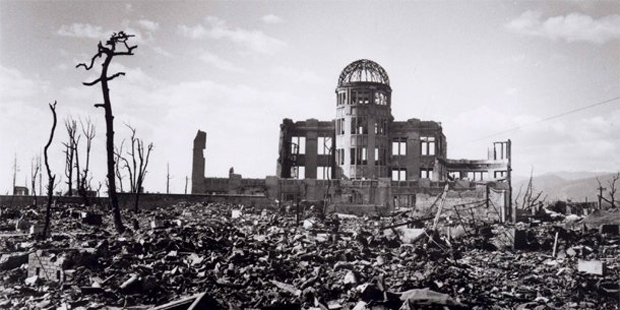
A major feature film on Hiroshima is going into production, inspired in
part by an unpublished memoir of a Japanese man who witnessed the
devastation of the city after the atomic bomb was dropped in 1945.
Scriptwriter Elisabeth Bentley was taken aback by the personal
recollections of Kiyoshi Tanimoto in a 230-page memoir that she unearthed
in a US archive. A Christian convert, Tanimoto was a Methodist priest whose
life was saved because he was moving a large wardrobe to another town on a
cart when Hiroshima was bombed.
Observer 3rd Sept 2023
Critics Picked Up on “Oppenheimer’s” All-Too-Timely Warning on Nuclear War
KARL GROSSMAN , https://fair.org/home/critics-picked-up-on-oppenheimers-all-too-timely-warning-on-nuclear-war/ 1 Sept 23
The reviews in media of the film Oppenheimer have been largely positive—and perceptive and thoughtful. With a few exceptions, most reviewers “got” the message of the film.
Oppenheimer is not a film in the mold of Dr. Strangelove or: How I Learned to Stop Worrying and Love the Bomb, the 1964 movie by Stanley Kubrick, an in-your-face cinematic presentation of the madness of nuclear war. It is not as direct as On the Beach, the 1959 Stanley Kramer film based on the Nevil Shute novel about World War III’s nuclear Armageddon, in which a US submarine crew and residents of Melbourne, Australia, await creeping death from radioactive fallout. Nor is it as straightforward as The Day After, the 1983 ABC-TV film that showed an estimated 100 million people the very personal results of nuclear war.
‘To embrace the bomb’
The film is about J. Robert Oppenheimer, the US physicist who helped develop the atomic bombs dropped on Hiroshima and Nagasaki. As Manohla Dargis writes in her New York Times review (7/19/23), Christopher Nolan, who both directed and wrote Oppenheimer, “doesn’t restage the attacks; there are no documentary images of the dead or panoramas of cities in ashes.” Rather, the horrific consequences of nuclear conflict are transmitted through the story of Oppenheimer himself, who was “transformed by his role in the creation of weapons of mass destruction and soon after raised the alarm about the dangers of nuclear war.”
Citing French director François Truffaut, who once wrote that “war films, even pacifist, even the best, willingly or not, glorify war and render it in some way attractive,” Dargis contends that this
“gets at why Nolan refuses to show the bombing of Hiroshima and Nagasaki, world-defining events that eventually killed an estimated 100,000 to upward of 200,000 souls.
You do, though, see Oppenheimer watch the first test bomb and, critically, you also hear the famous words that he said crossed his mind as the mushroom cloud rose: “Now I am become death, the destroyer of worlds.”
“As Nolan reminds you, the world quickly moved on from the horrors of the war to embrace the bomb,” Dargis writes. “Now we, too, have become death, the destroyers of worlds.”
‘Uncomfortably timely’
The film’s focus not just on a bloody decision made the better part of a century ago, but on the threat of annihilation facing humanity today, is made clear at its outset. A caption spread across the screen with an observation from Greek mythology: “Prometheus stole fire from the gods and gave it to man. For this he was chained to a rock and tortured for eternity.”
Ann Hornaday in her Washington Post review (7/19/23) relates:
As a filmmaker at the height of his powers, Nolan has used those prodigious skills not simply to amaze or spectacularize, but to plunge the audience into a chapter of history that might feel ancient, as he reminds us, but happened just yesterday. By making that story so beautiful, so elegantly crafted and compulsively watchable, he has brought to life not just J. Robert Oppenheimer, but the still-crucial arguments he both started and tried to end.
Oppenheimer boldly posits that those arguments are still worth having, in a film of magnitude, profundity and dazzling artistry.
“Oppenheimer Is an Uncomfortably Timely Tale of Destruction,” was the headline of the review by David Klion in the New Republic (7/21/23). He declares:
Oppenheimer turns out to be uncomfortably timely. At no point since the end of the Cold War has nuclear war felt more plausible, as the daily clashes between a nuclear-armed Russia and a NATO-backed Ukraine remind us. Beyond literal nuclear warfare, we are faced with a range of existential dangers—pandemics, climate change and perhaps artificial intelligence—that will be managed, or mismanaged, by small teams of scientific experts working in secret with little democratic accountability. The ideologies, affiliations and personalities of those experts are likely to leave their stamp on history, and not in ways they themselves would necessarily wish. Oppenheimer’s dark prophecy may yet be fulfilled.
A plug for nuclear power?
Now, there were several inexplicable reviews of Oppenheimer.
In his review in New Scientist (8/9/23), a London-based publication with an international circulation of 125,000, Simon Ings writes that Oppenheimer “will help us embrace” nuclear power, which, he claims, “by any objective measure…is safe and getting safer.” Ing somehow believes the film “isn’t so much about J. Robert Oppenheimer’s development of the atomic bomb…as it is about the paranoid turn history took [about nuclear power] in the wake of his triumph.”
How he deduced this from Oppenheimer is indecipherable.
Leaving the theater after seeing Oppenheimer, I was tempted to call it a movie-length Wikipedia article. But after a look online, I realized I was giving Wikipedia too little credit—or Christopher Nolan, the movie’s writer and director, too much.
The New Yorker gave his piece the headline “Oppenheimer Is Ultimately a History Channel Movie with Fancy Editing.” Considering the many highly emotional, engrossing scenes—including many personal ones involving Oppenheimer—this makes no sense. It is far from a movie version of a Wikipedia posting or a History Channel docudrama.
Then there was the review by Richard Brody in the New Yorker (7/26/23) that begins:
Brody almost seems to scold Nolan for hoping to provoke discussion:
Rather than illuminating him or his times, the scenes seem pitched to spark post-screening debate, to seek an importance beyond the experiences and ideas of the characters.
‘The bomb’s lingering residue’
Justin Chang’s review in the Los Angeles Times (7/19/23) would no doubt have irritated Brody by engaging in “post-screening debate.” Nolan, Chang writes, is
less interested in reenacting scenes of mass death and devastation, none of which are depicted here, than in sifting through the bomb’s lingering geopolitical and psychic residue.
Chang observes:
The real Oppenheimer may have never expressed remorse over Hiroshima and Nagasaki, but the movie never lets its Oppenheimer forget them, especially in one shuddering, blood-chilling sequence that transforms a public moment of triumph into an indictment.
Nor can Oppenheimer forget the still greater destruction that may yet be unleashed, a prospect that his typically naive and high-minded insistence on “international cooperation” will do nothing to dispel. Nolan conveys that warning with somber gravity, if not, finally, the cathartic force that our current headlines, full of war and nuclear portent, would seem to demand. Not for the first time, the demonstrative cleverness of his storytelling can seem too precise, too hermetically sealed and engineered, for a sense of raw collective devastation to fully take hold.
Even Rupert Murdoch’s arch-conservative New York Post (7/19/23) had a rave review. Critic Johnny Oleksinski declares:
What keeps all three hours of the film so breathlessly tense is the title physicist’s internal tug of war: Can the valiant quest for scientific advancement—his great passion—lead to the total destruction of the planet?
A highly perilous time
To what extent did media either take advantage of or drop the ball on the opportunity the movie gave them to examine the pressing issue of nuclear war? My review of the reviews would conclude that most media didn’t drop the ball, only a few did—and that to me is quite a surprise.
We are at a highly perilous time in regard to nuclear war. The Bulletin of the Atomic Scientists (1/24/23) moved its “Doomsday Clock,” which it says represents the risk of “nuclear annihilation,” forward to 90 seconds to midnight—the closest it’s been since it was set up in 1947.
Dr. Strangelove, On the Beach and The Day After all came out decades ago.
Oppenheimer can provide—especially with the (astonishing for me, long a media critic) widely positive media reaction—the opening of a window that can help new generations of people learn about nuclear weapons, and move for an abolition that can prevent a nuclear apocalypse.
Why is The New York Times Burning Peace Activist Jodie Evans at the Stake?
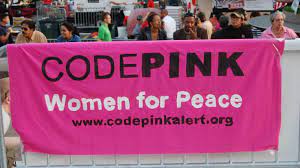
The New York Times have targeted Code Pink’s Jodie Evans in a smear piece claiming she and her husband are agents of China.
SCHEERPOST 31 Aug 23
The New York Times has revealed what the future could potentially look like in an impending war with China. Through conjecture and innuendo-filled reporting, America’s “paper of record” went out of its way to attack one of the country’s most fierce peace movement fighters — Code Pink co-founder Jodie Evans.
Evans joins host Robert Scheer on this episode of Scheer Intelligence to discuss what Scheer called “one of the most vicious articles I’ve ever read in a mainstream publication.” While The Times attempted to tie Evans and her husband to the Chinese government, Evans points out the bigger picture in what the piece represents: the vilification of anything or anyone having to do with China.
She points out how her familiarity with the country allowed her to bring it up in conversation but in the last few years, any sort of discussion, debate or otherwise normal discourse has turned sour. This is all part of an effort, Evans said, to manufacture consent for a war with China. This has not only affected her but thousands of Chinese American people as well.
“Americans are being dumbed down by this propaganda. And it has an intention. It is a part of this war. [A]nybody that gets in our way, we’re going to destroy them and we are going to continue this drive to go to war on China, to demonize China,” Evans said.
Transcript……………………………………………………………………………….https://scheerpost.com/2023/08/31/why-is-the-new-york-times-burning-peace-activist-jodie-evans-at-the-stake/
Chicago Tribune should support Vivec Ramasramy’s call for end to perpetual war in Ukraine .
Walt Zlotow, President, West Suburban Peace Coalition, Glen Ellyn IL 27 Aug 23
As a peace advocate for the local West Suburban Peace Coalition, I take issue with the Trib’s Editorial: ‘Vladimir Putin is no Bond villain. Supporting him is morally repulsive.’
It mischaracterized Ramaswamy’s implied plea for peace in Ukraine thru ending unlimited weaponizing of the failed Ukraine counteroffensive. It said not one word about “going soft” on Russian President Putin.
Ramaswamy is not “morally repugnant”. He was simply reflecting current US public opinion. A majority now support ending weapons which squander US treasure while extending the killing and destruction in Ukraine indefinitely. –The Trib should know that virtually every war ends with a negotiated settlement. The only way that will not occur in Ukraine is if it goes nuclear. Ramaswamy was the only candidate on the podium promoting peace in Ukraine. That deserves our support, not condemnation.
OPPENHEIMER AUTHOR ENDORSES NORTON BILL – Nuclear Abolition and Conversion Act, H.R. 2775
New York (August 16, 2023) more https://www.nuclearban.us/kai-bird/?utm_source=rss&utm_medium=rss&utm_campaign=kai-bird–
Kai Bird, co-author of American Prometheus: The Triumph and Tragedy of J. Robert Oppenheimer, the Pulitzer Prize-winning book on which Christopher Nolan’s Oppenheimer movie is based, issued the following statement endorsing a bill by Congresswoman Eleanor Holmes Norton (D-DC), the Nuclear Abolition and Conversion Act, H.R. 2775:
“My book chronicles the birth of the nuclear age. Since the first nuclear testing and bombing in 1945, the man-made nuclear danger has continually increased. Now, today’s 13,000 atomic weapons are unthinkably destructive, indiscriminate, climate-altering devices that can be unleashed by design, by sabotage, or by accident. Therefore, I strongly endorse Congresswoman Norton’s Nuclear Abolition and Conversion Act, H.R. 2775. The bill calls for the US to sign the Treaty on the Prohibition of Nuclear Weapons as a first step to safely, fairly, verifiably eliminating all nuclear weapons from all countries, and eventually converting the nuclear weapons jobs, brainpower, money, and infrastructure to genuine climate solutions and other pressing human needs.”
“Kai Bird is keenly aware of how the nuclear arms race started, and where it has taken us,” said Vicki Elson of NuclearBan.US. “He has said that ‘humanity missed a crucial opportunity at the outset of the nuclear age’ to eliminate the risk of nuclear catastrophe. But with this new movie reminding us of the urgency, and the Nuclear Ban Treaty offering a sensible pathway to global disarmament, maybe it’s not too late.”
The bill’s original co-sponsors are Rep. Eleanor Holmes Norton (D-DC), Rep. Jim McGovern (D-MA), Rep. Ilhan Omar (D-MN), Rep. Raul Grijalva (D-AZ), Rashida Tlaib (D-MI), and Mark Pocan (D-WI).
The Connection between Oppenheimer and Gentilly-2: Edward Teller and the H bomb.

Oppenheimer was an obstacle to the H-bomb project,”.. “That’s why they had to discredit him. And Edward Teller [at left] was the one person, more than anyone else in the scientific community, who saw Oppenheimer as an obstacle. Teller had to blacken his reputation in such a way that no one would listen to Oppenheimer any more.
by Brigitte Trahan, Le Nouvelliste, August 11 2023 https://www.lenouvelliste.ca/actualites/actualites-locales/2023/08/11/le-lien-entre-oppenheimer-et-gentilly-2-YRAIC6NADVHA7HELTLOE3LJ6L4/
The release of the film Oppenheimer in cinemas this summer aroused the curiosity of one particular film buff, Montrealer Gordon Edwards, a world-renowned expert on nuclear issues. He’s the man the Canadian and Quebec media want to hear from when it comes to nuclear waste, atomic bombs or power plants like Gentilly-2, which Hydro-Québec is eyeing as a solution to its energy shortage.
For the president of the Canadian Coalition for Nuclear Responsibility, this film was like a trip back in time, because he had the opportunity to confront in person none other than Edward Teller, the father of the hydrogen bomb , during a 45-minute televised debate organized in Toronto in 1974.
Gordon Edwards began to become seriously involved in the anti-nuclear camp when India detonated its first nuclear bomb [in 1974]. The Government of Canada had earlier given India a 20 MW nuclear reactor for research, a reactor identical to the one [first built at Chalk River – a site currently making headlines because of the multi-billion dollar legacy of radioactive wastes there], he says. [India used the plutonium produced by that Canadian reactor as a nuclear explosive in its first atomic bomb.]
Plutonium and politics
“All nuclear reactors produce plutonium. It doesn’t exist in nature. It is the most commonly used explosive in the world’s nuclear arsenal,” he said.
“The first reactors were built for the sole purpose of producing plutonium for bombs. This is the case for [the first reactors at] Chalk River (in Ontario). The idea of turning nuclear energy into electricity came later.” — Gordon Edwards
Despite all the dangers it represents, nuclear energy has continued to develop in the world.
According to Gordon Edwards, one of the main reasons is the manufacture of nuclear bombs. “Nuclear weapons are so powerful. They play a very big role in international politics,” he explains.
A select club
The expert recalls that one of the reasons given repeatedly by Hydro-Québec [correction: by the government of Quebec] for not closing Gentilly-2 was that it wanted to maintain a minimum level of expertise in Quebec in the nuclear field.
According to him, “when you have a nuclear reactor, you belong to the nuclear club and you are invited to international meetings to which you would not otherwise be invited”.
“It gives political prestige to be part of the club of nuclear powers, that is to say people who have access to plutonium. You can rub shoulders with very powerful people, very powerful corporations.” —Gordon Edwards
Blackening the Oppenheimer Name
After viewing the Oppenheimer film, Gordon Edwards had nothing but good words for the production as a whole. However, he regrets that the film “does not state very clearly the real reason why Oppenheimer’s reputation was attacked.
“It almost is portrayed as petty revenge from people like Commissioner Strauss and Edward Teller when in fact it was all H-bomb related. They both wanted, and Teller in particular wanted, to proceed to build a whole arsenal of H-bombs, but Oppenheimer didn’t want that. Instead, Oppenheimer said, the time had come for the world to negotiate an end to nuclear weapons and bring them under international control and thus prevent an endless cycle of arms races.”
“Oppenheimer was an obstacle to the H-bomb project,” explains Mr. Edwards. “That’s why they had to discredit him. And Edward Teller was the one person, more than anyone else in the scientific community, who saw Oppenheimer as an obstacle. Teller had to blacken his reputation in such a way that no one would listen to Oppenheimer any more.
The film suggests that it was done for less important reasons,” he notes. Moreover, “the role played by Teller was greatly understated in the film. In fact, his role was much more significant in nullifying Oppenheimer’s influence,” he says.
Famed director Oliver Stone gets it so very wrong about nuclear power
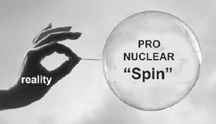
1Courting controversy. Famed director misses the fact that further spending on nuclear power wastes billions of dollars that should go to renewables
Beyond Nuclear Inteenational By John Dudley Miller, 13 Aug 23
Nuclear Now, the latest documentary from controversial writer/director Oliver Stone, argues that an undetermined large number of new nuclear power plants must be built quickly to power the world with clean energy, or it will not be possible to halt global warming at 2 degrees Celsius above preindustrial levels by 2050. If we exceed that limit, devastating climate changes will strike, causing killing heat, monster hurricanes, record-setting droughts, and the displacement of millions of people.
Over the years, Stone has drawn criticism for allegedly misstating historical facts in his movies (“Platoon,” “JFK,” “Natural Born Killers”), creating conspiracies where detractors claim there really were none. Appropriately, this new film begins by claiming a conspiracy against nuclear power. It asserts that nuclear has always been criticized unfairly, particularly by the oil industry, which it alleges has long exaggerated the harm that radiation from nuclear power plants causes.
But on the other hand, the next year the same man helped finance the first Earth Day, which was not and still is not anti-nuclear. That leaves it ambiguous whether his gift to Friends of the Earth was intended explicitly to oppose nuclear power or merely to support the environment.
The documentary states that it is based on a 2019 book, A Bright Future, which also calls for building much more nuclear power quickly. Although one of the book’s authors, Joshua Goldstein, is a non-scientist, international trade expert, the other, Staffan Qvist, is trained as a nuclear engineer and says he works as a “clean-energy” engineer. Stone and Goldstein are co-authors of Nuclear Now. Neither claims any formal training in nuclear engineering………………………………..
The documentary and book take an oddly casual view of the problems of storing spent nuclear fuel while it’s still radioactive. In a very controversial statement, the film claims that “Scientists actually know that nuclear waste doesn’t travel very far” if it leaks out of an underground repository. Since radiation is all around us, the book adds, it wouldn’t be “catastrophic” if some leaked out.
Contrary to the film’s cavalier assertion, however, every reactor fueled with Uranium-238 will automatically produce Plutonium-239 after fissioning, and that deadly element must not be allowed to leak out for the next 241,000 years, because it can cause fatal lung cancer if breathed in. No one can predict for certain what will happen underground that long from now. Homo Sapiens did not exist 241,000 years ago, only its precursor species. It is unlikely that any human-built structure has ever remained completely leak-tight for even 1,000 years.
Rather than tackle that problem, however, the book recommends leaving the waste in above-ground concrete casks for 100 years while some of the radioactivity decays and then letting our great-great-grandchildren worry about it. Why should they mind being saddled with our mess?
The documentary defends nuclear power as the safest energy source of all time. It misleadingly claims that no one died at Three Mile Island or Fukushima, when it’s still not certain that no one will ever die from cancer from those accidents, because radioactivity was released by both of them.
The documentary also presents as fact that only about 50 people died at the scene at Chernobyl, and that only about 4,000 more people will die later from radiation-caused cancers. However, the 2006 TORCH report (The Other Report on Chernobyl), commissioned by the European Parliament’s Green Party and analyzed by two British radiation biologists, estimated that somewhere between 30,000 and 60,000 people will ultimately die from Chernobyl cancers.
……………………………………………………………………. The New York Times reviewer Brandon Yu claims that the documentary “makes a compelling case for [nuclear power] as the energy source that can most reasonably and realistically help us face the [climate] crisis.” In fact, it does no such thing. Yu never compared the evidence for nuclear power to that of its main alternative, renewable power. So, he doesn’t know which one is preferable.
Yu didn’t compare the two energy sources because neither the book nor the documentary ever presents a head-to-head comparison of the costs and construction times necessary to build enough nuclear or renewable power fast enough. What viewers need is a formal cost and construction-time analysis. Instead, they’re left with the book’s unsubstantiated claim: “What the world already knows how to do in 10 or 20 years using nuclear power would take more than a century using renewables alone.” In truth, the needed number of new nuclear plants worldwide could never be built in two decades, judging from how long other reactors have typically required. According to the World Nuclear Industry Status Report 2022, the 62 reactors completed worldwide in the decade between 2012 and 2021 took an average of 9.2 years to build.
The only nuclear plant now under construction in the United States, Vogtle 3 and 4 in Georgia, has been markedly slow and expensive to build. The Vogtle 3 reactor and its twin built on the same site, Vogtle 4, were begun in 2009 and were supposed to be finished in seven years. Fourteen years later, Unit 3 finally entered commercial service on July 31 after several false starts. Unit 4 should be finished early next year. Originally estimated to cost $14 billion altogether, they have already cost $35 billion.
According to the U.S. Energy Information Administration Annual 2023 Energy Outlook, a large nuclear power plant that begins construction this year will, when completed, sell its electricity at 17 cents per kilowatt-hour. But both wind and solar plants begun this year will ultimately sell their power at 4 cents per KW-hr, one-quarter as expensive.
In addition, many American experts believe that large nuclear plants have become so prohibitively expensive that no more will ever be built in the U.S. Instead, small modular reactors (SMRs), creating 30 percent or less of the power of large ones, will take their place.
However, even the model of SMR most similar to current reactors and closest to being constructed, the NuScale reactor, recently announced that it expects to sell its electricity at 11.9 cents per unsubsidized KW-hr, before a years-long, 3-cent per KW-hr temporary subsidy is subtracted. That equals three times the expected cost of renewable power. Since the NuScale has never been built anywhere before and its reactor must first be redesigned, its price per KW-hr may well wind up costing as much or more than the 17 cents that large reactors would.
As expensive as the NuScale reactor may turn out to be, it’s clear that it will be cheaper than all the other proposed “advanced” SMRs that the Department of Energy is building, because none of them utilize water for cooling. Instead, they use exotic coolants like liquid sodium, molten salt or inert gas. Large-size versions of all these other reactors failed in the marketplace between the 1950s and the 1980s, so as new SMRs, they will be extremely expensive to engineer.
In addition, Stanford Professor Mark Z. Jacobson calculates from the exorbitant cost of the Vogtle reactors that any new nuclear power plants of any size will cost five to ten times as much as renewable plants, not just three to four times as much.
What all these analyses further make clear is that Congress should stop allocating billions of dollars to the Department of Energy to subsidize SMRs. Being so much more expensive than renewable power plants, these small plants will never be able to compete with renewables economically. Once DoE stops subsidizing them, they will go out of business. No utility wants to spend what will likely be much, much greater than 12 cents per KW-hr for nuclear power when they can buy renewable power for 4 cents per KW-hr.
Yet another reason why Congress should stop subsidizing SMRs is that they are inherently less economical than large nuclear plants, because they must spread fixed costs like salaries over the fewer kilowatt-hours of energy they create relative to higher-powered reactors. That makes their electricity cost more per KW-hr than that of much more powerful reactors. This built-in diseconomy of scale makes it quite possible that no SMR will ever be able to turn a profit, even if it could somehow find customers willing to pay three to ten times what renewable power costs.
Finally, there is considerable evidence now that renewables alone can be built fast enough to stop all power plant fossil fuel emissions by 2050. The 2021 Princeton University Net-Zero America report shows that that goal can be met in the U.S. The 2023 book by Stanford Professor Jacobson, No Miracles Needed, presents detailed evidence that 139 nations around the world can all meet that deadline if adequately funded………………………………………………….
more https://beyondnuclearinternational.org/2023/08/13/courting-controversy/—
more https://beyondnuclearinternational.org/2023/08/13/courting-controversy/—more https://beyondnuclearinternational.org/2023/08/13/courting-controversy/—
more https://beyondnuclearinternational.org/2023/08/13/courting-controversy/—more https://beyondnuclearinternational.org/2023/08/13/courting-controversy/—
more https://beyondnuclearinternational.org/2023/08/13/courting-controversy/—more https://beyondnuclearinternational.org/2023/08/13/courting-controversy/—
more https://beyondnuclearinternational.org/2023/08/13/courting-controversy/—more https://beyondnuclearinternational.org/2023/08/13/courting-controversy/—
more https://beyondnuclearinternational.org/2023/08/13/courting-controversy/—more https://beyondnuclearinternational.org/2023/08/13/courting-controversy/—
more https://beyondnuclearinternational.org/2023/08/13/courting-controversy/—more https://beyondnuclearinternational.org/2023/08/13/courting-controversy/—
more https://beyondnuclearinternational.org/2023/08/13/courting-controversy/—
YouTube Deletes Scott Ritter’s Channel
Sputnik, Ilya Tsukanov 11 Aug 23,
The veteran former US Marine Corps intelligence officer, UN weapons inspector, geopolitical observer and Sputnik contributor has spent over a year providing incisive commentaries about the NATO proxy war against Russia in Ukraine, challenging the Western mainstream narrative and offering his own perspective on the origins of the crisis.
Google-owned video hosting giant YouTube has deleted Scott Ritter’s YouTube channel.
A banner reading “This account has been terminated due to multiple or severe violations of YouTube’s policy prohibiting hate speech” greets anyone trying to navigate to Ritter’s channel.
The company did not provide any information about the nature of these alleged “multiple or severe violations,” or how Ritter’s mostly Ukrainian crisis-related commentaries and interviews constituted “hate speech.”
YouTube allows for user-based reporting of any alleged “hate speech,” prompting concerns from content creators over the years that the video hosting giant lets organized online activists to silence voices and views they might not like or agree with, or which challenge important state and corporate narratives.
Ritter Reacts
Ritter responded to YouTube’s decision in a pair of tweets Friday, saying the move is an attempt by US-based social media platforms to silence him…………………………………………………. more https://sputnikglobe.com/20230811/youtube-deletes-scott-ritters-channel-1112539769.html
The blockbuster movie ‘Oppenheimer’ leaves out the real story’s main characters: New Mexicans

The terrible emptiness of “Oppenheimer” Searchlight New Mexico, by Alicia Inez Guzmán, August 8, 2023
Bernice Gutierrez was eight days old when a light 10,000 times hotter than the surface of the sun cracked open the predawn sky. No one in south-central New Mexico knew where it came from, or that the tiniest units of matter could be split to unleash such energy. Nor could they know that when the cloud that followed bloomed some 50,000 feet into the sky, it was surrounded for the briefest of seconds by a blue halo, the “glow of ionized air,” as the Manhattan Project physicist Otto Frisch described it.
The impacts of that unholy halo were all too apparent in the years after, when her great-grandfather died of stomach cancer. One person after another would receive their own wrenching cancer diagnoses — 41 people in her immediate family, spanning five generations. Every one of them had lived in the Tularosa Basin and within 50 miles of the Trinity Site, where the first atomic bomb, nicknamed “Gadget,” was detonated on the northern edge of the Chihuahuan Desert.
Gutierrez was one of a group of downwinders, including Mary Martinez White and Tina Cordova, cofounder of the Tularosa Basin Downwinders Consortium, who watched the movie “Oppenheimer” together when it opened. In one scene after another, New Mexico’s landscapes unfurled — all painfully beautiful and all, it appeared, empty and unpeopled.
In New Mexico, we have lived in the blind spot of a national narrative for eight decades, repeated once again in this box office hit. Over its exhaustive three-hour run-time, it managed to avoid mentioning what we here have been sharing with loved ones at kitchen tables for decades: the violent evictions that took place on the Pajarito Plateau to build Los Alamos, the Pueblo and Hispanic men and women who did essential work for the Manhattan Project, or the thousands of New Mexicans affected to this day by the Trinity test.
To watch J. Robert Oppenheimer’s character instead create and destroy in the state’s big, beautiful and ostensibly barren lands is to deny the presence of so many people whose lives were indelibly transformed by the dawn of the atomic era and continue to be shaped by the juggernaut that is today’s nuclear industrial complex.
Oppenheimer, the son of a wealthy businessman, had come here as part of a cultural moment. He hiked, rode horses and camped. He stayed at a dude ranch in Pecos. He fell in love with and then changed New Mexico forever.
“I am responsible for ruining a beautiful place,” he would later confess.
The film, Gutierrez said, skipped blithely over the ruin. “They leave out the fact that in those isolated areas lived ranchers whose lands they took away and who were never compensated for it.”
The blast was so hot it liquified sand and pieces of the bomb into hunks of green glass. Lead-lined tanks were dispatched to take soil samples at ground zero as fallout cascaded across 46 states. Ash fell from the sky like snow for days afterward, contaminating cisterns, acequias, crops, livestock, clothing and people. At the time of the detonation, 13,000 people lived within a 50-mile radius.
‘Love-struck’ with the beauty
Oppenheimer initially arrived in New Mexico among a wave of smitten travelers. Artists, writers, dancers, anthropologists, museum boosters, health seekers and at least one psychoanalyst (Carl Jung), all had come as well-to-do tourists in search of the ineffable — landscapes, light, exotic cultures, “a patch of America that didn’t feel American,” in the words of writer Rachel Syme.
Long before he became the father of the atomic bomb, Oppenheimer was “love-struck” with the stark beauty of New Mexico, as Kai Bird and Martin J. Sherwin wrote in “American Prometheus,” the biography upon which the movie is based. He would later lease and then buy a home in the Sangre de Cristo Mountains with his brother, Frank. Like so many others, he’d been mesmerized by the West.
New Mexico and the Southwest had long been lodged in America’s psyche. Landscape painting and photography pictured this new and alien frontier to incoming settlers and tourists as early as 1848, the year the United States annexed the region from Mexico. The art forms ended up serving the nation’s gospel, Manifest Destiny, by portraying “uninhabited” landscapes open to settlement. At the same time, U.S. forces brutally removed Indigenous peoples and others of mixed descent from their ancestral lands.
That aesthetic was at work in “Oppenheimer,” a movie that not only played up the romance of the landscape but also made it appear that the atomic bomb test only affected an elite group of scientists watching raptly in cars and bunkers.
“That’s the thing about the white supremacist imagination, right? They create alternate realities for our lives and communities and we have to live with the consequences,” said Mia Montoya Hammersley, an environmental attorney and member of the Piro-Manso-Tiwa tribe whose ancestry includes the earliest stewards of the Tularosa Basin, where the first bomb was detonated.
“This narrative that New Mexico is this empty barren place, people still really buy into that and believe it.”………………………………………………………………………………………………
There is nothing to suggest during any of that storytelling that New Mexico was essentially poisoned, its residents never warned, evacuated or educated about the health hazards of the July 16, 1945 Trinity test.
“It was,” as artist Medina put it, “a great act of desecration.”
Some geologists propose that this moment marks the start of a new epoch of geologic time, the Anthropocene. In New Mexico, it marks a new epoch of our own — when we became a nuclear colony. We are the only “cradle-to-grave” state in the nation, home to uranium mining, nuclear weapon manufacturing and waste storage. Two of the nation’s three weapons labs — Los Alamos and Sandia — are located here, and some 2,500 warheads are buried in an underground munitions complex spitting distance from the Albuquerque Sunport.
Los Alamos National Laboratory is currently undergoing a multi-billion-dollar expansion to create plutonium pits on an industrial scale — the “new Manhattan Project,” as Ted Wyka, the National Nuclear Security Administration’s field office manager, recently said in an aside before a media tour. Wyka told me he imagined himself in the role of Lt. Gen. Leslie Groves, the director of the Manhattan Project; LANL’s current director Thomas Mason was his Oppenheimer, he said.
The film gestures obliquely toward a future world irrevocably changed by the spectacle of nuclear military might. That future — our present — is now a global arms race. ………………………………………………………………………………………………………………………………………………………………………………
in the film, there are only two references to Indigenous peoples. In the first, Oppenheimer is selecting the Pajarito Plateau for the Manhattan Project. The second arrives after the U.S. decimates Hiroshima and Nagasaki. A scene in the oval office shows a crass Harry Truman asking Oppenheimer what to do with the site now that the bombs have been dropped.
Oppenheimer’s response? “Give it back to the Indians.”
Instead, the nuclear arms race was born……………………………………………………………………………………………………………
What remains is a persistent belief that the creation of atomic weapons ended World War II and made for “one of the greatest scientific achievements of all time,” as a plaque near the Santa Fe Plaza reads…………………………………………………………………………………………………………………………..
Gutierrez, White and Cordova, all three on the Tularosa Basin Downwinders Consortium’s steering committee, left the film no less resolved. Days after seeing the movie, Gutierrez was back at work, researching all the infants that died the summer of the Trinity test. Cordova was busy writing about the movie and pushing for compensation for New Mexico’s downwinders, her mission for the past 18 years. And White had helped organize a photography exhibition in Las Cruces on the legacy of Trinity from a local perspective.
The movie’s over, but the battle goes on.
The Illusory Truth Effect And The “Unprovoked” Invasion Of Ukraine

CAITLIN JOHNSTONE, AUG 9, 2023 https://www.caitlinjohnst.one/p/the-illusory-truth-effect-and-the?utm_source=post-email-title&publication_id=82124&post_id=135829389&isFreemail=true&utm_medium=email
Illusory truth effect Repetition makes statements easier to process, relative to new, unrepeated statements, leading people to believe that the repeated conclusion is more truthful.
Arguably the single most egregious display of war propaganda in the 21st century occurred last year, when the entire western political/media class began uniformly bleating the word “unprovoked” in reference to Russia’s invasion of Ukraine.
On February 23 of last year, the day before the invasion began, the New York Times editorial board wrote that “an unprovoked invasion of a sovereign European state is an unprovoked declaration of war on a scale, on a continent and in a century when it was thought to be no longer possible.”
After the war began, the Biden White House released a statement titled “Remarks by President Biden on Russia’s Unprovoked and Unjustified Attack on Ukraine.” Secretary of State Antony Blinken shared Biden’s statement on Twitter with the comment “Russia’s premeditated, unprovoked, and unjustified attack on Ukraine blatantly disregards the lives of innocent men, women, and children, Ukraine’s sovereignty and territorial integrity, and international law.”
In early March of last year, the New York Times editorial board wrote that western sanctions against Russia in retaliation for the invasion “have demonstrated that there are consequences for unprovoked wars of aggression.”
In April of last year the New York Times editorial board again repeated this slogan, writing that Putin had “ordered an unprovoked war to satisfy his ambitions of empire and the destruction of a neighboring nation.”
In May of last year the New York Times editorial board reiterated that “Ukraine deserves support against Russia’s unprovoked aggression.”
According to analyst Jeffrey Sachs, the New York Times used the word unprovoked “no fewer than 26 times, in five editorials, 14 opinion columns by NYT writers, and seven guest op-eds.”
But it wasn’t just the Paper of Record singing from the same hymnal as the US government on Ukraine. The Guardian editorial board wrote that “Mr Putin’s unprovoked war against a smaller, democratic neighbour has resulted in 1.7 million people fleeing their homes.” The LA Times editorial board wrote that the “most conspicuous victims of Russia’s unprovoked invasion of Ukraine are the people who will lose their lives in defending their country against a brutal (and nuclear-armed) neighbor.” The Chicago Tribune editorial board made reference to “Putin’s audacious, unprovoked invasion of Ukraine.” The Financial Times editorial board made reference to “Putin’s unprovoked assault on Russia’s neighbour.” The Washington Post editorial board made reference to “Moscow’s disastrous, unprovoked invasion” and to “Russia’s unprovoked invasion” in two separate pieces.
Everywhere you looked, that word was being uncritically regurgitated by the western press. CNN saying “Russia’s unprovoked invasion of Ukraine has devastated the country, killing hundreds of civilians, sparking a humanitarian disaster and resulting in a wave of sanctions from the West.” Time babbling about “Russia’s unprovoked invasion of Ukraine on Feb. 24.” The New Yorker saying “Vladimir Putin ordered Russia’s unprovoked invasion of Ukraine.” NBC News saying “Russia’s unprovoked attack on Ukraine began Thursday, after weeks of buildup.” CNBC talking about “Russia’s unprovoked invasion of Ukraine.”
This is just me citing a few of the basically limitless examples I can point to of this war sloganeering throughout the mass media. The western press uphold themselves as impartial arbiters of truth, purporting to be superior to the state media propagandists of nations like Russia and China, and claiming a legitimacy that ordinary people using social media don’t have. And yet here they are uncritically parroting the talking points of the US government and taking sides against Russia.
The western media claim to report the facts, but the way they’ve fallen in line behind the “unprovoked” narrative reveals that their actual job is to frame world events in a way that serves the information interests of their government. Which would be bad enough if that narrative was just a biased framing of a contentious issue, and not the bald-faced lie that it actually is.
During an interview last year with the Useful Idiots podcast, Noam Chomsky argued that the reason we keep hearing the western press using the word “unprovoked” in reference to Russia’s invasion of Ukraine is because it absolutely was provoked, and they know it.
“Right now if you’re a respectable writer and you want to write in the main journals, you talk about the Russian invasion of Ukraine, you have to call it ‘the unprovoked Russian invasion of Ukraine,” Chomsky said. “It’s a very interesting phrase; it was never used before. You look back, you look at Iraq, which was totally unprovoked, nobody ever called it ‘the unprovoked invasion of Iraq.’ In fact I don’t know if the term was ever used — if it was it was very marginal. Now you look it up on Google, and hundreds of thousands of hits. Every article that comes out has to talk about the unprovoked invasion of Ukraine.”
“Why? Because they know perfectly well it was provoked,” Chomsky said. “That doesn’t justify it, but it was massively provoked.”
Indeed, you can disagree with Russia’s invasion or believe that Putin overreacted to the situation, but what you can’t do is legitimately claim that the invasion was unprovoked. It’s just a well–documented fact that the US and its allies provoked this war in a whole host of ways, from NATO expansion to backing regime change in Kyiv to playing along with aggressions against Donbass separatists to pouring weapons into Ukraine. There’s also an abundance of evidence that the US and its allies sabotaged a peace deal between Russia and Ukraine in the early weeks of the war in order to keep this conflict going as long as possible to hurt Russian interests.
We know that western actions provoked the war in Ukraine because many western foreign policy experts spent years warning that western actions would provoke a war in Ukraine. There’s footage of John Mearsheimer back in 2015 urgently warning that “the west is leading Ukraine down the primrose path, and the end result is that Ukraine is going to get wrecked.” And that’s exactly how it played out.
The reason foreign policy “realists” like Mearsheimer were able to correctly predict the war in Ukraine is because they held at the forefront of their analysis the fact that great powers will never accept threats from other great powers on their borders. This is a key point to understanding the major conflicts of the 2020s, not just between the US and Russia but between the US and China as well — and the US is the one amassing the threats on the borders of its enemies in both instances.
The thesis of the war being unprovoked is very strategic,” foreign policy analyst Max Abrams recently tweeted in response to my commentary on this subject. “It whitewashes the role of NATO expansion, meddling in the Maidan uprisings and siding with far right extremists in the civil war. Not only does it exonerate America but it helps vilify Russia and sell the war as wholly good.”
The reason the mass media have been bleating the word “unprovoked” in unison with regard to this war is because the mass media are propaganda organs of the US empire. Their repetition of this war propaganda slogan exploits a glitch in human cognition known as the illusory truth effect, which makes it difficult for our minds to tell the difference between the experience of hearing something many times and the experience of hearing something that’s true. Just repeatedly inserting the word “unprovoked” into Ukraine war commentary across the board causes people to assume it must have been launched without provocation, because the illusory truth effect can circumvent reason and logic to insert a narrative into the collective consciousness of our civilization.
The fact that all mass media outlets began doing this in unison, against all journalistic training and ethics, shows you just how united the mass media are in service of the US empire. When the need to push a narrative is particularly urgent, the facade of journalistic impartiality and independence drops away, and we see the true face of the most sophisticated propaganda machine that has ever existed.
Oppenheimer’ depicts a man becoming powerful—and irrelevant

By Laura Grego | August 4, 2023, https://thebulletin.org/2023/08/oppenheimer-depicts-a-man-becoming-powerful-and-irrelevant/?utm_source=Newsletter&utm_medium=Email&utm_campaign=MondayNewsletter08072023&utm_content=NuclearRisk_PowerfulAndIrrelevant_08042023
It was a packed house on Barbenheimer’s opening night—a box-office phenomenon of double feature viewing of Greta Gerwig’s Barbie and Christopher Nolan’s biopic Oppenheimer. It was a stormy night, too. So much so that we mistook the thunder outside for sound effects. (The sound design of Nolan’s film was spectacular and powerful, especially the silences.) I was glad to see Oppenheimer with longtime colleagues who work in this field. Like Nolan, so many of my cultural touchstones were about the Cold War. Generation X grew up acutely aware of the possibility of nuclear Armageddon, but it’s been a long time since teenagers were lining up for a film about nuclear weapons.
When I read Kai Bird and Martin J. Sherwin’s book American Prometheus, which the film is based on, a few weeks ago before seeing the movie, I was struck by a few things I hadn’t really known or understood about Oppenheimer. One surprise to me was how much J. Robert Oppenheimer was passionate about his two early loves: physics and New Mexico. By all accounts he loved the land and the people living there. And that love seemed to have been the reason the Manhattan Project’s secret laboratory was built in Los Alamos—though its remoteness seemed to suit the security needs of the project.
By the same logic, when came the moment of testing the bomb, the Trinity team selected a “suitably isolated” spot in the southern New Mexico desert for the first nuclear explosion. Little is said in American Prometheus about those who lived near the Jornada del Muerto site, only that the Trinity team had to “evict a few ranchers by eminent domain.” The scientists and engineers believed that the flat terrain and generally low winds would limit the spread of radiation. While the Tularosa basin was remote, about half-a-million people lived within 150 miles of the Trinity site. They were not warned or told to evacuate, neither before nor after the test. And data on civilian exposure from the Trinity test was not collected, so as not to alarm the public.
In fact, this negligence would become a regular feature of the post-war US nuclear test program, which included more than 200 aboveground nuclear explosions. Data collected by the National Cancer Institute shows the fallout from these tests has led to tens to hundreds of thousands of excess cancers. Some people have received compensation from the government for their illnesses, but not Trinity downwinders. (Though the Senate’s recent vote for a major expansion of the Radiation Exposure Compensation Act may remedy this.)
When I entered the theatre on that stormy night, I wondered whether Nolan’s Oppenheimer would pause to acknowledge that these first casualties of the nuclear age were in a place so close to the heart of Oppenheimer the man. In the end, the film’s perspective is Oppenheimer’s first-person, subjective point of view, with Nolan not inclined to widen the lens further. As someone who has worked on these issues for decades, I felt it to be a great weakness of the film, almost unforgiveable, to make so little room in a three-hour movie for those who suffered from the decisions made by “great men” in cloistered rooms. The film also fails by showing the Hiroshima and Nagasaki devastation only obliquely and reflected to us through Oppenheimer’s emotional remove.
Another thing that struck me in the book is that Oppenheimer’s strategy of persuading other scientists to join the project included his argument that the nuclear weapon would end not just the war in Japan, it would “end all wars,” once people understood the enormity of the weapons. Today it seems an incredibly naïve idea: 80 years later, the United States is still spending a billion dollars every five days to maintain its nuclear weapons. But how was Oppenheimer—so widely educated in history and philosophy and steeped in ethics—unable to see its consequences? Was he blinded by the greatness of his own creation or by ambition? Others would see this more clearly.
In the film, Oppenheimer’s friend and confidante Isidor Rabi provides a much-needed counterbalance to Oppenheimer’s intellectualizing, recognizing that the bomb “will fall on the just and unjust alike,” adding that he did not wish the culmination of three centuries of physics to be a weapon of mass destruction.
To retake control on what had been set in motion, it would have taken not only wisdom but more political savvy than Oppenheimer demonstrated. In the film, the scene in which the decision is taken to drop bombs on Hiroshima and Nagasaki skillfully shows an Oppenheimer who is being outmaneuvered. If he had really intended to argue the position of the Franck report and Szilard petition—two documents pressed on him by Manhattan project scientists—before the US political and military leadership, it seems it would have taken a different temperament and set of skills than he had. Oppenheimer was not the man for that moment.
Oppenheimer’s post-war attempt to advise the US government on nuclear weapons as a political insider ended in 1954 with the cruel public humiliation of the Atomic Energy Commission’s security hearing. After this, either because this experience broke him or he was not suited to the life of a nongovernmental critic, he essentially withdrew from the public debate about nuclear weapons almost entirely. He confined his comments mainly to abstracted and intellectual debates for the rest of his life. Oppenheimer did not sign the Einstein-Russell Manifesto against nuclear war, nor did he join the Pugwash Conferences thereafter.
As American Prometheus puts it, “Oppenheimer was still capable of being a critic; he just wanted to stand alone and with far more ambiguity than his fellow scientists. He was consumed with deep ethical and philosophical dilemmas posed by nuclear weapons, but at times it seemed that, as Thorpe put it, ‘Oppenheimer offered to weep for the world, but not to help change it.’”
Toward the end of the film, Oppenheimer is given an Enrico Fermi Award and being fêted—maybe because, as Einstein’s voiceover suggests, he was no longer so relevant.
1 This Month
19 February – VIRTUAL EVENT-Decision Time: AI and Our Nuclear Arsenal
12:45 p.m. Central / 1:45 p.m. Eastern
To see nuclear-related stories in greater depth and intensity – go to https://nuclearinformation.wordpress.com
-
Archives
- February 2026 (127)
- January 2026 (308)
- December 2025 (358)
- November 2025 (359)
- October 2025 (376)
- September 2025 (258)
- August 2025 (319)
- July 2025 (230)
- June 2025 (348)
- May 2025 (261)
- April 2025 (305)
- March 2025 (319)
-
Categories
- 1
- 1 NUCLEAR ISSUES
- business and costs
- climate change
- culture and arts
- ENERGY
- environment
- health
- history
- indigenous issues
- Legal
- marketing of nuclear
- media
- opposition to nuclear
- PERSONAL STORIES
- politics
- politics international
- Religion and ethics
- safety
- secrets,lies and civil liberties
- spinbuster
- technology
- Uranium
- wastes
- weapons and war
- Women
- 2 WORLD
- ACTION
- AFRICA
- Atrocities
- AUSTRALIA
- Christina's notes
- Christina's themes
- culture and arts
- Events
- Fuk 2022
- Fuk 2023
- Fukushima 2017
- Fukushima 2018
- fukushima 2019
- Fukushima 2020
- Fukushima 2021
- general
- global warming
- Humour (God we need it)
- Nuclear
- RARE EARTHS
- Reference
- resources – print
- Resources -audiovicual
- Weekly Newsletter
- World
- World Nuclear
- YouTube
-
RSS
Entries RSS
Comments RSS
 nuclear-news