Editorial Boards Cheer Trump Doctrine in Venezuela.
Even now we’re still asking: Why? Why is the US taking such drastic military action? Is it to “take back” our oil? To deport Venezuelans en masse? To fight drug trafficking? To send a message to Cuba?
Perhaps this cloud of justifications just conceals the truth—there is no real reason. Trump seems to be doing this because he can.
FAIR, Ari Paul, 6 Jan26
“……………………………. ‘Hemispheric hygiene’
The Wall Street Journal editorial board (1/3/26) called the abductions “an act of hemispheric hygiene,” a dehumanizing comparison of Venezuela’s leaders to germs needing to be cleansed.
For the Journal, the abductions were justified because they weren’t just a blow to Venezuela, but to the rest of America’s official enemies. “The dictator was also part of the axis of US adversaries that includes Russia, China, Cuba and Iran,” it said. It called Maduro’s “capture…a demonstration of Mr. Trump’s declaration to keep America’s enemies from spreading chaos in the Western Hemisphere.” It amplified Trump’s own rhetoric of adding on to the Roosevelt Corollary, saying “It’s the ‘Trump Corollary’ to the Monroe Doctrine” ”—a nod to the long-standing imperial notion that the US more or less owns the Western Hemisphere.
The next day, the Journal editorial board (1/4/26) even seemed upset that the Trump administration didn’t go far enough in Venezuela, worrying that it left the socialist regime in place, whose “new leaders rely so much on aid from Cuba, Russia, China and Iran.” “Despite Mr. Trump’s vow that the US will ‘run the country,’ there is no one on the ground to do so,” the paper complained, thus reducing “the US ability to persuade the regime.”
The Washington Post board (1/3/26) took a similar view to the Journal. “This is a major victory for American interests,” it wrote. “Just hours before, supportive Chinese officials held a chummy meeting with Maduro, who had also been propped up by Russia, Cuba and Iran.”
The Post, which has moved steadily to the right since Trump’s inauguration a year ago, seemed to endorse extreme “might makes right” militarism. “Maduro’s removal sends an important message to tin-pot dictators in Latin America and the world: Trump follows through,” the board wrote. (Really? Did we miss when Trump “followed through” on his promise to end the Ukraine War within 24 hours? Or to take back the Panama Canal? Or make Canada the 51st state?) It belittled Democratic President Joe Biden, who “offered sanctions relief to Venezuela, and Maduro responded to that show of weakness by stealing an election.”
Like the Journal, the Post board (1/4/26) followed up a day later to push Trump to take a more active role in Venezuela’s future. It worried about his decision to leave in place “dyed-in-the-wool Chavista” Delcy Rodriguez and other “hard-liners” in Maduro’s administration.
The Post chided Trump for dismissing the idea of installing opposition leader María Corina Machado, who it deemed a worthy partner in imperial prospects: “She has a strong record of standing for democracy and free markets, and she’s committed to doing lucrative business with the US.” As with the Journal, the assumption that it’s up to the US to choose Venezuela’s leadership went unquestioned.
‘Fueled economic and political disruption’
The New York Times editorial board (1/3/26), on the other hand, condemned the abductions, saying Trump’s attack “represents a dangerous and illegal approach to America’s place in the world.”
But the board only did so after the requisite vilifying, asserting that “few people will feel any sympathy for Mr. Maduro. He is undemocratic and repressive, and has destabilized the Western Hemisphere in recent years.”
You’re writing from the country that has spent the past four months blowing up small craft in the Caribbean, and you think it’s Maduro who has “destabilized the Western Hemisphere”?
Even as CBS News content czar Bari Weiss spiked a 60 Minutes piece about the plight of Venezuelan migrants under the administration’s brutal round-ups, the Times editorial blamed Maduro alone for the humanitarian crisis at hand. “He has fueled economic and political disruption throughout the region by instigating an exodus of nearly 8 million migrants,” the editorial said. As is typical in US commentary on Venezuela (FAIR.org, 2/6/19), the word “sanctions” does not appear in the editorial, though US strictures have fueled an economic collapse three times worse than the Great Depression.
And it comes after the Times opinion page gave space calling for regime change in Venezuela. “Washington should approach dismantling the Maduro regime as we would any criminal enterprise,” wrote Jimmy Story (New York Times, 12/26/25), a former US ambassador to Venezuela. Right-wing Times columnist Bret Stephens wrote a piece simply headlined “The Case for Overthrowing Maduro” (11/17/25).
The Times didn’t mention the recent seizures of ships carrying Venezuelan oil (BBC, 12/21/25; Houston Public Media, 12/22/25)—or the issue of Venezuela’s oil at all, though even the paper’s own news section (1/3/25) admitted that oil was “central” to the kidnapping. “They stole our oil,” Trump dubiously claimed in his public address, bragging that the door to the country was now open to have “very large United States oil companies, the biggest anywhere in the world, go in, spend billions of dollars…and start making money for the country.”
These are glaring oversights by the Times board, even if it ultimately waved its finger at the administration for its military action. Contrast this to the editorial board of the Houston Chronicle (1/3/26), which serves a huge portion of the energy sector:
Even now we’re still asking: Why? Why is the US taking such drastic military action? Is it to “take back” our oil? To deport Venezuelans en masse? To fight drug trafficking? To send a message to Cuba?
Perhaps this cloud of justifications just conceals the truth—there is no real reason. Trump seems to be doing this because he can.
‘Not a guarantee’
Elsewhere in the press, the operation against Maduro won support from editorial boards that also reserved the right to say “I told you so.” “Maduro Had to Be Removed,” said the Dallas Morning News editorial board (1/3/26) in its headline, adding in the subhead, “But the US Cannot ‘Run’ Venezuela.”
And the Miami Herald editorial board (1/3/26), which serves a large anti-socialist Latin American population, said that while Maduro out of power was “obviously cause for enormous joy,” this was “not a guarantee for democracy.” “Is Trump’s true interest to see democracy in Venezuela,” it asked, “or to install a new leader who’s more friendly to the US and its interests in the nation’s oil reserves?”
The Chicago Tribune editorial board (1/5/25) heaped paragraphs of praise on the Maduro mission—”we don’t lament Maduro’s exit for a moment”—and scoffed at “left-wing mayors” who “howled in protest at the weekend actions.” But it saw a moral dilemma:
What moral authority does the US now have if, say, China, removes the Taiwanese leadership, deeming it incompatible with Chinese interests? Not much. And this action surely weakens the moral argument against Vladimir Putin, though Ukrainian President Volodymyr Zelenskyy is now hoping Russia’s leader is the next authoritarian Trump takes out.
The New York Times editorial board (12/21/89) said something similar 36 years ago, when the US invaded Panama. While justifying the invasion, it asked, “What kind of precedent does the invasion set for potential Soviet action in Eastern Europe?”
Perhaps rather than worrying that US behavior will encourage some other country to behave lawlessly, US papers could be more concerned about their own country’s lawlessness. By kidnapping a foreign head of state, the Trump administration is saying that international law doesn’t apply to the United States. That’s a sentiment most American editorialists are all too ready to applaud—despite the danger it poses for Americans, and for the world. https://fair.org/home/editorial-boards-cheer-trump-doctrine-in-venezuela/
The Venezuela Playbook: How Australian Media Sold Us Another War
4 January 2026 David Tyler AIM Extra , https://theaimn.net/the-venezuela-playbook-how-australian-media-sold-us-another-war/
Part One: The Anatomy of an Imperial Project
“Venezuelan strongman Maduro seized in daring US operation.”
That’s how our ABC led its coverage when American forces stormed Caracas in January. Over at The Australian, it was “Narcoterrorist-in-chief finally brought to justice,” a newly-minted international crime, ingeniously linking two scourges, drugs and terror.
The Sydney Morning Herald went with the risible “Democracy’s long-delayed victory in Venezuela.”
Not one dare say that what we’d just witnessed was an illegal military invasion of a sovereign nation. Dear SMH, how is the invasion democratic? Not one asked why Australian media were suddenly experts on Venezuelan “narcoterrorism”, a freshly-pressed grape of wrath? Or brand-new imperial panic button.
And not a soul bothered to note that we’ve seen this movie before, frame for frame, lie for lie.
Welcome to the second level of contempt: not just the violence itself, in which we all through our membership of various organisations failed the people of Venezuela, but the propaganda about the propaganda, served up by our own trusted news sources.
It’s as if we’re too dim to remember Iraq’s WMDs or Libya’s “humanitarian intervention.” They’re counting on our goldfish memories, our inability to hold a pattern in our heads long enough to shout: “Hang about, haven’t we been down this path before?”
Narcoterrorism: The Empire’s Latest New Designer Label
Every imperial adventure needs its signature scare. Saddam had (invisible) WMDs that could strike London in 45 minutes. John Howard, hadn’t actually seen them but he was prepared to lie that proof existed. Gaddafi was about to massacre Benghazi. Assad gassed his own people (some of which was true, conveniently omitting our backing of jihadists fighting him). Now Maduro runs a “narcoterrorist state”, a portmanteau phrase that fuses two reliable panic buttons into one handy package.
If he could remember his earlier phrase, Trump would doubtless call Venezuela a shithole country.
But let’s be clear, we are being sold a smash and grab raid. Cool. Maduro had it coming. It’s Marketing 101 for illegal invasion. Drugs? Terrifying. Terrorism? Even worse. Mash them up and you’ve got a villain so vile that international law is just a mere technicality. Far-fetched? It’s a hoot. The United States; the world’s largest consumer of cocaine, its biggest market and architect of the catastrophic “War on Drugs”, now poses as global sheriff, with just a whiff of the crusader against narcotics? Hilarious.
But the crusader copy writes itself. And our media newshounds are selling it with a straight face.
It’s not the drugs. It’s the oil. Venezuela sits atop the world’s largest heavy sour crude oil reserves. Bigger than Saudi Arabia. Bigger than Iraq. And unlike those compliant petrostates, Venezuela has had the temerity to suggest that its oil might benefit Venezuelans rather than Exxon-Mobil shareholders.
That’s the real crime. The drugs are just the marketing.
Our media know this. They’re not stupid, just complicit. When The Australianquotes “Western intelligence sources” on Maduro’s drug empire, they’re parroting CIA talking points. When the ABC describes Venezuela as a “failed state,” they skip over how it got that way. And when they mention sanctions at all, it’s as a footnote, “pressure for reform”, not as the economic siege warfare it actually is.
But always check your oil. A reality check: Venezuela’s Orinoco Belt contains extra‑heavy, sulphur‑laden crude that’s expensive and technically finicky to extract and refine. CNN reports that gulf refineries in Texas and Louisiana are already tooled up for this dirty work—cheaper than retro-fitting to deal with local shale oil.
Despite Venezuela needing $58 billion for infrastructure upgrades, refining Venezuelan oil remains cheaper long-term due to low production costs and refinery optimisation. This could stabilise US diesel amid tight global supply, potentially dropping American refining costs 10-20% versus Saudi or Canadian alternatives.
Economic Strangulation as Prelude to Invasion
Since 2017, Washington has waged silent war on Venezuela, strangling its economy with a sadistic deliberation that would make any medieval besiegers green with envy. To be fair, corruption in Caracas and mismanagement helped. But billions in Venezuelan funds were frozen. Oil exports blocked. Access to global financial markets cut. Ships intercepted. Assets seized. The whole machinery of dollar dominance weaponised against a country whose real offence is daring to chart its own course.
The arithmetic of empire is written in bodies. Forty thousand preventable deaths from sanctions-induced medicine shortages by 2024, according to Physicians for Human Rights. Three hundred thousand Venezuelans with cancer, diabetes, HIV at risk of death because medical supplies can’t get through the blockade. Maternal mortality at 125 deaths per 100,000 live births. A population where 75% collectively lost an average of over 8 kilograms to hunger. Seven point six million people, nearly a quarter of the population, driven into exile, generating the largest displacement crisis in Latin American history.
UN human rights experts have condemned these sanctions as collective punishment, noting that unilateral coercive measures enforced through armed blockades violate international law. Human Rights Watch criticised the sanctions for lacking humanitarian exemptions. In 2025, UN rapporteurs called US actions “collective punishment,” violating international law by inducing suffering without UN Security Council approval. They are, in plain English, economic warfare against civilians.
Now Australian media perform their best trick: they report the humanitarian crisis while erasing its primary cause. Venezuela is “collapsing under Maduro’s mismanagement,” we’re told. True enough; the man couldn’t run a chook raffle. But the sanctions turbo-charged a crisis into a catastrophe, and that’s the bit that gets memory-holed. It’s like reporting on a bushfire while forgetting to mention the arsonist.
It’s America’s classic neocon playbook. Throttle the economy. Wait for the suffering to mount. Blame the government. Present military intervention as mercy. Rinse and repeat. We did this to Iraq. We did this to Libya. We did this to Syria. And now, with barely a change in script, we’re doing it to Venezuela while the ABC and its fellow travellers play their assigned role: cheerleaders for the latest passage in a very old US game play.
From Sanctions to Shock and Awe: The Long Con
The January military assault isn’t some sudden eruption. It is the logical endpoint of a strategy perfected over generations. The USA has been toppling Latin American governments since before most of us were born.
Guatemala’s Jacobo Árbenz in 1954, was overthrown for daring to redistribute land owned by United Fruit Company. Chile’s Allende was sent packing in 1973, because socialism and copper don’t mix (from Washington’s perspective). Panama’s Manuel Noriega in 1989.
Yes it’s the same narcotics pretext, when a former CIA asset outlived his usefulness. Nicaragua, Honduras, El Salvador, Haiti: the list reads like a greatest hits of manufactured regime change.
Each time, the script is identical. Step one: demonise the target government. (Check: Maduro’s been “dictator” and “strongman” in our papers for years, never mind that he’s been elected multiple times under international observation.) Step two: manufacture or exploit a crisis. (Check: sanctions created the crisis, now presented as evidence of governmental failure.) Step three: present military action as the only solution. (Check: “No choice but to act,” as the Pentagon spokesman put it, parroted faithfully by our lot.)
The “kidnapping” of Maduro; let’s call it what it is, not “arrest”, represents peak imperial theatre. A sitting president of a sovereign nation, indicted by a US court on charges of narcoterrorism and having guns and stuff, (the real charge sheet is preposterous), seized in a military raid that violated every principle of international law, paraded before cameras like a trophy buck.
Legal scholars and a UN Secretary-General have warned this sets a catastrophic precedent. Without Security Council authorisation, without credible self-defence claims, this is simply illegal. An act of war.
But watch how Australian media runs with it: as if it were a police procedural, not an invasion. “Wanted man captured.” “Fugitive seized.” The language of law enforcement, not the language of international aggression. This is propaganda by omission, the most insidious kind.
Australian Complicity: Our Shame
Australia isn’t some innocent bystander tutting from the sidelines. We’re up to our necks in this.
Check our UN voting record on Venezuela: lockstep with Washington, backing every condemnatory resolution, every sanctions package, every diplomatic manoeuvre designed to isolate Caracas. We’ve imposed our own sanctions; targeting oil, gold, and individual officials, all while the Australian press trumpet this as righteous punishment of corruption rather than a lethal punching-down in economic warfare.
Not spelled out: Through Five Eyes intelligence sharing, we’re part of the machinery that provided targeting data for the Caracas raid. Our Pine Gap facility, that polite lie of “joint defence,” played a role in communications and surveillance. We’re not just cheer-leading; we’re materially enabling the US.
And the media? They’re the propaganda arm of this operation, whether they admit it or not. When The Australian runs pieces about Venezuela’s “criminal regime” sourced entirely to the US State Department and the CIA-backed opposition, that’s just stenography, not journalism.
When the ABC describes Maduro as “widely regarded as illegitimate” without noting that “widely” means “by Western governments who want his oil,” that’s editorialising posing as fact.
Compare the coverage to Saudi Arabia, for example, a real autocracy that dismembers journalists, starves Yemen, and funds extremism globally. The press might tut occasionally, but there’s no drumbeat for regime change, no breathless coverage of Saudi “crimes against humanity,” no earnest panels discussing whether we have a “responsibility to protect” Yemeni children from starvation.
Why? Because the Saudis play ball with Western oil interests. Venezuela doesn’t. That’s the difference, and our media know it.
This is the second level of contempt I feel: they think we’re mugs. They think we won’t notice the pattern. They think we can’t hold two ideas together long enough to ask: “Hang on, didn’t they sell us this same pig in a poke before?”
The Oil They’re Not Talking About
Let’s cut through the smoke: this is about oil. Always has been, always will be.
Venezuela holds roughly 300 billion barrels of reserves; the largest in the world. After years of sanctions crippled Russian oil exports following Ukraine, and with OPEC playing hard to get on production increases, those reserves are irresistible to Washington. Add China’s deepening energy partnerships with Venezuela; Belt and Road investments, oil-for-loans deals, and you get the strategic picture.
Maduro’s great sin isn’t drugs or authoritarianism (Washington has backed far worse). It’s keeping Venezuela’s oil revenues at home instead of letting them flow north to Houston. It’s partnering with Beijing instead of bowing to the Monroe Doctrine. It’s being an example, however flawed, of resource nationalism in a region where the US prefers compliant client states.
The press mention the oil in passing, if at all. It’s treated as context, not cause. But follow the money, follow the barrels, and the whole “narcoterrorism” narrative reveals itself as window dressing for a very old-fashioned resource grab.
Chevron, notably, got a sanctions exemption in 2022 to restart Venezuelan operations. Funny how the “criminal narco-state” is fine for doing business with when it suits corporate interests, but requires military intervention when it doesn’t play ball politically.
The Human Cost: What They Won’t Count
And now, in the January strikes: at least 40 dead in the initial assault, Venezuelan and Cuban military personnel alongside civilians. An apartment block in Catia La Mar with its exterior wall blown off, one confirmed dead, others seriously injured. “Unspecified” casualties—that bureaucratic language that erases individual lives. The Venezuelan government is still counting bodies while the American press celebrates “liberation.”
Add to that the 115 people killed in the boat strikes from August through December 2025, fishermen and alleged traffickers alike, all part of the same operation. Governments and families of those killed say many were civilians, primarily fishers. The Pentagon insists they were all “narco-terrorists.” The bodies can’t argue back.
But this is developing information, casualties still being tallied. What we know for certain: Venezuelan Vice President Delcy Rodríguez confirmed deaths among both military and civilians. Trump confirmed two US soldiers injured. One US helicopter was hit but remained flyable. The 30-minute assault involved over 150 aircraft striking military bases, ports, communication facilities, and yes, civilian areas too.
Resistance: The Story They’re Burying
Here’s what should terrify the Pentagon but won’t make the ABC news: Venezuela isn’t collapsing in grateful relief. The Bolivarian militia, whether 1.6 million or government claims of eight million, represents a genuine popular defence force. Millions of Venezuelans, whatever they think of Maduro’s economic management, won’t thank the Americans for bombing their capital and kidnapping their president.
Across Latin America, governments from Mexico to Argentina have condemned the invasion. Not because they love Maduro; many don’t, but because they recognise the precedent: if Washington can do this to Venezuela, it can do it to anyone. Regional solidarity isn’t about personality; it’s about sovereignty.
China and Russia have issued sharp condemnations. They’ve got skin in the game: billions in loans and infrastructure investments that a US-installed puppet government might default on. This isn’t ideological—it’s the emerging reality of a multi-polar world where US military adventurism faces actual push-back.
And in the streets, from Caracas to Mexico City, from Barcelona to Sydney; protests are building. Not because protesters are Maduro fans, but because they’re sick of watching the same imperial playbook run again and again while their media gaslight them about “liberation” and “democracy promotion.”
The press is busting a gut to ignore or minimise this resistance.
Can’t have the narrative complicated by inconvenient facts like Latin American solidarity or popular opposition to invasion. Better to focus on the “drama” of Maduro’s capture, the “terrorism” charges, the grateful (CIA-vetted) Venezuelan exiles welcoming “freedom.”
Lest We Forget
What ought to enrage us: the utter contempt for our minds. They genuinely believe we won’t remember.
Colin Powell’s vial of “anthrax” at the UN, the aluminium tubes, the mobile weapons labs lies. Or Libya, where “protecting civilians” became regime change and now boasts open-air slave markets. Syria’s Assad was gassing his people (true) so we’d better arm the jihadists (catastrophic).
Won’t remember that every single time, the pattern is identical: demonisation, sanctions, crisis, intervention. And every single time, our media play their part in manufacturing consent.
The difference now? They’re not even trying that hard. The “narcoterrorism” frame is lazy; transparently so. But they’re banking on our scattered attention being too fragmented to notice. They’re counting on the dopamine hit of outrage at the “dictator” overwhelming any critical thought about whether invading a sovereign nation might be, you know, illegal and catastrophic.
This is what I mean by the second level of contempt. The violence itself is bad enough. But being propagandised about it by our own media, who know better but do it anyway? That’s the deepest cut.
What Comes Next
The US may have captured Maduro, but they haven’t captured Venezuela. Guerrilla resistance, regional backlash, and international condemnation are already brewing. This may not be the clean victory our media are selling. It could be messy, bloody, protracted; another forever war to add to the collection.
But then our media could “both-sides” Gaza. Australia is complicit. Our government will back it. Our media will sell it. And most of us will scroll past, troubled but not troubled enough to actually do anything.
Unless we start holding the pattern in our heads. Unless we start asking the questions our media won’t: Who benefits? What’s being omitted? Where have we seen this before?
The anatomy of an imperial project isn’t complicated. It’s the same operation, over and over. The only variable is whether we’re awake enough to recognise it.
Time to wake up.
[To be continued in Part Two: The Media’s Role in Manufacturing Consent
This article was originally published on URBAN WRONSKI WRITES
In 2025, The Israeli Army Was The ‘Worst Enemy Of Journalists’

Kevin Gosztola, The Dissenter, 19 Dec 25
“The Israeli army is the worst enemy of journalists,” according to a year-end analysis of attacks on global press freedom from Reporters Without Borders (RSF).
RSF stated in their 2025 report [PDF], “Over the last 12 months, the Israeli army has been responsible for nearly half (43%) of all journalists killed worldwide.” Military forces specifically targeted 29 media professionals.
To emphasize this staggering statistic, RSF highlighted a double-tap strike on Gaza’s Nasser Hospital that occurred on August 25, 2025. Israeli forces targeted the part of the hospital that was known to “house a workspace for journalists.”
Reuters photojournalist Hossam al-Masri was killed. Mariam Abu Daqqa, a freelance journalist who was contracted by the Associated Press, arrived at the scene to “report on rescue operations.” Eight minutes after the first strike, Abu Daqqa and Al Jazeera photojournalist Mohamed Salama were killed.
The double-tap strike, a war crime, also killed Moaz Abu Taha a journalist contracted by NBC, and Abu Aziz, a freelance journalist who contributed reporting to Middle East Eye.
As of December 19, 2025, at least 260 journalists have been killed by Israeli military forces carrying out an ethnic cleansing campaign against the people of Gaza. Military operations began in October 2023 following an attack by Hamas operatives, which the Israeli government knew about a year before it occurred but did not prevent.
In RSF’s report on 2025, Claudia Sheinbaum’s “failure to protect journalists” in Mexico and Russian drone attacks on reporters in Ukraine were described as the next biggest cause of deaths.
Nine media professionals were killed in Mexico, and three journalists in Ukraine were killed by Russia. Yet compared to Mexico and Russia’s war in Ukraine, the Israeli army killed more than twice as many journalists.
Sixty-seven journalists in 22 countries were specifically targeted due to their work as media professionals……………………………………………………………………………………………………………..https://thedissenter.org/in-2025-the-israeli-army-was-the-worst-enemy-of-journalists/
Israel Propagandists Are Uniformly Spouting The Exact Same Line About The Bondi Shooting.
they’re using a tragic mass shooting as a political cudgel against people who believe Palestinians are human beings. This is just one more cynical manipulation aimed at protecting Israel from criticism so that it can inflict more violence and suffering upon the world.
Caitlin Johnstone, Dec 17, 2025, https://www.caitlinjohnst.one/p/israel-propagandists-are-uniformly?utm_source=post-email-title&publication_id=82124&post_id=181835001&utm_campaign=email-post-title&isFreemail=true&r=1ise1&triedRedirect=true&utm_medium=email
Looks like some kind of memo went out or something, because pro-Israel outlets and individuals are all loudly amplifying one specific talking point about the Bondi Beach shooting.
Here are some examples:
“Bondi Beach Is What ‘Globalize the Intifada’ Looks Like”
~ Bret Stephens, New York Times
“The Intifada Comes to Bondi Beach”
~ David Frum, The Atlantic
“The Intifada Comes to Australia”
~ Walter Russell Mead, Wall Street Journal
“Shooting at Bondi Beach is what a globalized intifada looks like”
~ Herb Keinon, Jerusalem Post
“The Intifada Comes to Australia”
~ Ayaan Hirsi Ali, The Free Press
“Welcome to the global intifada”
~ David Harsanyi, Washington Examiner
“Palestinian propaganda has globalized the intifada”
~ Zachary Faria, Washington Examiner
“Bondi Beach massacre is what globalizing the intifada looks like”
~ Vivian Bercovici, National Post
“Chanting ‘globalise the intifada’ leads to Bondi Beach”
~ Danny Cohen, The Telegraph
“I have a simple question for leftists after the antisemitic shooting in Australia. What do you think ‘globalize the intifada’ means?”
~ US Senator Ted Cruz
“That attack in Sydney is exactly what it means to ‘globalize intifada.’ We saw the actual application of the globalization of intifada in Sydney.”
~ New York City Mayor Eric Adams
“These are the results of the anti-Semitic rampage in the streets of Australia over the past two years, with the anti-Semitic and inciting calls of ‘Globalise the Intifada’ that were realized today.”
~ Gideon Sa’ar, Foreign Minister of Israel
“When you refuse to condemn and only ‘discourage’ use of the term ‘Globalize the Intifada,’ you help facilitate (not cause) the thinking that leads to Bondi Beach.”
~ Former US antisemitism envoy Deborah Lipstadt (addressing New York City Mayor Elect Zohran Mamdani)
“What on earth do you think globalise the intifada means? And can’t people see the link between that kind of rhetoric and attacks on Jewish people as Jewish people? Because that’s what really struck at the heart of Jewish people in our country today — an attack on Jewish people organising around Hannukah, coming together as Jewish people.”
~ UK Health Secretary Wes Streeting
“Why is it still allowed? What is the meaning of globalise the intifada? I’ll tell you the meaning… it’s what happened on Bondi Beach yesterday.”
~ Ephraim Mirvis, Chief Rabbi of the United Kingdom
“Calls to ‘globalise the intifada’ and chants of ‘from the river to the sea’ are not abstract or rhetorical slogans. They are explicit calls for violence, and they carry deadly consequences. What we are witnessing is the inevitable outcome of sustained radicalisation that has been allowed to fester under the guise of protest.”
~ Israeli embassy in the UK
“This is what happens when you ‘globalize the intifada.’”
~ Newsweek editors
“This was not an isolated act of violence — it was the culmination of ‘globalise the intifada’ rhetoric that has been building around the world since October 7.”
~ Yoni Bashan, The Times
“For those who’ve been marching these past few years demanding to ‘globalise the intifada’ this is a barbarous anti-Semitic consequence of their pro-Islamist stupidity.”
~ Former BBC anchor Andrew Neil
“When people call to ‘globalise the intifada’, this is what they are calling for: dead Jews, terrorism and families shattered forever.”
~ Campaign Against Antisemitism spokesperson
“Taking a stand against antisemitism after Bondi Beach should begin with an unequivocal recognition that ‘intifada’ rhetoric is hate speech.”
~ The Bulwark’s Cathy Young
“It would be great if those who have been shouting ‘Global Intifada’ would revisit that phrase right now. It is not a ‘harmless left wing slogan.’ It is a call to blame — and kill — Jews who have nothing, absolutely nothing to do with the actions of the Israeli government.”
~ Spiritual guru and former US presidential candidate Marianne Williamson
Of course, these outlets and individuals do not actually care about the phrase “globalize the intifada”. If pro-Palestine activists had never chanted that slogan, pro-Israel spinmeisters would be focusing on a different line today. They are not trying to stop chants which they perceive as dangerous, they are trying to stomp out criticism of Israel’s genocidal atrocities.
As The Intercept’s Natasha Lennard wrote regarding the aforementioned Bret Stephens piece, “It’s all done in the name of fighting antisemitism by conflating the worst kinds of violent anti-Jewish bigotry, like what we saw in Bondi Beach, with any criticisms of Israel and its actions. To so much as say Palestinians ought to have basic human rights, in this view, becomes a deadly attack on Jewish safety.”
The term “intifada” means to “shake off” and “rise up”, and as Middle East Eye’s Craig Birckhead-Morton and Yasmin Zainab Bergemann explained last year, intifadas have historically included nonviolent resistance. Saying “globalize the intifada” isn’t calling for people to massacre Jewish civilians around the world, it’s advocating resistance to the power structure which incinerated Gaza and continues to inflict abuse upon Palestinians and any other population which doesn’t bow to the interests of the empire.
And the people scaremongering about this phrase know this. They’re fully aware that they’re using a tragic mass shooting as a political cudgel against people who believe Palestinians are human beings. This is just one more cynical manipulation aimed at protecting Israel from criticism so that it can inflict more violence and suffering upon the world.
As Em Hilton wrote for the Israeli outlet +972, “It is obscene how quickly the right has seized on this horror to advance an Islamophobic, anti-Palestinian agenda. And it is disgusting to see Israel’s politicians almost gleeful at the opportunity to distract from their genocidal onslaught in Gaza by using our pain and grief as a political weapon.”
Using the Slain: Israel Exploits the Bondi Beach Shootings
17 December 2025 Dr Binoy Kampmark, https://theaimn.net/using-the-slain-israel-exploits-the-bondi-beach-shootings/
Israeli Prime Minister Benjamin Netanyahu rarely passes an opportunity to comment upon the way Jews in other countries are treated. While the manic hatred directed against Jews remains one of history’s grotesque legacies, opportunism in the Netanyahu government is a ready instinct. With a customary sense of perversion, Netanyahu has managed to mangle Israeli policy, his own political destiny and the interests of Jews in a terrible, terrifying mix. The broad stroke charge of antisemitism is the front name of this venture, and it conveniently presents itself whenever Israeli policy requires an alibi when pursuing particularly unsavoury policies: massacre, starvation and dispossession of Gazans; the continued destruction and intended eradication of a functional Palestinian entity; efforts to prevent criticism of its settler policies in other countries.The slaughter of 15 people enjoying the festivities of Hanukkah on Sydney’s famed Bondi Beach by the father-son duo of Sajid and Naveed Akram, presented a political opportunity. Having already accused Australian Prime Minister Anthony Albanese of being a “weak politician who betrayed Israel and abandoned Australia’s Jews” earlier in the year, Netanyahu readied another verbal lashing. In prickly remarks made at a government meeting in Dimona, the Israeli PM accused his Australian counterpart of being a leader who had “replaced weakness and appeasement with more appeasement.” His “call for a Palestinian state pours fuel on the antisemitic fire.” It had rewarded “Hamas terrorists” and emboldened “those who menace Australian Jews and encourages the Jew hatred now stalking your streets.”
Other Israeli politicians also decided that an unmeasured though monstrous antisemitism stalked the island continent, spawning the Bondi killings. “We felt and experienced the intense antisemitism directed against the Jewish community in Australia,” claimed Aliyah and Integration Minister Ofir Sofer. Diaspora Affairs Minister Amichai Chikli thought it appropriate to send “a delegation of experts in emergency response” to Australia, promising to “stand with the Jewish community in this difficult time and to ensure that we, as the State of Israel, are giving them everything within our ability.”
Israeli Foreign Minister Gideon Sa’ar had a list of lecturing points for his Australian counterpart, Penny Wong. There had to be, he stated with a teacherly certitude, “a real change in the public atmosphere.” This required culling phrases and expressions that had been expressed on behalf of the Palestinian cause in public debate and protest. “Call such as ‘Globalize the Intifada,’ ‘From the River to the Sea Palestine Will be Free,’ and ‘Death to the IDF’ are not legitimate, are not part of the freedom of speech, inevitably lead to what we witnessed today.”
In Australia, the acceptance of such positions, and the watering down of the Palestinian cause, was rapidly normalised. A procession line of commentators proceeded to state begrudgingly that Israeli government policy could be criticised only to demonstrate how slim such latitude was. This firm, excruciating delineation was offered by Jeremy Leibler of the Zionist Federation of Australia: “Australians can criticise Israeli government policy, Israelis do it loudly and fiercely themselves. But delegitimising Israel’s right to exist, or slipping into a moral equivalence between a liberal democracy defending its citizens and a terrorist organisation that targets civilians, is something else entirely.”
Leibler’s semantic technique is important here, forcibly linking those who claim Israel has no right to exist to critics of Israel’s policy of self-defence after October 7, 2023 that has left 68,000 Palestinians dead, Gaza pulverised and an enclave on life support. At the instigation of South Africa, it is a policy that is being scrutinised by the International Court of Justice as being potentially genocidal. It is a policy that has been deemed genocidal by the UN Independent International Commission of Inquiry on the Occupied Palestinian Territory along with a clutch of notable human rights organisations, including the Israeli outfit B’Tselem. Arrest warrants have also been issued by the International Criminal Court for Netanyahu and his former Defence Minister Yoav Gallant, citing alleged war crimes and crimes against humanity.
Establishment voices from a long moribund press class are also of the view that not enough has been done by the Albanese government to combat a supposedly mad blight of antisemitism, seemingly unique from the other jostling hatreds. (Islamophobia, anyone?) The massacre, according to the unevidenced observation of veteran journalist Michelle Grattan, was “the horrific culmination of the antisemitism epidemic that has spread like wildfire in Australia.”
She noted, with grave disapproval, the failure to “formally” respond to the combative strategy proposed by the antisemitism envoy Jillian Segal, one that openly accepts the International Holocaust Remembrance Alliance’s stifling definition of antisemitism. Any official embrace of that definition – a point made by that definition’s originator, Kenneth Stern – would be a fashioned spear against free speech, censoring genuine criticism of Israeli policies. The Jerusalem Declaration, by way of contrast, notes that hostility to the Israeli state “could be an expression of an antisemitic animus, or it could be a reaction to a human rights violation, or it could be the emotion that a Palestinian feels on account of their experience at the hands of the state.”
Like most journalists wedded to the holy writ press brief and arid political interview, Grattan shows no sign of having been to a single protest condemning the murderous death toll in Gaza, or any gathering advancing the validity of Palestinian self-determination. Woolly-headed, she freely speculates. “Most of us did not recognise this fact, but this anti-Jewish sentiment must have been embedded in sections of the Australian community – the Hamas attack on Israel in October 2023 was the spark that lit the conflagration.” Her travesty of an effort to understand the attacks in Bondi becomes evident in cod assessments of various protest marches and demonstrations across Australian university campuses. Without even a suggestion of evidence, she claims that “university encampments” proved “intimidating for Jewish students and staff.” Those Jewish students and staff more than willing to engage in those encampments mysteriously warrant no mention. Efforts on the part of cloddish university managers to harass, suspend and censor students expressing pro-Palestinian causes don’t seem to interest Grattan either.
With laziness, she snacks on the propagandistic samples provided by Israel’s publicity relations buffet, referring to unspecified “others” who believed that the Albanese government’s recognition of a Palestinian state stoked local antisemitism. Foreign Minister Wong’s failure to “visit the sites of the 2023 atrocities when she went to Israel early last year was much criticised in the Jewish community.”
Thus far, Israeli propagandists have shamelessly badgered their opponents down under into accepting a streaky narrative that would fail to survive judicial, let alone historical scrutiny.The agenda is clear enough: the inoculation of Israel against international opprobrium. Much will now depend on Albanese’s fortitude, if he, and his ministers, can find it.
Ahmed Al Ahmed’s actions showed what moral clarity looks like — the commentary around him showed media bias.

Eli Federman, 19 Dec 25, https://www.abc.net.au/religion/bondi-hero-ahmed-al-ahmed-moral-clarity-media-bias/106162284
My roommate in rabbinical school Rabbi Yaakov Levitan signed his last Facebook message to me with the words “peace and love brother”. He lived that way as a Jewish community leader in Sydney. Terrorists on Bondi Beach murdered him as he was spreading light at a Chanukah gathering. In the chaos, Australian civilian Ahmed Al Ahmed ran toward one of the gunmen, tackled him and wrestled away his weapon, saving lives. He took two bullets and is in critical but stable condition. He is a hero.
But the media’s fixation on his Syrian and Muslim identity reveals an implicit bias that this kind of heroism — especially the kind that saves Jewish lives — is not to be expected from a Muslim.
Major outlets led with Ahmed’s religion before describing his courage. Headlines repeatedly framed him as a “Muslim man” who stopped a shooter, as if his faith explained the story rather than his actions. Some reports highlighted his Syrian background in the opening lines, treating that identity as the headline and his bravery as a footnote.
Such framing matters. The Islamophobia implicit here does not lie in the praise. It lies in the assumption. The coverage assumes that a Muslim risking his life to save Jews defies expectation. It treats decency as anomalous when it comes from a Muslim man. When goodness from Muslims becomes newsworthy because of who they are, not what they do, the media confesses how low its baseline expectations have fallen.
The reaction went further. Commentators and viral posts tried to erase Ahmed’s identity altogether. Some insisted he could not be Muslim. Others claimed he must be Christian. Several outlets reported on this reaction, amplifying the idea that Muslim heroism required explanation or denial. Still others highlighted online attacks branding Ahmed a “traitor” for saving Jews, again focussing on his faith as a problem rather than his courage as the point.
These narratives do real damage. They reinforce the idea that Muslim morality and Jewish safety stand in tension. They are wrong.
Recent history proves it. On 7 October 2023, Hamas carried out the deadliest massacre of Jews since the Holocaust. Amid the carnage, Arab and Bedouin Muslims risked their lives to save Jewish civilians under fire. Four Bedouin men from Rahat pulled 30 to 40 Jews out of danger near Kibbutz Be’eri while bullets flew. They asked no questions. They acted.
Surveys after the attack showed that large majorities of Arab Israelis, Muslim and Druze rejected the attacks and backed rescue and volunteer efforts. Much of the media coverage barely mentioned those findings because they disrupted the simple story line.
At the same time, honesty requires clarity. Antisemitism has surged worldwide, and Muslim leadership too often fails to condemn it clearly, publicly and consistently. Silence creates moral fog. When Jews hear hesitation instead of unequivocal rejection of Jew-hatred, trust is eroded and extremists gain ground. This is not a uniquely Muslim failure. Antisemitism infects many ideologies, religions, and political movements. Everyone must do more.
Ahmed did not issue a statement. He did not hedge. He acted. He showed what moral clarity looks like in real time. He affirmed, without words, that Jewish lives matter. He should not be the exception. He should be the rule.
Ahmed’s bravery does not erase antisemitism. It does not remove armed guards from synagogues. It does not bring my friend Yaakov back. But it does set a standard. If we want a world where such courage becomes ordinary, every community must raise its expectations. Muslim leaders must condemn antisemitism without caveat. Jewish communities must resist judging entire populations by their worst voices. And the media must stop treating Muslim decency as an anomaly and start treating it as normal.
Ahmed Al Ahmed did what any decent human being should hope to do. The tragedy is that his courage felt unexpected. It should not have. May Ahmed’s courage stand as the rule, not the exception.
Eli Federman has written for the Wall Street Journal, New York Times, USA Today, Reuters and other media outlets on society, religion and media bias.
New York Times Wants The US Military Built Up For War With China.
Caitlin Johnstone, Dec 10, 2025, https://www.caitlinjohnst.one/p/new-york-times-wants-the-us-military?utm_source=post-email-title&publication_id=82124&post_id=181225843&utm_campaign=email-post-title&isFreemail=true&r=1ise1&triedRedirect=true&utm_medium=email
Just as the United States hits its first official trillion-dollar annual military budget, the New York Times editorial board has published an article which argues that the US is going to need to increase military funding to prepare for a major war with China.
The article is titled “Overmatched: Why the U.S. Military Must Reinvent Itself,” and to be clear it is an editorial, not an op-ed, meaning it represents the position of the newspaper itself rather than solely that of the authors.
This will come as no surprise to anyone who knows that The New York Times has supported every American war throughout its entire history, because The New York Times is a war propaganda firm disguised as a news outlet. But it is surprising how brazen they are about it in this particular case.
The article opens with graphics I saw one commenter describe as “Mussolini-core” because of their conspicuously fascistic aesthetic, accompanied by three lines of text in all-caps which reads as follows:
“AMERICA’S MILITARY HAS DEFENDED THE FREE WORLD FOR 80 YEARS.
OUR DOMINANCE IS FADING.
RIVALS KNOW THIS AND ARE BUILDING TO DEFEAT US.”
The narrative that the US war machine has “defended the free world” during its period of post-world war global dominance is itself insane empire propaganda. Washington has abused, tyrannized and starved the world at levels unrivaled by any other power during that period while spearheading the theft of hundreds of trillions of dollars from the global south via imperialist extraction. The US empire has not been defending any “free world”, it has been actively obstructing its emergence.
The actual text of the article opens with another whopper, with the first sentence reading, “President Xi Jinping of China has ordered his armed forces to be ready to seize Taiwan by 2027.”
This is straight-up state propaganda. The New York Times editorial board is here uncritically parroting a completely unsubstantiated claim the US intelligence cartel has been making for years, which Xi Jinping explicitly denies. While it is Beijing’s official position that Taiwan will eventually be reunited with the mainland, not one shred of evidence has ever been presented to the public for the 2027 timeline. It’s a US government assertion being reported as verified fact by the nation’s “paper of record”.
And it doesn’t get any better from there. The Times cites a Pentagon assessment that the US would lose a hot war with China over Taiwan as evidence of “a decades-long decline in America’s ability to win a long war with a major power,” arguing that this is a major problem because “a strong America has been crucial to a world in which freedom and prosperity are far more common than at nearly any other point in human history.”
“This is the first of a series of editorials examining what’s gone wrong with the U.S. military — technologically, bureaucratically, culturally, politically and strategically — and how we can create a relevant and effective force that can deter wars whenever possible and win them wherever necessary,” The New York Times tells us.
The Times argues that the US needs to reshape its military to defeat China in a war, or to win a war with Russia if they attack a NATO member, saying “Evidence suggests that Moscow may already be testing ways to do this, including by cutting the undersea cables on which NATO forces depend.”
The “evidence” the Times cites for this claim is a hyperlink to a January article titled “Norway Seizes Russian-Crewed Ship Suspected of Cutting an Undersea Cable,” completely ignoring the fact that Norway released that ship shortly thereafter when it was unable to find any evidence linking it to the event, and completely ignoring reports that US and European intelligence had concluded that the undersea cable damage was the result of an accident rather than sabotage.
And then, of course, comes the call for more military funding.
“In the short term, the transformation of the American military may require additional spending, primarily to rebuild our industrial base. As a share of the economy, defense spending today — about 3.4 percent of G.D.P. — remains near its lowest level in more than 80 years, even after Mr. Trump’s recent increases,” the Times writes, adding that US allies should also be pressured to ramp up spending on the war machine.
“A more secure world will almost certainly require more military commitment from allies like Canada, Japan and Europe, which have long relied on American taxpayers to bankroll their protection,” the authors write, saying “China’s industrial capacity can only be met by pooling the resources of allies and partners around the world to balance and contain Beijing’s increasing influence.”
Of course the idea that perhaps the United States should avoid fighting a hot war with China right off the coast of its own mainland never enters the discussion. The suggestion that it’s insane to support waging full-scale wars with nuclear-armed great powers to secure US planetary domination never comes up. It’s just taken as a given that pouring wealth and resources into preparations for a nuclear-age world war is the only normal option on the table.
But that’s the New York Times for you. It’s been run by the same family since the late 1800s and it’s been advancing the information interests of rich and powerful imperialists ever since. It’s a militarist smut rag that somehow found its way into unearned respectability, and it deserves to be treated as such. The sooner it ceases to exist, the better.
Earth’s Greatest Enemy, the second feature film project by Abby Martin, is a groundbreaking anti-imperialist environmental documentary.
Exempt from international climate agreements and rarely scrutinized in mainstream reporting, the Pentagon is the world’s single largest institutional polluter—spewing carbon, contaminating water, and scarring landscapes across the globe. Combining investigative journalism, striking visuals, and stories from impacted communities, this film challenges audiences to rethink the hidden costs of a global military empire and its planetary consequences. Provocative, urgent, and eye-opening, this is a documentary that will change how you see both the military and environmentalism. https://earthsgreatestenemy.com/
MAGA media scramble to defend Pete Hegseth.
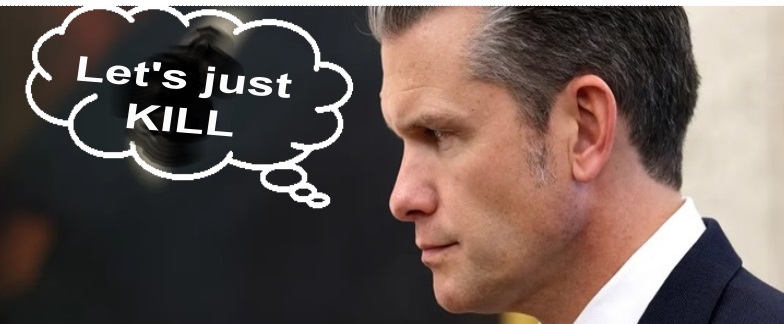
Scrounging for a Hegseth defense, right-wing commentators seize on NY Times report
Hegseth’s supporters split hairs over his culpability
by Matt Gertz, Research contributions from Rob Savillo, 12/02/25, https://www.mediamatters.org/pete-hegseth/scrounging-hegseth-defense-right-wing-commentators-seize-ny-times-report
Right-wing commentators have seized upon a New York Times report on the U.S. military’s September 2 extrajudicial killing of 11 people on board a boat the Trump administration alleged was carrying drugs in the Caribbean, claiming that the article “DEBUNKED” a previous Washington Post report that triggered congressional scrutiny over potential war crimes. But the Times actually confirmed, rather than undermined, the Post’s account.
The Post reported Friday that according to its sources, Defense Secretary Pete Hegseth gave a spoken order “to kill everybody” on board the boat before the attack, and that after confirming that the first strike left two survivors, the Navy special operations commander overseeing the action, Adm. Frank Bradley, “ordered a second strike to comply with Hegseth’s instructions,” killing them. Lawmakers of both parties quickly vowed to aggressively scrutinize the attack, which legal experts argued would constitute, “at best, a war crime under federal law.”
Hegseth, in his prior career as co-host of Fox News’ Fox & Friends Weekend, championed U.S. service members accused or convicted of war crimes. In one 2019 segment discussing a soldier charged over the extrajudicial killing of an Afghan man accused of making bombs for the Taliban, Hegseth said, “If he committed premeditated murder … then I did as well. What do you think you do in war?”
Top Trump administration officials over the weekend denounced the “fake news” Post’s “entire narrative” as “fabricated” with “NO FACTS.” But at Monday’s briefing, White House press secretary Karoline Leavitt effectively confirmed — and defended — the actions the Post had reported, including the second strike.
This confusion left President Donald Trump’s most zealous propagandists with few clear pathways to defend the administration’s actions. But after the Times published its own account of the attack on Monday, “plenty of conservatives are now declaring this case closed,” as Politico reported. Indeed, right-wing commentators have claimed that the Times “quietly DEBUNKED” the Post’s “hoax hit piece,” which they said has been exposed as “a genuinely vile slander of both Hegseth and Bradley.”
“Disgrace to journalism that [Post reporters] @AlexHortonTX and @nakashimae got so many details of this story wrong just to smear @PeteHegseth,” posted RedState’s R.C. Maxwell, a member of the new Pentagon press corps composed of MAGA shills.
Fox News, Hegseth’s former employer, had devoted 53 minutes of airtime to the story across the four days from Friday through Monday. The bulk of that coverage came from purported “news side” shows; Jesse Watters was the only prime-time host to address the story, while the defense secretary’s old program ignored it altogether. Coverage picked up on Tuesday morning, however: Apparently armed with new marching orders at last, Fox & Friends finally found an angle and reported on how the “New York Times report backs Trump admin’s account of strike on suspected drug boat.”
In reality, the timeline of the September 2 attack laid out in the Times article matches the one provided by the Post.
First, after U.S. intelligence operatives determined that the boat was carrying drugs, Hegseth issued his order to destroy it and kill those onboard.
From The Washington Post:
The longer the U.S. surveillance aircraft followed the boat, the more confident intelligence analysts watching from command centers became that the 11 people on board were ferrying drugs.
Defense Secretary Pete Hegseth gave a spoken directive, according to two people with direct knowledge of the operation. “The order was to kill everybody,” one of them said.
From The New York Times:
According to five U.S. officials, who spoke separately and on the condition of anonymity to discuss a sensitive matter that is under investigation, Mr. Hegseth, ahead of the Sept. 2 attack, ordered a strike that would kill the people on the boat and destroy the vessel and its purported cargo of drugs.
In interviews on Monday, two U.S. officials — both of whom were supportive of the administration’s boat strikes — described a meeting before the attack at which Mr. Hegseth had briefed Special Operations Forces commanders on his execute order to engage the boat with lethal force.
Then, the Navy launched an initial strike, which left two survivors, who were killed after Bradley ordered further strikes.
From The Washington Post:
A missile screamed off the Trinidad coast, striking the vessel and igniting a blaze from bow to stern. For minutes, commanders watched the boat burning on a live drone feed. As the smoke cleared, they got a jolt: Two survivors were clinging to the smoldering wreck.
The Special Operations commander overseeing the Sept. 2 attack — the opening salvo in the Trump administration’s war on suspected drug traffickers in the Western Hemisphere — ordered a second strike to comply with Hegseth’s instructions, two people familiar with the matter said. The two men were blown apart in the water.
From The New York Times:
Admiral Bradley ordered the initial missile strike and then several follow-up strikes that killed the initial survivors and sank the disabled boat.
The Times account stresses that Hegseth’s “order was not a response to surveillance footage showing that at least two people on the boat survived the first blast,” and that the defense secretary “did not give any further orders” to Bradley following the first strike — but the Post’s account does not say otherwise.
It is unclear whether the Post’s reporting that Hegseth issued a “spoken directive” to kill those onboard the boat is describing something different from the Times’ reporting that Hegseth briefed commanders on his order to “engage the boat with lethal force.” But both agree that Bradley ordered a second U.S. strike which killed shipwrecked survivors.
That second strike, experts say, constitutes “at best” a textbook war crime (if you accept the administration’s dubious claims that this constitutes a lawful conflict in the first place; otherwise, both strikes are simply murder). Trump said Sunday he “wouldn’t have wanted … a second strike,” though Leavitt defended Bradley ordering one on Monday.
The right-wing complaints amount to hair-splitting over the exact extent of MAGA favorite Hegseth’s responsibility for the allegedly unlawful killings — and it’s based on two reports that paint a consistent picture. Did Hegseth cause the second strike with his initial order, or did he merely watch Bradley order it in real time with no apparent qualms about it, then promote Bradley, give a speech urging military leaders to “untie the hands of our warfighters” to ensure “maximum lethality,” and then defend the attack and mock its critics?
Either way, the Times article doesn’t vindicate him.
Ah, Good Old War Propaganda
Reporters come to understand that there are certain lines they need to color within if they want to get articles published and continue advancing their careers, so they either learn to toe the imperial line or they disappear from the mass media industry.
Caitlin Johnstone, Dec 02, 2025, https://www.caitlinjohnst.one/p/ah-good-old-war-propaganda?utm_source=post-email-title&publication_id=82124&post_id=180465025&utm_campaign=email-post-title&isFreemail=true&r=1ise1&triedRedirect=true&utm_medium=email
Just as the news breaks that Trump has issued Maduro an ultimatum to leave Venezuela immediately if he wants to escape with his life, the Murdoch-owned Wall Street Journal has published an amazingly brazen war propaganda piece titled “How Venezuelan Gangs and African Jihadists Are Flooding Europe With Cocaine.”
“Venezuela has become a major launchpad for huge volumes of cocaine shipped to West Africa, where jihadists are helping traffic it to Europe in record quantities,” the article begins, going out of its way to note that “the Trump administration’s pressure campaign against Venezuelan leader Nicolás Maduro — who it asserts is heavily involved in drug smuggling — has brought global attention to the country’s role in the drug trade.”
The propaganda piece is plainly aimed at Europeans as well as Americans, emphasizing Secretary of State Marco Rubio’s quip last month that the Europeans “should be thanking us” for blowing up alleged drug boats coming from Venezuela because he says some of those drugs are winding up in Europe.
It’s got everything. Whipping up international support for a regime change war. Fearmongering about “jihadists”. The evil, scary dictator. The whole war propaganda sales package.
The mass media do this every time the US empire gets war-horny. And the Murdoch press are always the most egregious offenders.
Reminds me of an old tweet by a man named Malcolm Price:
“I remember in the run-up to the Iraq War a friend I had known all my life suddenly said to me, ‘We must do something about this monster in Iraq.’ I said, ‘When did you first think that?’ He answered honestly, ‘A month ago’.”
Price’s friend had been swept up in the imperial war propaganda campaign that had recently begun, just like countless millions of others. Month after month after month western consciousness was hammered with false narratives about weapons of mass destruction, forced associations of Saddam Hussein with 9/11, and stories about how much better things will be for the people of Iraq once that evil tyrant is gone.
Normally it never would have occurred to the average westerner that a country on the other side of the planet should be invaded and its leader replaced with a puppet regime. That’s not the sort of thing that would have organically entered someone’s mind. It needed to be placed there.
The most common misconception about the free press of the western world is that it exists. All the west’s most influential and far-reaching news media publications are here not to report factual stories about current events, but to manufacture consent for the pre-existing agendas of the US-centralized western empire.
They report many true things, to be sure, and if you acquire some media literacy you can actually learn how to glean a lot of useful information from the imperial press without losing your mind to the spin machine. But reporting true things is not their purpose. Their purpose is to manipulate public psychology at mass scale for the benefit of the empire they serve.
This doesn’t happen through some kind of centralized Ministry of Truth where sinister social engineers secretly conspire to deceive people. It happens because all mainstream press institutions are controlled either by plutocrats or by western governments in the form of state broadcasters like the BBC, both of which have a vested interest in maintaining the imperial status quo. They control who the executives and lead editors of these outlets are, and those leaders shape the hiring and editing processes of the publication or broadcaster. Reporters come to understand that there are certain lines they need to color within if they want to get articles published and continue advancing their careers, so they either learn to toe the imperial line or they disappear from the mass media industry.
If people had a clear understanding of everything that’s really going on in our world, they would tear the empire apart brick by brick. If they could truly see how much evil is being done in their name and really wrap their minds around it, and if they could understand how much wealth the plutocrats are getting out of the imperial status quo compared to how little they themselves benefit from it, there would be immediate revolution. So the oligarchs and empire managers shore up narrative control in the form of media ownership, think tanks, Silicon Valley algorithm manipulation, imperial information ops like Wikipedia, and now increasingly through billionaire-owned AI chatbots to ensure that this never happens.
The entire empire is built on a foundation of lies. The whole power structure is held together by nonstop manipulation of the way westerners think, speak, act, shop, work, and vote. If truth ever finds a way to get a word in edgewise, the entire thing would collapse.
We know this is true because the oligarchs and empire managers pour so much wealth and energy into manipulating our minds. They’re not doing this for fun, they’re doing it because they need to. If they didn’t need to, it wouldn’t be happening.
So what they are doing is intensely creepy and destructive, but it’s also empowering, because it shows us right where their weak spot is. They’re pouring all this energy into controlling the dominant narrative because that’s the weakest point in the armor of the imperial machine.
What we need, then, is a grassroots effort to help truth get a word in. Help people understand that they’ve been propagandized and deceived about the world by western media and by their power-serving education systems every day of their lives, because propaganda only works if you don’t know it’s happening to you. Sow distrust in the imperial media and institutions. Open people’s eyes to the fact that they’re being lied to, and help them learn to see the truth. Anywhere the empire is sowing lies and distortions — whether that’s in Venezuela or Gaza or somewhere else — use that opportunity to help more people unplug their minds from the propaganda matrix.
A better world is possible. The first step in moving toward it is snapping people out of the propaganda-induced coma which dupes them into settling for this dystopian nightmare instead.
How Zionism was sold to the world
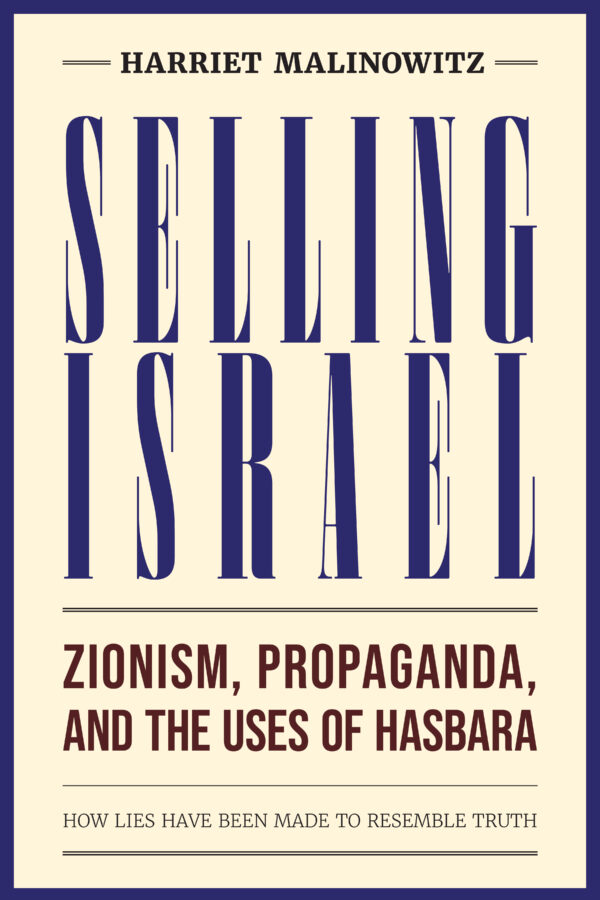
Harriet Malinowitz’s new book, “Selling Israel: Zionism, Propaganda, and the Uses of Hasbara,” reveals how Israeli propaganda and public relations promoted Zionism while concealing Palestinian oppression and dispossession.
Mondoweiss, By Eleanor J. Bader November 29, 2025
There are a number of pressing questions at the heart of Harriet Malinowitz’s newly released book, Selling Israel: Zionism, Propaganda, and the Uses of Hasbara. “How could what was initially a small group of Eastern European Jewish thinkers and activists convince the Jews of the world to agree that they were all one ‘people’ undergoing one shared threat with one shared path to salvation – as well as a shared imperative to seek it?” she asks. “How could they convince the rest of the world to include them in the family of nations? And how could they convince all involved – including themselves – that their project of liberation was a benign and noble one to which they were entitled, producing no casualties or collateral damage?”
The answers to these queries are at the crux of Selling Israel, and the book not only systematically examines them, but dives into how hasbara – globally enacted but Israeli government-instigated propaganda and public relations efforts– has been used to boost Zionism, diminish the perception of Palestinian oppression, and promote the fallacy that the 78- year-old country began as a land without people.
The exhaustively researched work was touted by Publisher’s Weekly as “an impressive and meticulous challenge to established narratives.”
Malinowitz spoke to reporter Eleanor J. Bader about herself, her research, and her findings shortly after the book’s publication.
Malinowitz………………………………………………………………………………………………………………………………………… During my own time on a kibbutz, there were Palestinian men working in the fields not far from the kibbutz members and international volunteers, but when we were all called in for a break in the “breakfast hut,” I saw that they simply kept working. I also met and drank tea with Palestinian merchants in the “shuk,” or Arab market, in Old Jerusalem, so I realized that what I’d been told about everyone in Israel being Jewish was untrue. I was told they were “Israeli Arabs” – without any coherent explanation. This left me completely baffled. Still, I was sure that I must be the one who wasn’t getting something…………………………
……………………….. I read Lenni Brenner’s 1983 book, Zionism in the Age of Dictators, which talked about Zionist complicity with Nazis. That provided another jolt.
I knew just enough to be excited by the first Intifada in 1987. But by the time of the second Intifada in 2002, people had cell phones and I could hear gunfire in Jenin via Democracy Now! on the radio. There were now blogs and listservs which carried information in new ways. But I was still naïve enough to be astounded that Israel refused to let a UN fact-finding team into the area.
This was a real turning point for me……………………………….
…………………………………… when I returned to the U.S., I plunged into research on the history of Palestine and of Zionism and eventually merged those interests with my research on propaganda, already well underway. I soon knew that I wanted to write a book on Zionism and propaganda, but it took me twenty years to complete the project!
Bader: The idea that God promised Israel to the Jews is largely unchallenged. Why is this?
Malinowitz: I think people are afraid to mess with other people’s religious beliefs, particularly where God is concerned. Plus, a lot of people believe the claim!
Bader: You write that Israelis rarely invoked the Nazi Holocaust before the 1960s because it was felt that the loss of six million Jews seemed like a sign of weakness, as if they’d gone to their deaths “like sheep to the slaughter.” Yet you also note that the genocide was seen by David Ben-Gurion to be a ‘beneficial disaster.’ Can you elaborate?
Malinowitz: I was shocked by how disparaged survivors of the Holocaust were in the country’s early years, as if they were a stain on Israeli masculinity that had to be expunged. Later, though, there was an ideological shift; the Israeli military reassured the world that they were strong, determined, and capable of fighting back if attacked, but at the same time the Holocaust could be invoked as a reminder of their perpetual victimhood, justifying all their exploits in the name of averting another genocide against the Jewish people. Similarly, the Holocaust has been used strategically when it serves international fundraising or is needed to garner empathy for Israel as an allegedly beleaguered nation.
Bader: Zionism was mostly promoted by Ashkenazi Jews who put forward the idea that there is one unified Jewish people. How did that idea spread?
Malinowitz: Zionism started out as an idea hatched by Eastern and Central European Jews, emerging in response to their own dire situation in the late nineteenth century. ………….For me, the claim that Israel represents all Jewish people is a fallacy. I, for one, was never consulted about this!
………………………………………………………………Malinowitz: Doubt can be a powerful weapon. There is a template that was developed by the tobacco industry that Zionists, climate and Holocaust deniers, Armenian genocide deniers, and others have used. The idea is there are competing narratives and both should be equally considered – rather than examining their credibility. This was why it took so long to convince the public that smoking caused cancer – because industry operatives challenged scientific expertise with their own “research,” leaving people thinking that the jury was still out and they might as well go on smoking until there was a clear and present danger. It’s been the same with Nakba denial. If the Zionists didn’t really force the Palestinians out in 1948, then they bear no responsibility for the refugees, right?
Bader: The idea that Israel is essential to Jewish survival has long been accepted as true. Why did alternatives to Zionism fail to gain traction?
…………………………………………………………………….., Zionists pushed the idea of Israel as the only solution t0 antisemitism, the only way Jews could be safe. …
…………………………………………………………………………..https://mondoweiss.net/2025/11/how-zionism-was-sold-to-the-world/
The Seven Richest Billionaires Are All Media Barons.
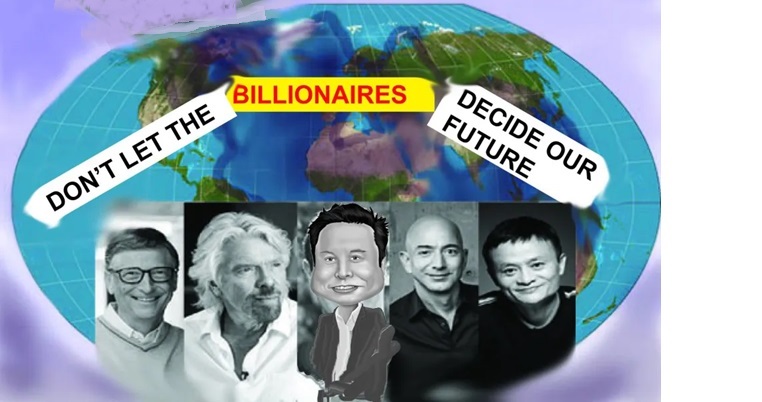
“we all have to be concerned about the consolidation of huge billionaires getting control of nearly all of the major news outlets.”
No other period in history has seen such a rapid and overwhelming buy up of our means of communications by the billionaire class
Mint Press News, Alan McLeod, 25 Nov 25
Trump loyalist and CIA contractor Larry Ellison’s purchase of CNN appears imminent, and marks the latest venture into media for the world’s second-richest individual. But Ellison is not alone. Indeed, the world’s seven richest individuals are all now powerful media barons, controlling what the world sees, reads, and hears, marking a new chapter in oligarchical control over society and striking another blow at a free, independent press and diversity of opinion.
Media Monopoly
Paramount Skydance– an Ellison-owned company– is in pole position to purchase Warner Brothers Discovery, a conglomerate that controls gigantic film and television studios, streaming services like HBO Max and Discovery+, franchises like DC Comics, and TV networks such as HBO, TNT, Discovery Channel, TLC, Food Network, and CNN. This lead is largely due to Ellison’s proximity to President Trump, who will ultimately have to sign off on such a deal.
Ellison has already spoken to senior White House officials about axing CNN hosts and content that Trump is said to dislike, including anchors, Erin Burnett and Brianna Keilar. It is this willingness to completely reorientate the network’s political direction that has made him the White House’s preferred purchaser of Warner Brothers Discovery. He is reportedly so wealthy that he can afford to pay in cash
Under the planned arrangement, Oracle will oversee the platform’s security and operations, giving the world’s second-richest man effective control over the platform that more than 60% of Americans under thirty years of age use for news and entertainment. Trump himself stated that he was extremely pleased that Oracle would be controlling the platform. “It’s owned by Americans, and very sophisticated Americans,” he said.
Israel’s Biggest US Donor Now Owns CBS
Billionaire David Ellison just bought CBS with Trump’s blessing. His father, Larry Ellison—the top US funder of the Israeli military—backs the move. Bari Weiss is set to reshape the newsroom. Media independence is on life support.
The Ellison family’s sudden venture into the realm of media and communications has shocked many, with senior media figures sounding the alarm. Longtime CBS News anchor, Dan Rather, warned that “we all have to be concerned about the consolidation of huge billionaires getting control of nearly all of the major news outlets.” “It is a particularly tough time for anybody working at CBS News,” he stated, citing pressure to change coverage to be more pro-Trump. “I think if [the Ellisons] were to buy CNN, it would change CNN forever, and it might be another very serious wound to CBS News,” he concluded.
Billionaire Capture
Rather is correct. No other period in history has seen such a rapid and overwhelming buy up of our means of communications by the billionaire class – a fact that raises tough questions about freedom of speech and diversity of opinion. Today, the world’s seven richest individuals are all major media barons, giving them extraordinary control over our media and public square, allowing them to set agendas, and suppress forms of speech they do not approve of. This includes criticisms of them and their holdings, the economic system we live under, and the actions of the United States and Israeli governments.
Sitting on a fortune of over $480 billion, Elon Musk is the wealthiest person in world history, and is projected to, within the next decade, become the planet’s first trillionaire. In 2022, Musk purchased Twitter, in a deal worth around $44 billion. The South-African born tech magnate quickly set about turning the platform into a vehicle for advancing his own far-right politics. In 2024, for example, he was a key figure in promoting an attempt to topple Venezuelan president, Nicolás Maduro, spreading misinformation about the country’s election, and even threatening Maduro with a future in the notorious Guantánamo Bay prison camp.
He has also very publicly rewritten his generative AI chatbot, Grok, on multiple occasions, so it would produce more conservative responses to users’ questions. One result of this was that Grok began to praise Adolf Hitler.
Musk overtook Jeff Bezos last year to become the world’s richest man. And like Musk, the Amazon founder and CEO has made several moves into the world of media. In 2013, he bought The Washington Post for $250 million, and quickly began exerting his influence on the newspaper, firing anti-establishment writers and hiring pro-war columnists. This came just months after he bought a minority stake in Business Insider (now rebranded to Insider).
One year later, in 2014, Amazon paid nearly a billion dollars to purchase Twitch, a streaming platform which hosts around 7 million monthly broadcasters. Amazon also owns a wide range of other media ventures, including movie studio MGM, audiobook platform, Audible, and movie database website, IMDB.
French billionaire, Bernard Arnault, meanwhile, has been buying up large swaths of his country’s media outlets. The chairman of luxury conglomerate, Louis Vuitton Moët Hennessy (LVMH) and the world’s seventh-richest man now sits on a media empire that includes daily newspapers such as Le Parisien and Les Echoes, magazines such as Paris Match and Challenges, as well as Radio Classique.
The remaining three individuals rounding out the top seven list all owe their wealth primarily to their media empires. Google co-founders Sergey Brin and Larry Page are collectively worth over half a trillion dollars. Google has become the dominant force in today’s hi-tech economy, and is also a major player in social media, having bought YouTube in 2006 for $1.65 billion. Thirty-five percent of Americans use the video platform as a primary source of news.
Mark Zuckerberg, meanwhile, owes his $203 billion fortune to his social media and tech ventures, including Facebook, Instagram, and WhatsApp. Like YouTube, Zuckerberg’s companies are major players in the modern news landscape, with 38%, 20% and 5% of Americans relying on Facebook, Instagram, and WhatsApp for their news and views.
MAGA Mouthpieces
Many of these wealthy individuals have joined forces with President Trump, in an effort to support Republican policies and push a conservative worldview. Chief among these is the Ellison family, who quickly announced significant changes as CBS News, promising “unbiased” coverage and more “varied ideological perspectives”– widely understood as a shift towards right-wing, pro-Trump coverage.
Larry Ellison holds deeply conservative views, and became a top donor and fundraiser for the Republican Party, and a close Trump confident………………………………………………………………………………………………………………………………………………………
Pentagon Contractors
A key factor in the rise of many of the world’s top seven richest individuals is their proximity to the U.S. national security state, with many of their companies growing wealthy in part due to feeding from the trough of Pentagon contracts. Today’s wars and espionage rely as much on hi-tech computing equipment as tanks and guns, and in 2022, the Department of Defense awarded Amazon, Google, Microsoft, and Oracle a $9 billion cloud computing contract……………………………………………………………………………………………………………………………………………………..
The Pentagon is Recruiting Elon Musk to Help Them Win a Nuclear War
With billions in defense contracts, Musk’s SpaceX is helping turn Trump’s nuclear vision into reality, threatening to dismantle decades of global nuclear deterrence., AI hypersonic missiles, Castelion SpaceX connection, Elon Musk military contracts, Musk nuclear war plans, Pentagon missile defense, SpaceX Pentagon contracts, Starlink military applications, Trump AI warfare, Trump nuclear defense plan, U.S……………………………………………………………………………………………………………………………………………………………
Arming and Supporting Israel
Another key attribute that many of the world’s richest individuals share is their passionate support for Israel and its expansionist project.
Nowhere is this more evident than with Ellison, who has made it his life’s goal to advance the Jewish State’s interests, both at home and abroad……………………………………………………………………………………. https://www.mintpressnews.com/the-seven-richest-billionaires-are-all-media-barons/290572/
The Unseen Battle: Why Access to Alternative Media is a Modern Necessity.
28 November 2025 Andrew Klein, https://theaimn.net/the-unseen-battle-why-access-to-alternative-media-is-a-modern-necessity/
In an age where information is power, a silent war is being waged for the mind. The landscape of public discourse is increasingly curated, with gatekeepers – both state and corporate – determining which narratives are amplified and which are silenced. In this environment, the role of alternative media transforms from a simple option to an urgent necessity. It has become the essential immune system for our democracy, fighting not only to disseminate information but to protect our fundamental right to a full and honest picture of the world.
The High Stakes: More Than Just News
To understand the critical importance of alternative media, one must first recognise what is at stake when a single narrative dominates.
The Weaponisation of Information: Mainstream media, often intertwined with powerful political and corporate interests, can be used to manipulate public sentiment. History provides a stark lesson: the powerful newspaper owner William Randolph Hearst famously cabled an illustrator in Havana, “You furnish the pictures. I’ll furnish the war,” demonstrating how media can be used to inflame public opinion and make conflict inevitable. This manipulation taps into deep-seated tribal emotions, a “militant enthusiasm” that can be mobilised on a huge scale for political ends.
The Distraction Economy: While the world faces unprecedented challenges – from the threat of thermonuclear war and catastrophic climate change to rising economic inequality – the mainstream media often offers a diet of pop music, sports, and sit-coms. This functions as a modern-day “bread and circuses,” numbing the public into political passivity and distracting from the severe, systemic issues that demand our immediate attention and action.
The Right to Information Undermined: According to the United Nations, the rise of disinformation is a direct threat to human rights, as it politically polarises populations and hinders people from meaningfully exercising their civic duties. When the information environment is flooded with false or misleading content, our very ability to discern truth is compromised, rendering the right to information meaningless.
The Vacuum of Censorship: Where Misinformation Thrives
A government’s attempt to restrict access to information, particularly under the guise of protection, is not a solution; it is a catalyst for a more profound problem. Limiting exposure to diverse perspectives does not create a well-informed citizenry; it creates an information vacuum.
The Rise of Unchecked Narratives: When official channels curate or suppress information, they create a void. This vacuum is rapidly filled by misinformation (false information shared without malicious intent) and disinformation (deliberately false information spread to deceive). Without the robust, competing frames provided by a healthy alternative media ecosystem, these false narratives can take root unchallenged.
The Illusion of Protection: Shielding any age group, especially the young, from complex political and world issues is a dangerous fallacy. It assumes that without exposure to challenging topics, individuals remain “safe.” In reality, it only ensures they lack the critical tools to analyse information when they inevitably encounter it through other, less reliable means. The lack of media literacy becomes a vulnerability, not a shield.
Challenging the Status Quo: A Skill for All Ages
The manufacturing of unquestioning consent is the goal of any authoritarian system. Breaking this requires a conscious, society-wide effort to foster critical thinking from childhood through adulthood.
Children as Critical Thinkers: The development of “mental state talk” – the ability to attribute thoughts, feelings, and intentions to others – is a cornerstone of understanding different perspectives. Narratives and stories are ideal contexts for children to develop this skill, as they practice connecting a character’s actions with their internal motivations. When children are encouraged to deconstruct stories, they are honing the very skills needed to later deconstruct political narratives.
Education, Not Indoctrination: Teaching media literacy is not about telling people what to think, but how to think. This involves equipping them with simple, effective tools like the “ESCAPE” method:
- Evidence: What facts are provided?
- Source: Who created this?
- Context: When and why was it made?
- Audience: Who is it meant for?
- Purpose: Why was it created?
- Execution: How was it presented?
The Role of Alternative Media: While mainstream media often operates with a top-down, “sedimenting” function – stabilising a single interpretation of events – alternative media can make an “explosive dent in the political culture of the moment.” It is vital for organising social movements, providing a platform for reflection and debate, and correcting the distorted picture provided by the mainstream.
The Path Forward: Reclaiming Our Cognitive Sovereignty
The battle for a healthy information ecosystem is not a lost cause. It requires a multi-faceted approach that defends alternative voices while empowering individuals.
Defend Alternative Media: Support and engage with independent media outlets. Their survival and growth are crucial for a balanced discourse, as they often give life to, and are given life by, social movements that challenge power.
Demand Media Literacy: Advocate for the integration of robust media literacy education at all levels of schooling. This is not a niche subject but a fundamental skill for navigating the modern world, helping individuals become discerning consumers and creators of media.
Embrace Critical Inquiry: As a society, we must move beyond the comfort of passive consumption. We must cultivate a culture where questioning the status quo and challenging state-manufactured narratives is not seen as subversion, but as the duty of every engaged citizen.
The trend towards restricting information and manufacturing consent is indeed dangerous. It addresses no real-world problems; it only hides them. In the face of this, the mission of alternative media and the critical, questioning citizen has never been more vital. It is a race between education and catastrophe, and we must ensure that the immune system of our democracy is strong enough to prevail.
This article synthesises key insights from academic and research sources to build a compelling case. It frames the issue not just as a matter of media preference, but as a fundamental requirement for democratic health and individual autonomy.
Right-wing media praise Trump’s made-up excuses for war against Venezuela.

Trump massively inflated threat from Venezuelan “narco-terrorists” smuggling fentanyl into the US
MEDIA MATTERRS, by Zachary Pleat. Research contributions from Jane Lee, 11/24/25
President Donald Trump and right-wing media have been quick to cite fentanyl interdiction as the supposed justification for the administration’s likely illegal strikes against vessels in the Caribbean Sea and Pacific Ocean, which they have blamed on so-called “narco-terrorists” tied to the regime of President Nicolas Maduro of Venezuela. But reporting has shown the Trump administration’s excuses are built on lies — with virtually no fentanyl arriving in the United States via routes currently being targeted by the military in a bombing campaign that has already claimed at least 83 lives.
This isn’t the first time Trump and his media allies have used fentanyl as an excuse for his out-of-control policies, as it was used to justify his instigation of a trade war with Mexico and Canada earlier this year. The Trump administration’s military buildup also follows multiple actions that undermine efforts to combat fentanyl trafficking into the U.S.
- The New York Times: Military officials have told Congress “there was no fentanyl on the boats” destroyed by Trump administration military strikes. Rep. Sara Jacobs (D-CA) told the Times that according to briefings from military officials, the Trump administration’s “rationale for the strikes is because fentanyl is killing so many Americans, but these strikes are targeting cocaine.” Jacobs also told HuffPost that Pentagon officials “argued that cocaine is a facilitating drug of fentanyl, but that was not a satisfactory answer for most of us.” Another congressional source told HuffPost: “They’ve not recovered fentanyl in any of these cases. It’s all been cocaine.” [The New York Times, 11/19/25; HuffPost, 11/4/25]
- The New York Times: Multiple government agencies have found that “Venezuela plays virtually no role in the fentanyl trade.” A September New York Times report explained: “Fentanyl is almost entirely produced in Mexico with chemicals imported from China, according to the U.S. Drug Enforcement Administration, the Justice Department and the Congressional Research Service.” It added: “There is no proof that it is manufactured or trafficked from Venezuela or anywhere else in South America.” [The New York Times, 9/3/25]
- The Atlantic: Coast Guard data shows “Fentanyl Doesn’t Come Through the Caribbean.” A September 26 article in The Atlantic countered the Trump administration’s justification for extrajudicial killings via military strikes against boats off the coast of Venezuela: “Although the United States Coast Guard interdicts staggering quantities of illegal drugs in the Caribbean each year, it does not encounter fentanyl on the high seas. South American cocaine and marijuana account for the overwhelming majority of maritime seizures, according to Coast Guard data, and there isn’t a single instance of a fentanyl seizure—let alone ‘bags’ of the drug—in the agency’s press releases.” [The Atlantic, 9/26/25]
- According to the State Department’s March 2025 International Narcotics Control Strategy Report: “The Department of State, in consultation with the Drug Enforcement Administration (DEA) and other relevant agencies, has identified Mexico as the only significant source of illicit fentanyl and fentanyl analogues significantly affecting the United States during the preceding calendar year.” [Washington Office on Latin America, 11/5/25]
- Trump has bombed boats and built up a military presence near Venezuela based on dubious fentanyl-trafficking claims
-
- The United States has carried out at least 21 military strikes on alleged drug-smuggling vessels, in which at least 83 people have been killed, in the Caribbean and the Pacific since September 2 Trump and the Department of Defense have claimed the boats carried fentanyl and were being operated by “narcoterrorists.” After the first strike, Trump claimed that the people on the boat were members of Tren de Aragua; the Trump administration has falsely claimed that gang is controlled by Venezuela’s government and invaded the U.S., and has used the gang to justify many unrelated immigration arrests. [CNN, 11/16/25; ABC News, 11/16/25; PolitiFact, 9/3/25; ProPublica, 11/13/25]
Right-wing media suggested these military strikes are necessary to stop fentanyl from being moved into the U.S……………………………………………………………………………………………………………………………………………………………………………https://www.mediamatters.org/national-security/right-wing-media-praise-trumps-made-excuses-war-against-venezuela
International Uranium Film Festival 2025
IUFF 2025, Las Vegas, NV, NORTH AMERICAN TOUR 2025
November 26, 2025, https://beyondnuclear.org/10009-2/
LAS VEGAS, NEVADA, USA, NOVEMBER 21, 22, AND 23, 2025–The International Uranium Film Festival (IUFF) is proud to announce the highly anticipated North American Tour 2025 taking place November 21, 22 & 23 at the Downtown Cinemas in Las Vegas. Showcasing an array of compelling films and exploring the detrimental impacts of nuclear weapons testing, the festival promises to captivate audiences with its thought-provoking narratives and powerful storytelling. “You can’t hug your children with nuclear arms,” said Ian Zabarte, Secretary of NCAC.
Organizers of the IUFF Las Vegas, the Native Community Action Council (NCAC) composed of Shoshone and Paiute peoples believe these films are a necessary part of the ongoing awareness, witness and resistance to nuclear war, human health and a livable Mother Earth.
HIGHLIGHTS: “TO USE A MOUNTAIN” ● “WAYS OF KNOWING” ● “SILENT WAR” ● “UNDER THE CLOUD” are among the films addressing uranium, the fuel for both nuclear weapons and nuclear energy. As 2025 marks the 80th anniversary of the first atomic bombings at the Trinity Site, Hiroshima, and Nagasaki, the world faces a new Manhattan Project that includes nuclear modernization of weapons and the fast-tracking of uranium mining for nuclear-powered AI (artificial intelligence) data centers. The IUFF recognizes all radiation victims. Downwinders of nuclear weapons test sites and nuclear energy facilities are all impacted by environmental contamination that creates undue health risks that produce cascading health effects to future generations. The IUFF is a space for everyone who supports a nuclear-free future! We invite all to come together to view original films and to meet with affected community members, organizations and activists working toward protection from radiation risks, protection of our lands and water, and protection of all Peoples worldwide.
“The Shoshone Nation still bears the deadly legacy of nuclear testing on our unceded lands, an act that violates our treaty, our land and our lives.” said Laura Piffero of the NCAC.HIGHLIGHTS: “TO USE A MOUNTAIN” ● “WAYS OF KNOWING” ● “SILENT WAR” ● “UNDER THE CLOUD” are among the films addressing uranium, the fuel for both nuclear weapons and nuclear energy. As 2025 marks the 80th anniversary of the first atomic bombings at the Trinity Site, Hiroshima, and Nagasaki, the world faces a new Manhattan Project that includes nuclear modernization of weapons and the fast-tracking of uranium mining for nuclear-powered AI (artificial intelligence) data centers. The IUFF recognizes all radiation victims. Downwinders of nuclear weapons test sites and nuclear energy facilities are all impacted by environmental contamination that creates undue health risks that produce cascading health effects to future generations. The IUFF is a space for everyone who supports a nuclear-free future! We invite all to come together to view original films and to meet with affected community members, organizations and activists working toward protection from radiation risks, protection of our lands and water, and protection of all Peoples worldwide.
“The Shoshone Nation still bears the deadly legacy of nuclear testing on our unceded lands, an act that violates our treaty, our land and our lives.” said Laura Piffero of the NCAC.
FOR MORE INFORMATION:
Uraniumfilmfestival.org
Nativecommunityactioncouncil.org
1 This Month
To see nuclear-related stories in greater depth and intensity – go to https://nuclearinformation.wordpress.com/
12 February – Webinar The Big Push: New Nuclear Projects in Canada
Thursday, February 12, 7 pm Eastern | 2nd of 4 sessions in the 2026 Nuclear Waste Online webinar series
Join a webinar on the push for new nuclear generation in Canada. Go to Northwatch.org to register or use the registration link https://us02web.zoom.us/webinar/register/WN_ZfWOf1GITqSRIZX8CB-A9w
-
Archives
- February 2026 (115)
- January 2026 (308)
- December 2025 (358)
- November 2025 (359)
- October 2025 (376)
- September 2025 (258)
- August 2025 (319)
- July 2025 (230)
- June 2025 (348)
- May 2025 (261)
- April 2025 (305)
- March 2025 (319)
-
Categories
- 1
- 1 NUCLEAR ISSUES
- business and costs
- climate change
- culture and arts
- ENERGY
- environment
- health
- history
- indigenous issues
- Legal
- marketing of nuclear
- media
- opposition to nuclear
- PERSONAL STORIES
- politics
- politics international
- Religion and ethics
- safety
- secrets,lies and civil liberties
- spinbuster
- technology
- Uranium
- wastes
- weapons and war
- Women
- 2 WORLD
- ACTION
- AFRICA
- Atrocities
- AUSTRALIA
- Christina's notes
- Christina's themes
- culture and arts
- Events
- Fuk 2022
- Fuk 2023
- Fukushima 2017
- Fukushima 2018
- fukushima 2019
- Fukushima 2020
- Fukushima 2021
- general
- global warming
- Humour (God we need it)
- Nuclear
- RARE EARTHS
- Reference
- resources – print
- Resources -audiovicual
- Weekly Newsletter
- World
- World Nuclear
- YouTube
-
RSS
Entries RSS
Comments RSS
 nuclear-news