‘Western Press Obscured the Sheer Terror of What Israel Had Carried Out’: CounterSpin interview with Mohamad Bazzi on Lebanon pager attacks

So this was an entirely indiscriminate attack, and it puts the Western media fascination with Israel’s technological prowess into even sharper focus. We had the Western press marveling at—I’ll just quote a few of the terms—“Israel’s prowess,” “precision,” “James Bond“–type operation. And quite a few other terms that obscured the sheer terror of what Israel had carried out over those two days in Lebanon.
Janine Jackson interviewed NYU’s Mohamad Bazzi about Israel’s terror attacks in Lebanon for the September 27, 2024, episode of CounterSpin. This is a lightly edited transcript.
Janine Jackson: Speaking of Israel’s remote detonation of thousands of pagers and walkie-talkies of suspected Hezbollah members in Lebanon, former CIA director and defense secretary Leon Panetta told CBS, ”I don’t think there is any question that it’s a form of terrorism.”
Panetta’s remarks were widely reported, mostly straight, but for Fox, where Sean Hannity said Panetta “had the gall to say Israel is engaging in terrorism against the terror group Hezbollah.”
It seems worth noting: Just before Panetta, CBS viewers heard from a former FBI analyst who said of the explosions in stores, cars and homes that killed some 39 people and injured more than 3,000, including children:
Tactically, what Israel has done has been brilliant. They have severely degraded Hezbollah’s capabilities. They’ve severely degraded Hezbollah’s ability to respond to Israeli things. They’re really hoping that, strategically, Hezbollah gets the message: Stop firing rockets into our country.
That “tactic” has led to more death, more destruction and, some say, more chance of a still wider, more devastating war.
Joining us now to talk about unfolding events and US media’s depictions is Mohamad Bazzi. He’s director of the Hagop Kevorkian Center for Near Eastern Studies and journalism professor at New York University, as well as former Middle East bureau chief at Newsday. He joins us now by phone from here in town. Welcome to CounterSpin, Mohamad Bazzi.
Mohamad Bazzi: Thank you for having me.
JJ: CBS segued from the “brilliant tactic” guy to Leon Panetta by saying that some saw Israel’s action as a “deception one step too far. The United Nations labeled the operation a violation of international law, and it’s raised some eyebrows here at home too.” It’s equally hard to imagine that this wasn’t a violation as that it wouldn’t immediately be condemned as such, had anyone else carried it out, would you say?
MB: That’s an excellent point. It would certainly have been condemned, let’s say, if Russia had carried out a similar operation, or even something a fraction of this kind of attack, in Ukraine.
I think one of the things that struck me, and I suspect it struck you and others who watch the Western media, is the sense of marvel over the ingenuity of Israel’s technological prowess. So what we had is a lot of the coverage framed as, “Oh, this is taking a page out of a spy thriller, or a dystopian movie.”
And in some ways, what unfolded in Lebanon last week was something dystopian, but it wasn’t a movie. It affected real people’s lives. And so many in the Western media were fixating on the novelty of Israel’s attack, and sometimes celebrating it, but they neglected to acknowledge or even consider the sheer terror experienced by tens of thousands of Lebanese civilians. And this is a society that suffered through years and years of trauma, and this was the latest attack that unfolded in this incredibly pernicious way.
A lot of the coverage also didn’t get into the question of whether this constituted a war crime. And, on the face of it, it seems to meet the definition of a war crime: Human Rights Watch, a few other rights organizations, issued statements noting that international humanitarian law forbids the use of booby traps, especially with objects that have such important use for civilians. I think it would fit the definition of a war crime, beyond just being an act of terrorism that’s meant to instill terror in a civilian population.
JJ: Hezbollah, like Hamas, is for many US media consumers almost like a sports team, or like a kaiju, a monster like Godzilla. And I think it might sound strange to some to think that they aren’t solely a military force in Lebanon, but in fact have a much broader role.
MB: Yeah, a lot of media consumers and listeners in the US don’t get the context. They don’t get the background that Hezbollah is not only a militia, it is not only the militia that’s labeled a terrorist group by the US and by many countries in the EU, but it’s also the most dominant military force in Lebanon, and it’s also the most powerful political party and political movement in the country.
So Hezbollah runs an extensive social service network. It operates schools and hospitals and supermarkets and credit unions.
…………………………..It’s the act of terror. It’s the imprecise nature, this deliberate setting off of detonations of thousands of small bombs that went off at the same time on a Tuesday afternoon, as people were going about their daily lives. And so the bombs went off in grocery stores and hospitals and sidewalk cafes and barbershops. The next day, on Wednesday, some of the walkie-talkie explosions went off during the funerals of people who had been killed the day before during the pager explosions.
So this was an entirely indiscriminate attack, and it puts the Western media fascination with Israel’s technological prowess into even sharper focus. We had the Western press marveling at—I’ll just quote a few of the terms—“Israel’s prowess,” “precision,” “James Bond“–type operation. And quite a few other terms that obscured the sheer terror of what Israel had carried out over those two days in Lebanon……………………………………………………………………………………………………………………………………….

JJ: There are calls now for Secretary of State Anthony Blinken, to resign after it’s been reported, I believe by ProPublica, that he was in receipt of assessments, from both USAID and the State Department’s Refugees Bureau, that Israel had blocked deliveries of humanitarian aid to Gaza. He had that information, Blinken did, when he went before Congress, and said there was no evidence of that.
Short even of his resignation, though, how many times do US officials need to lie or hide or dissimulate before journalists stop quoting them credulously? Isn’t it just insulting to readers and to the public at some point?
MB: We certainly have many decades of this, going back to Vietnam, of course, US officials lying about war and lying about US support for allies who commit atrocities.
The report from ProPublica has been an exception. It’s an excellent report. It just came out in the last couple of days, based on internal leaks, because there are officials in the State Department, and elsewhere in the Biden administration, that find all of this unconscionable, and don’t want to see this continued support.
And it’s a very important leak, not just because of what it tells us about Blinken and others in the administration, and their ability and willingness to lie to the US public and to lie to the US media, but it also shows us that there’s actually a fairly straightforward path for the Biden administration to stop its weapons transfers to Israel, because those weapons transfers violate US laws. And if they were honest, and they had admitted it, they would’ve had to stop sending weapons, because that’s what US law requires. It’s what the Biden administration’s own guidelines require.
So that was a tremendously important leak by ProPublica. And, unfortunately, I’ve seen some references to it in the past few days, but it’s not getting the widespread attention in the corporate media and in the legacy media that it should be getting.
It’s certainly getting a lot of attention on social media. People are sharing it, and sharing the documents, and it’s creating these calls for Blinken to resign, or for Biden to do something. But it’s certainly troubling to see the legacy media ignore this as well.
And it all raises the question, what more do you want? What more can be presented to the media for it to change its approach to covering this war?
…………………MB: I would certainly like to see more humane coverage. It’s a basic ask, and it’s unfortunate that we have to make this ask, but I would like to see more humane coverage of Palestinians, of Lebanese, of other Arabs and Muslims.
I think one of the things we’ve seen, just in this past week, in the way that the pager explosions and the walkie-talkie explosions were covered—this marveling over Israel’s ingenuity, it ignores the reality on the ground, but it also contributes to the dehumanization of Palestinians and Lebanese and Arabs, this widespread dehumanization that we’ve seen, certainly for decades, but we’ve seen it ramp up to an extreme since Israel launched its war on Gaza. …..more https://fair.org/home/western-press-obscured-the-sheer-terror-of-what-israel-had-carried-out/
Nuclear Priesthood, and Police Repression: Feminist Confrontations of Violent Industries, and Movements to Abolish Them

This report investigates the nexus between the nuclear and fossil fuel industries, and state repression of activism against these industries.
‘Petrobromance,’ Nuclear Priesthood, and Police Repression: Feminist Confrontations of Violent Industries, and Movements to Abolish Them analyses, from a feminist and gender-transformative perspective, trends and parallels in how the nuclear and fossil fuel industries operate and entrench their power; their impacts on communities, including gendered impacts; and the ways in which resistance against these industries is suppressed by police, militaries, and private military and security companies. Drawn from research and consultation with activists, organisers, academics, and members of impacted communities, this research aims to create a shared knowledge base and illuminate paths forward for deeper collaboration across movements, including, but not limited to, among antinuclear, environmental, and land and water defence movements.
Authors: Ray Acheson, Katrin Geyer, Genevieve Riccoboni, Laura Varella
Editor: Ray Acheson
Research support: Emma Murray and Michelle Benzing
Copy review: Genevieve Riccoboni and Zarin Hamid
Design: Nadia Joubert
Credit: The term “petrobromance” was coined by Joni Seager
This report was made possible with support from the Ploughshares Fund.
We are delighted to offer the online version for free, but please consider making a donation to Reaching Critical Will to help us cover the costs the other materials and information services that Reaching Critical Will provides.
The Looming Catastrophe in the Middle East (w/ Gideon Levy) | The Chris Hedges Report
September 28, 2024
It has become quite rare to hear any meaningful accountability for Israel’s actions from Israeli citizens themselves. Israeli journalist Gideon Levy is an anomaly in Israel by today’s standards, as for his entire career he has challenged the apartheid and occupation of the Israeli state. On today’s episode of The Chris Hedges Report, Levy joins host Chris Hedges to discuss his book, The Killing of Gaza: Reports on a Catastrophe, and explain the spiritual destruction, both of Israel and Palestine, that the current genocide in Gaza is causing as well as the implications of new military operations in Lebanon.
The worst change, according to Levy, is that Israel has lost its humanity. “Everything is acceptable,” Levy tells Hedges as he describes the ongoing slaughter of Palestinian civilians in Gaza, the brutal killing of prisoners, the censorship at the hands of the state and the overall indifference to it all.
“There is practically only one camp in Israel, the camp which supports apartheid and occupation,” Levy says.
There isn’t even any room left for empathy of the innocent victims in Gaza, according to Levy. Teachers have been subject to interrogation and termination because they “express[ed] empathy with the children of Gaza, with the victims of Gaza. Even this is not legitimate anymore in Israeli society 2024,” Levy contends.
Although the horrors following October 7 are devastatingly unprecedented, Levy asserts that this entire catastrophe was years in the making and the meaningless gestures of advocating for a two-state solution, for example, will perpetuate it further.
In the first years following the war in 1967, the occupation of Palestinians as a way of life quickly became normalized, according to Levy. “[Palestinians] clean our streets, they build our buildings, they pave our roads and they will never have citizenship. The only people in the world without any citizenship of any state,” Levy says.
As Israeli society attempts to continue this way of living, only disruptive movements and moments, such as the First Intifada, the Yom Kippur war and now October 7, will bring meaningful attention to the Palestinian struggle most of the world is okay with ignoring.
As Levi writes in his book,
“The way of terror is the only way open to the Palestinians to fight for their future. The way of terror is the only way for them to remind Israel, the Arab states and the world, of their existence. They have no other way. Israel has taught them this. If they don’t use violence, everyone will forget about them, and then a little later, only through terrorism will they be remembered. Only through terrorism will they possibly attain something. One thing is certain, if they put down their weapons, they are doomed.”
Levy says that history has told the Palestinians and the world something crucial about Israel: “the message is, if you want to achieve anything from us, only by force. And the message for the world is the same, if you want the world to care about you, raising your voice is not enough. You have to take measures. You have to take actions, and unfortunately, many times violent ones, aggressive ones, and many times even barbarian ones, like on the seventh of October.”……………………………………………more https://scheerpost.com/2024/09/28/the-looming-catastrophe-in-the-middle-east-w-gideon-levy-the-chris-hedges-report/
Going From “The Civilian Buildings Are Hamas” To “The Civilian Buildings Are Hezbollah”
Caitlin Johnstone, Sep 24, 2024, https://www.caitlinjohnst.one/p/going-from-the-civilian-buildings?utm_source=post-email-title&publication_id=82124&post_id=149346214&utm_campaign=email-post-title&isFreemail=true&r=1ise1&triedRedirect=true&utm_medium=email
I have no patience for people who this late in the game still say they don’t know enough about the Palestine situation to have an opinion. It’s like, okay, well, that’s a character flaw, and you should change it.
Western ignorance and indifference on this issue is hurting real human beings; you don’t get to just be all “tee hee I don’t like learning” and expect this attitude to be treated as some kind of cute little personal foible.
It’s not a complicated issue, bitch. Learn.
Now that Israel has ramped up its attacks on Lebanon, the IDF is saying that Hezbollah are hiding missiles in civilian homes.
So I guess we’re doing this again. If you liked “All the civilian buildings are Khamas,” you’ll love Israel’s new hit “All the civilian buildings are Khezbollah.”
❖
Israel has spent a year committing genocide, attacking its neighbors, trying to start World War 3, destroying hospitals, assassinating journalists and lying, yet next month the entire western political-media class is still going to spend a day tearfully portraying it as a victim.
Everyone who publicly criticizes Israel gets accused of working for Hamas and Hezbollah, and now Israel apologists are showing up in our notifications making “jokes” about murdering us with weaponized electronic devices. They’re deliberately trying to sow fear among western critics of Israel.
This is who these people are. This is the quality of person who supports Israel. They’d happily murder us all with the push of a button, just because we criticized their favorite apartheid state.
❖
Netanyahu has reportedly said he is considering a plan for the ethnic cleansing of Palestinians from northern Gaza. After a year of lies and spin, they’re finally starting to get a bit honest about what this has always been about.
CNN, The Jewish Insider and the Anti-Defamation League have been colluding in a full-on mass media psyop to deceive the public into thinking Michigan Representative Rashida Tlaib made an antisemitic comment about her state’s attorney general. CNN’s Jake Tapper has been knowingly lying about comments Tlaib made in an interview, falsely reporting that the congresswoman said Michigan Attorney General Dana Nessel only filed charges against anti-genocide protesters “because she’s Jewish and the protesters are not.” CNN’s Dana Bash then repeated these false allegations.
It never happened. They made the whole thing up. Tlaib never made any comments remotely of that nature, and the reporter who did the interview has been all over social media saying CNN is falsely reporting on her words.
It’s perhaps not the most significant thing happening in the world right now, but it does say important things about the outlets and reporters who tell people how to look at major world events in our society.
Biden had another lost at the podium moment the other day, this time forgetting he was meant to be introducing Indian Prime Minister Nerendra Modi after a speech.
Biden supporters were so rabidly nasty to those of us who said he has dementia. They called us Russian agents, fascists, and conspiracy theorists. They never admitted they were wrong. They just pulled him from the race and, much like their president, forgot the whole thing.
It’s so surreal how we’re all seeing clear and undeniable evidence that the US has no functioning president and doesn’t actually need one even as the presidential race consumes all political energy and attention in the nation for months.
During a speech at the Israeli American Council on Thursday, Donald Trump admitted that while he was president the late megadonor Sheldon Adelson and his wife Miriam were at the White House “almost more than anybody outside of people that worked there” demanding political favors for Israel, and that he “gave” them what they wanted.
In 2013 Sheldon Adelson said the US should drop a nuclear bomb on Iran. This was the sociopathic oligarch who, according to Trump, essentially bought his way into the White House via campaign donations.
Donald Trump is a big fat Israel slut.
If the UK and US carved out a piece of China or Russia and gave it to the Mormons, that new nation would exist in a continuous state of western-backed violence for as long as it existed. Israel exists in a continuous state of western-backed violence for the exact same reason.
Losing The Narrative War: Israel Illegally Raids and Shuts Down Al Jazeera’s West Bank Bureau

The Dissenter, Kevin Gosztola, Sep 23, 2024
Israel attacks Al Jazeera and its journalists because their reporting consistently shows the truth of Israel’s war and undermines its military occupation against Palestinians.
As the Israeli government struggles to maintain its preferred narrative in the global news media around the country’s brutal assault on Gaza, the Israeli military illegally raided Al Jazeera’s West Bank bureau in Ramallah on September 22 and said the news network would be shut down for 45 days.
Israel’s latest act of lawfare against Al Jazeera occurred several months after the Israeli military raided Al Jazeera’s office in East Jerusalem in May. In that raid, soldiers seized the network’s media equipment after Prime Minister Benjamin Netanyahu and the Knesset banned Al Jazeera from operating in the country.
“The Network vehemently condemns and denounces this criminal act by the Israeli occupation forces. Al Jazeera reject the draconian actions, and the unfounded allegations presented by Israeli authorities to justify these illegal raids,” Al Jazeera stated. “Al Jazeera reaffirms its unwavering commitment to continue reporting on the war on Gaza and the ongoing occupation of the Palestinian territories and the regional escalation.”
Israeli communications minister Shlomo Karhi said the raid was launched to stop “the mouthpiece of Hamas and Hezbollah.” He added, “We will continue to fight the enemy’s channels and ensure the safety of our heroic fighters.”
Al Jazeera’s media license in the West Bank does not come from the Israeli government but rather the Palestinian National Authority, which released a statement denouncing the illegal raid.
According to reporting from Al Jazeera English, masked and “heavily armed” Israeli soldiers entered the Al Jazeera office in the early morning. A document reflecting a decision by an Israeli military general was shown to Al Jazeera media personnel. Every person in the office was given 10 minutes to grab their personal belongings and cameras and leave.
Israeli soldiers tore down a poster of Shireen Abu Akleh, the Palestinian American correspondent for Al Jazeera who was effectively assassinated in May 2022 by Israeli military forces while reporting on a military raid in the Jenin refugee camp in the West Bank.
Soldiers took the microphone from Walid Al-Omari, who is the West Bank bureau chief, as he tried to provide a live report on the raid. They confiscated media equipment and documents that had information potentially from confidential media sources. And the soldiers also welded shut the doors to the office.
Carlos Martínez de la Serna, who is a program director for the Committee to Protect Journalists, condemned the raid and said, “Israel’s efforts to censor Al Jazeera severely undermine the public’s right to information on a war that has upended so many lives in the region. Al Jazeera’s journalists must be allowed to report at this critical time, and always.”
“The policy of this Israeli government is to prevent any voice that might contradict its official line. They have destroyed all the media in Gaza, targeted and killed journalists because they were doing their job, and now they want to wipe out the media in the occupied West Bank,” declared Anthony Bellanger, the secretary general for the International Federation of Journalists (IFJ).
The National Union of Journalists in the United Kingdom called the shut down of Al Jazeera in the West Bank a “dangerous act clearly intended to silence truths and prevent journalists from carrying out their crucial work. The seizure of confidential documents is particularly alarming, as we know protecting sources will be of utmost priority to all journalists impacted by the raid.”……………………………………………………………………………
As of September 20, there were more than 170 deaths of journalists in Gaza and the occupied Palestinian Territories. The Israeli military has detained nearly 100 Palestinian journalists—with 52 journalist still “languishing in Israeli jails.”
Paired with the censorship regime that the Israeli government has imposed on international correspondents, the crackdown on Al Jazeera increases the Israeli government’s ability to commit atrocities without the world seeing them in real time. In fact, in the past month, Israel has significantly ramped up its acts of aggression against Palestinians in the West Bank.
“Israel’s ongoing suppression of the free press is blatantly aimed at concealing its actions in the Gaza Strip and the occupied West Bank, in contravention of international and humanitarian law. Israel’s direct targeting and killing of journalists, along with arrests, intimidation, and threats, will not deter Al Jazeera from its commitment to coverage,” declared the Al Jazeera news network.
Basravi recorded a video message in anticipation of the raid. “Where we are now in the occupied West Bank is the core of newsgathering hub from where Al Jazeera has carried out uninterrupted storytelling spanning three decades.”
“In that time, our journalists have worked to bring our viewers stories about the Palestinian experience—everything from home demolitions to airstrikes, raids, and assassinations, the construction of separation barriers and the absurdity of occupation in the 21st century, the expansion of illegal settlements and the terror of settler violence, the humiliation and economic burdens of checkpoints, the suffering of thousands of incarcerated Palestinians and the impact on their families, the pain and anger of a people that [United Nations] officials have described as living under apartheid.”
Basravi concluded, “Our teams regularly faced threats to their safety, and too many have made the ultimate sacrifice for telling stories about people fighting for their freedom,” and, “Al Jazeera has been accused of harming Israeli security, of inciting against Israeli soldiers.”
“But to quote our bureau chief here, all we’ve been doing is reporting on what the Israeli military has been doing to people in the Occupied Palestinian Territories. And if they stop doing it, we can stop reporting it.” https://thedissenter.org/losing-the-narrative-war-israel-raids-and-shuts-down-al-jazeeras-west-bank-bureau-2/
Nuclear horror still haunts us Threads tapped into our fear of apocalypse
Unherd 23rd Sept 2024 Paul Heron, September 23, 2024
On 13 September, Vladimir Putin issued a sobering threat. If Ukraine used Nato-supplied missiles against targets deep inside Russia, the president warned, the alliance would be “directly participating in the conflict” — and the US and its allies would be “fighting with Russia”. Putin’s comments echoed another threat, two years ago, when he drew several ”red lines” for Nato, adding that he was prepared to use nuclear weapons if they were crossed.
Here, then, we have the one of the least welcome developments of the 2020s: the return, after decades of absence, of the terrible spectre of nuclear war. And for those old enough to remember what it was like the first time round — or for their children who’ve watched the clips on YouTube — surely the most disturbing example of what atomic catastrophe might actually look like was first broadcast 40 years ago today. Shown by BBC Two on 23 September 1984, Threads is more horrifying and urgent than ever.
The scenario imagined in Threads is troublingly familiar. After an American-backed coup in a strategically important nation — in this case Iran — the Soviets invade. The US then moves to deploy troops. In unemployment-hit Sheffield, meanwhile, ordinary life goes on. A young couple prepares to become parents. The husband’s middle-aged father has been laid off; his redundancy money will go toward the renovation of the family’s home. Elsewhere, the local council is quietly making preparations in the event of war. Sheffield’s size, and the proximity of RAF Finningley, make the South Yorkshire town a prime target.
It is, by common consent, one of the darkest films ever made. There’s a disturbing sense of logical inevitability about the way the world moves step-by-step toward the precipice. The attack, when it comes, is unflinching, unsentimental and horrifyingly believable.
Writer Barry Hines — best-known for his novel A Kestrel for a Knave — sketches his native milieu with deft assurance. Hines, who died in 2016, was from the mining village of Hoyland, just outside Sheffield. In his career, he often focused on Northern England’s working class, and Threads is no different. As the Iran crisis escalates, for instance, we see protesters taking to the streets in a Campaign for Nuclear Disarmament march (most of the film’s actors were in fact CND members). Days later, there’s a moment of black humour when a speaker at a much more fraught protest calls for a general strike, as if that could have any effect whatsoever. It’s tempting to read the scene as a subtle comment on the eclipse of traditional Left politics in the age of Thatcherism.
Indeed, the whole film takes on added depth when viewed within that context: I think the film’s darkness has its roots not simply in the terrifying subject matter, but also in the broader political context of the Eighties. ………………………………………………………………………………..
Yet more than its narrator, it’s surely the denouement of Threads that makes it so enduring. When, after ratcheting up the tension, we’re finally shown the actual bombing, it is genuinely frightening. There are no heroics, only suffering and death, either instantaneous or slow. Later, the nuclear exchange having run its course, a stark computer readout informs us that 3,000 megatons have been exploded globally, with 210 falling on Britain. Needless to say, the film’s second half isn’t easy to watch. Threads explores severals aspects of desperate postwar life: the hazards of radiation; the search for loved ones in the ruins; shortages of food and water; the collapse of law and order; the shooting of looters; the impossibility of treating the multitudes of sick and injured; the coming of nuclear winter. Just as powerful is the film’s final minutes, which shows the world years after the bombs have fallen. Almost everyone seems to be under eighteen, the clear implication being that no one lives very long anymore. Technology is at near-medieval levels.
This wretched narrative is hammered home by an utter lack of sentimentality. Threads has no heroes and major characters die abruptly. What viewers get instead are wordless montages, and blunt facts delivered in cyan text on a black screen. As in Brecht’s theatre, interpreting what is put before us in our usual clichéd, complacent way is made impossible…………………………………………
Docudramas as accomplished as Threads, so full of dark passion and righteous anger, are rare today. The gravity and urgency of the political situation in the mid-Eighties inspired a superb example of British cinematic modernism. The defenders of social democracy knew their world was disappearing, but faced an infinitely worse possibility: the destruction of the world, tout court. It’s clear this threat has in some way returned — thanks to Putin’s threats, but also events in the Middle East and Asia-Pacific — though I have my doubts whether our governing or creative classes fully grasp what that means.
Today there is a lack of vision. Perhaps the Cold War is distant enough that its lessons are being forgotten. Watch Threads and you’ll recall them soon enough. https://unherd.com/2024/09/nuclear-horror-still-haunt-us/
‘Genocide Can and Should Never Be Just a Normal Story’CounterSpin interview with Gregory Shupak on Palestinian genocide
Janine Jackson, https://fair.org/home/genocide-can-and-should-never-be-just-a-normal-story/ 19 Sept 24
Janine Jackson interviewed the University of Guelph-Humber’s Gregory Shupak about the Palestinian genocide for the September 13, 2024, episode of CounterSpin. This is a lightly edited transcript.
Janine Jackson: The September 11 New York Times reports a fatal Israeli airstrike hitting part of the Gaza Strip that Israel had declared a humanitarian zone. On a separate matter, we read that Secretary of State Antony Blinken rebuked Israel for the killing in the West Bank of 26-year-old US human rights activist Aysenur Eygi.
While it relayed terrible news, the Times story also contained the mealy-mouthing we’re accustomed to. Blinken rebuked Israel’s killing Aysenur Eygi “after the Israeli military acknowledged that one of its soldiers had probably killed her unintentionally.” People did dig with their bare hands through bomb craters in the dark to search for victims, but “health officials in Gaza do not distinguish between civilians and combatants when reporting casualties.” And while it notes that the UN and other rights organizations have said “there is no safe place in Gaza,” the Times repeats that “Israel insists that it will go after militants wherever it believes them to be.”
What’s happening in Gaza and the West Bank is horrific, the possibility of an expanded war in the Middle East is terrifying, but for elite US news media, it’s as though war in the Middle East, and Palestinians being killed, is such a comfortable story that there’s no urgency in preventing the reality.
Joining us now to talk about this is media critic, activist and teacher Gregory Shupak. He teaches English and media studies at the University of Guelph-Humber in Toronto, and he’s author of the book The Wrong Story: Palestine, Israel and the Media, from OR Books. He joins us now by phone. Welcome back to CounterSpin, Gregory Shupak.
Gregory Shupak: Hi.
JJ: So the New York Times September 10 had a story about how health workers are trying to vaccinate children in northern Gaza against polio, but supplies of fuel and medicine are being obstructed by Israeli forces, including one convoy of UN groups that was held at gunpoint for eight hours. So the meat of the Times story is here:
The Israeli military said in a statement that it had intelligence suggesting that there were “Palestinian suspects” with the convoy, but did not say what they were suspected of doing. In another statement on Tuesday, it said that “Israeli security forces questioned the suspects in the field and then released them.” The episode highlighted the challenges facing humanitarian efforts, like the vaccination campaign, and what UN officials say is increasing Israeli obstruction of aid deliveries to Gaza.
So Israel holds up a humanitarian group at gunpoint for eight hours, and they don’t offer anything resembling a reason, and the upshot is “this highlights challenges”; “UN officials say” that this is an obstruction of aid. Knowing reporters, we know that some of them are saying, “Look how we pushed back against Israel here. We said they couldn’t say what the suspects were suspected of.”
But it doesn’t read as brave challenging of the powerful to a reader. And of course we know that that language is a choice, right? So what are you making of media coverage right now?
GS: Two main observations come to mind, not specifically with regard to the story you’re talking about–although that does continue, as you said, the longer-term trends of this mealy-mouthed refusal to just report what has flatly and plainly and obviously happened, and who’s responsible for it. But setting that aside, I would note a couple of other things that have troubled me.
One is that I think so much of the Palestinian issue right now has just been metabolized into US election coverage, so that most of what the public is getting on the issue is “how is the political theater going to be affected by the fact that a genocide is occurring in which the US is a direct participant?” rather than more urgent questions, such as “how can this genocide be immediately stopped?” So I think that that’s a real case of focusing on the wrong question.
I think, likewise, you get some attention to, “Well, how is the Harris campaign going to suffer because the Biden administration, of which she’s a part, has alienated so many Arab and/or Muslim voters in the United States because of the Gaza genocide?” Again, that just reduces the Palestinians and their supporters amongst Arabs and Muslims–not to say that there aren’t many other segments of American society that do support Palestinians to one extent or another–they’re just here reduced to, “Well, how’s this going to factor into the electoral calculation?”
And so that, I think, is, again, really not at all adequate to the challenge of responding to one of the worst series of massacres that we’ve seen since World War II. In fact, the UN special rapporteur just the other day, said that this is the worst campaign of deliberate starvation since World War II. So just treating this as a subset of US domestic politics is not proportional to the severity of what’s unfolding.
The second observation I was going to make is that I think, to a really, really depressing extent, the mass murder of Palestinians, the mass starvation of Palestinians, the total destruction of essentially every structure in Gaza by this point, it’s becoming a “dog bites man” story, in that it’s just become, and I hate to use the word “normalized,” because I think it’s totally overused these days, but this is sort of a case study where it’s barely even newsworthy, that really just shocking atrocities are dropping day by day.
So last week, Israel bombed a shelter within the compound of the Al-Aqsa hospital, I believe it’s the Al-Aqsa Martyrs’ Hospital in Deir al-Balah, and this has, as far as I can tell, effectively zero coverage in major English-language American or Western media broadly. But, again, that is a real travesty to just allow this to not be a leading story every day because it keeps happening; in fact, the fact that it keeps happening ought to be in itself proof of how dire and urgent these matters are.
JJ: You wrote for Electronic Intifada back in July about how even after credible source after credible source confirms that Israel is carrying out a genocide against Palestinians, you said “we find ourselves living through a mass public genocide denial,” and without at all trying to be coy, I wonder, are we now at acceptance?
GS: Yeah.
JJ: Now it’s just kind of a factor. And I wrote down “dog bites man” because it very much gives that feeling of, “Oh, well, these folks are at war with one another. That’s just a normal story.”
GS: Yeah, and first of all, genocide can and should never be just a normal story, but that is very much what it’s being treated like. And second of all, it’s also: yes, brutal, violent oppression of Palestinians has been the case since Israel came into existence in 1948, and, in fact, in the years leading up to it, there were certainly steps taken to create the conditions for Israel. So it is a decades-old story, but there is a kind of hand-waving that creeps into public discourse, and I think does underlie some of this lack of attention to what continues to happen in Gaza and the West Bank.
In reality, this is a very modern conflict, right? It’s a US-brokered, settler-colonial insurgency/counterinsurgency. It’s got very little to do with religion and everything to do with geopolitics and capitalism and colonialism. But it’s easier to just treat it as, “Oh, well, these backwards, savage barbarian and their ancient, inscrutable blood feuds are just doing what they have always done and always will. So that’s not worthy of our attention.” But that, aside from being wildly inaccurate, just enables the slaughter and dispossession, as well as resistance to it, to continue.
JJ: Finally, to promote the idea or to support the idea that this genocide is kind of OK, or par for the course, anyway, and that protesting it is misguided, or worse–that requires mental gymnastics, including charges of antisemitism against Jewish people. Jewish people are leaders in the opposition to Israel’s actions, including on college campuses. And I would encourage folks to read Carrie Zaremba’s piece on Mondoweiss about the lengths that university administrators are going to right now to crack down on and impossibleize dissent and political expression.
But the point is, we still see the dissent. So even the problems that we’re talking about, that media are ratifying and pushing out day after day, people are seeing through them, and there is dissent. And I just wonder what your thoughts are, in terms of, maybe not to use the word hope, but where do you see the resistance happening? You’re a college professor.
GS: Certainly on campuses and many other places as well. Labor organizations: there was a coalition here called Labor for Palestine, and I know there are similar outfits in the United States and other parts of the world. Religious organizations of all sorts, Christian, Muslim, Jewish, likely others as well.
I would, in addition, say that certainly, in terms of just getting out analysis and information, that one of the very few advantages or bright spots that we have, I think now as compared to the past, is that it is easier for independent sources like FAIR, Electronic Intifada, Mondoweiss and others to circulate quickly to wide audiences. And that, I think, has been a big reason why the Palestinian counternarrative has been able to puncture, I think, the public consciousness more so than it could in the past. I think it’s totally the independent educational efforts by the Palestine solidarity movement that has done that.
And one major tool at their–perhaps I will dare say our–disposal is independent media, because this is where you’re getting much more information, much more accurate information, and much more rigorous analysis than the fluff and pablum that you get on the editorial pages of the New York Times, the Washington Post, much less the blood-curdling racism you get on the Wall Street Journal and its editorial pages. So I think that this era does have one serious advantage, and that’s that outlets like those that I’ve mentioned have
a much greater capacity to reach people who might not otherwise be exposed to this anti-Zionist narrative.
JJ: We’ve been speaking with Gregory Shupak. He teaches English and media studies at the University of Guelph-Humber, and his book The Wrong Story: Palestine, Israel and the Media is still out now from OR Books. Greg Shupak, thanks so much for joining us this week on CounterSpin.
How Corporate News Has Tried To Numb Americans To The Horrors In Gaza

“a consistent bias against Palestinians.” Those highly influential news outlets “disproportionately emphasized Israeli deaths in the conflict” and “used emotive language to describe the killings of Israelis, but not Palestinians.”
eurasia review By Norman Solomon
As the Gaza war enters its 12th month with no end in sight, the ongoing horrors continue to be normalized in U.S. media and politics. The process has become so routine that we might not recognize how omission and distortion have constantly shaped views of events since the war began in October.
During the first five months of the war, the New York Times, Wall Street Journal, and Washington Post applied the word “brutal” or its variants far more often to actions by Palestinians (77 percent) than to Israelis (23 percent). The findings, in a study by Fairness and Accuracy In Reporting (FAIR), pointed to an imbalance that occurred “even though Israeli violence was responsible for more than 20 times as much loss of life.” News articles and opinion pieces were remarkably in the same groove; “the lopsided rate at which ‘brutal’ was used in op-eds to characterize Palestinians over Israelis was exactly the same as the supposedly straight news stories.”
Despite exceptional coverage at times, what was most profoundly important about the war in Gaza—what it was like to be terrorized, massacred, maimed, and traumatized—remained almost entirely out of view. Gradually, surface accounts reaching the American public came to seem repetitious and normal. As death numbers kept rising and months went by, the Gaza war diminished as a news topic, while most interview shows seldom discussed it.
Gaps widened between the standard reporting in media terms and the situation worsening in human terms. “Gazans now make up 80 percent of all people facing famine or catastrophic hunger worldwide, marking an unparalleled humanitarian crisis in the Gaza Strip amid Israel’s continued bombardment and siege,” the United Nations reported in mid-January 2024. The UN statement quoted experts who said: “Currently every single person in Gaza is hungry, a quarter of the population are starving and struggling to find food and drinkable water, and famine is imminent.”
President Biden dramatized the disconnect between the Gaza war zone and the U.S. political zone in late February when he spoke to reporters about prospects for a “ceasefire” (which did not take place) while holding a vanilla ice-cream cone in his right hand. “My national security adviser tells me that we’re close, we’re close, we’re not done yet,”……………………………………………………… more https://www.eurasiareview.com/10092024-how-corporate-news-has-tried-to-numb-americans-to-the-horrors-in-gaza-oped/
The Gaza war received a vast amount of U.S. media attention, but how much the media actually communicated about the human realities was a whole other matter. Easy assumptions held that the news enabled media consumers to see what was really going on. But the words and images reaching listeners, readers, and viewers were a far cry from experiences of being in the war zone. The belief or unconscious notion that news media were conveying of the war’s realities ended up obscuring those realities all the more. And journalism’s inherent limitations were compounded by media biases.
In-depth content analysis by the Intercept found that coverage of the war’s first six weeks by the New York Times, Washington Post, and Los Angeles Times “showed a consistent bias against Palestinians.” Those highly influential news outlets “disproportionately emphasized Israeli deaths in the conflict” and “used emotive language to describe the killings of Israelis, but not Palestinians.” For example: “The term ‘slaughter’ was used by editors and reporters to describe the killing of Israelis versus Palestinians 60 to 1, and ‘massacre’ was used to describe the killing of Israelis versus Palestinians 125 to 2. ‘Horrific’ was used to describe the killing of Israelis versus Palestinians 36 to 4.”
Award-winning Australian film-maker David Bradbury detained in India (he exposed India’s repression of its peaceful anti-nuclear activists).
The police used riot tactics and baton charges, mace and teargas to bludgeon the good people of Indinthakarai into submission. Which is the situation today. They are too scared to come out of their homes in mass protest. The Government of India, of Prime Minister Modi has become a terrorising state of its own people.

David Bradbury 14 September 24
I flew from Bangkok to Chennai Tuesday night with my two children – Nakeita Bradbury (21) and Omar Bradbury (14).
We all have visas issued by the Indian Govt in Australia before we left Sydney, last Saturday, Sept 7th.
After three days in Bangkok we flew to Chennai to begin what was to be a family holiday to remember: five major tourist destinations in two weeks.
Accommodation and internal flights (non refundable…) booked in advance in several locations.
(In Bangkok I showed my latest doco – a tribute to Neil Davis who was tragically killed in a 24 hour coup in Bangkok 39 years ago. Death is a Lady was shown at the Foreign Correspondents Club and we raised $Aust407 for the children of Gaza).
Arriving at Immigration counter at Chennai airport, my two children got their passports stamped and were able to go through no problem. When it came my turn, the perplexed official had to call for help as he laboured over his computer terminal.
Putting in my details had obviously triggered alarm bells. He called for his Supervisor who similarly winced as he looked over his shoulder. It was
2am in the morning. My kids waited patiently on the ot her side of the glass barrier between us.
Eventually I was told it would not be possible for me to enter India. I asked why not? I had a legitimate visa I told them.
And my kids were on the other side of the barrier separating us.
We were here on a family holiday we’d planned and saved for many months. With the usual Indian courtesy of avoiding the question:
‘Why not? What is wrong with my visa..?’
My kids were on one side of the border…and I was on this side. I could not join them. As they waved sadly, reluctantly Goodbye to me, I was led off down a corridor to a small room with high ceilings. Pretty disgusting room with papers and rubbish on the floor under a bed which had a filthy mattress on it, no sheets. A metal grill window that looked out to a blank corridor wall.
Occasionally a guard would come and stare through it at me.
During the course of the rest of the day and into the night various Immigration
Plainclothes police would come and interrogate me. What was I doing in India? What did I do here before in previous visit in 2012? Who did I know here in India and who have you been talking to before I came to India this time. Can you open up your phone and give it to us, please? Can we have their phone number?
I was cold and asked for my long trousers and socks which were in my suitcase and some medication I was taking for an enlarged prostrate. They never got them for me, only an hour before they forced me back onto the flight to Bangkok. My bag still hasn’t arrived here in Bangkok.
I asked if I could make a phone call to the Australian embassy in Delhi but that request was ignored.
As the plane took off from Chennai yesterday morning for Bangkok at 1.30am, it hurt my world weary heart to accept being separated from my kids and our plans to have a grand tour of the Indian subcontinent which included going to Varanasi to show my Omar how Hindus deal with death and farewelling their loved ones into the next life.(Omar lost his mum, my wife to breast cancer five months ago. We both feel strongly attached to each other).
What had caused the cancellation of my Indian Visa? Over the course of the afternoon and being interrogated by Indian Immigration plainclothes, I quickly concluded the Indian Govt had not forgiven me for writing an article for my local newspaper back in Australia and daring to enter a ‘No-go’ zone for both Indian national press and foreign media like myself in 2012.
Back then after I’d done my duties on the jury of the Mumbai International film festival, with wife Treena (Lenthall) and son Omar, then aged 3, we went and stayed in a small fishing village on the southern most tip of India. At a village called Indinthakarai where thousands of locals led by Dr Udayakamur, Catholic priests and nuns. Since the 1980’s the good fisherfolk of Indinthakarai had maintained a David and Goliath struggle against the pro-nuclear designs of the central Govt in far away New Delhi.
These people embraced Treena, Omar and I because we felt for them in their struggle against the central Government 3,000kms away in New Delhi who had run roughshod over their rights and their community. We lived in the village for the next two weeks and filmed their everyday lifestyle, their fishing in the ocean which their livelihood depended upon. I interviewed their leaders on why they were so upset with the Government. One of them, a wonderful man called Dr Udayakamur stood out. He told me why they were determined to keep on with their struggle.
It was because their Government had signed a very dodgy deal with the Russians to build six nuclear powers plants on top of a major earthquake fault line. That faultline right where a cabal of corrupt senior Indian politicians and senior bureaucrats had signed the contract with the Russians had seen 1,000 villagers swept to their deaths when the 2004 Boxing Day tsunami hit.
He told me on camera how the humble fisherfolk of Idinthakarai
whose ancestors had ploughed the ocean for millennia;
How the Delhi Govt refused to have any community consultation and refused repeated requests by the people of Indinthakarai to be given access to environmental assessment reports.
Dr Udayakamur is an earnest practitioner of Gandhi’s non violent protest actions to effect Change.
The locals under Dr Uday staged sit-down protests where they buried their bodies in the sand up to their necks on the foreshore where the nuclear plants were being built. Thousands of people marched into the sea out front of the power plants defying police orders.
In the end their actions were in vain. The police used riot tactics and baton charges, mace and teargas to bludgeon the good people of Indinthakarai into submission. Which is the situation today. They are too scared to come out of their homes in mass protest. The Government of India, of Prime Minister Modi has become a terrorising state of its own people.
Dr Uday faces 58 criminal charges which includes ’Sedition’. He faces many years in gaol and long years before that in drawn out court proceedings. It has taken its toll on his health and his family.
All this happening out of sight of reporter’s notebooks and cameras in the world’s largest ‘Democracy’.
Don’t Be Bamboozled by Nuclear Power

by Prerna Gupta, https://www.counterpunch.org/2024/09/13/dont-be-bamboozled-by-nuclear-power/
In the face of a complex and urgent problem like climate change, it’s tempting to believe in simple solutions. Just as detox teas or diet pills claim to solve health issues that truly require lifestyle changes, nuclear energy has been marketed as a quick fix for the socio-political problem that climate change is. It’s presented as an essential part of the climate solution, yet, like many health fads, it is both ineffective and harmful. Today, nuclear energy is being pushed in the form of Small Modular Reactors (SMRs)—touted as the latest technological miracle.
Jan Haaken’s latest documentary, Atomic Bamboozle, pulls back the curtain on this techno-fantasy, revealing SMRs for what they truly are: old wine in a new bottle. Haaken, a seasoned filmmaker who has tackled climate action in her recent Necessity films, unravels the fantastic narrative surrounding SMR propaganda through humor, expert testimony, and a rich history of grassroots resistance.
Haaken intersperses the industry’s lofty claims with a systematic critique from nuclear expert M. V. Ramana, who debunks the promises of SMRs. Despite their high-tech veneer, these reactors are burdened by the same issues that have long plagued the nuclear industry: exorbitant costs, proliferation risks, risk of catastrophic accidents, and the unresolved nightmare of nuclear waste. The arguments presented concisely here are expanded upon in Ramana’s recent book, Nuclear is Not the Solution: The Folly of Atomic Power in the Age of Climate Change, which offers a comprehensive critique, demonstrating that nuclear energy is neither a desirable nor feasible solution to the climate crisis.
Haaken then draws our attention to the troubled legacy of nuclear power through the resistance to the Trojan Nuclear Power Plant and the ongoing pollution at the Hanford Site. Voices like Lloyd Marbet, a key figure in the Trojan resistance, highlight the dangers inherent in nuclear projects and the struggle to hold industry accountable. Marbet recalls the safety issues surrounding Trojan, such as cracks in its steam generators and the mounting costs required to address them—which eventually led to its shutdown. Meanwhile, First Nations advocates like Cathy Sampson-Kruse and Dr. Russell Jim emphasize the environmental devastation caused by the Hanford Site. The Yakama Nation, along with other activists, have been fighting tirelessly to protect their land and the Columbia River from contamination, underscoring the toxic legacy that still requires cleanup decades later.
Haaken expertly contrasts these real-world examples of nuclear disasters with the glossy, futuristic promises of SMRs as a “clean, green” energy source. This juxtaposition slices through the propaganda and traces the roots of the narrative back to the “Atoms for Peace” program. After the devastation of Hiroshima and Nagasaki, this initiative sought to rebrand nuclear technology as a “friend” to humanity – presenting nuclear power as a powerful genie that could be safely contained within the walls of a reactor. However, the nuclear industry’s legacy of pollution, which will take thousands of years to clean up, and catastrophic accidents like Fukushima demonstrate that this reassuring image is far from reality.
One of the most dangerous effects of technological quick fixes is their ability to obscure the power dynamics underlying climate issues. Big corporations and influential individuals hide behind technological solutions, deflecting attention from the required changes to a system that disproportionately benefits them. Haaken, therefore, makes a point to focus on billionaires like Bill Gates, who are promoting SMRs. In the video clip shown in the documentary Gates awkwardly plays down the issue of nuclear safety, while Ramana reveals a deeper irony: despite Gates’ immense wealth, even he relies on public funding to push forward these risky projects. Investors seem reluctant to gamble their own money on unproven technologies like SMRs, raising serious doubts about their viability.
This brings Haaken’s sharp yet accessible critique of nuclear energy to its full conclusion, succinctly captured in the film’s title—Atomic Bamboozle. The title itself exposes the latest SMR trend for what it truly is: a sales trick designed to siphon off your tax dollars, peddling an overpriced technology through confusing jargon and false promises.
The Sierra Club Grassroots Network Nuclear Free Team is concluding its first Nuclear-free Film Series with the powerful independent film, ATOMIC BAMBOOZLE: THE FALSE PROMISE OF A NUCLEAR RENAISSANCE. As political pressure mounts in the US to meet net zero carbon goals, the nuclear power industry makes its case for a nuclear “renaissance.” This documentary by NECESSITY Director Jan Haaken follows activists as they expose the true costs of the new small nuclear reactor designs.
Physicist MV Ramana on the problem with nuclear power

Lenore Taylor Editor, Guardian Australia, 5 Sept 24
Nuclear is costly, risky and slow, Ramana says. Why then, he asks in his new book, do governments still champion it?
You would be forgiven for thinking that the debate on nuclear power is pretty much settled. Sure, there are still some naysayers, but most reasonable people have come to realise that in an age of climate crisis, we need low-carbon nuclear energy – alongside wind and solar power – to help us transition away from fossil fuels. In 2016, 400 reactors were operating across 31 countries, with one estimate suggesting roughly the same number in operation in mid-2023, accounting for 9.2% of global commercial gross electricity generation. But what if this optimism were in fact wrong, and nuclear power can never live up to its promise? That is the argument the physicist MV Ramana makes in his new book. He says nuclear is costly, dangerous and takes too long to scale up. Nuclear, the work’s title reads, is not the solution.
This wasn’t the book Ramana, a professor at the University of British Columbia, planned to write. The problems with nuclear are so “obvious”, he wagered, they do not need to be spelled out. But with the guidance of his editor, he realised his mistake. Even in the contemporary environmental movement, which emerged alongside the anti-war and anti-nuclear movements, there are converts. Prominent environmentalists, understandably desperate about the climate crisis, believe it is rational and reasonable to support nuclear power as part of our energy mix.
But with a PhD in physics, and a previous book examining why India’s nuclear programme had not worked and would not work, Ramana is well versed in not just the moral but the technical and practical arguments against nuclear. He lays these out in his new work and then looks at what he originally set out to explore: why, despite the overwhelming evidence against nuclear, governments and corporations continue to invest in it.
When we speak online, he obligingly takes me through the problems in detail. It is gone 11pm in Canada, but Ramana, who is enthusiastic and affable, patiently and carefully explains why he thinks each justification I put to him is wrong.
Perhaps most urgently, the risks of nuclear are too great, he says. …………………………………………………………….
Though major malfunctions are rare, the likelihood of them happening is exacerbated by “extreme weather patterns due to climate change”, says Ramana, and cost-cutting measures made by companies that care primarily about the bottom line.
………………………“There’s a definite relationship between your exposure to radiation and cancer,” he says, adding that there is “no evidence” showing “that below a certain threshold, there is no risk of cancer”. “The absence of evidence,” he says, “is not evidence of absence.”
This is not how nuclear is sold to communities where plants are located, he says. What do government and industry tell a community, such as Wylfa on Anglesey (Ynys Môn), where there had been talk of building another nuclear plant? That there is a small chance – small but not zero – that there might be an accident that will mean you have to leave your home and potentially never come back? Or that it is completely safe? It is almost always the latter and that is simply not honest, he says. The safest assumption is that radiation, even at the lowest levels, is dangerous. This is true for waste, too, which remains radioactive for hundreds of thousands of years and cannot currently be safely managed in the longer term, meaning it could contaminate the biosphere at some point.
What about the argument that the industry provides jobs to people who need them, and could supply energy to so many around the world who currently go without? Who are we in the developed world to stand in the way of this? Nuclear creates fewer jobs than renewables per unit of energy generated, he says in the book, and when it comes to the latter, jobs are more geographically distributed. As for supplying vast amounts of energy globally, he sayd nuclear cannot be scaled up fast enough to “match the rate at which the world needs to lower carbon emissions” or to quickly provide to those without. It takes at least 15 to 20 years to plan for and build a nuclear plant and this would probably be much more difficult in the many countries that presently do not have the infrastructure for it.
Finally, Ramana is keen to point out that the nuclear energy industry only survives because of government support. ……………………………………….
A key reason governments sink so much money into nuclear is because of how tightly bound up it is with nuclear weapons, which ostensibly guarantee a country’s security and strength,……………………
But where nuclear is not up to the task, renewables are, says Ramana, pointing to the statistics. The share of global energy produced by nuclear reactors is down from an estimated 16.7% in 1997 to 9.2% in 2022, largely owing to cost and the slow rate of deployment. Meanwhile, in the first half of 2024, wind and solar generated 30% of all of the EU’s electricity, narrowing the role of fossil fuels. The International Energy Agency suggests that by 2028, renewable energy sources will account for over 42% of global electricity generation. more https://www.theguardian.com/environment/article/2024/sep/04/mv-ramana-why-nuclear-power-not-solution-energy-needs
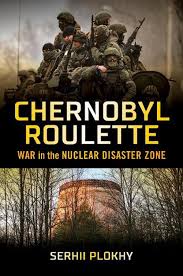
Chernobyl Roulette by Serhii Plokhy review – gripping account of wartime chaos at Ukraine’s nuclear plant
Luke Harding, Mon 2 Sep 2024, https://www.theguardian.com/books/article/2024/sep/01/chernobyl-roulette-by-serhii-plokhy-review-gripping-account-of-wartime-chaos-at-ukraines-nuclear-plant
The Ukrainian historian compellingly chronicles the singular courage and selflessness of atomic power station employees held hostage by Russian troops in 2022
Luke Harding, Mon 2 Sep 2024
On 24 February 2022, workers at the Chornobyl nuclear power station in Ukraine woke to the sound of explosions. A battle was going on, not far from the contaminated exclusion zone. By late afternoon, the Russians had arrived. A column of military vehicles pulled up at a checkpoint and an officer got out. Moscow, he said, was now in charge.
The plant’s 300 personnel – specialist operators and firefighters, plus troops from Ukraine’s national guard – became prisoners. Over the next few weeks, they kept the station’s systems going, working in cramped conditions and living side by side with their armed Russian masters. The enemy had invaded from Belarus. Its main force trundled onwards towards Kyiv.
Chernobyl Roulette by the Ukrainian historian Serhii Plokhy is a gripping account of the extraordinary events inside the plant (Plokhy spells the power station with an “e”). It is a tale of bravery and selflessness, reminiscent of the sacrifice demonstrated by the Chornobyl employees who went through the 1986 nuclear disaster, when reactor No 4 blew up. Some of those on duty in 2022 were involved in the original Soviet-era clean-up.
They included Valentyn Heiko, the 59-year-old shift foreman who was taken hostage with his colleagues. He proved to be a subtle and resilient leader. Heiko met the Russian commanders and told them they would have to follow Ukrainian safety rules and behave in a “civilised manner”. If they didn’t, he promised to unleash a radiation incident, killing them and everyone else. This was blackmail. And a bluff. It worked.
According to Heiko, some of the Russians were polite and rational. About a third of the soldiers, though, were brainwashed and often drunk. The occupiers moved into the fourth floor of the administration building. The station got crowded. There was a shortage of food, cigarettes and razors. The captive nuclear operators – unable to go home to the nearby town of Slavutych – grew beards and puffed on butts.
There were small acts of resistance. Liudmyla Kozak – one of 17 imprisoned women – refused a demand to wear a white armband. The Russians warned her she might be shot. Kozak found a white medical cap, embroidered it with a blue and yellow patch and wore that instead. An order was given to turn off the radio, which brought news of the Russian army’s setbacks around Kyiv. Staff switched it on anyway.
After three weeks, Heiko and his stressed and exhausted workmates could scarcely function. Astonishingly, 46 colleagues volunteered to replace them. The old shift exited the plant, travelled by bus through Belarus and crossed the Dnipro River in a fishing boat. Heiko carried the station’s Ukrainian flag with him. The new team went in the same way – uncertain if or when they would return.
The Kremlin’s occupation of the nuclear plant was an act of astounding recklessness. Soldiers dug trenches in the red forest, one of the world’s most toxic places. It is unclear if they suffered lasting health damage, their heads “full of sawdust”, as one gleeful Ukrainian official put it. Plokhy suggests this might be wishful thinking. Overall, though, radiation levels went up, as thousands of tracked Russian vehicles churned up deadly dust.
In the south of the country, meanwhile, another Russian unit captured the Zaporizhzhia nuclear power station, Europe’s biggest. The attackers fired rocket-propelled grenades at civilian infrastructure and damaged a reactor. Two and a half years on, the Russians are still there. Its turbine halls are stuffed with military kit and weapons. From the territory, they regularly bombard nearby Ukrainian towns with Grad missiles.
Last month, Russian soldiers started a fire in a cooling tower – an apparent warning, after Ukraine’s surprise counter-invasion of Russia’s Kursk region. Since the beginning of Moscow’s all-out attack, Vladimir Putin and his minions have issued a string of mass destruction threats directed at Kyiv and the west. State TV hosts talk about nuking London, Berlin and Paris.
The Chornobyl 2 story at least had a happy ending. On 30 March 2022, Russian servicemen fled north, as part of a pull-out from the Kyiv region. They departed with numerous items stolen from the plant: radiation dosimeters, computers and cars. In the town of Chornobyl, military looting parties carried off sacks of household goods. They even took ancient stuff: black-and-white TVs and video recorders.
The Ukrainian workers who put duty before personal survival narrowly averted another Chornobyl crisis. In Plokhy’s view, Moscow’s 2022 violent takeover of two atomic energy stations should serve as a “wake up call to the world”. It was, he argues, an act of nuclear terrorism carried out by a large nuclear power – a rogue one. The distinction between tactical nuclear weapons and civil nuclear facilities looks increasingly blurred, he says.
How the international community should respond to these alarming developments is less clear. Plokhy calls for a reform of the laws governing nuclear state behaviour and of the body that is supposed to administer them – the International Atomic Energy Agency (IAEA). When Russian tanks entered Chornobyl, the IAEA, led by Rafael Grossi, issued no condemnation of the Kremlin. Nor did it call on the occupiers to get out, appealing instead to “both sides”.
Plokhy is the author of several previous nonfiction books on Ukraine. These include Chernobyl: History of a Tragedy, which won the 2018 Baillie Gifford prize, and The Russo-Ukrainian War, an account of the conflict and its origins, published last year. Chernobyl Roulette is equally compelling. It salutes the singular men and women who stepped up – as their predecessors did before them – when protocols and governments failed.
“Dr Strangelove” – the 50th anniversary of this iconic nuclear film

THE HALF-CENTURY ANNIVERSARY OF “DR. STRANGELOVE” New Yorker, BY DAVID DENBY 14 May 14 “Mein Führer, I can walk!” screams Dr. Strangelove (Peter Sellers), the ex-Nazi nuclear scientist, rising from his wheelchair to salute the American President at the climax of “Dr. Strangelove or: How I Learned to Stop Worrying and Love the Bomb.” Stanley Kubrick’s satirical masterpiece is now a half century old (Film Forum will be playing a new 35-mm. print starting this Friday), and it remains as outrageously prankish, juvenile, and derisive as ever. Which, given the subject of nuclear annihilation, is exactly right. The movie is an apocalyptic sick joke: the demented general Jack Ripper (Sterling Hayden), who thinks the Commies are using fluoridation to destroy his bodily fluids (he withholds his essence from women), dispatches a group of B-52s loaded with H-bombs to destroy Soviet targets. President Merkin Muffley (Sellers again) tries to recall them; he even helps the Soviet Union to destroy some of the planes. But, after all sorts of misadventures, one B-52 gets through, setting off a Soviet-built Doomsday Machine—chained nuclear explosions assembled in a stunningly beautiful montage, accompanied by Vera-Ellen singing the tender ballad “We’ll Meet Again (Don’t Know Where, Don’t Know When).”……….
Book: Dirty Secrets of Nuclear Power in an Era of Climate Change
Book, Open Access
Overview
Authors: Doug Brugge , Aaron Datesman, https://link.springer.com/book/10.1007/978-3-031-59595-0
This book is open access, which means that you have free and unlimited access
Helps to understand the serious limitations and drawbacks to nuclear power
Conveys why nuclear power is a less than desirable option in terms of addressing climate change
Uses accessible and engaging language to appeal to a broad readership
About this book
This open access book provides a review of the serious limitations and drawbacks to nuclear power, and clearly conveys why nuclear power is a less than desirable option in terms of addressing climate change. It uses accessible and engaging language to help bring an understanding of the issues with nuclear power to a broader sector of the public, with the intention of appealing to non-scientists seeking knowledge on the disadvantages of nuclear power as a solution for climate change. The argument is made that while superficially appealing, nuclear power is too costly, fragile, and slow to implement, compared to alternative options such as wind and solar.
Dirty Secrets of Nuclear Power in an Era of Climate Change
Overview
Authors:
- Helps to understand the serious limitations and drawbacks to nuclear power
- Conveys why nuclear power is a less than desirable option in terms of addressing climate change
- Uses accessible and engaging language to appeal to a broad readership
- This book is open access, which means that you have free and unlimited access
- 1490 Accesses
- 23 Altmetric
About this book
This open access book provides a review of the serious limitations and drawbacks to nuclear power, and clearly conveys why nuclear power is a less than desirable option in terms of addressing climate change. It uses accessible and engaging language to help bring an understanding of the issues with nuclear power to a broader sector of the public, with the intention of appealing to non-scientists seeking knowledge on the disadvantages of nuclear power as a solution for climate change. The argument is made that while superficially appealing, nuclear power is too costly, fragile, and slow to implement, compared to alternative options such as wind and solar.
“As this book shows, to nowadays hold on to Nuclear Energy, a risky and extremely expensive method of create power, just does not make sense any longer.” — Prof. (em.) Andreas Nidecker, MD, retired academic radiologist, Basel, Switzerland
“Datesman and Brugge present evidence that nuclear power is an insecure and unsecureable technology, inherently incompatible with humanity and democracy; it fuels nuclear weapons technology and possession; choosing it would damage our chances at mitigating the climate crisis.” — Cindy Folkers, MS, Radiation & Health Specialist, Beyond Nuclear
“Although the government, industrial, and scientific nexus say it is safe.…I can only think of one word in Navajo “Ina’adlo'” meaning manipulation by the power that be to say it is safe. My Navajo people are dying from the uranium exposure on their health and environment. Great account of information on studies that have taken place around the world to say uranium is not good.” – Esther Yazzie, Navajo Interpreter and knowledge holder on Navajo issues.
“At a time when there is a call to triple the growth of nuclear power, Datesman and Brugge provide a timely and thorough examination of the dark-side of “romancing” the atom. With solid technical astuteness, they cover a wide field littered with unsolved and dangerous problems ranging from the poisoning of people and the environment to the failed economics, to the spread of nuclear weapons ….they point out how science and public trust have been corrupted by the lure of unfettered nuclear growth.” –Robert Alvarez, Associate Fellow at the Institute for Policy Studies in Washington, D.C.
NYT Uncritically Reported Israel’s Version of Golan Bombing
Despite multiple eyewitnesses describing an Israeli Iron Dome interceptor missile falling on the field during the time of the Majdal Shams strike (Cradle, 7/28/24), the New York Times insisted on spotlighting Israeli and US claims in its headlines, rather than genuinely assessing the facts on the ground.
FAIR, Bryce Greene and Lara-Nour Walton, 26 Aug 24
As the US-backed genocide in Gaza continues, US media assist in Israeli Prime Minister Benjamin Netanyahu’s plan to widen the war, parroting the words of the aggressor. A consequential example of US press support for escalation was Western media’s coverage of the July 27 strike that killed 12 Druze children on a soccer field near the town of Majdal Shams in the Israeli-occupied Syrian Golan Heights.
Israel and the US immediately blamed the Iran-backed Lebanese organization Hezbollah for the strike—citing Israeli intelligence reports of an Iranian Falaq-1 missile being found at the soccer field (BBC, 7/28/24).
But, in a move that Hezbollah expert Amal Saad called “uncharacteristic” (Drop Site, 7/30/24), the group adamantly denied responsibility for the attack. Saad, a lecturer in politics at Cardiff University, noted that targeting the Syrian Golan Heights—where many inhabitants are hostile towards Israel—would be “illogical” and “provocative” for Hezbollah. Further, if the organization had accidentally committed an attack, Saad pointed to a precedent of the group issuing a public apology in a case of misfire, with the organization’s leader, Hassan Nasrullah, visiting families of victims.
Despite multiple eyewitnesses describing an Israeli Iron Dome interceptor missile falling on the field during the time of the Majdal Shams strike (Cradle, 7/28/24), the New York Times insisted on spotlighting Israeli and US claims in its headlines, rather than genuinely assessing the facts on the ground.
On July 28, the Times published “Fears of Escalation After Rocket From Lebanon Hits Soccer Field,” pinning the blame squarely on Lebanon’s Hezbollah. The next day, reporting on the potential escalations, the Times headline (7/29/24) described the strike as a “Deadly Rocket Attack Tied to Hezbollah.”
While the July 29 subhead acknowledged that Hezbollah denied responsibility, the assertion in the headline undermined any reference to alternative explanations. Attribution to Hezbollah was then repeated without qualification in the first paragraph of the story.
Rebroadcasting government talking points not only does a disservice to newsreaders as Israel has a long history of misleading the public, but it also serves Netanyahu’s goals of justifying an escalation against Hezbollah. Predictably, the New York Times did not contextualize accusations of Hezbollah responsibility with information about Israel’s current objectives for wider war. This continues a long trend of US media outlets obscuring and distorting reality in order to downplay Israel’s aggressive regional ambitions (FAIR.org, 8/22/23).
Israel an unreliable source
The first problem is that the New York Times accepts narratives from Israeli military and government officials at face value. From peddling evidence-free claims about Palestinian use of human shields during Operation Cast Lead in 2009 (Amnesty International, 2009; Human Rights Watch, 8/13/09), to dodging responsibility for its assassination of Palestinian journalist Shireen Abu Akleh in 2022 (Al Jazeera, 5/22/22), to consistently attempting to conceal its use of illegal white phosphorus munitions across the Middle East (Haaretz, 10/22/06; Human Rights Watch, 3/25/09; Guardian, 10/13/23), the Israeli military has been known to circulate disinformation to the international public for decades. Neither in headlines nor in the text of its pieces does the Times acknowledge this well-established history.
The current assault on Gaza has made the central role of lies in Israel’s public relations arsenal clearer than ever. As early as October 17, there was controversy over the origin of a rocket strike on the Al-Ahli Arab hospital that killed hundreds of Palestinians (FAIR.org, 11/3/23). In the media confusion, Israel released audio it said captured two Hamas militants discussing Palestinian Islamic Jihad responsibility for the strike. However, an analysis by Britain’s Channel 4 news (10/19/23) found that the audio was the result of two separate channels being edited together. In other words, Israel engineered a phony audio clip to substantiate the notion that it had not committed a war crime……………………………………………………………………………………………………………………………………………………………………………………..
It is not possible that the writers and the editors at the Times—the supposed newspaper of record—are ignorant of this seemingly unending series of deceptions. The decision to uncritically accept the word of the IDF regarding the Golan Heights strike demonstrates a deliberate editorial decision to knowingly advance the deceitful public relations goals of a genocidal state.
Justifying a wider war
In light of Israel’s past lies, serious journalism ought to refrain from regurgitating Israeli claims without significant context or qualification. This is especially true when doing so would advance goals as disastrous as Netanyahu’s current aims.
In the case of the Majdal Shams strike, media proliferation of Israeli propaganda manufactures consent for escalating the war on the northern border—something Israel has long stated as its goal, and something American officials have long been concerned about…………………………………………………………………………………………………..
On top of neglecting to acknowledge Israel’s flimsy credibility in their Majdal Shams analysis, Times reporters failed to address this readily available information about Israeli military objectives. By ignoring Israel’s strategic aims, they are ensuring the reader doesn’t encounter further reasons to question Israel’s account about the strike.
Who fired the rocket?
When reporting on Israel’s “reprisal” assaults on Lebanon following the strike on the soccer field, the New York Times (7/28/24) again asserted Israeli claims as fact, saying in the first paragraph that “a rocket from Lebanon on Saturday killed at least 12 children and teenagers in an Israeli-controlled town,” which “prompted Israel to retaliate early Sunday with strikes across Lebanon.”
Was Lebanon—and implicitly Hezbollah—the source of the explosion that killed the 12 children? The Times does not care to examine this question, which warrants exploration. which warrants exploration. Israel’s military chief of staff declared that the damage was done with an Iranian-made Falaq-1 rocket fired by Hezbollah, a claim that was uncritically repeated as fact by the New York Times (7/30/24), despite the lack of independent corroboration. While there has been fighting in the area, and Hezbollah acknowledged that they fired Falaq-1 rockets at the nearby IDF barracks, there is significant reason to doubt that one of these rockets struck the soccer field.
The Falaq-1 was described by Haaretz (7/28/24) as a munition that targets bunkers. But, images from the aftermath of the attack show that the damage to physical structures was far from bunker-busting. In an interview with Jeremy Scahill (Drop Site, 7/30/24), the Hezbollah expert Saad cited military specialists who told her that “if [Hezbollah] had used the Falaq-1, we would have seen a much larger crater…. It would be much, much bigger and there would be much more destruction.”
As discussed above, Israel, well-known for planting or fabricating evidence for propagandistic ends, released images of rocket fragments that it alleged were found at the impact site, though the Associated Press (7/30/24) was unable to verify their authenticity.
A substantial case can be made that the projectile came from the IDF. In the immediate aftermath of the attacks, multiple eyewitnesses told Arab news outlets the projectile was a misfired Iron Dome missile (Cradle, 7/28/24; Drop Site, 7/30/24). The New York Times omitted this from its coverage of this event.
Contrary to the mythos behind the high-tech defense system, there have already been several cases of Iron Dome missiles falling on populated areas within Israel since October 7 (Al Jazeera, 6/11/23; Jerusalem Post, 12/2/23, 7/25/24; Times of Israel, 5/4/23, 8/9/24) with many such instances resulting in civilian injuries and deaths. There was even a report of an Iron Dome malfunction near Majdal Shams, months before the recent July strike.
Bolstering the case for an Iron Dome malfunction, OSINT researcher Michale Kobs noted that the sound profile of the projectile suggested that its speed was constant until it hit the ground. Hezbollah’s projectiles constantly accelerate as they fall on their targets, since they are driven by gravity, whereas Iron Dome missiles are propelled throughout their entire flight.
For their part, the Druze people in the Golan Heights—an Arabic-speaking religious community which has largely declined offers of Israeli citizenship—repudiated Israel’s displays of sympathy for their slain children, rejecting the use of their suffering to advance Israel’s plans for a broader war (Democracy Now!, 7/30/24). Locals even protested a visit from Netanyahu, chanting “Killer! Killer!” and demanding he leave the area (New Arab, 7/29/24).
In the Times reporting on the strike, Lebanese and Syrian denials of Hezbollah’s responsibility for the strikes were acknowledged and reported, but portrayed as predictable denials that did nothing to alter the narrative. By omitting the evidence pointing to Israeli responsibility for the strikes, the New York Times assists Israel in yet another propaganda campaign to mislead the public in order to justify further regional strife and bloodshed. https://fair.org/home/nyt-uncritically-reported-israels-version-of-golan-bombing/
1 This Month
Tell Congress: Prevent Nuclear Catastrophe in Iran

Tell Congress: Prevent Nuclear Catastrophe in Iran

Read the Public Inquiry Report, the Commissioners’ report, Surrendering Australia: The AUKUS Deception is available to download for free at aukuspublicinquiry.com. Or just watch the replay of the National Press Club Luncheon.


Shut down the radiation-damaged Heysham nuclear reactors now
To see nuclear-related stories in greater depth and intensity – go to https://nuclearinformation.wordpress.com

Say No to NASA’s Reckless Nuclear Reactor on the Moon
Say No to NASA’s Reckless Nuclear Reactor on the Moon
-
Archives
- November 2026 (246)
- October 2026 (302)
- September 2026 (339)
- August 2026 (330)
- July 2026 (355)
- June 2026 (287)
- May 2026 (306)
- April 2026 (356)
- March 2026 (251)
- February 2026 (267)
- January 2026 (308)
- December 2025 (358)
-
Categories
- 1
- 1 NUCLEAR ISSUES
- business and costs
- climate change
- culture and arts
- ENERGY
- environment
- health
- history
- indigenous issues
- Legal
- marketing of nuclear
- media
- opposition to nuclear
- PERSONAL STORIES
- politics
- politics international
- Religion and ethics
- safety
- secrets,lies and civil liberties
- spinbuster
- technology
- Uranium
- wastes
- weapons and war
- Women
- 2 WORLD
- ACTION
- AFRICA
- Atrocities
- AUSTRALIA
- Christina's notes
- Christina's themes
- culture and arts
- Events
- Fuk 2022
- Fuk 2023
- Fukushima 2017
- Fukushima 2018
- fukushima 2019
- Fukushima 2020
- Fukushima 2021
- general
- global warming
- Humour (God we need it)
- Nuclear
- RARE EARTHS
- Reference
- resources – print
- Resources -audiovicual
- Weekly Newsletter
- World
- World Nuclear
- YouTube
-
RSS
Entries RSS
Comments RSS

